all the foods - Brazil
Discover all the traditional Brazilian dishes we tried, from Feijoada and Escondidinho to Galinhada and more
Here you will find a list of all the traditional cuisine we tried in Brazil.
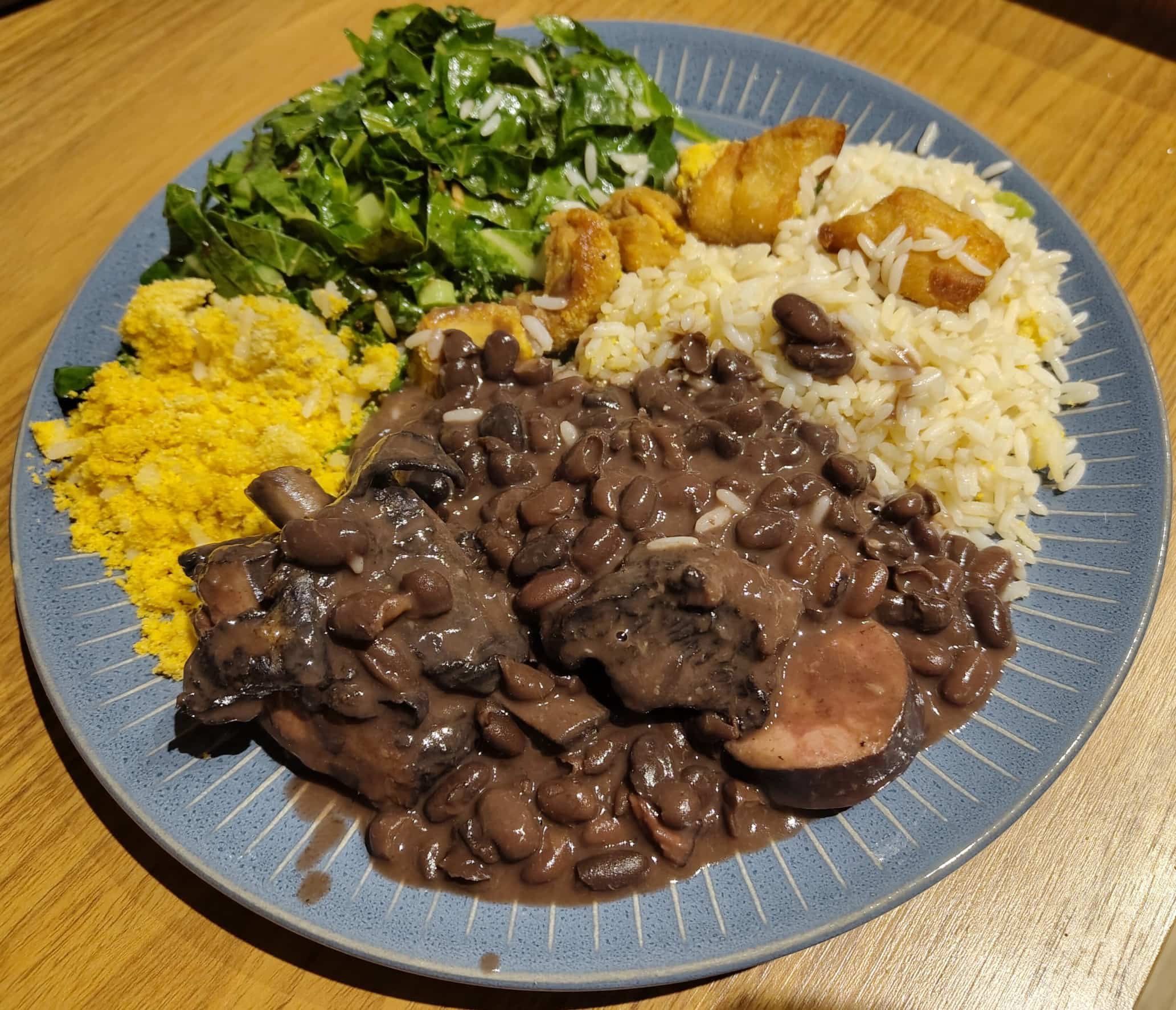
feijoada
black bean & pork stew
What is it?
Feijoada is Brazil’s most famous traditional dish and one of the country’s most delicious. It is a slow cooked black bean and pork stew, making the beans soft and creamy.
It is associated with Rio de Janeiro, although it’s eaten throughout Brazil. Feijoada is particularly popular as a weekend meal, often served with numerous accompaniments, such as farofa (toasted cassava flour), which is mixed into the beans, adding a coarse texture to the creamy stew, and collard greens that are typically sautéed with plenty of garlic.
What is in it?
Traditional feijoada is made with black beans, pork, pork sausage, bacon, pork ribs, onions, garlic and bay leaves. Depending on the recipe, various cuts of pork are used, and some versions also include dried or salted beef.
It is traditionally served with white rice, farofa (toasted cassava flour) and sautéed collard greens
Where can I eat it?
Feijoada is available throughout Brazil, although Rio de Janeiro is particularly famous for it. It is especially common on weekends, when restaurants often serve it as a special.
Gluten free.
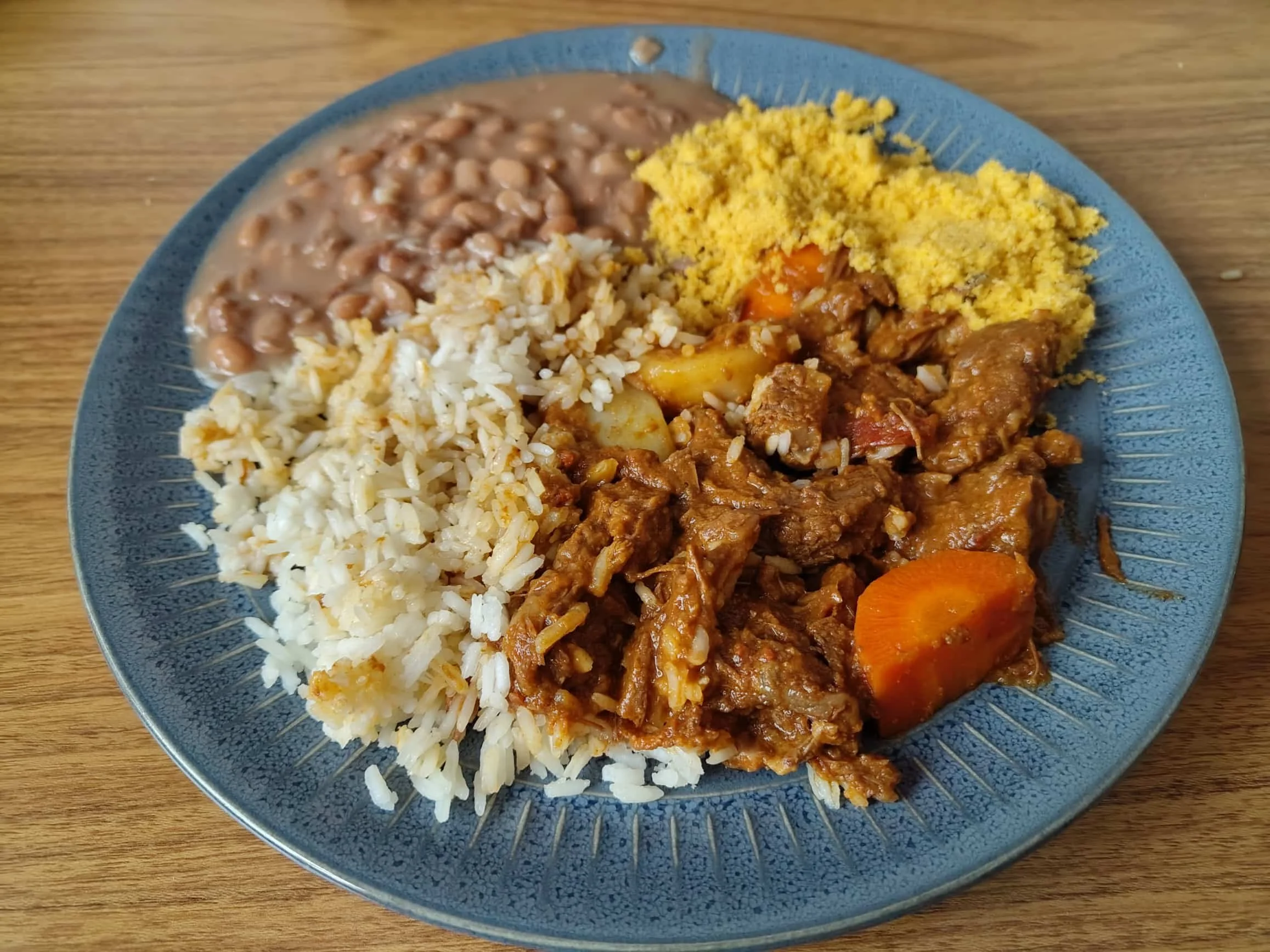
picadinho
beef stew
What is it?
Picadinho is a Brazilian beef stew, particularly associated with the restaurants and botecos (informal bars) of Rio de Janeiro and São Paulo. The name literally means “little chopped [pieces],” referring to the small pieces of beef used in the dish.
The beef is slowly cooked in a rich, savoury sauce. It is simple but delicious comfort food, and the sauce is perfect for mixing into the rice.
There are many regional and household variations, so there is no single definitive recipe.
What is in it?
Picadinho typically contains small pieces of beef, onion, garlic, tomato, stock and seasonings. Depending on the version, it may also include carrots, potatoes, peas, mushrooms, bacon, wine or mustard.
It is commonly served with white rice, beans, farofa (toasted cassava flour), a fried or poached egg, and sometimes fried banana, chips or sautéed greens
Where can I eat it?
Picadinho is widely available throughout Brazil, particularly at restaurants serving traditional comida caseira (home style food). It is especially associated with Rio de Janeiro and São Paulo, where different local versions can be found.
Traditionally dairy free.
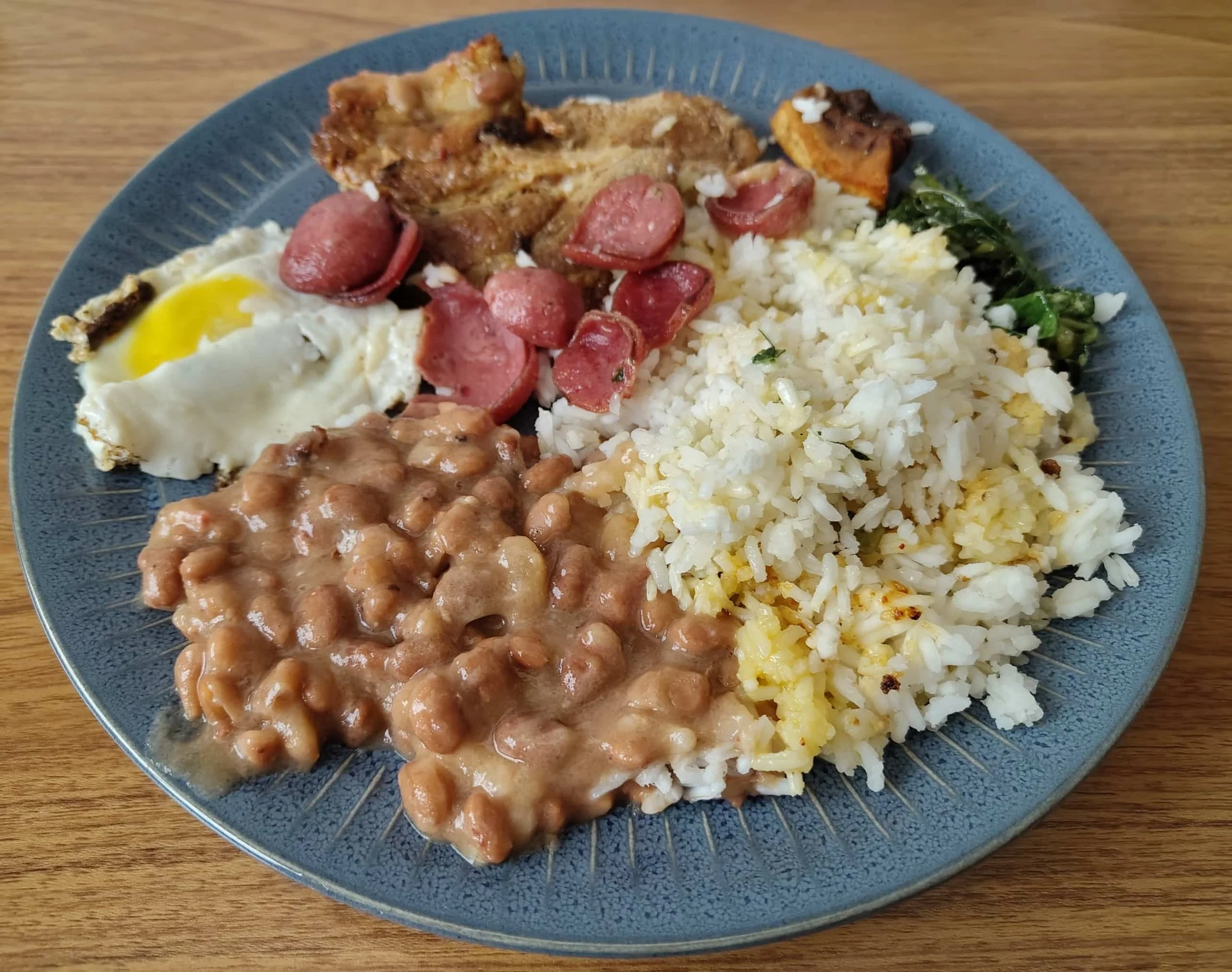
virado
beans, pork & rice
What is it?
Virado, also known as virado à Paulista, is a traditional Brazilian dish from São Paulo state. It is a big plate of beans, pork and other classic Brazilian ingredients.
It is particularly associated with São Paulo’s traditional Monday lunch, when it is commonly served at restaurants and botecos. The dish brings together several different textures and flavours on one plate, from creamy beans and soft rice to crispy pork and fried egg.
What is in it?
A traditional virado à Paulista typically contains beans mixed with cassava flour (this bean and flour mixture is often called tutu de feijão), white rice, pork chop or sausage, fried egg, sautéed collard greens and torresmo (crispy pork rinds or belly). Fried plantain is also a very common accompaniment. The exact combination can vary, but beans, rice and pork are the central components.
Where can I eat it?
Virado à Paulista is particularly common in São Paulo, where it is a classic local lunch. A good place to try it is Salada Record. It is less common outside the São Paulo region.
Gluten free.
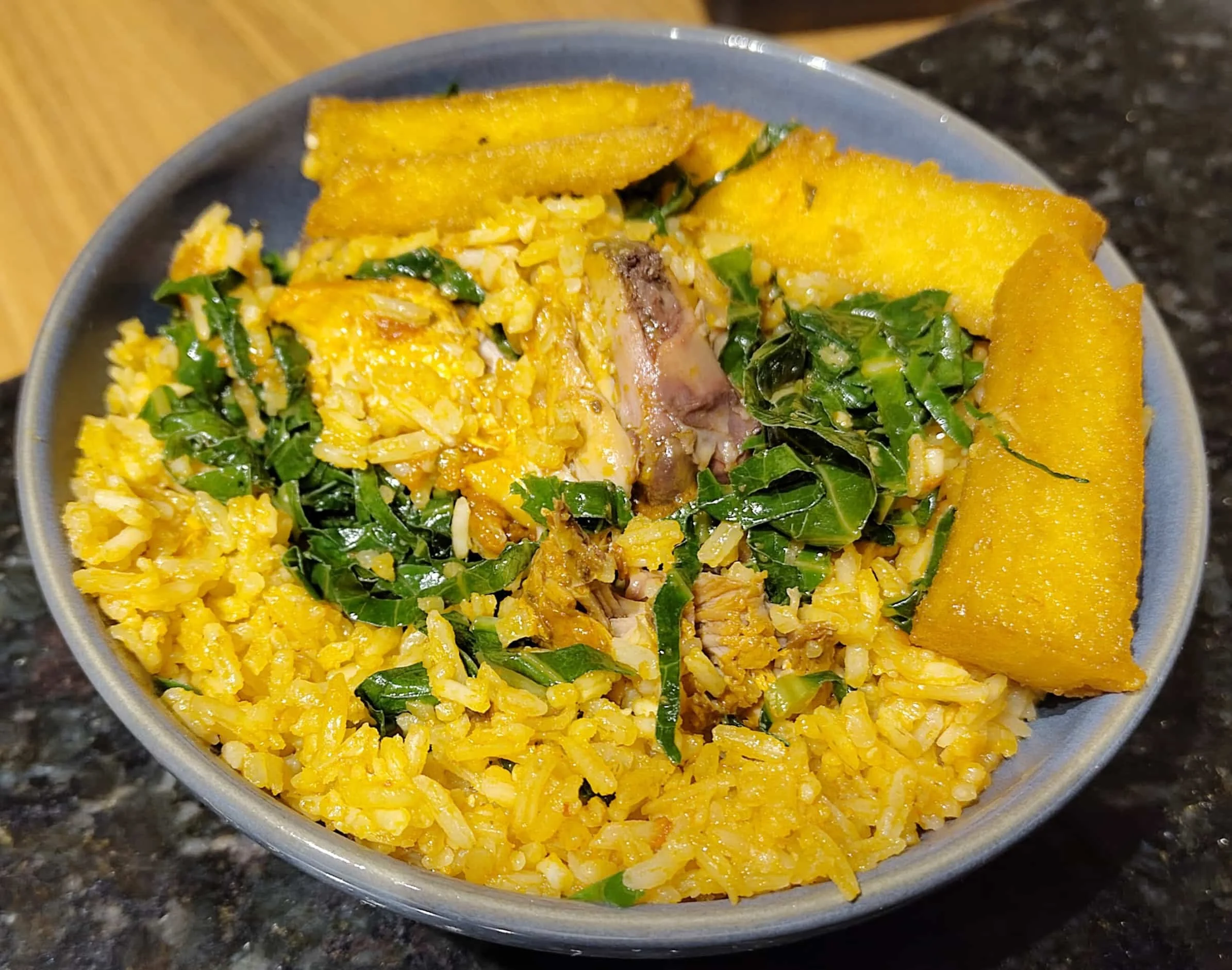
galinhada
chicken & rice
What is it?
Galinhada is a traditional Brazilian chicken and rice dish, with the chicken and rice cooked together so that the rice absorbs all the savoury juices and flavours from the meat. It is particularly associated with the states of Minas Gerais and Goiás, although it is popular throughout Brazil.
It is traditionally made with bone in chicken, which gives the rice a much deeper flavour as it cooks.
What is in it?
Galinhada typically contains bone-in chicken, rice, onions, garlic, tomatoes, peppers, saffron or turmeric (açafrão), and herbs and spices. Some regional versions also include peas, carrots, corn or other vegetables.
Where can I eat it?
Galinhada is available throughout Brazil, particularly at restaurants serving comida caseira (home style food). It is especially associated with Minas Gerais and Goiás, where you’ll find many traditional versions.
Gluten free.
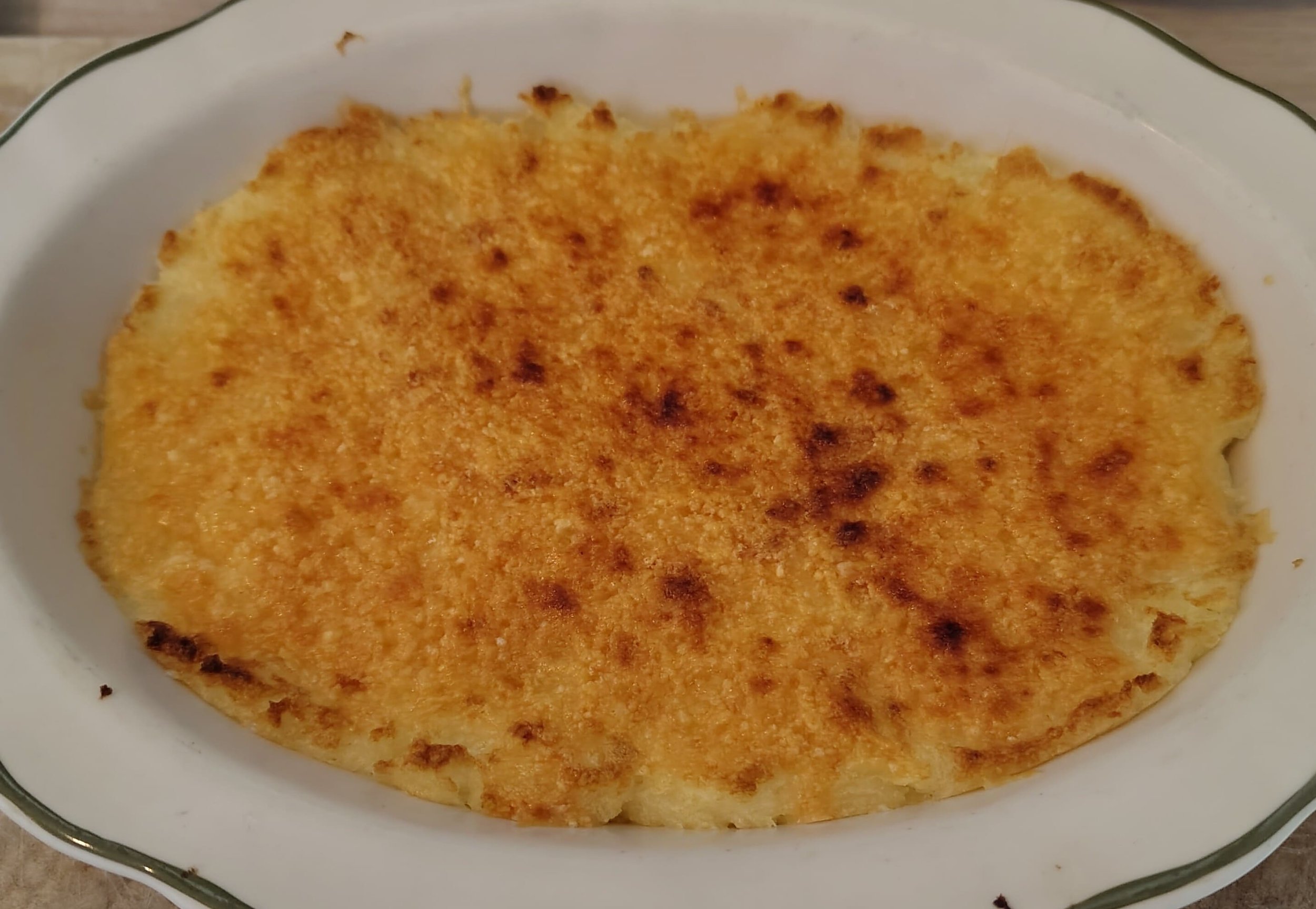
escondidinho
Brazilian shepherds pie
What is it?
Escondidinho is a popular Brazilian comfort food that could be described as a Brazilian version of shepherd’s pie. It consists of a savoury filling underneath a layer of creamy mashed root vegetables, usually cassava (mandioca), which is then baked.
The name escondidinho means “little hidden one”, referring to the way the filling is hidden beneath the mashed topping.
It can be served either as a starter or a main course, with individual portions commonly served in small baking dishes.
What is in it?
The classic version contains shredded dried beef (carne seca), cassava, onion, garlic, butter, milk, cream or requeijão (a creamy Brazilian cheese spread), and grated cheese. Other versions may use minced beef, chicken, prawns or other fillings instead of dried beef.
Where can I eat it?
Escondidinho is available throughout Brazil, although it is not as ubiquitous as dishes like feijoada. It originated in the Northeast, particularly Pernambuco, and remains especially popular there, though it is now common in restaurants across the country.
Gluten free.
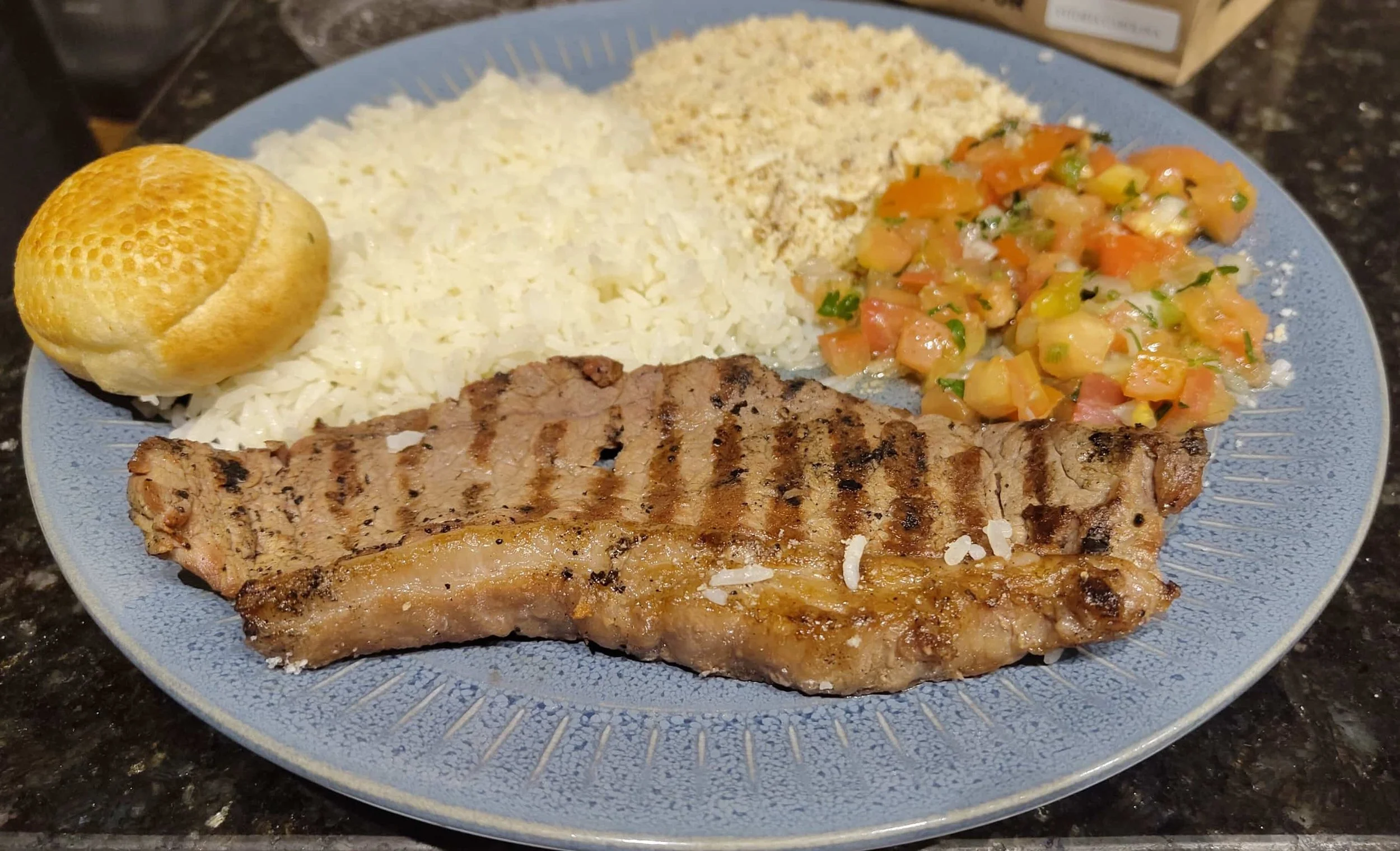
churrasco
Brazilian barbecue
What is it?
Churrasco is the Brazilian style of barbecued meat and is a huge part of Brazilian food culture. Meat is traditionally cooked over charcoal or an open flame, producing smoky meat with a charred exterior.
Brazilian churrasco is particularly famous for its rodízio style, where waiters bring different cuts of freshly grilled meat directly to your table on large skewers and slice portions onto your plate. It can range from simple backyard barbecues to elaborate churrascarias.
A traditional churrasco meal also commonly comes with garlic bread (pão de alho), which is cooked on the barbecue alongside the meat. The crispy, garlicky bread is an essential accompaniment and is particularly good for soaking up the meat juices.
What is in it?
Churrasco can include beef, pork, chicken, sausages and other meats, with popular beef cuts including picanha (rump cap), alcatra (top sirloin), fraldinha (flank steak) and contra filé (striploin). The meat is traditionally seasoned simply, often with coarse salt (sal grosso), allowing the flavour of the meat and smoke to take centre stage.
The traditional garlic bread is made with bread, garlic, butter or mayonnaise, and herbs, although recipes vary.
Other classic accompaniments include farofa (toasted cassava flour), Brazilian style vinaigrette salsa, rice, black beans, chips or cassava, and salad.
Where can I eat it?
Churrasco is found throughout Brazil, but the classic place to experience it is at a churrascaria, particularly one offering rodízio service such as Bovinu'S Churrascaria Rebouças in Sao Paulo.
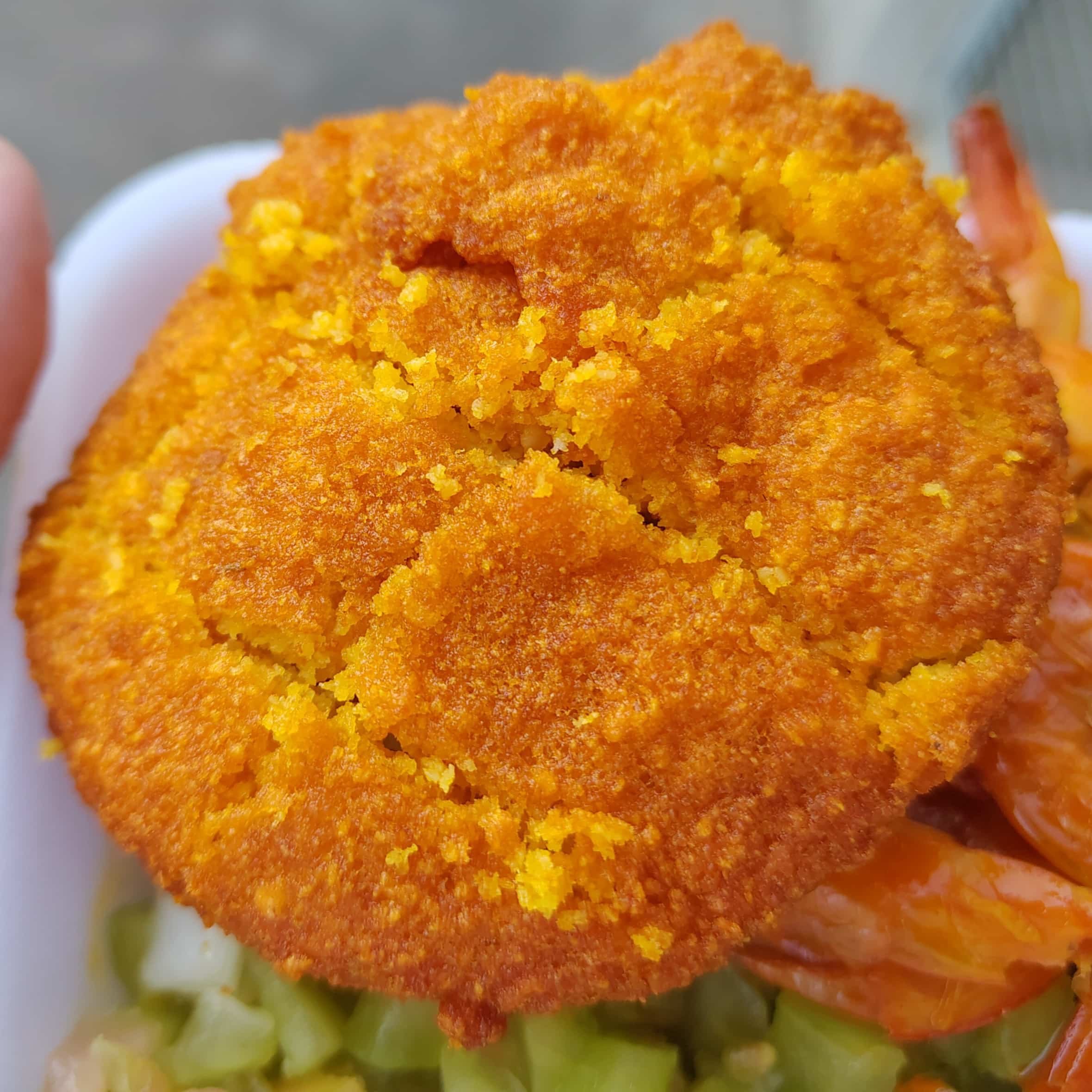
acarajé
black eyed pea fritter
What is it?
Acarajé is one of the most famous foods of Bahia, particularly associated with Salvador. It is an important part of Afro Brazilian cuisine and was brought to Brazil by enslaved Africans during the transatlantic slave trade. Its roots lie in Yoruba food traditions from West Africa.
It consists of a fritter made from black eyed peas that is deep fried in dendê (palm oil). It is usually split open and filled with savoury toppings before being eaten.
What is in it?
The fritter itself is made from black-eyed peas, onion and salt, and is fried in dendê palm oil.
It is traditionally filled with vatapá (a creamy shrimp, peanut and palm-oil paste), caruru (an okra and shrimp stew), whole or dried shrimp, and sometimes a tomato and-onion salad and chilli sauce.
Where can I eat it?
Acarajé is particularly associated with Salvador and Bahia, where it is sold by baianas de acarajé at stalls and specialist stands throughout the city. You’ll also find it at traditional Bahian restaurants throughout the country, such as Tabuleiro do Acarajé in São Paulo, and at festivals.
Gluten & dairy free.
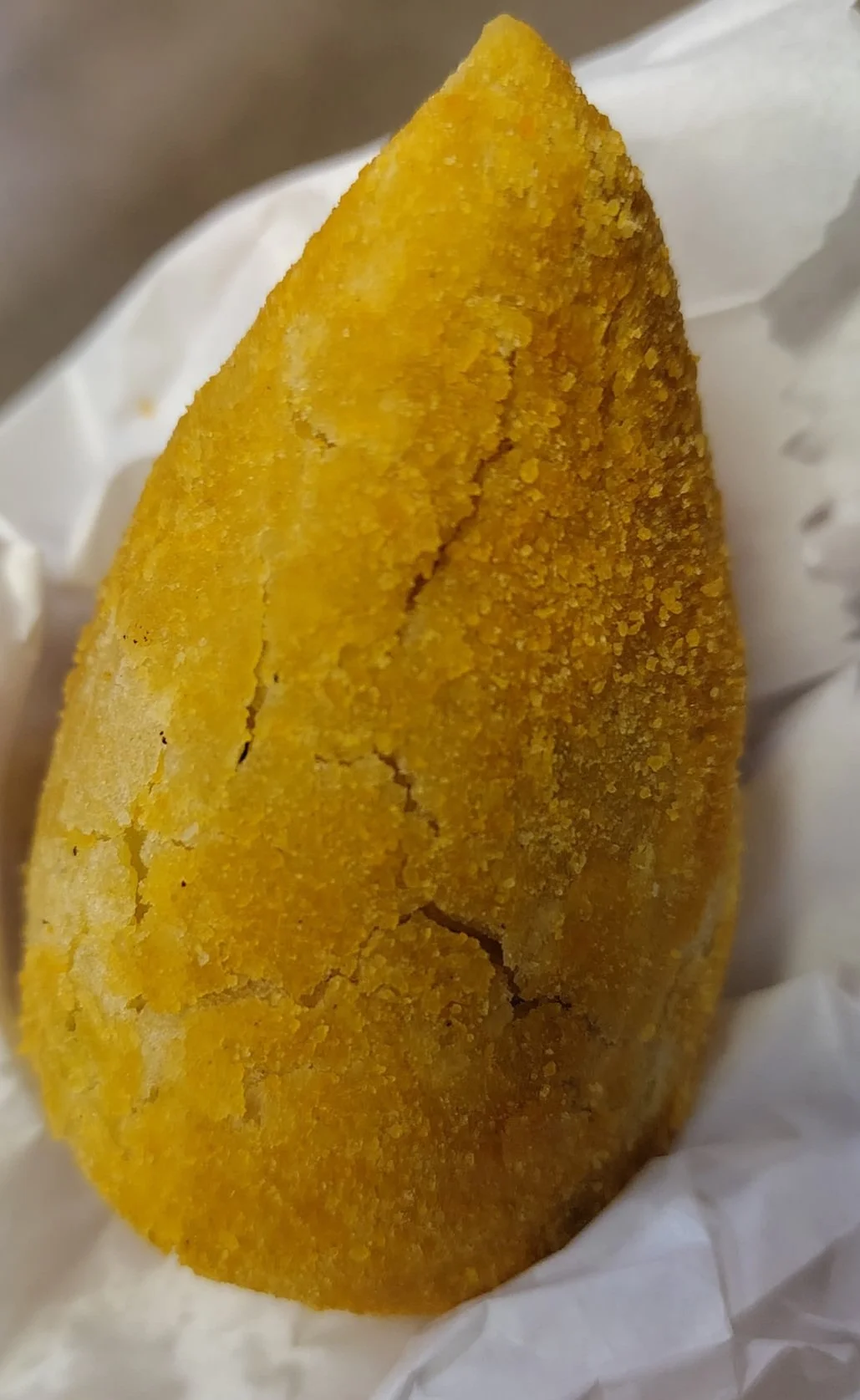
coxinha
chicken croquette
What is it?
Coxinha is one of Brazil’s most popular savoury snacks and is also popular in Paraguay. It consists of a creamy chicken filling enclosed in a layer of dough, shaped into a teardrop resembling a chicken thigh, then coated in breadcrumbs and deep fried.
They’re usually eaten as a snack, although a couple can easily make a filling light meal.
What is in it?
Traditional coxinha is made with shredded chicken, wheat flour, chicken stock, butter or margarine, cream cheese (requeijão or catupiry), breadcrumbs, onion, garlic and seasonings. Some versions also include mashed potato in the dough.
Where can I eat it?
Coxinhas are available virtually everywhere in Brazil. You’ll find them at padarias (bakeries), cafés, lanchonetes (snack bars), markets and street-food stalls.
Dairy free versions available.
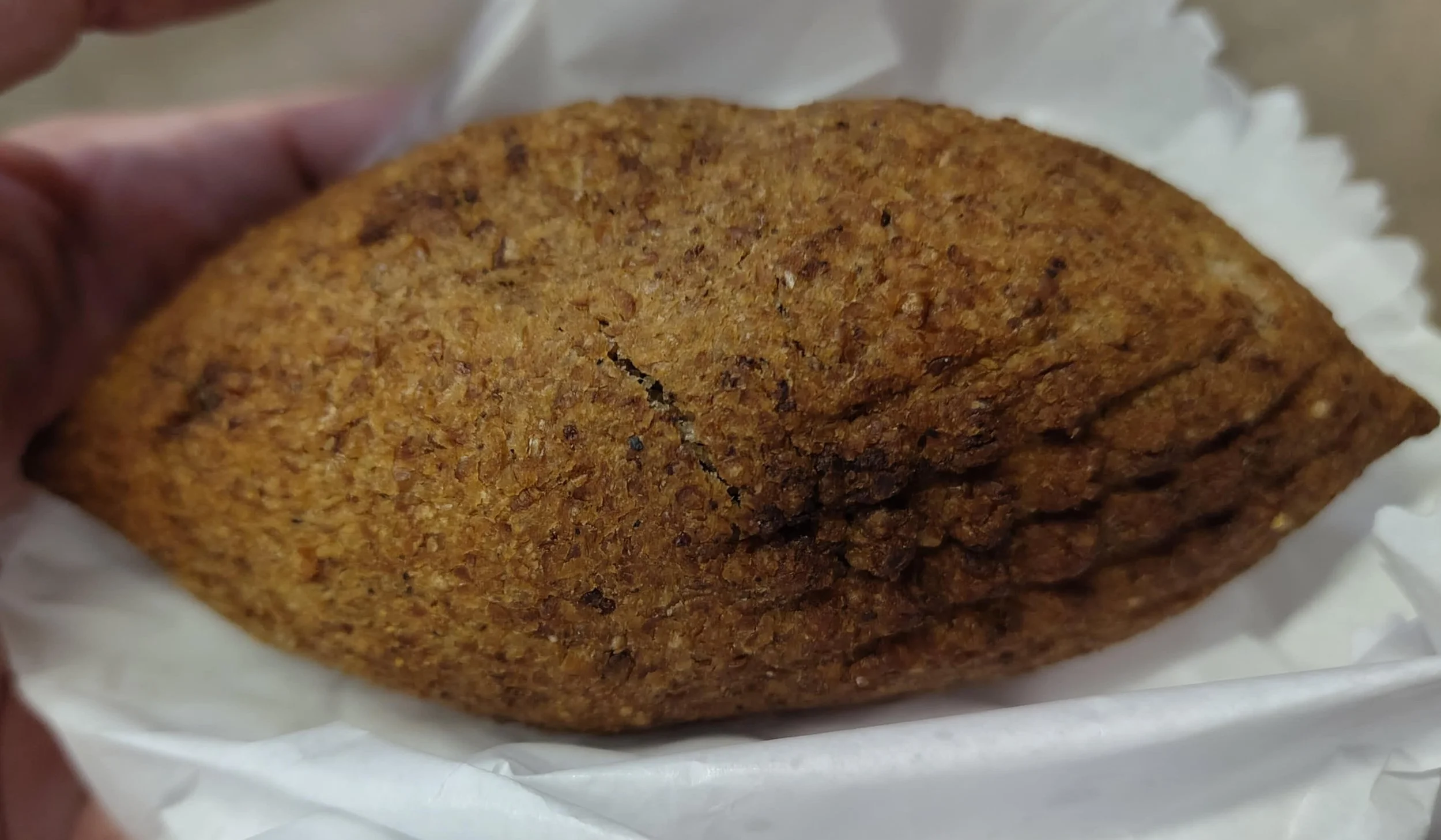
kibe
meat croquette
What is it?
A popular Brazilian snack of Middle Eastern origin, brought to Brazil by Lebanese and Syrian immigrants and now firmly established as part of Brazilian food culture.
It consists of a mixture of bulgur wheat and seasoned minced meat, traditionally shaped into an oval or torpedo shape. It’s often eaten as a quick snack on the go.
What is in it?
Traditional Brazilian kibe is made with minced beef, bulgur wheat, onion, garlic, mint and other herbs and spices. Some versions are filled with seasoned minced beef, cheese or cream cheese (requeijão), while baked versions also exist.
Where can I eat it?
Kibe is extremely common throughout Brazil and is particularly easy to find at bakeries and snack bars. It is also served as an appetiser in Brazilian restaurants.
Dairy free.
Ingredients listed reflect common or typical components of this dish as served in restaurants or street‑food vendors. Variations by region, season, or vendor are common. This information is provided for general reference only. If you have dietary restrictions or allergies, please verify ingredient details independently. We assume no liability for accuracy or outcomes.
all the foods - Singapore
Discover all the traditional Singaporean dishes we tried, from laksa and char kway teow to wanton mee and more
Here you will find a list of all the traditional cuisine we tried in Singapore.
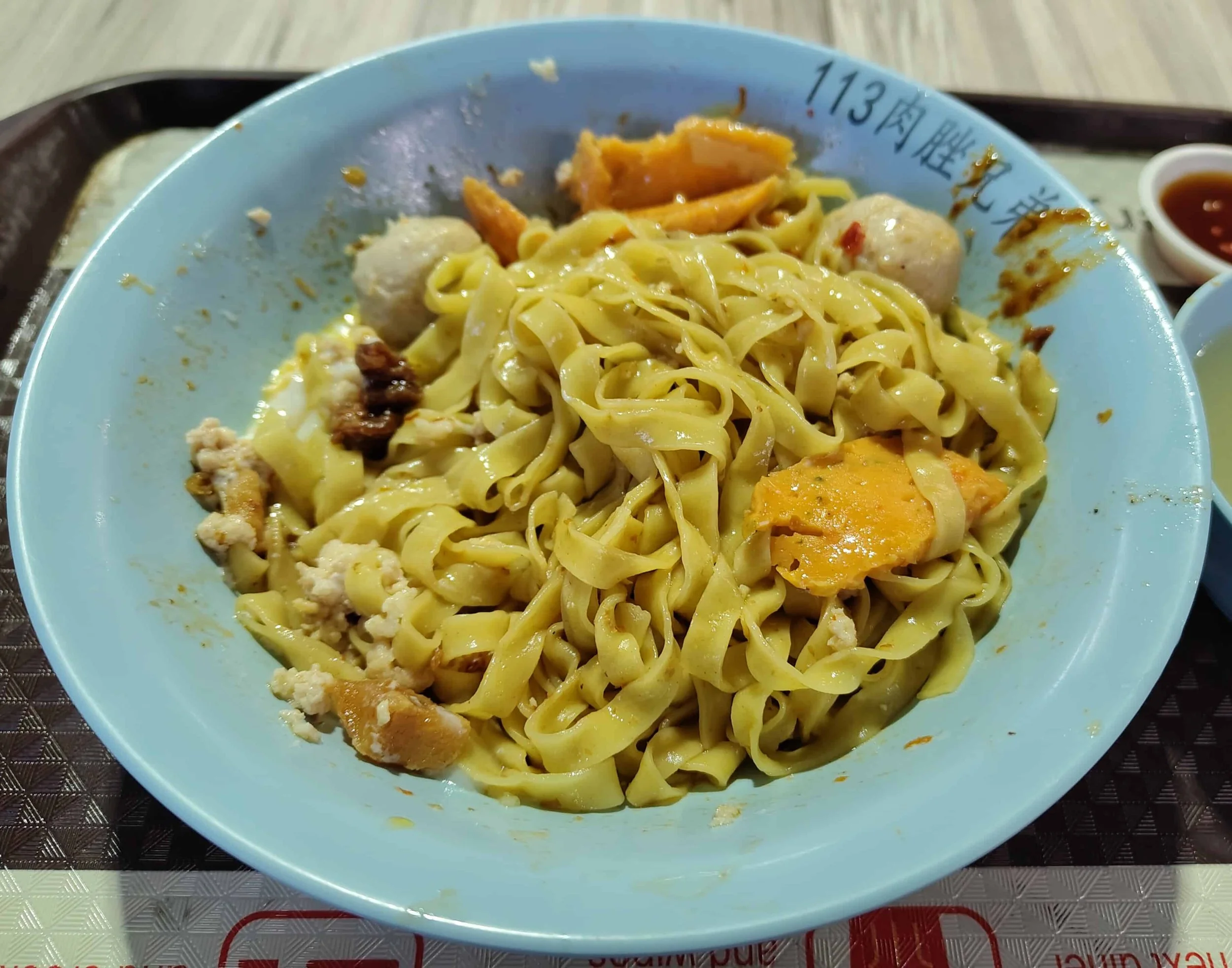
bak chor mee
minced meat noodles
What is it?
A classic Singaporean hawker dish, bak chor mee translates as “minced meat noodles” and consists of noodles topped with minced pork and a variety of other ingredients. It’s a staple of hawker centres across the country. The dish is best known in its dry version, where the noodles are tossed in a mixture of vinegar, chilli, soy sauce and seasonings before the toppings are added. A small bowl of soup is usually served on the side. While soup versions also exist, the dry version is generally considered the classic Singaporean preparation.
What is in it?
The dish is typically made with egg noodles (mee pok or mee kia) and topped with minced pork, slices of pork, pork liver, meatballs and braised mushrooms. The noodles are tossed in a mixture of black vinegar, chilli paste, soy sauce and pork fat or oil, creating the distinctive tangy flavour that defines the dish. Many stalls allow you to choose your preferred noodle type, with mee pok (flat noodles) being particularly popular and mee kia (thin noodles) another common choice. A bowl of pork based soup is usually served alongside the noodles.
Where can I eat it?
Bak chor mee is available at hawker centres throughout Singapore and is one of the country’s essential noodle dishes. A particularly good place to try it is Minced Pork Bros at Old Airport Road Food Centre, where excellent versions of the dish are served.
Dairy free.
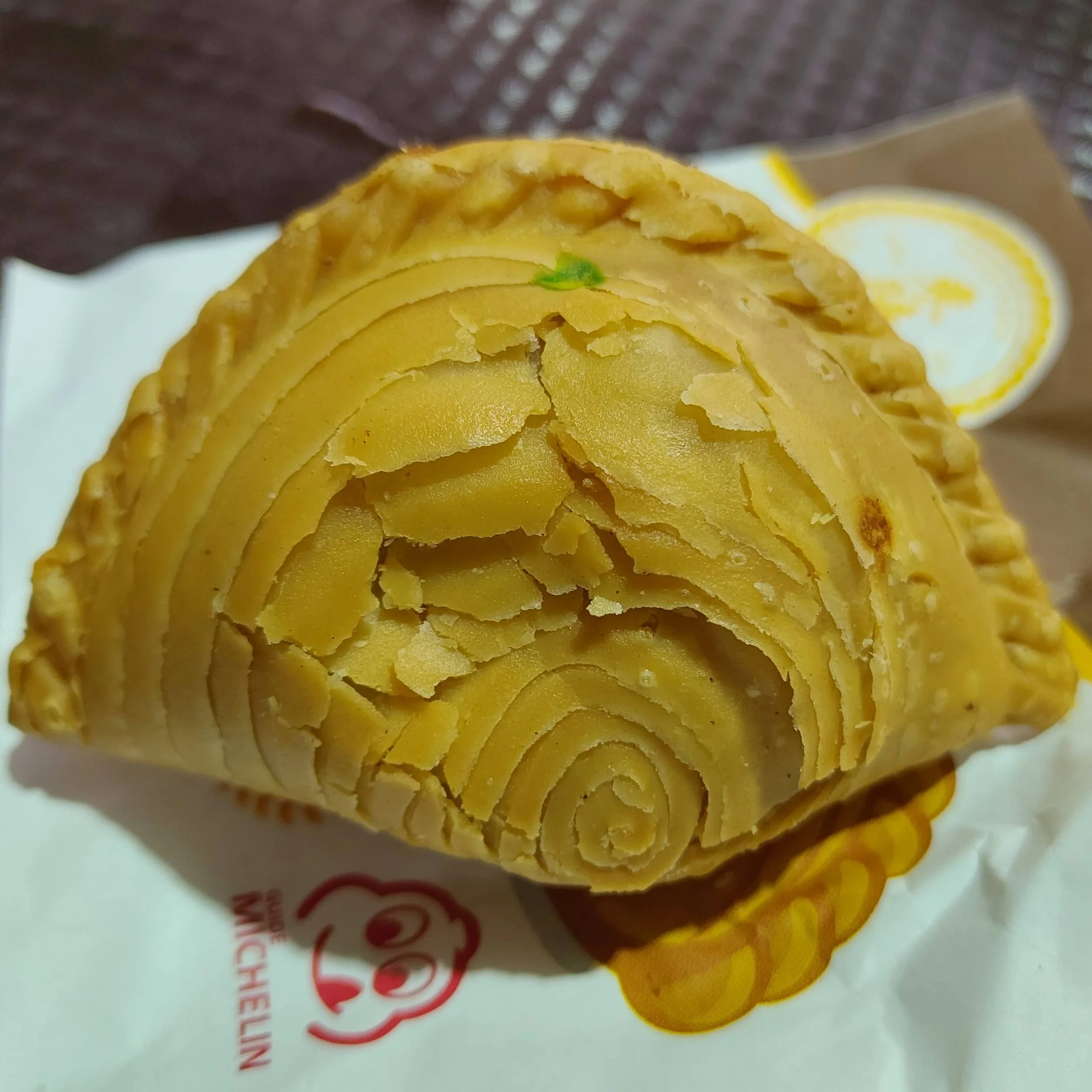
curry puff
handheld curry pie
What is it?
A popular snack found throughout Singapore, curry puffs are hand sized pastries filled with curried potato and other savoury ingredients before being baked or deep fried. They are thought to have evolved from British colonial pastries (such as the Cornish pasty) combined with local Southeast Asian flavours. Many modern variations are now available with different fillings. The curry is mildly spiced rather than fiery, making it approachable for most tastes.
What is in it?
The traditional filling consists of curried potato, often combined with chicken and a slice of boiled egg. The pastry varies by vendor but is usually either a flaky, layered pastry similar to puff pastry or a crimped shortcrust style pastry. Modern fillings may include sardine, beef or tuna. The classic chicken, potato and egg version remains the benchmark against which others are judged.
Where can I eat it?
Curry puffs are available throughout Singapore and can be found at bakeries, hawker centres and takeaway snack shops. Two of the best-known specialist chains are Old Chang Kee and Tip Top Curry Puff, both of which have multiple locations across the city.
Vegetarian versions available, traditionally dairy free.
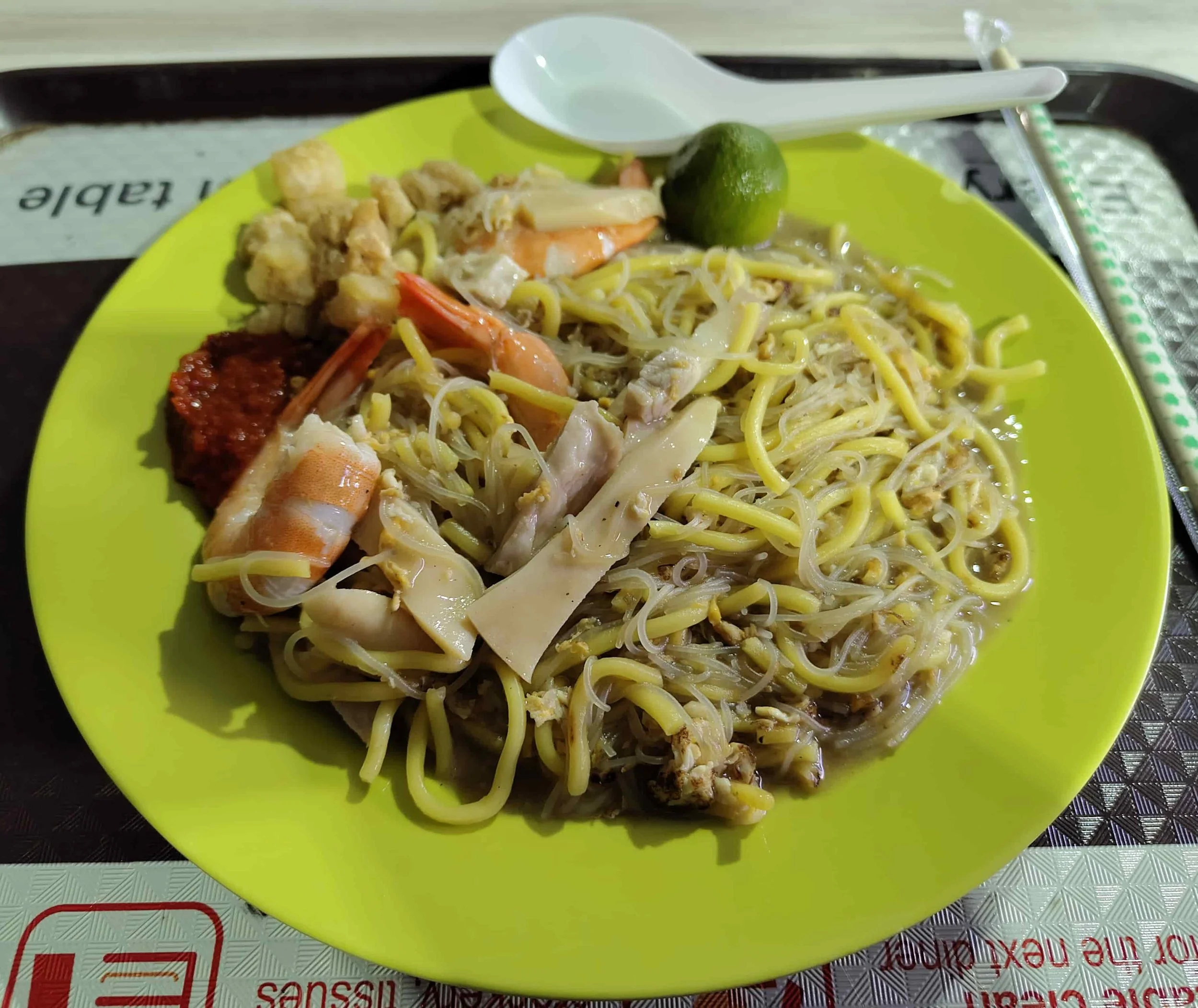
hokkien mee
2 noodle brothy stir fry
What is it?
Hokkien mee consists of yellow egg noodles and rice vermicelli stir fried in a prawn and pork stock until the noodles absorb the flavour of the broth. The dish was developed by Hokkien immigrants in Singapore and has evolved into a distinctly Singaporean creation. Unlike some Malaysian versions, Singapore style Hokkien mee is typically wetter, with the noodles cooked in stock rather than simply stir fried with sauce. As the noodles cook, they absorb the stock, giving the dish its characteristic flavour and slightly moist texture.
What is in it?
Hokkien mee is made with a combination of yellow egg noodles and thin rice vermicelli (bee hoon), which are stir fried with prawns, egg and pork in a stock usually made from prawn shells and pork bones. It is typically served with spicy sambal and a wedge of lime to squeeze over.
Where can I eat it?
Hokkien mee is widely available at hawker centres throughout Singapore and is one an easy noodle dish to find.
Dairy free.
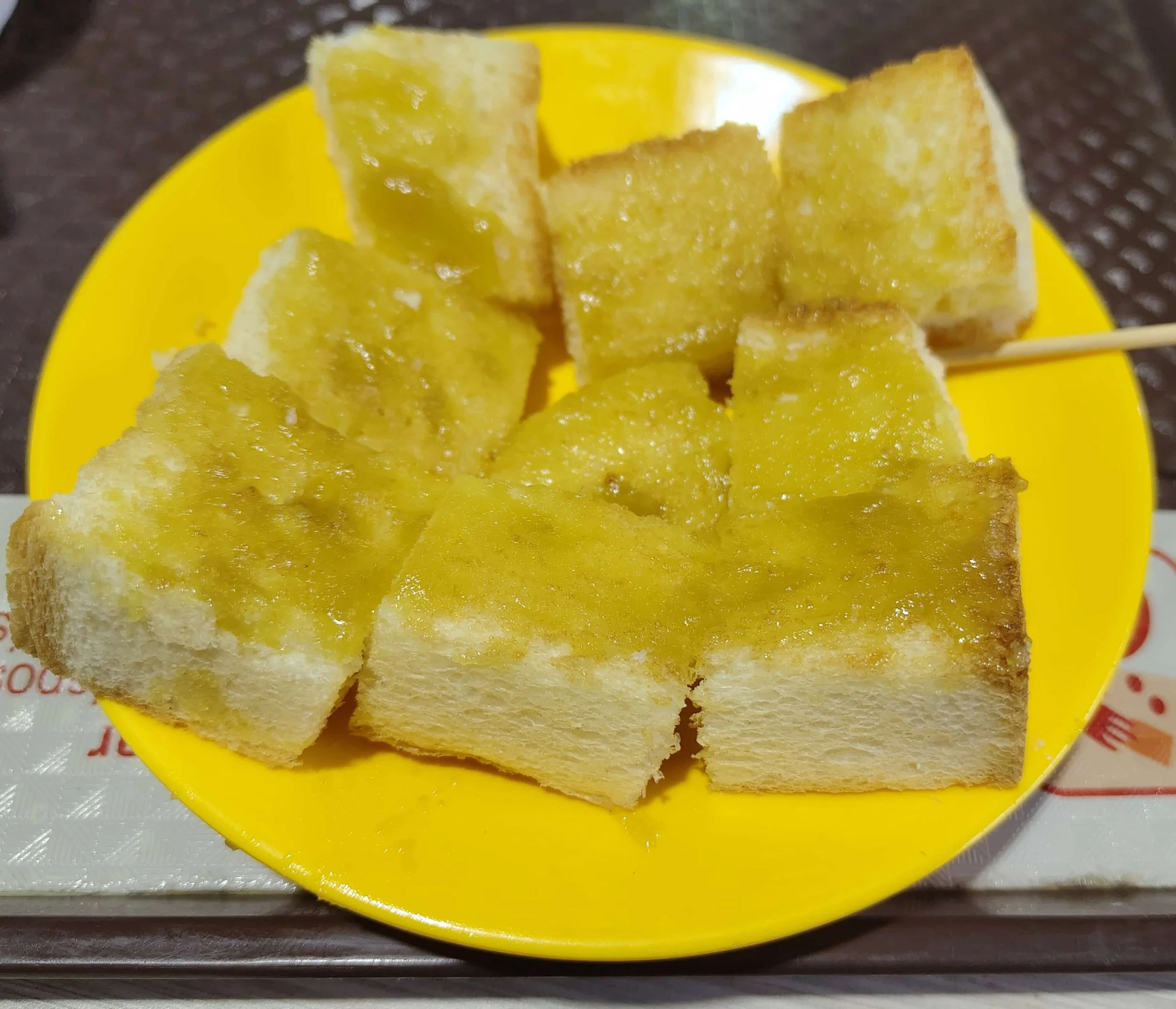
kaya toast
coconut jam on toast
What is it?
One of Singapore’s most iconic breakfasts, kaya toast consists of toasted bread spread with kaya (a sweet coconut and egg jam) and butter. It is traditionally served as part of a breakfast set alongside soft boiled eggs and a cup of local coffee (kopi) or tea (teh).
Simple though it may seem, kaya toast is deeply ingrained in Singaporean food culture and remains a favourite morning meal for locals of all ages. There are two main styles: thick, fluffy toasted bread or thin, crisp slices toasted until crunchy. Both are common throughout Singapore.
What is in it?
The key ingredient is kaya, a rich jam made from coconut milk, eggs, sugar and pandan leaves, which give it its distinctive fragrance and greenish colour. It is served on toast with a slice of cold butter. The bread may be thick and soft or thin and crisp, depending on the stall.
Where can I eat it?
Kaya toast is available throughout Singapore and is especially associated with traditional coffee shops (kopitiams) and hawker centres. Two of the most famous chains specialising in it are are Ya Kun Kaya Toast and Toast Box, both of which have numerous locations across the city.
Vegetarian.
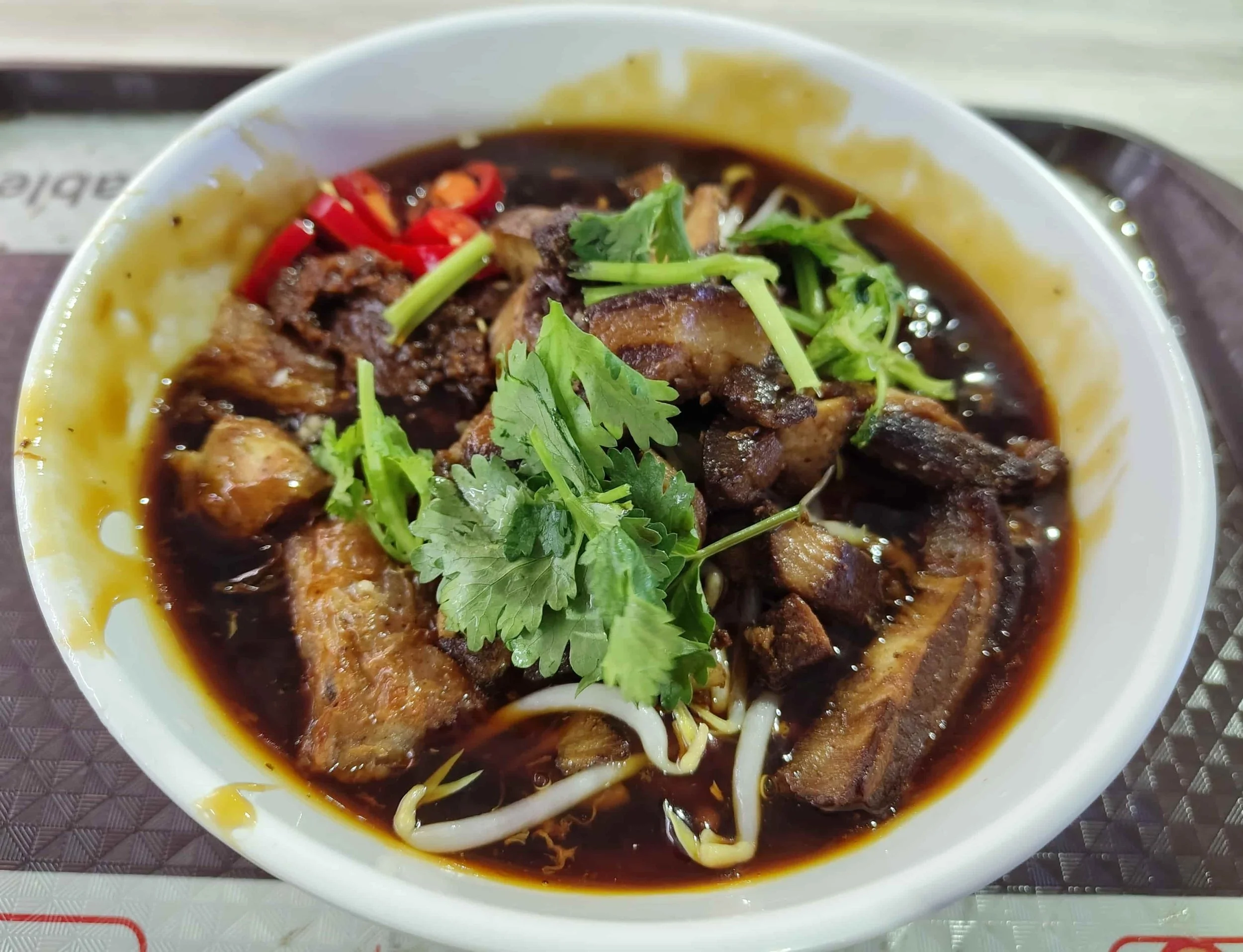
lor mee
noodles in thick sauce
What is it?
A distinctive Singaporean noodle dish consisting of yellow noodles served in a thick gravy. Originally brought by Fujian (Hokkien) immigrants, what sets lor mee apart from other noodle soups is its unusually thick sauce. Rather than a clear broth, the noodles are covered in a gravy that clings to every strand, giving the dish its characteristic texture and flavour. The combination of thick sauce, noodles and a variety of toppings makes lor mee one of Singapore’s most unique noodle dishes.
What is in it?
Lor mee is typically made with thick yellow wheat noodles served in a savoury gravy thickened with starch. The sauce is usually flavoured with ingredients such as garlic, soy sauce, spices and stock, and often enriched with beaten egg. Common toppings include braised pork, fried fish, fish cakes, ngoh hiang (five spice roll) and hard boiled egg. Many stalls also provide condiments such as minced garlic, chilli, black vinegar and coriander; these are often mixed into the sauce for extra flavour.
Where can I eat it?
Lor mee is available at hawker centres throughout Singapore, and different vendors have their own take on the dish, particularly when it comes to toppings and the thickness of the gravy. A good place we had it was Xin Mei Xiang, located at Old Airport Road Food Centre,
Dairy free.
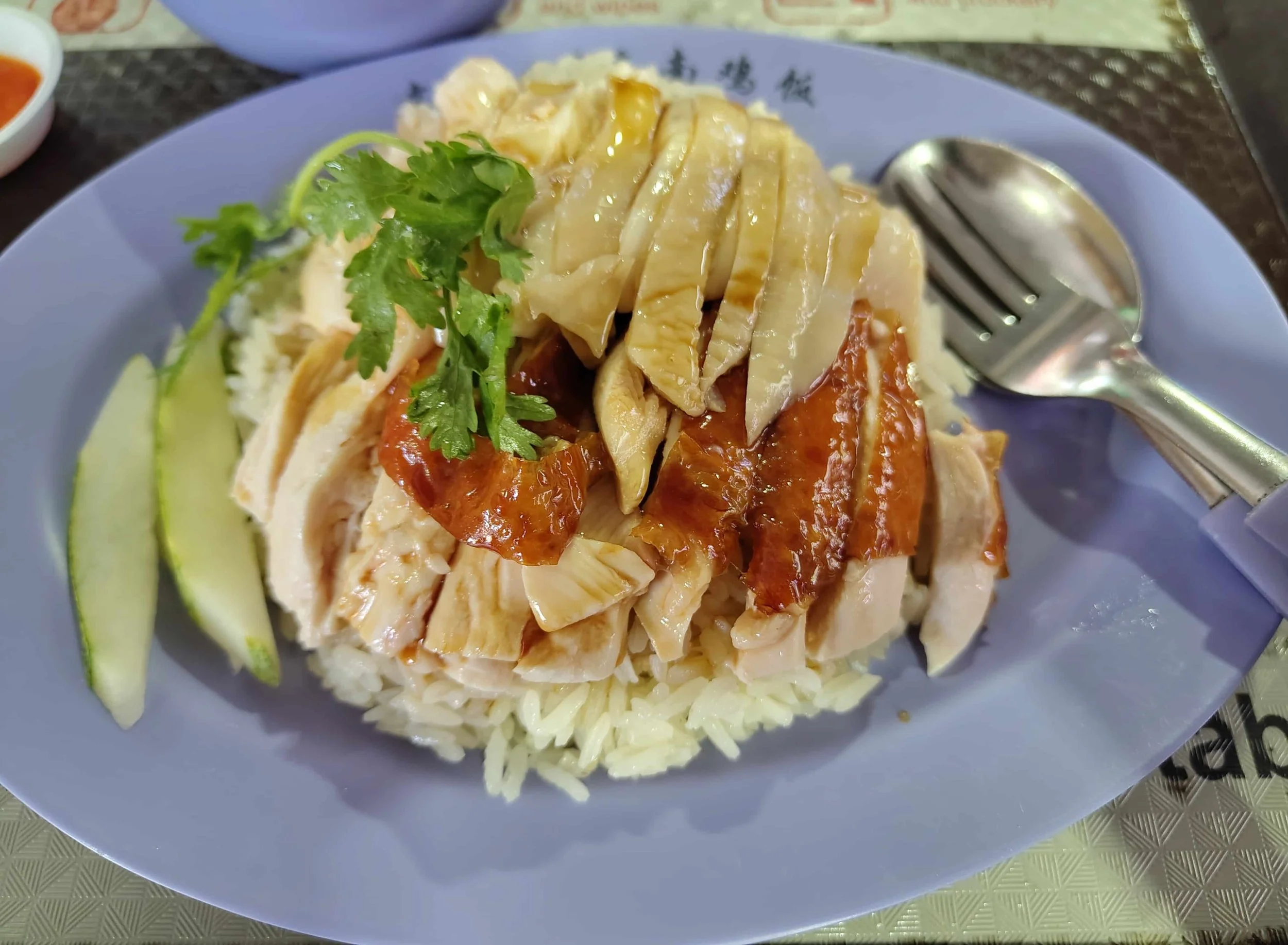
Hainanese chicken rice
chicken & rice
What is it?
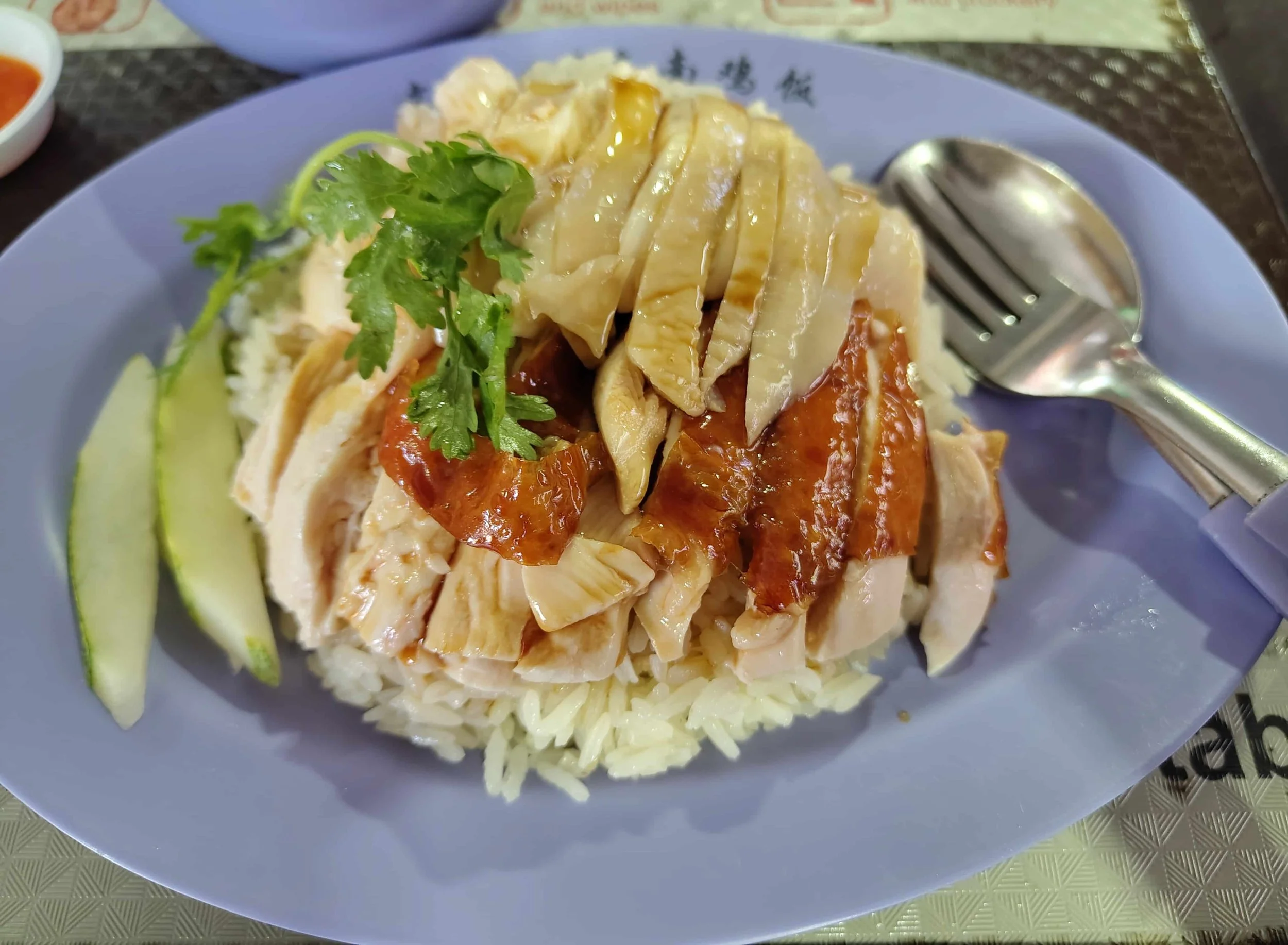
Often regarded as Singapore’s national dish, Hainanese chicken rice consists of chicken served with rice cooked in chicken stock, accompanied by a selection of sauces and a bowl of soup. Originally brought to Singapore by immigrants from China’s Hainan province, it has evolved into one of the country’s most iconic meals.
What is in it?
The dish consists of chicken served with rice that has been cooked in chicken stock, garlic and ginger. There are three common ways to order the chicken:
Poached (white) chicken – the classic version, with tender, silky meat.
Roasted chicken – cooked until the skin is golden and slightly firmer, with a richer flavour.
Mixed chicken – a combination of both poached and roasted chicken on the same plate, offered by many stalls.
The meal is usually accompanied by chilli sauce, ginger paste and dark soy sauce, plus a light bowl of chicken broth. Sliced cucumber is also commonly served alongside the chicken and rice, often with coriander and sometimes tomato.
Where can I eat it?
Hainanese chicken rice is available throughout Singapore and is one of the easiest dishes to find, from hawker centres to food courts and also dedicated chicken rice shops like Le Cheng Kampong Hainanese Chicken Rice.
Dairy free.
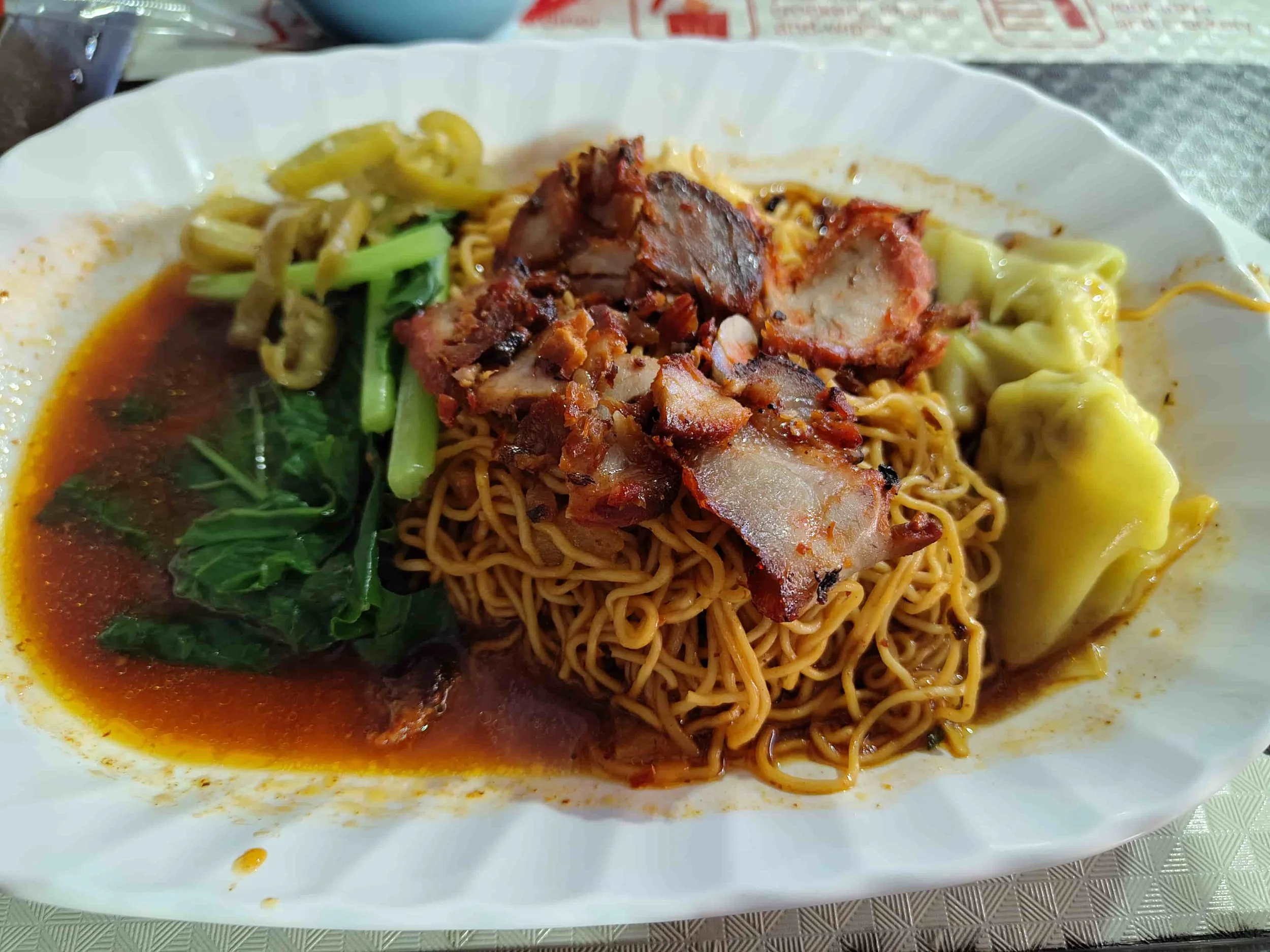
wanton mee
noodles & dumplings
What is it?
A classic Cantonese noodle dish that has become one of Singapore’s most popular hawker meals. Wanton mee consists of springy egg noodles served with wantons (dumplings) and accompanied by slices of char siu (Cantonese barbecue pork). In Singapore, the dish is most commonly served dry, with the noodles tossed in a savoury sauce. This differs from the Hong Kong style, where the noodles and dumplings are usually served together in broth.
While dry wanton mee is the most common version in Singapore, some stalls also offer a soup version.
What is in it?
The dish is made with thin egg noodles that are cooked until springy and then tossed in a sauce made from soy sauce, oyster sauce and other seasonings. The noodles are typically served with:
char siu (barbecue pork)
boiled wantons filled with pork and sometimes prawns
leafy green vegetables
pickled green chillies
a small bowl of soup (often pork-bone broth)
Where can I eat it?
Wanton mee is available at hawker centres throughout the country. A good place to try it is at Cho Kee Noodle located at Old Airport Road Food Centre.
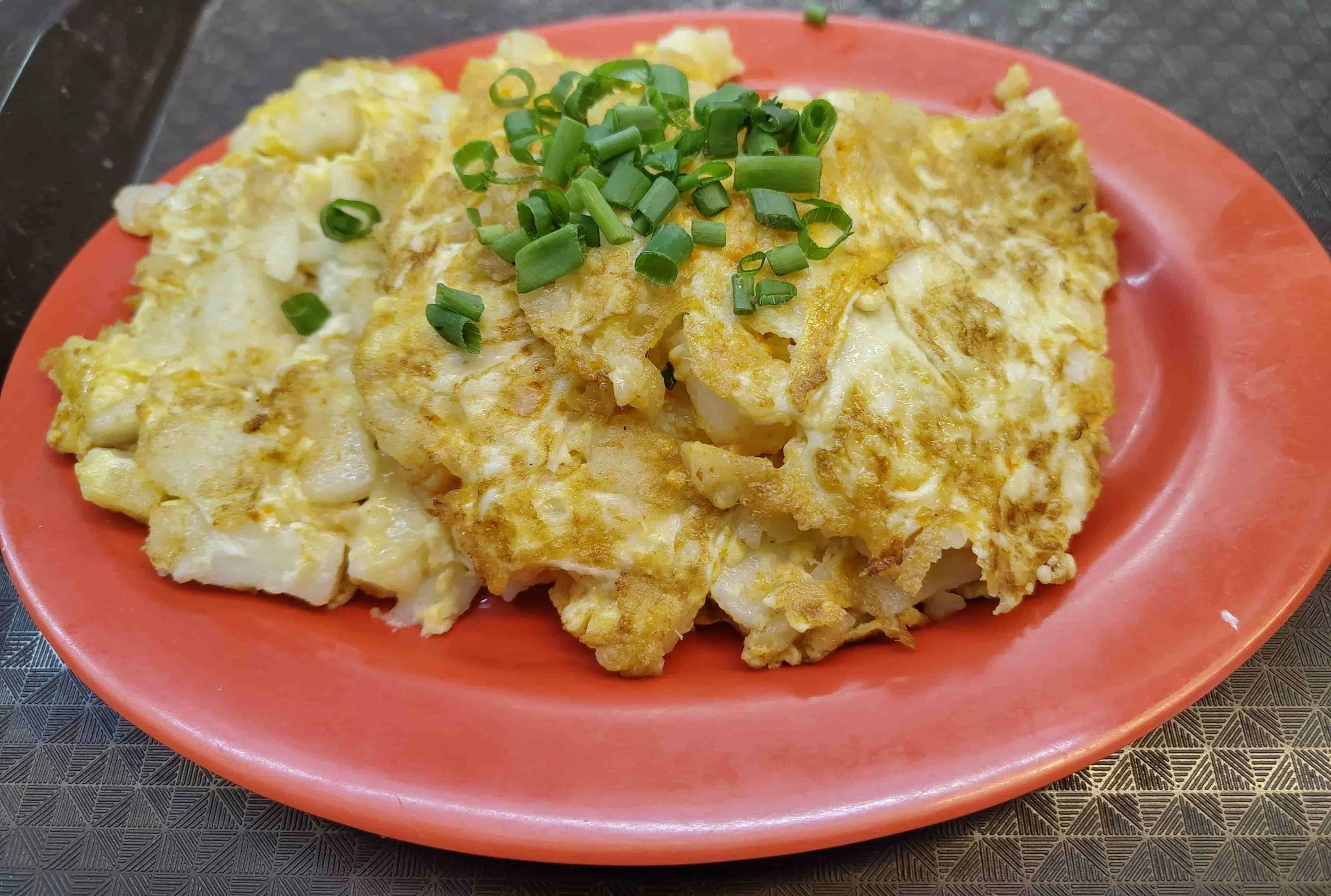
carrot cake
Savoury rice, radish cake
What is it?
Despite the name, Singaporean carrot cake has nothing to do with the sweet Western dessert and doesn’t even actually contain carrots. Instead, it is a savoury hawker dish made from cubes of fried radish cake. The dish originated from Chinese immigrants and is one of Singapore’s most popular breakfast and hawker foods. The “carrot” in the name refers to an old Chinese term for white radish (daikon), which is the main ingredient.
There are two main versions:
White carrot cake – fried with egg and preserved radish
Black carrot cake – cooked with sweet dark soy sauce, giving it a darker colour and sweeter flavour
The frying process creates a contrast between crispy edges and soft, slightly chewy centres. Both versions are popular, and some stalls allow you to order a mixture of the two.
What is in it?
Carrot cake is made from grated daikon radish and rice flour, which is steamed into a firm cake and then cut into cubes. These cubes are stir-fried with, eggs, garlic, spring onions and preserved radish. For the black version, sweet dark soy sauce is added during cooking.
Where can I eat it?
Carrot cake is available at hawker centres throughout Singapore and is easy to find; both versions can be found at places like the Chinatown Complex Food Centre.
Vegetarian, dairy free and typically gluten free.
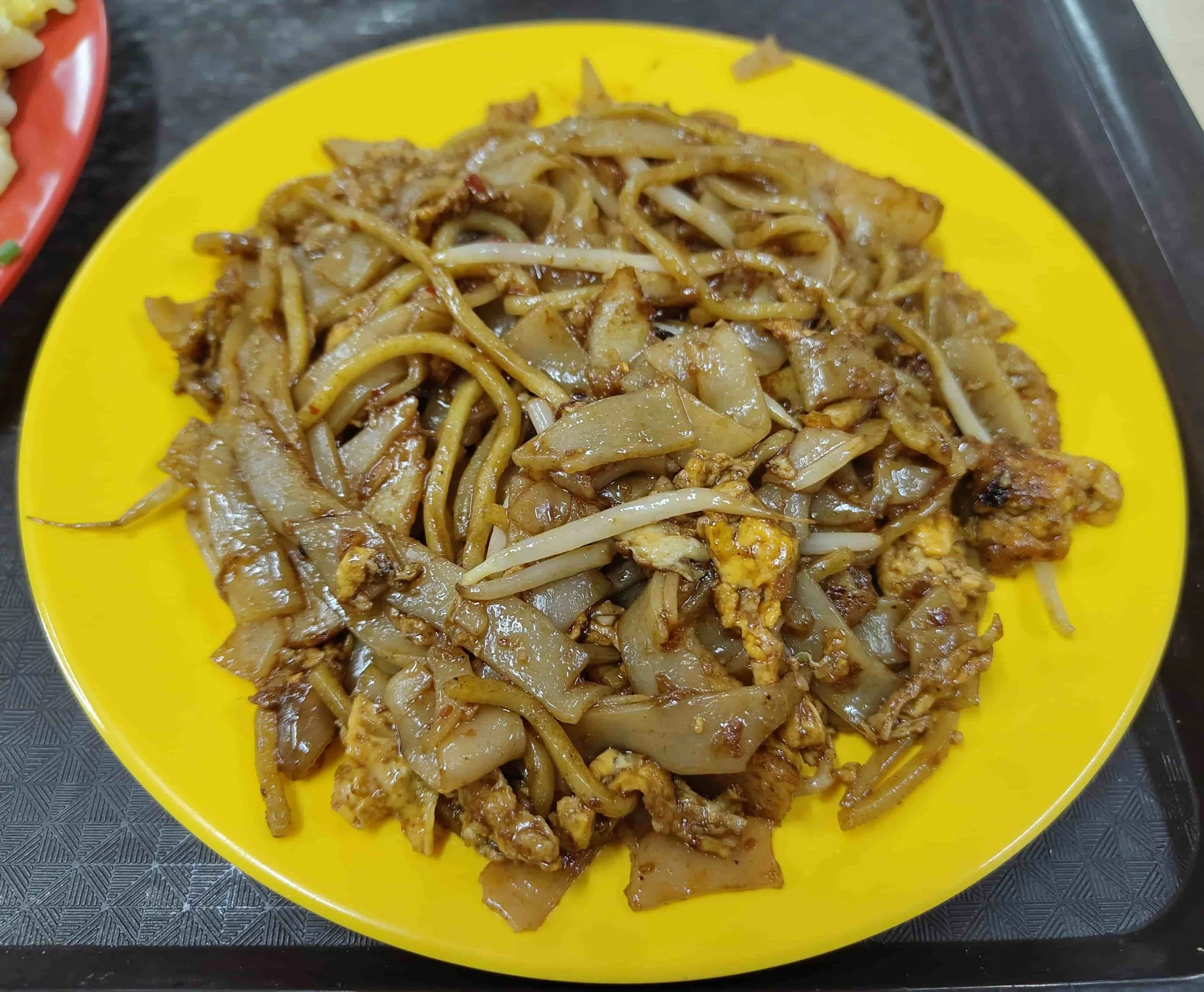
char kway teow
stir fried noodles
What is it?
Char kway teow consists of flat rice noodles stir fried over very high heat with a combination of seafood, egg, Chinese sausage and savoury sauces. Originally a cheap, filling meal for labourers, it has become a staple of Singaporean cuisine. It is cooked in a hot wok, developing the smoky flavour known as wok hei (“breath of the wok”), which is considered the hallmark of a great version. The ingredients are cooked together over intense heat, creating slightly charred edges and the smoky flavour that defines the dish. You will often see it listed as fried kway teow.
Char kway teow is also available in Malaysia, where it is a popular hawker dish.
What is in it?
The dish is made with flat rice noodles (kway teow), often combined with yellow egg noodles, which are stir fried in a mixture of soy sauces and pork fat or oil. Common ingredients include prawns, Chinese sausage (lap cheong), egg, bean sprouts, garlic and chives. Many versions are also available with cockles.
Where can I eat it?
Char kway teow is available at hawker centres throughout Singapore and is one of the country’s essential hawker dishes.
Dairy free.
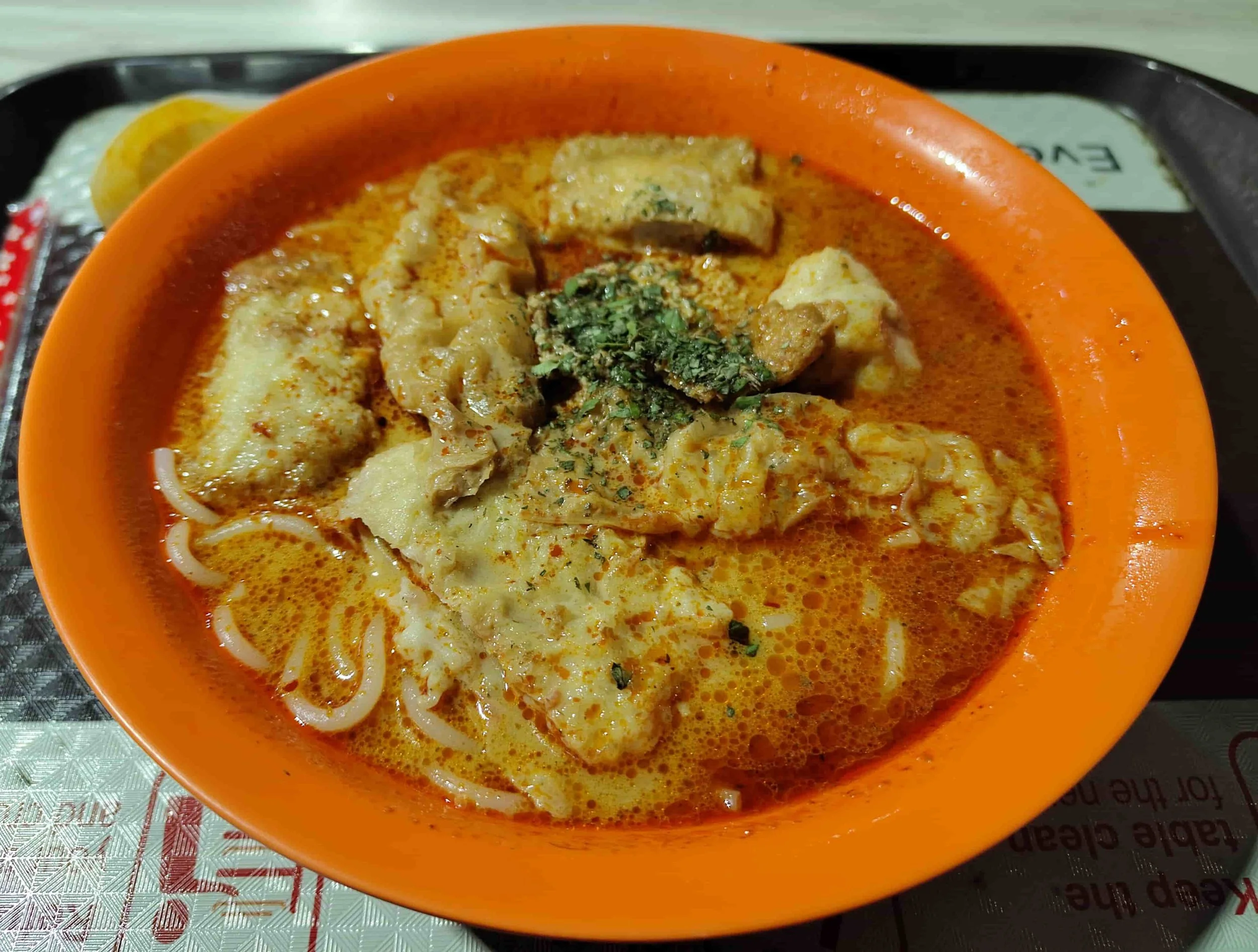
laksa
spicy noodle soup
What is it?
Laksa is one of Singapore’s most famous noodle soups, combining Chinese and Malay culinary influences. The Singapore version is often associated with Katong laksa, named after the Katong neighbourhood where it became especially popular. It has a creamy, aromatic broth made with coconut milk and chilli. Katong laksa is a variant of laksa lemak and is strongly associated with Singapore’s Peranakan food culture.
Laksa is also very popular in Malaysia, where there are many different versions, including assam laksa, curry laksa, Sarawak laksa and Johor laksa.
What is in it?
Laksa usually consists of thick rice noodles served in a spicy coconut broth made from coconut milk, dried shrimp, chilli and a blend of aromatic spices. Common toppings include prawns, fish cake, tofu puffs and bean sprouts.
Where can I eat it?
Laksa is available throughout Singapore at hawker centres and specialist laksa stalls. It is particularly associated with the Katong and Joo Chiat areas of eastern Singapore, where several well-known laksa stalls are located.
Dairy free.
While Singaporean cuisine has its own specialities, it shares many traditional dishes with neighbouring Malaysia and to a lesser extent Indonesia. For a deeper look at some of these shared classics, see our Malaysia & Indonesian food guides.
Ingredients listed reflect common or typical components of this dish as served in restaurants or street‑food vendors. Variations by region, season, or vendor are common. This information is provided for general reference only. If you have dietary restrictions or allergies, please verify ingredient details independently. We assume no liability for accuracy or outcomes.
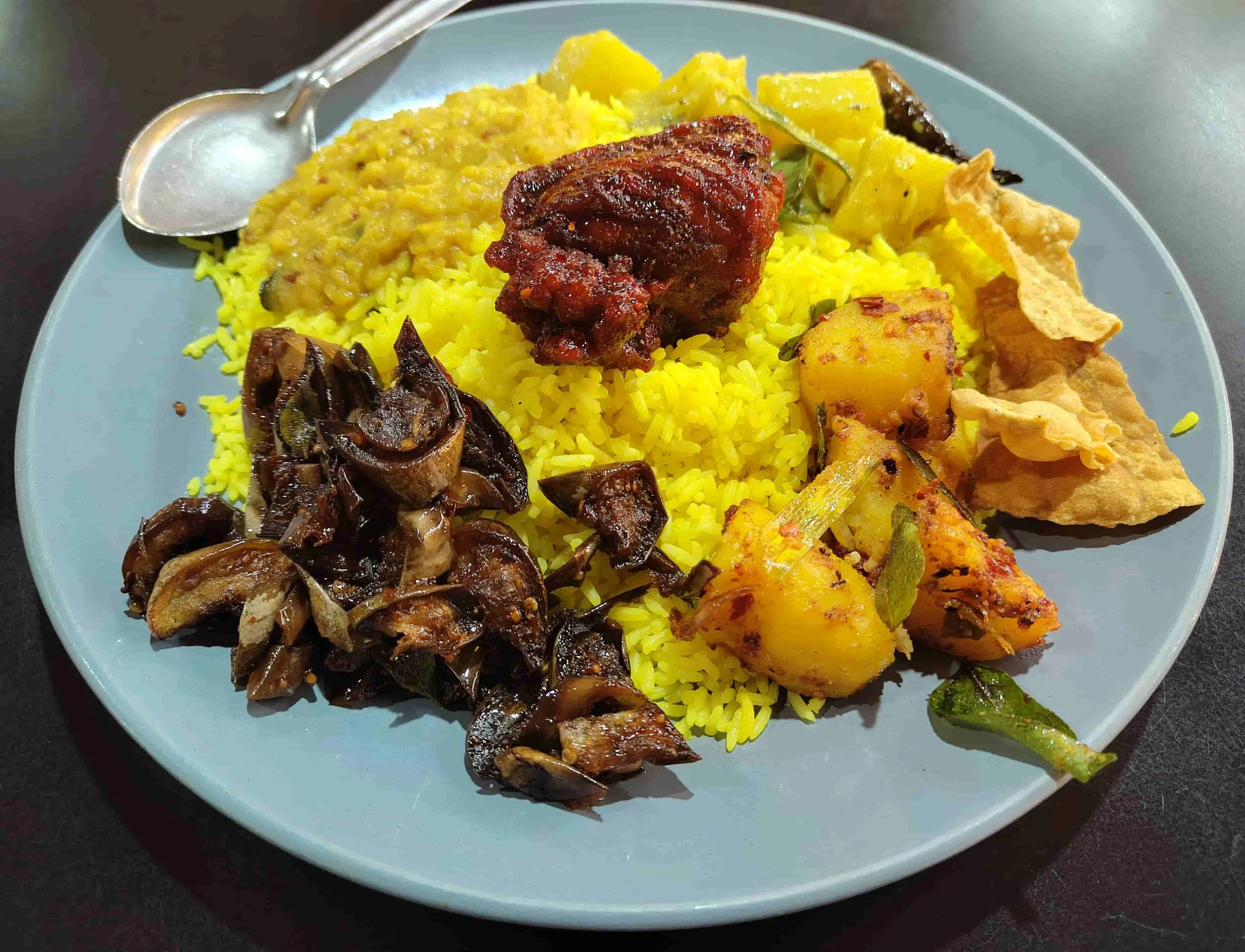
all the foods - Sri Lanka
Discover all the traditional Sri Lankan dishes we tried, from hoppers and devilled chicken to kottu and more
Unlike many cuisines, where a single curry is served as the main dish, the classic Sri Lankan meal is known as rice and curry. Rather than one large dish, it consists of steamed rice accompanied by several smaller curries and side dishes.
It is somewhat similar to an Indian thali, although Sri Lankan rice and curry is generally less fixed in its composition. A typical meal may include a meat, fish, or vegetable curry, dhal, one or more vegetable dishes, a sambol, and sometimes pickles, papadum, or other accompaniments. The exact combination varies between restaurants.
The following dishes are among the most common you are likely to encounter as part of a traditional Sri Lankan rice and curry.
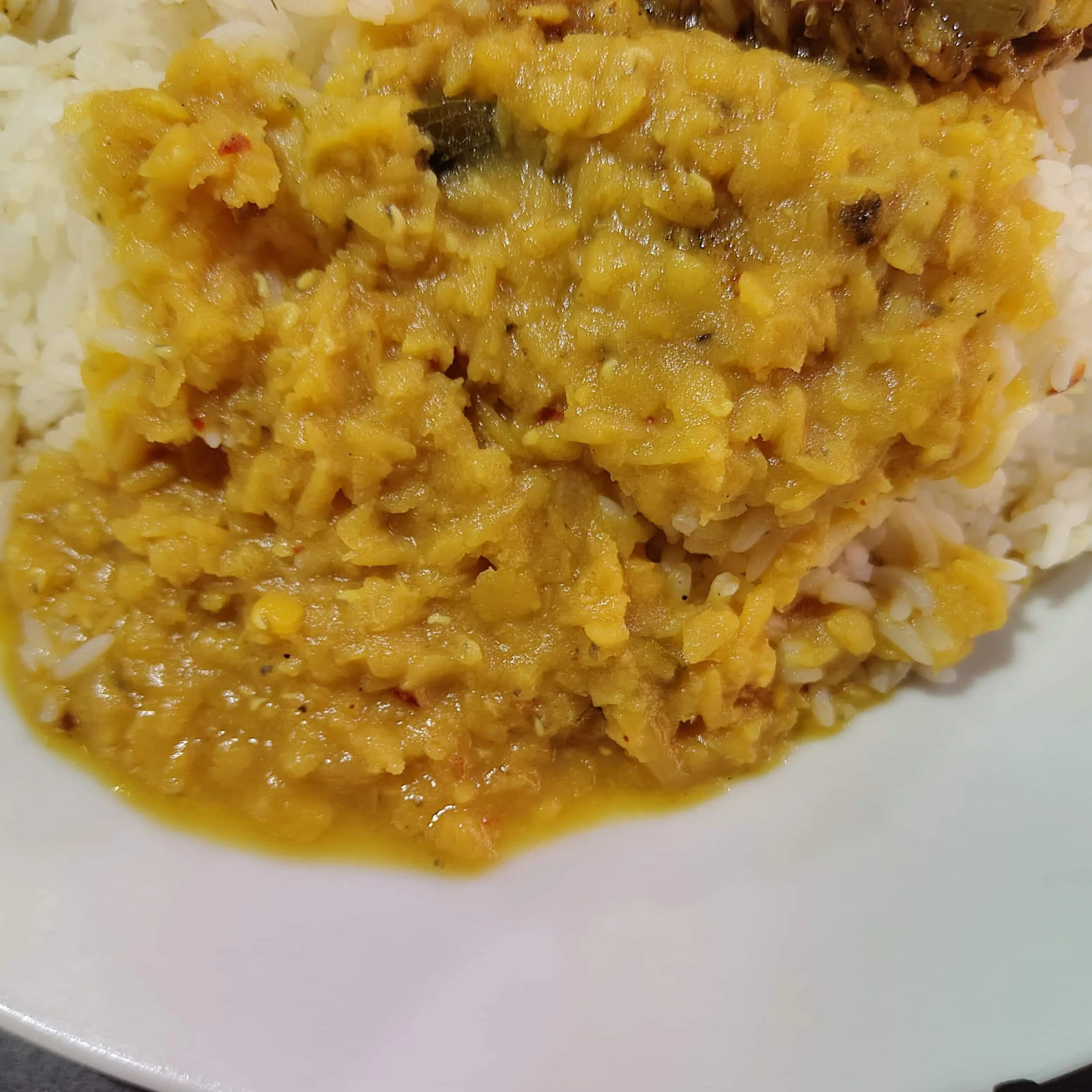
dhal
lentil curry
What is it?
Dhal curry is the most common curry served as part of a traditional Sri Lankan rice and curry meal. Made from red lentils cooked until soft, it is a mildly spiced dish that accompanies almost every rice and curry spread. Unlike in many countries where dhal is eaten as a main dish, in Sri Lanka it is typically one of several curries served together around a mound of rice.
What is in it?
The curry is usually made from red lentils simmered with coconut milk, onion, garlic, turmeric, curry leaves, mustard seeds and chilli. Many versions also include pandan leaf, and some recipes add cumin or Sri Lankan curry powder. A final tempering of fried onion, garlic, mustard seeds and curry leaves is common and adds a lot of flavour.
Where can I eat it?
Dhal curry is served almost everywhere in Sri Lanka and is one of the few curries you can expect to find with virtually every rice and curry meal. It is a staple in homes, restaurants and casual eateries across the country.
Vegan, dairy free and gluten free.
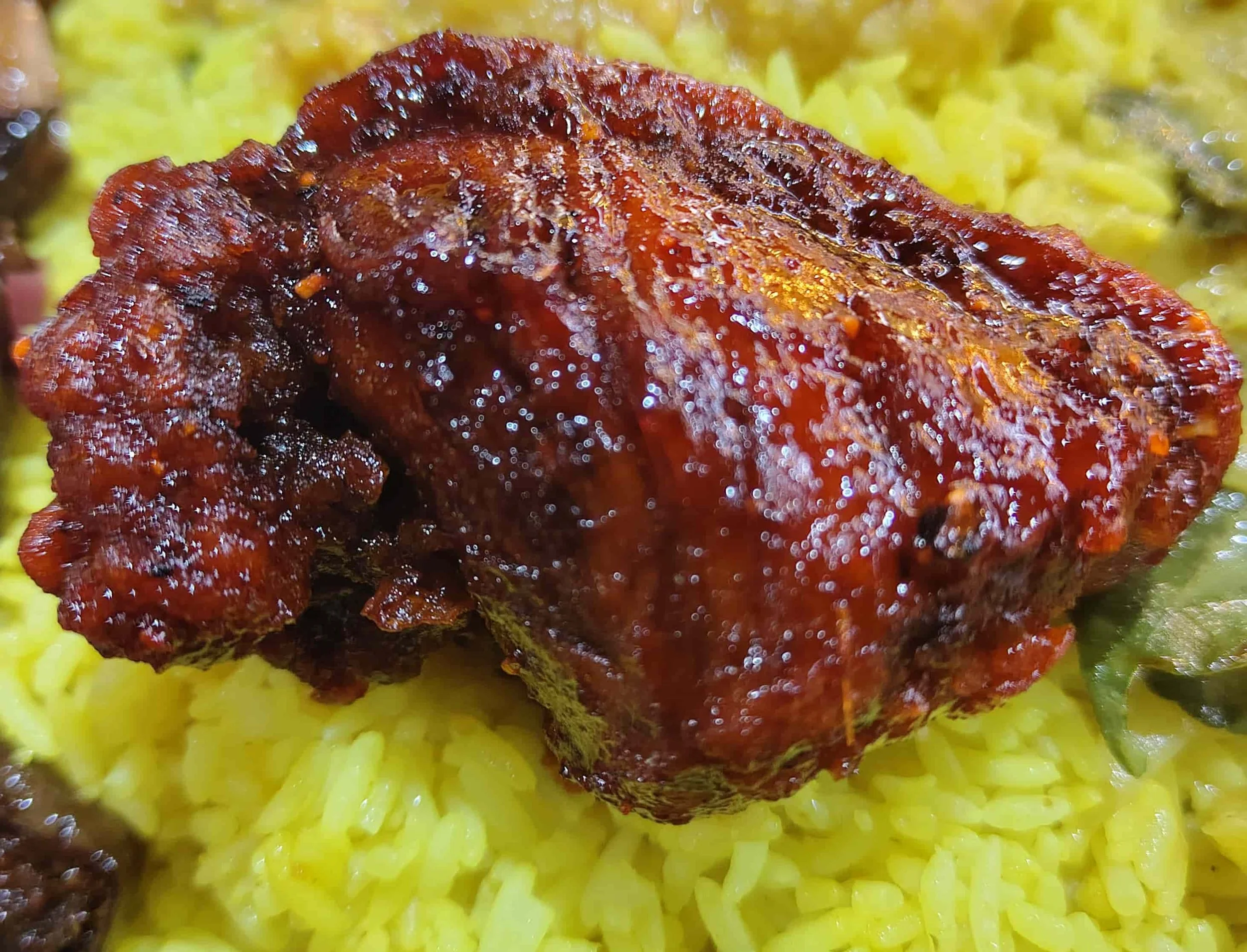
devilled chicken
spicy, sticky chicken
What is it?
Devilled chicken is a popular Sri Lankan chicken dish consisting of crispy pieces of chicken stir fried in a thick, spicy, sweet and tangy sauce. Despite the name, it is not a curry but a dry style stir fry that is especially popular in restaurants. The term “devilled” refers to the dish’s spiciness rather than a specific cooking method. It is thought to have developed during the colonial period, adapting the British idea of “devilled” foods into a distinctly Sri Lankan dish.
What is in it?
The dish is made with pieces of chicken that are usually deep fried or stir fried before being coated in a thick sauce. The sauce typically includes onion, garlic, ginger, green peppers, tomatoes, soy sauce, tomato ketchup, chilli, vinegar and sugar. Some versions also include curry leaves, black pepper, chilli flakes or fish.
Where can I eat it?
Devilled chicken is widely available throughout Sri Lanka and is a common restaurant option. It is usually listed simply as Devilled Chicken on English menus and is often served with rice, fried rice, noodles or chips and as the protein option in a rice and curry meal.
Dairy free.
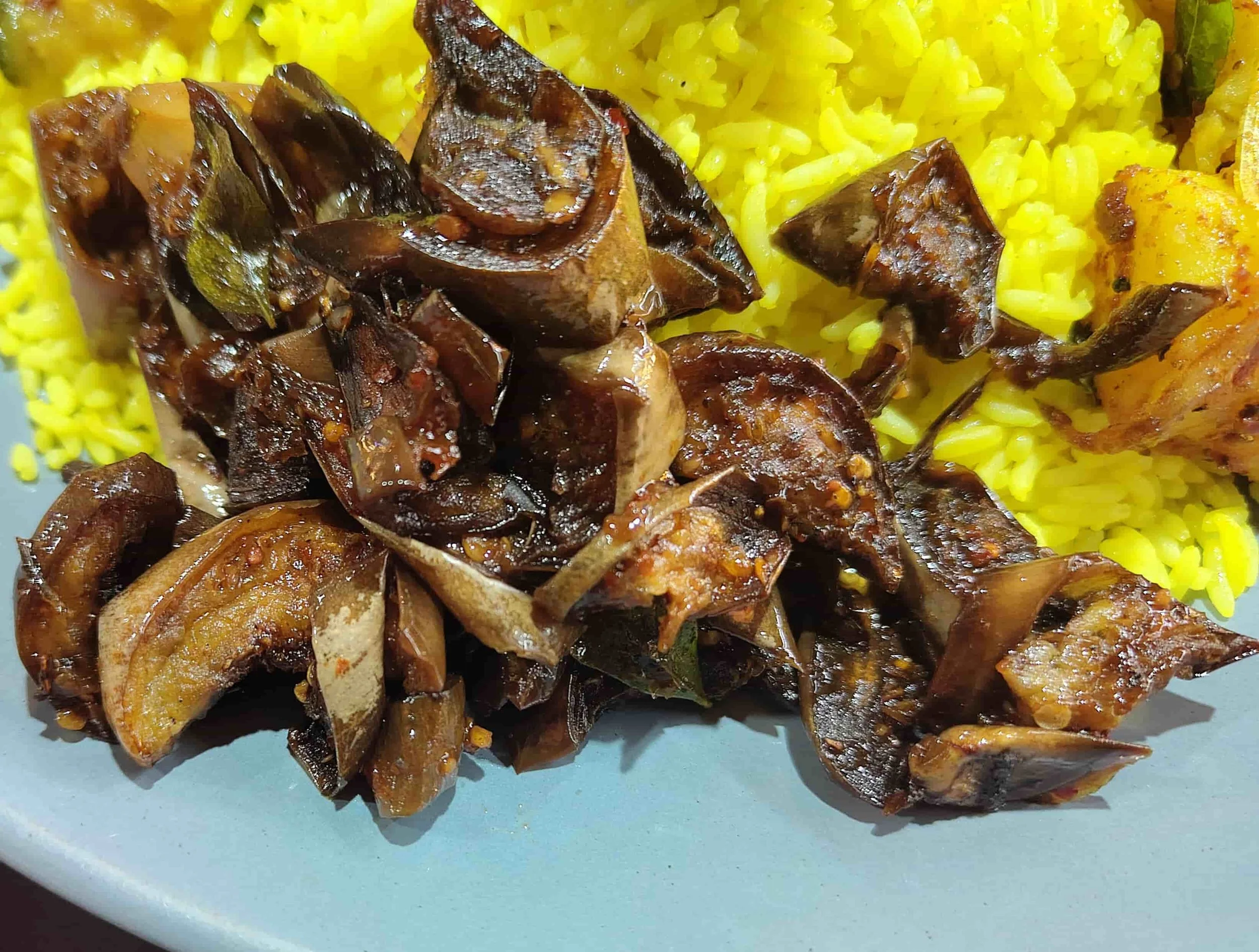
wambatu moju
aubergine pickle
What is it?
Wambatu moju is a traditional Sri Lankan side dish made from fried aubergine (eggplant) that is marinated in a sweet, sour and spicy sauce. Rather than being a curry, it is a type of moju, a pickle or relish served in small quantities alongside a traditional rice and curry meal. It is a classic accompaniment on festive tables and has a tangy flavour.
What is in it?
The dish is made by cutting aubergine into strips and deep frying them. It is then mixed with a sweet and tangy dressing made from vinegar, sugar, onions, garlic, mustard seeds, curry leaves, chilli and spices. Some recipes also include green chillies, turmeric, ginger, tamarind or fried shallots.
Where can I eat it?
Wambatu moju is commonly served as part of a traditional rice and curry meal throughout Sri Lanka.
Vegan, dairy free and gluten free.
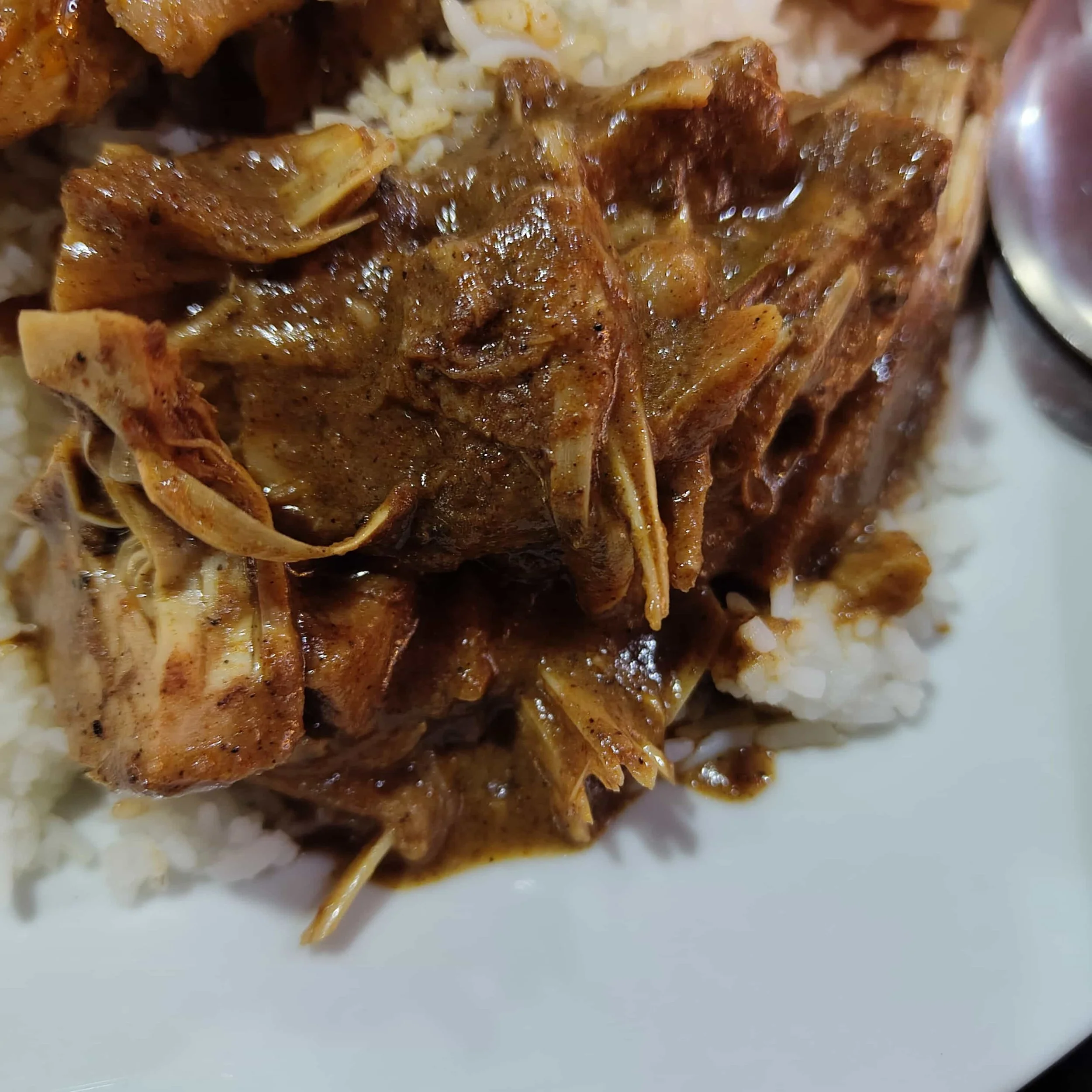
polos curry
young jackfruit curry
What is it?
Polos curry is a Sri Lankan vegetarian curry made from young green jackfruit. It is a common part of a traditional rice and curry meal and is especially popular because it has an almost meaty texture despite being completely vegetarian. Young jackfruit is used before it fully ripens, when it is still firm and able to absorb spices and coconut based sauces. The jackfruit is simmered for a long time so it becomes tender and fibrous, taking on the flavour of the spice blend and coconut sauce. Some versions are drier and more heavily spiced, while others are richer and more saucy depending on restaurant style.
What is in it?
Polos curry is made from chopped young jackfruit. The curry base typically includes coconut milk, onion, garlic, ginger, curry leaves, pandan leaf, mustard seeds, turmeric, chilli and roasted Sri Lankan curry powder. Some versions also include tamarind or goraka (similar to tamarind) for a slightly sour edge.
Where can I eat it?
Polos curry is very commonly served as part of a rice-and-curry set across Sri Lanka.
Vegan, dairy & gluten free.
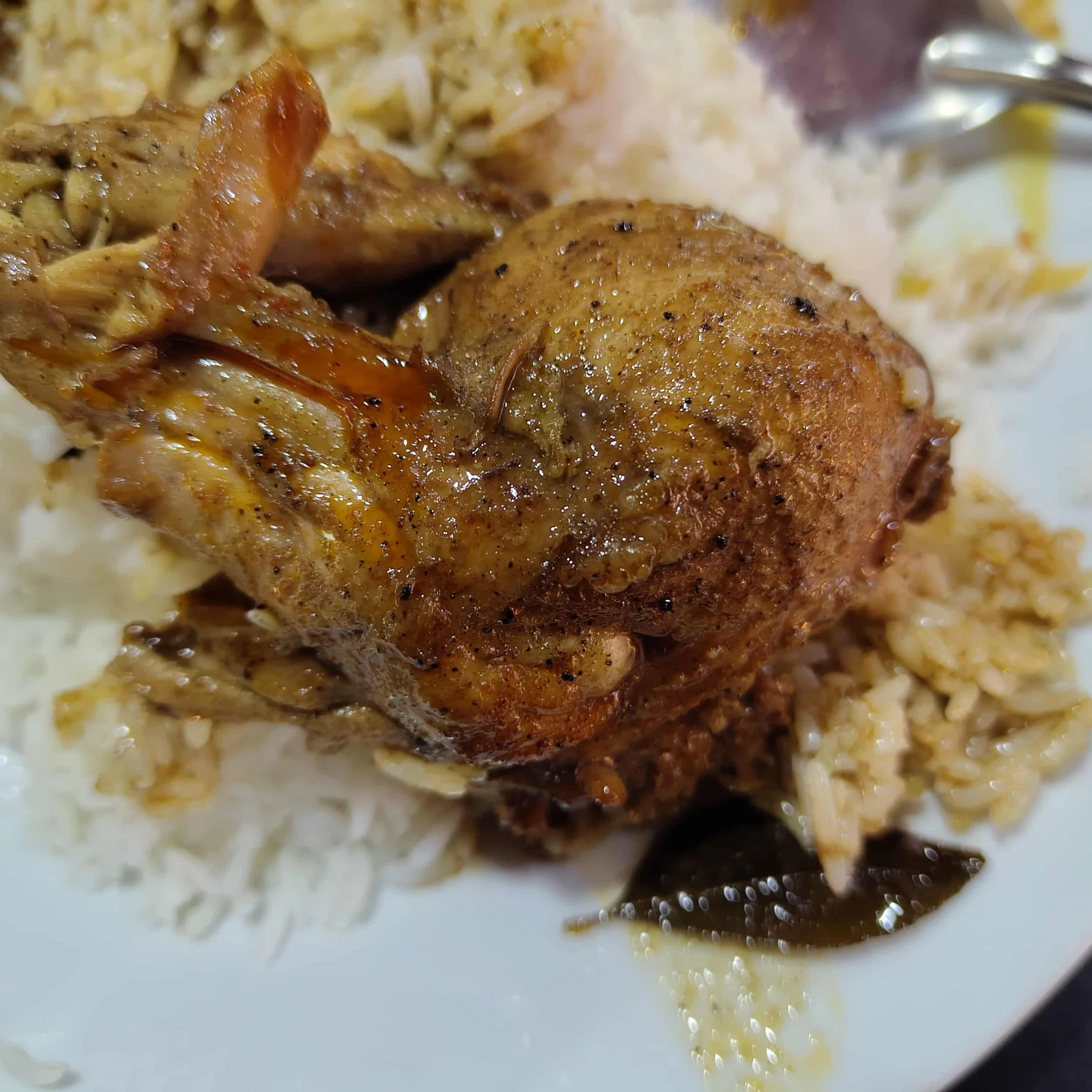
kukul mas curry
chicken curry
What is it?
Kukul mas curry is one of the most common meat curries served as part of a traditional Sri Lankan rice and curry meal. “Kukul mas” simply means chicken meat. It is typically intensely spiced, with strong use of roasted spice blends and coconut based sauces. The curry is made with chicken pieces, traditionally bone in, cooked slowly in a spiced sauce.
What is in it?
Made with bone-in chicken, the curry base usually includes onions, garlic, ginger, curry leaves, pandan leaf, cinnamon, cloves, cardamom, turmeric, chilli and Sri Lankan roasted curry powder. Many versions also include coconut milk.
Where can I eat it?
Kukul mas curry is available almost everywhere in Sri Lanka as part of rice and curry meals. It is one of the standard protein options, often served alongside dhal, vegetable curries and sambols.
Dairy and gluten free.
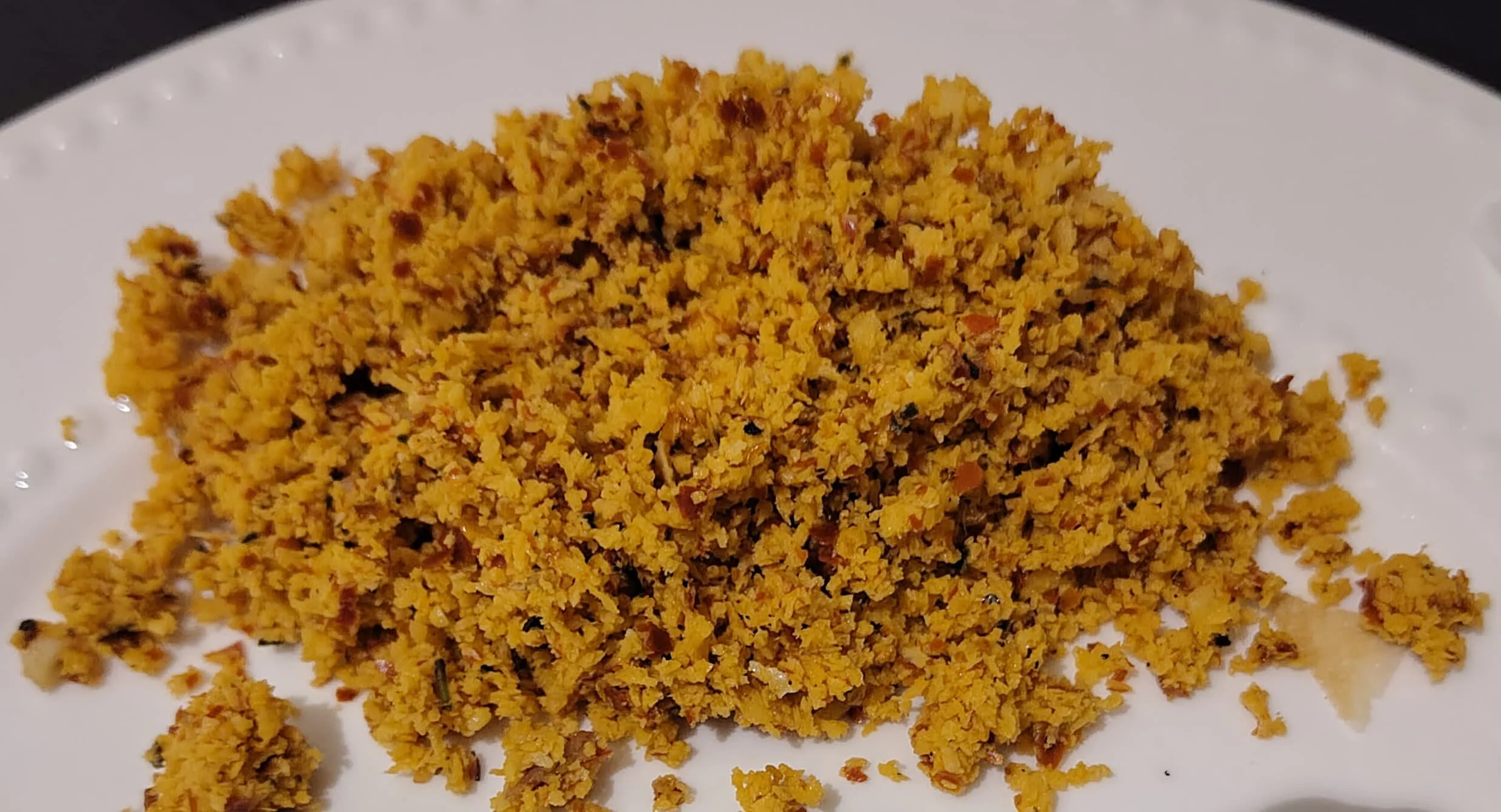
pol sambol
coconut sambol
What is it?
Pol sambol is one of Sri Lanka’s most iconic condiments, made from freshly grated coconut mixed with chilli, onion and lime. Rather than being eaten on its own, it is served alongside curries to add freshness, heat and texture to a traditional rice and curry meal. It is one of the most common accompaniments in Sri Lankan cuisine and can also be enjoyed with hoppers, string hoppers, roti and other breads. The ingredients are traditionally ground together using a stone mortar and pestle, creating a coarse, slightly moist relish.
What is in it?
Pol sambol is made from freshly grated coconut mixed with red chilli flakes or chilli powder, finely chopped onion or shallots, lime juice and salt. Some versions also include green chilli, garlic, curry leaves or black pepper.
Where can I eat it?
Pol sambol is served almost everywhere in Sri Lanka and is one of the most common accompaniments to a rice and curry meal. It is also a classic side for hoppers, string hoppers and roti.
Vegan, dairy free and gluten free.
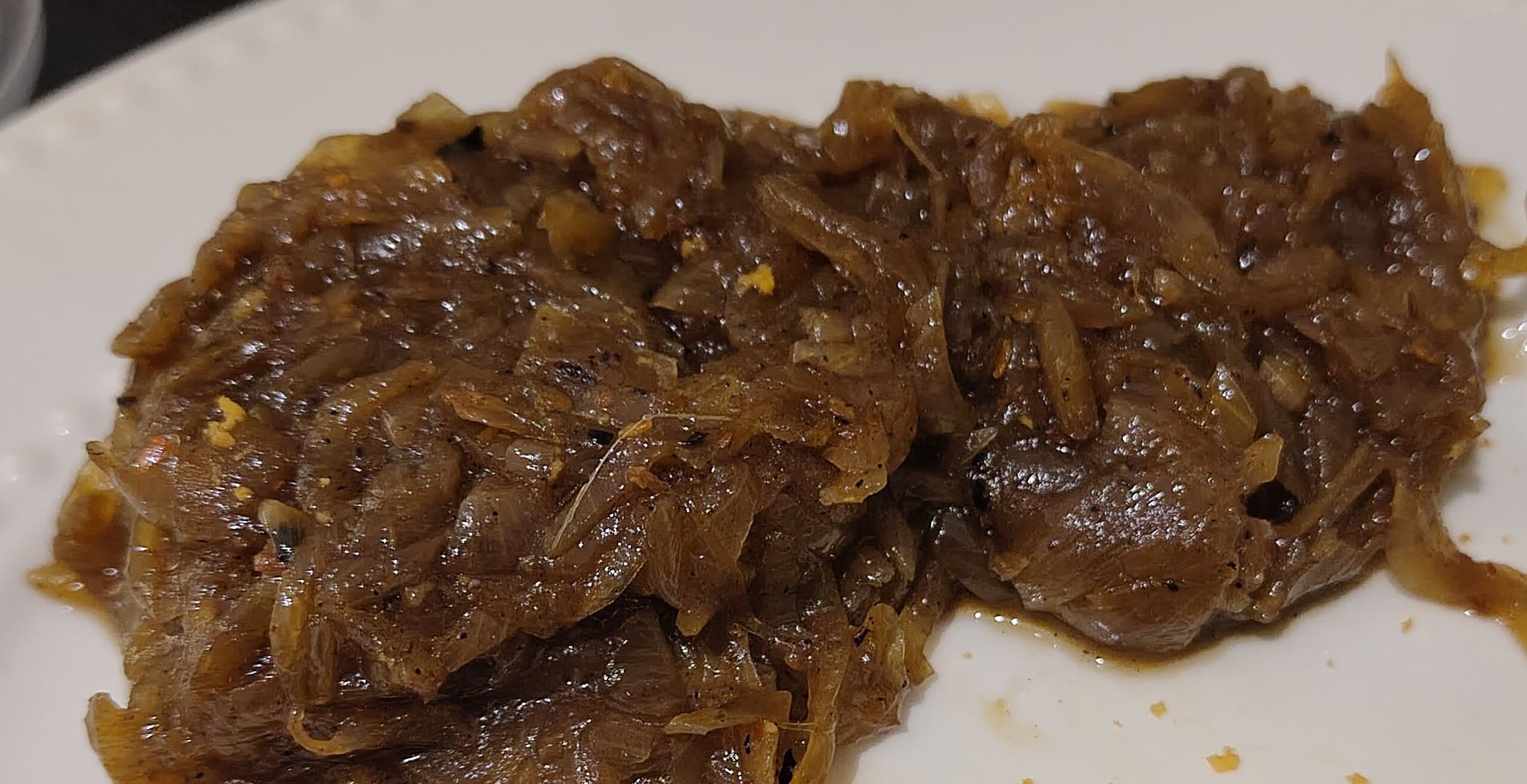
seeni sambol
onion sambol
What is it?
Seeni sambol is a sweet and savoury onion relish that is one of Sri Lanka’s most popular accompaniments. Despite the name, “seeni” means sugar, not onion, referring to the sambol’s characteristic sweetness rather than its main ingredient. Unlike the fresh, spicy flavour of pol sambol, seeni sambol is slow cooked until the onions become soft, dark and caramelised, creating a jam like condiment. It is commonly served alongside a rice and curry meal but is equally popular with hoppers, string hoppers, roti and bread.
What is in it?
Typical ingredients include onions, chilli flakes or chilli powder, curry leaves, cinnamon, sugar, tamarind and salt. Many traditional recipes also include Maldive fish (dried cured tuna).
Where can I eat it?
Seeni sambol is served throughout Sri Lanka and is commonly found as part of traditional rice and curry meals. It is also a classic accompaniment to hoppers, string hoppers, roti and bread.
Vegan versions are available, dairy free and gluten free.
While rice and curry is the foundation of Sri Lankan cuisine, it is far from the only food worth trying. The following dishes are typically enjoyed separately, whether as breakfast, street food, snacks or standalone meals, rather than as part of a traditional rice and curry.
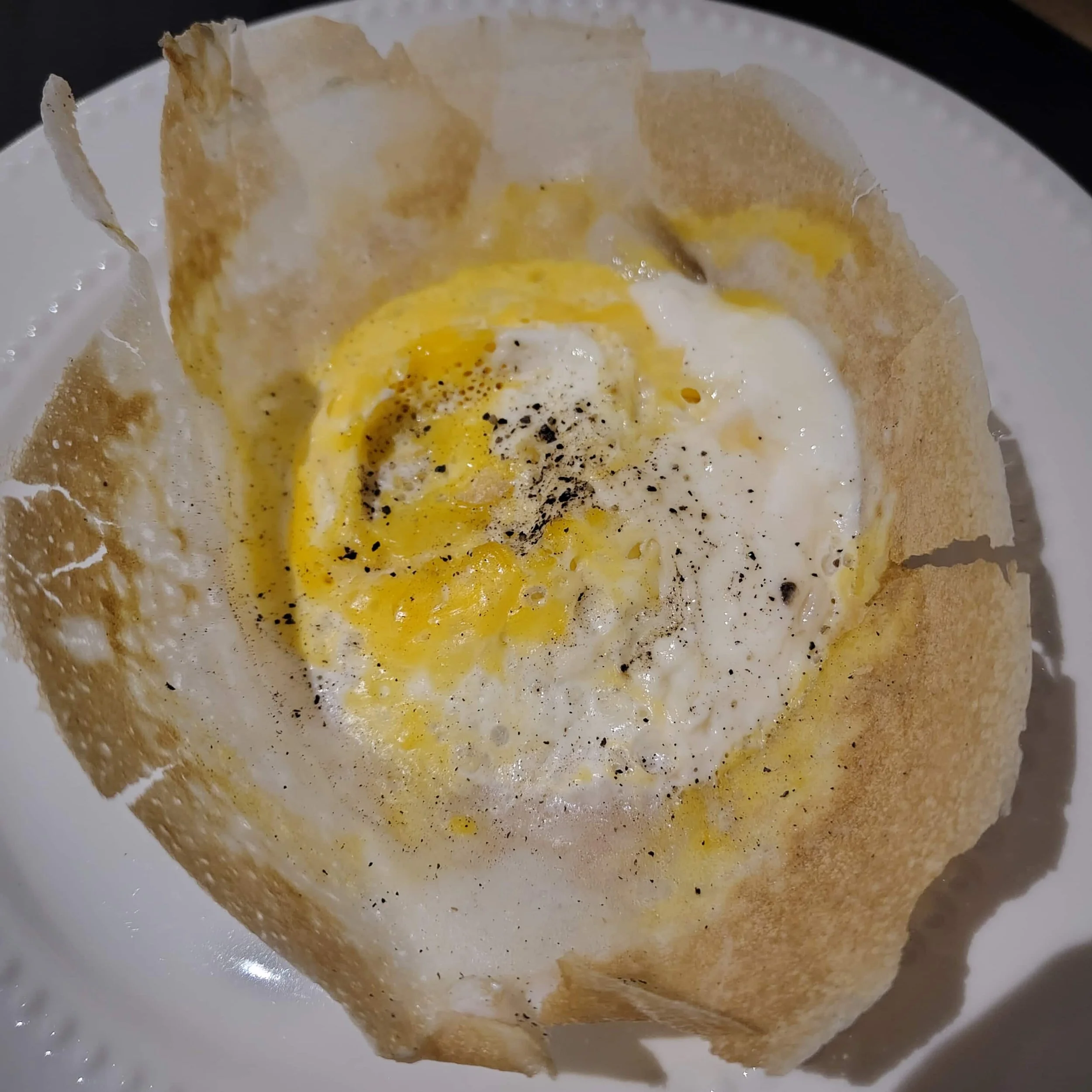
hoppers
rice flour pancakes
What is it?
Hoppers are one of Sri Lanka’s most distinctive and popular dishes. Made from a fermented rice flour batter, they are cooked in a small bowl shaped pan, creating a thin, crispy edge and a soft, fluffy centre. They are most commonly eaten for breakfast and are usually served with a selection of curries and sambols rather than on their own. While plain hoppers are great, egg hoppers are arguably the most iconic version, with an egg cracked into the centre while the hopper cooks.
What is in it?
The batter is traditionally made from rice flour, coconut milk, water and a small amount of yeast, giving the hopper its light, airy texture. For an egg hopper, a whole egg is cracked into the middle of the hopper while it cooks, leaving the edges crisp while the centre remains soft with a perfectly cooked egg.
Where can I eat it?
Hoppers are available throughout Sri Lanka, particularly at breakfast and dinner. You’ll find them at traditional restaurants and hopper specialist restaurants.
Vegan versions available. Dairy free and gluten free.
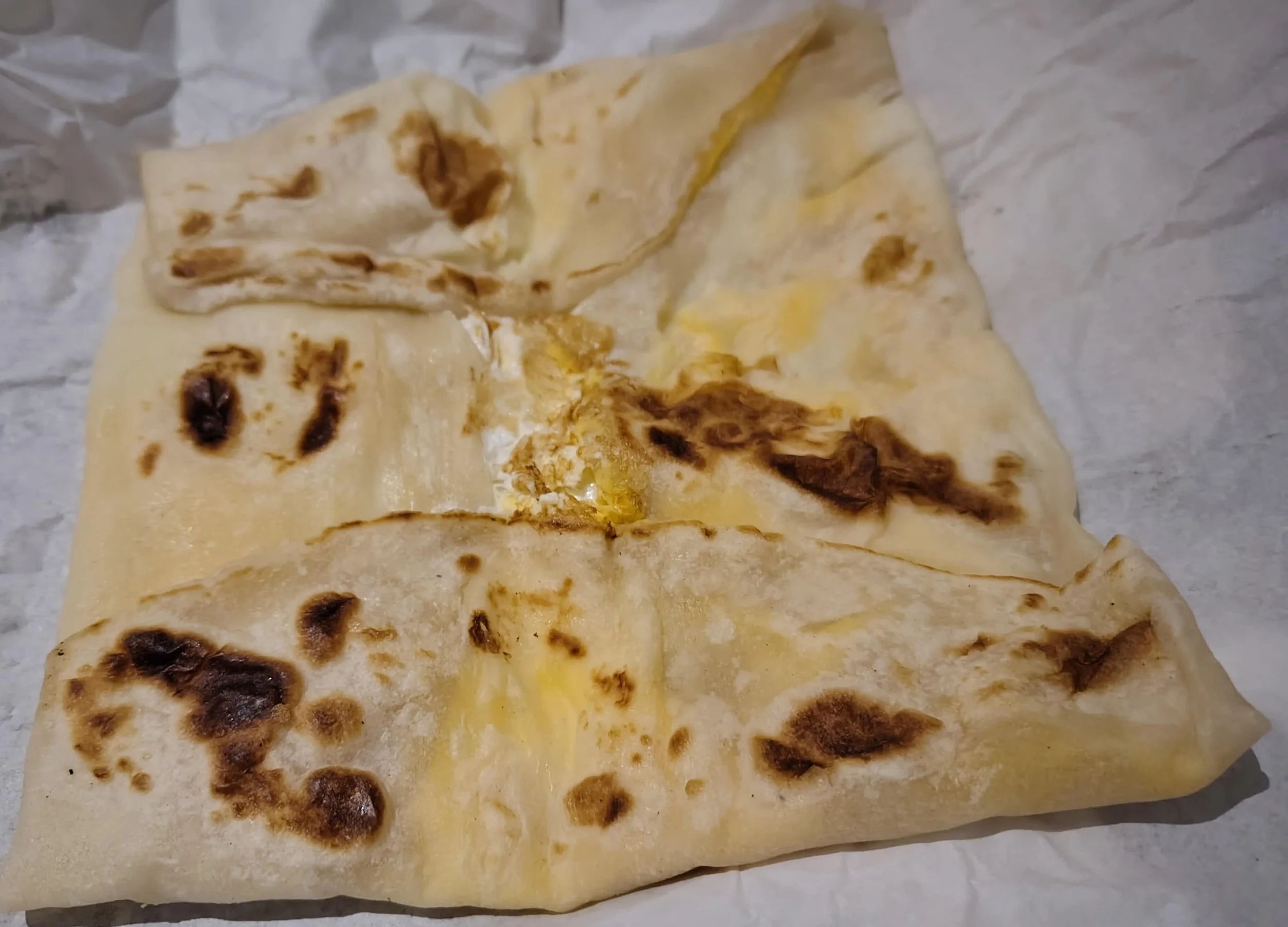
egg roti
egg in flatbread
What is it?
Egg roti is a popular Sri Lankan street food made by folding a thin godamba roti around an egg and cooking it on a hot griddle. Although it is one of the simplest roti dishes, it is also one of the most popular, and many stalls offer additional fillings to create more substantial versions. It is often served with a small pot of curry or a spoonful of seeni sambol for dipping.
What is in it?
The classic version consists of a thin godamba roti with a whole egg cracked into the centre before the dough is folded into a square and cooked on a flat griddle. The egg is usually seasoned with salt and pepper, and many vendors also add chopped onion, green chilli and curry leaves. Common variations include cheese egg roti, chicken egg roti and vegetable egg roti. The plain egg roti remains the most widely available version.
Where can I eat it?
Egg roti is sold throughout Sri Lanka and is especially common at street food stalls and takeaway places.
Vegetarian & dairy free.
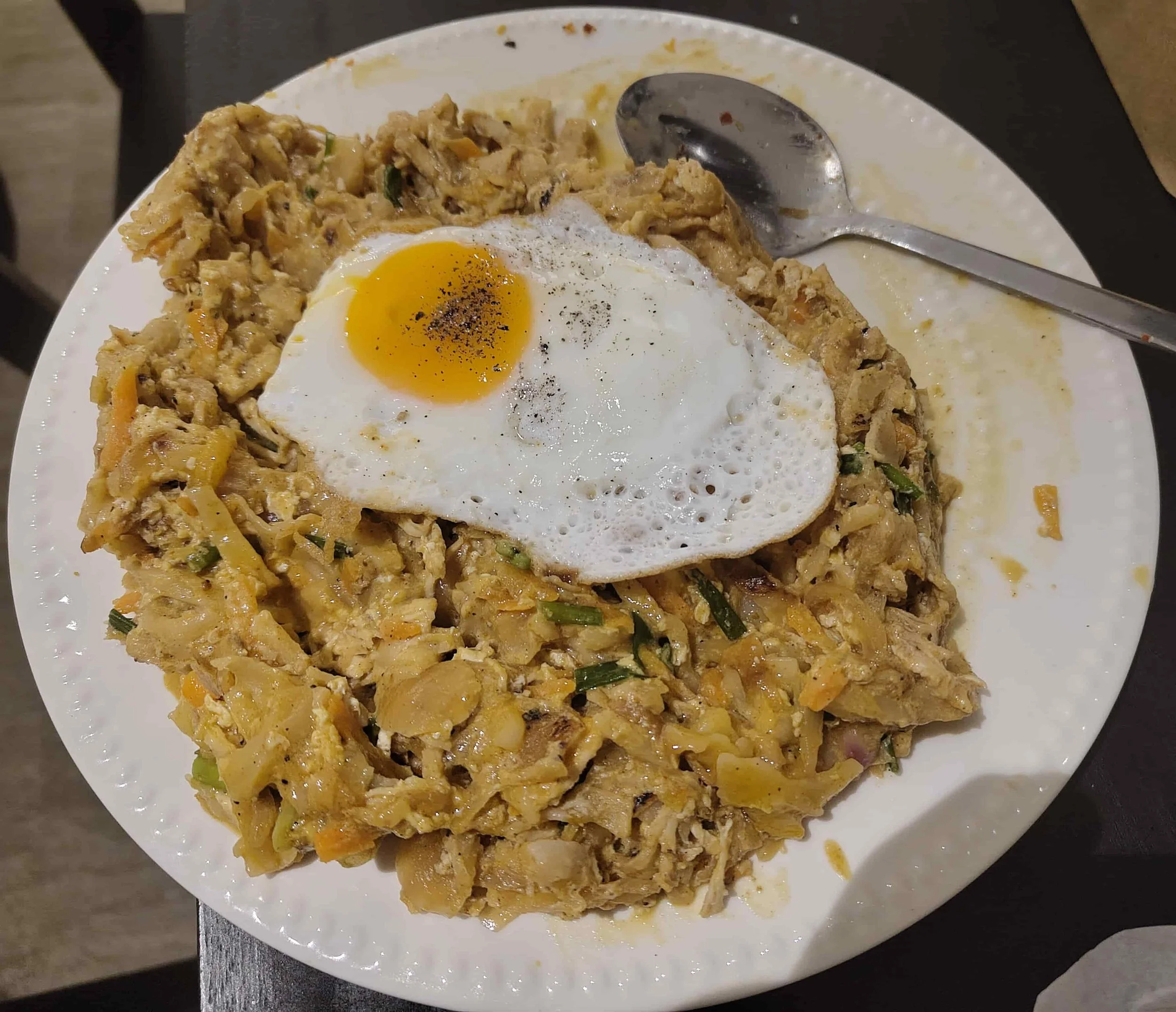
kottu roti
roti stir fry
What is it?
Kottu roti is one of Sri Lanka’s most famous and widely available dishes. It is made by chopping godamba roti into small pieces and stir frying it on a large flat griddle with vegetables, spices, egg and your choice of meat or seafood. The sound of the metal blades chopping the roti against the hot griddle is a familiar part of Sri Lankan street life, and you’ll often hear a kottu stall before you see it. Traditionally made with chopped godamba roti, the dish has inspired several popular variations, including string hopper kottu, which replaces the roti with string hoppers, and dolphin kottu, where the chopped roti is pressed into a dome or “dolphin” shape and cooked until the outside becomes extra crispy.
What is in it?
Classic kottu consists of chopped godamba roti stir fried with onion, cabbage, carrots, leeks, curry leaves, spices and usually egg. The mixture is then combined with your choice of protein. The most common options are chicken, beef, seafood, cheese or vegetables. String hopper kottu uses steamed rice noodle nests instead of roti, giving the dish a lighter texture. Dolphin kottu uses the same ingredients as classic kottu but is cooked into a compact mound. Many stalls serve kottu with a small pot of curry gravy to pour over the top.
Where can I eat it?
Kottu is available throughout Sri Lanka. You’ll find it at street food stalls and restaurants.
Vegan versions are available. The classic version is dairy free.
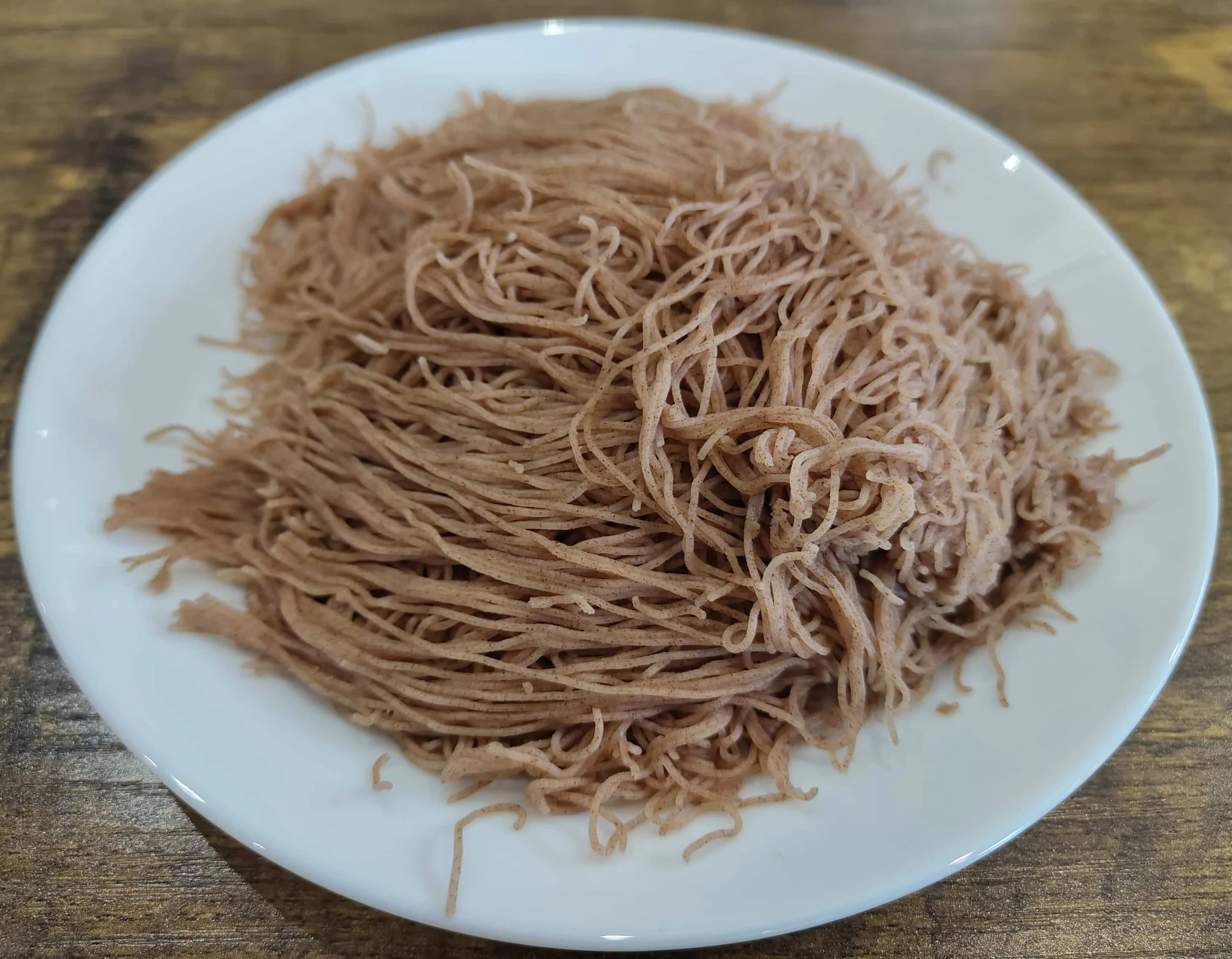
string hoppers
rice flour noodles
What is it?
String hoppers, also known as idiyappam, are delicate nests of thin rice flour noodles, steamed into soft, slightly springy cakes. They are a classic accompaniment to dhal in Sri Lanka and southern India, where they play much the same role as rice or bread, providing something to soak up the curry.
The Sri Lankan version is especially common at breakfast or dinner and is usually served as part of a spread of curries, sambols, and other sides. Brown string hoppers are also popular in Sri Lanka; they are made with red rice flour, which gives them a darker colour and a slightly nuttier, more robust flavour.
What is in it?
String hoppers are traditionally made with rice flour, water, and salt. Brown string hoppers are made with red rice flour instead of white.
Where can I eat it?
String hoppers are widely available throughout Sri Lanka and are served at most restaurants as an option with curry.
Vegan, dairy & gluten free.
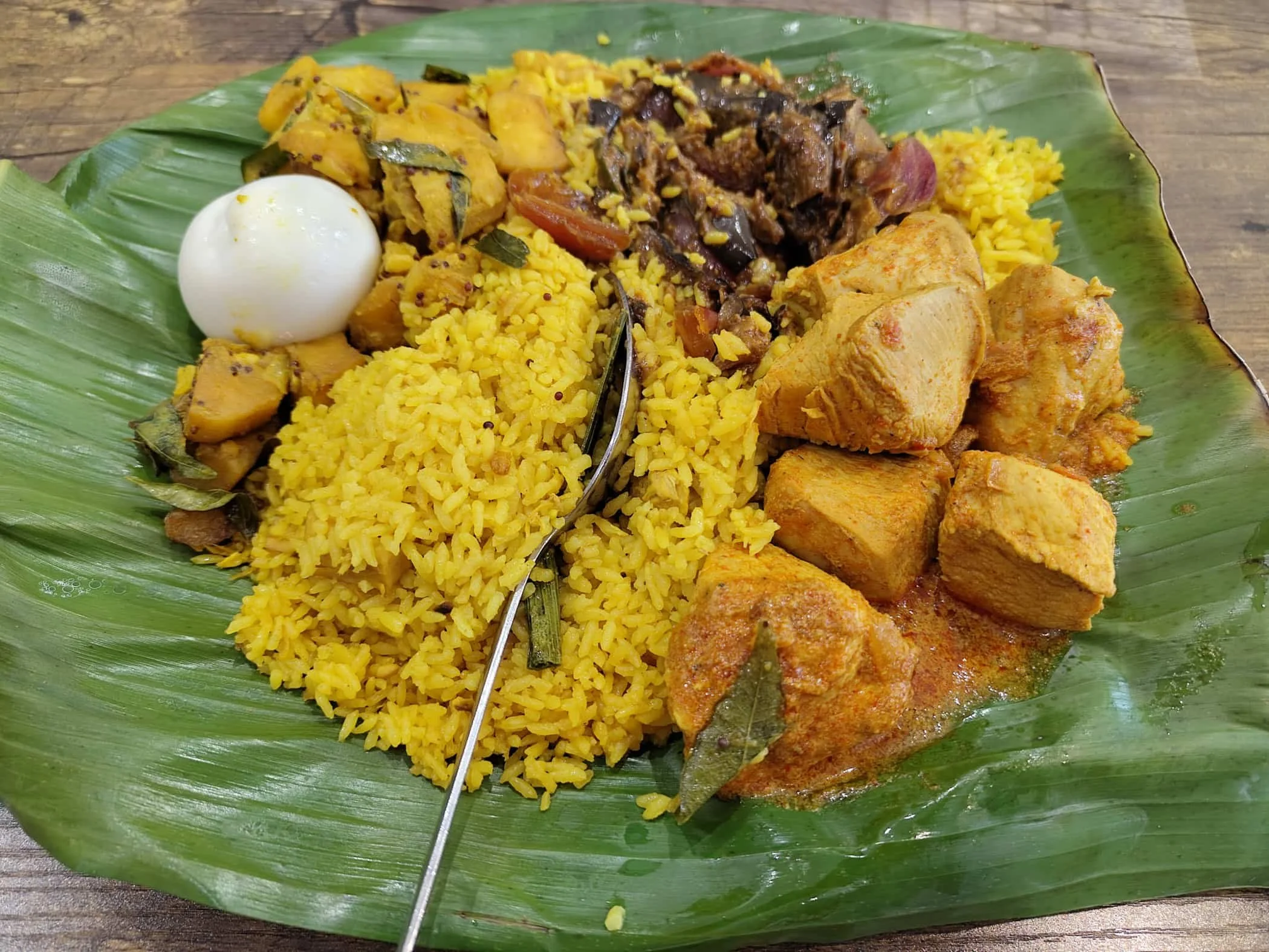
lamprais
leaf wrapped meal
What is it?
Lamprais is a classic Sri Lankan dish introduced by the Dutch Burgher community, and is a bit like a complete rice and curry meal that has been wrapped in a banana leaf and steamed. The original version traditionally included a three meat curry, often made with beef, pork, and chicken, along with rice and several accompaniments. Today, the version you are most likely to find may contain just one type of meat, while vegetarian versions are also available. The whole parcel is wrapped in a banana leaf and steamed, allowing the flavours to come together.
The curries and accompaniments can vary, but ash plantain and wambatu moju, a dry aubergine pickle, are commonly associated with lamprais. It’s a substantial meal and one of Sri Lanka’s most distinctive dishes.
What is in it?
Rice, meat curry (traditionally beef, pork, and chicken), ash plantain, wambatu moju (aubergine pickle), sambol or other accompaniments, all wrapped in a banana leaf. Modern versions often include a boiled egg.
Where can I eat it?
Lamprais is found at traditional Sri Lankan restaurants and specialist lamprais places, such as The Leaf Lamprais in Colombo, as well as some bakeries and cafés.
Dairy and gluten free. Vegetarian versions available.
Ingredients listed reflect common or typical components of this dish as served in restaurants or street‑food vendors. Variations by region, season, or vendor are common. This information is provided for general reference only. If you have dietary restrictions or allergies, please verify ingredient details independently. We assume no liability for accuracy or outcomes.
all the foods - Canada
Discover all the traditional Canadian dishes we tried, from Poutine to Butter tarts
Here you will find a list of all the traditional cuisine we tried in Canada.
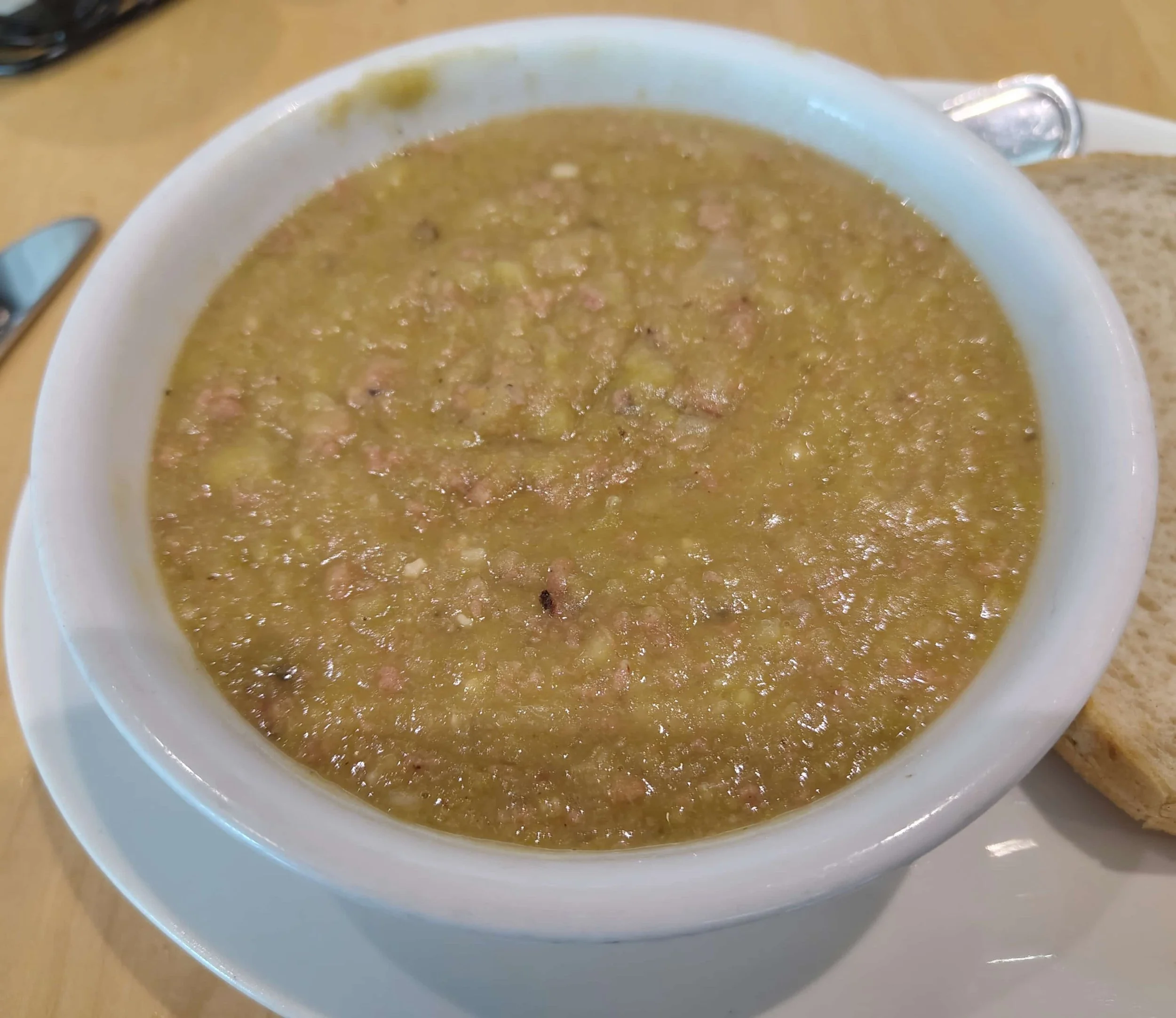
split pea soup
pea & meat soup
What is it?
Split pea soup is a comforting soup made from dried split peas that are slowly simmered until they break down into a thick, creamy consistency. It is a staple of Canadian home cooking, particularly during the colder months, and is especially associated with French Canadian cuisine in Québec. The soup is rich, warming and surprisingly filling. It often includes smoked meat, which gives it its distinctive smoky flavour.
Although it is not one of Canada’s most famous dishes today, it is well worth trying if you come across it on a menu.
What is in it?
Traditional split pea soup is made from yellow split peas slowly cooked with onions, carrots, celery, herbs such as thyme and bay leaves, and stock until the peas become soft and creamy. Classic recipes also include smoked ham, bacon, salt pork or a ham bone, although vegetarian versions are also common. Some recipes use savoury, a herb often associated with French Canadian pea soup. It is often served with crusty bread.
Where can I eat it?
Unlike dishes such as poutine, split pea soup can be less consistently available on restaurant menus and is often seasonal, appearing more frequently during the colder months. It is more commonly found in traditional Québec restaurants and specialist soup shops than in restaurants elsewhere in Canada.
Traditionally Gluten free (without bread)
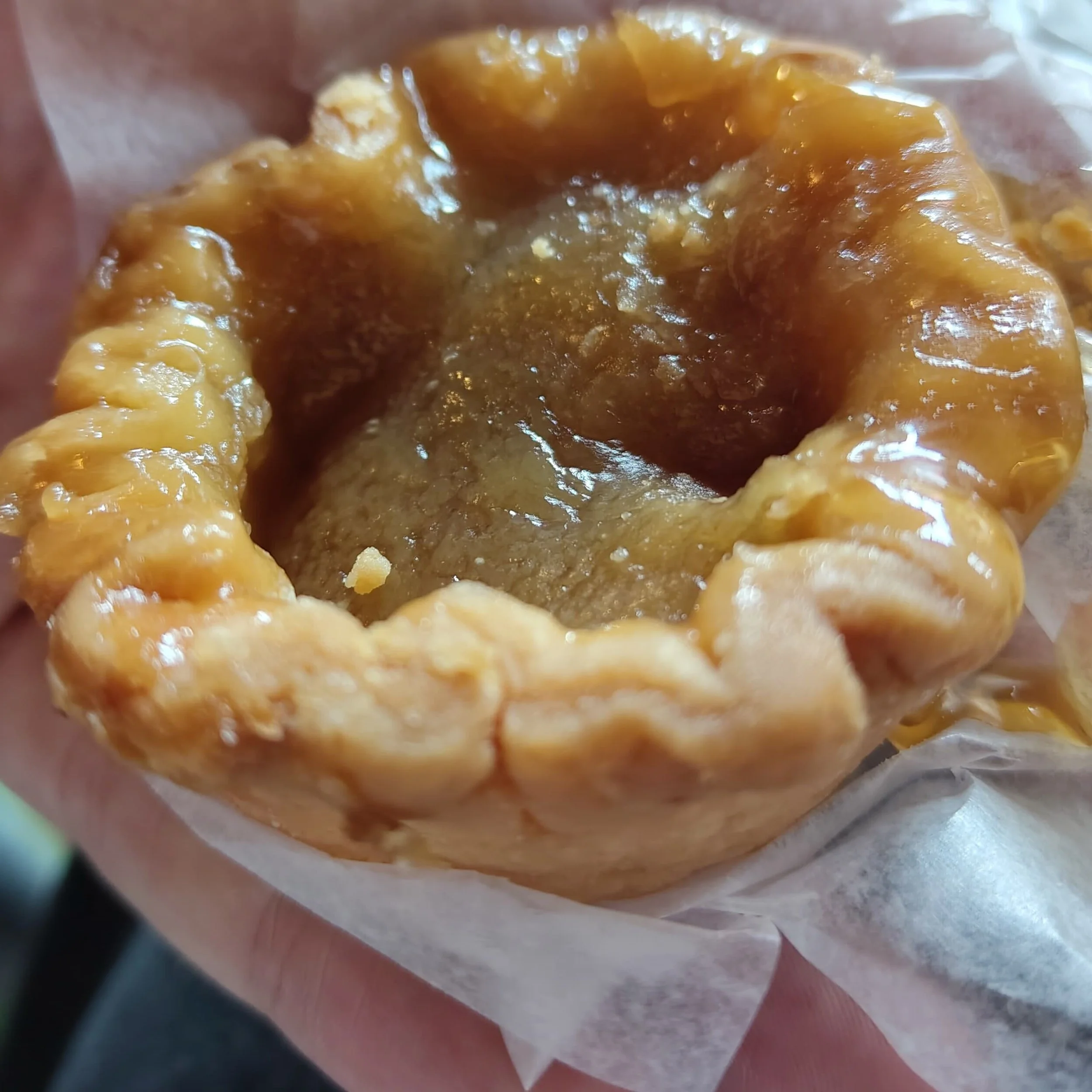
butter tarts
gooey butter pastries
What is it?
Butter tarts consist of a crisp, flaky pastry shell filled with a rich, buttery, caramel like filling that is incredibly sweet and wonderfully gooey.
They are strongly associated with Ontario, where the first known printed recipe for a butter tart appeared in 1900, although the dessert’s deeper origins are debated. Butter tarts have since become a classic Canadian treat enjoyed throughout the country. While the traditional version is plain, many variations exist, including versions with raisins. Other popular additions include pecans, walnuts and chocolate chips.
They are also incredibly sticky, with the gooey filling often oozing out as you bite into them, although maybe that’s just the way I eat them. It’s worth keeping a few napkins or wet wipes handy!
What is in it?
A classic butter tart is made with a buttery pastry case filled with a mixture of butter, brown sugar or corn syrup, eggs and vanilla. Some recipes use maple syrup instead of, or alongside, corn syrup.
Some versions include raisins, pecans or walnuts, while others keep the filling completely smooth. The consistency can also vary slightly, from quite runny to more firmly set, depending on the baker and the recipe.
Where can I eat it?
Butter tarts are sold throughout Canada and are particularly associated with Ontario. You’ll find them in many bakeries and cafés, as well as supermarkets, making them one of the easiest Canadian treats to try.
Vegetarian.
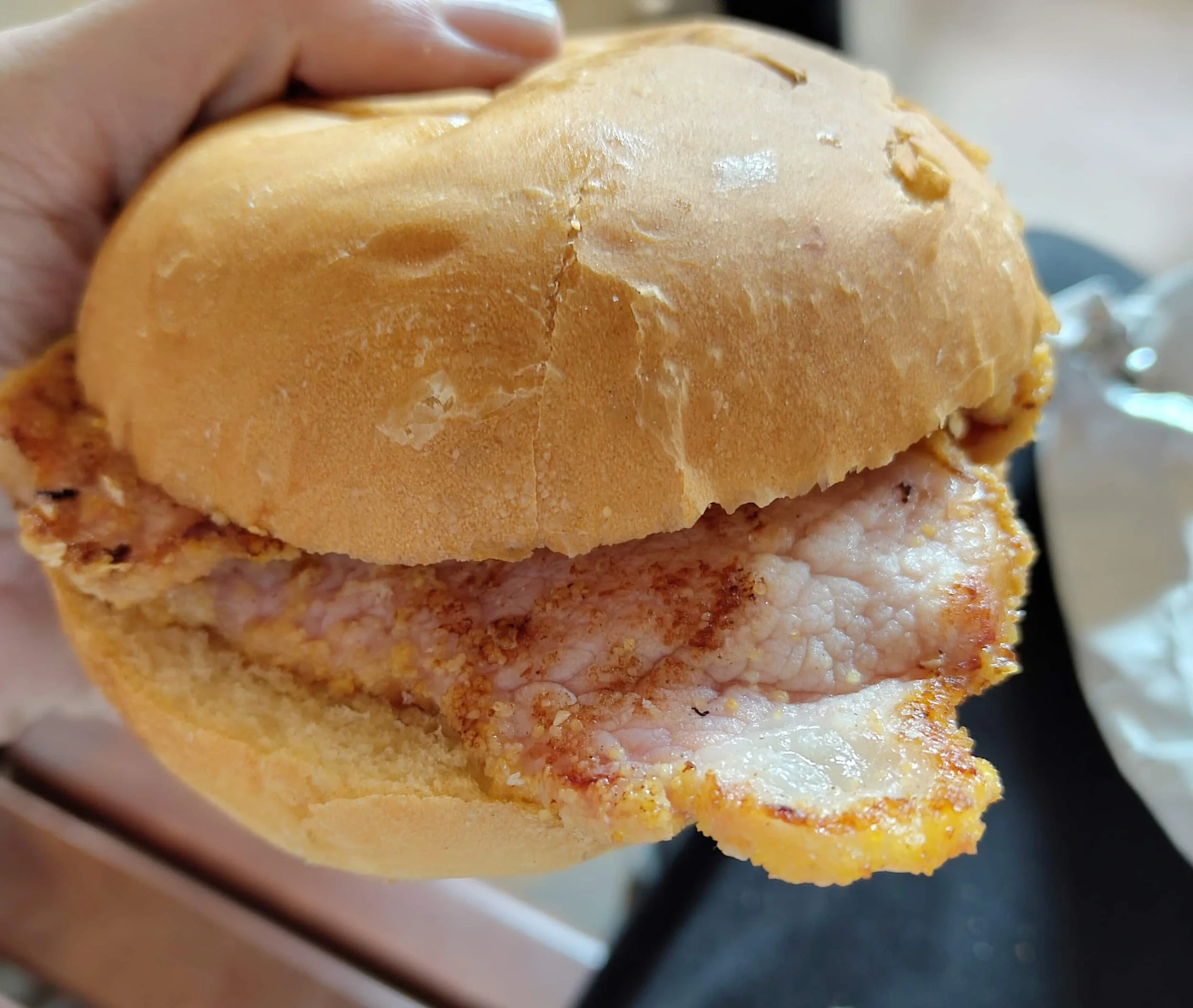
peameal bacon sandwich
bacon sandwich
What is it?
One of Toronto’s most iconic sandwiches, the peameal bacon sandwich consists of thick slices of peameal bacon served in a soft bun, usually with mustard. Unlike the crispy streaky bacon familiar in many countries, peameal bacon is made from lean pork loin, giving it a much meatier texture. It is wet cured and unsmoked, then rolled in cornmeal before being cooked.
The name comes from the sandwich’s key ingredient. Traditionally, cured pork loin was rolled in ground yellow peas, or pea meal, before refrigeration. Today, it is almost always rolled in cornmeal instead, but the historic name has remained.
What is in it?
The sandwich is made with thick slices of peameal bacon, which are grilled or pan fried before being served in a soft white bun. The classic accompaniment is yellow mustard, although some places also offer toppings such as tomato, lettuce, mayonnaise, cheese, maple syrup or a fried egg.
Where can I eat it?
Peameal bacon sandwiches are most closely associated with Toronto. One of the most famous places to try one is Carousel Bakery, located inside St. Lawrence Market. Their sandwich is packed with thick slices of peameal bacon.
St. Lawrence Market is also home to several other vendors selling peameal bacon sandwiches, making it one of the best places in Toronto to find this classic sandwich.
Dairy free.
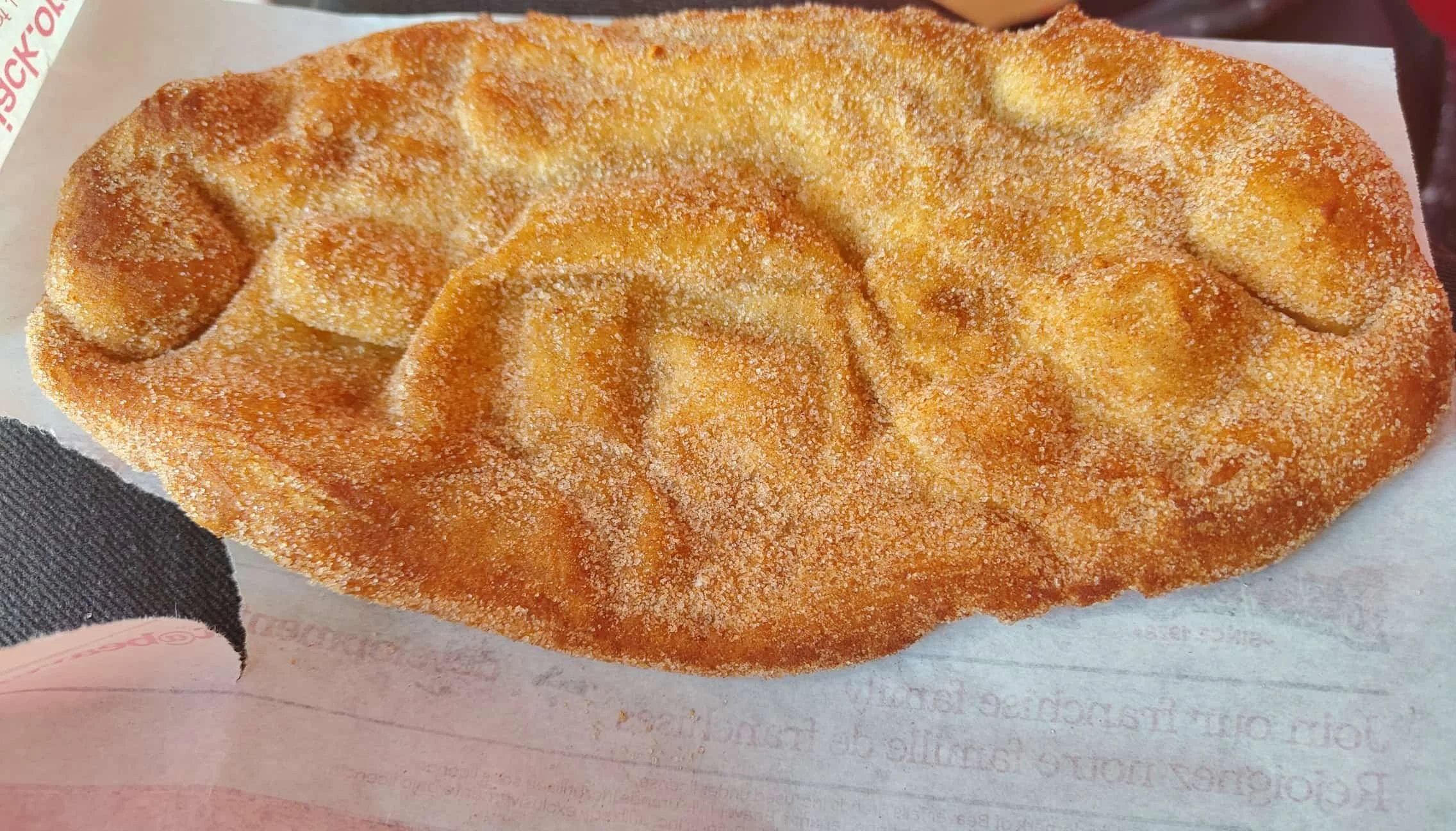
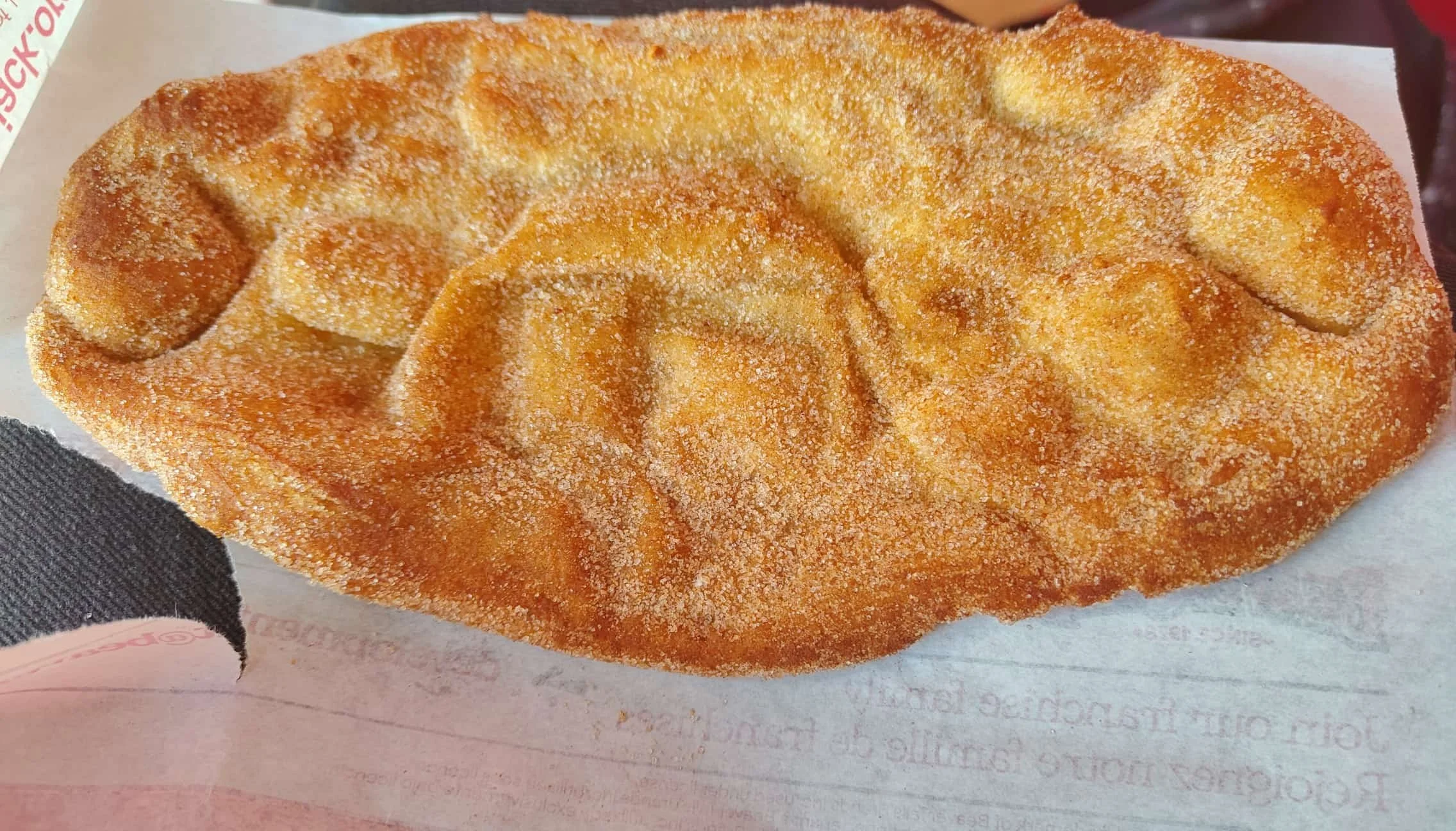
beavertails
flat doughnut
What is it?
BeaverTails are one of Canada’s most iconic sweet treats. They are essentially flat, hand-stretched doughnuts that are deep fried before being topped with a variety of sweet ingredients. The pastry gets its name from its distinctive shape, which resembles the broad, flat tail of a beaver, Canada’s national animal.
The modern BeaverTails pastry was launched in the Ottawa Valley in 1978 by Grant and Pam Hooker, using a family recipe with German-Canadian roots. The pastry is often compared with German fried pastries such as Auszogne (Knieküchle), which are similarly made by stretching dough thin before frying.
The original and most traditional topping is cinnamon and sugar, sometimes finished with a squeeze of fresh lemon juice. Today, there are countless modern variations.
Popular toppings include:
Chocolate-hazelnut spread.
Maple butter.
Apple cinnamon.
Cheesecake-style toppings.
Reese’s Pieces.
Oreo crumbs.
Bananas.
Strawberries.
Served warm and freshly fried, they’re best enjoyed straight away while the pastry is still crisp on the outside and soft inside.
What is in it?
A classic BeaverTail is made from yeast raised dough that is stretched by hand into its distinctive tail shape before being deep fried. Once cooked, it is coated with cinnamon and sugar for the traditional version, while modern versions may be topped with chocolate spread, fruit, crushed biscuits, nuts, caramel or maple flavoured toppings.
Despite the wide variety of toppings available today, the simple cinnamon and sugar version remains the classic.
Where can I eat it?
BeaverTails are sold across Canada at dedicated BeaverTails stands and shops, particularly in tourist areas. In Toronto, you can try them at BeaverTails – Queues de Castor on the Waterfront.
They are especially popular in Ottawa, where the company opened its first permanent shop, but can now be found throughout much of Canada.
Vegetarian.
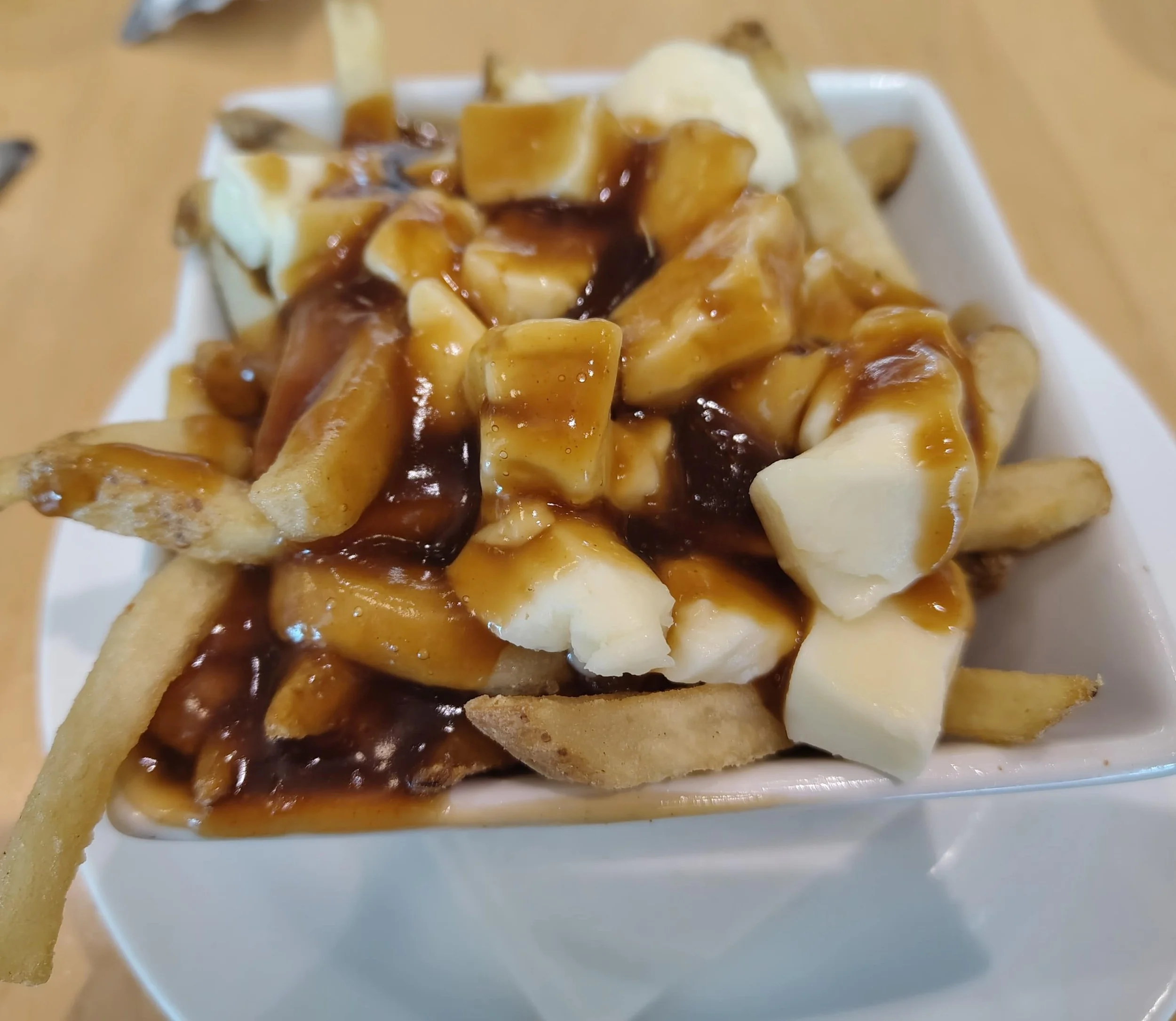
poutine
fries, cheese & gravy
What is it?
Poutine is Canada’s most famous dish and a true comfort food classic. Originating in rural Québec in the late 1950s, it consists of crispy fries topped with fresh cheese curds and covered with hot gravy.
The hot gravy softens the fries and slightly melts the cheese curds while still leaving them with their distinctive “squeaky” texture. The classic version remains the most popular, but countless modern variations exist.
What is in it?
Traditional poutine is made with thick cut fries, fresh white cheese curds and a rich brown gravy, usually made with beef or chicken stock.
Many restaurants now offer loaded versions with additional toppings such as smoked meat, pulled pork, bacon, chicken, chilli, mushrooms or even lobster in some parts of Canada
Where can I eat it?
Poutine is available throughout Canada. Although it began as a simple fast food dish, it is now served everywhere from roadside chip stands and diners to high end restaurants. It became widely popular across Canada from the 1980s and 1990s onwards, and many restaurants now offer their own signature versions alongside the classic recipe.
Vegetarian versions are available, although traditional gravy is often made with meat stock.
Ingredients listed reflect common or typical components of this dish as served in restaurants or street‑food vendors. Variations by region, season, or vendor are common. This information is provided for general reference only. If you have dietary restrictions or allergies, please verify ingredient details independently. We assume no liability for accuracy or outcomes.
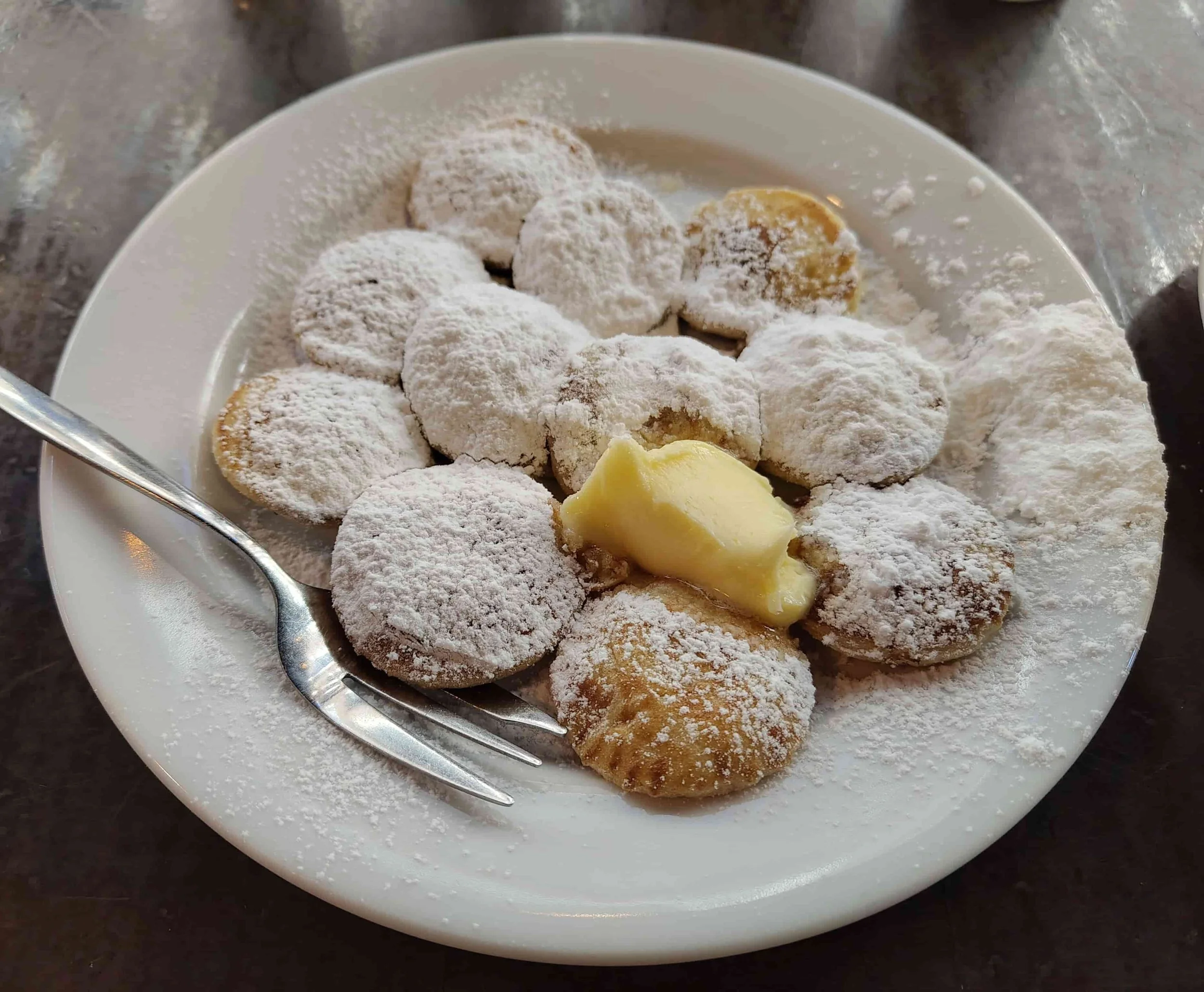
all the foods - the Netherlands
Discover all the traditional dishes from the Netherlands we tried.
Here you will find a list of all the traditional cuisine we tried in the Netherlands.
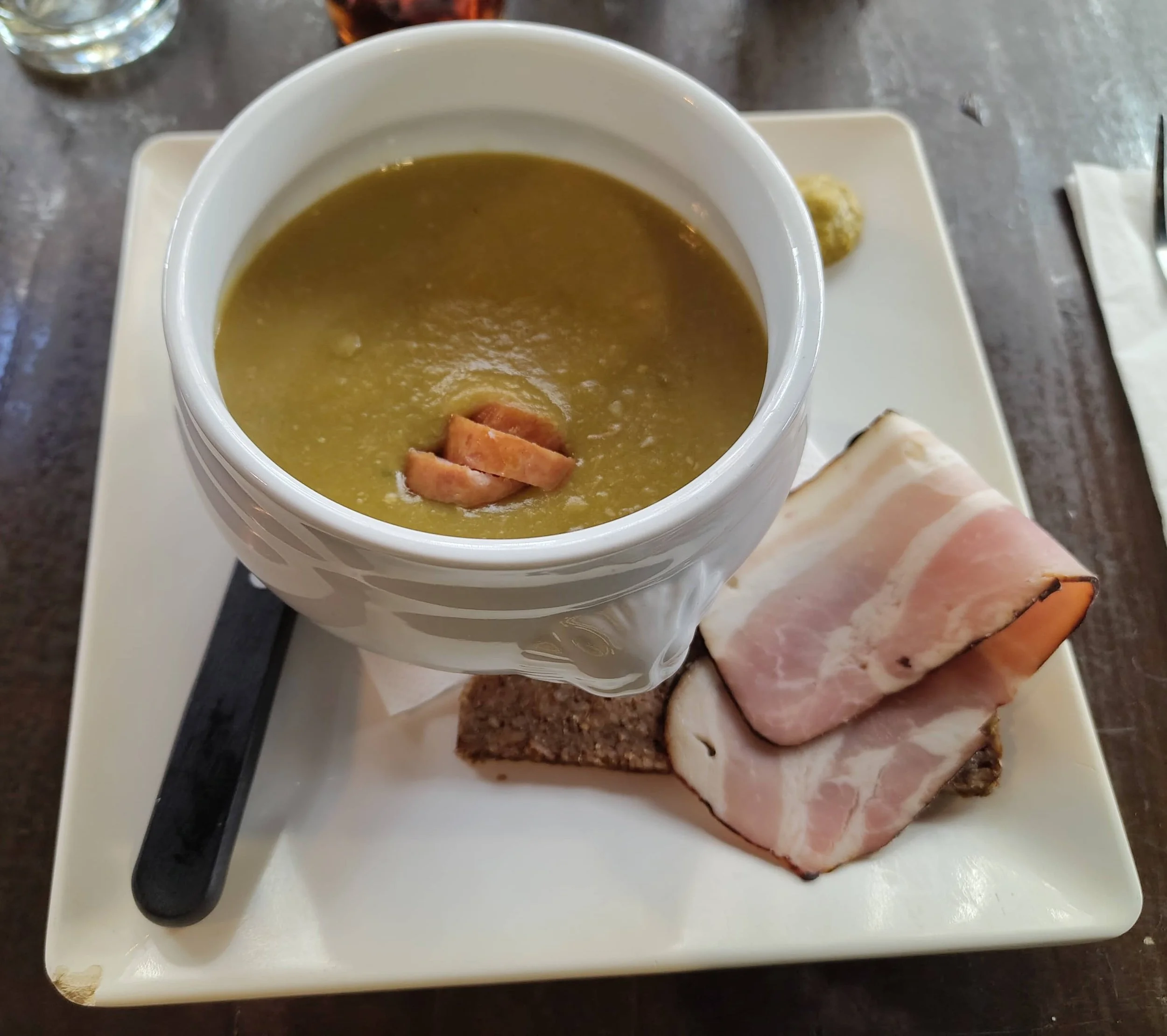
erwtensoep
pea soup
What is it?
A traditional Dutch pea soup, erwtensoep is rich, thick, salty and delicious. When the soup becomes especially thick it is often called snert, a nickname many Dutch people use for the dish. It is usually eaten during the colder months and is traditionally served with slices of smoked sausage and rye bread. In very thick versions, the soup can be almost stew like.
What is in it?
The soup is made from split peas with vegetables such as celery, leek, onion and carrot, along with pieces of pork such as pork belly or bacon and slices of smoked sausage (usually rookworst). It is typically seasoned with salt, pepper and sometimes bay leaf, and finished with chopped celeriac or parsley. It is commonly served with rye bread (roggebrood).
Where can I eat it?
It's one of the most common hot starters at traditional Dutch restaurants in the Netherlands, you shouldn't have any trouble finding it, we had a really delicious one at the pantry in Amsterdam.
Dairy & gluten free.
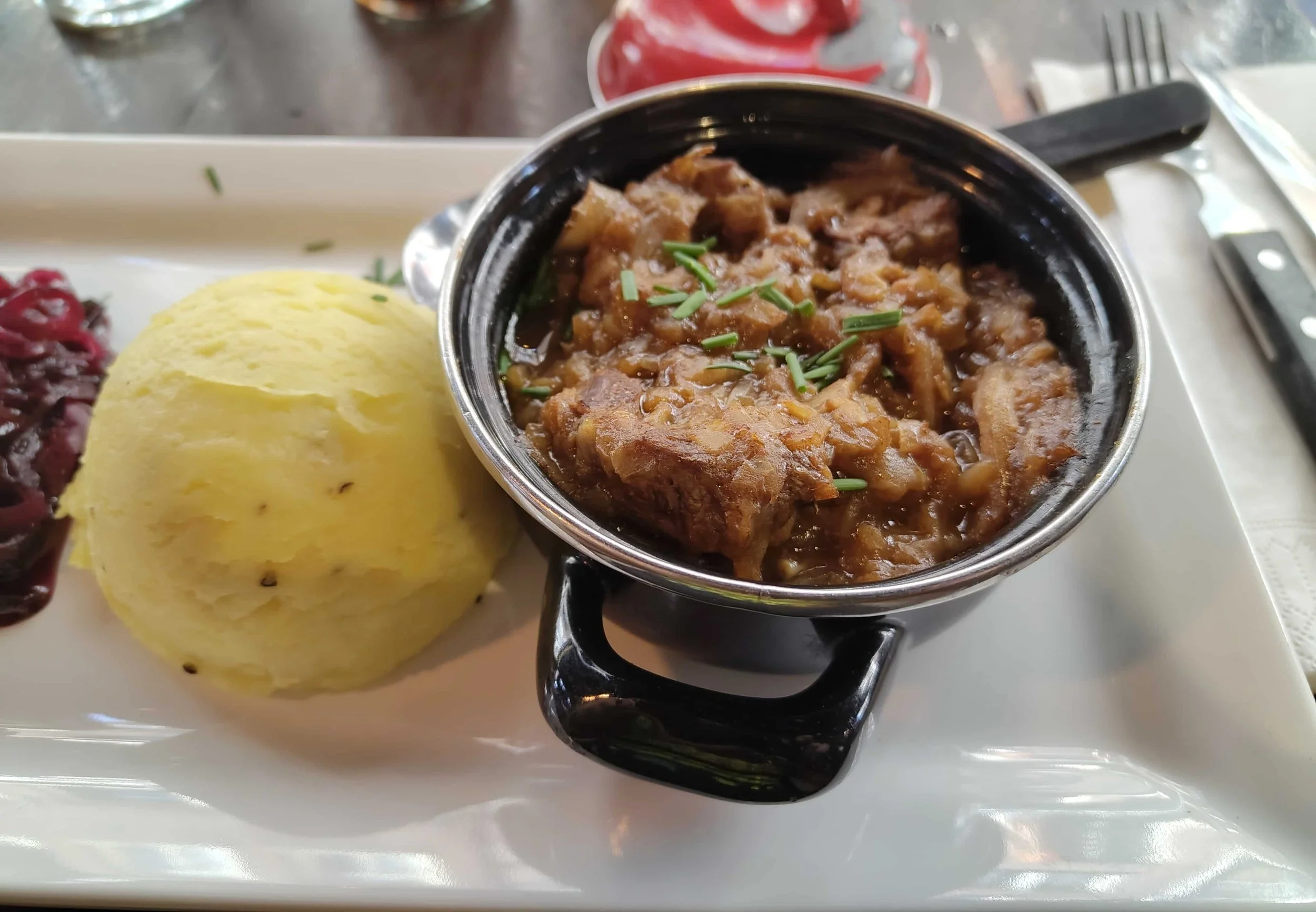
hachee
beef & onion stew
What is it?
Hachee is a traditional Dutch comfort food stew of slow cooked beef and onions (lots of onions). The stew is cooked slowly for several hours, allowing the onions to break down and become naturally sweet, creating a thick, savoury sauce around the tender meat. Vinegar and cloves are important ingredients that give hachee a slightly tangy, warm spiced flavour. Hachee is usually served with mashed potatoes and often accompanied by red cabbage or apple based side dishes.
What is in it?
Hachee is traditionally made from beef, large amounts of onions, butter or oil, vinegar, bay leaf, cloves, pepper and beef stock. Some versions also include flour to thicken the sauce, and sugar, or even gingerbread (ontbijtkoek)
Where can I eat it?
It’s fairly common at traditional Dutch restaurants, though not as ubiquitous as dishes like stamppot. In Amsterdam, you can try it at the pantry and at Moeders (only open in the evenings).
Traditionally Gluten free.
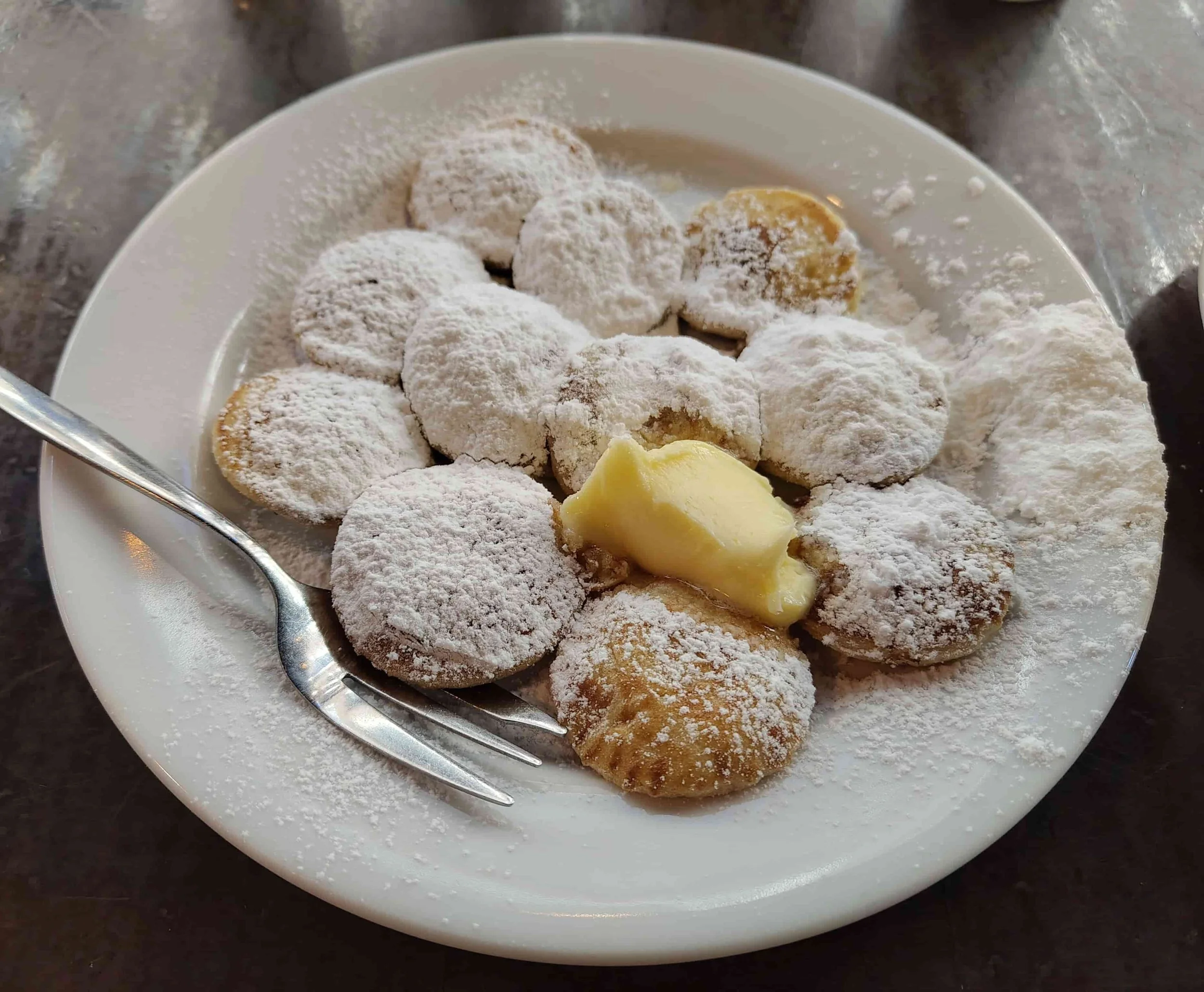
poffertjes
small pancakes
What is it?
Poffertjes are small, fluffy Dutch pancakes made in a special shallow pan that creates their distinctive round, puffed shape. They are slightly thicker and airier than regular pancakes thanks to yeast in the batter. Poffertjes are typically served as a sweet treat, most commonly topped with powdered sugar and a small knob of butter, though other toppings such as syrup, whipped cream, or fruit are also popular. Savoury versions do exist, sometimes served with cheese such as Gouda.ahappyhomeinholland+5
What is in it?
The batter is made from flour (often a mix of wheat and buckwheat flour), yeast, milk, eggs, butter, sugar, and salt. The cooked pancakes are traditionally topped with powdered sugar and butter, although many variations include syrup, whipped cream, fruit, chocolate sauce, or cheese.
Where can I eat it?
Poffertjes are widely available across the Netherlands, especially at food stalls and cafés. They are also commonly served as a dessert in traditional Dutch restaurants. In Amsterdam you can try them at the pantry, or at specialist poffertjes stands such as Pat’s Poffertjes, which has several locations in the city.
Vegetarian.
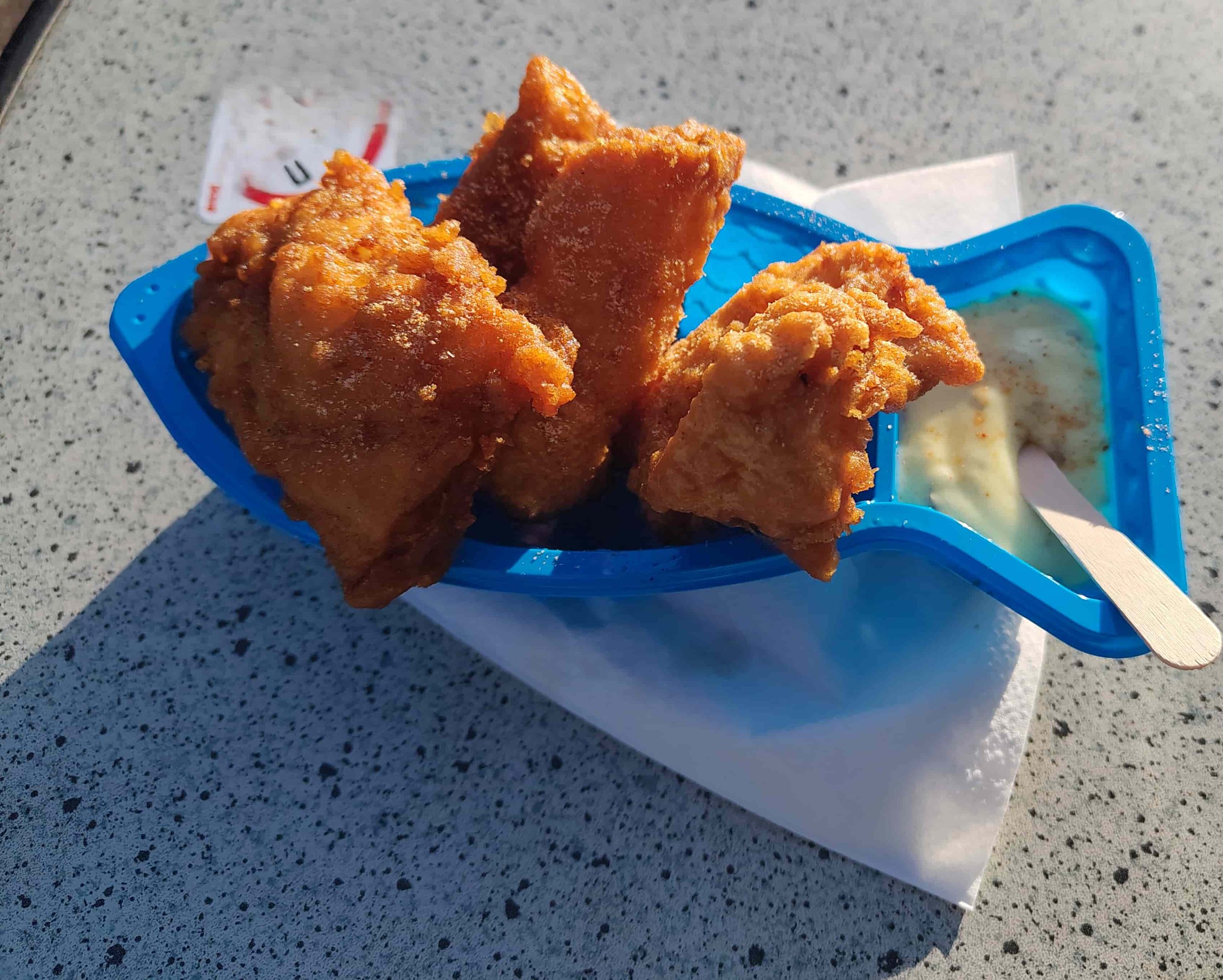
kibbeling
battered fish
What is it?
Kibbeling is a popular Dutch street food made from chunks of battered and deep‑fried white fish. It’s similar in flavour to British fish and chips, but instead of a whole fillet the fish is cut into smaller chunks before frying. It is typically served with a creamy garlic sauce or tartar-style sauce, and sometimes with lemon.
What is in it?
Kibbeling is usually made from firm white fish such as cod or pollock, though other white fish like hake may also be used. The fish pieces are coated in a batter made from flour, eggs, milk or water, and seasoning. It is commonly served with garlic sauce, remoulade, or tartar sauce.
Where can I eat it?
Kibbeling is a very popular snack throughout the Netherlands and is most commonly sold at fish stalls, markets, and seafood shops. One good place to try it in Amsterdam is Albert Cuyp Market, where several fish vendors serve freshly fried portions.
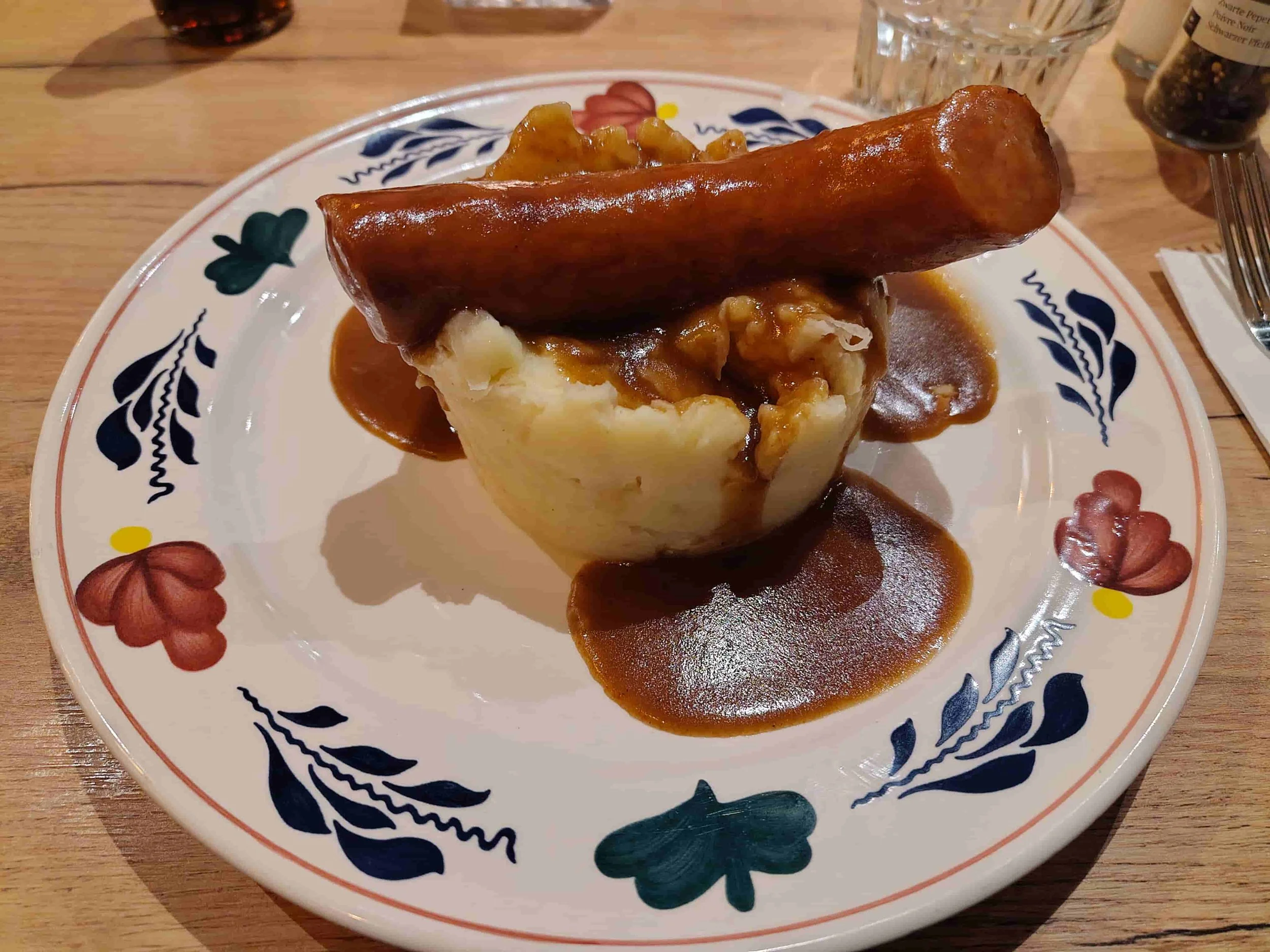
stamppot
mashed potatoes & veg
What is it?
Stamppot is a traditional Dutch comfort dish made from mashed potatoes mixed with vegetables. There are several classic varieties depending on the vegetables used. One of the most traditional is boerenkoolstamppot, made with curly kale. Other well known versions include hutspot, made with carrots and onions, and zuurkoolstamppot, made with sauerkraut. Many other variations exist, including ones made with endive or other seasonal vegetables. Stamppot is typically served as a meal and is most commonly accompanied by rookworst (a smoked sausage) or meatballs.
What is in it?
The base of stamppot is potatoes mashed together with vegetables. Depending on the recipe, butter, milk, or cooking liquid may be added to make the mash smoother. Common vegetables used include curly kale, carrots, onions, sauerkraut, or endive. It is usually served with smoked sausage, meatballs, and gravy on the side.
Where can I eat it?
Stamppot is one of the most common dishes in traditional Dutch restaurants. Some restaurants even specialise in it, such as Stamppot Amsterdam, but most traditional Dutch eateries will offer at least one variety.
Vegetarian versions exist, and the base can be gluten free, although accompaniments usually are not.
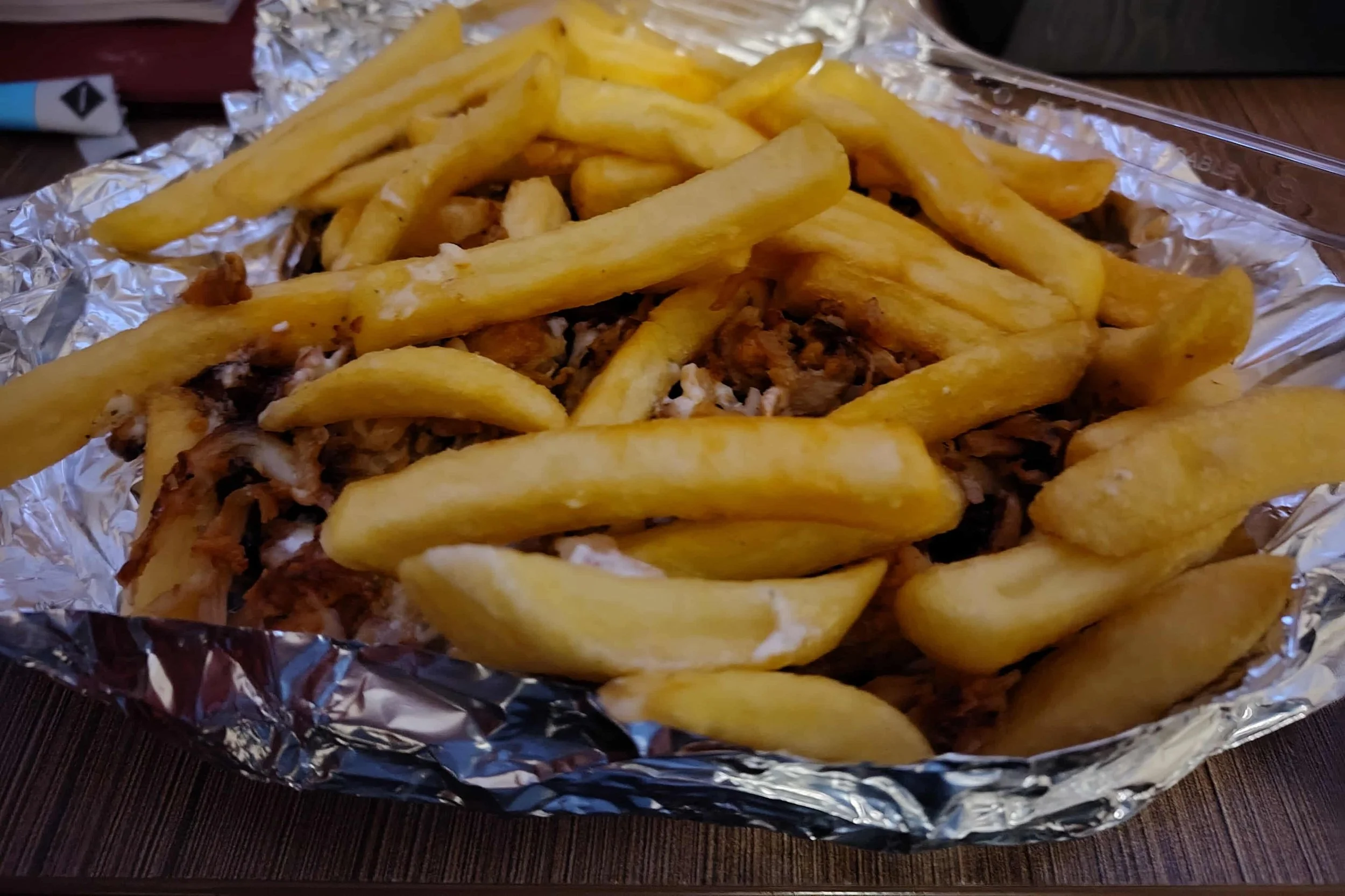
kapsalon
döner & fries platter
What is it?
Kapsalon is a popular Dutch fast food dish made from layers of fries topped with döner kebab meat and melted cheese, then finished with fresh salad and sauces. The dish usually includes lettuce, tomato, garlic sauce, and spicy sambal.
The name kapsalon means “hairdresser” in Dutch. It was reportedly invented in Rotterdam by a hairdresser who asked his local kebab shop to combine all his favourite ingredients into one tray. It has since become a favourite late night takeaway meal, especially after a night out.
What is in it?
Kapsalon typically consists of french fries topped with döner meat, usually lamb, beef, or chicken, and melted Gouda cheese. After baking, it is topped with lettuce, tomato, sometimes onion, and finished with garlic sauce and spicy Indonesian sambal.
Where can I eat it?
Kapsalon is a common option at kebab shops and takeaway restaurants throughout the Netherlands. In Amsterdam you can find it at places such as Sinbad, which serves a popular version.
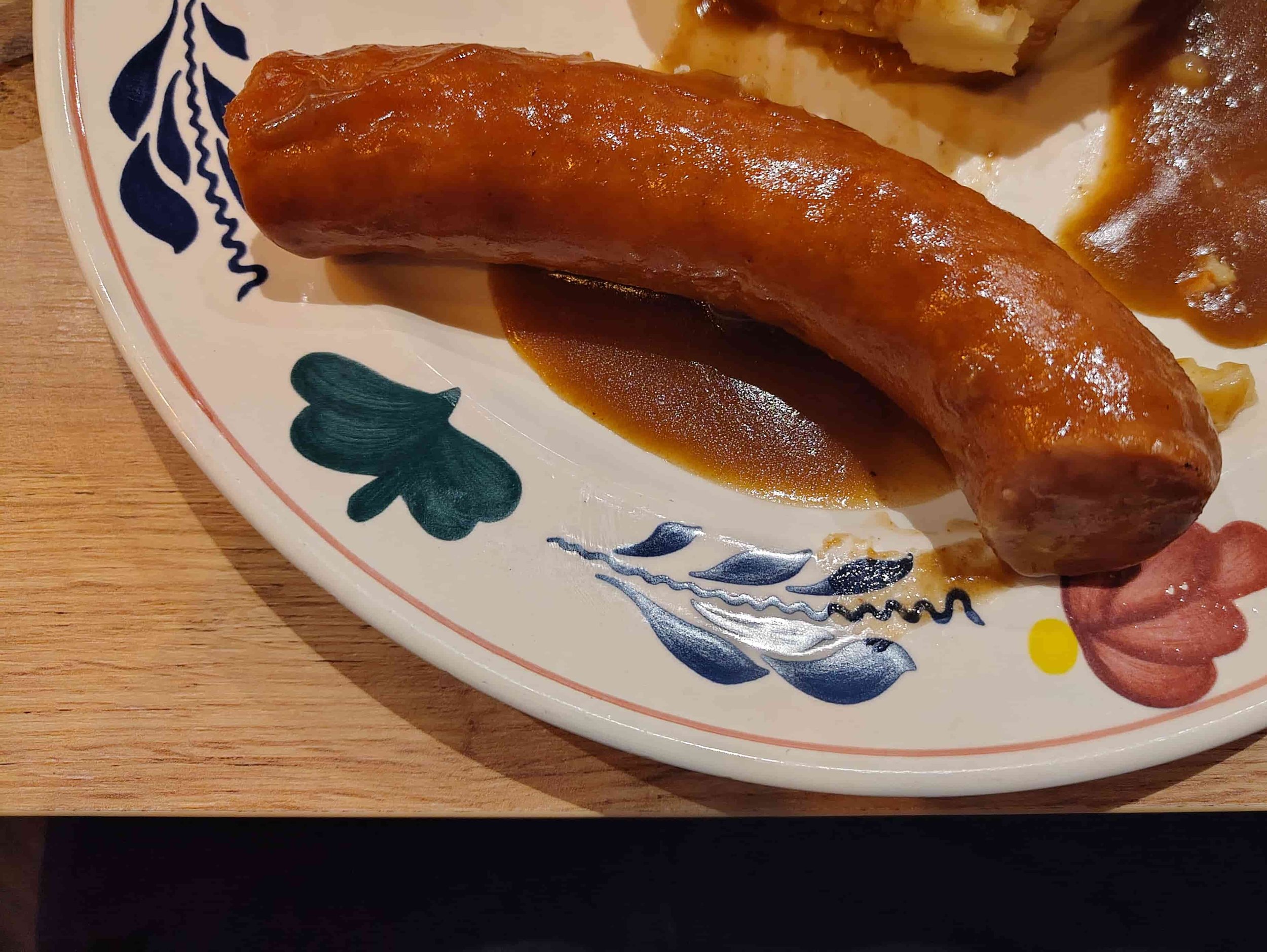
rookworst
smoked sausage
What is it?
Rookworst is a traditional Dutch smoked sausage, usually made from pork, though some versions also include beef or veal. It has a soft, juicy texture and a distinctive smoky flavour. The sausage is usually gently heated rather than fried and is most commonly served alongside stamppot, the classic Dutch mashed potato and vegetable dish.
What is in it?
Rookworst is typically made from ground pork mixed with salt, spices and seasonings, then smoked to give it its characteristic flavour. Common spices include white pepper, nutmeg, coriander, ginger and cloves.
Where can I eat it?
Rookworst is very common in traditional Dutch restaurants, where it is often served alongside stamppot. In Amsterdam you can find it at places such as Stamppot Amsterdam or the pantry.
Traditionally dairy & gluten free.
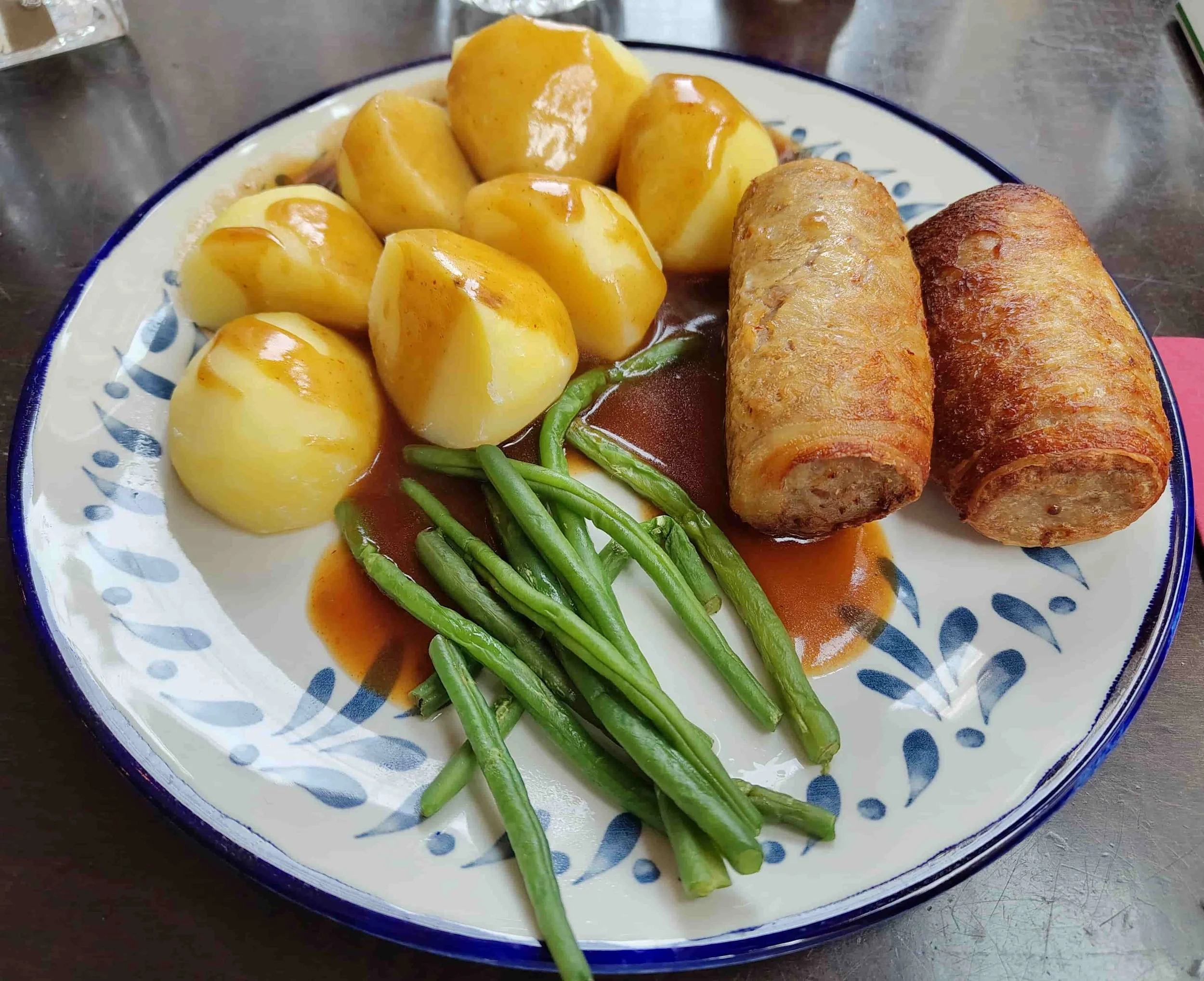
slavink
bacon wrapped mince
What is it?
Slavink is a traditional Dutch meat dish made from seasoned minced meat shaped like a sausage and wrapped in bacon. It is typically pan‑fried until the bacon becomes crispy while the meat inside stays juicy, and is usually served as part of a classic Dutch dinner with potatoes, vegetables, and gravy.
What is in it?
Slavink is typically made from minced pork and beef, seasoned and formed into a sausage like shape, then wrapped in bacon before being cooked.
Where can I eat it?
Slavink can be found on the menus of many traditional Dutch restaurants, though it is not quite as common as dishes like stamppot and rookworst. In Amsterdam it is served at traditional eateries such as De Blauwe Hollander.
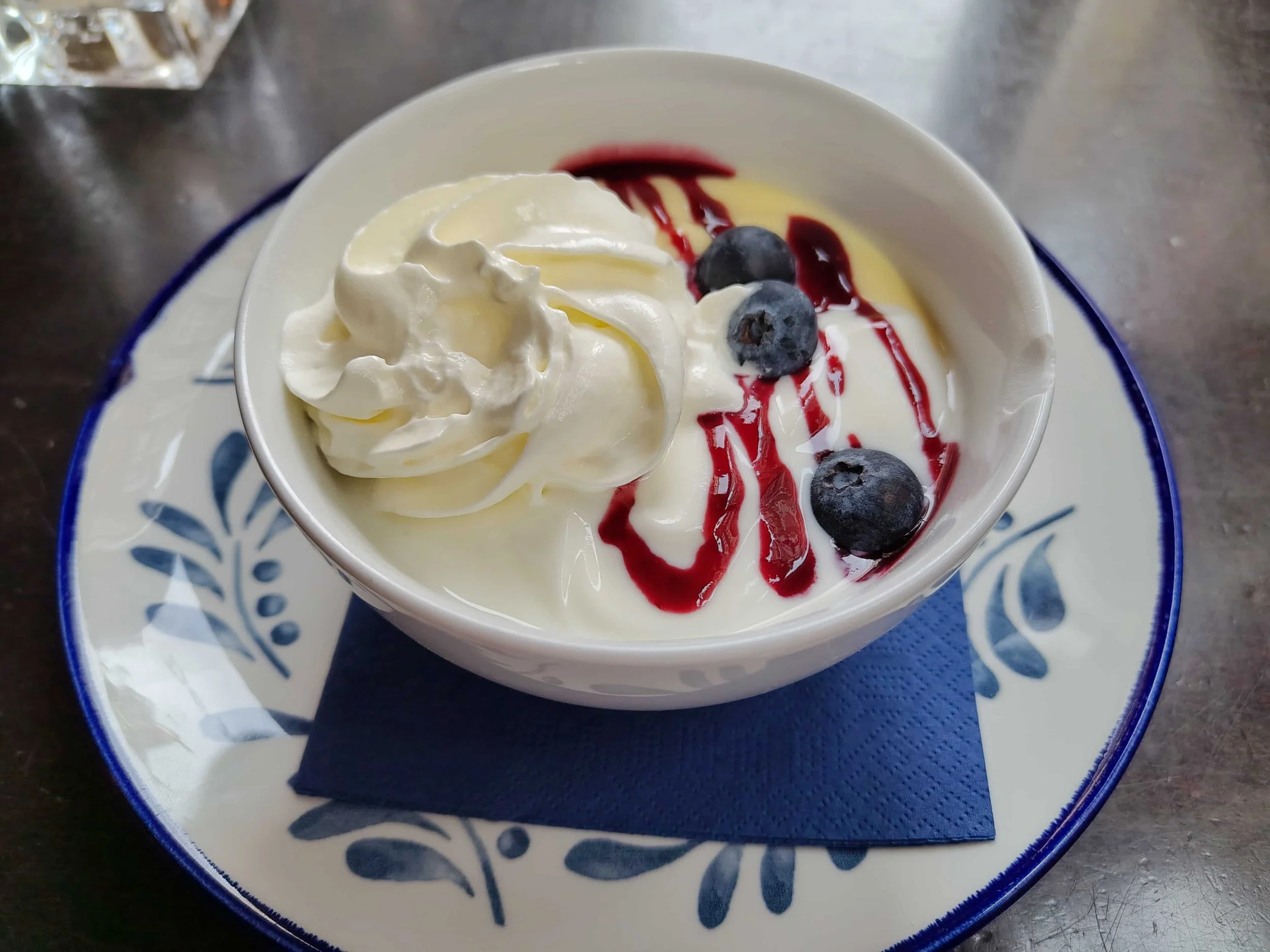
vlaflip
custard, yoghurt dessert
What is it?
Vlaflip is a classic Dutch dessert made by layering vanilla custard, yoghurt and fruit syrup. It’s colourful, creamy and slightly tangy, making for a light and refreshing dessert after a filling Dutch meal.
What is in it?
Vlaflip usually contains vanilla custard (vla), yoghurt and fruit syrup such as strawberry or raspberry. Some versions also include pieces of fruit.
Where can I eat it?
Vlaflip appears on the menus of traditional Dutch restaurants, such as De Blauwe Hollander in Amsterdam. However, it’s more common as a homemade dessert, and ready made versions can also be found in supermarkets across the Netherlands.
Vegetarian & gluten free.
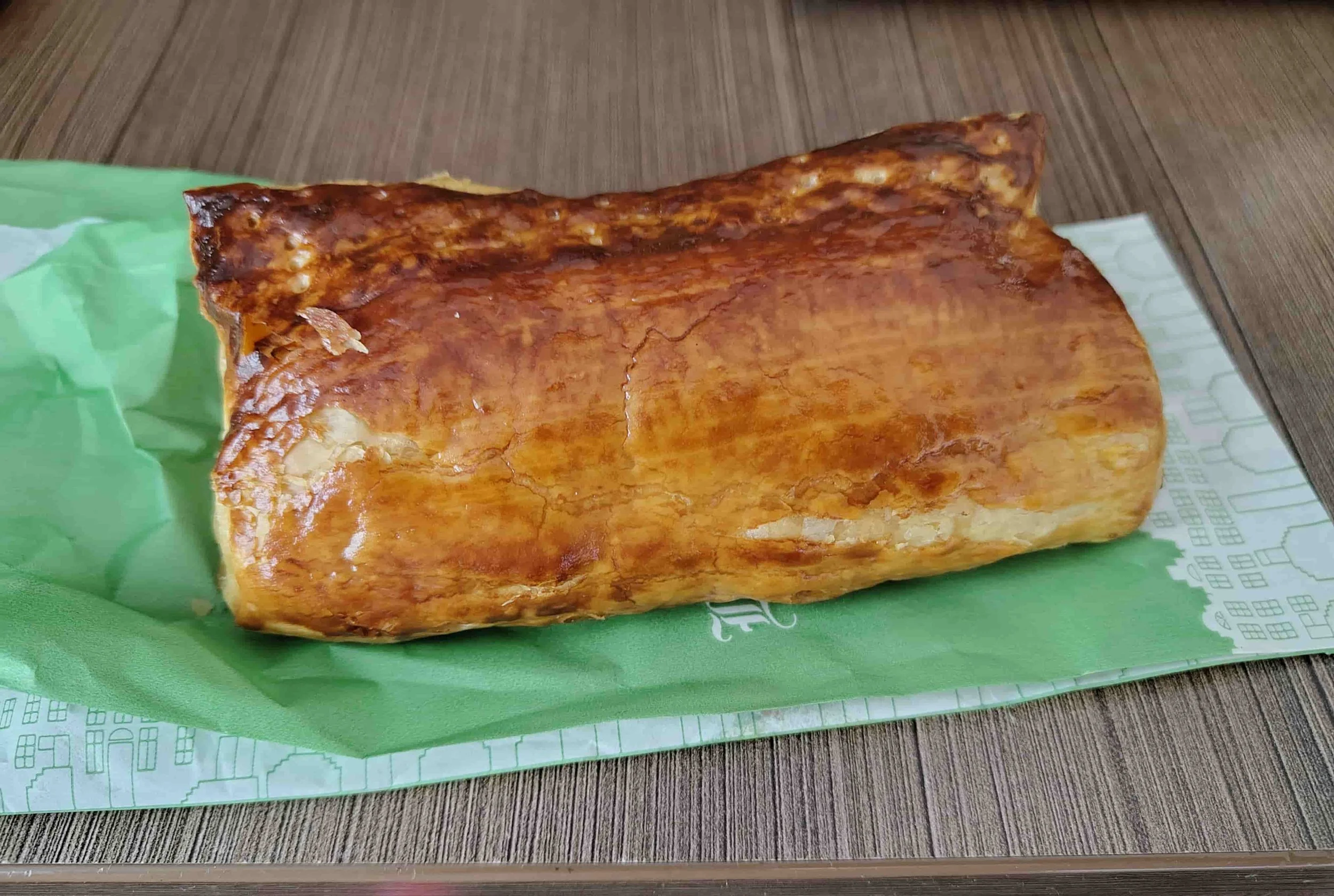
saucijzenbroodje
sausage in puff pastry
What is it?
A saucijzenbroodje is a classic Dutch sausage roll made from seasoned sausage meat wrapped in flaky puff pastry. It’s very similar to the British bakery classic and is best enjoyed fresh and warm.
These savoury pastries are a popular snack or quick lunch, often found in bakeries, train stations, and cafés across the Netherlands.
What is in it?
Saucijzenbroodjes usually contain seasoned minced meat, most commonly pork or a pork-beef mixture, wrapped in puff pastry. The filling is typically seasoned with ingredients such as pepper, nutmeg, and sometimes onion.
Where can I eat it?
They are widely available at bakeries and cafés throughout the Netherlands. We would recommend Lanskroon Bakery in Amsterdam, where we had an excellent one.

frikandel
fried sausage
What is it?
Frikandel is one of the most popular Dutch fast food snacks. It’s a deep fried, skinless sausage that is usually eaten with fries or served in a soft bun. A common variation is frikandel speciaal, where the sausage is cut lengthwise and topped with mayonnaise, curry ketchup and chopped onions. It’s a staple of Dutch snack bars and late night takeaway places.
What is in it?
Frikandel is typically made from finely minced mixed meats, usually chicken and pork, and sometimes beef. The meat mixture is blended with spices, breadcrumbs and seasonings, then shaped into a sausage and deep fried
Where can I eat it?
Frikandel is widely available at snack bars and fast food counters across the Netherlands. A famous place to try it is at one of the many FEBO locations across Amsterdam, where you can buy one hot from a vending machine style wall using your card.
Dairy free.
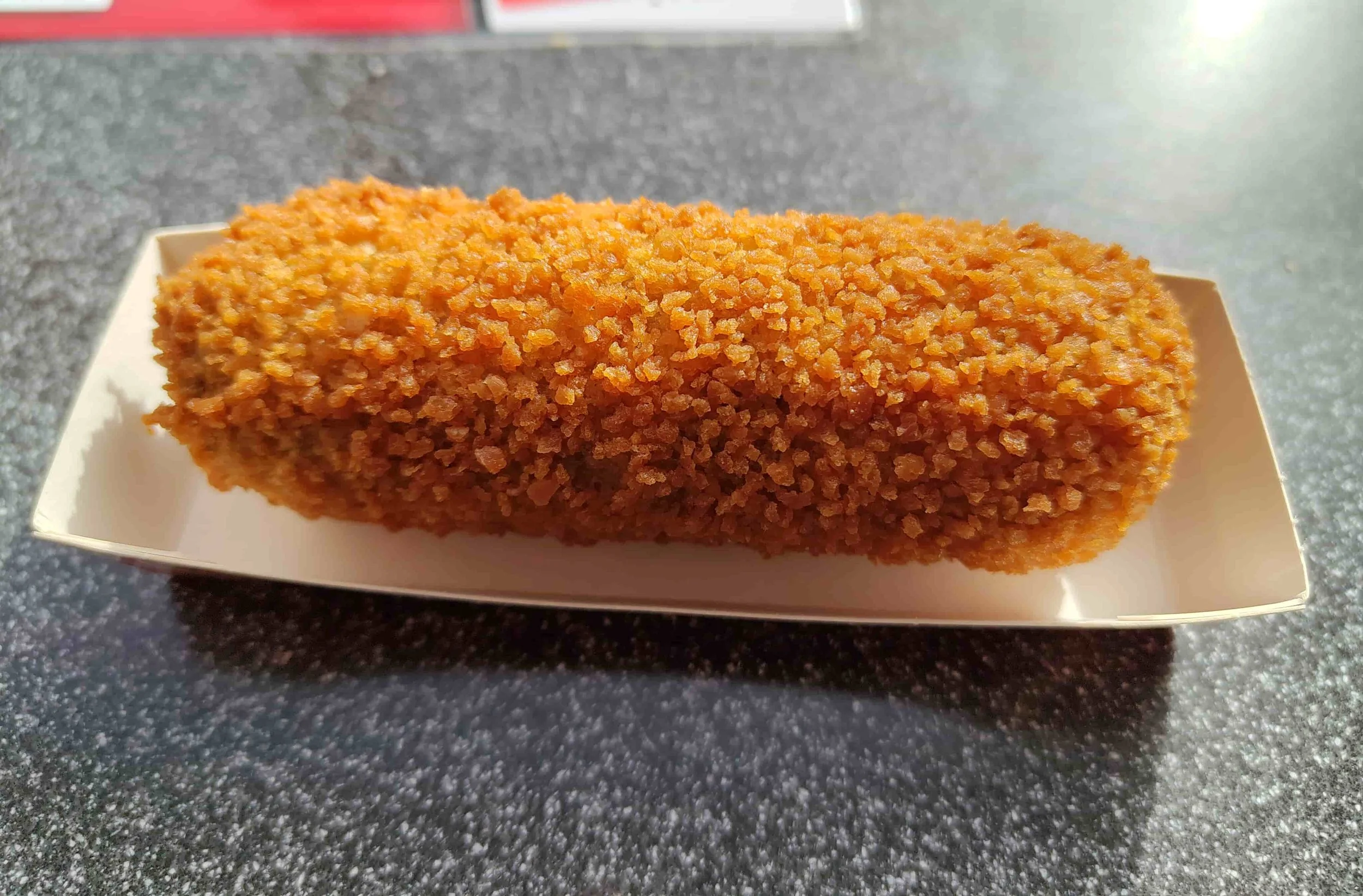
kroketten & bitterballen
filled fried fritter
What is it?
Kroketten are very popular Dutch deep fried snacks. They are crispy on the outside with a soft, creamy filling inside, typically made from a thick ragout.
Bitterballen are essentially the same snack, but smaller and round rather than cylindrical. While kroketten are commonly eaten as a takeaway snack, served with fries or inside a soft white bun (broodje kroket) with mustard, bitterballen are most often enjoyed as a bar snack in pubs, cafés and restaurants. They are traditionally served with mustard alongside a beer or another drink.
What is in it?
Traditional kroketten and bitterballen are made with a ragout filling of beef or veal, mixed with stock, flour, butter and seasonings to create a thick paste. The mixture is shaped into cylinders for kroketten and small balls for bitterballen, then coated in breadcrumbs and deep fried.
Although beef is the classic filling, modern variations include chicken, shrimp, cheese and vegetarian versions.
Where can I eat it?
Kroketten are extremely common in Dutch snack bars and takeaways throughout the Netherlands. You’ll also find them at FEBO, where they can be bought hot from the famous vending machine style snack wall.
Bitterballen are widely available in pubs, cafés and traditional restaurants across the country, where they are commonly served as a shared snack with mustard, particularly alongside a beer.
Vegetarian versions available.

stroopwafel
caramel biscuit
What is it?
A stroopwafel is one of the Netherlands’ most famous sweet snacks. It is a thin, round waffle biscuit filled with sticky caramel syrup (stroop) sandwiched between two layers of baked dough. The result is a sweet, chewy treat that is especially popular with coffee or tea.
Stroopwafels are sold freshly made at market stalls, bakeries and shops specialising in them, as well as pre packaged in supermarkets. A popular way to eat a packaged stroopwafel is to place it over a hot cup of coffee or tea for a few minutes. This gently warms the caramel filling and makes it soft and gooey again.
What is in it?
Stroopwafels are made from wheat flour, butter, sugar, eggs, yeast and milk for the waffle dough. The filling is made from caramel syrup, usually prepared with sugar, butter and syrup based sweeteners such as treacle, molasses or glucose syrup. Cinnamon or other spices may also be added.
Where can I eat it?
Fresh stroopwafels are commonly sold at street markets, bakeries and speciality waffle stalls across the Netherlands. In Amsterdam, you can try them at Hans Egstorf Stroopwafels, where they are made fresh and served warm. Packaged stroopwafels are also widely available in supermarkets and are commonly taken home as souvenirs.
Vegetarian.

Kaassoufflé
cheese pastry
What is it?
A kaassoufflé is a popular Dutch deep fried snack consisting of a thin pastry casing filled with melted cheese. The cheese melts during frying, creating a soft and stretchy filling. It can also be served in a soft white bun, known as a broodje kaassoufflé.
What is in it?
A kaassoufflé is made from a sheet of pastry filled with cheese. It is then sealed, coated in breadcrumbs and deep fried. Gouda or Edam are common choices, although other cheeses may also be used.
Where can I eat it?
Kaassoufflés are widely available in Dutch snack bars and takeaways. They are also a classic FEBO snack, where they can be bought directly from the famous vending machine style snack wall, served hot and ready to eat.
Vegetarian.
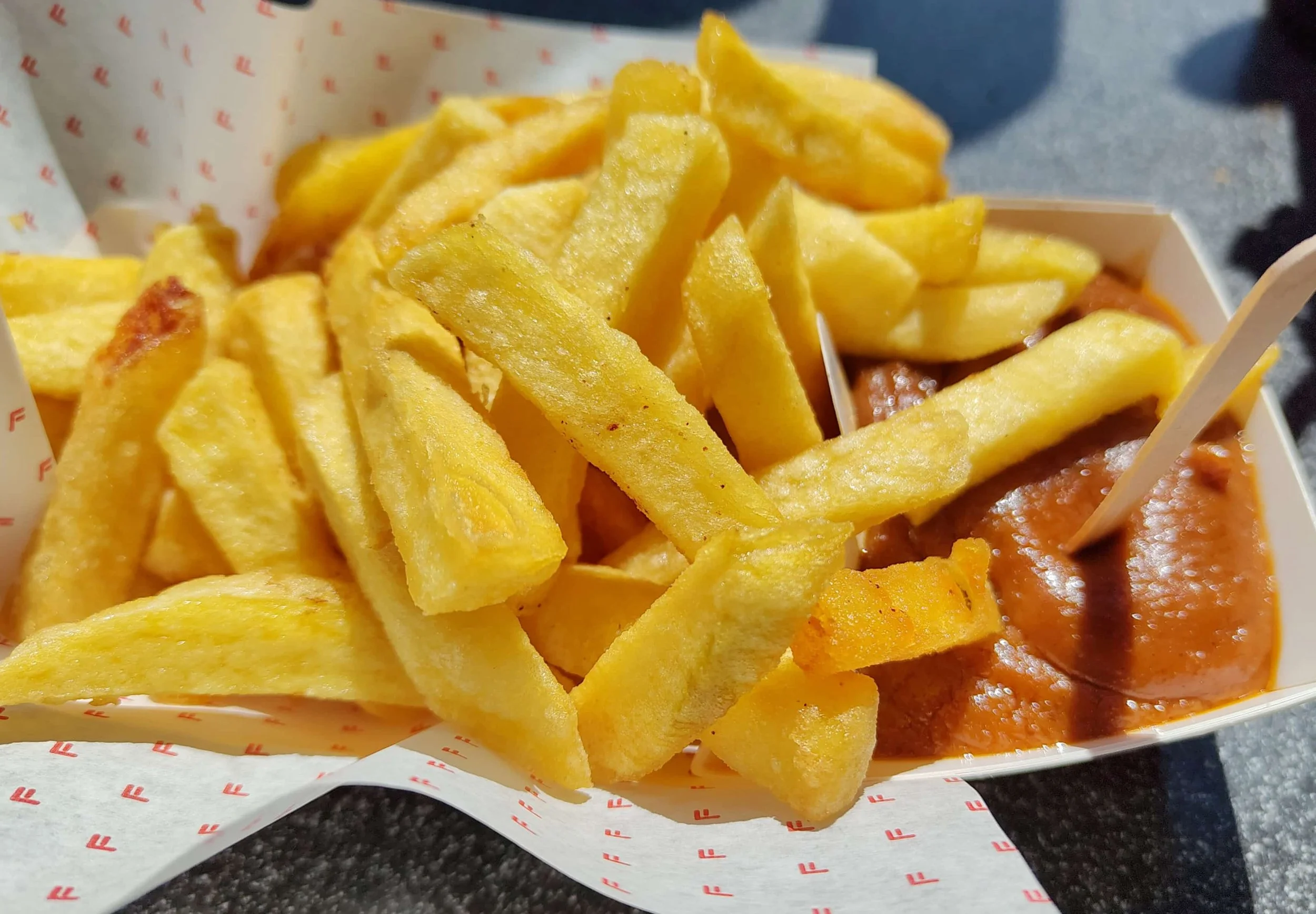
frites (patat)
fried potatoes
What is it?
Frites, also known in the Netherlands as patat, are the Dutch version of French fries and are deeply embedded in everyday food culture. They are typically thick cut, crispy on the outside, fluffy on the inside, and served in a paper cone or tray with a wide variety of sauces. Getting a cone of patat from a local frietkraam (fries stand) is a common snack or quick meal across the country.
The terms patat and friet vary by region: patat is more common in the north and west, while friet is more widely used in the south.
What is in it?
Potatoes, of course.
The classic and most iconic accompaniment is mayonnaise, although Dutch fritessaus is also commonly used. It is usually lighter, creamier and slightly sweeter than traditional mayonnaise, making it a defining part of the Dutch fries experience rather than just a side condiment.
Beyond mayonnaise, there is an impressive range of sauces. Popular options include curry ketchup, a mildly spiced and slightly sweet sauce, and satay sauce, a thick peanut based sauce reflecting the strong Indonesian influence on Dutch cuisine.
One of the most iconic ways to order fries is frites speciaal or patat speciaal, where the fries are topped with mayonnaise, curry ketchup and finely chopped raw onions. It is a true Dutch classic
Where can I eat it?
Frites are available throughout the Netherlands, from roadside frietkramen and snack bars to fast food restaurants such as FEBO. They are usually served hot in a cone, tray or paper carton.
Vegetarian
Ingredients listed reflect common or typical components of this dish as served in restaurants or street‑food vendors. Variations by region, season, or vendor are common. This information is provided for general reference only. If you have dietary restrictions or allergies, please verify ingredient details independently. We assume no liability for accuracy or outcomes.
all the foods - Hong Kong
Discover all the traditional dishes from Hong Kong we tried.
Here you will find a list of all the traditional cuisine we tried in Hong Kong.
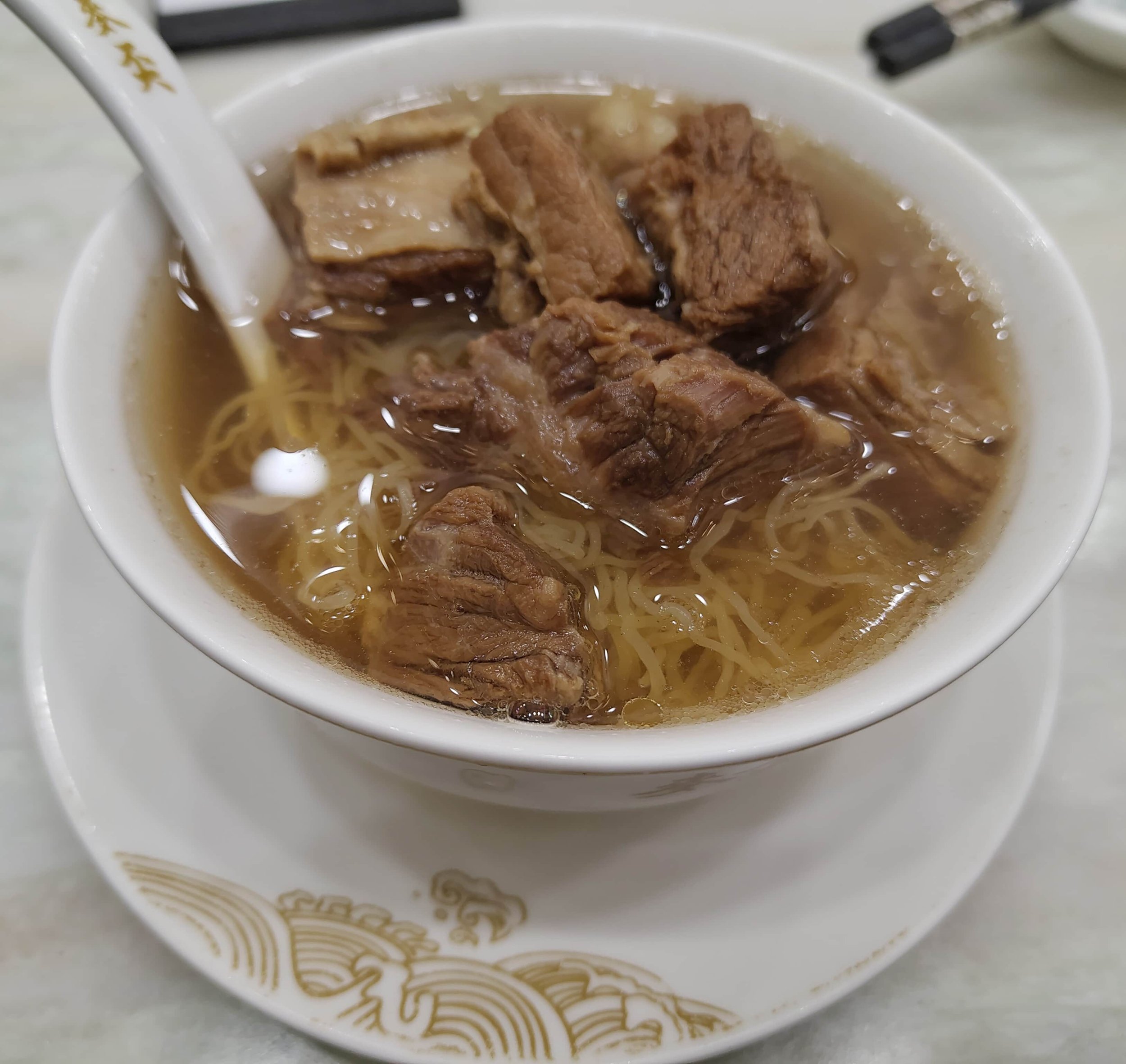
beef brisket noodles
(牛腩麵 – Ngau Lam Min)
What is it?
A classic Hong Kong noodle soup consisting of slow braised beef brisket served over noodles in a salty, savoury broth. The beef is cooked for hours until tender, creating a deep savoury dish that showcases the Cantonese preference for clear yet intensely flavoured broths. While there are several variations, beef brisket noodles are among the most popular noodle dishes in Hong Kong.
What is in it?
The dish typically features chunks of beef brisket slowly braised with ingredients such as ginger, garlic, star anise, soy sauce and spices. The brisket is then served in broth with noodles, most commonly egg noodles. It is often garnished with spring onions and may be accompanied by chilli oil or pickled vegetables. Some restaurants offer a curry beef brisket version, while others specialise in the traditional clear broth style.
Where can I eat it?
Beef brisket noodles are extremely common throughout Hong Kong and can be found in specialist noodle shops, local cafés (cha chaan teng), and Cantonese restaurants. We tried them at Maki Noodles which has several locations throughout Hong Kong.
Dairy free.
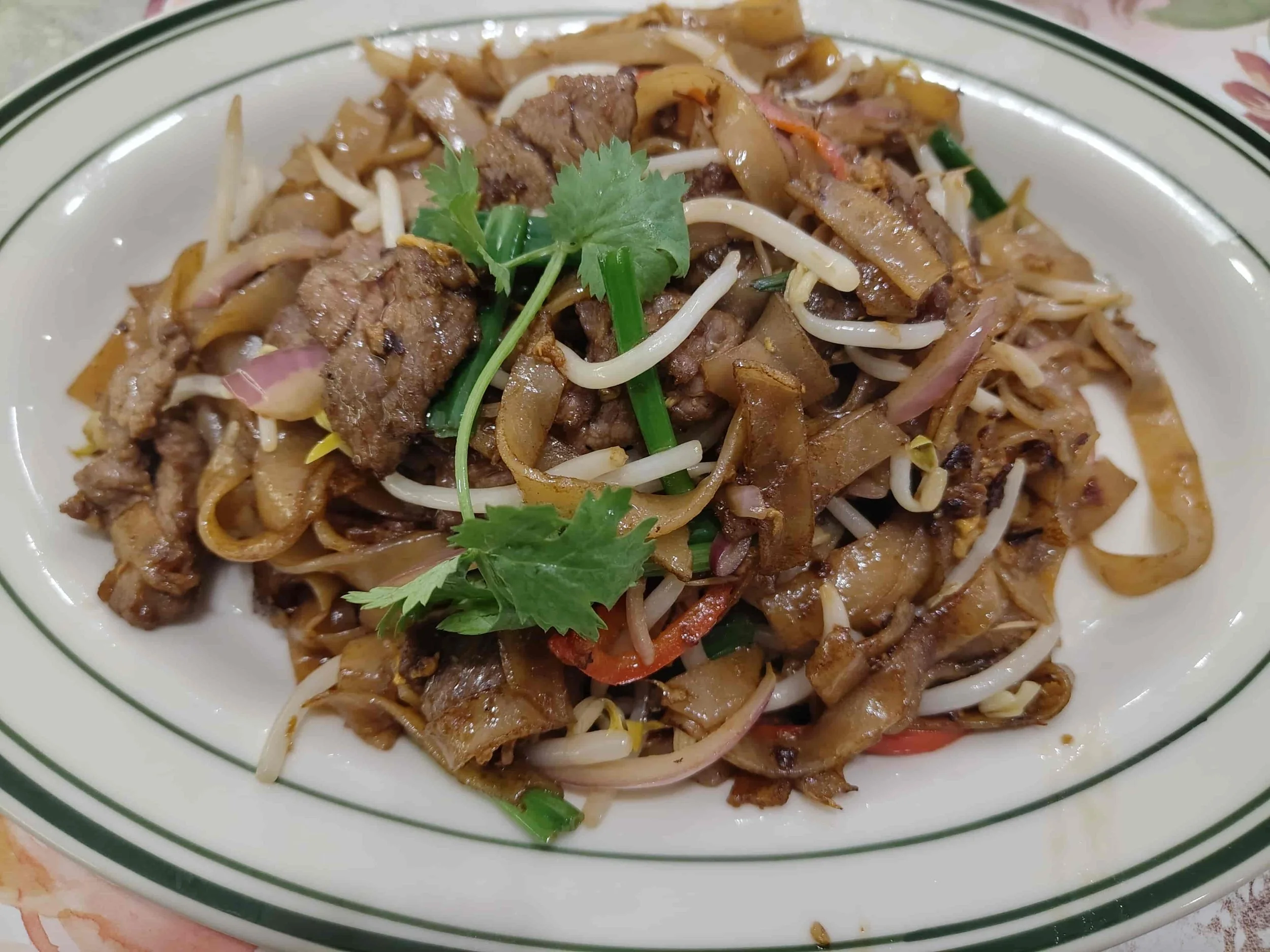
stir fried ho fun with beef
fried wide noodles & beef
What is it?
Stir fried ho fun with beef (乾炒牛河 – gon chow ngau ho) consists of wide rice noodles (ho fun) wok fried with slices of beef in a hot wok until smoky. A hallmark of a good version is wok hei (“breath of the wok”), the slightly charred, smoky flavour that comes from cooking over intense heat. The ingredients are quickly stir-fried at very high heat, allowing the noodles to pick up a characteristic smoky flavour while remaining soft and slightly chewy.
What is in it?
The dish is made with wide flat rice noodles (ho fun), sliced beef, bean sprouts, spring onions, light soy sauce and dark soy sauce. Many versions also include onion, oyster sauce, and sugar. The beef is often marinated first.
Where can I eat it?
Stir fried beef ho fun is one of the most common noodle dishes in Hong Kong and can be found throughout the city in Cantonese restaurants and cha chaan teng (Hong Kong style cafés). It is often listed in English as “beef chow fun,” “fried beef ho fun,” or “stir-fried rice noodles with beef.”
Dairy free.
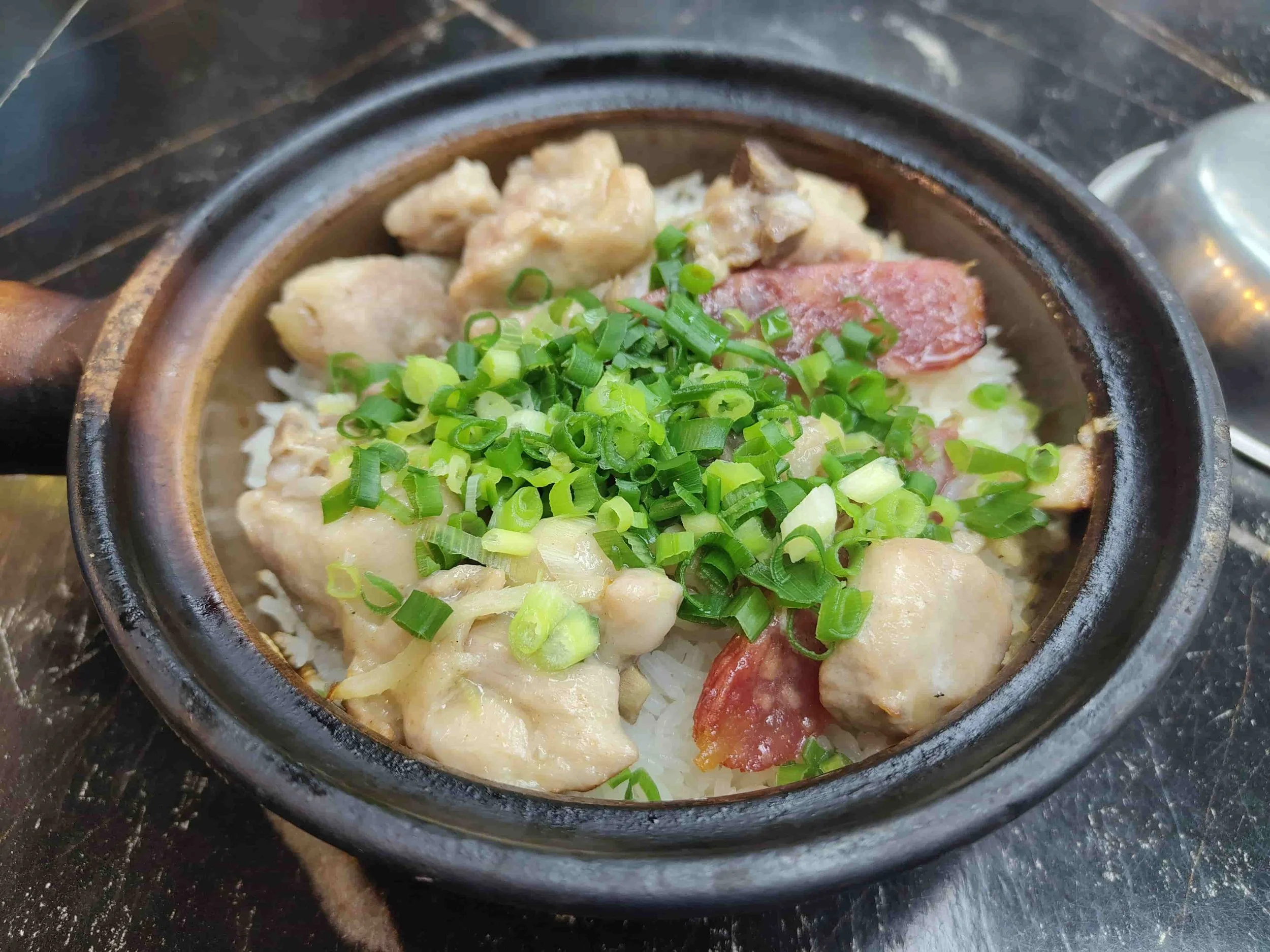
claypot rice
rice & toppings
What is it?
Claypot rice (煲仔飯 – Bo Jai Fan) consists of rice cooked and served in a traditional earthenware pot with a variety of toppings. The toppings release their juices into the rice during cooking. The dish is especially popular during the cooler months, when the steaming hot pot arrives at the table still sizzling. A defining feature of good claypot rice is the crispy layer of rice that forms on the bottom of the pot. Known as the rice crust, it develops during cooking and provides a contrast to the soft rice above
What is in it?
The base is rice cooked in a claypot, traditionally over charcoal, allowing it to absorb the flavours of the toppings as it cooks. There are many different versions, with common toppings including Chinese sausage (lap cheong), cured pork belly, chicken, beef, spare ribs, mushrooms, salted fish or preserved duck. The finished dish is usually topped with spring onions and served with sweet soy sauce, which you mix through the rice yourself.
Where can I eat it?
It is generally found in restaurants that specialise in claypot rice, so it is not as common as some other dishes. A good place to try it is Hing Kee Restaurant, which serves many different versions.
Vegetarian versions exist, though most traditional versions contain meat or fish. Usually dairy free.
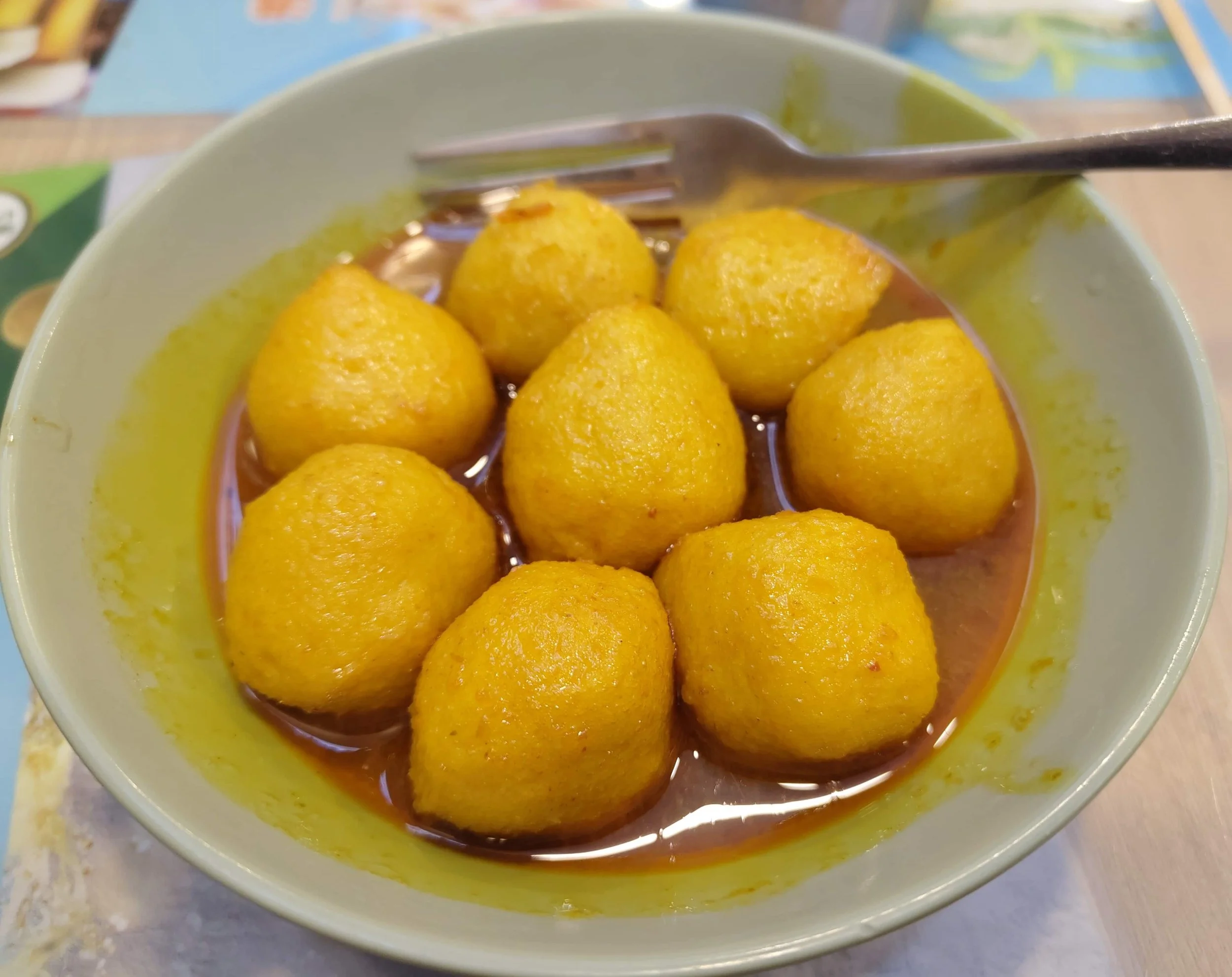
curry fish balls
fish balls in curry sauce
What is it?
Curry fish balls (咖喱魚蛋 – Gā Lei Yue Dan) are springy fish balls served in a mildly spicy curry sauce. Unlike Indian curries, the sauce is a distinctly Hong Kong style curry, sweeter and less spicy, with influences from both British and Cantonese cooking. The fish balls absorb the sauce as they simmer. They are often sold in small portions on skewers or in cups, making them an easy snack while exploring the city. In popular street food areas, you’ll often see large pots of fish balls simmering in curry sauce throughout the day.
What is in it?
The fish balls are made from finely processed fish paste, usually from white fish, which is mixed and pounded to create their distinctive bouncy texture. They are then simmered in a curry sauce typically made with curry powder, turmeric, garlic, onion, stock and sugar. Some versions also use soy sauce, oyster sauce or coconut milk.
Where can I eat it?
Curry fish balls are available throughout Hong Kong, especially from street food stalls, but are also sold as a snack at many restaurants.
Dairy free, Usually gluten free
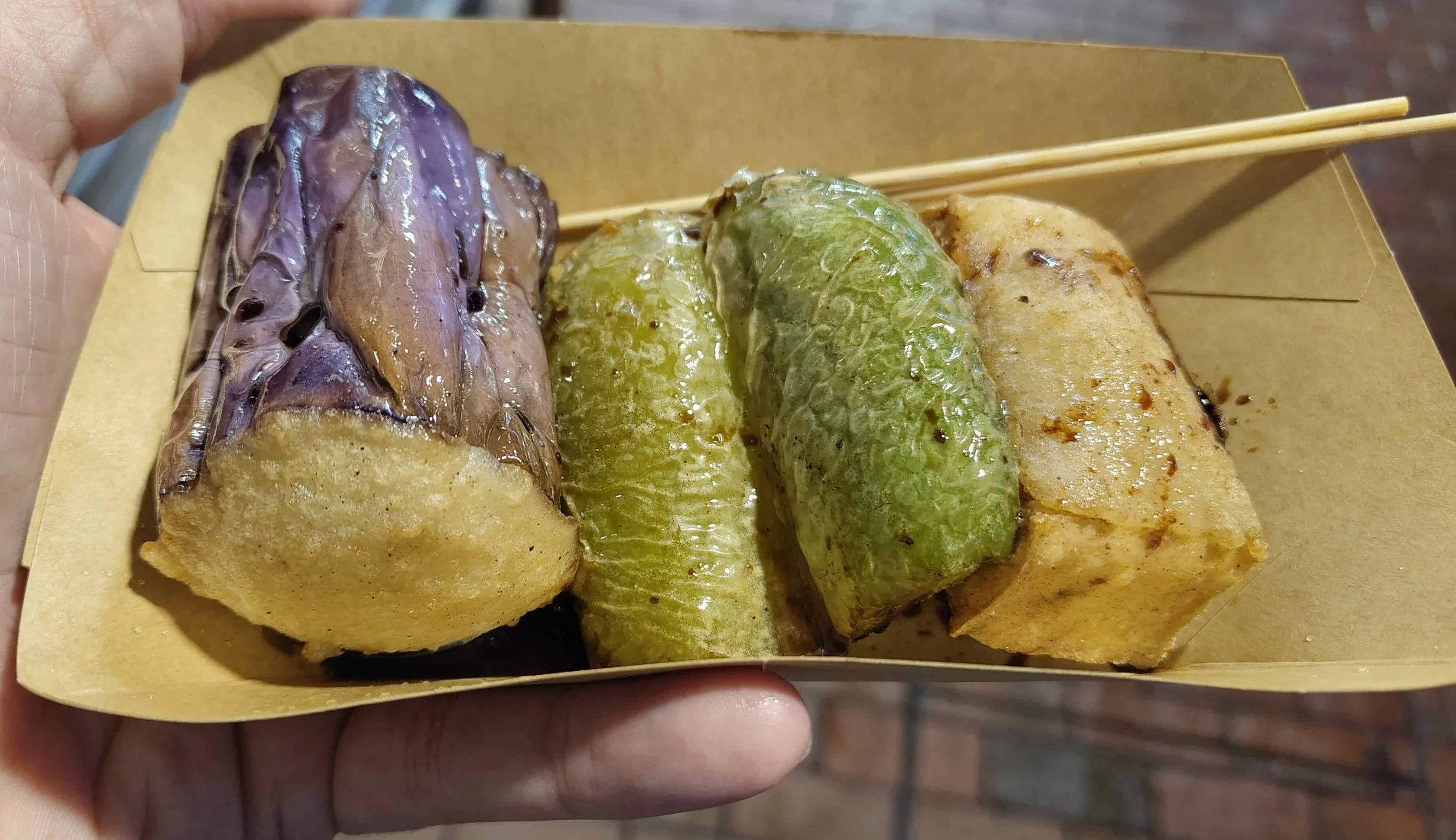
stuffed three treasures
fish paste stuffed veg
What is it?
A classic Hong Kong street food snack consisting of vegetables and tofu stuffed with seasoned fish paste, then fried and served with sauce. The name translates as “Stuffed Three Treasures,” (釀三寶, yeung saam bo) referring to the traditional combination of three different stuffed items sold together.
It is a popular item at street food stalls and markets, offering a contrast of textures between the soft vegetables, springy fish paste and crisp fried exterior.
While the classic version features three items, many vendors now offer a wider selection, and you may also encounter “Five Treasures” (五寶) platters featuring five different stuffed ingredients. Many vendors allow you to choose individual items rather than ordering a fixed set of three.
What is in it?
The stuffing is typically made from seasoned fish paste, similar to that used in fish balls. Common ingredients used as the “treasures” include:
green peppers
aubergine (eggplant)
firm tofu
Other variations may include red peppers, chillies, okra, mushrooms and bean curd skin. After being stuffed, the items are usually fried and served with sweet sauce, chilli sauce or a soy based sauce.
Where can I eat it?
Stuffed Three Treasures are commonly found at street food markets. We had some at the Temple Street Night Market.
Dairy free.
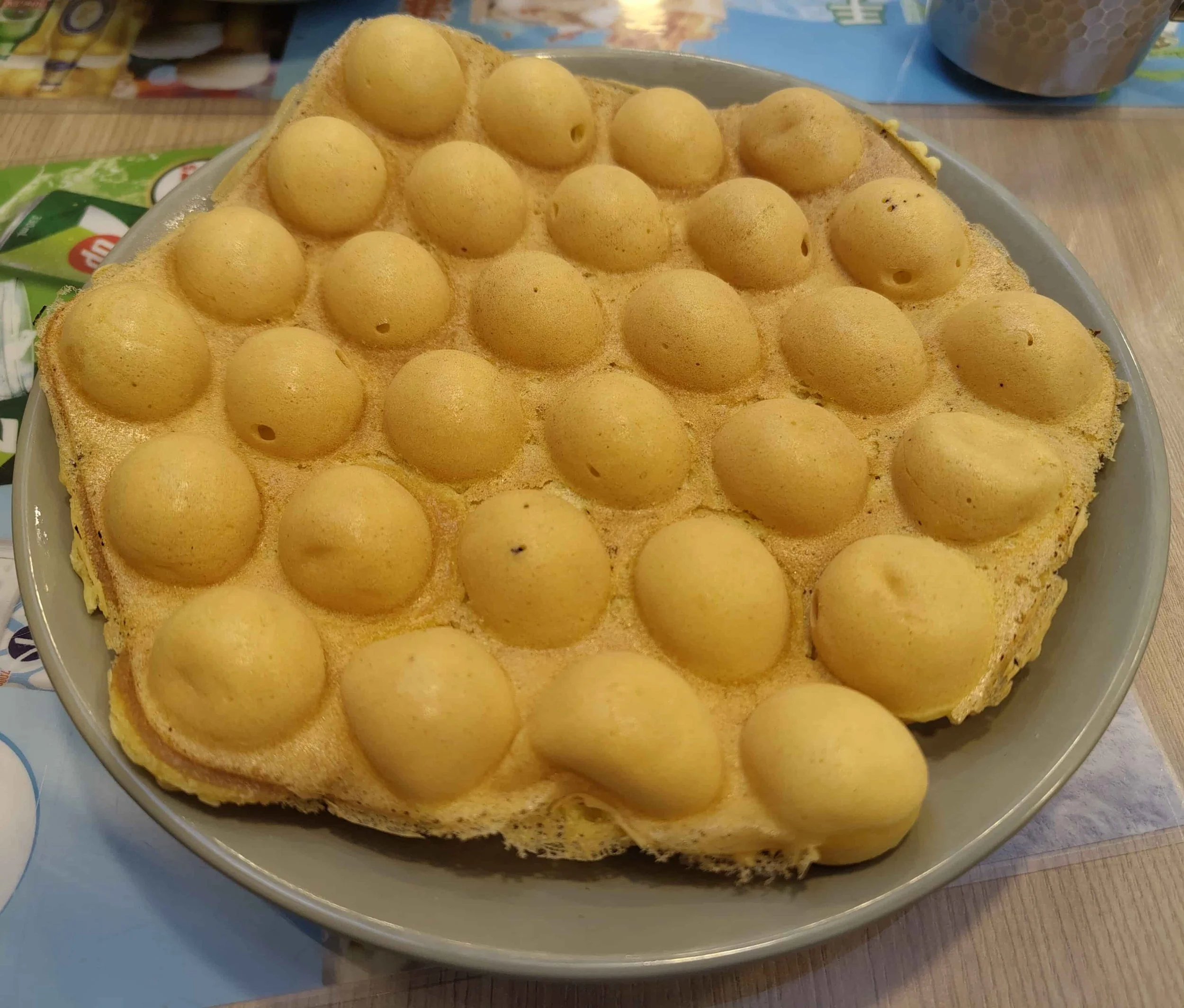
egg waffles
bubble shaped waffles
What is it?
A Hong Kong icon, egg waffles (雞蛋仔 – Gai Daan Jai) are crispy on the outside and soft on the inside, made up of dozens of small spherical bubbles joined together in a honeycomb like pattern. Known locally as gai daan jai ("little eggs"), they were originally created as a simple street snack and remain hugely popular today. While the traditional version is plain, modern shops have introduced countless variations and flavours.
Freshly made egg waffles are best eaten hot, when the exterior is slightly crisp and the centre remains soft and fluffy. They are cooked in a special mould that creates the distinctive bubble shape.
What is in it?
The batter is typically made from eggs, flour, sugar, evaporated milk (or milk), baking powder and vanilla. Some recipes also use custard powder, tapioca starch and water.
Modern variations may include flavours such as chocolate, matcha, black sesame, coffee and taro. Some dessert shops also serve them with ice cream, fruit, whipped cream and various sauces and toppings.
Where can I eat it?
Egg waffles are available throughout Hong Kong, particularly from street food stalls, snack shops and dessert cafés. They're one of the easiest Hong Kong snacks to find.
Vegetarian.
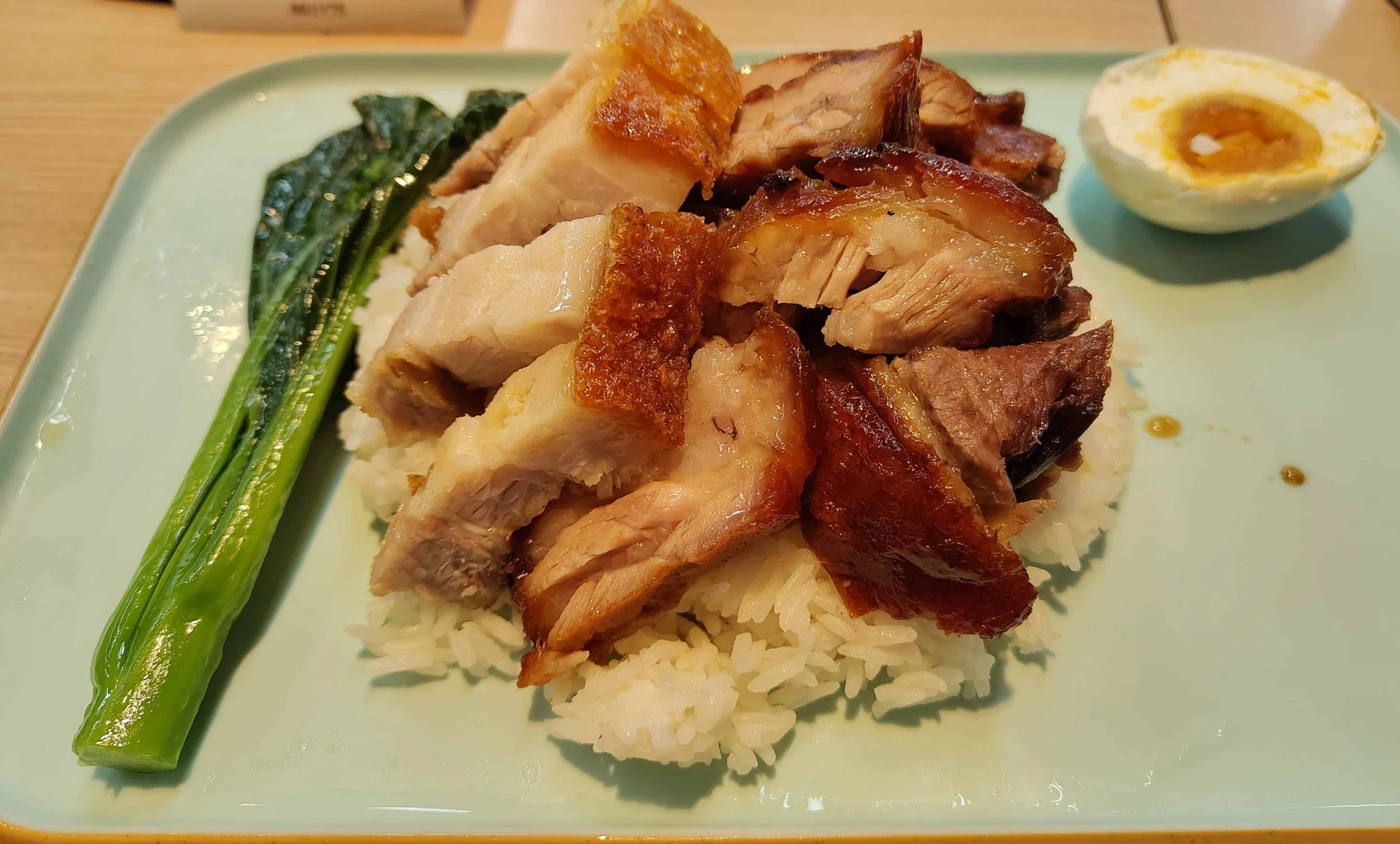
four treasures rice
rice & toppings
What is it?
A classic Hong Kong roast meat platter served over rice, featuring a selection of Cantonese barbecue and roasted meats. The name 四寶飯 – Sei Bo Fan translates as “Four Treasures Rice,” referring to four different toppings served together over rice. It’s one of the best ways to sample several of Hong Kong’s most famous roast meats in a single meal and is a common order at Cantonese roast meat restaurants.
What is in it?
The dish consists of steamed white rice topped with a selection of roast and barbecued meats, usually served with a spoonful of sauce from the roasting trays and sometimes a side of blanched greens.
The most common meats include:
Char Siu (叉燒) – Cantonese barbecue pork, marinated and roasted with a distinctive sweet and savoury glaze.
Roast Goose (燒鵝) – one of Hong Kong’s most prized dishes, featuring rich, juicy meat and crisp skin.
Siu Yuk (燒肉) – roasted pork belly with a layer of crunchy crackling and tender meat underneath.
Soy Sauce Chicken (豉油雞) – chicken gently cooked in a savoury soy sauce based broth, resulting in moist, flavourful meat.
Other possible options include roast duck, white cut chicken, barbecued pork ribs and Chinese sausage.
Many restaurants also include a soy braised egg as one of the four treasures, so a typical plate may contain three meats plus an egg rather than four different meats.
Where can I eat it?
Four Treasures Rice is available at many Cantonese roast meat restaurants throughout Hong Kong. Look for shops displaying hanging roast meats in the window, as these are often among the best places to try it. Some restaurants have a fixed Four Treasures combination, while others allow you to choose your own four items from the selection available that day.
Dairy free.
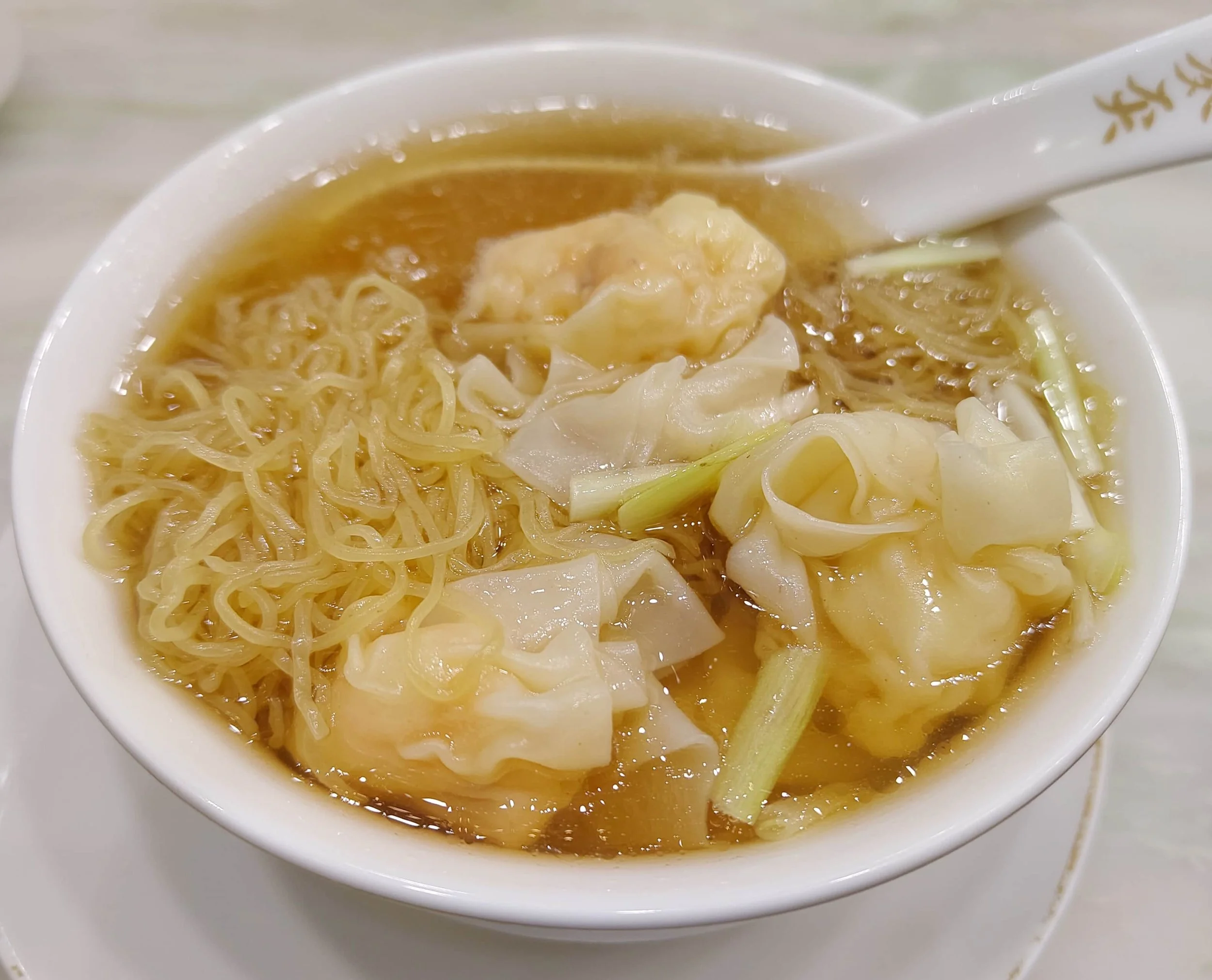
wanton noodles
noodle & wanton soup
What is it?
One of Hong Kong’s most iconic noodle dishes, wonton noodles consist of shrimp filled dumplings served in a clear broth with thin egg noodles. Despite its simple appearance, a great bowl depends on several elements being done well: springy noodles, well made wontons and a light but savoury broth.
What is in it?
Traditional Hong Kong style wontons are filled primarily with whole or chopped prawns, often with a small amount of pork. The broth is typically made from pork bones, dried seafood and other ingredients that create good flavour while remaining relatively clear and light. The noodles themselves are Cantonese egg noodles.
Where can I eat it?
Wonton noodles are available throughout Hong Kong and are a signature dish of specialist wonton noodle restaurants. A good place to try them is the chain Mak’s Noodle, which has several locations in Hong Kong.
Dairy free.
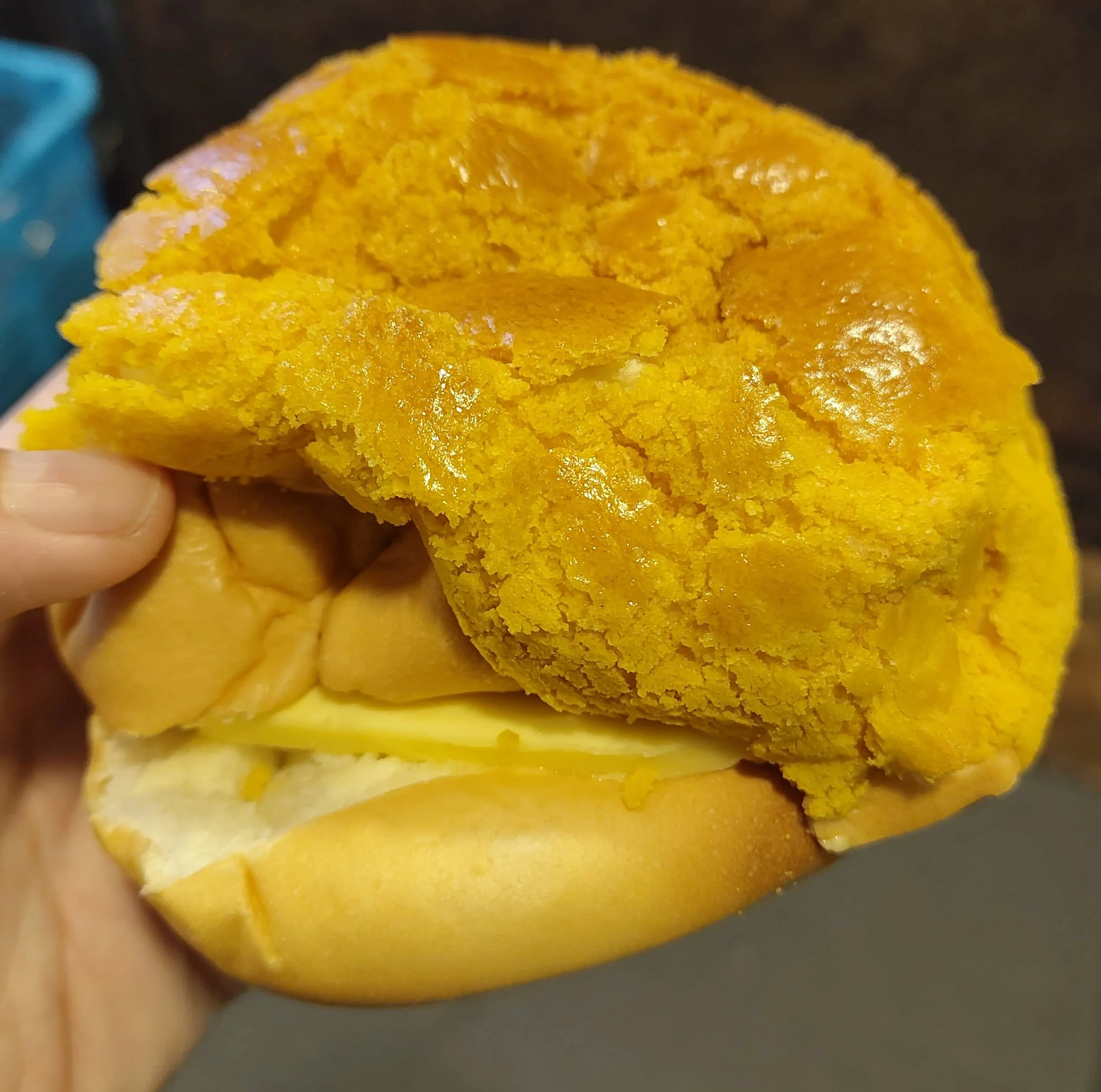
pineapple bun
sweet bun with butter
What is it?
One of Hong Kong’s most famous bakery treats, a pineapple bun with a thick slab of cold butter inside. Despite the name, there is no pineapple in the bun. The “pineapple” refers to the crackled topping, which is supposed to resembles the skin of a pineapple.
What is in it?
The bun itself is a soft, slightly sweet bread roll topped with a crisp layer made from sugar, flour, eggs and fat, which bakes into the characteristic golden top.
To make bo lo yau, the freshly baked bun is sliced and filled with a thick slab of cold butter, which then melts in the hot bun. Modern bakeries sometimes offer variations with fillings such as red bean paste, custard or chocolate, but the classic version remains simply butter and bun.
Where can I eat it?
Available throughout Hong Kong in traditional bakeries and cha chaan teng cafés. It is commonly eaten for breakfast, as an afternoon snack, or alongside Hong Kong style milk tea. Many bakeries sell pineapple buns on their own, so if you specifically want the butter version, look for 菠蘿油 (bo lo yau) rather than just 菠蘿包 (bo lo bao).
Vegetarian.
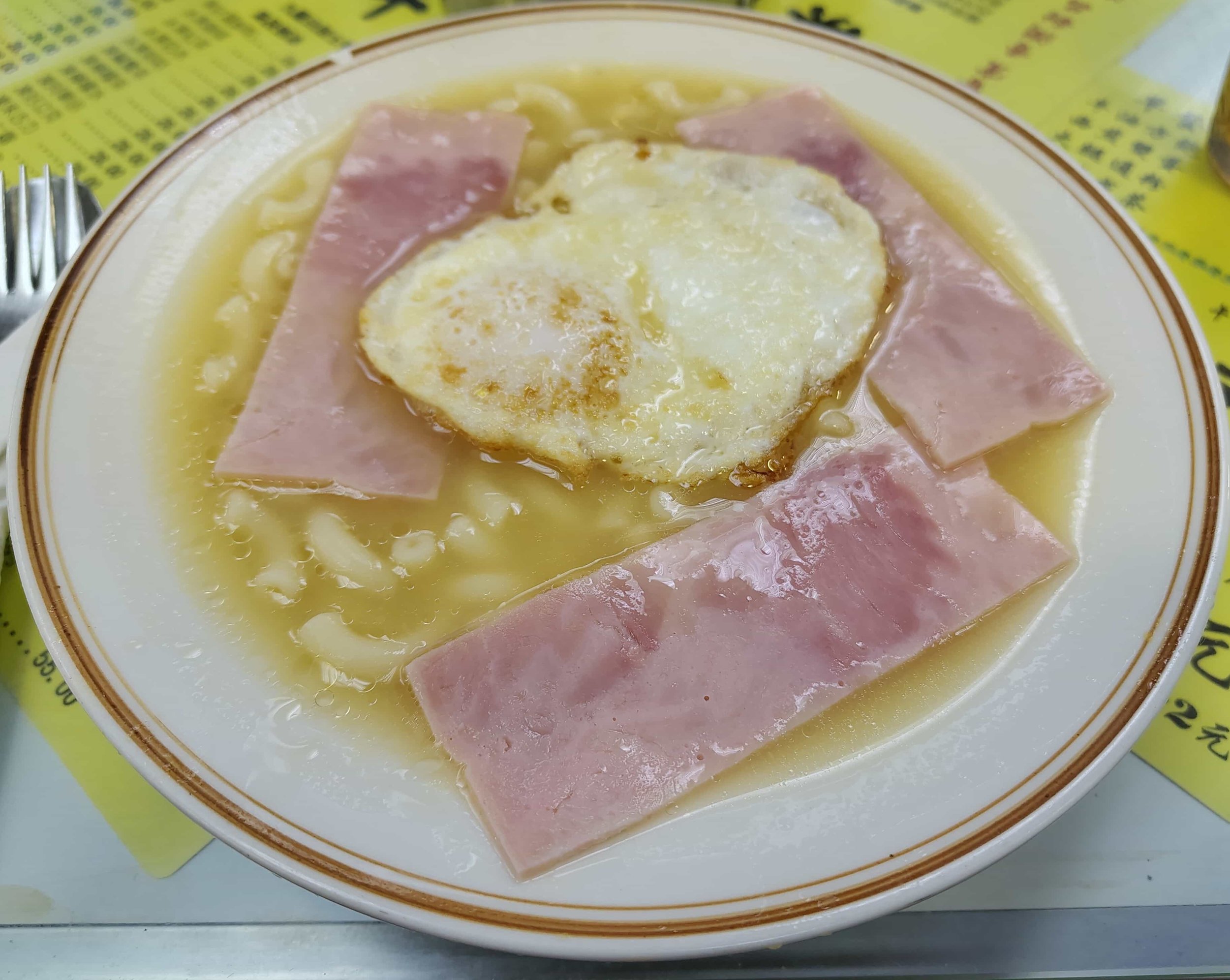
macaroni soup with ham and egg
(火腿通粉加蛋 – Fo Tui Tung Fan Ga Daan)
What is it?
A Hong Kong breakfast classic consisting of macaroni served in a light broth with slices of ham and a cooked egg. While it may seem unusual to Westerners, it’s one of the most traditional breakfast items found in Hong Kong’s cha chaan teng cafés. The dish reflects Hong Kong’s blend of Cantonese and Western influences. Macaroni was introduced during the colonial era and was adapted into a simple, comforting breakfast that remains popular today.
What is in it?
The dish consists of macaroni served in a clear or lightly creamy savoury broth, usually made from chicken stock (sometimes with evaporated milk or cream of chicken). It is typically topped with slices of ham and a fried or poached egg.
Many breakfast sets allow you to choose alternative toppings such as luncheon meat (Spam), sausage, corned beef or shredded chicken, or to swap macaroni for spaghetti. The classic version, however, is generally considered to be ham and egg. It is often served as part of a breakfast set alongside toast and a Hong Kong style milk tea.
Where can I eat it?
Macaroni soup is available at many cha chaan teng in Hong Kong and is most commonly eaten at breakfast. A good place to try it is Australian Dairy Company, it’s a busy place, but they have a quick turn around and you generally don’t wait long. You may end up seated with strangers on a small table, all part of the fun, though.
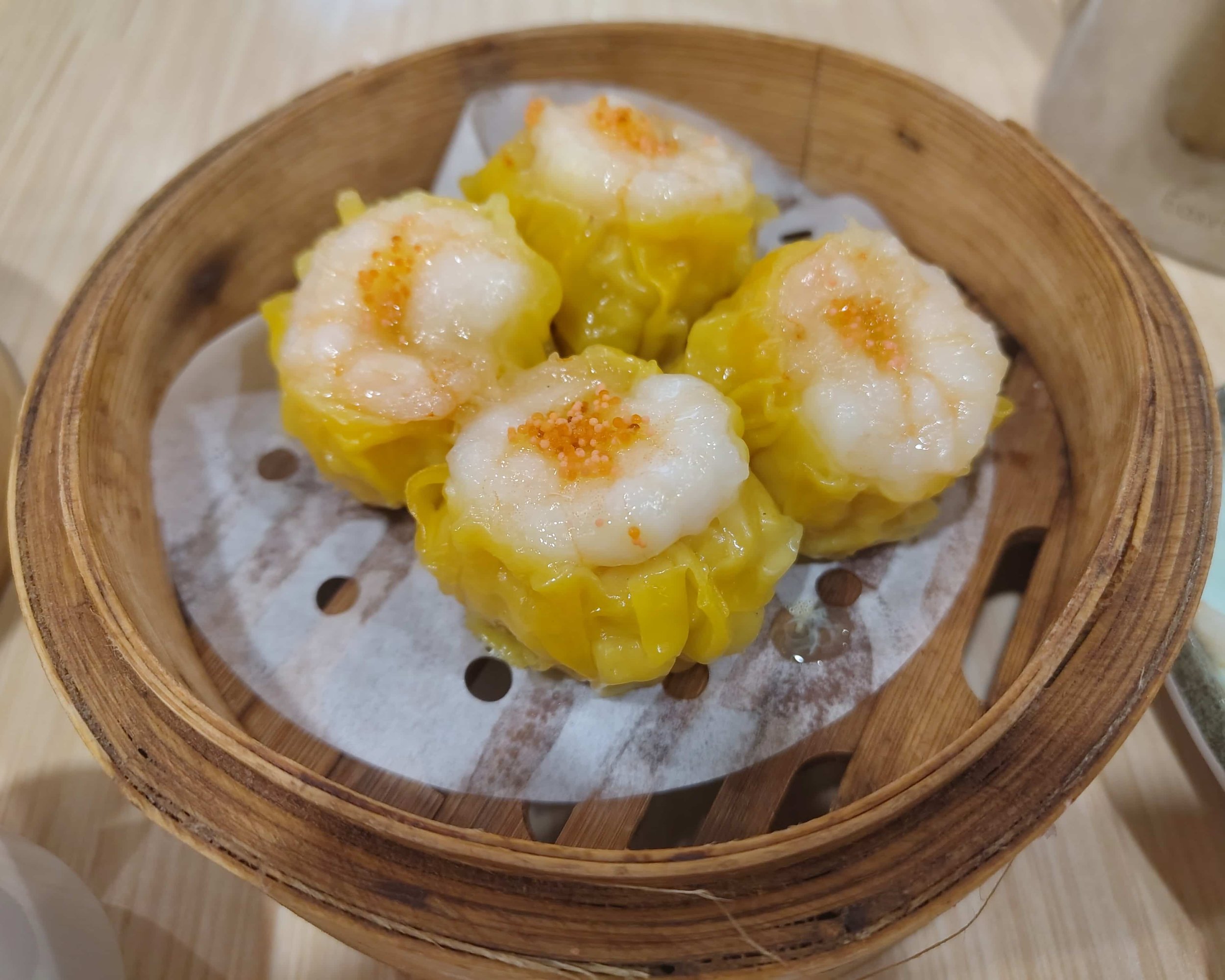
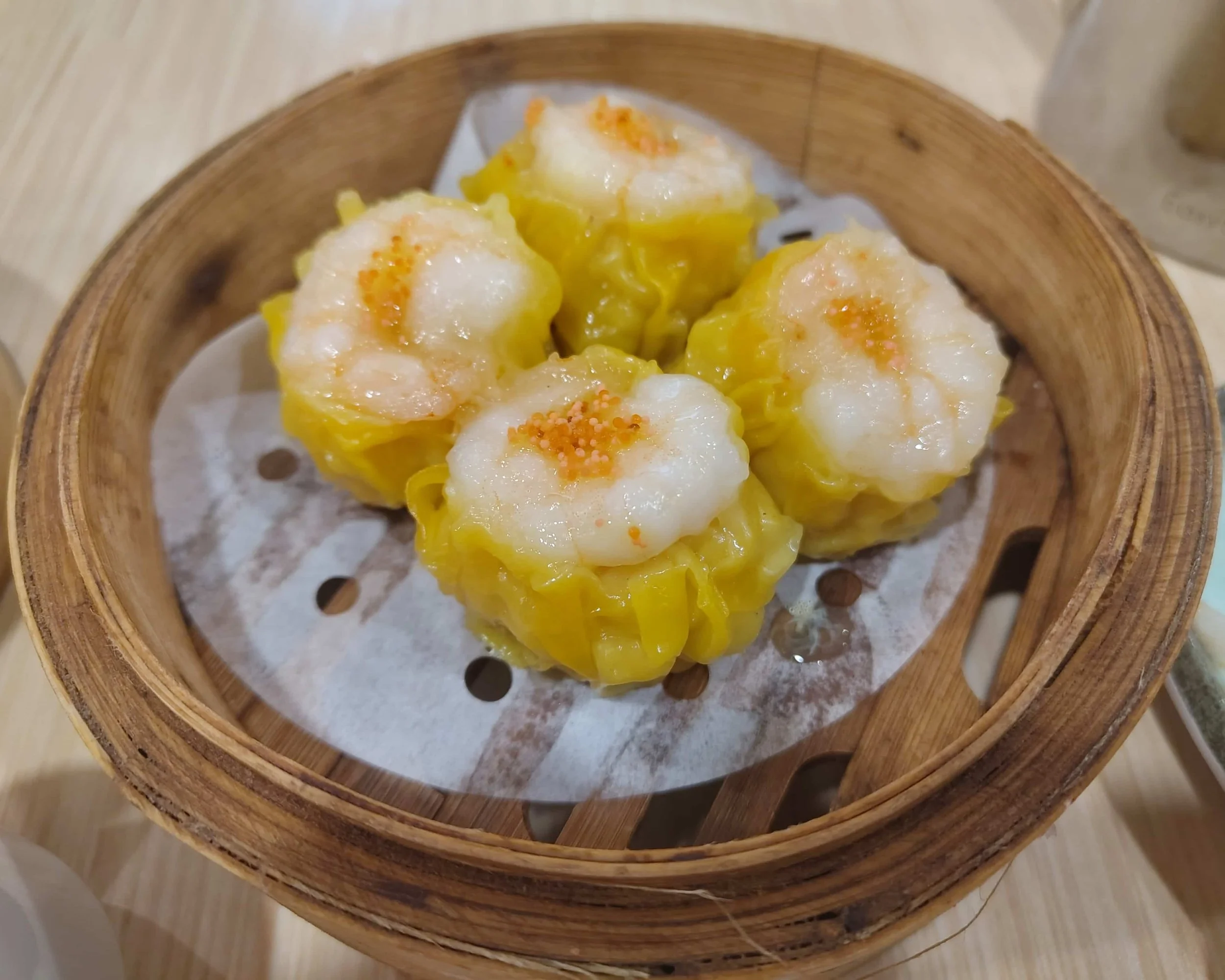
siu mai
pork & prawn dumpling
What is it?
Siu mai (燒賣) is one of the most iconic dim sum dishes. It is an open-topped dumpling filled with a mixture of minced pork and prawns (shrimp), wrapped in a thin yellow wheat wrapper gathered into a pleated cup shape. It is a staple of Cantonese dim sum and is found on virtually every dim sum menu in Hong Kong.
Siu mai is recognisable by its yellow wrappers and exposed filling, and it is typically served in bamboo steamers. It is often one of the first dishes ordered during a dim sum meal.
It is worth noting that the dim sum version is quite different from the street food siu mai sold at snack stalls in Hong Kong, which are usually made from fish paste and served with sauce. In fancier restaurants, the top is often garnished with a dot of crab roe or grated carrot.
What is in it?
Traditional Cantonese siu mai are made with a thin yellow wheat wrapper (lye water dough) filled primarily with minced pork and prawns. Many versions also include ingredients such as mushrooms, water chestnuts or bamboo shoots, and are seasoned with sesame oil, ginger, scallion, oyster sauce, sugar and white pepper.
Where can I eat it?
Siu mai is available at virtually every dim sum restaurant in Hong Kong. We had some good ones at One Dim Sum, which has a few locations across Hong Kong.
Dairy free.
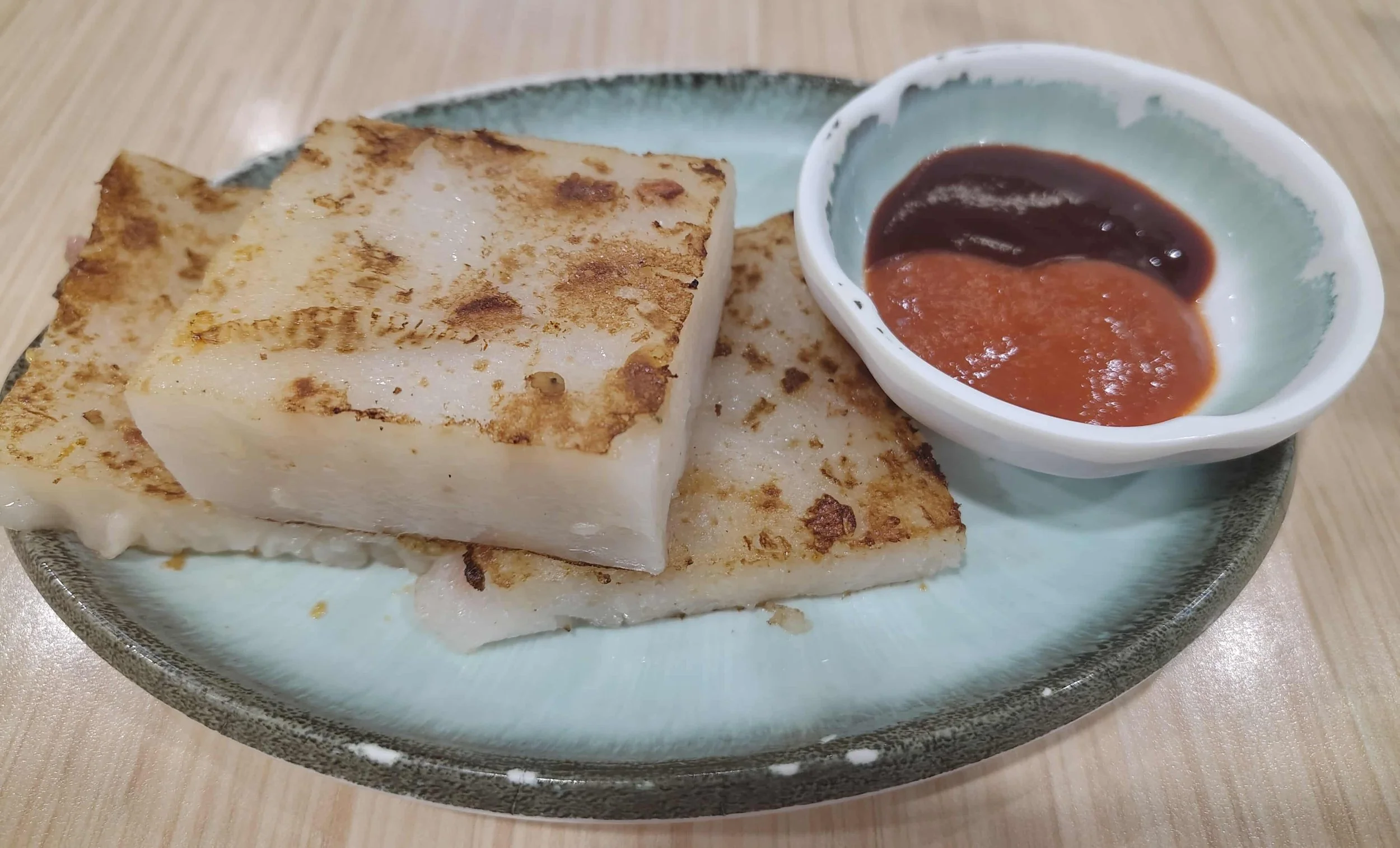
turnip cake
Savoury rice, radish cake
What is it?
Despite its English name, turnip cake is actually made from Chinese white radish (daikon) rather than turnips. It is one of the most popular dim sum dishes and consists of a savoury cake made from grated radish and rice flour, which is steamed, after steaming, the cake is cut into rectangular slices and pan fried. You will often see it called either turnip cake or radish cake in English. While “turnip cake” is the traditional translation, “radish cake” is more accurate.
What is in it?
The base is made from grated daikon radish and rice flour, which are combined into a thick mixture and steamed into a firm cake. Traditional versions often include dried shrimp, Chinese sausage (lap cheong) and dried mushrooms. Vegetarian versions are also common.
Where can I eat it?
Turnip cake is a staple of dim sum restaurants throughout Hong Kong and is almost always available, including at our go to dim sum spot, One Dim Sum.
Vegetarian versions available, dairy free.
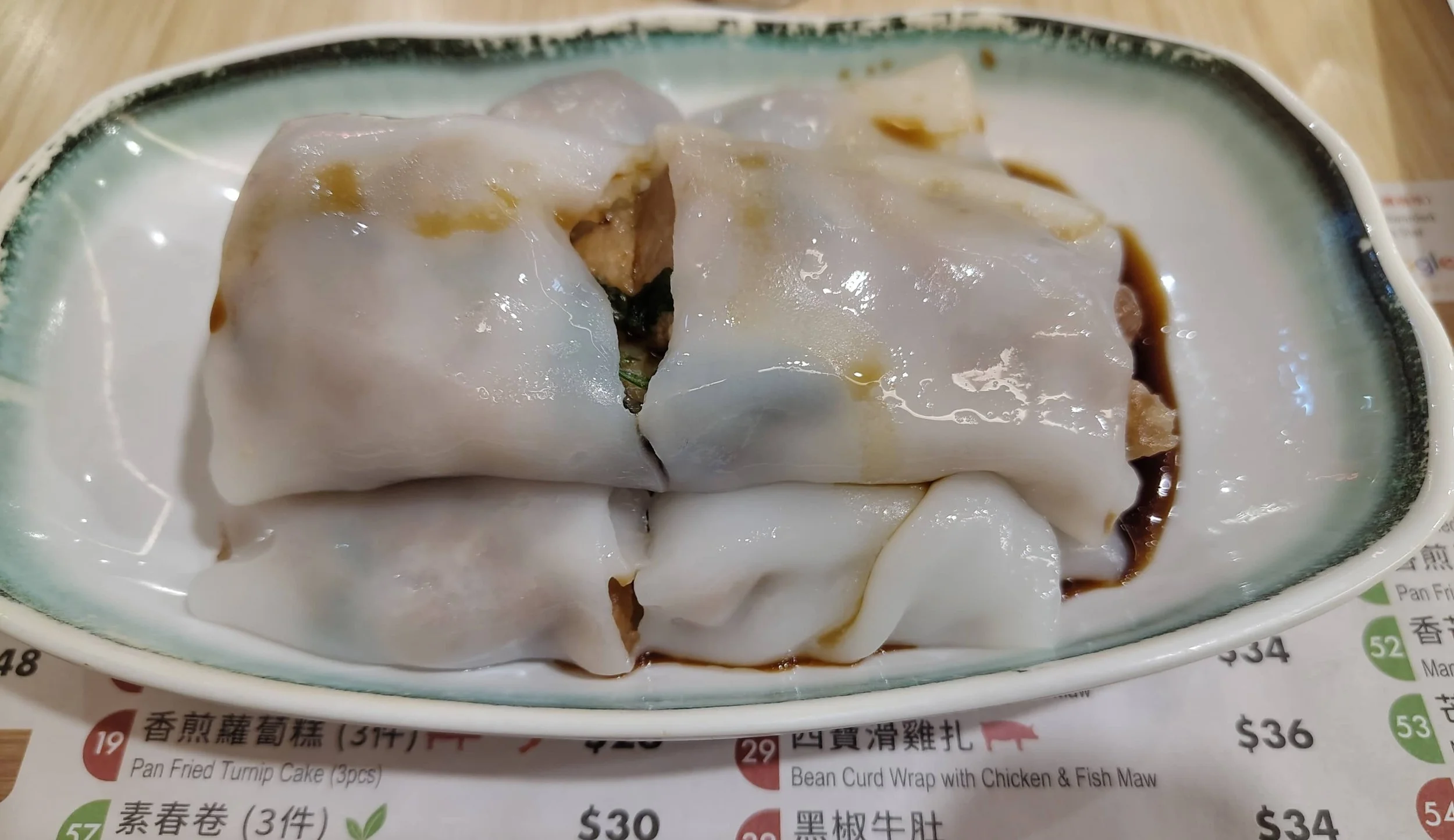
cheung fun
rice noodle sheet rolls
What is it?
Made from steamed rice noodle sheets that are rolled up and served in a light soy based sauce. The texture is soft, smooth and slightly chewy.
Cheung fun (腸粉) is typically served freshly steamed and cut into pieces, or presented as whole rolls that diners cut themselves. There are several common varieties, ranging from simple plain rolls to filled ones.
What is in it?
The base is made from a thin batter of rice flour and water, steamed into a flat sheet and then rolled.
Common fillings include:
shrimp cheung fun – whole prawns wrapped in the rice sheet
beef cheung fun – minced beef filling
char siu cheung fun – Cantonese BBQ pork
The rolls are usually served with light soy sauce, sometimes sweet soy sauce, and occasionally sesame paste or chilli oil depending on the restaurant.
Where can I eat it?
Cheung fun is available at virtually all dim sum restaurants in Hong Kong, as well as at takeaway places.
Vegetarian versions available, dairy free.
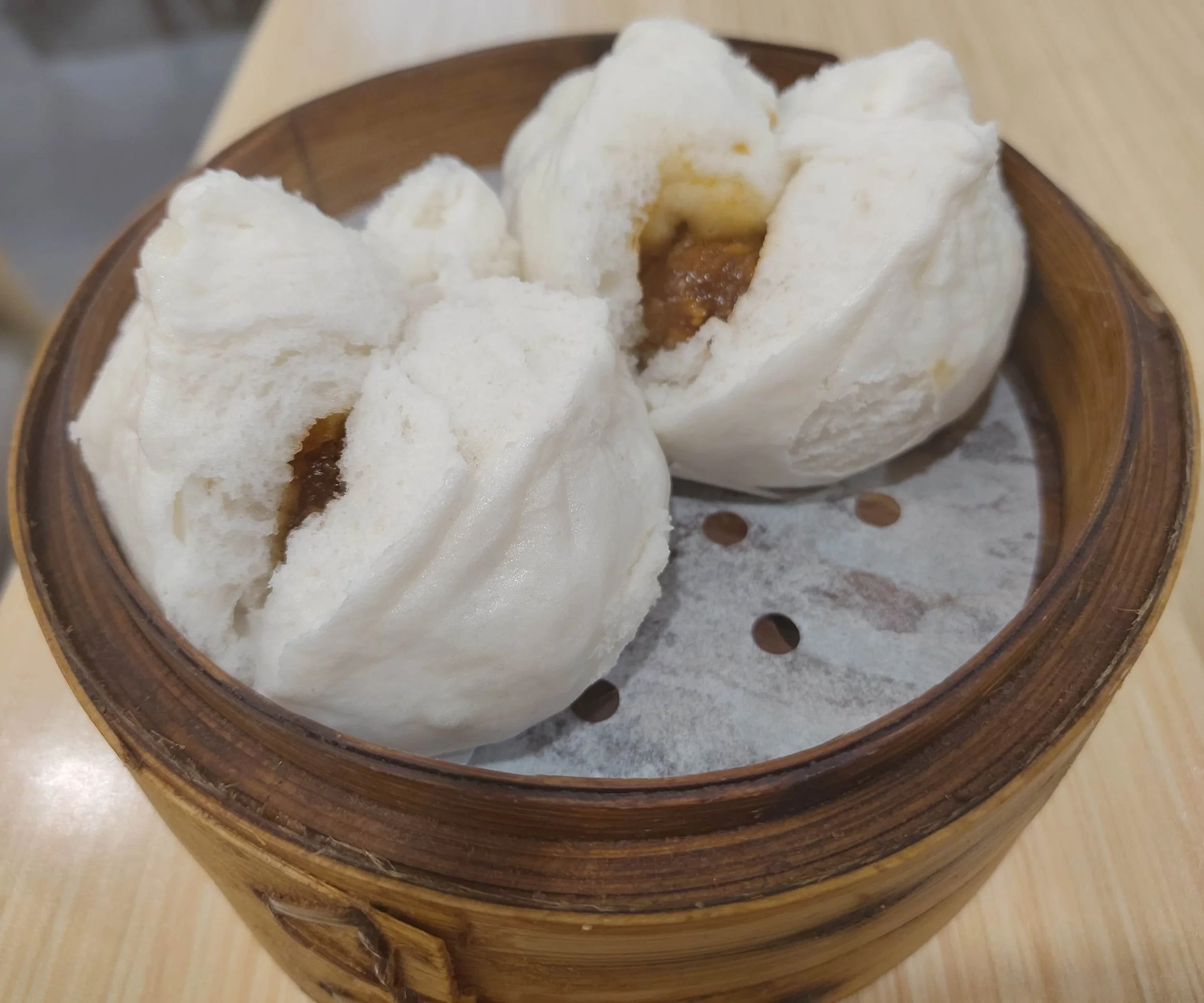
char siu bao
steamed pork buns
What is it?
Char siu bao (叉燒包) are soft buns filled with sweet and savoury Cantonese barbecued pork (char siu). The filling savoury with a characteristic sweetness that is a hallmark of Cantonese barbecue. They are typically steamed, giving the buns a light, pillowy texture.
What is in it?
The bun is made from a soft yeasted dough and filled with diced char siu pork mixed with a thick, slightly sweet sauce made from ingredients such as oyster sauce, soy sauce and sugar. Some versions also include sesame oil and rice wine.
Where can I eat it?
Char siu bao are available at virtually every dim sum restaurant in Hong Kong.
Dairy free.
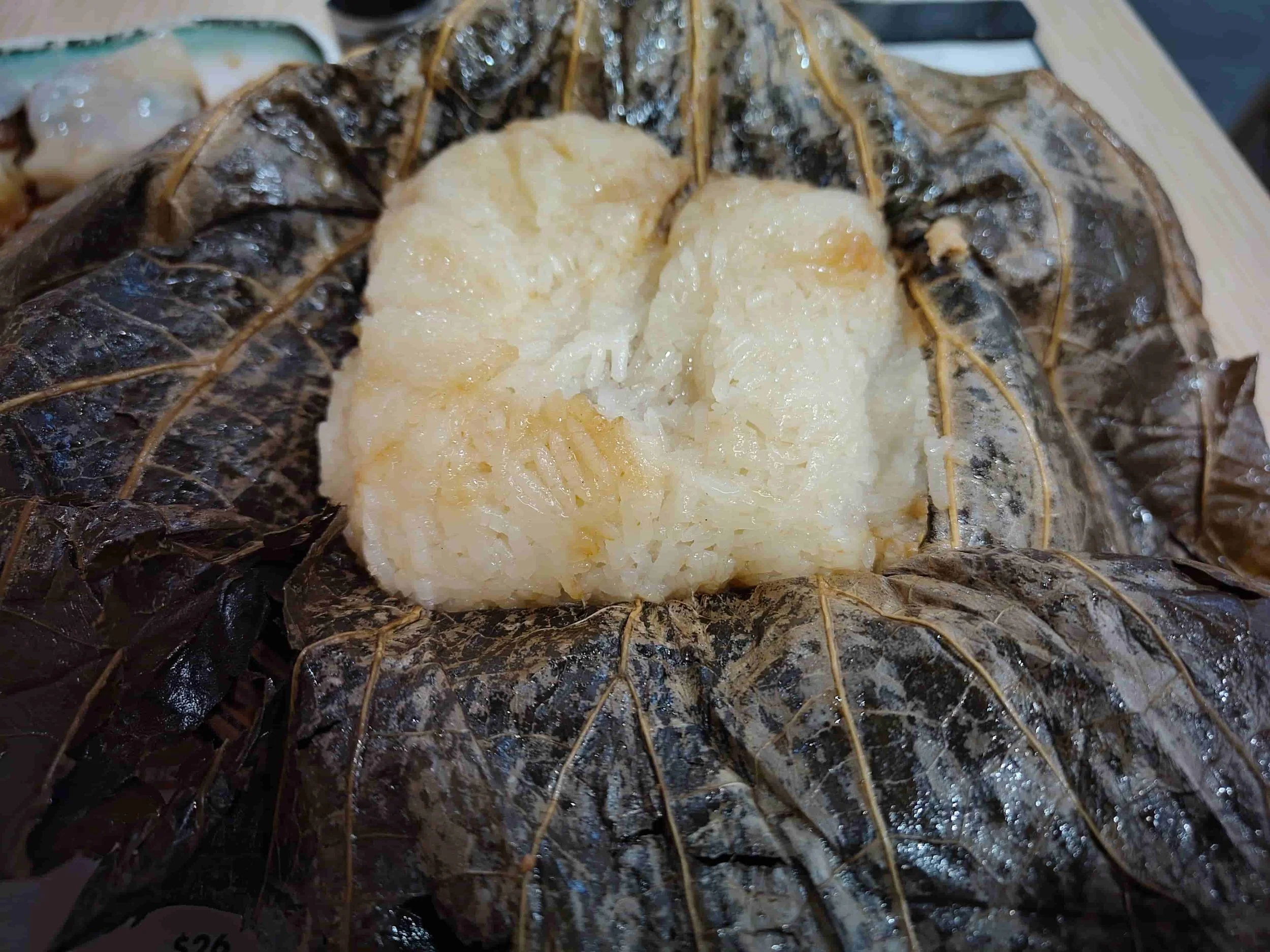
lo mai ga
lotus leaf steamed rice
What is it?
A dim sum dish consisting of sticky glutinous rice wrapped in a lotus leaf and steamed. There is then a filling hidden inside the rice. It’s definitely one of the most filling items on a dim sum menu.
Unlike many dim sum dishes that are small, lo mai gai (糯米雞) is often large enough to share and can almost feel like a small meal in itself. The lotus leaf imparts a distinctive earthy aroma to the rice during steaming, which is one of the dish’s defining characteristics.
What is in it?
The dish is made from glutinous (sticky).
Traditional fillings commonly include chicken, Chinese sausage (lap cheong), mushrooms and salted egg yolk. Some versions may also contain pork, dried shrimp and chestnuts.
Where can I eat it?
Lo mai gai is fairly common in dim sum restaurants throughout Hong Kong, but not as ubiquitous as some other dim sum items. That said, it is available at our go to dim sum branch, One Dim Sum.
Dairy free.
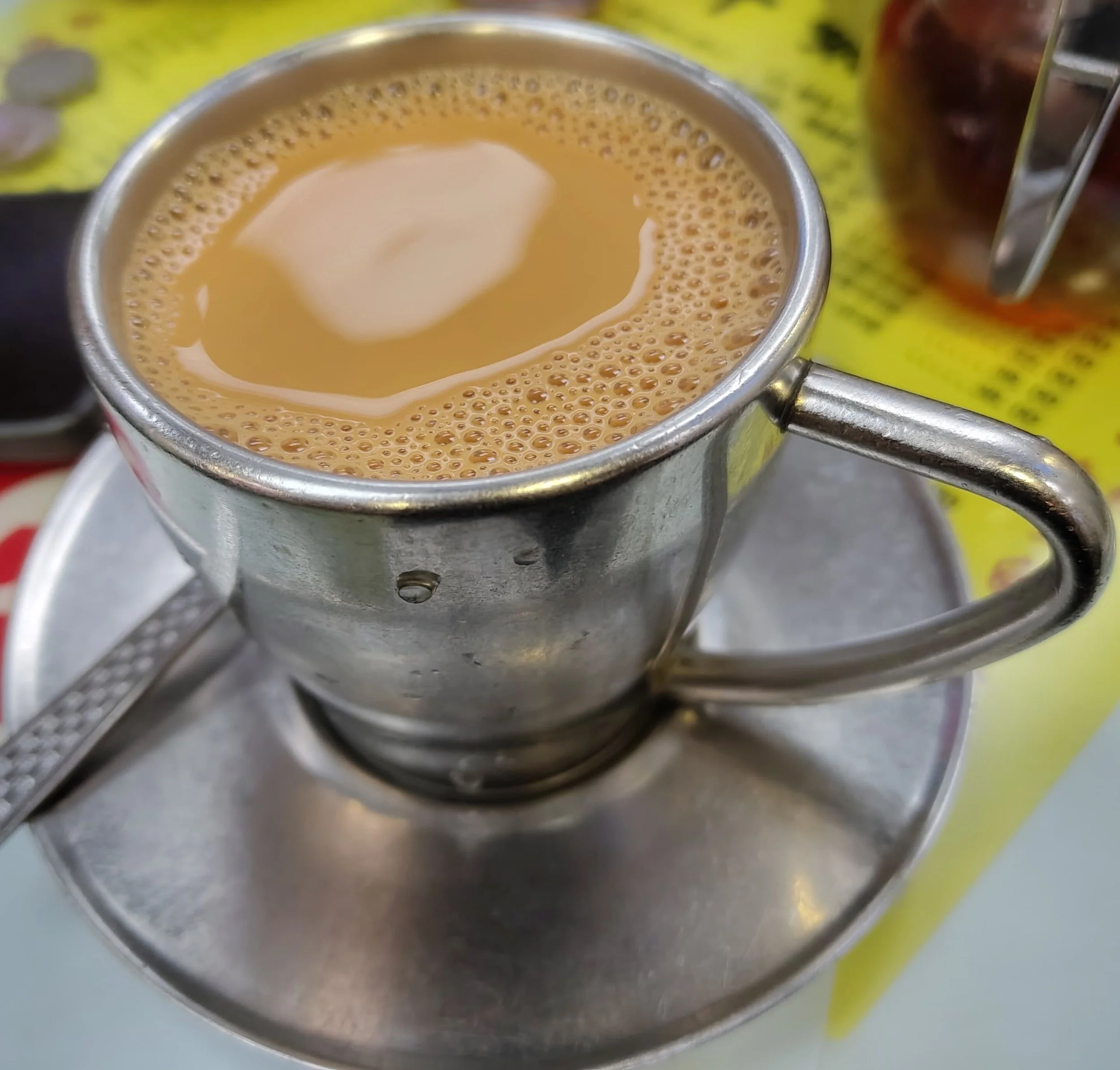
Hong Kong milk tea
strong tea
What is it?
Hong Kong’s signature tea drink, made by blending strong black teas with evaporated or condensed milk to create a strong and highly caffeinated beverage. It is one of the defining drinks of Hong Kong’s cha chaan teng café culture, and as an Englishman I very much approve.
Milk tea can be served either hot or cold, with both versions being extremely popular. The hot version is especially common at breakfast, while the iced version is a refreshing choice during Hong Kong’s hot and humid summers.
The drink developed during the colonial era, combining British tea drinking traditions with local tastes and ingredients. It is brewed very strong before being strained through a cloth filter. This filtering method earned it the nickname “silk stocking milk tea” because the filter resembles a silk stocking.
What is in it?
Hong Kong milk tea is traditionally made from a blend of black teas, often including Ceylon tea, brewed very strong before being strained through a cloth filter.
The tea is then mixed with evaporated milk (most common) or condensed milk in sweeter versions. For the iced version, the tea is poured over ice after brewing.
Where can I drink it?
Hong Kong milk tea is available almost everywhere, especially in cha chaan teng cafés, restaurants and takeaway drink shops. It is commonly included as part of breakfast and lunch sets, often served alongside macaroni soup or toast with eggs.
Vegetarian & gluten free.
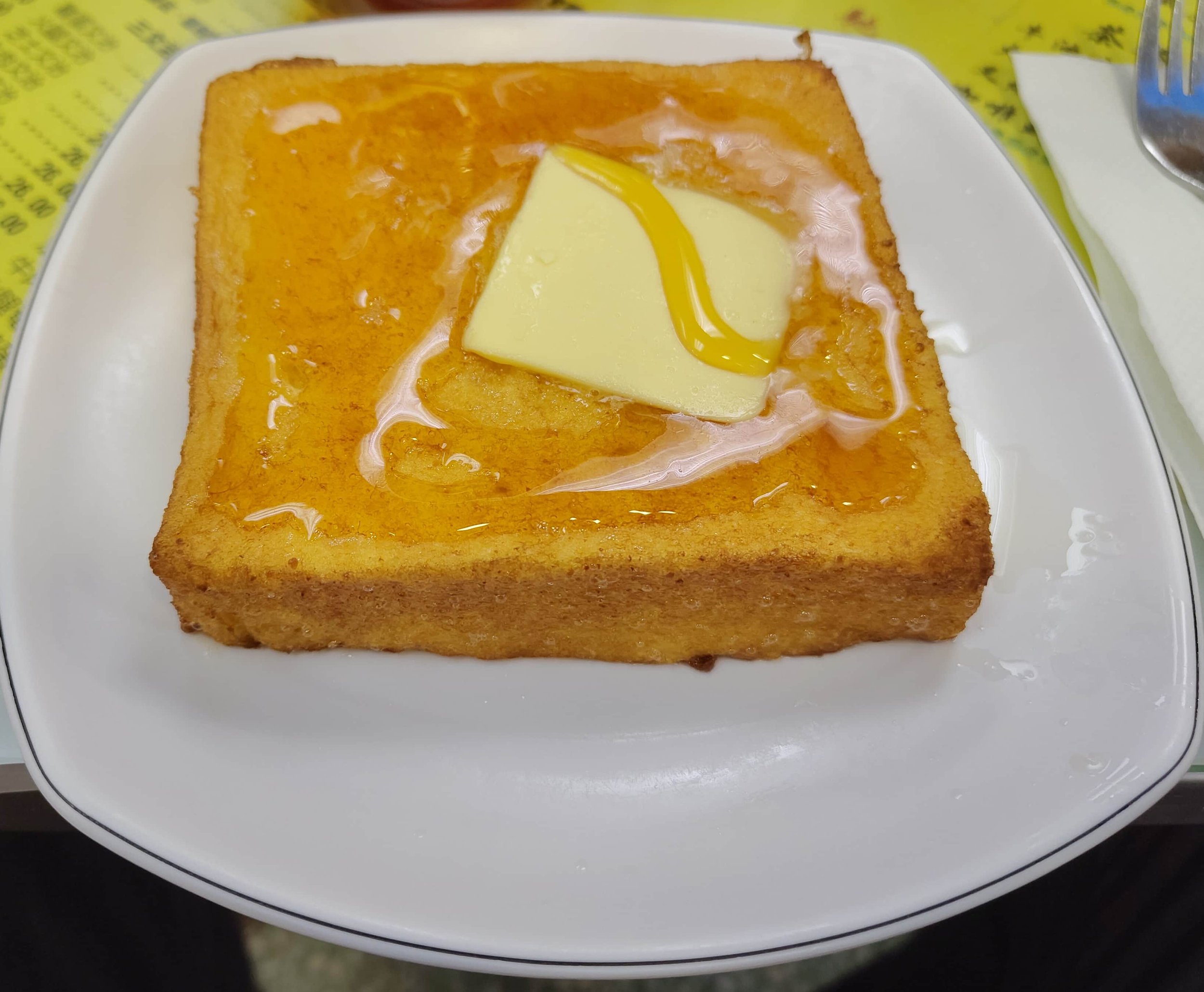
Hong Kong French toast
deep fried bread
What is it?
A decadent Hong Kong café classic consisting of thick slices of bread sandwiched together, then deep fried, served with a slab of butter on top and golden syrup. Unlike Western French toast, which is typically pan fried, the Hong Kong version is deep fried.
What is in it?
The classic version consists of thick slices of soft white bread dipped in egg and then deep fried. It’s then topped with butter and drizzled with golden syrup or condensed milk.
Many cafés now offer filled versions, with the most common fillings including peanut butter, kaya (coconut jam), chocolate spread or custard.
Where can I eat it?
Hong Kong French toast is available at virtually every cha chaan teng and is one of the signature dishes of Hong Kong café culture. It’s often served alongside a cup of Hong Kong milk tea or coffee. We tried it at Australian Dairy Company.
Vegetarian.
Ingredients listed reflect common or typical components of this dish as served in restaurants or street‑food vendors. Variations by region, season, or vendor are common. This information is provided for general reference only. If you have dietary restrictions or allergies, please verify ingredient details independently. We assume no liability for accuracy or outcomes.
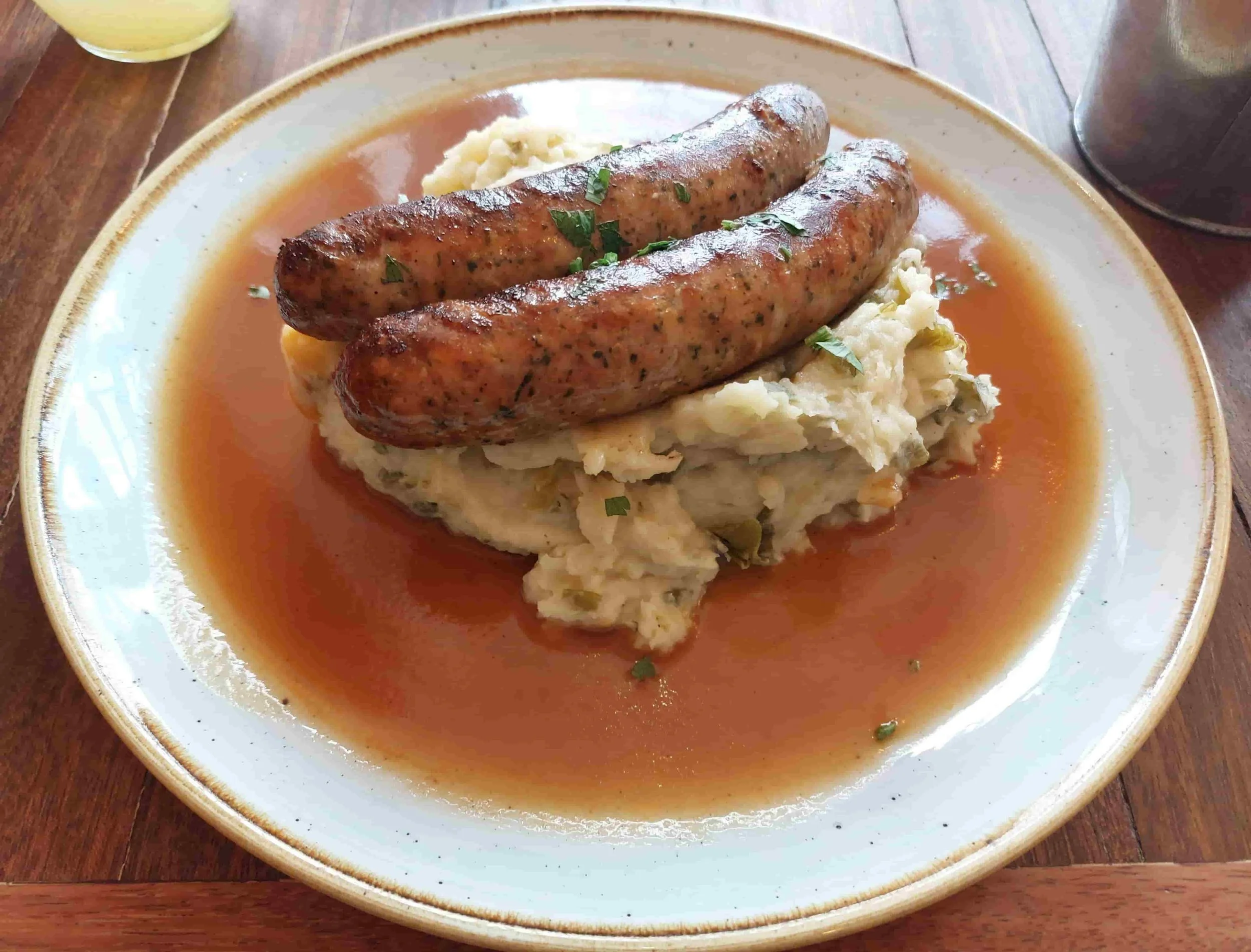
all the foods - Belgium
Discover all the traditional Belgian dishes we tried, from carbonnades flamande and fries to stoemp sausisse and more
Here you will find a list of all the traditional cuisine we tried in Belgium.
Click to view our top 5 Belgian foods
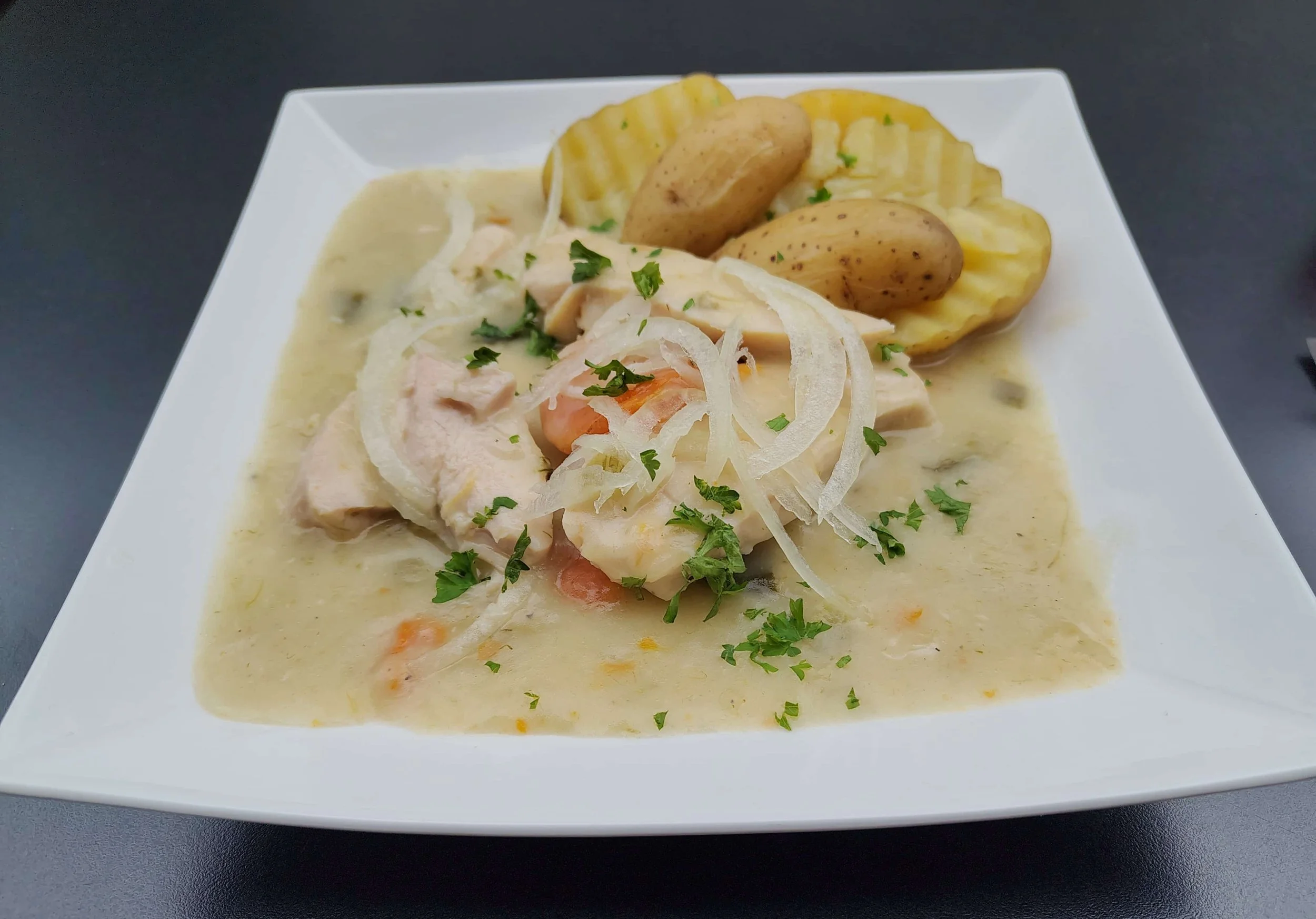
waterzooi
creamy stew
What is it?
Waterzooi is a rich, creamy stew originating from Ghent in Belgium. Traditionally it was made with freshwater fish, but today the chicken version (kippenwaterzooi) is often more common.
What is in it?
Waterzooi is made with fish or chicken cooked with vegetables such as carrots, leeks, onions and celery, in a broth enriched with cream and egg yolk. It is usually served with boiled potatoes or fresh bread to soak up the sauce.
Where can I eat it?
It is especially associated with Ghent, where it remains one of the city’s signature dishes, although it can also be found on traditional menus elsewhere in Belgium. We tried a good version at C'est Bon C'est Belge in Brussels.
Gluten free if served without bread.
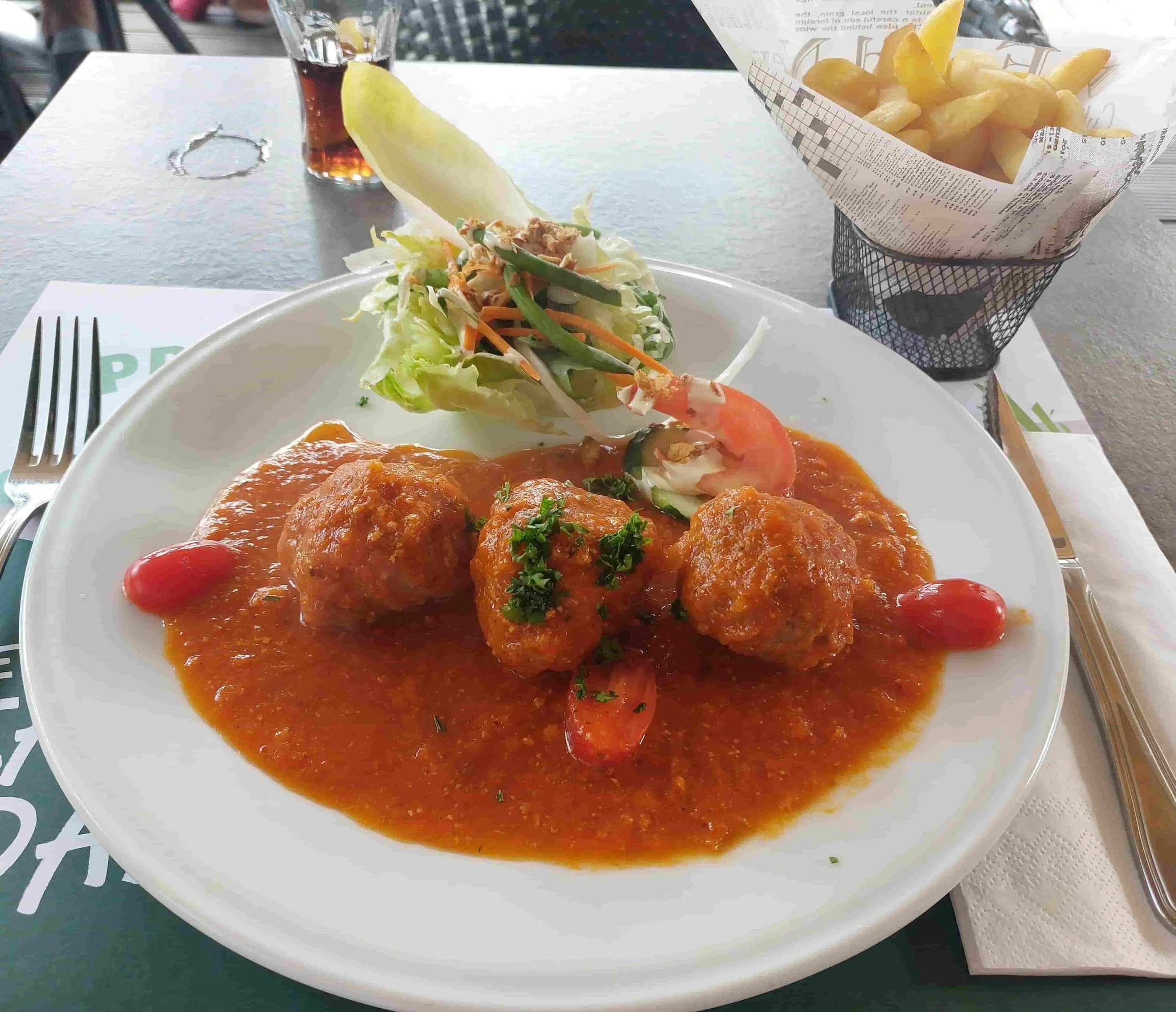
boulettes
Belgian meatballs
What is it?
Boulettes are large, juicy Belgian meatballs, traditionally served with crispy fries, though sometimes accompanied by creamy mash. There are two well known versions, Boulettes à la Liégeoise and meatballs in tomato sauce, though the former is far more traditional and famed.
Boulettes à la Liégeoise. a speciality from Liège, served in a sweet and sour sauce made with sirop de Liège, a local pear and apple syrup.
Boulettes in tomato sauce, meatballs in a savoury, herby, slightly tangy tomato based sauce.
What is in it?
The meatballs are usually a mix of pork and beef (though sometimes just pork), combined with breadcrumbs, egg, onion, and herbs such as parsley.
Where can I eat it?
Boulettes are a staple of Belgian brasseries and bistros across the country. We enjoyed an excellent version in tomato sauce with fries at De Trappisten in Brussels, a little outside the centre but well worth the trip. For the most authentic Boulettes à la Liégeoise, head to Liège itself, where almost every traditional eatery has them on the menu.
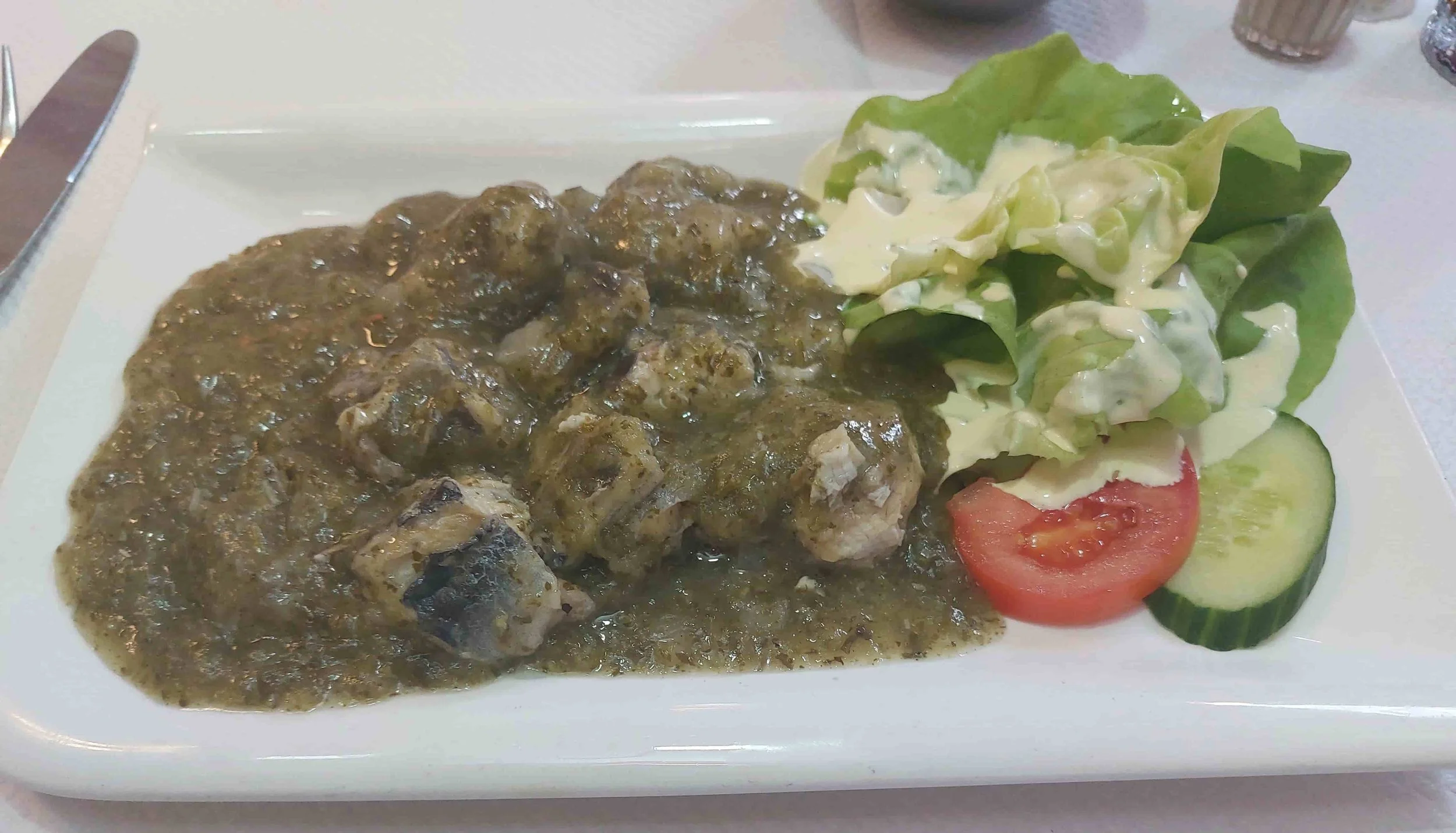
eel in the green
eel in green sauce
What is it?
A traditional dish from Flanders, Belgium, featuring freshwater eel in a vibrant green herb sauce made from puréed leafy greens. It is typically served with fries.
The eel is usually cooked on the bone, but the flesh is tender and separates easily. The skin can be a little chewy, while the meat itself is soft and tender. The dish has a slightly gelatinous texture and a pronounced herby flavour. Eel is no longer cheap, as much of it is imported, so it is now considered a speciality dish.
While it is not something I would order again, it is worth trying if you are curious about something unusual and uniquely Belgian.
What is in it?
While there is no single fixed recipe, common elements include:
Freshwater eel, cut into chunks and cooked on the bone.
A mix of fresh herbs such as parsley, sorrel, chervil, mint, watercress and thyme, sometimes spinach or basil. The herbs are often added late to preserve their colour.
Shallots or small onions, white wine, or wine plus stock, and sometimes vinegar or lemon juice.
The sauce is lightly thickened, either with a roux, a reduction of liquids, or sometimes cornstarch or flour.
Where can I eat it?
It is a speciality of Flanders and especially popular in Antwerp. Outside Flanders, it is much less common, but if you are in Brussels and really want to try it, La Bruxelloise serves it. Keep in mind, though, that it is a bit touristy and they do not like to take card payments, which is unusual in Brussels.
Vegetarian.
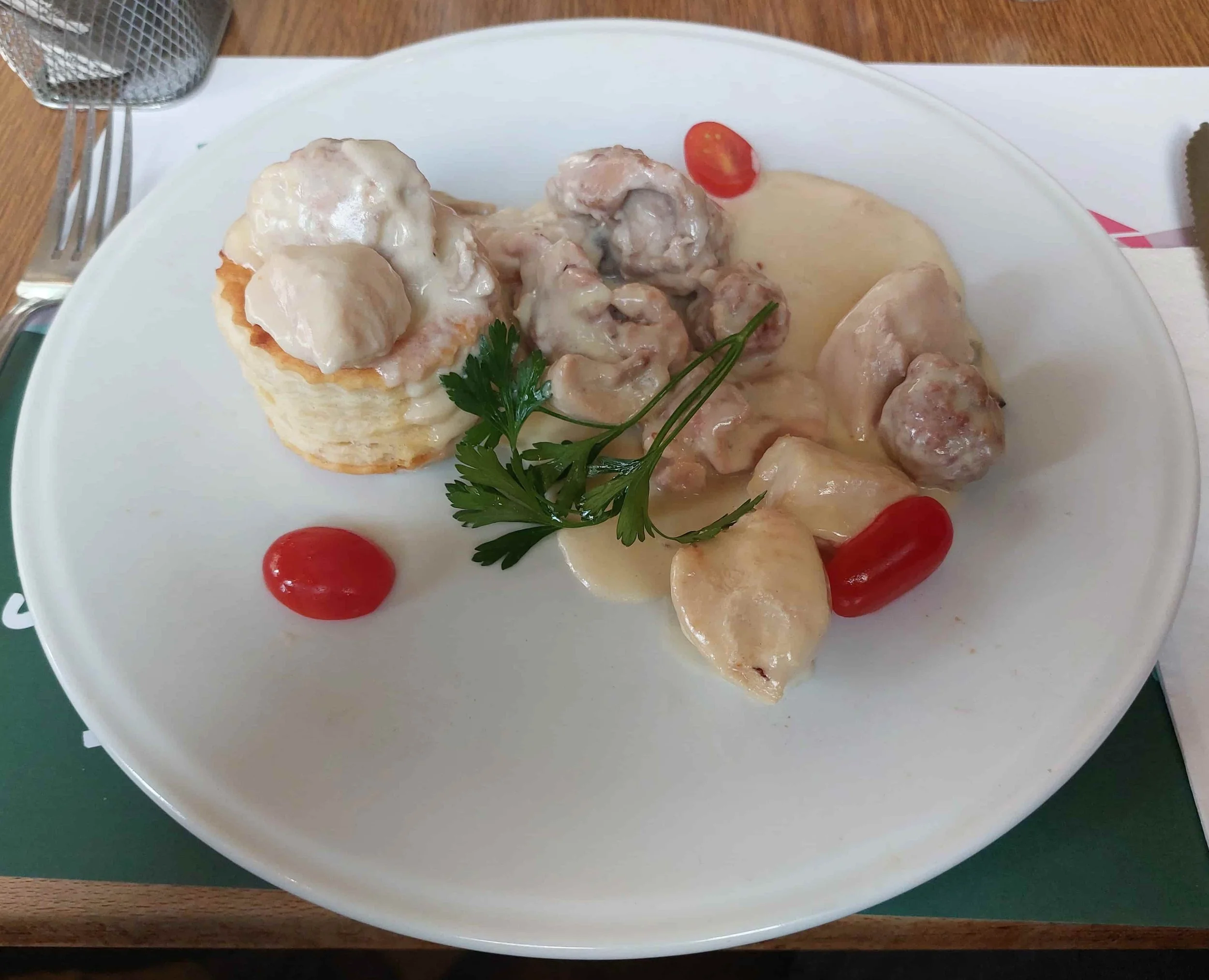
vol-au-vent
creamy sauce & puff pastry
What is it?
Vol-au-vent is a classic Belgian comfort dish: a crisp puff pastry case filled with chicken, mushrooms and tiny meatballs in a creamy sauce. The sauce usually spills over the pastry and onto the plate. It is always served with fries or sometimes mashed potatoes on the side. The dish originates from France, where it was traditionally a dainty starter, but the Belgian version is larger and served as a main course.
What is in it?
A puff pastry shell is filled with a creamy ragout made of:
chicken, mushrooms and mini meatballs (traditionally a mix of chicken and veal, though pork or pure chicken is also common today)
a creamy sauce made from butter, flour, cream, chicken stock, egg yolk and a bit of lemon juice.
Where can I eat it?
Vol-au-vent is one of the most popular dishes in Belgian brasseries, so you will find it almost everywhere across the country. A good version can be tried at De Trappisten in Brussels, slightly outside the centre but worth the detour.
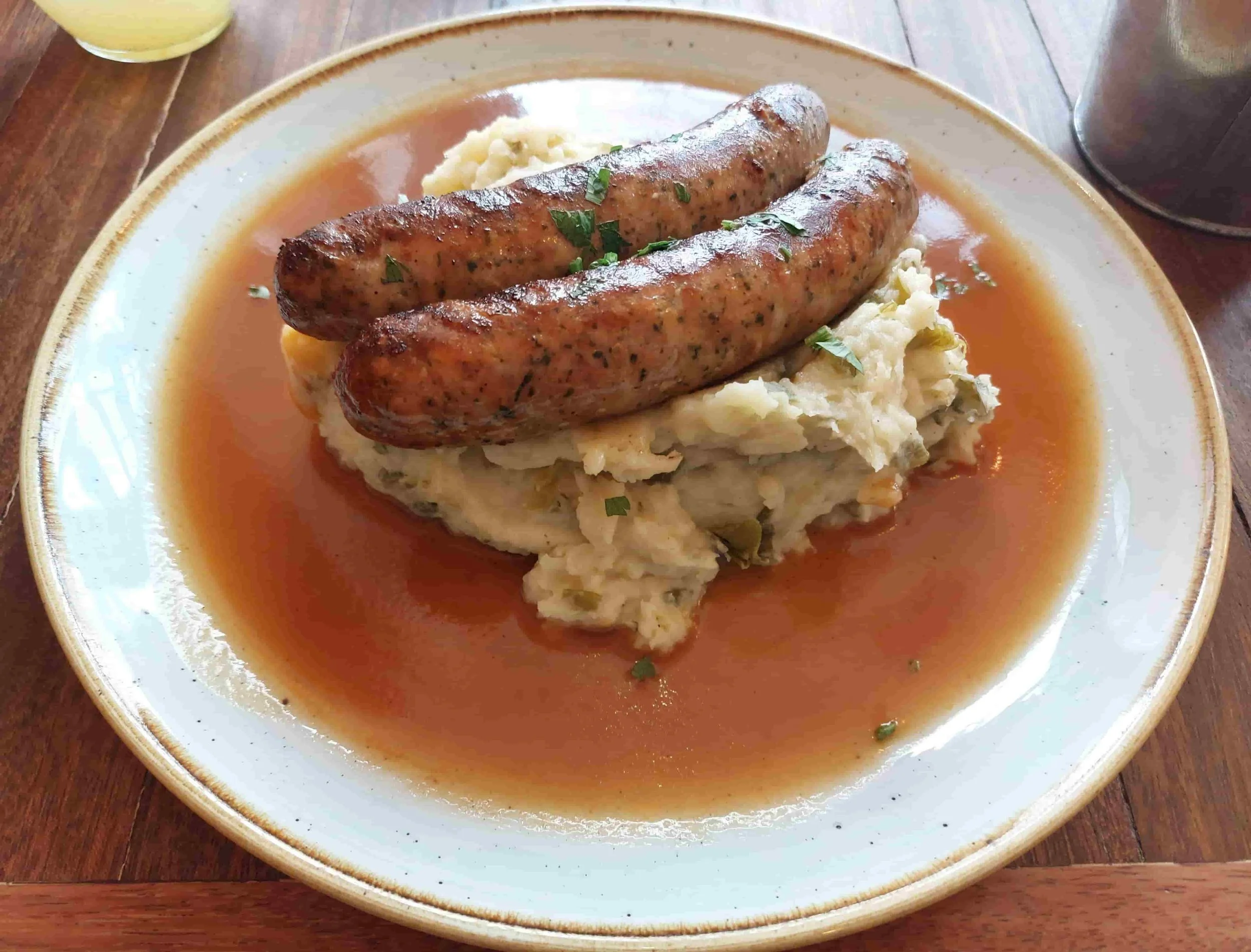
stoemp sausisse
sausage & mash
What is it?
Stoemp saucisse is Belgium’s answer to sausage and mash, a cousin of the British classic bangers and mash. At its core, it’s sausages served with stoemp, a Belgian style mash that’s creamy yet chunky, thanks to the addition of vegetables like carrots, spinach, or cabbage. The dish is topped with a rich gravy, making it one of Belgium’s ultimate comfort foods.
What is in it?
Stoemp: potatoes mashed with butter, milk or cream, and mixed with one or two vegetables such as carrots, spinach, cabbage, leeks, or endives. Parsley and a touch of nutmeg are sometimes added.
Sausages: large pork sausages are the most traditional, occasionally seasoned with garlic. Then served with gravy.
Where can I eat it?
Stoemp saucisse is a staple in Brussels brasseries and popular throughout Belgium. A particularly good version can be tried at Fin de Siècle in Brussels.
Traditionally gluten free.
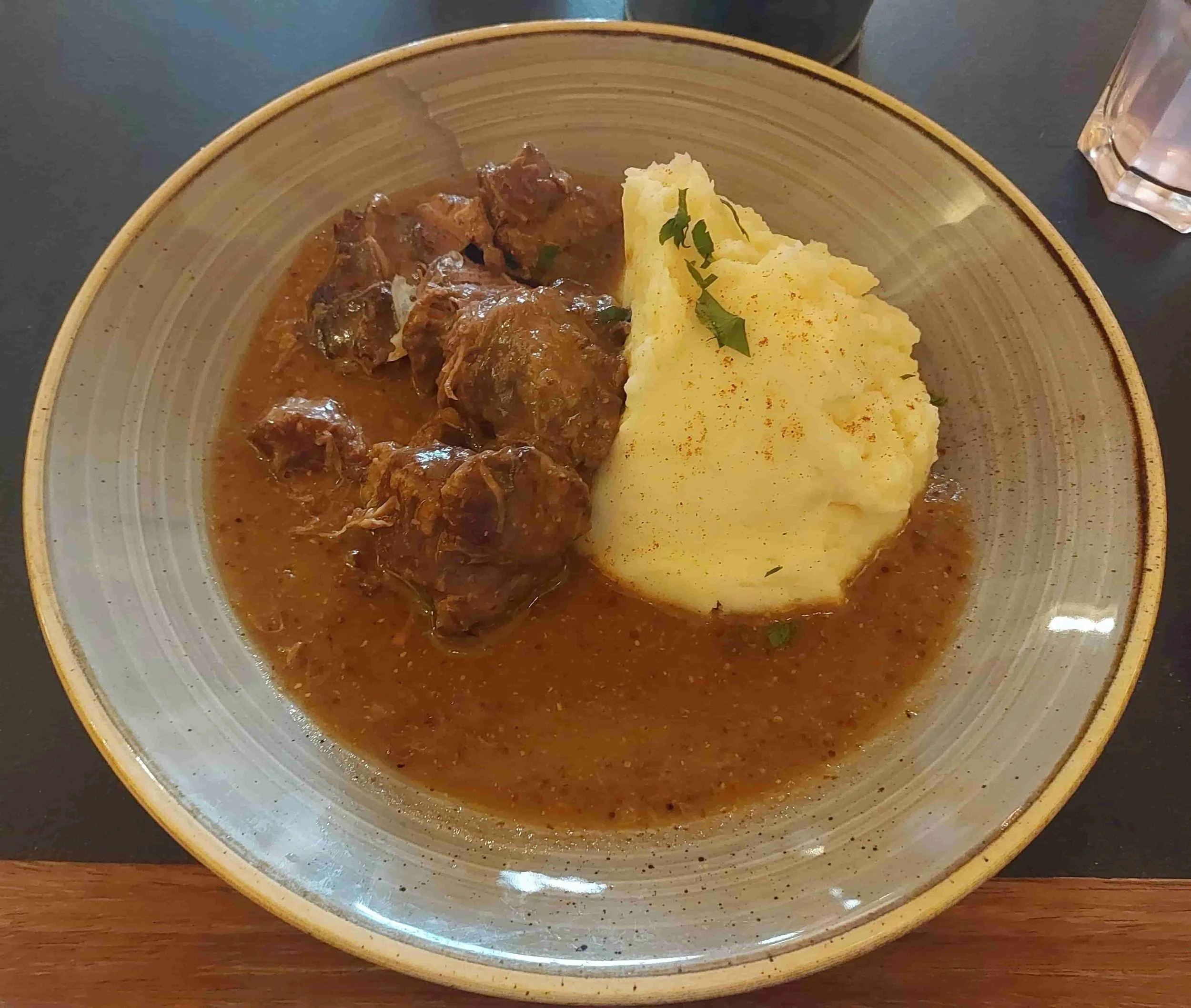
carbonnades flamande
beef & beer stew
What is it?
A classic Belgian beef stew slowly braised with beer, most often a dark ale that gives the sauce a deep, malty sweetness. It’s sometimes compared to boeuf bourguignon, but where the French version uses red wine, the Belgian one uses beer.
You will see it listed under several names, the most common being carbonade flamande, carbonnades flamandes, or in Flemish stoofvlees or stoverij. Other menu variants include carbonade à la bière (literally “stew in beer”) or versions named after a specific local beer.
There’s even a close cousin made with rabbit instead of beef, known as Lapin à la bière (“rabbit in beer”), which follows the same slow braising method but with a lighter, slightly gamey flavour.
Traditionally, the stew is served with Belgian fries, though mashed potatoes or crusty bread are also common and perfect for soaking up the rich, savoury sauce. The beef should be meltingly tender, almost falling apart after its long simmer.
What is in it?
The base ingredients are beef, onions, brown or dark Belgian beer, and mustard, often spread on a slice of bread that’s stirred in to thicken the sauce. Seasoning typically includes bay leaf, thyme, and occasionally clove or juniper.
Many cooks add gingerbread (pain d’épices) or sirop de Liège (apple pear syrup) for sweetness, along with vinegar.
Where can I eat it?
You’ll find carbonade across Belgium, from cosy brasseries (casual restaurants serving traditional food) to rustic estaminets (old-style Flemish taverns or pubs serving regional food). We had a good one at Fin de Siècle in central Brussels listed on the menu as carbonade à la bière and served with mashed potatoes.
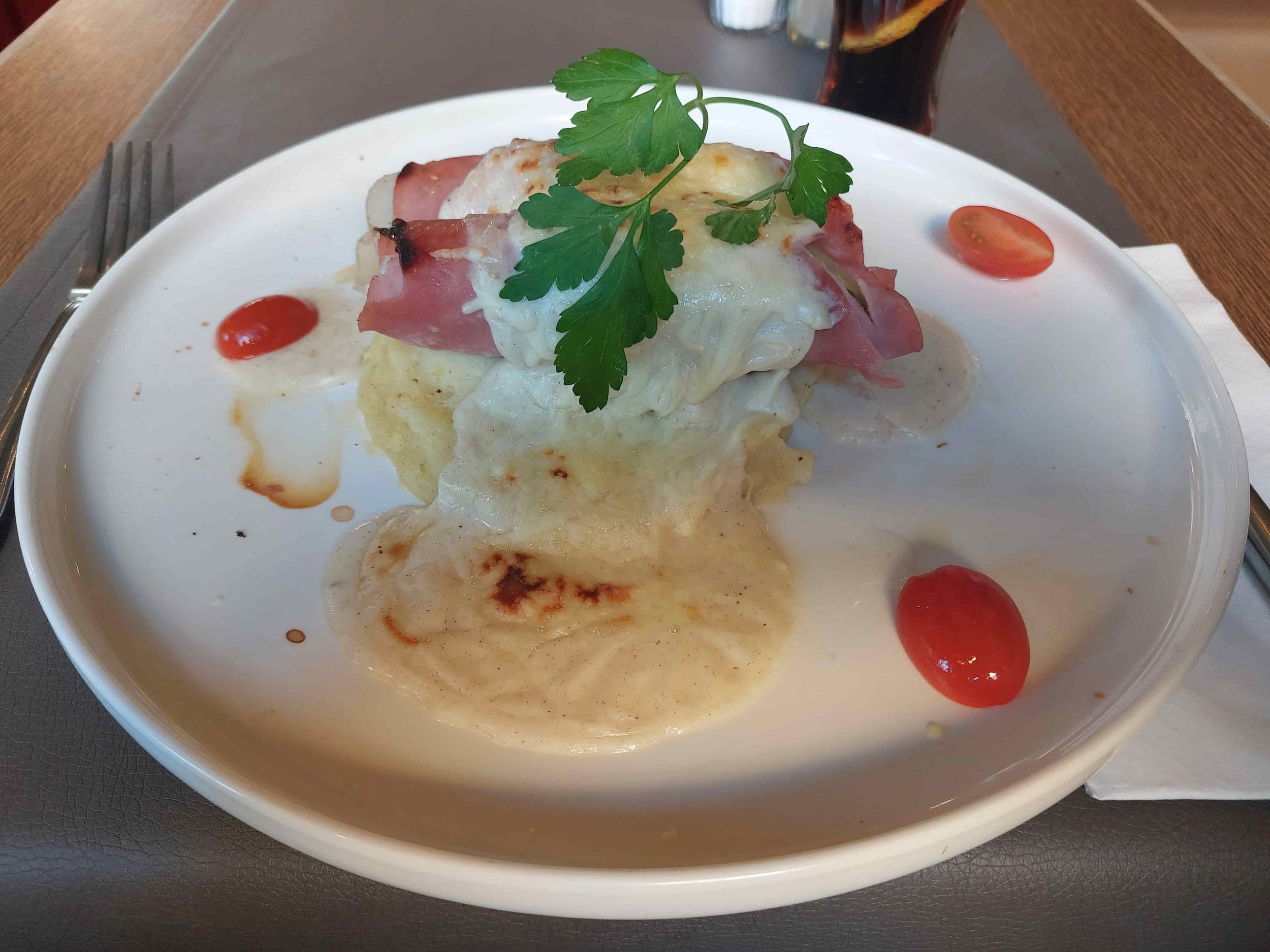
chicons au gratin
ham wrapped endives
What is it?
Chicons au gratin consists of whole, soft but slightly bitter Belgian endives (chicons) wrapped in slices of ham, smothered in a creamy béchamel sauce and baked under a cheese crust, usually Gruyère or Emmental. It is traditionally served with mashed potatoes, which are great for soaking up the cheesy sauce, it is enjoyed as a main dish.
What is in it?
Chicons au gratin is made from Belgian endives (known locally as chicons) wrapped in thin slices of ham, placed in a baking dish and covered with a smooth béchamel sauce made from butter, flour and milk, often seasoned with nutmeg. A layer of grated cheese, usually Gruyère or Emmental, is added on top before baking. It is most often served with mashed potatoes.
Where can I eat it?
You will mostly find it in traditional Belgian brasseries, but it is also a very common home cooked dish, so not every restaurant will offer it. A good place to try it is at one of our favourite Brussels restaurants, De Trappisten, located a little outside the centre but definitely worth the effort.
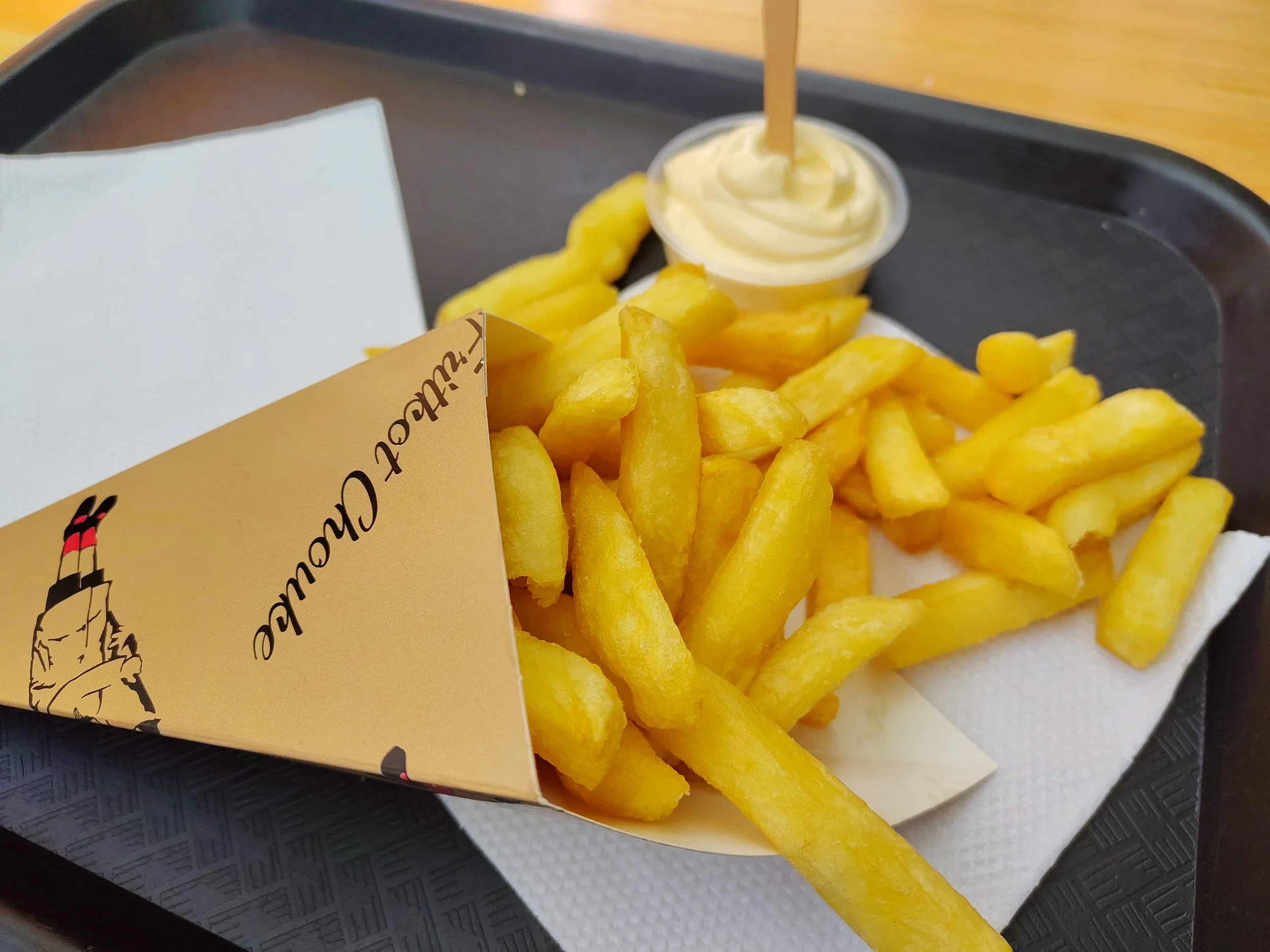
fries
fried potatoes
What is it?
You already know what fries are, unless you’re from another planet! But if you don’t, welcome to Earth, I apologise on behalf of humanity, we’re trying to do better. Fries are deep fried wedges or sticks of potato, crispy on the outside and fluffy inside. In Belgium, however, fries are both Emblematic and genuinely excellent, thicker than what you might think of as a French fry (looking at you, McDonald’s!). The best ones are fried twice for extra crispness and served as a side to many dishes, or as a meal in themselves from one of the country’s many friteries (fry stands), where they come with a myriad of sauces and topping combinations.
What is in it?
Potatoes, fried twice for extra crispness, and traditionally served with a range of sauces such as mayonnaise, Andalouse (mayonnaise with tomato and pepper), Samouraï (spicy mayonnaise with chilli), Américaine (creamy tomato herb sauce), and many others found at Belgian friteries.
Where can I eat it?
Everywhere! Fries are served across Belgium, as a side to classic mains like boulettes or carbonade flamande, or sold on their own at friteries (Belgian fry stands) in cities and towns throughout the country.
Dairy free, and gluten free depending on toppings.
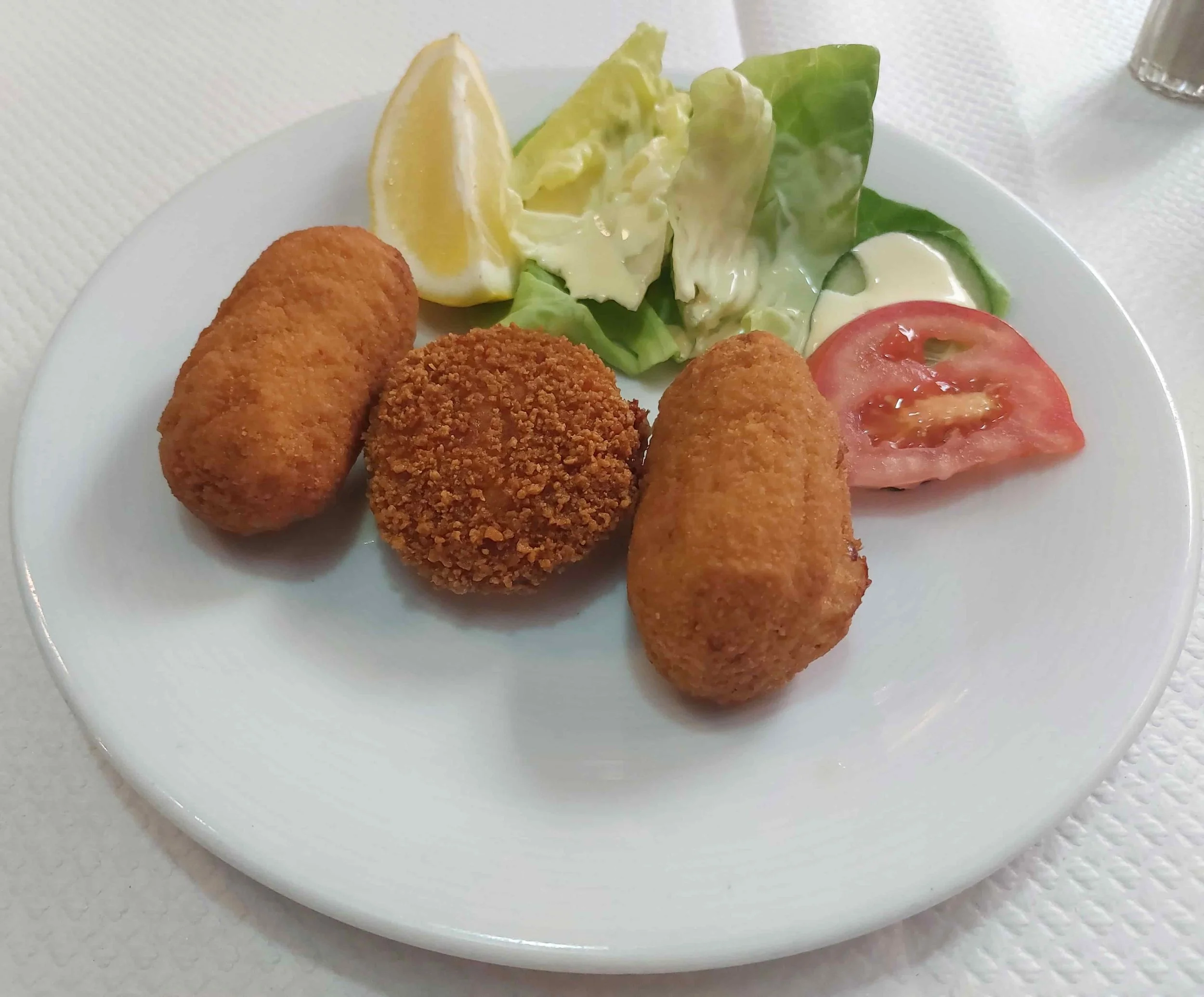
croquette
filled fried fritter
What is it?
Belgian croquettes are a classic starter, distinct from the potato filled versions found in many other countries. Instead, they’re made with a rich, creamy béchamel base, coated in breadcrumbs and deep fried until crisp. The two most traditional varieties are kaaskroketten (cheese croquettes) and garnaalkroketten (grey shrimp croquettes made with tiny North Sea shrimp). Both are classics of Belgian cuisine, and many other modern variations also exist.
What is in it?
The filling begins with a thick béchamel made from butter, flour, and milk (sometimes enriched with cream, stock, or egg yolk, and often lightly seasoned with nutmeg). To this, either cheese (commonly Emmentaler or Gruyère) or North Sea shrimp are added. The mixture is chilled, rolled, then coated in flour, egg, and breadcrumbs before frying. Croquettes are usually served with a wedge of lemon and a small salad.
Where can I eat it?
Croquettes are more of a restaurant starter than street food, and you’ll find them on menus throughout Belgium, from simple brasseries to high end restaurants. Both cheese and shrimp croquettes are among the most popular starters in the country.
Cheese version is vegetarian.
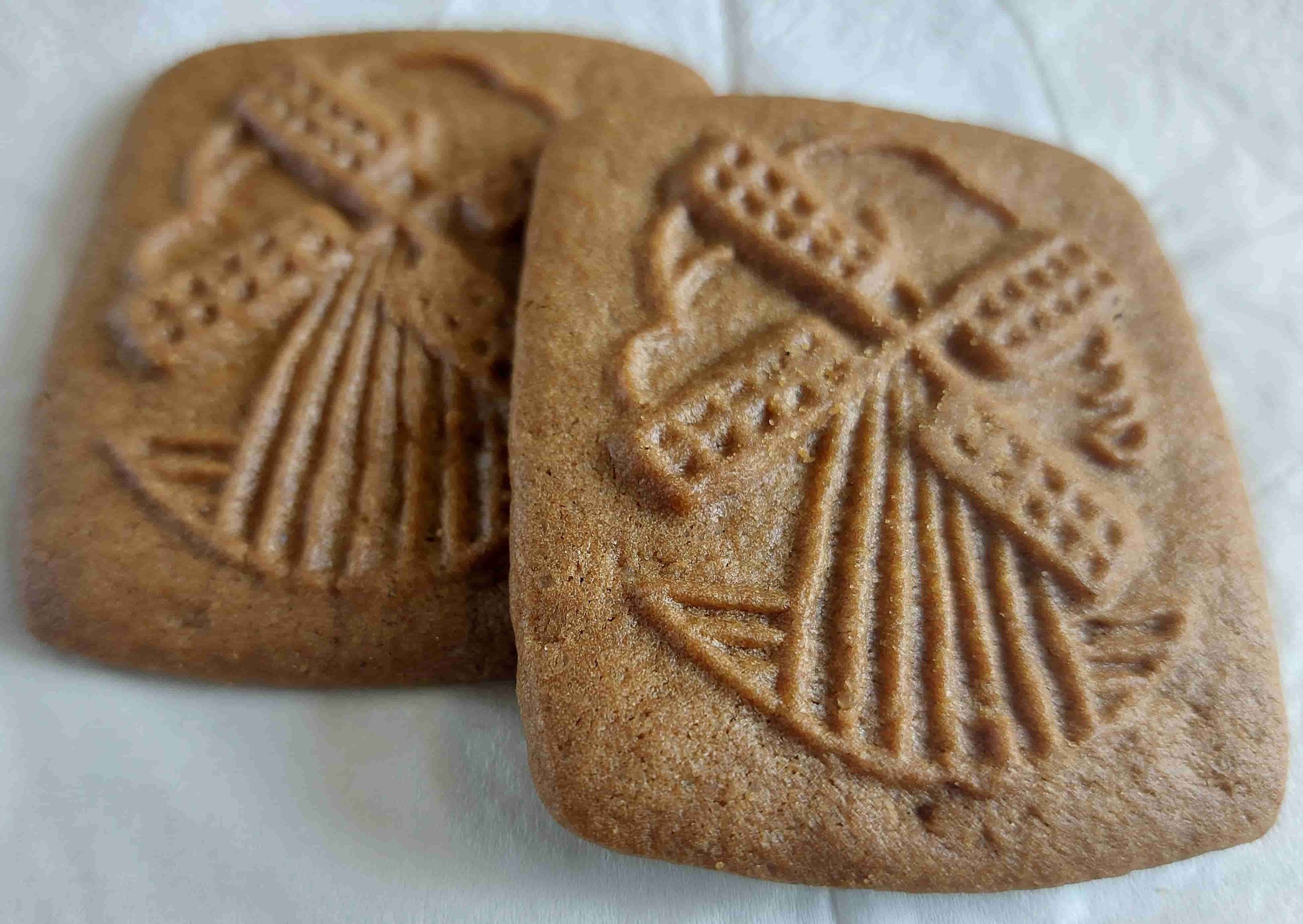
speculoos
spiced biscuits
What is it?
Speculoos are crisp, spiced biscuits that originated in Belgium and the Netherlands. Traditionally baked for St. Nicholas Day (6 December), they have become so popular that you will now find them year-round. The biscuits are often pressed with decorative stamps, historically showing windmills, St. Nicholas or other festive designs.
What is in it?
The dough is usually made from flour, brown sugar and butter (sometimes with the addition of eggs), with a distinctive spice mix most commonly including cinnamon, nutmeg, cloves and ginger. Some recipes also include cardamom or white pepper.
Where can I eat it?
In Brussels, a classic place to try them is Maison Dandoy, a historic bakery with several locations around the city that still makes them the traditional way. For a more everyday option, you can buy the famous Lotus Biscoff brand in supermarkets across Belgium (and internationally), though these are plainer and sweeter than artisanal versions.
Vegetarian.

gaufres de Liège
Liège waffle
What is it?
A dense style of Belgian waffle originating from the city of Liège. Unlike the lighter Brussels version, Liège waffles are made from a brioche like dough rather than a batter, giving them a chewy texture and caramelised exterior.
When people refer to “Belgian waffles,” they are usually referring to one of two styles: Liège or Brussels. The Liège version is the more indulgent, sweet and portable of the two, and is typically eaten as a takeaway street snack.
What is in it?
The dough is made with flour, butter, eggs, milk, sugar and yeast. The defining feature is pearl sugar, which caramelises during cooking, creating crunchy, toffee like pockets throughout the waffle.
Traditional versions are served plain, as they are already sweet and flavourful, but modern variations often include toppings such as chocolate, whipped cream, fruit or spreads like Nutella or speculoos.
Where can I eat it?
Liège waffles are widely sold across Belgium, especially at street stalls and takeaway shops. They are most commonly eaten on the go rather than as a sit down dessert. You will find them fresh and warm in almost every city.
Vegetarian.
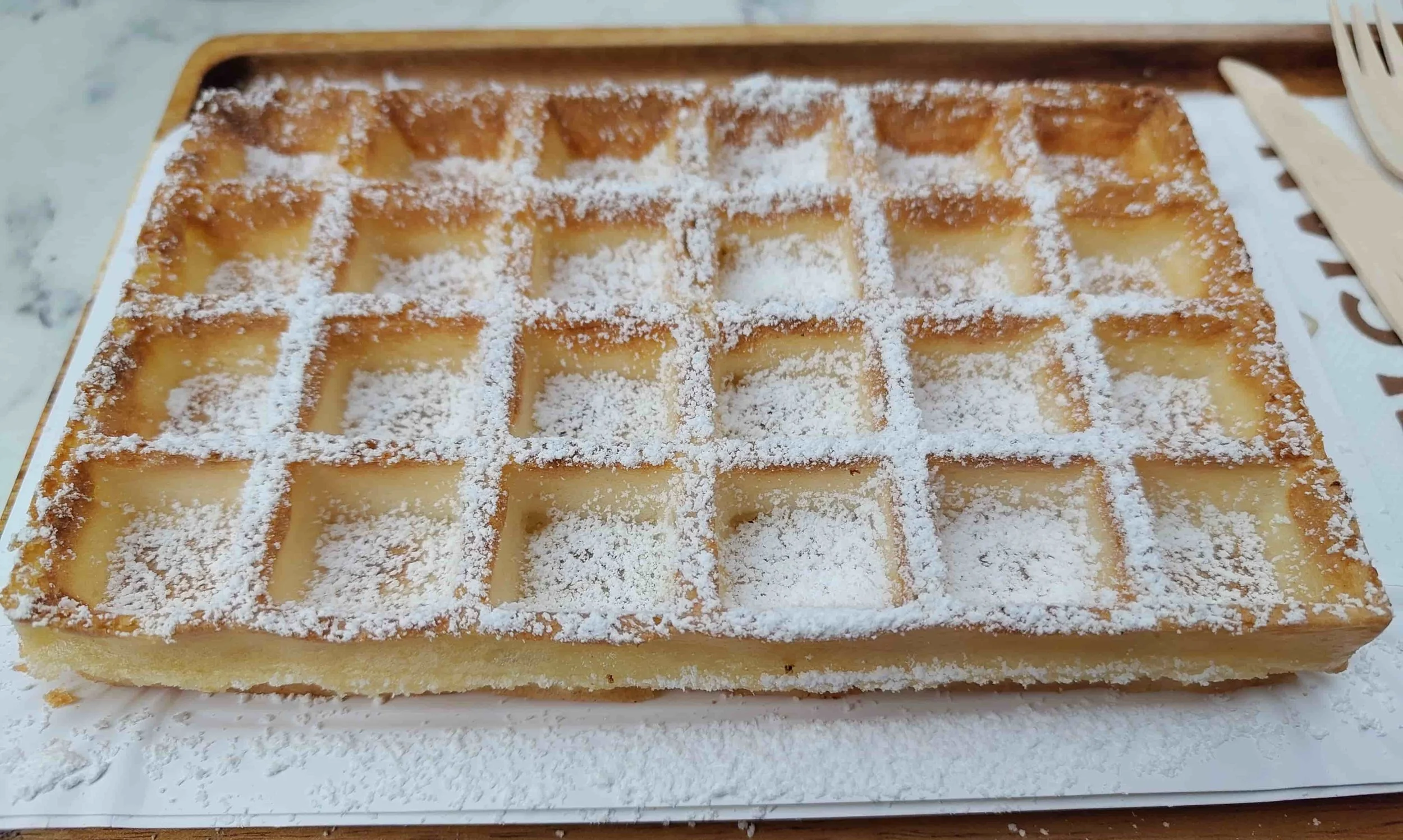
gaufres de Bruxelles
Brussels waffles
What is it?
A lighter, crispier style of Belgian waffle originating from Brussels. It is made from batter rather than dough, resulting in a rectangular waffle that is airy on the inside with a crisp exterior. Like Liège waffles, Brussels waffles are one of the two main styles people refer to when they say “Belgian waffles.” The Brussels version is the more delicate and is traditionally served as a plated dessert in cafés and restaurants.
What is in it?
The batter typically includes flour, eggs, milk, sugar, butter and yeast or baking powder. Classic toppings include icing sugar, whipped cream, fresh fruit (especially strawberries or bananas) and chocolate sauce.
Where can I eat it?
Brussels waffles are commonly found in cafés and restaurants specialising in waffles. They are typically served plated rather than as takeaway street food. In tourist areas, they are often freshly made to order.
Vegetarian.
Ingredients listed reflect common or typical components of this dish as served in restaurants or street‑food vendors. Variations by region, season, or vendor are common. This information is provided for general reference only. If you have dietary restrictions or allergies, please verify ingredient details independently. We assume no liability for accuracy or outcomes.
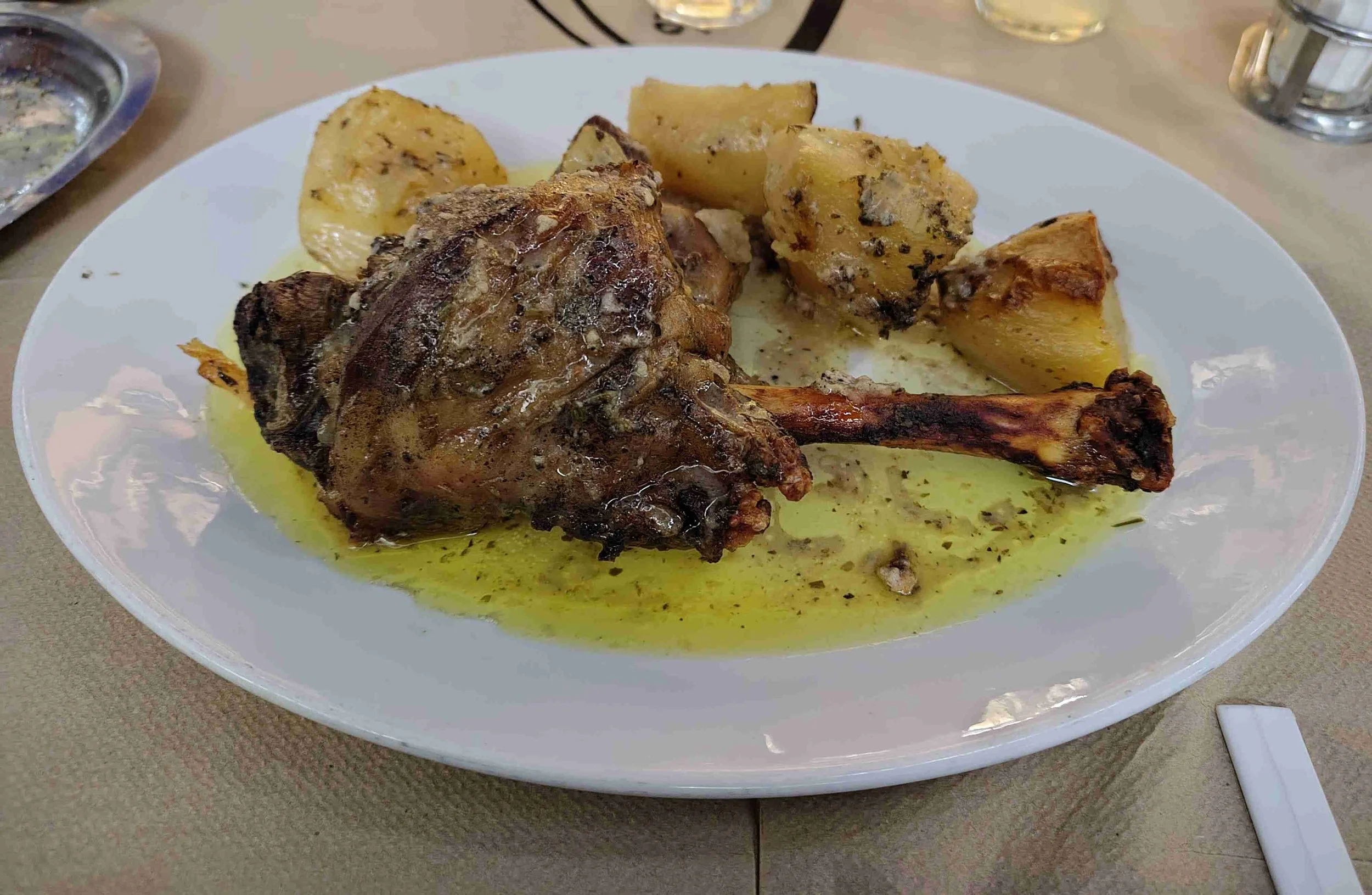
all the foods - Greece
Discover all the traditional Greek dishes we tried, from Moussaka and Saganaki to Souvlaki and more
Here you will find a list of all the traditional cuisine we tried in Greece.
Click to jump to one of the sections:
street food, snacks & coffee
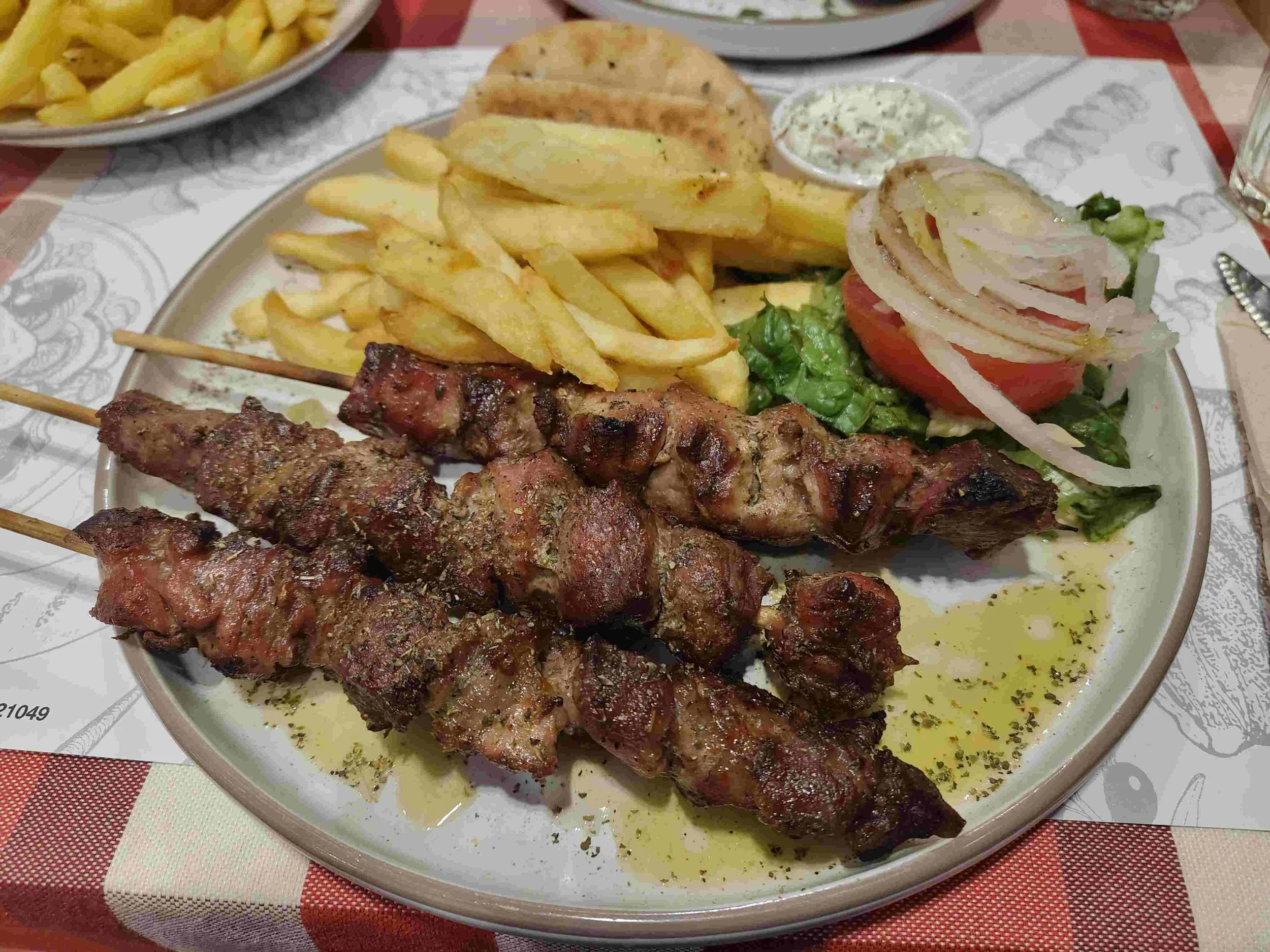
souvlaki
meat skewers
What is it?
Souvlaki is one of Greece’s most popular dishes, consisting of grilled meat skewers, most traditionally made with pork, although chicken is also very common. The meat is often cooked over charcoal, giving it a smoky flavour, and can be served either on the skewer or in pita bread. In Athens, the skewer itself is often referred to as kalamaki. When served in a wrap, it typically includes tomatoes, onions, fries, and tzatziki.
What is in it?
Souvlaki is made from chunks of pork or chicken marinated in olive oil, lemon juice, garlic, and herbs such as oregano, then grilled on skewers. When served as a wrap, it usually includes pita bread, tomatoes, onions, fries, and tzatziki, although other variations are common.
Where can I eat it?
Along with gyros, it’s one of the most popular foods in Greece, found at takeaway shops, traditional restaurants, and psistaria. You’ll have no trouble finding it in any town or city across the country.
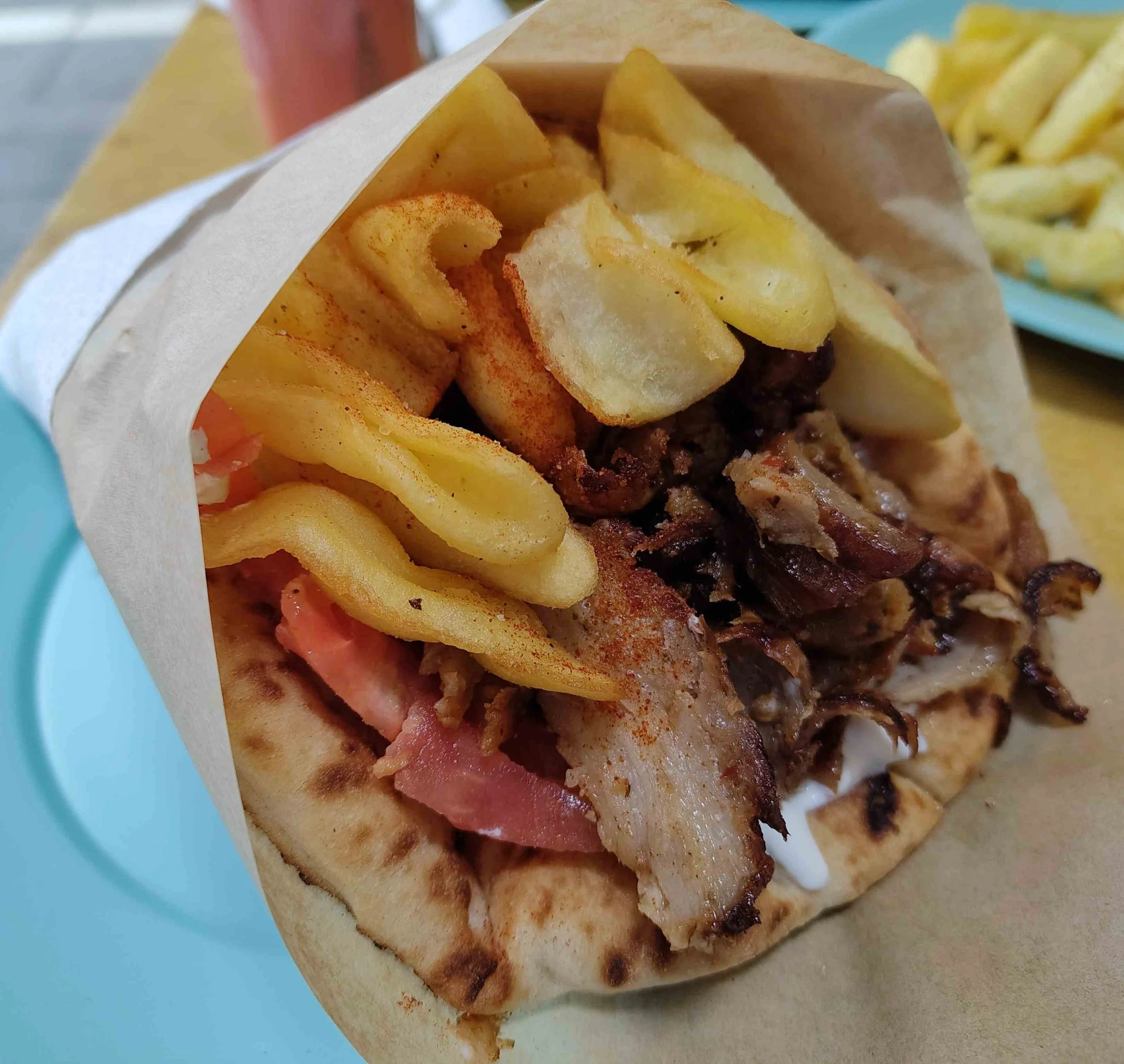
gyros
pork kebab
What is it?
Gyros is a Greek street food similar to döner kebab, made with thinly sliced meat cooked on a vertical rotisserie. In mainland Greece it is most traditionally made with pork, though chicken is also common elsewhere. The meat is shaved off as it cooks and usually served in pita bread, often with fries inside the wrap.
What is in it?
Traditional gyros is typically made with pork or chicken, and served in pita bread with onion, tomato, tzatziki, and often fries.
Where can I eat it?
It is ubiquitous across Greece and can be found in almost any takeaway shop.
Dairy free.
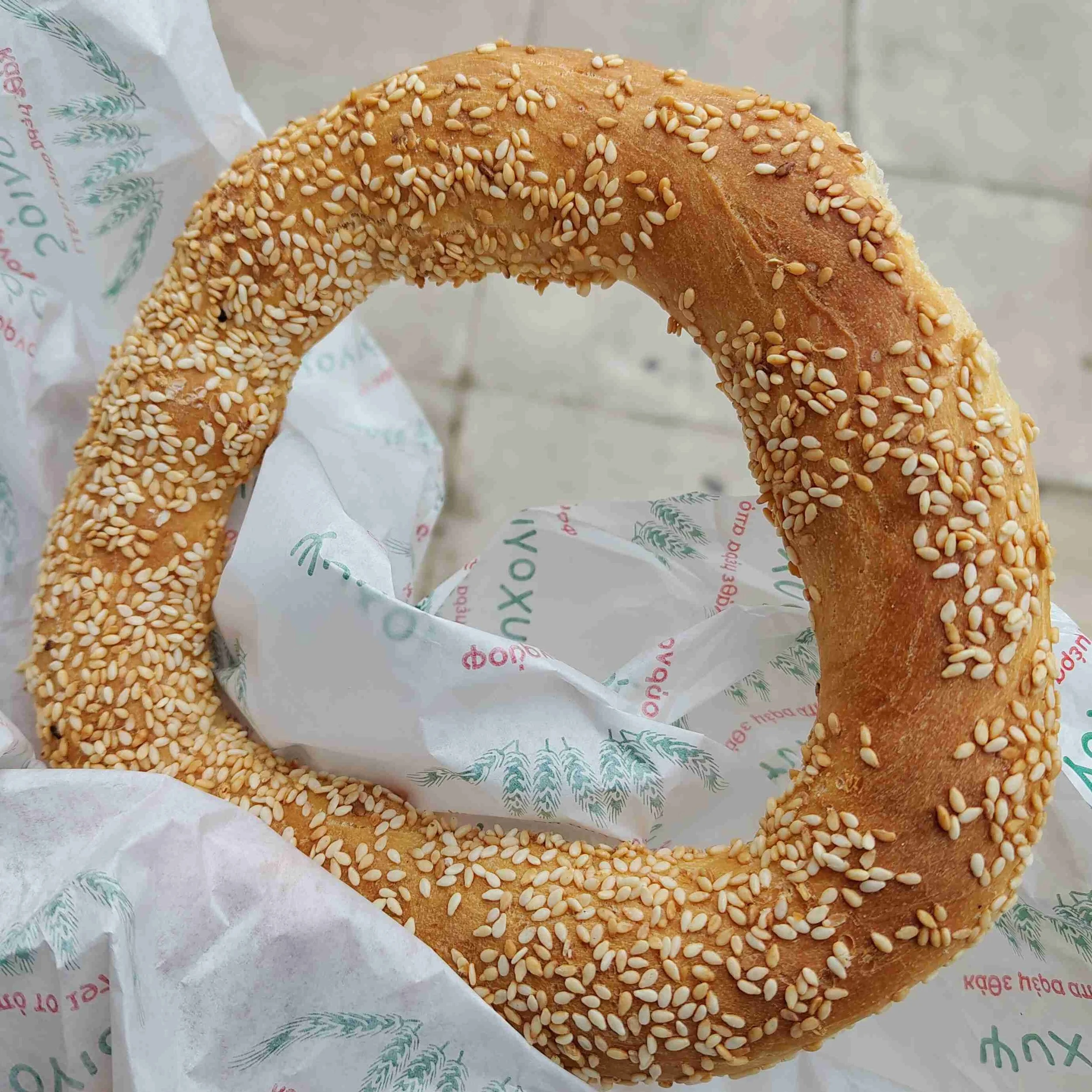
koulouri
sesame bread ring
What is it?
A traditional sesame-covered bread ring, commonly eaten as a quick breakfast or snack. It is very similar to Turkish simit, with a crisp exterior and a soft, slightly chewy interior. The most famous version comes from Thessaloniki, which is why it is often labelled koulouri Thessalonikis. It is simple, cheap and very popular.
What is in it?
Wheat flour, water, yeast and sesame seeds. Many versions are lightly sweetened, and occasionally you’ll find variations with fillings such as cheese or chocolate, though the classic version is plain with sesame.
Where can I eat it?
It is sold in almost every bakery in Greece, and you will also find it sold from street vendors, especially in Athens and Thessaloniki.
Vegan & dairy free.
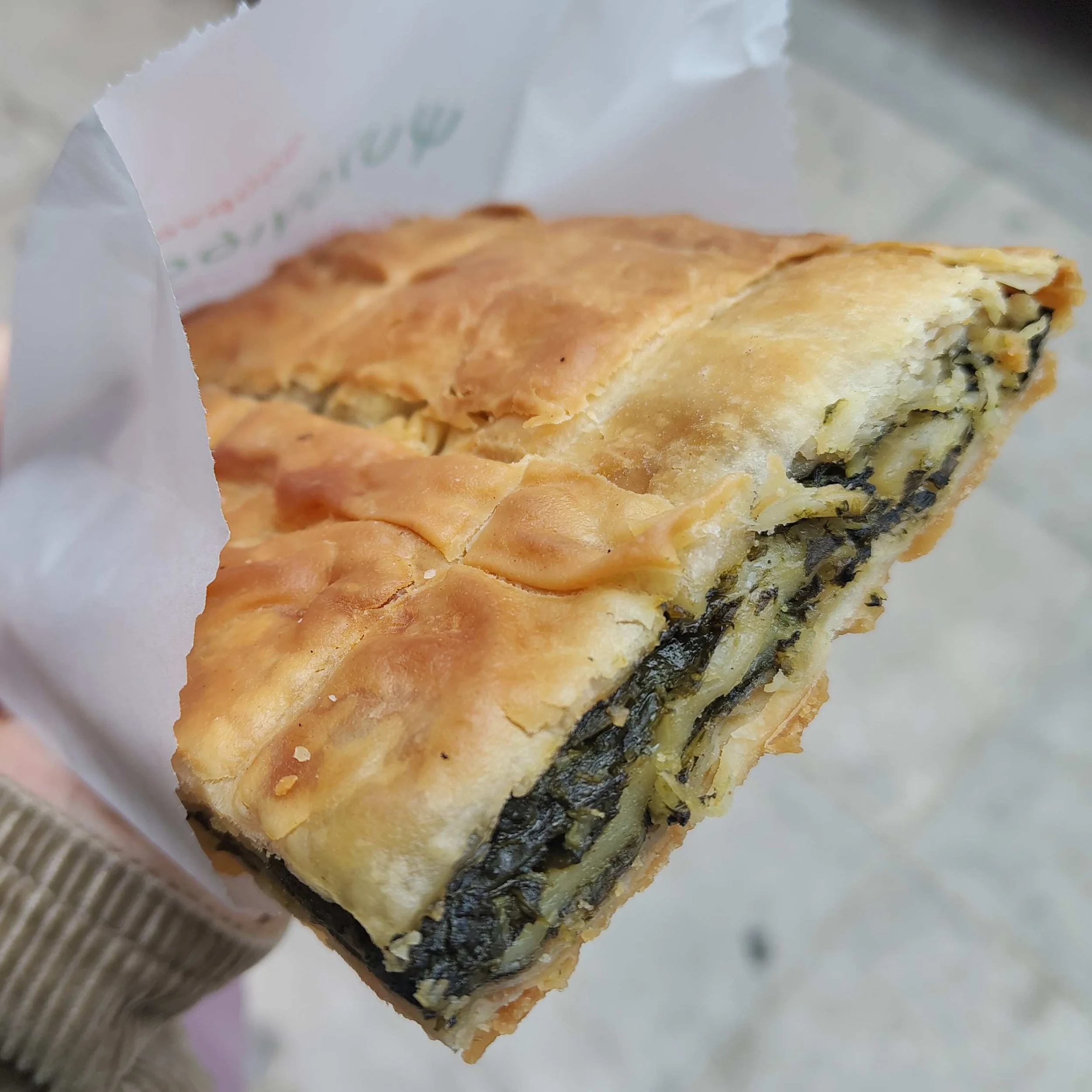
spanakopita
spinach pie
What is it?
A classic Greek savoury pie made with layers of phyllo pastry and a spinach based filling. The name literally means “spinach pie.” While some versions are just spinach, the most common form includes spinach mixed with feta cheese. It is similar to Balkan borek but with a lighter, less greasy texture. You’ll find it either as a large tray baked pie cut into slices or as individual triangular pastries, especially in bakeries.
What is in it?
The filling usually combines, spinach with feta cheese, onion, fresh herbs such as dill or parsley and olive oil.
Where can I drink it?
It is available in most bakeries throughout the country and sometimes also on restaurant menus.
Vegetarian.
frappé
iced coffee
What is it?
A classic Greek iced coffee made from instant coffee, with a thick foam and a strong bitter flavour. It was invented in Thessaloniki in the 1950s and became one of the country’s most iconic drinks. Frappé is shaken or blended to create its signature frothy top.
What is in it?
Instant coffee, usually Nescafé, water, sugar, ice and optional milk for a creamier version.
Where can I drink it?
Available at cafés all over Greece. It is less common in more modern speciality coffee shops, where iced espresso drinks have largely replaced it, but it remains widely available and very traditional.
Vegetarian & gluten free.
freddo coffee
iced coffee
What is it?
Modern Greek iced coffee drinks made with espresso, now among the most popular coffees in Greece. A freddo espresso is a chilled, shaken double espresso served over ice, while a freddo cappuccino adds a layer of cold, frothed milk on top. It is a strong, refreshing drink, perfect for hot days. It is newer than the frappé, but very much part of Greek coffee culture.
What is in it?
Freddo espresso: double espresso, ice, sugar optional.
Freddo cappuccino: double espresso, ice, cold frothed milk, sugar optional.
Where can I drink it?
Extremely common across Greece in cafés and takeaway coffee shops, as well as bakeries with coffee counters. You will see it on virtually every coffee menu.
Vegetarian and gluten free. Freddo espresso is dairy free. Freddo cappuccino is not dairy free unless made with plant milk
starters & meze
saganaki
fried cheese
What is it?
Saganaki is one of the most popular Greek starters, made by frying a slice of cheese. The name comes from the small two-handled pan (saganaki) used to cook it.
What is in it?
The key ingredient is cheese, most commonly graviera, kefalotyri, or kefalograviera. The cheese is lightly floured and then fried in olive oil. It is typically finished with a squeeze of lemon.
Where can I eat it?
Saganaki is very common on menus throughout Greece, especially in traditional tavernas.
Vegetarian.
tirokroketes
fried cheese balls
What is it?
Tirokroketes are Greek fried cheese balls, typically served as a starter or meze. They have a crisp exterior and a soft, cheesy interior. Depending on the recipe, the centre can be slightly gooey.
What is in it?
Tirokroketes are made from a mixture of cheese, often feta combined with other cheeses such as graviera or kasseri, eggs, and sometimes flour or breadcrumbs to bind the mixture. They are shaped into balls, coated in breadcrumbs and deep fried
Where can I eat it?
They are very common on Greek menus as a starter or meze. In English, they are often simply listed as “cheese balls.”
Vegetarian.
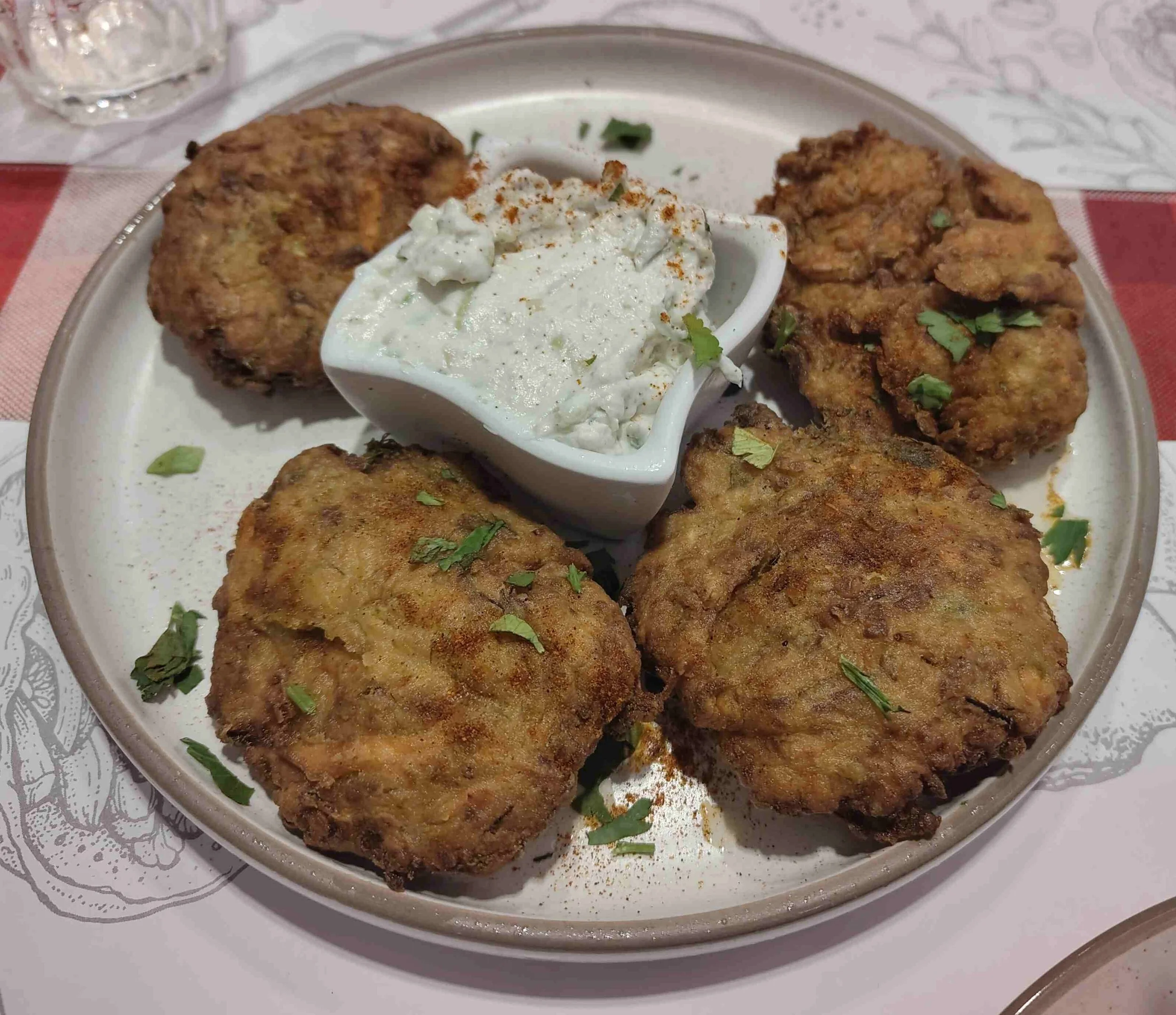
Kolokithokeftede
zucchini fritters
What is it?
Kolokithokeftedes are a classic Greek starter made from grated courgette (zucchini), mixed with herbs and cheese, then shaped into small patties and fried. The name translates to “zucchini meatballs,” although they are entirely vegetarian. They have a soft, flavourful interior with a crispy exterior and are often served with a yoghurt based dip such as tzatziki.
What is in it?
Kolokithokeftedes are made from grated courgette, onion, eggs, feta cheese and fresh herbs such as mint, dill and parsley, combined with a small amount of flour or breadcrumbs to bind the mixture before frying in olive oil.
Where can I eat it?
They are a very common meze (starter) across Greece and can be found on menus in traditional tavernas, especially those specialising in small plates. They are often simply listed as zucchini fritters.
Vegetarian.
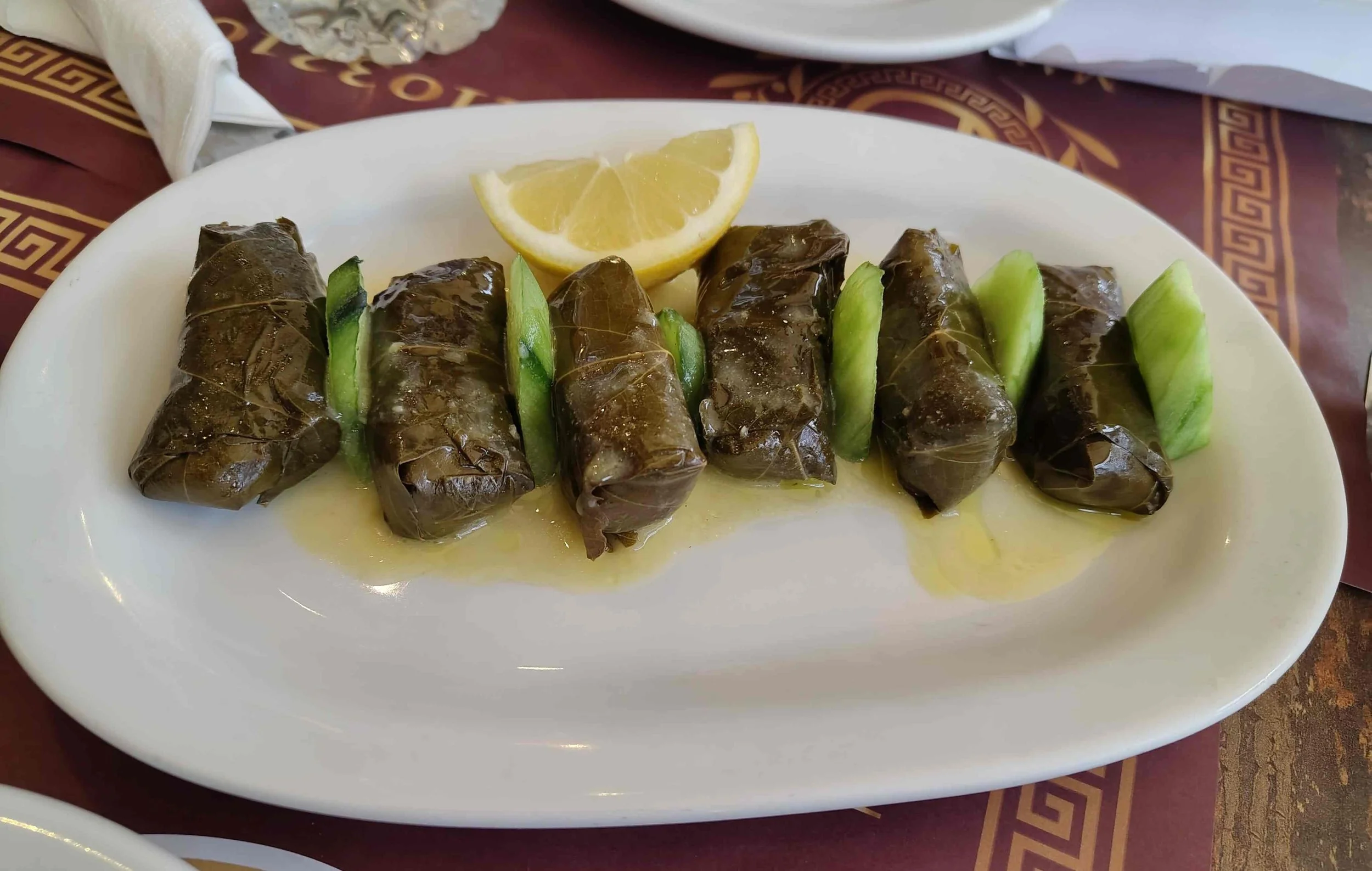
dolmades
stuffed vine leaves
What is it?
Dolmades are grape leaves stuffed with a filling, most commonly rice, and served as a meze or starter. They are usually served cold with a squeeze of lemon, especially in their vegetarian form. Versions containing minced meat also exist and are typically served warm.
What is in it?
Dolmades are made from vine leaves wrapped around a filling of rice, onion, herbs such as dill and mint, and olive oil, often with a squeeze of lemon. In meat versions, minced beef or lamb is added to the rice mixture.
Where can I eat it?
Dolmades are a fairly common starter on traditional Greek menus. The meat version is slightly less common.
Vegetarian versions available, traditionally dairy & gluten free.
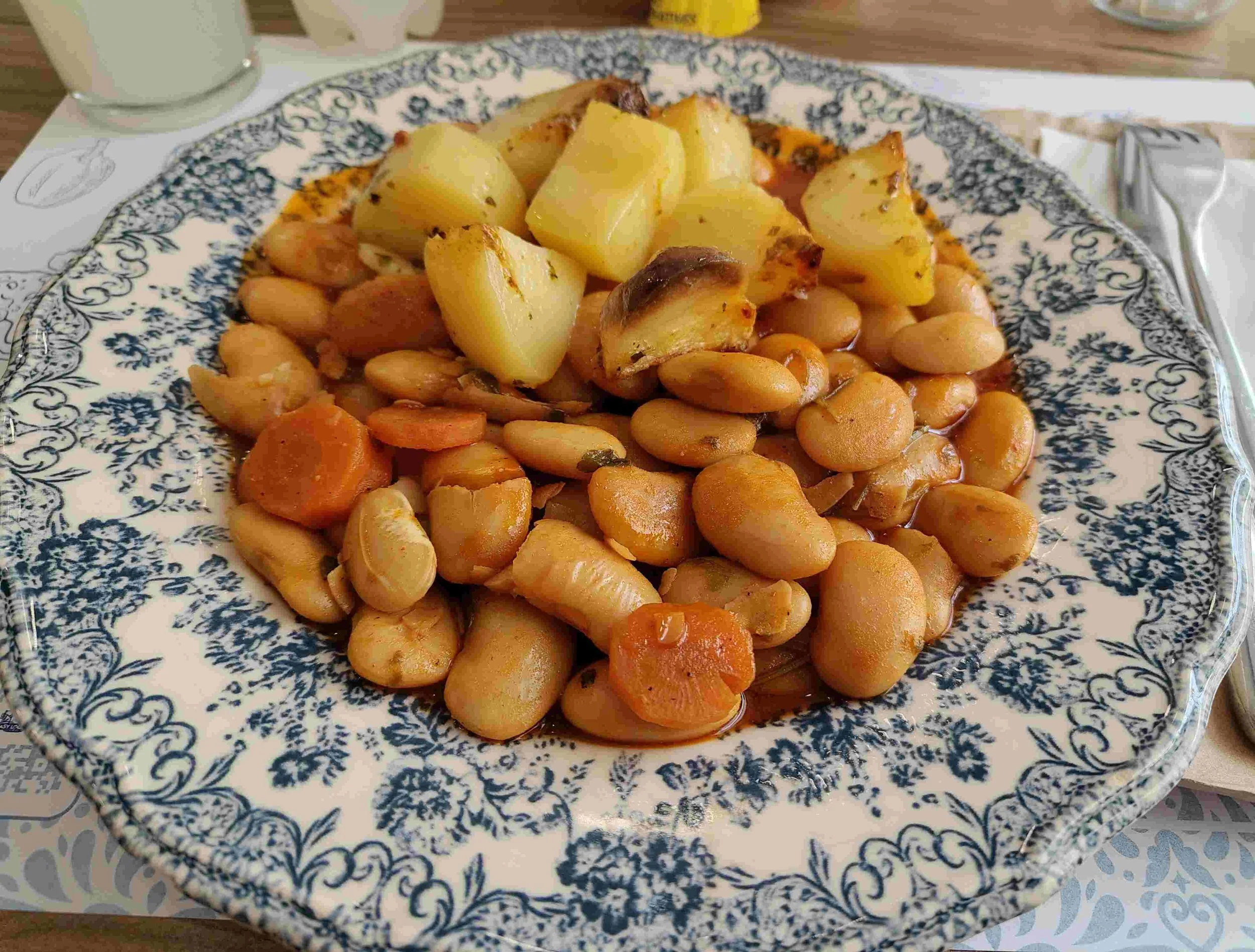
gigantes plaki
giant baked beans
What is it?
Gigantes plaki are a classic Greek dish of large baked beans in a tomato sauce, traditionally made with fasolia gigantes (“giant beans”). The beans are slow baked in the oven and infused with herbs and olive oil, often served as part of a meze spread or as a main dish.
What is in it?
Gigantes plaki are made from giant white beans baked in a tomato-based sauce with onions, garlic, olive oil and herbs such as parsley or dill, often with additions like carrots or celery.
Where can I eat it?
It is a very common dish across Greece, found in traditional tavernas and especially in places serving meze. It is often displayed in trays alongside other baked dishes in casual, home style restaurants.
Usually vegan, dairy and gluten free.
oven baked dishes
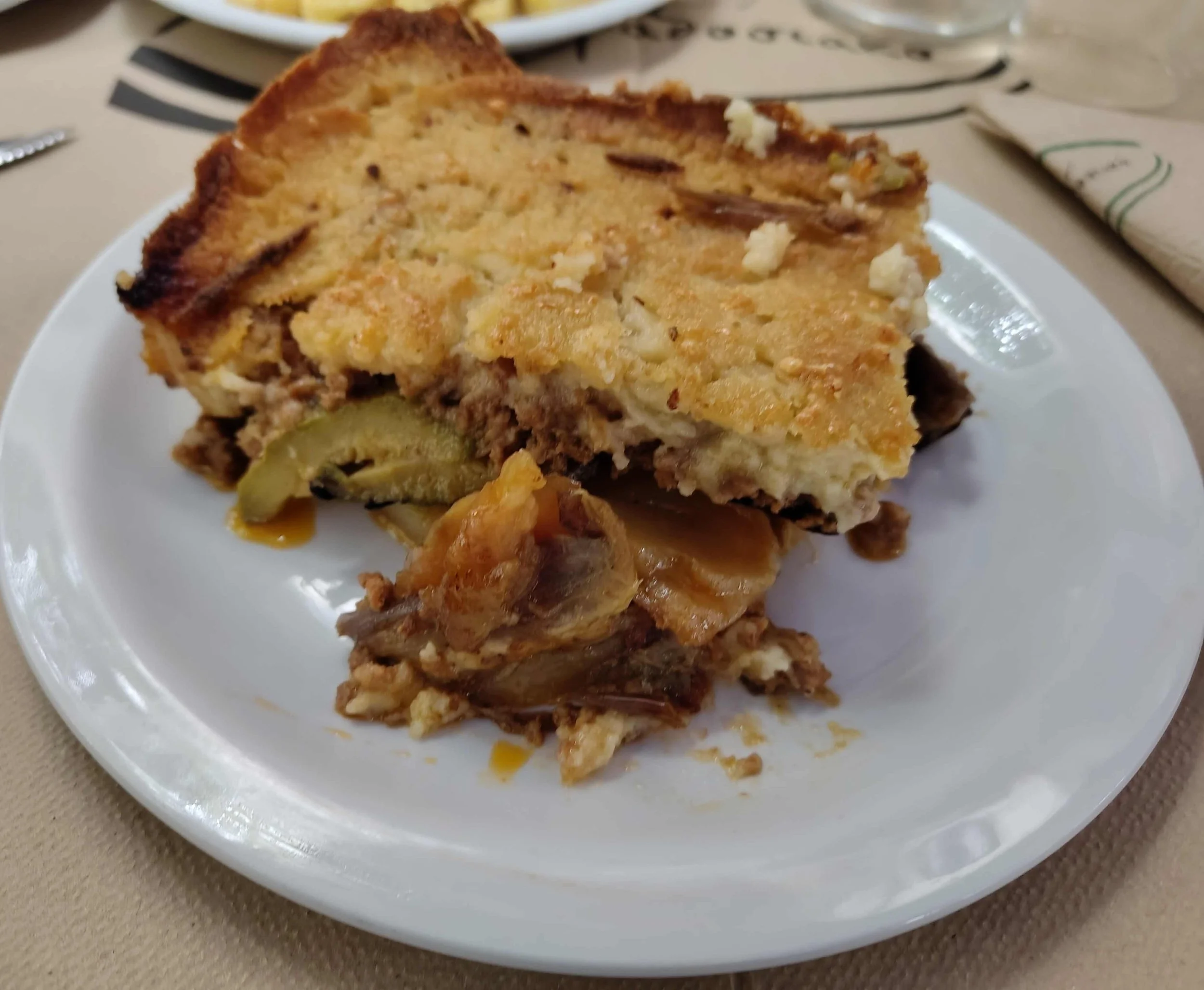
moussaka
aubergine & meat bake
What is it?
Moussaka is a classic Greek baked dish and one of the country’s most iconic foods. It usually consists of layered aubergine, minced meat, and a creamy béchamel sauce. Many versions also include a layer of potato, although this is not universal. It is similar in style to lasagne, but with Greek flavours. Vegetarian versions are also widely available.
What is in it?
Moussaka is made from layers of aubergine, and sometimes potato, with a filling of minced beef or lamb cooked with onion, garlic, tomato, and spices such as cinnamon or allspice. It is topped with a béchamel sauce made from butter, flour, and milk, often enriched with egg and sometimes finished with grated cheese.
Where can I eat it?
It’s one of the most common dishes on traditional Greek menus, so you should have no trouble finding it across the country. Both standard and vegetarian versions are available at places like Liondi Traditional Greek Restaurant and nearby Greek Stories both in Athens.
Vegetarian versions available.
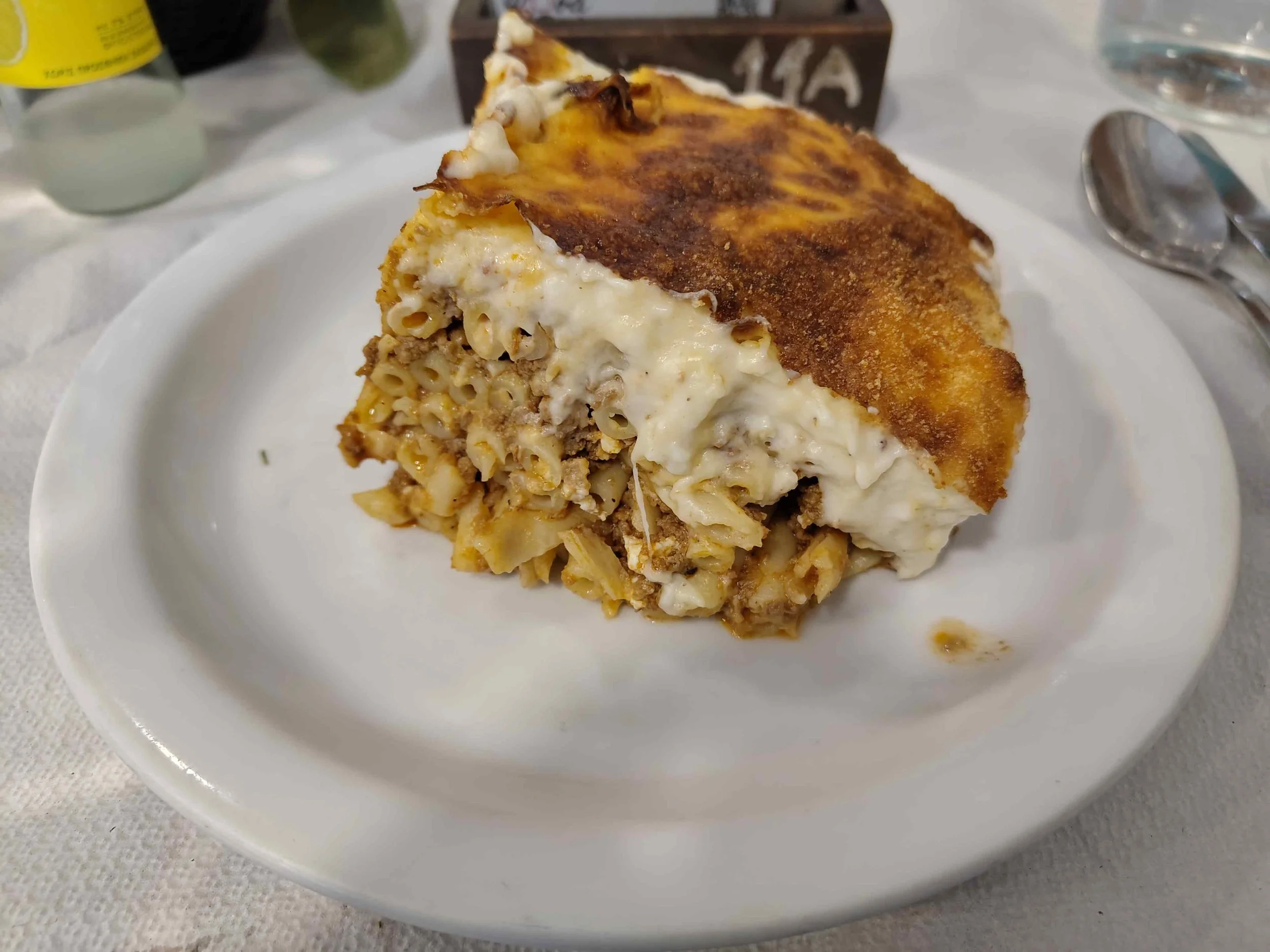
pastitsio
Greek lasagne
What is it?
Pastitsio is a classic Greek baked pasta dish made with layers of pasta, minced meat, and a thick béchamel sauce. It’s often described as “Greek lasagne,” which is a fair comparison, though the flavours and structure are quite distinct. Unlike lasagna, pastitsio is typically arranged in defined layers and baked into neat slices, with a creamy top and a meat filling underneath.
What is in it?
The dish is usually built in three layers, thick tubular pasta, traditionally pastitsio pasta similar to bucatini or penne; minced beef cooked with tomatoes, onion, garlic, olive oil, and spices such as cinnamon or allspice; and béchamel sauce made from milk, butter, and flour, often with egg and sometimes cheese.
Where can I eat it?
Along with moussaka, it is one of the most common classic dishes in traditional Greek restaurants across the country and in places serving tray baked, home style dishes, so you should have no trouble finding it.
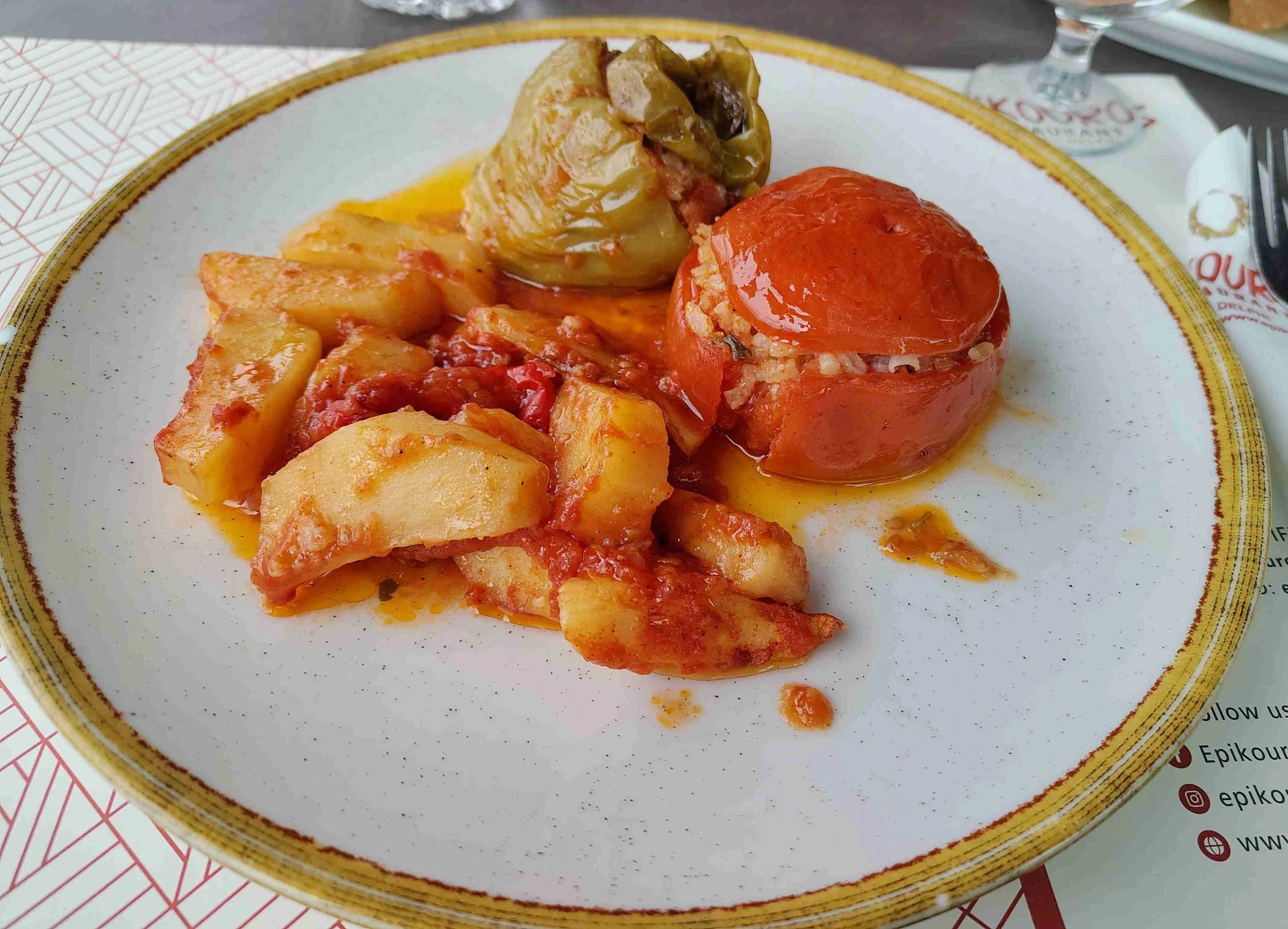
yemista
stuffed vegetables
What is it?
Yemista, also spelled gemista, is a classic Greek dish of stuffed vegetables, most commonly peppers and tomatoes filled with rice and baked in the oven. The name simply means “stuffed” in Greek. Traditionally, the dish is vegetarian, though versions including minced meat are also common.
What is in it?
Yemista are made from peppers and/or tomatoes stuffed with a mixture of rice, onion, garlic, herbs such as parsley and mint, and olive oil. In non vegetarian versions, minced meat is added to the rice filling. It is often served with roasted potatoes in a tomato based sauce.
Where can I eat it?
It’s one of the most common dishes on traditional Greek menus. In English, it may simply be listed as “stuffed vegetables.” The traditional in Athens serve a delicious version.
Traditionally vegan, dairy & gluten free.
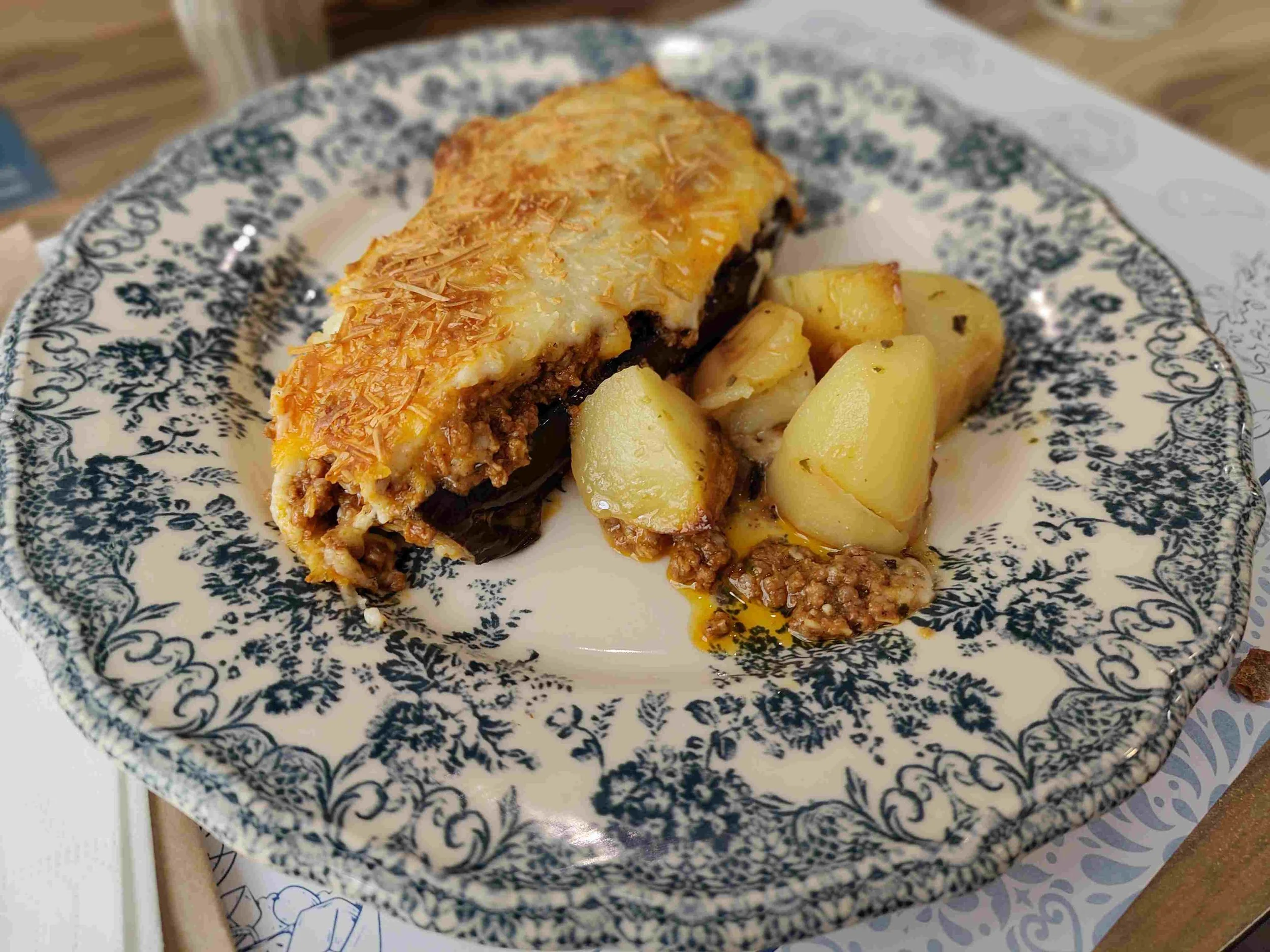
papoutsakia
stuffed aubergine
What is it?
Papoutsakia are a classic Greek baked dish of aubergine halves stuffed with minced meat and topped with béchamel sauce. The name translates to “little shoes,” referring to the shape of the aubergines once filled. They are similar in style to moussaka and a classic of traditional Greek home cooking.
What is in it?
Papoutsakia are made from aubergine halves filled with a mixture of minced beef, or sometimes beef and pork, onion, garlic, tomato, and herbs, then topped with a béchamel sauce made from butter, flour, and milk, often with egg and grated cheese.
Where can I eat it?
Papoutsakia are commonly found in traditional tavernas across Greece, especially those serving home style or oven baked dishes. They are not quite as common as classics like moussaka and pastitsio.
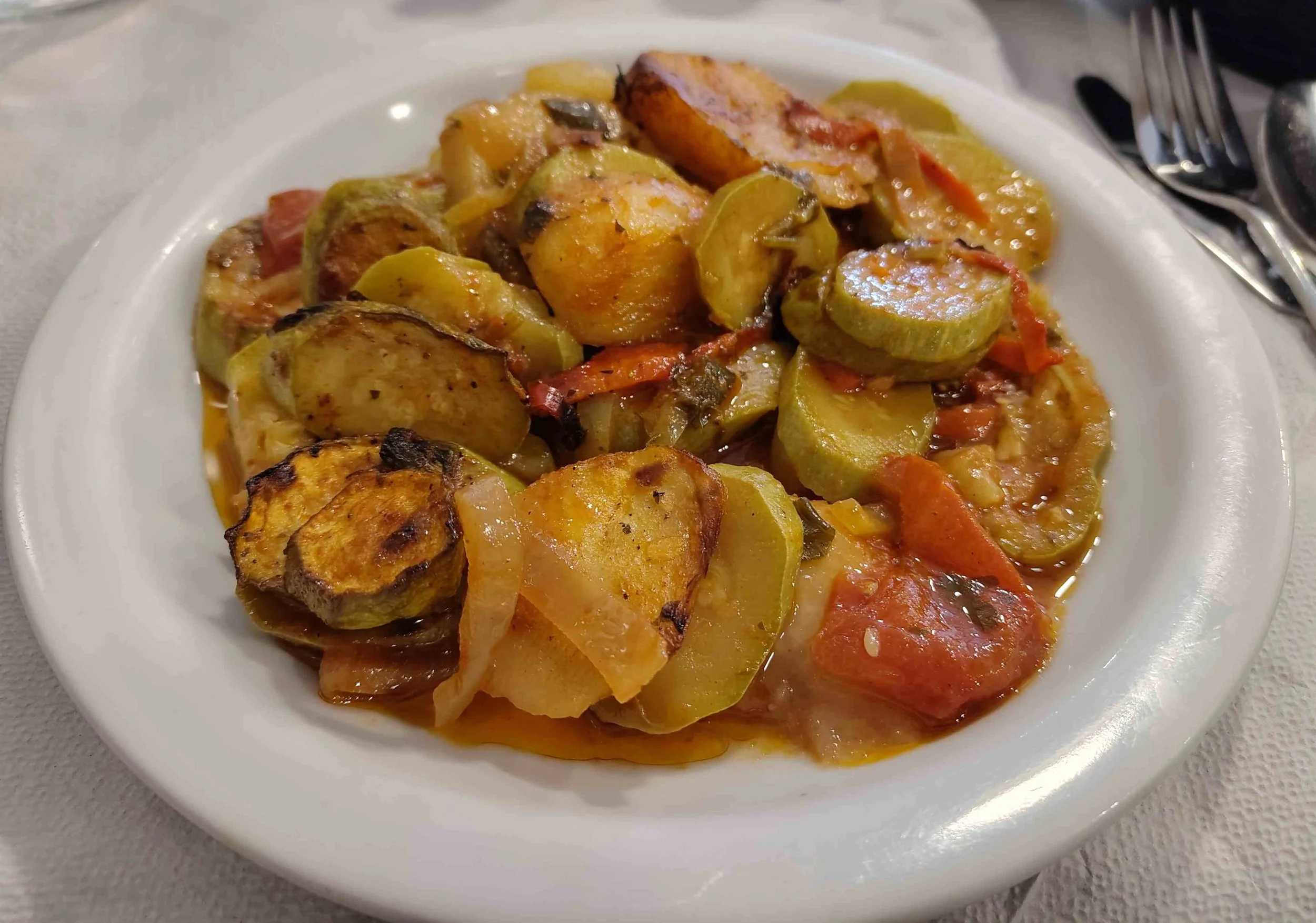
briam
oven baked vegetables
What is it?
A traditional Greek oven baked vegetable dish, often considered one of the few classic vegetarian mains in Greek cuisine alongside yemista. It consists of seasonal vegetables roasted together with olive oil and tomato. It is sometimes compared to ratatouille, but briam is typically more olive oil forward and baked rather than stewed, giving it a more roasted character.
What is in it?
Usually a mix of potatoes, courgette, aubergine, tomatoes, peppers and onions, baked with plenty of olive oil, garlic and oregano or parsley.
Where can I eat it?
It is served in quite a few traditional restaurants, but is not as common as other vegetarian dishes like yemista. We saw it at Merianos near Corfu old town, Bandiera in Athens and Fysa Roufa in Ioannina.
Usually vegan, dairy free and gluten free.
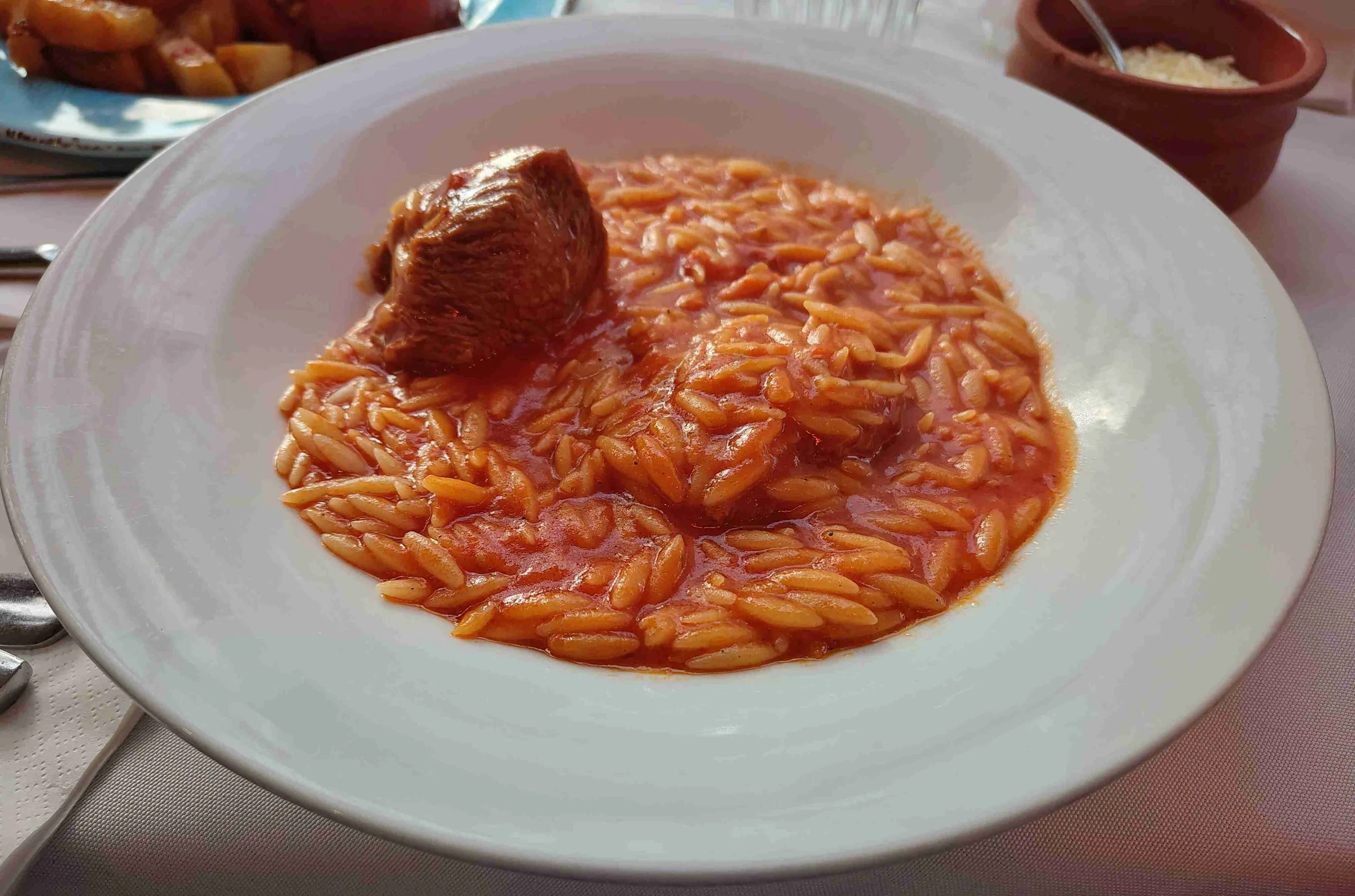
giouvetsi
orzo & tomato sauce
What is it?
Giouvetsi is an oven baked dish of orzo pasta, cooked in a tomato sauce with beef or lamb. It’s a classic Greek casserole.
What is in it?
It is made with beef or lamb, orzo pasta, tomato sauce, olive oil, onions, garlic, and herbs such as oregano or bay leaf. It is often topped with grated cheese, usually kefalotyri or a similar hard cheese.
Where can I eat it?
A traditional home style dish, it is commonly found in tavernas across Greece, particularly those serving slow cooked or oven baked dishes. In Athens, you’ll find it in places like Gods’ Restaurant.
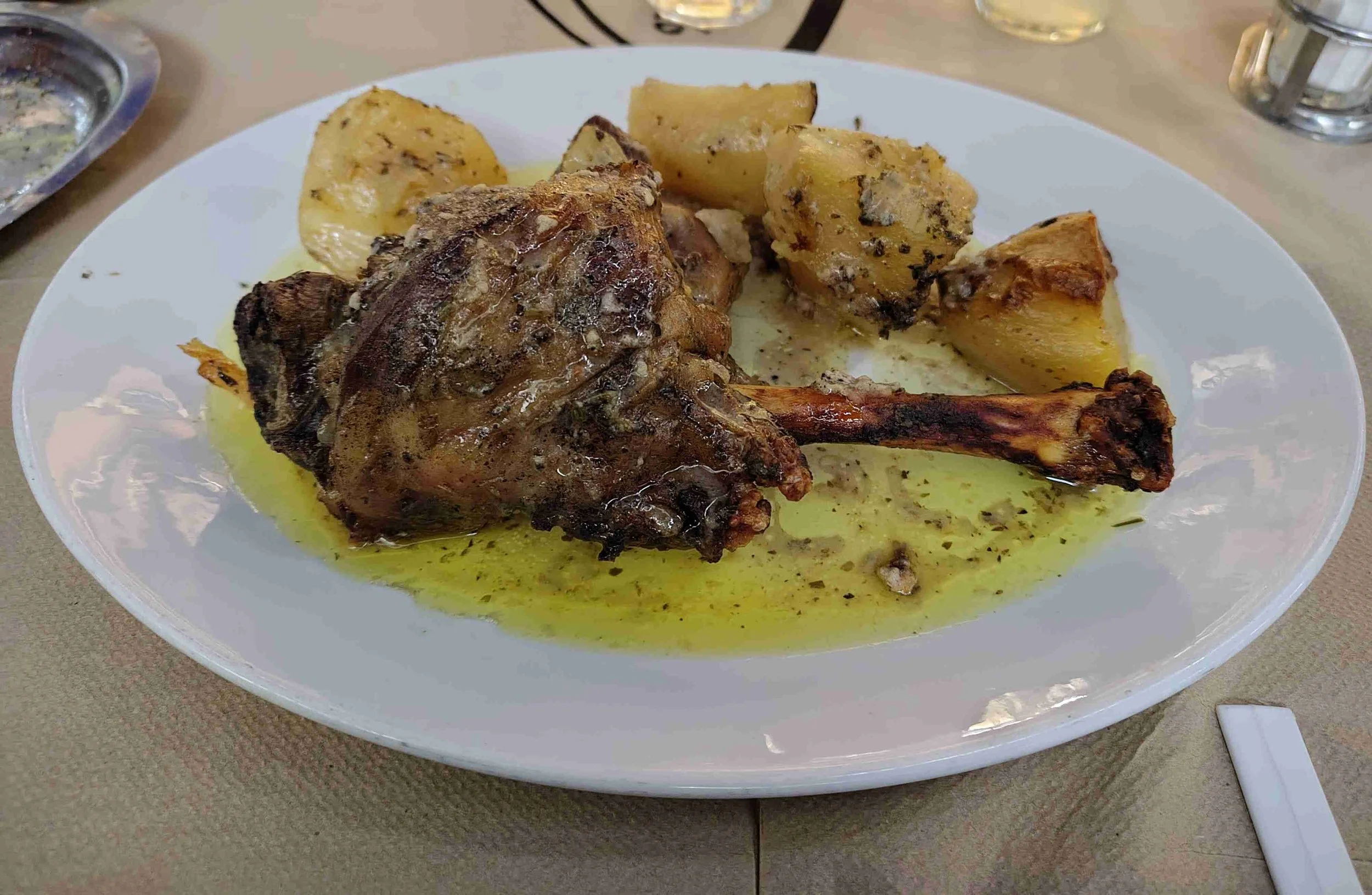
arni sto fourno
roast lamb
What is it?
Arni sto fourno is oven roasted lamb with potatoes, simple yet delicious. It literally translates to “lamb in the oven,” though on menus you may also see it listed as “oven baked lamb” or simply “roast lamb.” It is often slow roasted so the meat becomes very tender and the potatoes absorb the lamb’s juices.
What is in it?
It is typically made with a cut of lamb such as the leg or shoulder, roasted with potatoes, olive oil, lemon juice, garlic, oregano, salt, and pepper.
Where can I eat it?
You’ll come across this dish occasionally, especially in more traditional tavernas, though it is less commonly listed than some other Greek classics. In Athens, a good option is The traditional, which serves traditional Greek dishes in an authentic setting.
Gluten & dairy free.
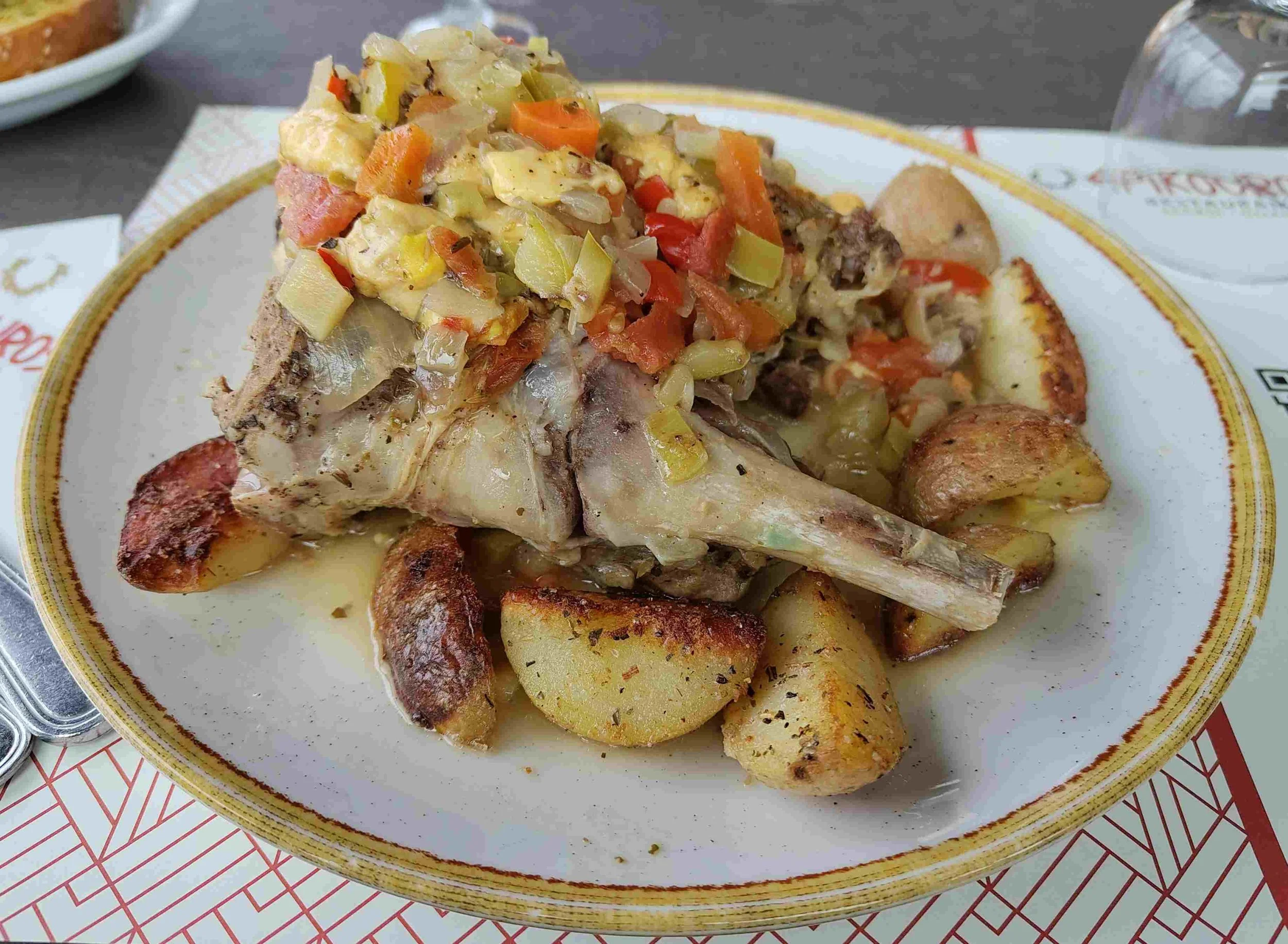
kleftiko
slow roasted lamb
What is it?
Kleftiko is a traditional Greek dish of slow roasted lamb or goat, cooked in a sealed parcel so the meat is infused with its own juices and becomes tender. It is typically baked with herbs. The name comes from the Klephts, guerrilla fighters (often described as bandits or highwaymen) during Ottoman rule, who are said to have cooked meat slowly in sealed pits to avoid smoke and detection. The word klephts means “thieves” in Greek and is the root of the English word kleptomania.
What is in it?
Kleftiko is made from lamb or goat cooked with potatoes, garlic, onion and sometimes peppers, seasoned with olive oil, lemon juice, oregano and other herbs. The ingredients are wrapped tightly, traditionally in parchment or foil. Some versions include cheese.
Where can I eat it?
Kleftiko is found in many traditional Greek tavernas, although it is less common than quicker dishes due to the long cooking time. Maiandros Restaurant in Athens serves it; it is quite a touristy place to be fair, but the food is actually very good.
Gluten free.
grilled & braised meats
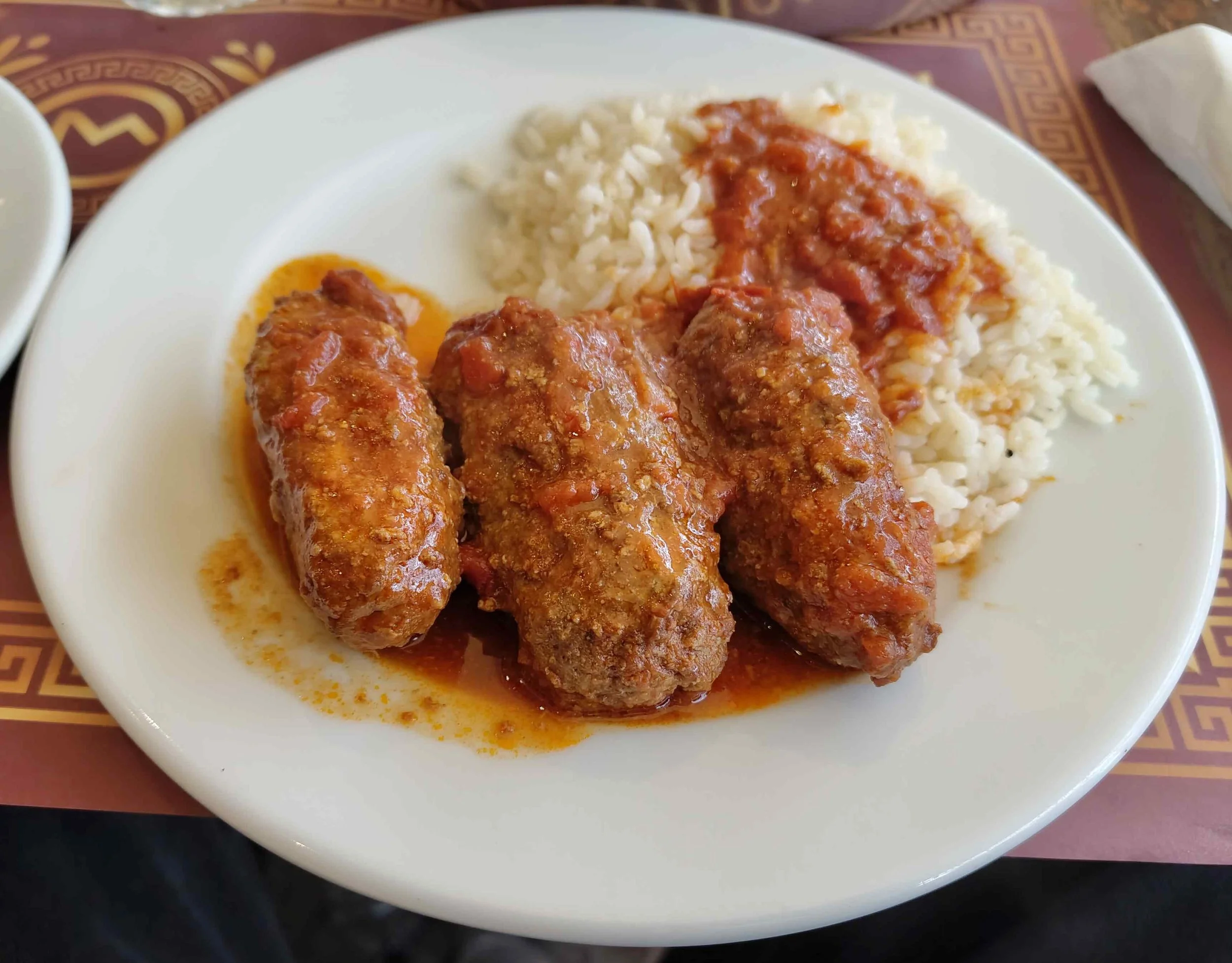
soutzoukakia
tomato sauce meatballs
What is it?
Soutzoukakia Smyrnaika (Smyrna meatballs) are spiced meatballs in a tomato sauce, typically served as a main course with rice, mashed potatoes, or sometimes fries.
What is in it?
Usually made from minced beef or a mix of beef and pork, combined with breadcrumbs soaked in water or wine, garlic, onion and spices such as cumin, black pepper and sometimes cinnamon. The meatballs are shaped into oval “logs,” lightly fried, then simmered in a tomato sauce made with tomatoes, olive oil and garlic.
Where can I eat it?
A classic home style dish, so it is widely available in traditional tavernas across Greece, though not as ubiquitous as souvlaki or moussaka. In Athens, a tasty version can be found at Maiandros in the city centre.
Dairy free.
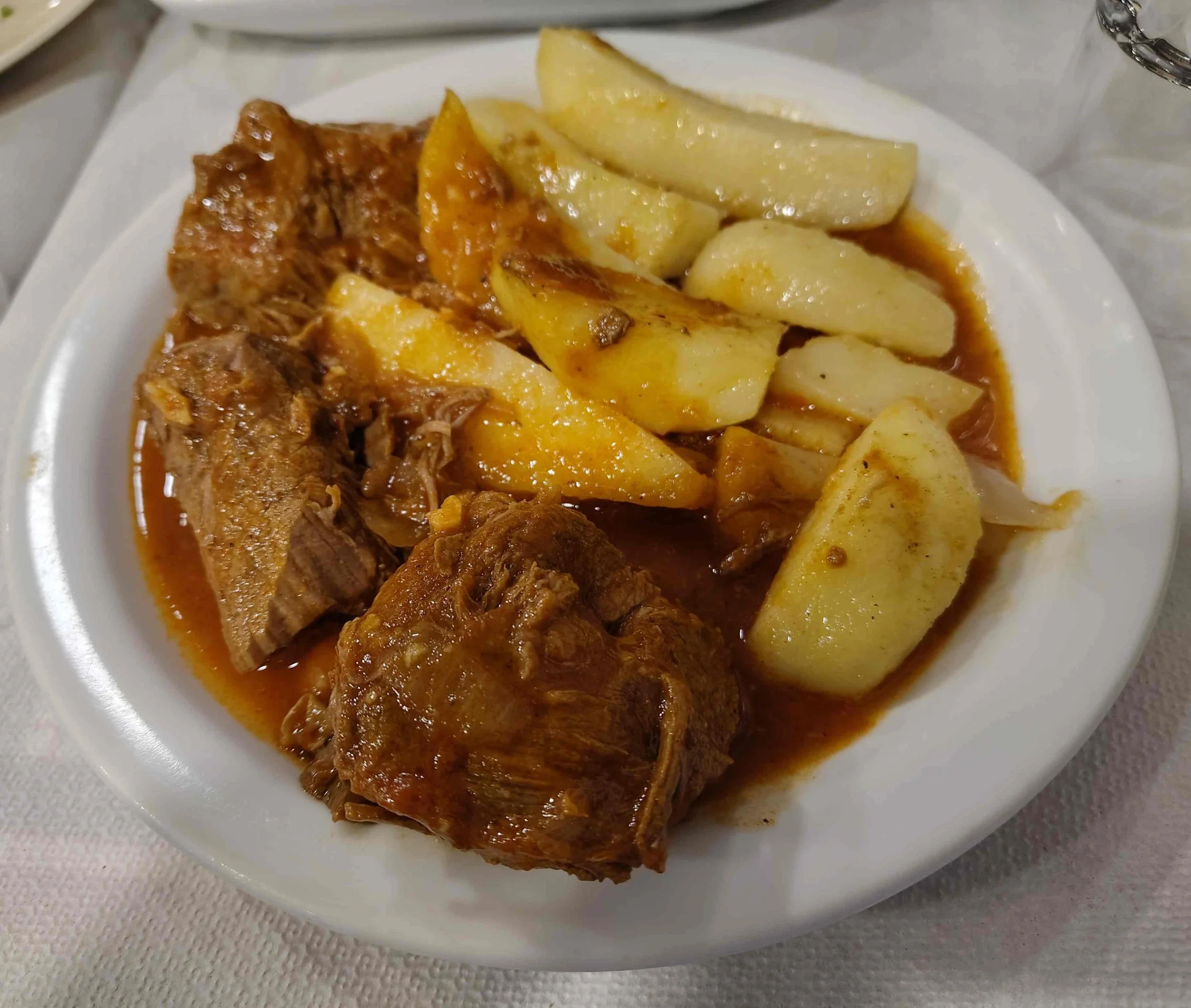
kokkinisto
meat in tomato sauce
What is it?
Kokkinisto is a classic Greek slow cooked dish of meat braised in a rich tomato based sauce. The name kokkinisto literally means “reddened,” referring to the deep red colour of the sauce.
Kokkinisto isn’t just a single dish but a traditional Greek cooking style, where ingredients are slowly cooked in a tomato based sauce. Many well known dishes follow this same approach, such as:
Giouvetsi (beef cooked in a similar tomato sauce, then baked with orzo pasta)
Soutzoukakia (spiced meatballs served in a tomato sauce)
What is in it?
Typically made with beef (moschari), though other meats are also used. The sauce is made from tomatoes, onion, garlic and olive oil, and spiced with cinnamon or cloves. It is slow cooked until the meat is tender and the sauce thickens. Often served with potatoes (either cooked in the sauce or fried), rice, or pasta such as hilopites. Bread is usually served alongside to soak up the sauce.
Where can I eat it?
It appears on many traditional restaurant menus throughout the country in various forms. We had a great one at Fysa Roufa in Ioannina.
Dairy & gluten free.
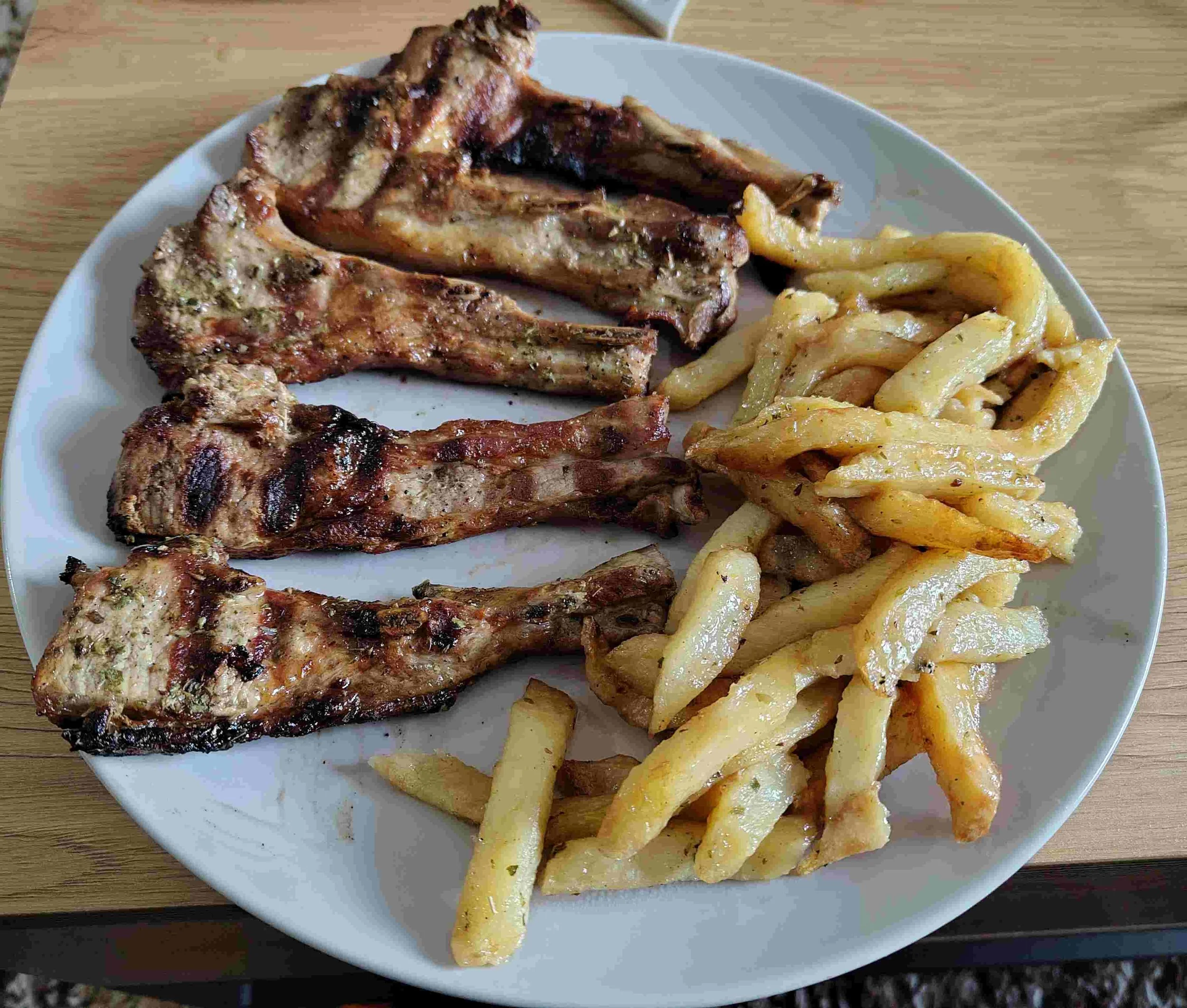
paidakia
Greek lamb chops
What is it?
Greek-style grilled lamb chops, typically cut from the rib and cooked over charcoal. The name paidakia literally translates to “little ribs” in Greek. They are usually just seasoned and grilled rather than heavily marinated.
What is in it?
Lamb chops, usually rib chops, with olive oil, lemon juice, oregano and salt. They are most often served with fries.
were can I eat it?
Available at many traditional restaurants, especially those with an emphasis on grilled foods. They will usually be listed as lamb chops in English, but look for the word παϊδάκια (paidakia) to make sure you are getting Greek style ones.
Gluten & dairy free.
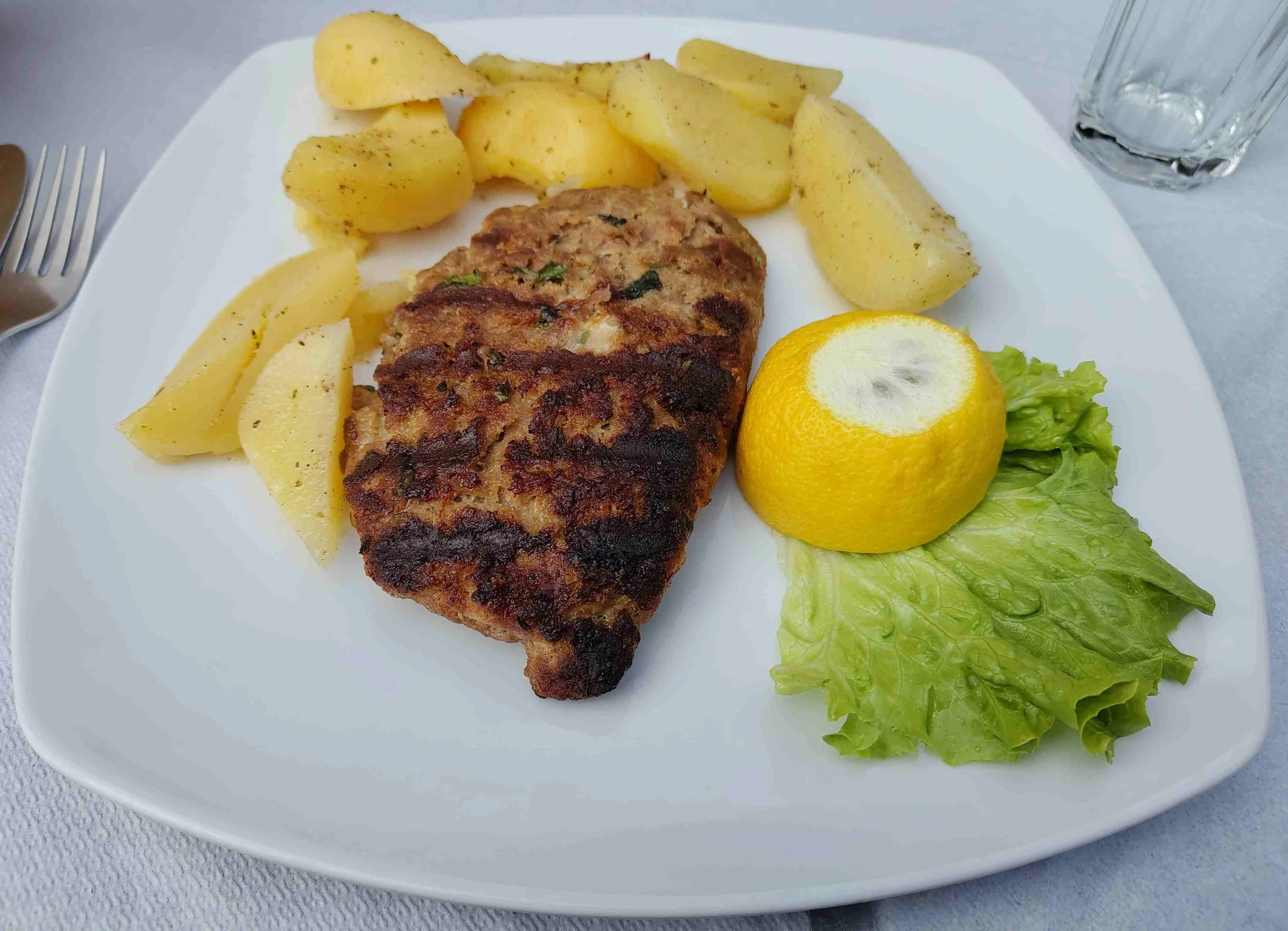
bifteki
Greek burger
What is it?
A Greek style “burger” made from minced meat, shaped into a patty and served on a plate without a bun. It can be grilled, baked, or occasionally fried. Unlike a typical burger, it is more heavily seasoned and often mixed with herbs and breadcrumbs. Stuffed versions (especially with cheese) are also popular.
What is in it?
Minced beef (sometimes a mix of beef and pork or veal), breadcrumbs, onion, garlic, olive oil and herbs such as oregano and parsley. Some recipes include egg. Stuffed versions typically contain cheese (often feta) and sometimes ham.
were can I eat it?
A fairly common dish on menus at restaurants specialising in grilled meats, but less common on standard taverna menus. On menus, it may appear as bifteki, biftekia, mpifteki or mpiftekia (μπιφτέκι / μπιφτέκια), so look for any of these spellings.
Standard version is dairy free.
regional specialities from Corfu
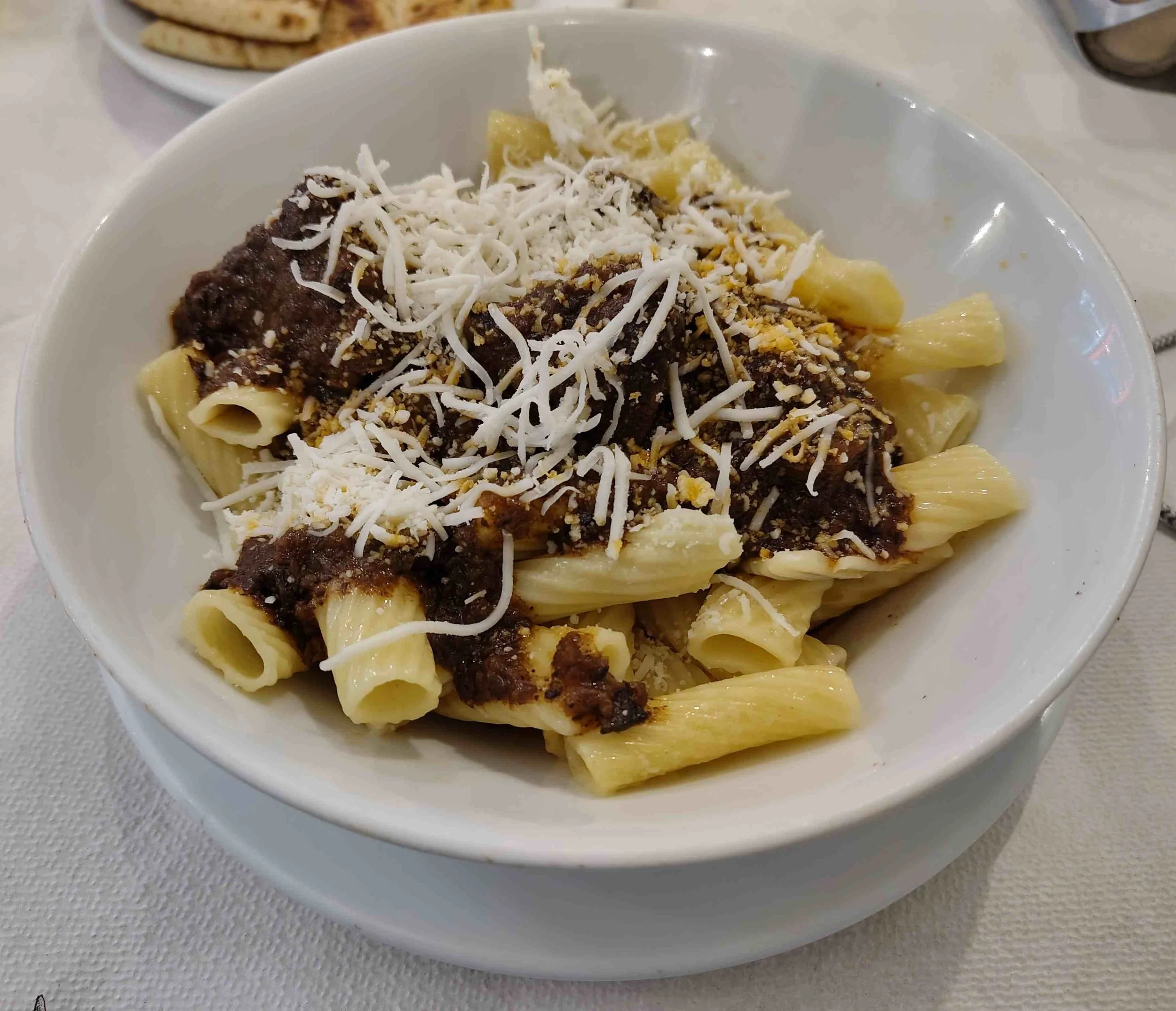
pastitsada
corfiot pasta
What is it?
Pastitsada is a traditional Corfiot dish consisting of slow cooked beef or rooster in a rich tomato based sauce, flavoured with cinnamon, cloves, and sometimes allspice. The dish reflects Venetian influence from Corfu’s long history under Venetian rule. It is typically served over thick pasta such as bucatini or spaghetti, which soaks up the delicious sauce.
What is in it?
Pastitsada is made with beef or rooster, onions, garlic, tomatoes or tomato paste, white wine, olive oil, and a combination of spices such as cinnamon, cloves, and sometimes allspice. It is often finished with a sprinkling of grated kefalotyri or Parmesan style cheese.
Where can I eat it?
Pastitsada is a classic dish on Corfu, found in many traditional tavernas and restaurants across the island. We had a delicious one at Taverna Ninos in Corfu old town.
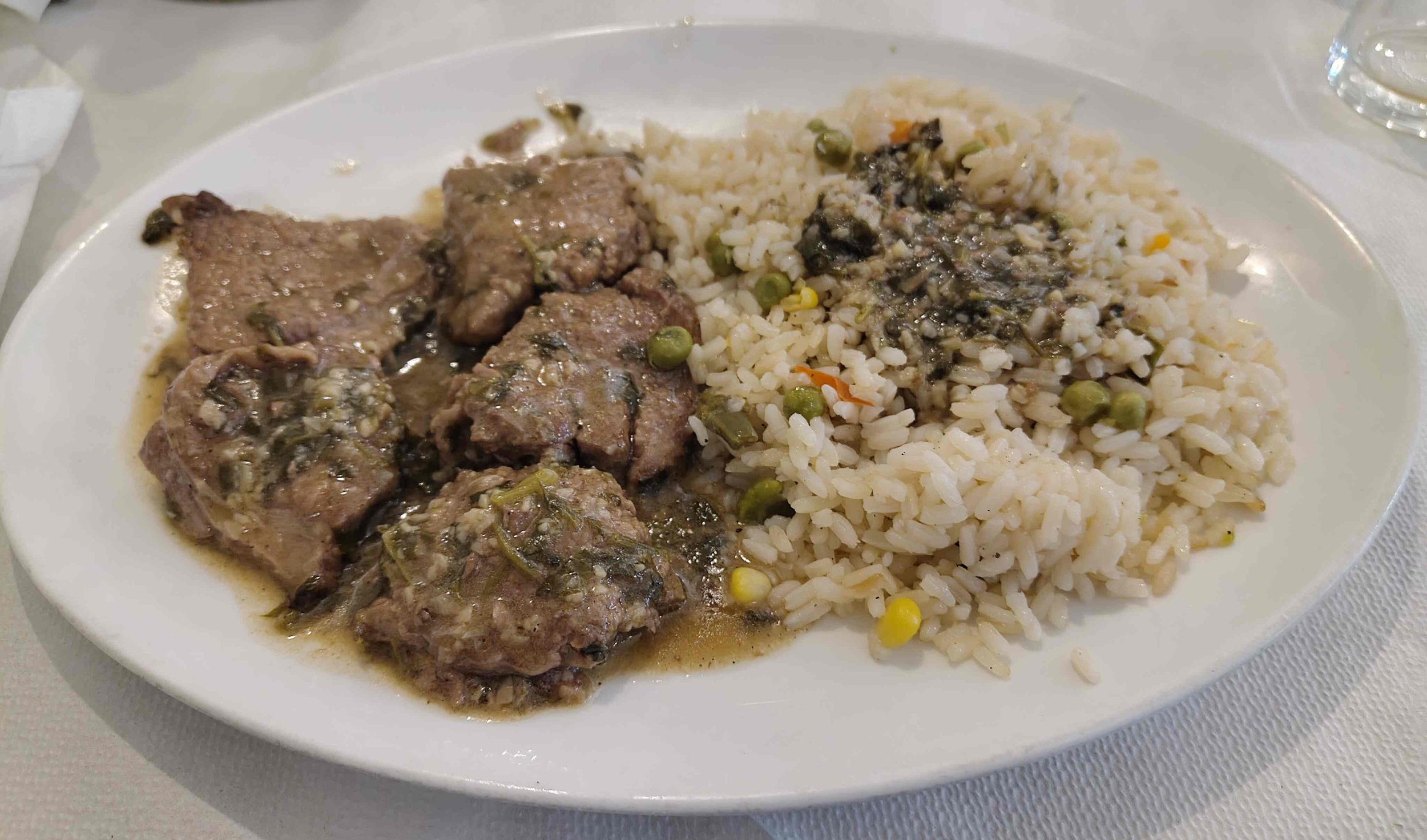
Sofrito
Garlicky veal stew
What is it?
Sofrito is a traditional Venetian influenced dish from Corfu, typically made with thin slices of veal that are lightly floured, gently fried, and then slow cooked in a sauce of white wine, vinegar, garlic and parsley. It is a tender, slightly tangy dish with a deep garlic flavour and is considered one of the island’s signature specialities.
What is in it?
Sofrito is made with thinly sliced veal, lightly coated in flour and fried in olive oil, then simmered in a sauce of garlic, white wine, vinegar and parsley. It is most commonly served with rice, mashed potatoes or sometimes chips (fries).
Where can I eat it?
It is very common in Corfu, where it is found on most traditional restaurant menus, including at our go-to place, Taverna Ninos in the old town.
Dairy free.
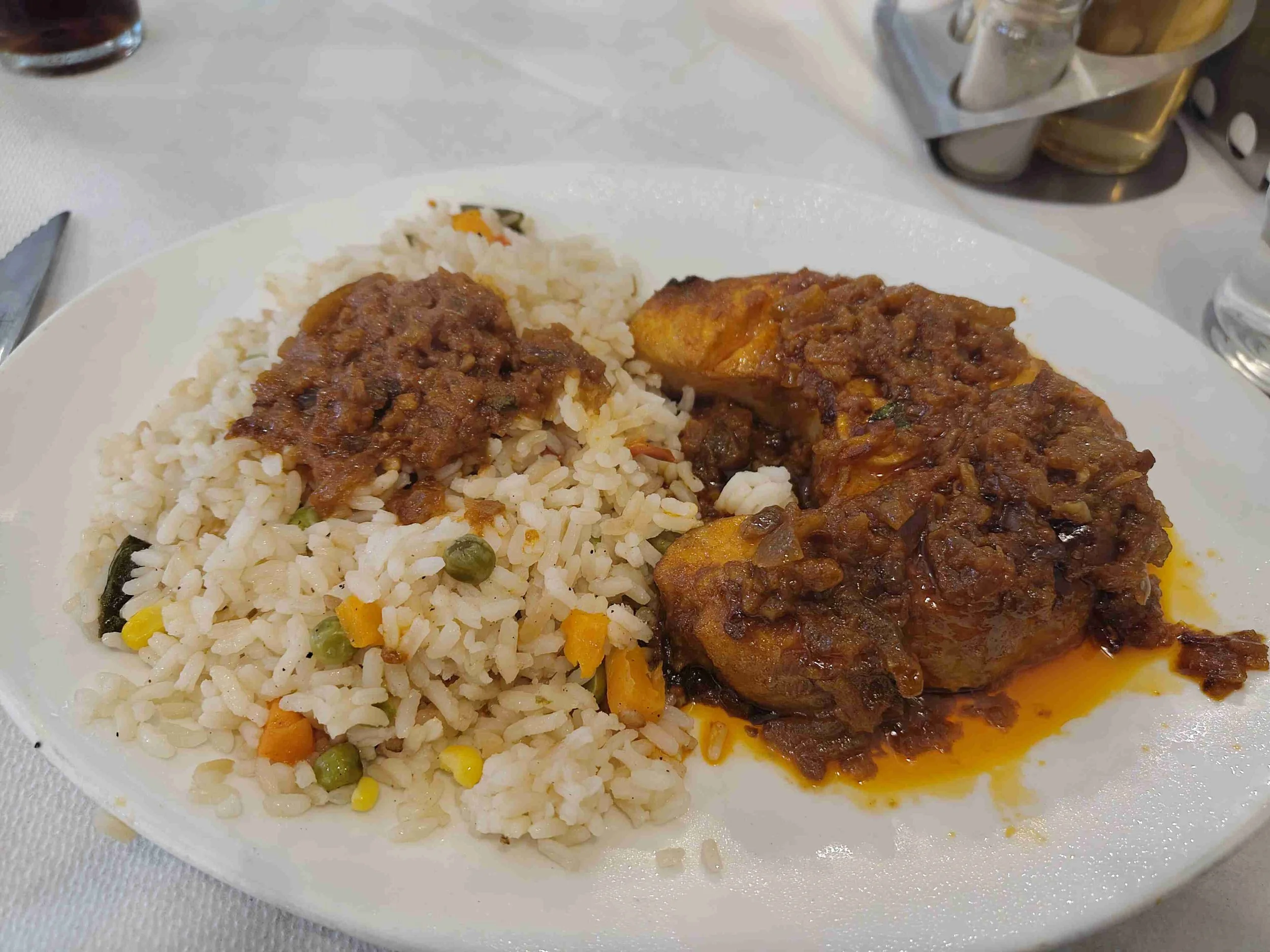
bourdeto
spicy fish stew
What is it?
Bourdeto is a spicy fish stew from Corfu, known for its fiery flavour and red colour. Traditionally made with scorpionfish, it is cooked in a sauce of onion and red pepper, giving it a bit of heat. Like many Corfiot dishes, it reflects Venetian influences and is considered one of the island’s signature dishes.
What is in it?
Bourdeto is typically made with firm white fish (most traditionally scorpionfish), slowly cooked with onions, garlic, olive oil, tomato paste and red pepper (paprika or chilli flakes).
Where can I eat it?
It is one of the three classic Corfiot dishes (alongside Sofrito and Pastitsada) and appears on many traditional menus across the island. You can find it in tavernas throughout Corfu, including at Taverna Ninos in the Old Town.
Dairy & gluten free.
desserts
portokalopita
orange cake
What is it?
A classic Greek syrup soaked dessert made with orange and shredded phyllo pastry. The name literally means “orange pie,” though it’s actually closer in texture to a moist cake. It is baked and then soaked in an orange syrup, giving it a slightly sticky, juicy texture. Often served as a dessert, it pairs particularly well with a strong Greek coffee.
What is in it?
Typically made with:
phyllo pastry (often dried and crumbled into the mixture)
oranges (juice and zest)
eggs, sugar, oil (or sometimes butter) and yoghurt (in many traditional recipes)
After baking, it is soaked in a syrup made from sugar, water and orange peel or juice.
Where can I eat it?
It is a very common item in cafes and as a dessert on traditional restaurant menus, often listed as “orange cake” in English.
Vegetarian.
halva farsalon
caramelised dessert
What is it?
A distinctive Greek dessert known for its soft, jelly like texture and glossy surface. It is one of the three main types of halva found in Greece, and unlike the more common semolina version, this one is made with corn starch. It originates from Farsala in central Greece and has a caramel like taste.
What is in it?
Typically made with corn starch, sugar, water and butter or oil.
It may also be topped with almonds or other nuts and cinnamon.
Where can I eat it?
Less common than other Greek desserts, but you can find it in specialised sweet shops, restaurants and traditional bakeries in central Greece, especially around Farsala where it is a local speciality. We tried it as a dessert at Fysa Roufa in Ioannina.
Vegetarian.
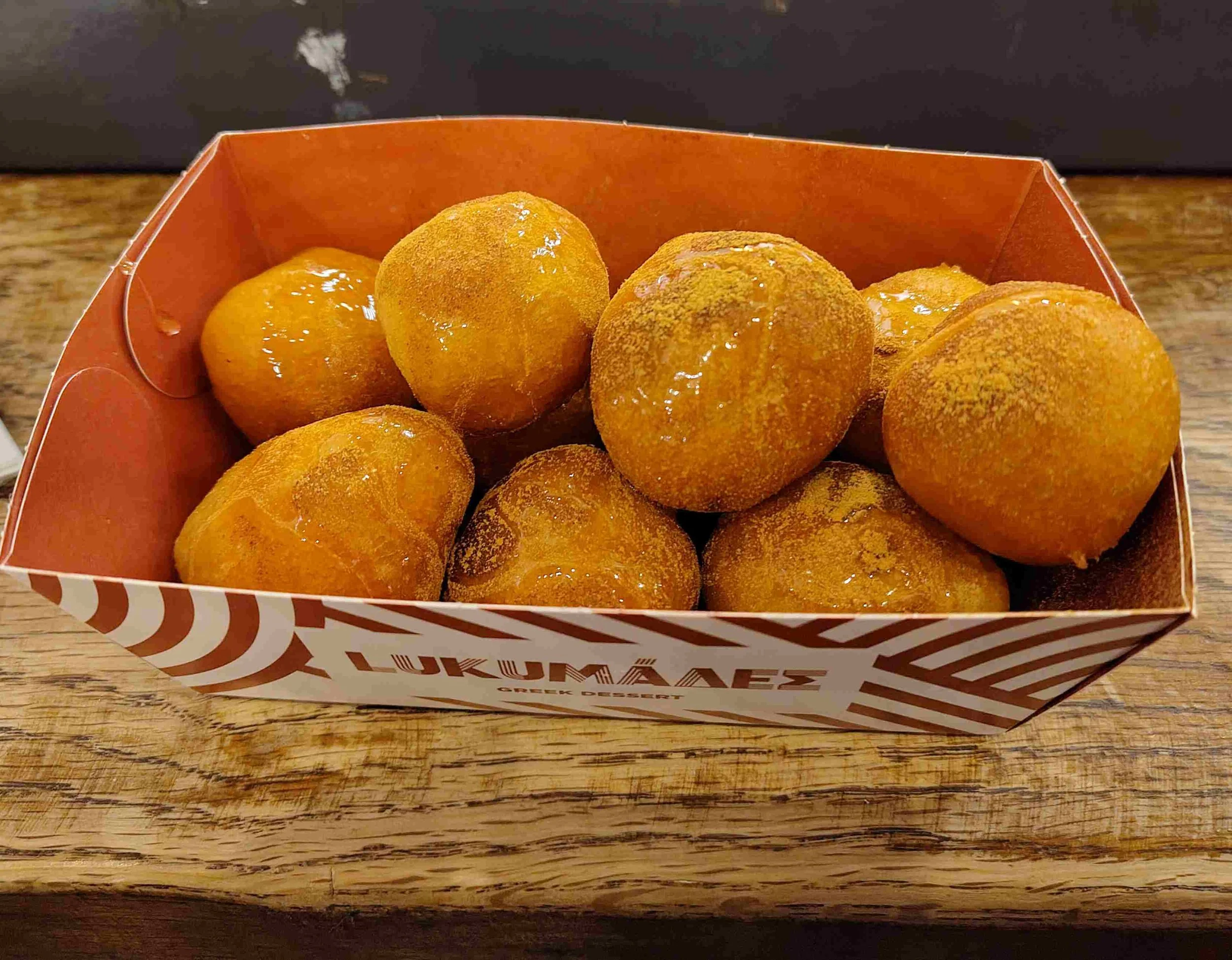
loukoumades
honey doughnuts
What is it?
Small, deep fried dough balls. Traditionally served hot, they are drizzled with honey and sprinkled with cinnamon, sometimes topped with chopped walnuts. They are one of Greece’s oldest desserts, often compared to doughnuts but lighter and smaller. While the classic version is simple, modern variations have become very popular, with a wide range of toppings and fillings.
What is in it?
The basic dough typically includes flour, water and yeast.
After frying, they are traditionally topped with honey, cinnamon and sometimes walnuts.
Modern versions may include:
chocolate sauce, tahini or ice cream
fillings like custard or chocolate
Where can I eat it?
Available across Greece, especially at dessert shops specialising in loukoumades and some bakeries. Many places specialise in them, such as Loukoumadaki in Athens, where many different versions are available.
Vegetarian and traditionally dairy free.
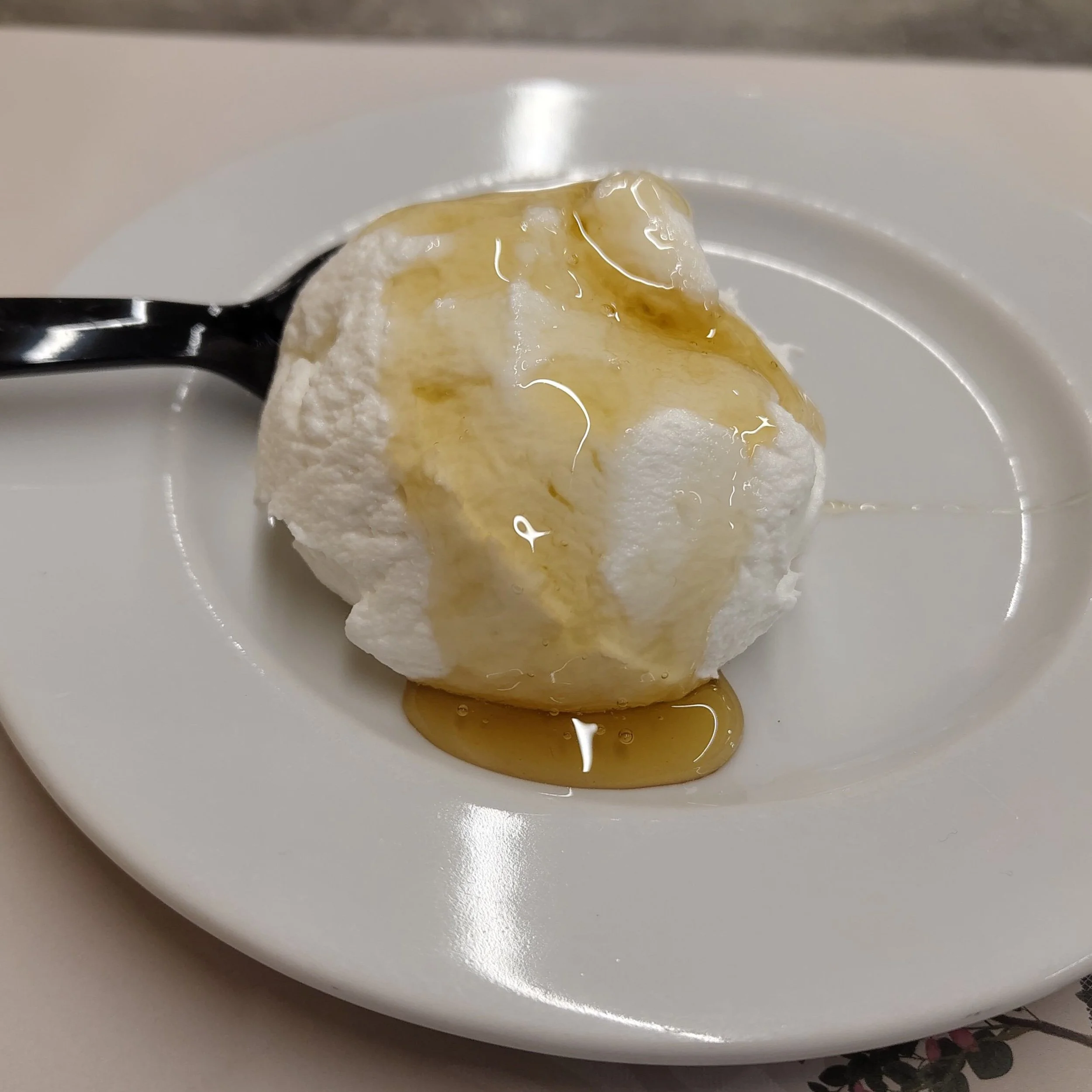
Greek yoghurt
with honey
What is it?
One of the simplest and most traditional desserts in Greece, consisting of thick, strained Greek yoghurt topped with honey and often sprinkled with walnuts. Despite its simplicity, it is a staple dessert found throughout the country and is popular after a heavy meal. It is commonly eaten for breakfast, but in restaurants it is most often served as a light dessert.
What is in it?
The classic version consists of thick, strained Greek yoghurt topped with honey and chopped walnuts. Some variations may include almonds, cinnamon or sesame seeds, but honey and walnuts remain the most traditional combination.
Where can I eat it?
Available in traditional cafés and restaurants throughout Greece and is often listed simply as “Greek yoghurt with honey” on English menus.
Vegetarian and gluten free.
Ingredients listed reflect common or typical components of this dish as served in restaurants or street‑food vendors. Variations by region, season, or vendor are common. This information is provided for general reference only. If you have dietary restrictions or allergies, please verify ingredient details independently. We assume no liability for accuracy or outcomes.
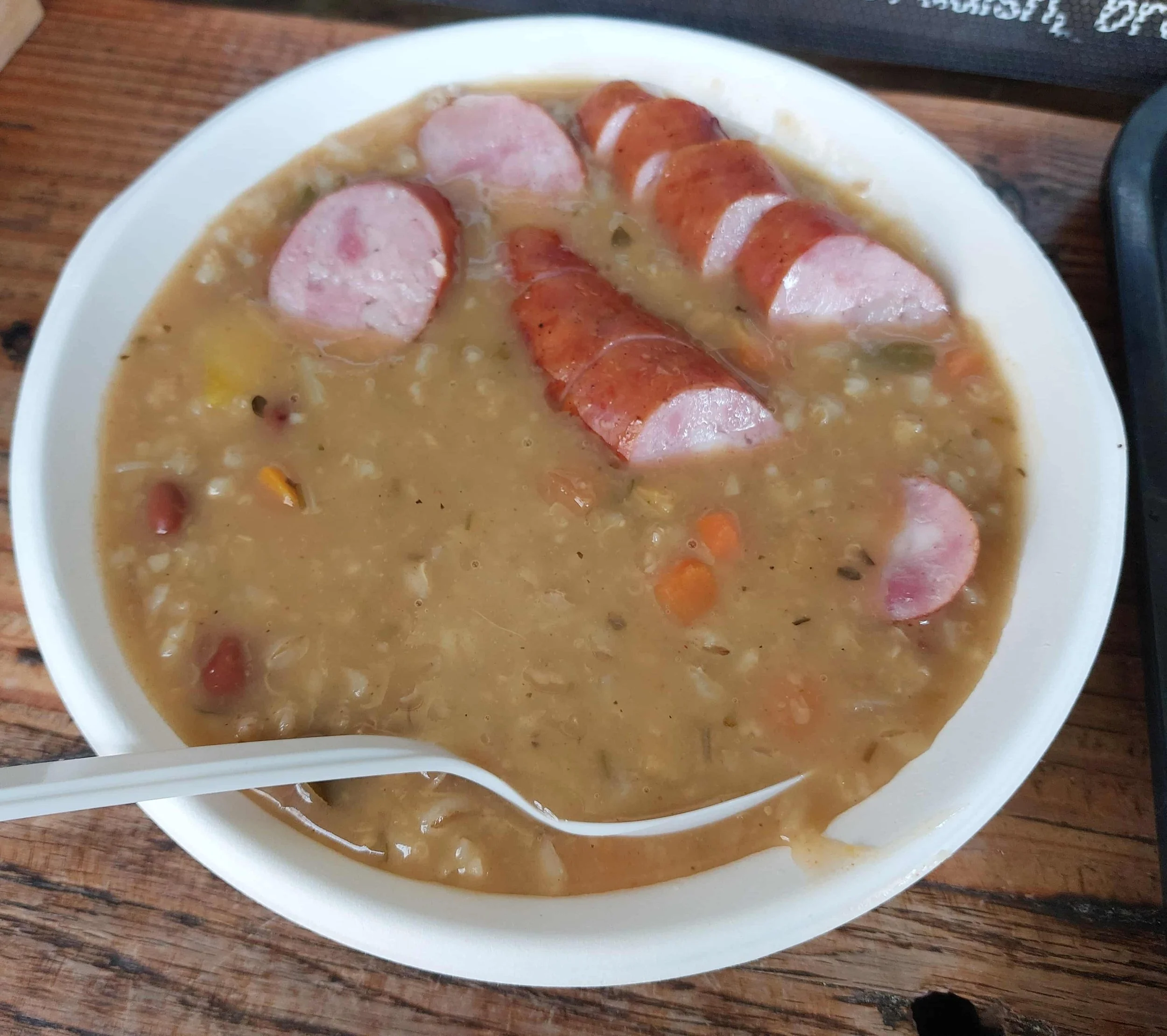
all the foods - Slovenia
Discover all the traditional Slovenian dishes we tried, from Ričet and Štruklji to Idrijski žlikrofi and more
Here you will find a list of all the traditional cuisine we tried in Slovenia.
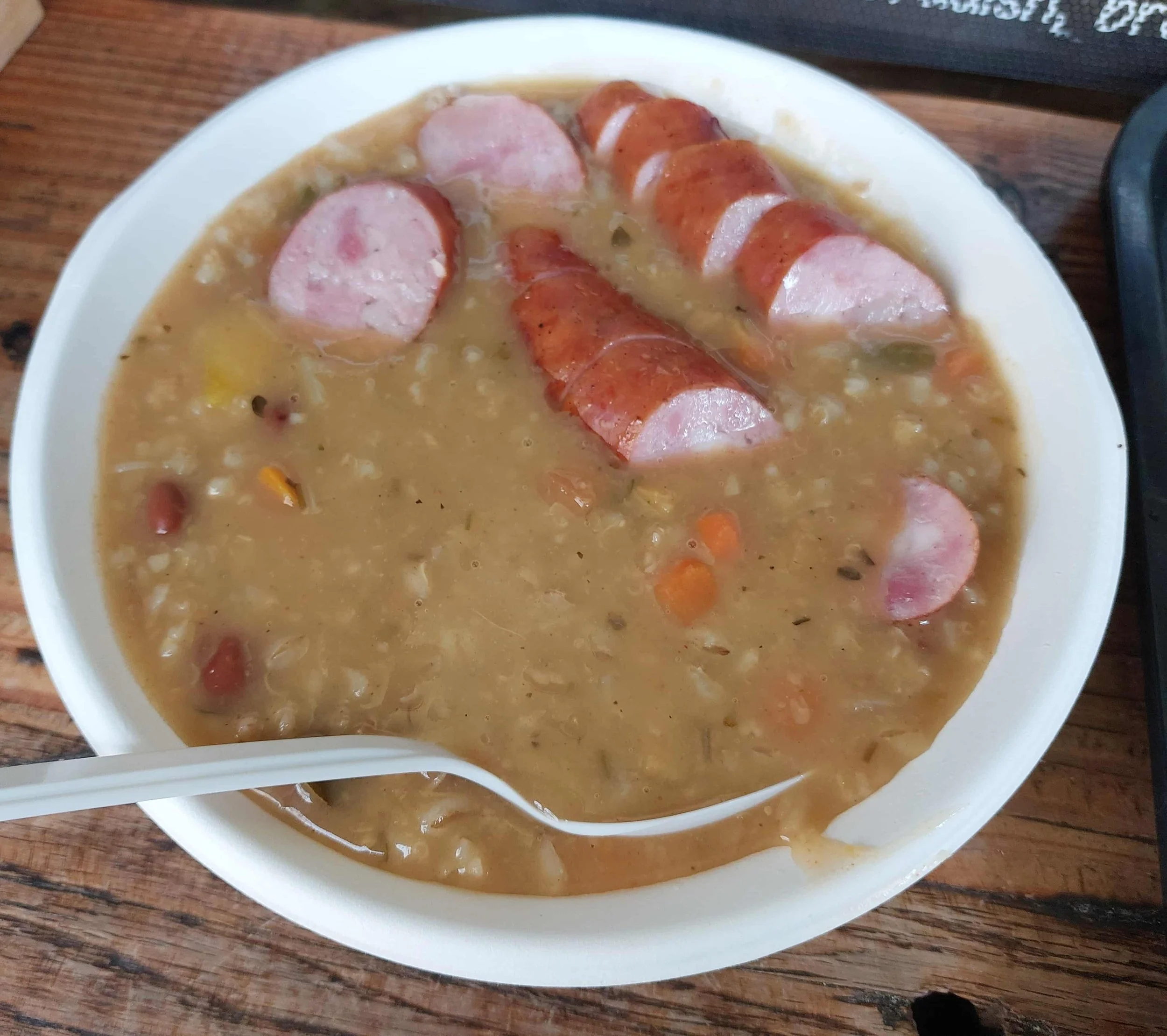
ričet
barley & bean stew
What is it?
A traditional Slovenian stew or thick soup made with barley, beans and vegetables, sometimes with smoked ham. It is often served with kranjska klobasa, also known as Carniolan sausage, a traditional Slovenian pork sausage seasoned with garlic and pepper.
What is in it?
Ričet is typically made with barley, beans and vegetables such as potatoes, carrots, onions, celery and parsley, all slow-cooked together into a thick stew. Many traditional versions also include smoked pork or ham. It is often served with kranjska klobasa and bread on the side
Where can I eat it?
A good place to try it in Ljubljana is Klobasarna, which specialises in kranjska klobasa but also serves good value ričet, with or without sausage.
Vegetarian versions available, dairy free.
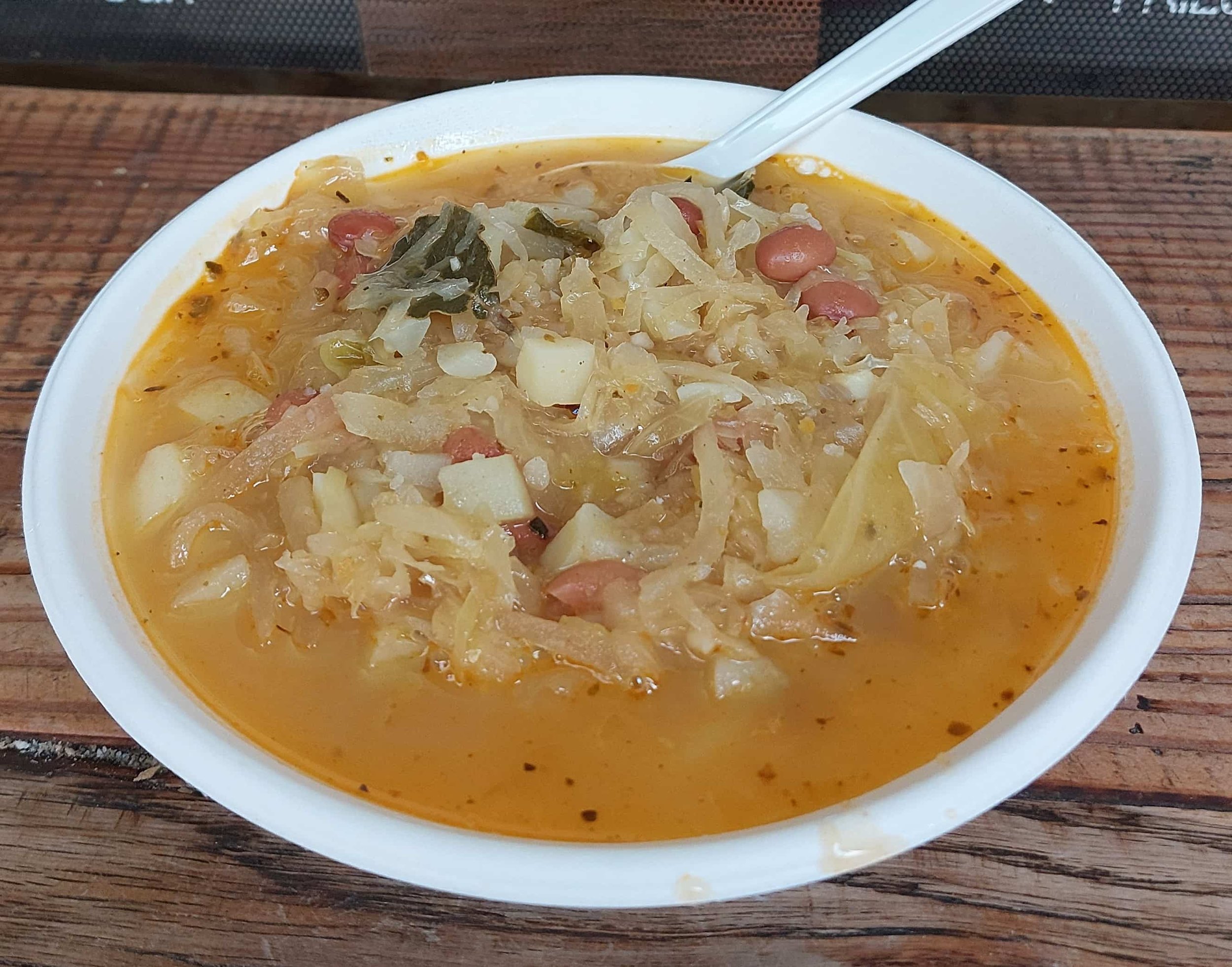
jota
sauerkraut stew
What is it?
Jota is a traditional stew popular in Slovenia’s Karst and Littoral regions, made from beans, potatoes and sauerkraut, or sometimes sour turnip. Many versions include smoked pork or kranjska klobasa, a traditional Slovenian sausage seasoned with garlic and pepper.
What is in it?
Jota is typically made with beans, potatoes, sauerkraut, or sometimes sour turnip, garlic, onion, bay leaves and smoked pork, bacon, ribs or kranjska klobasa. The stew is simmered slowly until thick, often with some lflour to help thicken the broth.
Where can I eat it?
A good place to try it in Ljubljana is Klobasarna, which specialises in kranjska klobasa and serves jota, including versions with or without sausage.
Vegetarian versions available, usually dairy free.
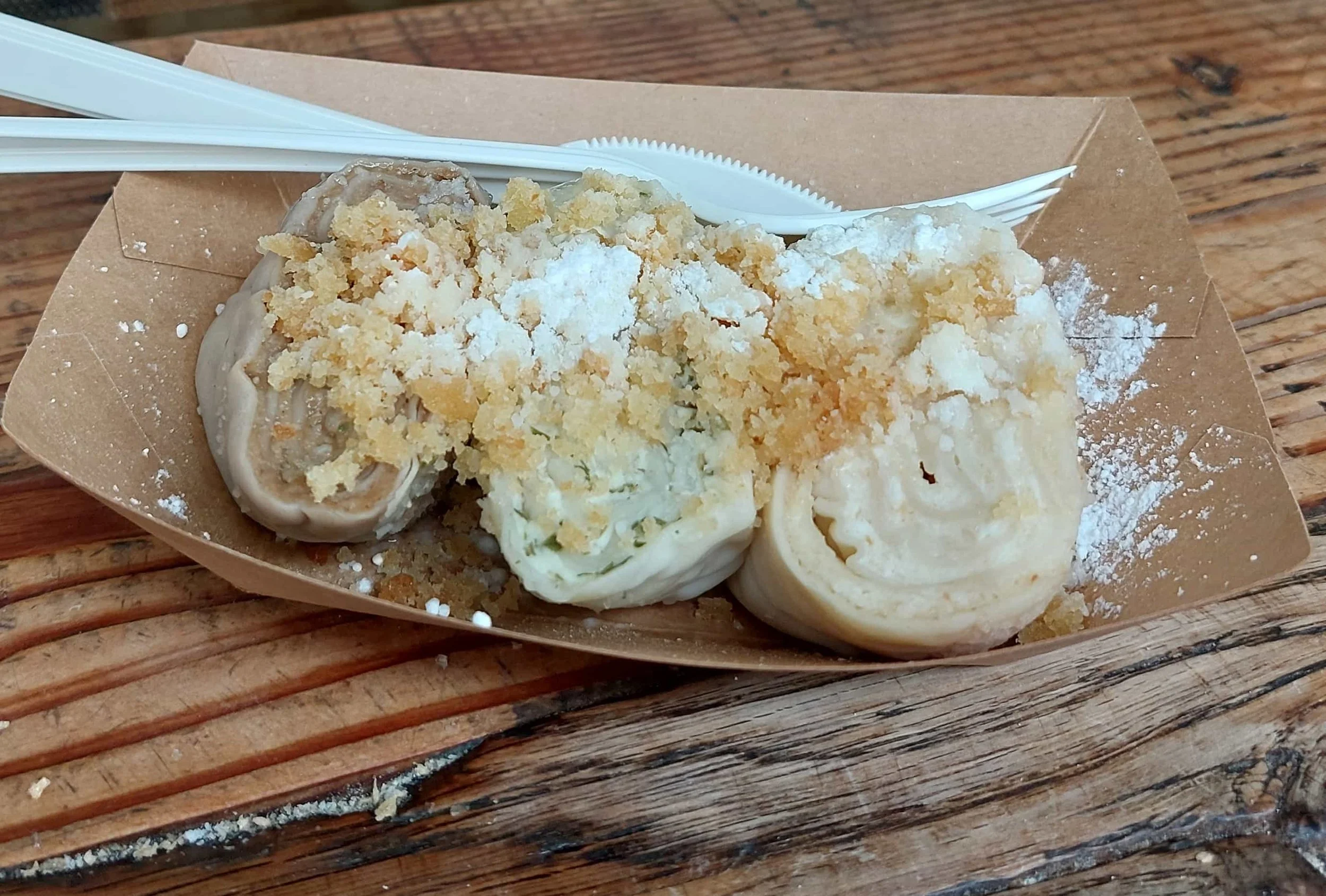
štruklji
rolled dough dumplings
What is it?
Štruklji are a traditional Slovenian rolled dough dish that can be either sweet or savoury and filled with a wide variety of ingredients. The rolled dough is sliced into portions and then boiled, steamed or baked, depending on the recipe. Closely related to Croatian Zagorski štrukli, they are very filling and widely regarded as one of Slovenia’s most iconic traditional foods.
What is in it?
Štruklji are made from rolled dough filled with ingredients such as cottage cheese, walnuts, tarragon, apples, poppy seeds or herbs. Savoury versions are often topped with cream, butter or breadcrumbs, while sweet varieties may be dusted with sugar or served with fruit sauces.
Where can I eat it?
Štruklji are served throughout Slovenia in traditional restaurants, with both sweet and savoury versions commonly available. In Ljubljana, a well known place to try them is Moji Štruklji Slovenije, which offers a huge variety.
Vegetarian versions widely available.
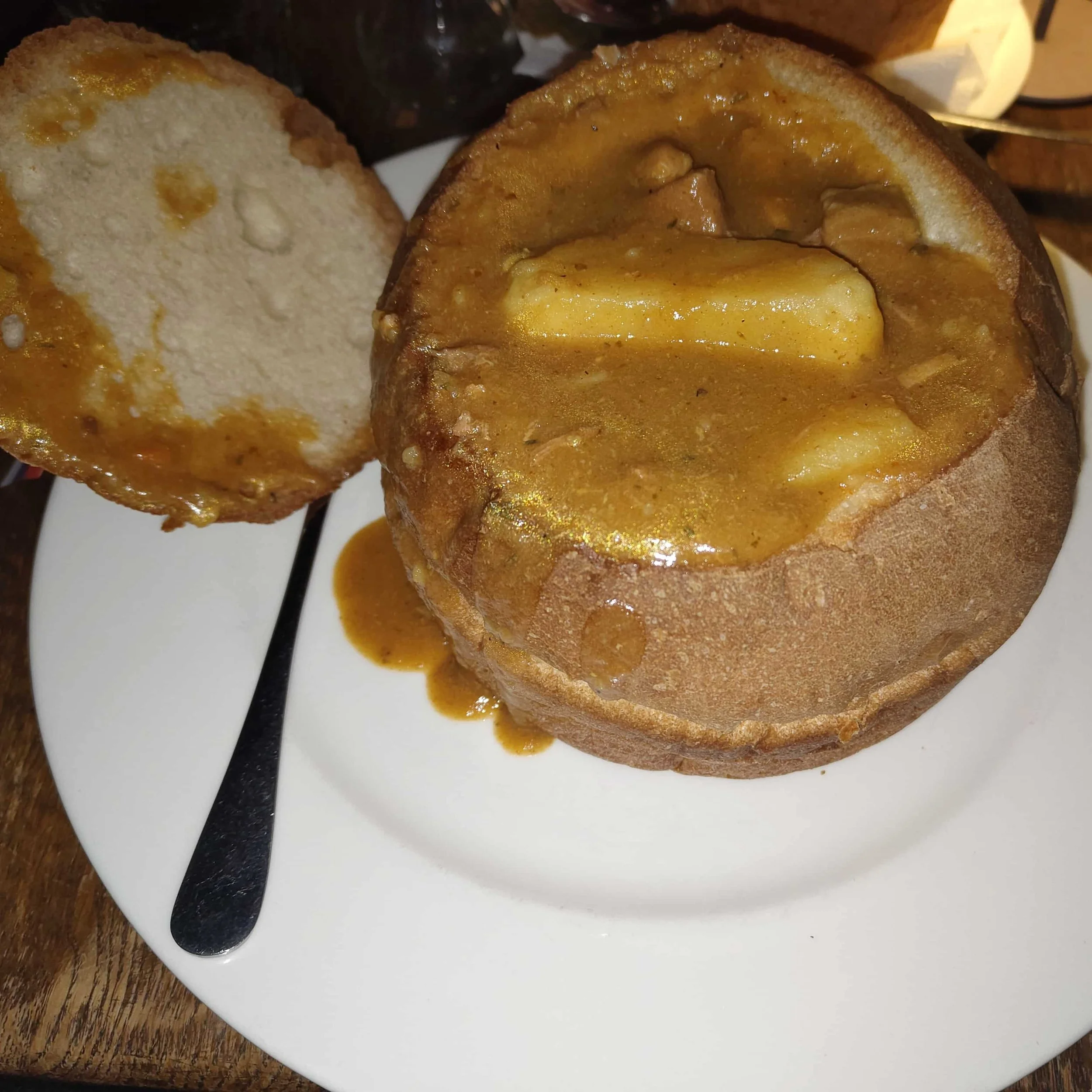
bograč
three meat stew
What is it?
Bograč is a traditional Slovenian stew from the Prekmurje region in the northeast of the country. It is traditionally made with three different types of meat, most commonly beef, pork and venison, slow cooked together with onions, potatoes and plenty of paprika. It is similar in style to Hungarian goulash and reflects the strong Hungarian influence on the cuisine of eastern Slovenia.
What is in it?
Bograč is usually made with beef, pork and venison, along with onions, potatoes, garlic, paprika, tomato and sometimes wine or bay leaves. The onions are cooked down slowly to create a thick, rich base before the meat and spices are added and simmered for several hours.
Where can I eat it?
Bograč is most closely associated with the Prekmurje region, although it can also be found in traditional restaurants elsewhere in Slovenia, especially those serving regional cuisine. In Ljubljana, Sokol is a good place to try bograč; it offers a large traditional menu, but be prepared for crowds, it is very touristy and almost always busy.
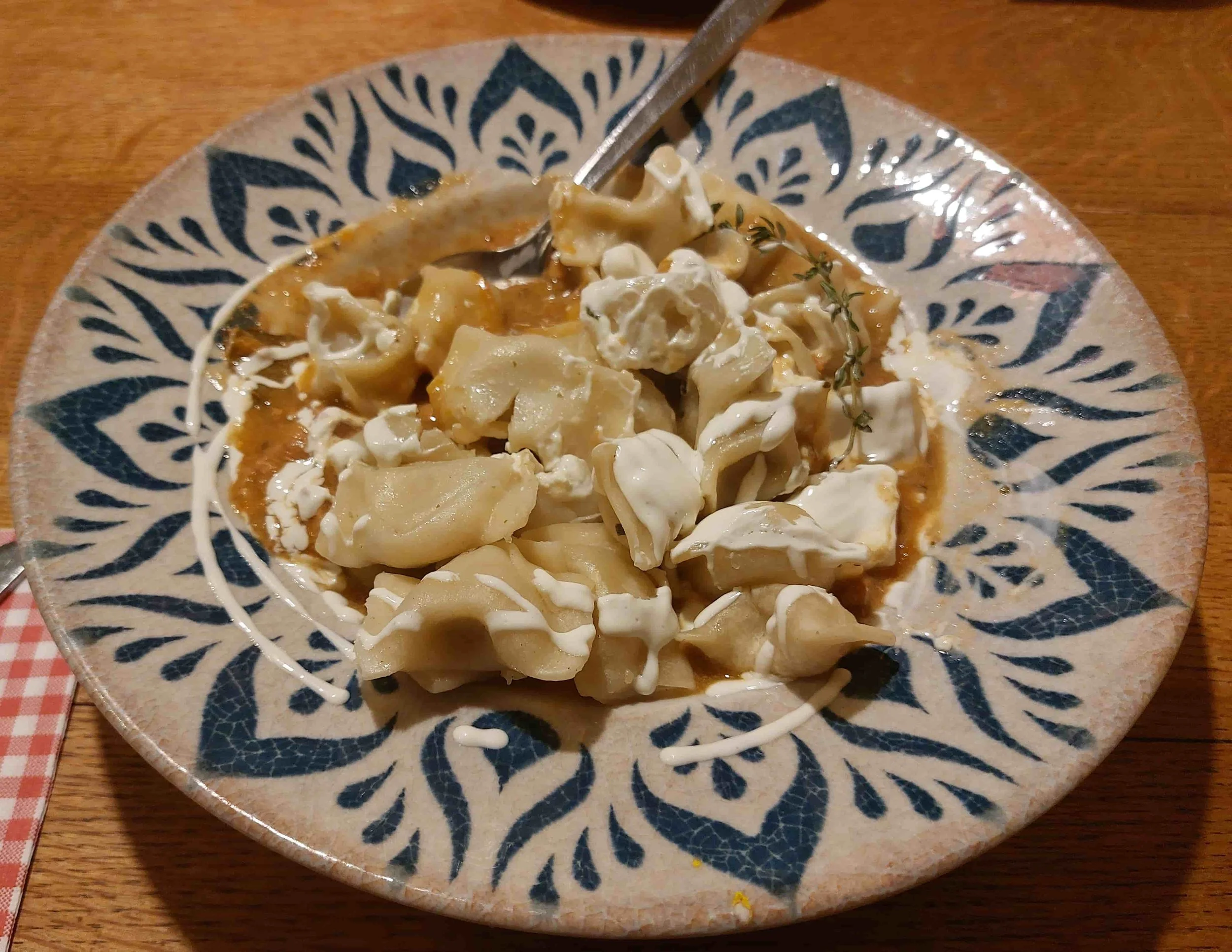
idrijski žlikrofi
potato dumplings
What is it?
Idrijski žlikrofi are small Slovenian dumplings stuffed with potato, often compared to potato ravioli. Originating from the mining town of Idrija, they are one of Slovenia’s most famous regional dishes and have protected status within the EU. The dumplings are traditionally served either as a side dish to meat or topped with a rich lamb or rabbit ragout known as bakalca.
What is in it?
The dough is made from flour, eggs, oil and water, while the filling traditionally consists of potatoes, onion, pork fat or bacon, and herbs such as marjoram or chives. They are shaped into small, hat like dumplings before being boiled.
Where can I eat it?
The best place to try them is naturally Idrija, where they are the town’s signature dish. They can also be found in traditional Slovenian restaurants elsewhere in the country, especially those focusing on regional cuisine. In Ljubljana, Sokol is a good place to try them; it has a large traditional menu, but be prepared for crowds
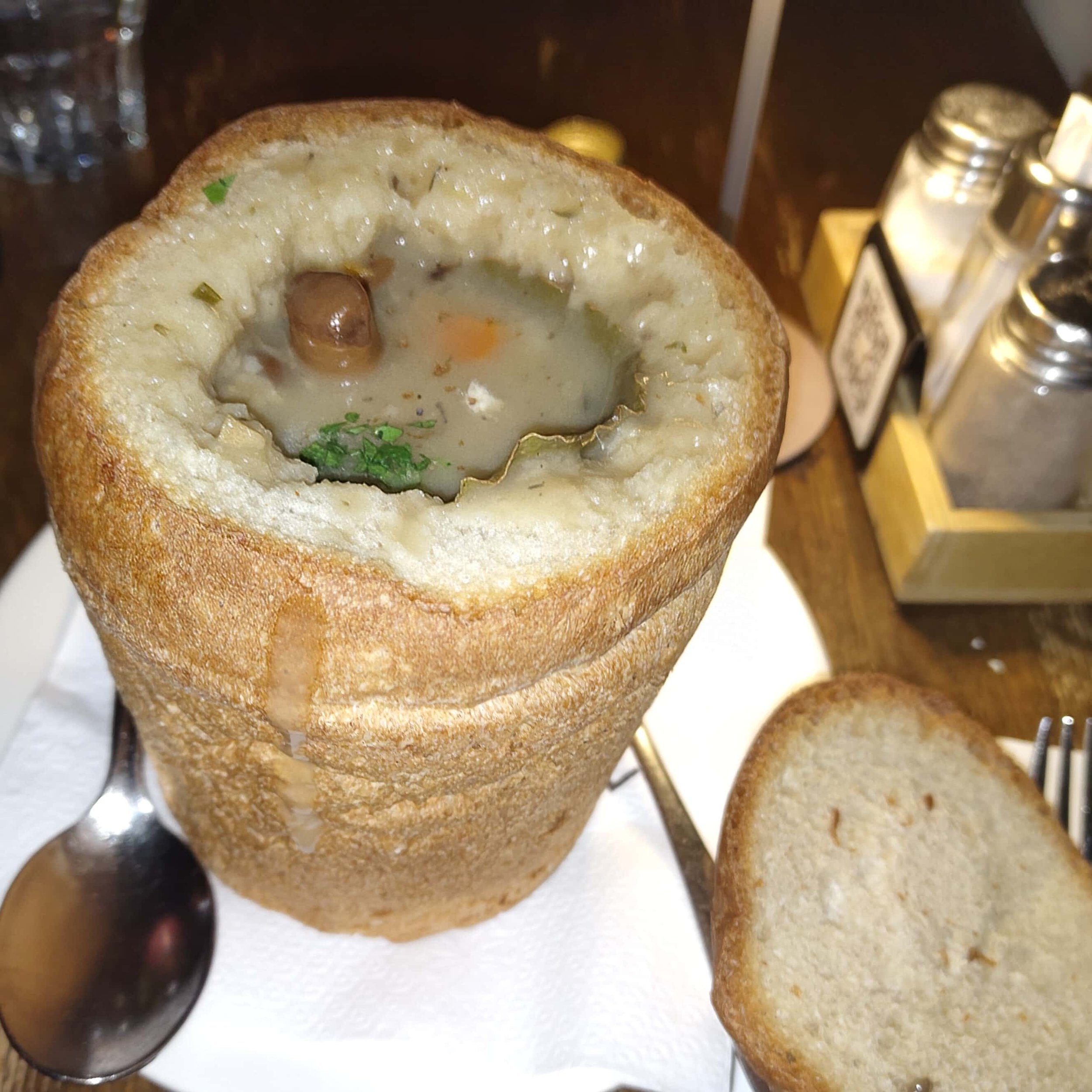
gobova juha
mushroom soup
What is it?
A traditional Slovenian mushroom soup, gobova juha is typically made with wild forest mushrooms and served as a starter or light meal. It is especially associated with Slovenia’s heavily forested landscapes, where mushroom foraging is a long standing culinary tradition. The soup is usually creamy and earthy, with a deep woodland flavour that reflects whichever mushrooms are in season.
What is in it?
Gobova juha is usually made with mushrooms, onions, garlic and stock, often thickened with flour and finished with cream or milk. Seasoning includes parsley, black pepper and bay leaf. The exact mushrooms used vary by season; common varieties include porcini (king bolete), chanterelles and other wild mushrooms depending on availability.
Where can I eat it?
You’ll find gobova juha widely across Slovenia, especially in traditional restaurants rather than on modern or international focused menus.
traditionally vegetarian.
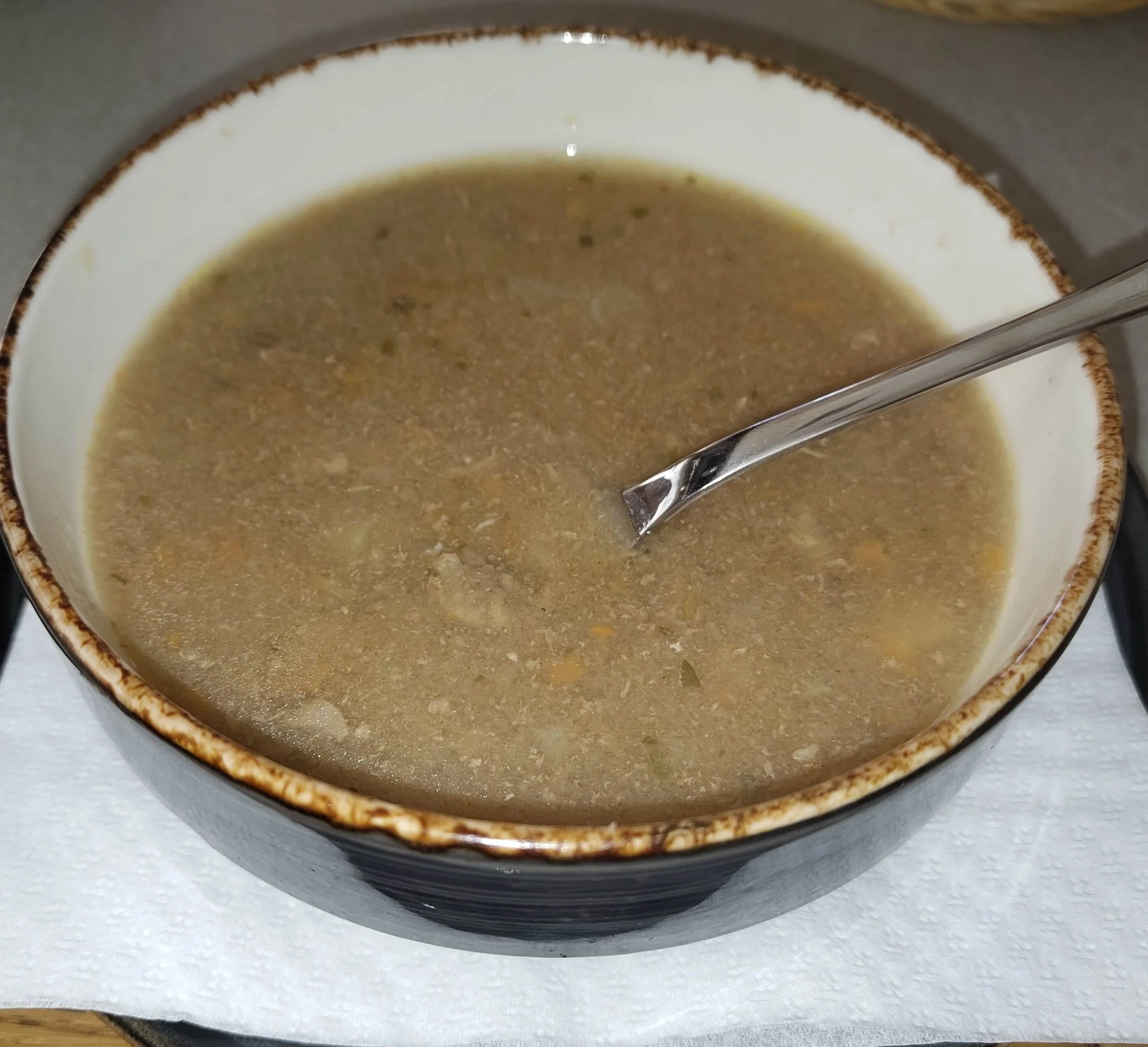
obara
meat stew
What is it?
Obara is a traditional Slovenian stew and one of the country’s classic rural comfort foods. It has been prepared for centuries and was historically associated with large gatherings, farm work and celebrations.
What is in it?
Obara is typically made with meat such as chicken, beef, pork or lamb, slowly cooked with onions, carrots, celery, parsley and garlic in a broth. The stew can be thickened slightly with flour and seasoned with herbs such as bay leaf and marjoram. Some regional versions may also include offal or different vegetables depending on availability.
Where can I eat it?
Obara can be found in traditional Slovenian restaurants throughout the country, particularly in places specialising in home-style cuisine, though we found it to be less common than dishes such as bograč, ričet or jota.
Dairy free.
Related food guides
While Montenegrin cuisine has its own regional specialities, it shares many traditional dishes with nearby Bosnia and Herzegovina. For a deeper look at some of these shared Balkan classics, see our Bosnian food guide.
Ingredients listed reflect common or typical components of this dish as served in restaurants or street‑food vendors. Variations by region, season, or vendor are common. This information is provided for general reference only. If you have dietary restrictions or allergies, please verify ingredient details independently. We assume no liability for accuracy or outcomes.
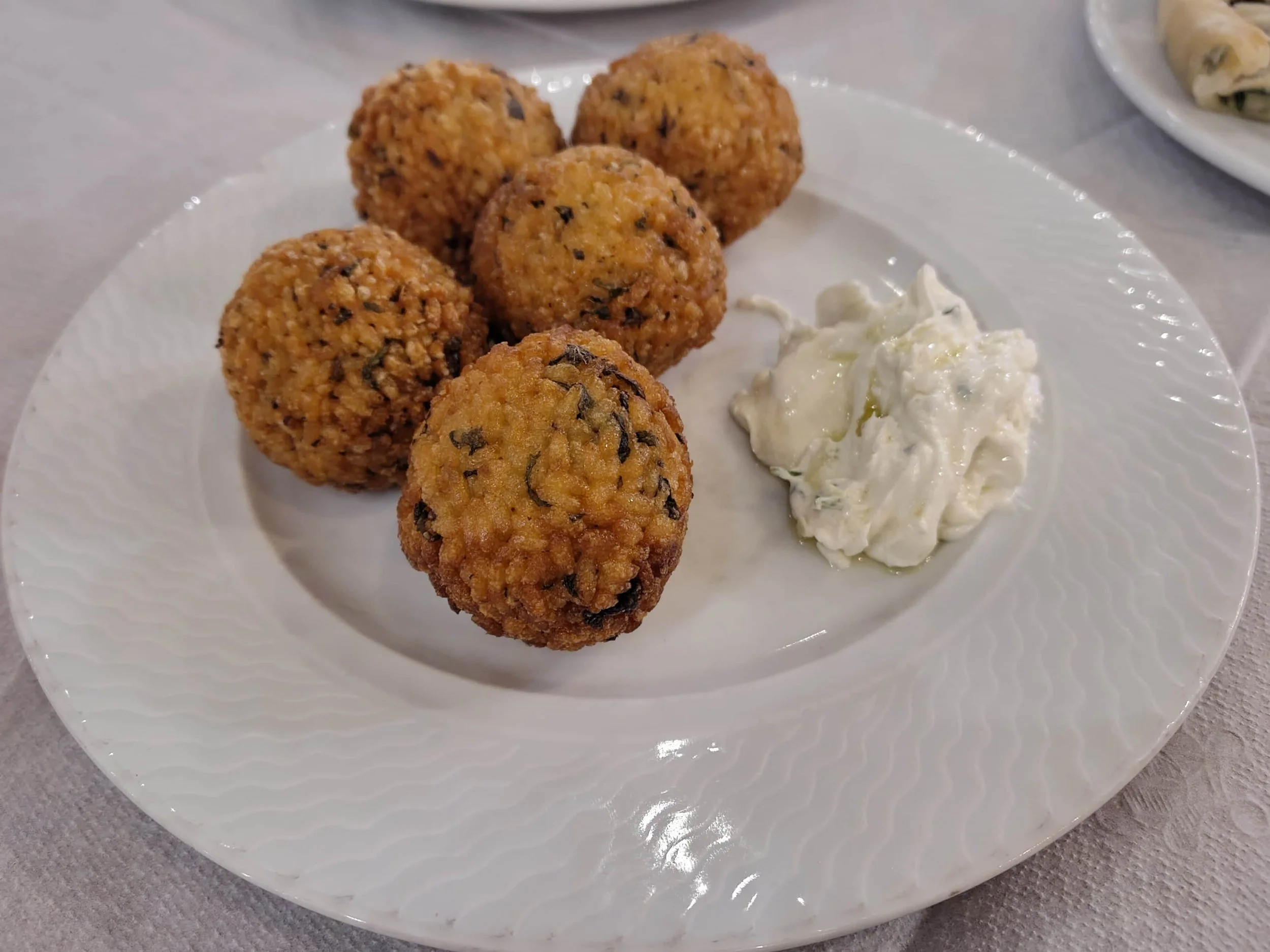
all the foods - Albania
Discover all the traditional Albanian dishes we tried, from qifqi and fërgesë to tavë kosi and more
Here you will find a list of all the traditional cuisine we tried in Albania.
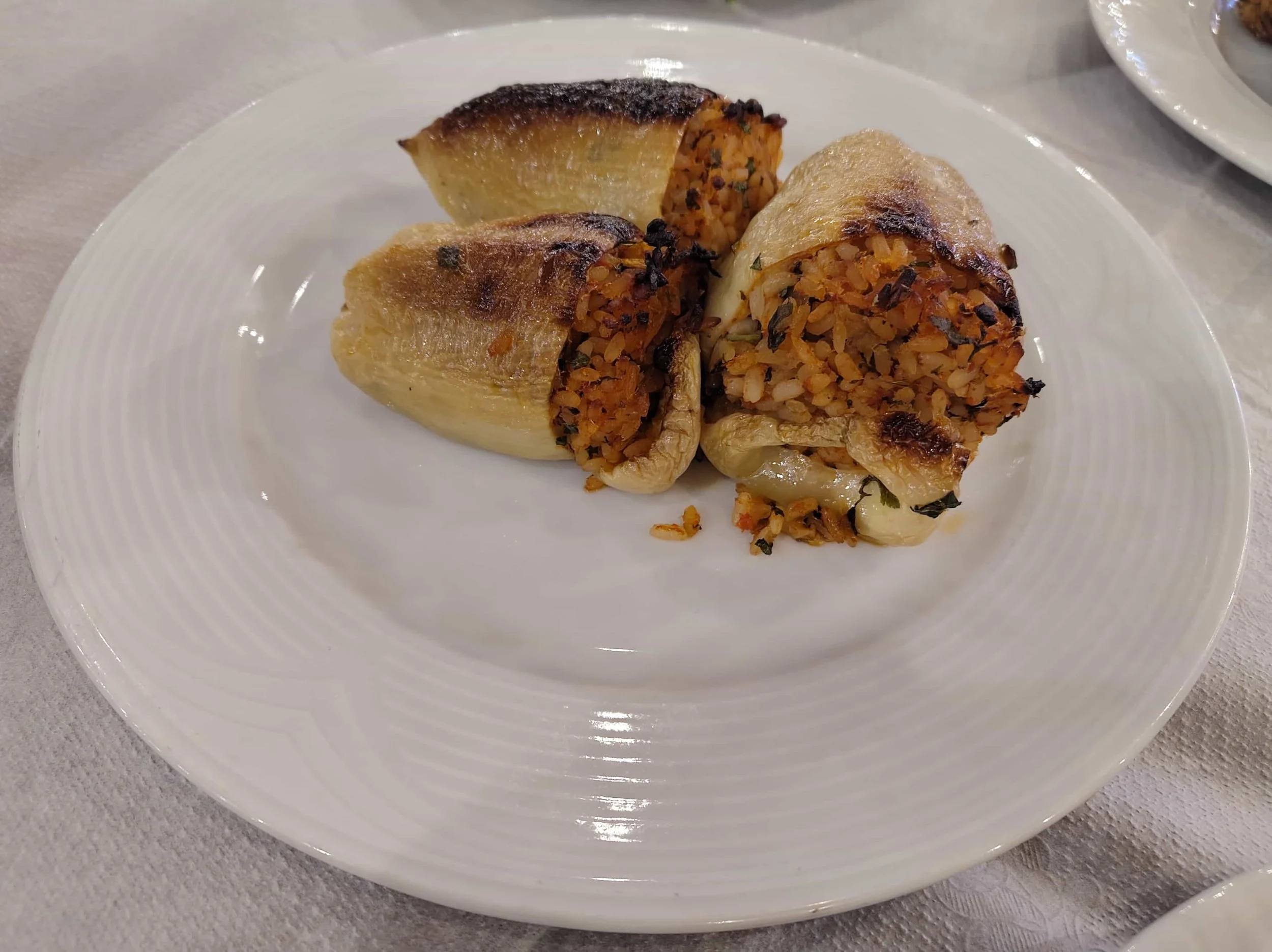
speca të mbushur
stuffed peppers
What is it?
Speca të mbushur are Albanian stuffed peppers, a classic home style dish found throughout the country. Sweet peppers are filled with a savoury mixture and then either baked in the oven or simmered gently in a light tomato sauce, depending on the recipe. They are often served with bread or, occasionally, mashed potatoes.
What is in it?
The peppers are usually filled with a mixture of rice, onion, garlic, herbs such as parsley, and seasoning. Many versions also include minced meat, typically beef or a beef and pork blend, mixed with the rice. Vegetarian versions are also very common in Albania, where the filling consists of rice, vegetables, herbs and olive oil without any meat.
Where can I eat it?
Speca të mbushur are widely served in traditional Albanian restaurants and family run eateries. We had an excellent vegetarian baked version at Odas Garden in Tirana.
Vegan versions common, gluten free.
byrek
filo pie
What is it?
Byrek is a traditional Albanian savoury pastry made with thin layers of filo pastry and a variety of fillings. It is one of the most popular everyday foods in Albania and is commonly eaten for breakfast, lunch or as a snack, usually served hot from bakeries.
What is in it?
Byrek is made from layers of filo pastry filled with ingredients such as spinach, cheese, potatoes or minced meat, usually seasoned with salt, pepper and sometimes herbs. The most common Albanian varieties include spinach (byrek me spinaq), cheese (byrek me djathë) and meat (byrek me mish).
Where can I eat it?
Nearly every bakery in Albania sells byrek, often in several different versions. It is one of the easiest traditional foods to find anywhere in the country.
Vegetarian and dairy free versions available.
sarma
stuffed cabbage rolls
What is it?
A traditional Albanian dish of stuffed leaves, most commonly cabbage leaves filled with a mixture of rice and meat. It is especially associated with the colder months, when pickled cabbage leaves are used, giving the dish a slightly tangy flavour. A closely related dish is japrak, which uses vine leaves instead of cabbage and is more seasonal, usually appearing in warmer months when vine leaves are fresh.
What is in it?
Sarma is typically made with cabbage leaves, often pickled, filled with minced meat, usually beef, pork or a mix, rice, onion, herbs and spices such as paprika and pepper. Vegetarian versions without meat are also common.
Where can I eat it?
Sarma is fairly common in Albania, especially in traditional restaurants like Odas Garden which also serve Japrak in season.
Vegetarian versions available, gluten & dairy free.
patëllxhanë të mbushur
stuffed aubergines
What is it?
A traditional Albanian dish of stuffed aubergines, closely related to the Ottoman dish imam bayıldı. Whole aubergines are filled with vegetables and then baked in olive oil. The classic version is vegetarian and highlights slow cooked vegetables and olive oil, though meat filled variations also exist and are sometimes served as a main course.
What is in it?
Typically made with aubergines, onions, tomatoes, garlic and olive oil. In some versions, minced meat may be added.
Where can I eat it?
Found in traditional Albanian restaurants and home-style places, particularly those serving a range of cooked vegetable dishes such as Odas Garden in Tirana.
Traditionally vegan, dairy & gluten free.
qofte
minced meat cylinders
What is it?
A traditional Albanian meat dish, usually translated as meatballs, though they are often shaped more like small sausages. They can be grilled or fried. The name comes from a wider Ottoman and Balkan tradition, so similar versions can be found across the region. They are typically simply seasoned and served hot.
What is in it?
Usually made with minced meat, such as beef, lamb or a mix, along with onion, garlic and herbs such as parsley or oregano. Some versions also include breadcrumbs and egg. They are often served with bread, raw onion or salad, and sometimes with yoghurt based sauces on the side.
Where can I eat it?
Qofte are very common across Albania, especially in grill houses and traditional restaurants. They are one of the easiest and most widely available traditional dishes to find.
Dairy free.
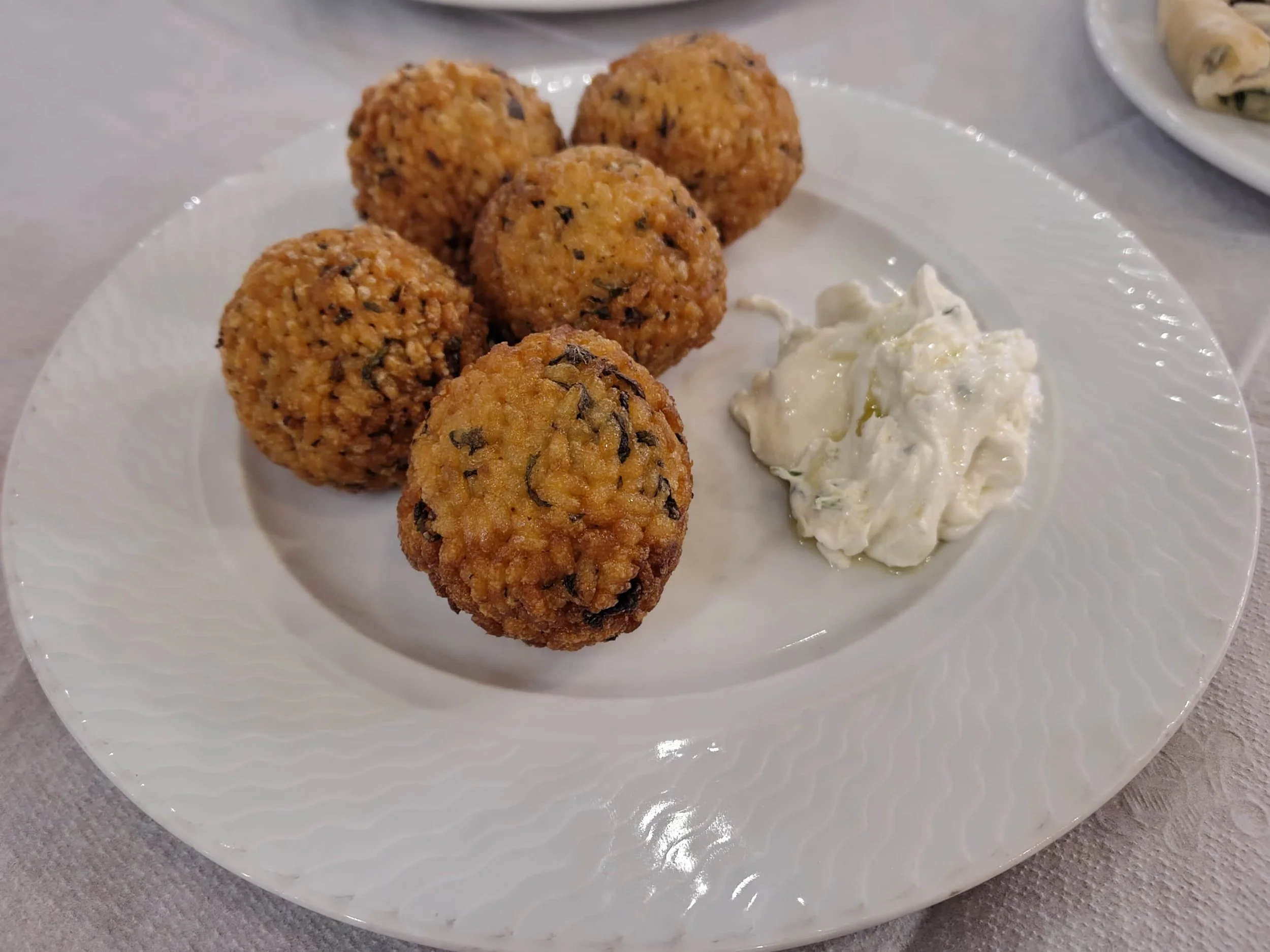
qifqi
rice balls
What is it?
Qifqi are traditional Albanian rice balls originating from the historic city of Gjirokastër in southern Albania. Made from seasoned rice and cooked in a moulded pan, they have a soft interior with a slightly crisp exterior. They are typically served as a starter, snack or side dish, and are a good option for vegetarians in a region where many traditional dishes are meat heavy.
What is in it?
Qifqi are made from cooked rice mixed with eggs, onion, fresh mint and black pepper, sometimes with a little olive oil. Some versions may also include parsley or other herbs.
Where can I eat it?
Gjirokastër is naturally the best place to try them, where they are considered a local speciality and appear on many traditional menus. If you are elsewhere in Albania, they do occasionally show up at traditional restaurants. We had a good version at Odas Garden in Tirana.
Vegetarian, dairy & gluten free.
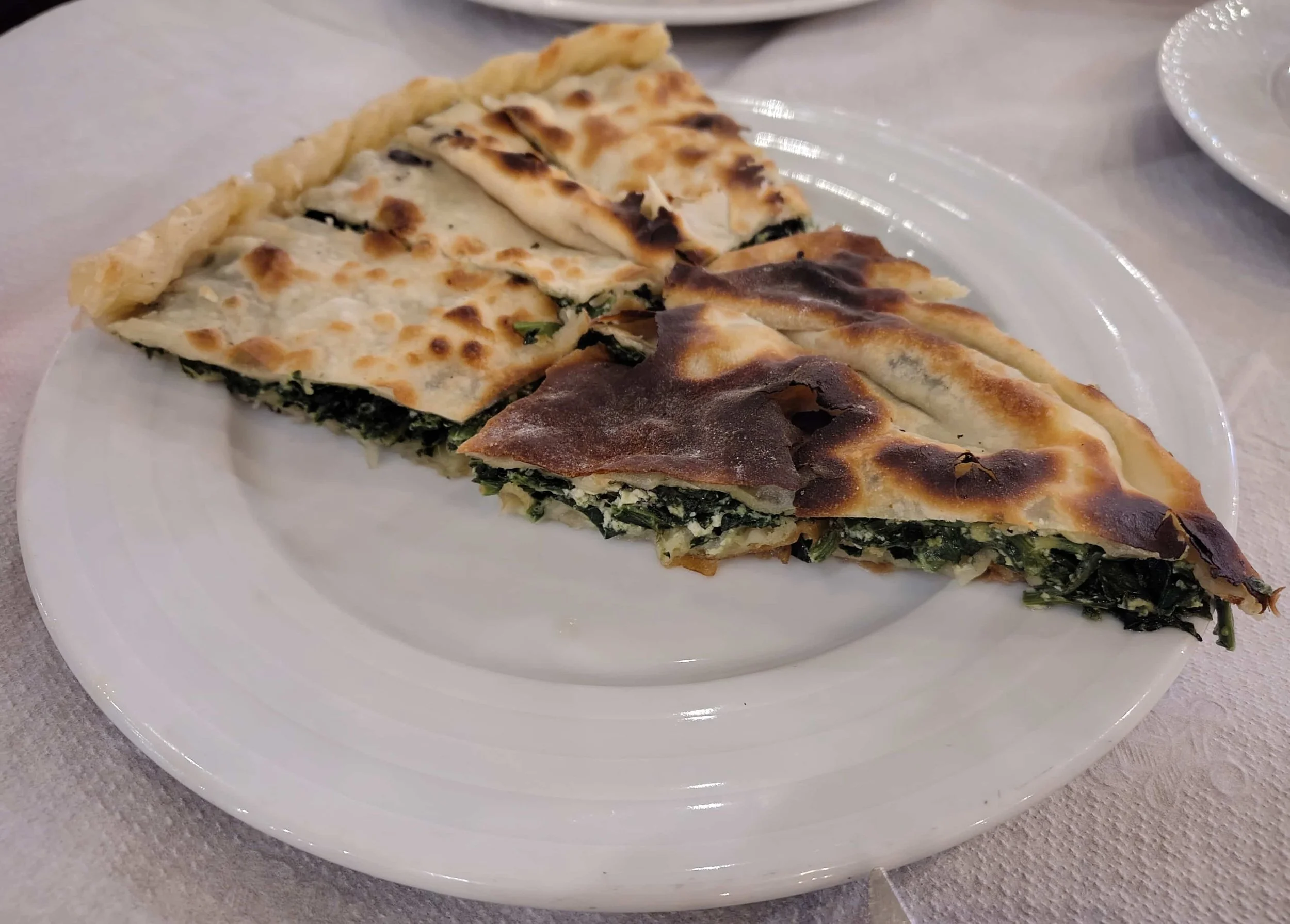
lakror
savoury pie
What is it?
Lakror is a traditional Albanian savoury pie, similar to byrek, made from thin layers of dough and baked. It can be filled with a wide variety of ingredients, with spinach and leek among the most common fillings, although versions with cheese, herbs, pumpkin or meat are also popular. It is particularly associated with the city of Korçë, where it is considered a regional speciality.
What is in it?
Lakror is made from thin sheets of dough layered with fillings such as spinach, leek, herbs, cheese or minced meat, usually seasoned with salt, pepper and sometimes olive oil. The dough is traditionally prepared from flour, water and a little oil or salt.
Where can I eat it?
Lakror is common in traditional Albanian restaurants and bakeries, especially in southern Albania. It is particularly famous in Korçë, but you can also find it in other cities.
Vegetarian versions available, dairy free versions available.
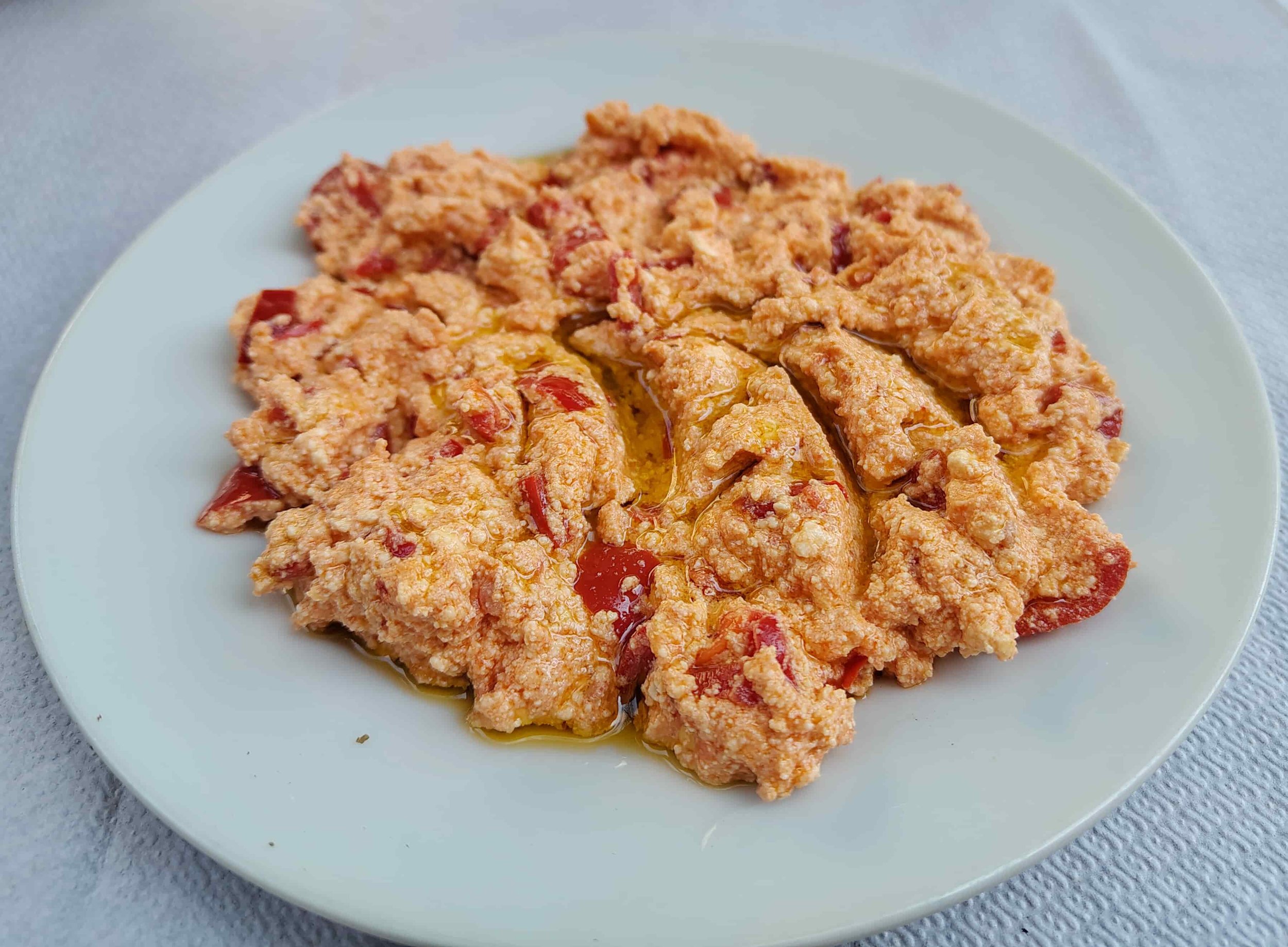
fërgesë
baked pepper & cheese
What is it?
A traditional Albanian dish from Tirana, typically made with peppers, tomatoes and a soft cheese, baked together until thick. It can be served warm or at room temperature and is usually eaten with bread. While it is sometimes treated as a side dish, it is substantial enough to serve as a light main, especially in meat versions.
There are two main styles:
Vegetarian fërgesë, the classic Tirana version.
Fërgesë with meat, usually made with liver or veal and more commonly served as a main.
What is in it?
The traditional version typically includes peppers, usually green or red, tomatoes, onions, gjizë, a soft Albanian curd cheese similar to ricotta, and butter or olive oil. Meat versions may include liver or veal.
Where can I eat it?
It is common across Albania, especially in traditional restaurants in Tirana.
Classic version is vegetarian, gluten free.
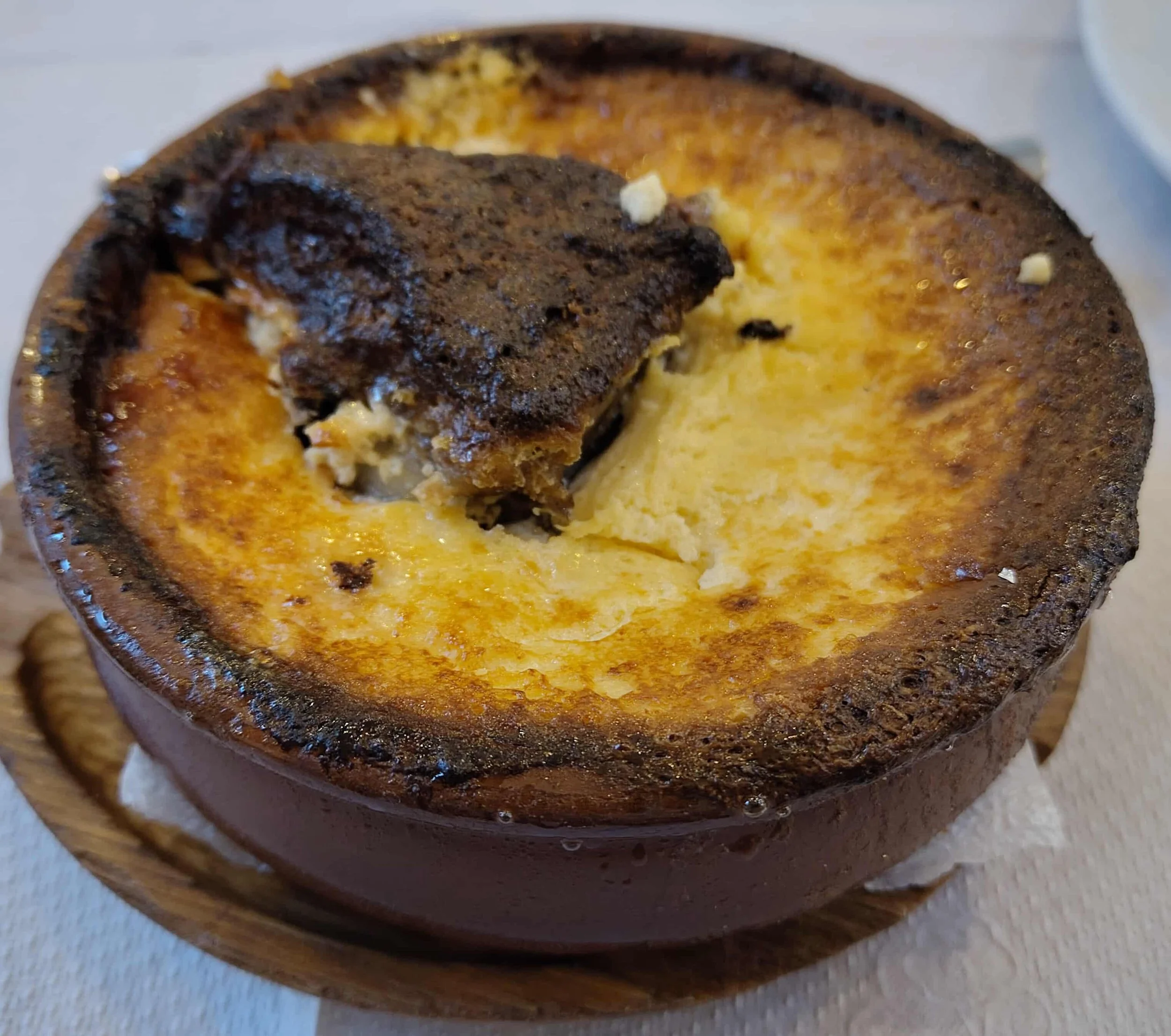
tavë kosi
baked lamb in yoghurt
What is it?
A classic Albanian baked dish made with lamb and yoghurt, often considered the country’s national dish. It combines tender meat with a tangy, custard like topping. Originating from Elbasan, where it’s sometimes called Tavë Elbasani, it is a staple of traditional Albanian cuisine.
What is in it?
Typically made with lamb, sometimes substituted with veal, yoghurt, eggs, rice, butter and garlic. Some recipes use flour instead of rice.
Where can I eat it?
Very common across Albania in traditional restaurants, often listed clearly as Tavë Kosi or Tavë Elbasani on menus. It is one of the easiest traditional dishes to find.
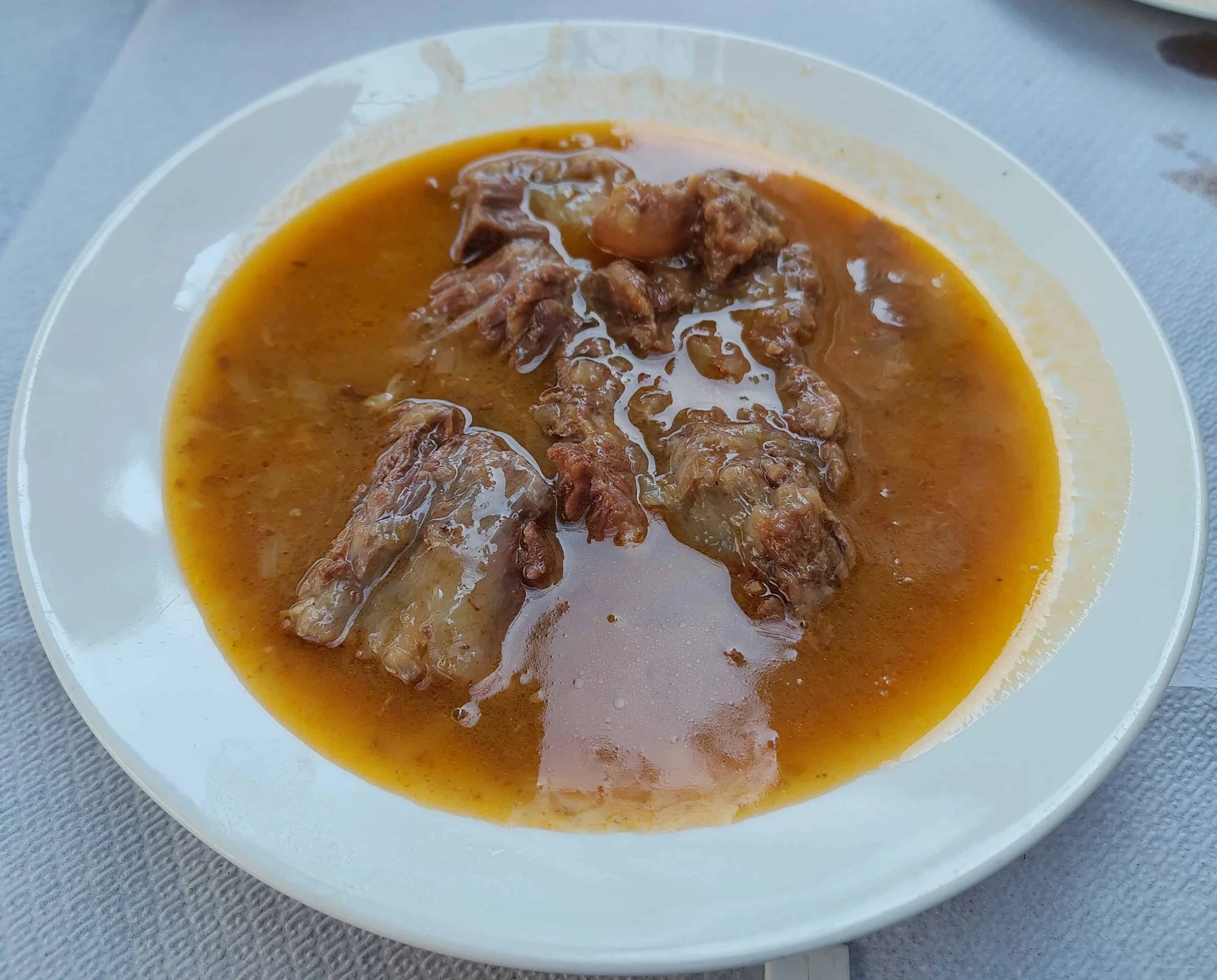
tasqebap
meat stew
What is it?
A traditional Albanian slow cooked meat stew. The name tasqebap (from Ottoman tas kebabı) refers to a style of braised meat cooked gently until tender. It is typically made with chunks of meat rather than minced, simmered long enough that it becomes soft and rich, giving the dish a strong, meaty flavour. It is a classic example of Ottoman influenced Balkan cooking.
What is in it?
Usually made with beef or lamb, onions, tomatoes or tomato paste, garlic, olive oil or fat, often flavoured with paprika, black pepper and bay leaf.
Where can I eat it?
You can find tasqebap in traditional Albanian restaurants. It is not as common as something like Tavë Kosi, but you should be able to find it, such as at Tradita te Meri in Tirana.
Dairy & gluten free.
Ingredients listed reflect common or typical components of this dish as served in restaurants or street‑food vendors. Variations by region, season, or vendor are common. This information is provided for general reference only. If you have dietary restrictions or allergies, please verify ingredient details independently. We assume no liability for accuracy or outcomes.
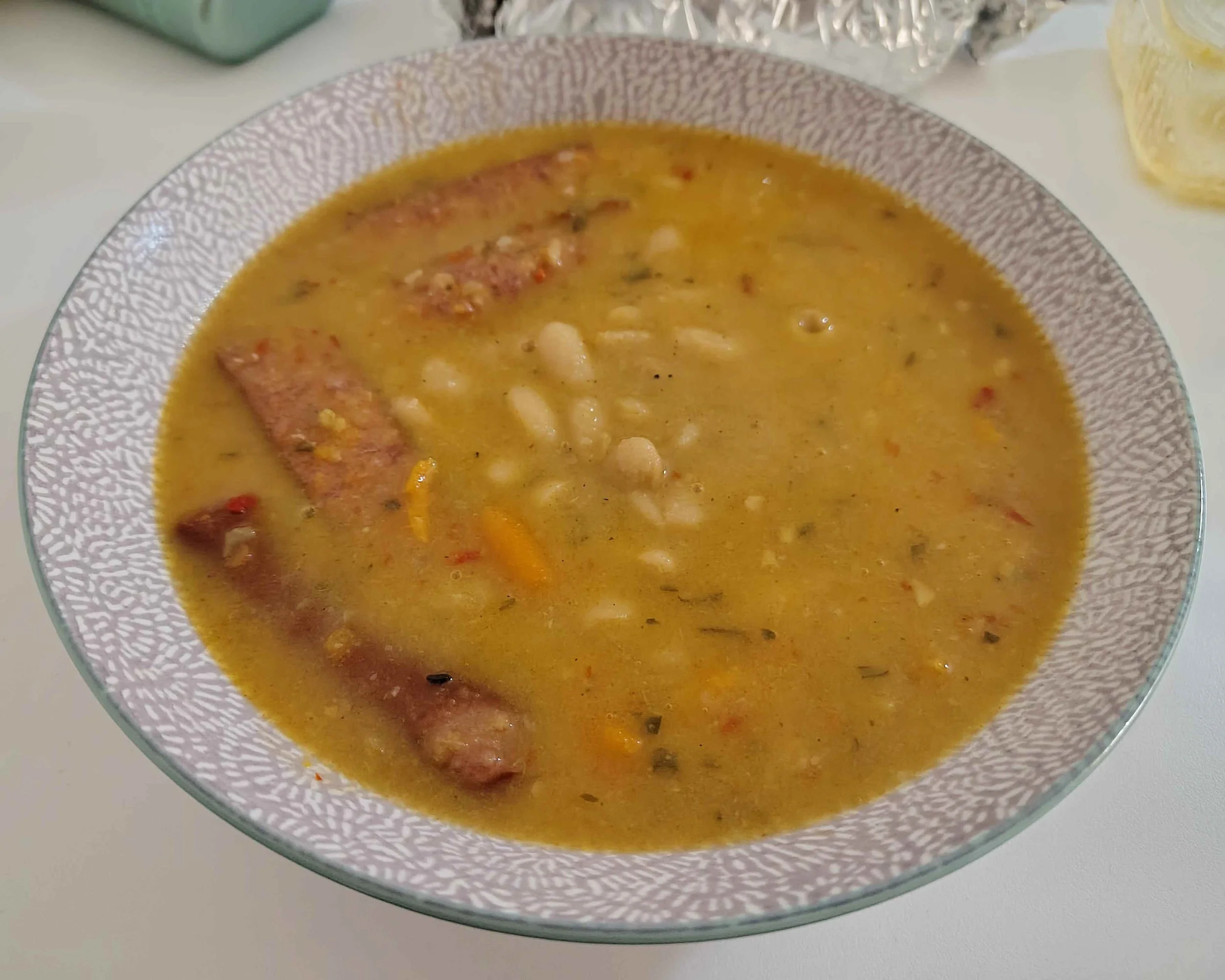
all the foods - Montenegro
Discover all the traditional Montenegrin dishes we tried, from Njeguški steak and Podgorički popeci to Ispod sača and more
Here you will find a list of all the traditional cuisine we tried in Montenegro.
pasulj
bean stew
What is it?
A traditional Balkan bean stew made with white beans and slow cooked. The beans are typically soaked overnight, then simmered for a long time with spices, and the dish takes on a deeper, smoky flavour when meat is added.
What is in it?
It usually includes white beans, onion, garlic, paprika and oil. It often also includes carrots and bay leaf, and versions with smoked meat or sausage are common.
Where can I eat it?
Fairly common in Montenegro, though not as consistently found on menus as grilled meats. You’re more likely to find it in traditional, home style restaurants in more local, non touristy places. We had a version at Desetka in Podgorica that included sausage.
Dairy free.
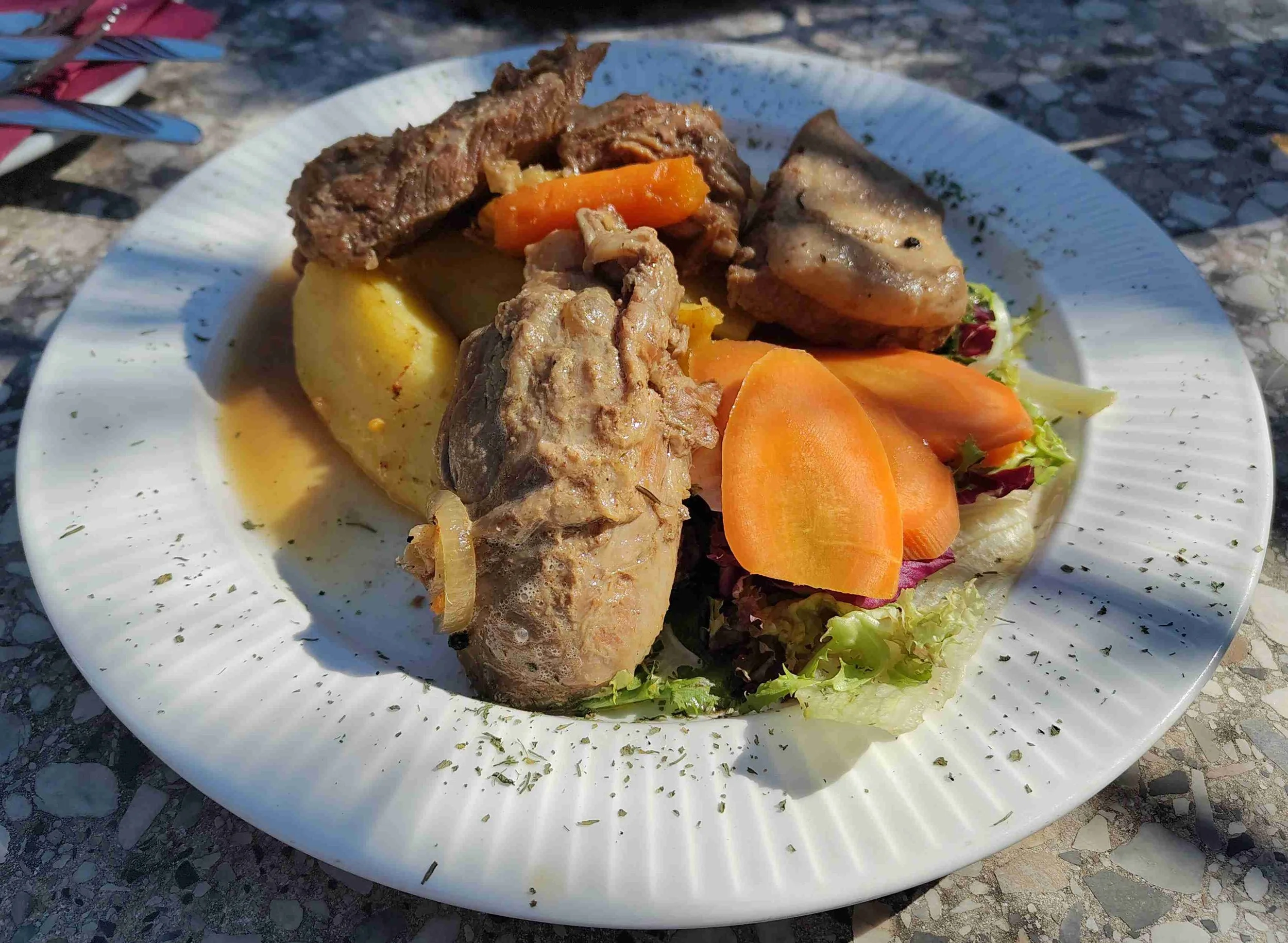
ispod sača
tender meat & veg
What is it?
Ispod sača literally translates to “under the bell” and refers to a traditional Balkan cooking method rather than a single fixed recipe. Food is placed in a shallow metal or clay pan, covered with a heavy domed lid (called a sač), and hot coals or embers are piled on top. This creates slow, even heat from above and below, producing incredibly tender meat while the vegetables roast gently in the juices. The method is commonly used for lamb, veal, goat, or chicken.
What is in it?
The meat is the star of the dish, most traditionally lamb, although veal, goat, or chicken are also common. The meat is usually cooked together with potatoes, onion, garlic, and sometimes carrots or peppers, with simple seasoning such as salt, pepper, and a little oil.
Where can I eat it?
You’ll find dishes cooked ispod sača at many traditional Montenegrin restaurants, although they are sometimes prepared in limited quantities because the cooking process takes several hours. Konoba Lanterna is a well known place to try it in Podgorica where they serve a version made with veal.
Dairy and gluten free.
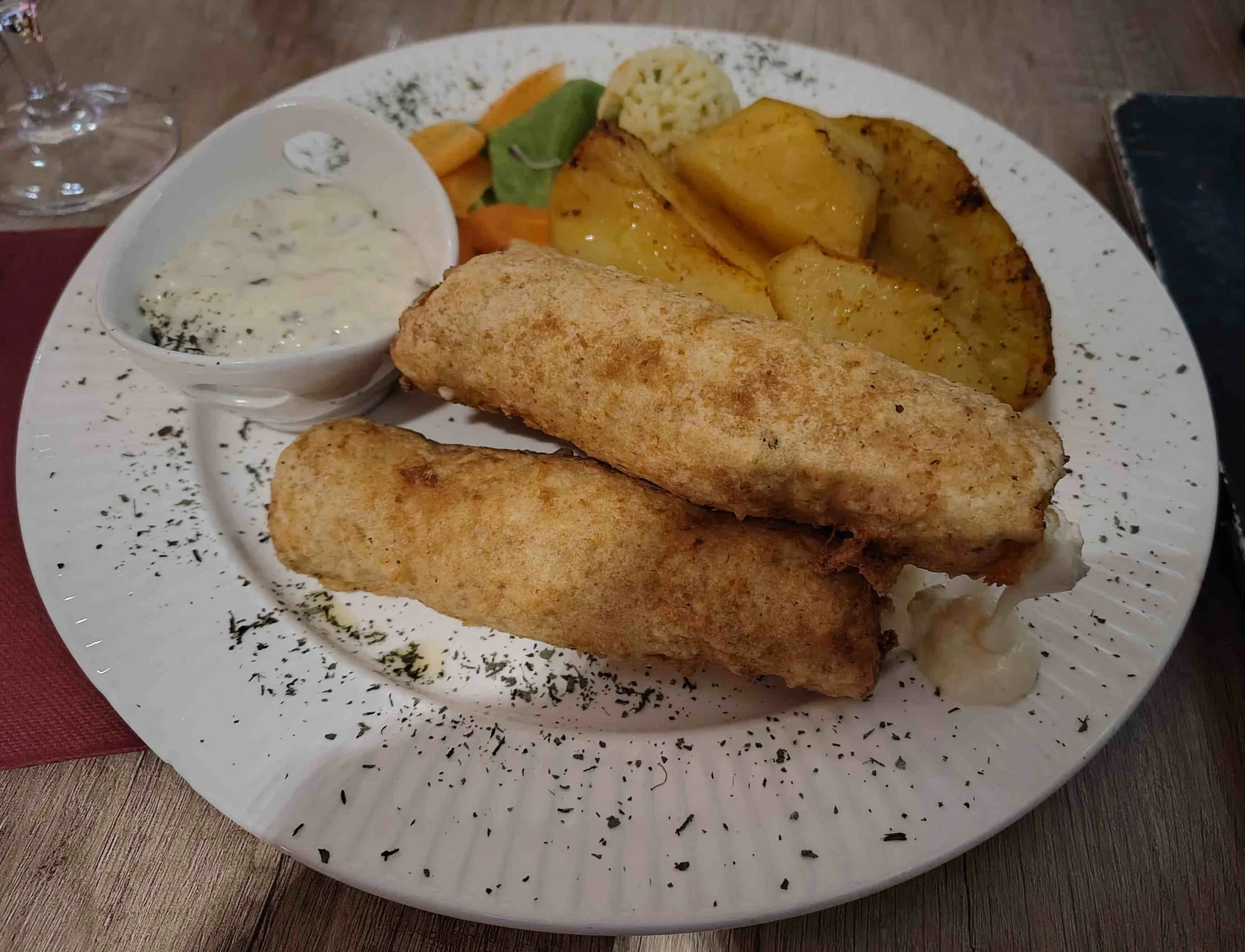
podgorički popeci
stuffed, breaded meat
What is it?
Podgorički popeci, often simply called popeci, are a traditional dish from Podgorica, Montenegro. They are similar to cordon bleu: thin slices of meat are rolled around cured ham and cheese, then breaded and fried. The filling most commonly uses Njeguški pršut, Montenegro’s famous smoked prosciutto.
What is in it?
Popeci are usually made from thinly sliced veal rolled around Njeguški pršut and cheese, often a local semi hard cheese such as Njeguški sir. The rolls are then coated in flour, egg and breadcrumbs, and deep fried. They are typically served with fried potatoes, fries or roasted vegetables, sometimes with a simple salad.
Where can I eat it?
Since the dish originates in Podgorica, the capital is one of the best places to try it, and it appears on the menus of many traditional Montenegrin restaurants in the city and surrounding area.
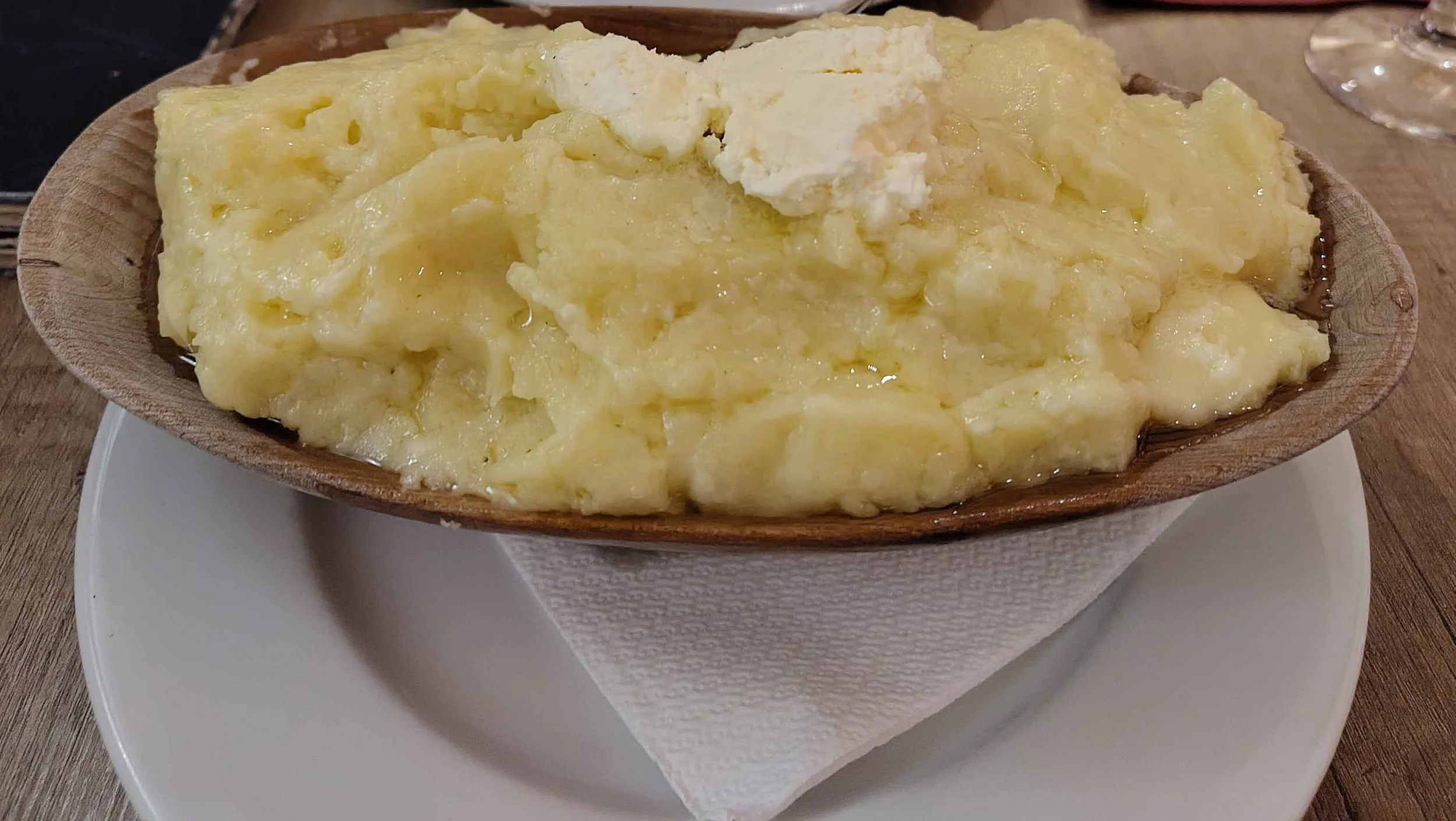
kačamak
cheesy cornmeal mash
What is it?
Kačamak is a traditional Montenegrin comfort dish made from cornmeal cooked with potatoes and mixed with cheese, creating a thick, very filling mash. It is especially popular in the mountainous regions of the country and is often eaten for breakfast or as a side dish. It is simple peasant food that has become a national staple.
What is in it?
Kačamak is made by cooking cornmeal together with potatoes in salted water until soft, then mashing them together. The mixture is typically enriched with local cheeses such as kajmak and white brined cheese, along with butter or oil.
Where can I eat it?
Kačamak is fairly common on the menus of traditional Montenegrin restaurants and konobas. We had a very good one as a starter at Konoba Lanterna in the capital.
Vegetarian & gluten free.
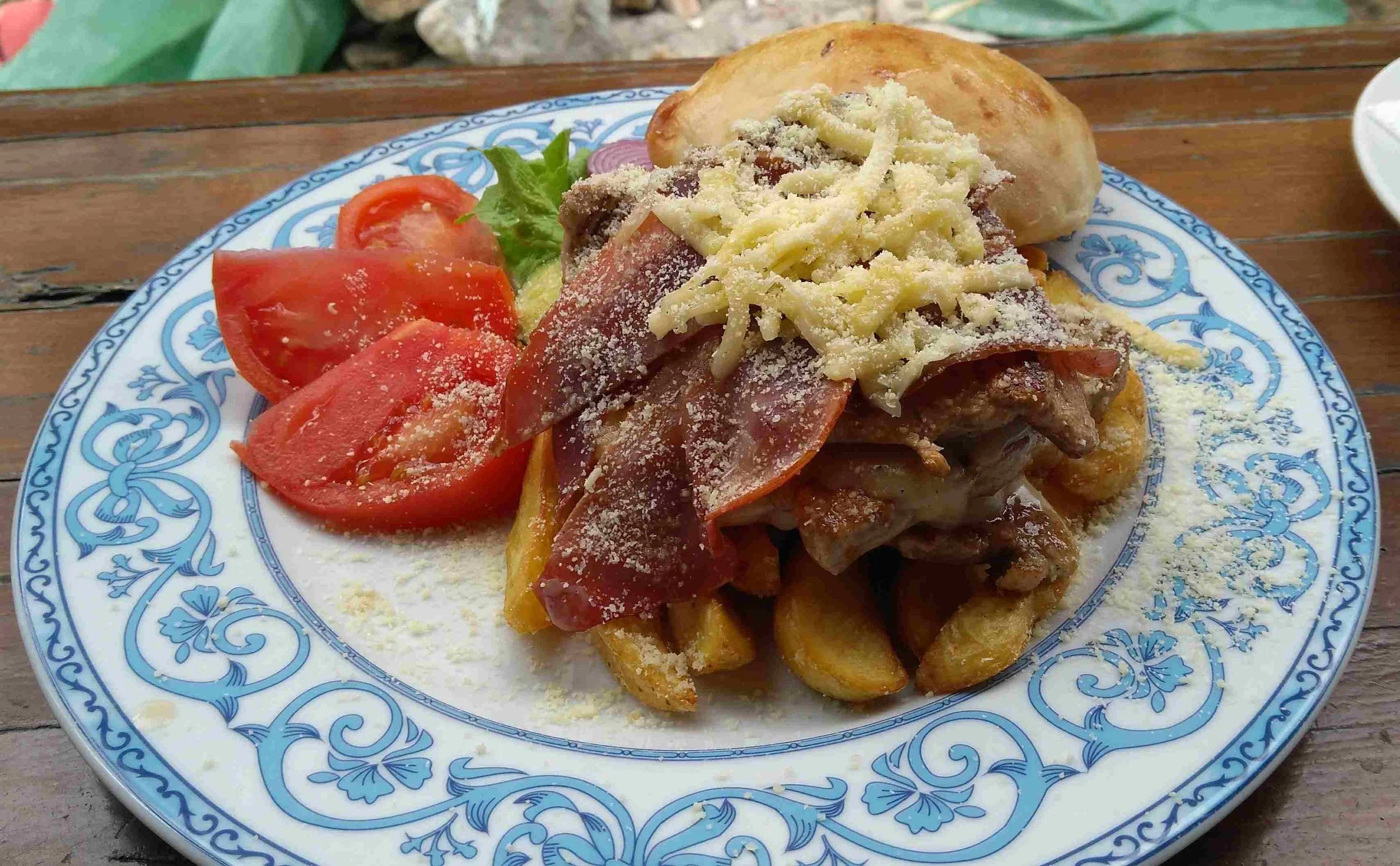
njeguski steak
Ham stuffed schnitzel
What is it?
A Montenegrin dish from the Njeguši area, Njeguški steak is a veal or pork cutlet stuffed with Njeguški pršut and cheese, then breaded or fried and sometimes finished with more cheese on top. It definitely couldn’t be called healthy but it is rather satisfying, its usually served with fries and salad.
What is in it?
Thinly sliced pork or veal, stuffed with Njeguški sir and Njeguški pršut, then coated and fried. It is often served with fries, potatoes or salad, and some versions add extra cheese or a creamy sauce on top.
Where can I eat it?
It is popular in tourist-friendly places such as Kotor, but you can also find it in Podgorica and in some more traditional restaurants across Montenegro.
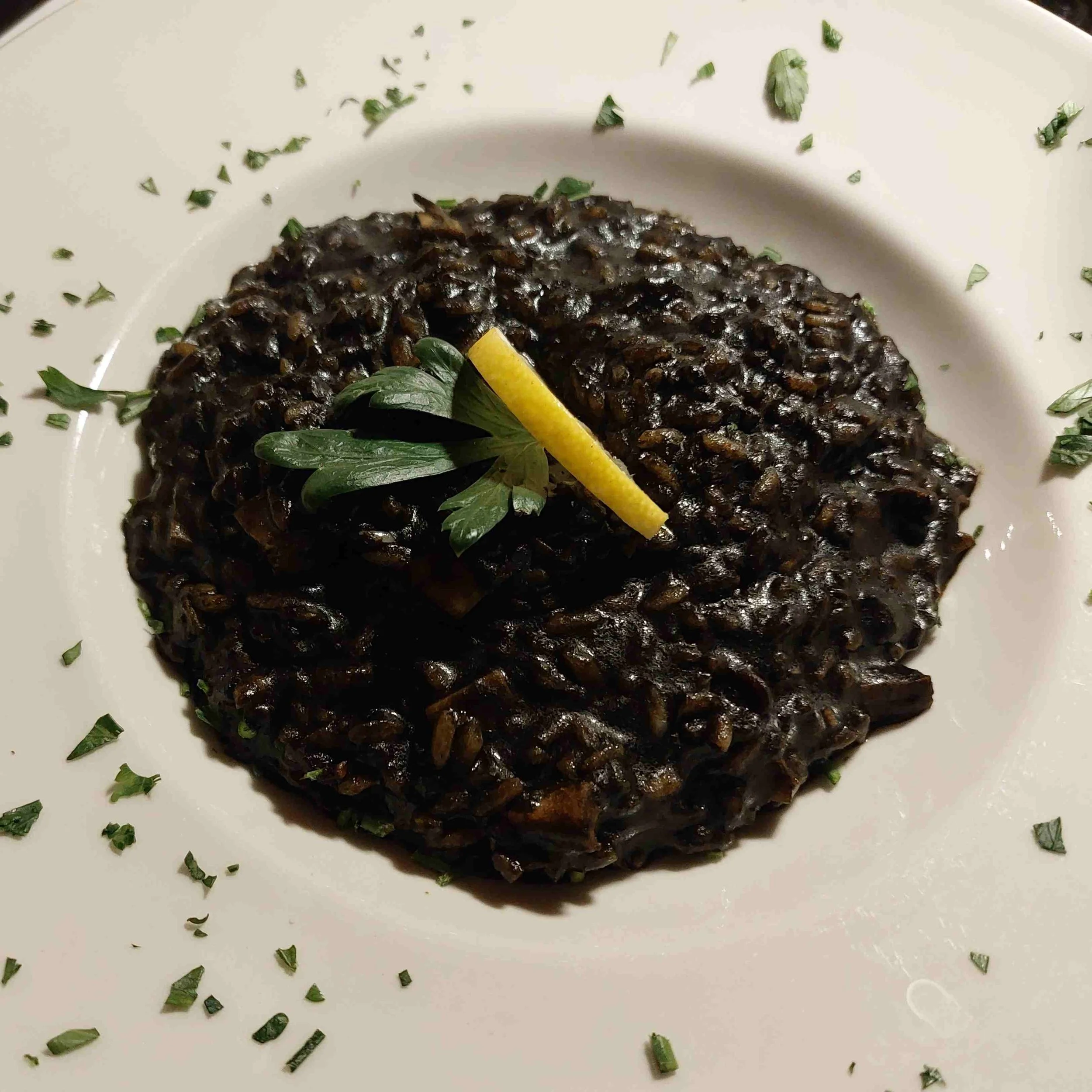
crni rižot
squid ink risotto
What is it?
Crni rižot is a squid ink risotto with a striking black colour and a briny seafood flavour. It is especially popular in coastal Montenegro, and you will also find it in coastal Croatia. A word of warning: it can leave your teeth black, so it may not be the best dinner choice for a first date.
What is in it?
Risotto, squid or cuttlefish, including the ink, along with olive oil, onion, garlic, wine, stock and parsley. Some versions also include other shellfish.
Where can I eat it?
It is fairly easy to find in coastal regions such as Kotor in Montenegro, where it appears on seafood restaurant menus.
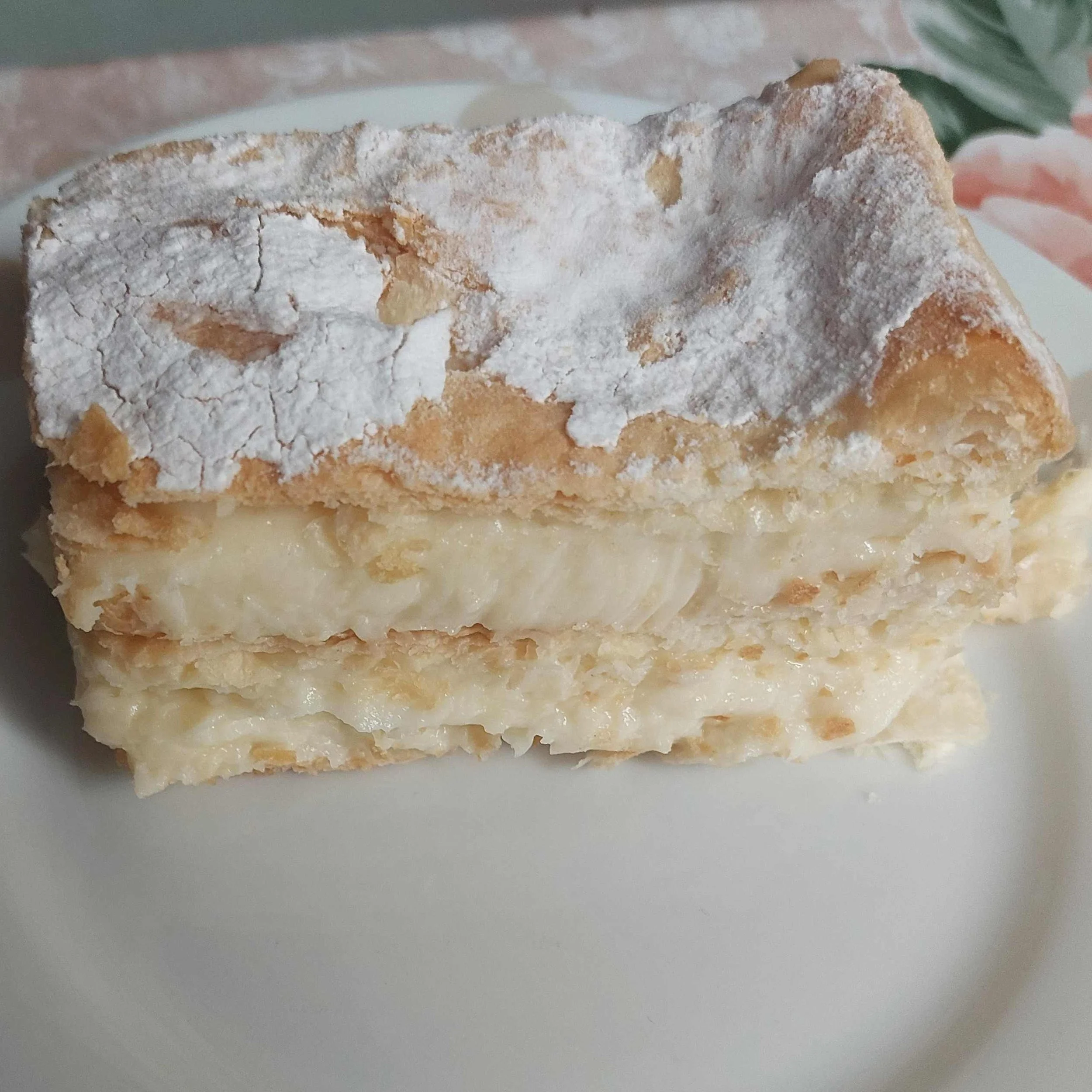
krempita kotorska
custard slice
What is it?
A rich and decadent dessert, Krempita Kotorska is a vanilla custard and Chantilly cream slice. It is a local Kotor variation of the wider Balkan krempita/kremšnita family, which is enjoyed across the region and Central Europe. It consists of layers of custard and cream sandwiched between flaky puff pastry, making it creamy, sweet and well worth seeking out.
What is in it?
Flaky puff pastry, a thick vanilla custard layer and Chantilly cream, which is lightly sweetened whipped cream.
Where can I eat it?
This dessert is widely available in bakeries, cafés and restaurants across Montenegro, and is especially associated with Kotor. It is a classic treat to enjoy with coffee or as a dessert after a meal.
Vegetarian
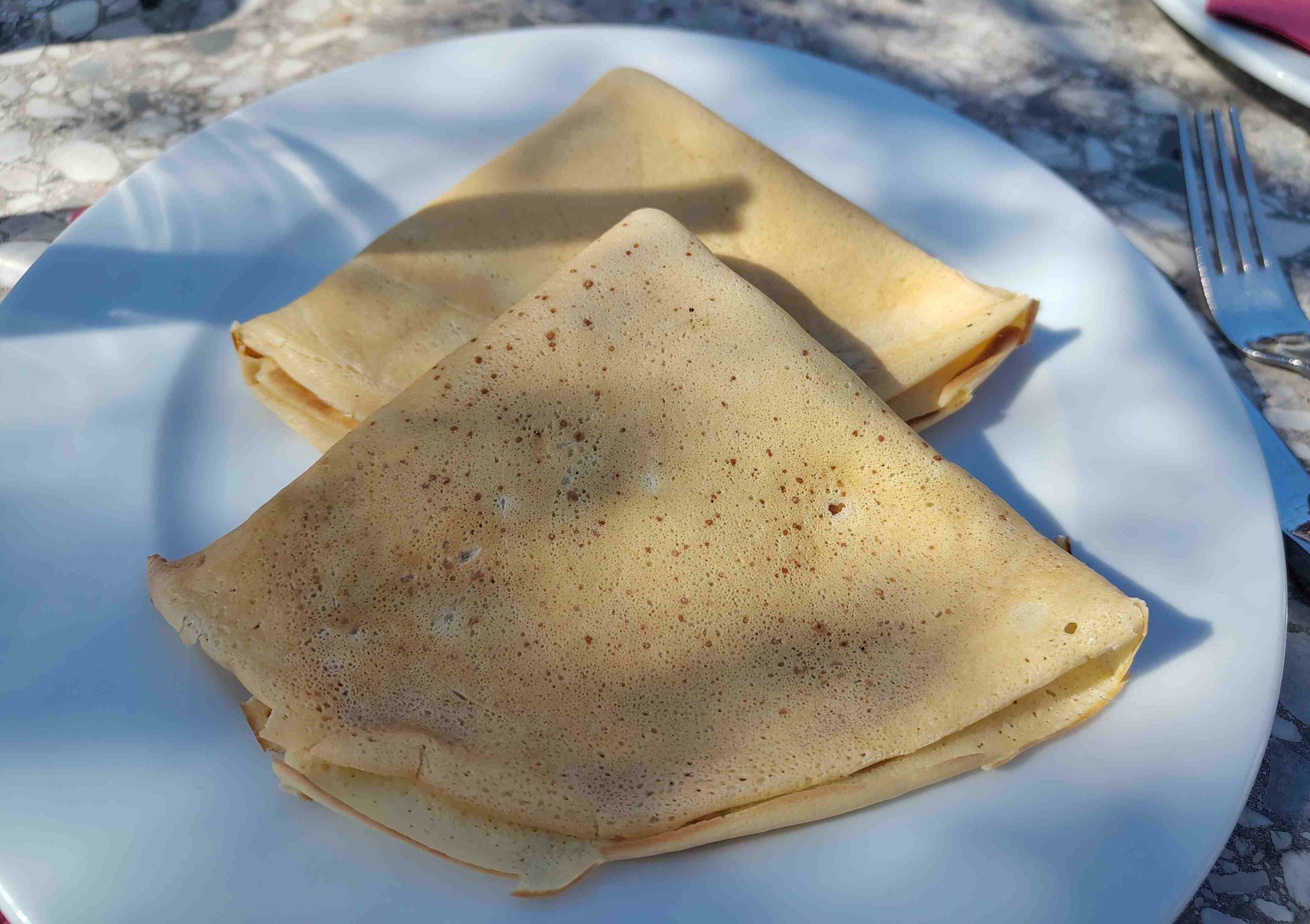
palačinke
thin pancakes
What is it?
Palačinke are light, thin pancakes similar to crêpes, typically rolled up with a variety of sweet or savoury fillings. They are a popular treat across the Balkans.
What is in it?
The batter is made from eggs, milk, water and flour. Fillings include Nutella, Eurocrem, fruit preserves and savoury options such as cheese or ham.
Where can I eat it?
Palačinke are widely available throughout Montenegro and the Balkans, found in cafés, restaurants and even street kiosks. One standout was a pistachio cream-filled palačinka from a kiosk just outside Kotor’s old town, it was so good!
Vegetarian.
Related food guides
While Montenegrin cuisine has its own regional specialities, it shares many traditional dishes with neighbouring Bosnia and Herzegovina. For a deeper look at some of these shared Balkan classics, see our Bosnian food guide.
Ingredients listed reflect common or typical components of this dish as served in restaurants or street‑food vendors. Variations by region, season, or vendor are common. This information is provided for general reference only. If you have dietary restrictions or allergies, please verify ingredient details independently. We assume no liability for accuracy or outcomes.
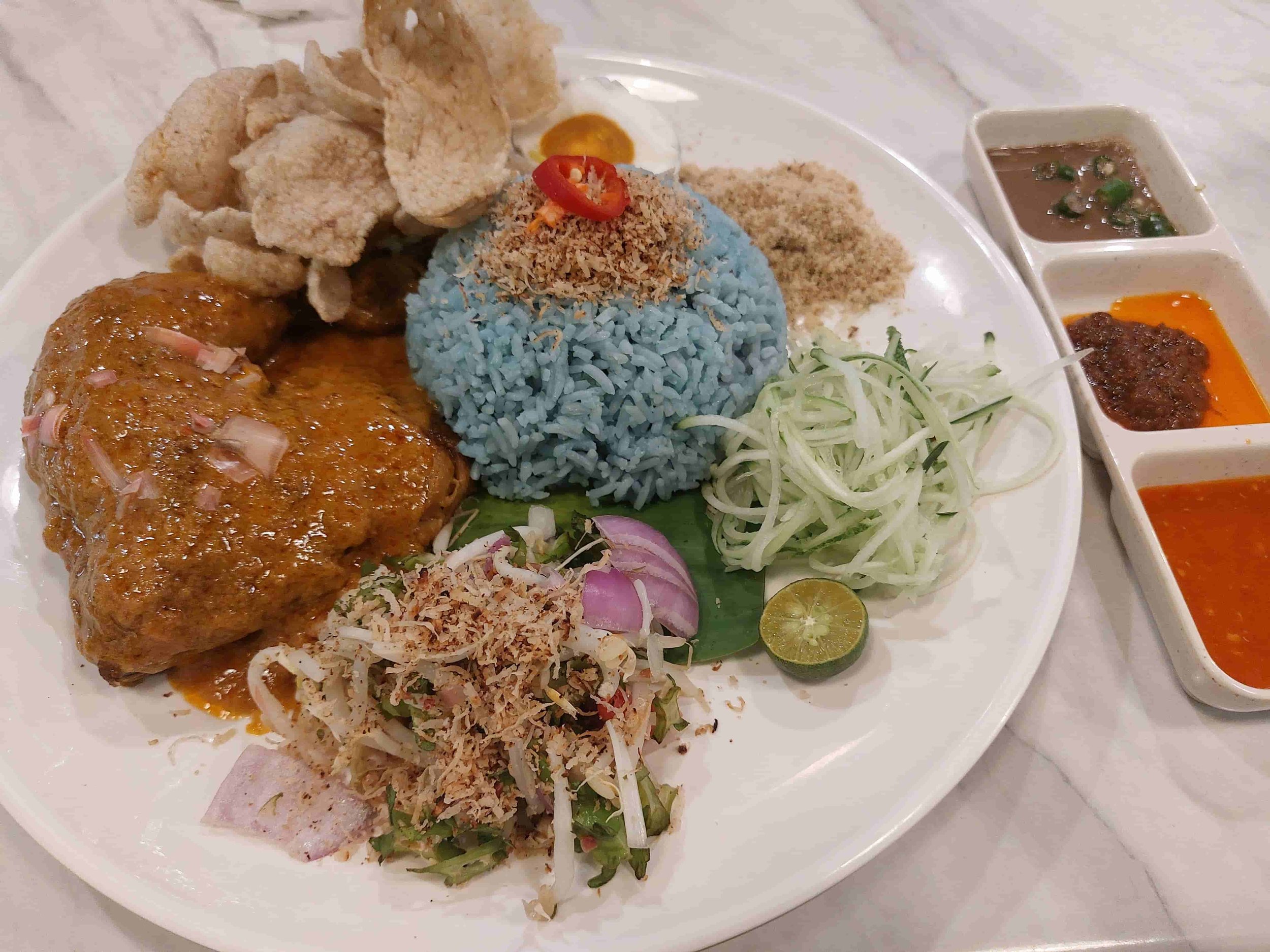
all the foods - Malaysia
Discover all the traditional Malaysian dishes we tried.
Here you will find a list of all the traditional cuisine we tried in Malaysia.
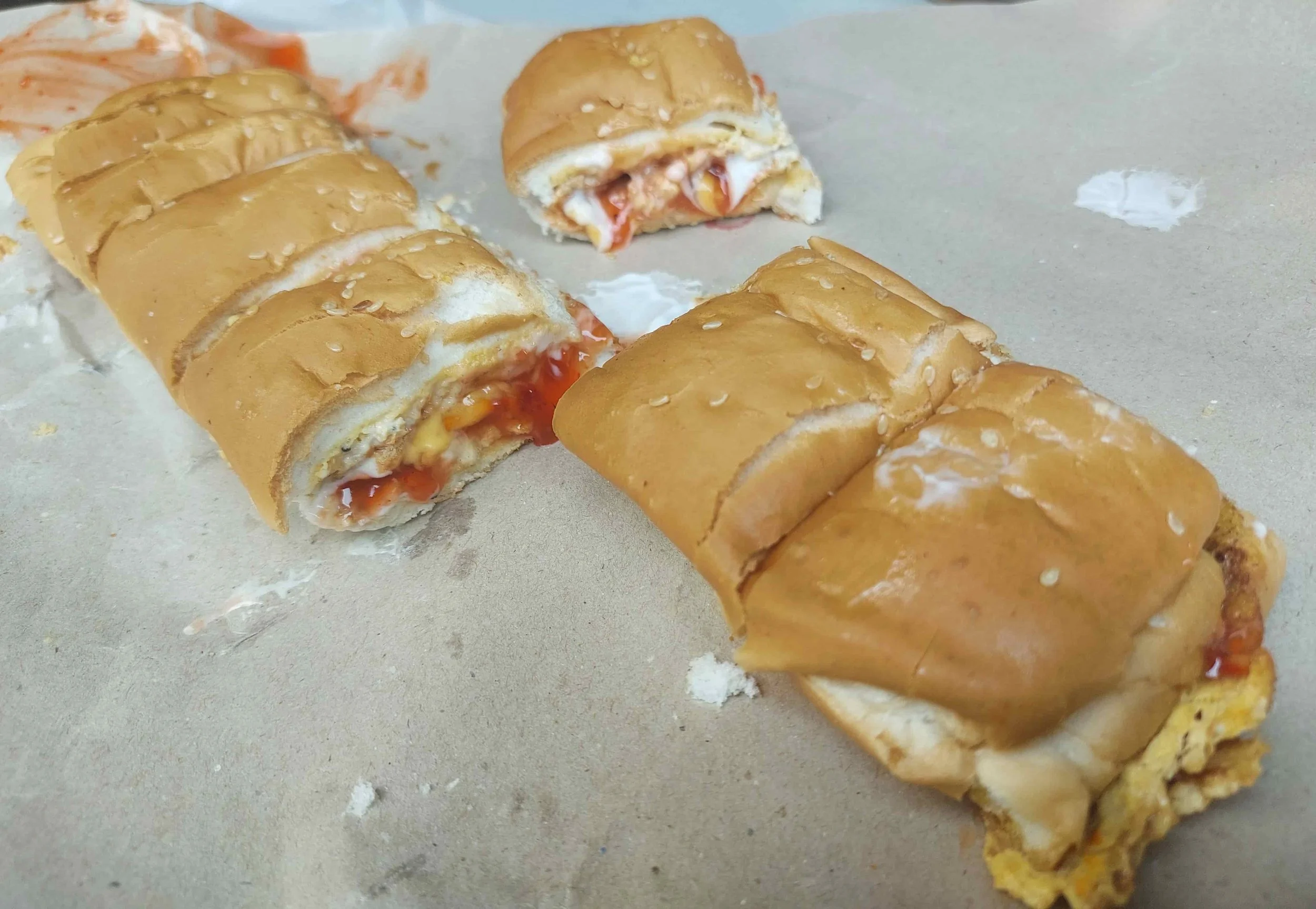
roti john
omelette & meat roll
What is it?
Roti John is a popular Malaysian street food sandwich. It consists of a long, soft white bread roll filled with beaten egg mixed with minced meat, which is fried on a griddle until the egg forms a crispy, omelette-like layer coating the bread. It is typically finished with salad and sauces, then sliced before serving.
What is in it?
Roti John is usually made with bread, egg, minced meat (most commonly chicken or beef), onions, and sometimes garlic. After cooking, it is topped with chilli sauce, mayonnaise, and fresh salad such as lettuce and tomato. Some modern versions also include cheese, though this is optional.
Where can I eat it?
Roti John is widely available across Malaysia and is especially popular as a late night street food. It is commonly sold at roadside stalls and food trucks, often alongside Ramly burgers, and is considered a classic, affordable fast food.
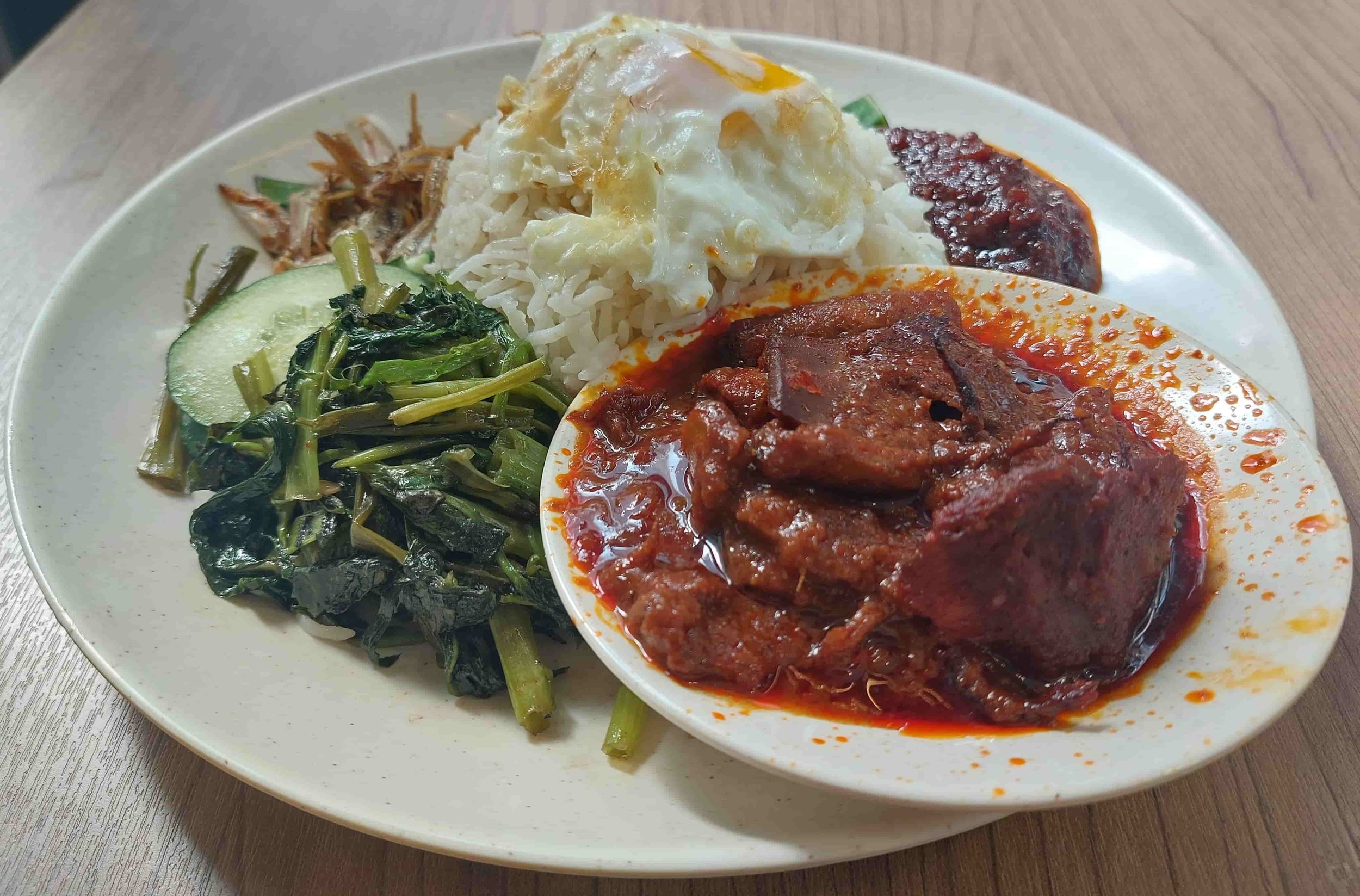
sambal sotong
spicy squid
What is it?
Sambal sotong is a dish of squid cooked in a spicy sambal sauce, and it is also popular in Singapore.
What is in it?
The squid is cooked in a sambal made from chilli, garlic, shallots, and sometimes tamarind. It is often served with rice, vegetables, and a fried egg.
Where can I eat it?
Its fairly common throughout the country especially on the coast or in seafood restaurants, its less common inland or at places like the Cameron highlands.
Usually gluten & dairy free.
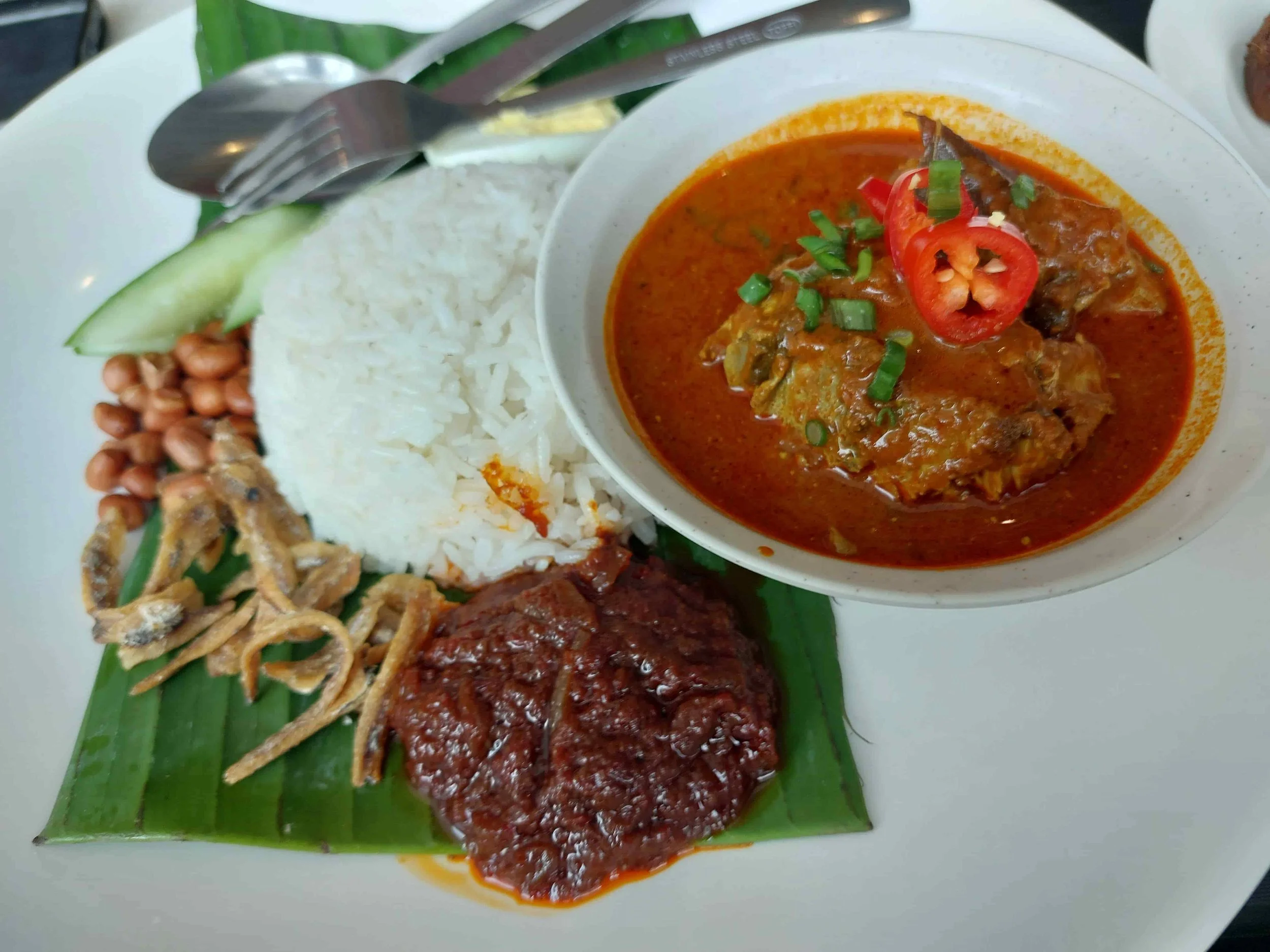
kari ayam
chicken curry
What is it?
The Malaysian version of chicken curry, Kari Ayam sits somewhere between an Indian curry, using similar spices, and a Thai curry, thanks to the use of coconut milk. It is usually served bone in with rice and sometimes other side dishes
What is in it?
Chicken, usually bone in, potatoes, curry powder, curry leaves, chilli powder, ginger, garlic, shallots, lemongrass, turmeric and coconut milk. It is typically served with boiled rice.
Where can I eat it?
It is available throughout Malaysia in a range of regional variations, and is commonly sold in restaurants, hawker stalls and cooked in Malaysian homes.
Dairy free.
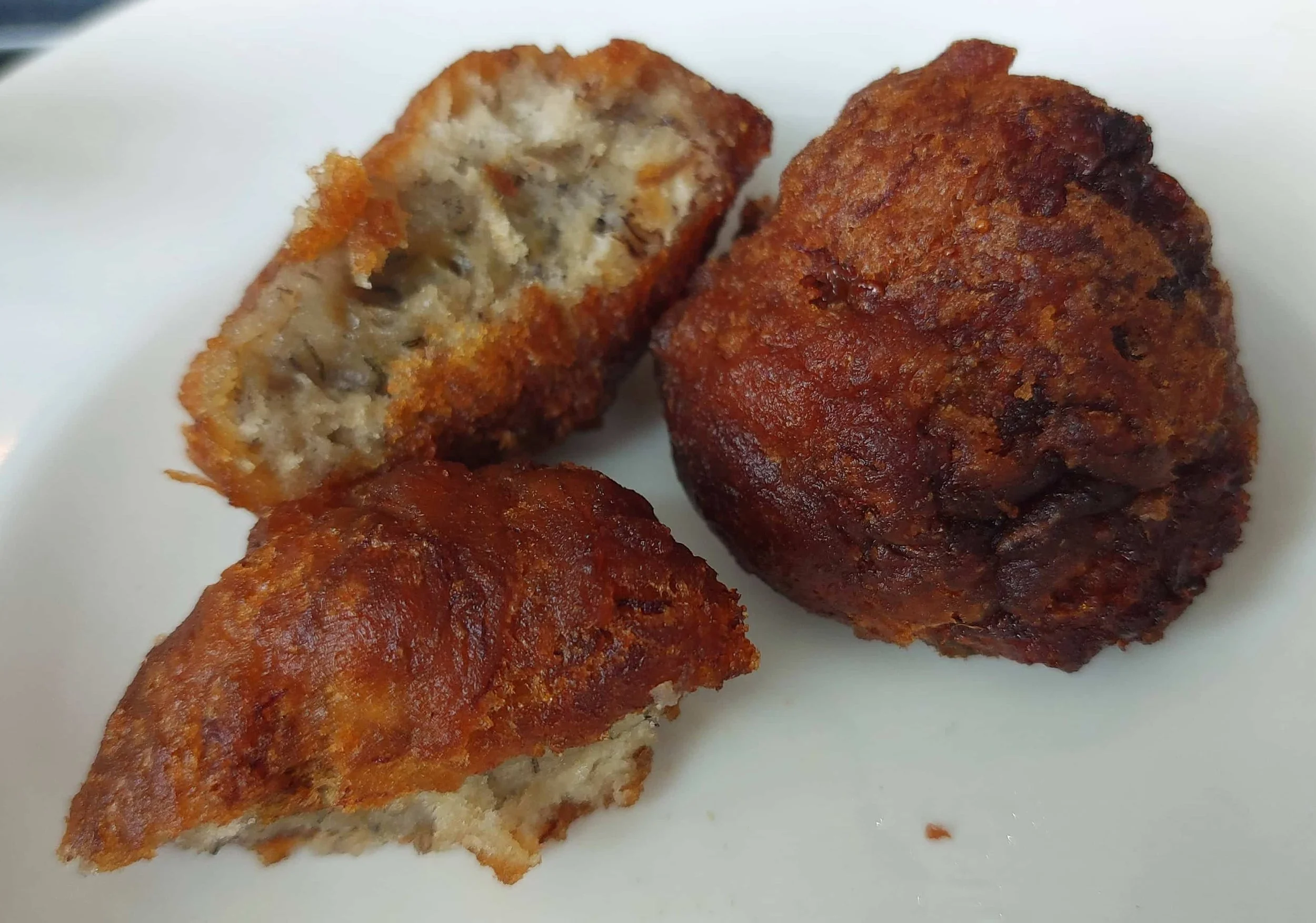
cekodok pisang
banana fritter
What is it?
A deep fried sweet banana fritter, cekodok pisang is a popular snack in Malaysia, often served with tea.
What is in it?
Ripe bananas mashed into a batter with flour, then deep fried in oil. Some versions also include shredded coconut, sesame seeds or cinnamon.
Where can I eat it?
It is available across Malaysia as street food, and you can also find it in restaurants and cafes, so it should be easy to come across.
Vegetarian & dairy free.
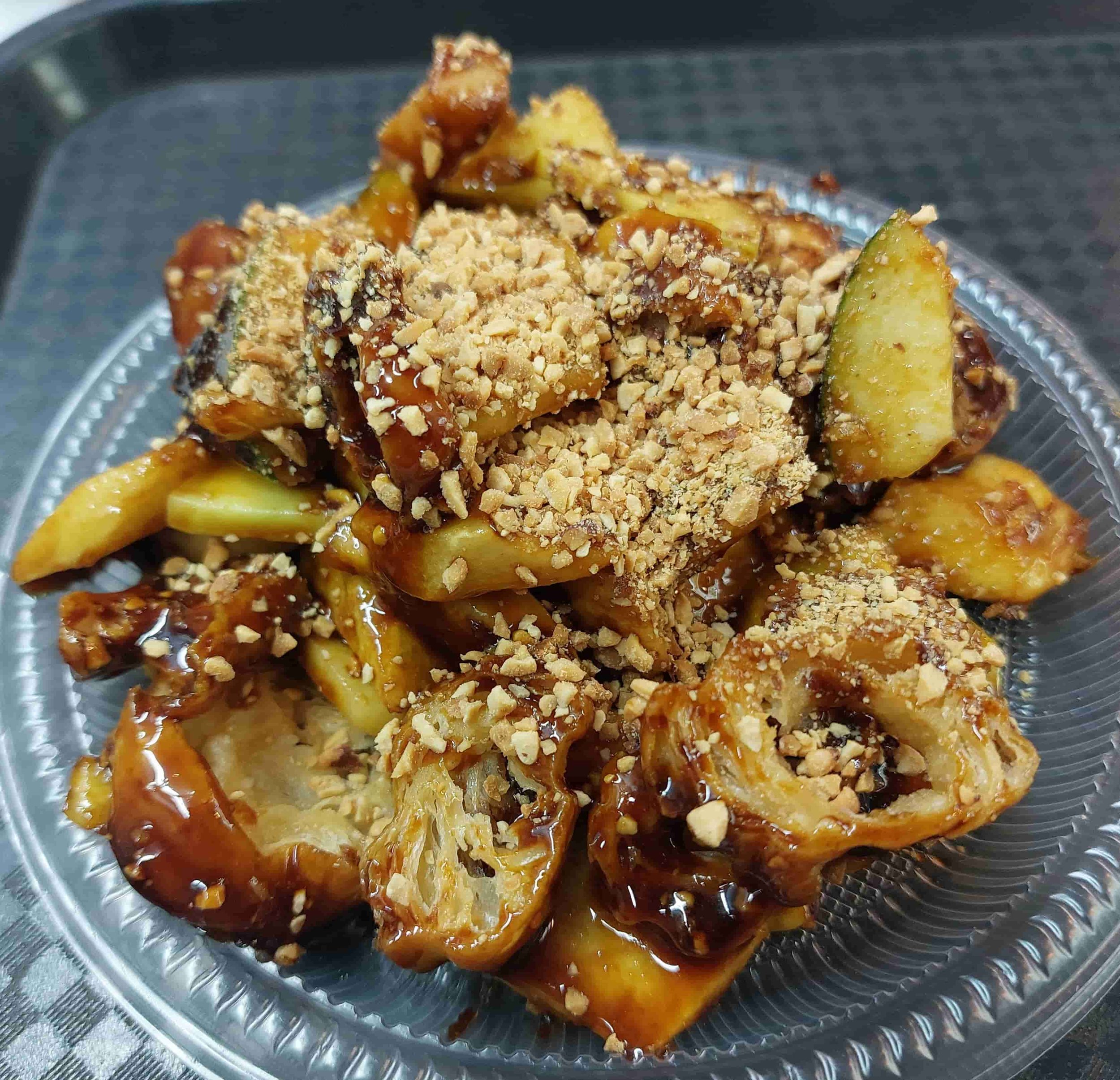
rojak
sweet sauce fruit & veg
What is it?
Rojak means “mixture” in Malay, which reflects the dish, a mix of fruits and vegetables in a sweet, tangy sauce. It is a popular street food in Malaysia, Singapore and Indonesia
What is in it?
It can include a variety of fruits and vegetables, typically mango, apple, pineapple, guava and cucumber. It often includes youtiao (dough fritters) for extra crunch. The sauce is usually made with palm sugar, shrimp paste, chillies, tamarind and peanuts.
Where can I eat it?
It is common throughout Malaysia and is also found in Singapore and Indonesia, with variations in ingredients from place to place. It is sold as street food and also served in restaurants.
Dairy free.
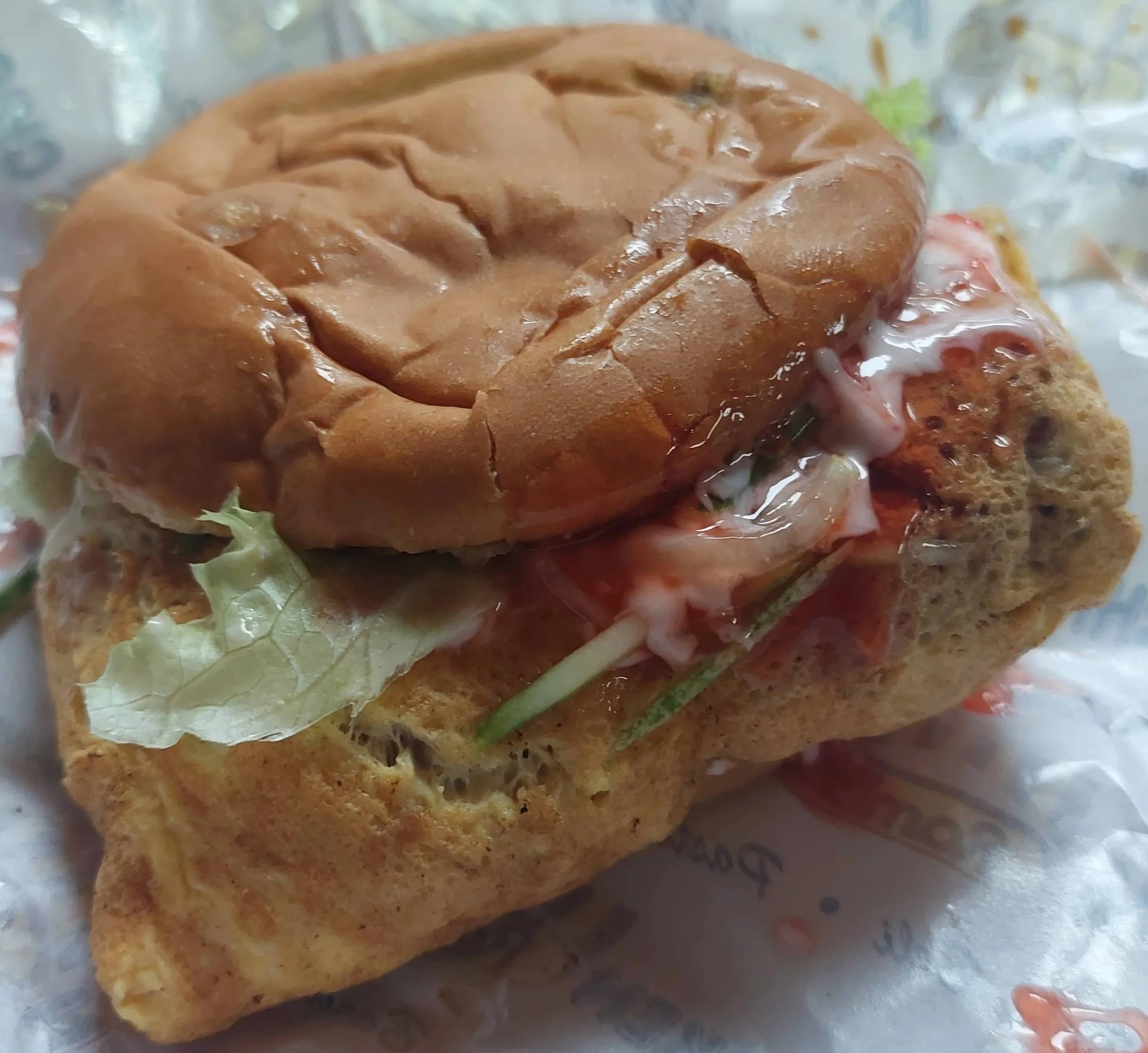
ramly burger
Malaysian burger
What is it?
A popular Malaysian street burger, usually made with a beef or chicken patty wrapped in a thin omelette and covered in sauce. It is famously messy and usually eaten hot and fresh.
What is in it?
A beef or chicken patty wrapped in an omelette, with mayonnaise, chilli sauce and often other condiments such as black pepper sauce or Worcestershire sauce. Common additions include lettuce, cabbage, cucumber and sometimes tomato.
Where can I eat it?
It is popular throughout Malaysia and is commonly sold at pasar malam, roadside burger stalls, food courts and sometimes mamak eateries. It is often found alongside other Malaysian street foods such as roti john.
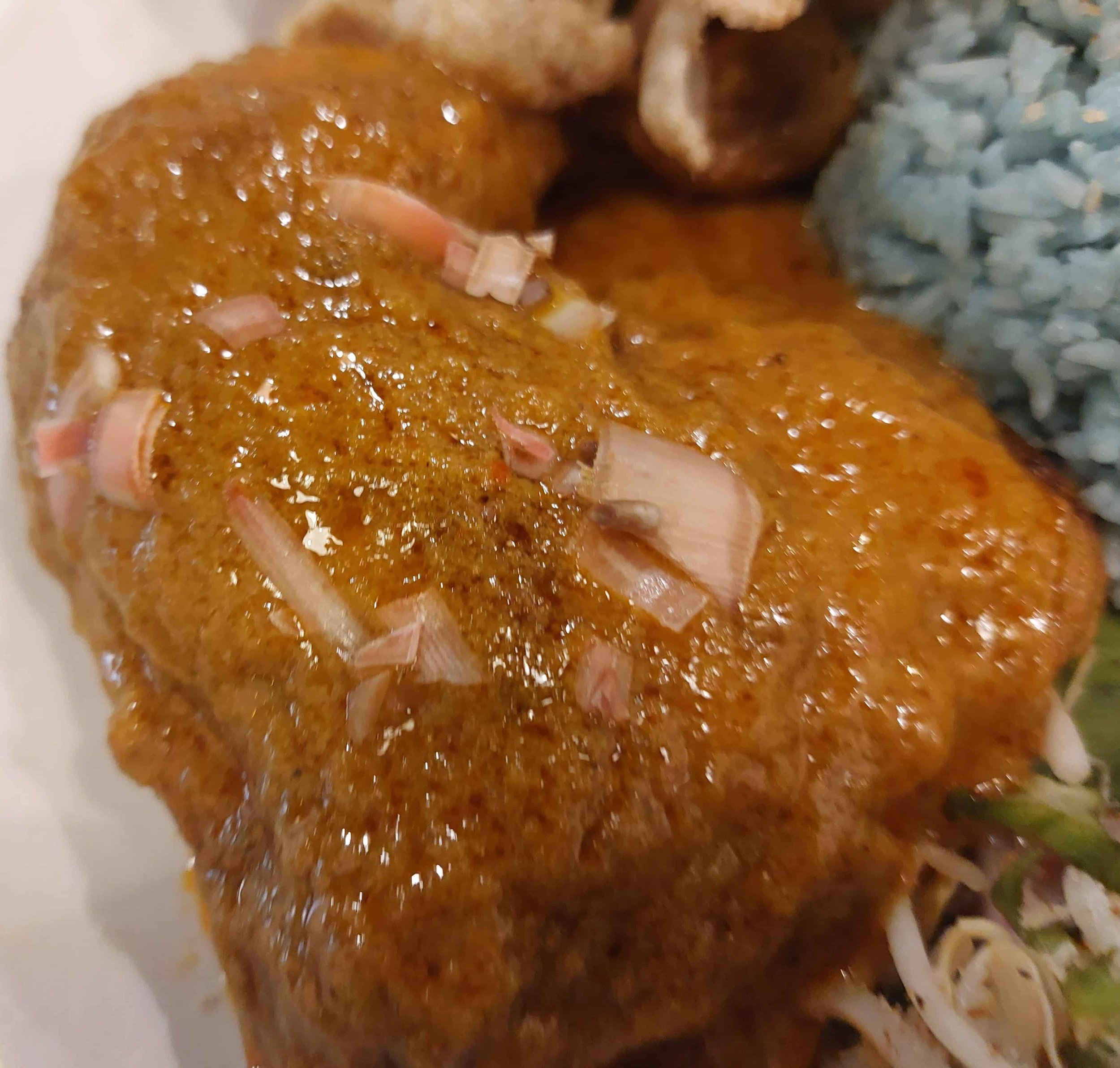
ayam percik
coconut milk chicken
What is it?
Grilled bone in chicken marinated in a spiced coconut milk sauce. It is smoky, a little sweet and spicy, and is often served with rice and other sides. “Percik” means splashing and refers to the sauce being repeatedly basted over the chicken while it grills.
What is in it?
Bone in chicken marinated with coconut milk, garlic, turmeric, ginger, cumin, lemongrass and chilli. Some versions also include tamarind, coriander and palm sugar.
Where can I eat it?
It is fairly common throughout Malaysia and should not be too difficult to find. It is especially popular in Kelantan and Terengganu in the northeast.
Dairy free.
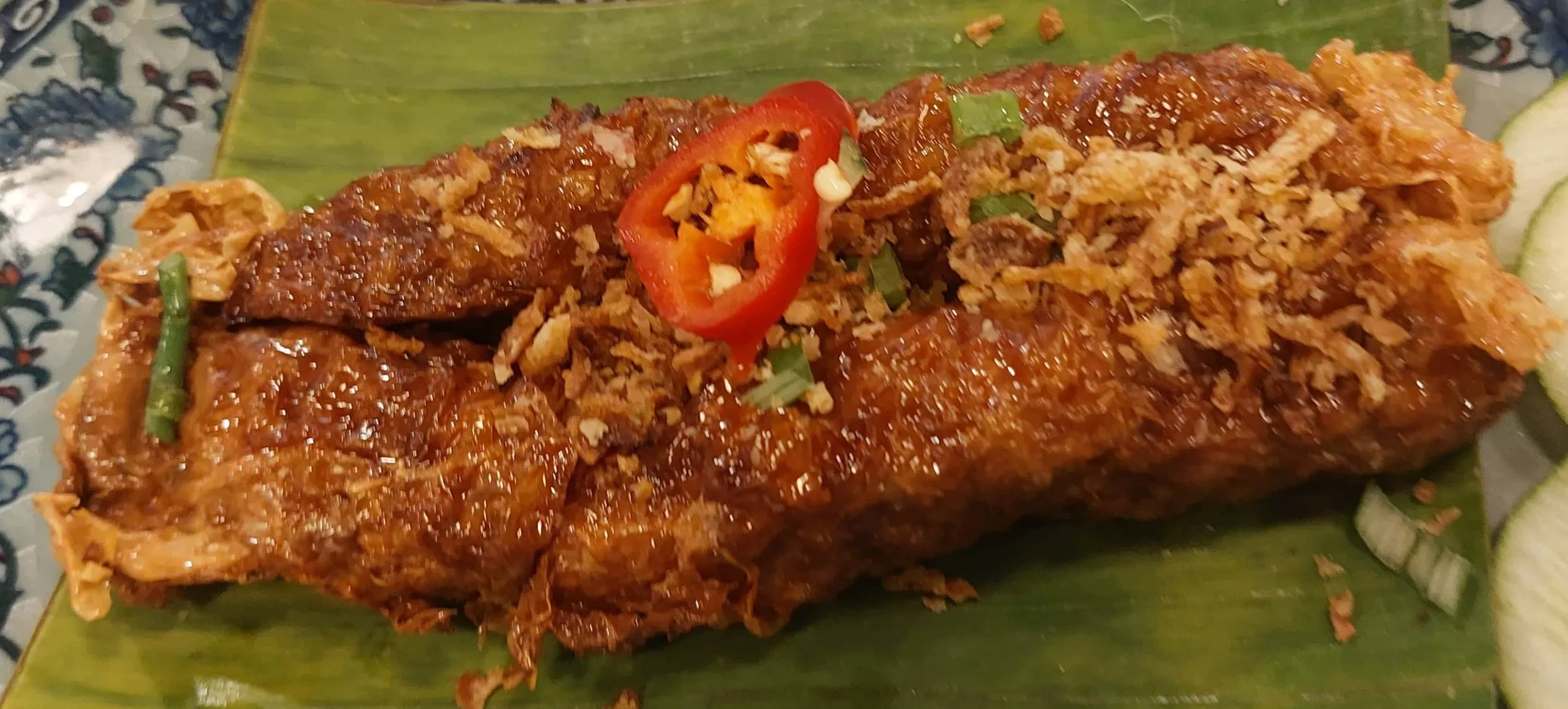
loh bak
grilled minced meat
What is it?
Loh Bak (Lor Bak) is a Chinese Malaysian dish most closely associated with Penang. It consists of seasoned minced pork flavoured with five spice, wrapped in tofu skin and deep fried until crispy. It’s sometimes compared to a sausage, but the texture is lighter and the flavour more aromatic.
What is in it?
The filling typically includes minced pork mixed with five spice, and often small amounts of prawn or water chestnut for texture. This mixture is wrapped in tofu skin (bean curd skin) and deep fried.
It’s usually served sliced, alongside sweet chilli sauce, chilli paste, or a thick five spice gravy for dipping.
Where can I eat it?
Loh Bak is most famously found at hawker stalls in Penang, especially around George Town, where it’s considered a local speciality. It’s also available in Chinese-Malaysian restaurants and food courts in larger cities such as Kuala Lumpur, though Penang remains the best place to try it.
Vegetarian versions exist but are uncommon.
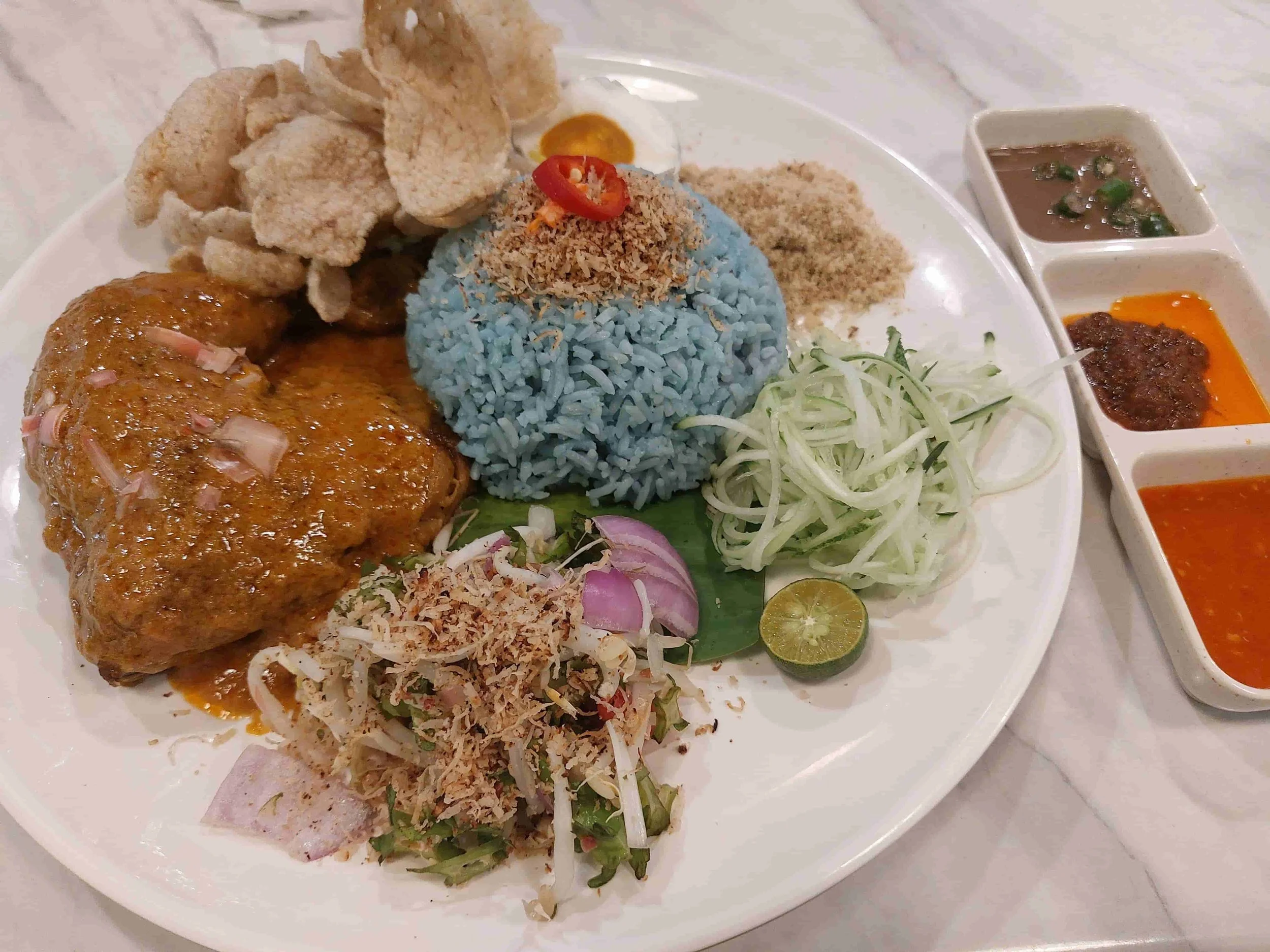
nasi kerabu
blue rice & sides
What is it?
A dish of blue coloured rice served with various sides. The rice gets its blue colour from the butterfly pea flower, which is used as a natural food colouring.
What is in it?
Rice dyed with butterfly pea flower, served with sides such as chicken, fish, keropok crackers, vegetables, boiled eggs, meat floss and sambal. Some versions also include herbs and other accompaniments such as budu or coconut-based condiments.
Where can I eat it?
It originally comes from Kelantan and is very popular there and in neighbouring Terengganu. It has spread throughout Malaysia and is available in larger cities, though it is not as widespread as dishes like nasi lemak.
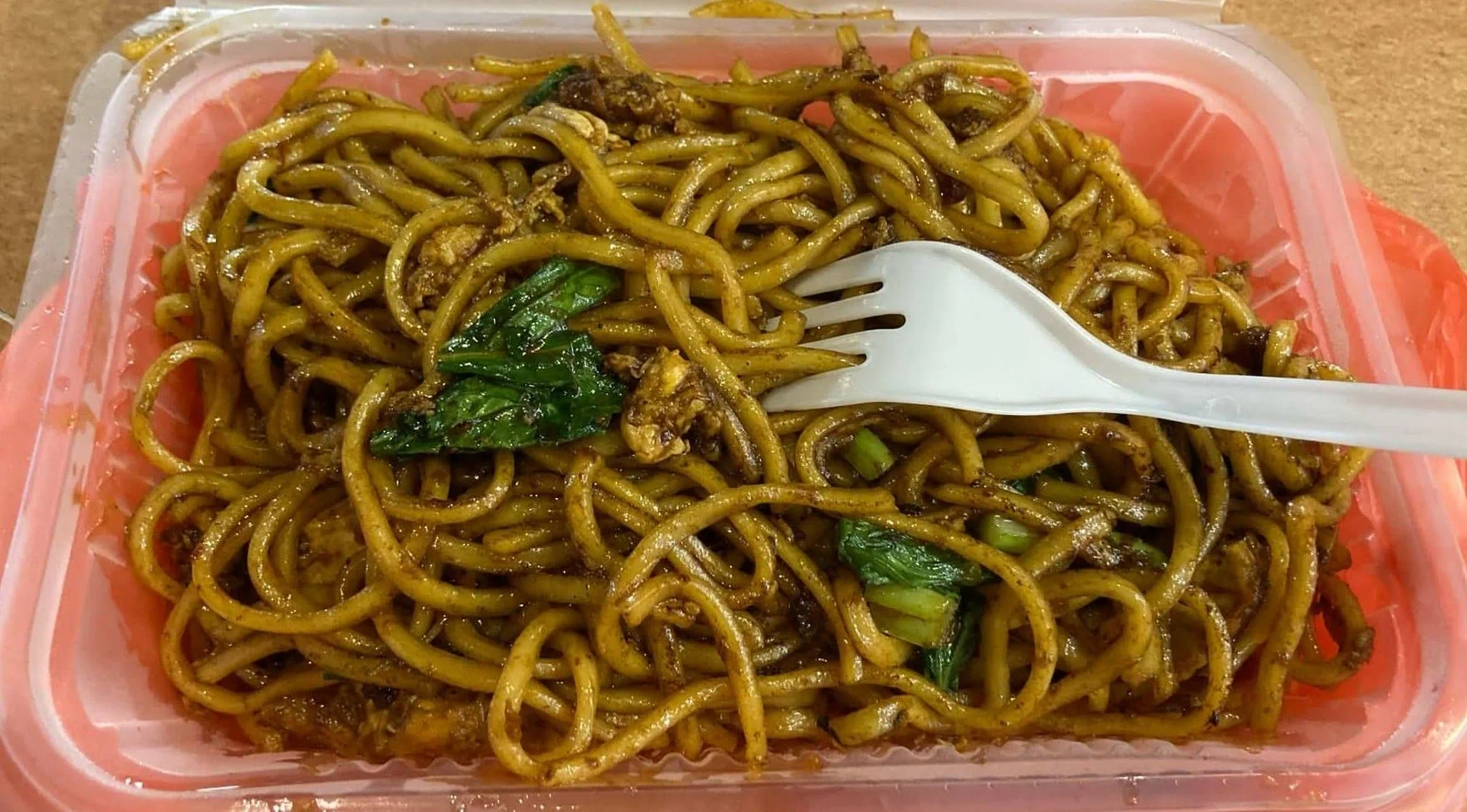
mee goreng mamak
mamak style noodles
What is it?
Mee goreng mamak is a popular Malaysian street food originating from the Indian Muslim, or Mamak, community. The name means “fried noodles in the Mamak style” and reflects its blend of Indian Muslim and Malaysian influences.
What is in it?
It is typically made with yellow egg noodles stir-fried with ingredients such as chicken, prawns, beef, tofu or potatoes. Common additions include bean sprouts, spring onions and carrots, along with kecap manis, soy sauce, tomato ketchup or sauce, sambal and sometimes curry powder.
Where can I eat it?
Mee goreng mamak is widely available throughout Malaysia, especially at Mamak stalls and other casual eateries run by the Indian Muslim community. These stalls are often open late, and sometimes 24 hours, and serve a wide range of dishes.
Vegan versions available.
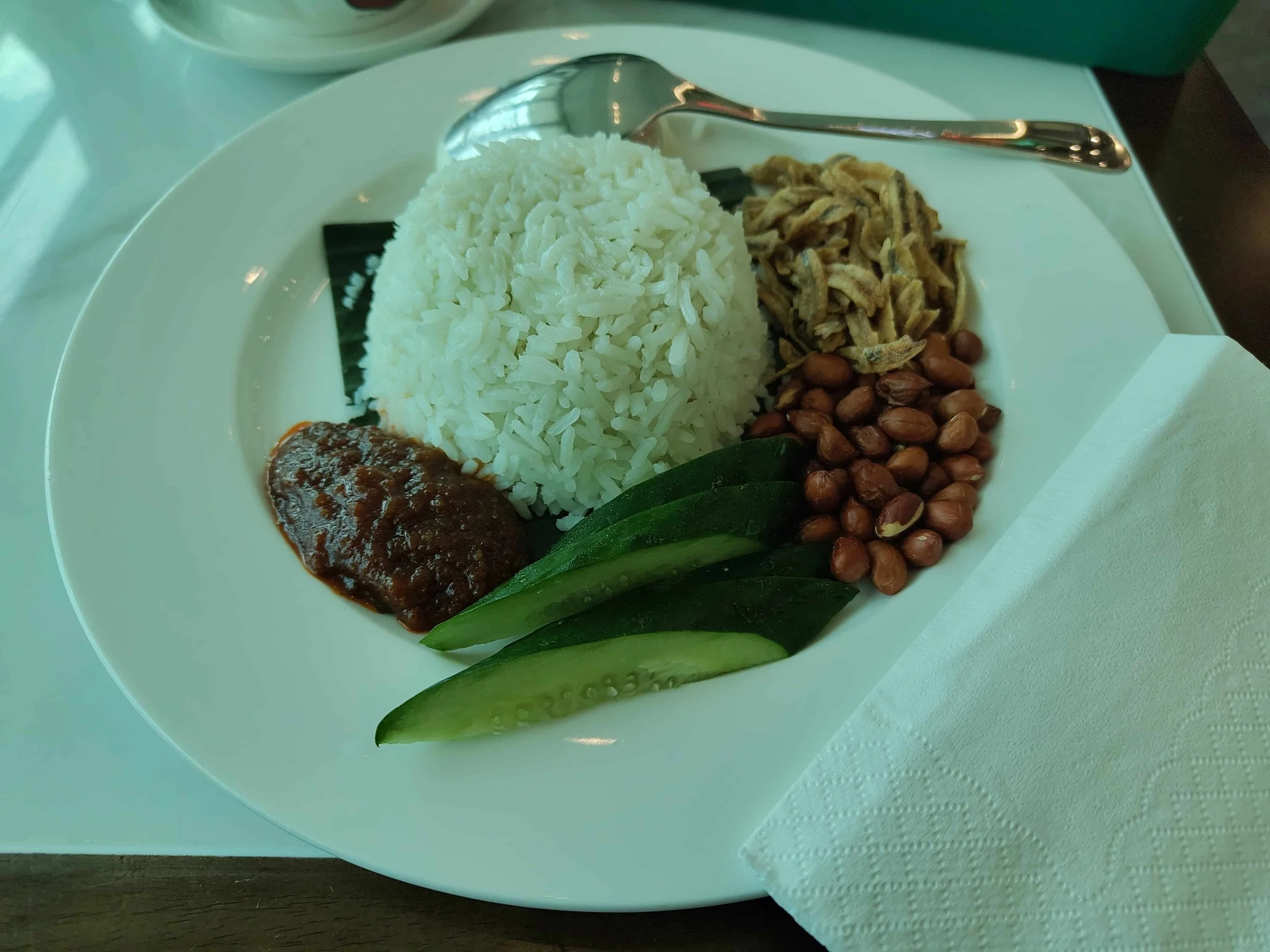
nasi lemak
coconut rice & sides
What is it?
Often hailed as Malaysia’s national dish, nasi lemak is especially popular at breakfast. The name means “rich rice,” referring to the fragrant rice cooked in coconut milk and pandan leaves. It is typically served with spicy sambal, a hard boiled egg, toasted peanuts, crisp cucumber slices and fried anchovies.
What is in it?
Coconut rice infused with pandan.
Spicy sambal (chilli paste).
Egg, usually hard-boiled, though sometimes fried.
Toasted peanuts.
Fried anchovies (ikan bilis).
Fresh cucumber slices.
Many vendors and restaurants also offer extras such as fried chicken, sambal squid or beef rendang.
Where can I eat it?
Everywhere in Malaysia. From street stalls and roadside warungs to hotel buffets and upscale restaurants, nasi lemak is found at every level of dining. It is one of the country’s most loved and widely available dishes.
Vegetarian versions available, dairy free.
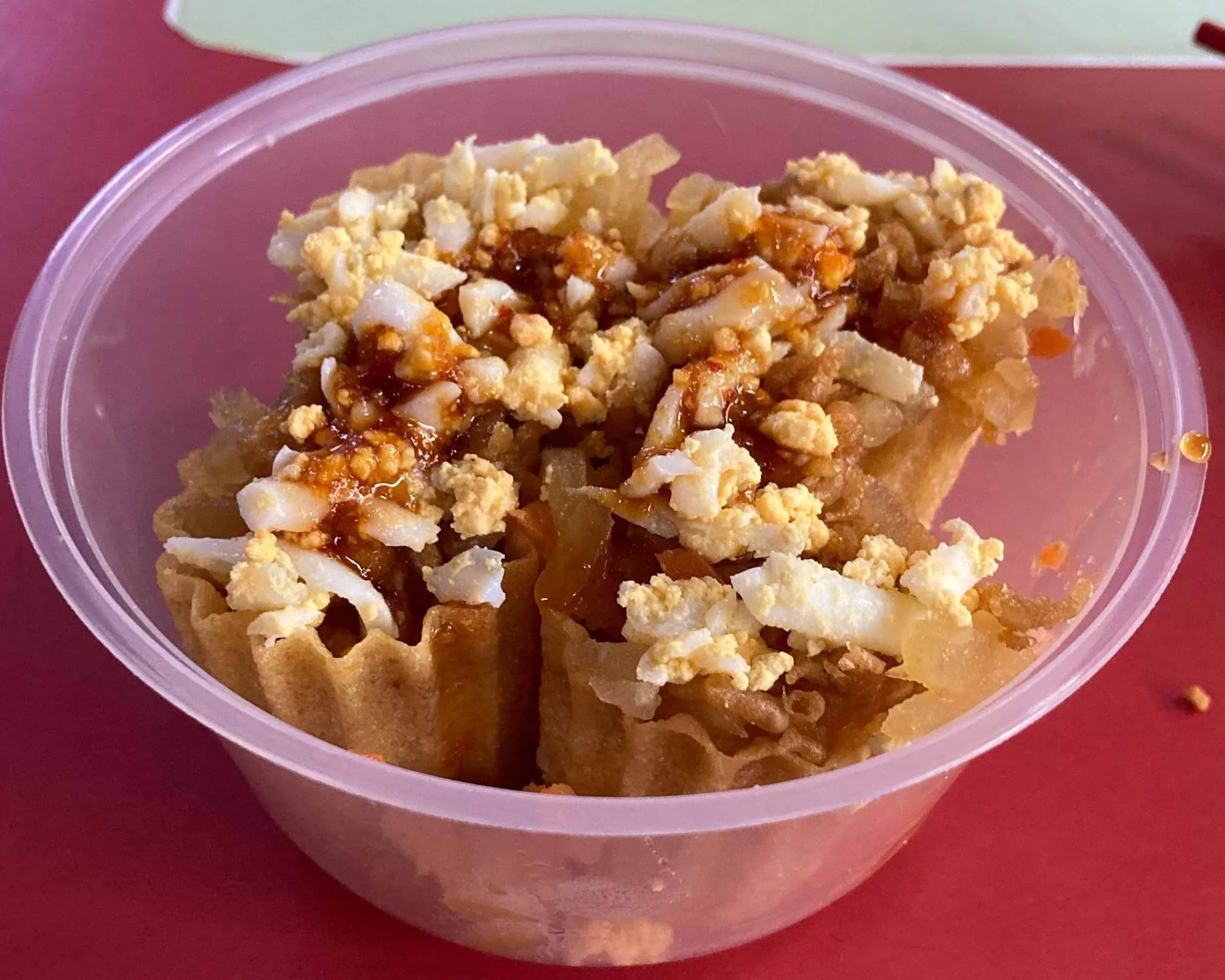
kueh pie tee
savoury pastry shells
What is it?
Kueh Pie Tee, also spelled Kuih Pai Tee or Kuih Pie Tee, are bite sized crispy pastry shells filled with a savoury mixture of vegetables and sometimes seafood or meat. They are a popular appetiser in Nyonya, or Peranakan, cuisine.
What is in it?
The pastry shell is made from a light batter of plain flour, rice flour, cornflour and egg, then deep fried in a special mould to create the classic cup shape and crispy texture. The traditional filling consists of finely shredded jicama, carrot, garlic, soy sauce and white pepper, with some versions also including prawns, crab, mushrooms or tofu. The filled shells are often topped with chilli sauce and may be garnished with fried shallots or fresh coriander.
Where can I eat it?
Kueh Pie Tee is commonly found in Nyonya restaurants and eateries across Malaysia, particularly in cities such as Kuala Lumpur, Penang and Melaka. It is often served as an appetiser or as part of a Peranakan set meal.
Vegetarian versions available, dairy free.
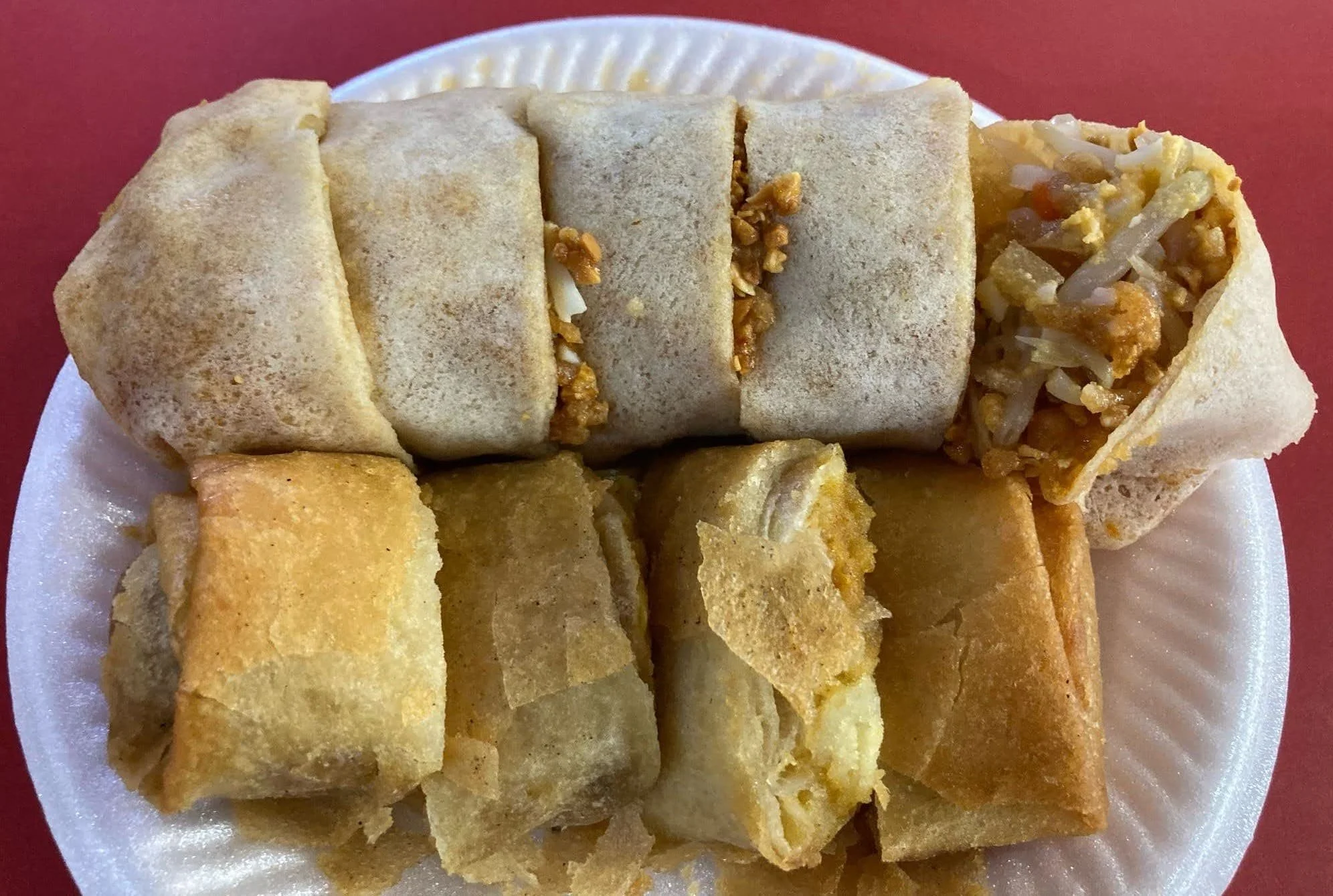
popiah
spring roll
What is it?
Popiah is a traditional Chinese Malaysian spring roll. Its name comes from the Hokkien dialect, meaning “thin pancake,” referring to the delicate wheat flour wrapper. Popiah is enjoyed fresh (unfried) or lightly fried, depending on the region and personal preference.
What is in it?
Popiah consists of a soft, thin wheat flour crepe filled with shredded jicama (a crisp root vegetable), carrots, and bean sprouts, along with optional ingredients such as Chinese sausage, prawns, tofu, or egg. The filling is typically seasoned with garlic, hoisin sauce, and chilli sauce, though exact combinations vary by vendor.
Where can I eat it?
Popiah is widely available throughout Malaysia, particularly in areas with strong Chinese communities such as Penang and Melaka. You can find it at street food stalls, hawker centres, markets, and restaurants.
Vegetarian versions available, dairy free.
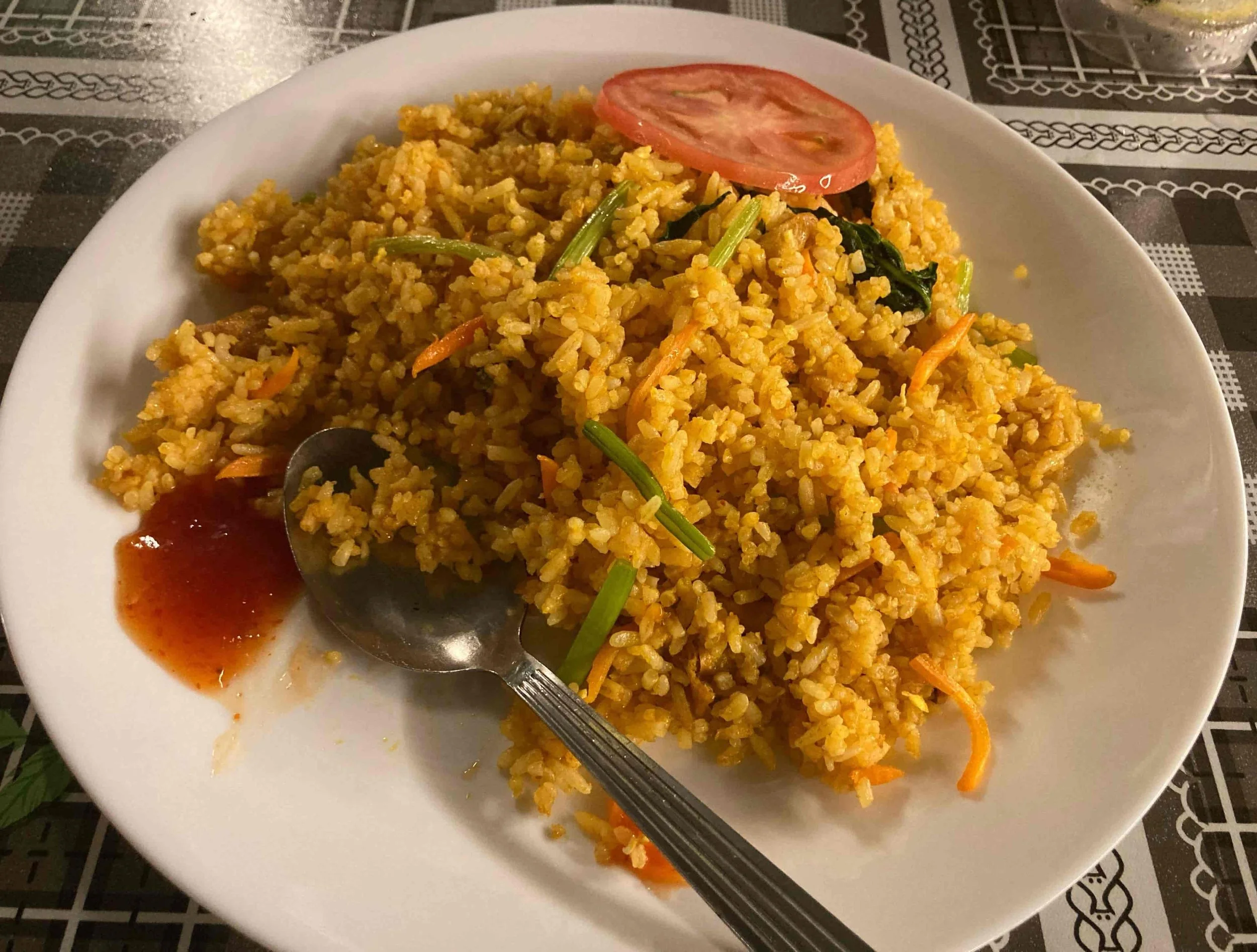
nasi goreng mamak
mamak fried rice
What is it?
Nasi goreng mamak is a spicy fried rice dish associated with Malaysia’s Indian Muslim, or Mamak, community. “Nasi goreng” means fried rice, and “Mamak” refers to the Indian Muslim community in Malaysia.
What is in it?
There is no single fixed recipe, but nasi goreng mamak typically includes rice, egg and sometimes chicken, beef or prawns. It often also contains vegetables such as carrot, spring onion and cabbage, along with sambal, curry powder, soy sauce, oyster sauce and sometimes tomato ketchup. It is often served with a fried egg on top.
Where can I eat it?
Nasi goreng mamak is widely available throughout Malaysia, especially at Mamak stalls and other casual eateries run by the Indian Muslim community. These stalls are often open late or 24 hours and serve a wide range of dishes.
Vegetarian versions available, dairy free.
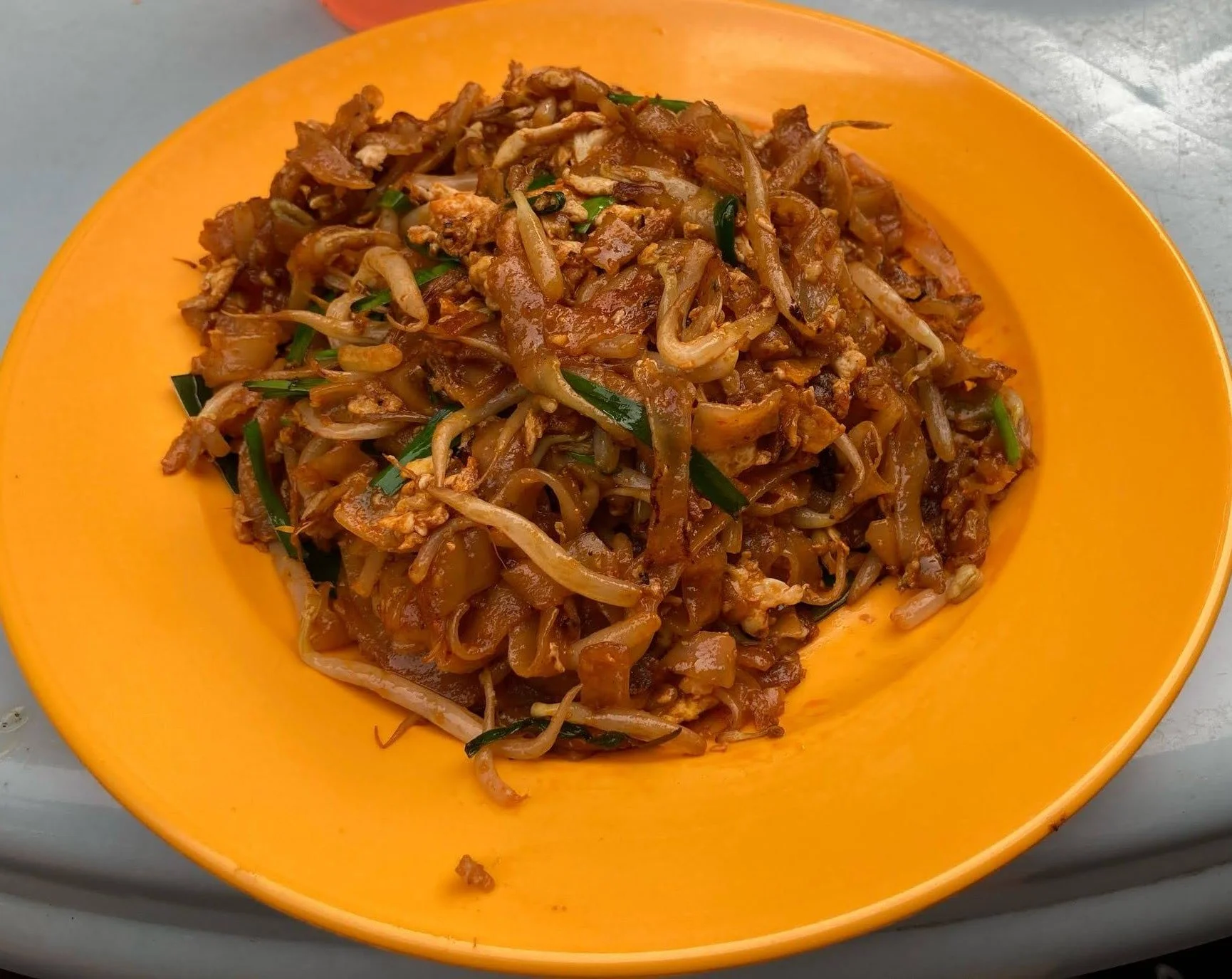
char kway teow
stir fried noodles
What is it?
Char Kway Teow is a popular Chinese Malaysian stir fried noodle dish. The name comes from the Hokkien dialect, where “char” means “stir-fried” and “kway teow” refers to flat rice noodles. It is known for its intense flavours and smoky “wok hei” aroma, achieved by stir-frying over high heat in a well seasoned wok.
What is in it?
Char Kway Teow typically includes fresh flat rice noodles, prawns, sliced Chinese sausage, eggs, bean sprouts, and Chinese chives. It is seasoned with light and dark soy sauce, sambal (chilli paste), and sometimes oyster sauce or sugar. Some regional versions, especially in Penang, also include cockles or fishcake.
Where can I eat it?
Char Kway Teow is widely available across Malaysia, particularly in areas with strong Chinese communities such as Penang and Kuala Lumpur. It can be found at hawker centres, food courts, street food stalls, and Chinese restaurants.
Vegetarian versions available, dairy free.
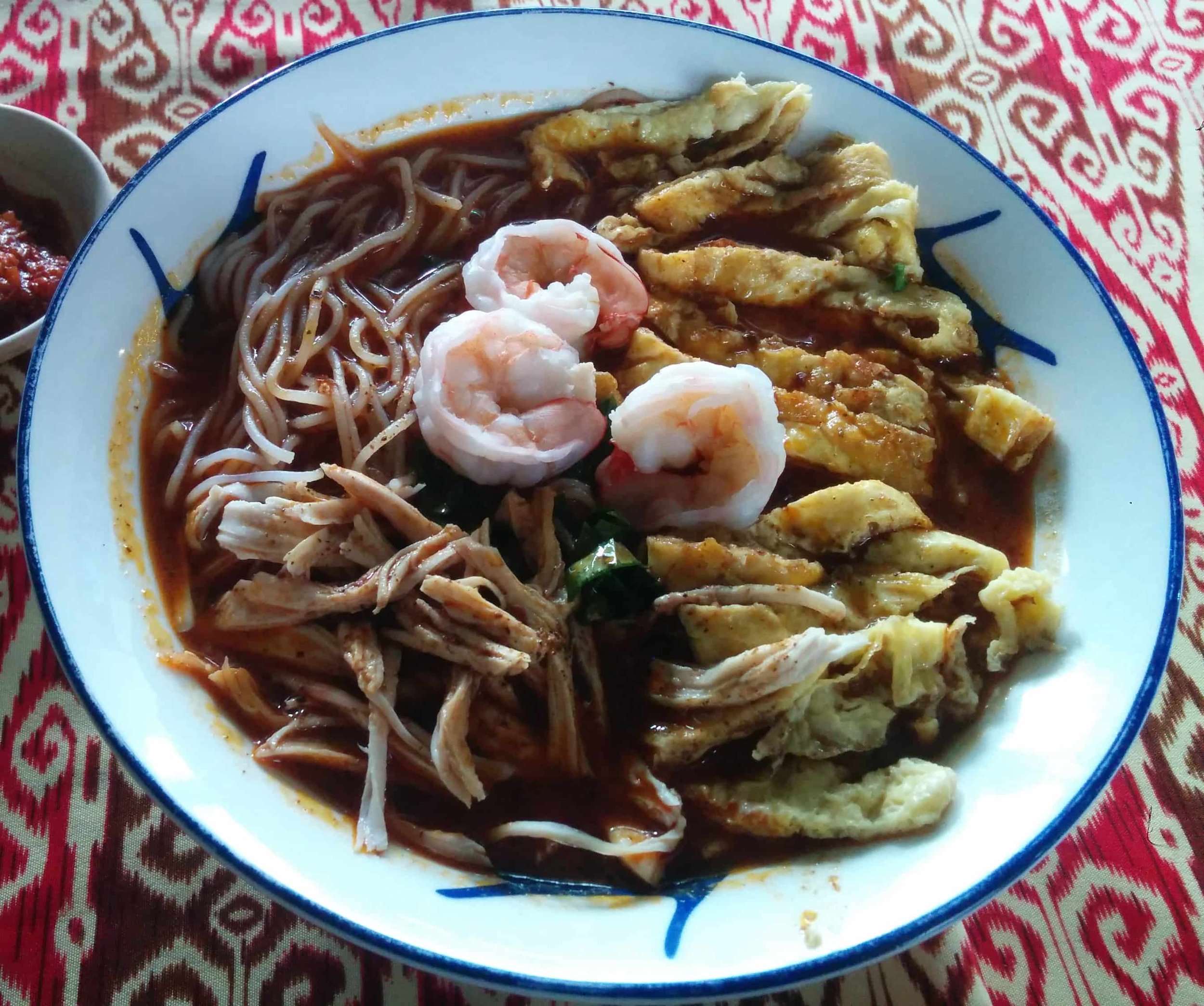
laksa
spicy noodle soup
What is it?
Laksa is a popular noodle soup that holds a special place in Malaysian cuisine. It can be rich, spicy, and tangy or all at once. Laksa is typically served with rice noodles or vermicelli, immersed in a flavourful broth that varies by region.
There are several regional variations of laksa in Malaysia, each with its unique ingredients and preparation methods:
Curry Laksa (Laksa Lemak) A creamy coconut milk based broth infused with curry spices, often featuring prawns, tofu puffs, and egg.
Asam Laksa (Penang Laksa) A tangy and spicy soup made with mackerel, tamarind, and a blend of herbs and spices, garnished with mint, cucumber, and pineapple.
Sarawak Laksa A spicy tangy soup from Sarawak, typically made with prawns, chicken, and spice paste.
Johor Laksa Distinct for its use of spaghetti instead of traditional noodles, served with a spicy fish gravy.
What is in it?
Ingredients vary by style, but may include, rice noodles or vermicelli. prawns, chicken, tofu or fish, coconut milk, tamarind, garlic, lemongrass, chili, mint, cucumber, pineapple, and boiled egg.
Where can I eat it?
aksa is widely available throughout Malaysia, especially in regions known for their unique versions like Penang, famous for its Asam Laksa, particularly in George Town.
Kuala Lumpur: Offers a variety of laksa styles, with numerous eateries serving this dish.
Sarawak: Home to the distinctive Sarawak Laksa (our personal favourite)
Johor: Known for its Johor Laksa, typically served during festive occasions.
Vegan, dairy and gluten free.
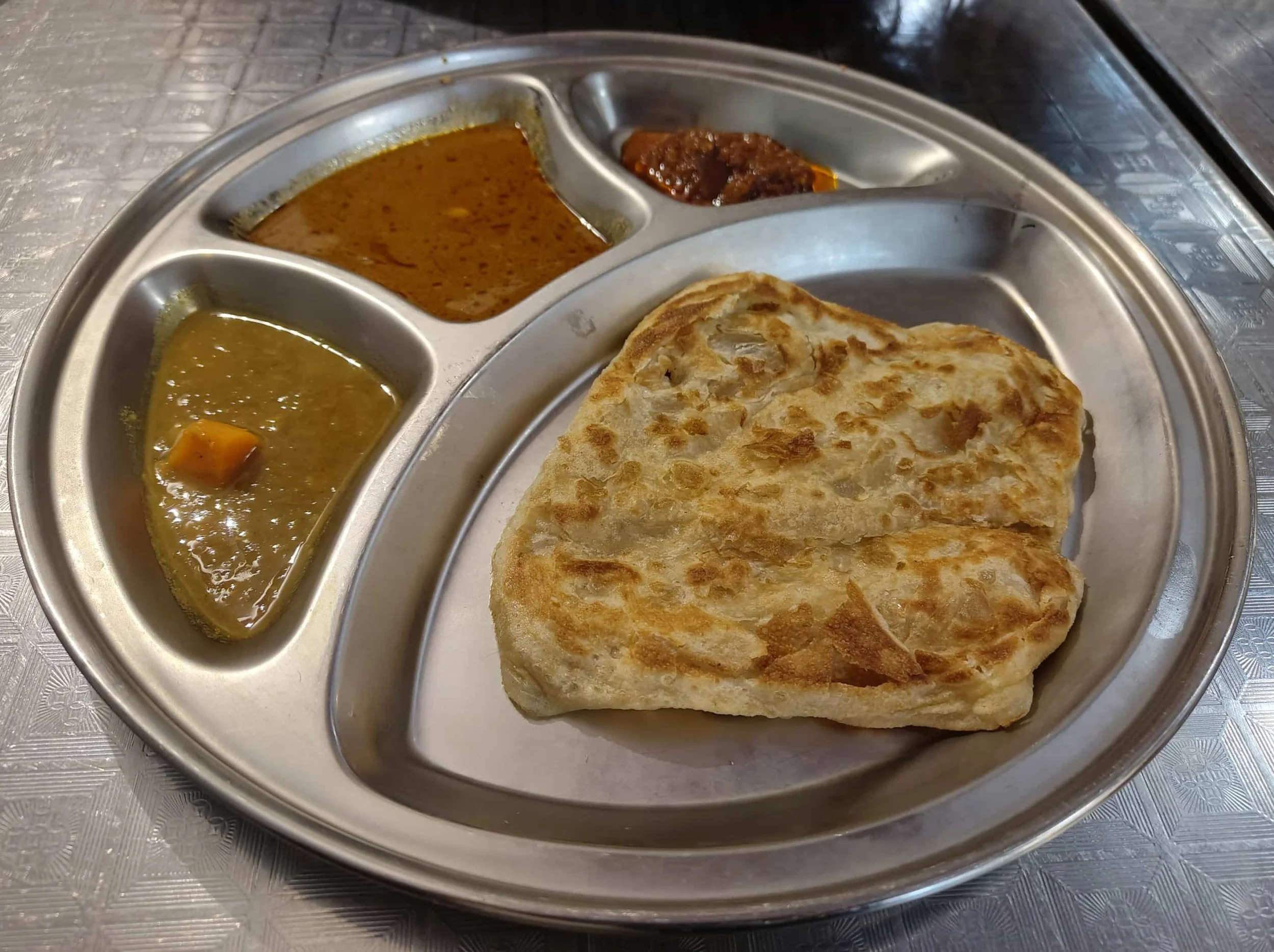
roti canai
flaky bread & sides
What is it?
Roti canai is a Malaysian flatbread made by repeatedly stretching, folding and cooking the dough until it becomes wonderfully flaky and layered. It is a staple of Malaysian food culture and is available at nearly every mamak stall (Indian Muslim). Traditionally served on a metal plate, it is usually eaten with three classic accompaniments: dhal, meat curry and sambal, allowing you to tear off pieces of the roti and dip them into whichever you fancy. It is really delicious, and best of all, it is usually incredibly cheap.
What is in it?
The roti is made from flour, water, salt, sugar, condensed milk or milk, and ghee or cooking oil. Some versions also include egg.
Where can I eat it?
Roti canai is available virtually everywhere in Malaysia, from busy mamak stalls to dedicated roti shops. It is particularly popular for breakfast, although mamaks often serve it throughout the day and late into the night.
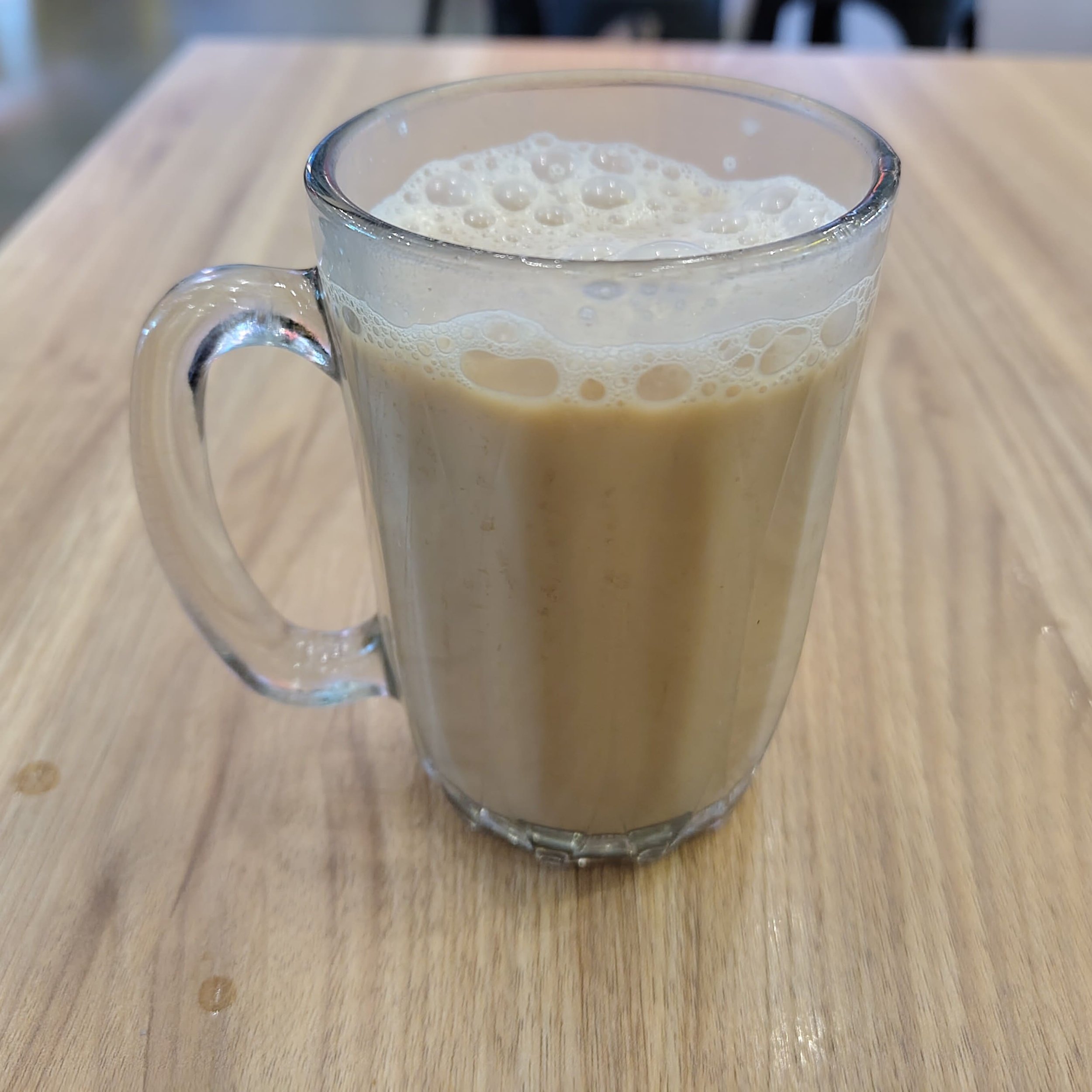
teh tarik
frothy tea
What is it?
Teh tarik is Malaysia’s unofficial national drink. Its name literally translates to “pulled tea,” referring to the theatrical way it is prepared by repeatedly pouring the tea between two cups from a height.
The “pulling” process is not just for show; it cools the tea to a drinkable temperature, thoroughly mixes the tea with the milk, and creates the drink’s smooth, frothy top.
What is in it?
Teh tarik is made by brewing strong black tea, then mixing it with sweetened condensed milk and often evaporated milk.
It can be served:
Hot – the traditional version.
Iced (Teh Tarik Ais) – poured over ice, making it especially refreshing in Malaysia’s tropical climate.
Some cafés also offer less sweet or flavoured versions, but the classic condensed milk recipe remains the most popular.
Where can I drink it?
Teh tarik is available throughout Malaysia. The best places to try it are at Mamak stalls (Indian-Muslim food stalls) or Kopitiams (traditional coffee shops).
Vegetarian & gluten free
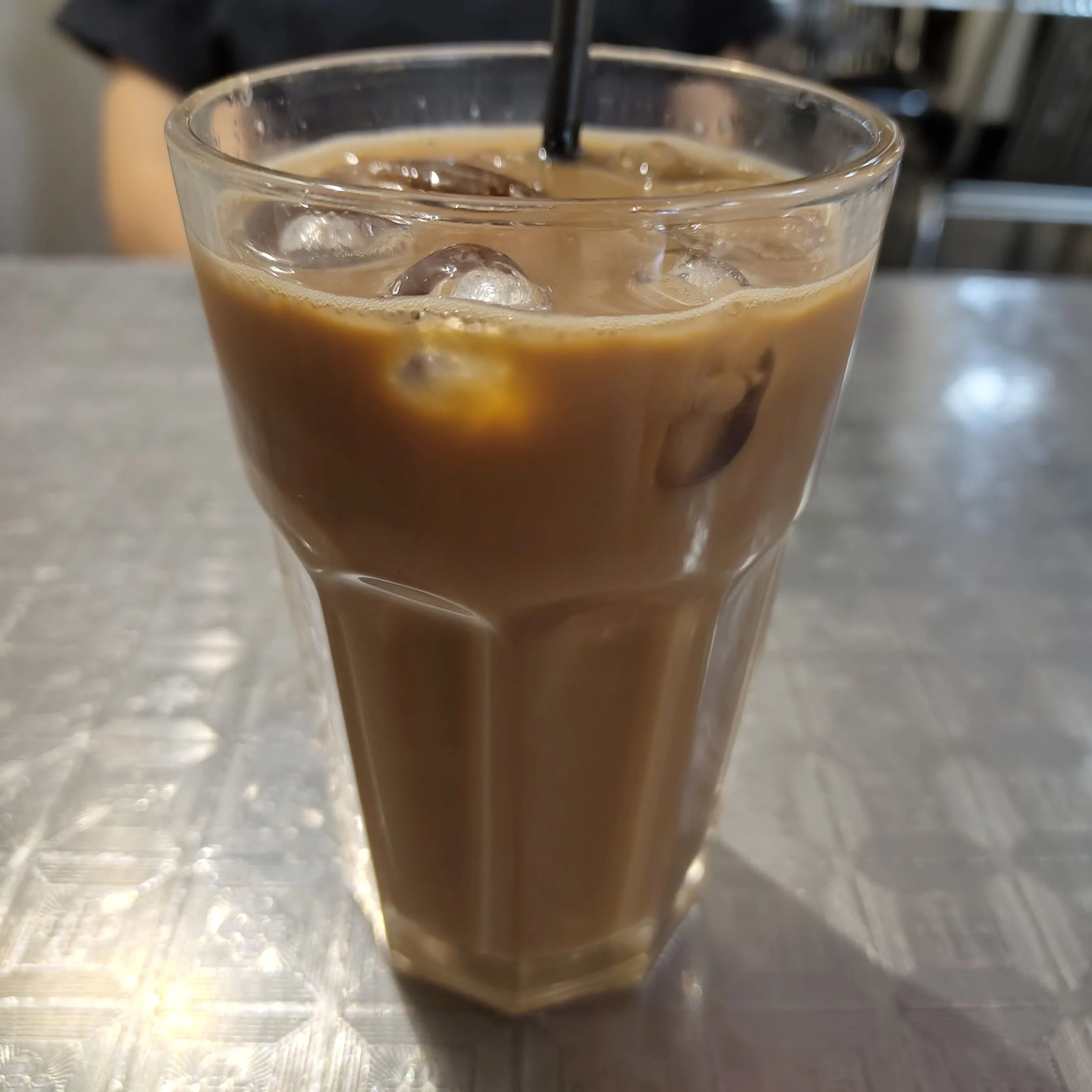
cham
tea & coffee mix
What is it?
Cham is a Malaysian drink that combines tea and coffee in the same glass. It might sound like an odd combination, but it actually works surprisingly well, with the strong coffee and delicious tea complementing each other. In Malaysia, it is commonly served either hot or iced: cham panas is the hot version, while cham ais is the iced version. It is particularly associated with kopitiams, where it is a popular everyday drink.
What is in it?
Black tea, coffee, condensed milk and evaporated milk or sugar, depending on the preparation. The exact ratio of coffee to tea varies between stalls, but it is often roughly equal parts of each.
Where can I eat it?
Cham is widely available at traditional Malaysian kopitiams, coffee shops and hawker centres. It is an inexpensive and very common drink, particularly alongside breakfast or a plate of roti canai.
Vegetarian & gluten free.
Related food guides
While Malaysian cuisine has its own regional specialities, it shares many traditional dishes with neighbouring Indonesia. For a deeper look at some of these shared classics, see our Indonesian food guides.
Ingredients listed reflect common or typical components of this dish as served in restaurants or street‑food vendors. Variations by region, season, or vendor are common. This information is provided for general reference only. If you have dietary restrictions or allergies, please verify ingredient details independently. We assume no liability for accuracy or outcomes.
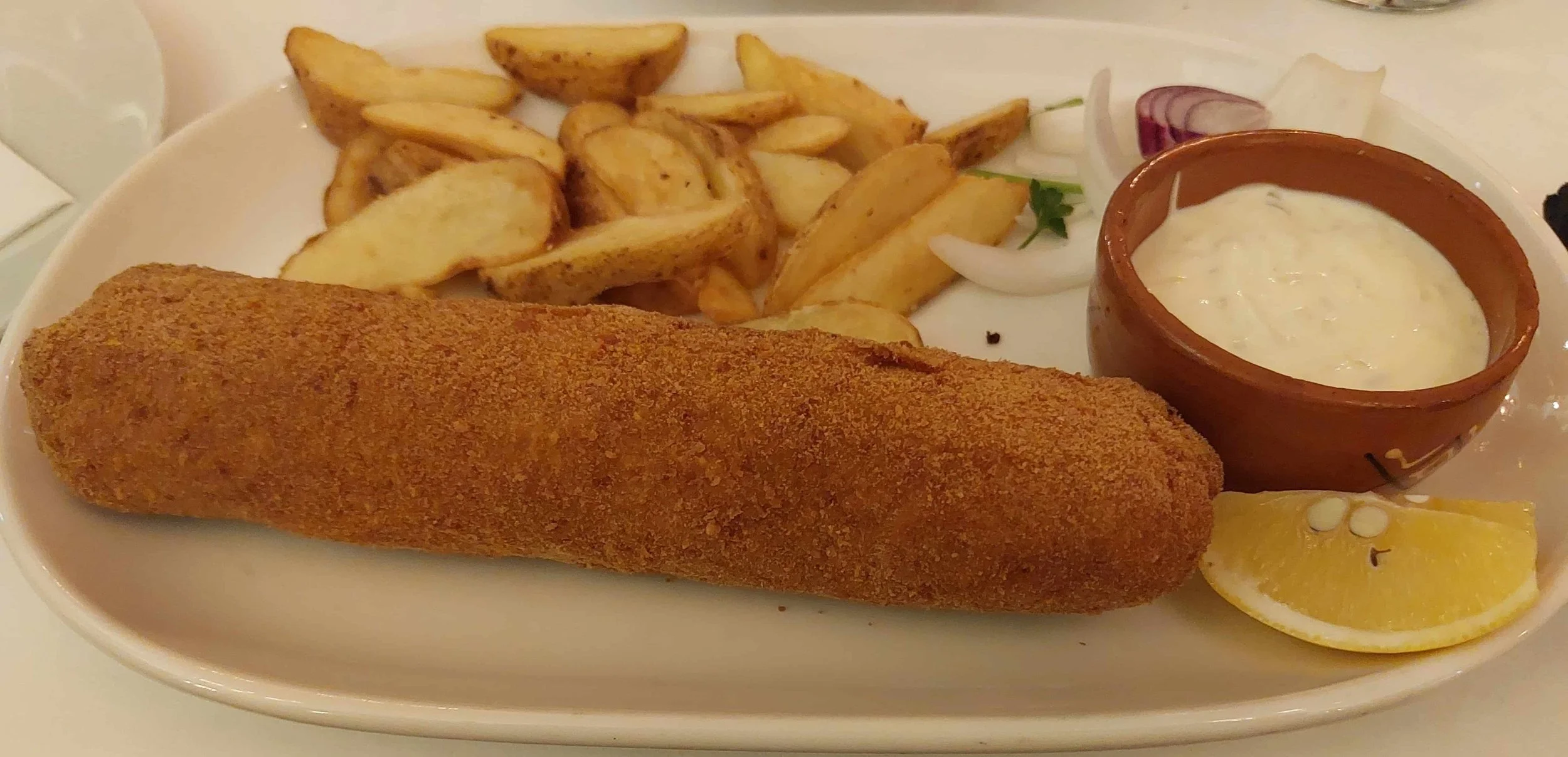
all the foods - Serbia
Discover all the traditional Serbian dishes we tried, from Mućkalica and Karađorđeva šnicla to Prebranac and more
Here you will find a list of all the traditional cuisine we tried in Serbia.
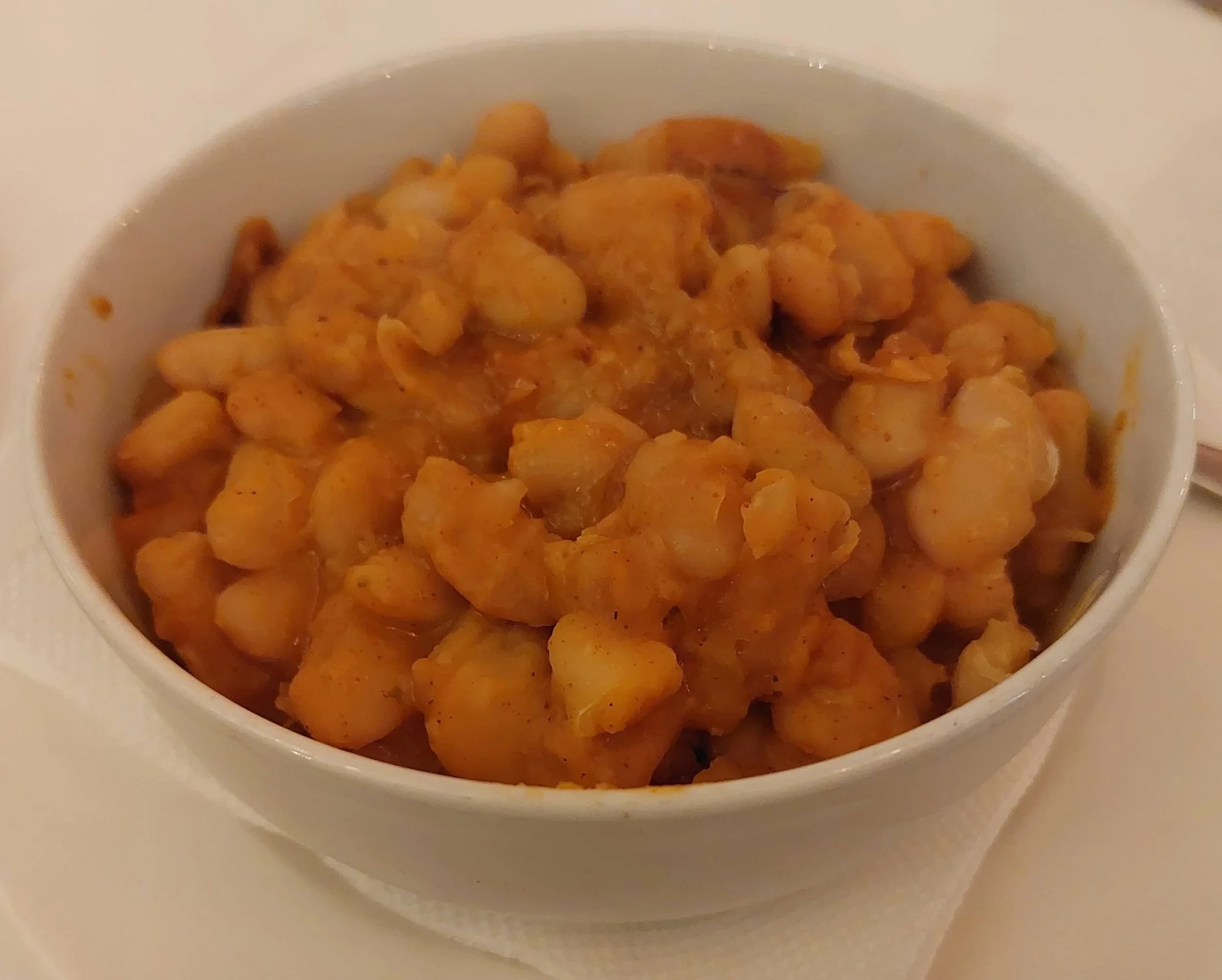
prebranac
baked beans
What is it?
Prebranac is a baked bean dish made with white beans slowly cooked with onions, paprika, and oil until thick. It can be served as a starter, a side dish, or even as a main, particularly on fasting days when no meat or dairy is eaten. Because it is baked rather than stewed, it has a thick, almost creamy texture..
What is in it?
Prebranac is made from white beans (tetovac or similar Balkan varieties), lots of slow-cooked onions, sweet paprika, sunflower oil, garlic, salt, and pepper, sometimes with bay leaf.
Where can I eat it?
You’ll find prebranac on many traditional Serbian restaurant menus, so it’s not difficult to find. We enjoyed it as a starter at Restoran Dva Jelena in Belgrade.
Vegan, dairy and gluten free.
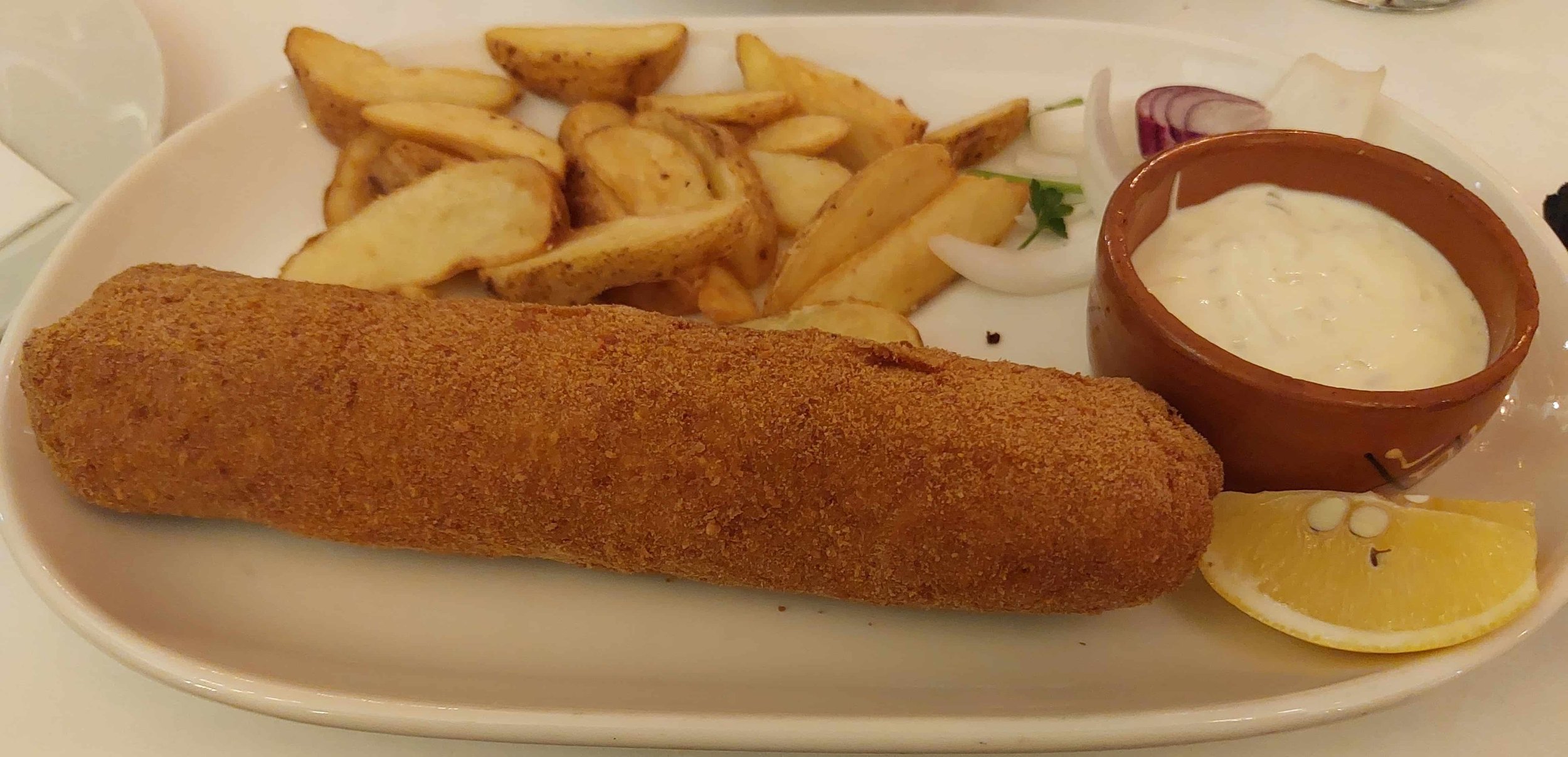
karađorđeva šnicla
rolled, stuffed schnitzel
What is it?
Karađorđeva šnicla is one of Serbia’s most iconic traditional restaurant dishes, a large rolled schnitzel stuffed with kajmak (a creamy Serbian dairy spread), breaded, then fried, and served with tartar sauce. It was invented in the 1950s in Belgrade by chef Mića Stojanović, who named it in honour of the Serbian revolutionary Karađorđe. When you cut into it, the warm kajmak filling oozes out, creating a rich, creamy sauce on the plate.
What is in it?
A typical Karađorđeva šnicla is made from a thinly pounded veal or pork escalope, spread with kajmak, then rolled tightly into a log and breaded with flour, egg, and breadcrumbs. It’s usually served with tartar sauce, chips or other potatoes, lemon, and a side salad.
Where can I eat it?
Everywhere in Serbia, especially in traditional restaurants. It’s on nearly every traditional menu, often listed simply as Karađorđeva. We had a good one at Restoran Dva Jelena in Belgrade.
Vegetarian versions available.
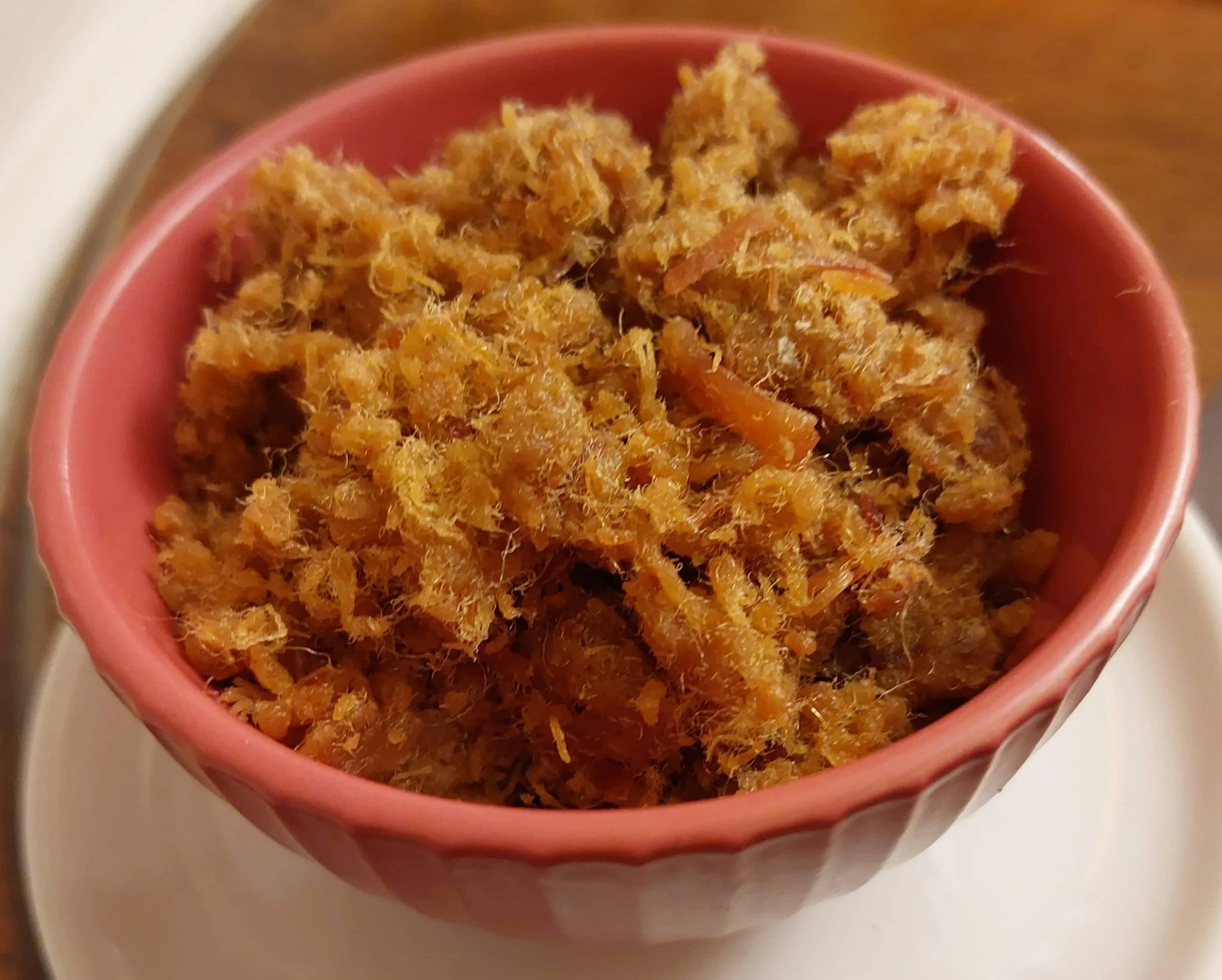
duvan čvarci
dried shredded pork
What is it?
Duvan čvarci are a special regional version of Serbian čvarci, originating from Valjevo in western Serbia. Unlike regular čvarci, which are chunky, crispy pork cracklings, duvan čvarci are extremely fine, stringy, and fluffy, resembling finely shredded tobacco, which is where the name duvan (“tobacco”) comes from. They’re considered a premium, artisanal variety made using a longer, more labour intensive process. Once the moisture is driven off, the cooked pork solids are pressed, squeezed, and shredded, creating the distinctive thin, fibrous strands that set duvan čvarci apart from the regular version.
What is in it?
Duvan čvarci are made from pork fat and fatty pork pieces, slowly rendered in their own fat with salt.
Where can I eat it?
Regular čvarci are found all over Serbia, even in supermarkets. Duvan čvarci are mostly found in the Valjevo region, but you can also find them in gourmet Serbian food shops or on some traditional menus, for example at Restaurant Mihailo in Belgrade, where they’re served as a side dish (though listed simply as čvarci).
Vegetarian.
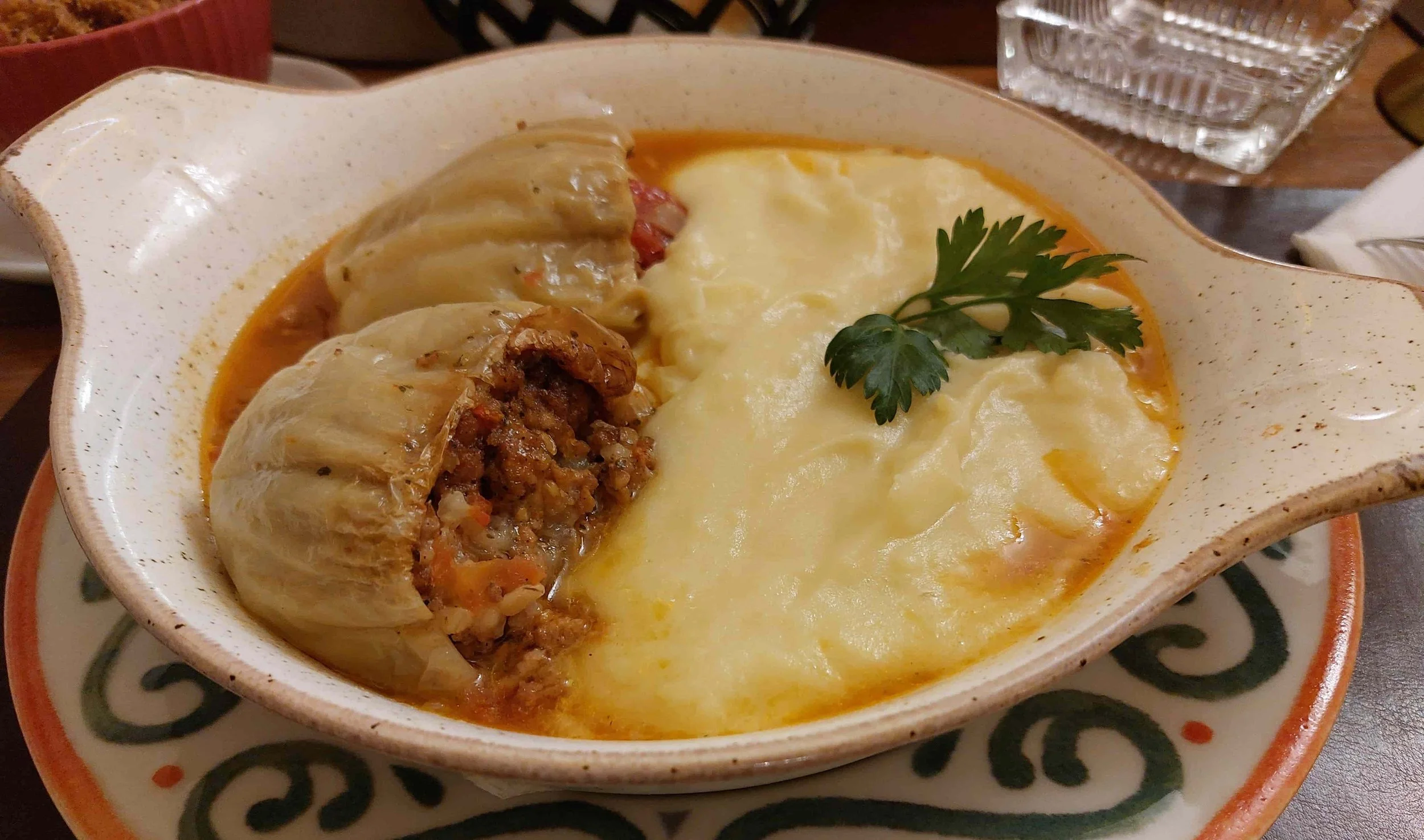
punjene paprike
stuffed peppers
What is it?
Punjene paprike are a classic Serbian comfort food, sweet Balkan peppers stuffed with a savoury mixture of minced meat and rice, then simmered slowly in a light paprika and tomato infused broth until tender.
What is in it?
Punjene paprike are typically made from pale yellow Balkan babura peppers. They’re filled with minced pork or a pork and beef blend, rice, onion, paprika, salt, pepper, and sometimes parsley. The stuffed peppers are simmered in a cooking liquid of water or light stock, oil, paprika, and tomato. They’re most often served with mashed potatoes and/or fresh bread to soak up the broth.
Where can I eat it?
You can find punjene paprike in many traditional Serbian kafanas, although they’re not quite as common as some other traditional dishes. We had a good one served with mash at Restaurant Mihailo in Belgrade.
Vegan versions available , dairy & gluten free.
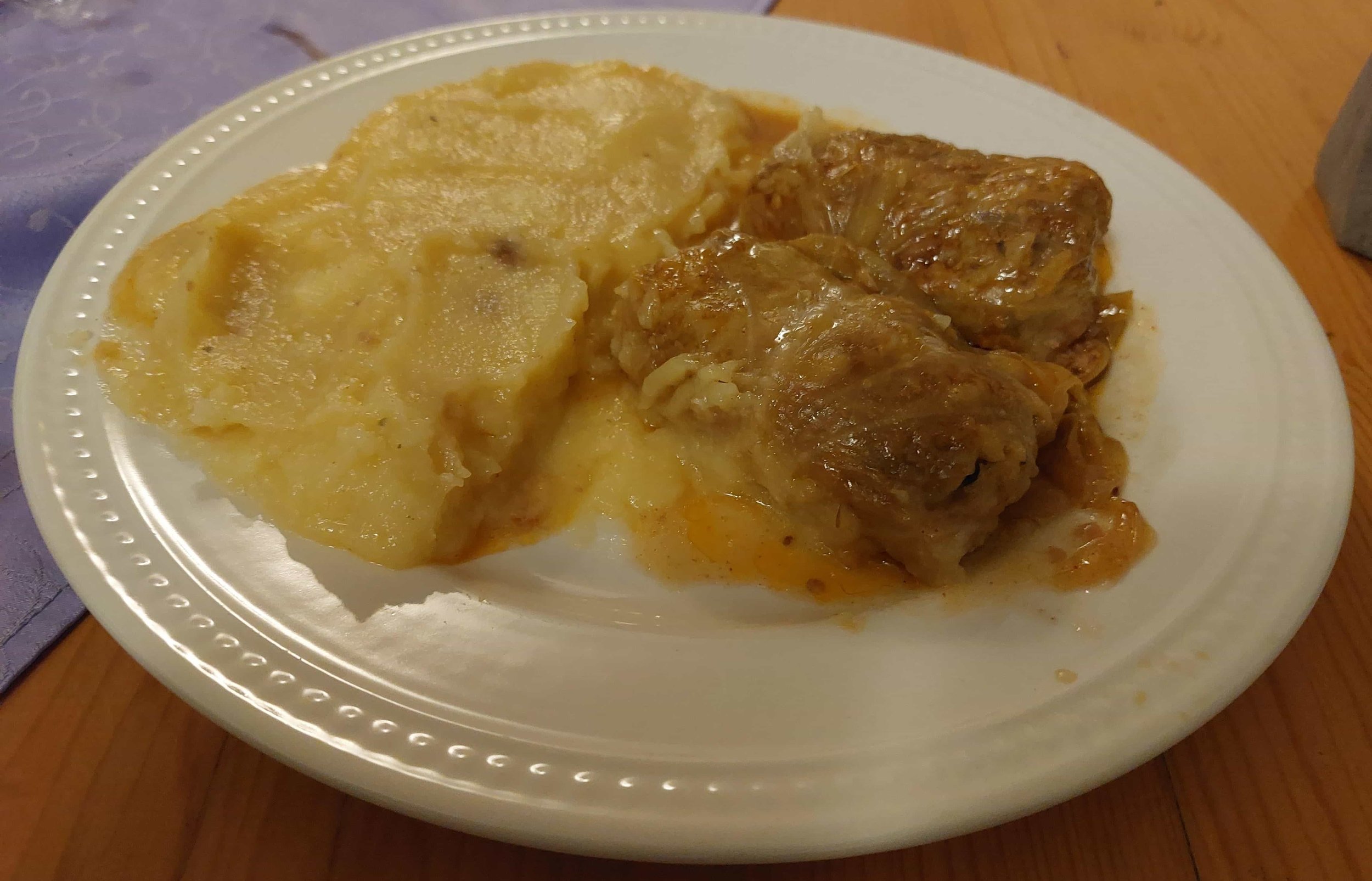
sarma
stuffed cabbage rolls
What is it?
Sarma is one of Serbia’s and the wider Balkans’ most traditional and delicious dishes, minced meat and rice wrapped in fermented cabbage leaves then slow cooked for hours with onions, smoked meat, and its own savoury juices
What is in it?
Serbian sarma is made from pickled cabbage leaves stuffed with a filling of minced pork, rice, onion, salt, garlic, pepper, and sweet paprika.
It sometimes also includes smoked meat (ribs, bacon, or sausage) cooked in the same pot. It’s commonly served with mashed potatoes or fresh bread.
Where can I eat it?
You’ll find sarma in many traditional Serbian kafanas (traditional tavern), but along with punjene paprike, it’s much more common as a home cooked meal. We had a good one with mash at Mala Slavija in Belgrade. It’s located away from the centre, but if you’re in that area it’s a great shout for traditional food.
Vegan versions rare but available, dairy & gluten free.
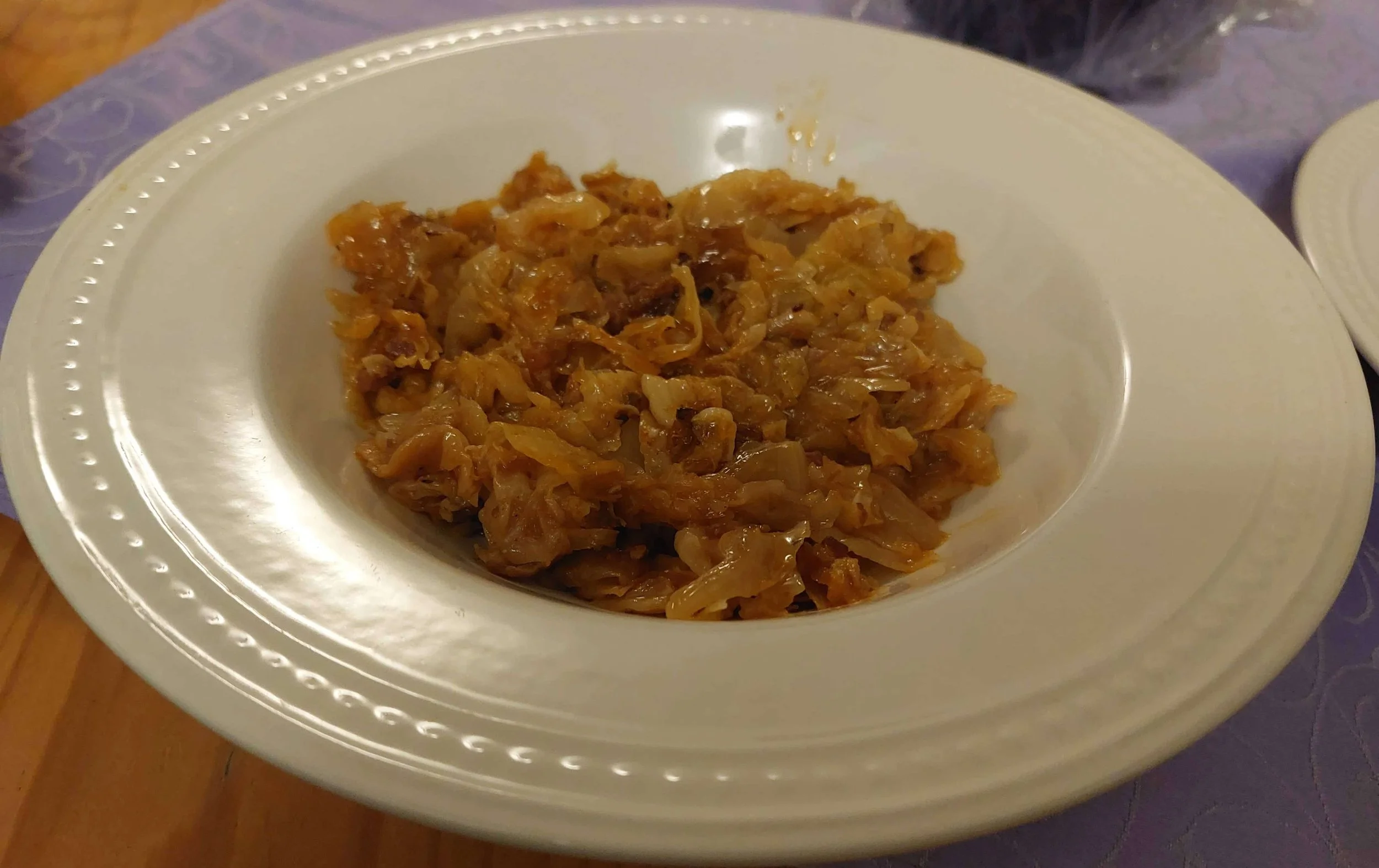
podvarak
baked sauerkraut
What is it?
Podvarak is a classic Serbian winter dish made from baked sauerkraut and onions, often cooked with pork or roasted poultry, then baked slowly until caramelised. It can be served either as a side dish or a main. As a side, it often comes without meat, just the caramelised baked sauerkraut. As a main course, it usually includes meat, typically pork belly, ribs, sausage, or roasted chicken or turkey baked into the dish or served on top. Slow baking is what gives podvarak its browned edges and lightly sweet flavour from the onions.
What is in it?
Typical ingredients include sauerkraut (kiseli kupus), onions, pork (belly, ribs, or sausage) or roasted chicken or turkey, oil or pork fat, paprika, garlic, salt, and pepper.
Where can I eat it?
You’ll find podvarak in some traditional Serbian kafanas, served as a main with meat or as a meatless side, though it isn’t as ubiquitous as many other traditional Serbian dishes. We tried it as a side at Mala Slavija in Belgrade, which is a bit out of the way but worth it for proper traditional food.
Vegetarian versions available, dairy and gluten free.
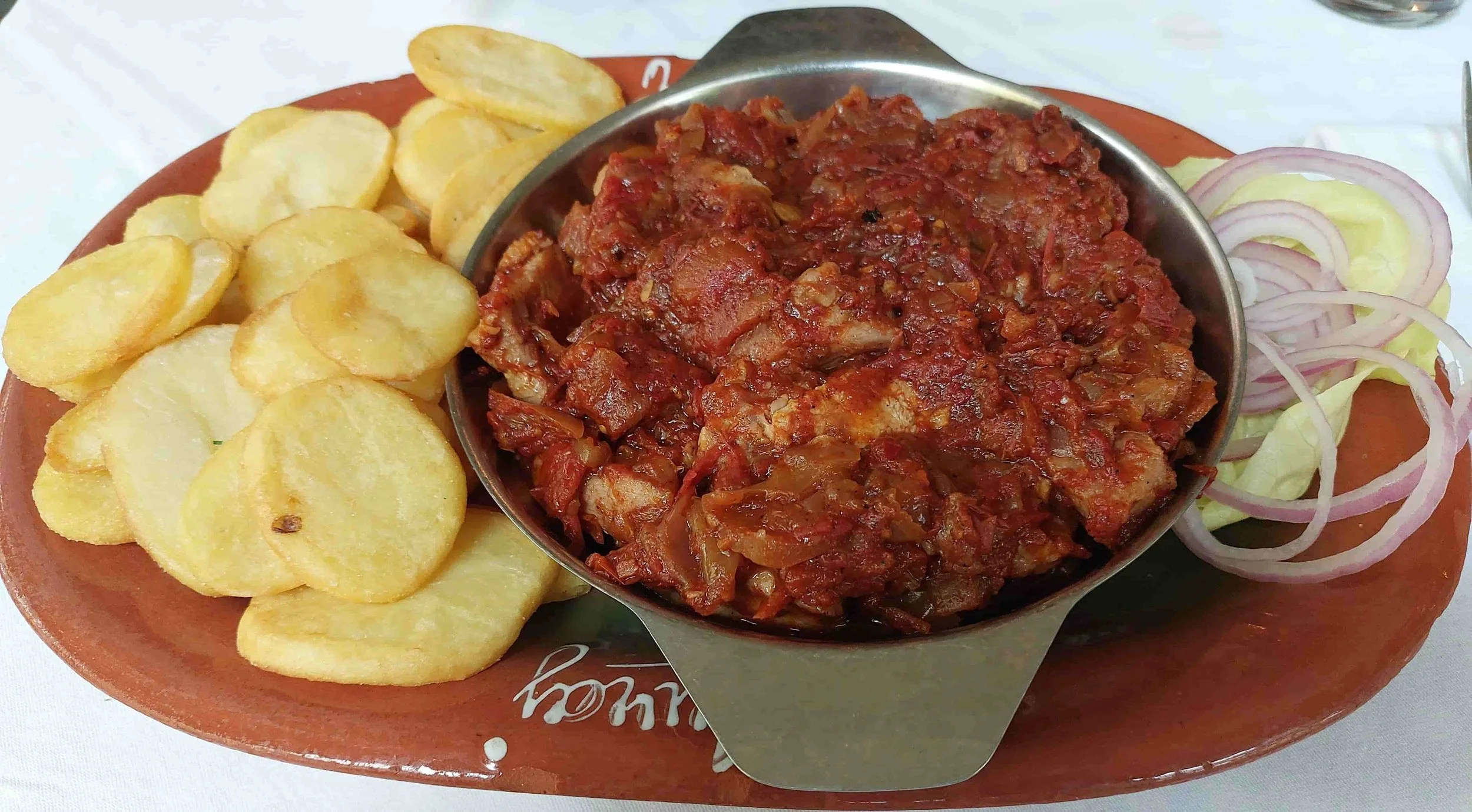
mućkalica
mixed meat stew
What is it?
Mućkalica is a traditional Serbian dish made from leftover grilled meat simmered together with vegetables and paprika to create a smoky, slightly spicy stew. It originates from the city of Leskovac, famous for its grill culture, and today it’s one of Serbia’s most widely known dishes. The name mućkalica comes from the verb mućkati — “to shake/mix” — referring to the way different cuts of meat and vegetables are combined. The key flavour comes from the already grilled meat, which gives the stew a unique smokiness compared with other meat dishes.
What is in it?
Authentic mućkalica is made with a mixture of grilled pork, peppers, tomatoes, onions, paprika, garlic, salt, and pepper. Some versions include spicy peppers or ajvar.
Where can I eat it?
Mućkalica is served across Serbia in many traditional restaurants. On English menus it may appear under different names, such as Leskovac pork stew or pork and pepper stew.
The best versions are in Leskovac (the dish’s home) or in Belgrade kafanas. It can be served on its own or with bread, mash, or potatoes. Both Restaurant Mihailo and Zavičaj (a local restaurant chain) in Belgrade serve very good versions.
Dairy free, traditionally gluten free.
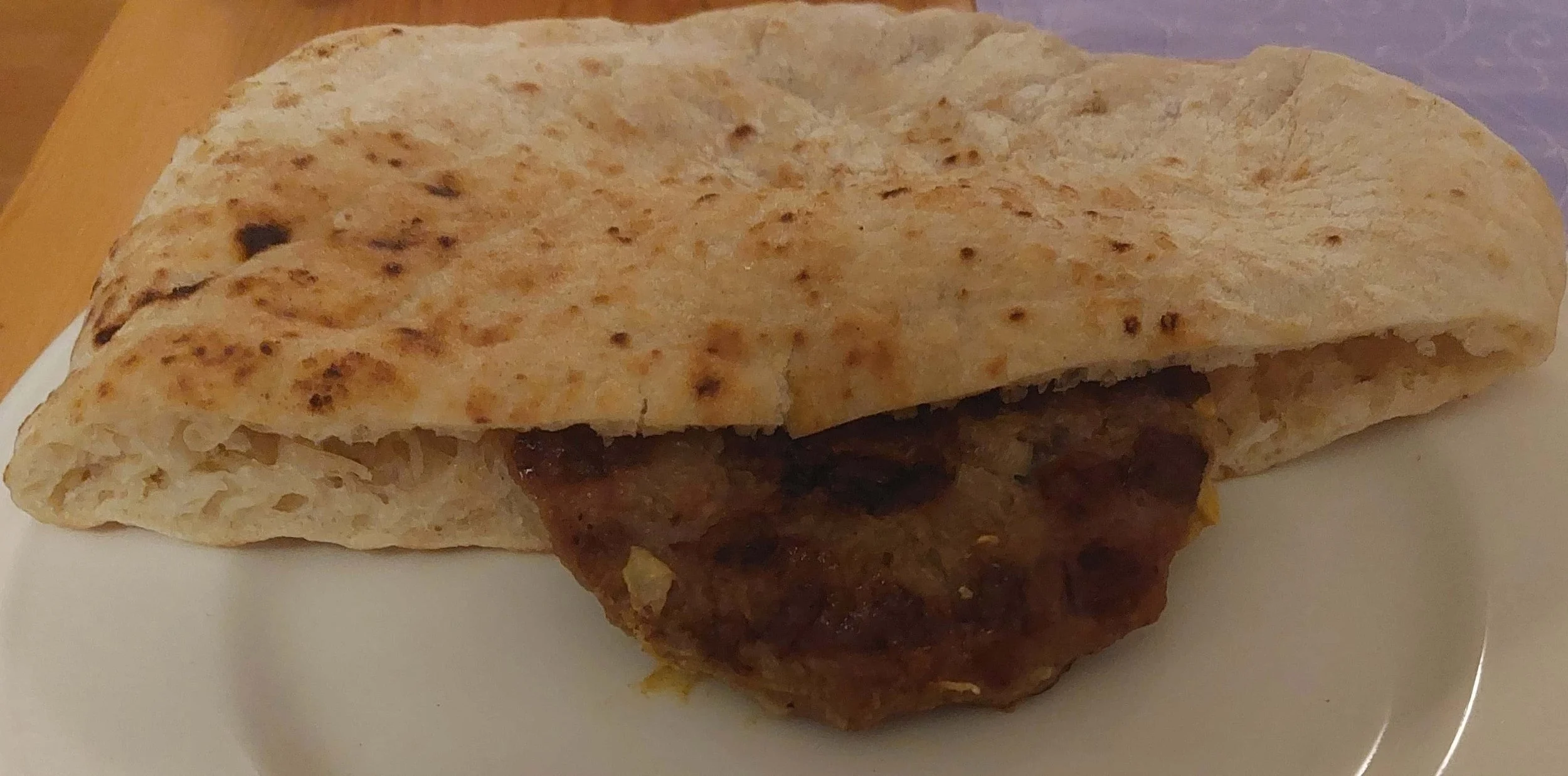
pljeskavica
Balkan burger
What is it?
Pljeskavica is one of Serbia’s best known national dishes, a large, thin, hand formed grilled meat patty often described as the Balkan answer to a hamburger. While regional variations differ, they all share the same core idea: juicy, seasoned minced meat cooked over a hot grill. Pljeskavica is usually served inside lepinja, a soft Serbian flatbread, with salad, sauces, raw onions, and fries.
It’s sometimes compared to ćevapi, but pljeskavica is one large patty instead of several small sausages, and it often includes onion directly in the meat.
Popular styles include:
Leskovačka pljeskavica, spicy, with hot paprika and sometimes bits of chilli
Šarska pljeskavica, stuffed with kajmak or melted cheese
Gurmanska pljeskavica, mixed with bacon, onions, and cheese directly into the meat
What is in it?
A traditional pljeskavica is made from a mixture of minced beef and pork, seasoned with salt, pepper, and onion, some versions include garlic or paprika
Where can I eat it?
It’s a staple of Serbian roštilj (grill) cuisine and can be found in almost every kafana, grill restaurant, and street food stand across the country.
Dairy free unless stuffed with kajmak or cheese.
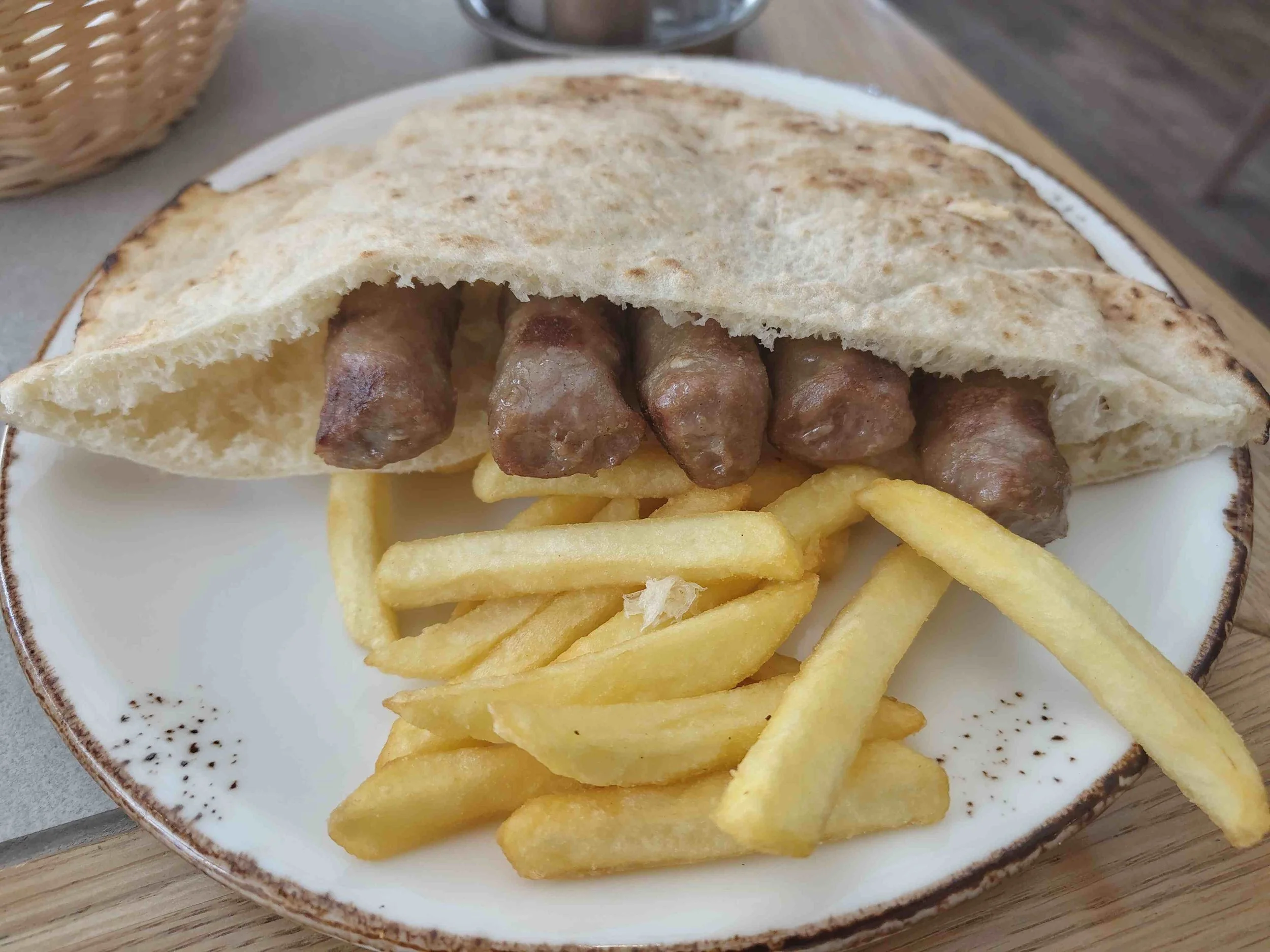
ćevapi
grilled minced meat
What is it?
Ćevapi are one of the most iconic dishes in Serbia and the Balkans, small hand rolled grilled minced meat sausages typically served in portions of five or ten inside lepinja (Serbian flatbread).
What is in it?
Serbian ćevapi are traditionally made from minced beef, or a mixture of beef and pork, seasoned primarily with salt and sometimes pepper or garlic. They’re typically served with lepinja, raw chopped onions, ajvar (roasted pepper relish), and kajmak (creamy dairy spread).
Where can I eat it?
Everywhere in Serbia, from traditional restaurants (kafanas) and roštilj (grill) places to fast food stands. It’s one of the most common traditional dishes. A great spot in Belgrade is Ćevap kod Dekija.
Dairy and gluten free.
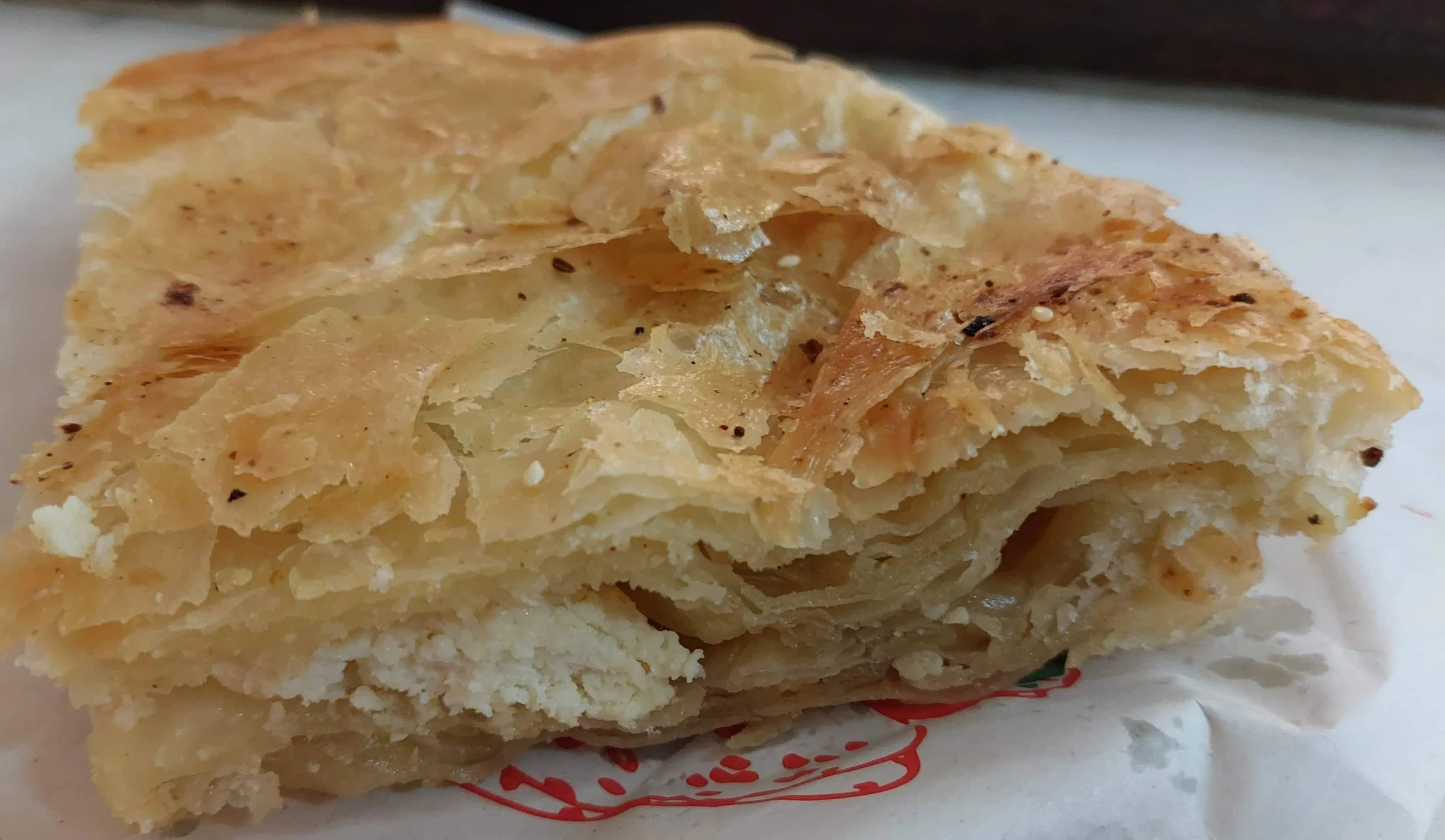
burek
filo pie
What is it?
In Serbia, burek is one of the most popular breakfast and snack foods, a crispy, oily, multi layered pastry made with extremely thin sheets of dough (jufka) and traditionally filled with minced meat. It’s often eaten hot in the morning, usually with a carton of drinkable yogurt, the classic pairing.
Authentic Serbian burek is made with hand stretched, filo style dough. Modern bakeries sometimes use puff pastry versions, which are not traditional and have the wrong texture. Real Serbian burek is typically round and baked in large pans, then cut into slices.
What is in it?
Traditional Serbian burek is made from layers of extremely thin, hand pulled dough brushed with oil or fat. The classic filling is minced meat; cheese, spinach, and potato versions also exist, though they may be treated differently depending on the bakery and region.
Where can I eat it?
Everywhere in Serbia, in pekare (bakeries) and buregdžinice (specialised burek shops).
For proper traditional burek, smaller independent bakeries are your best bet, chain bakeries often sell the lazy puff pastry versions, avoid!
Vegetarian versions available.
Related food guides
While Serbian cuisine has its own regional specialities, it shares many traditional dishes with neighbouring Bosnia and Herzegovina. For a deeper look at some of these shared Balkan classics, see our Bosnian food guide.
Ingredients listed reflect common or typical components of this dish as served in restaurants or street‑food vendors. Variations by region, season, or vendor are common. This information is provided for general reference only. If you have dietary restrictions or allergies, please verify ingredient details independently. We assume no liability for accuracy or outcomes.
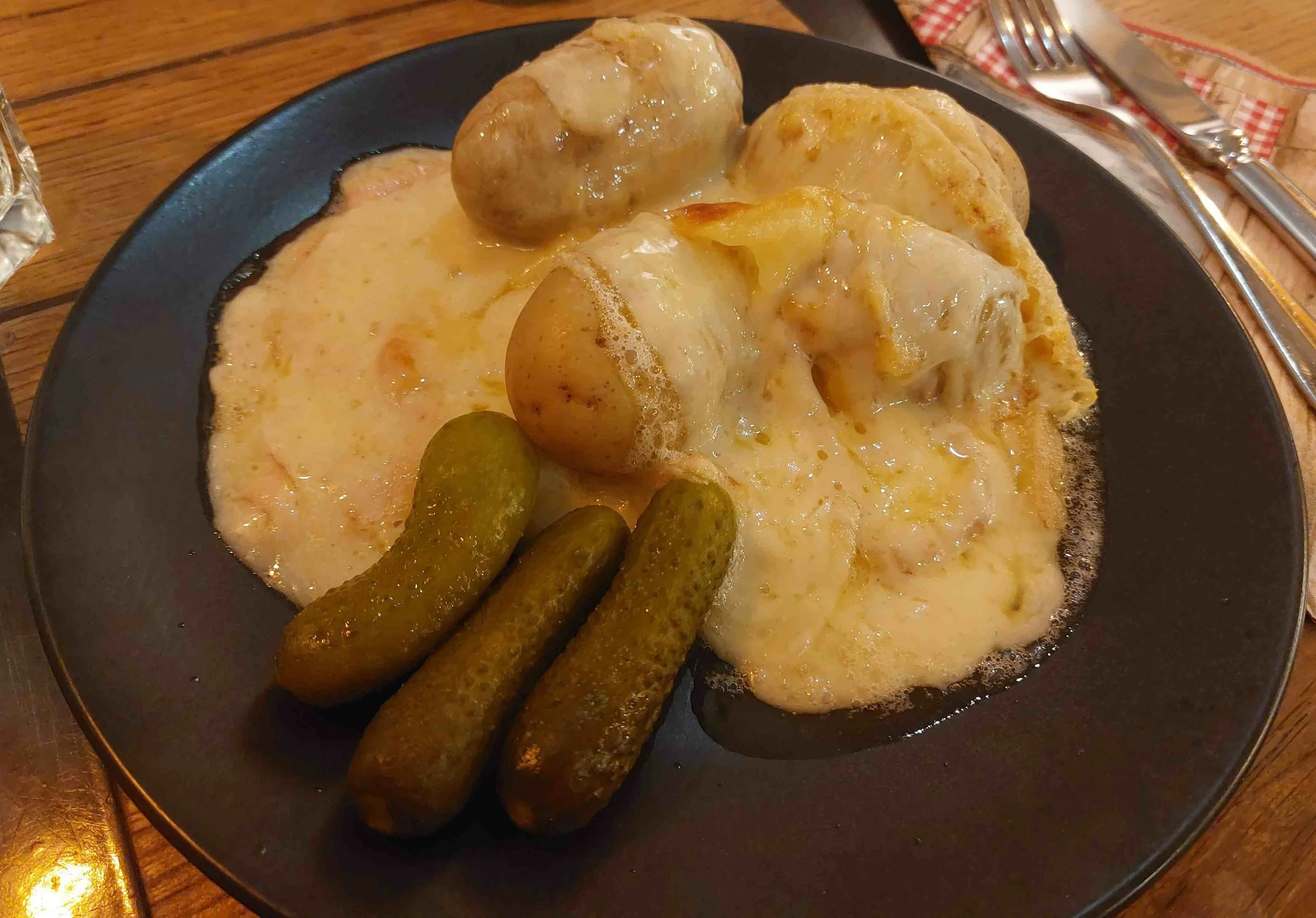
all the foods - Switzerland
Discover all the traditional Swiss dishes we tried, from fondue to raclette and more
Here you will find a list of all the traditional cuisine we tried in Switzerland.
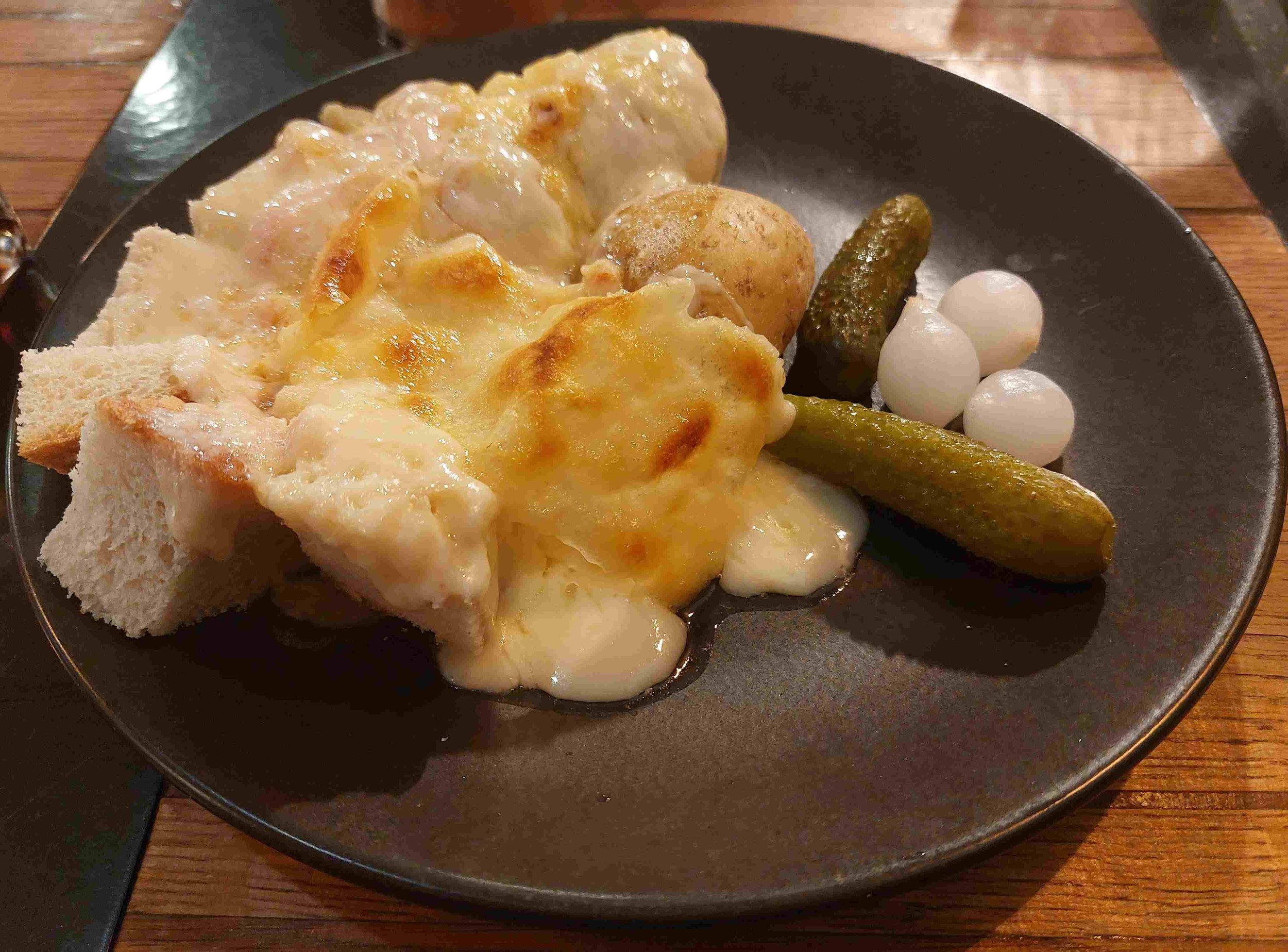
raclette
melted cheese & potato
What is it?
The Swiss really do have a deep and abiding love for melted cheese, and raclette is one of the finest expressions of that devotion. Raclette is both the name of a dish and the semi hard cow’s milk cheese at its heart. Traditionally, a large wheel of raclette cheese is heated in front of a fire or grill, and as the surface softens and melts, the molten layer is scraped from the wheel and served directly onto waiting plates.
At its most classic, the melted cheese is scraped over boiled potatoes and eaten slowly and sociably, often as a long shared meal. Modern raclette is often served quite differently. Outside traditional Alpine settings, it’s common to see tabletop electric raclette grills, where diners melt individual slices of cheese in small pans and scrape them over potatoes, bread, vegetables, or meat.
What is in it?
Raclette cheese, boiled potatoes (typically small, waxy varieties), traditionally accompanied by cornichons (small pickles) and pickled onions, bread is common in modern versions but not part of the original Valais service. Contemporary versions may also include flavoured raclette cheeses (with chilli, garlic, herbs, or smoked), as well as additions such as mushrooms, roasted vegetables, bacon, or cured meats.
Where can I eat it?
Raclette originates from the Valais region of Switzerland but is now popular throughout the country, particularly in winter. It’s widely available in mountain restaurants, traditional restaurants, and places that specialise in raclette. We had an excellent modern take at the Raclette Factory in Zurich, which offers both classic and contemporary variations brought straight to the table.
The traditional version of raclette is vegetarian.
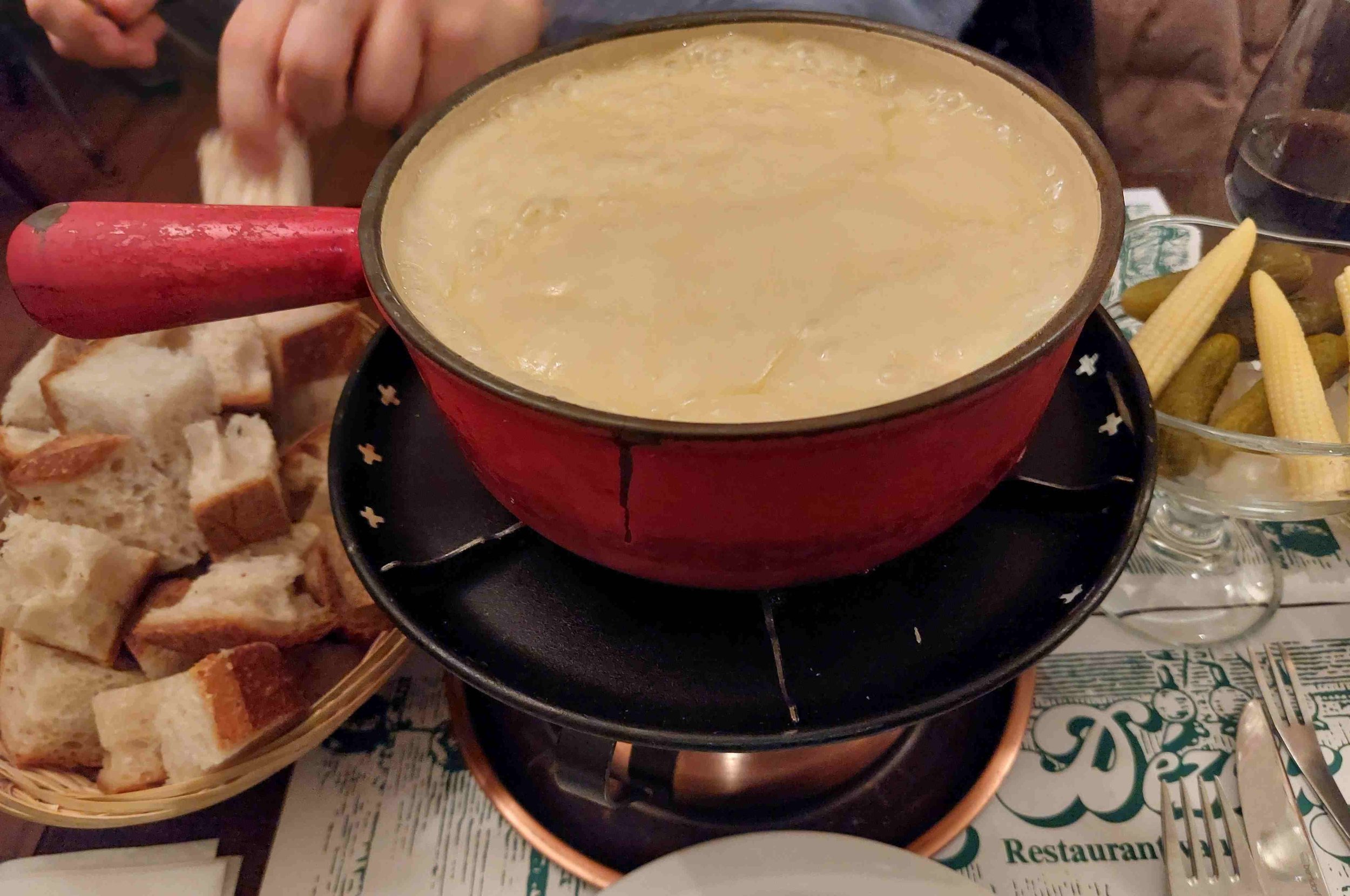
fondue
melted cheese dip
What is it?
One of Switzerland’s most iconic dishes, fondue is a decadent communal meal built around melted cheese and wine. The cheese is kept molten in a fondue pot (caquelon) over a small flame while everyone eats together. Each person uses a long fork to dip cubes of bread, traditionally day old crusty bread, into the hot cheese, swirling to coat it evenly and trying not to drop it in. Traditionally, there’s a friendly “penalty” if you do lose your bread, which adds to the social fun of the dish. Towards the end, a crispy golden cheese layer forms at the bottom of the pot, known as la religieuse (“the nun”), considered a delicacy.
What is in it?
A classic Swiss fondue is made from a blend of Gruyère and Vacherin Fribourgeois, melted with dry white wine, garlic, and kirsch (cherry brandy). A little cornstarch is used to help emulsify the cheese and keep it smooth. The traditional accompaniment is bread, but many places also serve cornichons, pickled onions, and sometimes boiled potatoes on the side.
Where can I eat it?
Fondue is popular across Switzerland, especially in the colder months, and it’s easy to find restaurants that specialise in it. We had an excellent version at Le Dézaley in Zurich, though booking ahead is strongly recommended as it’s very popular.
Standard version is vegetarian
rösti
fried potato cake
What is it?
Rösti is a classic Swiss potato dish, originally a breakfast dish, now more commonly served as a side or accompaniment. Made from grated potatoes, traditionally parboiled and grated once cooled, then formed into large round or individual patties and fried until crispy on the outside while remaining soft inside. While pan frying is the traditional method, some recipes bake them in the oven.
What is in it?
Rösti consists primarily of grated potatoes, fried in butter or oil, and seasoned with salt and sometimes pepper. Variations may include onions, bacon, or cheese, but the classic version is just potatoes and fat.
Where can I eat it?
Rösti is common throughout the German speaking part of Switzerland, often served alongside mains such as Zürcher Geschnetzeltes or other meat dishes. It is also sold as a standalone side in traditional restaurants and cafés, such as Le Dézaley in Zurich, and can appear on breakfast menus topped with eggs or smoked salmon.
Vegetarian and gluten free
malakoff
fried cheese
What is it?
Malakoff is a classic speciality from the canton of Vaud in western Switzerland. It consists of fried cheese, usually served hot as a starter, often with a simple green salad. Despite its Russian-sounding name, the dish is Swiss and is traditionally said to be named after the Battle of Malakoff during the Crimean War, when Swiss mercenaries were present. Malakoffs are most commonly shaped into round balls, though sticks or patties are also seen.
What is in it?
Malakoff is typically made with Gruyère cheese, coated in a batter of flour and eggs, sometimes with white wine or milk and seasoned with pepper or nutmeg, before being breaded and deep fried.
Where can I eat it?
Malakoff is very common in Vaud, but is less frequently seen elsewhere in Switzerland. Outside the region, it occasionally appears on menus focusing on regional Swiss cuisine, such as at Le Dézaley in Zurich, where it is served as a starter with salad.
Vegetarian.
zürcher geschnetzeltes
veal in cream sauce
What is it?
Zürcher Geschnetzeltes is a classic dish from Zurich whose name translates directly as “sliced meat, Zurich style.” It consists of strips of veal cooked quickly and served in a creamy white wine sauce.
Traditionally, it is served with Rösti, Switzerland’s iconic grated potato pancake, which is great for soaking up all the sauce. The combination has become so closely associated that Zürcher Geschnetzeltes and Rösti are almost inseparable on menus.
What is in it?
The dish is made from thinly sliced veal, often with onions or shallots and mushrooms in butter, then finished with dry white wine and cream.
Where can I eat it?
Zürcher Geschnetzeltes is widely available in traditional Swiss restaurants throughout Zurich and also in other parts of Switzerland. A well known place to try it is Restaurant Zeughauskeller in Zurich, which serves a classic version in a historic setting.
älplermagronen
creamy pasta
What is it?
Älplermagronen is a Swiss Alpine dish often described as Switzerland’s answer to mac and cheese. Originating in the Alpine regions, it was traditionally eaten by herdsmen (Älpler) who needed filling, calorie dense food made from ingredients that stored well in the mountains. The dish combines pasta, potatoes, cheese, and cream, typically finished with a slightly crisp top.
It’s often served with apple sauce, whose sweetness provides a surprising contrast to the savoury cheese.
What is in it?
Älplermagronen is made from short pasta, traditionally macaroni, and boiled potatoes, combined with cream, milk, butter, and Alpine cheese such as Gruyère or Emmental. Fried onions are usually served on top or alongside, with apple sauce often served on the side.
Where can I eat it?
You’ll find Älplermagronen throughout Switzerland, especially in mountain restaurants. It’s particularly popular in ski resorts and rural regions, but can also be found in cities.
Vegetarian .
Related food guides
While Swizz cuisine has its own regional specialities, it shares many traditional dishes with neighbouring Germany & Austria. For a deeper look at some of these shared classics, see our German food guide.
Ingredients listed reflect common or typical components of this dish as served in restaurants or street‑food vendors. Variations by region, season, or vendor are common. This information is provided for general reference only. If you have dietary restrictions or allergies, please verify ingredient details independently. We assume no liability for accuracy or outcomes.
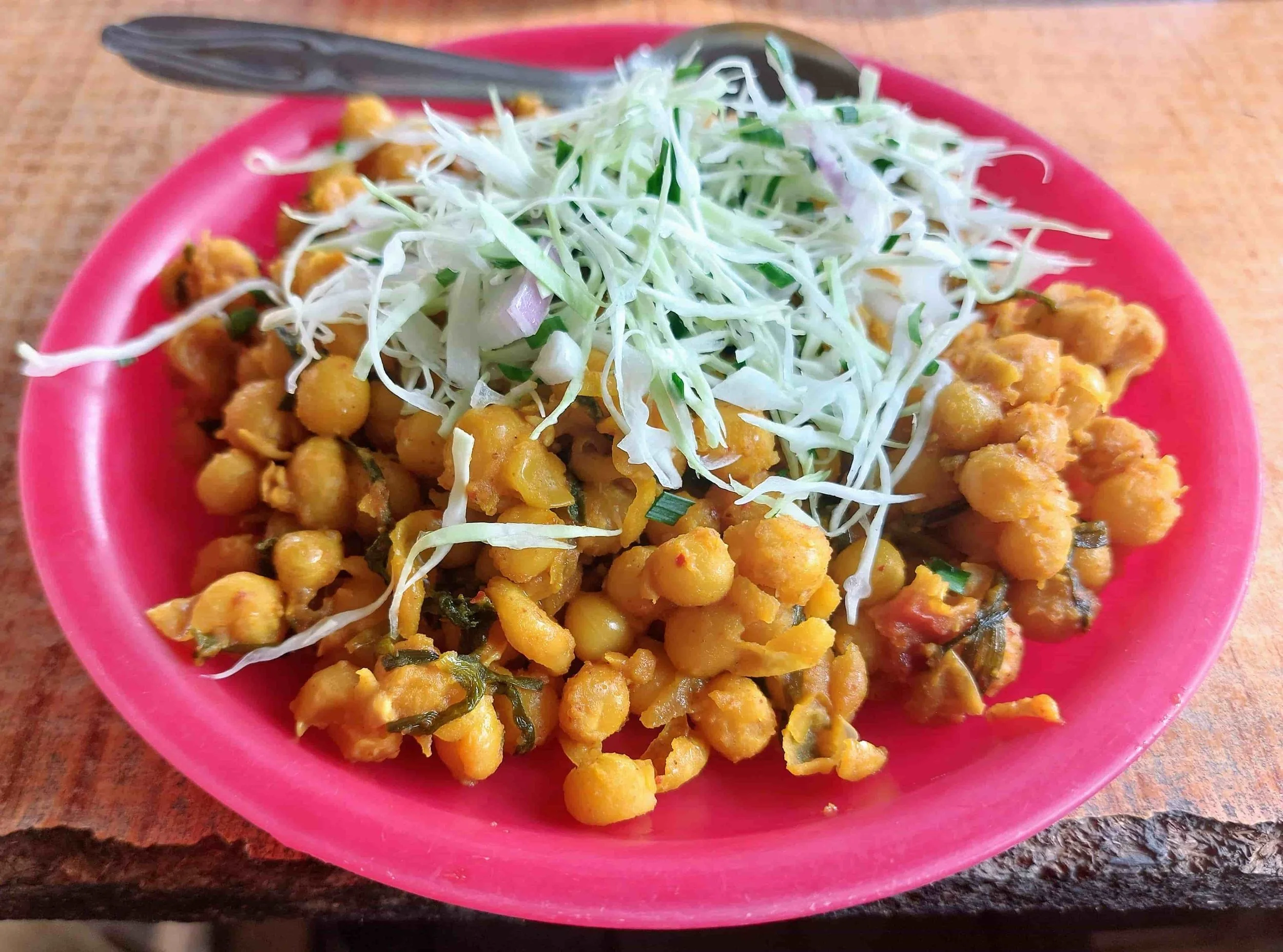
North East India
Discover all the traditional North East Indian dishes we tried, from sawhchiar and kelli chana to tenga and more
Click to view our top 10 Indian foods
Click to view our Indian food glossary
Northeast Indian food is a very different experience from the creamy curries and naan many travellers associate with India. In states like Mizoram, Manipur, Nagaland, and Assam, food traditions draw on local produce, tribal cooking methods, and time honoured techniques such as smoking, drying, and fermentation. The result is a cuisine low in dairy but rich in earthy, wholesome flavours that feel deeply connected to the region.
Some of the fermented ingredients can be strong, funky, and, let’s be honest, not always for everyone. But they’re a core part of the region’s food identity and well worth trying at least once.
Many of these dishes don’t show up on typical tourist menus, so you’ll often need to seek out street stalls, markets, and small family run restaurants to find the real thing.
In this guide, we’ll be exploring food exclusively from Mizoram, Manipur, Nagaland, and Assam, the dishes we discovered, what goes into them, and where you can track them down.
Mizoram
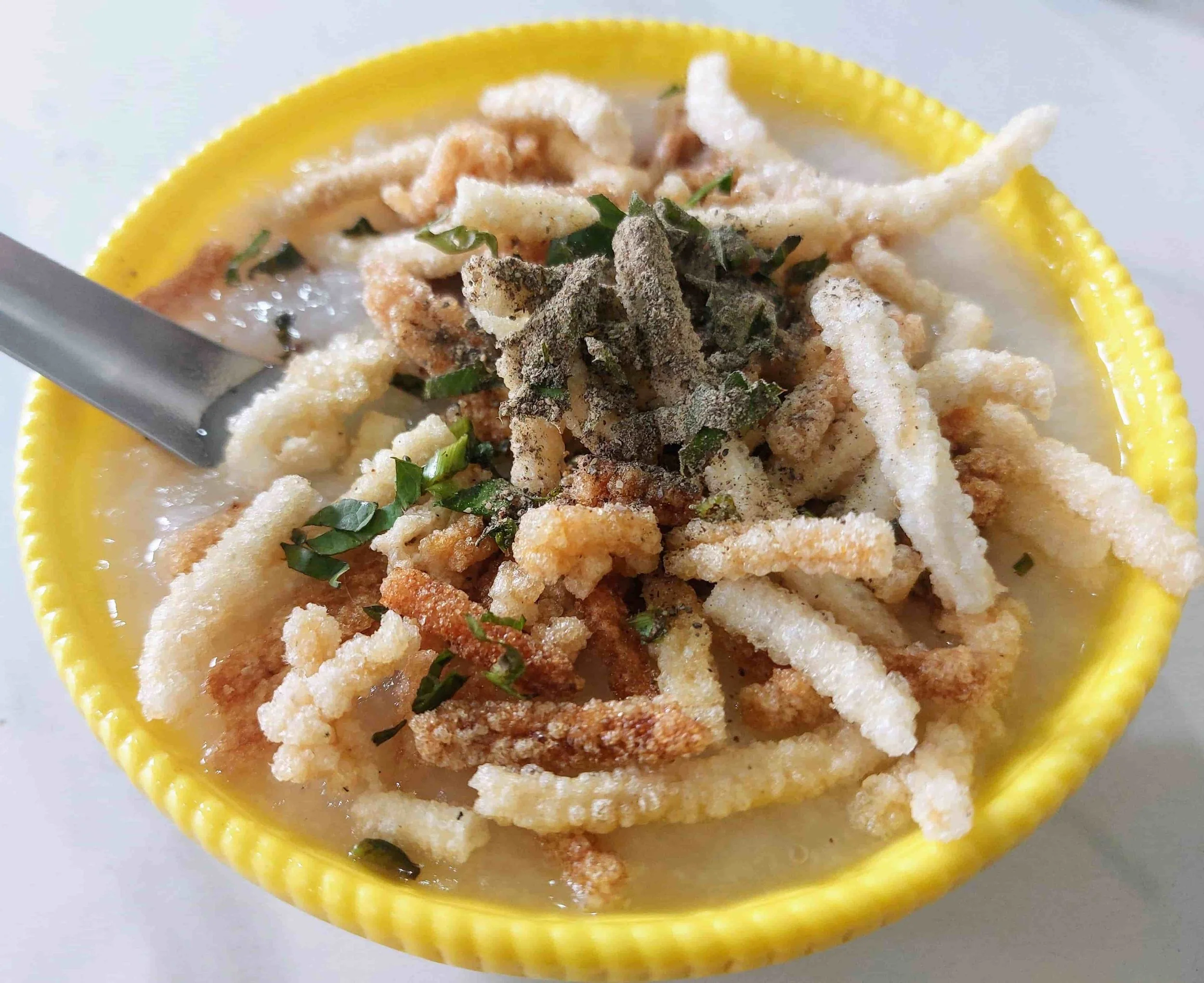
sanpiau
rice porridge
What is it?
Sanpiau is a popular rice porridge from Mizoram, typically served with crispy rice crackers, meat, and a touch of spice. Its origins trace back to the Burmese dish hysan byok—hysan meaning rice and byok meaning boiled.
What is in it?
The dish features rice, fresh coriander, crispy rice crackers, and meat (usually pork or chicken), along with various herbs and spices for added flavour.
Where can I eat it?
Sanpiau is one of the easiest traditional foods to find in Mizoram. It’s commonly available at restaurants serving Mizo cuisine, such as Mizo Diner or JM Restaurant in the capital, Aizawl.
Dairy & gluten free.
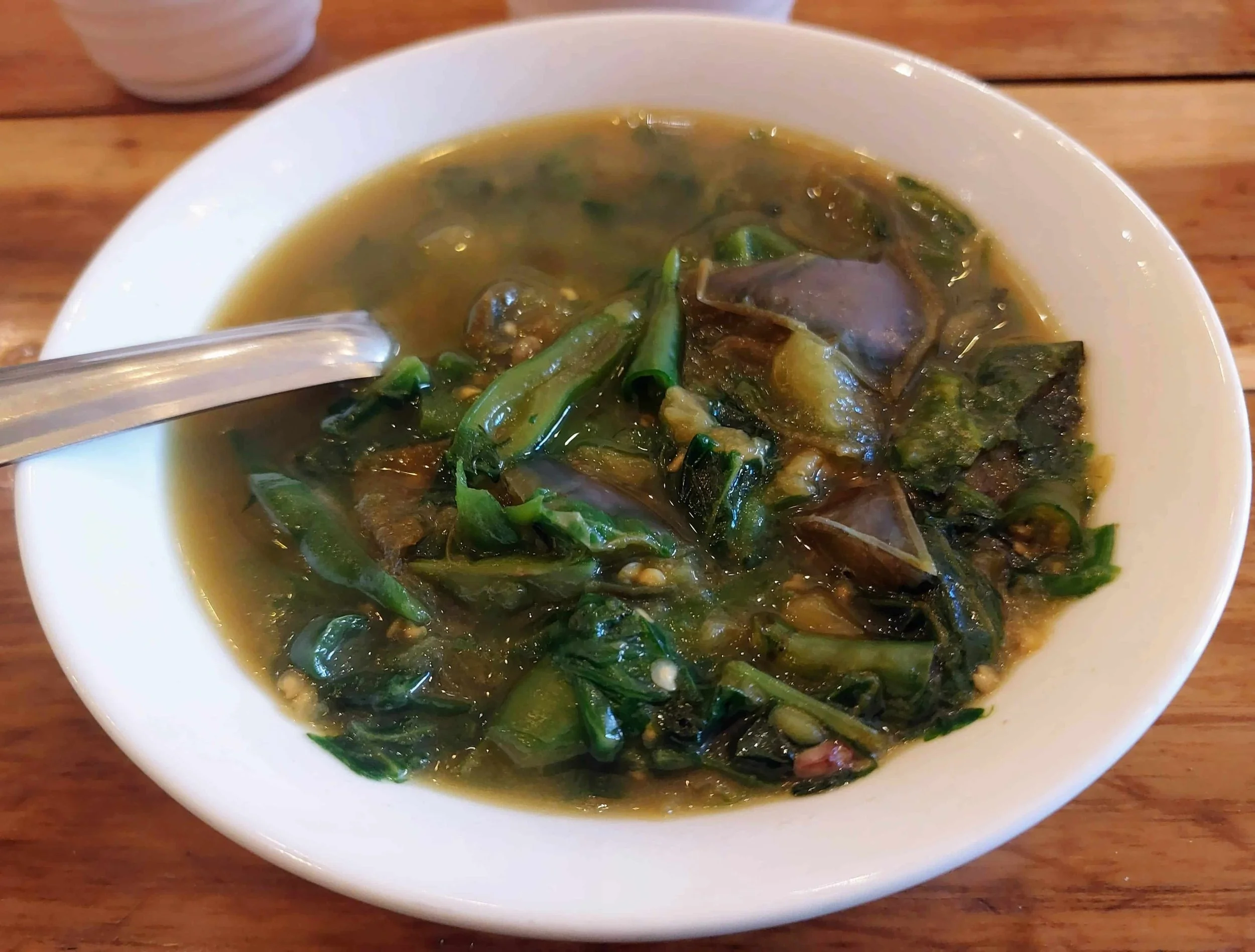
mizo bai
Vegetable stew
What is it?
Mizo Bai is a nutritious, mildly spicy vegetable stew that is a staple in Mizoram, known for its simplicity and health benefits. It features boiled vegetables and can be served with or without meat.
What is in it?
The dish typically includes a mix of leafy greens such as spinach, along with vegetables like green beans, aubergine, and chillies. Other seasonal vegetables can also be added. Variations may include chicken or pork for added protein.
Where can I eat it?
Mizo Bai is often prepared at home rather than in restaurants, but it can occasionally be found on the menus of Mizo eateries. We tried it at Mizo Diner in Aizawl and spotted it at a few other traditional restaurants in the city.
Dairy & gluten free
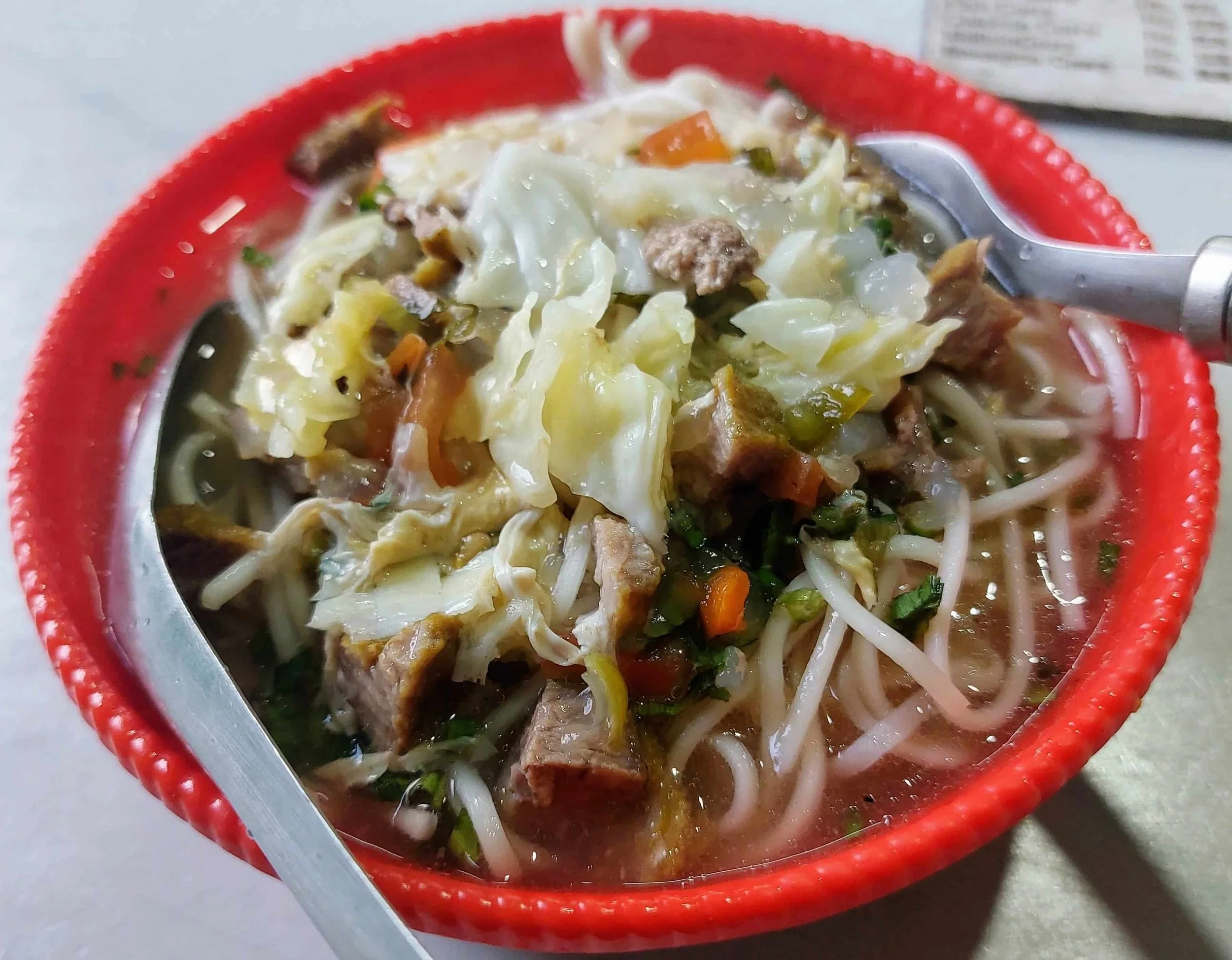
chow satuileih
spicy noodle broth
What is it?
Chow Satuileih, which translates to “noodles with meat broth poured over it,” is a spicy noodle dish in a rich meat broth; it reminded me a bit of Vietnamese pho. It is a popular snack in Mizoram, known for its comforting and flavourful combination of noodles and broth.
What is in it?
The dish includes noodles, meat (usually pork or chicken), cabbage, garlic, chili, and turmeric, giving it a spicy, meaty flavour.
Where can I eat it?
Chow Satuileih is a common dish served in many cafés and restaurants across Mizoram. You can find it at places like JM Restaurant in Aizawl, among other local spots.
Dairy free.
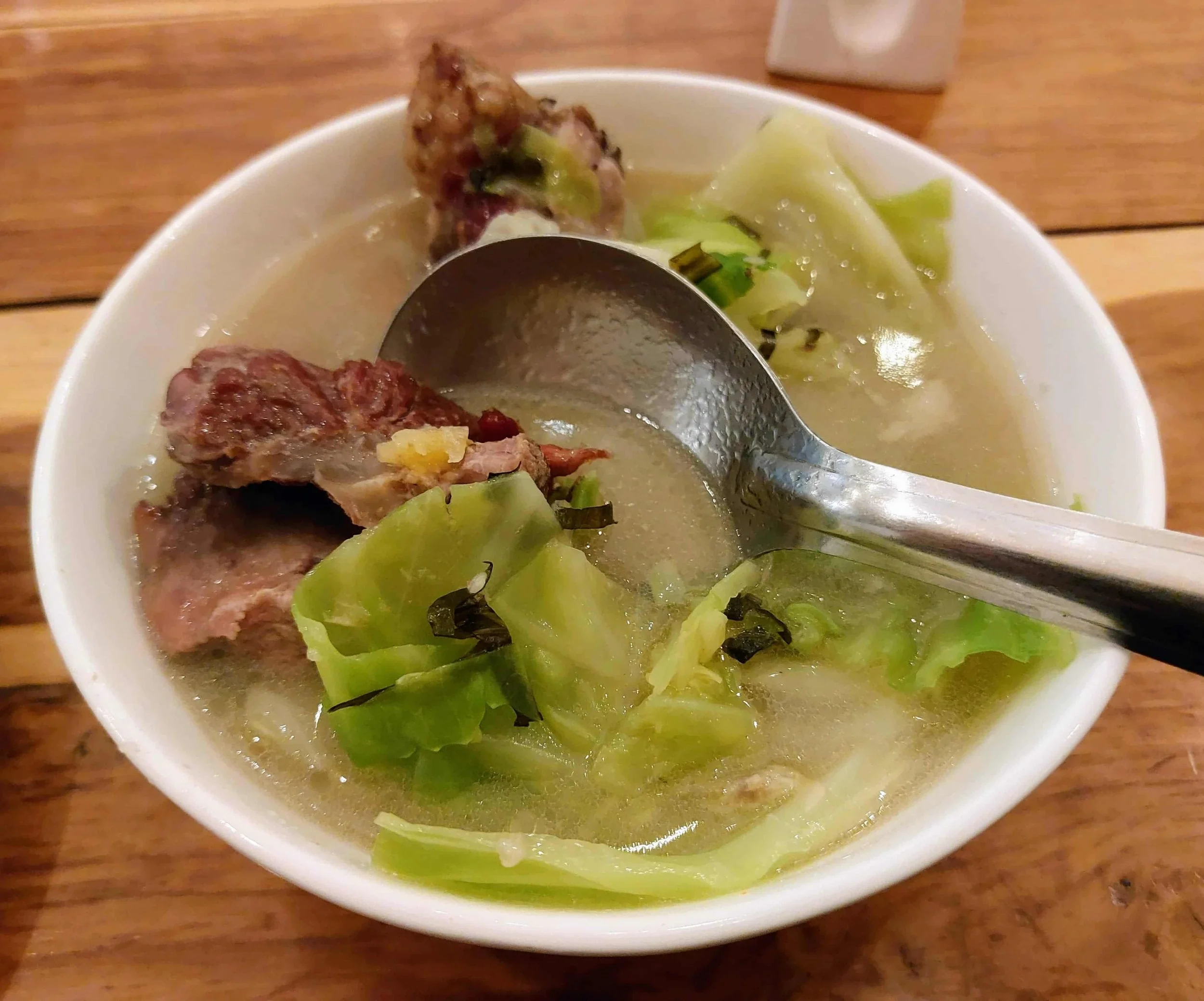
vawkser rep chhum
smoked pork & vegetable broth
What is it?
Vawkser Rep Chhum is a traditional Mizo dish combining smoked pork (vawkser rep) with boiled vegetables (chhum) in a simple, comforting broth. The smoked meat gives the soup its distinct, deeply savoury flavour.
What is in it?
The dish includes boiled smoked pork, broth, and cabbage, though other vegetables may be added. It is typically served with boiled or fried rice on the side.
Where can I eat it?
Smoked pork is a Mizo specialty and can be found in various forms across Mizoram. Vawkser Rep Chhum, along with other variations of smoked pork (such as stir fried with vegetables), is commonly available in local restaurants and even as street food throughout the state.
Dairy & gluten free.
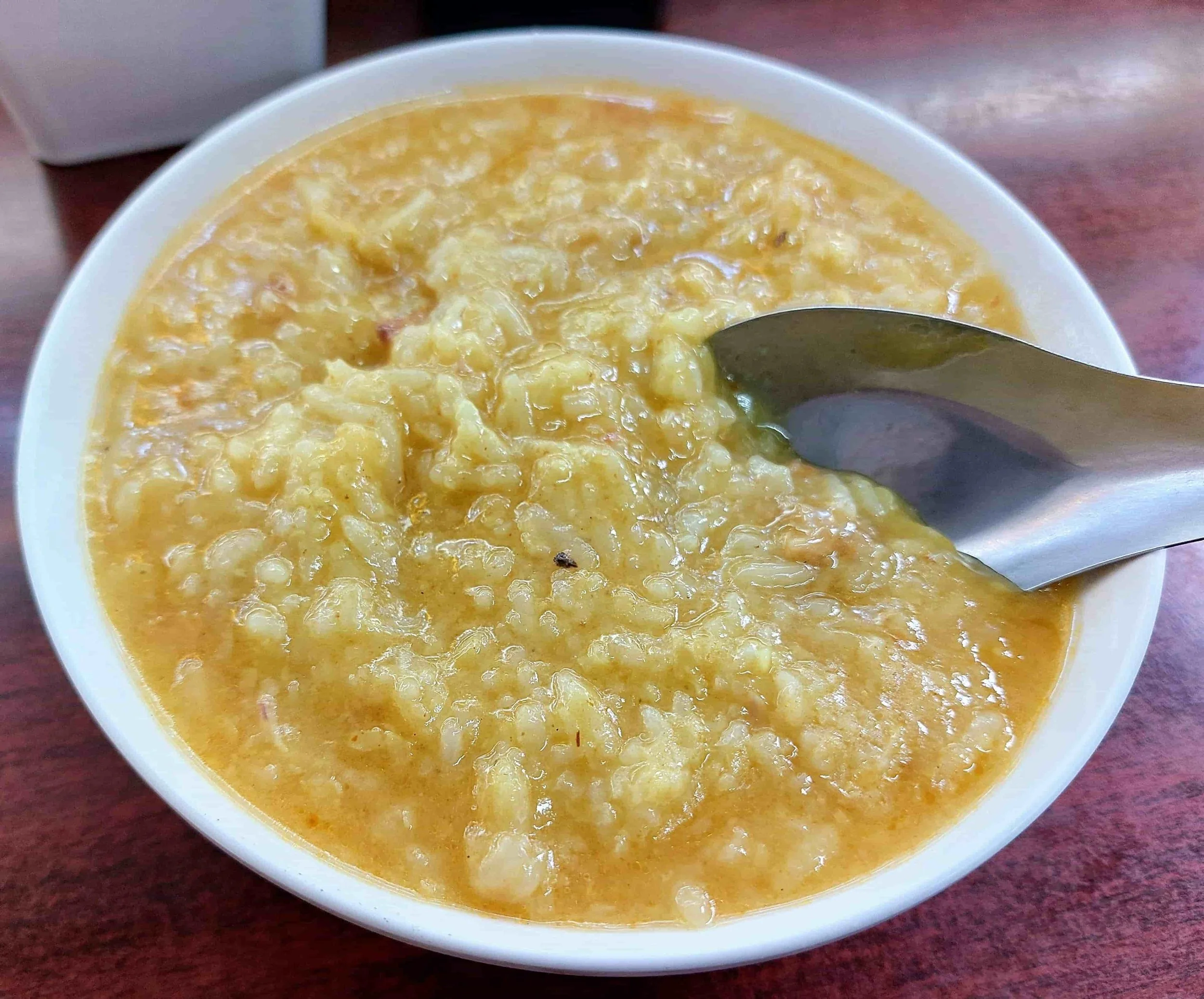
sawhchiar
savoury rice porridge
What is it?
Sawhchiar is a lightly spiced dish made by boiling rice and meat together in one pot. The meat adds flavour to the rice, resulting in a creamy texture similar to risotto. It was probably my favourite Mizo dish I tried.
What is in it?
The dish consists of rice, meat (usually pork or chicken), and a few spices such as ginger, chili, and garlic.
Where can I eat it?
Sawhchiar can be found in small local eateries in Aizawl that serve traditional Mizo food.
Dairy & gluten free.
Manipur
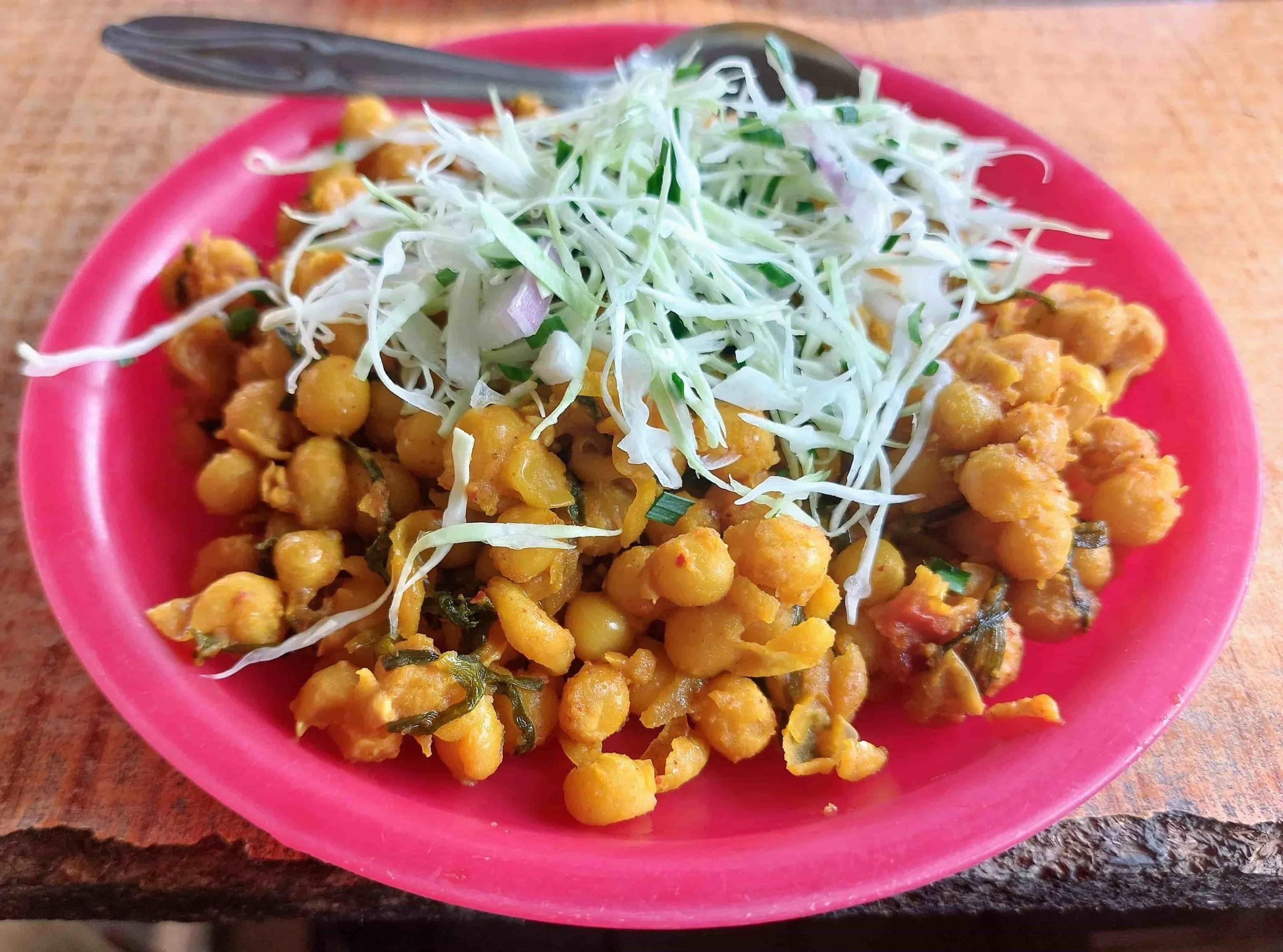
kelli chana
chickpea snack
What is it?
Kelli Chana is a spicy chickpea snack from Manipur, cooked with minimal oil, making it a tasty, healthy option. It is usually enjoyed as a snack rather than a main course.
What is in it?
The dish features chickpeas, chili, garlic, ginger, coriander, and a small amount of oil. It is often topped with onion and shredded cabbage for added texture and flavour.
Where can I eat it?
A great place to try Kelli Chana is at the restaurant within Kangla Fort in Imphal, the capital of Manipur. The fort, a key tourist attraction, offers a small restaurant serving local dishes. Note that there is an entry fee to visit the fort, but it’s well worth it if you are visiting Imphal.
Vegan, dairy & gluten free.
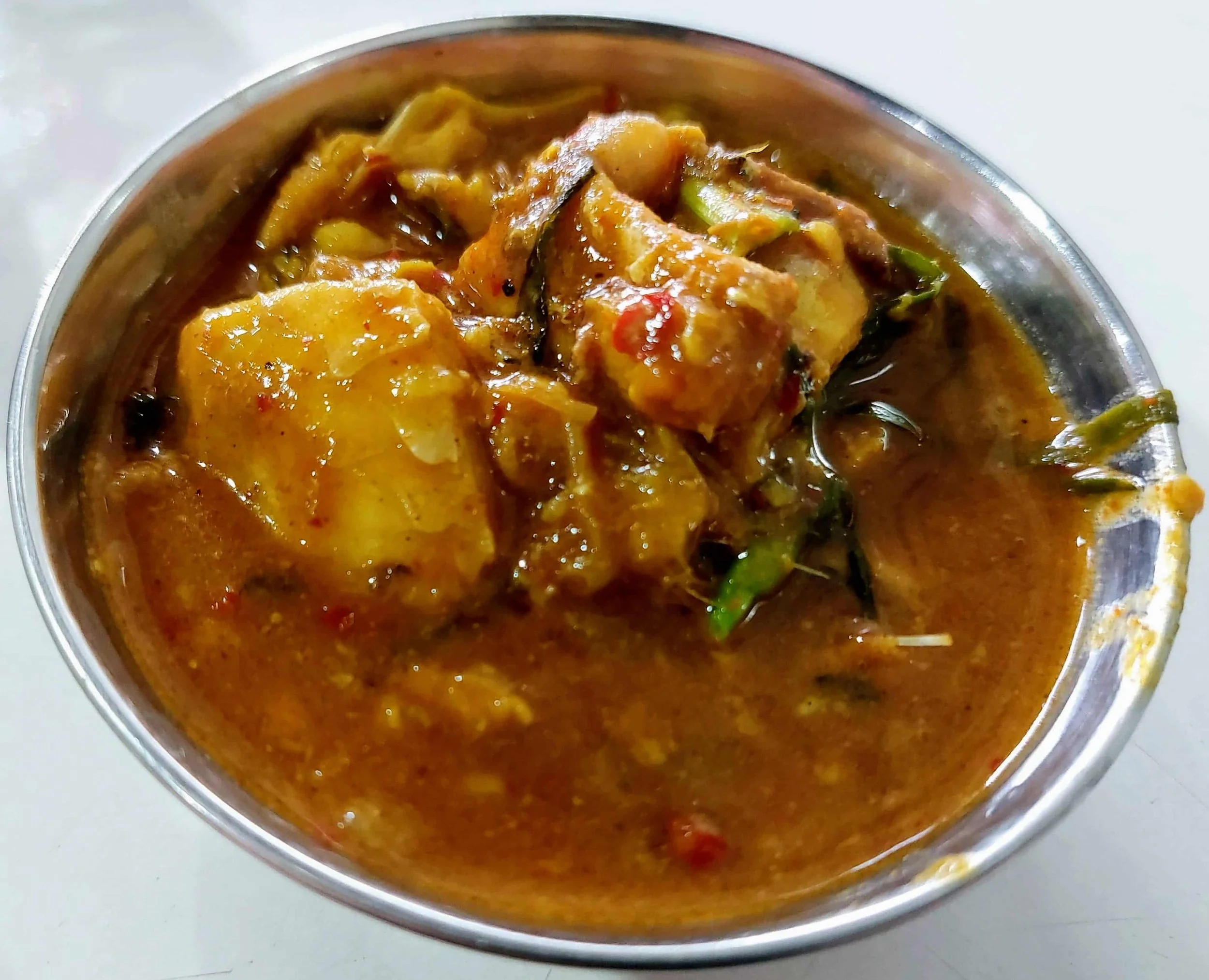
nga atoiba thongba
fish curry
What is it?
Nga Atoiba Thongba is a flavourful, spicy fish curry from Manipur, literally translating to “disintegrated” or “broken fish curry. The name reflects how the fish, including its skin and bones, breaks down into the curry during cooking. Be warned: if you’re not comfortable with eating fish that includes bones, this dish may not be for you. It’s often served as part of a traditional Manipuri thali.
What is in it?
Traditionally prepared with freshwater lake fish, the curry features vegetables like peas, tomatoes, and potatoes. Spices include chili, cumin, coriander, turmeric, ginger, garlic, and bay leaves, creating a spicy aromatic dish.
Where can I eat it?
Although it’s rarely listed as a standalone item on menus, you’ll often find it included in Manipuri thalis at local eateries. I tried it a few times in Imphal, the capital of Manipur, at places like Chakluk Hotel (a restaurant despite the name) or other nearby establishments.
Dairy and gluten free.
kangshoi
vegetable soup
What is it?
Kangshoi is a spicy, nutritious vegetable soup from the Meitei people of Manipur. It is a very healthy dish, usually made by boiling herbs and vegetables in water with little or no oil.
What is in it?
Many different seasonal vegetables can be used, such as leafy greens like spinach or cabbage, potatoes, beans, and other local produce, along with ginger, garlic, chillies, and fermented fish called ngari. Some versions also include dried fish or meat.
Where can I eat it?
It is generally cooked at home, but you can sometimes find kangshoi included as part of a thali in Manipuri restaurants.
Dairy and gluten free.
eromba
fermented fish and vegetables
What is it?
Eromba is a traditional dish from the Meitei people of Manipur, made from mashed vegetables and fermented fish. The word "Eromba" comes from the Manipuri phrase eeru taana lonba, meaning "mixing and stirring watery." The dish is made by boiling vegetables, herbs, spices, and the key ingredient fermented fish (ngari) before mashing them together. While very healthy, it is also rather pungent due to the fermented fish.
What is in it?
Vegetables can include potatoes, tomatoes, and bamboo shoots (sometimes also fermented). The dish includes ngari (fermented fish), along with chili, garlic, and onion. There’s no fixed recipe, as the ingredients can vary depending on what’s in season.
Where can I eat it?
While Eromba is more of a home cooked dish, I did occasionally find it as part of a Manipuri style thali in Imphal.
Dairy & gluten free.
Nagaland
galho
rice & greens porridge
What is it?
Galho is a simple, porridge like dish from Nagaland, made by boiling rice with leafy greens. It is mild and quite plain, so don’t expect a party in your mouth unless meat, chilli, or other seasonings are added after cooking.
What is in it?
The basic ingredients are rice and leafy greens such as spinach, cabbage, or mustard greens, along with ginger, garlic, and some chilli. For added flavour, axone (fermented soybeans) is sometimes included. After serving, pork or other meats, as well as chilli sauce, can be added for a richer taste.
Where can I eat it?
Galho is one of the easiest traditional foods to find in Nagaland. Many local spots specialise in this dish, such as the Galho Centre in the capital, Kohima, or Galho Café in Dimapur.
Vegan versions available, traditionally dairy & gluten free.
samathu
smoked pork stew
What is it?
Samathu is a smoked pork stew from Nagaland, known for its rich, smoky, and spicy flavours. It is typically made with fatty pork belly, a Nagaland speciality cut.
What is in it?
The dish features smoked pork, along with chili, ginger, garlic, and sometimes axone (fermented soybeans) for added flavour and smell. It’s commonly served with rice and accompanied by vegetables or other sides.
Where can I eat it?
Samathu can be found in restaurants that serve traditional Naga cuisine. While it may sometimes be listed just as "smoked pork" on menus, a good place to try it is at The Bamboo Shoot in Kohima or Ethnic Table Restaurant in Dimapur.
Dairy & gluten free
Assam
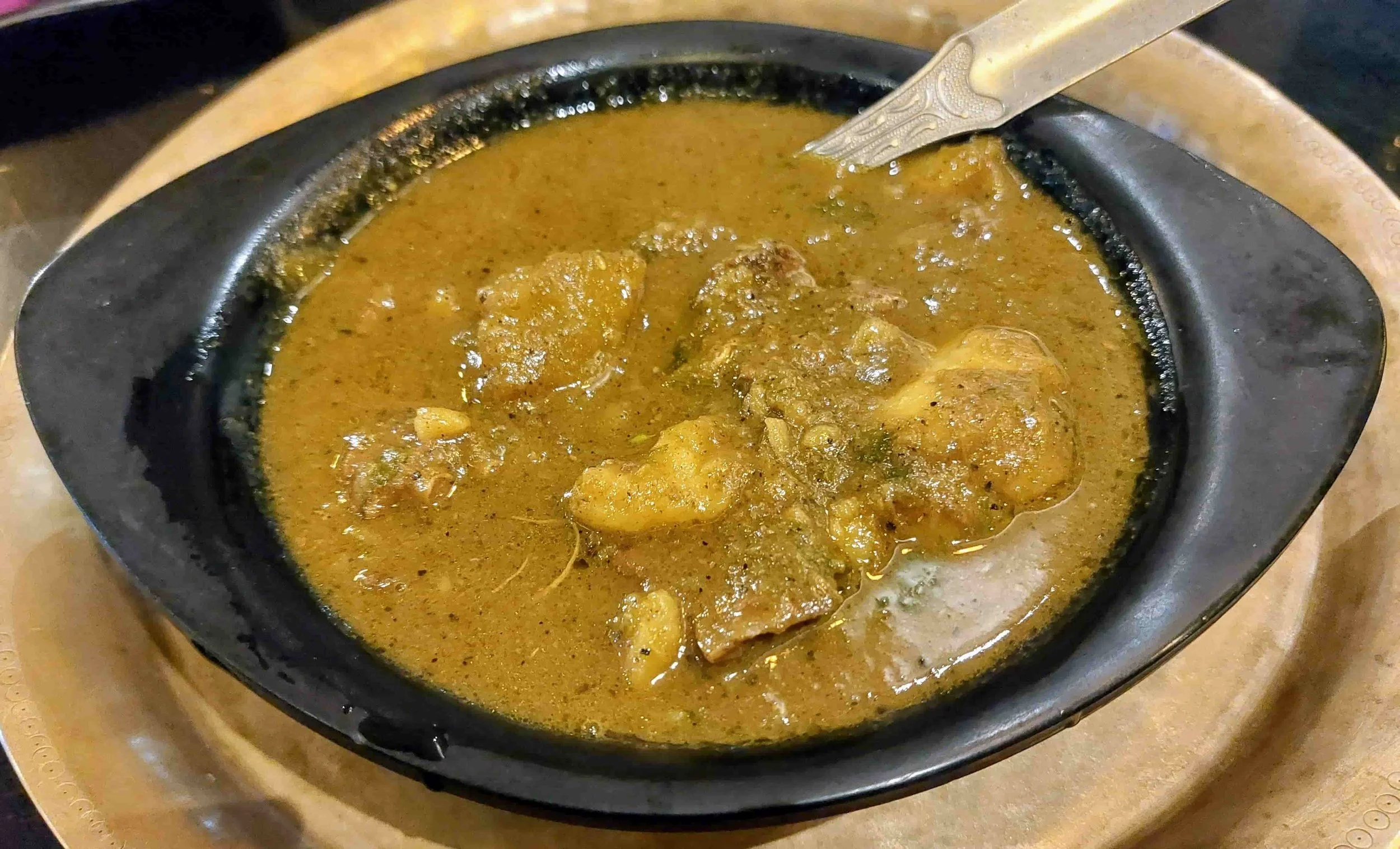
kumurat diya hanhor mangxo
duck and ash gourd curry
What is it?
A meaty and spicy duck curry from Assam that pairs duck meat with ash gourd, a squash like vegetable with a soft texture once boiled. Be aware that, like many meat dishes in India, it typically includes bones and not the best cuts of meat.
What is in it?
The main ingredients are duck and ash gourd, cooked with spices such as black pepper, cumin, turmeric, chilli powder, bay leaves, cloves, ginger, garlic, onions, tomatoes, and garam masala.
Where can I eat it?
You may need to search for it, but some traditional Assamese restaurants in Guwahati, such as those specialising in regional cuisine, serve this dish.
Dairy & gluten free.
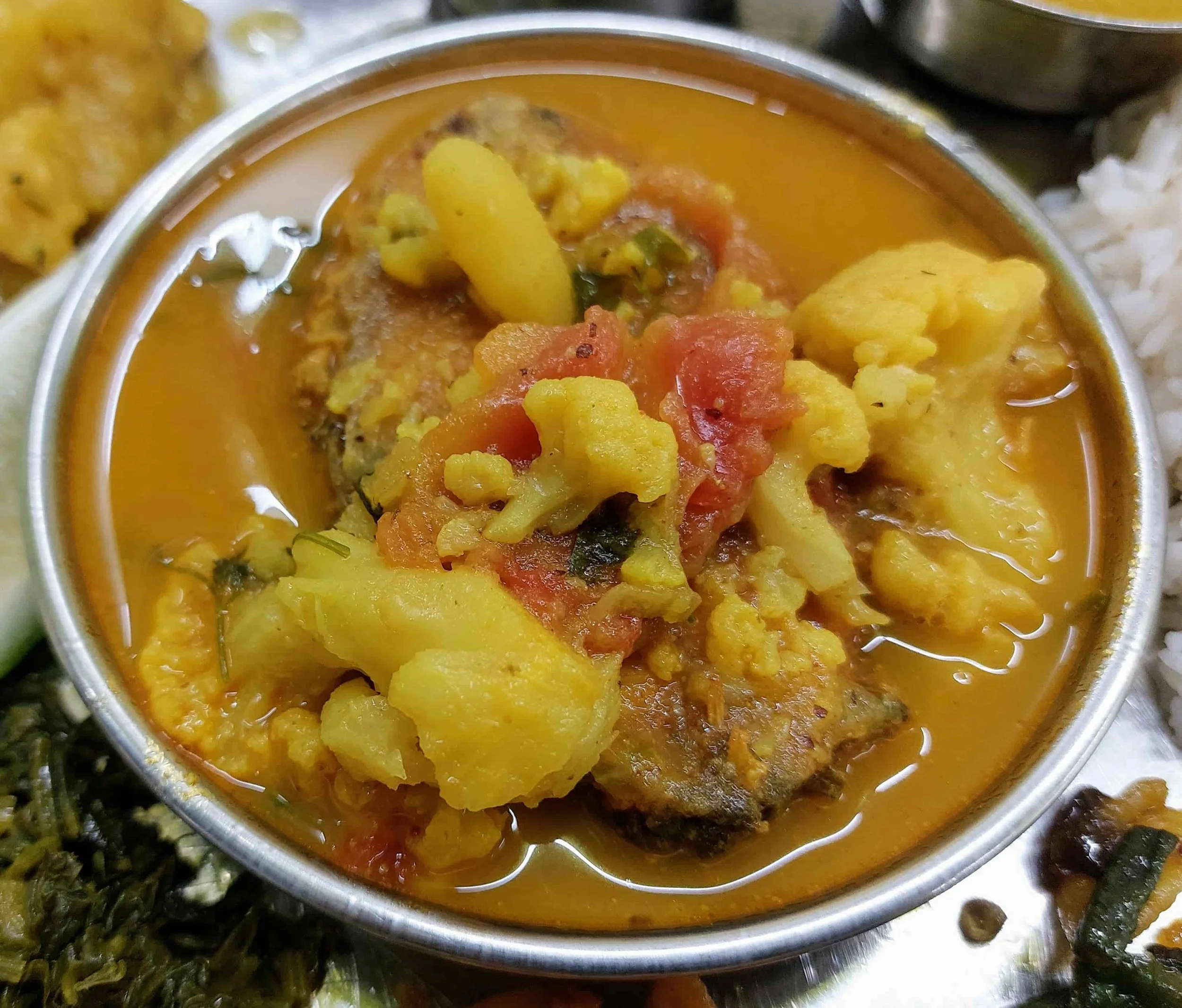
tenga
sour fish curry
What is it?
Tenga is a tangy, sour fried fish curry from Assam, known for its light, refreshing flavours. There isn’t a fixed recipe, and it’s typically made with bone‑in river fish like rohu, so it may not be for everyone.
What is in it?
The curry usually features fish and tomatoes as primary ingredients, with mustard oil, mustard seeds, turmeric, and sometimes fenugreek. The sourness comes from additions like lemon or lime juice, tamarind, elephant apple, or other local souring agents, and vegetables such as potatoes or gourd may also be included.
Where can I eat it?
You’ll find tenga on select menus in Assam. It may take a bit of effort to locate, but with some perseverance you should be able to track down a good version.
Dairy & gluten free
Ingredients listed reflect common or typical components of this dish as served in restaurants or street‑food vendors. Variations by region, season, or vendor are common. This information is provided for general reference only. If you have dietary restrictions or allergies, please verify ingredient details independently. We assume no liability for accuracy or outcomes.
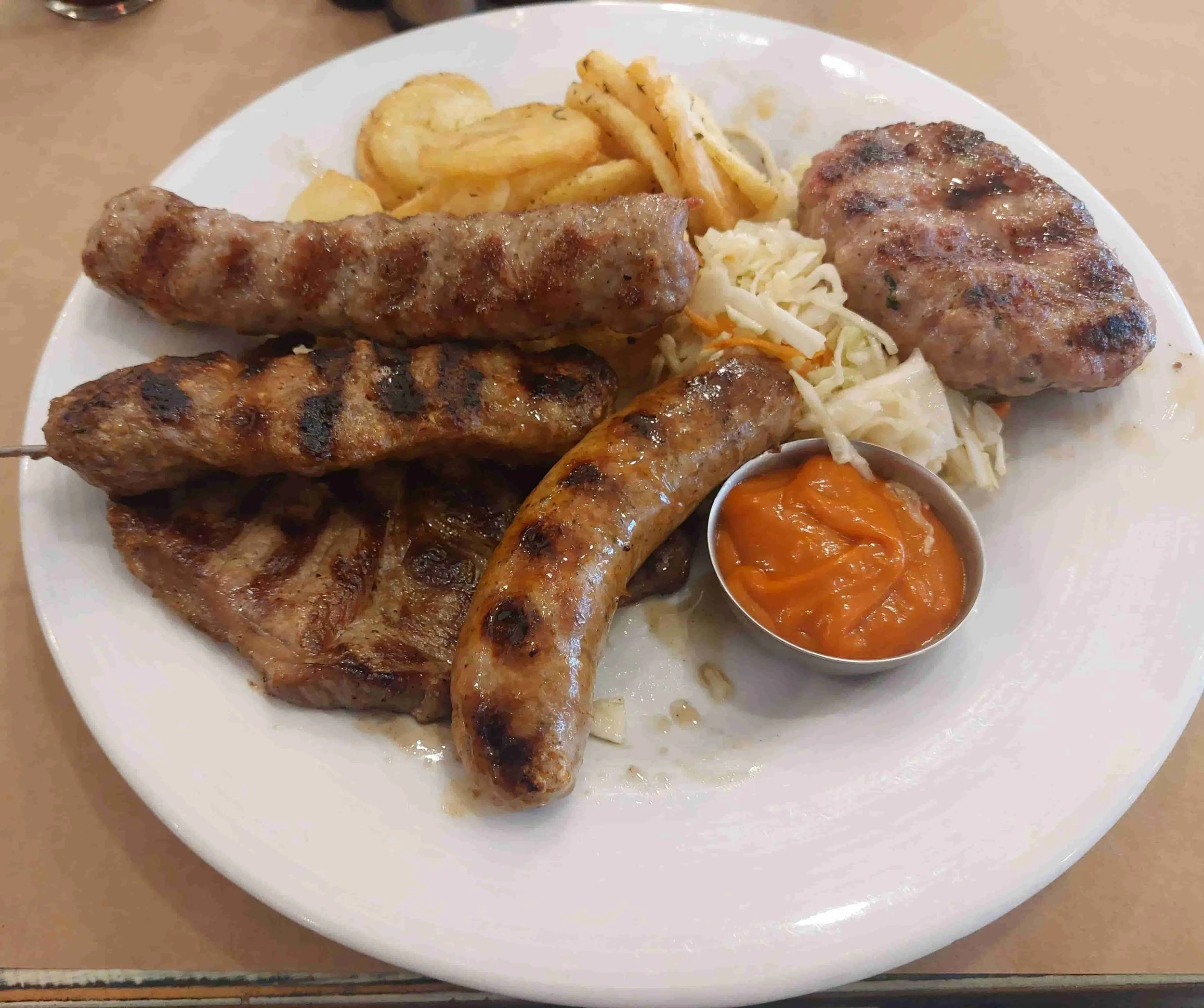
all the foods - Bulgaria
Discover all the traditional Bulgarian dishes we tried, from banitsa and kapama to meshana skara and more
Here you will find a list of all the traditional cuisine we tried in Bulgaria.
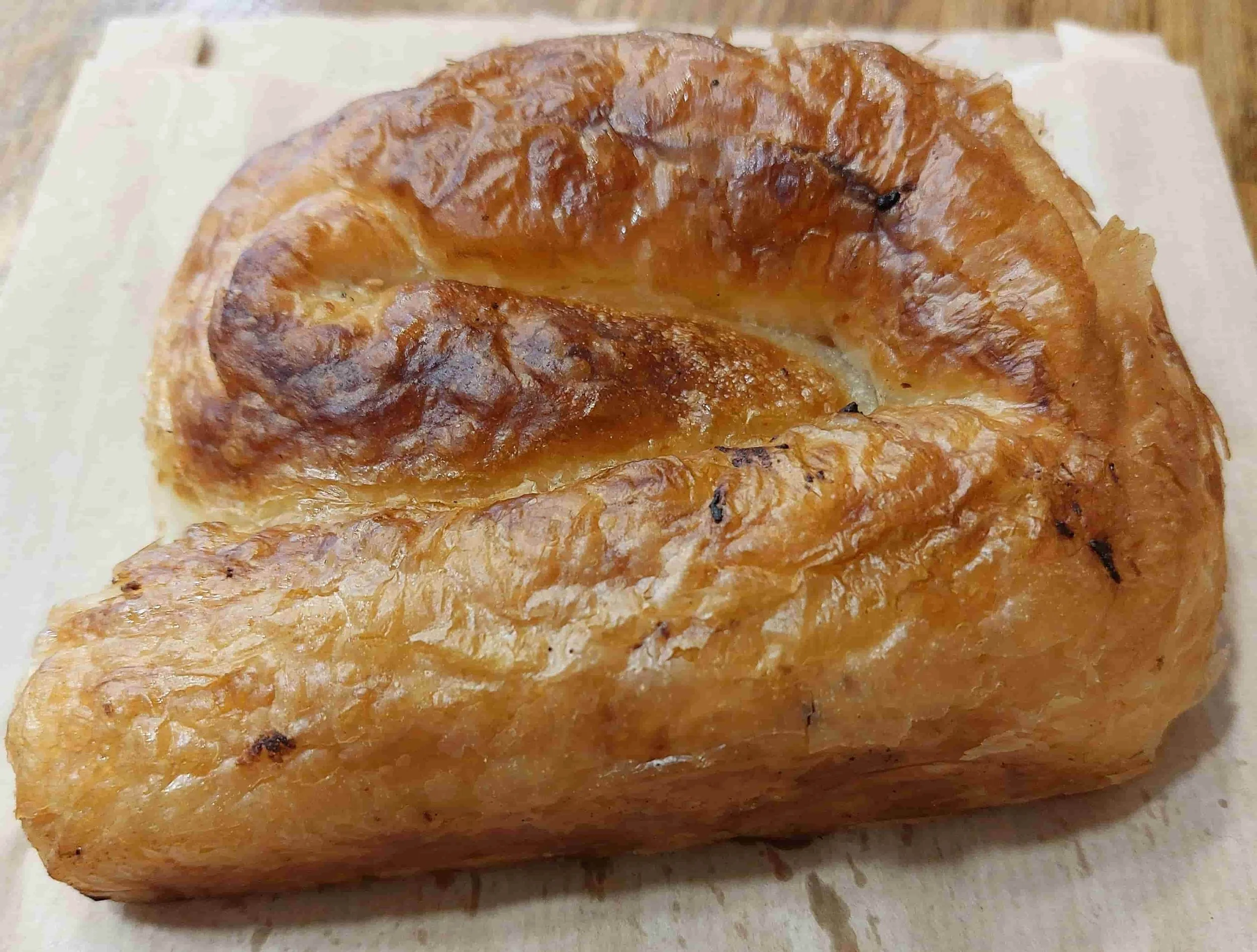
banitsa
filo pie
What is it?
Banitsa is one of Bulgaria’s most traditional and recognisable foods, and one of the most delicious. It’s a baked filo pastry pie filled with cheese and eggs, usually eaten for breakfast or as a snack. It’s the Bulgarian version of the Balkan börek, but with a unique filling. Flaky on the outside and soft and cheesy inside, it’s a great pastry.
What is in it?
Thin sheets of filo pastry (called kori), layered or rolled with a mixture of eggs, yogurt, and sirene, a crumbly, salty white brined cheese similar to feta. Some versions include spinach, pumpkin, leeks, or cabbage, but the classic is the savoury cheese banitsa (sirene banitsa).
Where can I eat it?
You’ll find banitsa all over Bulgaria, in bakeries and cafés, sold hot and fresh in the morning.
Vegetarian.
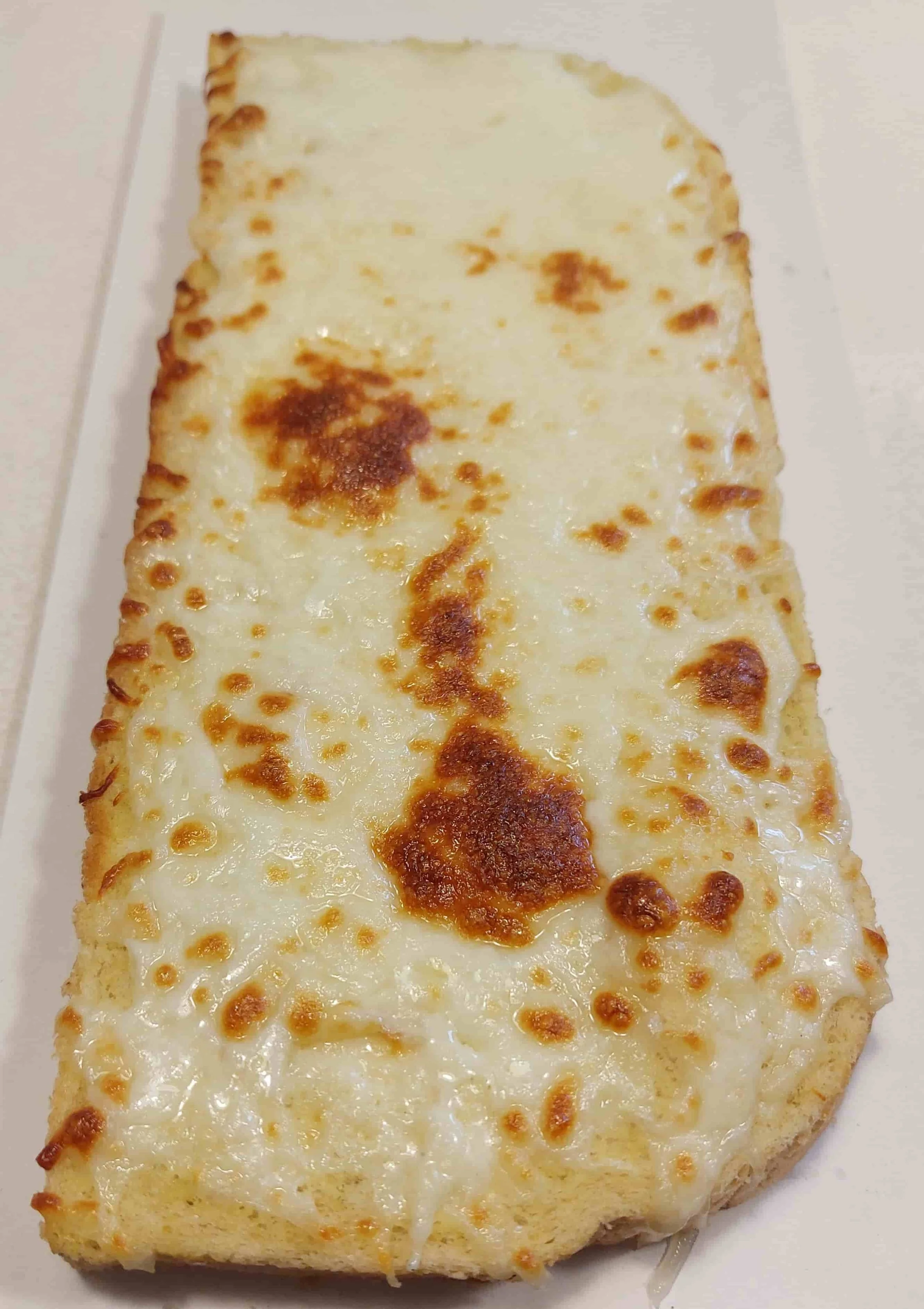
printsesa
cheese on toast
What is it?
A printsesa (Принцеса) (literally “princess”) is a classic Bulgarian open faced sandwich, usually made with minced meat and cheese spread on bread, then toasted. Crispy, savoury, and lightly cheesy, think of it as a less fancy Bulgarian take on a croque monsieur.
What is in it?
A slice of white bread topped with a mixture of minced pork or a pork–beef blend, grated kashkaval cheese (or sirene), egg, and seasonings such as salt and pepper. The mixture is spread evenly across the bread, then toasted or baked until the top is crisp. Vegetarian versions (printsesa s kashkaval) skip the meat and use only cheese and egg, as seen in the photo.
Where can I eat it?
You’ll find printsesi (plural) in Bulgarian snack bars, cafés, and some bakeries. They’re not as common as some other Bulgarian classics like banitsa, which you’ll find in almost every bakery, but you do still see them occasionally, especially in local cafés serving quick breakfasts or light snacks. Some places also offer more modern takes with different toppings or artisan bread.
Vegetarian versions available.
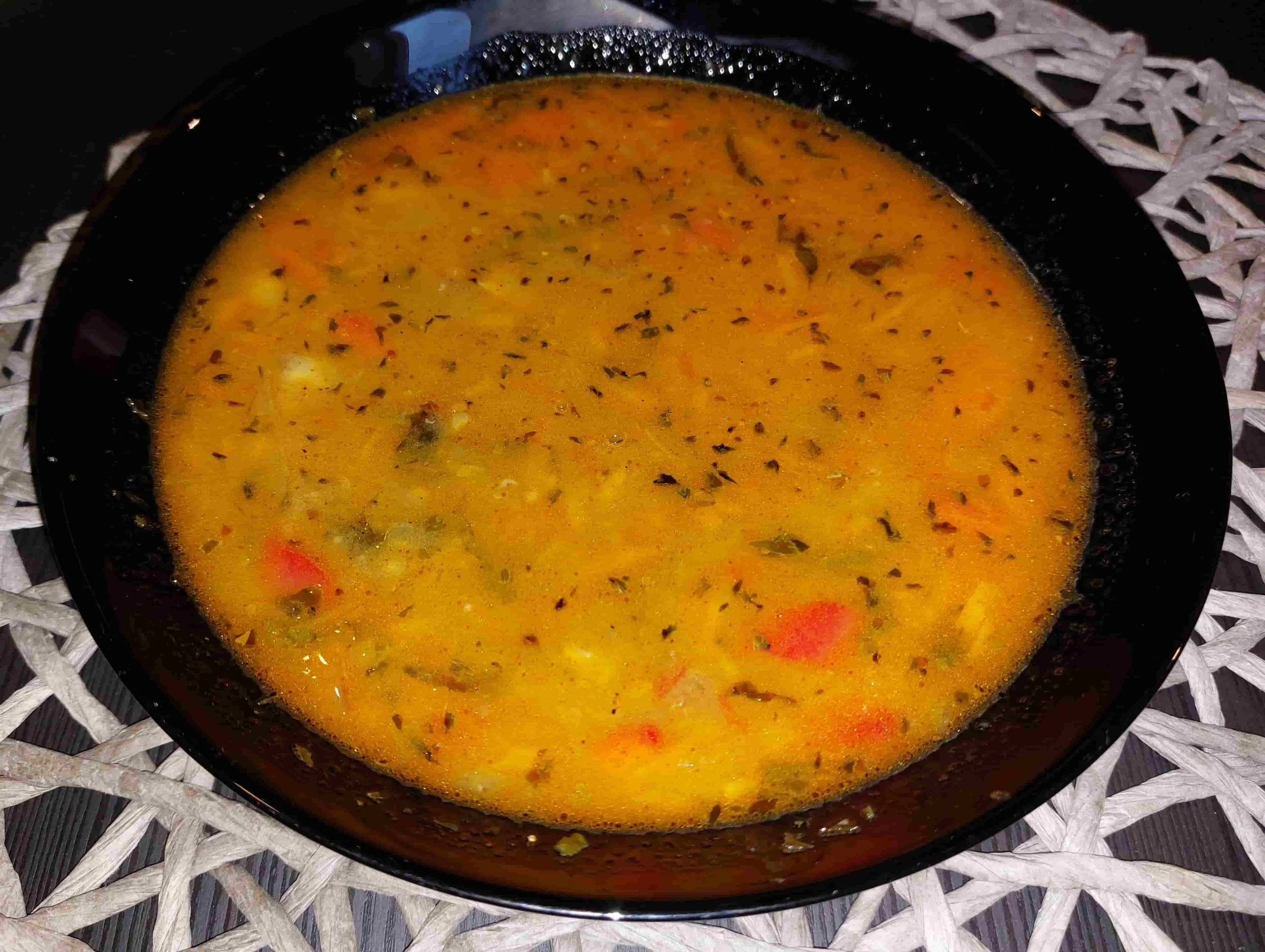
bob chorba
bean soup
What is it?
Bob chorba (Боб чорба), literally “bean soup,” is a simple but tasty white bean and vegetable soup. It’s typically meatless, making it a great vegetarian option, though versions with sausage or smoked meat are also available. It can be served either as a starter or a light main course.
What is in it?
White beans, onions, carrots, celery, bell pepper, and tomato or tomato paste, flavoured with paprika, spearmint, and bay leaf, the ingredients that give it its distinct Bulgarian taste. The beans are simmered slowly until creamy, often with a little flour or roux added at the end to thicken the broth. In non fasting versions, pieces of lukanka sausage, bacon, or smoked ribs are sometimes added.
Where can I eat it?
You’ll find bob chorba on menus in traditional Bulgarian restaurants (mehana) throughout the country, although it’s not quite as common as some other Bulgarian classics. We had a good one at Mehana Mamin Kolyo in Sofia.
Vegetarian.
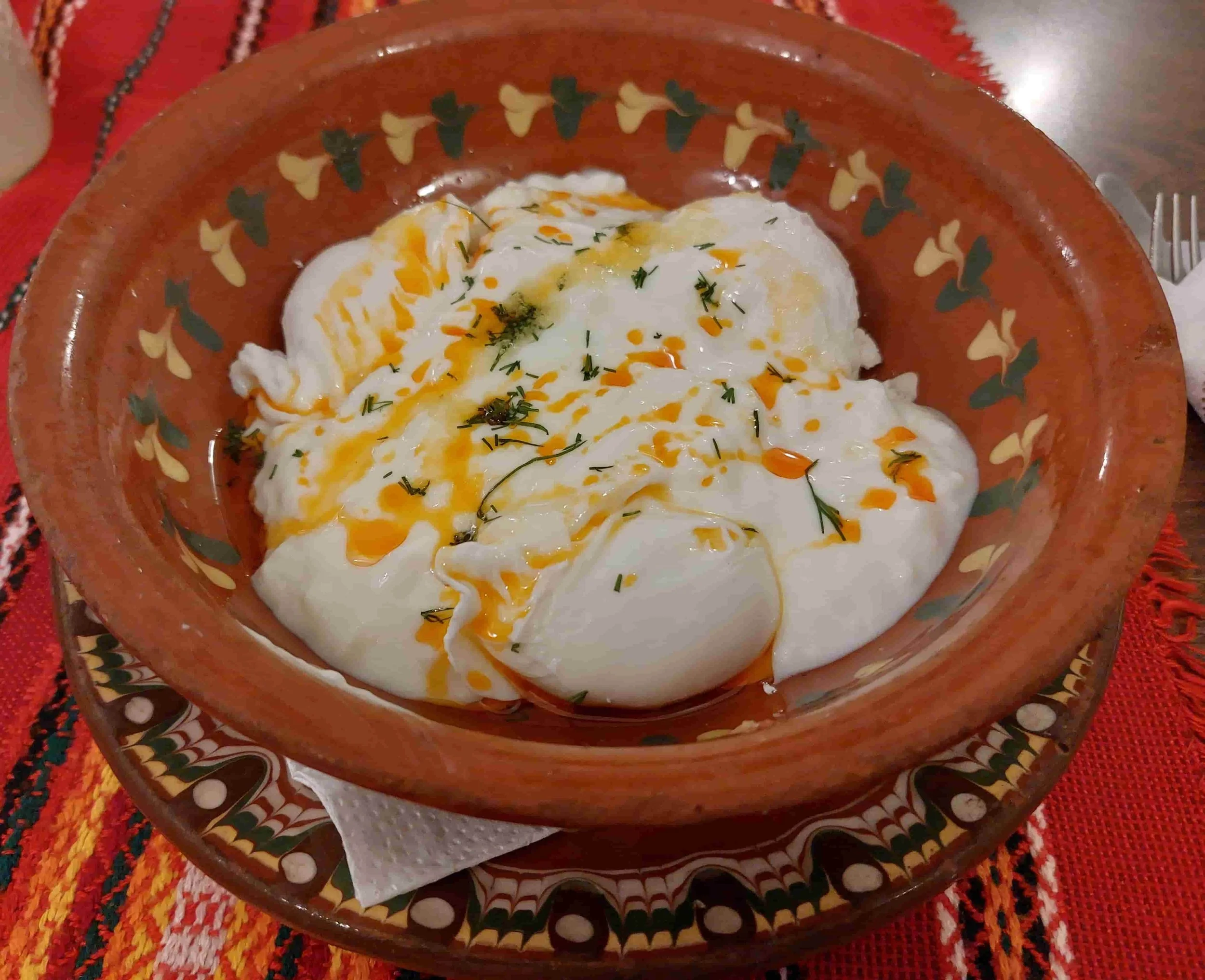
Panagyurishte-style eggs
eggs, cheese & yoghurt
What is it?
Panagyurishte-Style Eggs (Яйца по панагюрски) are a Bulgarian dish of poached eggs served over a mix of yogurt and crumbled white cheese (sirene), topped with melted butter infused with paprika. It’s named after the town of Panagyurishte in central Bulgaria. The yogurt and cheese form a creamy base, the eggs are gently poached, and paprika butter is poured over the top to finish the dish. It’s a traditional breakfast or light meal and is sometimes served as a starter (if you want a big starter!)
What is in it?
Poached eggs, Bulgarian yogurt, crumbled sirene cheese, butter, sweet paprika (sometimes a little chili), and occasionally garlic or dill.
Where can I eat it?
You’ll find Yaitsa po Panagyurski in traditional Bulgarian restaurants (mehana), taverns, and breakfast cafés across the country. It’s especially popular in central Bulgaria around Panagyurishte and Plovdiv; outside these regions you see it less often, but we did spot it listed as a starter at Izbata Tavern in Sofia.
Vegetarian and gluten free.
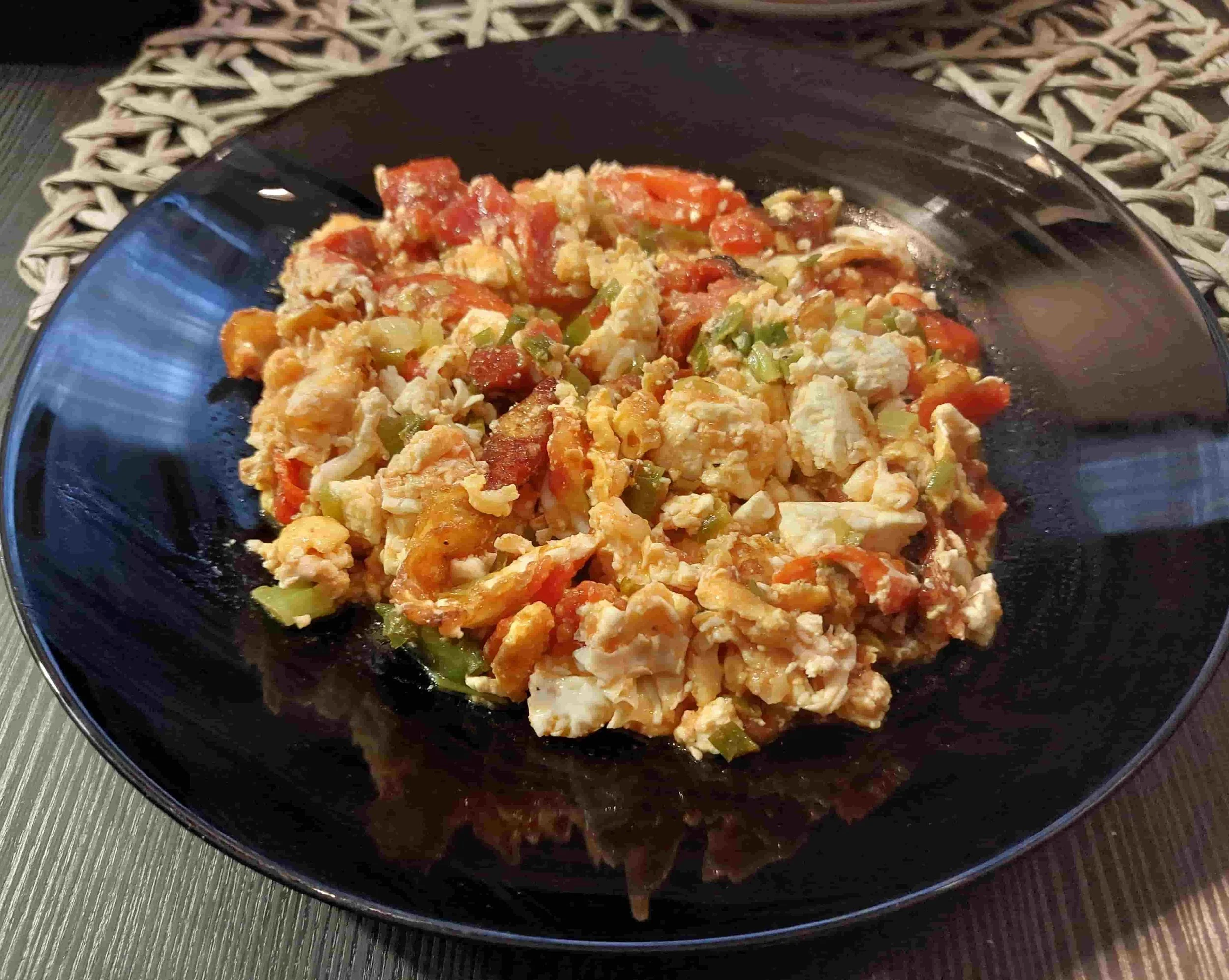
mish-mash
veg scrambled eggs
What is it?
Mish-Mash (Миш-маш) is a Bulgarian pepper, tomato, and egg dish, a kind of vegetable scramble. It reminded me a little of shakshuka, but with sirene cheese giving it a distinctly Bulgarian twist. The vegetables are cooked first, then the eggs and sirene are folded in to create a soft, slightly creamy scramble: not runny, not dry, but gently set. It’s usually served as a light main or a starter.
What is in it?
Mish-Mash is made from roasted or sautéed peppers (green or red), chopped tomatoes, eggs, and crumbled sirene (Bulgarian white brined cheese). Many traditional versions also include onion, garlic, and fresh parsley, and it’s seasoned with salt, pepper, and sometimes paprika.
Where can I eat it?
You can sometimes find Mish-Mash in traditional Bulgarian taverns (mehana), though it’s more of a home-cooked dish. Both Mehana Mamin Kolyo and Izbata Tavern in Sofia serve it.
Vegetarian and gluten free.
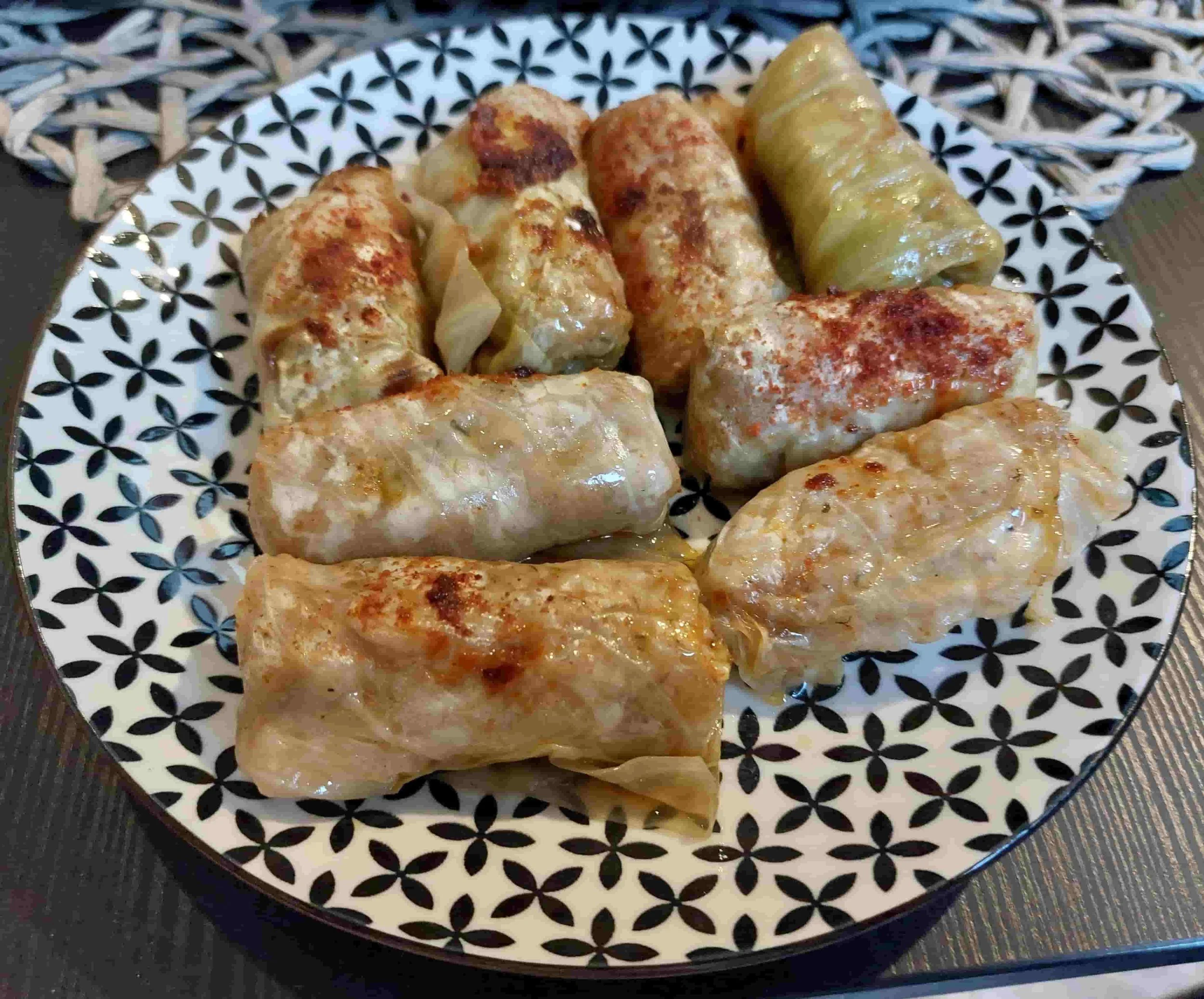
sarmi
stuffed cabbage leaves
What is it?
Sarmi (Сарми) are Bulgaria’s version of stuffed cabbage or vine leaves, filled with a savoury mixture of rice, minced meat, and spices, then rolled tightly and simmered in a tomato or vegetable sauce. The dish has Ottoman roots and is shared across the Balkans. They’re closely related to Romanian sarmale and Greek dolmades, but Bulgarian sarmi are often a bit smaller and lighter on tomato sauce, with added flavour from dill and paprika. They’re often served as a main course or a starter.
What is in it?
Cabbage leaves (zele) or vine leaves (lozovi sarmi) filled with a mixture of minced pork, rice, onion, and herbs such as dill, parsley, and paprika. In winter, pickled (sour) cabbage leaves are used, while spring and summer sarmi are often made with vine leaves. Fasting versions (postni sarmi) skip the meat and may include rice, onions, carrots, mushrooms, or raisins cooked with oil and paprika. They’re often served with sour cream or yogurt.
Where can I eat it?
You’ll find sarmi in traditional Bulgarian restaurants (mehana), although we didn’t see them quite as often as we expected.
Vegetarian versions available, dairy free if served without sour cream or yogurt. usually gluten free.
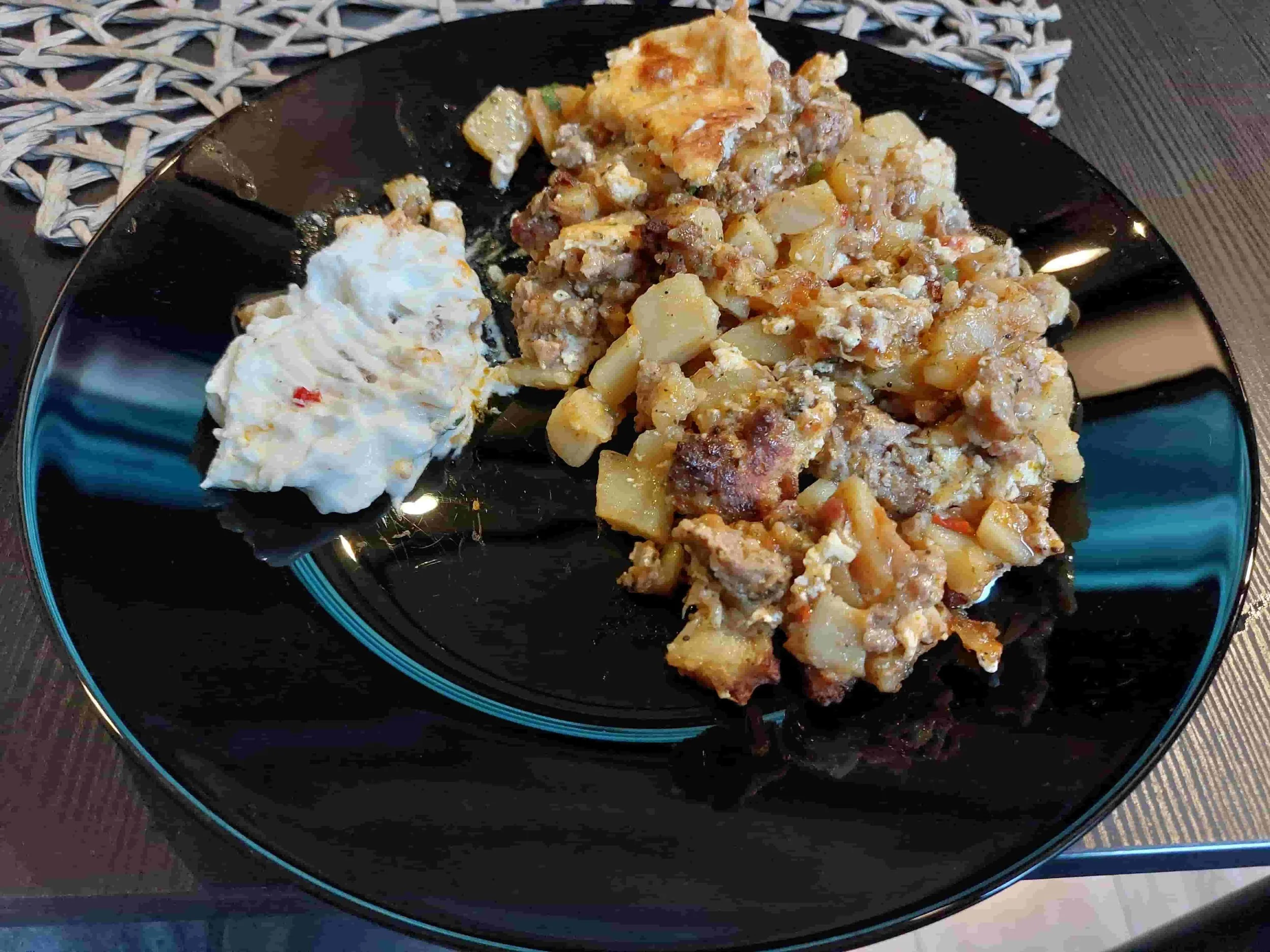
moussaka
meat & potato bake
What is it?
Moussaka (Мусака) in Bulgaria is a baked casserole of minced meat, potatoes, and eggs, layered and topped with a creamy yogurt and egg mixture. Though the dish shares its name with the Greek version, the Bulgarian moussaka is quite different, it’s made with potatoes instead of aubergines (eggplant) and doesn’t include a béchamel sauce. It’s lighter but still really delicious, with a slightly tangy crust.
What is in it?
Layers of minced pork, potatoes, onions, carrots, and sometimes tomatoes or peppers, seasoned with paprika, parsley, and black pepper. Once baked, it’s topped with a mixture of yogurt, eggs, and flour.
Where can I eat it?
You’ll find moussaka in plenty of traditional restaurants (mehana) throughout Bulgaria, such as at Izbata Tavern or Mehana Mamin Kolyo, both in Sofia.
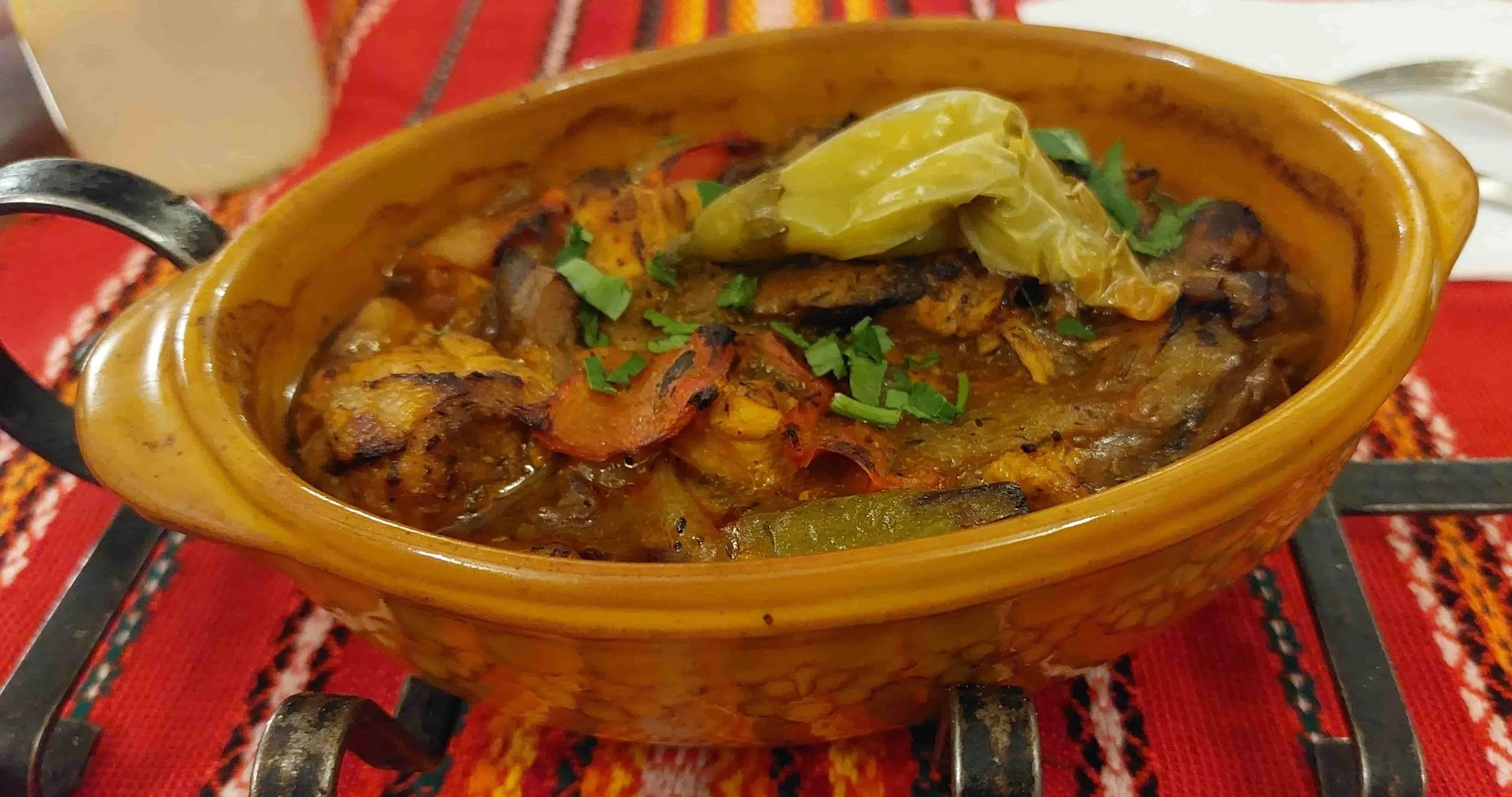
kavarma
meat & veg stew
What is it?
Kavarma (Каварма) is a traditional slow cooked Bulgarian stew made with meat and vegetables, gently baked in a clay pot (gyuveche). Though there are regional variations, the most common version is pork kavarma, cooked with onions, peppers, tomatoes, and mushrooms until everything melds into a thick, savoury sauce.
What is in it?
Typically made with pork or chicken, onions, peppers, tomatoes or tomato paste, mushrooms, garlic, and paprika, cooked slowly in sunflower oil and sometimes deglazed with white or red wine. Seasonings vary by region but often include bay leaf, parsley, and black pepper.
Where can I eat it?
Kavarma is a staple of traditional Bulgarian restaurants and one of the most common dishes you’ll see, particularly in central and southern Bulgaria. It’s usually served bubbling hot in the same clay pot it was cooked in. We tried one at Izbata Tavern in Sofia.
Traditionally dairy and gluten free.
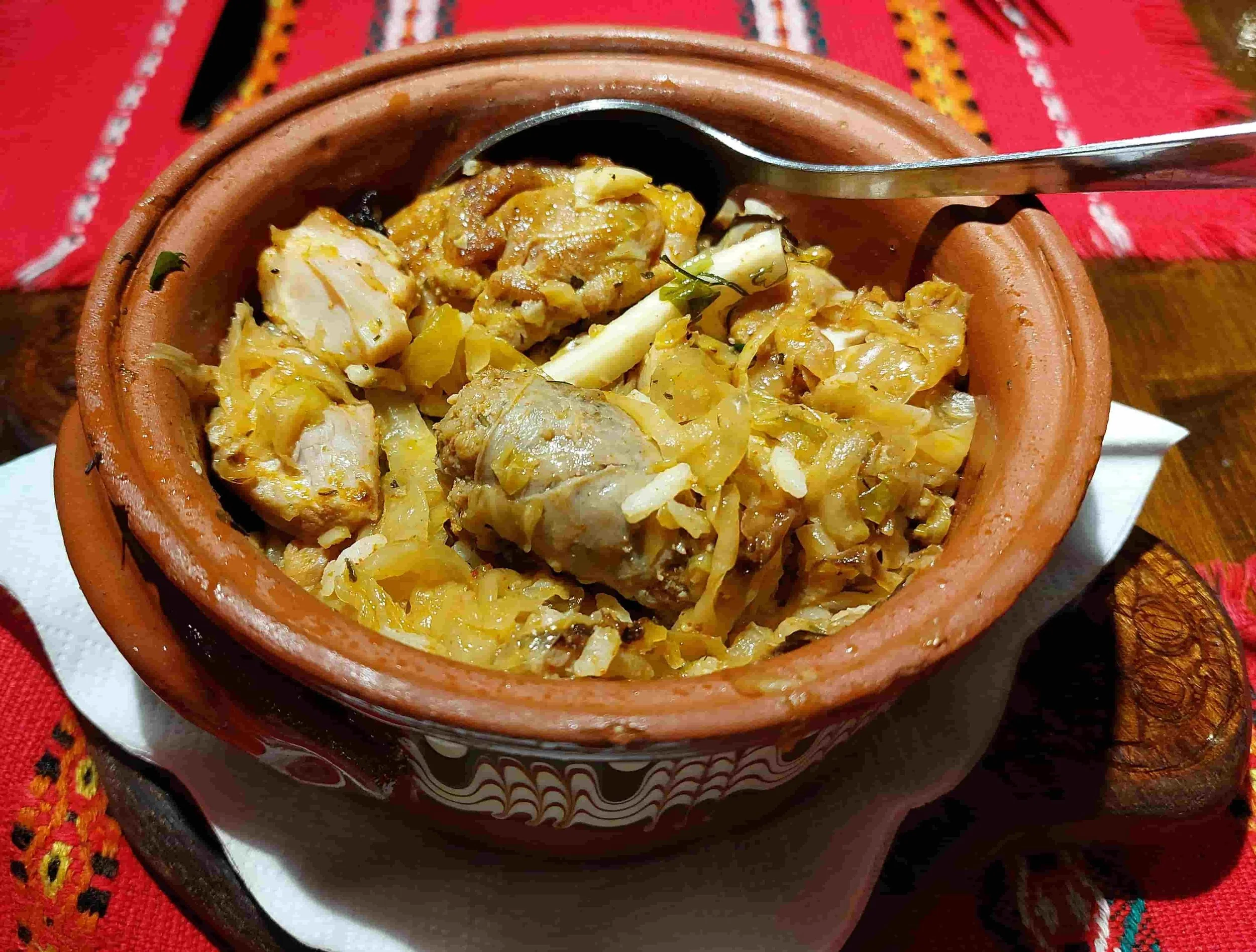
kapama
sauerkraut & meat stew
What is it?
Kapama (Капама) is one of Bulgaria’s most traditional slow baked meat dishes and in my opinion, its best, especially associated with the southwest region and festive occasions like New Year and big family celebrations. It’s made by layering sauerkraut, rice, and several kinds of meat and local sausages in a clay pot, then baking it gently for hours with spices and a little red wine until everything is tender and delicious. Proper kapama is never just one meat and fresh cabbage, the equation for great, authentic kapama is, multiple meats + sauerkraut + long, slow cooking = amazing kapama.
What is in it?
Kapama is made by layering sauerkraut, rice, and a mixture of several meats, typically pork, beef or veal, and chicken or turkey, along with local sausages such as Banski sudzhuk and sometimes Banska kŭrvavitsa. The pot is enriched with pork fat, seasoned with black peppercorns, bay leaf, garlic, allspice, and red wine.
Where can I eat it?
You’ll find traditional kapama in Bansko and the surrounding Pirin region, where it’s considered a signature local dish and appears on almost all mehana style restaurant menus. It’s also served in some Bulgarian restaurants elsewhere in the country for example, Hadjidraganov's Cellars in Sofia, where we had a delicious one. It’s usually brought to the table still in it's clay pot.
Dairy and gluten free.
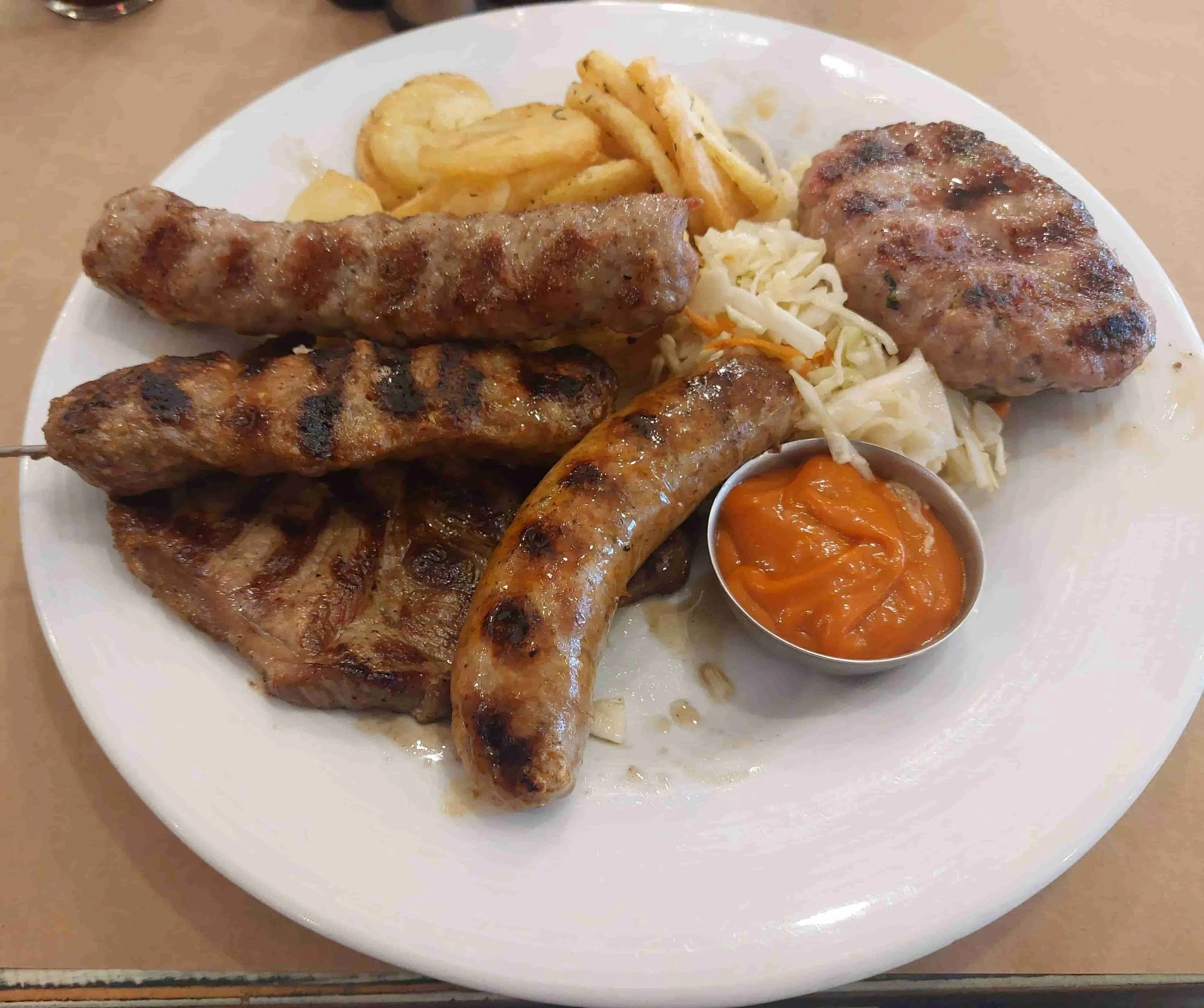
meshana skara
Bulgarian mixed grill
What is it?
I hope you like meat! Meshana skara (Мешана скара) literally means “mixed grill”, a huge plate of assorted grilled meats, usually enough for one very hungry (or very greedy) person, or to share. It showcases Bulgaria’s charcoal grilled classics: kebapche, kufte, pork steak, sausage, and sometimes skewers. Every region does it slightly differently, but the idea is always the same, a big mixed plate of Bulgarian grilled meats, usually served with simple sides like salad, chips, or lyutenitsa (a sweet roasted pepper and tomato sauce).
What is in it?
A standard meshena skara includes several different meats such as kebapche (grilled minced meat sausage), kufte (minced meat patty), pork steak or pork chops, karnache (spicy Bulgarian sausage), and sometimes shishche (pork or chicken skewer). The meats are seasoned with salt, black pepper, cumin, and paprika, then grilled over charcoal. It’s commonly served with chips, lyutenitsa (pepper spread), onions, or shopska salad.
Where can I eat it?
You can find meshena skara in almost every restaurant that specialises in grilled foods in Bulgaria. We had a great one at Skarabar, which has three locations in Sofia.
Dairy free.
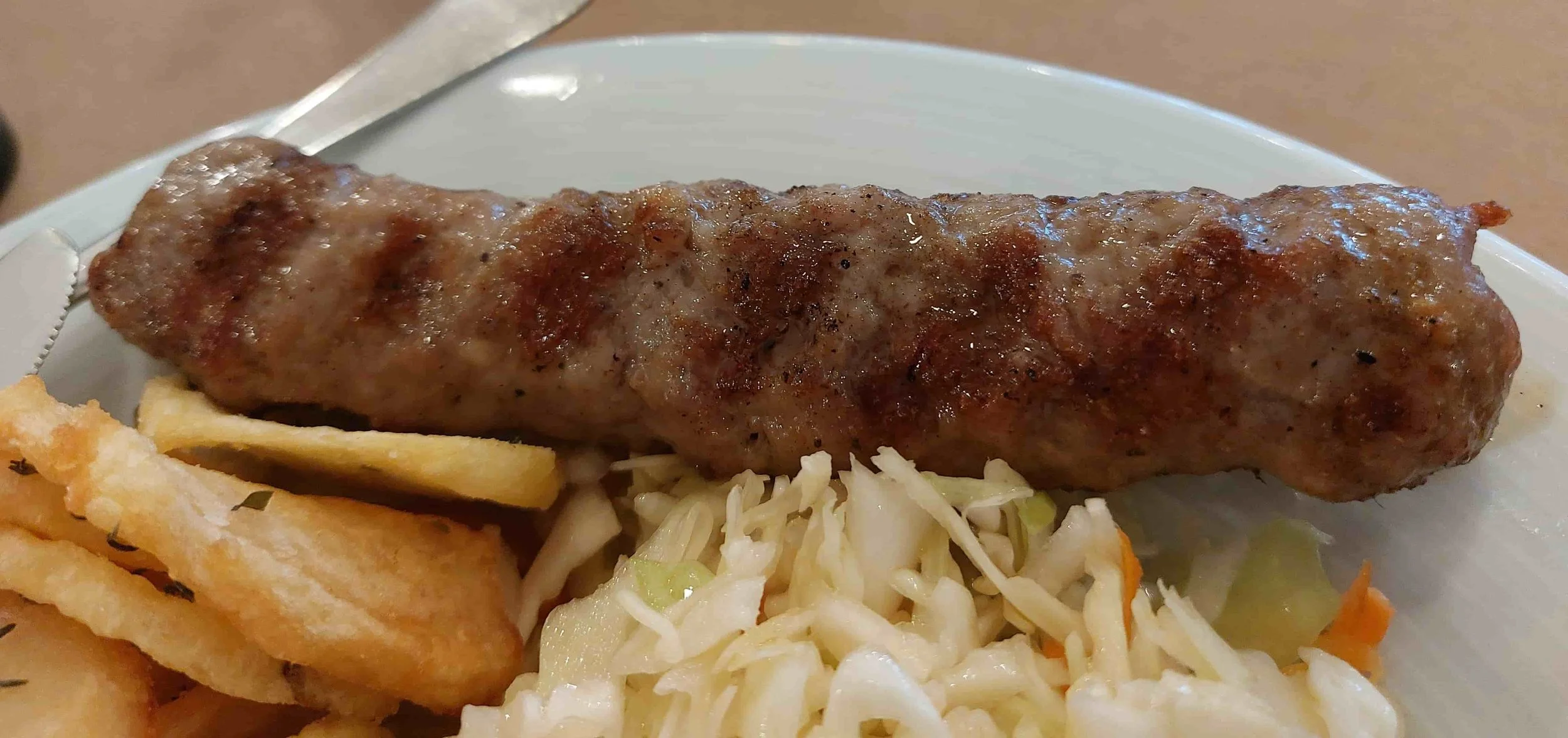
kebapche
minced meat sausage
What is it?
Kebapche (Кебапче) is a long, casing free minced meat sausage shaped like a small oblong kebab and grilled over charcoal. The flavour is savoury, smoky, and heavily seasoned with cumin, which gives kebapche its unique Bulgarian identity. It’s often eaten on its own with mustard, alongside chips, or as part of a meshena skara (mixed grill).
Kebapche is closely related to kufte but not the same: kufte are round patties that include onion and parsley, are more aromatic, and contain less cumin.
What is in it?
Kebapche is made from minced meat (traditionally pork or a pork-and-beef mixture), seasoned with salt, black pepper, and plenty of cumin. Some recipes add paprika or a little baking soda to improve texture, but cumin is the defining flavour.
Where can I eat it?
It’s a staple of Bulgarian taverns, grill restaurants, fast‑food places, and street food stalls. You will see it everywhere.
Dairy free.
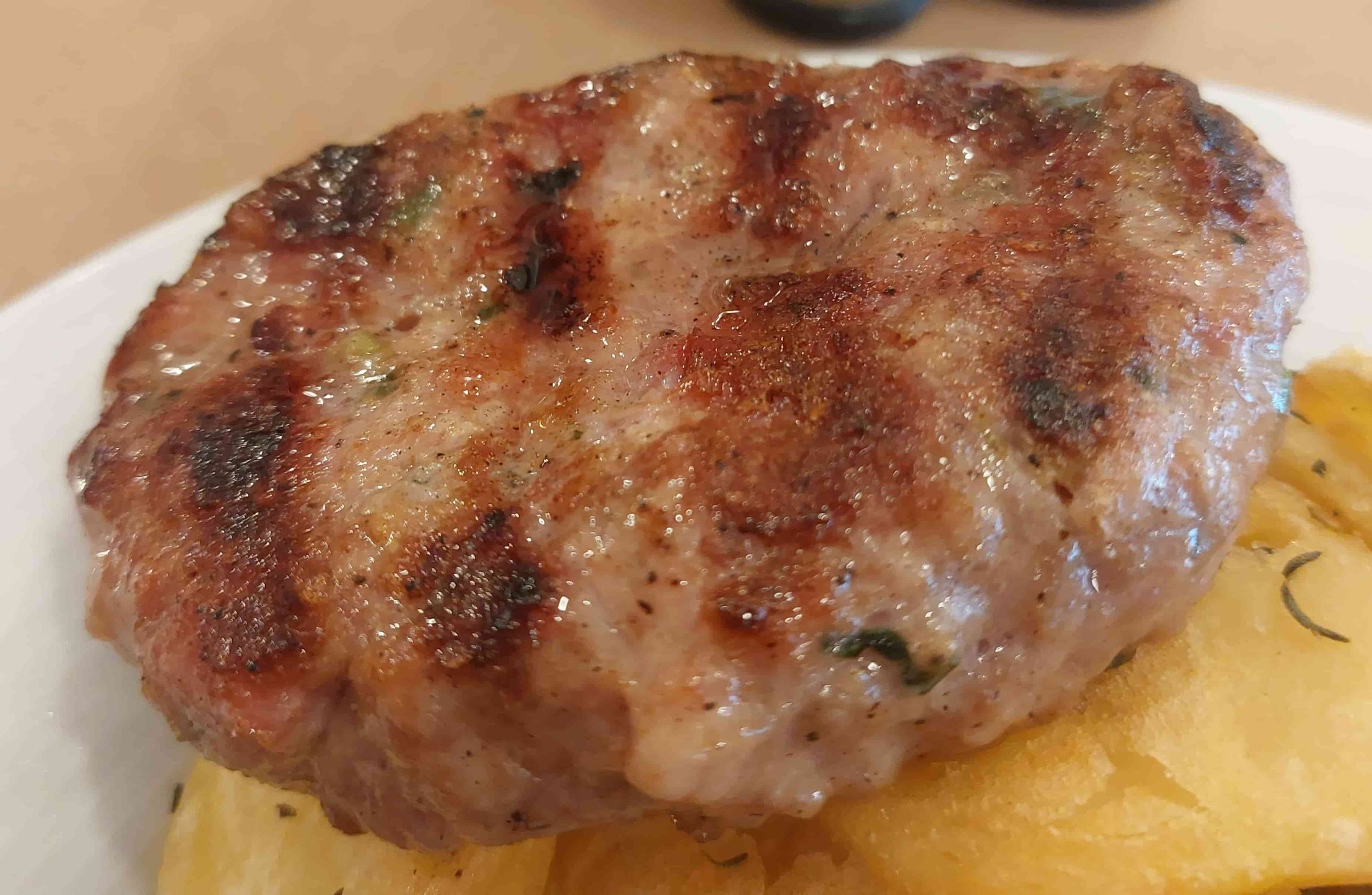
kufte
minced meat patty
What is it?
Kufte (Кюфте) is a grilled minced meat patty, shaped like a small round burger and seasoned with herbs and spices. Compared to kebapche, it’s more herby and much less cumin‑heavy.
What is in it?
Kufte is usually made from minced pork or a pork and beef mix, combined with grated onion, parsley, salt, black pepper, and sometimes a little cumin (but far less than in kebapche). Some recipes also add a touch of baking soda for softness. It’s often served with chips, shopska salad, onions, mustard, or lyutenitsa (a sweet roasted pepper and tomato spread).
Where can I eat it?
Kufte is everywhere in Bulgaria, from traditional restaurants to takeaway grills and fast food places.
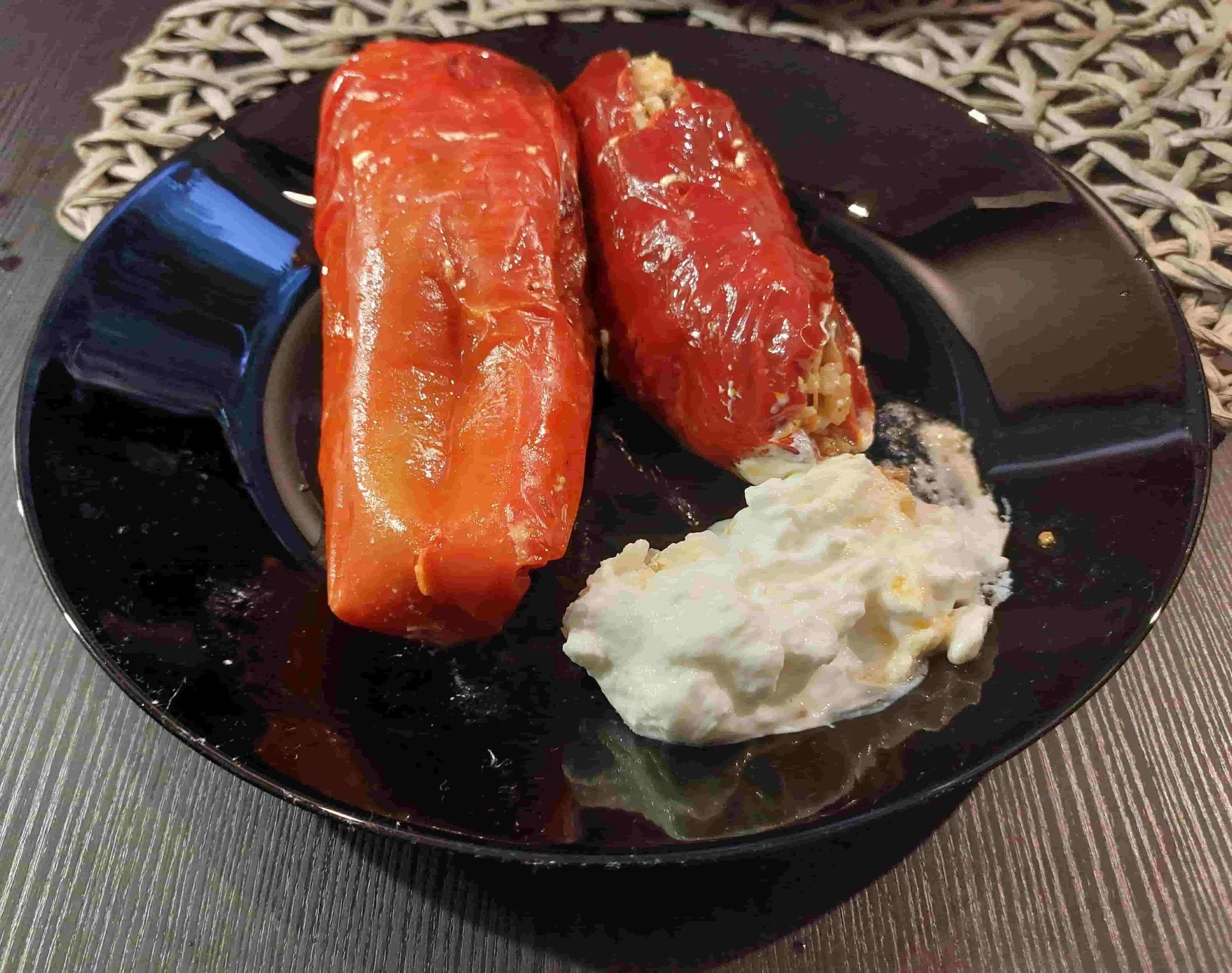
pŭlneni chushki
stuffed peppers
What is it?
Pŭlneni chushki (Пълнени чушки) are Bulgaria’s traditional stuffed peppers, a favourite home style dish made with sweet red or green peppers filled with either a rice based vegetarian mixture or a meat and rice mixture. The peppers are baked in a light tomato sauce, or sometimes simply roasted in the oven with oil. Some regions also add a yogurt and egg topping poured over the peppers near the end of baking, creating a creamy, slightly tangy crust, a very Bulgarian touch.
What is in it?
Stuffed peppers are usually filled with a mixture of rice, onions, carrots, and paprika, often with parsley or dill. The meat version adds minced pork.
Where can I eat it?
You’ll sometimes see pŭlneni chushki on traditional menus, for example at Mehana Mamin Kolyo in Sofia, but it’s much more common as a home cooked dish than a restaurant one
Vegetarian versions available, gluten free.
Ingredients listed reflect common or typical components of this dish as served in restaurants or street‑food vendors. Variations by region, season, or vendor are common. This information is provided for general reference only. If you have dietary restrictions or allergies, please verify ingredient details independently. We assume no liability for accuracy or outcomes.
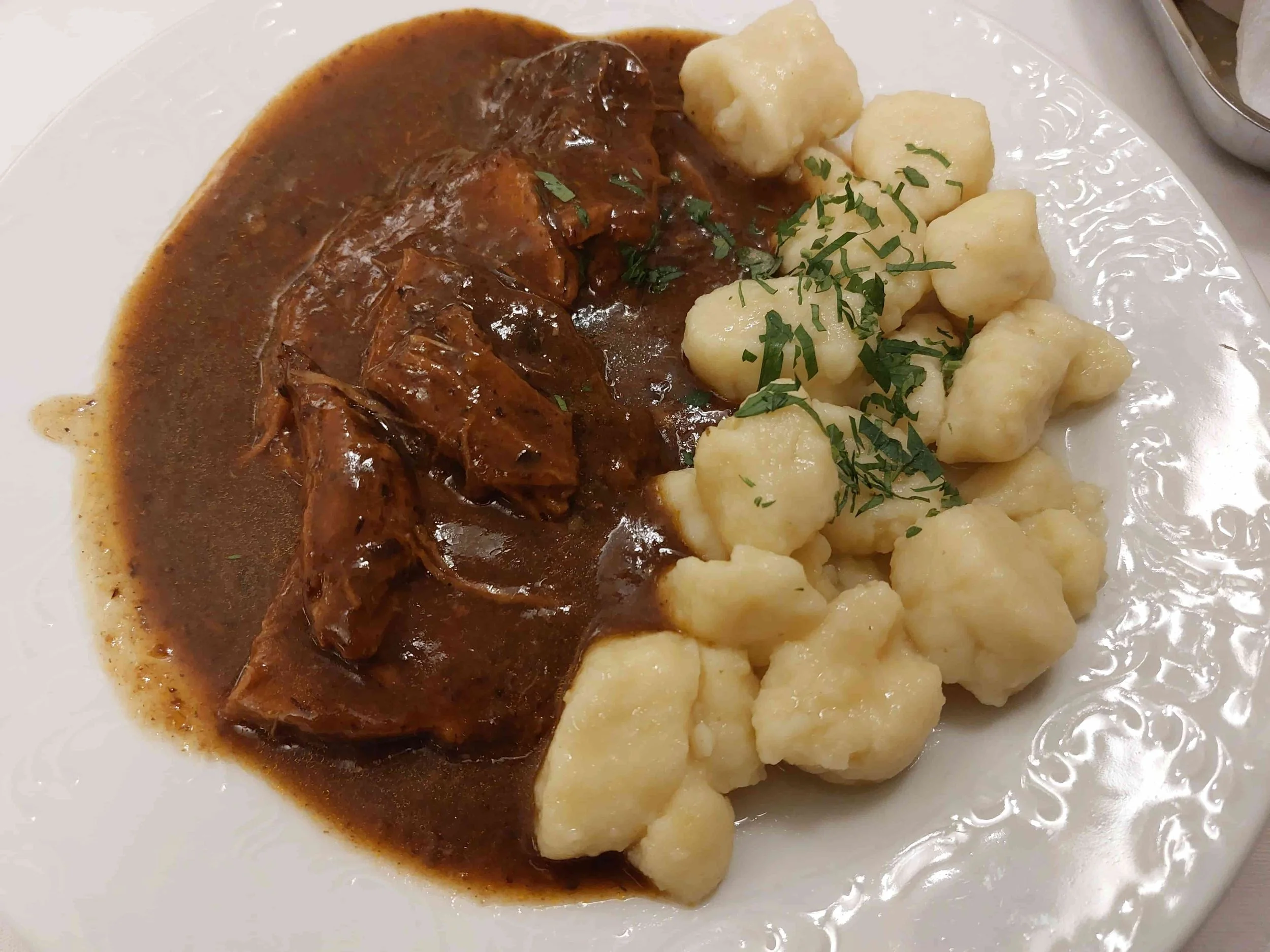
all the foods - Croatia
Discover all the traditional Croatian dishes we tried, from pašticada and Čobanac to Zagorski Štrukli and more
Here you will find a list of all the traditional cuisine we tried in Croatia.
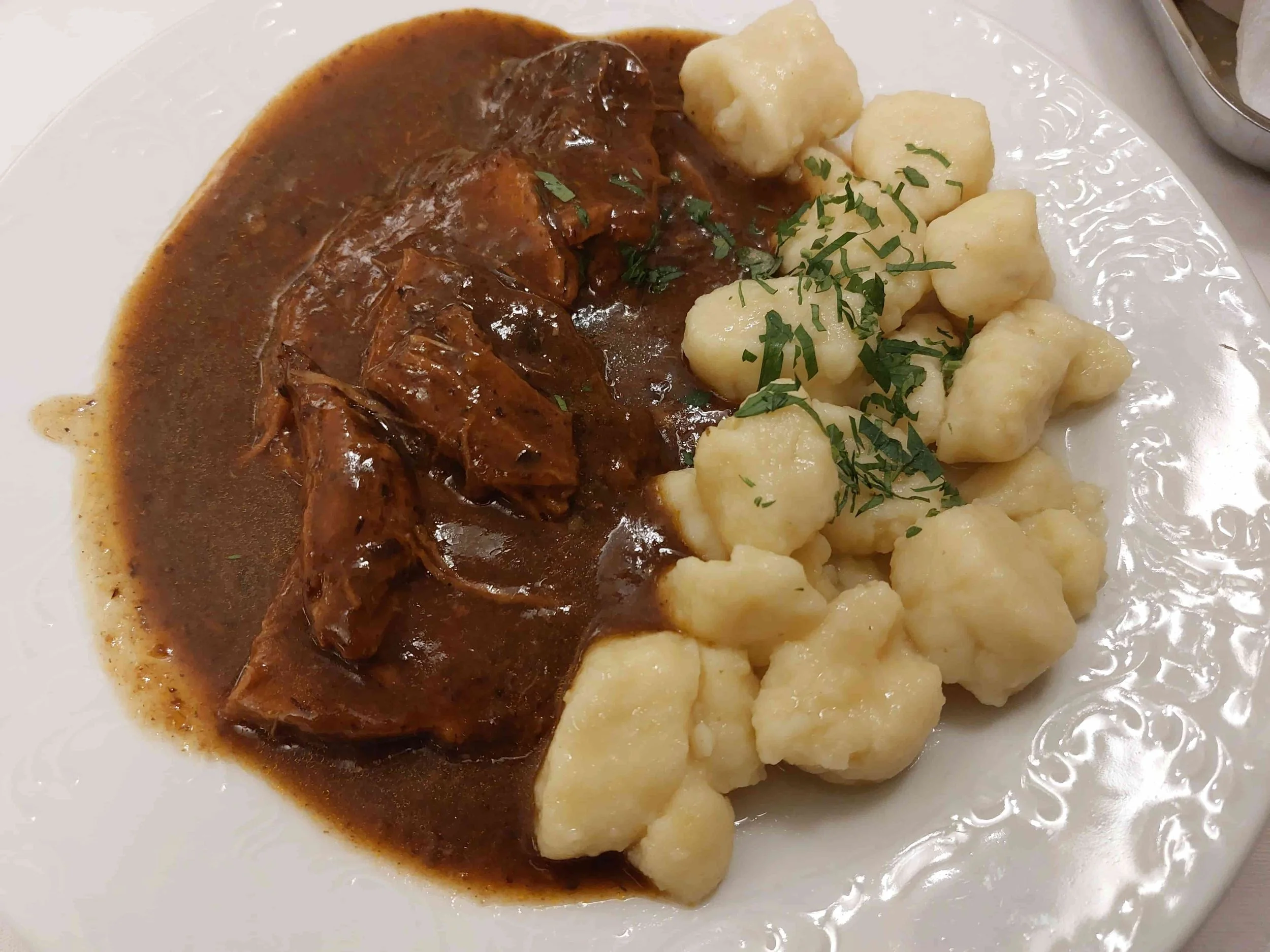
pašticada
beef stew
What is it?
Pašticada is a marinated beef dish traditionally served with gnocchi. Often called Dalmatinska pašticada due to its origins in Dalmatia, the beef is marinated for up to two days to make it tender and fall apart in the mouth. The dish has a slightly boozy, rich flavour, and is usually prepared for special occasions like weddings.
What is in it?
Beef, red wine, vinegar, onion, garlic, and a variety of herbs and spices such as cloves, rosemary, nutmeg, and bay leaves. It can also include bacon, figs, prunes, and celery for added flavour.
Where can I eat it?
Commonly found in Dalmatia, especially in traditional restaurants or during special celebrations. We tried it at a very popular traditional restaurant in Zagreb called Stari Fijaker.
Dairy free.

čobanac
spicy meat stew
What is it?
Čobanac is a traditional Slavonian meat stew from eastern Croatia, especially popular in the regions of Slavonia and Baranja. It’s a filling, spicy dish originally cooked by shepherds (čobani — hence the name), slow cooked over an open fire in a large cauldron (kotlić).
What makes čobanac unique is its use of multiple types of meat and lots of paprika, giving it a slightly fiery flavour. It’s often compared to goulash, but čobanac typically includes more than one meat and has a richer, stronger paprika profile. Both are delicious, though!
It is usually served with bread or with domaći rezanci (homemade thin egg noodles), or krpice/fleky, small square or irregular pasta pieces that are also traditional in Slavonia.
What is in it?
Authentic čobanac typically includes two or more meats, often a mix of beef, pork, and veal, along with onions, garlic, lots of sweet Slavonian paprika, hot paprika or chilli, bay leaf, salt, and pepper.
Where can I eat it?
Čobanac is most commonly found in Slavonia and Baranja at traditional restaurants. It’s rarely seen on the coast, but in larger cities like Zagreb you can find it more easily. We enjoyed a huge one at Stari Fijaker in Zagreb, for example.
Dairy free.
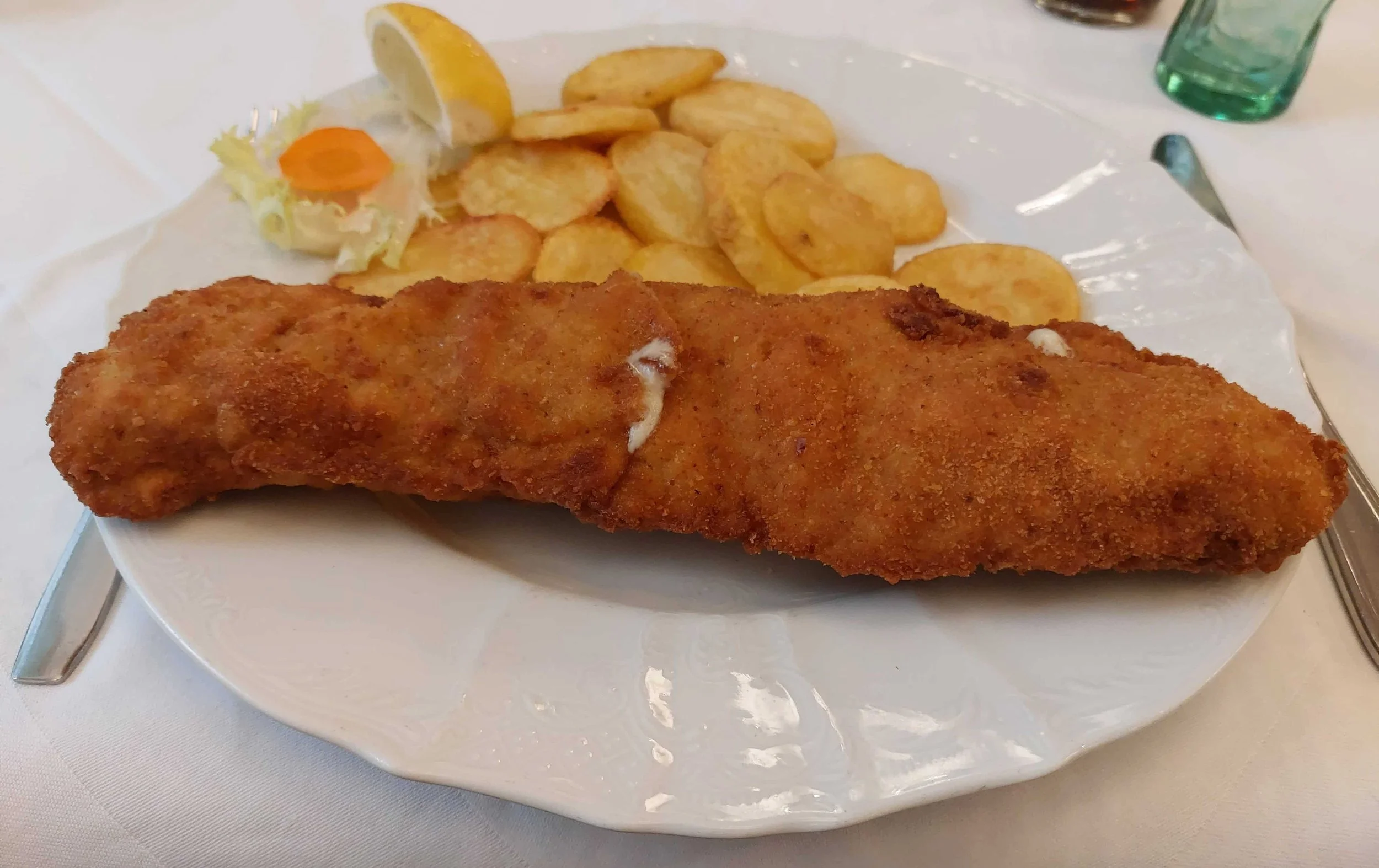
zagrebački odrezak
Croatian schnitzel
What is it?
Zagrebački odrezak, often called Zagreb schnitzel in English, is one of Croatia’s most famous meat dishes, a large, breaded veal (or sometimes pork) schnitzel stuffed with ham and melted cheese.
Think of it as Croatia’s answer to Cordon Bleu.
When you cut into it, the hot cheese and ham filling oozes slightly, creating a rich, saucy centre that contrasts beautifully with the crispy breaded coating. It’s a true classic of Zagreb’s traditional cuisine.
What is in it?
Veal schnitzel (sometimes pork), pounded thin, layered with cooked ham and melting cheese (typically Edamer, Gouda, or a mild local cheese), then coated in flour, egg, and breadcrumbs. Often served with a wedge of lemon.
Where can I eat it?
You can find zagrebački odrezak all across Croatia, but it is especially popular in Zagreb’s traditional restaurants. A very good version is served at Stari Fijaker in Zagreb.
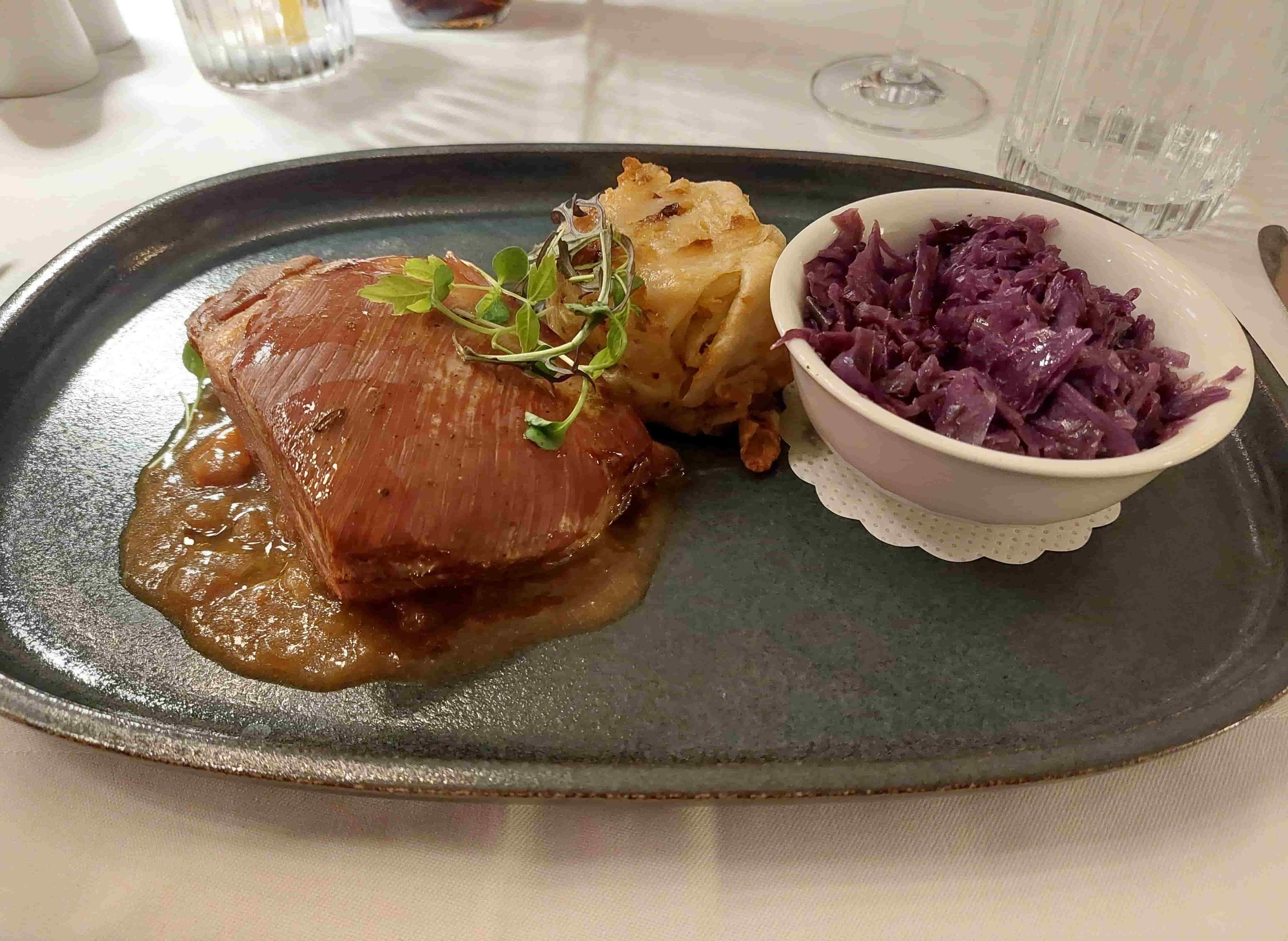
purica s mlincima
roast turkey mlinci
What is it?
Purica s mlincima is a traditional dish especially popular in Zagorje and northern Croatia. It consists of roast turkey (purica) served with mlinici, a unique thin baked flatbread that is broken into pieces, softened with hot stock or roasting juices, and then lightly baked again so it absorbs the turkey’s flavour. It’s like a cross between bread and pasta, the pieces soak up the rich fat and juices from the turkey, becoming soft yet slightly chewy, almost like a savoury pasta or dumpling alternative. It’s a classic festive meal, traditionally eaten for holidays such as Christmas, New Year, and major family occasions.
What is in it?
Whole roast turkey (restaurant servings are portioned for one), seasoned simply with salt, pepper, and sometimes butter or oil with mlinci, thin, dried flatbread made from flour, water, and salt, turkey roasting juices or broth to soften and flavour the mlinci.
Where can I eat it?
Purica s mlincima is most commonly found in northern Croatia, especially in the Zagorje region, Varaždin, and Zagreb, at traditional restaurants. Stari Fijaker serves a very traditional version, while Vinodol offers a slightly more modern but still delicious take, both located in Zagreb.
Outside northern Croatia, it appears less frequently on menus, but it is still well known nationwide.
Dairy free.
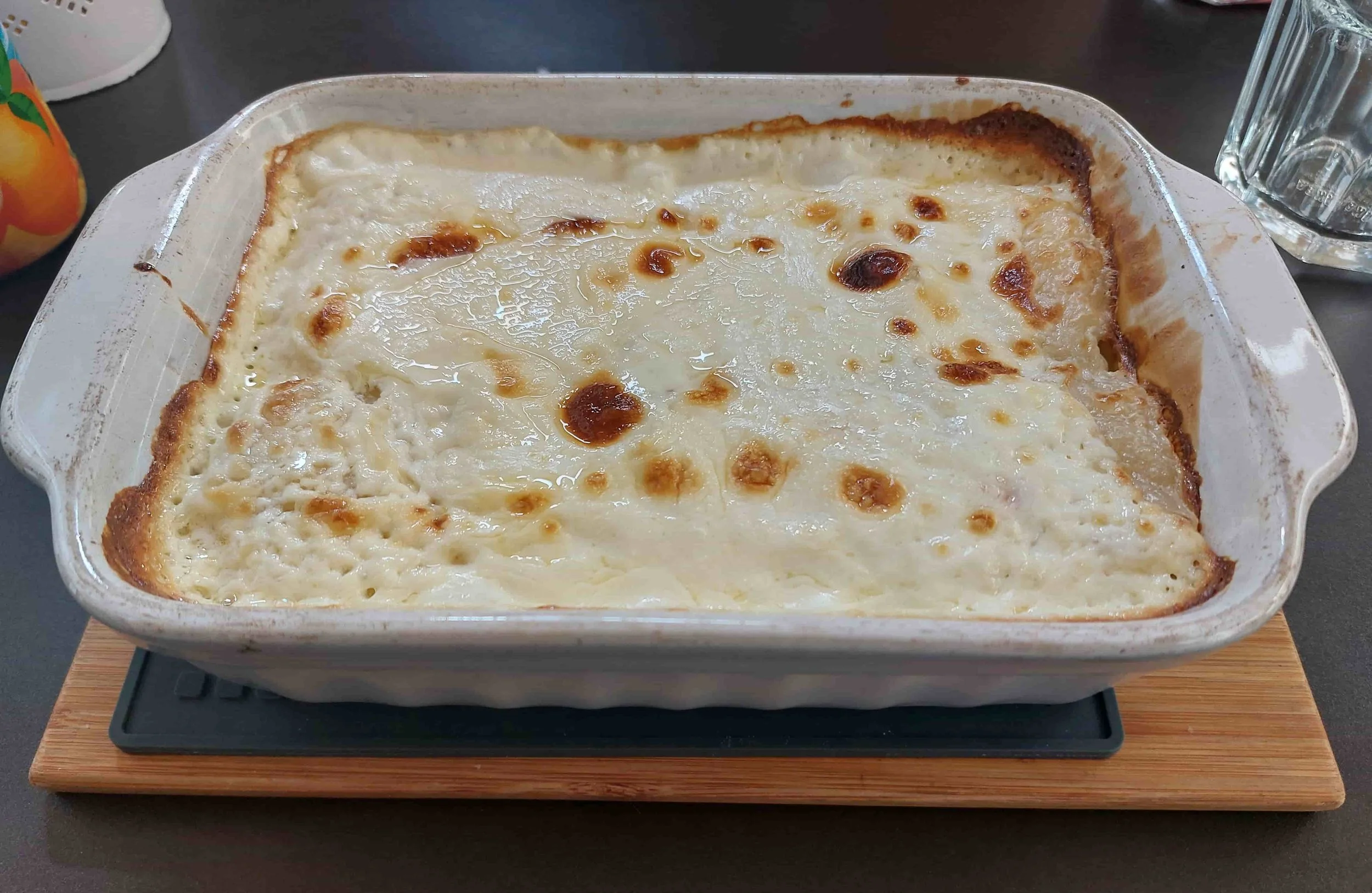
zagorski štrukli
cheesy dough
What is it?
Zagorski štrukli is a dish of dough filled with cheese, hailing from the north of Croatia. There are two variations: one is boiled, while the other is baked and covered in cream, as shown in the picture. It can be enjoyed as a main meal or a snack and is closely related to the Slovenian dish Štruklji.
What is in it?
The dough is made from flour, eggs, oil, water, salt, and vinegar, while the filling consists of cheese, butter, and egg. The baked version is topped with cream and additional cheese before serving.
Where can I eat it?
Zagorski štrukli is most closely associated with northern Croatia, particularly the Zagorje region and Zagreb, where it is widely available in traditional restaurants. We had an excellent version at La Štruk in Zagreb, a restaurant specialising in štrukli served in multiple styles.
Vegetarian.
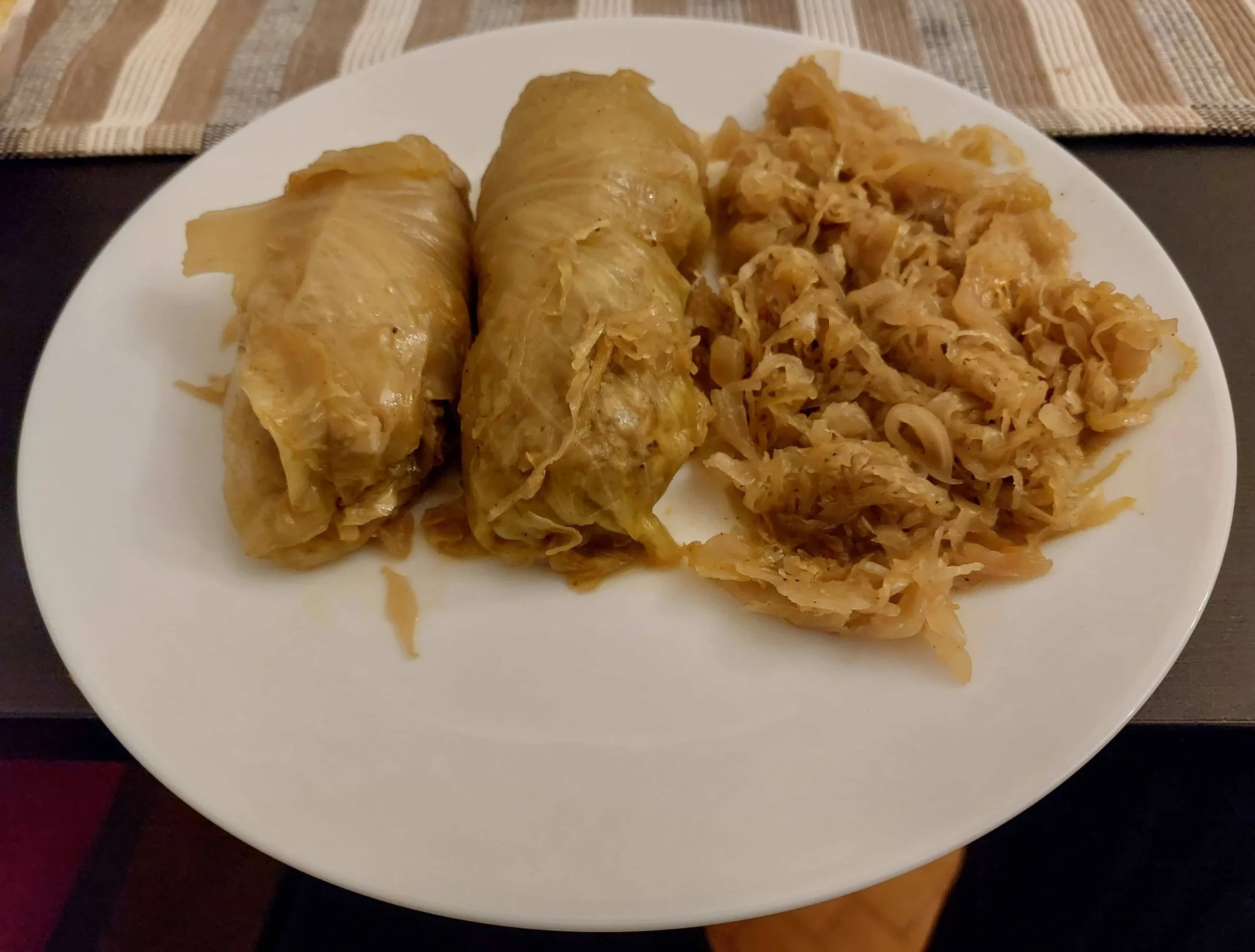
sarma
stuffed cabbage rolls
What is it?
Sarma is minced meat and rice wrapped in fermented cabbage leaves, slowly simmered for hours in a paprika based sauce. It has a mild sourness from the kiseli kupus (pickled cabbage), which gives it its distinct flavour. It’s typically served with mashed potatoes, extra cabbage, and/or bread. Popular throughout Croatia and the wider Balkans.
What is in it?
A typical Croatian sarma includes fermented cabbage leaves (kiseli kupus), minced pork or a pork & beef mix, rice, onion, sweet paprika, bay leaf, salt, and pepper.
Where can I eat it?
Sarma appears across Croatia, especially in traditional restaurants and taverns (konobe). It’s less common than some other traditional dishes, but still fairly easy to find, especially in winter.
Vegan and vegetarian versions sometimes available, dairy & traditionally gluten free.
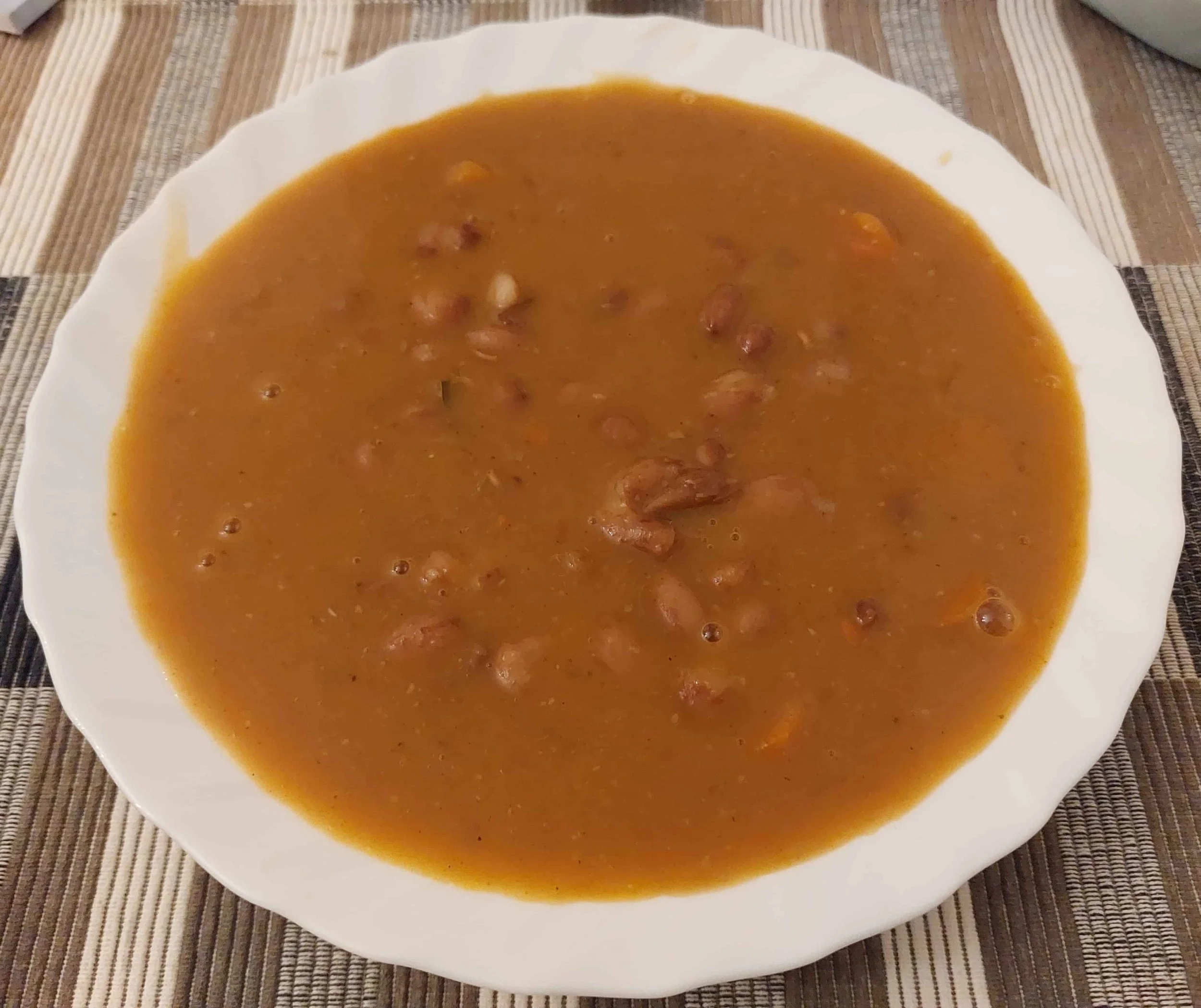
grah
bean stew
What is it?
Grah is a Croatian bean stew made with white or pinto beans, slow cooked with vegetables, paprika, and often smoked meat. It’s one of the most common rustic dishes in the country. It’s especially popular in Slavonia and Zagorje, but you’ll find versions everywhere.
Grah is often eaten as an inexpensive everyday lunch and is usually served with bread.
What is in it?
A typical Croatian grah includes, beans, smoked sausage (kobasica) or smoked pork such as ribs or bacon, onions, carrots, celery, garlic, paprika, tomato or tomato paste, bay leaf, salt & pepper. Some regions make a meatless version during fasting periods.
Where can I eat it?
You’ll commonly find grah in traditional Croatian restaurants and taverns (konobe) as well as simple local eateries. It’s less common on coastal tourist menus, but still widely available inland.
Vegan versions available, dairy free.
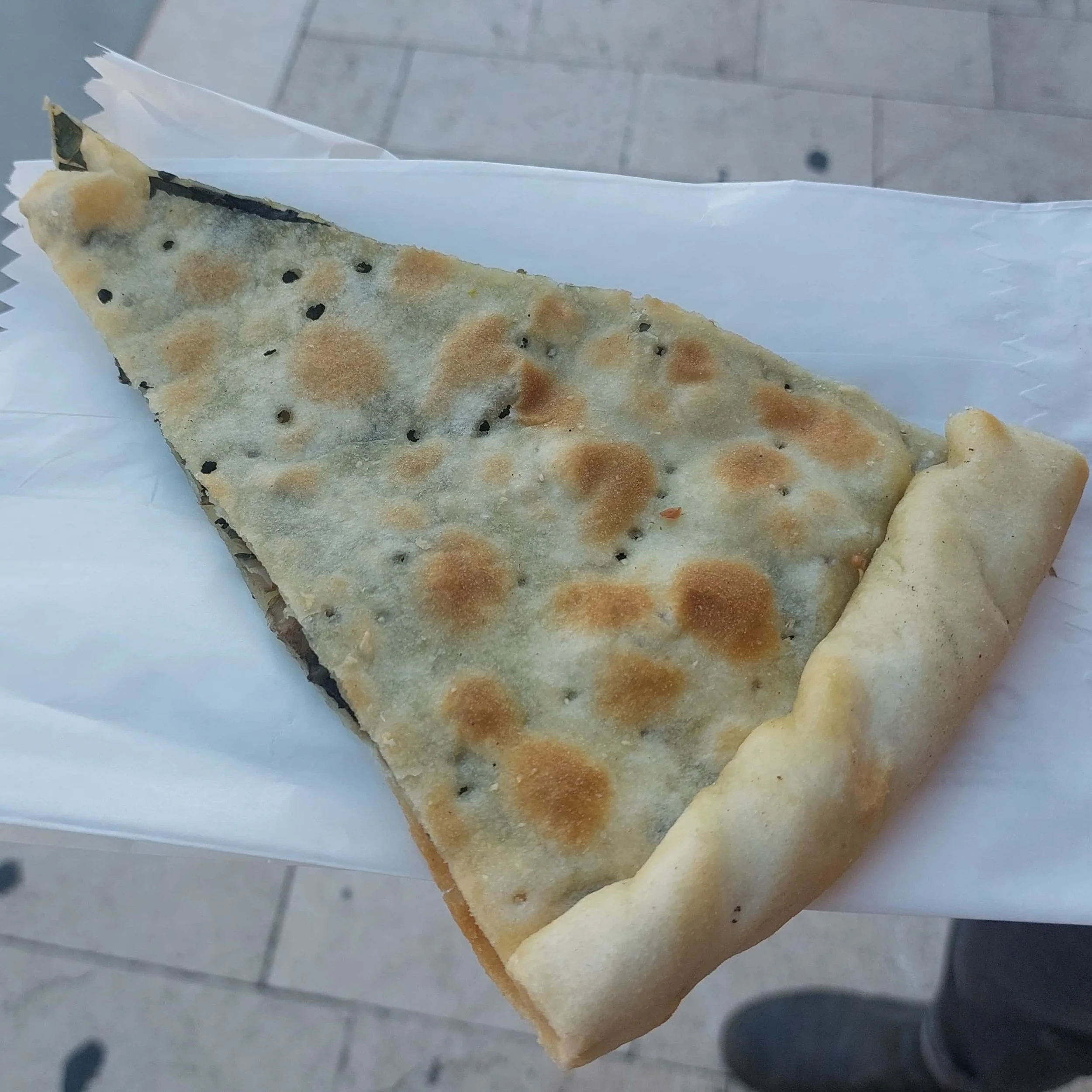
soparnik
Swiss chard pie
What is it?
Soparnik is a savoury, thin Swiss chard pie, traditionally cut into slices like a pizza.
What is in it?
The dough is made from flour, salt, and water, while the filling includes Swiss chard, onion, and parsley. It is then brushed with olive oil and garlic.
Where can I eat it?
Although not commonly found in restaurants, Soparnik can occasionally be found in bakeries in the southern Dalmatian region of Croatia.
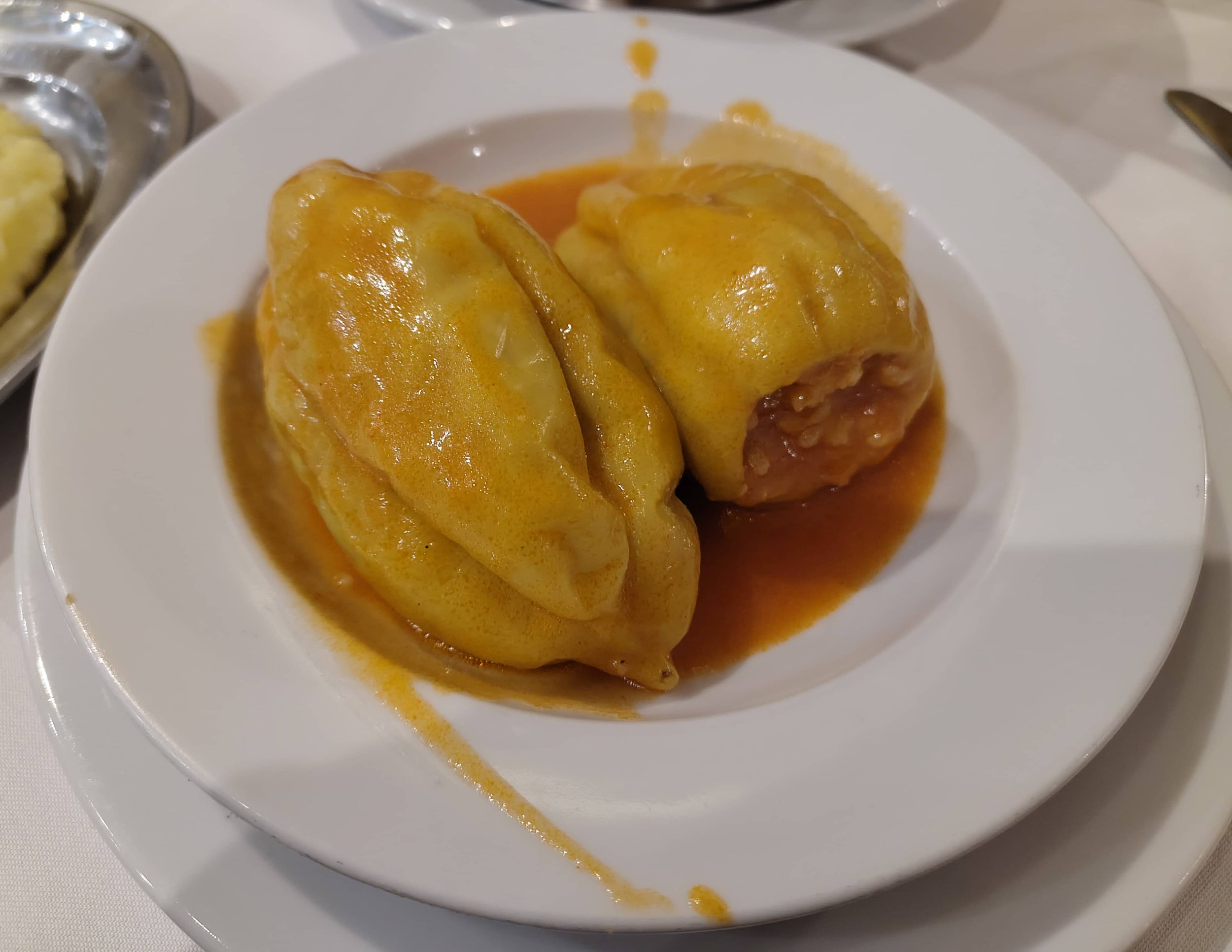
punjene paprike
stuffed peppers
What is it?
Punjene paprike are a classic Croatian home style dish of sweet peppers stuffed with a savoury mixture of minced meat and rice, slowly simmered in a light tomato based sauce. The dish is common throughout the Balkans and eastern Europe. It’s especially popular as a home cooked meal or daily special rather than a restaurant showpiece.
What is in it?
Punjene paprike are usually made with sweet bell peppers (often the pale yellow Balkan babura peppers). They are filled with a mixture of minced pork or a pork and beef blend, rice, onion, paprika, salt, pepper, and sometimes parsley.
The stuffed peppers are simmered in a light tomato sauce made from tomato, paprika, oil, and water or stock. They are most commonly served with mashed potatoes, which soak up the sauce, and sometimes with fresh bread.
Where can I eat it?
Punjene paprike can be found in traditional Croatian restaurants and konobe, though like many home style dishes it often appears as a daily special rather than a permanent menu item. We had some at Gostionica restoran purger in Zagreb, a popular little local place.
Dairy free.
Related food guides
While Croatian cuisine has its own regional specialities, it shares many traditional dishes with neighbouring Bosnia and Herzegovina. For a deeper look at some of these shared Balkan classics, see our Bosnian food guide.
Ingredients listed reflect common or typical components of this dish as served in restaurants or street‑food vendors. Variations by region, season, or vendor are common. This information is provided for general reference only. If you have dietary restrictions or allergies, please verify ingredient details independently. We assume no liability for accuracy or outcomes.
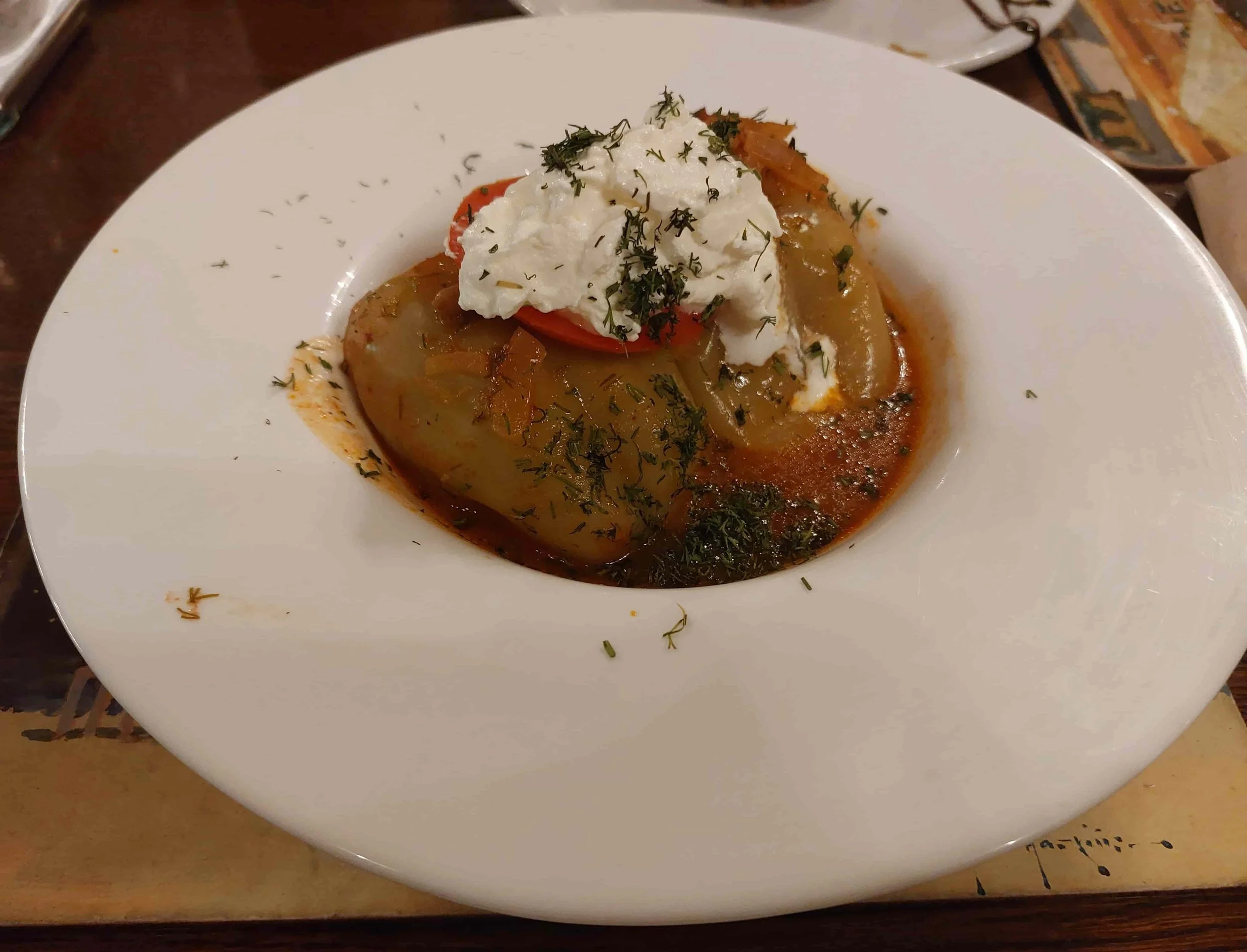
all the foods - Romania
Discover all the traditional Romanian dishes we tried, from sarmale and covrigi to mici and more
Here you will find a list of all the traditional cuisine we tried in Romania.
Click to view our top 5 Romanian foods
Click to view our Bucharest food guide
Click to jump to one of the sections:
soups
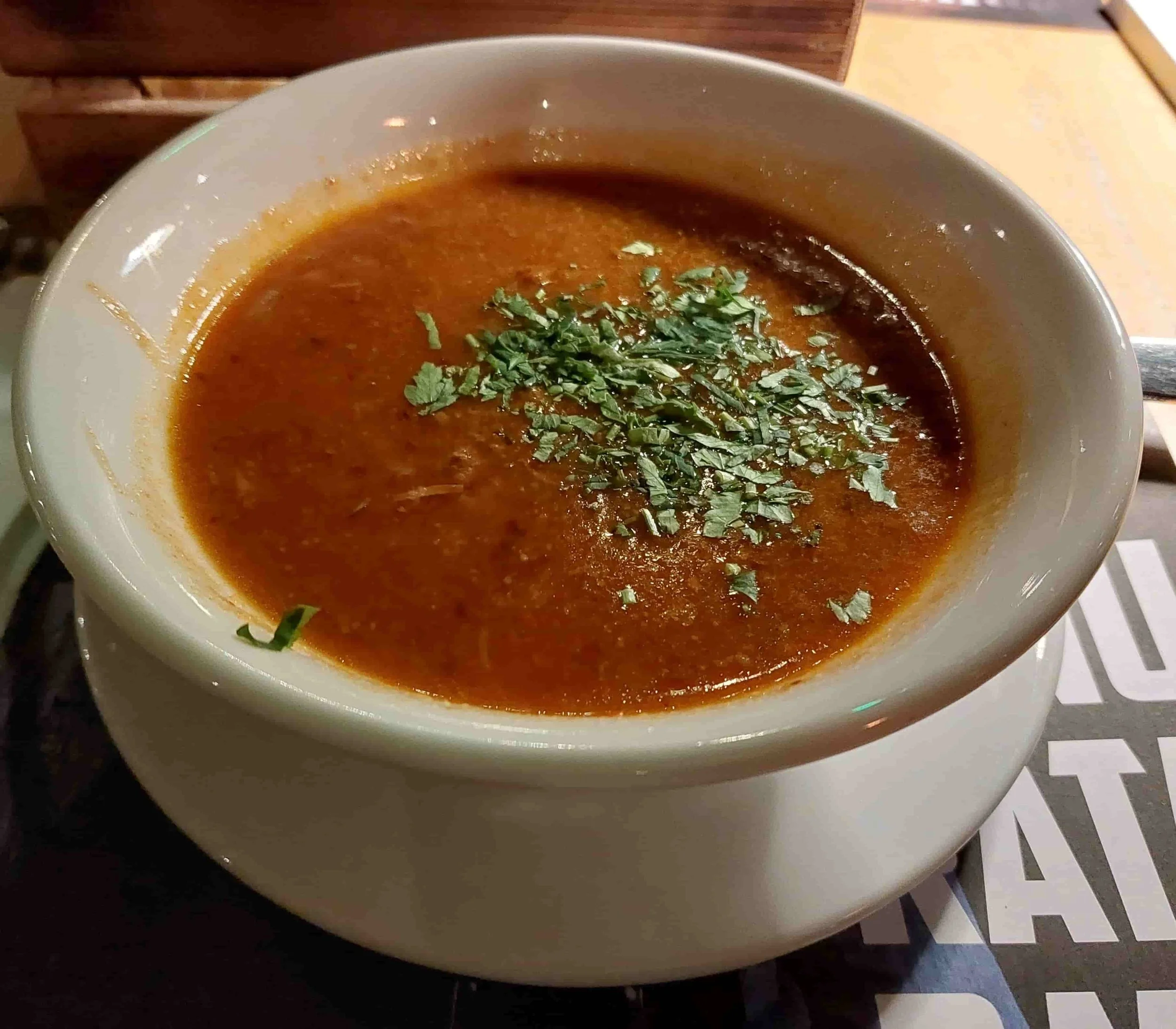
gulaș supă
beef & paprika soup
What is it?
Romanian goulash is derived from the Hungarian original but has evolved into a lighter, soup style version rather than the thick stew served in Hungary. In Romania, gulaș supă is typically enjoyed as a starter, not a main dish. It has a slightly spicy, paprika based broth with tender beef, potatoes, carrots, and peppers, and often tomato.
What is in it?
Beef (sometimes pork), potatoes, carrots, onions, bell peppers, tomato paste, paprika, garlic, and bay leaf, simmered in broth and finished with a sprinkle of parsley. Its often served with bread.
Where can I eat it?
You’ll find gulaș supă in many traditional Romanian restaurants, particularly in Transylvania and western regions close to the Hungarian border, though it’s also a popular starter across the country. We had a really delicious one at Hanu' Berarilor Casa Oprea Soare in Bucharest.
Dairy & gluten free.
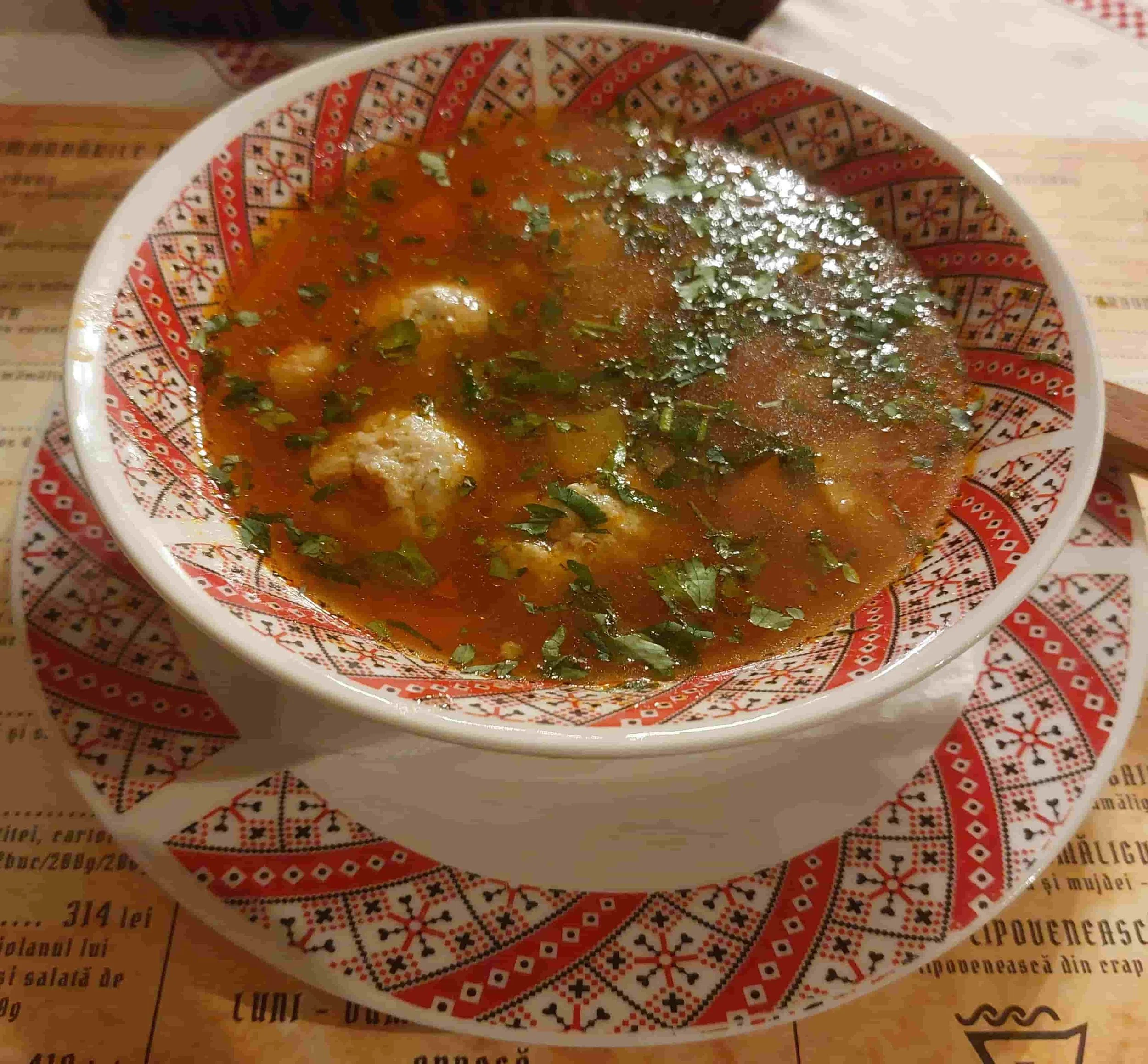
ciorbă de perişoare
meatball soup
What is it?
Ciorbă de Perişoare is one of Romania’s most popular traditional soups, a sour meatball soup made with minced pork or a mix of pork and beef, vegetables, and rice. The word ciorbă refers to Romania’s distinctive sour soups, typically flavoured with borș (a fermented wheat bran liquid) or lemon juice, giving them a sour, tangy taste.
It’s often served as a starter in Romanian restaurants.
What is in it?
Minced pork (or a pork & beef mix) mixed with rice, onion, egg, and parsley to form the meatballs; a soup base made from carrots, celery root (țelină), parsnip, onion, bell pepper, and tomato or tomato paste; and soured with borș or lemon juice. Often finished with fresh parsley or lovage and sour cream at the table.
Where can I eat it?
You’ll find ciorbă de perişoare on traditional menus across Romania. It's almost always served as a first course before the main dish. We tried a good one at Restaurant Burebista Traditional in Bucharest.
Dairy free if served without sour cream. traditionally gluten free.
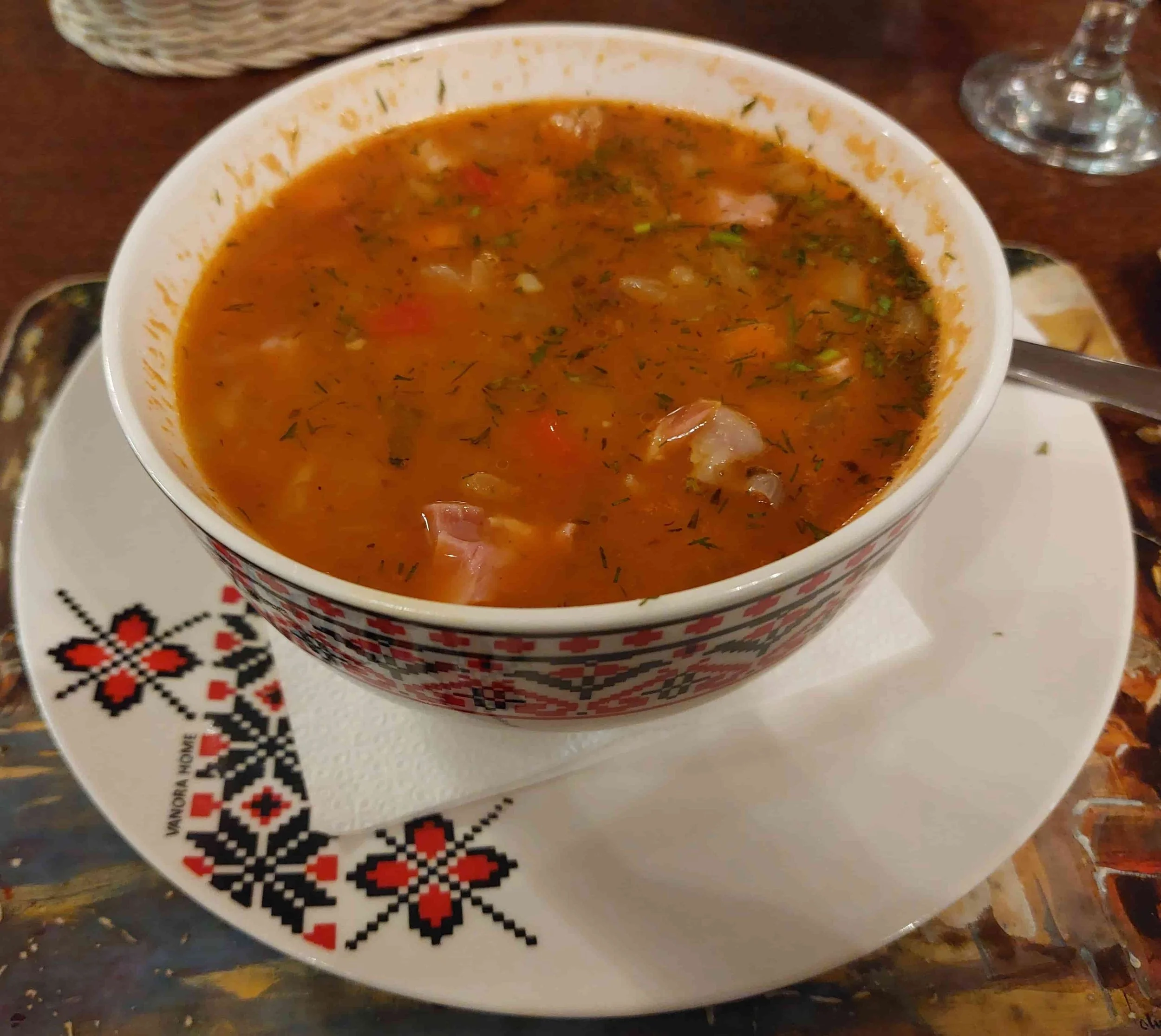
fasole cu ciolan afumat
bean and pork stew
What is it?
Fasole cu ciolan afumat is a slow cooked white bean stew made with smoked pork knuckle or ham hock and vegetables. It has a deep, smoky flavour and is often considered one of the country’s best cold weather meals. The dish also appears in a soup version, ciorbă de fasole cu afumătură and both are very traditional.
What is in it?
White beans (fasole albă), smoked pork knuckle (ciolan afumat), onion, carrot, celery, garlic, tomato paste or fresh tomatoes, and bay leaf. The beans and pork are slow cooked until tender, allowing the beans to absorb the smoky flavour of the meat. It’s often seasoned with thyme, paprika, and sometimes a bit of vinegar, then finished with fresh parsley or dill.
Where can I eat it?
You’ll find fasole cu ciolan afumat in traditional Romanian restaurants and taverne across the country, especially during the colder months. Both Nicorești and Burebista Traditional serve it on their menus.
Dairy & gluten free.
main dishes
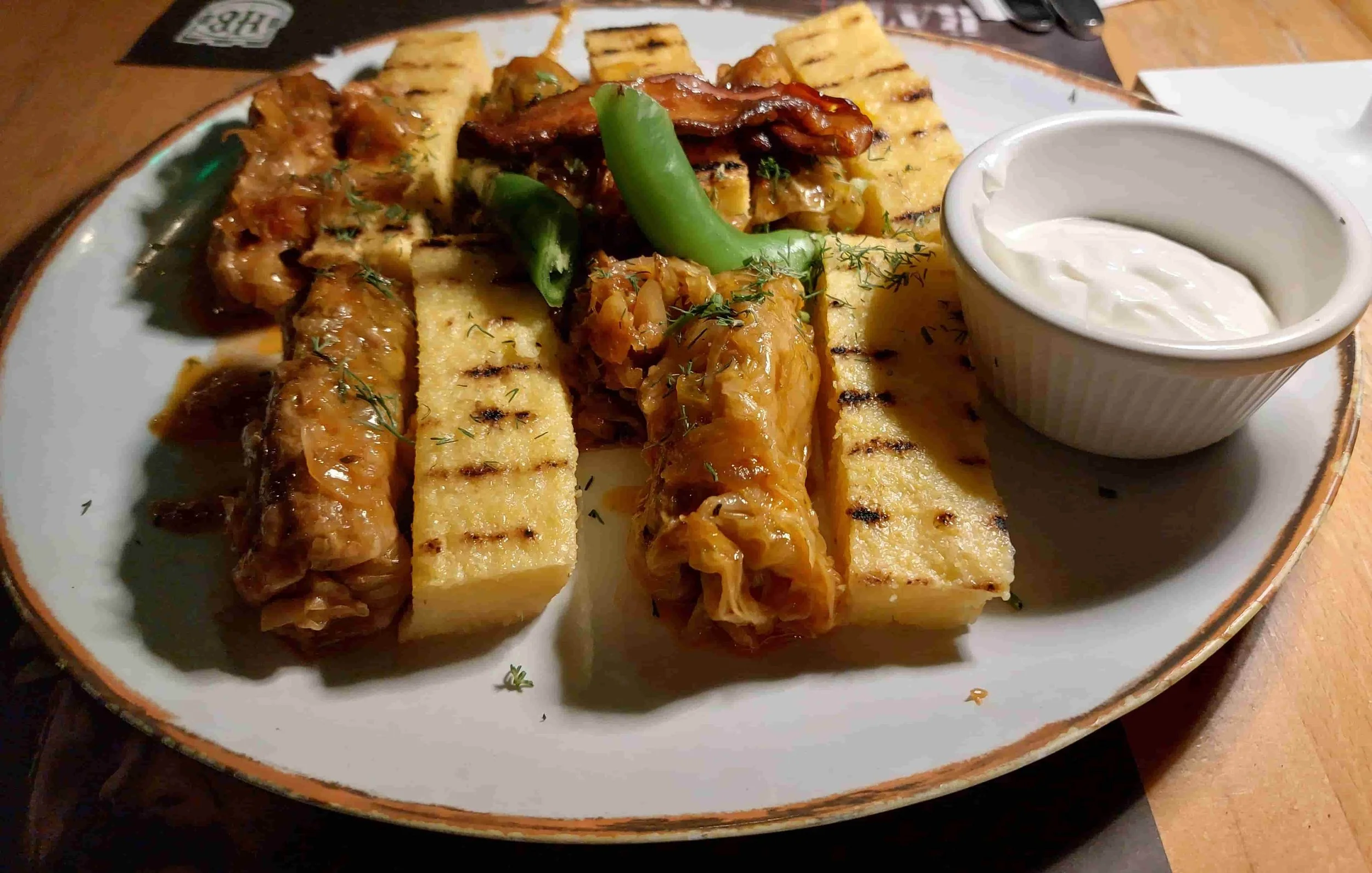
sarmale
stuffed cabbage rolls
What is it?
Sarmale are one of Romania’s most traditional and delicious dishes. These are cabbage rolls stuffed with a mixture of minced meat and rice, slow cooked in a tomato based sauce. The dish has Ottoman roots and is popular across much of Eastern Europe and the Balkans, with local variations found in countries like Bosnia, Bulgaria, Hungary, and Ukraine, but it has become resoundingly Romanian, often regarded as the country’s national dish.
What is in it?
Ground pork (often mixed with beef), rice, finely chopped onions and herbs (notably dill and/or thyme), wrapped in sour or fermented cabbage leaves, slow cooked in tomato sauce (with bay leaves and occasionally smoked meat). Served with mămăligă (polenta) or bread and smântână (sour cream).
Where can I eat it?
You’ll find sarmale throughout Romania served on many traditional menus, Hanu' Berarilor Casa Oprea Soare in Bucharest serve some amazing ones with grilled mămăligă (polenta).
Vegetarian versions occasionally available, dairy free without sour cream, gluten free.
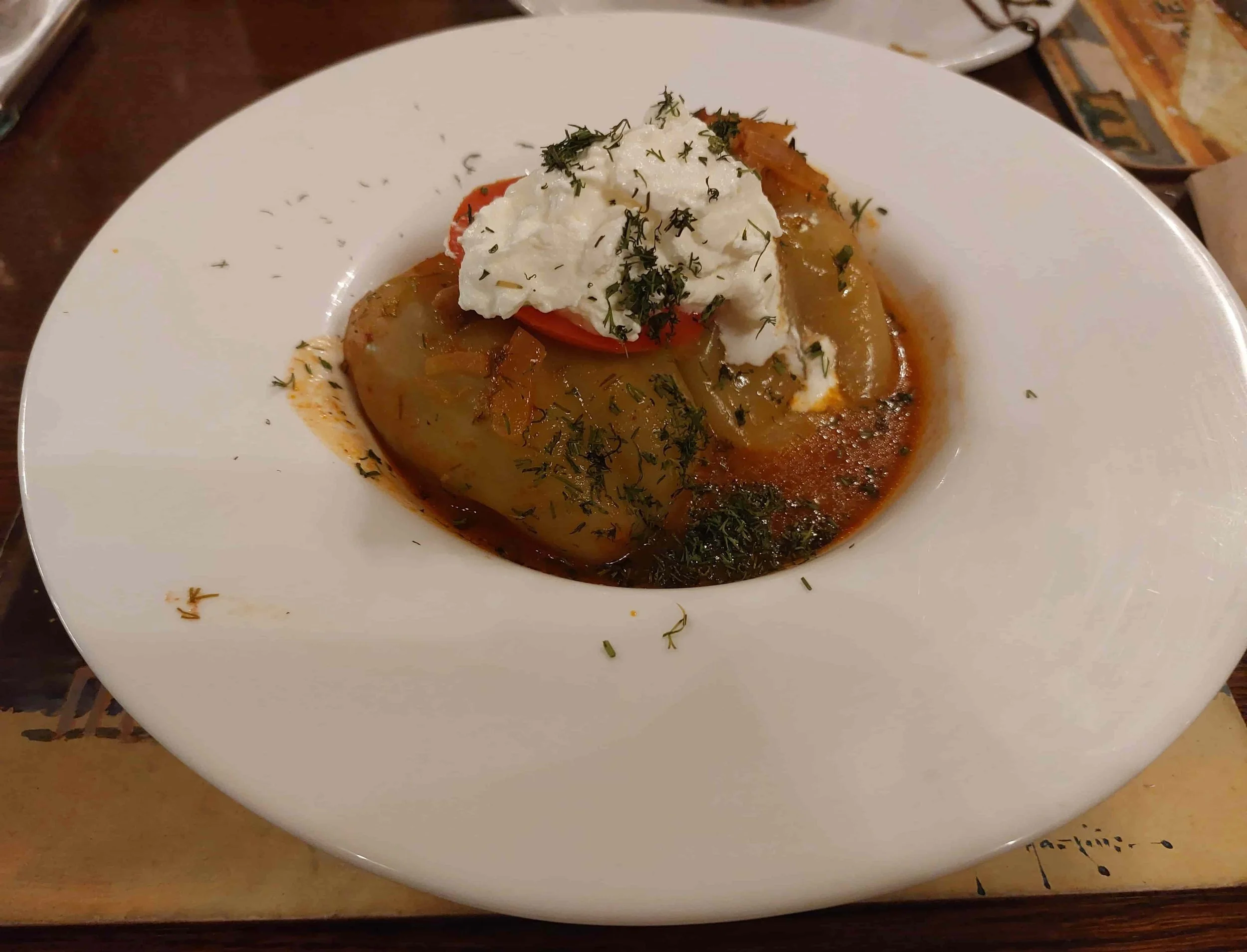
ardei umpluţi
stuffed peppers
What is it?
Ardei umpluţi means “stuffed peppers.” Large sweet bell peppers are filled with a savoury mixture of minced meat, rice, onions, and herbs, then cooked slowly in a light tomato sauce until the rice and meat are soft and infused with flavour. It’s a close relative of sarmale (stuffed cabbage rolls).
What is in it?
Bell peppers (usually yellow or red), stuffed with a mix of minced pork or beef (or both), rice, onion, and fresh herbs such as dill and parsley. The sauce is made from tomatoes, garlic, and bay leaf, sometimes with sugar or paprika.
Where can I eat it?
You’ll find ardei umpluţi in many traditional Romanian restaurants and taverne, particularly in summer and early autumn when peppers are at their best. They’re usually served as a main course, often with sour cream and crusty bread or mămăligă (polenta). We had a good one at Nicorești in Bucharest.
Vegetarian versions occasionally available, dairy free without sour cream, gluten free.
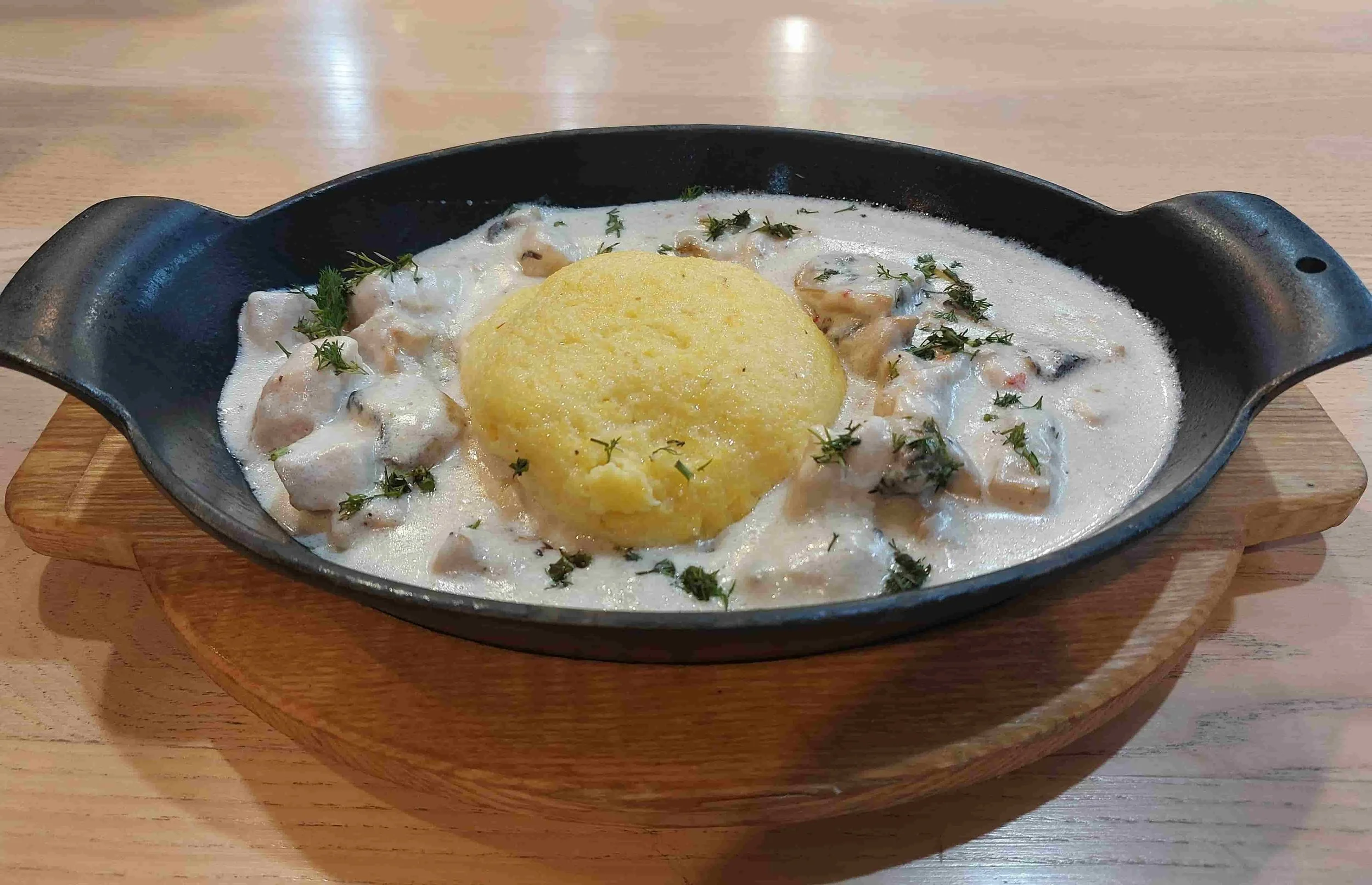
ciulama
chicken in white sauce
What is it?
Ciulama is a traditional Romanian dish that featuring meat, mushrooms, or both, cooked in a creamy white sauce. The sauce is thickened with a flour butter roux (rântaș) and often finished with sour cream or milk. Though its name likely comes from Turkish “çullama”, the dish as it exists in Romania is distinct.
What is in it?
The base consists of diced meat (commonly chicken; sometimes veal) and/or mushrooms (for a vegetarian variant), onions and garlic, all cooked and then coated in a sauce made from butter and flour (roux), plus milk, cream or stock, and seasoned with white pepper, nutmeg and fresh herbs, often parsley or dill. Often served with mămăligă (polenta) or bread for soaking up the sauce.
Where can I eat it?
You’ll find ciulama in many traditional Romanian restaurants, it’s less ubiquitous than some other traditional foods but you should not have too much trouble finding it. It’s sometimes listed on menus under “ciulama de pui” (chicken) or “ciulama de ciuperci” (mushroom). A good version is served at Hanu' Berarilor Casa Oprea Soare in Bucharest.
Vegetarian versions available.
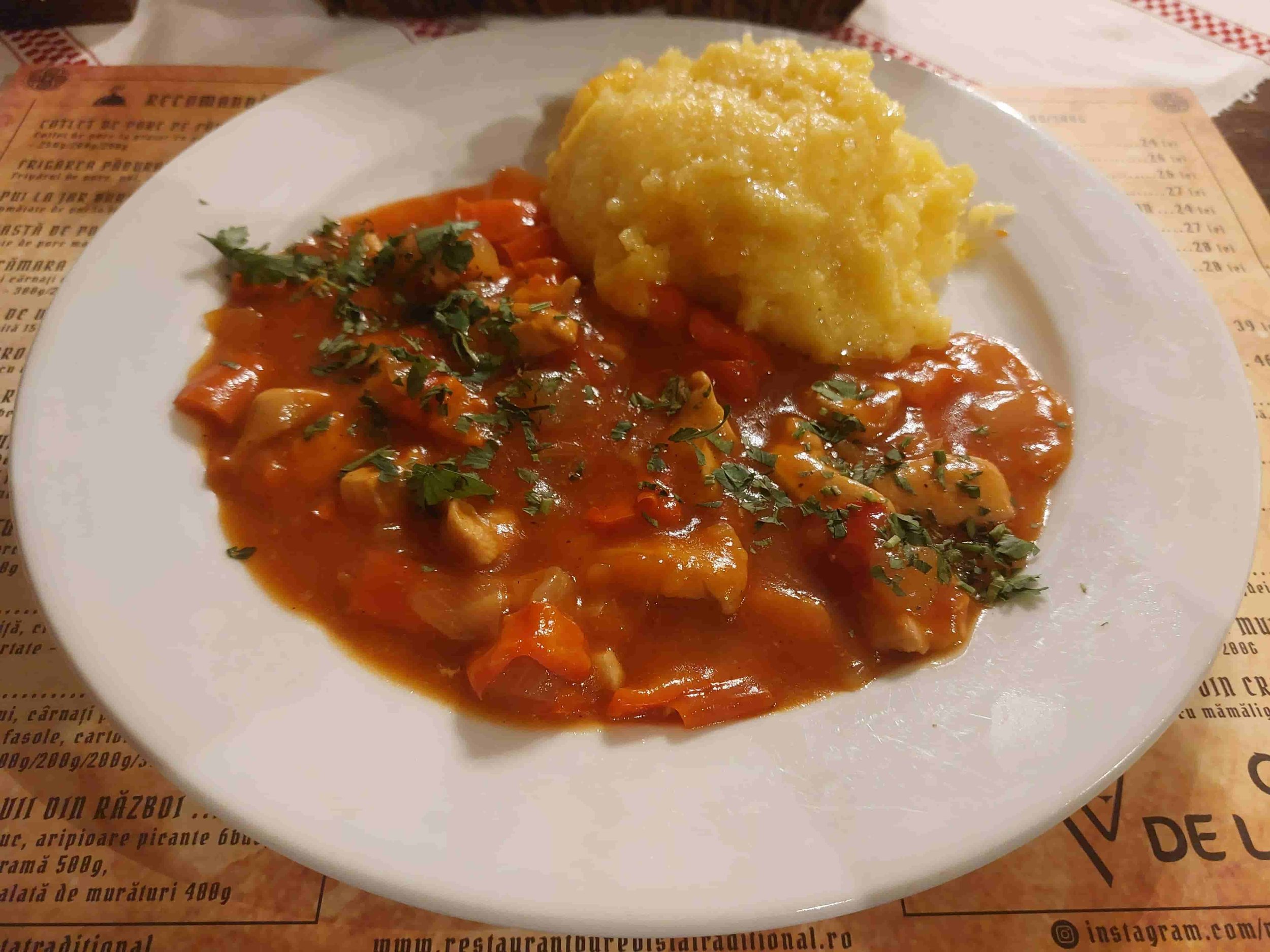
ostropel de pui
chicken stew
What is it?
Ostropel de Pui is a traditional Romanian chicken stew cooked in a garlicky tomato sauce. While recipes vary slightly by region, the dish always has a strong tomato flavour balanced with a lot of garlic. Strangely, it reminded me a little of sweet and sour chicken, but without the pineapple, thanks to its savoury, lightly tangy tomato sauce.
What is in it?
Chicken pieces, garlic, onion, tomato paste or fresh tomatoes, flour for light thickening, oil, salt, pepper, and bay leaf. Some versions include splash white wine or sugar. It’s usually garnished with parsley.
It's often served with mashed potatoes or mămăligă (polenta)
Where can I eat it?
Ostropel de Pui is a common main course in traditional Romanian restaurants (taverne). It’s particularly popular in southern Romania (especially Oltenia), where the sauce tends to be more garlicky. Although chicken is the classic version, you’ll also find ostropel made with pork, rabbit, or even meatballs, depending on the region.
Dairy free.
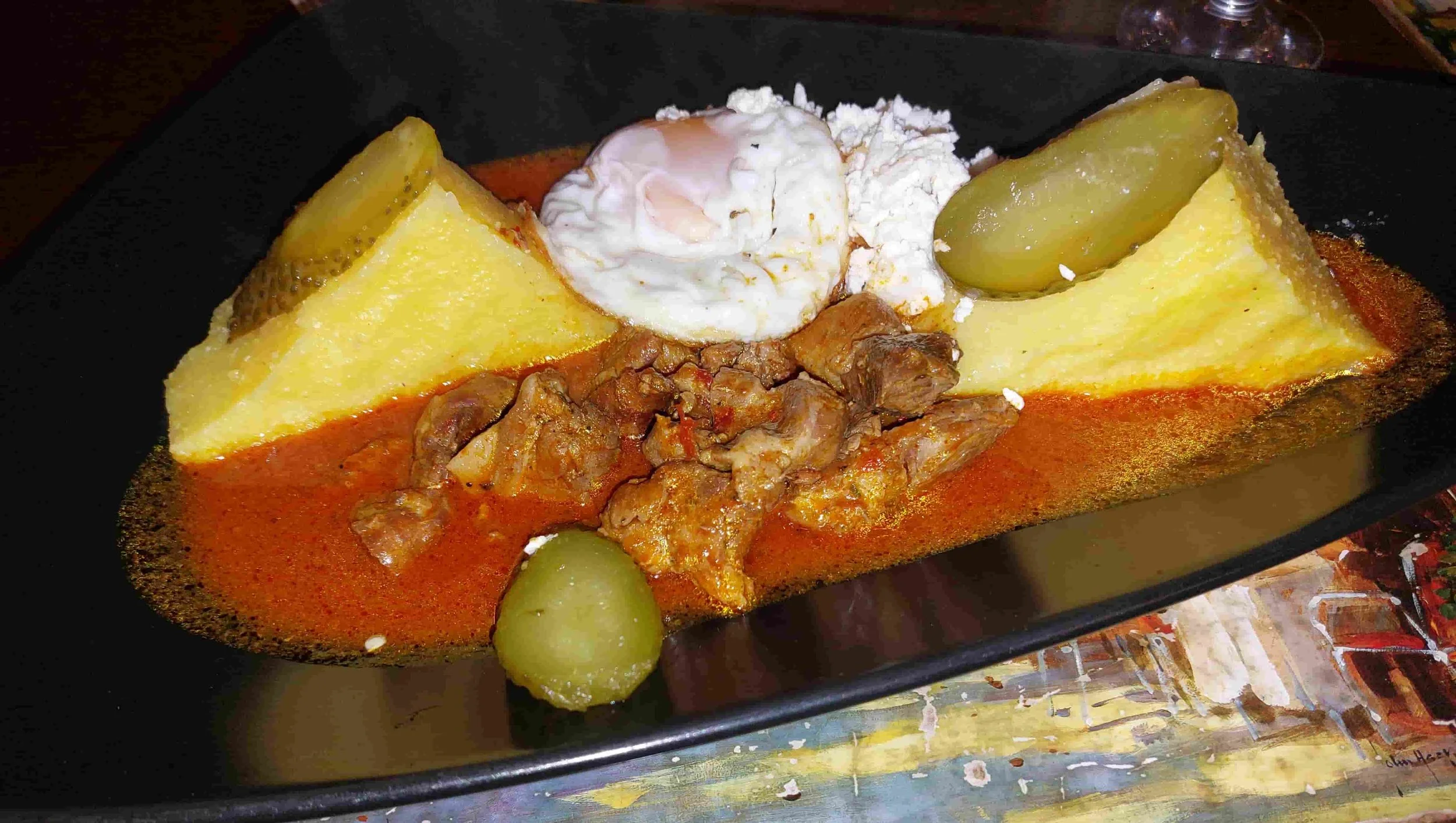
tochitură
pork stew
What is it?
Tochitură is a classic Romanian pork stew and one of the country’s most traditional dishes. It’s typically made from small pieces of pork, sometimes including sausage or organ meat, slowly simmered in their own juices with a little tomato paste, garlic, and spices. The result is a very savoury, slightly smoky stew with a sauce that’s perfect for soaking up with mămăligă (polenta). It’s usually topped with a fried egg, a handful of salty cheese (brânză de burduf or telemea), and served with pickles on the side.
What is in it?
Pork (often a mix of shoulder, belly, and occasionally organ meats such as liver or heart, plus sausage), garlic, onion, paprika, tomato paste, and bay leaf. The sauce may be enriched with wine or stock. It’s traditionally served with mămăligă, cheese, a fried or poached egg, and pickles.
Where can I eat it?
You’ll find tochitură on many traditional restaurant menus across Romania, including at Nicorești and Bucătărașul in Bucharest.
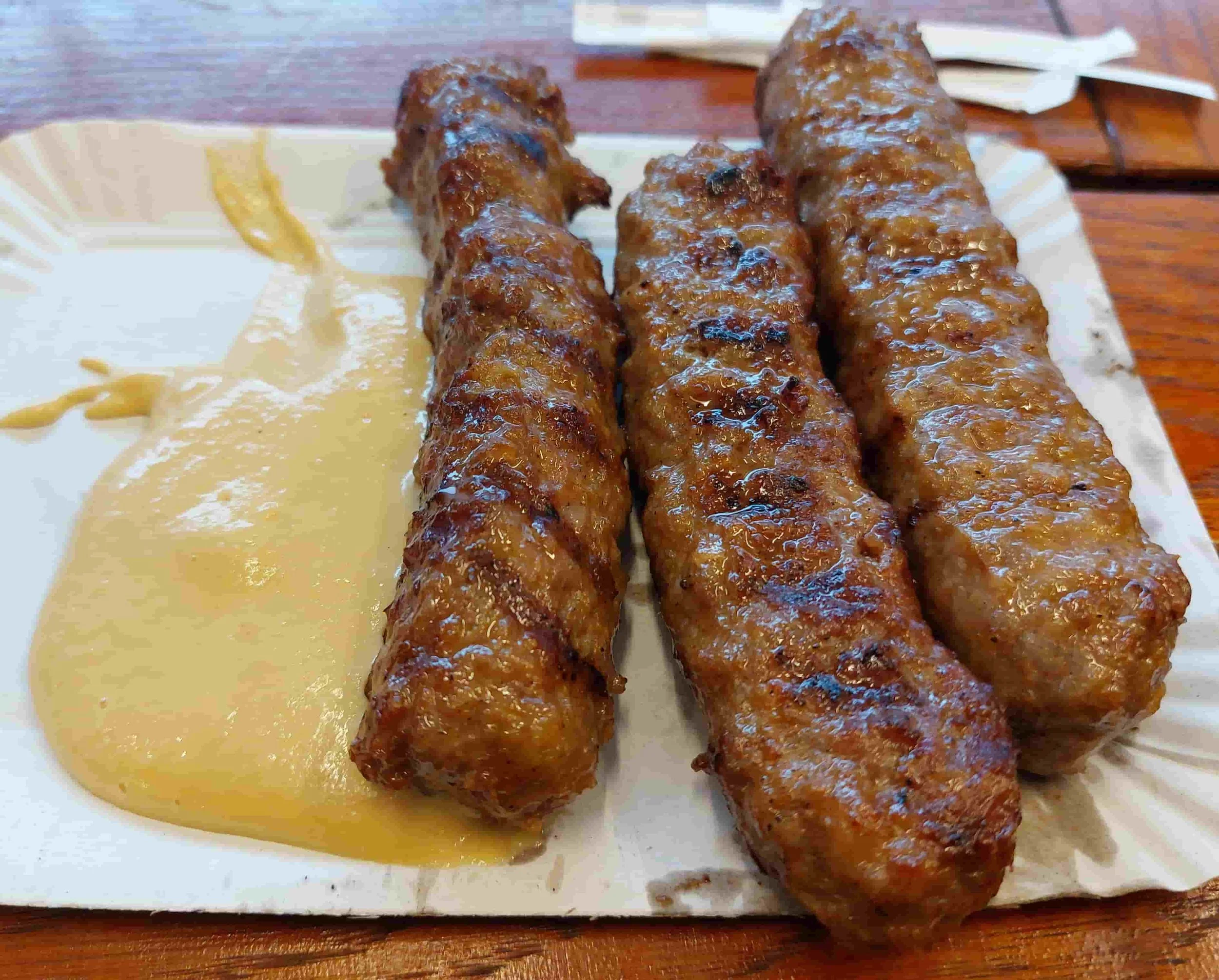
mici (mititei)
grilled minced meat
What is it?
Mici, also known by their longer name mititei (“the little ones”), are Romania’s famous grilled skinless sausages made from a mixture of ground meats and aromatic spices. The dish was inspired by Balkan ćevapi, but Romanian mici are larger, juicier, and more finely ground, with a distinctive flavour from garlic, thyme, and a hint of baking soda that gives them a light, springy texture.
What is in it?
Traditionally, a mixture of beef and pork, seasoned with garlic, thyme, black pepper, and paprika. The mixture is rolled into short cylinders (usually about the length of a finger), grilled over charcoal, and served hot with mustard and bread, sometimes with pickles or fries on the side.
Where can I eat it?
You’ll find mici everywhere in Romania, at street stalls, beer gardens, markets, and traditional restaurants.
Dairy and gluten free.
side dishes and bakery snacks
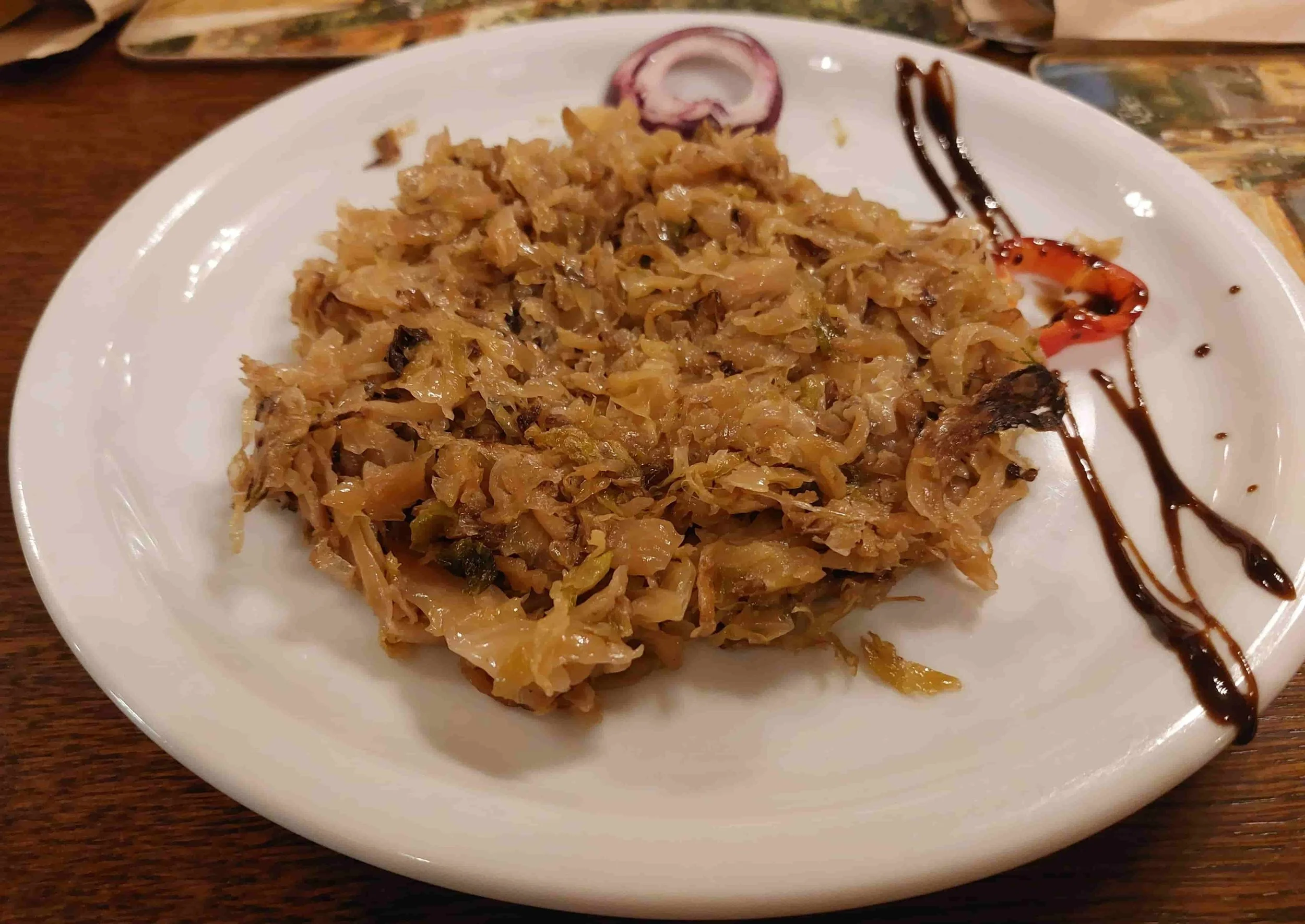
varză călită
braised cabbage
What is it?
Varză călită is a traditional Romanian braised cabbage dish, often cooked with pork and tomatoes. The name literally means “fried” or “braised cabbage.” It’s a humble, home style dish found across Romania, especially in winter when cabbage is plentiful. Depending on the recipe, it can be a side dish or a main, and is made with either fresh cabbage (varză dulce) or sour cabbage (varză murată), both versions are traditional.
If you’re familiar with German sauerkraut, think of varză călită as its milder cousin, less sharp or acidic, slow cooked with tomato and often meat, giving it a deeper, slightly sweet flavour.
What is in it?
Shredded cabbage, onions, oil or lard, tomato paste or chopped tomatoes, and bay leaf, seasoned with salt, pepper, and dill. Versions include smoked or fresh pork, ribs, sausage, or bacon.
Where can I eat it?
You’ll find varză călită in traditional Romanian restaurants and taverne, often served with mămăligă (polenta) or crusty bread. It’s particularly common in Bucharest and southern Romania, where it’s a winter staple and a favourite comfort food. Some restaurants serve it as a side to sarmale (stuffed cabbage rolls), while others offer it as a main dish.
Vegetarian versions available, dairy & gluten free.
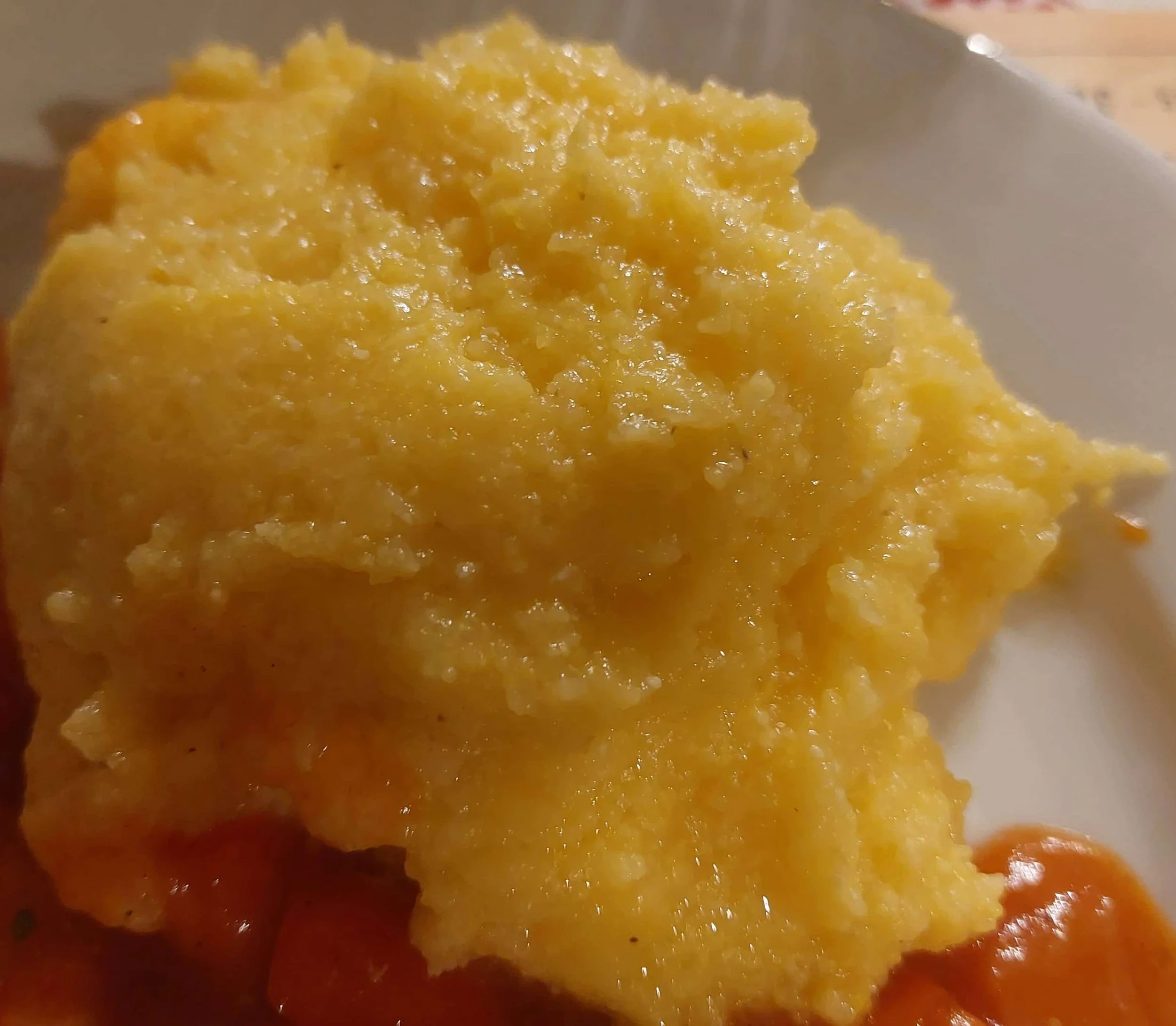
mămăligă
Romanian polenta
What is it?
Mămăligă is Romania’s traditional cornmeal porridge, similar to Italian polenta but thicker and firmer in texture. Once a staple peasant food, it remains the country’s most common side dish, trust me, you’ll be eating a lot of it. It can be served soft and creamy, firm and sliceable, or even grilled, depending on the meal. Traditionally, mămăligă replaced bread in rural households and still often accompanies main dishes like sarmale, tochitură, or ostropel de pui.
What is in it?
Coarse yellow cornmeal (mălai), water, and salt. Butter, cheese (brânză de burduf, telemea), or sour cream may be added for a richer version, but the classic form is plain, allowing it to absorb the flavour of the sauces or dishes it’s served alongside.
Where can I eat it?
You’ll find mămăligă everywhere in Romania! It’s usually served as a side to meat stews or grilled meats, but it can also appear as a main, often topped with cheese, sour cream, and sometimes even a fried egg.
Naturally vegan, dairy and gluten free in its simplest form.
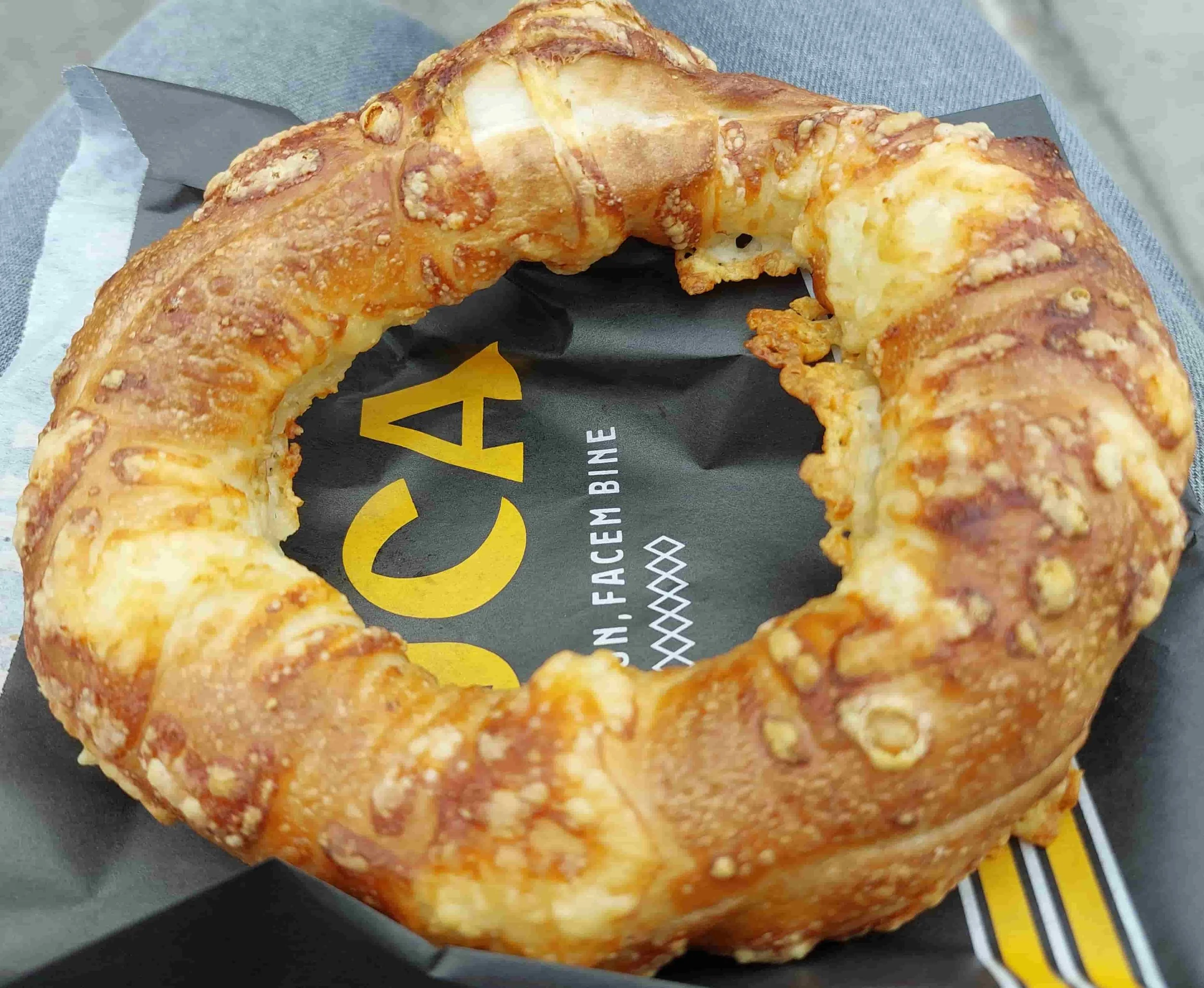
covrig
Romanian pretzel
What is it?
A covrig (plural covrigi) is Romania’s answer to the German pretzel and one of the country’s favourite street snacks, typically sprinkled with coarse salt, poppy seeds, or sesame seeds. Although it resembles a German pretzel, the dough is simpler (less rich and eggy) and the crust thinner and chewier. Fresh, warm covrigi are often eaten on the go for breakfast, as a snack, or alongside coffee.
What is in it?
Wheat flour, water, yeast, salt, and sugar form the dough, which is shaped into rings, briefly boiled or dipped in a baking soda solution (depending on the recipe), then baked. Common toppings include coarse salt, sesame, poppy, or sunflower seeds. Some bakeries also sell modern versions filled with chocolate, jam, or cheese, and a others make richer, more buttery covrigi with a texture closer to a croissant.
Where can I eat it?
You’ll find covrigi everywhere in Romania, sold hot and fresh from bakeries and street kiosks.
Often dairy free and potentially vegan if made without milk, butter or egg
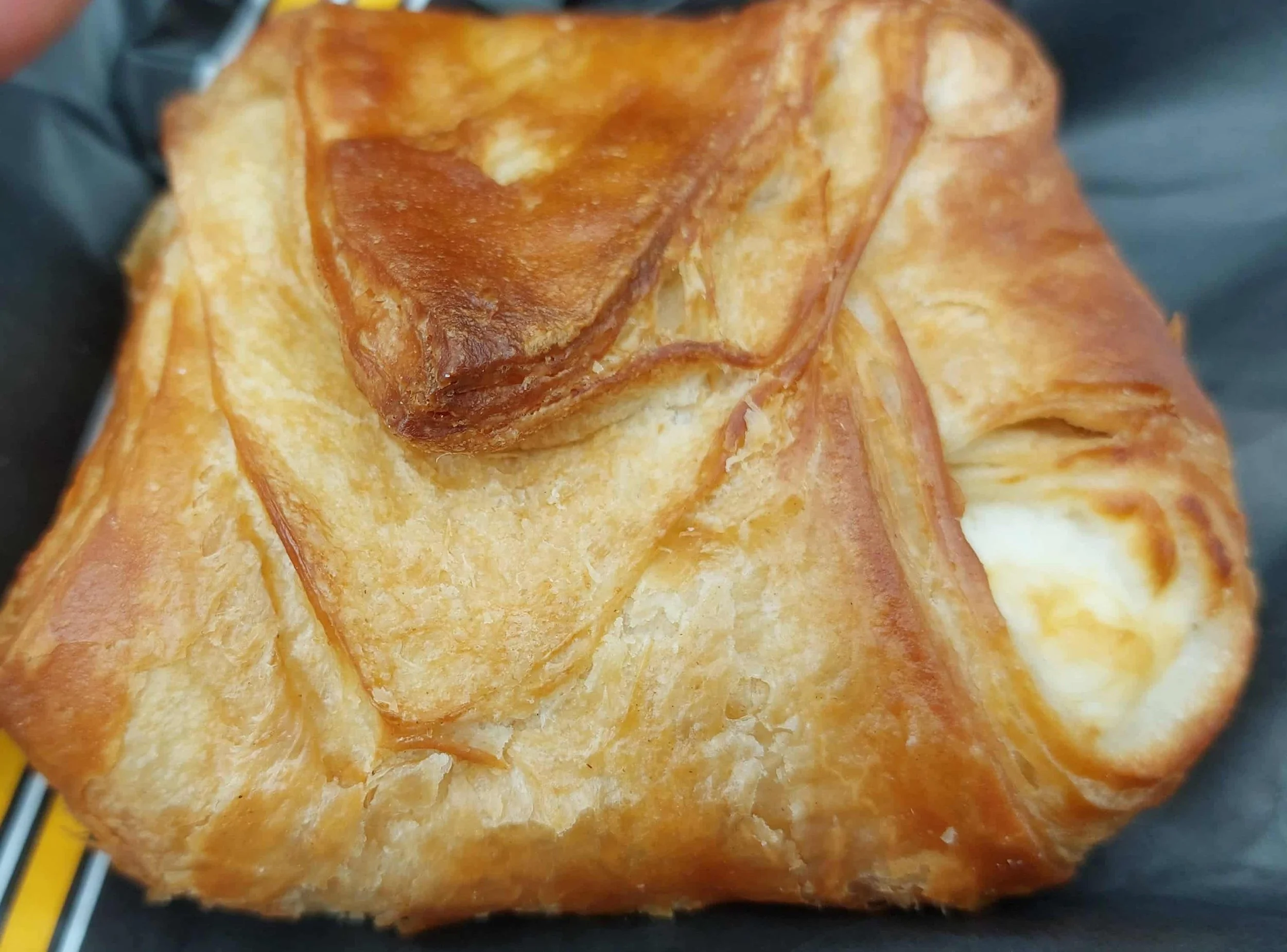
plăcintă
classic pastry
What is it?
Plăcintă (plural plăcinte) is a traditional Romanian pastry or pie that can be made with either sweet or savoury fillings. It can be baked or fried, round or folded, and is eaten as a snack, breakfast, or light meal. The dish dates back to Roman times, its name comes from the Latin word placenta, meaning “flat cake.” The most common savoury version is filled with cheese (usually telemea or brânză de burduf), while the most popular sweet version is filled with apple.
What is in it?
The dough is usually made from wheat flour, water, yeast, oil, and salt, though puff pastry is also common today.
Savoury fillings: salted cheeses (telemea, brânză de burduf), cabbage, potatoes, or leeks.
Sweet fillings: apple, sweet cheese, sour cherry, pumpkin, or jam.
Where can I eat it?
You’ll find plăcintă throughout Romania, from bakeries and market stalls to traditional restaurants.
Vegetarian versions available, dairy free versions available.
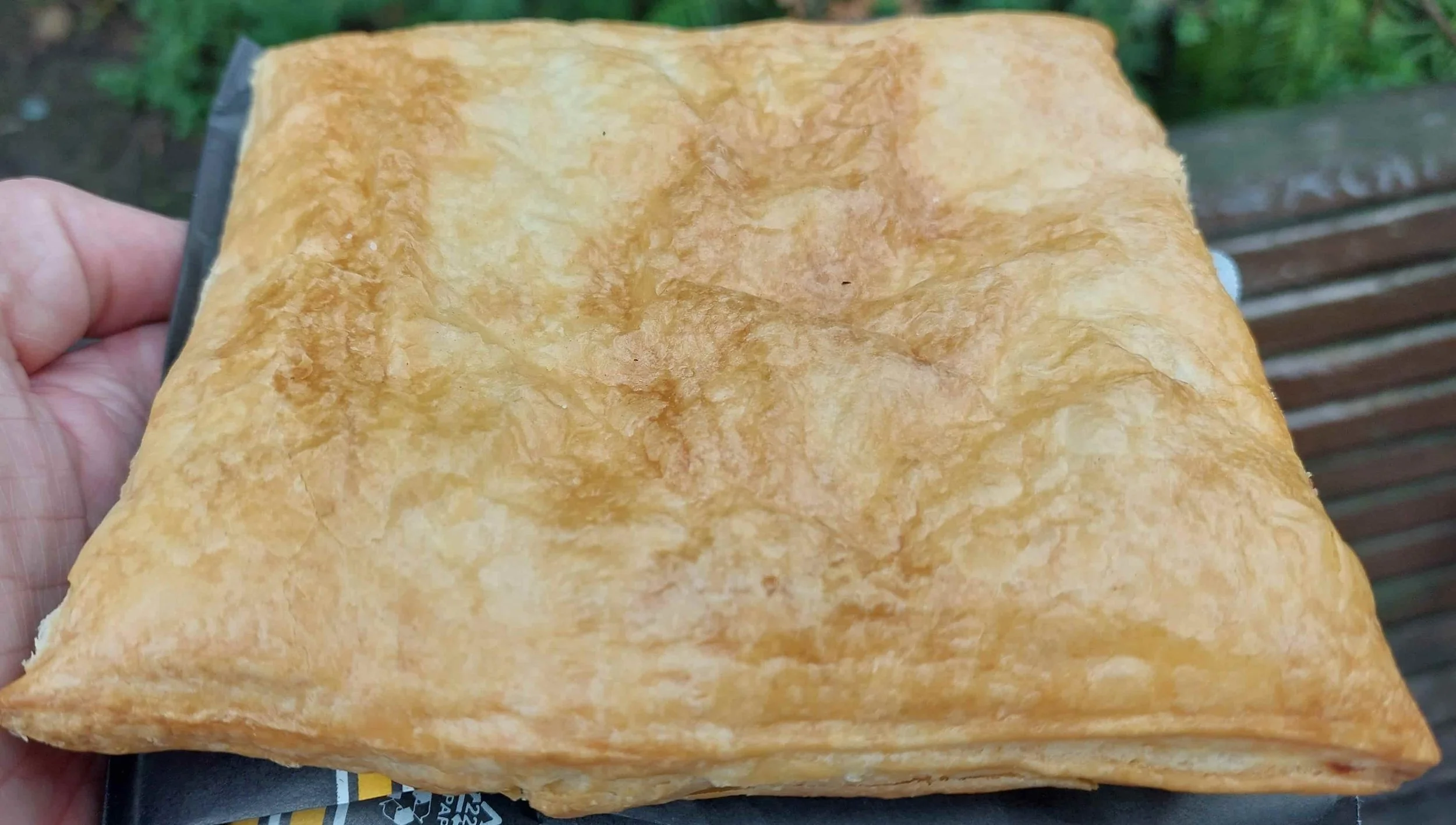
merdenea
savoury pie
What is it?
Merdenea (plural merdenele) is a traditional Romanian savoury pastry, typically filled with salty cheese. It’s one of the most popular warm snacks sold in Romanian bakeries, often enjoyed for breakfast or on the go. Though its origins trace back to Ottoman influenced Balkan pastries, it has long been adapted into local Romanian cuisine. Unlike plăcintă, which can be baked or fried and comes with both sweet and savoury fillings, merdenea is always savoury, made with puff pastry, and has a distinctly flaky, layered texture.
What is in it?
Thin layers of puff pastry filled with brânză sărată (salted cheese, commonly telemea or brânză de vaci mixed with egg).
Where can I eat it?
You’ll find merdenele in most Romanian bakeries. They’re best eaten warm, straight from the oven, and are often sold alongside other classics like covrigi and plăcinte.
Vegetarian.
Ingredients listed reflect common or typical components of this dish as served in restaurants or street‑food vendors. Variations by region, season, or vendor are common. This information is provided for general reference only. If you have dietary restrictions or allergies, please verify ingredient details independently. We assume no liability for accuracy or outcomes.
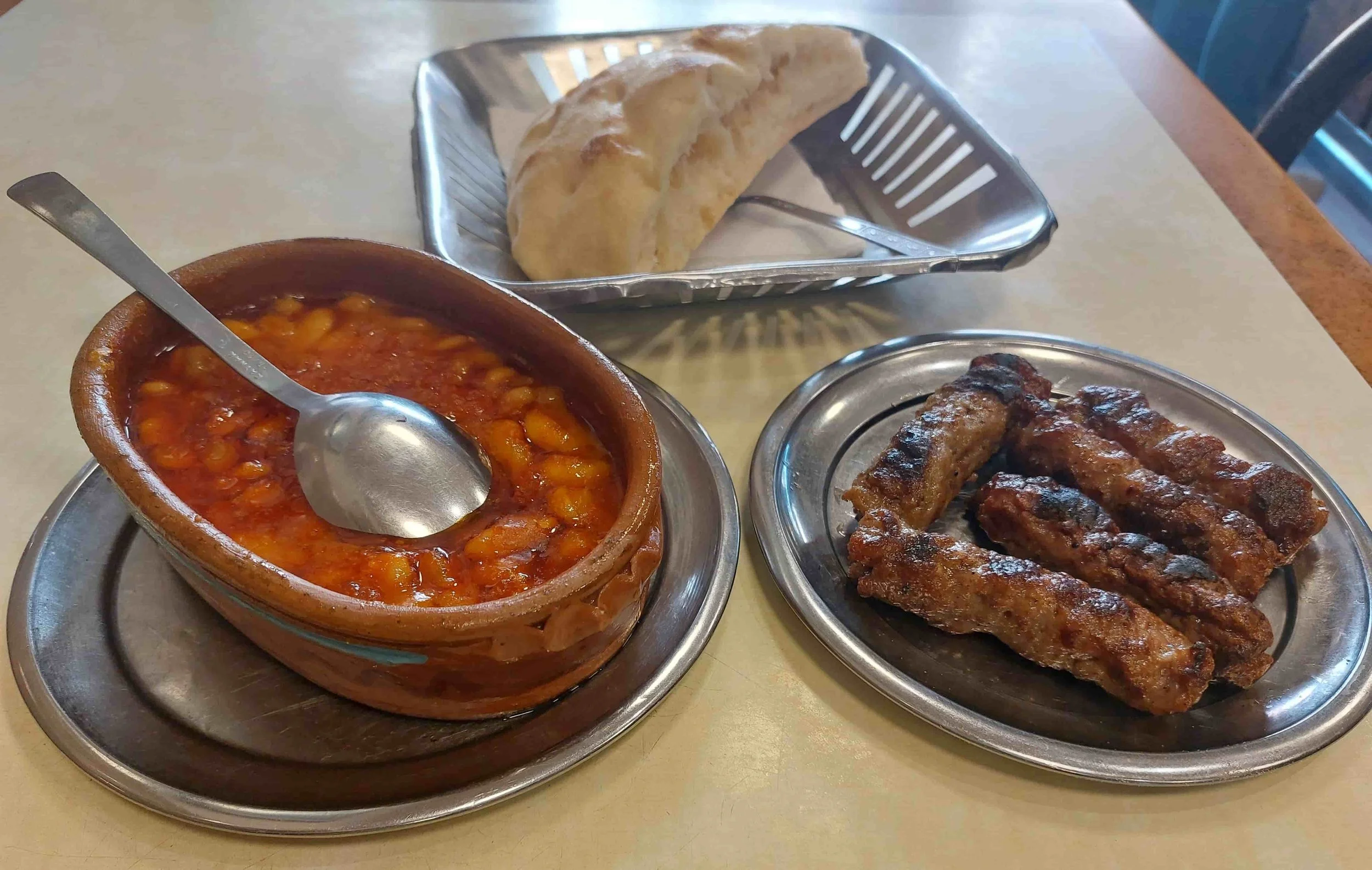
all the foods - North Macedonia
Discover all the traditional North Macedonian dishes we tried, from kebapi and tavče gravče to Pastrmajlija and more
Here you will find a list of all the traditional cuisine we tried in North Macedonia.
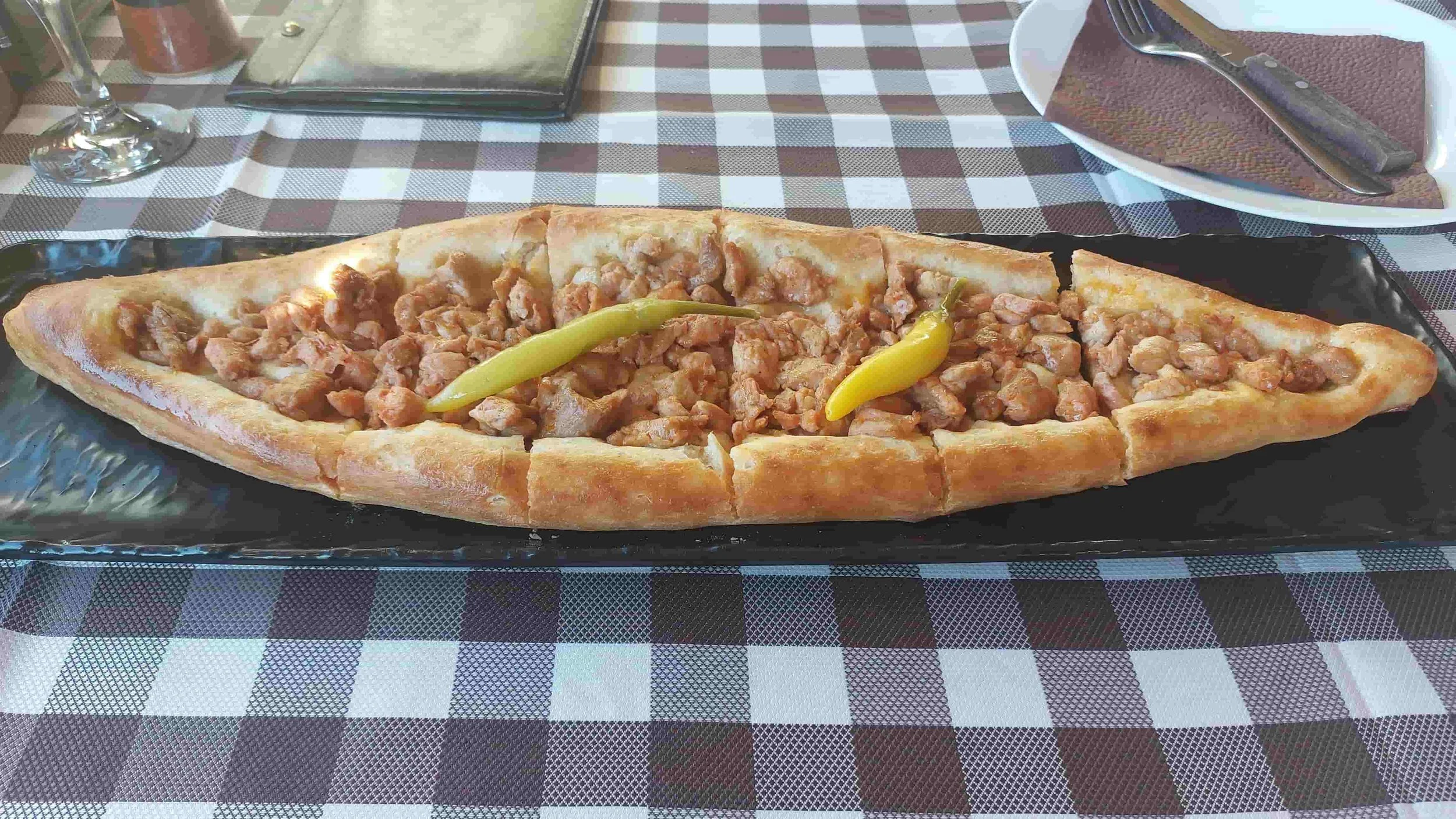
pastrmajlija
meat flatbread
What is it?
Pastrmajlija (Пастрмајлија) is one of North Macedonia’s most iconic dishes, in fact, if you try only one food in the country, make it this. It’s an oval, boat shaped flatbread topped with chunks of seasoned meat, usually pork, and it originates from the cities of Štip, Veles, and the eastern/central regions. The name comes from pastrma, meaning salted or preserved meat (originally mutton), though today pork pastrmajlija is by far the most common.
Despite first impressions, it isn’t a pizza, there’s no cheese, no sauce, and the focus is entirely on the savoury, lightly cured meat. It may look a little like pizza, but it’s uniquely Macedonian, rarely found outside the country and absolutely delicious.
What is in it?
Pastrmajlija is made from a simple bread dough (flour, water, yeast, salt, oil). It’s topped with cubes of salted pork, seasoned lightly with salt, pepper, and sometimes chilli flakes. The meat is often briefly fried before baking. It’s usually served with a few spicy peppers on top.
In more modern versions, the toppings have expanded beyond the classic pork. Some restaurants add an egg cracked on top towards the end of baking. Others offer variations using chicken, beef, lamb, or even smoked meats, and it’s not uncommon to see additions like cheese, mushrooms, or onions. While purists favour the traditional style, these contemporary takes are now widely available and popular.
Where can I eat it?
It’s best in the regions where it originated, especially Štip, where you’ll find it everywhere. Like any great regional dish, it has spread to the rest of the country, many traditional restaurants in Skopje serve it as well. We had a really good one at Pastrmajlija & Grill House, located a little outside the centre but worth the effort.
Dairy free
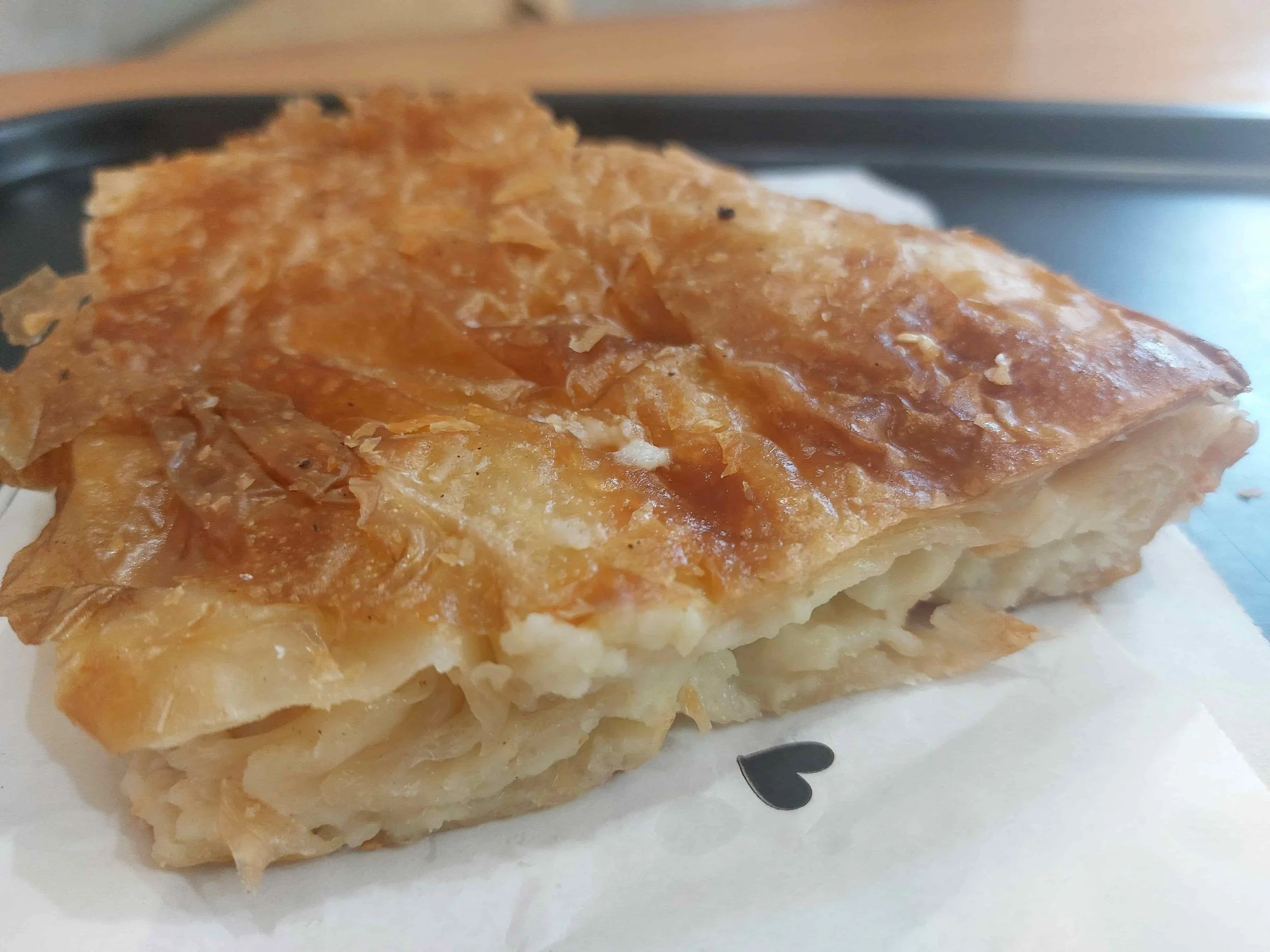
burek
filo pie
What is it?
Burek (Бурек) is one of North Macedonia’s most popular and delicious breakfast foods, a crispy, flaky pastry made from layers of thin dough (yufka) filled with cheese, meat, spinach, or potato.
Macedonian burek is closely related to the versions in Bosnia and Serbia, but tends to be slightly thicker and heavier. The pastry is rolled or coiled into a spiral or layered in a round pan, then baked until extremely crisp on the outside and soft inside. Many locals pair it with drinkable yogurt, which is the classic combination.
What is in it?
Burek is made from multiple layers of thin pastry sheets brushed with oil, wrapped around a filling such as:
sirene cheese
minced meat (beef/pork mix)
spinach and cheese
potato
Where can I eat it?
You’ll find excellent burek in bakeries throughout the country.
Vegetarian versions available.
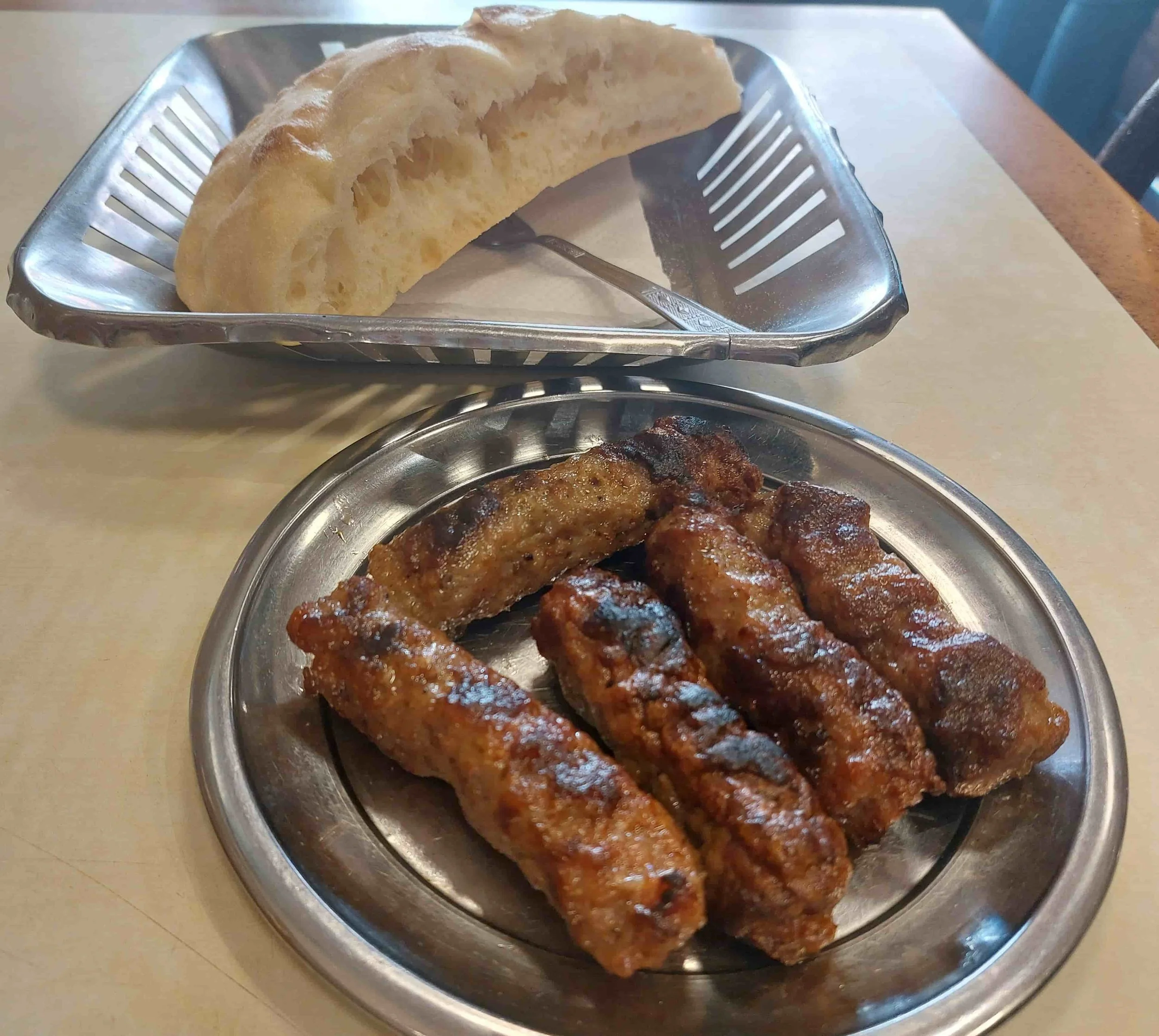
kebapi
grilled minced meat
What is it?
Kebapi (Ќебапи) (sometimes written kebapčinja) are North Macedonia’s version of ćevapi, small, skinless grilled minced meat sausages popular across the Balkans. They’re similar to the Bosnian and Serbian versions, but in North Macedonia they’re typically a pork and beef mix, mildly seasoned, and always grilled over charcoal.
If you see “kebapi” on a Macedonian menu, it’s simply the local name for ćevapi. They are usually served in portions of 5 or 10 along with bread.
A classic and highly recommended way to eat kebapi is with Tavče Gravče, North Macedonia’s national baked bean dish. Together they make a kind of Balkan “beans and sausages” a great combo and, in my opinion, one of the best traditional meals in the country.
What is in it?
Kebapi are made from a mixture of minced pork and beef, seasoned with salt, pepper, and sometimes a bit of garlic or paprika depending on the region.
Where can I eat it?
Kebapi are available everywhere in North Macedonia, from traditional restaurants to kebapčilnici (specialised kebab grills). One such place is Kosmos Kebabchilnica in the Old Bazaar of Skopje, highly recommended for a kebapi and Tavče Gravče meal!
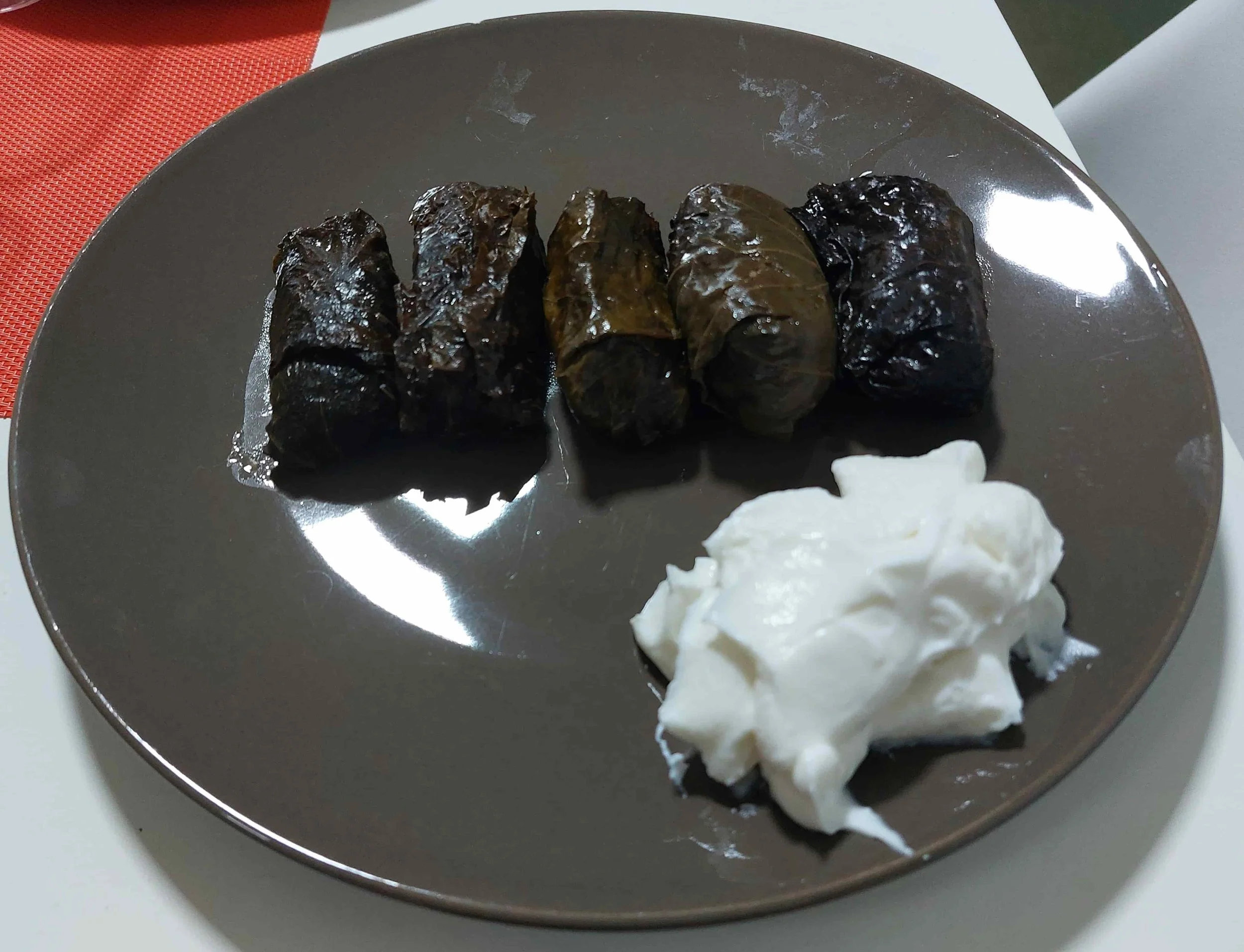
sarma or japrak
cabbage or vine leaf rolls
What is it?
In North Macedonia, sarma (Сарма) can refer to either cabbage rolls or grape leaf rolls, restaurants often use the same name for both. When made with vine leaves, the dish is also known as japrak (Јапрак), a traditional Ottoman influenced recipe popular across the country.
These are small, tightly rolled grape leaves stuffed with minced meat, rice, and herbs, simmered and usually served with a spoon of thick Macedonian yogurt. In North Macedonia they are typically served as a starter.
What is in it?
Japrak is typically filled with a mixture of minced meat, usually pork, rice, onion, salt, pepper, parsley, and sometimes paprika. They are usually served warm with thick yoghurt.
Where can I eat it?
You can find sarma or japrak on the menus of some traditional restaurants, though not all of them. Some menus will list them specifically as japrak, but it’s equally common to see them simply written as sarma, even when grape leaves are used. Both Restaurant Skopski Merak and Old House Restaurant in Skopje serve them as starters.
Vegetarian and vegan versions available, dairy and gluten free.
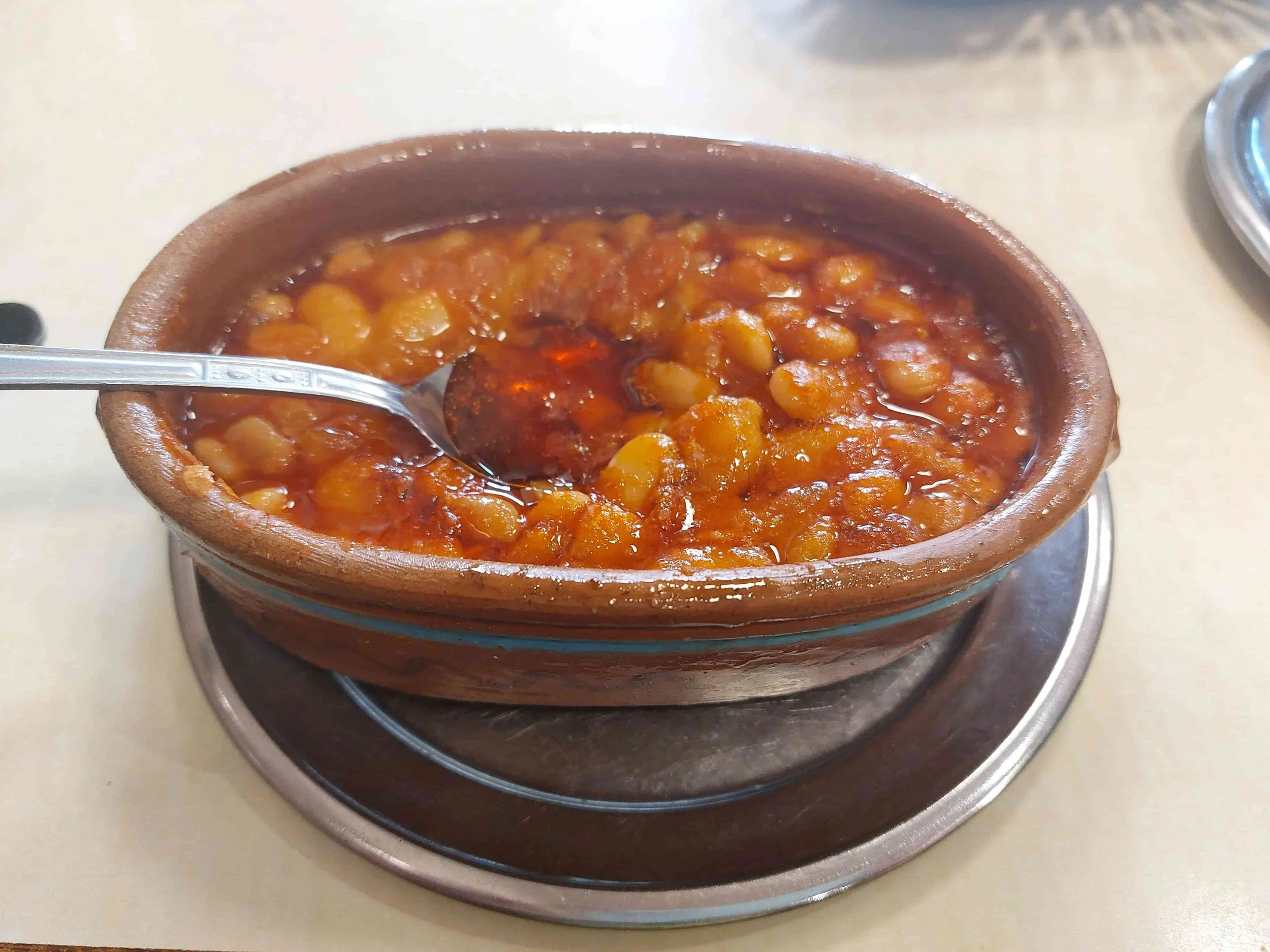
tavče gravče
baked beans
What is it?
Tavče Gravče is North Macedonia’s iconic baked bean dish, considered by many to be the country’s national food. The name literally means “beans in a pan,” referring to the traditional earthenware clay pot (tava) in which it’s cooked. It’s a slow cooked blend of white beans, onions, peppers, and paprika. It’s served both as a main dish and an accompaniment, and it goes perfectly with kebapi.
What is in it?
Tavče Gravče is made from white beans baked with onions, dried or fresh peppers, garlic, and paprika. The mixture is often thickened with a simple roux of flour and oil, and seasoned with salt, pepper, bay leaf, and sometimes parsley.
Where can I eat it?
Tavče Gravče is served everywhere in North Macedonia, you’ll see it in nearly every traditional restaurant as either a main dish or a side. My advice, though, is to enjoy it alongside kebapi at Kosmos Kebabchilnica in Skopje.
Vegetarian and dairy free.
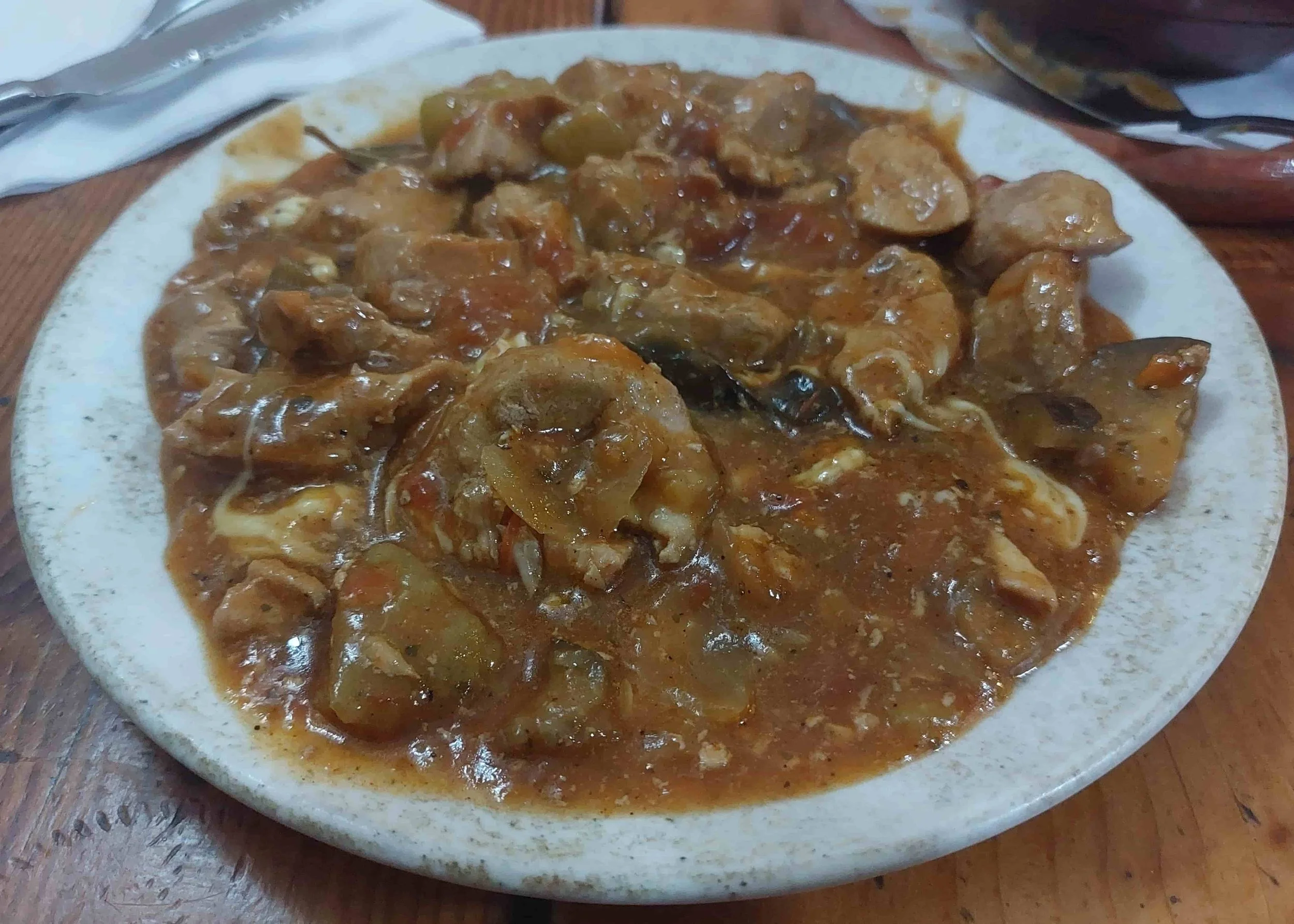
turli tava
meat and veg stew
What is it?
Turli tava (Турли тава) is a classic North Macedonian mixed vegetable and meat bake, cooked slowly in a large clay dish (tava) until the ingredients soften and the flavours blend into a stew like meal. The word turli literally means “mixed” or “various,” reflecting the assortment of vegetables and meats traditionally used. It is usually served directly in the clay dish it was baked in.
Traditional turli tava contains no cheese, but some modern restaurants, particularly in Skopje and touristy areas, now offer versions topped with kashkaval (yellow cheese) melted over the dish during the final minutes of baking. This isn’t traditional, but it has become a popular contemporary twist.
One important note: turli tava is often not listed under its exact name on menus. Instead, it may appear as:
casserole
vegetable & meat bake
house pot
baked dish in clay pot
or another regional/house name
It’s always worth confirming with the waiter if you suspect a dish is turli tava under a different title.
What is in it?
Turli tava is made from a mix of seasonal vegetables such as potatoes, aubergine, courgette, peppers, carrots, onions, and tomatoes, combined with meat, usually pork, veal, or lamb. It’s seasoned with paprika, salt, pepper, garlic, and parsley. (Cheese only appears in modern versions, see above.)
Where can I eat it?
It’s one of the most common items on traditional menus, and many restaurants will offer a version of it, potentially under a different name. For example, Restaurant Skopski Merak lists it as Turli Tava, while Old City House Restaurant lists a similar dish simply as a “casserole.”
Traditionaly dairy free (some modern versions add cheese), gluten free
Related food guides
Several Macedonian favourites have roots in the wider Balkan and Ottoman culinary tradition. For more on these shared regional dishes, see our Bosnian food guide.
Ingredients listed reflect common or typical components of this dish as served in restaurants or street‑food vendors. Variations by region, season, or vendor are common. This information is provided for general reference only. If you have dietary restrictions or allergies, please verify ingredient details independently. We assume no liability for accuracy or outcomes.
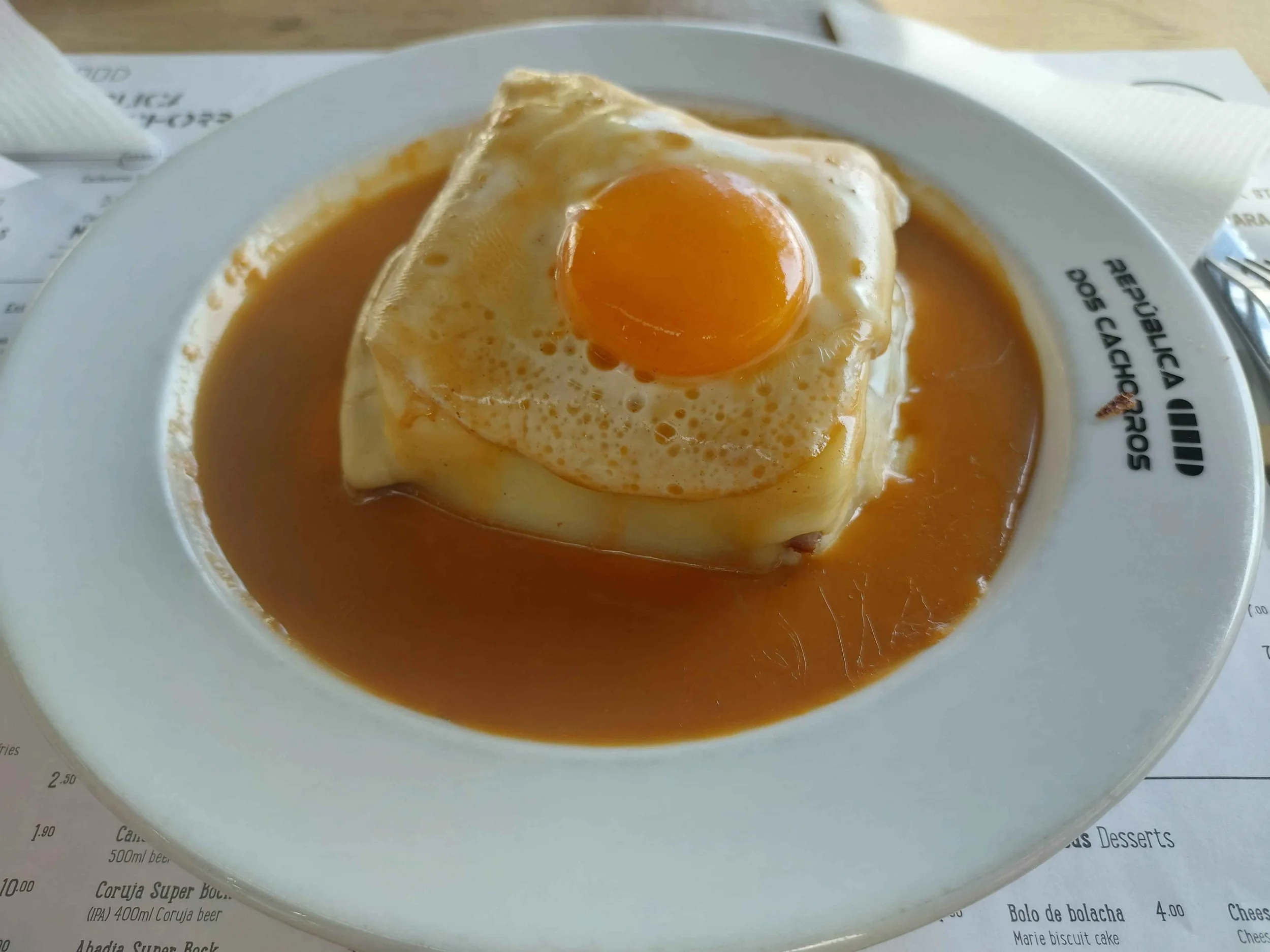
all the foods - Portugal
Discover all the traditional Portuguese dishes we tried, from pastel de nata and bifana to francesinha and more
Here you will find a list of all the traditional cuisine we tried in Portugal.
Click to jump to one of the sections:
seafood and fish dishes
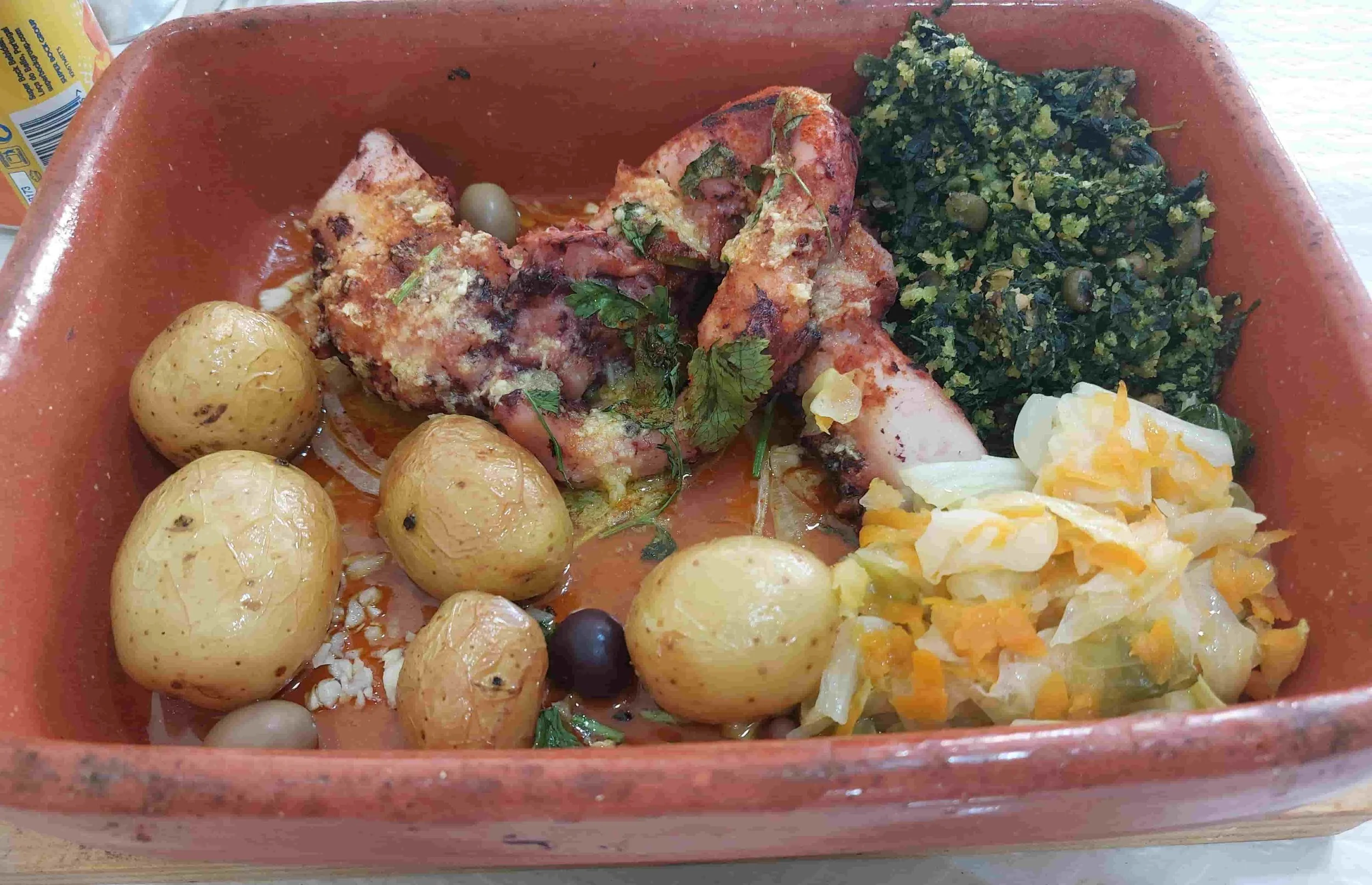
polvo à lagareiro
octopus in olive oil
What is it?
Polvo à Lagareiro is one of Portugal’s most famous octopus dishes. The name lagareiro comes from the traditional olive oil mills (lagares), and the recipe reflects that heritage, it’s bathed in olive oil and garlic, definitely one for garlic lovers! The octopus is first boiled until tender, then roasted or grilled, and finally drizzled with plenty of olive oil and lots of garlic. It’s usually served with small roasted potatoes (batatas a murro, literally “punched potatoes”).
What is in it?
It’s made with octopus, plenty of garlic, olive oil, and batatas a murro (smashed potatoes), finished with parsley and often served with greens or cabbage, sometimes garnished with olives.
Where can I eat it?
You’ll find Polvo à Lagareiro in traditional Portuguese restaurants, particularly in coastal regions and in Lisbon. Some of the best versions are served in family run tascas and marisqueiras (seafood restaurants). We had a really good, reasonably priced one in Porto at a local place called Frango.
Dairy and gluten free.
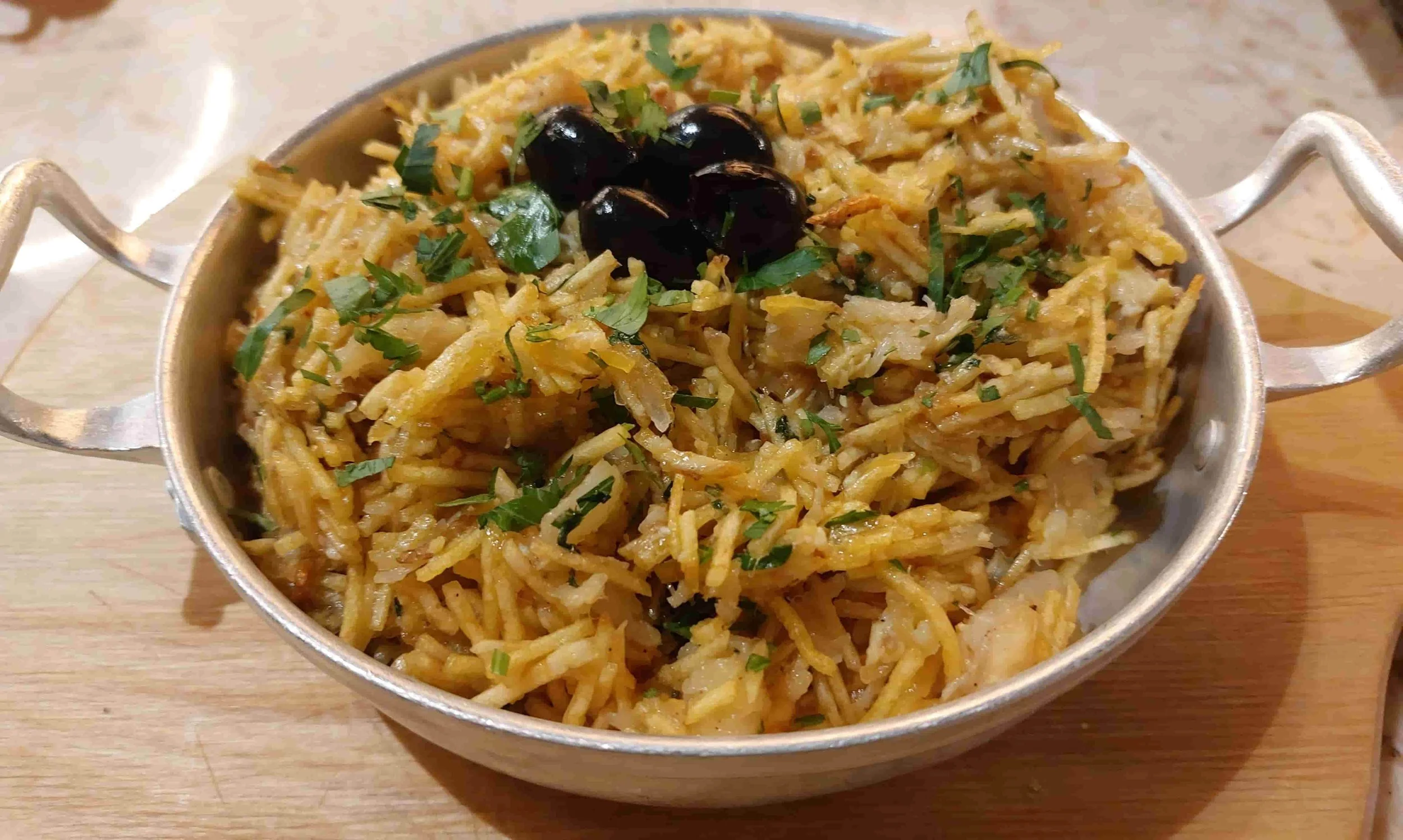
bacalhau à Brás
shredded cod
What is it?
Bacalhau à Brás is Portugal’s most famous codfish dish, combining shredded salted cod with onions, thinly cut fried potatoes (matchstick style potatoes), and scrambled eggs. It’s perfectly balanced, salty, savoury, and slightly creamy, and often finished with a sprinkling of chopped parsley and black olives.
What is in it?
Shredded salted cod, onions, thinly cut fried potatoes, scrambled eggs, olive oil, fresh parsley, and black olives. Sometimes garlic is added for extra flavour.
Where can I eat it?
Bacalhau à Brás is commonly available in traditional Portuguese restaurants (tascas) and seafood establishments throughout the country.
Dairy and gluten free.
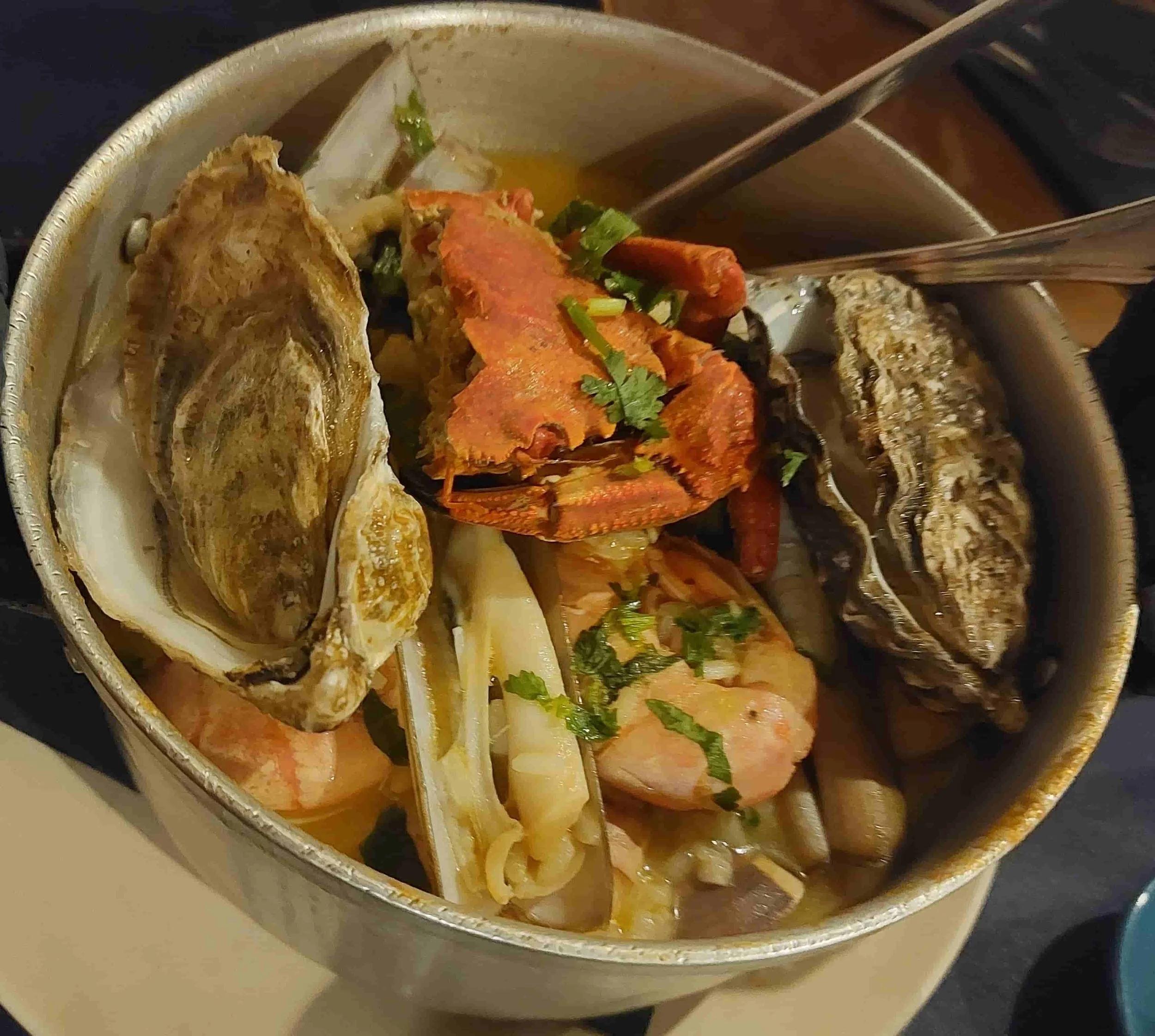
arroz de marisco
seafood rice
What is it?
Arroz de Marisco is a classic Portuguese seafood rice dish. Often compared to seafood paella, it is made with short grain rice cooked in a savoury seafood broth, containing a mix of shellfish and fish, and finished with fresh herbs. The rice is typically slightly saucy rather than dry like a paella. It is often served in a large pot, with even bigger versions available for sharing.
What is in it?
It’s made with short grain rice cooked with a mix of seafood, usually prawns, clams, mussels, and sometimes crab or fish, along with onion, garlic, olive oil, and tomato, simmered in white wine and seafood broth, and finished with fresh herbs like parsley or coriander.
Where can I eat it?
Arroz de Marisco is widely available in coastal restaurants and traditional marisqueiras (seafood restaurants) across Portugal, particularly in Lisbon, Porto, and the Algarve. We shared one filled to the brim with seafood at Invicta Madragoa in Lisbon.
Dairy and gluten free.
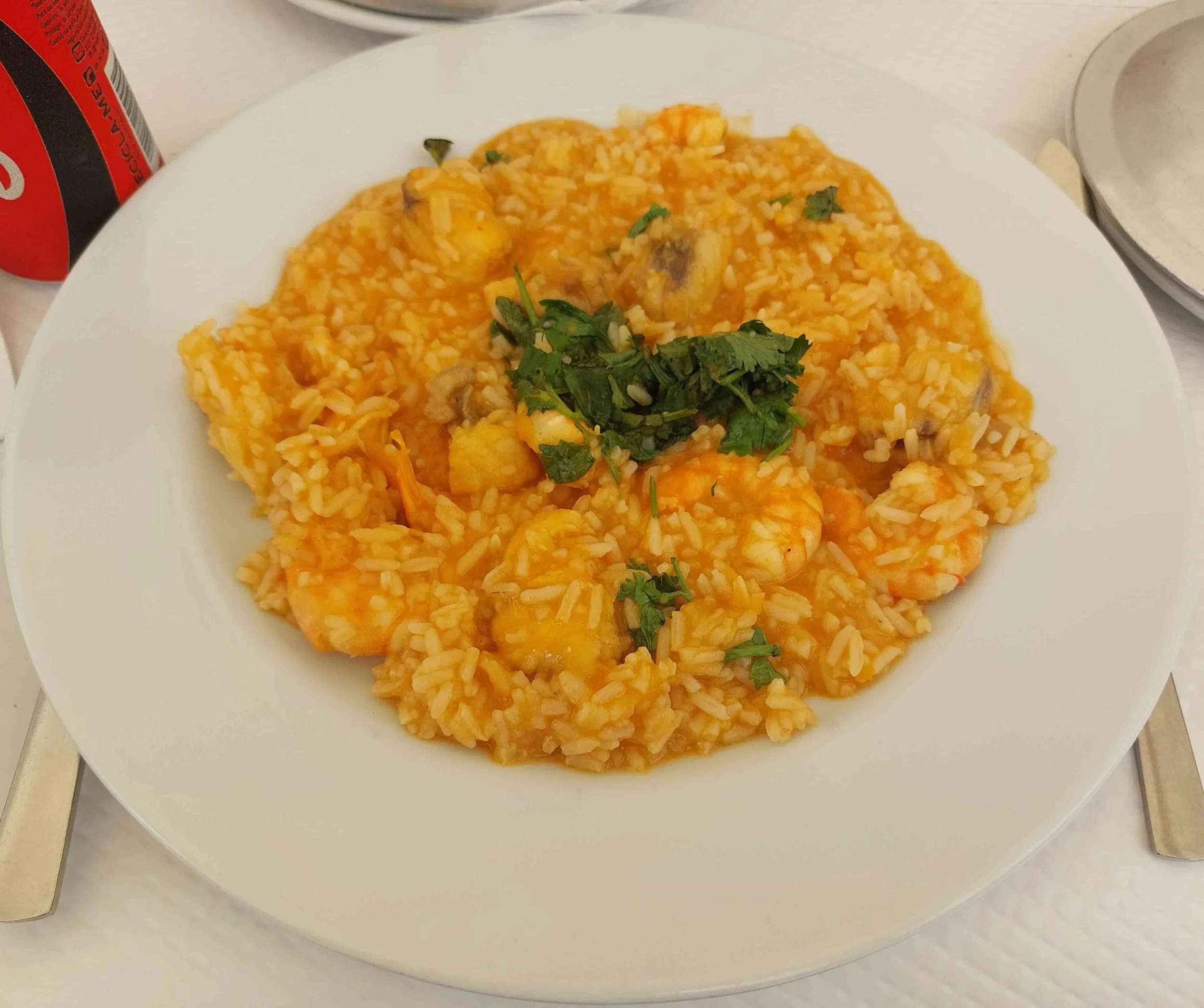
arroz de tamboril
monkfish rice
What is it?
Arroz de Tamboril is a classic Portuguese monkfish rice dish, somewhere between a stew and a risotto in texture. Rich and savoury, it showcases the meaty monkfish, which holds its shape well in cooking, making it perfect for soaking up flavour without falling apart. It’s usually served hot in a large pot at the table, often meant for sharing. It’s often seen as the less glamorous brother of Arroz de Marisco, less lavish, but every bit as good.
What is in it?
Monkfish, rice, onion, garlic, tomato, olive oil, and white wine, simmered with fish stock and fresh herbs like coriander or parsley. Prawns, clams, or peppers are sometimes added for extra flavour.
Where can I eat it?
This dish is available in seafood restaurants and marisqueiras (seafood restaurants) along the Portuguese coast and we also saw it in Lisbon. It’s not as ubiquitous as Arroz de Marisco, but you should still have no trouble finding it at the coast.
Dairy and gluten free.
meat and other rice dishes

arroz de pato
duck rice
What is it?
Arroz de Pato is a traditional Portuguese duck rice dish, full of flavour. The duck is simmered until tender, then shredded and baked with rice that absorbs the rich duck broth. The dish is finished in the oven, usually topped with slices of chouriço (Portuguese sausage).
What is in it?
Made with duck and long grain rice, cooked with chouriço, onion, garlic, carrot, bay leaves, olive oil, and white wine.
Where can I eat it?
You’ll find Arroz de Pato in many traditional Portuguese restaurants (tascas) across the country. It’s particularly associated with northern Portugal, though it’s available throughout the country.
Dairy & gluten free.
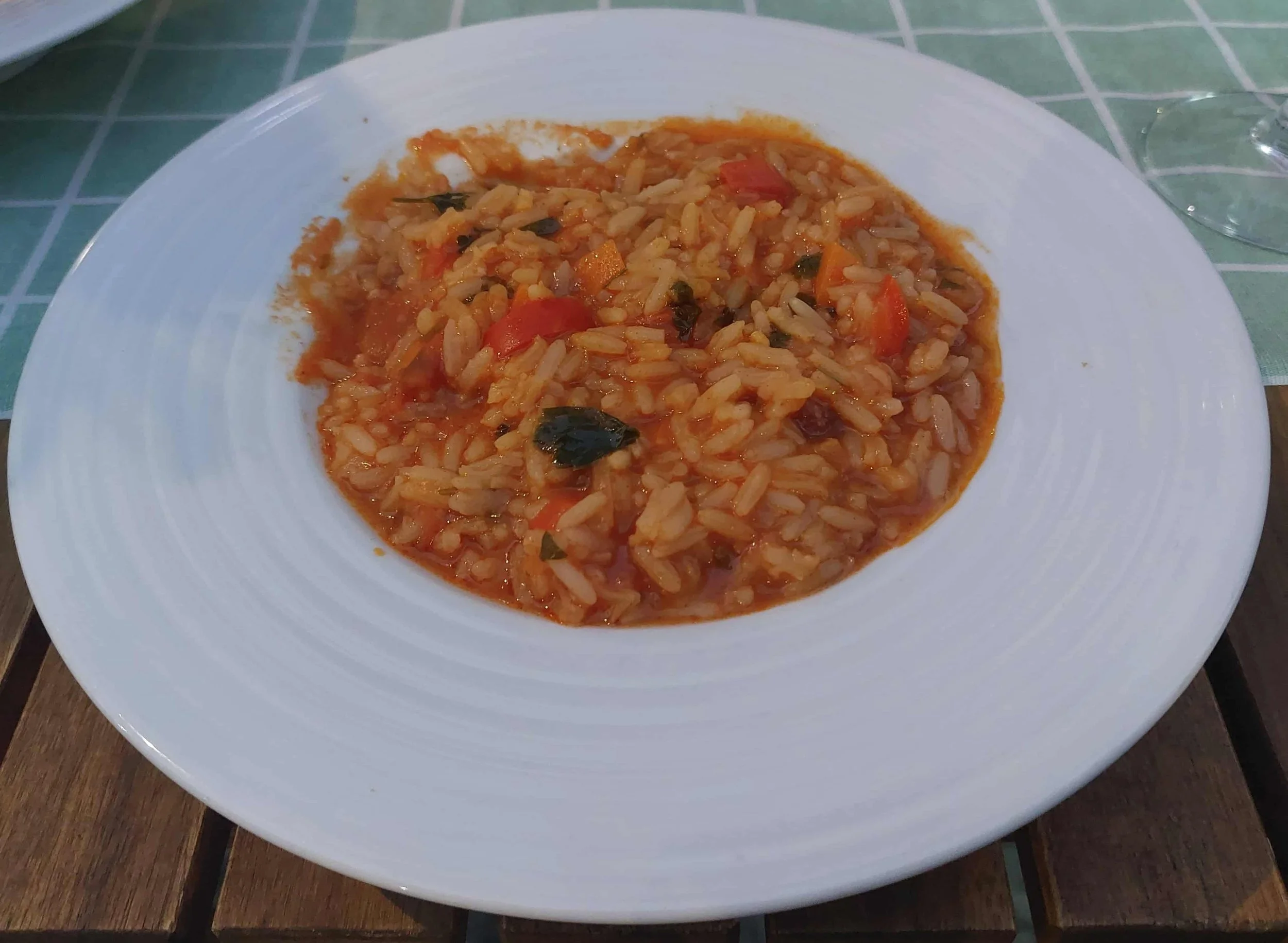
arroz de tomate
mixed rice
What is it?
Arroz de Tomate is a simple Portuguese tomato rice dish, often served as a side but sometimes as a main. The rice is cooked in a rich tomato sauce with garlic, onion, and olive oil, giving it a slightly tangy flavour. It’s a staple in Portuguese homes and casual restaurants.
What is in it?
Made with rice, tomatoes (fresh or canned), onion, garlic, and olive oil, often flavoured with herbs like parsley or bay leaves. Some versions include peppers, paprika, or a splash of white wine, and it’s occasionally topped with a fried egg.
Where can I eat it?
Arroz de Tomate is common across Portugal, particularly in home style restaurants (tascas). It’s usually served as a side dish accompanying grilled fish or roasted meats, though some restaurants serve it as a vegetarian main with seasonal vegetables.
Vegan, dairy and gluten free.
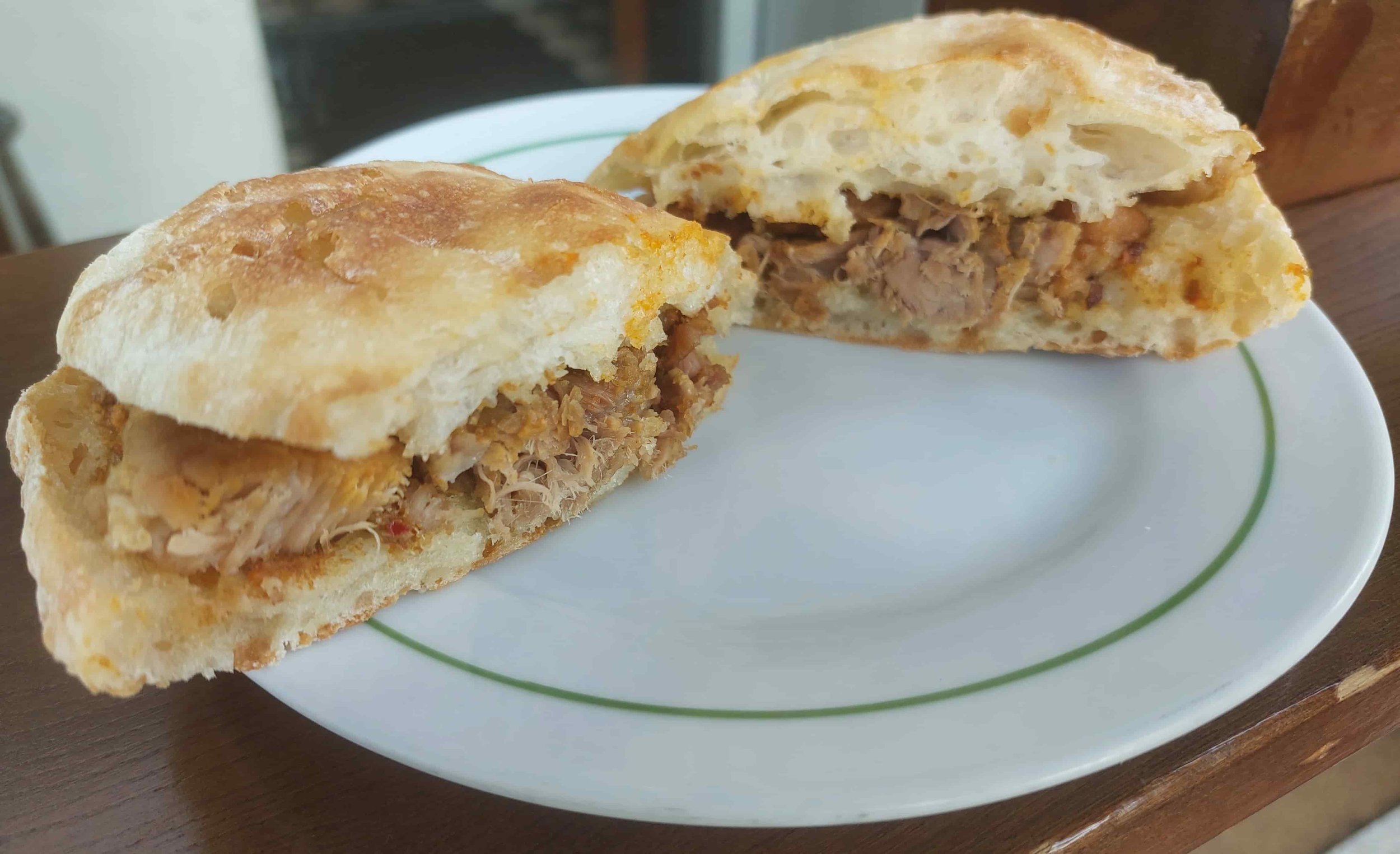
rojões
fried marinated pork
What is it?
Rojões are a traditional Portuguese dish of marinated and fried pork cubes, with a crispy exterior and tender, juicy interior. Often associated with the northern regions of Portugal. In some cafés and snack bars, they’re also served in a roll, making for a delicious pork sandwich.
What is in it?
Pork (typically shoulder or loin), cut into cubes and marinated with garlic, wine, paprika, olive oil, and sometimes bay leaf.
Where can I eat it?
Rojões are sometimes found in traditional restaurants (tascas) across northern Portugal, especially in Minho and Porto. They are often served as a main course with sides like roasted potatoes, rice, or greens. Snack bars and cafés sometimes serve rojões in a roll. Outside the north, they’re quite rare, so you’re unlikely to find it in Lisbon or other southern regions.
Dairy free.
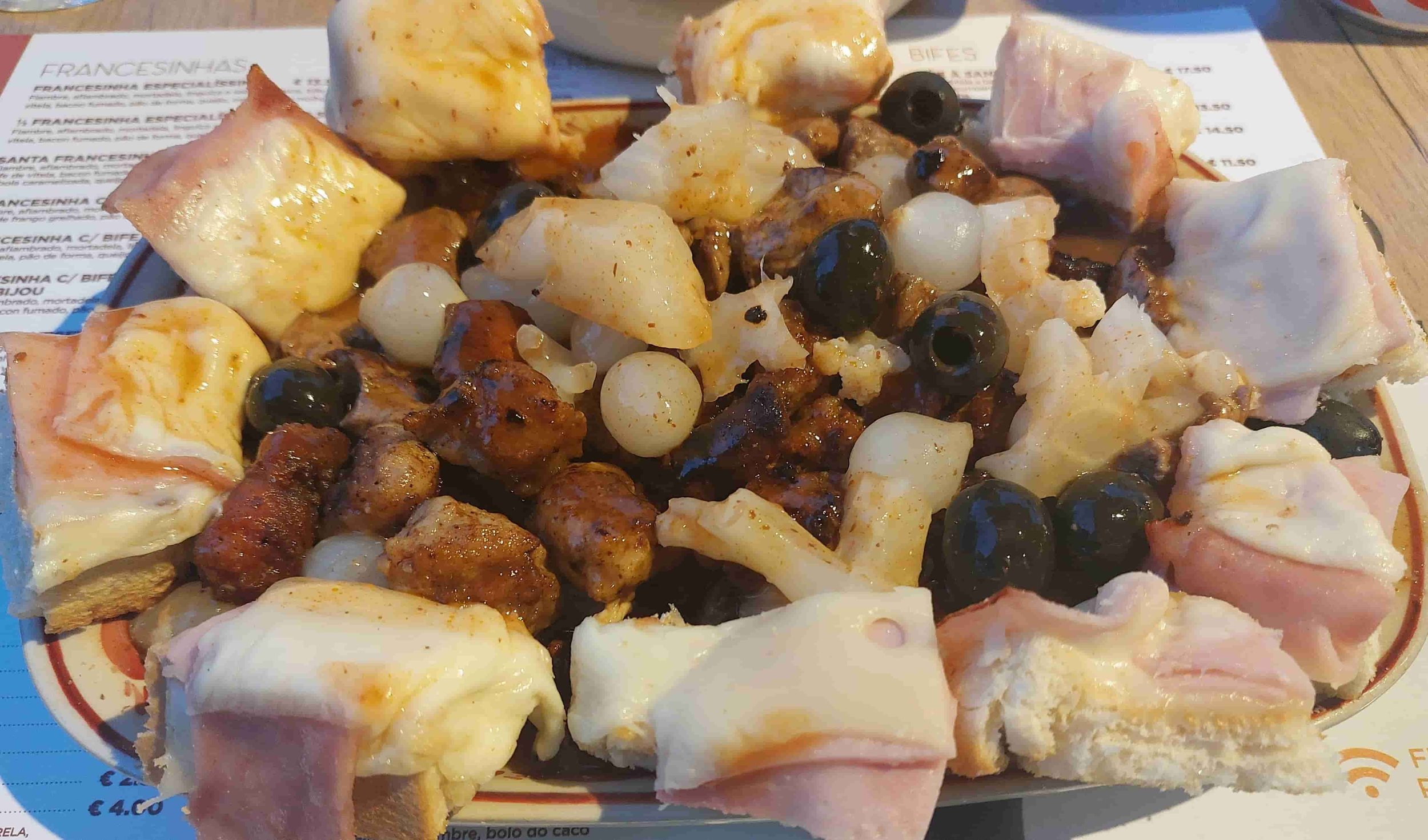
pica pau
crazy bar snack
What is it?
Pica Pau is chaos on a plate, looking like it was created by a stoned teenager raiding their parents’ fridge. It consists of small cubes of marinated meat, usually beef or pork, quickly fried and served in a tangy, garlicky sauce. The dish can take many forms and does not really have a standard recipe, sometimes including sausage, olives, or even bread topped with ham and melted cheese to mop up all the sauce. It’s messy, very filling, and commonly shared with drinks in a bar.
What is in it?
Cubes of beef or pork, with garlic, olive oil or butter, white wine or vinegar, pickles, olives, mustard. It can also include sausage, bread with ham and melted cheese, or other variations
Where can I eat it?
Pica Pau is typically found in bars and tascas, available across Portugal, especially in Lisbon and Porto.
savoury snacks and sandwiches
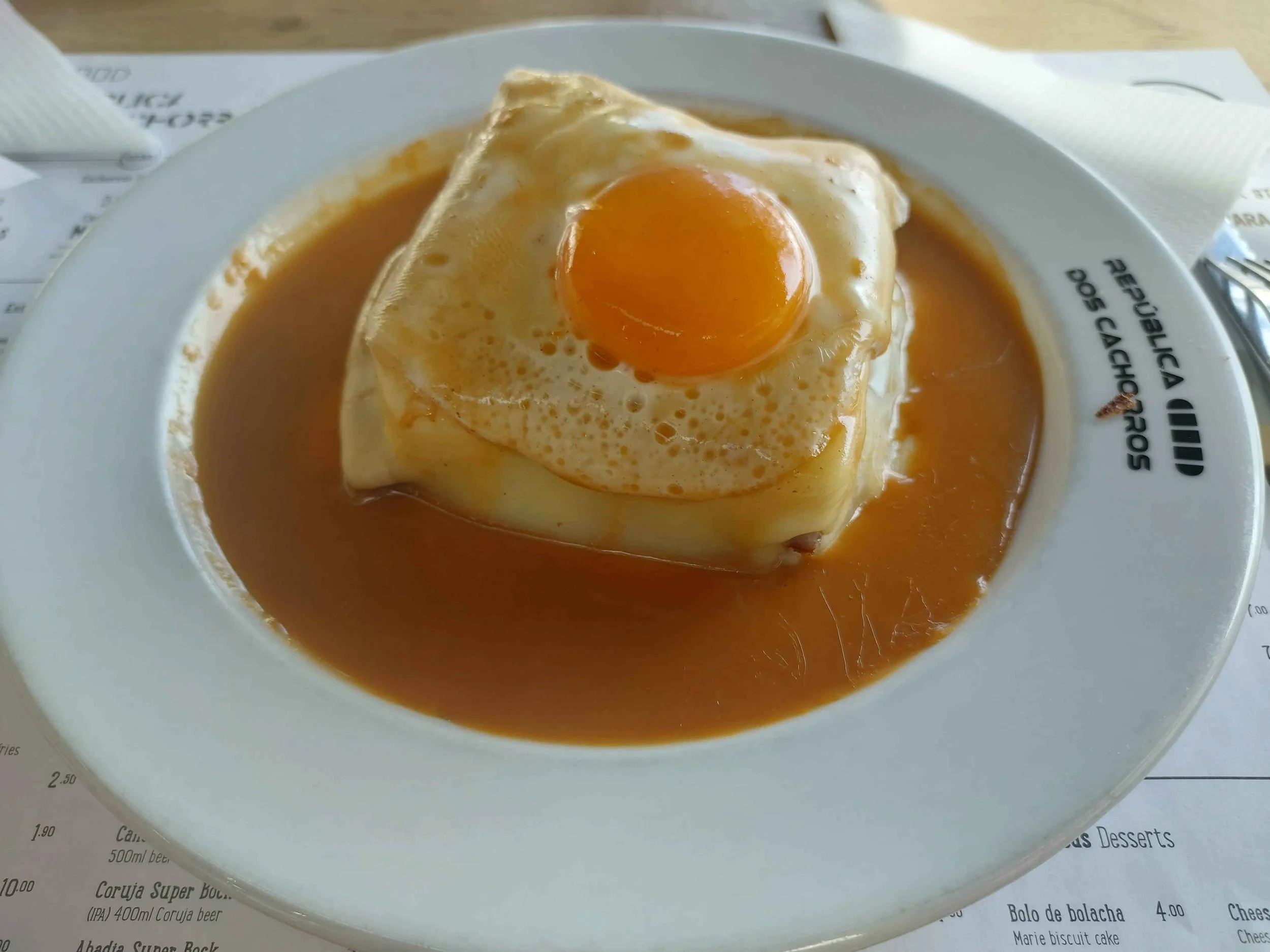
francesinha
classic Porto sandwich
What is it?
The Francesinha is a huge, decadent sandwich from Porto, but be warned, this is not the type of sandwich to eat with your hands. Often described as the ultimate comfort food, I would personally call it the ultimate hangover food, in the best possible way. Layers of bread, cured meats, steak or roast beef, and melted cheese are smothered in a rich, spicy tomato and beer sauce, then usually baked or grilled until gooey and bubbling. Some places also serve vegetarian versions made with meat substitutes and mushrooms, and even a vegan version. Often served with fries, it’s a filling meal that hits every craving.
What is in it?
Made with toasted bread layered with cured meats such as ham, linguiça, and smoked sausage, plus steak or roast beef, all covered in melted cheese and a spicy tomato and beer sauce. It’s often topped with a fried egg and served with fries.
Where can I eat it?
The Francesinha is a specialty of Porto, found in cafés and restaurants dedicated to the dish. It’s less common outside northern Portugal, though some restaurants in Lisbon and other cities serve it. Traditionally enjoyed as a lunch or dinner, it’s perfect for those with a big appetite or recovering from a night out!
Vegetarian and vegan versions available.
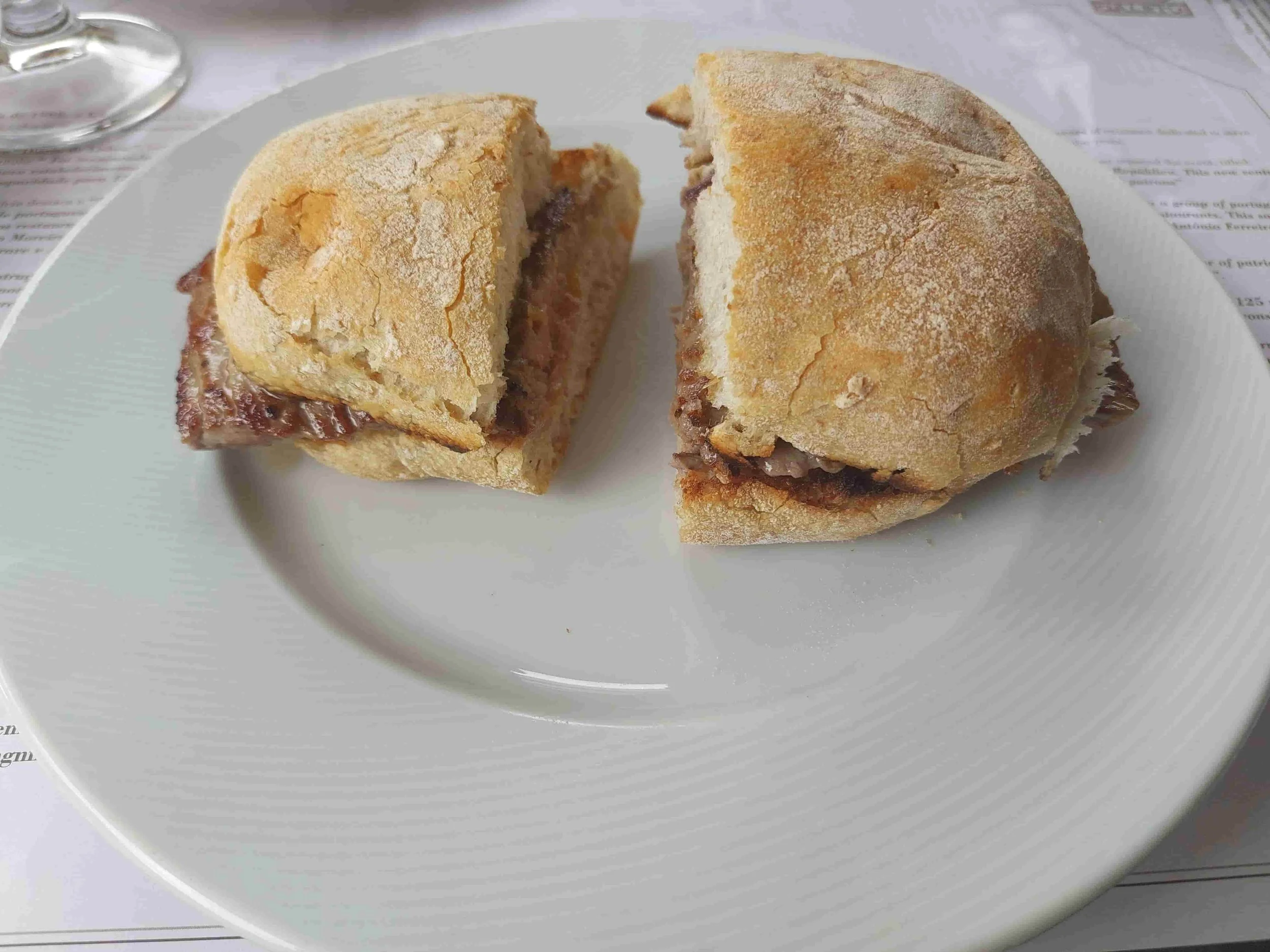
prego
garlic steak sandwich
What is it?
A Prego is a classic Portuguese steak sandwich, simple and tasty. Thin slices of beef steak are quickly grilled and served in a soft roll, brushed with garlic butter. It’s sometimes topped with mustard, ham, cheese, or a fried egg, and is typically eaten as a quick lunch, snack, or late night food after a night out. The sandwich is versatile, with each establishment sometimes adding its own twist. The name literally means “nail.”
What is in it?
It’s made with a thin beef steak served in a soft, lightly toasted roll with garlic butter, sometimes topped with mustard, cheese, ham, or a fried egg, and often served with fries on the side.
Where can I eat it?
Pregos are ubiquitous in Portugal, particularly in Lisbon and Porto. You’ll find them in cafés, snack bars, and casual restaurants, often served as a snack or simple main meal, we had a good one at Galeto a famous restaurant in Lisbon.
Traditionally dairy free.

bifana
marinated pork roll
What is it?
The Bifana is a Portuguese classic, a delicious pork sandwich, messy & juicy, often thought of as the perfect late-night snack, akin to a kebab or greasy burger in other countries. Thin slices of pork are marinated in garlic, white wine, paprika, and spices, then quickly fried and stuffed into a soft roll. It’s a simple everyday snack enjoyed across Portugal. Think of it as Portugal’s answer to pulled pork: thinner, juicier, and with a garlicky kick.
What is in it?
Thin pork slices marinated in garlic, white wine, paprika, and sometimes a touch of chili, served in a soft roll. Optional toppings include mustard, piri-piri sauce, or sautéed onions.
Where can I eat it?
Bifanas are everywhere in Portugal, from casual cafés and snack bars to street stalls. They’re especially popular after a night out, and each region or eatery tends to have its own twist on the marinade and spice level.
Dairy free.
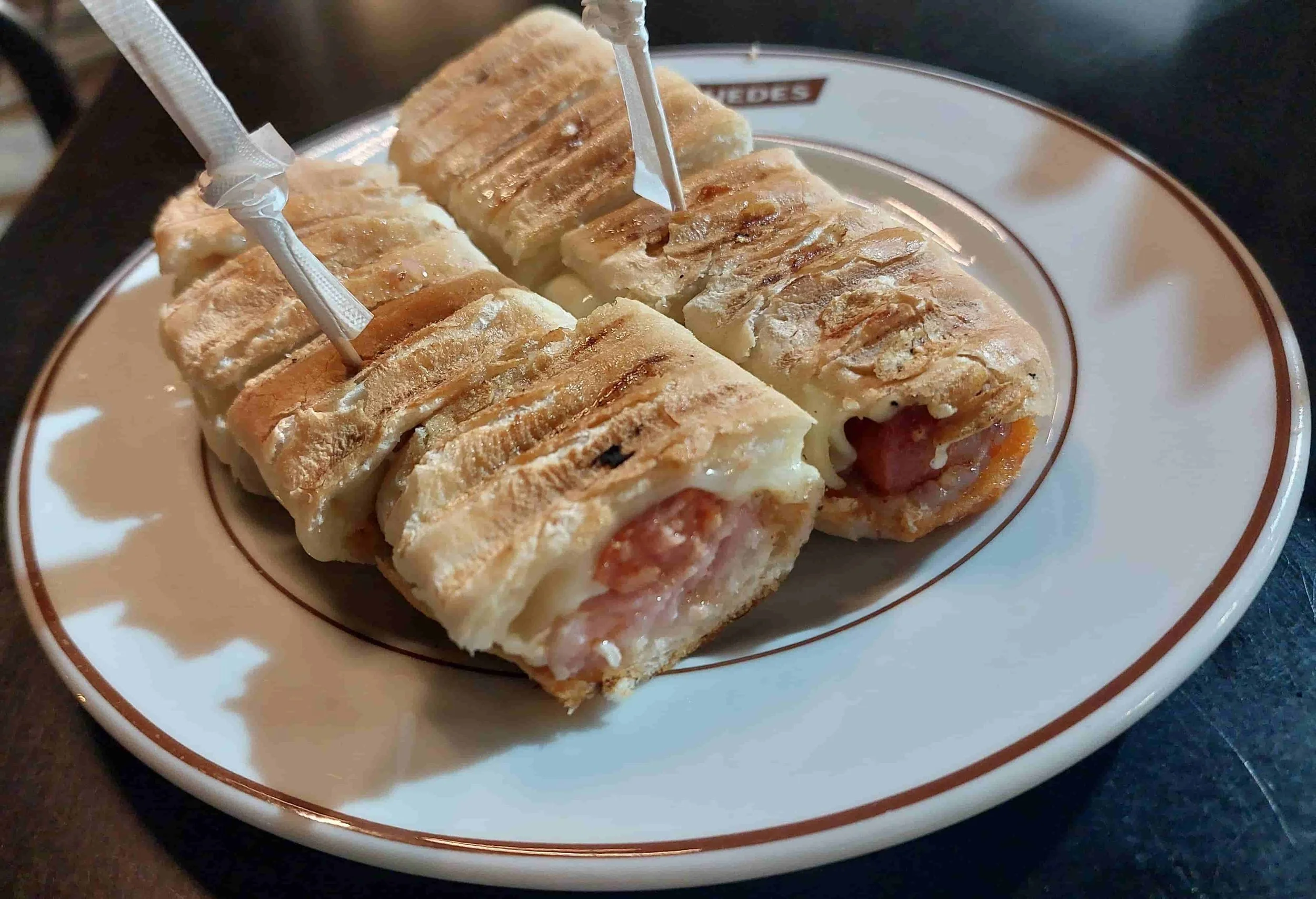
cachorro
Portuguese hot dog
What is it?
A Cachorro (which literally means “puppy”) is Portugal’s take on the hot dog and a popular fast food snack sold in cafés, fast food places, and casual eateries. Unlike a standard hot dog, the bun is often lightly toasted, and some versions, especially those with cheese, are finished under a grill so the cheese melts over the sausage. The sausage is typically grilled or boiled, then dressed with toppings ranging from mustard, ketchup, and mayonnaise to sautéed onions, pickles, or piri-piri sauce. It’s definitely a step up from a standard hot dog.
What is in it?
Sausage (usually pork or a pork-beef mix) in a bun, toppings including mustard, ketchup, mayonnaise, sautéed onions, pickles, piri-piri sauce. Porto style versions may also include cheese and ham.
Where can I eat it?
Cachorros are widely available across Portugal in cafés, snack bars, and street food stands. They’re especially popular in Lisbon and Porto, often eaten on the go as a snack. Variations exist depending on the region and vendor, but the classic grilled sausage in a toasted bun with mustard or mayonnaise is the standard.
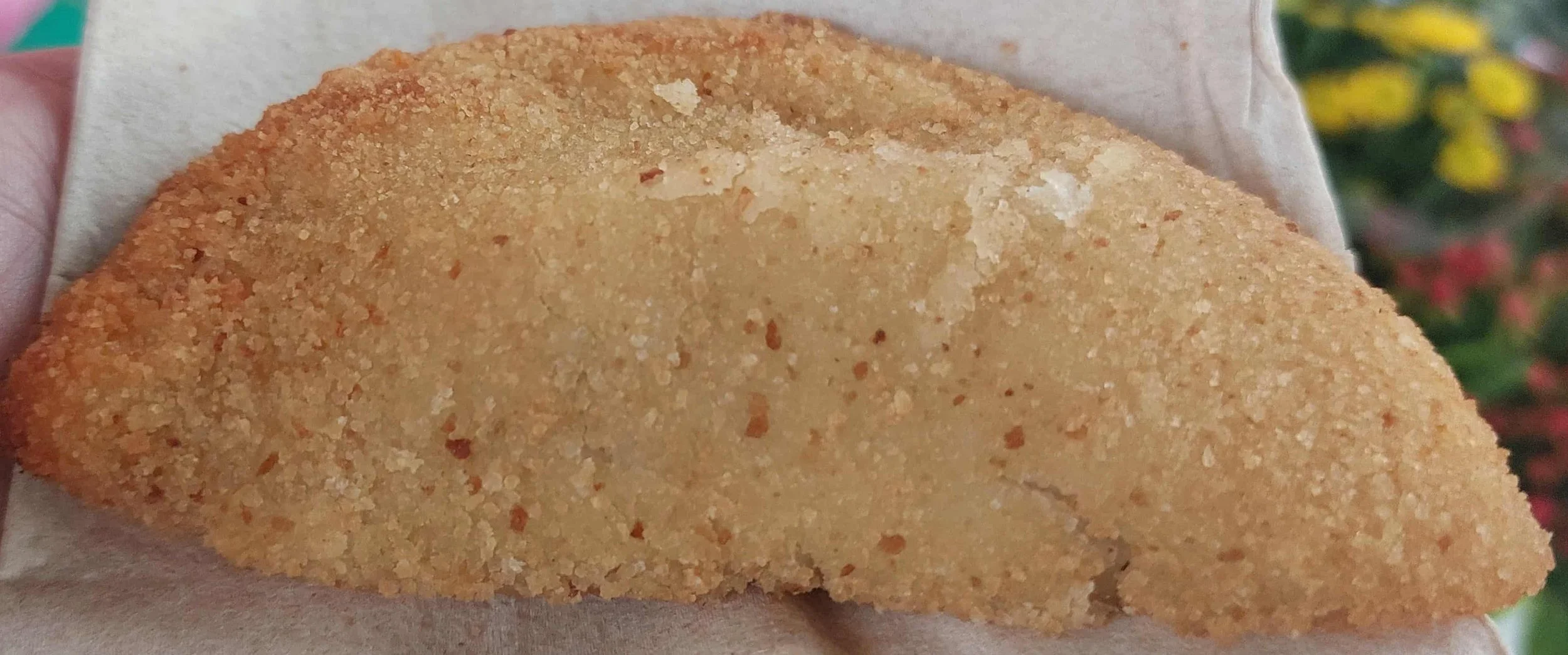
rissol
fried pastry
What is it?
A Rissol is a popular Portuguese savoury pastry, typically enjoyed as a snack. It consists of pastry filled with a savoury mixture, coated in breadcrumbs, and then deep fried. They are common in cafés, snack bars, and bakeries.
What is in it?
Pastry made from flour, water, and sometimes butter or egg, filled with codfish, shrimp, meat, or vegetables, and often seasoned with parsley, onion, or garlic.
Where can I eat it?
Rissols are widely available across Portugal in cafés, snack bars, and bakeries. The fillings vary by region and establishment, but cod and shrimp are the most traditional.
Vegetarian and dairy free versions available.
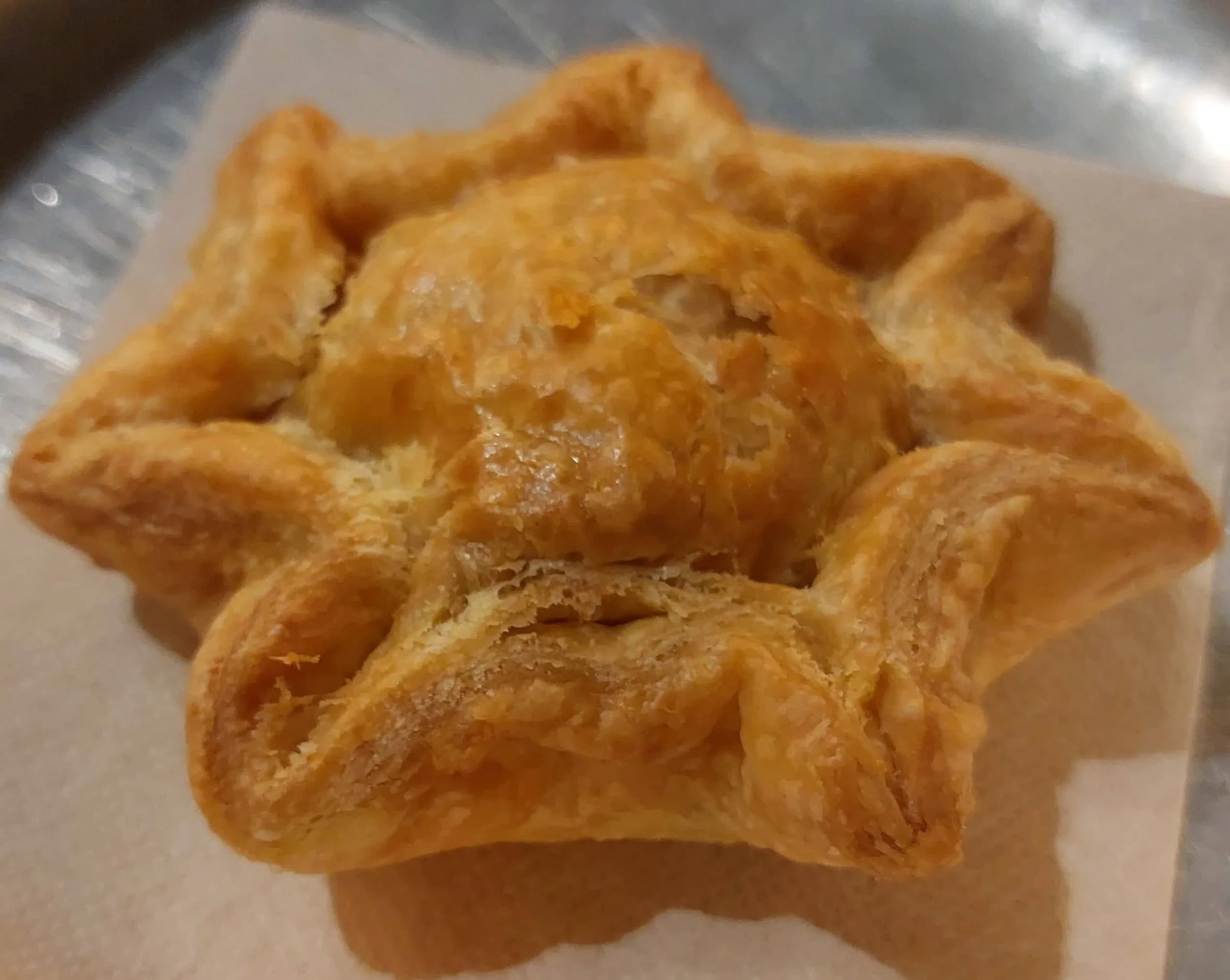
empada
small savoury pie
What is it?
An Empada is a small, savoury Portuguese pie, typically enjoyed as a snack. Empadas are hugely versatile they can be filled with meat, chicken, seafood, or even vegetarian fillings.
What is in it?
A puff pastry shell filled with ingredients such as shredded chicken, minced meat, tuna, or seafood, often mixed with onion, garlic, tomato, and sometimes egg or cream.
Where can I eat it?
Empadas are sold in bakeries, cafés, and snack bars across Portugal.
Vegetarian & dairy free versions available.

pastéis de bacalhau
cod fritter
What is it?
Pastéis de Bacalhau are Portuguese codfish fritters, a bit like a Portuguese fish cake, crisp on the outside and soft inside, traditionally served as a snack, appetizer, or part of a larger meal. They’re sometimes also called bolinhos de bacalhau, and are a staple in cafés and tascas and really delicious.
What is in it?
Salted cod (bacalhau), Mashed potatoes, Onion, garlic, egg, and parsley.
Where can I eat it?
Pastéis de Bacalhau are widely available across Portugal. They’re common in traditional cafés and tascas, as a starter in restaurants, or even at markets.
Dairy free & traditionally gluten free.
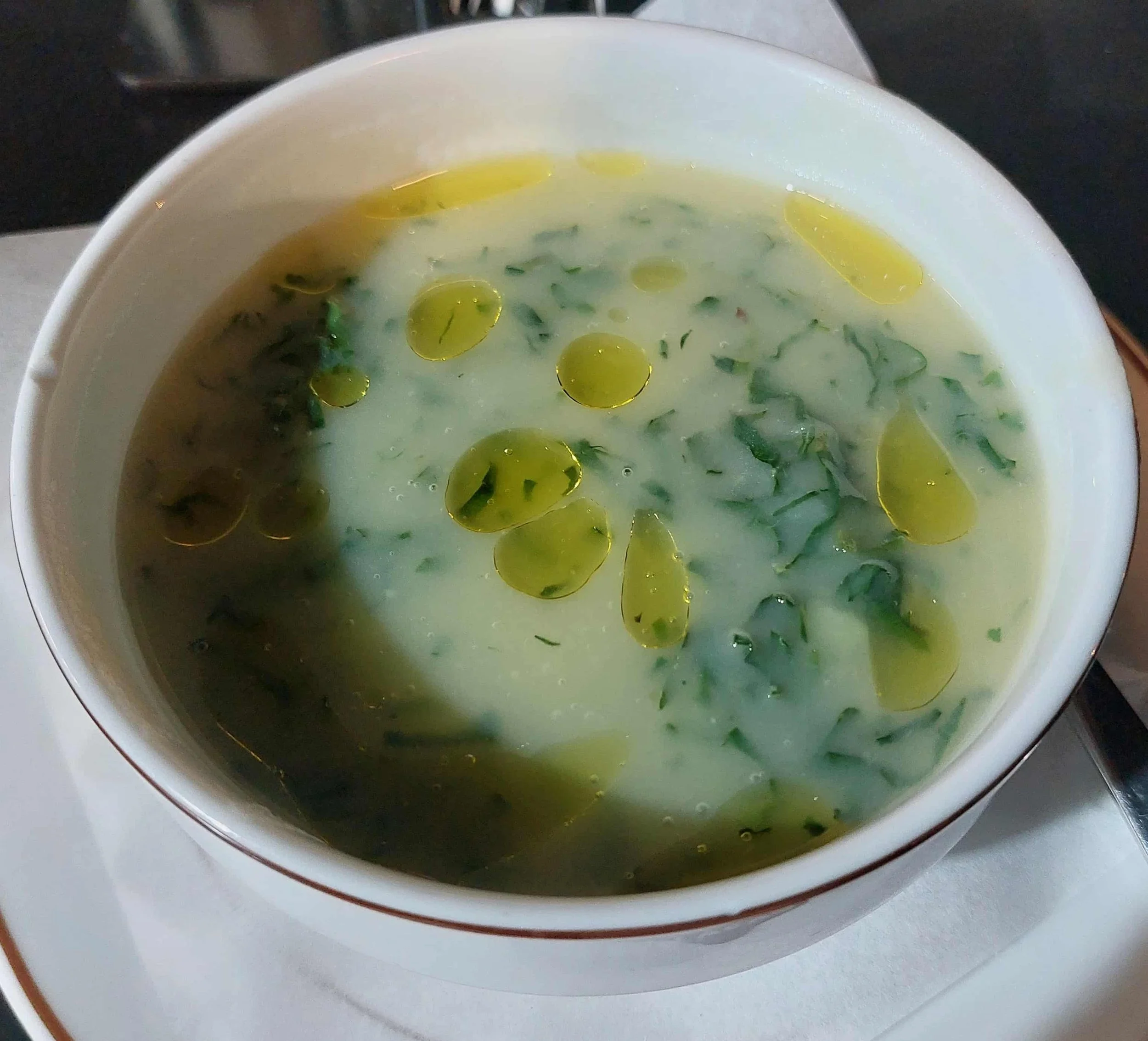
caldo verde
kale potato soup
What is it?
Caldo Verde is a traditional Portuguese soup, considered one of the country’s most iconic dishes. Its signature green colour comes from finely shredded kale or collard greens, which are simmered with potatoes, onions, and garlic in a light broth. Slices of chouriço (smoked Portuguese sausage) can be added on top. It’s often served as a starter.
What is in it?
made with potatoes mashed into the broth for a creamy texture, along with finely shredded kale or collard greens, onion, garlic, and olive oil, sometimes flavoured with chouriço, bay leaf, or paprika.
Where can I eat it?
Caldo Verde is widely available across Portugal, especially in traditional restaurants (tascas) and cafés. It’s particularly associated with northern Portugal. While commonly served as a starter, larger portions can also be enjoyed as a main dish, accompanied by bread.
Traditionally vegan, dairy and gluten free.
desserts and sweets

pastel de nata
Portuguese custard tart
What is it?
Portugal’s most famous food? Portugal’s most delicious food? Both statements could very well be true. The Pastel de Nata is a Portuguese custard tart that’s loved worldwide. It features a crisp, flaky pastry shell filled with a creamy, sweet egg custard, lightly caramelised on top. Best enjoyed warm, and optionally dusted with cinnamon, it’s a must-try when visiting Portugal, or, if you’re like us, a must-try several times a day! One of the world's best pastries. They’re typically eaten as a snack or dessert, often with coffee or tea.
What is in it?
Crisp puff or shortcrust pastry filled with a rich custard of egg yolks, sugar, and milk or cream, flavoured with vanilla or lemon zest, and often finished with a dusting of cinnamon.
Where can I eat it?
Pastel de Nata are available across Portugal in cafés, bakeries (pastelarias), and even supermarkets, but the best are usually from traditional pastelarias in Lisbon and Porto. A great place in Lisbon to get them is Aloma, which has won awards for the best Pastel de Nata.
Vegetarian

baba de camelo
caramel mousse
What is it?
Baba de Camelo is a classic Portuguese dessert, sweet, creamy, and delightfully simple. Its name literally translates to “camel’s drool,” but don’t let that put you off. It’s a smooth, caramel flavoured mousse that’s decadently delicious and the perfect finish to a meal. The quirky name comes from its silky, slightly sticky texture, which humorously reminded someone of a camel’s drool. It’s a staple in Portuguese homes and traditional restaurants.
What is in it?
Made with sweetened condensed milk and eggs, yolks for the mousse and sometimes whipped egg whites for lightness, optional toppings include crushed cookies, almonds, or chocolate shavings.
Where can I eat it?
Baba de Camelo is commonly found in traditional Portuguese restaurants and cafés across the country. It’s often served chilled in small ramekins. We tried it at a great fish restaurant in Lisbon called Invicta Madragoa.
Vegetarian and gluten free.

bolo de berlim
custard doughnut
What is it?
Bolo de Berlim is Portugal’s version of the German Berliner doughnut, but instead of being filled with jam, as in Germany, the Portuguese version is stuffed with a thick egg custard (doce de ovos). It’s a bakery favourite and also a classic summer beach snack, vendors often walk the sand selling them fresh to sunbathers.
What is in it?
It’s made from sweet yeasted dough filled with doce de ovos (egg-yolk custard) and dusted with sugar, while chocolate or cream versions exist, the traditional filling is custard.
were can I eat it?
Bolos de Berlim are sold in bakeries all across Portugal and are especially popular at the beach, where you’ll hear vendors calling out their arrival with trays of sugar dusted buns. In Lisbon and Porto, cafés also serve them fresh daily.
Vegetarian.
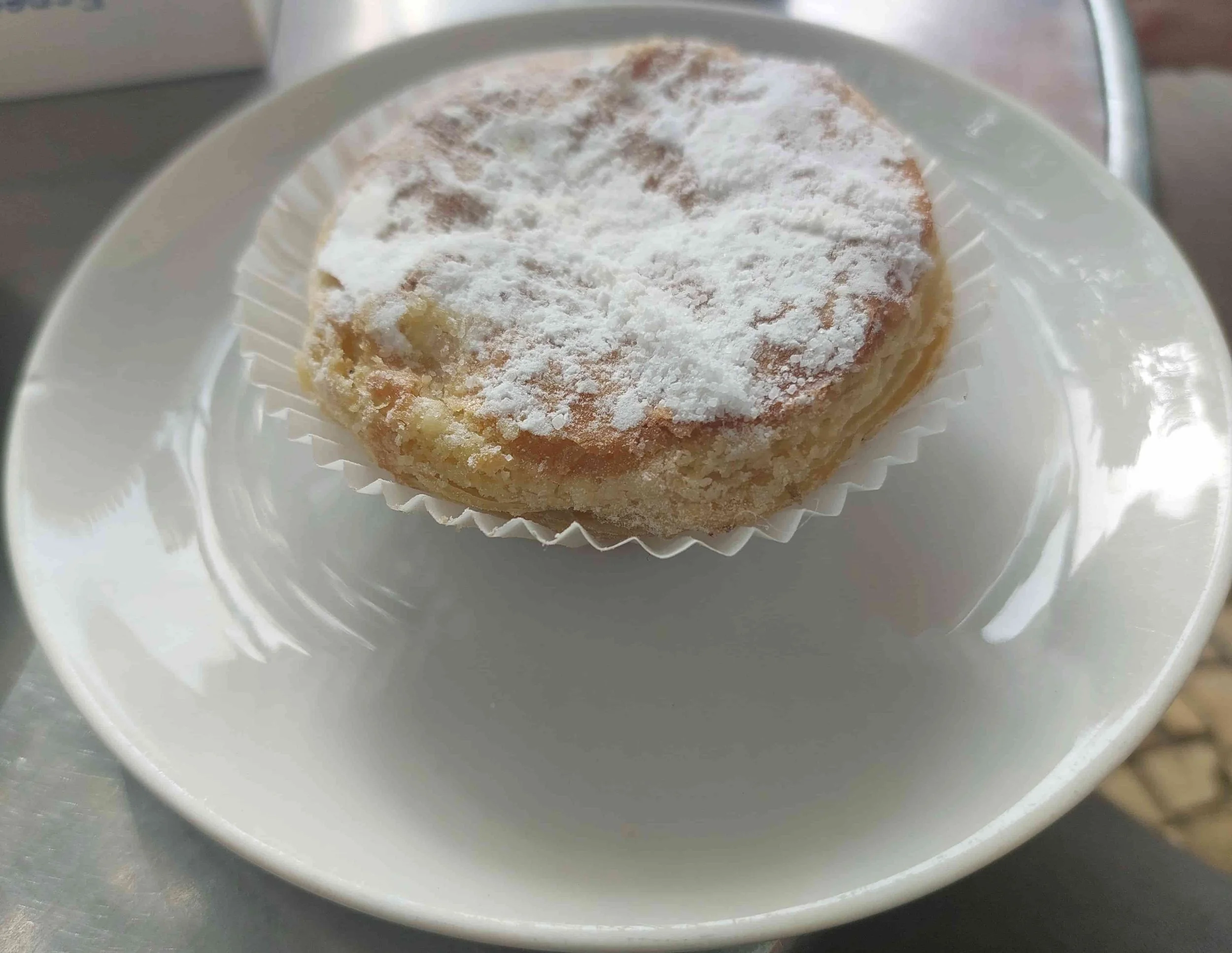
queijadas de feijão
sweet bean pastries
What is it?
Queijadas de Feijão are traditional Portuguese pastries that might surprise you, they’re made with beans. Despite the unusual ingredient, these small tarts are sweet and delicate, with a soft filling wrapped in a thin pastry shell. The beans give a smooth, creamy texture rather than a savoury taste.
What is in it?
Puréed white beans, sugar, eggs, ground almonds, butter, and flour, finished with a dusting of icing sugar.
were can I eat it?
They’re a speciality of Sintra, where you’ll find them in pastelarias. That said, Queijadas de Feijão can also be found in pastry shops across Portugal, especially those specialising in traditional bakes.
Vegetarian.
Ingredients listed reflect common or typical components of this dish as served in restaurants or street‑food vendors. Variations by region, season, or vendor are common. This information is provided for general reference only. If you have dietary restrictions or allergies, please verify ingredient details independently. We assume no liability for accuracy or outcomes.