all the foods - Portugal
Here you will find a list of all the traditional cuisine we tried in Portugal.
Click to jump to one of the sections:
seafood and fish dishes
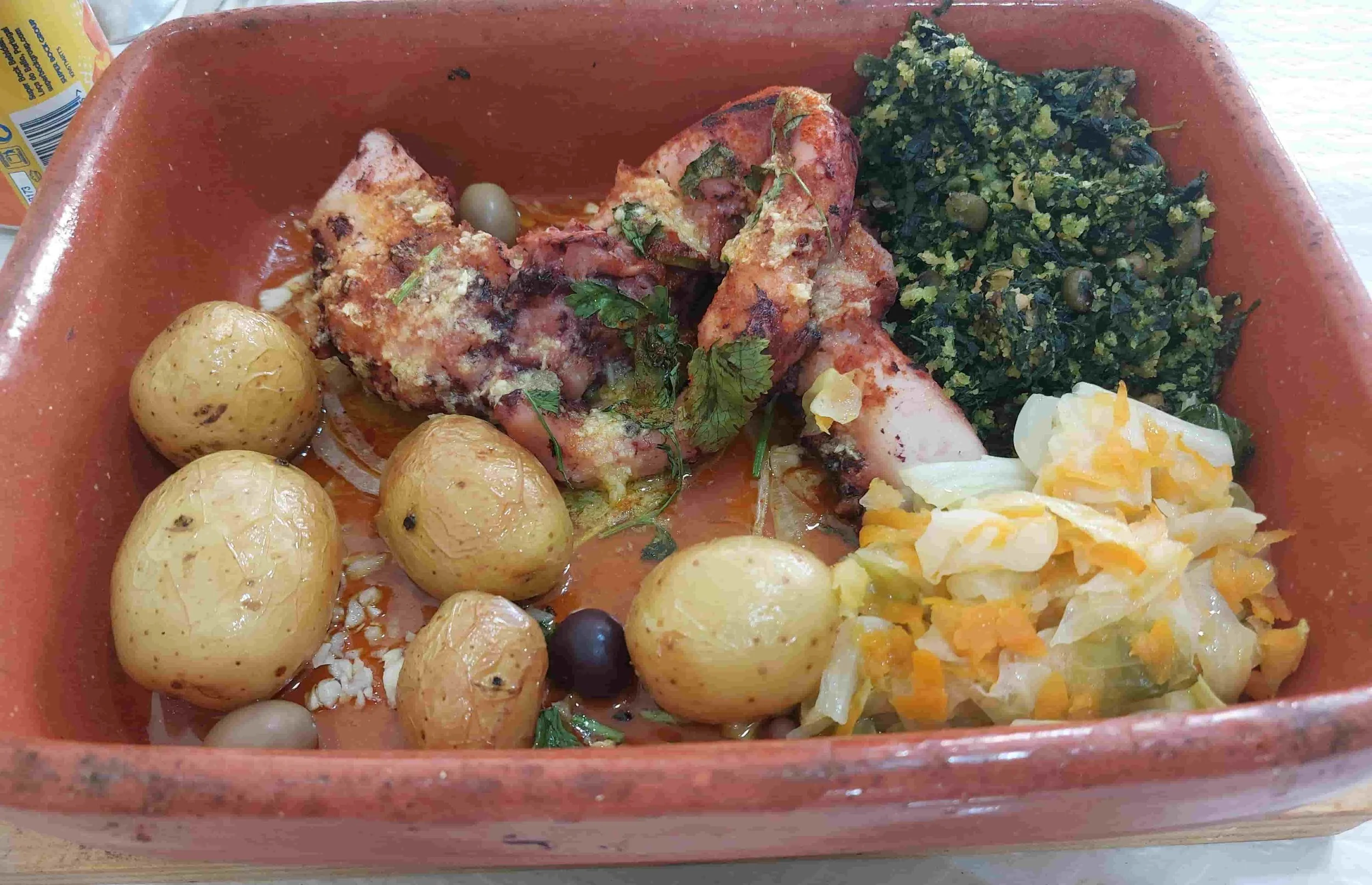
polvo à lagareiro
octopus in olive oil
What is it?
Polvo à Lagareiro is one of Portugal’s most famous octopus dishes. The name lagareiro comes from the traditional olive oil mills (lagares), and the recipe reflects that heritage, it’s bathed in olive oil and garlic, definitely one for garlic lovers! The octopus is first boiled until tender, then roasted or grilled, and finally drizzled with plenty of olive oil and lots of garlic. It’s usually served with small roasted potatoes (batatas a murro, literally “punched potatoes”).
What is in it?
It’s made with octopus, plenty of garlic, olive oil, and batatas a murro (smashed potatoes), finished with parsley and often served with greens or cabbage, sometimes garnished with olives.
Where can I eat it?
You’ll find Polvo à Lagareiro in traditional Portuguese restaurants, particularly in coastal regions and in Lisbon. Some of the best versions are served in family run tascas and marisqueiras (seafood restaurants). We had a really good, reasonably priced one in Porto at a local place called Frango.
Dairy and gluten free.
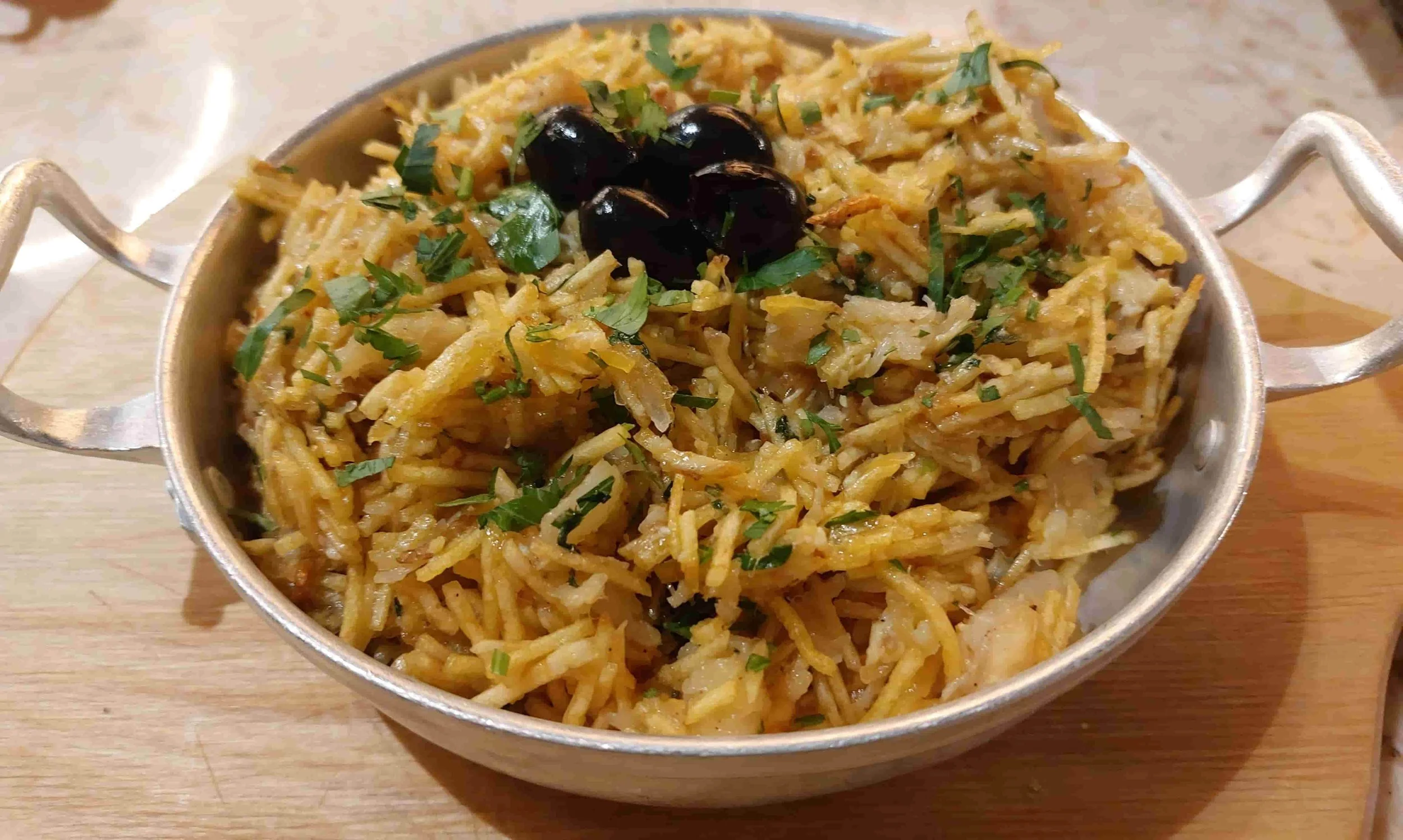
bacalhau à Brás
shredded cod
What is it?
Bacalhau à Brás is Portugal’s most famous codfish dish, combining shredded salted cod with onions, thinly cut fried potatoes (matchstick style potatoes), and scrambled eggs. It’s perfectly balanced, salty, savoury, and slightly creamy, and often finished with a sprinkling of chopped parsley and black olives.
What is in it?
Shredded salted cod, onions, thinly cut fried potatoes, scrambled eggs, olive oil, fresh parsley, and black olives. Sometimes garlic is added for extra flavour.
Where can I eat it?
Bacalhau à Brás is commonly available in traditional Portuguese restaurants (tascas) and seafood establishments throughout the country.
Dairy and gluten free.
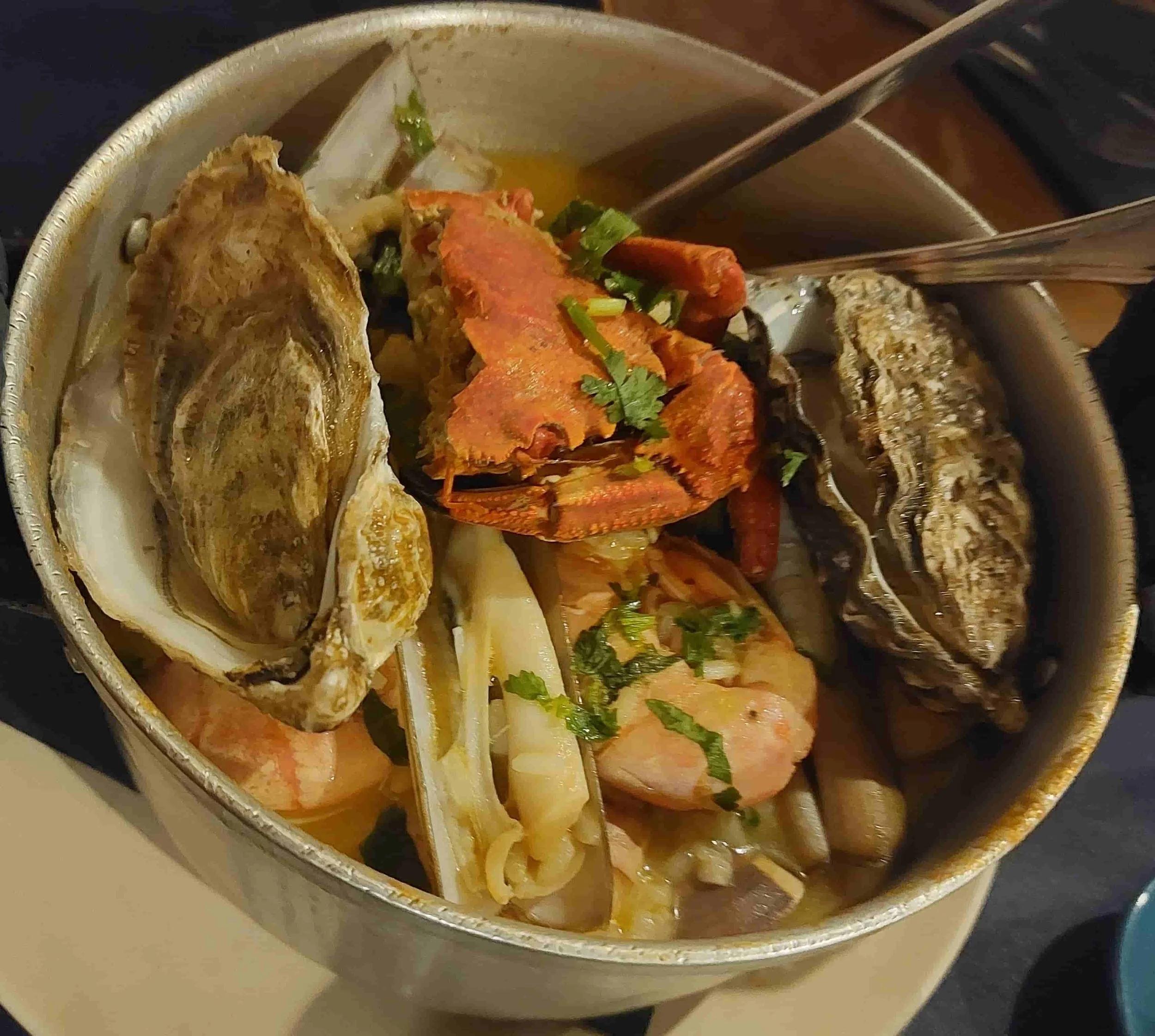
arroz de marisco
seafood rice
What is it?
Arroz de Marisco is a classic Portuguese seafood rice dish. Often compared to seafood paella, it is made with short grain rice cooked in a savoury seafood broth, containing a mix of shellfish and fish, and finished with fresh herbs. The rice is typically slightly saucy rather than dry like a paella. It is often served in a large pot, with even bigger versions available for sharing.
What is in it?
It’s made with short grain rice cooked with a mix of seafood, usually prawns, clams, mussels, and sometimes crab or fish, along with onion, garlic, olive oil, and tomato, simmered in white wine and seafood broth, and finished with fresh herbs like parsley or coriander.
Where can I eat it?
Arroz de Marisco is widely available in coastal restaurants and traditional marisqueiras (seafood restaurants) across Portugal, particularly in Lisbon, Porto, and the Algarve. We shared one filled to the brim with seafood at Invicta Madragoa in Lisbon.
Dairy and gluten free.
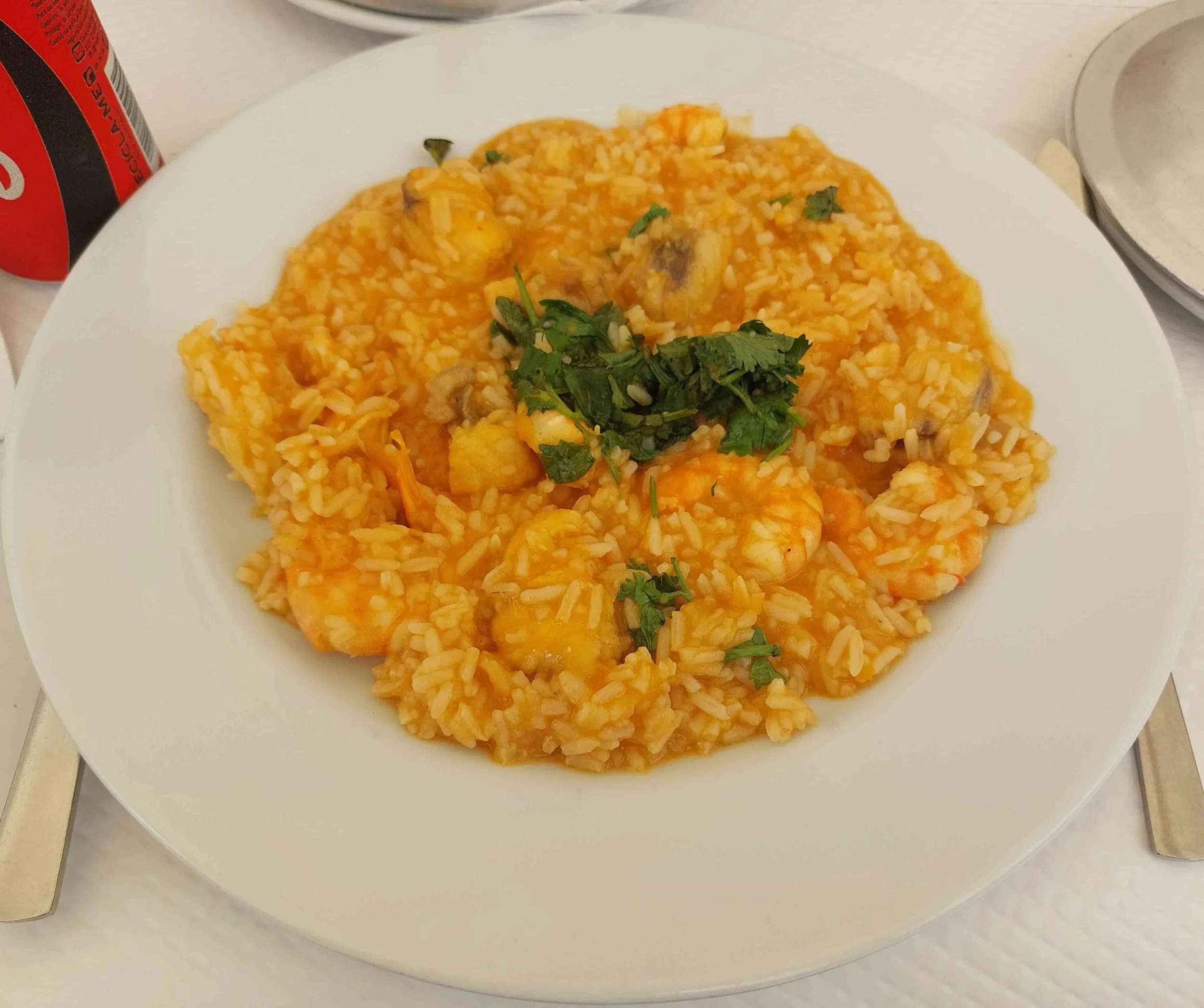
arroz de tamboril
monkfish rice
What is it?
Arroz de Tamboril is a classic Portuguese monkfish rice dish, somewhere between a stew and a risotto in texture. Rich and savoury, it showcases the meaty monkfish, which holds its shape well in cooking, making it perfect for soaking up flavour without falling apart. It’s usually served hot in a large pot at the table, often meant for sharing. It’s often seen as the less glamorous brother of Arroz de Marisco, less lavish, but every bit as good.
What is in it?
Monkfish, rice, onion, garlic, tomato, olive oil, and white wine, simmered with fish stock and fresh herbs like coriander or parsley. Prawns, clams, or peppers are sometimes added for extra flavour.
Where can I eat it?
This dish is available in seafood restaurants and marisqueiras (seafood restaurants) along the Portuguese coast and we also saw it in Lisbon. It’s not as ubiquitous as Arroz de Marisco, but you should still have no trouble finding it at the coast.
Dairy and gluten free.
meat and other rice dishes

arroz de pato
duck rice
What is it?
Arroz de Pato is a traditional Portuguese duck rice dish, full of flavour. The duck is simmered until tender, then shredded and baked with rice that absorbs the rich duck broth. The dish is finished in the oven, usually topped with slices of chouriço (Portuguese sausage).
What is in it?
Made with duck and long grain rice, cooked with chouriço, onion, garlic, carrot, bay leaves, olive oil, and white wine.
Where can I eat it?
You’ll find Arroz de Pato in many traditional Portuguese restaurants (tascas) across the country. It’s particularly associated with northern Portugal, though it’s available throughout the country.
Dairy & gluten free.
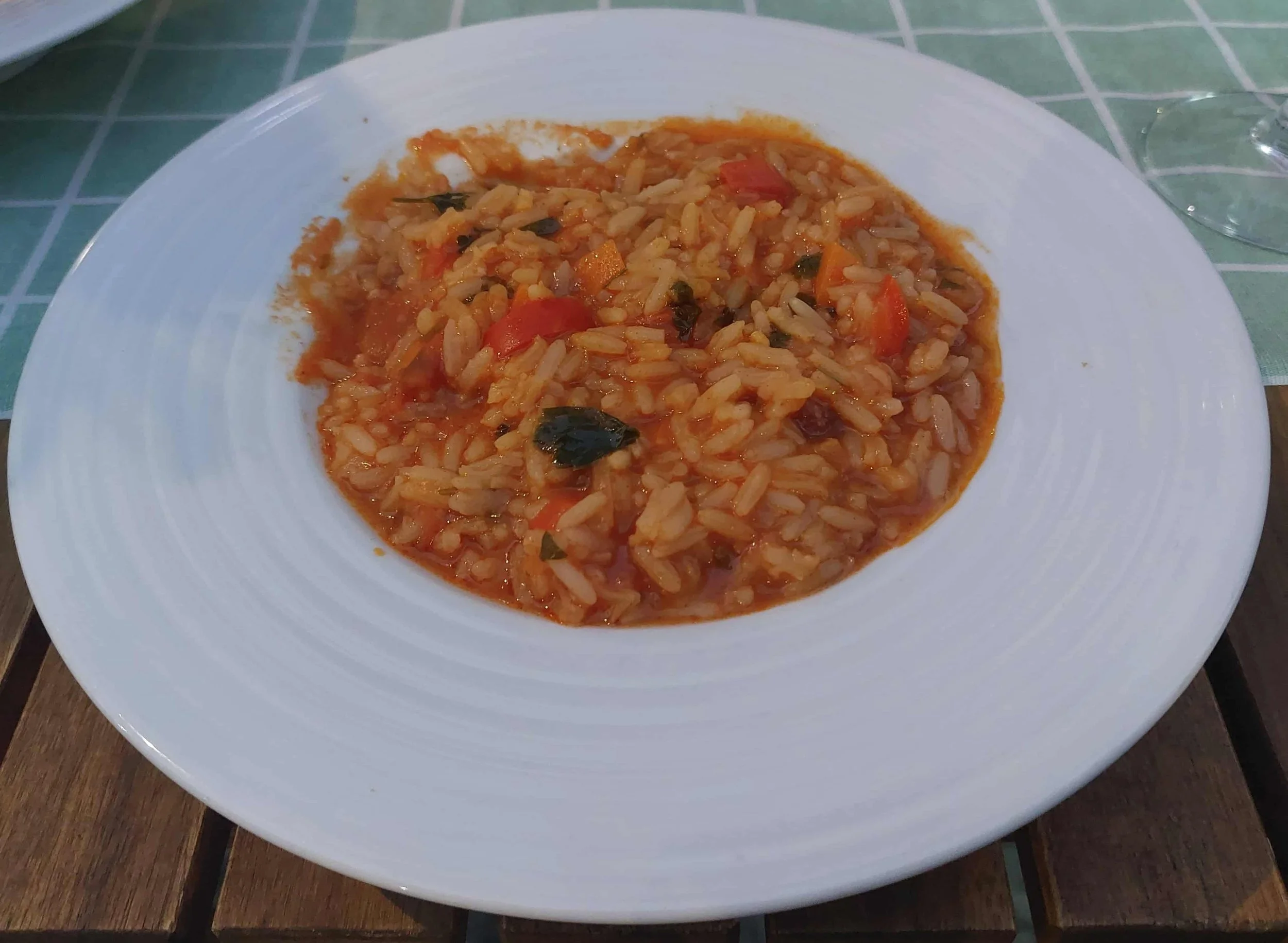
arroz de tomate
mixed rice
What is it?
Arroz de Tomate is a simple Portuguese tomato rice dish, often served as a side but sometimes as a main. The rice is cooked in a rich tomato sauce with garlic, onion, and olive oil, giving it a slightly tangy flavour. It’s a staple in Portuguese homes and casual restaurants.
What is in it?
Made with rice, tomatoes (fresh or canned), onion, garlic, and olive oil, often flavoured with herbs like parsley or bay leaves. Some versions include peppers, paprika, or a splash of white wine, and it’s occasionally topped with a fried egg.
Where can I eat it?
Arroz de Tomate is common across Portugal, particularly in home style restaurants (tascas). It’s usually served as a side dish accompanying grilled fish or roasted meats, though some restaurants serve it as a vegetarian main with seasonal vegetables.
Vegan, dairy and gluten free.
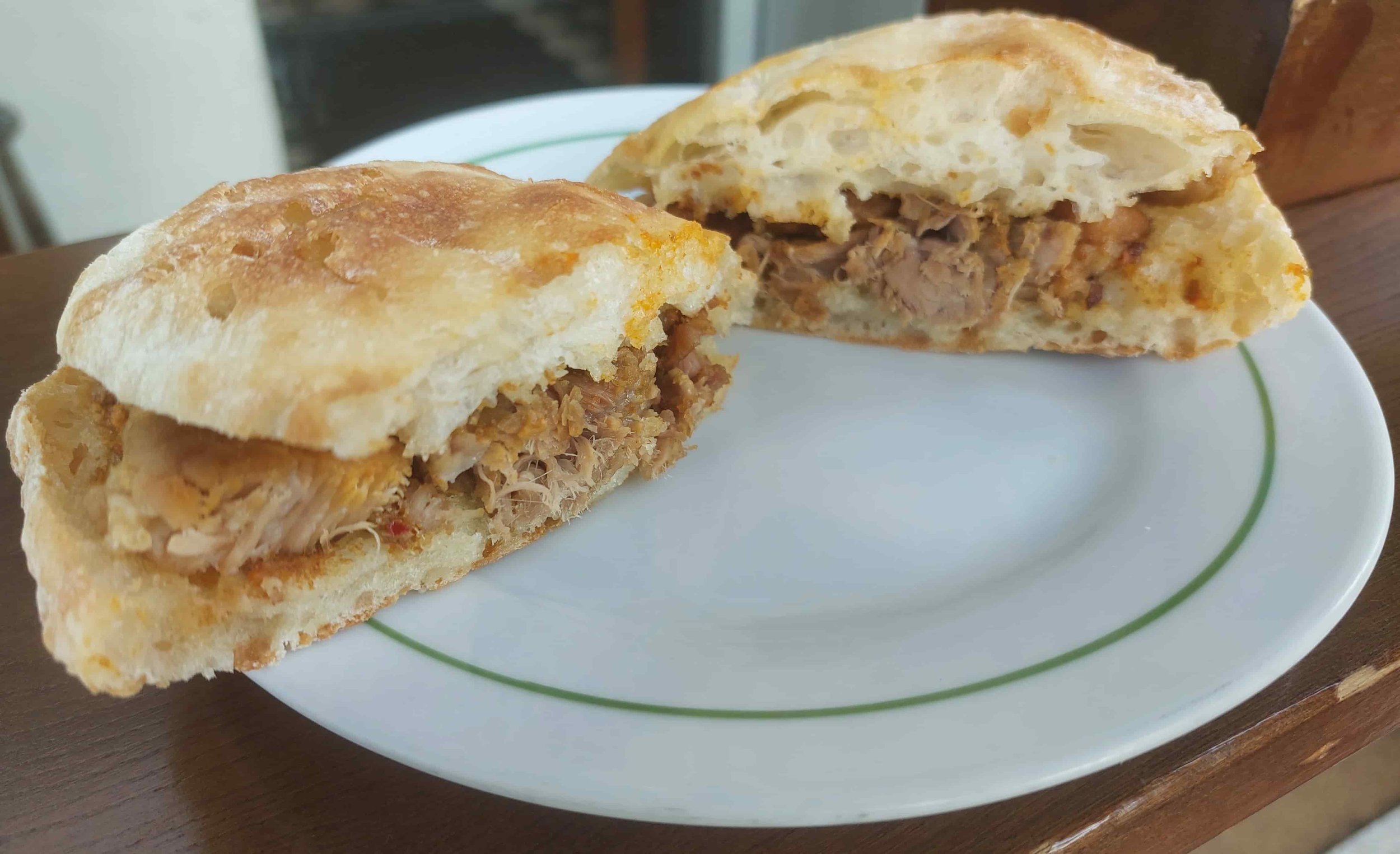
rojões
fried marinated pork
What is it?
Rojões are a traditional Portuguese dish of marinated and fried pork cubes, with a crispy exterior and tender, juicy interior. Often associated with the northern regions of Portugal. In some cafés and snack bars, they’re also served in a roll, making for a delicious pork sandwich.
What is in it?
Pork (typically shoulder or loin), cut into cubes and marinated with garlic, wine, paprika, olive oil, and sometimes bay leaf.
Where can I eat it?
Rojões are sometimes found in traditional restaurants (tascas) across northern Portugal, especially in Minho and Porto. They are often served as a main course with sides like roasted potatoes, rice, or greens. Snack bars and cafés sometimes serve rojões in a roll. Outside the north, they’re quite rare, so you’re unlikely to find it in Lisbon or other southern regions.
Dairy free.
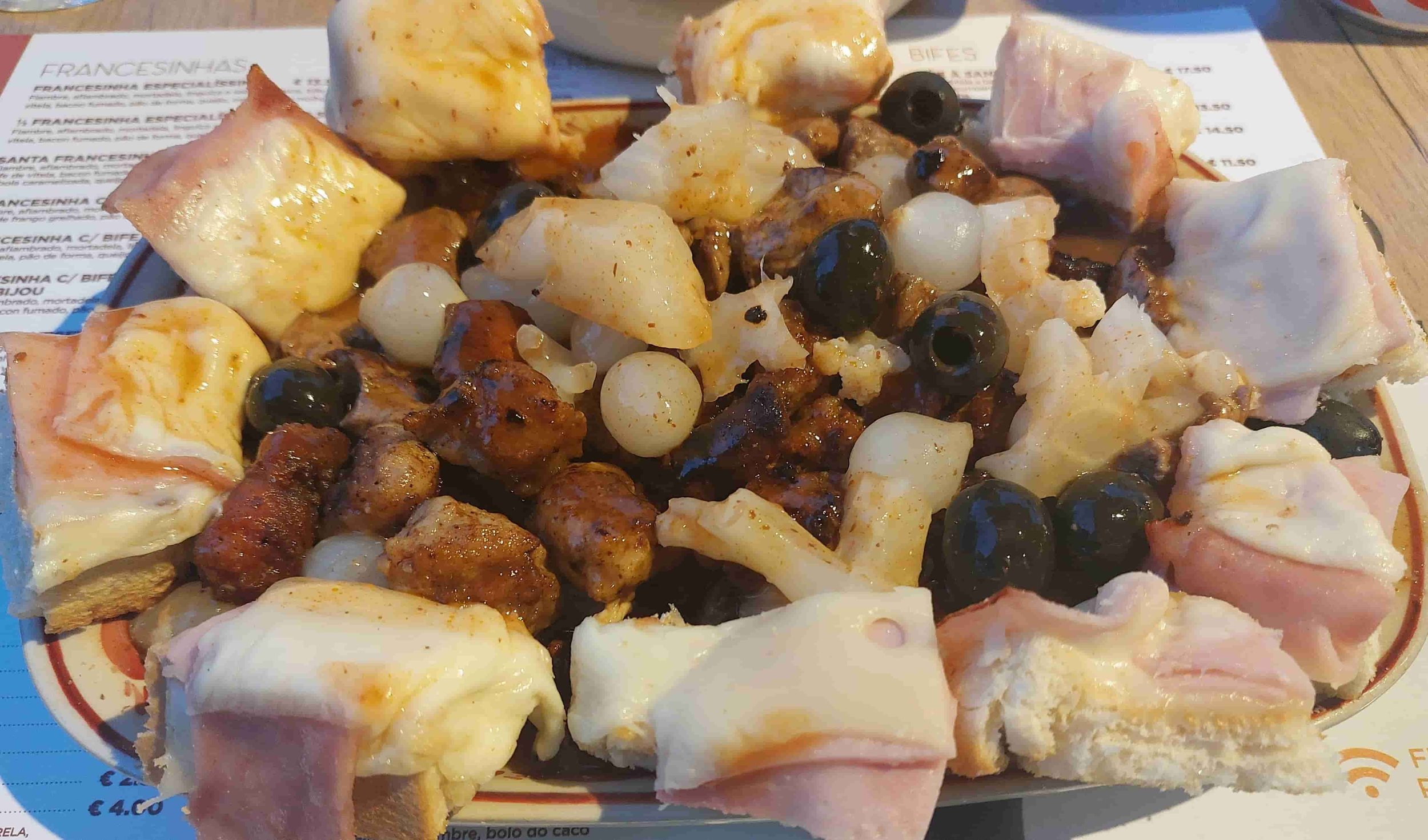
pica pau
crazy bar snack
What is it?
Pica Pau is chaos on a plate, looking like it was created by a stoned teenager raiding their parents’ fridge. It consists of small cubes of marinated meat, usually beef or pork, quickly fried and served in a tangy, garlicky sauce. The dish can take many forms and does not really have a standard recipe, sometimes including sausage, olives, or even bread topped with ham and melted cheese to mop up all the sauce. It’s messy, very filling, and commonly shared with drinks in a bar.
What is in it?
Cubes of beef or pork, with garlic, olive oil or butter, white wine or vinegar, pickles, olives, mustard. It can also include sausage, bread with ham and melted cheese, or other variations
Where can I eat it?
Pica Pau is typically found in bars and tascas, available across Portugal, especially in Lisbon and Porto.
savoury snacks and sandwiches
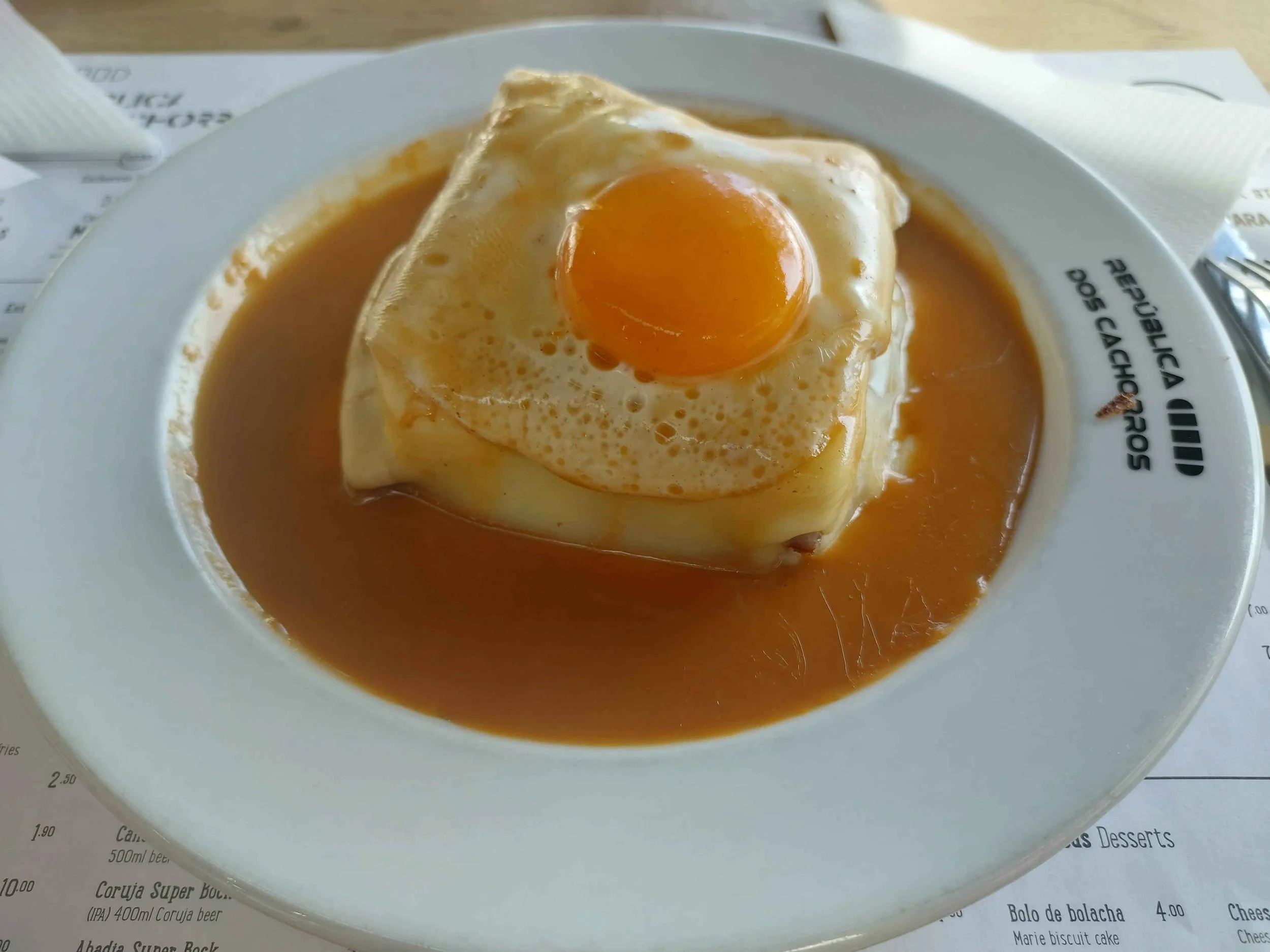
francesinha
classic Porto sandwich
What is it?
The Francesinha is a huge, decadent sandwich from Porto, but be warned, this is not the type of sandwich to eat with your hands. Often described as the ultimate comfort food, I would personally call it the ultimate hangover food, in the best possible way. Layers of bread, cured meats, steak or roast beef, and melted cheese are smothered in a rich, spicy tomato and beer sauce, then usually baked or grilled until gooey and bubbling. Some places also serve vegetarian versions made with meat substitutes and mushrooms, and even a vegan version. Often served with fries, it’s a filling meal that hits every craving.
What is in it?
Made with toasted bread layered with cured meats such as ham, linguiça, and smoked sausage, plus steak or roast beef, all covered in melted cheese and a spicy tomato and beer sauce. It’s often topped with a fried egg and served with fries.
Where can I eat it?
The Francesinha is a specialty of Porto, found in cafés and restaurants dedicated to the dish. It’s less common outside northern Portugal, though some restaurants in Lisbon and other cities serve it. Traditionally enjoyed as a lunch or dinner, it’s perfect for those with a big appetite or recovering from a night out!
Vegetarian and vegan versions available.
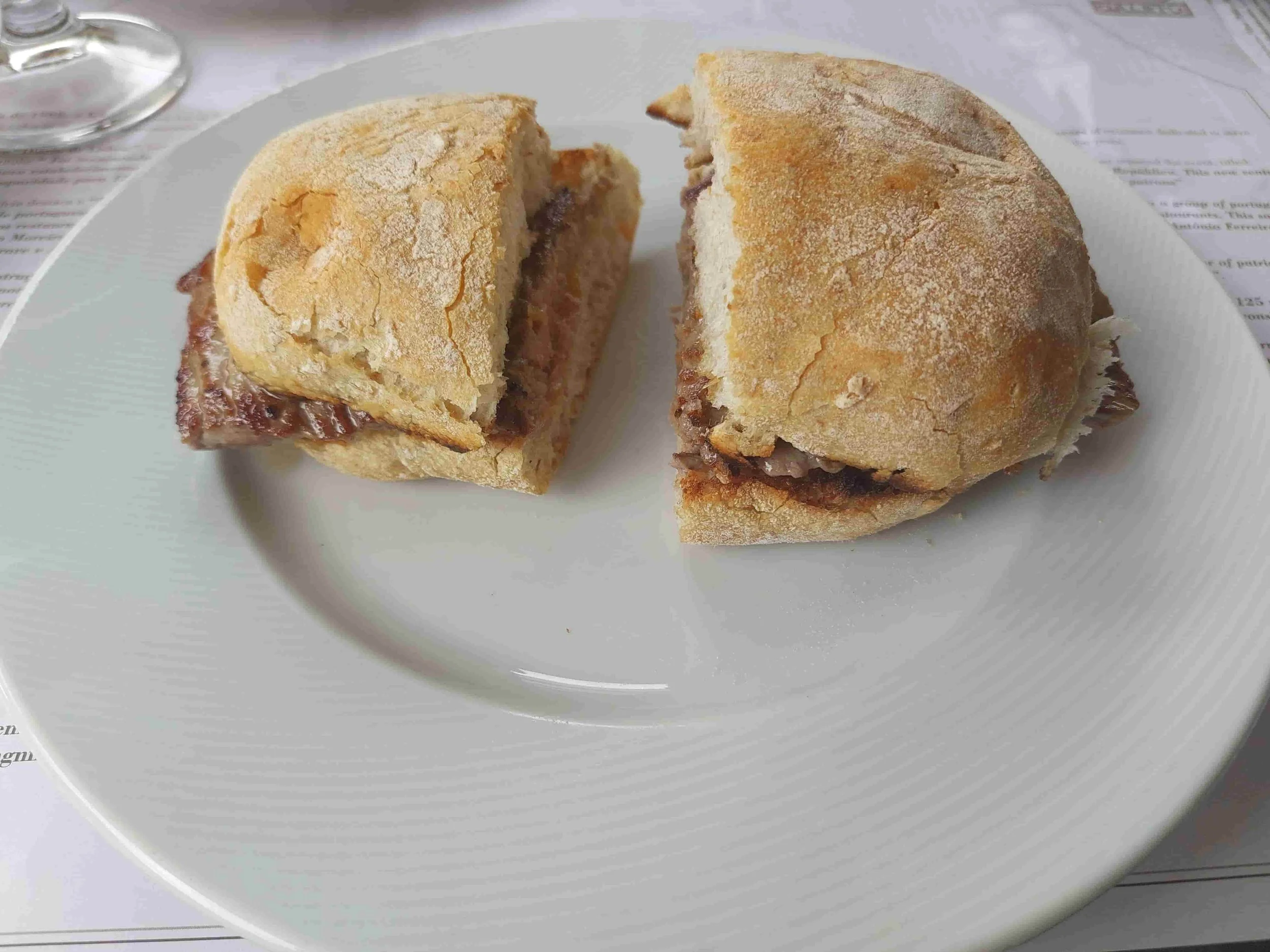
prego
garlic steak sandwich
What is it?
A Prego is a classic Portuguese steak sandwich, simple and tasty. Thin slices of beef steak are quickly grilled and served in a soft roll, brushed with garlic butter. It’s sometimes topped with mustard, ham, cheese, or a fried egg, and is typically eaten as a quick lunch, snack, or late night food after a night out. The sandwich is versatile, with each establishment sometimes adding its own twist. The name literally means “nail.”
What is in it?
It’s made with a thin beef steak served in a soft, lightly toasted roll with garlic butter, sometimes topped with mustard, cheese, ham, or a fried egg, and often served with fries on the side.
Where can I eat it?
Pregos are ubiquitous in Portugal, particularly in Lisbon and Porto. You’ll find them in cafés, snack bars, and casual restaurants, often served as a snack or simple main meal, we had a good one at Galeto a famous restaurant in Lisbon.
Traditionally dairy free.

bifana
marinated pork roll
What is it?
The Bifana is a Portuguese classic, a delicious pork sandwich, messy & juicy, often thought of as the perfect late-night snack, akin to a kebab or greasy burger in other countries. Thin slices of pork are marinated in garlic, white wine, paprika, and spices, then quickly fried and stuffed into a soft roll. It’s a simple everyday snack enjoyed across Portugal. Think of it as Portugal’s answer to pulled pork: thinner, juicier, and with a garlicky kick.
What is in it?
Thin pork slices marinated in garlic, white wine, paprika, and sometimes a touch of chili, served in a soft roll. Optional toppings include mustard, piri-piri sauce, or sautéed onions.
Where can I eat it?
Bifanas are everywhere in Portugal, from casual cafés and snack bars to street stalls. They’re especially popular after a night out, and each region or eatery tends to have its own twist on the marinade and spice level.
Dairy free.
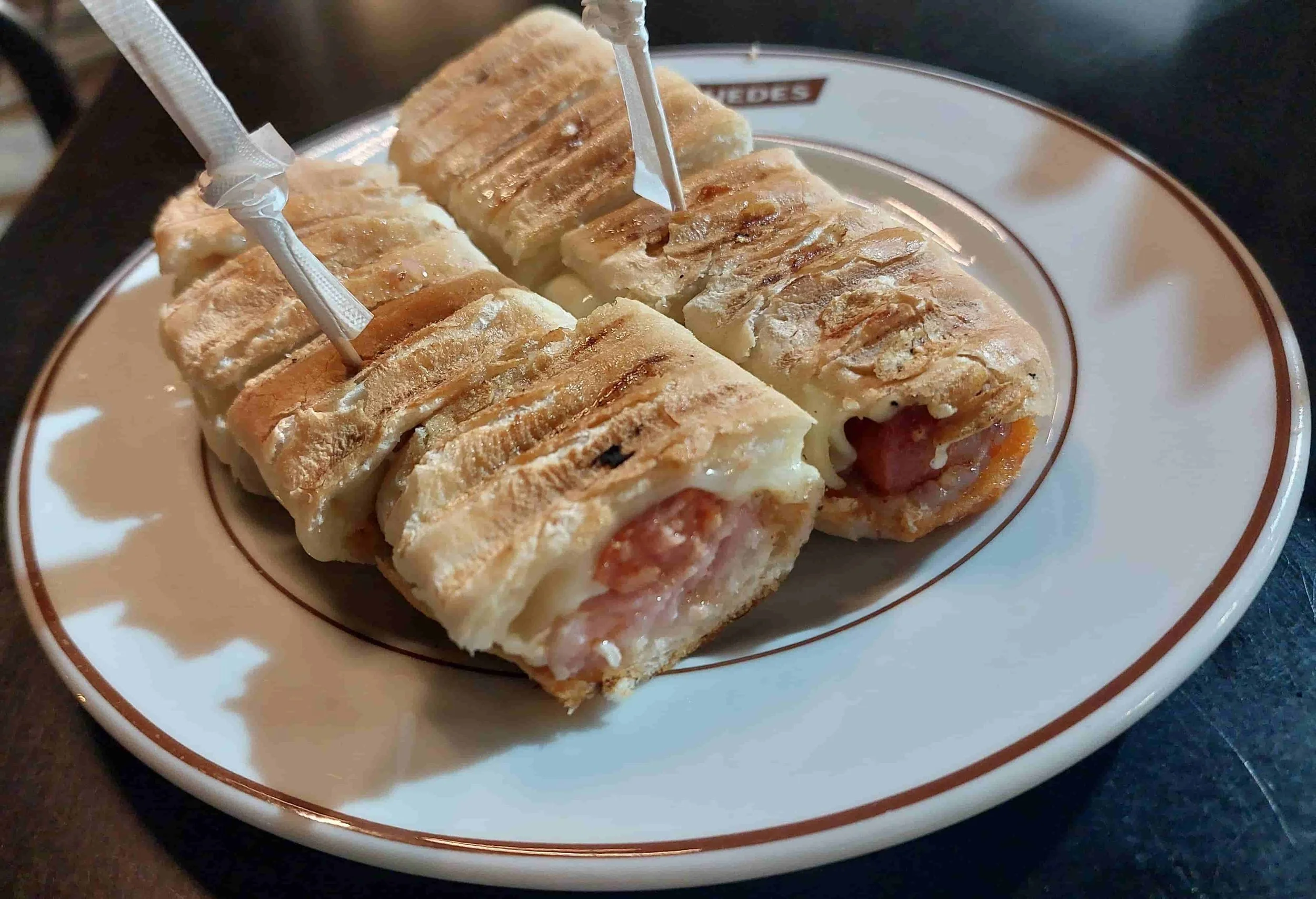
cachorro
Portuguese hot dog
What is it?
A Cachorro (which literally means “puppy”) is Portugal’s take on the hot dog and a popular fast food snack sold in cafés, fast food places, and casual eateries. Unlike a standard hot dog, the bun is often lightly toasted, and some versions, especially those with cheese, are finished under a grill so the cheese melts over the sausage. The sausage is typically grilled or boiled, then dressed with toppings ranging from mustard, ketchup, and mayonnaise to sautéed onions, pickles, or piri-piri sauce. It’s definitely a step up from a standard hot dog.
What is in it?
Sausage (usually pork or a pork-beef mix) in a bun, toppings including mustard, ketchup, mayonnaise, sautéed onions, pickles, piri-piri sauce. Porto style versions may also include cheese and ham.
Where can I eat it?
Cachorros are widely available across Portugal in cafés, snack bars, and street food stands. They’re especially popular in Lisbon and Porto, often eaten on the go as a snack. Variations exist depending on the region and vendor, but the classic grilled sausage in a toasted bun with mustard or mayonnaise is the standard.
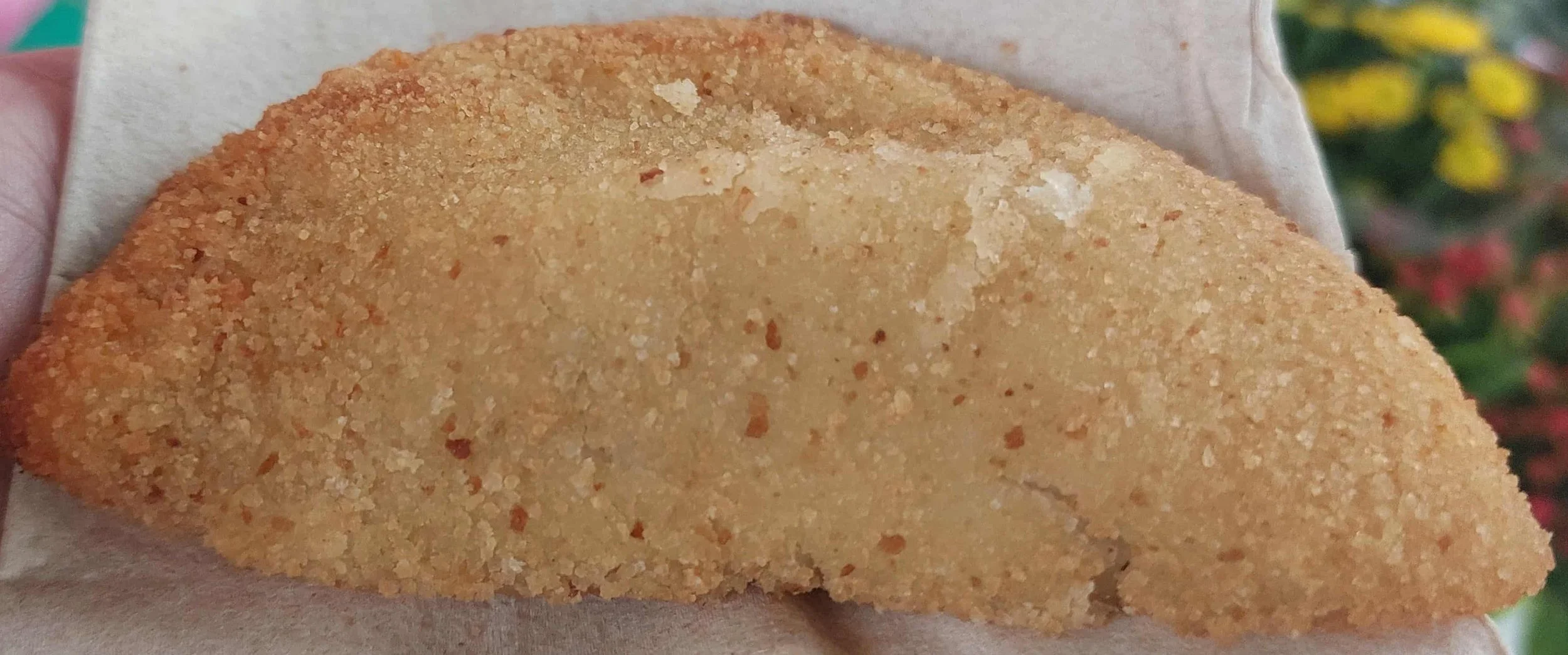
rissol
fried pastry
What is it?
A Rissol is a popular Portuguese savoury pastry, typically enjoyed as a snack. It consists of pastry filled with a savoury mixture, coated in breadcrumbs, and then deep fried. They are common in cafés, snack bars, and bakeries.
What is in it?
Pastry made from flour, water, and sometimes butter or egg, filled with codfish, shrimp, meat, or vegetables, and often seasoned with parsley, onion, or garlic.
Where can I eat it?
Rissols are widely available across Portugal in cafés, snack bars, and bakeries. The fillings vary by region and establishment, but cod and shrimp are the most traditional.
Vegetarian and dairy free versions available.
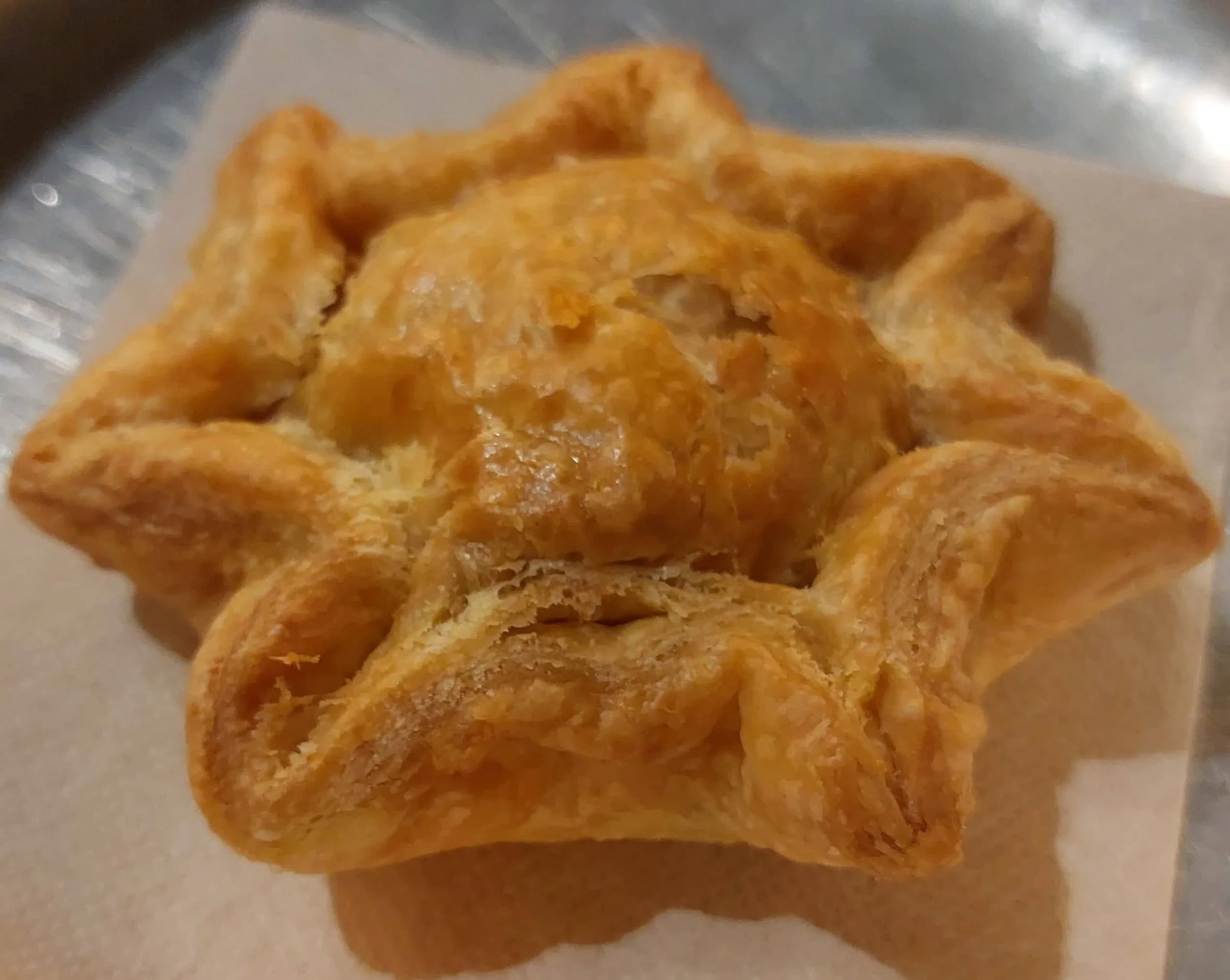
empada
small savoury pie
What is it?
An Empada is a small, savoury Portuguese pie, typically enjoyed as a snack. Empadas are hugely versatile they can be filled with meat, chicken, seafood, or even vegetarian fillings.
What is in it?
A puff pastry shell filled with ingredients such as shredded chicken, minced meat, tuna, or seafood, often mixed with onion, garlic, tomato, and sometimes egg or cream.
Where can I eat it?
Empadas are sold in bakeries, cafés, and snack bars across Portugal.
Vegetarian & dairy free versions available.

pastéis de bacalhau
cod fritter
What is it?
Pastéis de Bacalhau are Portuguese codfish fritters, a bit like a Portuguese fish cake, crisp on the outside and soft inside, traditionally served as a snack, appetizer, or part of a larger meal. They’re sometimes also called bolinhos de bacalhau, and are a staple in cafés and tascas and really delicious.
What is in it?
Salted cod (bacalhau), Mashed potatoes, Onion, garlic, egg, and parsley.
Where can I eat it?
Pastéis de Bacalhau are widely available across Portugal. They’re common in traditional cafés and tascas, as a starter in restaurants, or even at markets.
Dairy free & traditionally gluten free.
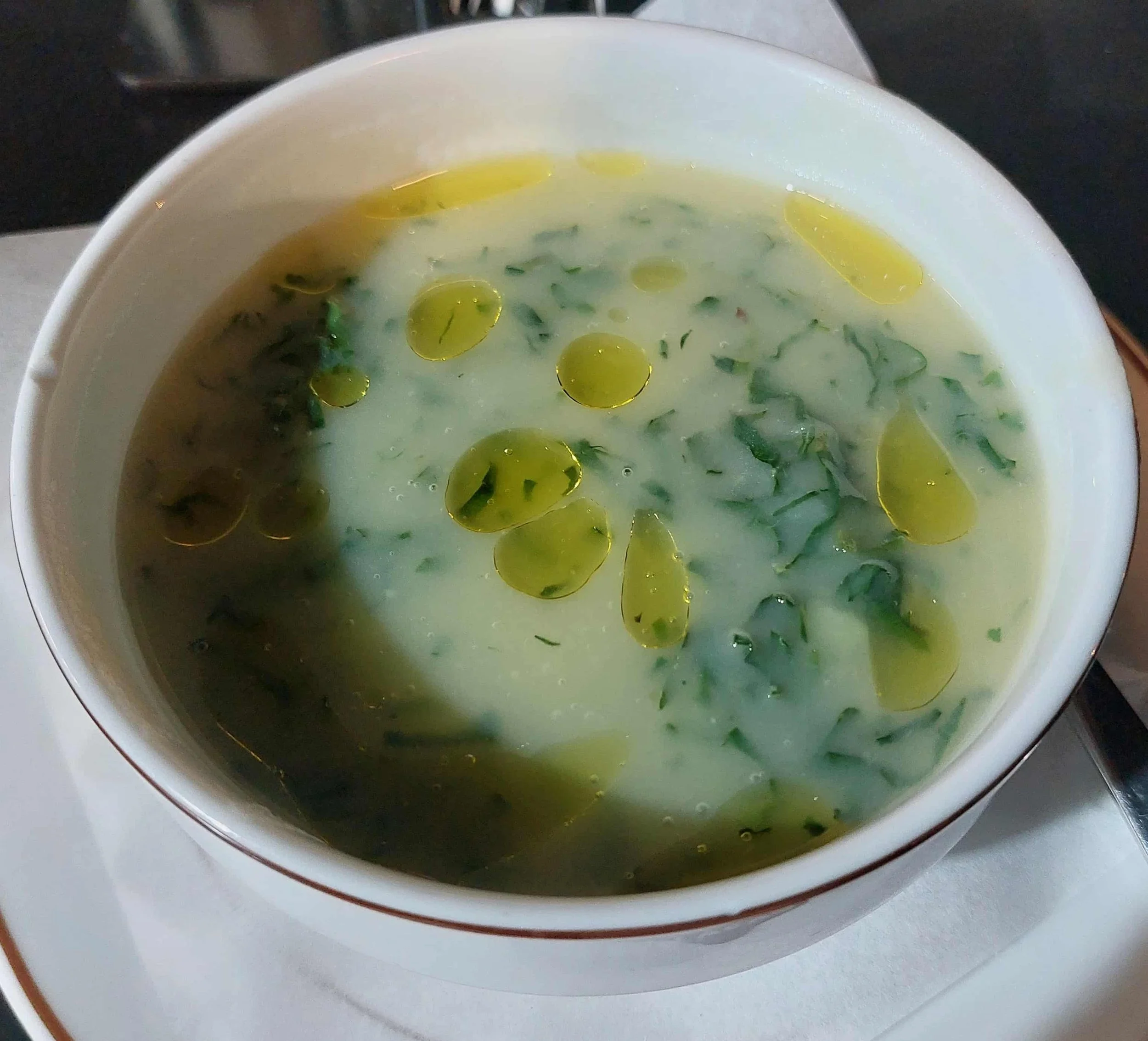
caldo verde
kale potato soup
What is it?
Caldo Verde is a traditional Portuguese soup, considered one of the country’s most iconic dishes. Its signature green colour comes from finely shredded kale or collard greens, which are simmered with potatoes, onions, and garlic in a light broth. Slices of chouriço (smoked Portuguese sausage) can be added on top. It’s often served as a starter.
What is in it?
made with potatoes mashed into the broth for a creamy texture, along with finely shredded kale or collard greens, onion, garlic, and olive oil, sometimes flavoured with chouriço, bay leaf, or paprika.
Where can I eat it?
Caldo Verde is widely available across Portugal, especially in traditional restaurants (tascas) and cafés. It’s particularly associated with northern Portugal. While commonly served as a starter, larger portions can also be enjoyed as a main dish, accompanied by bread.
Traditionally vegan, dairy and gluten free.
desserts and sweets

pastel de nata
Portuguese custard tart
What is it?
Portugal’s most famous food? Portugal’s most delicious food? Both statements could very well be true. The Pastel de Nata is a Portuguese custard tart that’s loved worldwide. It features a crisp, flaky pastry shell filled with a creamy, sweet egg custard, lightly caramelised on top. Best enjoyed warm, and optionally dusted with cinnamon, it’s a must-try when visiting Portugal, or, if you’re like us, a must-try several times a day! One of the world's best pastries. They’re typically eaten as a snack or dessert, often with coffee or tea.
What is in it?
Crisp puff or shortcrust pastry filled with a rich custard of egg yolks, sugar, and milk or cream, flavoured with vanilla or lemon zest, and often finished with a dusting of cinnamon.
Where can I eat it?
Pastel de Nata are available across Portugal in cafés, bakeries (pastelarias), and even supermarkets, but the best are usually from traditional pastelarias in Lisbon and Porto. A great place in Lisbon to get them is Aloma, which has won awards for the best Pastel de Nata.
Vegetarian

baba de camelo
caramel mousse
What is it?
Baba de Camelo is a classic Portuguese dessert, sweet, creamy, and delightfully simple. Its name literally translates to “camel’s drool,” but don’t let that put you off. It’s a smooth, caramel flavoured mousse that’s decadently delicious and the perfect finish to a meal. The quirky name comes from its silky, slightly sticky texture, which humorously reminded someone of a camel’s drool. It’s a staple in Portuguese homes and traditional restaurants.
What is in it?
Made with sweetened condensed milk and eggs, yolks for the mousse and sometimes whipped egg whites for lightness, optional toppings include crushed cookies, almonds, or chocolate shavings.
Where can I eat it?
Baba de Camelo is commonly found in traditional Portuguese restaurants and cafés across the country. It’s often served chilled in small ramekins. We tried it at a great fish restaurant in Lisbon called Invicta Madragoa.
Vegetarian and gluten free.

bolo de berlim
custard doughnut
What is it?
Bolo de Berlim is Portugal’s version of the German Berliner doughnut, but instead of being filled with jam, as in Germany, the Portuguese version is stuffed with a thick egg custard (doce de ovos). It’s a bakery favourite and also a classic summer beach snack, vendors often walk the sand selling them fresh to sunbathers.
What is in it?
It’s made from sweet yeasted dough filled with doce de ovos (egg-yolk custard) and dusted with sugar, while chocolate or cream versions exist, the traditional filling is custard.
were can I eat it?
Bolos de Berlim are sold in bakeries all across Portugal and are especially popular at the beach, where you’ll hear vendors calling out their arrival with trays of sugar dusted buns. In Lisbon and Porto, cafés also serve them fresh daily.
Vegetarian.
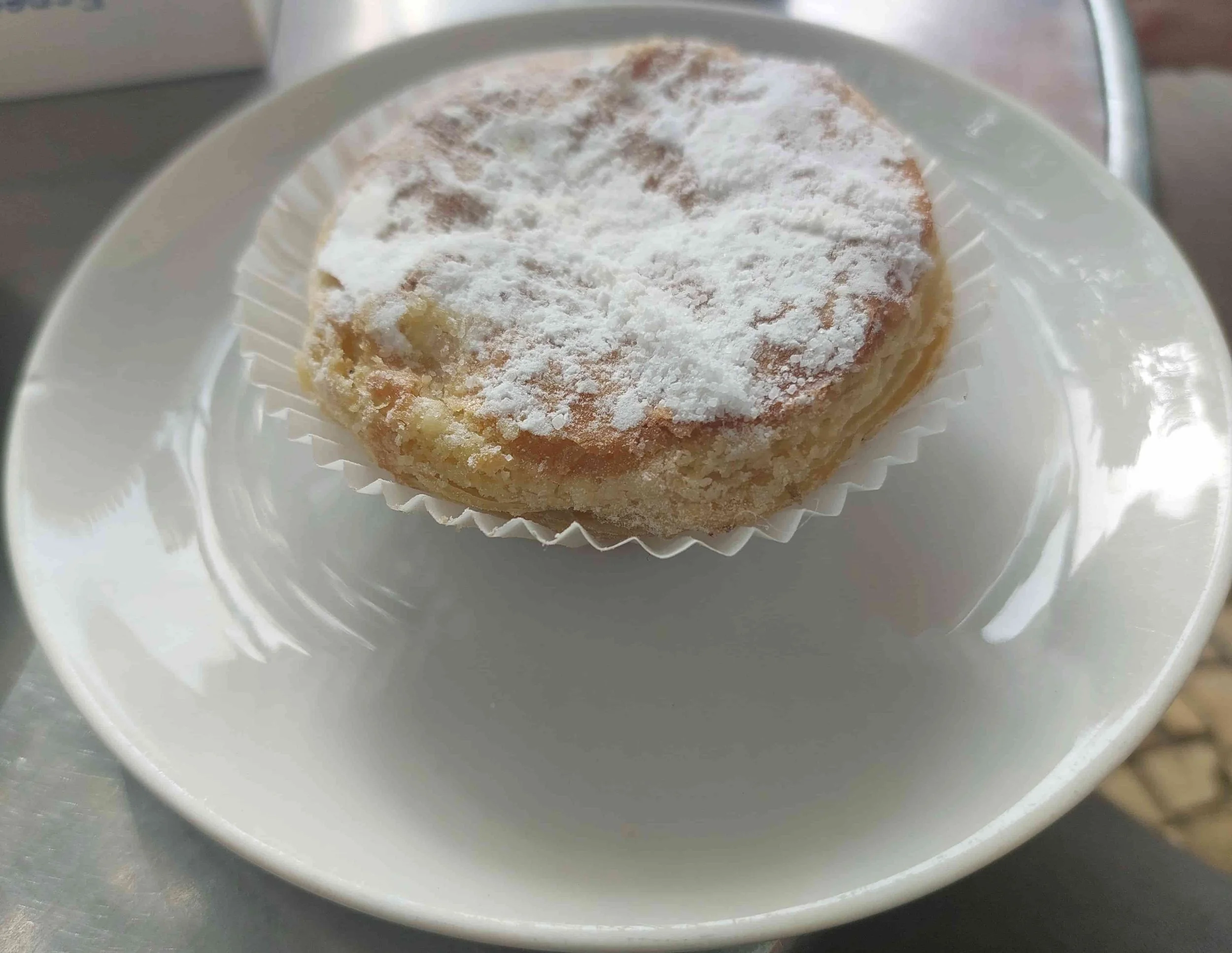
queijadas de feijão
sweet bean pastries
What is it?
Queijadas de Feijão are traditional Portuguese pastries that might surprise you, they’re made with beans. Despite the unusual ingredient, these small tarts are sweet and delicate, with a soft filling wrapped in a thin pastry shell. The beans give a smooth, creamy texture rather than a savoury taste.
What is in it?
Puréed white beans, sugar, eggs, ground almonds, butter, and flour, finished with a dusting of icing sugar.
were can I eat it?
They’re a speciality of Sintra, where you’ll find them in pastelarias. That said, Queijadas de Feijão can also be found in pastry shops across Portugal, especially those specialising in traditional bakes.
Vegetarian.
Ingredients listed reflect common or typical components of this dish as served in restaurants or street‑food vendors. Variations by region, season, or vendor are common. This information is provided for general reference only. If you have dietary restrictions or allergies, please verify ingredient details independently. We assume no liability for accuracy or outcomes.
