all the foods - North Macedonia
Here you will find a list of all the traditional cuisine we tried in North Macedonia.
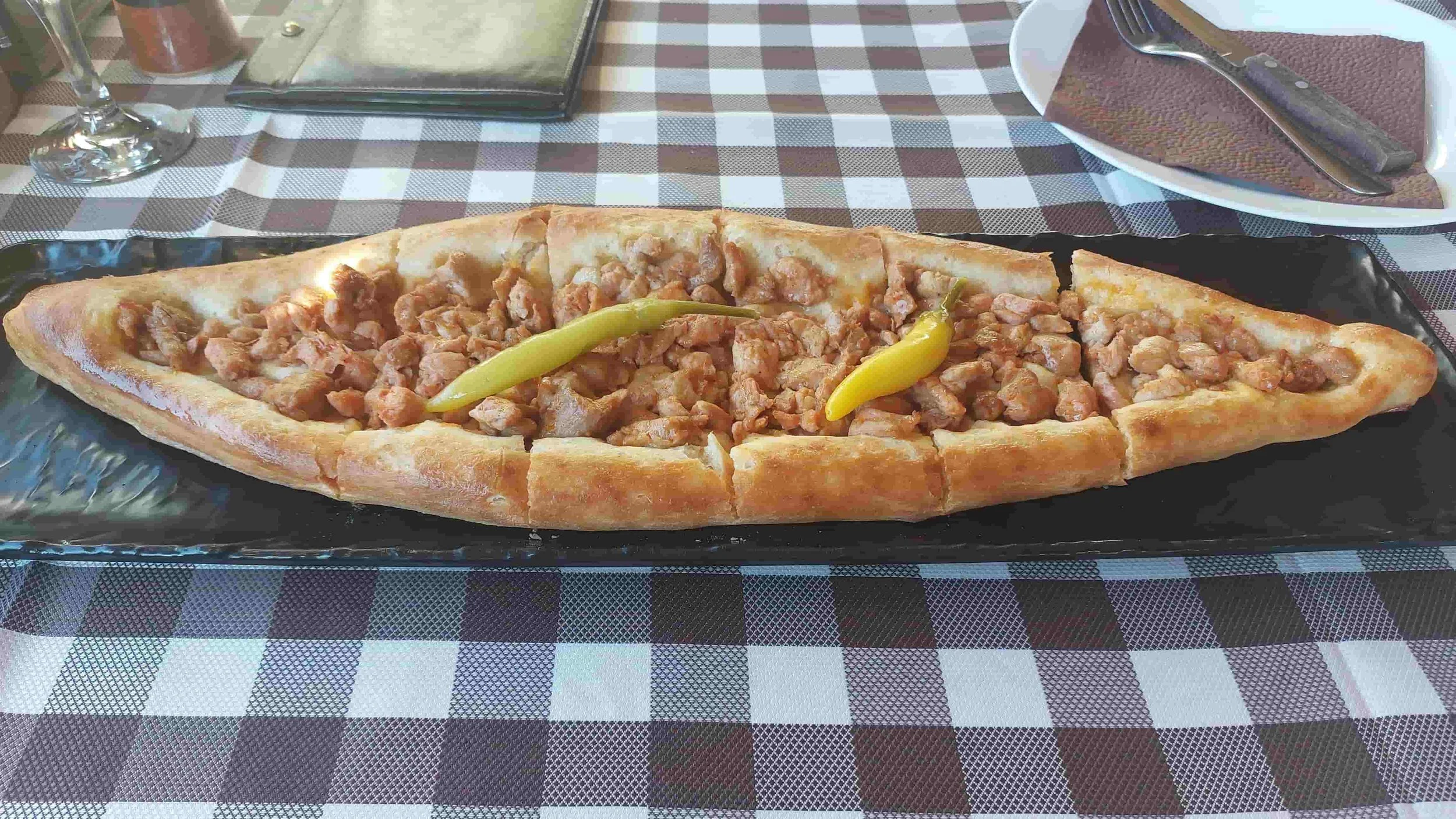
pastrmajlija
meat flatbread
What is it?
Pastrmajlija (Пастрмајлија) is one of North Macedonia’s most iconic dishes, in fact, if you try only one food in the country, make it this. It’s an oval, boat shaped flatbread topped with chunks of seasoned meat, usually pork, and it originates from the cities of Štip, Veles, and the eastern/central regions. The name comes from pastrma, meaning salted or preserved meat (originally mutton), though today pork pastrmajlija is by far the most common.
Despite first impressions, it isn’t a pizza, there’s no cheese, no sauce, and the focus is entirely on the savoury, lightly cured meat. It may look a little like pizza, but it’s uniquely Macedonian, rarely found outside the country and absolutely delicious.
What is in it?
Pastrmajlija is made from a simple bread dough (flour, water, yeast, salt, oil). It’s topped with cubes of salted pork, seasoned lightly with salt, pepper, and sometimes chilli flakes. The meat is often briefly fried before baking. It’s usually served with a few spicy peppers on top.
In more modern versions, the toppings have expanded beyond the classic pork. Some restaurants add an egg cracked on top towards the end of baking. Others offer variations using chicken, beef, lamb, or even smoked meats, and it’s not uncommon to see additions like cheese, mushrooms, or onions. While purists favour the traditional style, these contemporary takes are now widely available and popular.
Where can I eat it?
It’s best in the regions where it originated, especially Štip, where you’ll find it everywhere. Like any great regional dish, it has spread to the rest of the country, many traditional restaurants in Skopje serve it as well. We had a really good one at Pastrmajlija & Grill House, located a little outside the centre but worth the effort.
Dairy free
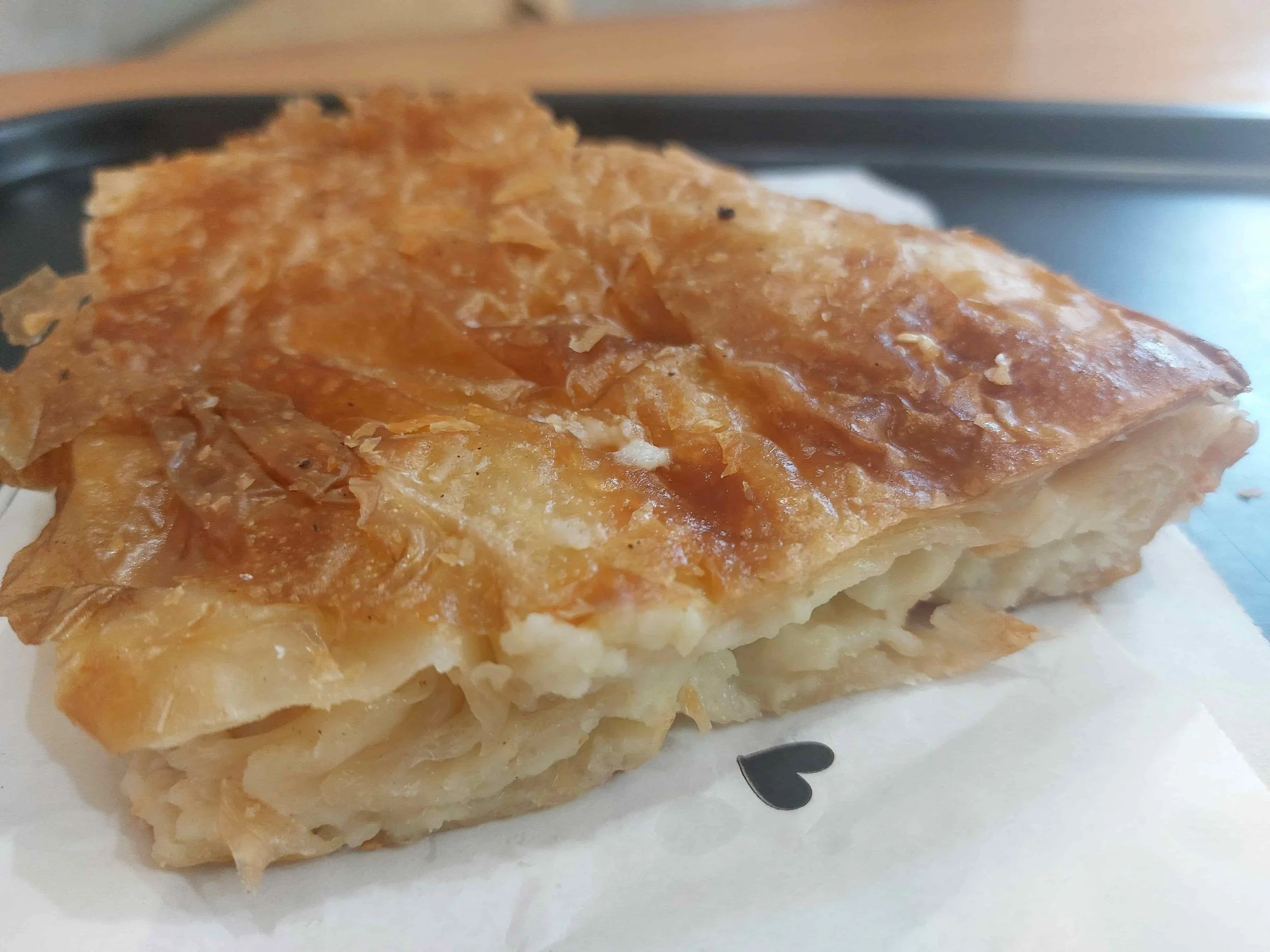
burek
filo pie
What is it?
Burek (Бурек) is one of North Macedonia’s most popular and delicious breakfast foods, a crispy, flaky pastry made from layers of thin dough (yufka) filled with cheese, meat, spinach, or potato.
Macedonian burek is closely related to the versions in Bosnia and Serbia, but tends to be slightly thicker and heavier. The pastry is rolled or coiled into a spiral or layered in a round pan, then baked until extremely crisp on the outside and soft inside. Many locals pair it with drinkable yogurt, which is the classic combination.
What is in it?
Burek is made from multiple layers of thin pastry sheets brushed with oil, wrapped around a filling such as:
sirene cheese
minced meat (beef/pork mix)
spinach and cheese
potato
Where can I eat it?
You’ll find excellent burek in bakeries throughout the country.
Vegetarian versions available.
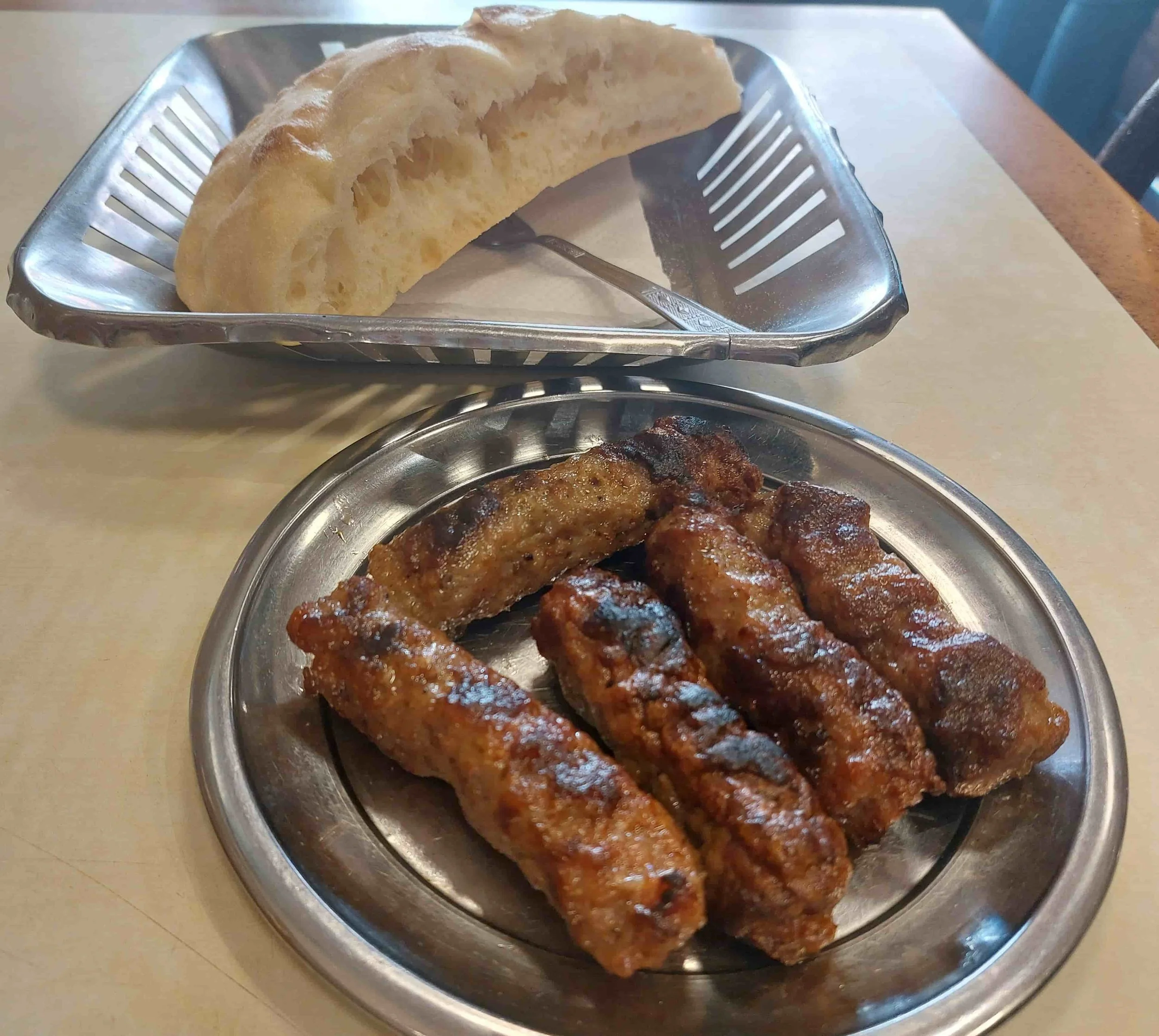
kebapi
grilled minced meat
What is it?
Kebapi (Ќебапи) (sometimes written kebapčinja) are North Macedonia’s version of ćevapi, small, skinless grilled minced meat sausages popular across the Balkans. They’re similar to the Bosnian and Serbian versions, but in North Macedonia they’re typically a pork and beef mix, mildly seasoned, and always grilled over charcoal.
If you see “kebapi” on a Macedonian menu, it’s simply the local name for ćevapi. They are usually served in portions of 5 or 10 along with bread.
A classic and highly recommended way to eat kebapi is with Tavče Gravče, North Macedonia’s national baked bean dish. Together they make a kind of Balkan “beans and sausages” a great combo and, in my opinion, one of the best traditional meals in the country.
What is in it?
Kebapi are made from a mixture of minced pork and beef, seasoned with salt, pepper, and sometimes a bit of garlic or paprika depending on the region.
Where can I eat it?
Kebapi are available everywhere in North Macedonia, from traditional restaurants to kebapčilnici (specialised kebab grills). One such place is Kosmos Kebabchilnica in the Old Bazaar of Skopje, highly recommended for a kebapi and Tavče Gravče meal!
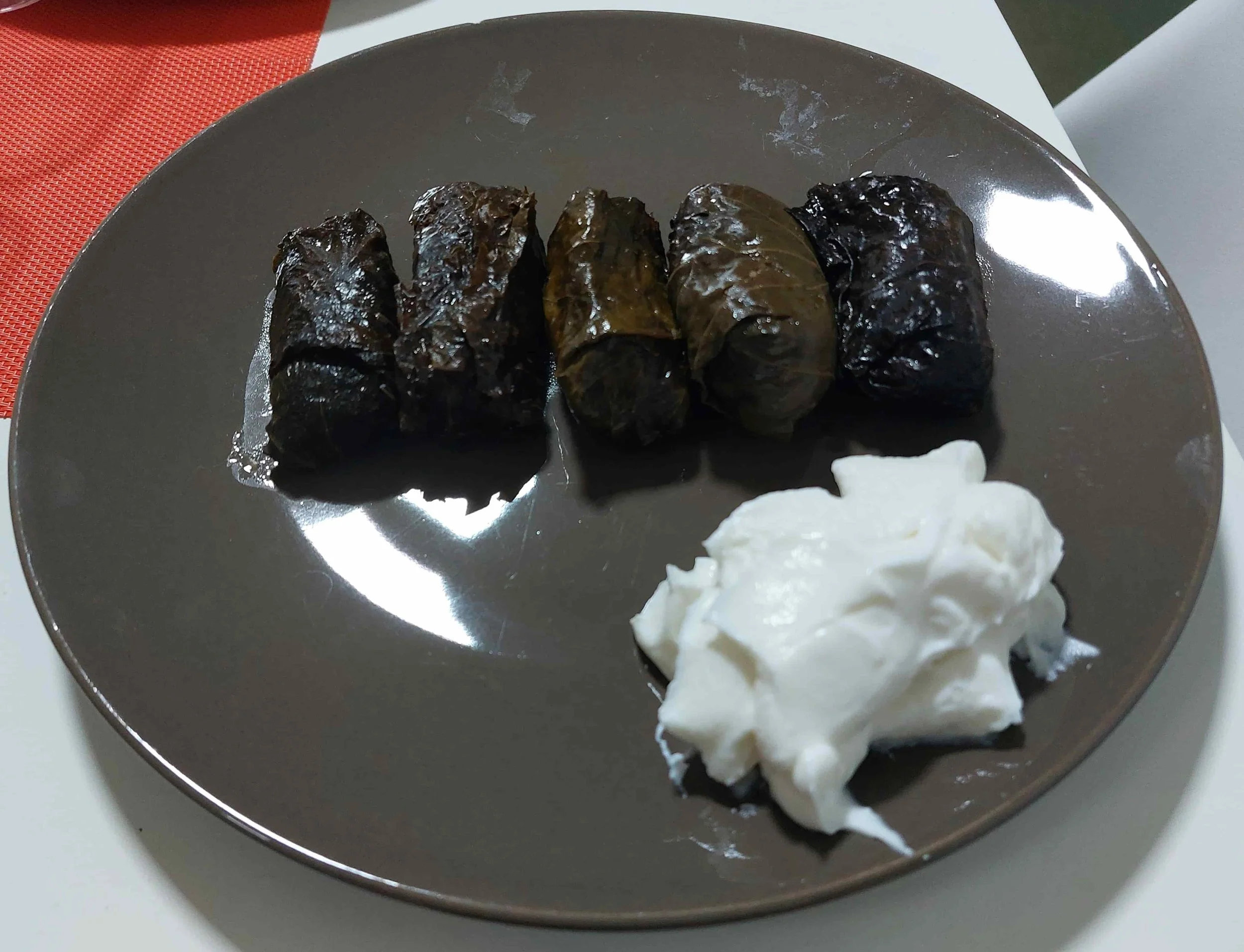
sarma or japrak
cabbage or vine leaf rolls
What is it?
In North Macedonia, sarma (Сарма) can refer to either cabbage rolls or grape leaf rolls, restaurants often use the same name for both. When made with vine leaves, the dish is also known as japrak (Јапрак), a traditional Ottoman influenced recipe popular across the country.
These are small, tightly rolled grape leaves stuffed with minced meat, rice, and herbs, simmered and usually served with a spoon of thick Macedonian yogurt. In North Macedonia they are typically served as a starter.
What is in it?
Japrak is typically filled with a mixture of minced meat, usually pork, rice, onion, salt, pepper, parsley, and sometimes paprika. They are usually served warm with thick yoghurt.
Where can I eat it?
You can find sarma or japrak on the menus of some traditional restaurants, though not all of them. Some menus will list them specifically as japrak, but it’s equally common to see them simply written as sarma, even when grape leaves are used. Both Restaurant Skopski Merak and Old House Restaurant in Skopje serve them as starters.
Vegetarian and vegan versions available, dairy and gluten free.
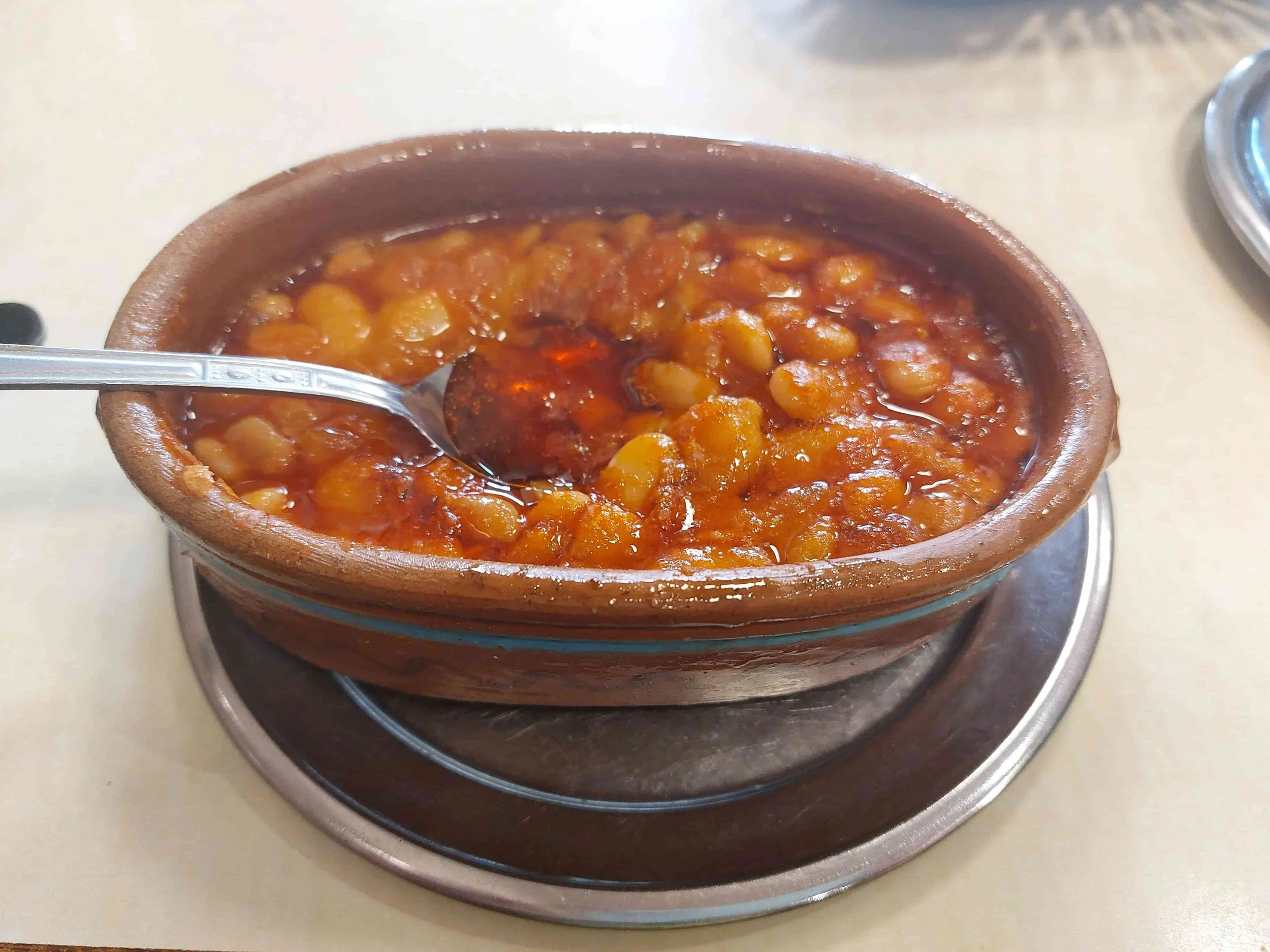
tavče gravče
baked beans
What is it?
Tavče Gravče is North Macedonia’s iconic baked bean dish, considered by many to be the country’s national food. The name literally means “beans in a pan,” referring to the traditional earthenware clay pot (tava) in which it’s cooked. It’s a slow cooked blend of white beans, onions, peppers, and paprika. It’s served both as a main dish and an accompaniment, and it goes perfectly with kebapi.
What is in it?
Tavče Gravče is made from white beans baked with onions, dried or fresh peppers, garlic, and paprika. The mixture is often thickened with a simple roux of flour and oil, and seasoned with salt, pepper, bay leaf, and sometimes parsley.
Where can I eat it?
Tavče Gravče is served everywhere in North Macedonia, you’ll see it in nearly every traditional restaurant as either a main dish or a side. My advice, though, is to enjoy it alongside kebapi at Kosmos Kebabchilnica in Skopje.
Vegetarian and dairy free.
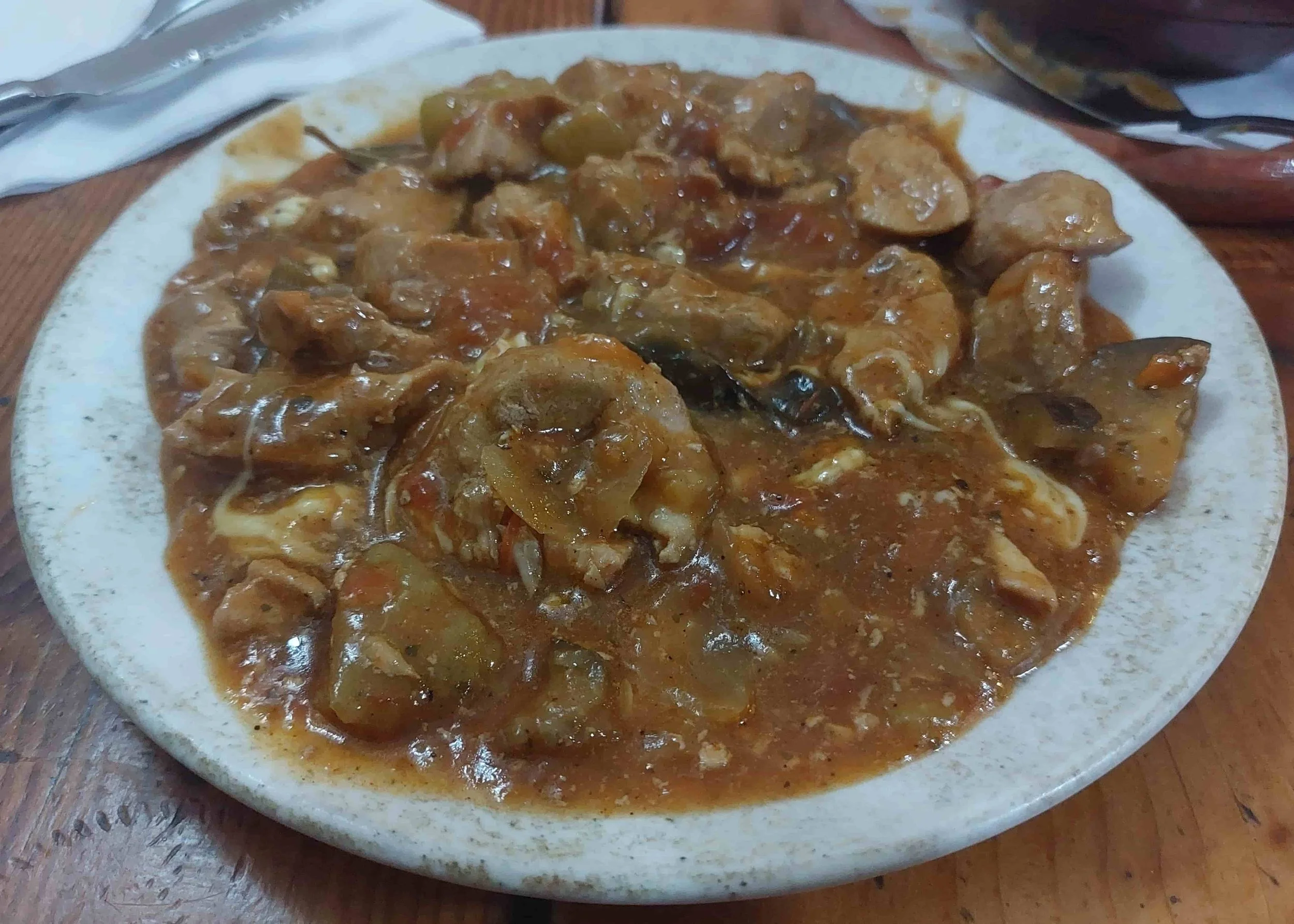
turli tava
meat and veg stew
What is it?
Turli tava (Турли тава) is a classic North Macedonian mixed vegetable and meat bake, cooked slowly in a large clay dish (tava) until the ingredients soften and the flavours blend into a stew like meal. The word turli literally means “mixed” or “various,” reflecting the assortment of vegetables and meats traditionally used. It is usually served directly in the clay dish it was baked in.
Traditional turli tava contains no cheese, but some modern restaurants, particularly in Skopje and touristy areas, now offer versions topped with kashkaval (yellow cheese) melted over the dish during the final minutes of baking. This isn’t traditional, but it has become a popular contemporary twist.
One important note: turli tava is often not listed under its exact name on menus. Instead, it may appear as:
casserole
vegetable & meat bake
house pot
baked dish in clay pot
or another regional/house name
It’s always worth confirming with the waiter if you suspect a dish is turli tava under a different title.
What is in it?
Turli tava is made from a mix of seasonal vegetables such as potatoes, aubergine, courgette, peppers, carrots, onions, and tomatoes, combined with meat, usually pork, veal, or lamb. It’s seasoned with paprika, salt, pepper, garlic, and parsley. (Cheese only appears in modern versions, see above.)
Where can I eat it?
It’s one of the most common items on traditional menus, and many restaurants will offer a version of it, potentially under a different name. For example, Restaurant Skopski Merak lists it as Turli Tava, while Old City House Restaurant lists a similar dish simply as a “casserole.”
Traditionaly dairy free (some modern versions add cheese), gluten free
Related food guides
Several Macedonian favourites have roots in the wider Balkan and Ottoman culinary tradition. For more on these shared regional dishes, see our Bosnian food guide.
Ingredients listed reflect common or typical components of this dish as served in restaurants or street‑food vendors. Variations by region, season, or vendor are common. This information is provided for general reference only. If you have dietary restrictions or allergies, please verify ingredient details independently. We assume no liability for accuracy or outcomes.
