all the foods - Romania
Here you will find a list of all the traditional cuisine we tried in Romania.
Click to view our top 5 Romanian foods
Click to view our Bucharest food guide
Click to jump to one of the sections:
soups
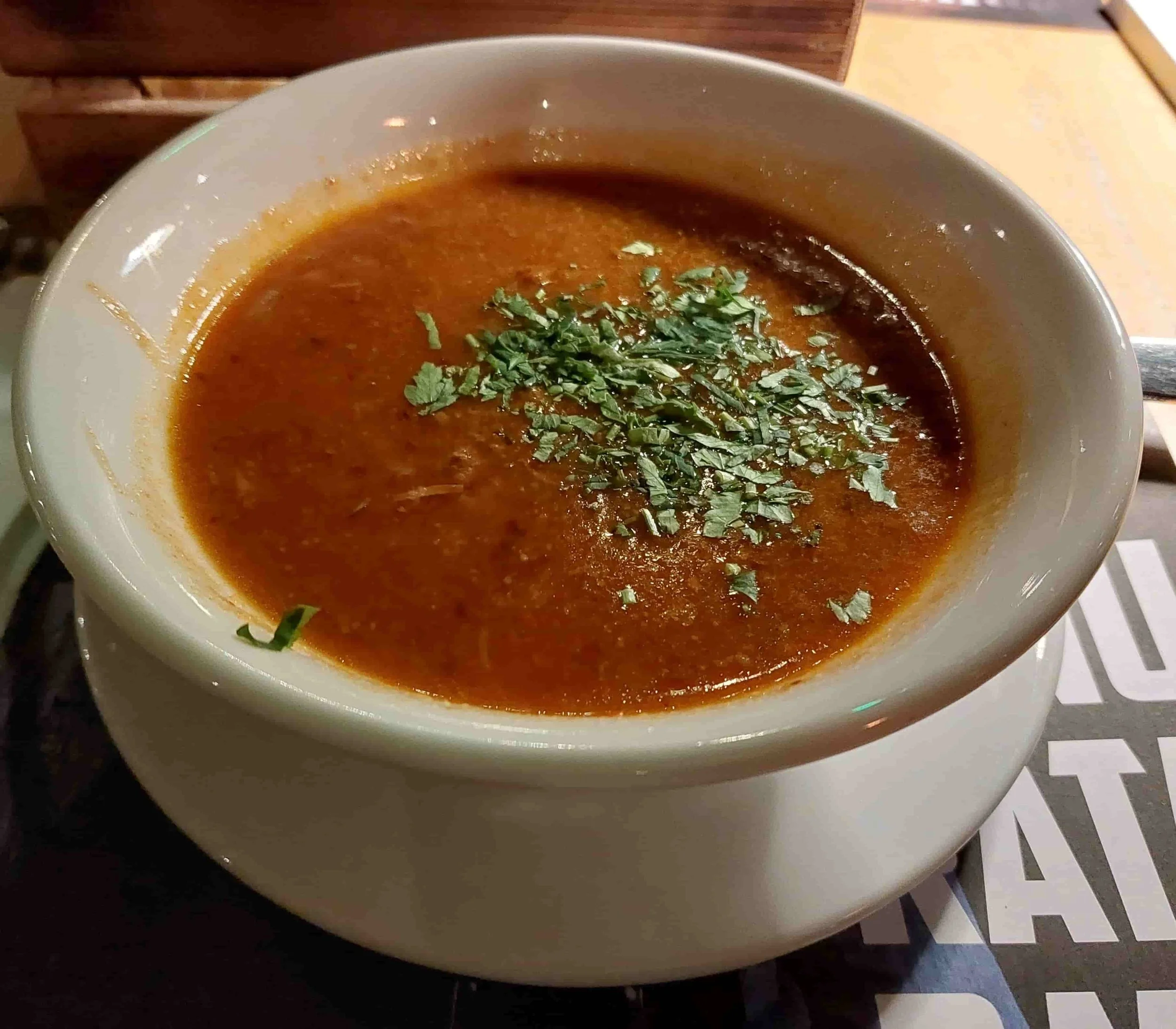
gulaș supă
beef & paprika soup
What is it?
Romanian goulash is derived from the Hungarian original but has evolved into a lighter, soup style version rather than the thick stew served in Hungary. In Romania, gulaș supă is typically enjoyed as a starter, not a main dish. It has a slightly spicy, paprika based broth with tender beef, potatoes, carrots, and peppers, and often tomato.
What is in it?
Beef (sometimes pork), potatoes, carrots, onions, bell peppers, tomato paste, paprika, garlic, and bay leaf, simmered in broth and finished with a sprinkle of parsley. Its often served with bread.
Where can I eat it?
You’ll find gulaș supă in many traditional Romanian restaurants, particularly in Transylvania and western regions close to the Hungarian border, though it’s also a popular starter across the country. We had a really delicious one at Hanu' Berarilor Casa Oprea Soare in Bucharest.
Dairy & gluten free.
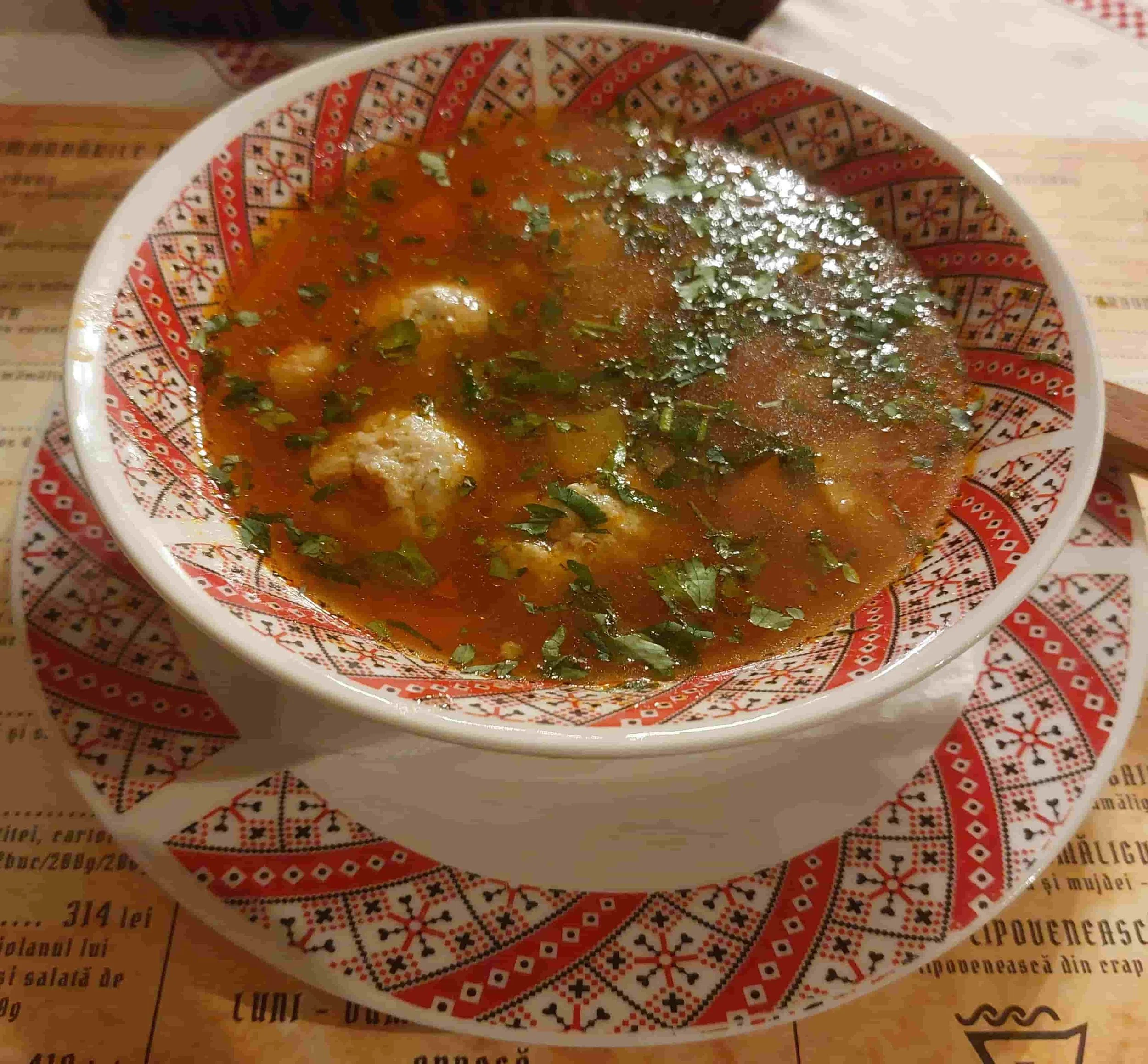
ciorbă de perişoare
meatball soup
What is it?
Ciorbă de Perişoare is one of Romania’s most popular traditional soups, a sour meatball soup made with minced pork or a mix of pork and beef, vegetables, and rice. The word ciorbă refers to Romania’s distinctive sour soups, typically flavoured with borș (a fermented wheat bran liquid) or lemon juice, giving them a sour, tangy taste.
It’s often served as a starter in Romanian restaurants.
What is in it?
Minced pork (or a pork & beef mix) mixed with rice, onion, egg, and parsley to form the meatballs; a soup base made from carrots, celery root (țelină), parsnip, onion, bell pepper, and tomato or tomato paste; and soured with borș or lemon juice. Often finished with fresh parsley or lovage and sour cream at the table.
Where can I eat it?
You’ll find ciorbă de perişoare on traditional menus across Romania. It's almost always served as a first course before the main dish. We tried a good one at Restaurant Burebista Traditional in Bucharest.
Dairy free if served without sour cream. traditionally gluten free.
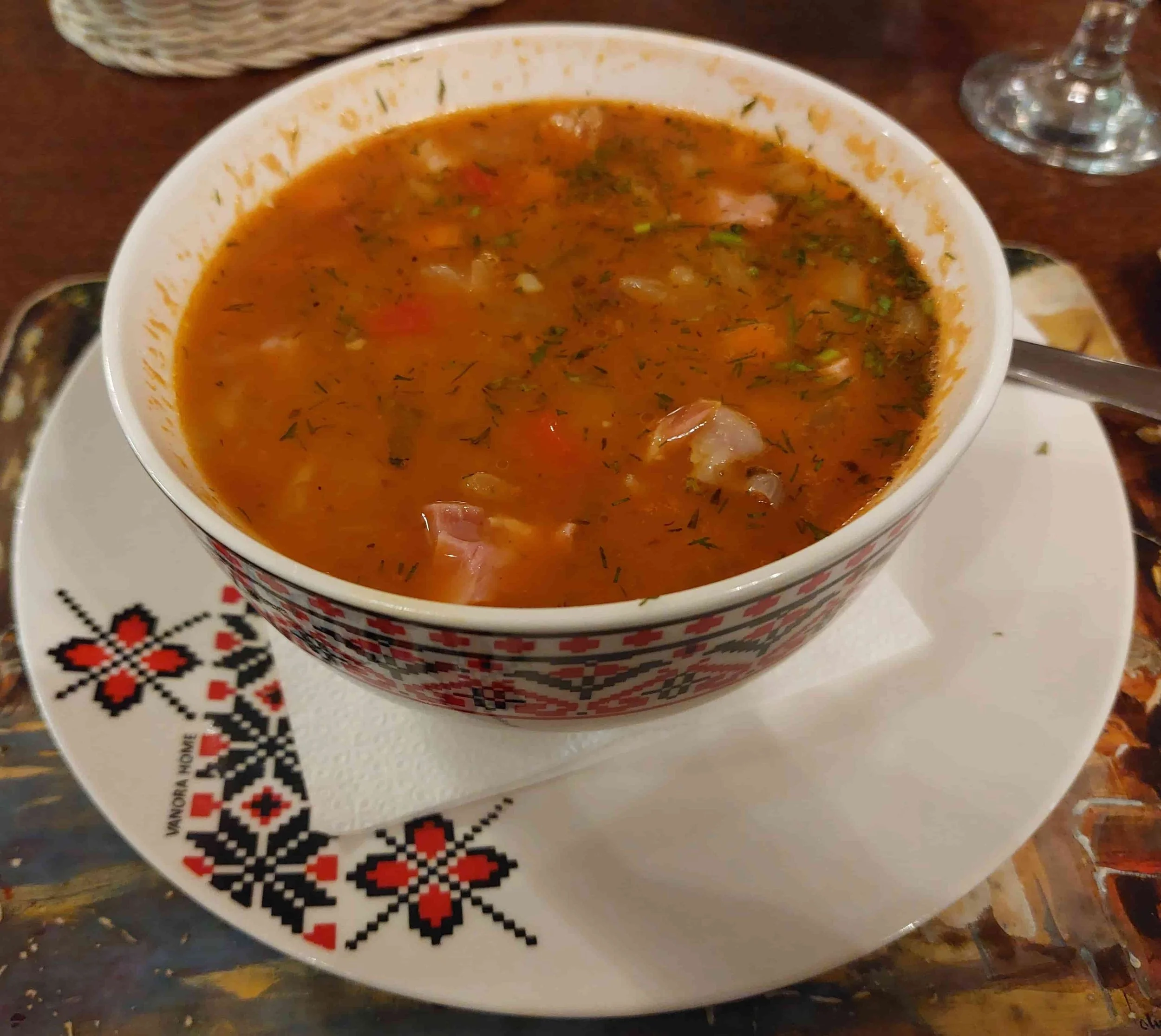
fasole cu ciolan afumat
bean and pork stew
What is it?
Fasole cu ciolan afumat is a slow cooked white bean stew made with smoked pork knuckle or ham hock and vegetables. It has a deep, smoky flavour and is often considered one of the country’s best cold weather meals. The dish also appears in a soup version, ciorbă de fasole cu afumătură and both are very traditional.
What is in it?
White beans (fasole albă), smoked pork knuckle (ciolan afumat), onion, carrot, celery, garlic, tomato paste or fresh tomatoes, and bay leaf. The beans and pork are slow cooked until tender, allowing the beans to absorb the smoky flavour of the meat. It’s often seasoned with thyme, paprika, and sometimes a bit of vinegar, then finished with fresh parsley or dill.
Where can I eat it?
You’ll find fasole cu ciolan afumat in traditional Romanian restaurants and taverne across the country, especially during the colder months. Both Nicorești and Burebista Traditional serve it on their menus.
Dairy & gluten free.
main dishes
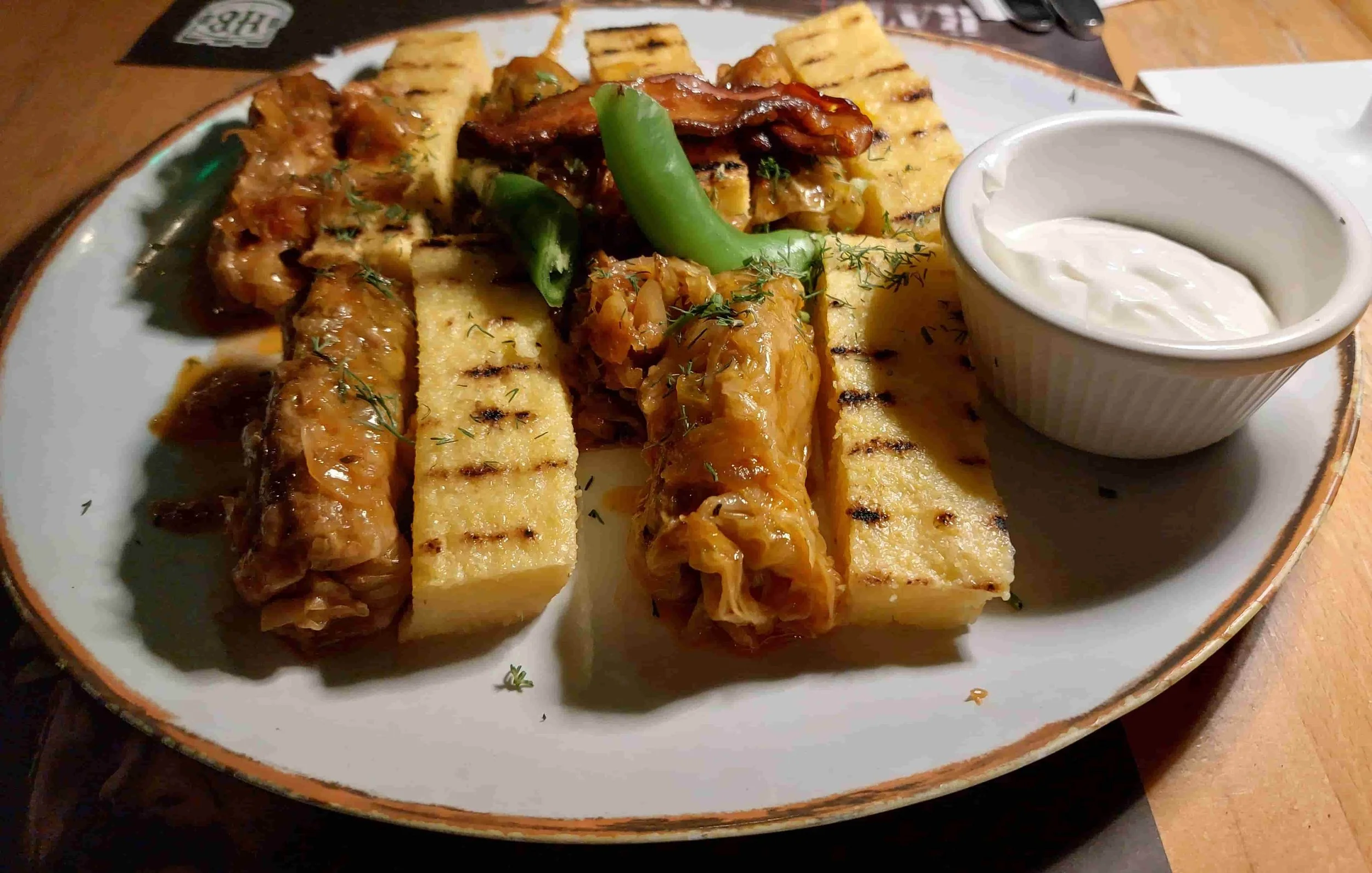
sarmale
stuffed cabbage rolls
What is it?
Sarmale are one of Romania’s most traditional and delicious dishes. These are cabbage rolls stuffed with a mixture of minced meat and rice, slow cooked in a tomato based sauce. The dish has Ottoman roots and is popular across much of Eastern Europe and the Balkans, with local variations found in countries like Bosnia, Bulgaria, Hungary, and Ukraine, but it has become resoundingly Romanian, often regarded as the country’s national dish.
What is in it?
Ground pork (often mixed with beef), rice, finely chopped onions and herbs (notably dill and/or thyme), wrapped in sour or fermented cabbage leaves, slow cooked in tomato sauce (with bay leaves and occasionally smoked meat). Served with mămăligă (polenta) or bread and smântână (sour cream).
Where can I eat it?
You’ll find sarmale throughout Romania served on many traditional menus, Hanu' Berarilor Casa Oprea Soare in Bucharest serve some amazing ones with grilled mămăligă (polenta).
Vegetarian versions occasionally available, dairy free without sour cream, gluten free.
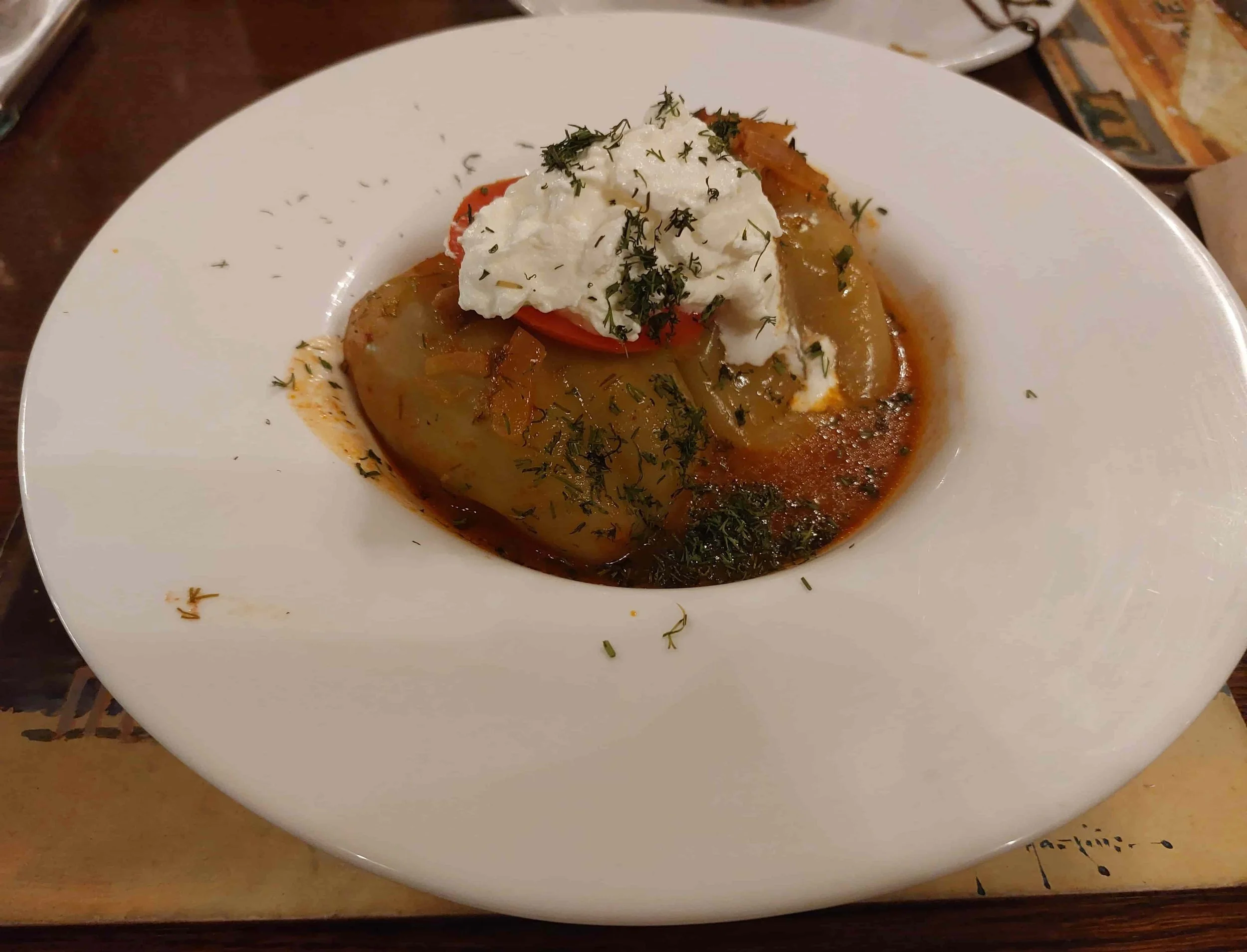
ardei umpluţi
stuffed peppers
What is it?
Ardei umpluţi means “stuffed peppers.” Large sweet bell peppers are filled with a savoury mixture of minced meat, rice, onions, and herbs, then cooked slowly in a light tomato sauce until the rice and meat are soft and infused with flavour. It’s a close relative of sarmale (stuffed cabbage rolls).
What is in it?
Bell peppers (usually yellow or red), stuffed with a mix of minced pork or beef (or both), rice, onion, and fresh herbs such as dill and parsley. The sauce is made from tomatoes, garlic, and bay leaf, sometimes with sugar or paprika.
Where can I eat it?
You’ll find ardei umpluţi in many traditional Romanian restaurants and taverne, particularly in summer and early autumn when peppers are at their best. They’re usually served as a main course, often with sour cream and crusty bread or mămăligă (polenta). We had a good one at Nicorești in Bucharest.
Vegetarian versions occasionally available, dairy free without sour cream, gluten free.
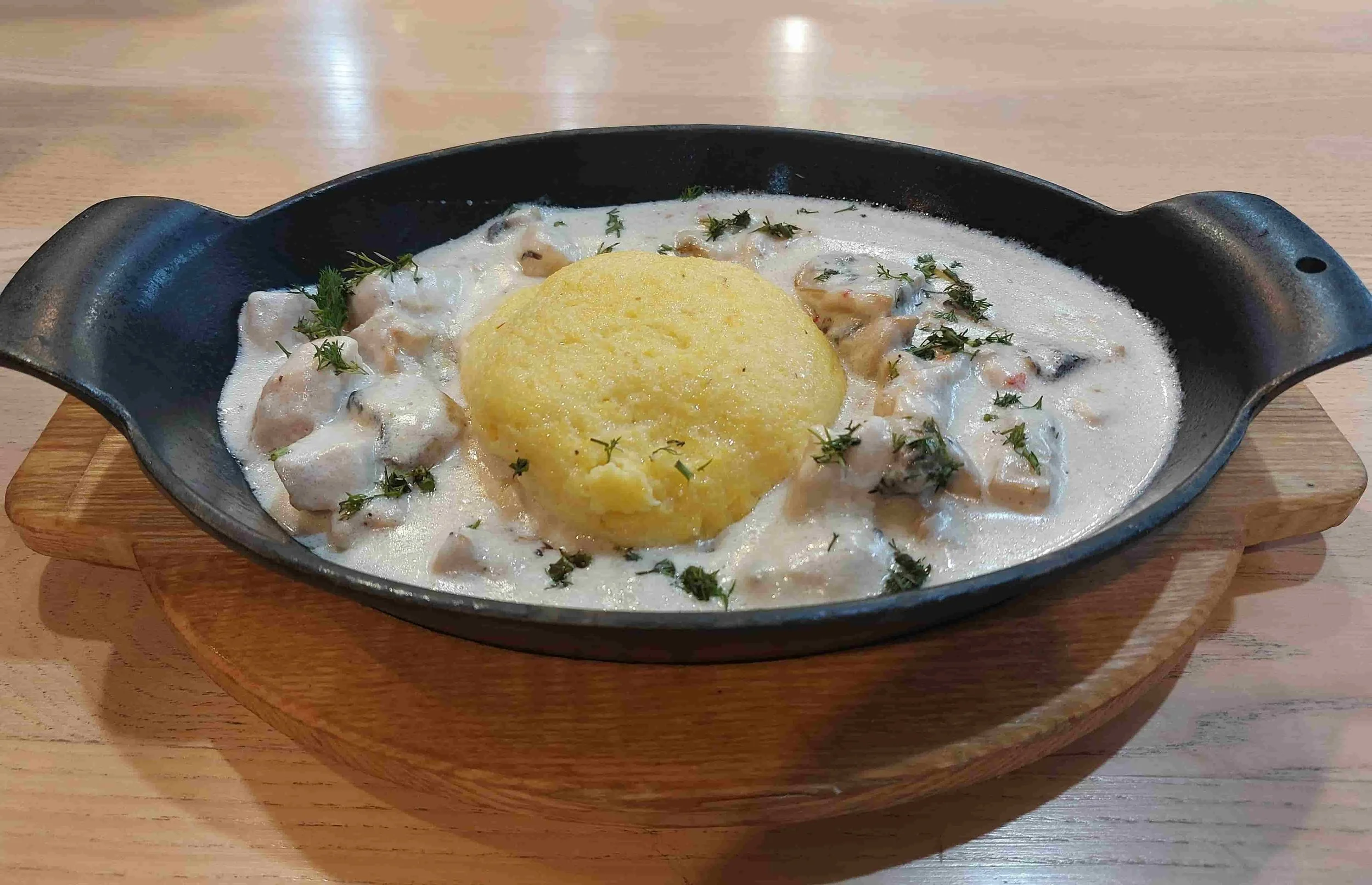
ciulama
chicken in white sauce
What is it?
Ciulama is a traditional Romanian dish that featuring meat, mushrooms, or both, cooked in a creamy white sauce. The sauce is thickened with a flour butter roux (rântaș) and often finished with sour cream or milk. Though its name likely comes from Turkish “çullama”, the dish as it exists in Romania is distinct.
What is in it?
The base consists of diced meat (commonly chicken; sometimes veal) and/or mushrooms (for a vegetarian variant), onions and garlic, all cooked and then coated in a sauce made from butter and flour (roux), plus milk, cream or stock, and seasoned with white pepper, nutmeg and fresh herbs, often parsley or dill. Often served with mămăligă (polenta) or bread for soaking up the sauce.
Where can I eat it?
You’ll find ciulama in many traditional Romanian restaurants, it’s less ubiquitous than some other traditional foods but you should not have too much trouble finding it. It’s sometimes listed on menus under “ciulama de pui” (chicken) or “ciulama de ciuperci” (mushroom). A good version is served at Hanu' Berarilor Casa Oprea Soare in Bucharest.
Vegetarian versions available.
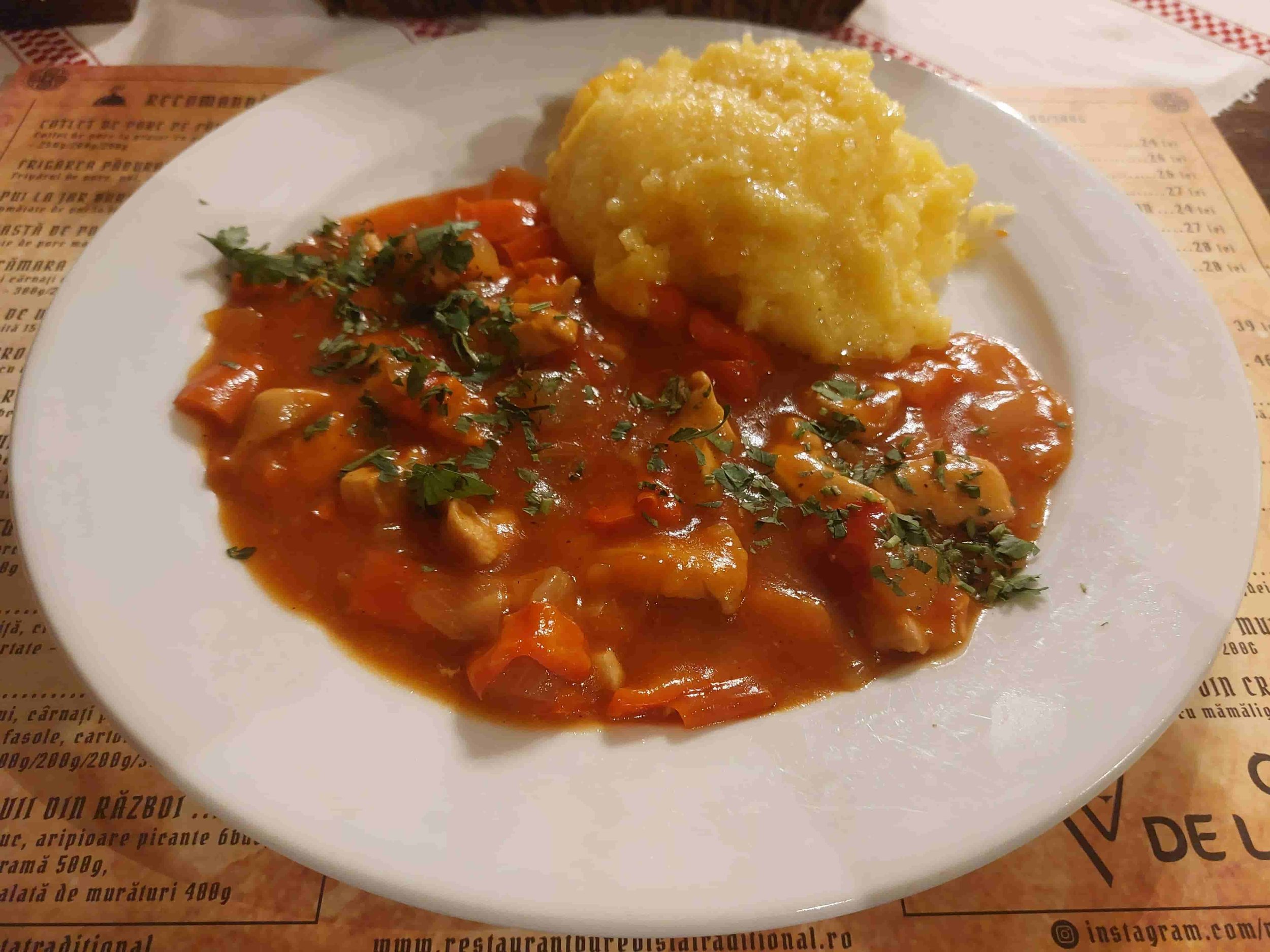
ostropel de pui
chicken stew
What is it?
Ostropel de Pui is a traditional Romanian chicken stew cooked in a garlicky tomato sauce. While recipes vary slightly by region, the dish always has a strong tomato flavour balanced with a lot of garlic. Strangely, it reminded me a little of sweet and sour chicken, but without the pineapple, thanks to its savoury, lightly tangy tomato sauce.
What is in it?
Chicken pieces, garlic, onion, tomato paste or fresh tomatoes, flour for light thickening, oil, salt, pepper, and bay leaf. Some versions include splash white wine or sugar. It’s usually garnished with parsley.
It's often served with mashed potatoes or mămăligă (polenta)
Where can I eat it?
Ostropel de Pui is a common main course in traditional Romanian restaurants (taverne). It’s particularly popular in southern Romania (especially Oltenia), where the sauce tends to be more garlicky. Although chicken is the classic version, you’ll also find ostropel made with pork, rabbit, or even meatballs, depending on the region.
Dairy free.
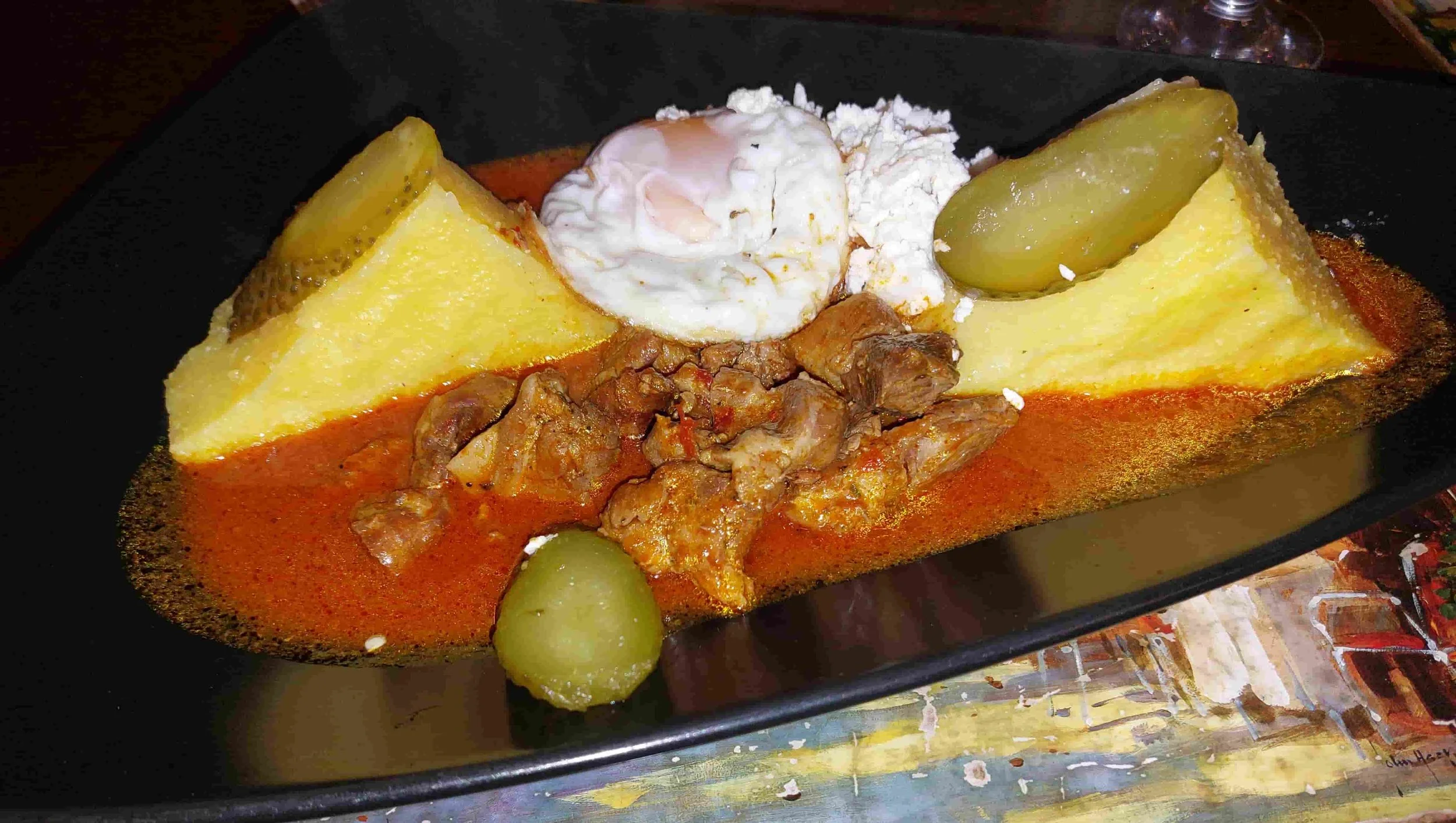
tochitură
pork stew
What is it?
Tochitură is a classic Romanian pork stew and one of the country’s most traditional dishes. It’s typically made from small pieces of pork, sometimes including sausage or organ meat, slowly simmered in their own juices with a little tomato paste, garlic, and spices. The result is a very savoury, slightly smoky stew with a sauce that’s perfect for soaking up with mămăligă (polenta). It’s usually topped with a fried egg, a handful of salty cheese (brânză de burduf or telemea), and served with pickles on the side.
What is in it?
Pork (often a mix of shoulder, belly, and occasionally organ meats such as liver or heart, plus sausage), garlic, onion, paprika, tomato paste, and bay leaf. The sauce may be enriched with wine or stock. It’s traditionally served with mămăligă, cheese, a fried or poached egg, and pickles.
Where can I eat it?
You’ll find tochitură on many traditional restaurant menus across Romania, including at Nicorești and Bucătărașul in Bucharest.
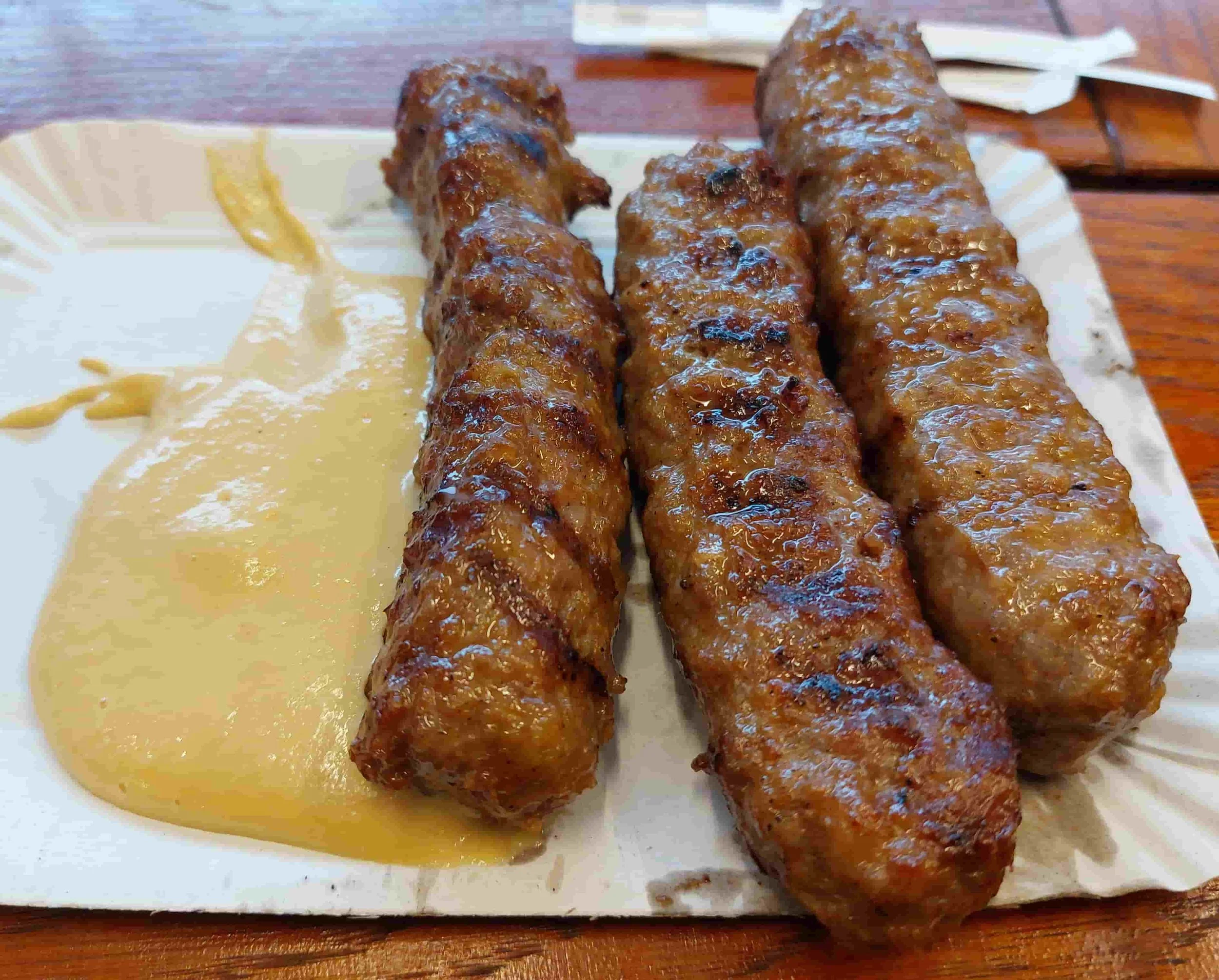
mici (mititei)
grilled minced meat
What is it?
Mici, also known by their longer name mititei (“the little ones”), are Romania’s famous grilled skinless sausages made from a mixture of ground meats and aromatic spices. The dish was inspired by Balkan ćevapi, but Romanian mici are larger, juicier, and more finely ground, with a distinctive flavour from garlic, thyme, and a hint of baking soda that gives them a light, springy texture.
What is in it?
Traditionally, a mixture of beef and pork, seasoned with garlic, thyme, black pepper, and paprika. The mixture is rolled into short cylinders (usually about the length of a finger), grilled over charcoal, and served hot with mustard and bread, sometimes with pickles or fries on the side.
Where can I eat it?
You’ll find mici everywhere in Romania, at street stalls, beer gardens, markets, and traditional restaurants.
Dairy and gluten free.
side dishes and bakery snacks
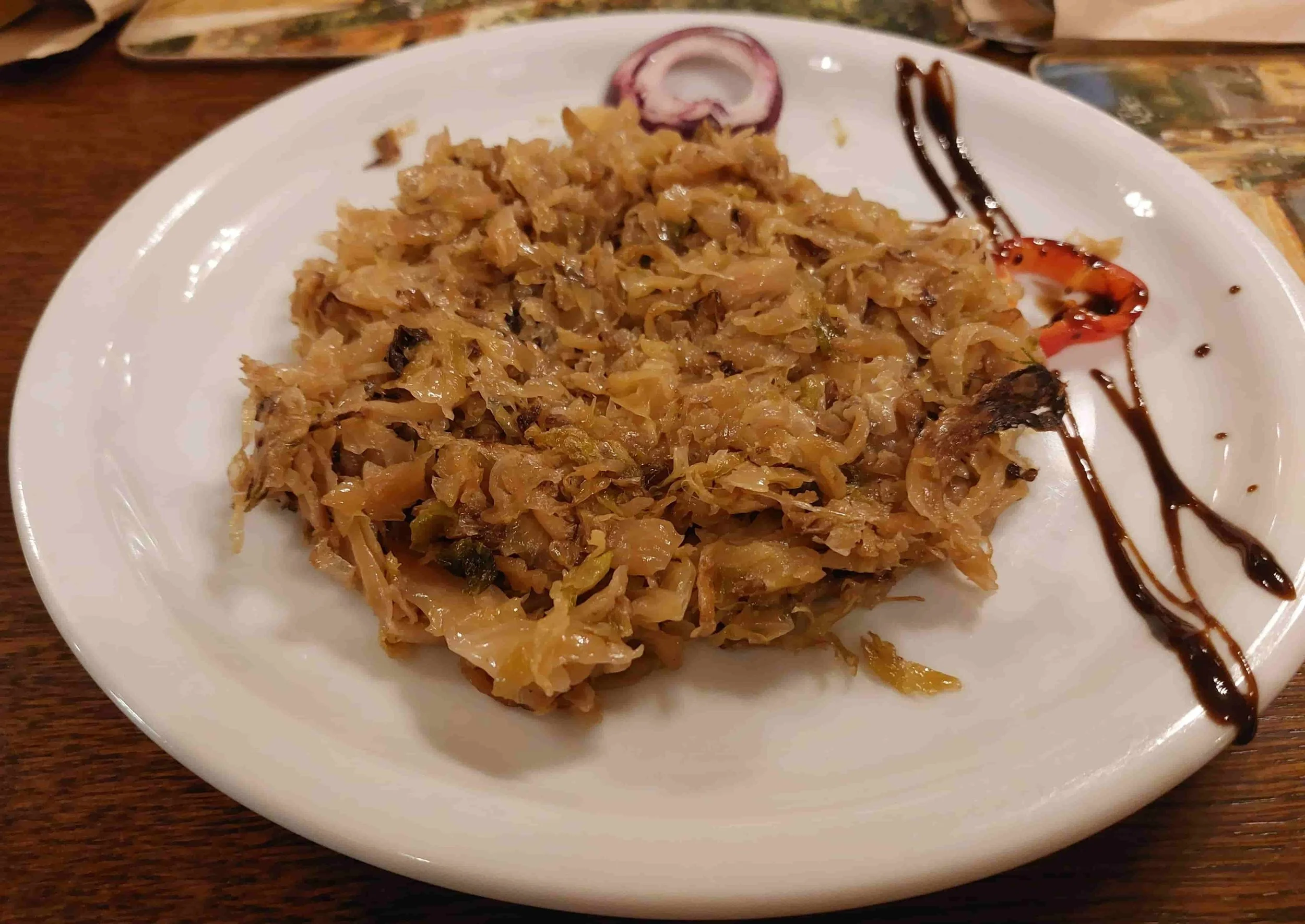
varză călită
braised cabbage
What is it?
Varză călită is a traditional Romanian braised cabbage dish, often cooked with pork and tomatoes. The name literally means “fried” or “braised cabbage.” It’s a humble, home style dish found across Romania, especially in winter when cabbage is plentiful. Depending on the recipe, it can be a side dish or a main, and is made with either fresh cabbage (varză dulce) or sour cabbage (varză murată), both versions are traditional.
If you’re familiar with German sauerkraut, think of varză călită as its milder cousin, less sharp or acidic, slow cooked with tomato and often meat, giving it a deeper, slightly sweet flavour.
What is in it?
Shredded cabbage, onions, oil or lard, tomato paste or chopped tomatoes, and bay leaf, seasoned with salt, pepper, and dill. Versions include smoked or fresh pork, ribs, sausage, or bacon.
Where can I eat it?
You’ll find varză călită in traditional Romanian restaurants and taverne, often served with mămăligă (polenta) or crusty bread. It’s particularly common in Bucharest and southern Romania, where it’s a winter staple and a favourite comfort food. Some restaurants serve it as a side to sarmale (stuffed cabbage rolls), while others offer it as a main dish.
Vegetarian versions available, dairy & gluten free.
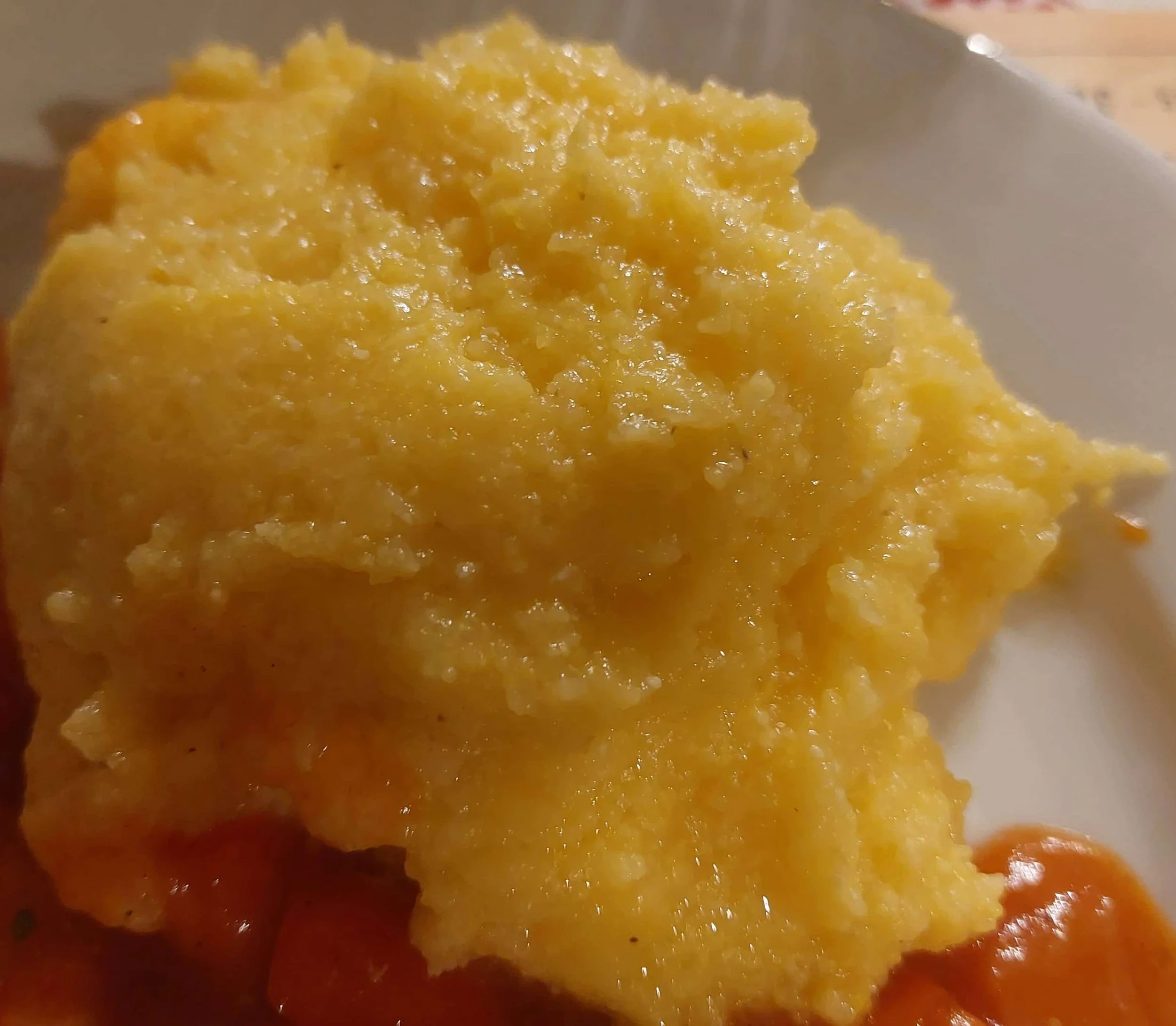
mămăligă
Romanian polenta
What is it?
Mămăligă is Romania’s traditional cornmeal porridge, similar to Italian polenta but thicker and firmer in texture. Once a staple peasant food, it remains the country’s most common side dish, trust me, you’ll be eating a lot of it. It can be served soft and creamy, firm and sliceable, or even grilled, depending on the meal. Traditionally, mămăligă replaced bread in rural households and still often accompanies main dishes like sarmale, tochitură, or ostropel de pui.
What is in it?
Coarse yellow cornmeal (mălai), water, and salt. Butter, cheese (brânză de burduf, telemea), or sour cream may be added for a richer version, but the classic form is plain, allowing it to absorb the flavour of the sauces or dishes it’s served alongside.
Where can I eat it?
You’ll find mămăligă everywhere in Romania! It’s usually served as a side to meat stews or grilled meats, but it can also appear as a main, often topped with cheese, sour cream, and sometimes even a fried egg.
Naturally vegan, dairy and gluten free in its simplest form.
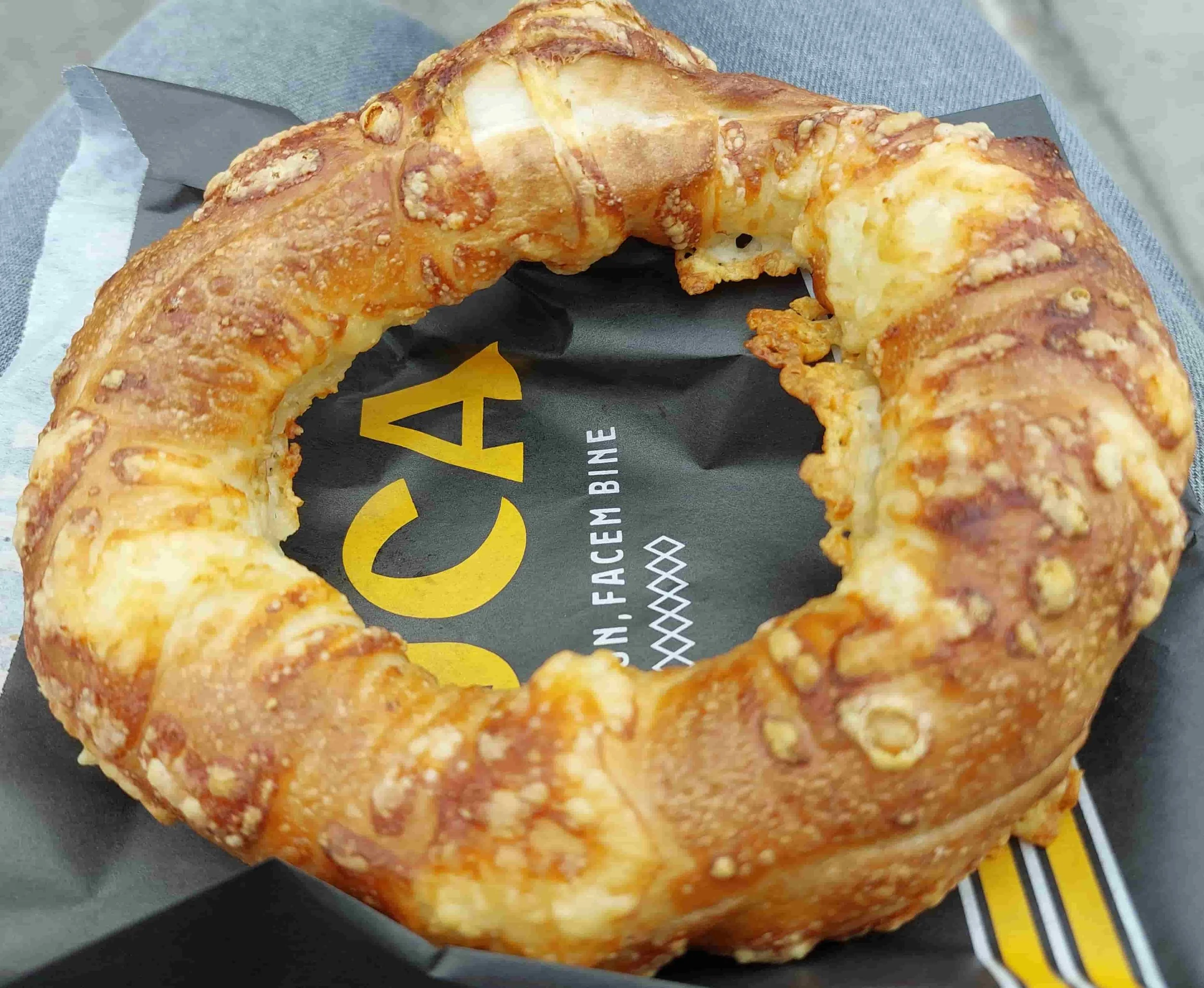
covrig
Romanian pretzel
What is it?
A covrig (plural covrigi) is Romania’s answer to the German pretzel and one of the country’s favourite street snacks, typically sprinkled with coarse salt, poppy seeds, or sesame seeds. Although it resembles a German pretzel, the dough is simpler (less rich and eggy) and the crust thinner and chewier. Fresh, warm covrigi are often eaten on the go for breakfast, as a snack, or alongside coffee.
What is in it?
Wheat flour, water, yeast, salt, and sugar form the dough, which is shaped into rings, briefly boiled or dipped in a baking soda solution (depending on the recipe), then baked. Common toppings include coarse salt, sesame, poppy, or sunflower seeds. Some bakeries also sell modern versions filled with chocolate, jam, or cheese, and a others make richer, more buttery covrigi with a texture closer to a croissant.
Where can I eat it?
You’ll find covrigi everywhere in Romania, sold hot and fresh from bakeries and street kiosks.
Often dairy free and potentially vegan if made without milk, butter or egg
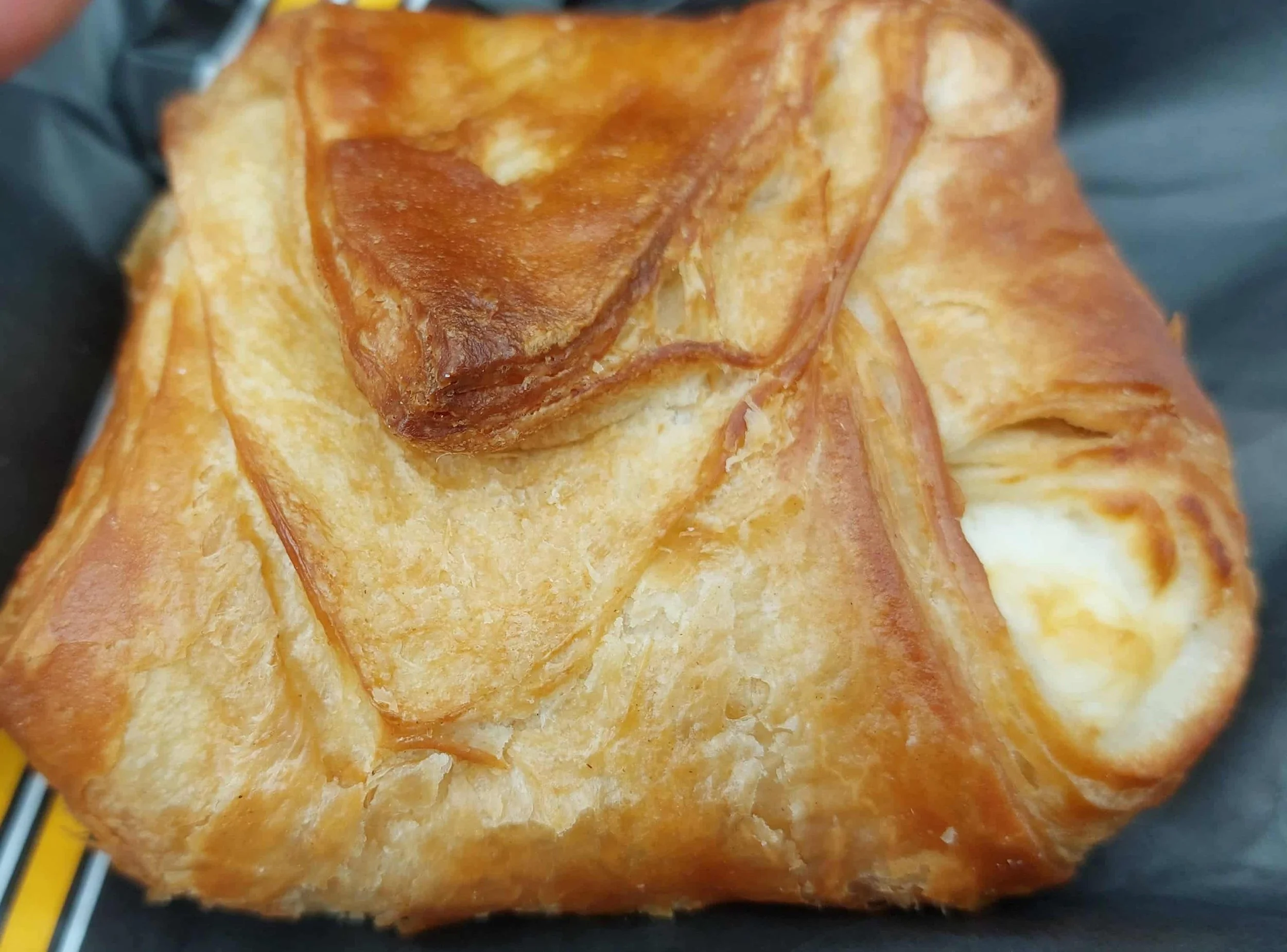
plăcintă
classic pastry
What is it?
Plăcintă (plural plăcinte) is a traditional Romanian pastry or pie that can be made with either sweet or savoury fillings. It can be baked or fried, round or folded, and is eaten as a snack, breakfast, or light meal. The dish dates back to Roman times, its name comes from the Latin word placenta, meaning “flat cake.” The most common savoury version is filled with cheese (usually telemea or brânză de burduf), while the most popular sweet version is filled with apple.
What is in it?
The dough is usually made from wheat flour, water, yeast, oil, and salt, though puff pastry is also common today.
Savoury fillings: salted cheeses (telemea, brânză de burduf), cabbage, potatoes, or leeks.
Sweet fillings: apple, sweet cheese, sour cherry, pumpkin, or jam.
Where can I eat it?
You’ll find plăcintă throughout Romania, from bakeries and market stalls to traditional restaurants.
Vegetarian versions available, dairy free versions available.
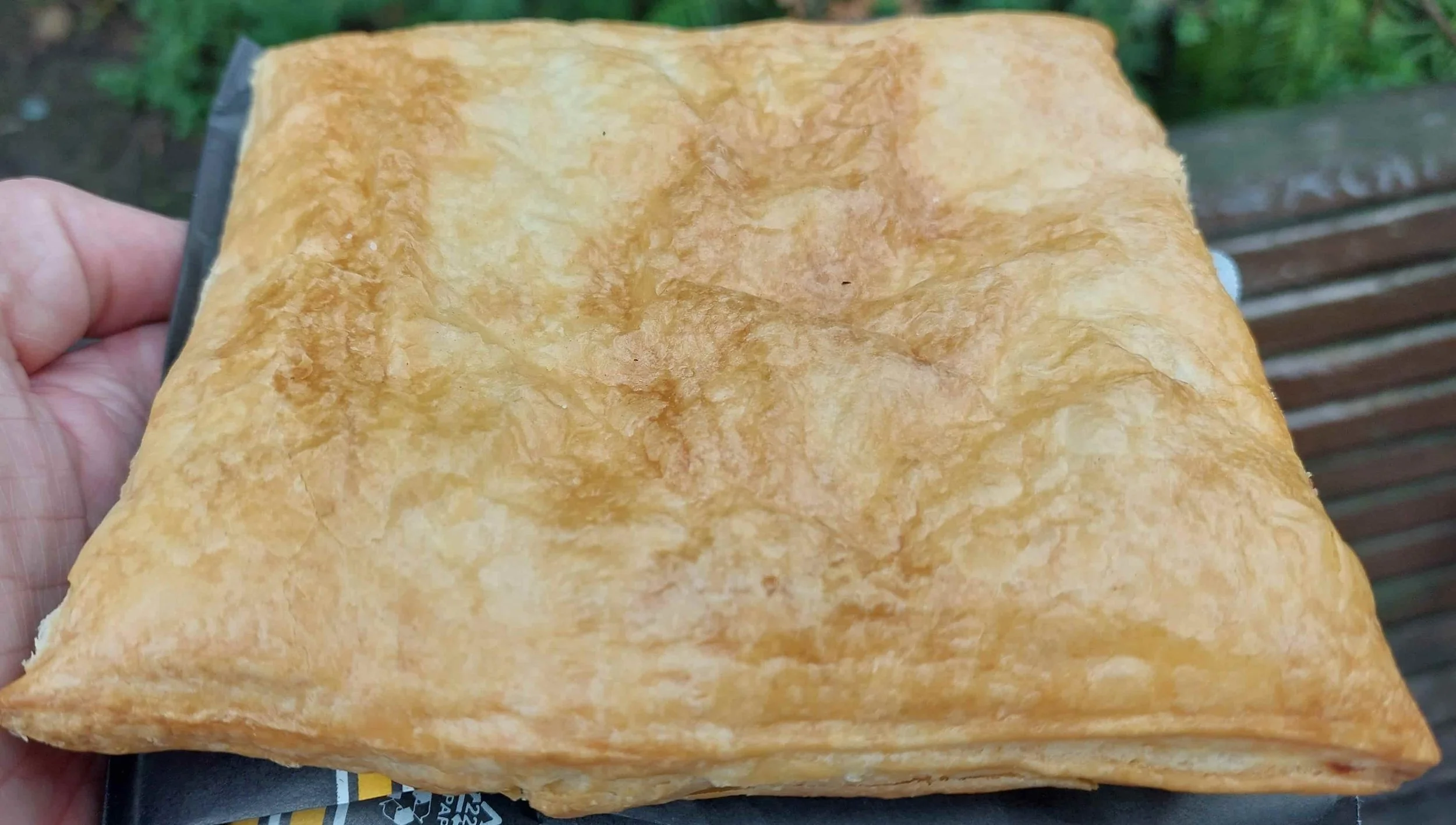
merdenea
savoury pie
What is it?
Merdenea (plural merdenele) is a traditional Romanian savoury pastry, typically filled with salty cheese. It’s one of the most popular warm snacks sold in Romanian bakeries, often enjoyed for breakfast or on the go. Though its origins trace back to Ottoman influenced Balkan pastries, it has long been adapted into local Romanian cuisine. Unlike plăcintă, which can be baked or fried and comes with both sweet and savoury fillings, merdenea is always savoury, made with puff pastry, and has a distinctly flaky, layered texture.
What is in it?
Thin layers of puff pastry filled with brânză sărată (salted cheese, commonly telemea or brânză de vaci mixed with egg).
Where can I eat it?
You’ll find merdenele in most Romanian bakeries. They’re best eaten warm, straight from the oven, and are often sold alongside other classics like covrigi and plăcinte.
Vegetarian.
Ingredients listed reflect common or typical components of this dish as served in restaurants or street‑food vendors. Variations by region, season, or vendor are common. This information is provided for general reference only. If you have dietary restrictions or allergies, please verify ingredient details independently. We assume no liability for accuracy or outcomes.
