all the foods - Croatia
Here you will find a list of all the traditional cuisine we tried in Croatia.
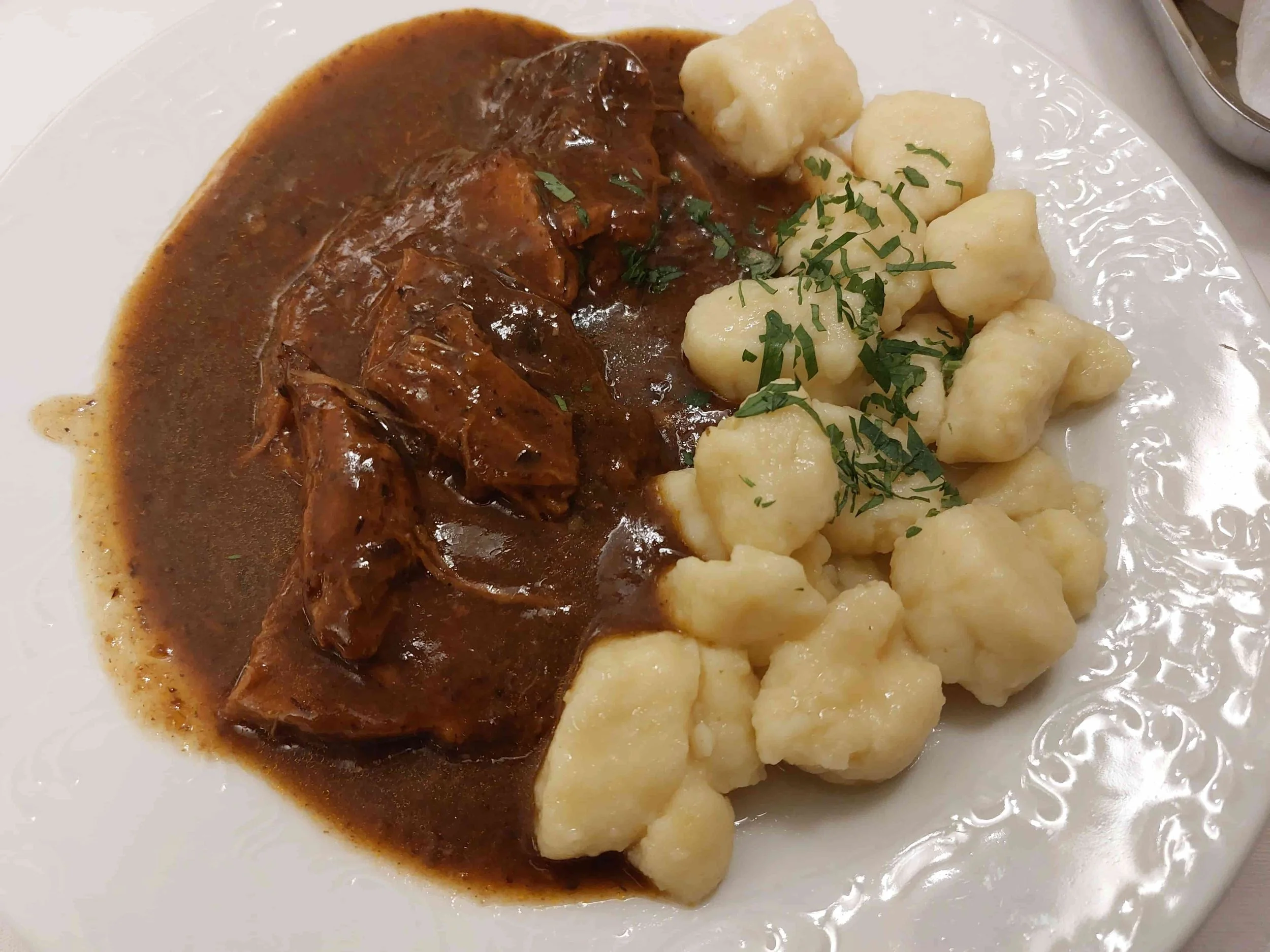
pašticada
beef stew
What is it?
Pašticada is a marinated beef dish traditionally served with gnocchi. Often called Dalmatinska pašticada due to its origins in Dalmatia, the beef is marinated for up to two days to make it tender and fall apart in the mouth. The dish has a slightly boozy, rich flavour, and is usually prepared for special occasions like weddings.
What is in it?
Beef, red wine, vinegar, onion, garlic, and a variety of herbs and spices such as cloves, rosemary, nutmeg, and bay leaves. It can also include bacon, figs, prunes, and celery for added flavour.
Where can I eat it?
Commonly found in Dalmatia, especially in traditional restaurants or during special celebrations. We tried it at a very popular traditional restaurant in Zagreb called Stari Fijaker.
Dairy free.

čobanac
spicy meat stew
What is it?
Čobanac is a traditional Slavonian meat stew from eastern Croatia, especially popular in the regions of Slavonia and Baranja. It’s a filling, spicy dish originally cooked by shepherds (čobani — hence the name), slow cooked over an open fire in a large cauldron (kotlić).
What makes čobanac unique is its use of multiple types of meat and lots of paprika, giving it a slightly fiery flavour. It’s often compared to goulash, but čobanac typically includes more than one meat and has a richer, stronger paprika profile. Both are delicious, though!
It is usually served with bread or with domaći rezanci (homemade thin egg noodles), or krpice/fleky, small square or irregular pasta pieces that are also traditional in Slavonia.
What is in it?
Authentic čobanac typically includes two or more meats, often a mix of beef, pork, and veal, along with onions, garlic, lots of sweet Slavonian paprika, hot paprika or chilli, bay leaf, salt, and pepper.
Where can I eat it?
Čobanac is most commonly found in Slavonia and Baranja at traditional restaurants. It’s rarely seen on the coast, but in larger cities like Zagreb you can find it more easily. We enjoyed a huge one at Stari Fijaker in Zagreb, for example.
Dairy free.
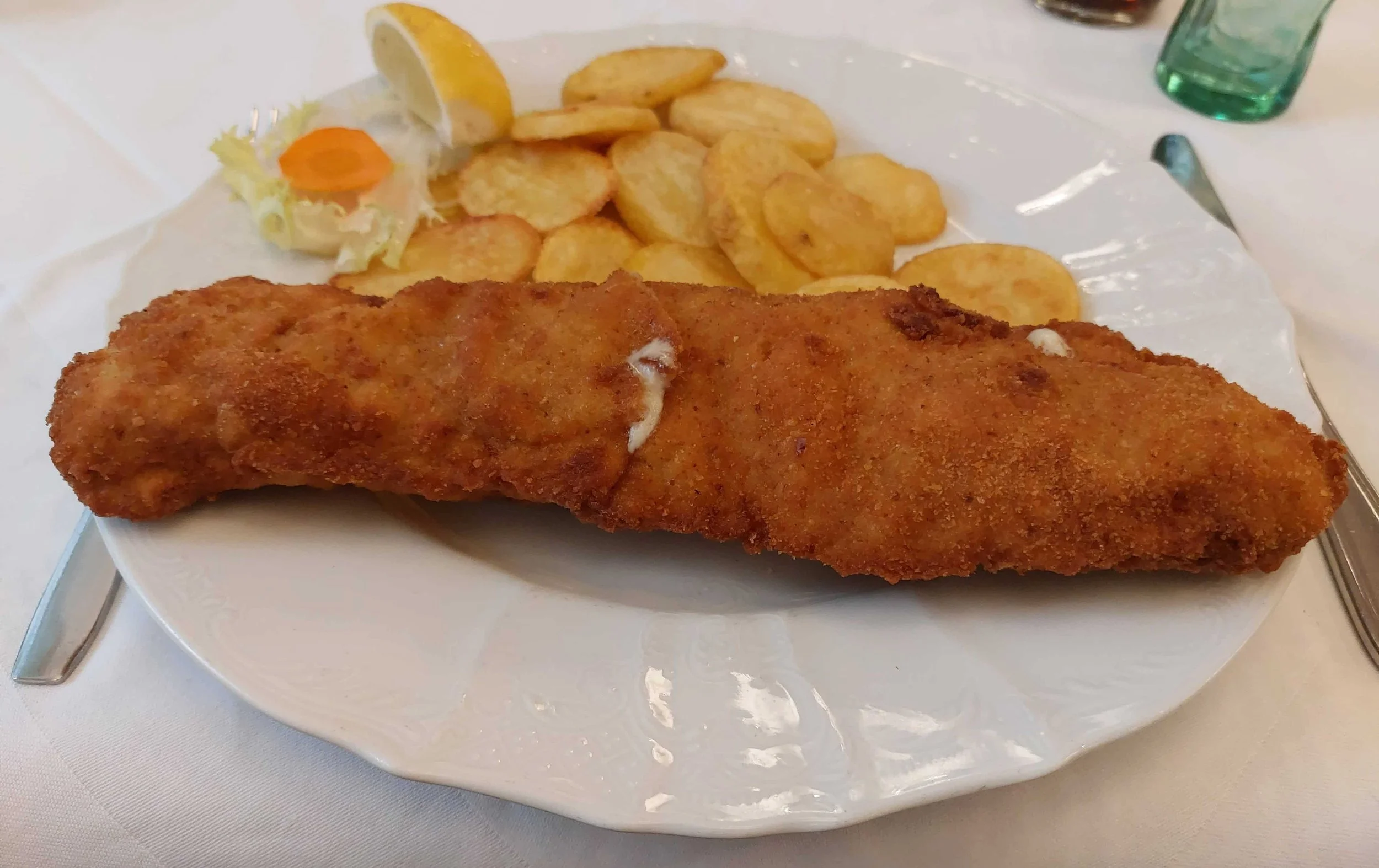
zagrebački odrezak
Croatian schnitzel
What is it?
Zagrebački odrezak, often called Zagreb schnitzel in English, is one of Croatia’s most famous meat dishes, a large, breaded veal (or sometimes pork) schnitzel stuffed with ham and melted cheese.
Think of it as Croatia’s answer to Cordon Bleu.
When you cut into it, the hot cheese and ham filling oozes slightly, creating a rich, saucy centre that contrasts beautifully with the crispy breaded coating. It’s a true classic of Zagreb’s traditional cuisine.
What is in it?
Veal schnitzel (sometimes pork), pounded thin, layered with cooked ham and melting cheese (typically Edamer, Gouda, or a mild local cheese), then coated in flour, egg, and breadcrumbs. Often served with a wedge of lemon.
Where can I eat it?
You can find zagrebački odrezak all across Croatia, but it is especially popular in Zagreb’s traditional restaurants. A very good version is served at Stari Fijaker in Zagreb.
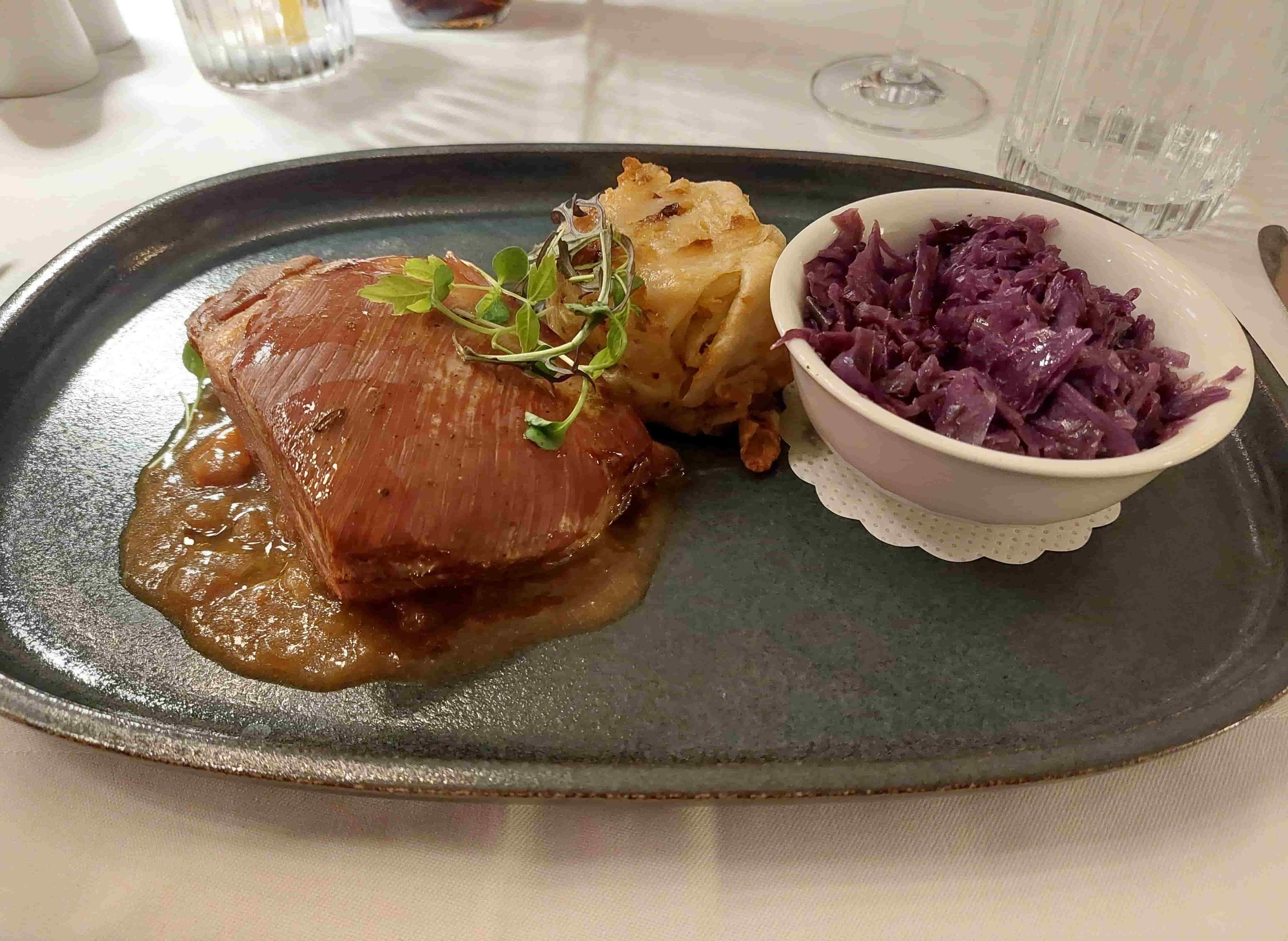
purica s mlincima
roast turkey mlinci
What is it?
Purica s mlincima is a traditional dish especially popular in Zagorje and northern Croatia. It consists of roast turkey (purica) served with mlinici, a unique thin baked flatbread that is broken into pieces, softened with hot stock or roasting juices, and then lightly baked again so it absorbs the turkey’s flavour. It’s like a cross between bread and pasta, the pieces soak up the rich fat and juices from the turkey, becoming soft yet slightly chewy, almost like a savoury pasta or dumpling alternative. It’s a classic festive meal, traditionally eaten for holidays such as Christmas, New Year, and major family occasions.
What is in it?
Whole roast turkey (restaurant servings are portioned for one), seasoned simply with salt, pepper, and sometimes butter or oil with mlinci, thin, dried flatbread made from flour, water, and salt, turkey roasting juices or broth to soften and flavour the mlinci.
Where can I eat it?
Purica s mlincima is most commonly found in northern Croatia, especially in the Zagorje region, Varaždin, and Zagreb, at traditional restaurants. Stari Fijaker serves a very traditional version, while Vinodol offers a slightly more modern but still delicious take, both located in Zagreb.
Outside northern Croatia, it appears less frequently on menus, but it is still well known nationwide.
Dairy free.
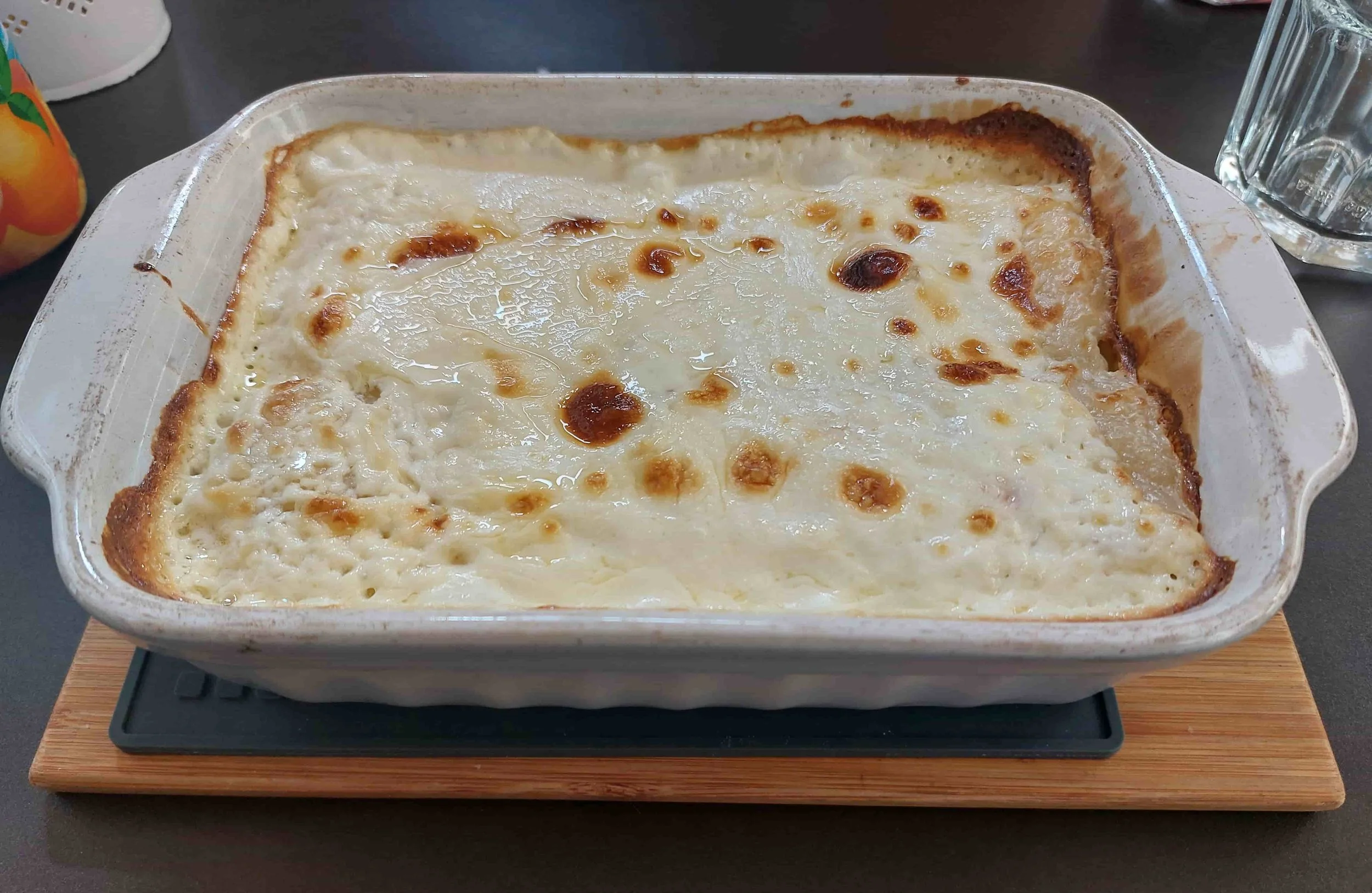
zagorski štrukli
cheesy dough
What is it?
Zagorski štrukli is a dish of dough filled with cheese, hailing from the north of Croatia. There are two variations: one is boiled, while the other is baked and covered in cream, as shown in the picture. It can be enjoyed as a main meal or a snack and is closely related to the Slovenian dish Štruklji.
What is in it?
The dough is made from flour, eggs, oil, water, salt, and vinegar, while the filling consists of cheese, butter, and egg. The baked version is topped with cream and additional cheese before serving.
Where can I eat it?
Zagorski štrukli is most closely associated with northern Croatia, particularly the Zagorje region and Zagreb, where it is widely available in traditional restaurants. We had an excellent version at La Štruk in Zagreb, a restaurant specialising in štrukli served in multiple styles.
Vegetarian.
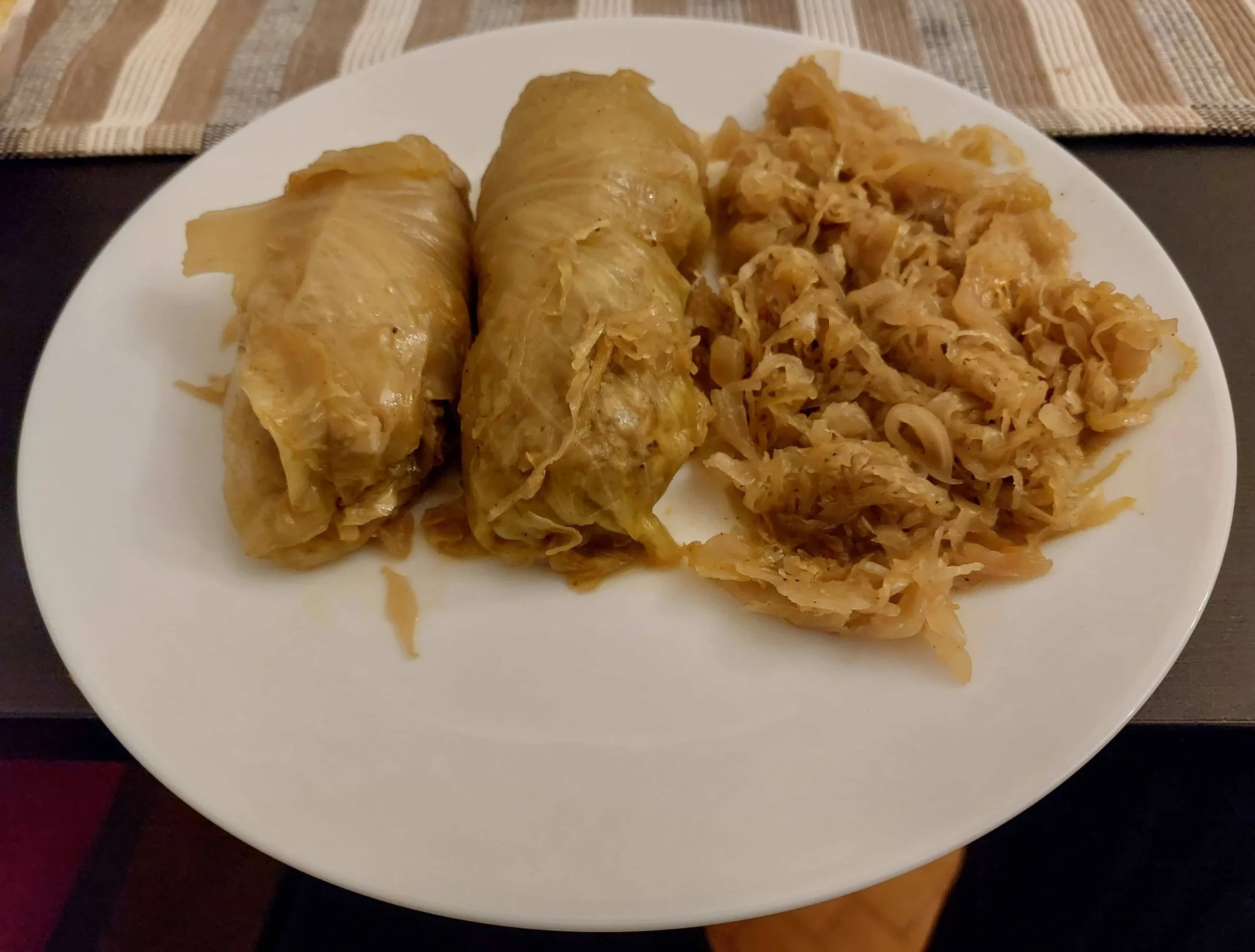
sarma
stuffed cabbage rolls
What is it?
Sarma is minced meat and rice wrapped in fermented cabbage leaves, slowly simmered for hours in a paprika based sauce. It has a mild sourness from the kiseli kupus (pickled cabbage), which gives it its distinct flavour. It’s typically served with mashed potatoes, extra cabbage, and/or bread. Popular throughout Croatia and the wider Balkans.
What is in it?
A typical Croatian sarma includes fermented cabbage leaves (kiseli kupus), minced pork or a pork & beef mix, rice, onion, sweet paprika, bay leaf, salt, and pepper.
Where can I eat it?
Sarma appears across Croatia, especially in traditional restaurants and taverns (konobe). It’s less common than some other traditional dishes, but still fairly easy to find, especially in winter.
Vegan and vegetarian versions sometimes available, dairy & traditionally gluten free.
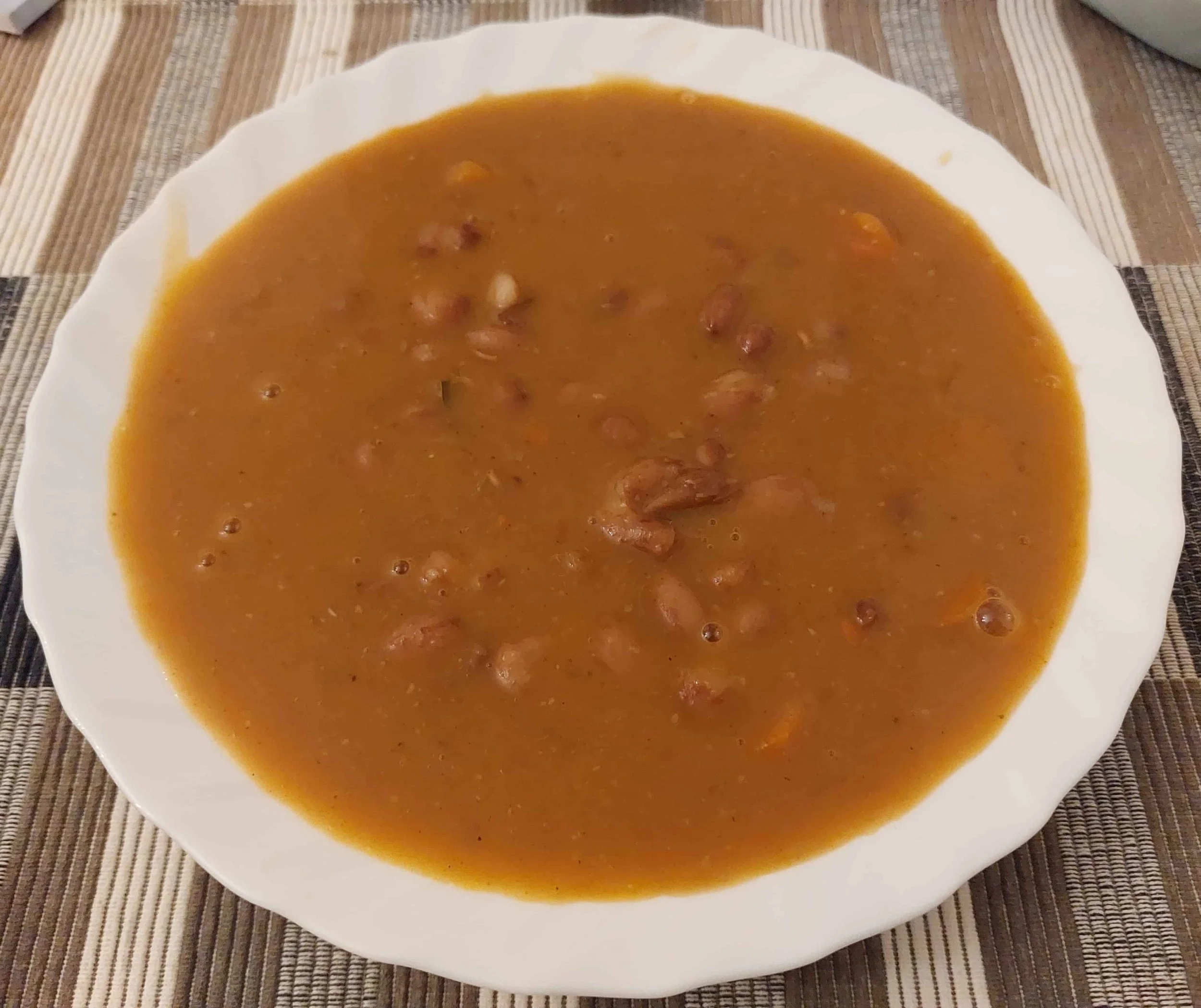
grah
bean stew
What is it?
Grah is a Croatian bean stew made with white or pinto beans, slow cooked with vegetables, paprika, and often smoked meat. It’s one of the most common rustic dishes in the country. It’s especially popular in Slavonia and Zagorje, but you’ll find versions everywhere.
Grah is often eaten as an inexpensive everyday lunch and is usually served with bread.
What is in it?
A typical Croatian grah includes, beans, smoked sausage (kobasica) or smoked pork such as ribs or bacon, onions, carrots, celery, garlic, paprika, tomato or tomato paste, bay leaf, salt & pepper. Some regions make a meatless version during fasting periods.
Where can I eat it?
You’ll commonly find grah in traditional Croatian restaurants and taverns (konobe) as well as simple local eateries. It’s less common on coastal tourist menus, but still widely available inland.
Vegan versions available, dairy free.
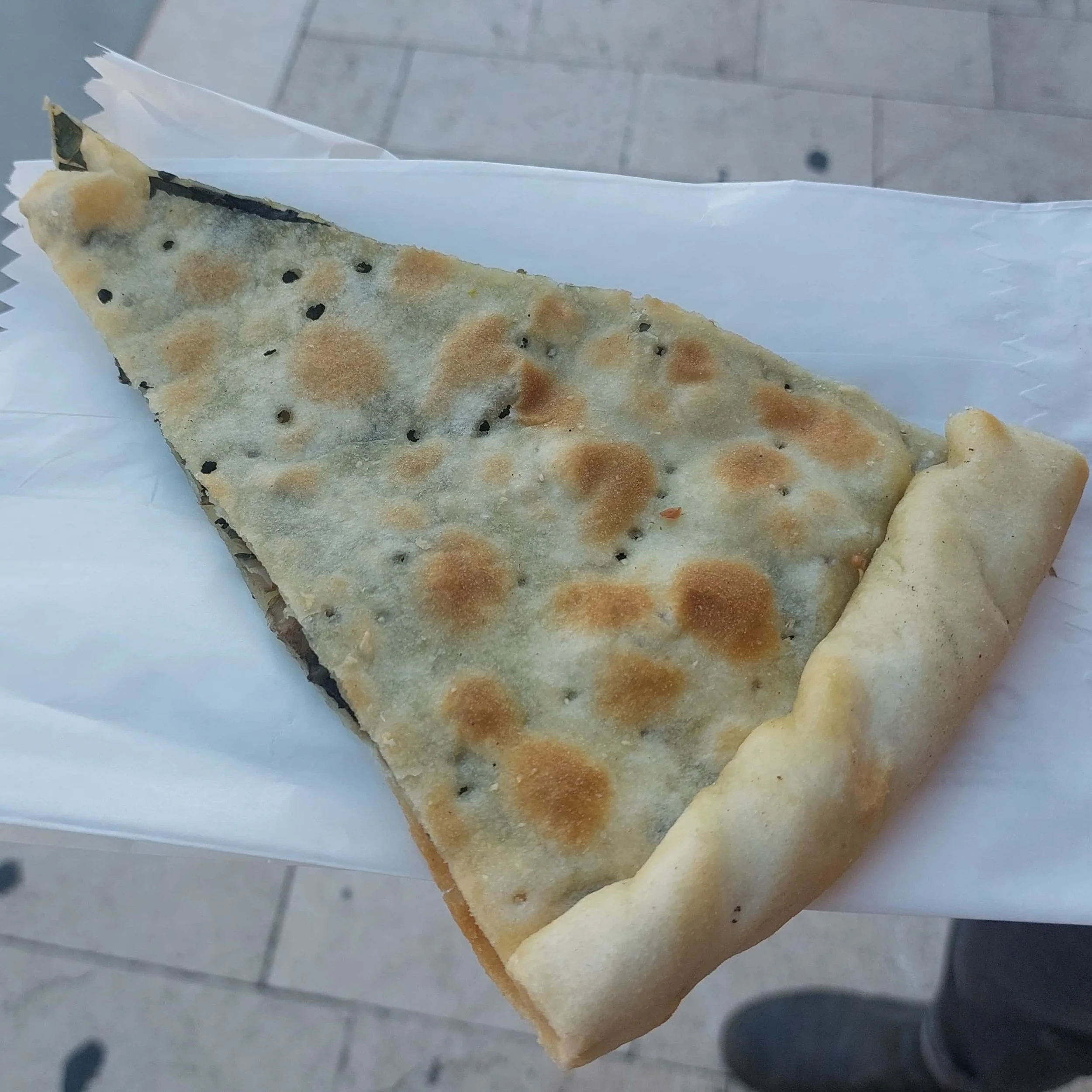
soparnik
Swiss chard pie
What is it?
Soparnik is a savoury, thin Swiss chard pie, traditionally cut into slices like a pizza.
What is in it?
The dough is made from flour, salt, and water, while the filling includes Swiss chard, onion, and parsley. It is then brushed with olive oil and garlic.
Where can I eat it?
Although not commonly found in restaurants, Soparnik can occasionally be found in bakeries in the southern Dalmatian region of Croatia.
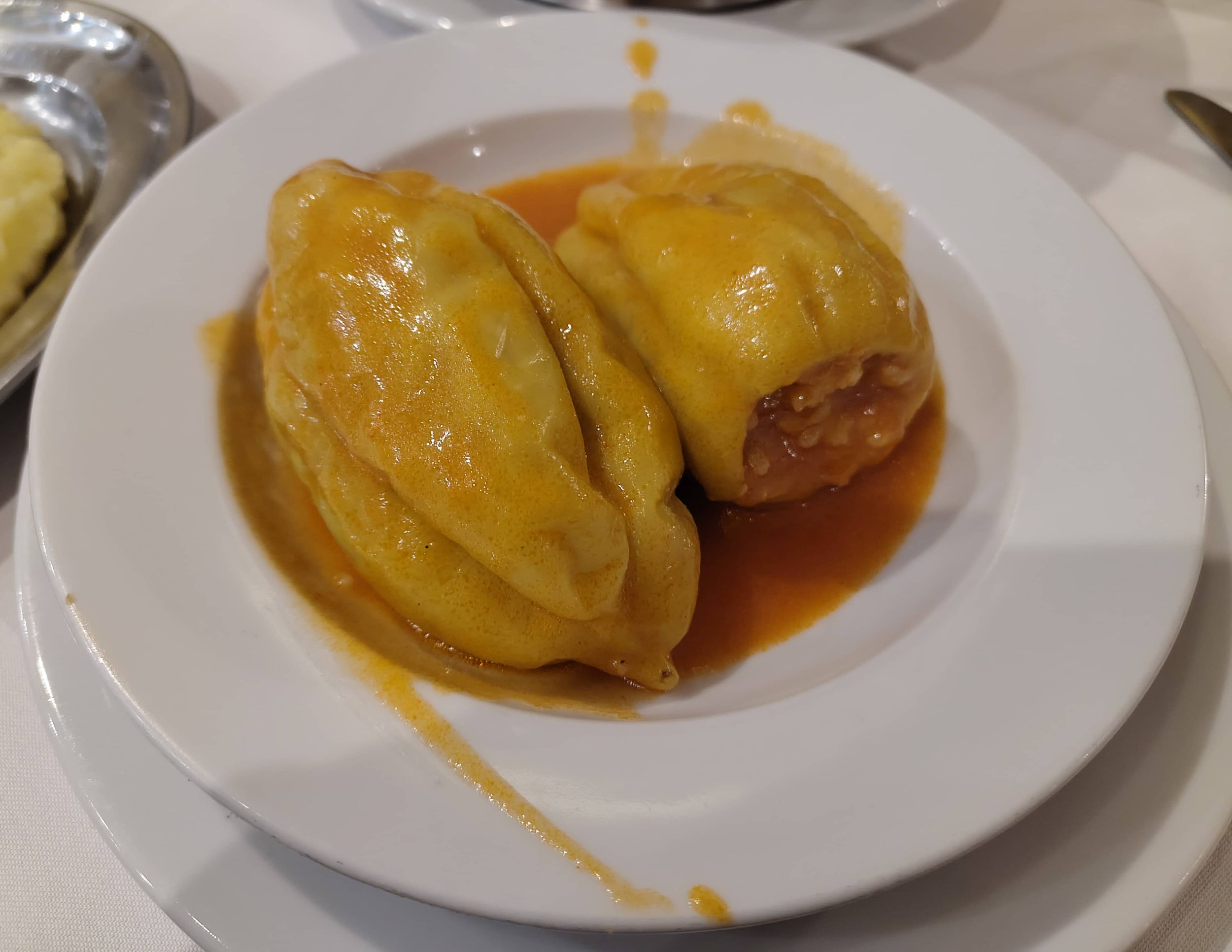
punjene paprike
stuffed peppers
What is it?
Punjene paprike are a classic Croatian home style dish of sweet peppers stuffed with a savoury mixture of minced meat and rice, slowly simmered in a light tomato based sauce. The dish is common throughout the Balkans and eastern Europe. It’s especially popular as a home cooked meal or daily special rather than a restaurant showpiece.
What is in it?
Punjene paprike are usually made with sweet bell peppers (often the pale yellow Balkan babura peppers). They are filled with a mixture of minced pork or a pork and beef blend, rice, onion, paprika, salt, pepper, and sometimes parsley.
The stuffed peppers are simmered in a light tomato sauce made from tomato, paprika, oil, and water or stock. They are most commonly served with mashed potatoes, which soak up the sauce, and sometimes with fresh bread.
Where can I eat it?
Punjene paprike can be found in traditional Croatian restaurants and konobe, though like many home style dishes it often appears as a daily special rather than a permanent menu item. We had some at Gostionica restoran purger in Zagreb, a popular little local place.
Dairy free.
Related food guides
While Croatian cuisine has its own regional specialities, it shares many traditional dishes with neighbouring Bosnia and Herzegovina. For a deeper look at some of these shared Balkan classics, see our Bosnian food guide.
Ingredients listed reflect common or typical components of this dish as served in restaurants or street‑food vendors. Variations by region, season, or vendor are common. This information is provided for general reference only. If you have dietary restrictions or allergies, please verify ingredient details independently. We assume no liability for accuracy or outcomes.
