all the foods - Uzbekistan
Here you will find a list of all the traditional cuisine we tried in Uzbekistan.
Click to jump to one of the sections:
noodles & dumplings
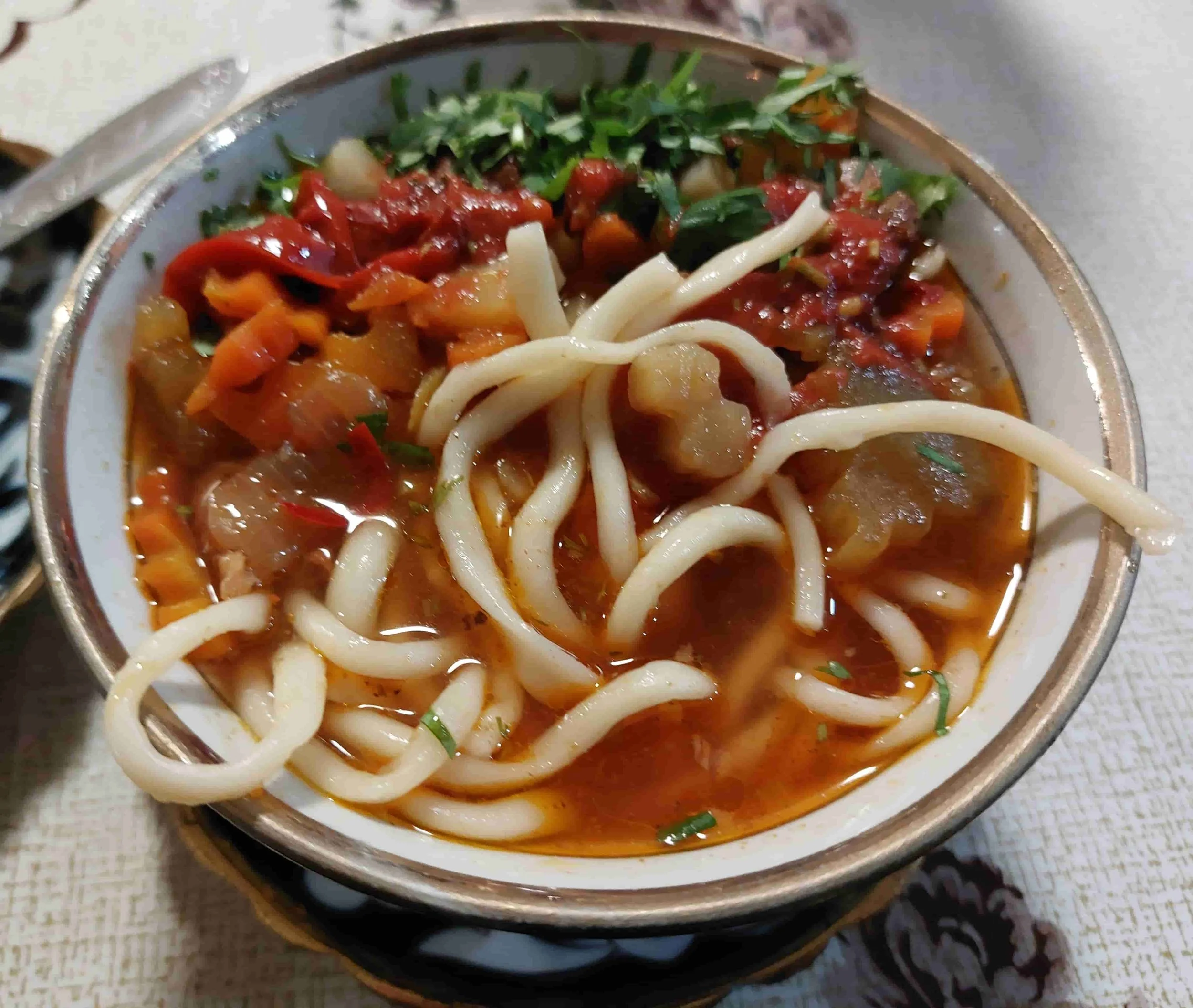
lagman
hand pulled noodles
What is it?
Lagman is a filling soup of Uyghur origin from Xinjiang, China, featuring meat, vegetables, and hand-pulled noodles. It’s popular across Central Asia, especially in Kazakhstan and Kyrgyzstan, where it’s considered a national dish.
What is in it?
There’s no fixed recipe, but it usually includes beef or lamb. Common vegetables are carrots, potatoes, red peppers, tomatoes, aubergine, and onions. The dish features hand-pulled noodles in a rich broth, typically flavoured with garlic and cumin.
Where can I eat it?
Lagman is one of the most popular dishes in Uzbekistan and can be found on the menu of nearly every traditional restaurant.
Dairy free.
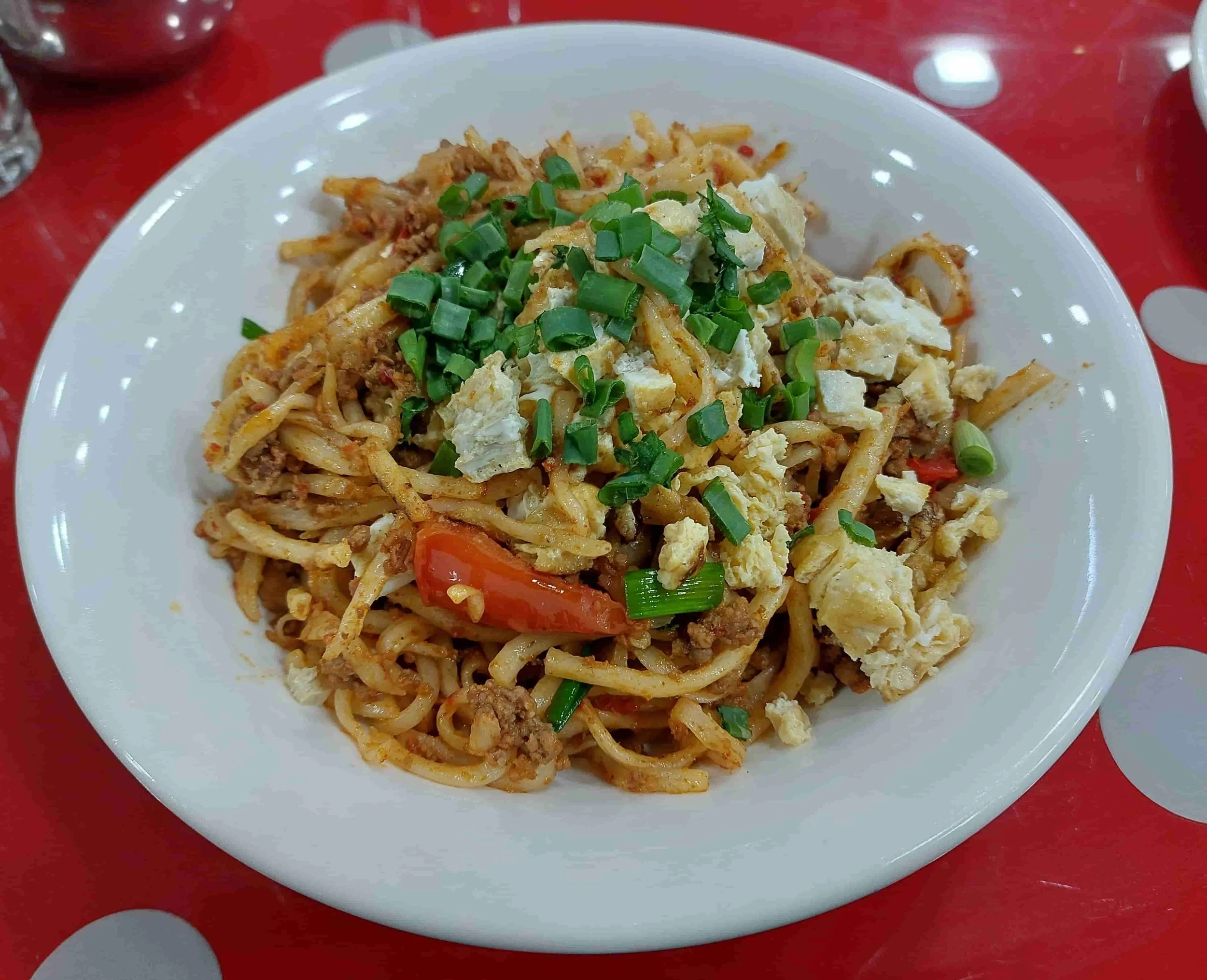
fried lagman
fried noodles
What is it?
Fried Lagman is a variation of the traditional lagman soup, but instead of being served in broth, it’s a dry, fried dish. Interestingly, it had a flavour profile similar to spaghetti Bolognese, it can be topped with chopped omelette or a fried egg.
What is in it?
Pulled noodles stir-fried with minced beef, spring onions, and vegetables such as red peppers. The dish usually includes a tomato-based sauce with garlic and various herbs and spices. A chopped omelette is typically added as a finishing touch.
Where can I eat it?
While not as common as the soup version, fried lagman is still widely available. You should be able to find it on the menus of most traditional restaurants throughout the country.
Dairy free.
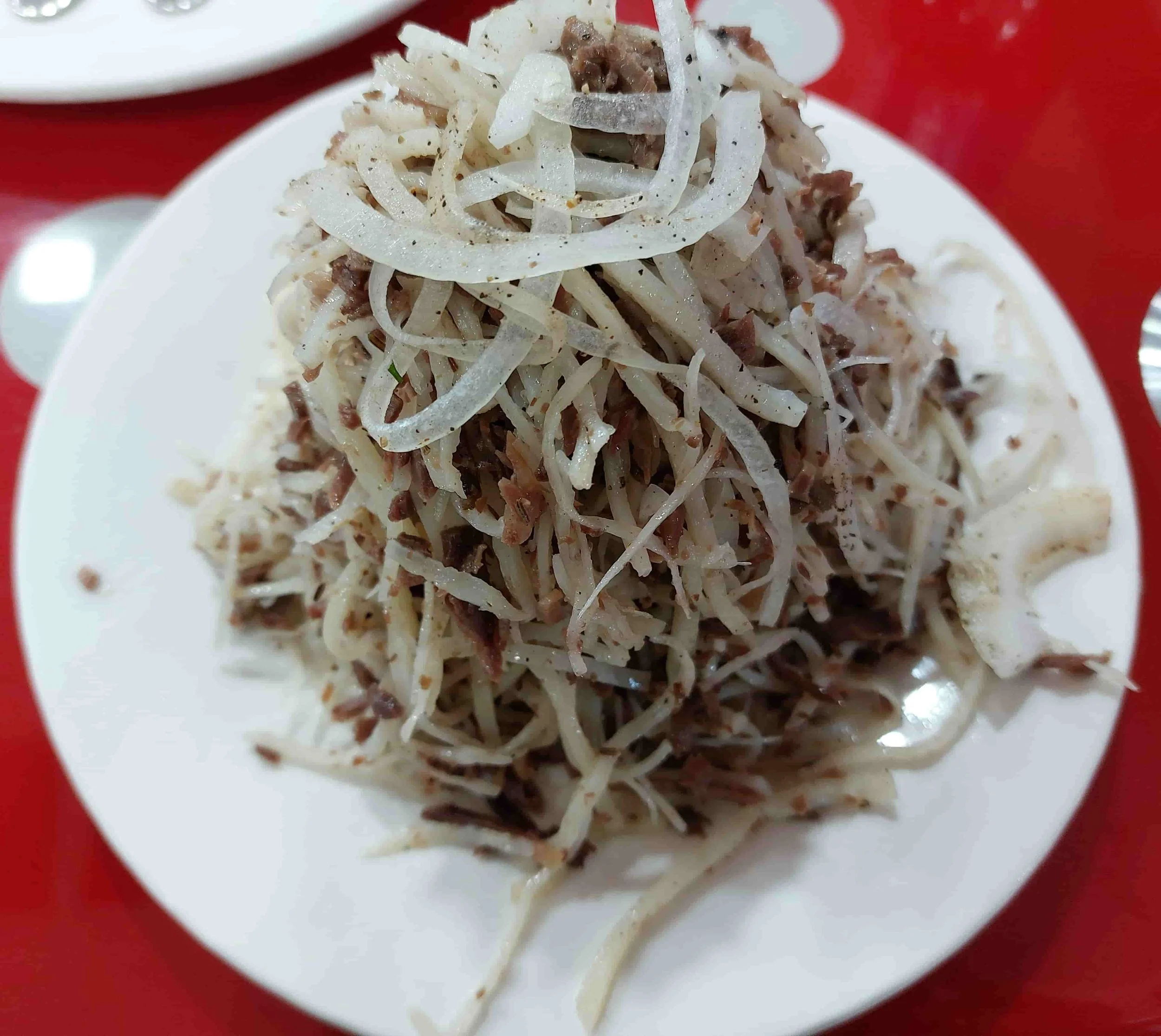
norin
cold noodles
What is it?
Norin is a traditional Uzbek dish made with very thin hand-cut noodles served cold with finely shredded horse meat sausage. It’s particularly popular in Tashkent and is considered a delicacy. Some modern variations may be served warm or accompanied by a light broth, but the authentic version is eaten cold.
What is in it?
The dish traditionally uses shredded kazy (horse meat sausage), though beef or lamb versions are also found. The noodles are made from flour, egg, salt, and water, and the dish is typically garnished with sliced onions and a touch of black pepper or oil for flavour.
Where can I eat it?
Norin is relatively rare and most commonly found in Tashkent. It can be tried at Anor Restaurant, which serves a wide range of authentic Uzbek dishes, including this local speciality.
Dairy free.
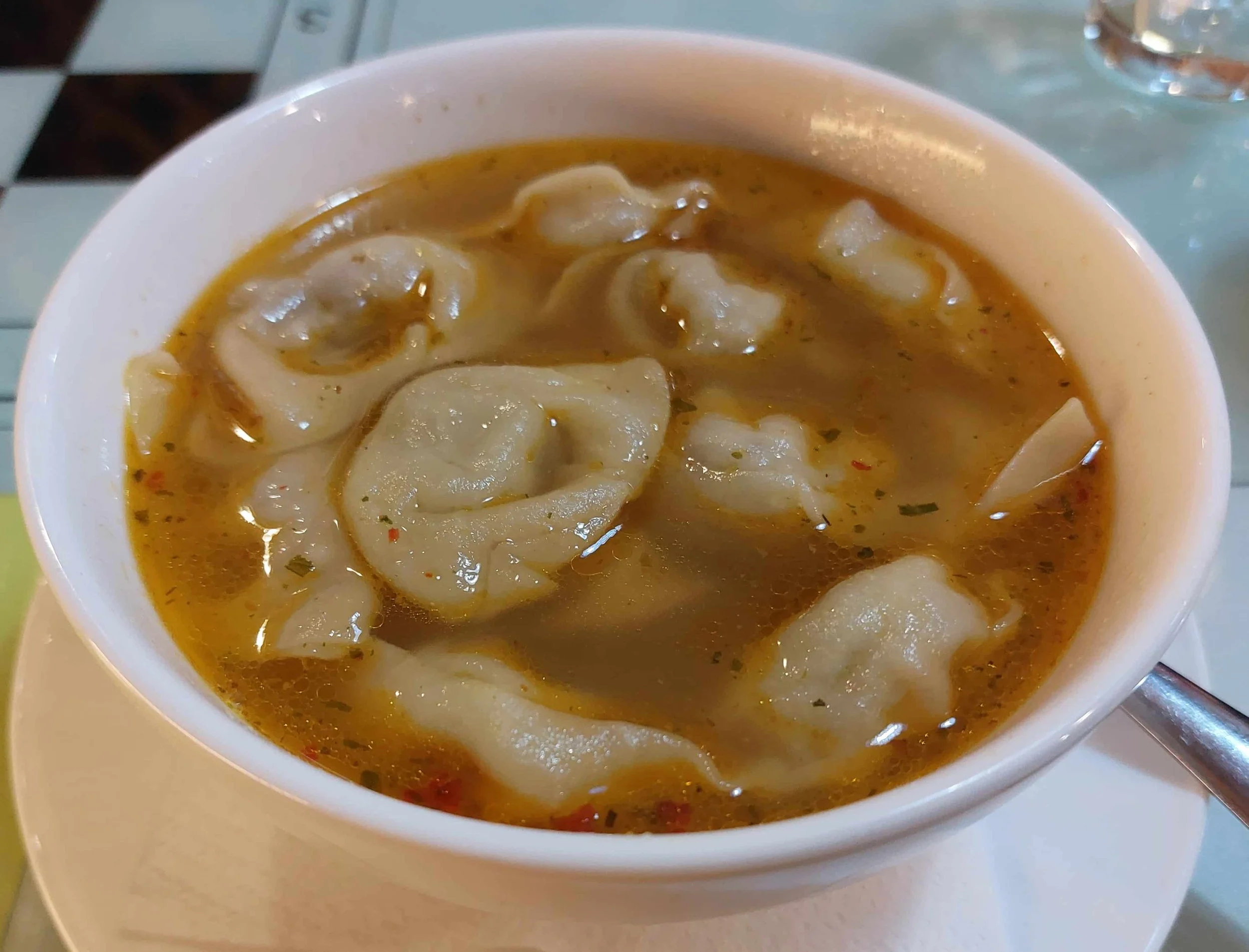
chuchvara
small dumplings in broth
What is it?
Chuchvara are small dumplings similar to manti, but typically served in a flavourful broth, making bread a perfect accompaniment to soak up the delicious liquid.
What is in it?
These dumplings are filled with minced meat and onion, often sprinkled with dill and served with sour cream. They are mostly served in a clear broth, almost like a soup, though a fried version known as kovurma chuchvara also exists.
Where can I eat it?
While chuchvara isn’t found in every traditional restaurant, you’ll often see it on menus throughout Uzbekistan.
Dairy free.

manti
large steamed dumplings
What is it?
Manti are large steamed dumplings, similar to momos or gyoza, popular throughout Central Asia. Soft dough parcels are filled with a juicy mixture, then steamed until tender and served hot. In Uzbekistan, they’re traditionally eaten by hand and served with a dipping sauce.
What is in it?
The most common filling is minced meat (usually beef or lamb) with onion, but vegetarian versions featuring potato or pumpkin are also available. They’re typically served with sour cream and a vinegar- and chili-based dipping sauce.
Where can I eat it?
Manti are one of the most popular dishes in Uzbekistan, and you’ll find them on nearly every traditional restaurant menu.
Vegetarian versions available. Dairy free without sour cream.
soups & stews
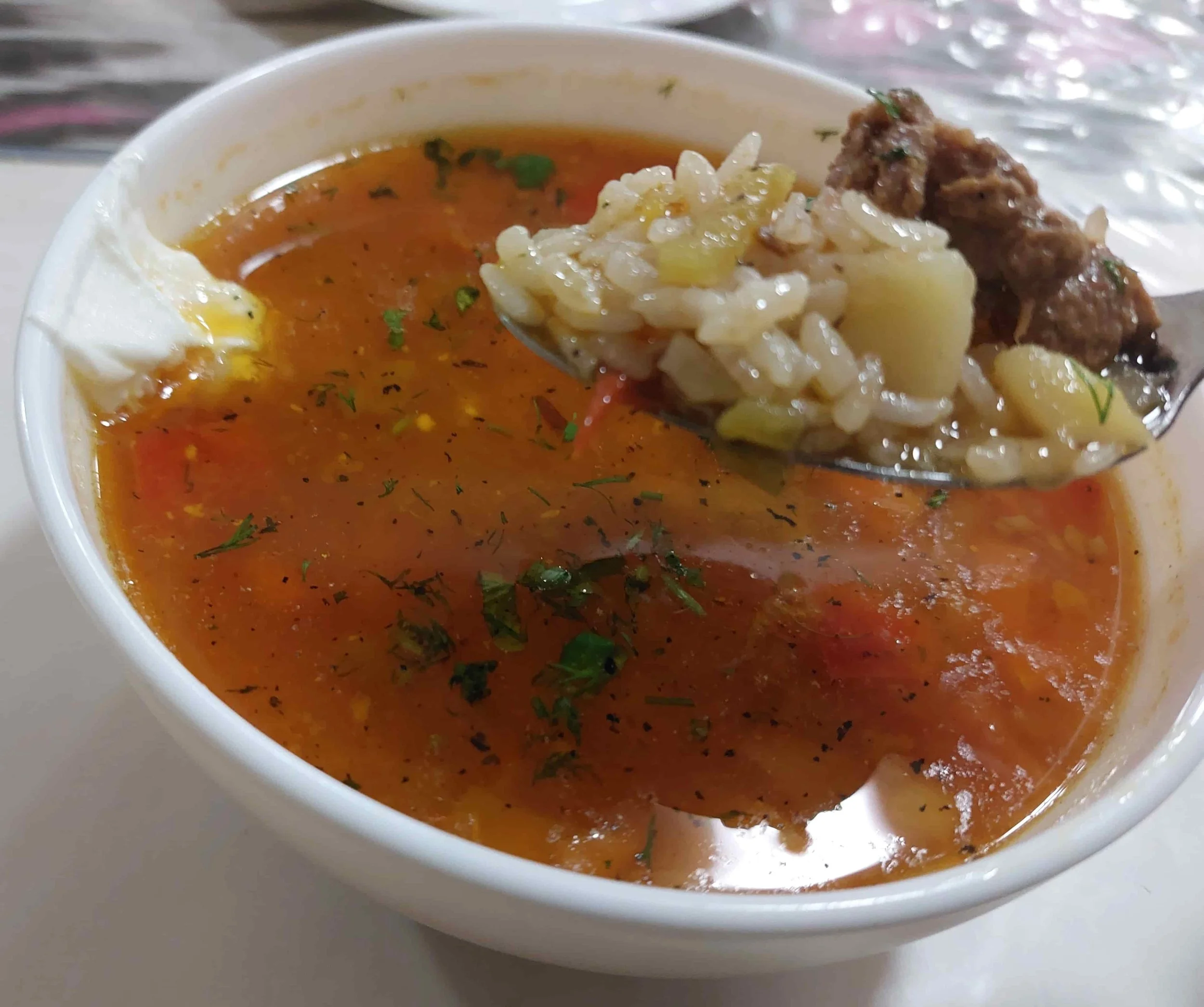
mastava
rice soup
What is it?
Mastava is a traditional Uzbek rice soup with meat and vegetables. It’s sometimes called a “plov soup” because it begins by frying meat and vegetables, then adding water and rice to create a rich, warming broth. While traditionally made with lamb or beef, some modern vegetarian versions also exist.
What is in it?
The soup typically includes rice, lamb (or beef), carrots, onions, and potatoes. Additional vegetables like tomatoes or peppers may also be added. It is seasoned with cumin and often garnished with fresh coriander. Mastava is usually served alongside bread.
Where can I eat it?
You’ll find it on the menus of some traditional restaurants in Uzbekistan, though it’s not very common. We spotted it a few times during our trip, and tried it at Old Bukhara restaurant (unsurprisingly in bukhara) so keep an eye out!
Dairy and gluten free.
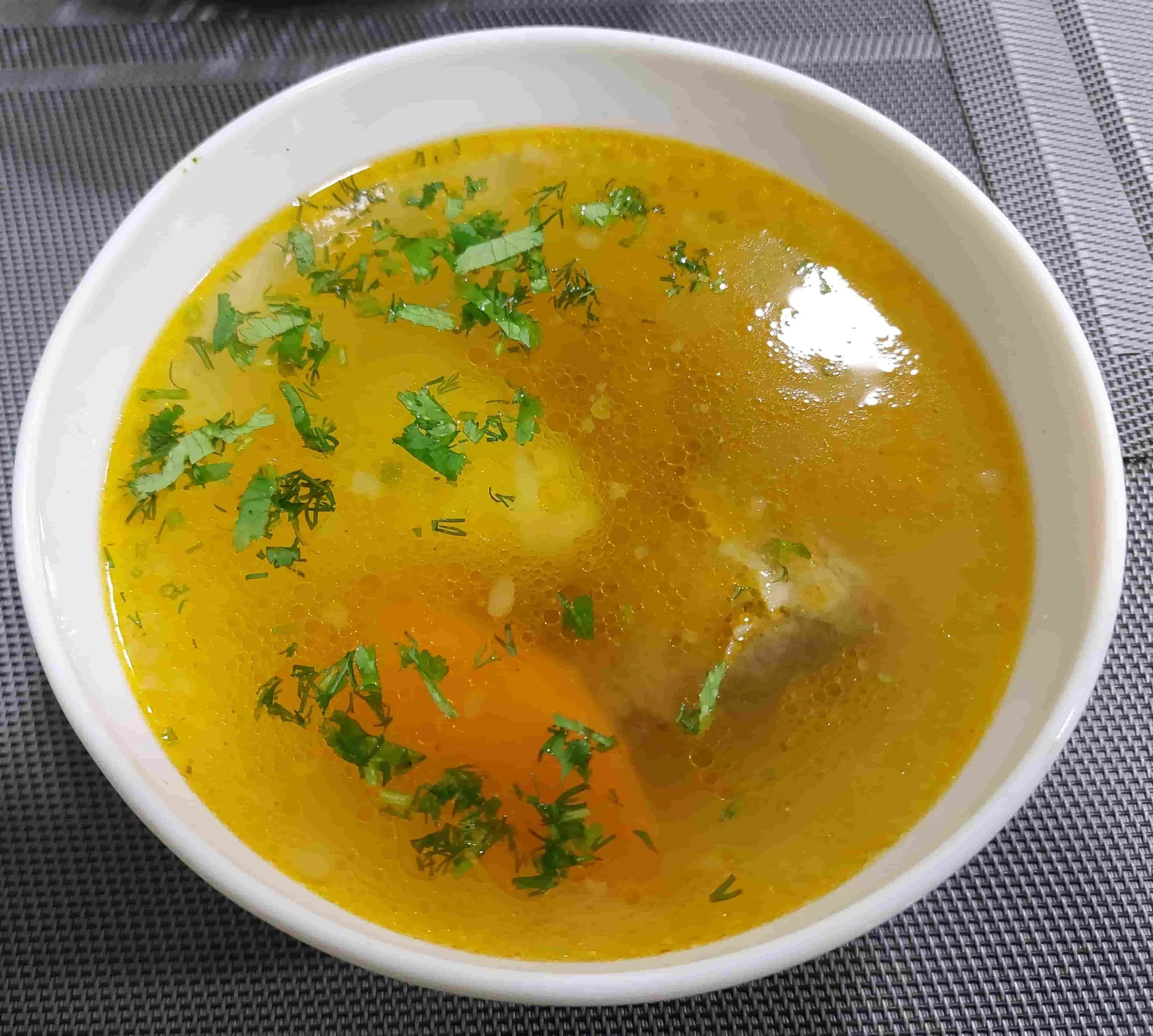
shurpa
meat vegetable soup
What is it?
Shurpa is a rustic meat and vegetable soup, popular in Uzbekistan and enjoyed across Central Asia. Often served as a starter or main course.
What is in it?
There are many variations of shurpa, but the classic version features a large chunk of lamb in a fatty broth, with chunks of potato and carrot, garnished with coriander, dill, or parsley. Variations may use beef or chicken, and there’s even a version with meatballs. Additional vegetables such as onions, tomatoes, or peppers are often included. Typically served with fresh Uzbek bread
Where can I eat it?
Shurpa is a staple in Uzbekistan, easily found on nearly every traditional menu throughout the country.
Dairy and gluten free.
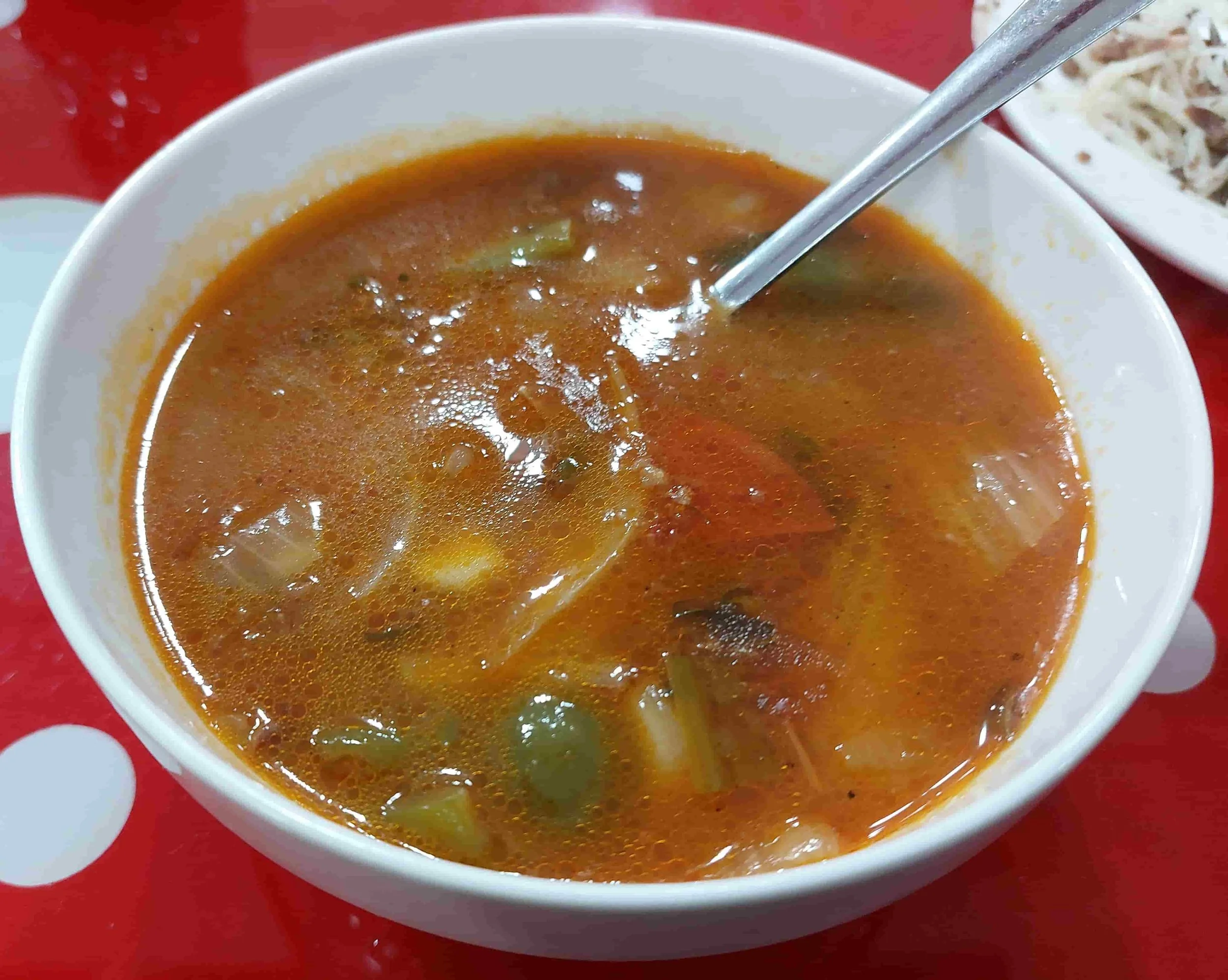
mampar
boiled dough soup
What is it?
Mampar is a soup with roots in Uyghur cuisine from Xinjiang, China. Similar to lagman but with small pieces of boiled dough instead of noodles, it features a rich broth with meat and vegetables. The flavourful soup was a bit too onion-heavy for me, but is well-balanced with spices.
What is in it?
Mampar typically includes lamb, small pieces of dough, plenty of onions, celery, peppers, and tomatoes. The broth is seasoned with tomato paste, garlic, cumin, and coriander, creating a robust flavour. As with many Uzbek dishes, it’s commonly served with bread on the side.
Where can I eat it?
Mampar is relatively rare to find on menus. During our travels, we only came across it once, at Anor Restaurant in Tashkent, which offers a wide selection of Uzbek dishes.
Dairy free.
grilled & stuffed dishes
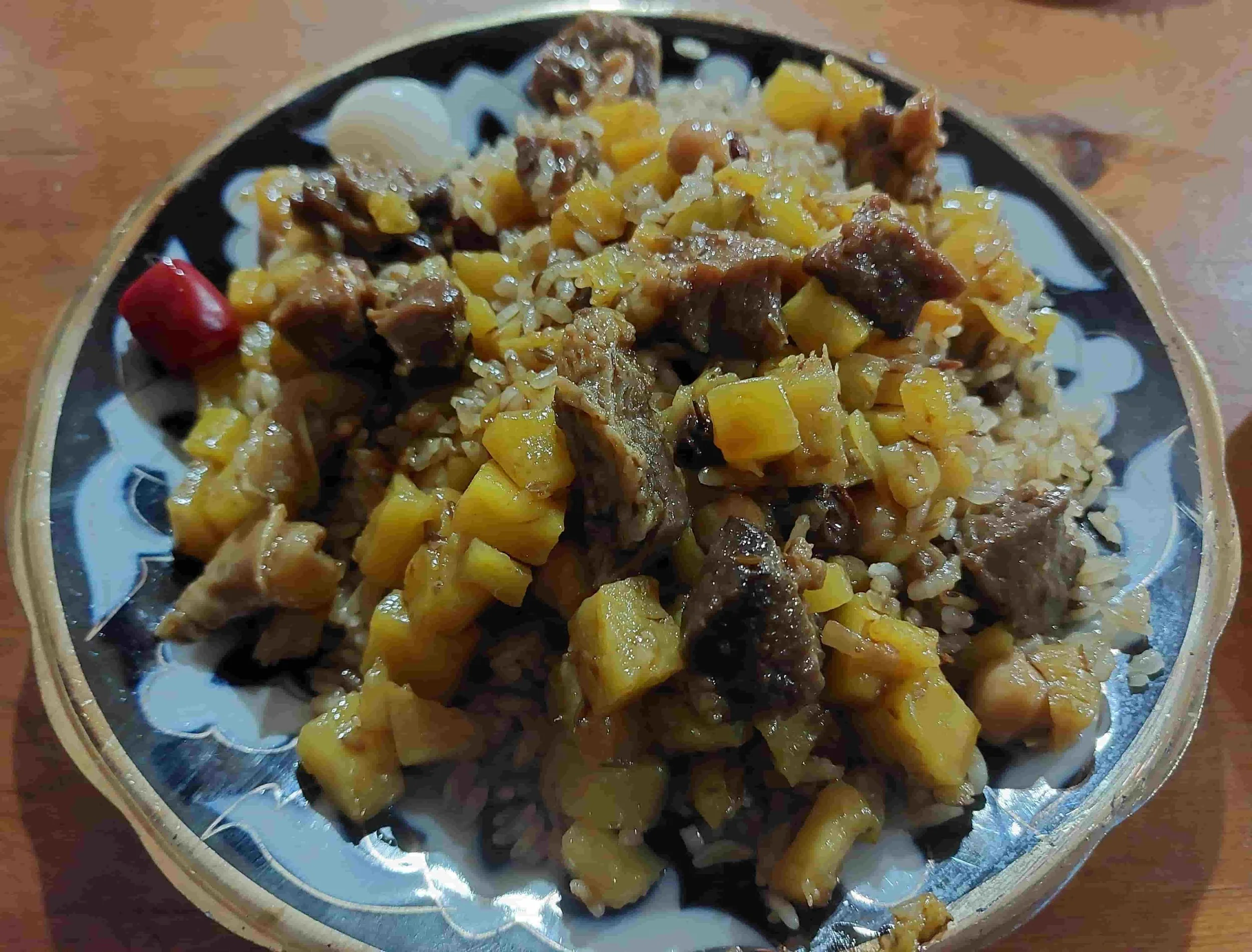
plov
Uzbek rice pilaf
What is it?
Plov, also known as osh, is the national dish of Uzbekistan and a point of great pride across the country. This pilaf of rice, meat, vegetables, and spices is traditionally cooked in a large cast-iron pot called a kazan. Almost every region and city has its own variation, with subtle differences in flavour and ingredients. It was probably my go-to dish while travelling in Uzbekistan, and it’s easy to see why it holds such a central place in the culture.
What is in it?
The main ingredients are rice and meat, usually lamb or beef, cooked with carrots, onions, oil, and a generous amount of cumin. Whole garlic bulbs are often added for extra flavour, and some versions include chickpeas or raisins for richness. In a few regional or modern variations you might also find turmeric, quail eggs, or even beans, though these are less traditional.
Where can I eat it?
As Uzbekistan’s national dish, plov is widely available in almost every restaurant. It’s also a staple in homes and often prepared for special occasions. If you are in Bukhara, be sure to check out a restaurant simply called “The Plov.” It’s a little outside the old town, away from the tourist sites, but the plov, as expected from the name is excellent.
Dairy free.
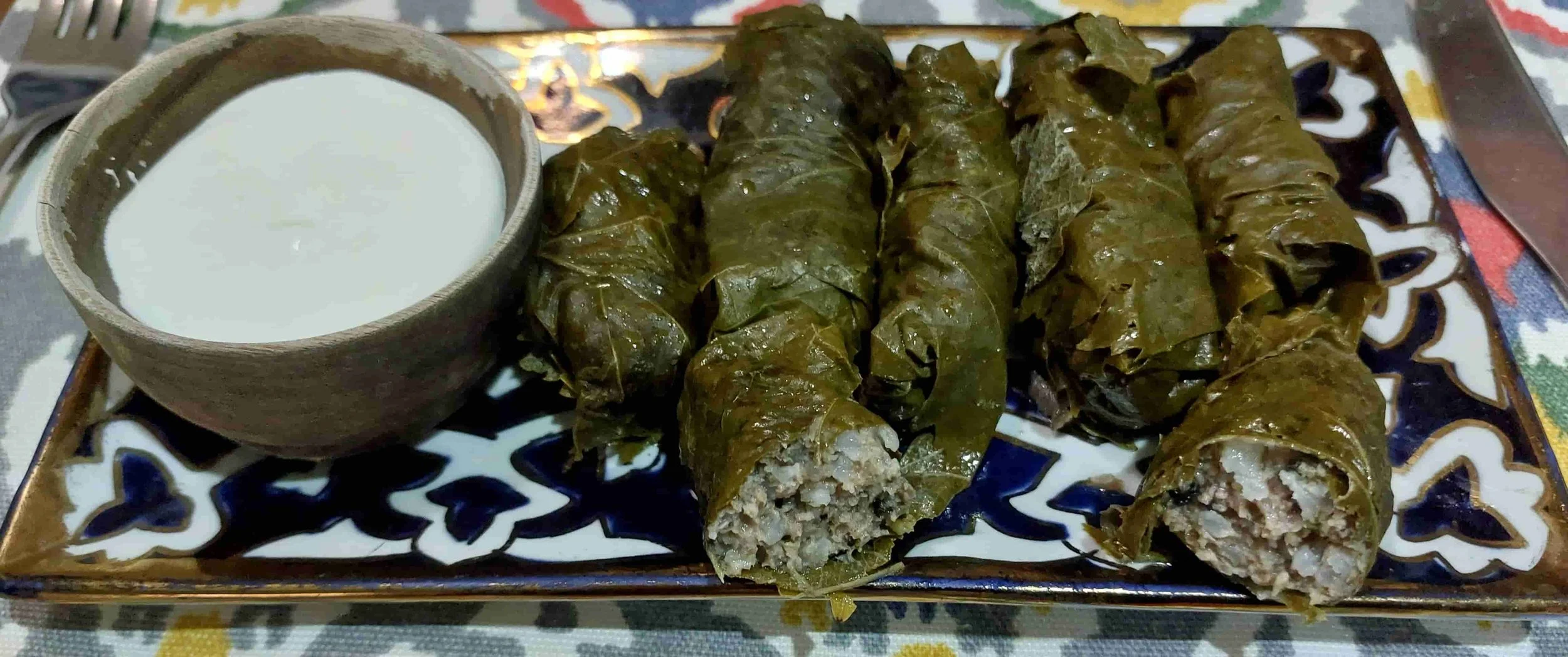
dolma
stuffed grape leaves
What is it?
Dolma consists of grape leaves stuffed with a savoury filling of meat, rice, and spices. Of Turkish origin, this dish is popular across Central Asia, the Balkans, and Eastern Europe, where cabbage leaves are sometimes used instead of grape leaves.
What is in it?
Grape leaves are wrapped around a filling of meat (usually lamb or beef) and rice, often seasoned with coriander. Additional ingredients like parsley, onions, or tomatoes can also be included. Dolma is typically served with sour cream for dipping, though yogurt-based sauces are common in some Uzbek restaurants.
Where can I eat it?
While not as common as some other dishes, dolma can be found on the menus of traditional restaurants with a broader selection, such as Old Bukhara Restaurant.
Dairy and gluten free.
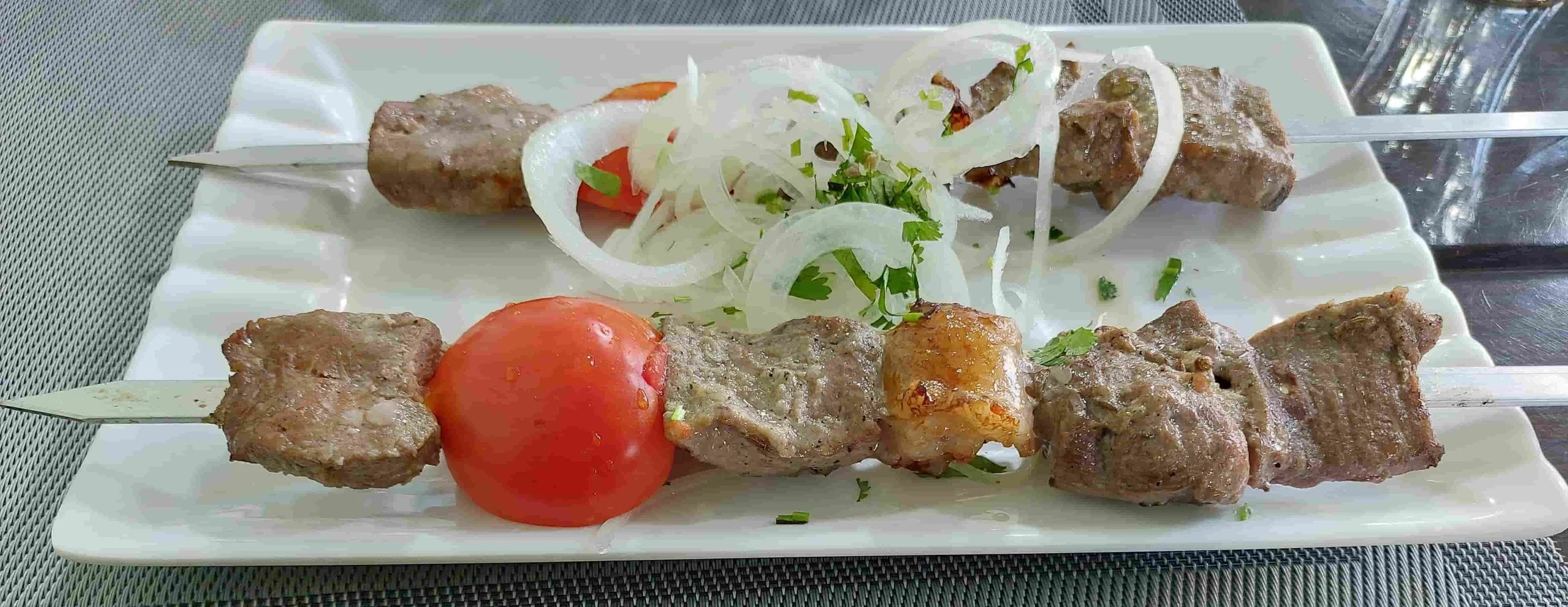
shashlik
grilled meat skewers
What is it?
Shashlik is the Uzbek version of shish kebab, popular throughout Central Asia and beyond. It consists of marinated chunks of meat grilled on a skewer, a dish that many cultures around the world have their own version of.
What is in it?
Traditionally made with lamb, though beef and chicken versions are also common. The marinade varies by chef, with no fixed recipe. Sometimes, pieces of fat are added for extra flavour, along with mushrooms or vegetables such as tomatoes. It’s often served with a simple salad or a generous portion of chopped onions.
Where can I eat it?
One of the five staple Uzbek dishes, alongside plov, manti, lagman, and shurpa, shashlik is widely available in nearly every traditional restaurant across Uzbekistan.
Dairy and gluten free.
breads & pastries
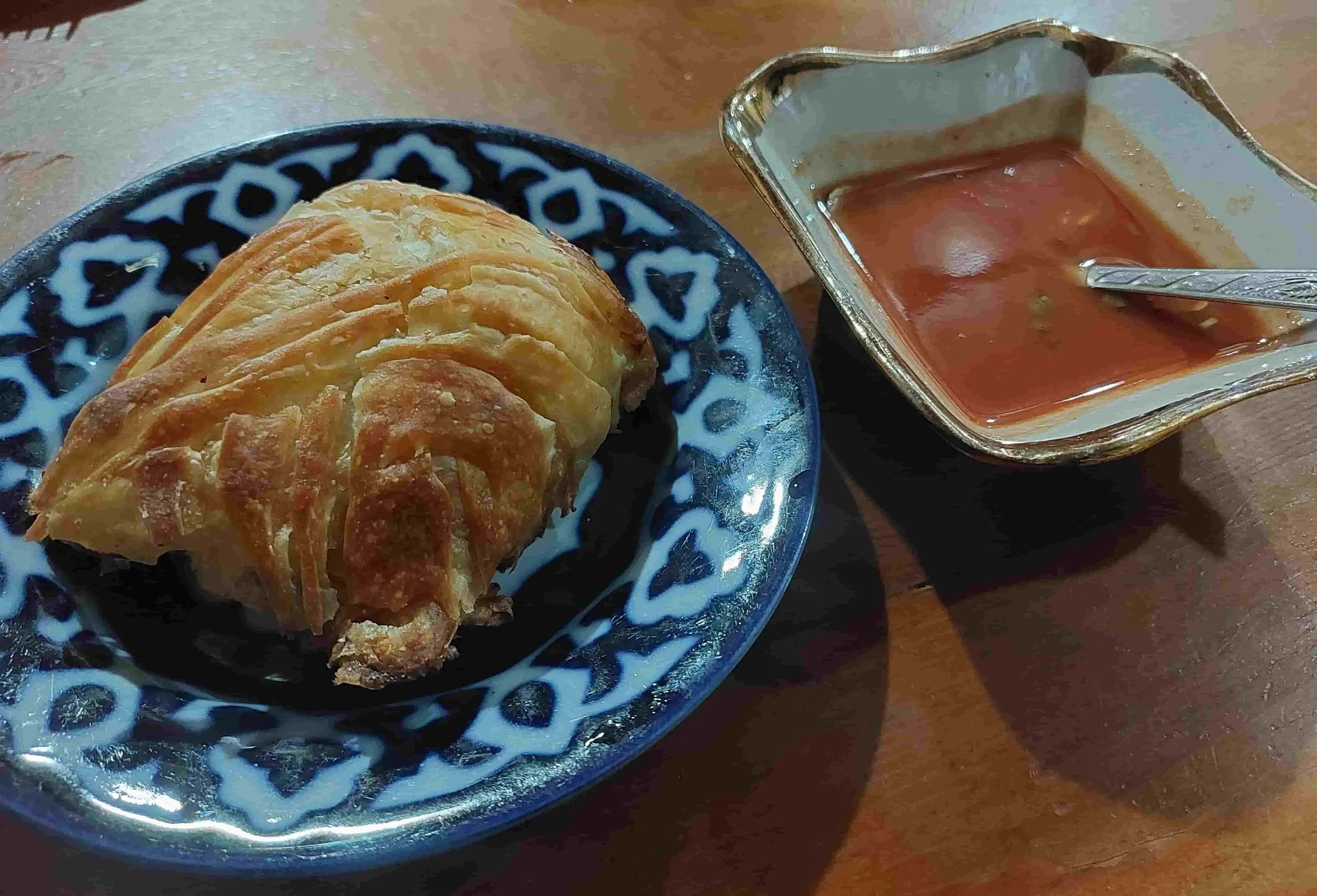
samsa
baked meat pastry
What is it?
Samsa is a popular Uzbek pastry, enjoyed across Central Asia. Although its name comes from samosa, it is quite different from the famous Indian snack. Rather than being deep fried, samsa is baked in a tandoor or oven until the pastry turns golden and flaky, encasing a moist, savoury filling.
What is in it?
Traditionally made with puff or layered dough, samsa is most often filled with minced meat (commonly lamb or beef) and onions, though variations with potato or pumpkin are also popular.
Where can I eat it?
You can find samsa almost everywhere in Uzbekistan, from street stalls and restaurants to bakeries. It’s especially popular as a quick roadside snack, best eaten hot and fresh.
Vegetarian versions available; usually dairy free.
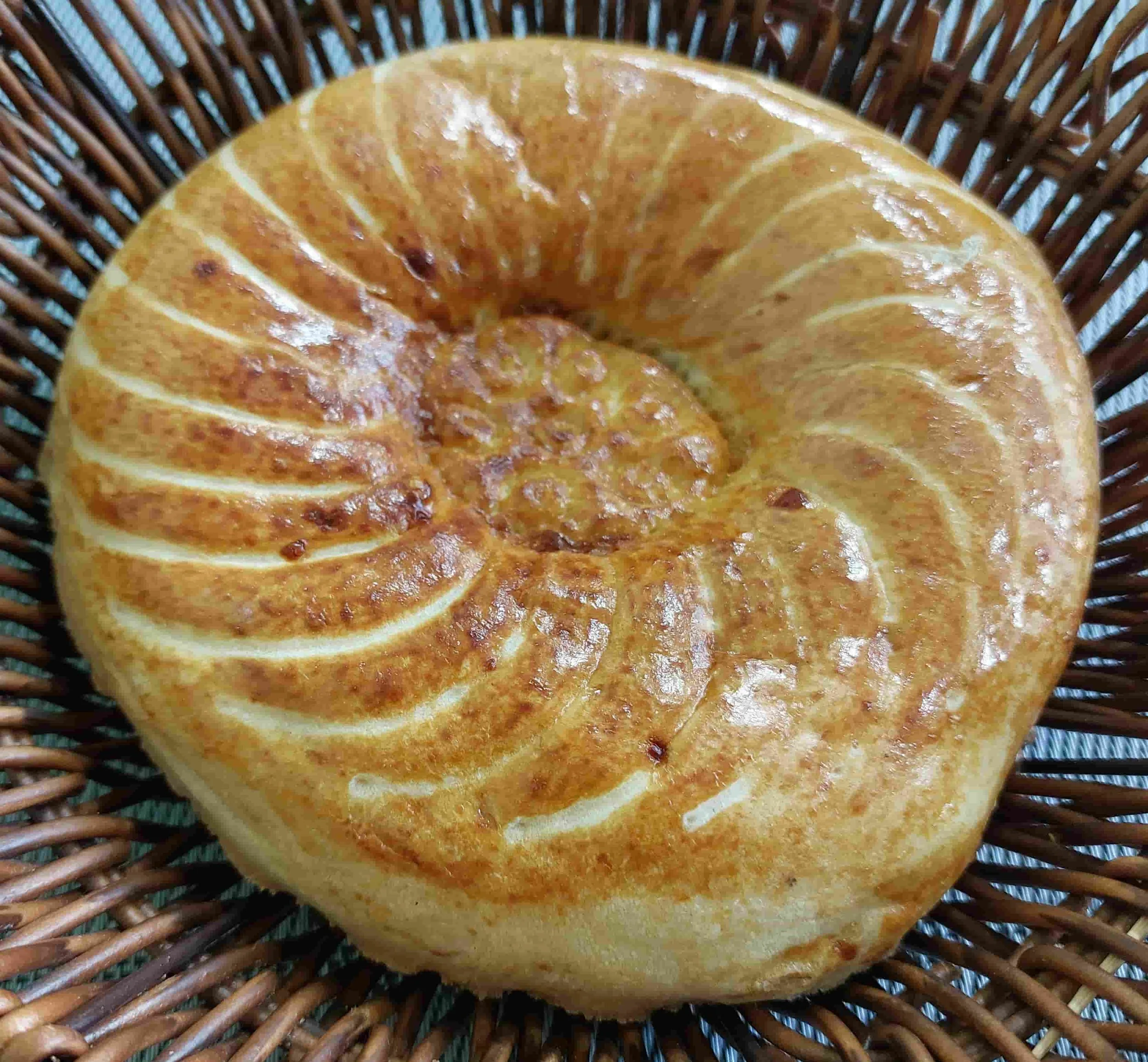
obi non
traditional flatbread
What is it?
Obi Non is a traditional Uzbek bread and an essential part of nearly every meal. Each region, and sometimes each city, has its own variation. It’s customarily torn by hand rather than cut with a knife. Baked in a clay tandir oven, it often features decorative patterns on top.
What is in it?
The dough is made from flour, water, salt, and yeast. Variations may include toppings or fillings such as sesame or nigella seeds, raisins, or nuts.
Where can I eat it?
You’ll find Obi Non throughout Uzbekistan. It’s commonly served with meals at restaurants, provided at breakfast in hotels, and sold by street vendors.
Vegan & dairy free.
Ingredients listed reflect common or typical components of this dish as served in restaurants or street‑food vendors. Variations by region, season, or vendor are common. This information is provided for general reference only. If you have dietary restrictions or allergies, please verify ingredient details independently. We assume no liability for accuracy or outcomes.
