must-try food Romania
our top 5 traditional Romanian foods you have to try
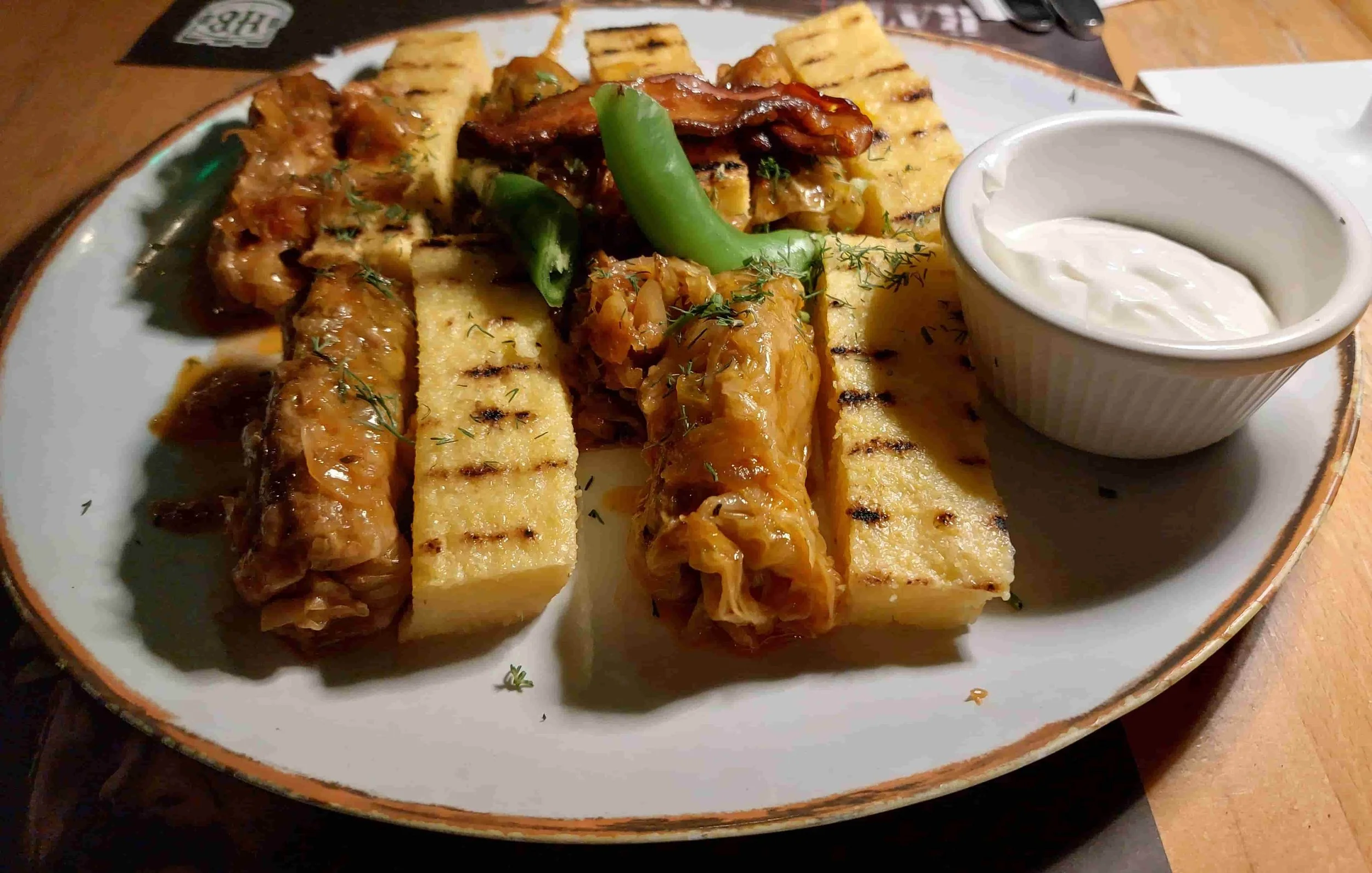
sarmale
stuffed cabbage rolls
What is it?
Sarmale are one of Romania’s most traditional and delicious dishes. These are cabbage rolls stuffed with a mixture of minced meat and rice, slow cooked in a tomato based sauce. The dish has Ottoman roots and is popular across much of Eastern Europe and the Balkans, with local variations found in countries like Bosnia, Bulgaria, Hungary, and Ukraine, but it has become resoundingly Romanian, often regarded as the country’s national dish.
What is in it?
Ground pork (often mixed with beef), rice, finely chopped onions and herbs (notably dill and/or thyme), wrapped in sour or fermented cabbage leaves, slow cooked in tomato sauce (with bay leaves and occasionally smoked meat). Served with mămăligă (polenta) or bread and smântână (sour cream).
Where can I eat it?
You’ll find sarmale throughout Romania served on many traditional menus, Hanu' Berarilor Casa Oprea Soare in Bucharest serve some amazing ones with grilled mămăligă (polenta).
Vegetarian versions occasionally available, dairy free without sour cream, gluten free.
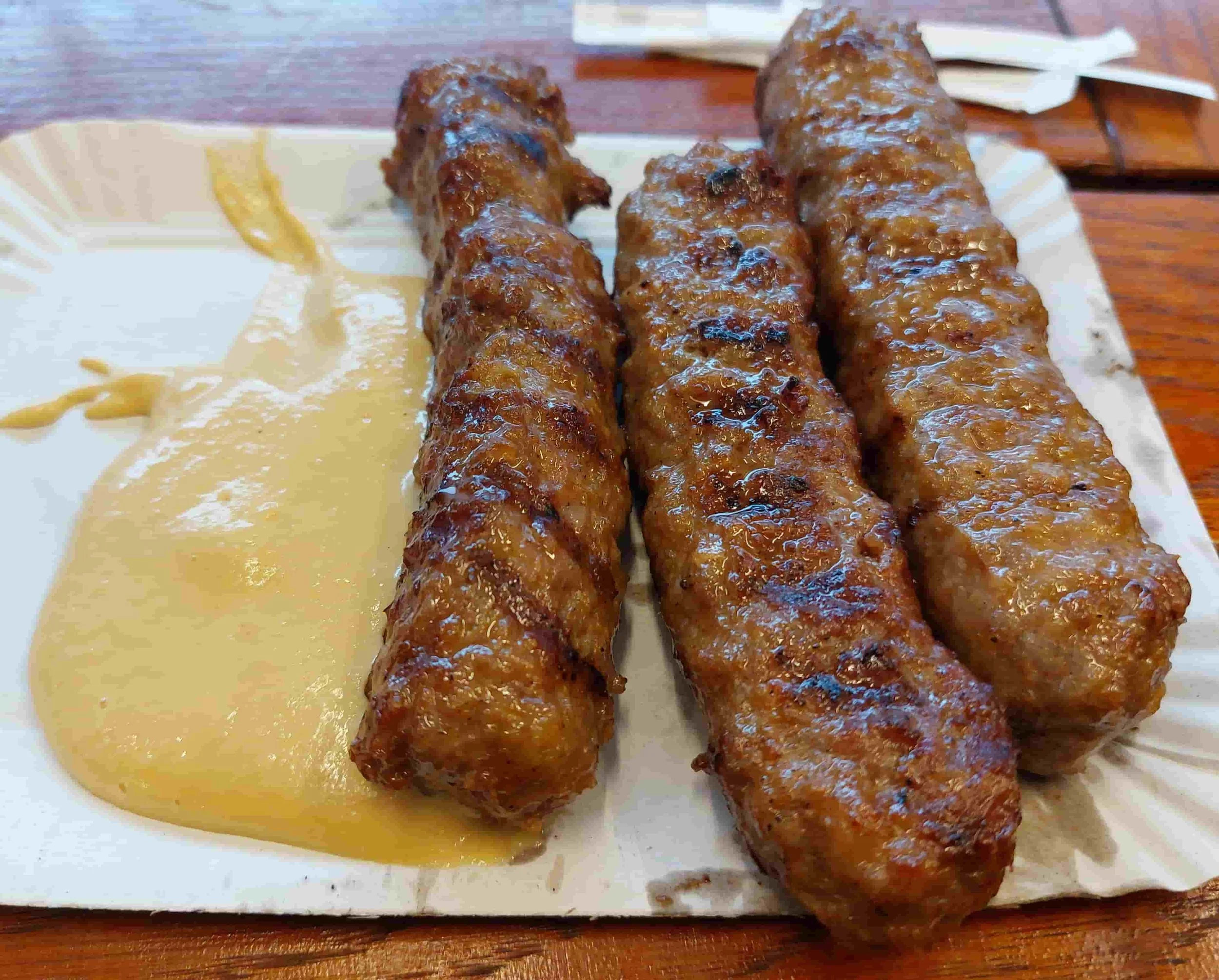
mici
grilled minced meat
What is it?
Mici, also known by their longer name mititei (“the little ones”), are Romania’s famous grilled skinless sausages made from a mixture of ground meats and aromatic spices. The dish was inspired by Balkan ćevapi, but Romanian mici are larger, juicier, and more finely ground, with a distinctive flavour from garlic, thyme, and a hint of baking soda that gives them a light, springy texture.
What is in it?
Traditionally, a mixture of beef and pork, seasoned with garlic, thyme, black pepper, and paprika. The mixture is rolled into short cylinders (usually about the length of a finger), grilled over charcoal, and served hot with mustard and bread, sometimes with pickles or fries on the side.
Where can I eat it?
You’ll find mici everywhere in Romania, at street stalls, beer gardens, markets, and traditional restaurants.
Dairy and gluten free.
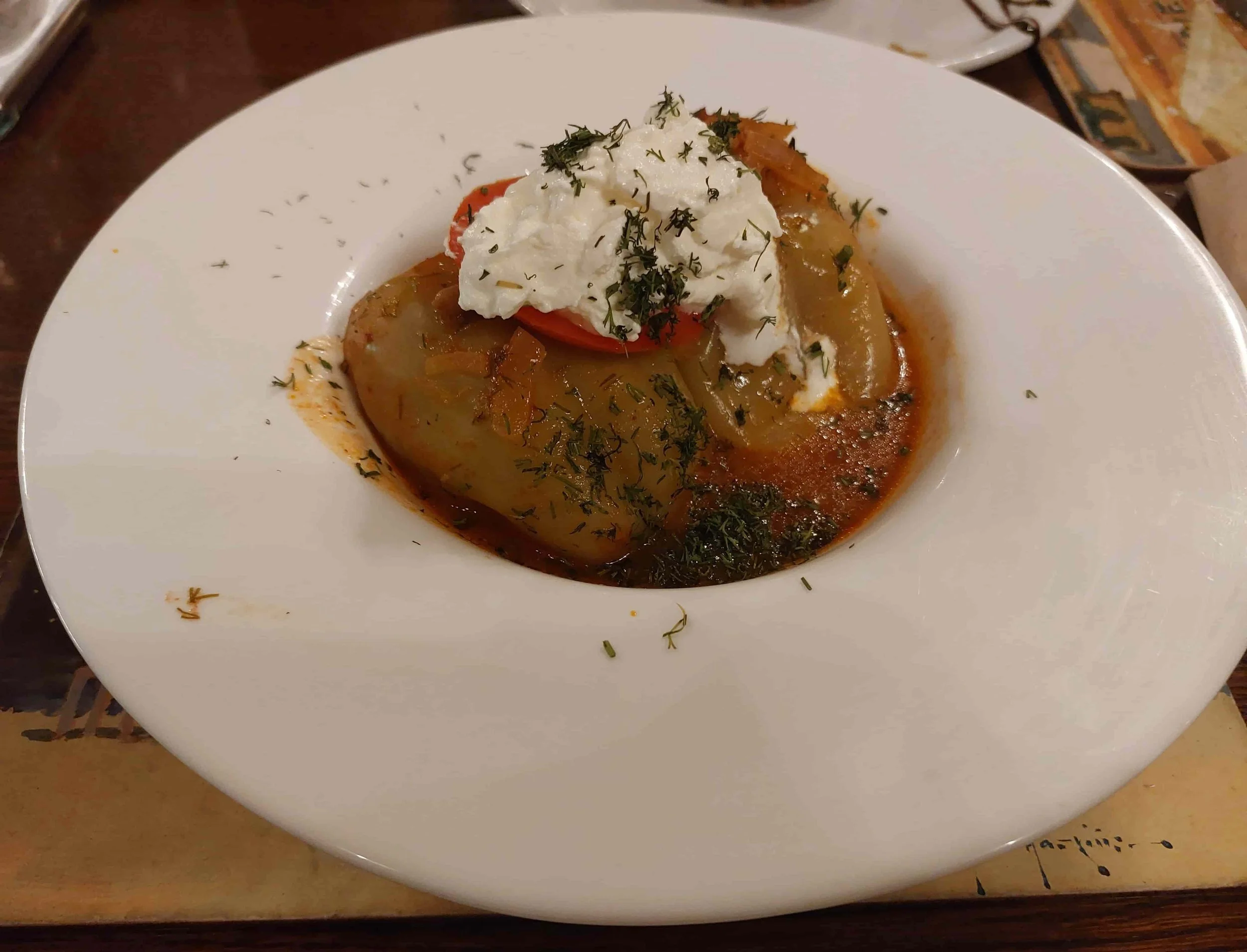
ardei umpluţi
stuffed peppers
What is it?
Ardei umpluţi means “stuffed peppers.” Large sweet bell peppers are filled with a savoury mixture of minced meat, rice, onions, and herbs, then cooked slowly in a light tomato sauce until the rice and meat are soft and infused with flavour. It’s a close relative of sarmale (stuffed cabbage rolls).
What is in it?
Bell peppers (usually yellow or red), stuffed with a mix of minced pork or beef (or both), rice, onion, and fresh herbs such as dill and parsley. The sauce is made from tomatoes, garlic, and bay leaf, sometimes with sugar or paprika.
Where can I eat it?
You’ll find ardei umpluţi in many traditional Romanian restaurants and taverne, particularly in summer and early autumn when peppers are at their best. They’re usually served as a main course, often with sour cream and crusty bread or mămăligă (polenta). We had a good one at Nicorești in Bucharest.
Vegetarian versions occasionally available, dairy free without sour cream, gluten free.
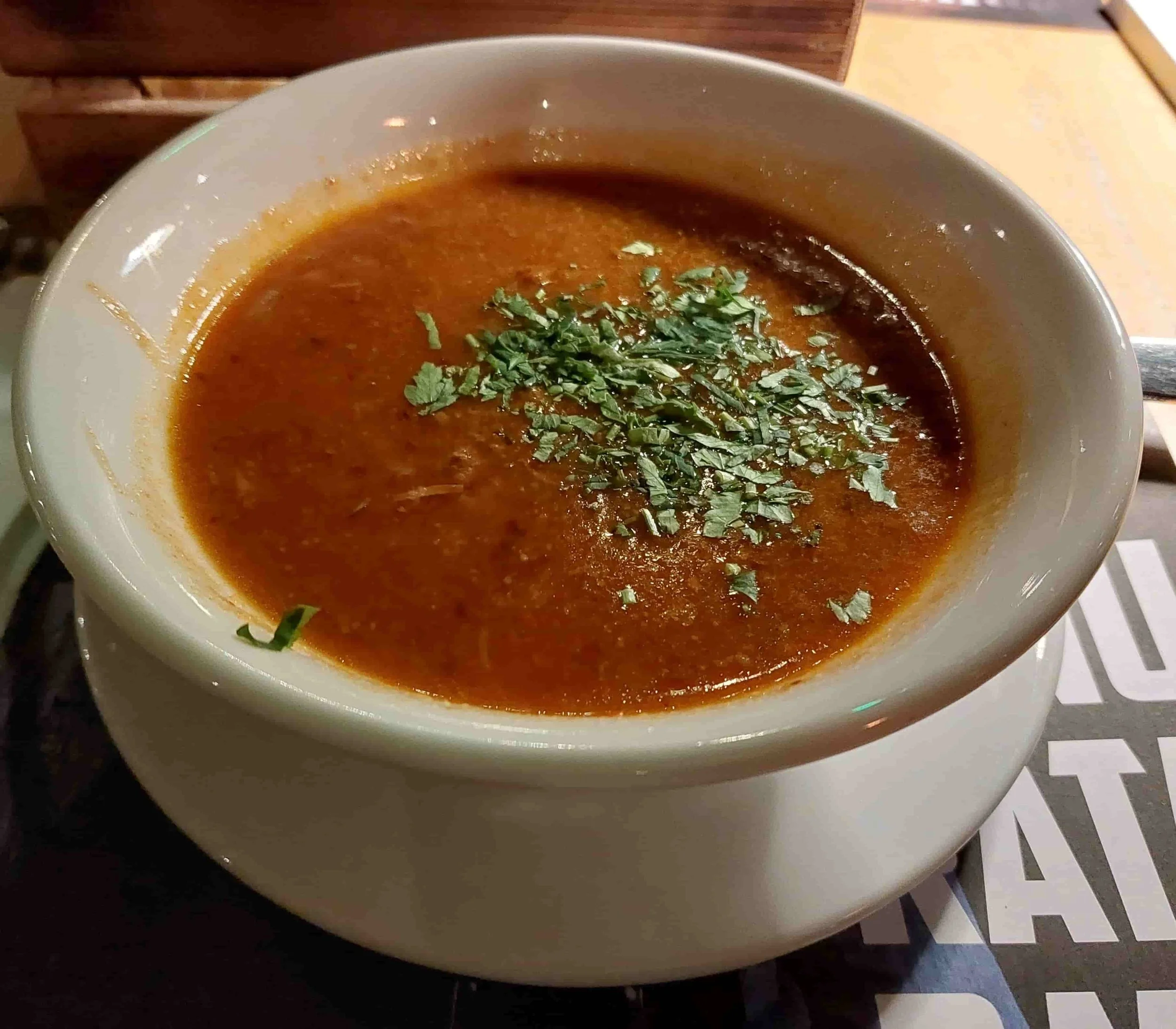
gulas soup
beef & paprika soup
What is it?
Romanian goulash is derived from the Hungarian original but has evolved into a lighter, soup style version rather than the thick stew served in Hungary. In Romania, gulaș supă is typically enjoyed as a starter, not a main dish. It has a slightly spicy, paprika based broth with tender beef, potatoes, carrots, and peppers, and often tomato.
What is in it?
Beef (sometimes pork), potatoes, carrots, onions, bell peppers, tomato paste, paprika, garlic, and bay leaf, simmered in broth and finished with a sprinkle of parsley. Its often served with bread.
Where can I eat it?
You’ll find gulaș supă in many traditional Romanian restaurants, particularly in Transylvania and western regions close to the Hungarian border, though it’s also a popular starter across the country. We had a really delicious one at Hanu' Berarilor Casa Oprea Soare in Bucharest.
Dairy & gluten free.
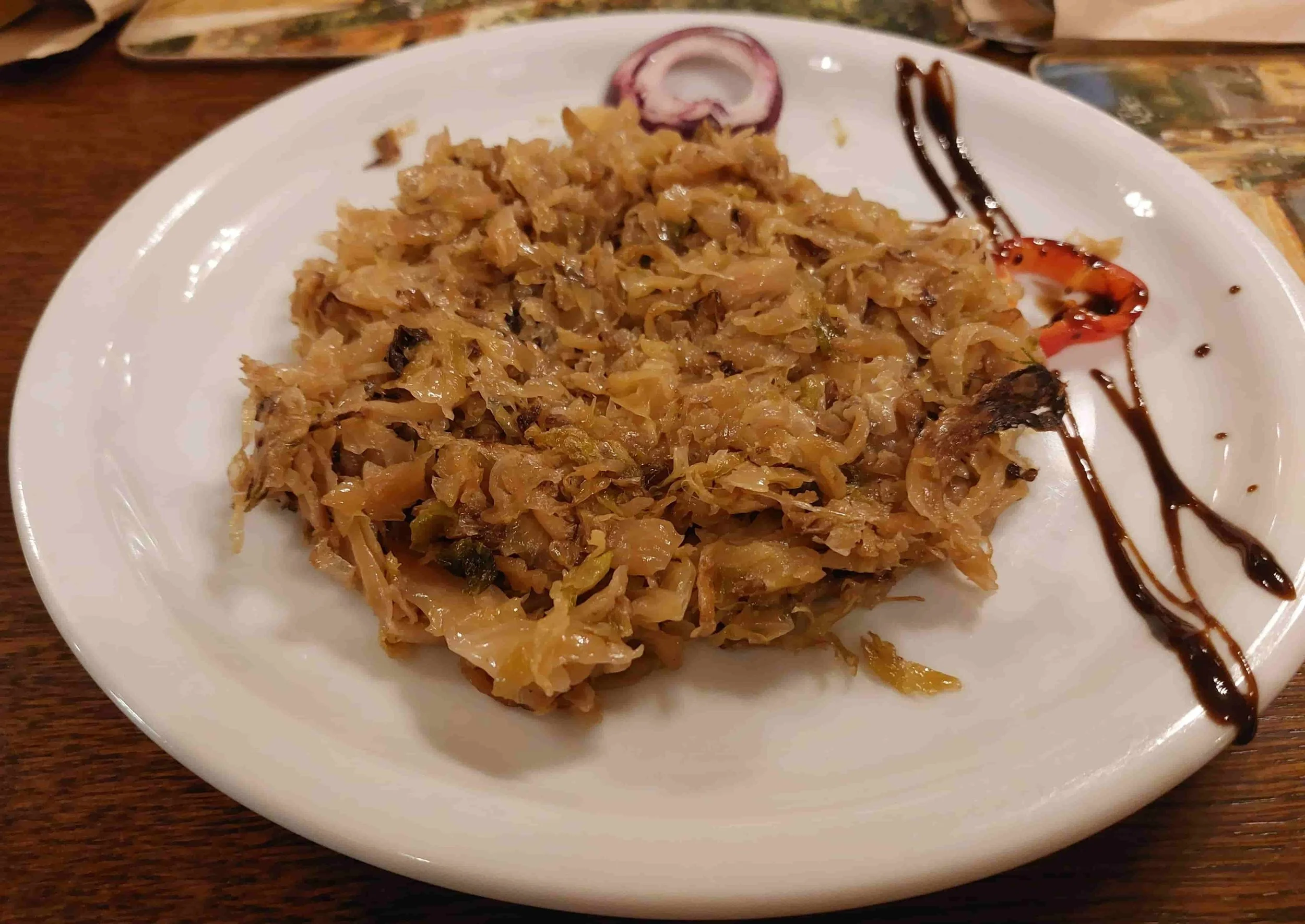
varză călită
braised cabbage
What is it?
Varză călită is a traditional Romanian braised cabbage dish, often cooked with pork and tomatoes. The name literally means “fried” or “braised cabbage.” It’s a humble, home style dish found across Romania, especially in winter when cabbage is plentiful. Depending on the recipe, it can be a side dish or a main, and is made with either fresh cabbage (varză dulce) or sour cabbage (varză murată), both versions are traditional.
If you’re familiar with German sauerkraut, think of varză călită as its milder cousin, less sharp or acidic, slow cooked with tomato and often meat, giving it a deeper, slightly sweet flavour.
What is in it?
Shredded cabbage, onions, oil or lard, tomato paste or chopped tomatoes, and bay leaf, seasoned with salt, pepper, and dill. Versions include smoked or fresh pork, ribs, sausage, or bacon.
Where can I eat it?
You’ll find varză călită in traditional Romanian restaurants and taverne, often served with mămăligă (polenta) or crusty bread. It’s particularly common in Bucharest and southern Romania, where it’s a winter staple and a favourite comfort food. Some restaurants serve it as a side to sarmale (stuffed cabbage rolls), while others offer it as a main dish.
Vegetarian versions available, dairy & gluten free.
Ingredients listed reflect common or typical components of this dish as served in restaurants or street‑food vendors. Variations by region, season, or vendor are common. This information is provided for general reference only. If you have dietary restrictions or allergies, please verify ingredient details independently. We assume no liability for accuracy or outcomes.
