must-try food Bulgaria
our top 5 traditional Bulgarian foods you have to try
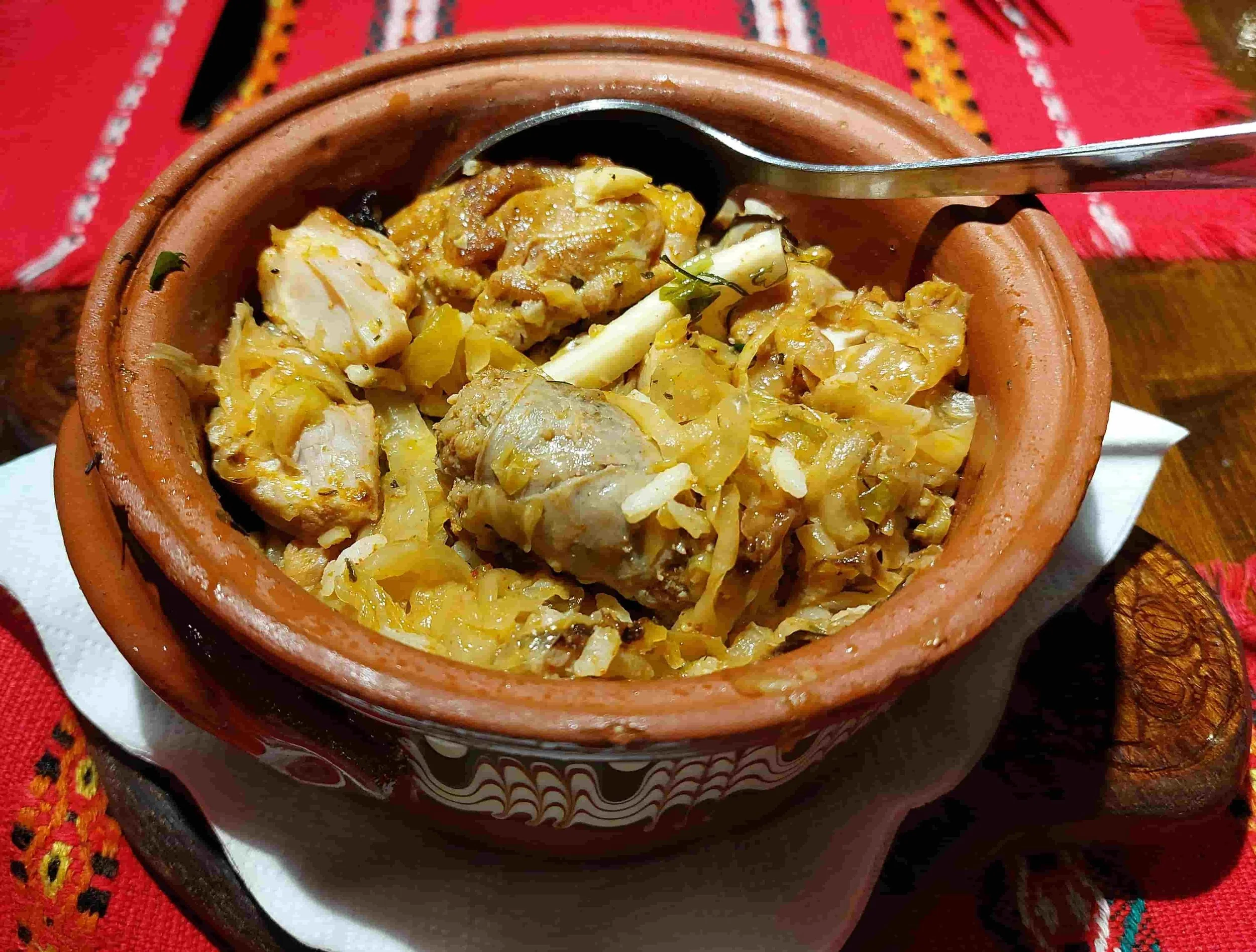
kapama
sauerkraut & meat stew
What is it?
Kapama (Капама) is one of Bulgaria’s most traditional slow baked meat dishes and in my opinion, its best, especially associated with the southwest region and festive occasions like New Year and big family celebrations. It’s made by layering sauerkraut, rice, and several kinds of meat and local sausages in a clay pot, then baking it gently for hours with spices and a little red wine until everything is tender and delicious. Proper kapama is never just one meat and fresh cabbage, the equation for great, authentic kapama is, multiple meats + sauerkraut + long, slow cooking = amazing kapama.
What is in it?
Kapama is made by layering sauerkraut, rice, and a mixture of several meats, typically pork, beef or veal, and chicken or turkey, along with local sausages such as Banski sudzhuk and sometimes Banska kŭrvavitsa. The pot is enriched with pork fat, seasoned with black peppercorns, bay leaf, garlic, allspice, and red wine.
Where can I eat it?
You’ll find traditional kapama in Bansko and the surrounding Pirin region, where it’s considered a signature local dish and appears on almost all mehana style restaurant menus. It’s also served in some Bulgarian restaurants elsewhere in the country for example, Hadjidraganov's Cellars in Sofia, where we had a delicious one. It’s usually brought to the table still in it's clay pot.
Dairy & gluten free.
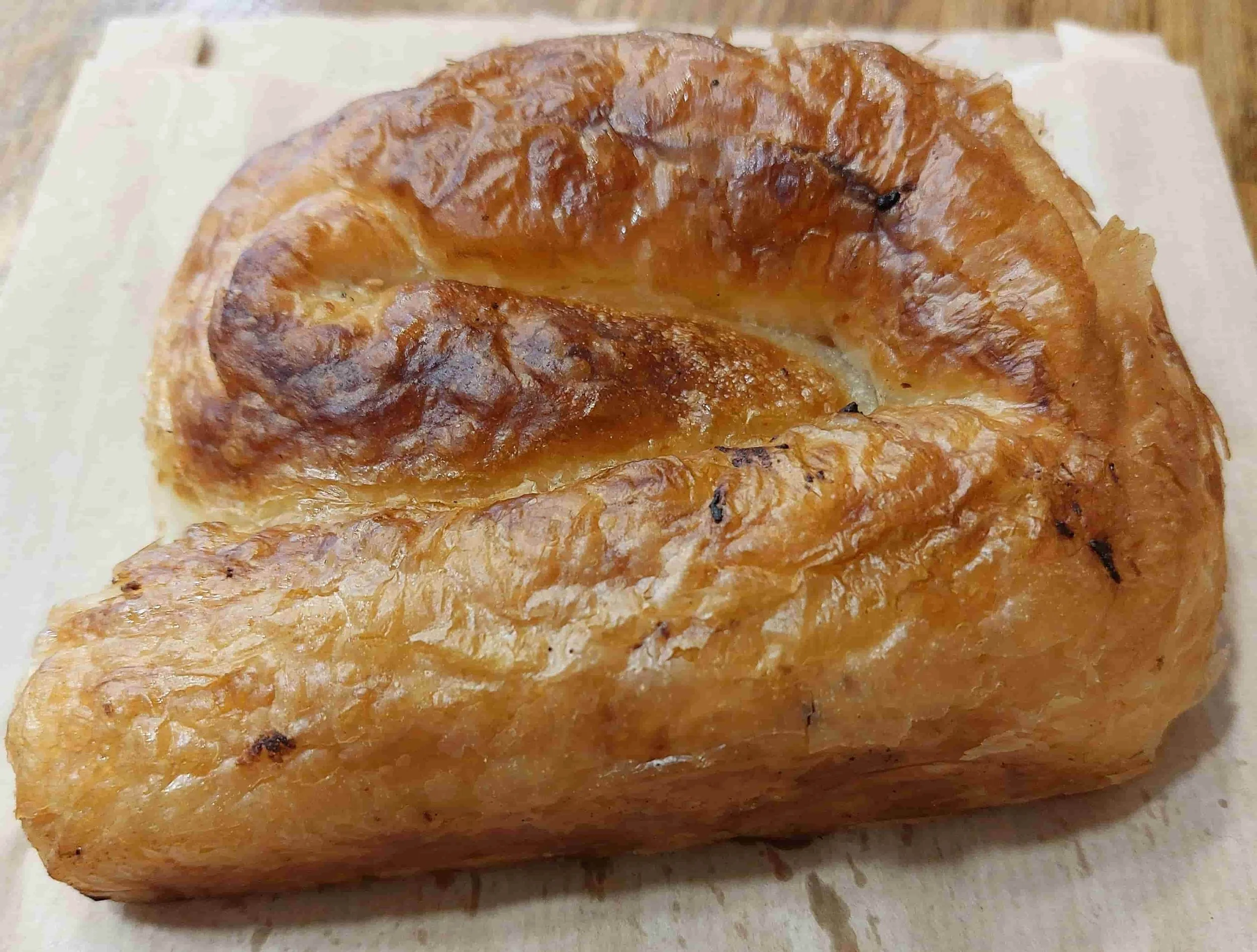
banitsa
filo pie
What is it?
Banitsa is one of Bulgaria’s most traditional and recognisable foods, and one of the most delicious. It’s a baked filo pastry pie filled with cheese and eggs, usually eaten for breakfast or as a snack. It’s the Bulgarian version of the Balkan börek, but with a unique filling. Flaky on the outside and soft and cheesy inside, it’s a great pastry.
What is in it?
Thin sheets of filo pastry (called kori), layered or rolled with a mixture of eggs, yogurt, and sirene, a crumbly, salty white brined cheese similar to feta. Some versions include spinach, pumpkin, leeks, or cabbage, but the classic is the savoury cheese banitsa (sirene banitsa).
Where can I eat it?
You’ll find banitsa all over Bulgaria, in bakeries and cafés, sold hot and fresh in the morning.
Vegetarian.
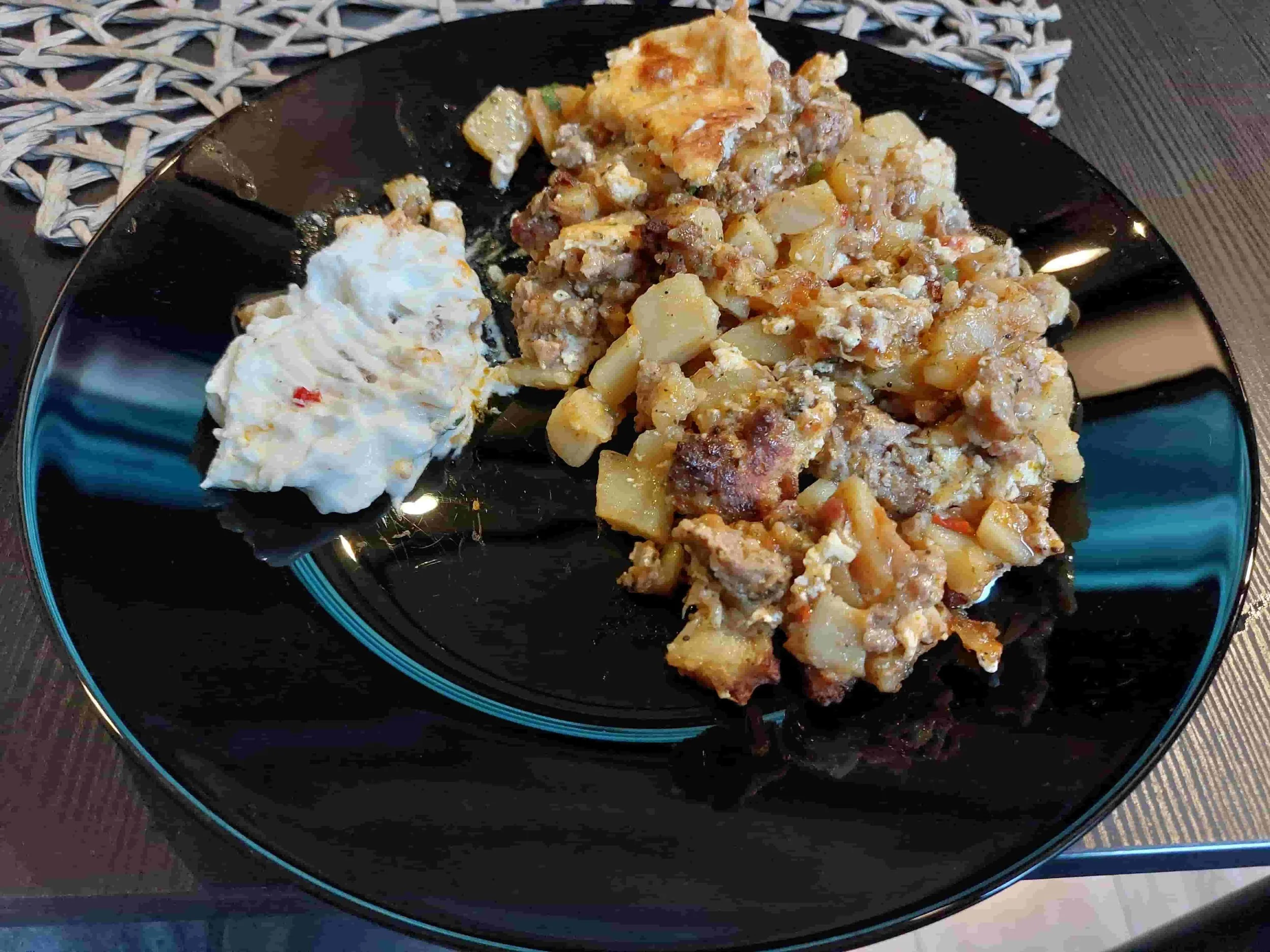
moussaka
meat & potato bake
What is it?
Moussaka (Мусака) in Bulgaria is a baked casserole of minced meat, potatoes, and eggs, layered and topped with a creamy yogurt and egg mixture. Though the dish shares its name with the Greek version, the Bulgarian moussaka is quite different, it’s made with potatoes instead of aubergines (eggplant) and doesn’t include a béchamel sauce. It’s lighter but still really delicious, with a slightly tangy crust.
What is in it?
Layers of minced pork, potatoes, onions, carrots, and sometimes tomatoes or peppers, seasoned with paprika, parsley, and black pepper. Once baked, it’s topped with a mixture of yogurt, eggs, and flour.
Where can I eat it?
You’ll find moussaka in plenty of traditional restaurants (mehana) throughout Bulgaria, such as at Izbata Tavern or Mehana Mamin Kolyo, both in Sofia.
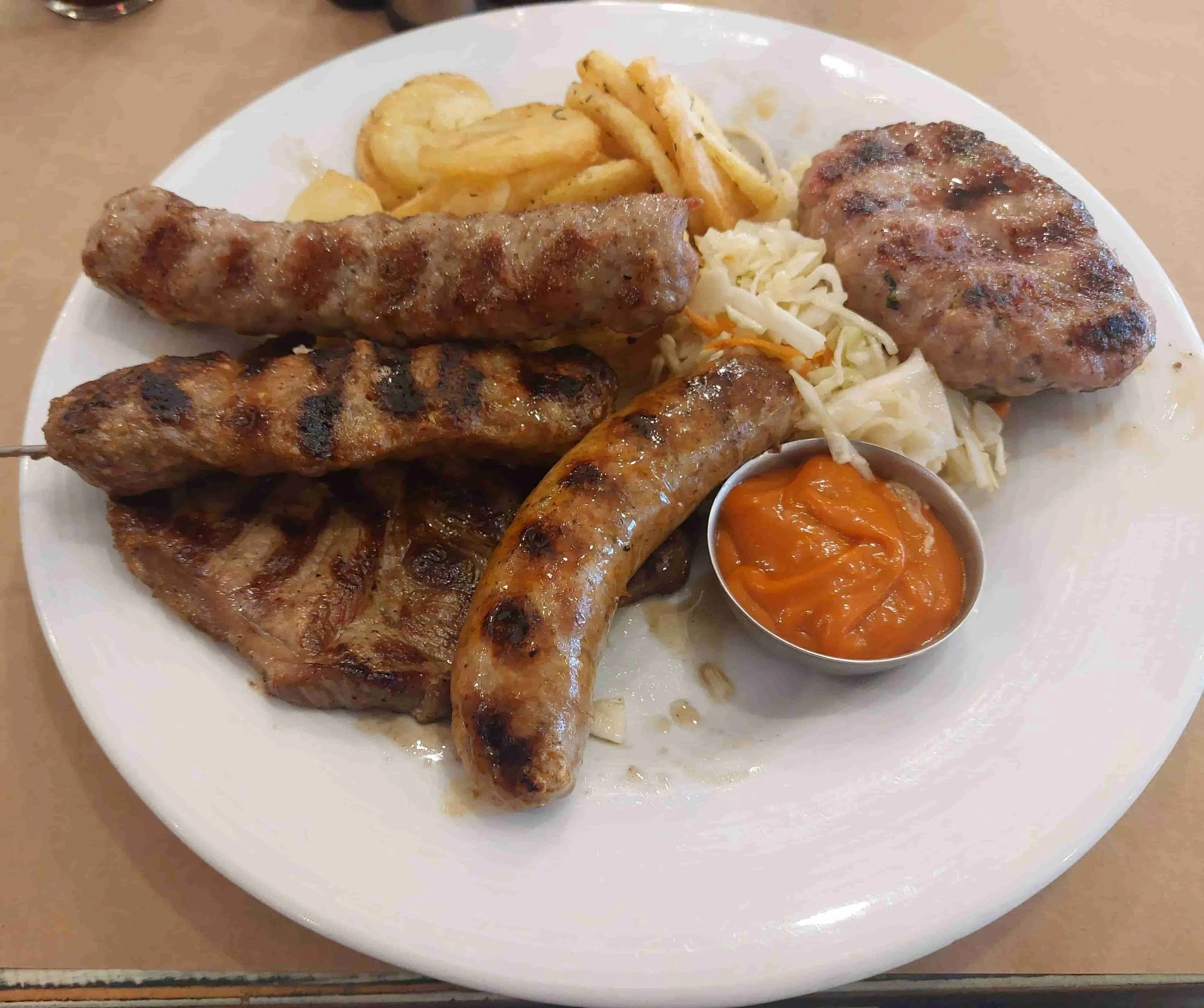
meshana skara
Bulgarian mixed grill
What is it?
I hope you like meat! Meshana skara (Мешана скара) literally means “mixed grill”, a huge plate of assorted grilled meats, usually enough for one very hungry (or very greedy) person, or to share. It showcases Bulgaria’s charcoal grilled classics: kebapche, kufte, pork steak, sausage, and sometimes skewers. Every region does it slightly differently, but the idea is always the same, a big mixed plate of Bulgarian grilled meats, usually served with simple sides like salad, chips, or lyutenitsa (a sweet roasted pepper and tomato sauce).
What is in it?
A standard meshena skara includes several different meats such as kebapche (grilled minced meat sausage), kufte (minced meat patty), pork steak or pork chops, karnache (spicy Bulgarian sausage), and sometimes shishche (pork or chicken skewer). The meats are seasoned with salt, black pepper, cumin, and paprika, then grilled over charcoal. It’s commonly served with chips, lyutenitsa (pepper spread), onions, or shopska salad.
Where can I eat it?
You can find meshena skara in almost every restaurant that specialises in grilled foods in Bulgaria. We had a great one at Skarabar, which has three locations in Sofia.
Dairy free.
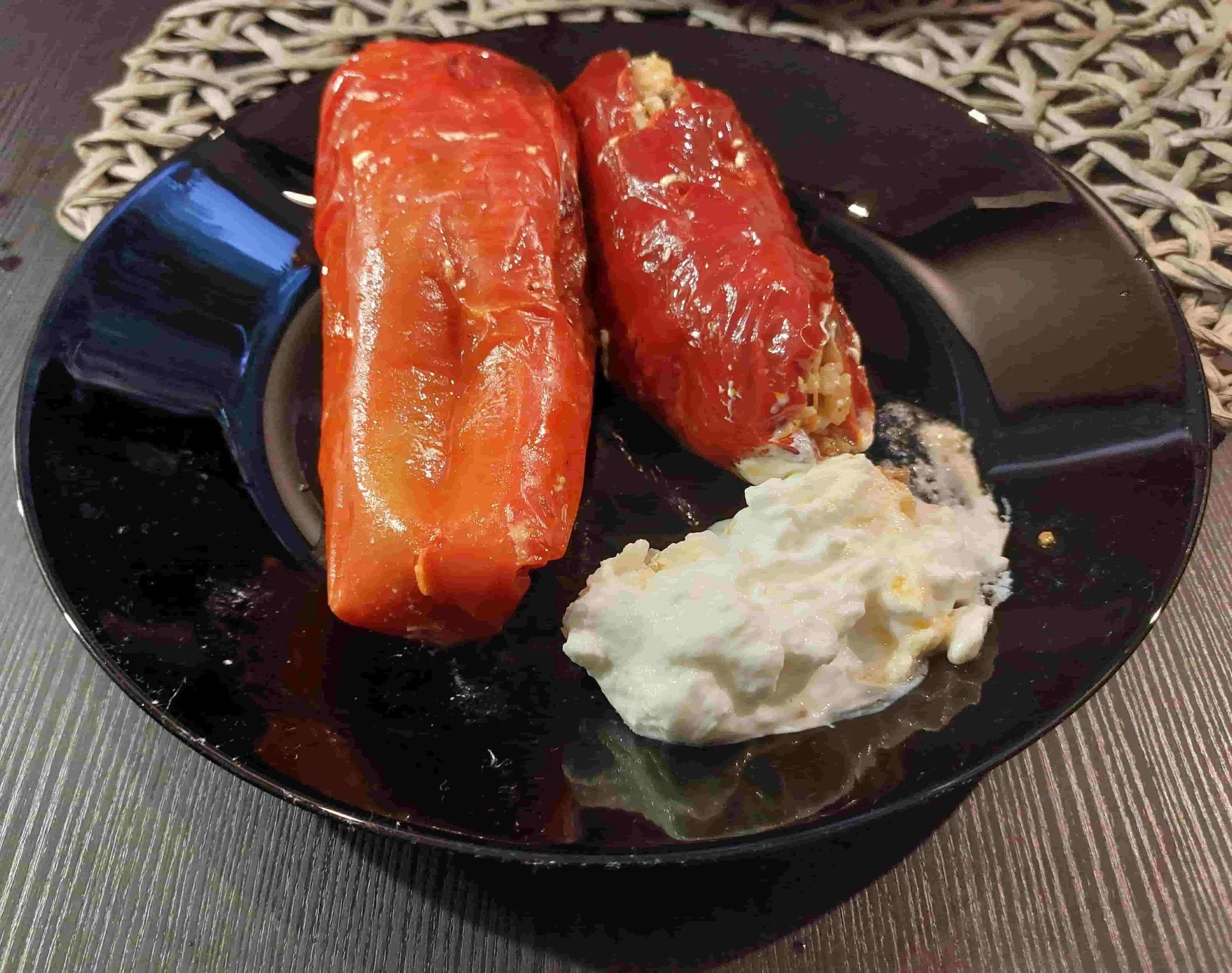
pŭlneni chushki
stuffed peppers
What is it?
Pŭlneni chushki (Пълнени чушки) are Bulgaria’s traditional stuffed peppers, a favourite home style dish made with sweet red or green peppers filled with either a rice based vegetarian mixture or a meat and rice mixture. The peppers are baked in a light tomato sauce, or sometimes simply roasted in the oven with oil. Some regions also add a yogurt and egg topping poured over the peppers near the end of baking, creating a creamy, slightly tangy crust, a very Bulgarian touch.
What is in it?
Stuffed peppers are usually filled with a mixture of rice, onions, carrots, and paprika, often with parsley or dill. The meat version adds minced pork.
Where can I eat it?
You’ll sometimes see pŭlneni chushki on traditional menus, for example at Mehana Mamin Kolyo in Sofia, but it’s much more common as a home cooked dish than a restaurant one
Vegetarian versions available, gluten free.
Ingredients listed reflect common or typical components of this dish as served in restaurants or street‑food vendors. Variations by region, season, or vendor are common. This information is provided for general reference only. If you have dietary restrictions or allergies, please verify ingredient details independently. We assume no liability for accuracy or outcomes.
