must-try food Hong Kong
our top 5 traditional Hong Kong foods you have to try
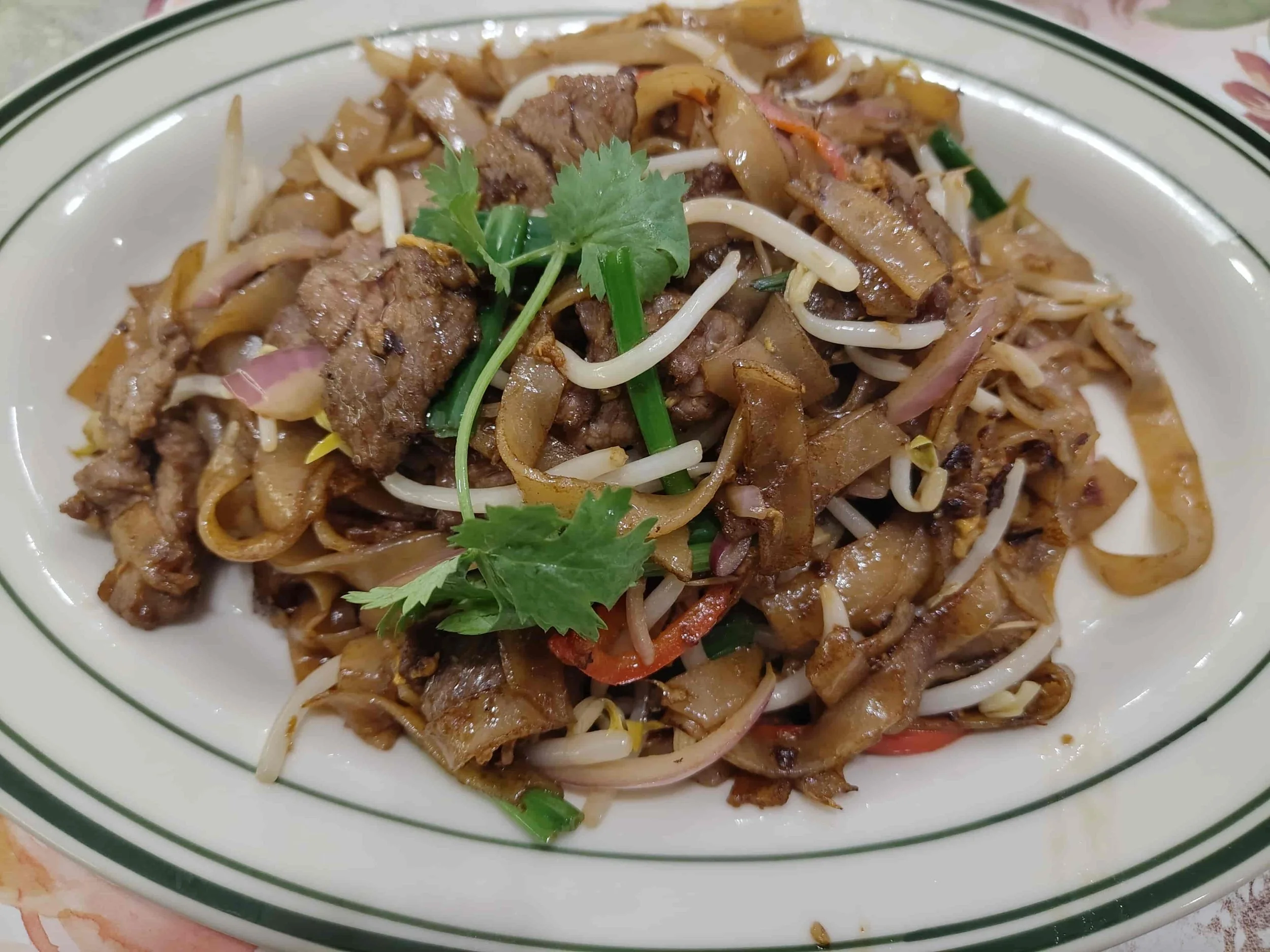
stir fried ho fun with beef
fried wide noodles & beef
What is it?
Stir fried ho fun with beef (乾炒牛河 – gon chow ngau ho) consists of wide rice noodles (ho fun) wok fried with slices of beef in a hot wok until smoky. A hallmark of a good version is wok hei (“breath of the wok”), the slightly charred, smoky flavour that comes from cooking over intense heat. The ingredients are quickly stir-fried at very high heat, allowing the noodles to pick up a characteristic smoky flavour while remaining soft and slightly chewy.
What is in it?
The dish is made with wide flat rice noodles (ho fun), sliced beef, bean sprouts, spring onions, light soy sauce and dark soy sauce. Many versions also include onion, oyster sauce, and sugar. The beef is often marinated first.
Where can I eat it?
Stir fried beef ho fun is one of the most common noodle dishes in Hong Kong and can be found throughout the city in Cantonese restaurants and cha chaan teng (Hong Kong style cafés). It is often listed in English as “beef chow fun,” “fried beef ho fun,” or “stir-fried rice noodles with beef.”
Dairy free.
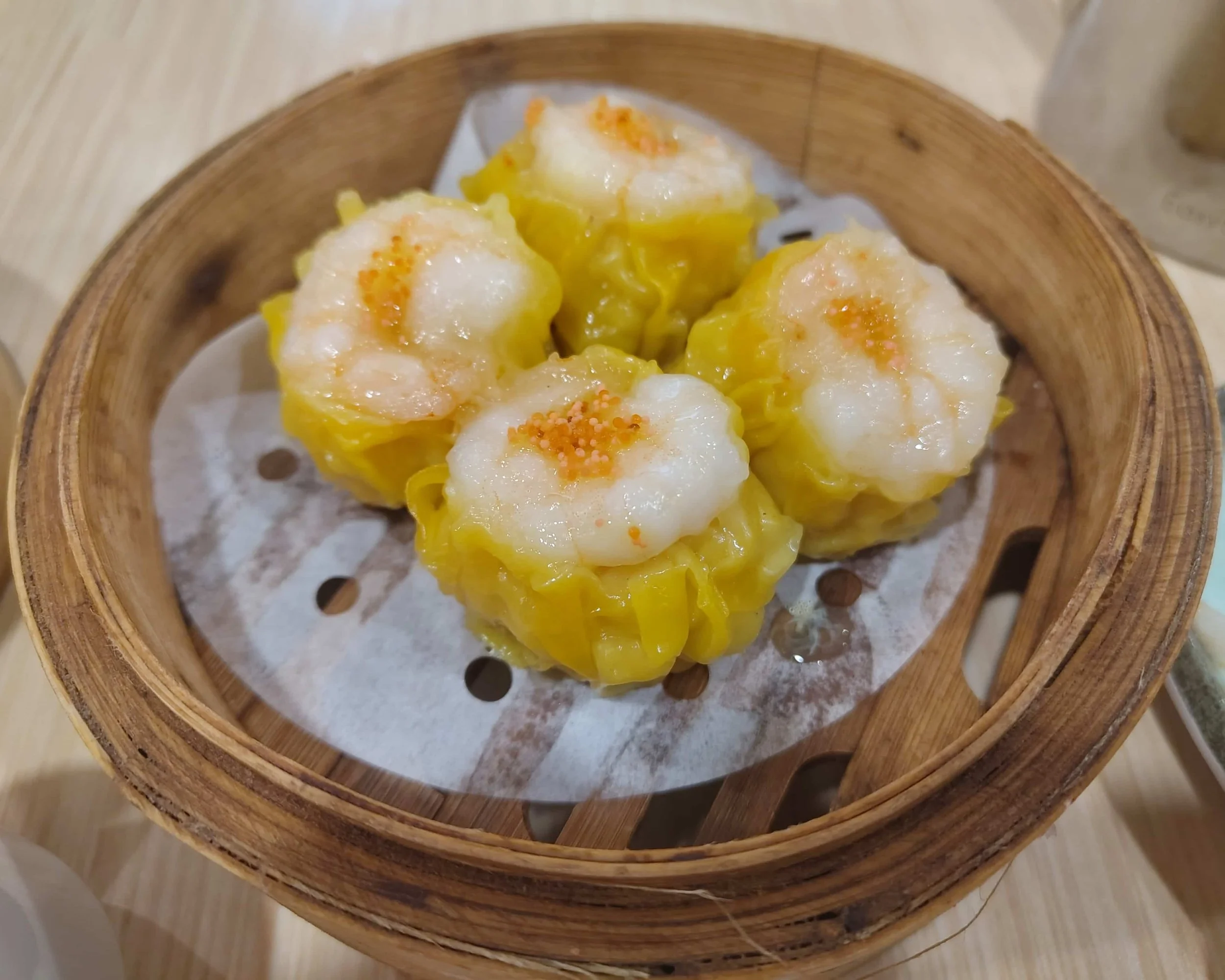
siu mai
pork & prawn dumpling
What is it?
Siu mai (燒賣) is one of the most iconic dim sum dishes. It is an open-topped dumpling filled with a mixture of minced pork and prawns (shrimp), wrapped in a thin yellow wheat wrapper gathered into a pleated cup shape. It is a staple of Cantonese dim sum and is found on virtually every dim sum menu in Hong Kong.
Siu mai is recognisable by its yellow wrappers and exposed filling, and it is typically served in bamboo steamers. It is often one of the first dishes ordered during a dim sum meal.
It is worth noting that the dim sum version is quite different from the street food siu mai sold at snack stalls in Hong Kong, which are usually made from fish paste and served with sauce. In fancier restaurants, the top is often garnished with a dot of crab roe or grated carrot.
What is in it?
Traditional Cantonese siu mai are made with a thin yellow wheat wrapper (lye water dough) filled primarily with minced pork and prawns. Many versions also include ingredients such as mushrooms, water chestnuts or bamboo shoots, and are seasoned with sesame oil, ginger, scallion, oyster sauce, sugar and white pepper.
Where can I eat it?
Siu mai is available at virtually every dim sum restaurant in Hong Kong. We had some good ones at One Dim Sum, which has a few locations across Hong Kong.
Dairy free.
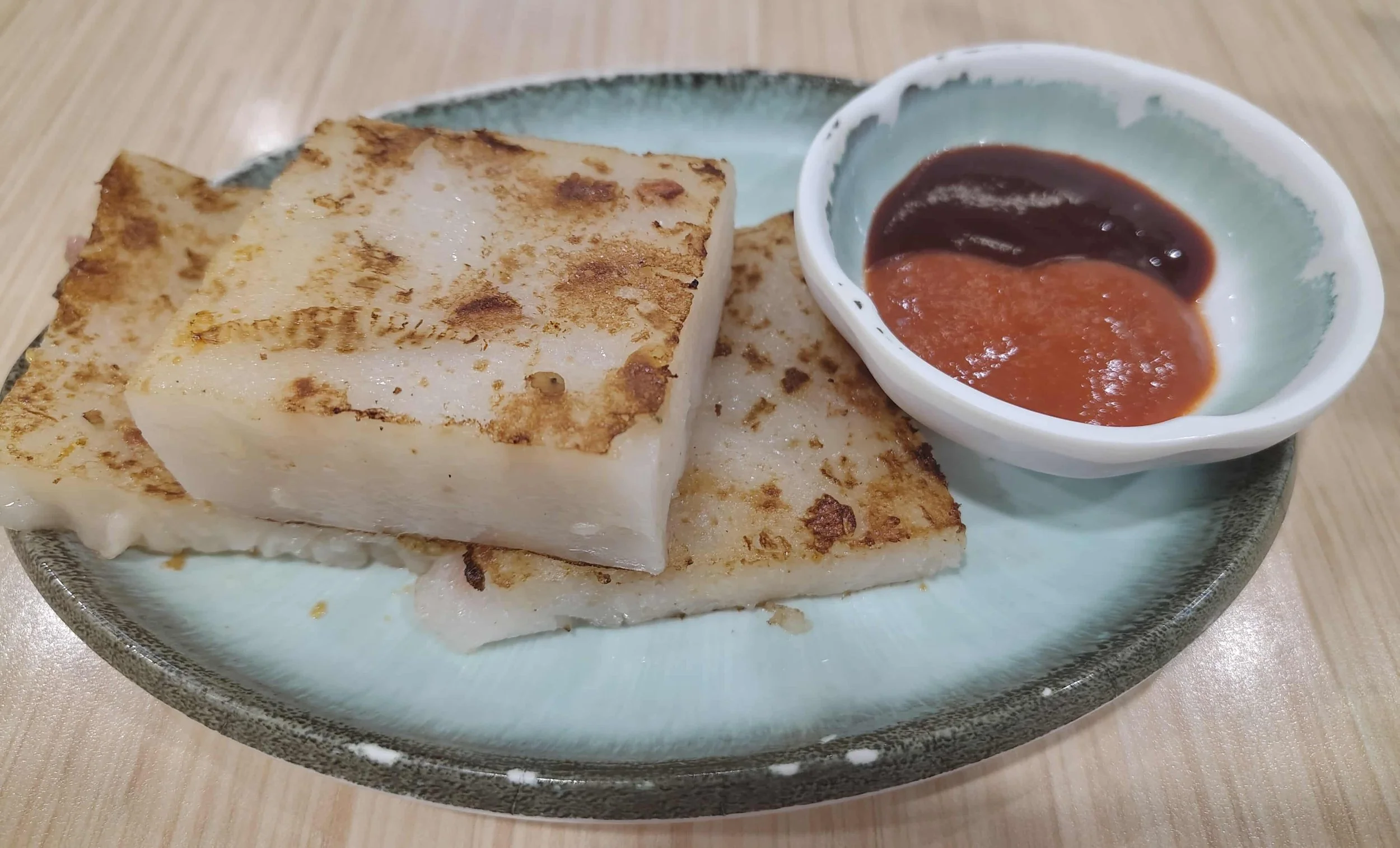
turnip cake
Savoury rice, radish cake
What is it?
Despite its English name, turnip cake is actually made from Chinese white radish (daikon) rather than turnips. It is one of the most popular dim sum dishes and consists of a savoury cake made from grated radish and rice flour, which is steamed, after steaming, the cake is cut into rectangular slices and pan fried. You will often see it called either turnip cake or radish cake in English. While “turnip cake” is the traditional translation, “radish cake” is more accurate.
What is in it?
The base is made from grated daikon radish and rice flour, which are combined into a thick mixture and steamed into a firm cake. Traditional versions often include dried shrimp, Chinese sausage (lap cheong) and dried mushrooms. Vegetarian versions are also common.
Where can I eat it?
Turnip cake is a staple of dim sum restaurants throughout Hong Kong and is almost always available, including at our go to dim sum spot, One Dim Sum.
Vegetarian versions are available, dairy free.
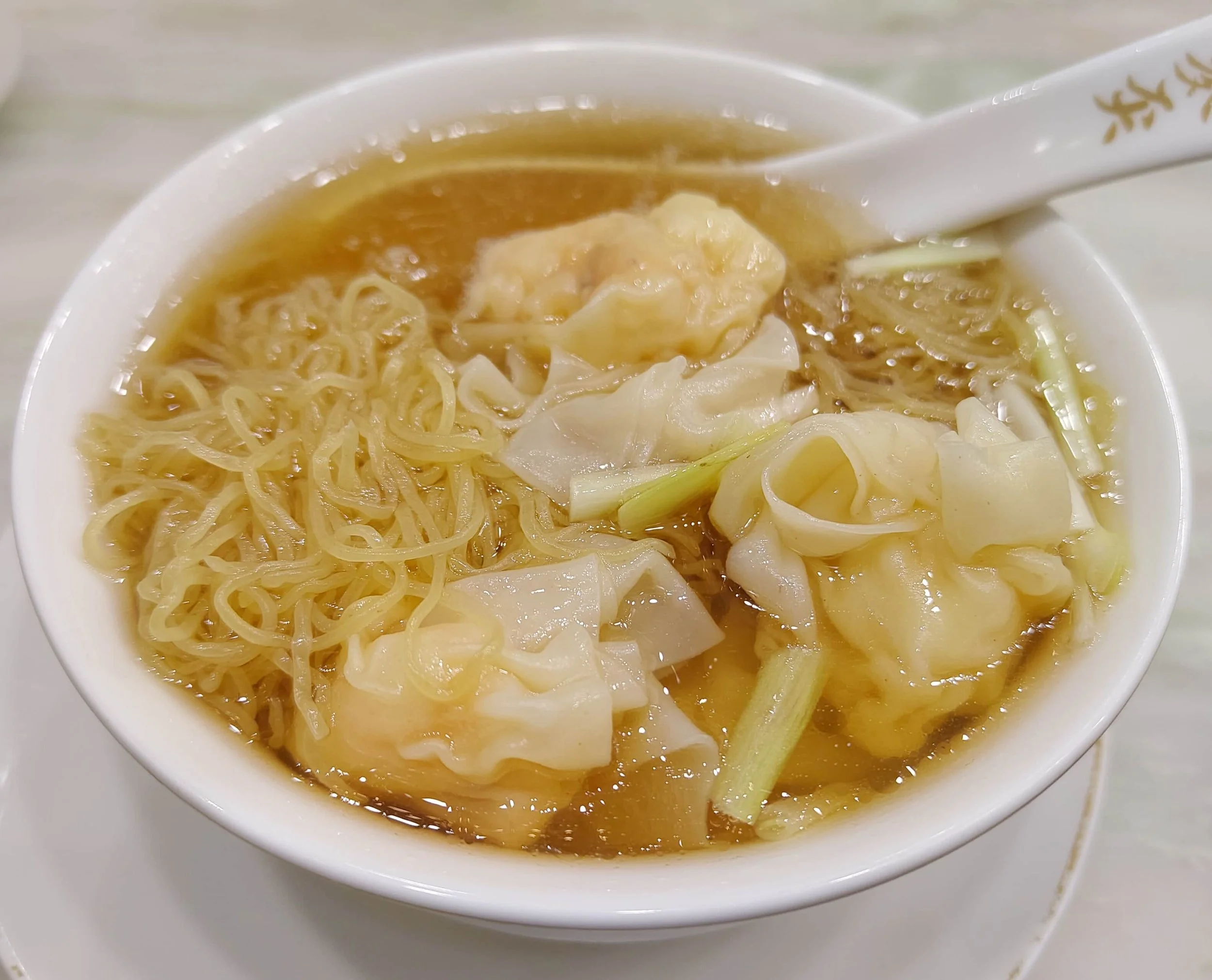
wanton noodles
noodle & wanton soup
What is it?
One of Hong Kong’s most iconic noodle dishes, wonton noodles consist of shrimp filled dumplings served in a clear broth with thin egg noodles. Despite its simple appearance, a great bowl depends on several elements being done well: springy noodles, well made wontons and a light but savoury broth.
What is in it?
Traditional Hong Kong style wontons are filled primarily with whole or chopped prawns, often with a small amount of pork. The broth is typically made from pork bones, dried seafood and other ingredients that create good flavour while remaining relatively clear and light. The noodles themselves are Cantonese egg noodles.
Where can I eat it?
Wonton noodles are available throughout Hong Kong and are a signature dish of specialist wonton noodle restaurants. A good place to try them is the chain Mak’s Noodle, which has several locations in Hong Kong.
Dairy free.
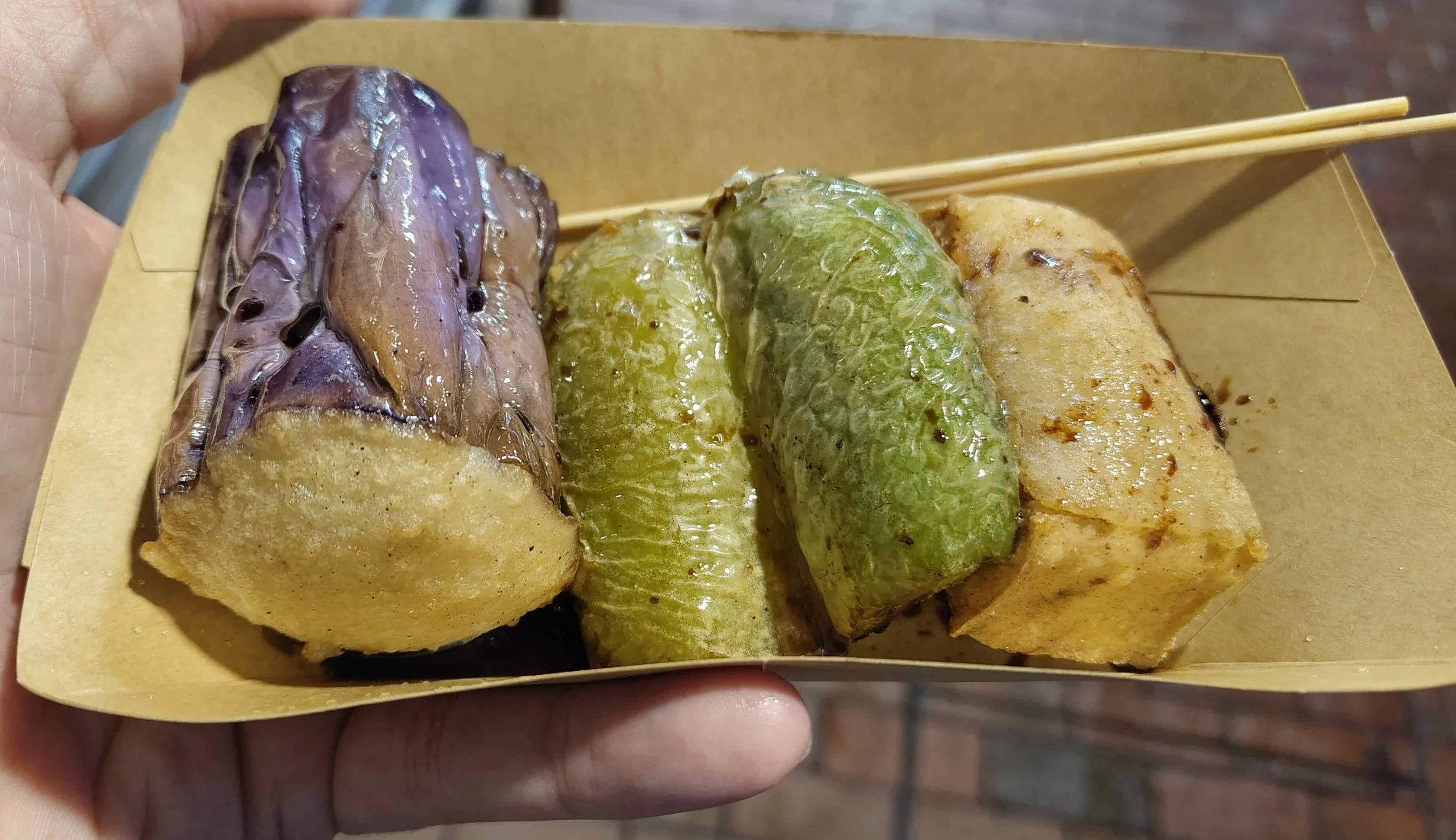
stuffed three treasures
fish paste stuffed veg
What is it?
A classic Hong Kong street food snack consisting of vegetables and tofu stuffed with seasoned fish paste, then fried and served with sauce. The name translates as “Stuffed Three Treasures,” (釀三寶, yeung saam bo) referring to the traditional combination of three different stuffed items sold together.
It is a popular item at street food stalls and markets, offering a contrast of textures between the soft vegetables, springy fish paste and crisp fried exterior.
While the classic version features three items, many vendors now offer a wider selection, and you may also encounter “Five Treasures” (五寶) platters featuring five different stuffed ingredients. Many vendors allow you to choose individual items rather than ordering a fixed set of three.
What is in it?
The stuffing is typically made from seasoned fish paste, similar to that used in fish balls. Common ingredients used as the “treasures” include:
green peppers
aubergine (eggplant)
firm tofu
Other variations may include red peppers, chillies, okra, mushrooms and bean curd skin. After being stuffed, the items are usually fried and served with sweet sauce, chilli sauce or a soy based sauce.
Where can I eat it?
Stuffed Three Treasures are commonly found at street food markets. We had some at the Temple Street Night Market.
Dairy free.
Ingredients listed reflect common or typical components of this dish as served in restaurants or street‑food vendors. Variations by region, season, or vendor are common. This information is provided for general reference only. If you have dietary restrictions or allergies, please verify ingredient details independently. We assume no liability for accuracy or outcomes.
