all the foods - Hong Kong
Here you will find a list of all the traditional cuisine we tried in Hong Kong.
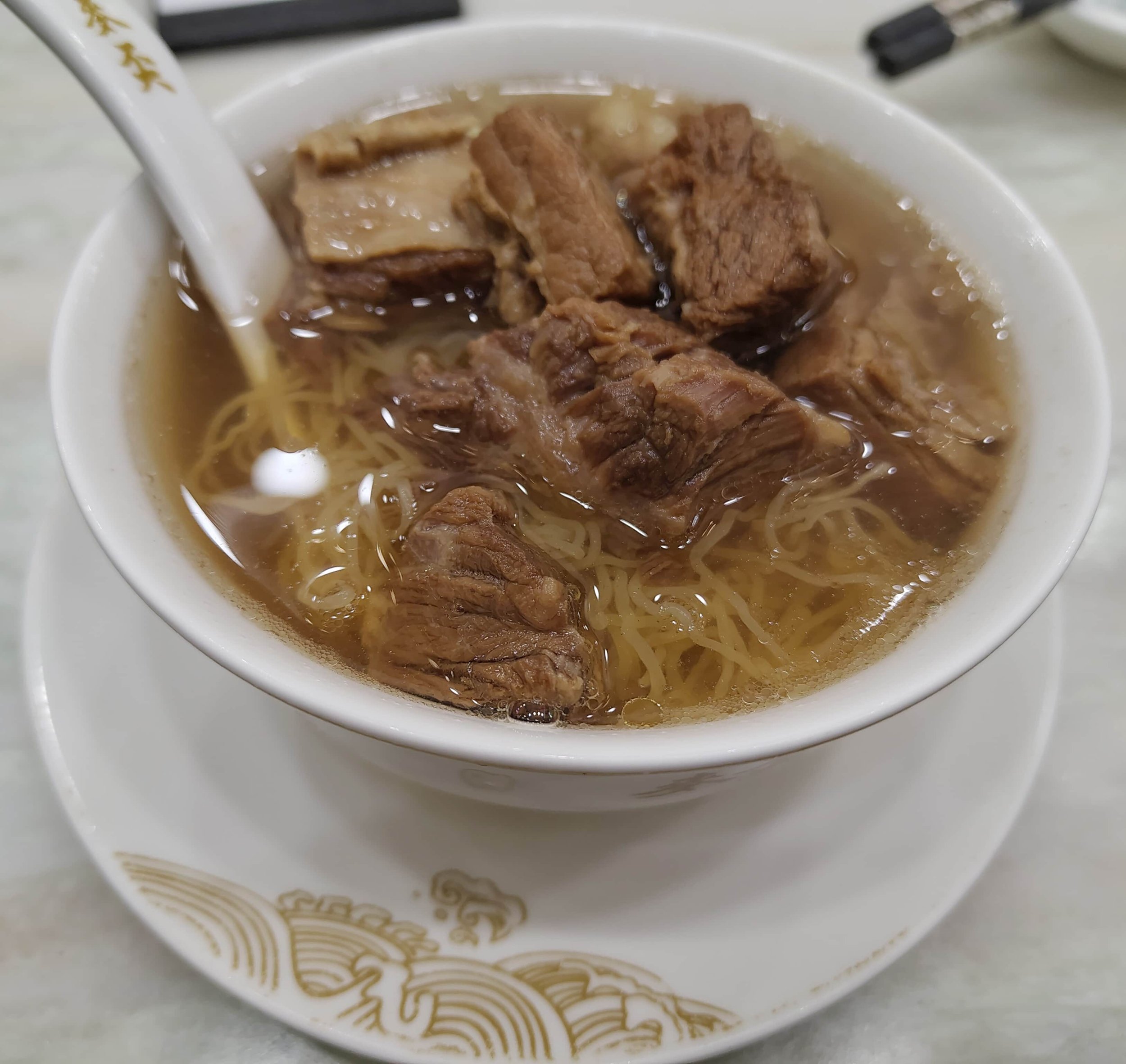
beef brisket noodles
(牛腩麵 – Ngau Lam Min)
What is it?
A classic Hong Kong noodle soup consisting of slow braised beef brisket served over noodles in a salty, savoury broth. The beef is cooked for hours until tender, creating a deep savoury dish that showcases the Cantonese preference for clear yet intensely flavoured broths. While there are several variations, beef brisket noodles are among the most popular noodle dishes in Hong Kong.
What is in it?
The dish typically features chunks of beef brisket slowly braised with ingredients such as ginger, garlic, star anise, soy sauce and spices. The brisket is then served in broth with noodles, most commonly egg noodles. It is often garnished with spring onions and may be accompanied by chilli oil or pickled vegetables. Some restaurants offer a curry beef brisket version, while others specialise in the traditional clear broth style.
Where can I eat it?
Beef brisket noodles are extremely common throughout Hong Kong and can be found in specialist noodle shops, local cafés (cha chaan teng), and Cantonese restaurants. We tried them at Maki Noodles which has several locations throughout Hong Kong.
Dairy free.
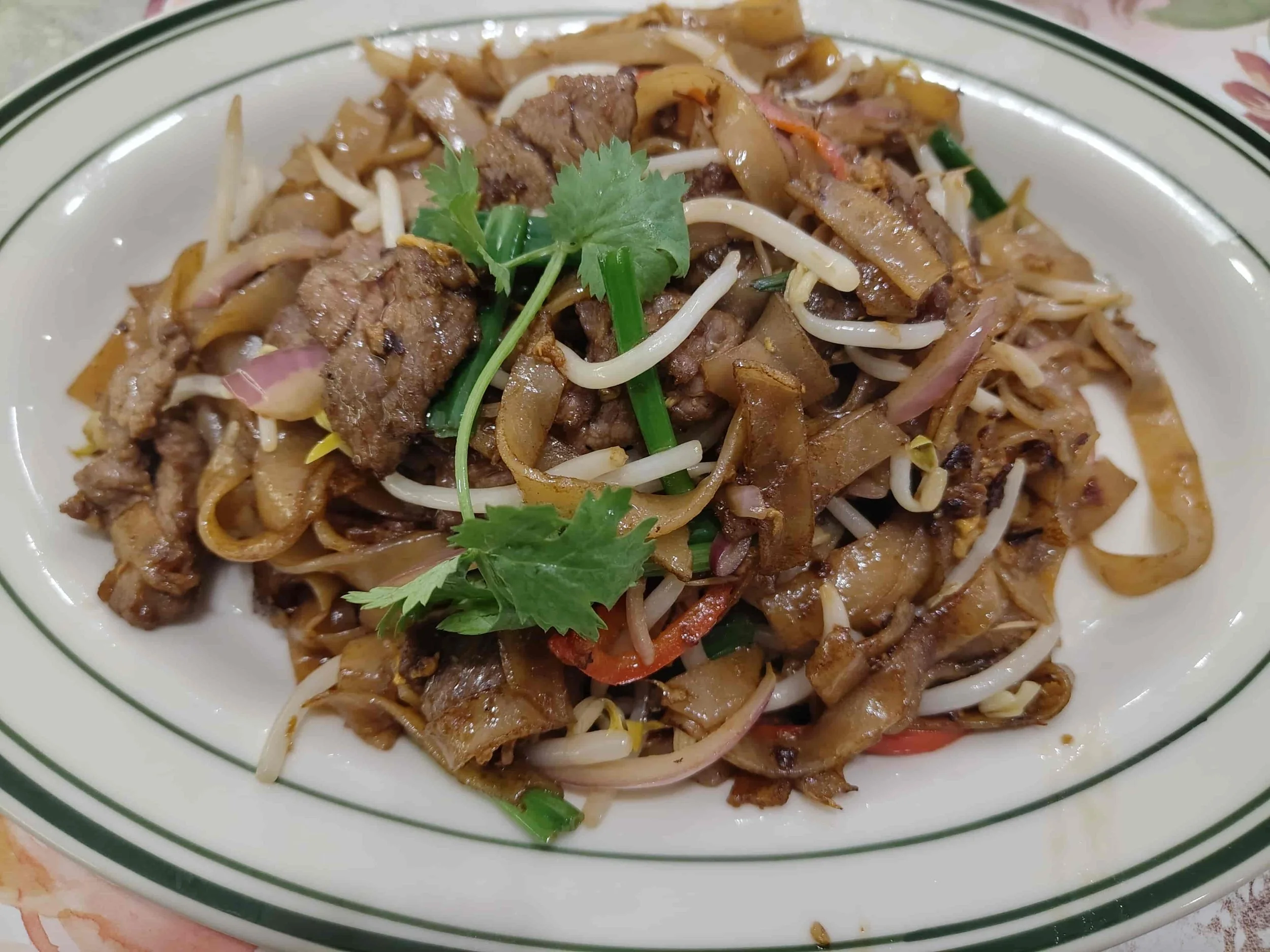
stir fried ho fun with beef
fried wide noodles & beef
What is it?
Stir fried ho fun with beef (乾炒牛河 – gon chow ngau ho) consists of wide rice noodles (ho fun) wok fried with slices of beef in a hot wok until smoky. A hallmark of a good version is wok hei (“breath of the wok”), the slightly charred, smoky flavour that comes from cooking over intense heat. The ingredients are quickly stir-fried at very high heat, allowing the noodles to pick up a characteristic smoky flavour while remaining soft and slightly chewy.
What is in it?
The dish is made with wide flat rice noodles (ho fun), sliced beef, bean sprouts, spring onions, light soy sauce and dark soy sauce. Many versions also include onion, oyster sauce, and sugar. The beef is often marinated first.
Where can I eat it?
Stir fried beef ho fun is one of the most common noodle dishes in Hong Kong and can be found throughout the city in Cantonese restaurants and cha chaan teng (Hong Kong style cafés). It is often listed in English as “beef chow fun,” “fried beef ho fun,” or “stir-fried rice noodles with beef.”
Dairy free.
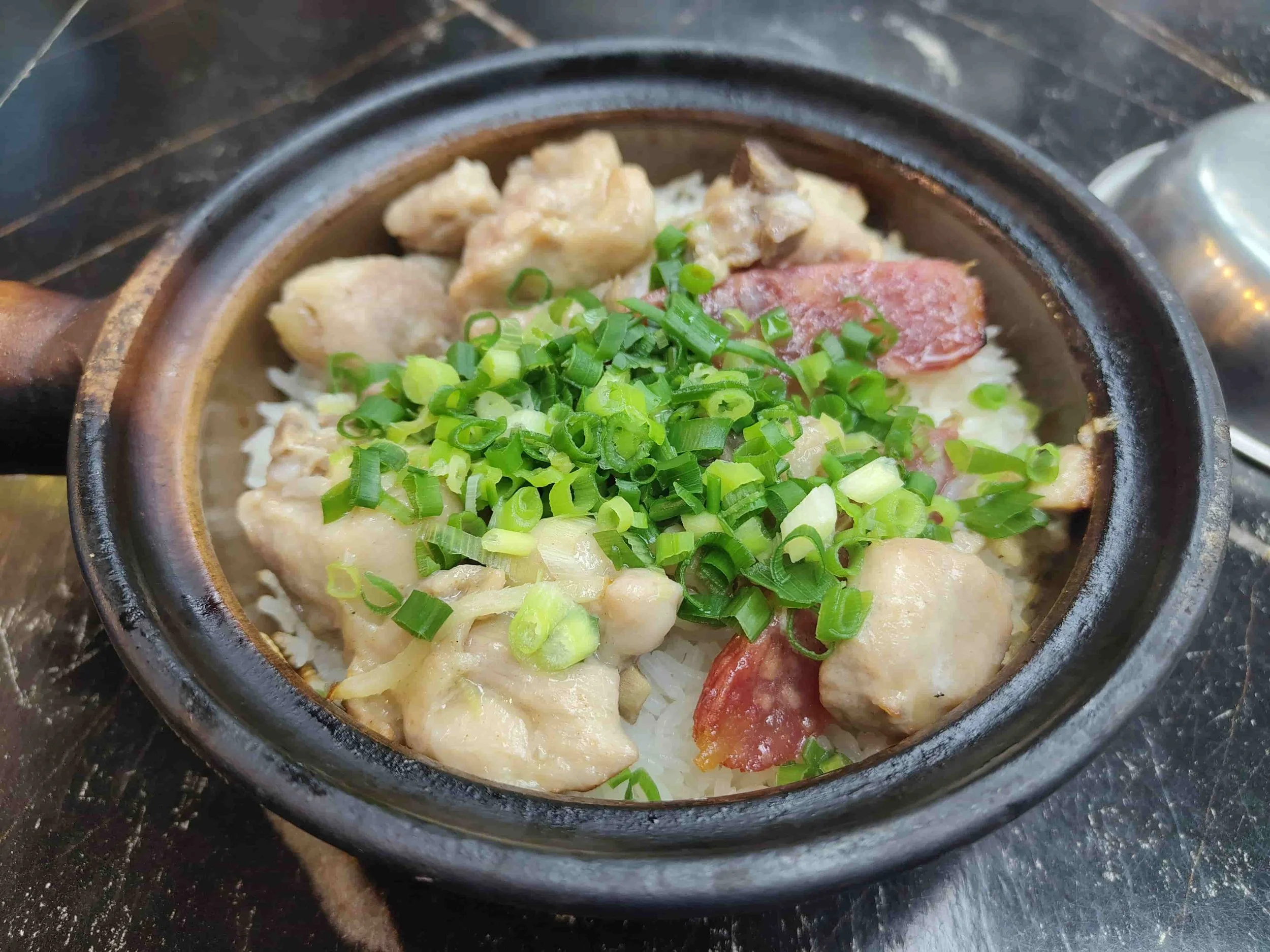
claypot rice
rice & toppings
What is it?
Claypot rice (煲仔飯 – Bo Jai Fan) consists of rice cooked and served in a traditional earthenware pot with a variety of toppings. The toppings release their juices into the rice during cooking. The dish is especially popular during the cooler months, when the steaming hot pot arrives at the table still sizzling. A defining feature of good claypot rice is the crispy layer of rice that forms on the bottom of the pot. Known as the rice crust, it develops during cooking and provides a contrast to the soft rice above
What is in it?
The base is rice cooked in a claypot, traditionally over charcoal, allowing it to absorb the flavours of the toppings as it cooks. There are many different versions, with common toppings including Chinese sausage (lap cheong), cured pork belly, chicken, beef, spare ribs, mushrooms, salted fish or preserved duck. The finished dish is usually topped with spring onions and served with sweet soy sauce, which you mix through the rice yourself.
Where can I eat it?
It is generally found in restaurants that specialise in claypot rice, so it is not as common as some other dishes. A good place to try it is Hing Kee Restaurant, which serves many different versions.
Vegetarian versions exist, though most traditional versions contain meat or fish. Usually dairy free.
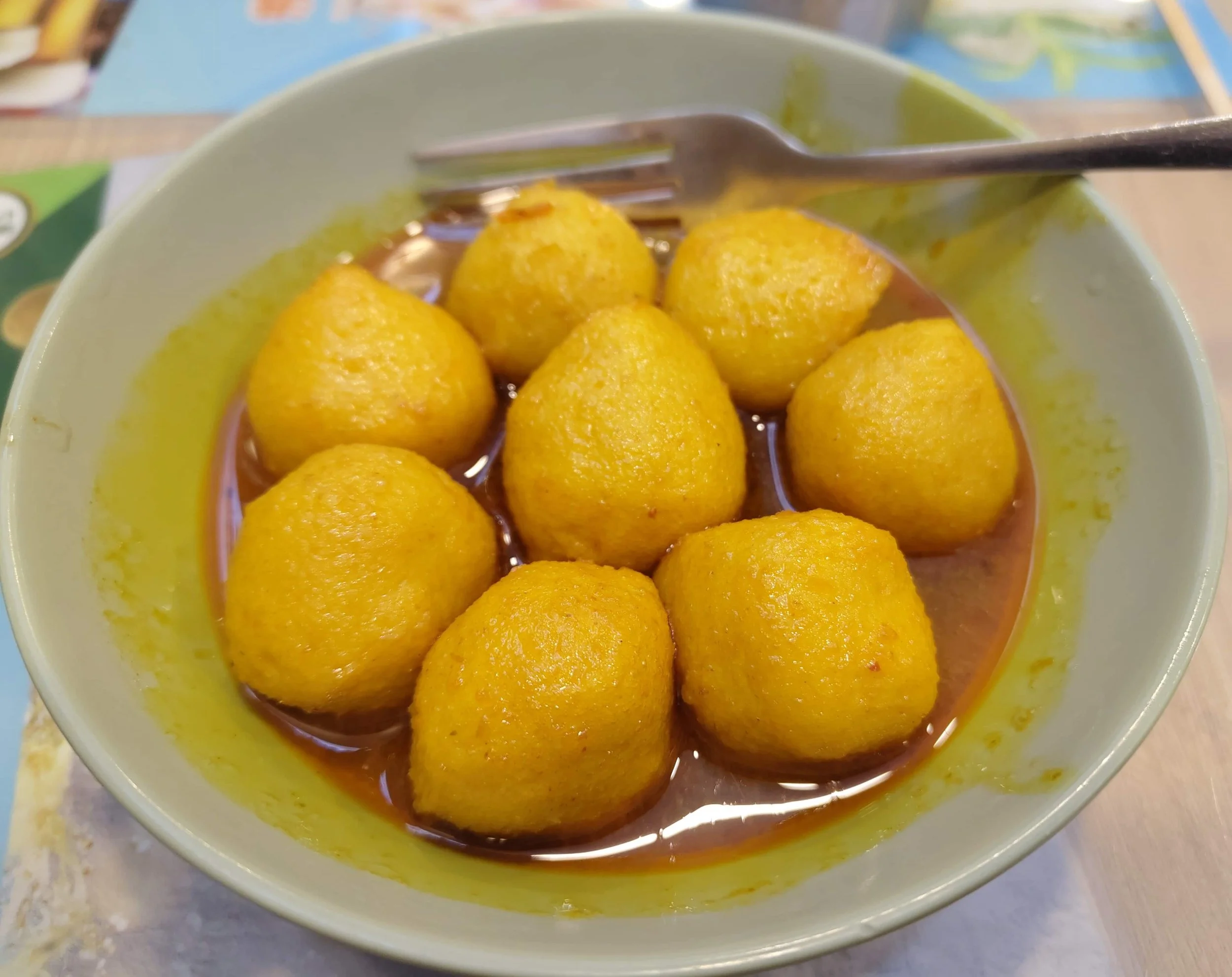
curry fish balls
fish balls in curry sauce
What is it?
Curry fish balls (咖喱魚蛋 – Gā Lei Yue Dan) are springy fish balls served in a mildly spicy curry sauce. Unlike Indian curries, the sauce is a distinctly Hong Kong style curry, sweeter and less spicy, with influences from both British and Cantonese cooking. The fish balls absorb the sauce as they simmer. They are often sold in small portions on skewers or in cups, making them an easy snack while exploring the city. In popular street food areas, you’ll often see large pots of fish balls simmering in curry sauce throughout the day.
What is in it?
The fish balls are made from finely processed fish paste, usually from white fish, which is mixed and pounded to create their distinctive bouncy texture. They are then simmered in a curry sauce typically made with curry powder, turmeric, garlic, onion, stock and sugar. Some versions also use soy sauce, oyster sauce or coconut milk.
Where can I eat it?
Curry fish balls are available throughout Hong Kong, especially from street food stalls, but are also sold as a snack at many restaurants.
Dairy free, Usually gluten free
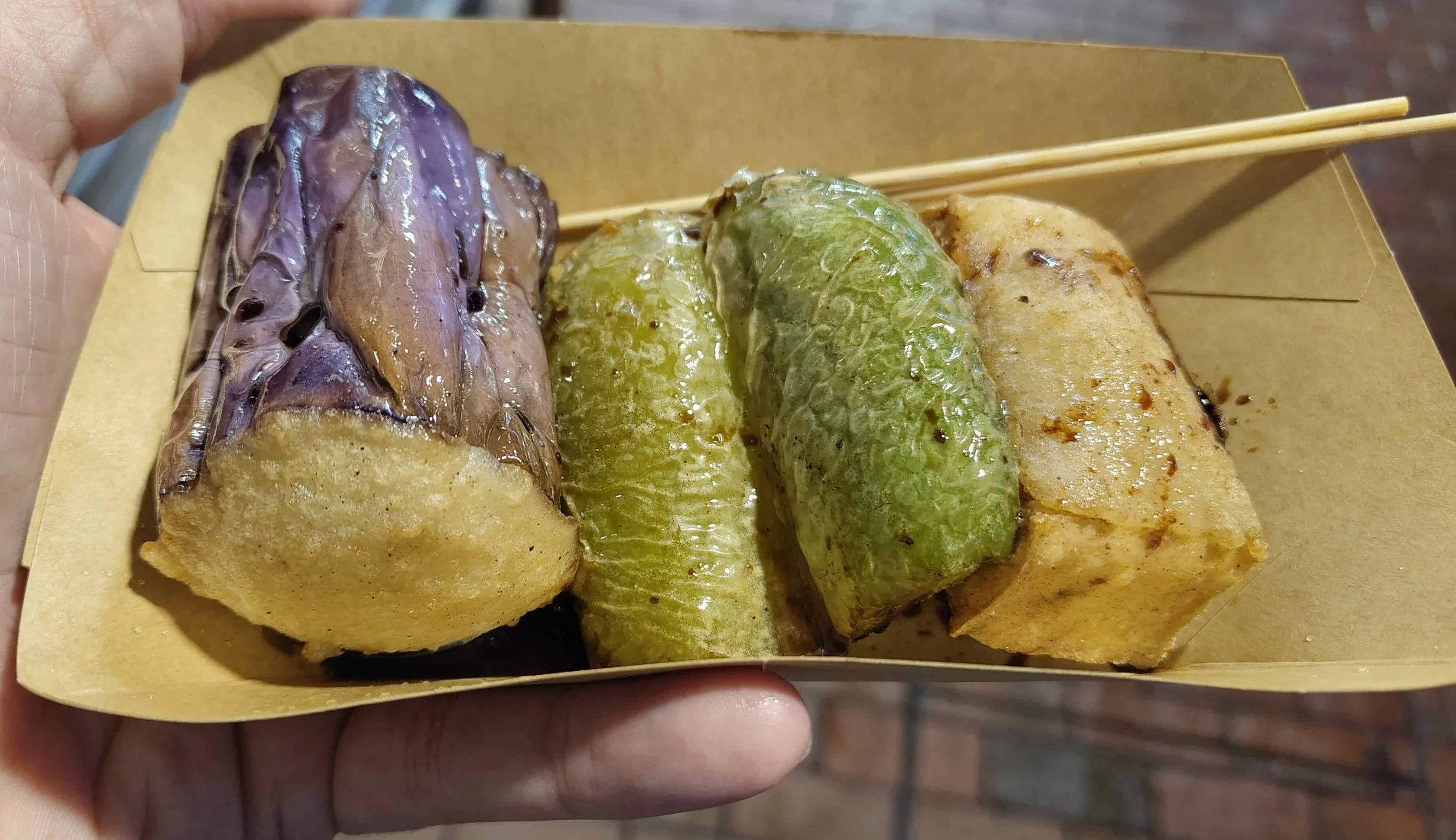
stuffed three treasures
fish paste stuffed veg
What is it?
A classic Hong Kong street food snack consisting of vegetables and tofu stuffed with seasoned fish paste, then fried and served with sauce. The name translates as “Stuffed Three Treasures,” (釀三寶, yeung saam bo) referring to the traditional combination of three different stuffed items sold together.
It is a popular item at street food stalls and markets, offering a contrast of textures between the soft vegetables, springy fish paste and crisp fried exterior.
While the classic version features three items, many vendors now offer a wider selection, and you may also encounter “Five Treasures” (五寶) platters featuring five different stuffed ingredients. Many vendors allow you to choose individual items rather than ordering a fixed set of three.
What is in it?
The stuffing is typically made from seasoned fish paste, similar to that used in fish balls. Common ingredients used as the “treasures” include:
green peppers
aubergine (eggplant)
firm tofu
Other variations may include red peppers, chillies, okra, mushrooms and bean curd skin. After being stuffed, the items are usually fried and served with sweet sauce, chilli sauce or a soy based sauce.
Where can I eat it?
Stuffed Three Treasures are commonly found at street food markets. We had some at the Temple Street Night Market.
Dairy free.
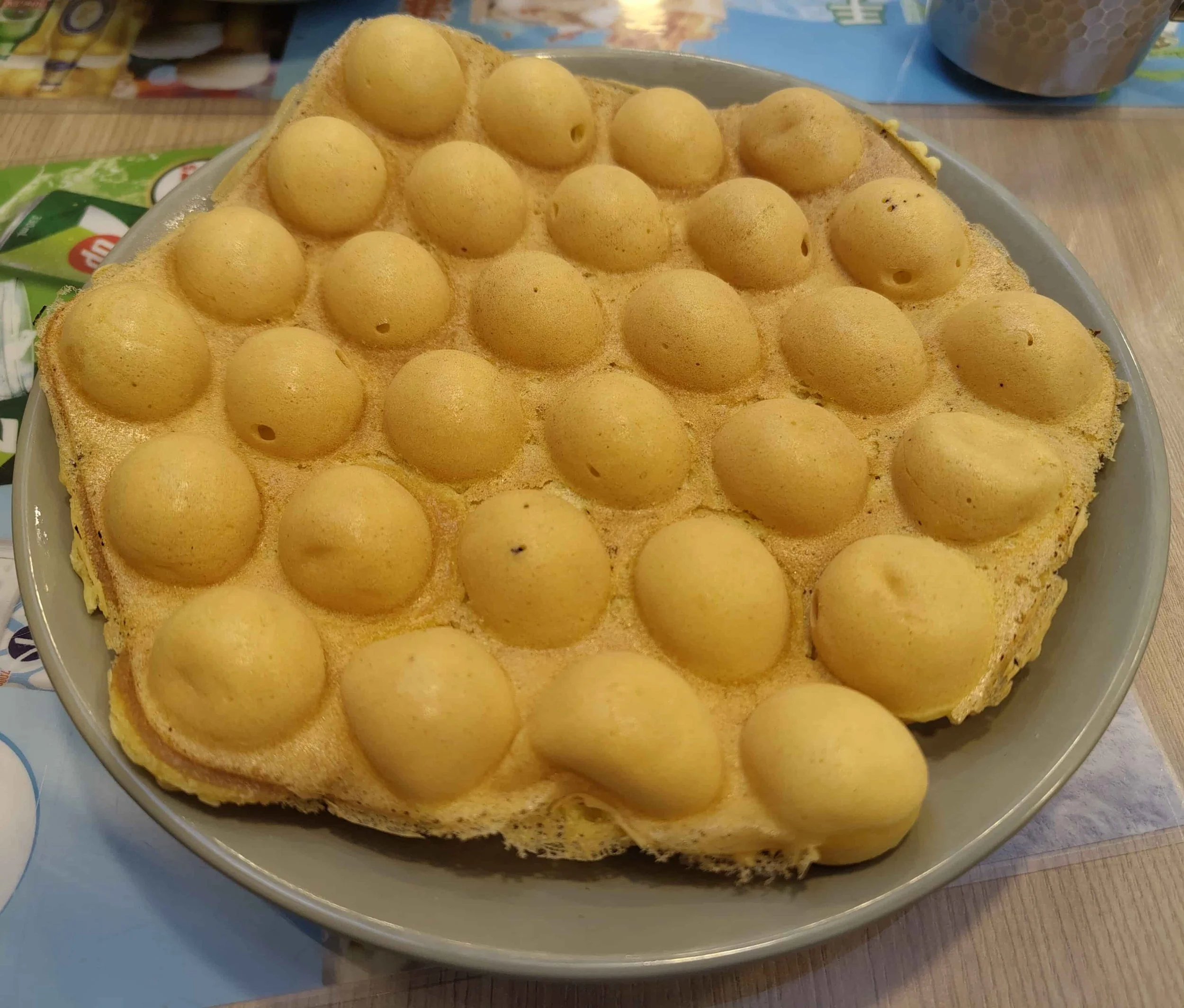
egg waffles
bubble shaped waffles
What is it?
A Hong Kong icon, egg waffles (雞蛋仔 – Gai Daan Jai) are crispy on the outside and soft on the inside, made up of dozens of small spherical bubbles joined together in a honeycomb like pattern. Known locally as gai daan jai ("little eggs"), they were originally created as a simple street snack and remain hugely popular today. While the traditional version is plain, modern shops have introduced countless variations and flavours.
Freshly made egg waffles are best eaten hot, when the exterior is slightly crisp and the centre remains soft and fluffy. They are cooked in a special mould that creates the distinctive bubble shape.
What is in it?
The batter is typically made from eggs, flour, sugar, evaporated milk (or milk), baking powder and vanilla. Some recipes also use custard powder, tapioca starch and water.
Modern variations may include flavours such as chocolate, matcha, black sesame, coffee and taro. Some dessert shops also serve them with ice cream, fruit, whipped cream and various sauces and toppings.
Where can I eat it?
Egg waffles are available throughout Hong Kong, particularly from street food stalls, snack shops and dessert cafés. They're one of the easiest Hong Kong snacks to find.
Vegetarian.
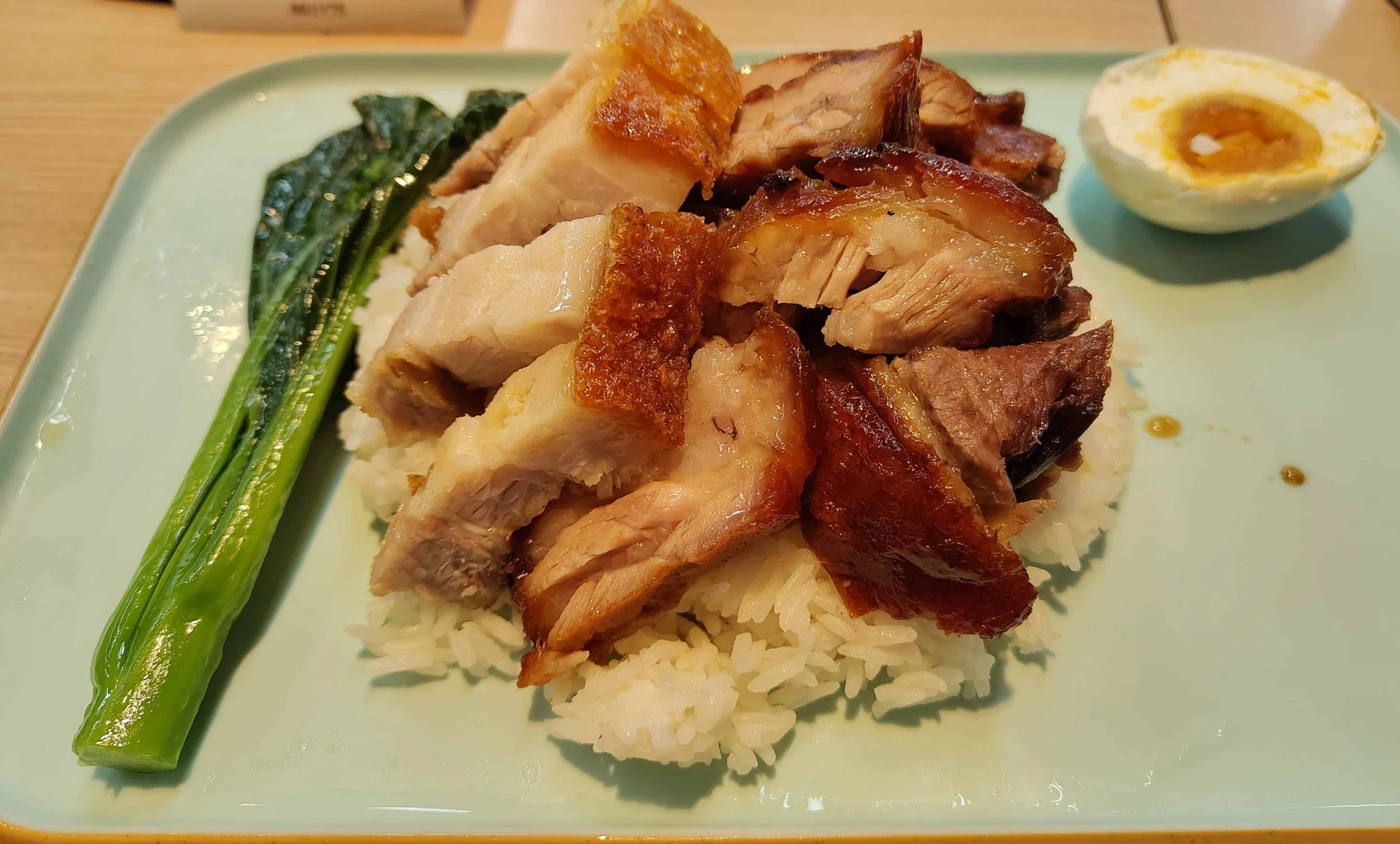
four treasures rice
rice & toppings
What is it?
A classic Hong Kong roast meat platter served over rice, featuring a selection of Cantonese barbecue and roasted meats. The name 四寶飯 – Sei Bo Fan translates as “Four Treasures Rice,” referring to four different toppings served together over rice. It’s one of the best ways to sample several of Hong Kong’s most famous roast meats in a single meal and is a common order at Cantonese roast meat restaurants.
What is in it?
The dish consists of steamed white rice topped with a selection of roast and barbecued meats, usually served with a spoonful of sauce from the roasting trays and sometimes a side of blanched greens.
The most common meats include:
Char Siu (叉燒) – Cantonese barbecue pork, marinated and roasted with a distinctive sweet and savoury glaze.
Roast Goose (燒鵝) – one of Hong Kong’s most prized dishes, featuring rich, juicy meat and crisp skin.
Siu Yuk (燒肉) – roasted pork belly with a layer of crunchy crackling and tender meat underneath.
Soy Sauce Chicken (豉油雞) – chicken gently cooked in a savoury soy sauce based broth, resulting in moist, flavourful meat.
Other possible options include roast duck, white cut chicken, barbecued pork ribs and Chinese sausage.
Many restaurants also include a soy braised egg as one of the four treasures, so a typical plate may contain three meats plus an egg rather than four different meats.
Where can I eat it?
Four Treasures Rice is available at many Cantonese roast meat restaurants throughout Hong Kong. Look for shops displaying hanging roast meats in the window, as these are often among the best places to try it. Some restaurants have a fixed Four Treasures combination, while others allow you to choose your own four items from the selection available that day.
Dairy free.
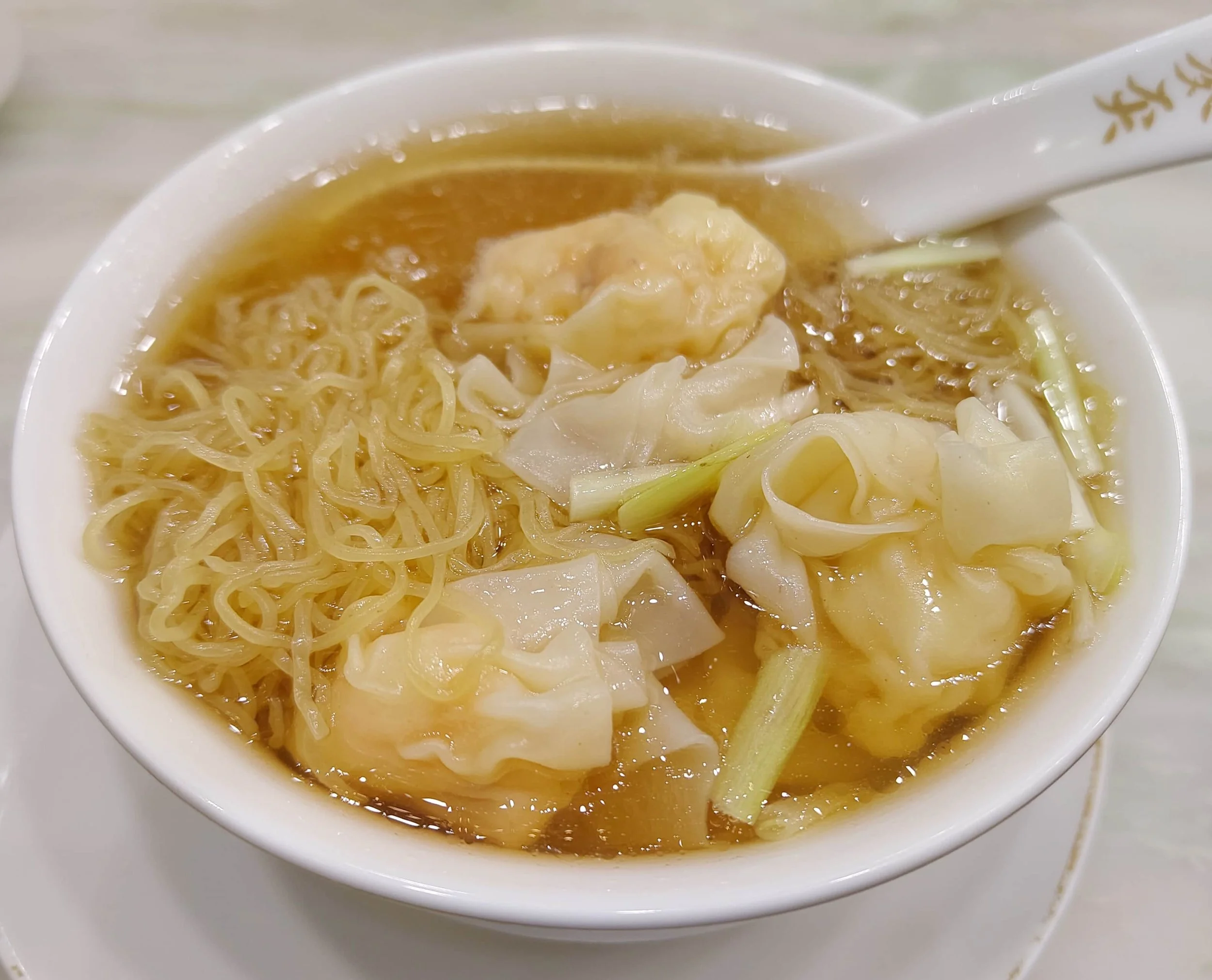
wanton noodles
noodle & wanton soup
What is it?
One of Hong Kong’s most iconic noodle dishes, wonton noodles consist of shrimp filled dumplings served in a clear broth with thin egg noodles. Despite its simple appearance, a great bowl depends on several elements being done well: springy noodles, well made wontons and a light but savoury broth.
What is in it?
Traditional Hong Kong style wontons are filled primarily with whole or chopped prawns, often with a small amount of pork. The broth is typically made from pork bones, dried seafood and other ingredients that create good flavour while remaining relatively clear and light. The noodles themselves are Cantonese egg noodles.
Where can I eat it?
Wonton noodles are available throughout Hong Kong and are a signature dish of specialist wonton noodle restaurants. A good place to try them is the chain Mak’s Noodle, which has several locations in Hong Kong.
Dairy free.
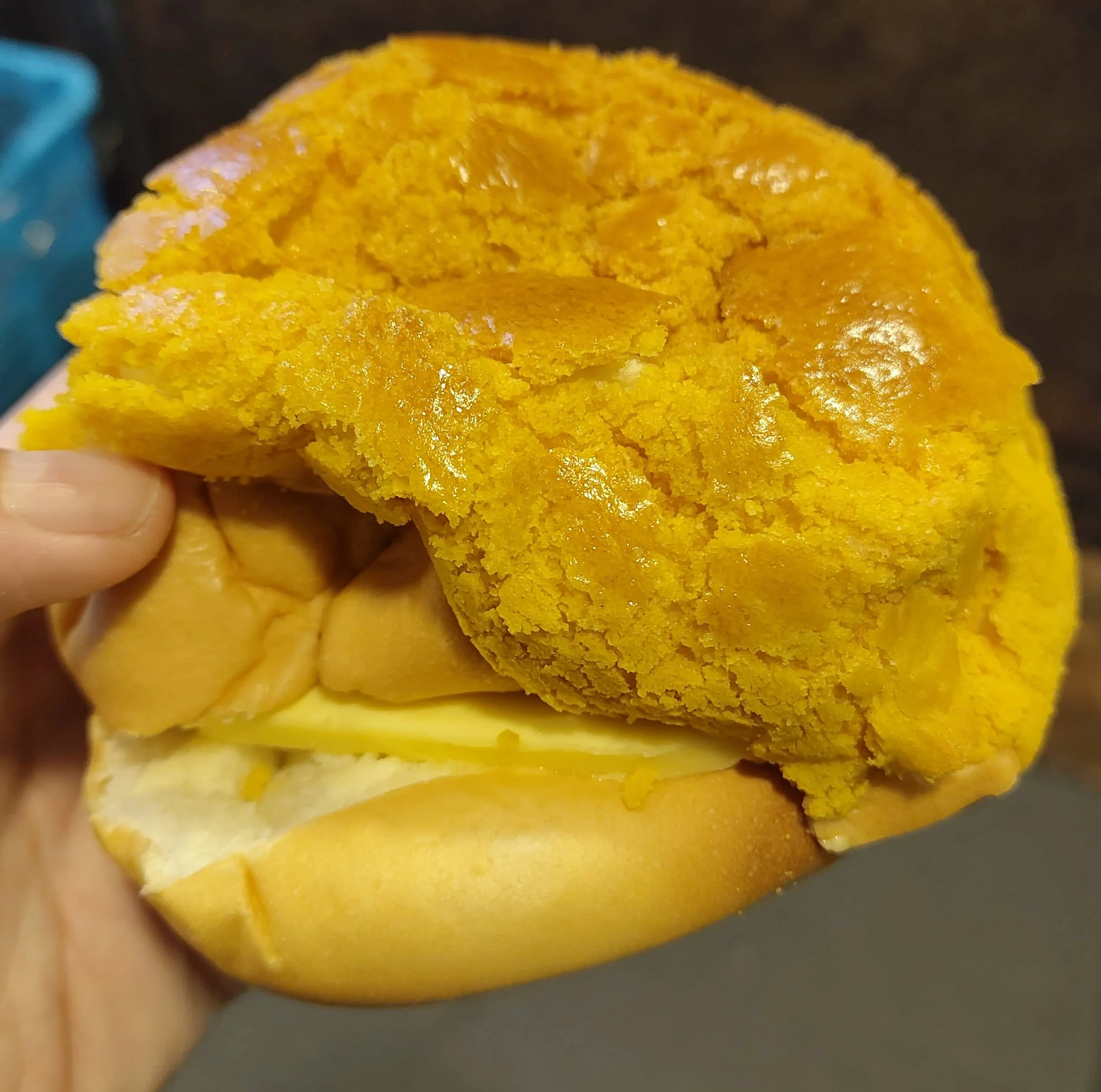
pineapple bun
sweet bun with butter
What is it?
One of Hong Kong’s most famous bakery treats, a pineapple bun with a thick slab of cold butter inside. Despite the name, there is no pineapple in the bun. The “pineapple” refers to the crackled topping, which is supposed to resembles the skin of a pineapple.
What is in it?
The bun itself is a soft, slightly sweet bread roll topped with a crisp layer made from sugar, flour, eggs and fat, which bakes into the characteristic golden top.
To make bo lo yau, the freshly baked bun is sliced and filled with a thick slab of cold butter, which then melts in the hot bun. Modern bakeries sometimes offer variations with fillings such as red bean paste, custard or chocolate, but the classic version remains simply butter and bun.
Where can I eat it?
Available throughout Hong Kong in traditional bakeries and cha chaan teng cafés. It is commonly eaten for breakfast, as an afternoon snack, or alongside Hong Kong style milk tea. Many bakeries sell pineapple buns on their own, so if you specifically want the butter version, look for 菠蘿油 (bo lo yau) rather than just 菠蘿包 (bo lo bao).
Vegetarian.
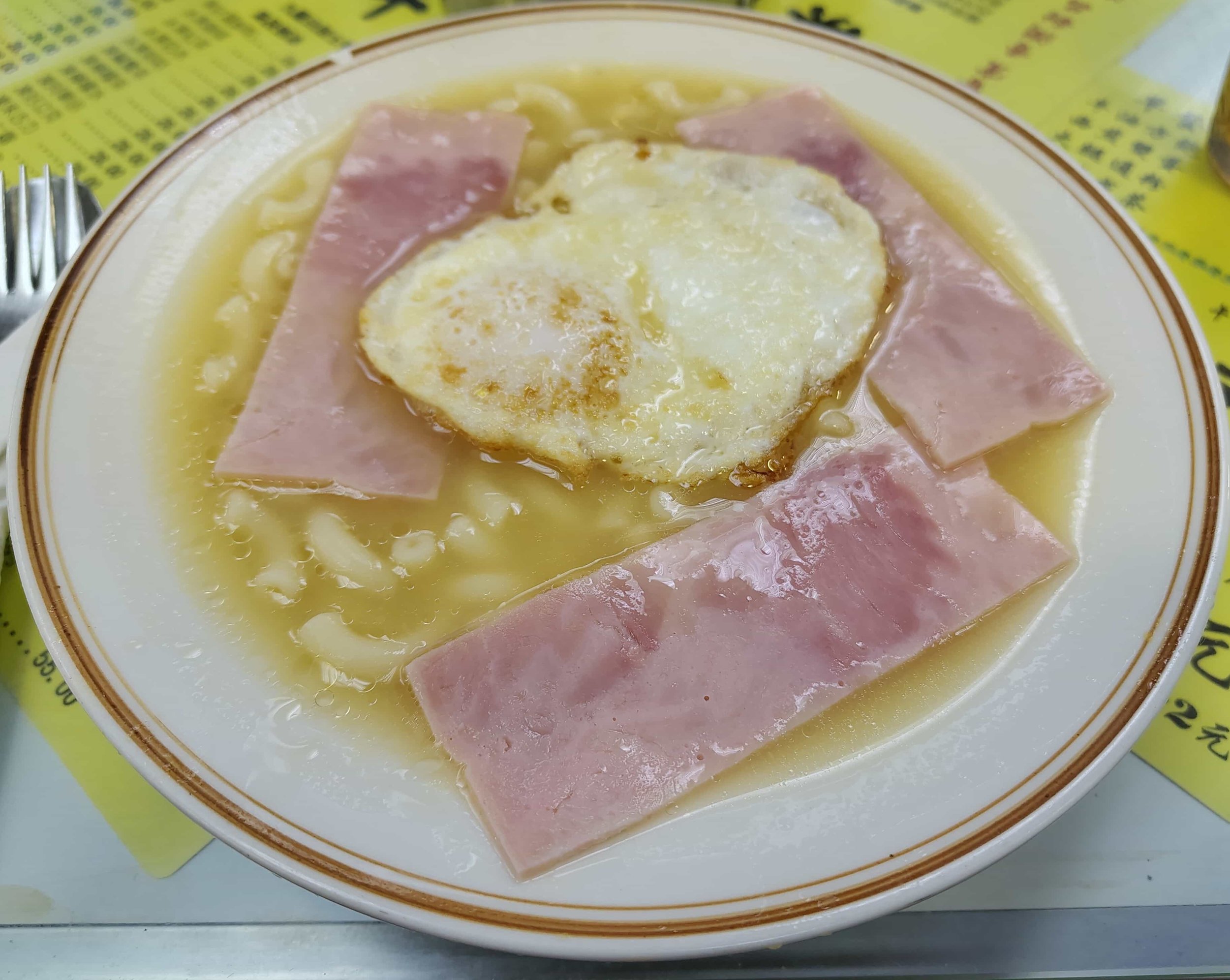
macaroni soup with ham and egg
(火腿通粉加蛋 – Fo Tui Tung Fan Ga Daan)
What is it?
A Hong Kong breakfast classic consisting of macaroni served in a light broth with slices of ham and a cooked egg. While it may seem unusual to Westerners, it’s one of the most traditional breakfast items found in Hong Kong’s cha chaan teng cafés. The dish reflects Hong Kong’s blend of Cantonese and Western influences. Macaroni was introduced during the colonial era and was adapted into a simple, comforting breakfast that remains popular today.
What is in it?
The dish consists of macaroni served in a clear or lightly creamy savoury broth, usually made from chicken stock (sometimes with evaporated milk or cream of chicken). It is typically topped with slices of ham and a fried or poached egg.
Many breakfast sets allow you to choose alternative toppings such as luncheon meat (Spam), sausage, corned beef or shredded chicken, or to swap macaroni for spaghetti. The classic version, however, is generally considered to be ham and egg. It is often served as part of a breakfast set alongside toast and a Hong Kong style milk tea.
Where can I eat it?
Macaroni soup is available at many cha chaan teng in Hong Kong and is most commonly eaten at breakfast. A good place to try it is Australian Dairy Company, it’s a busy place, but they have a quick turn around and you generally don’t wait long. You may end up seated with strangers on a small table, all part of the fun, though.
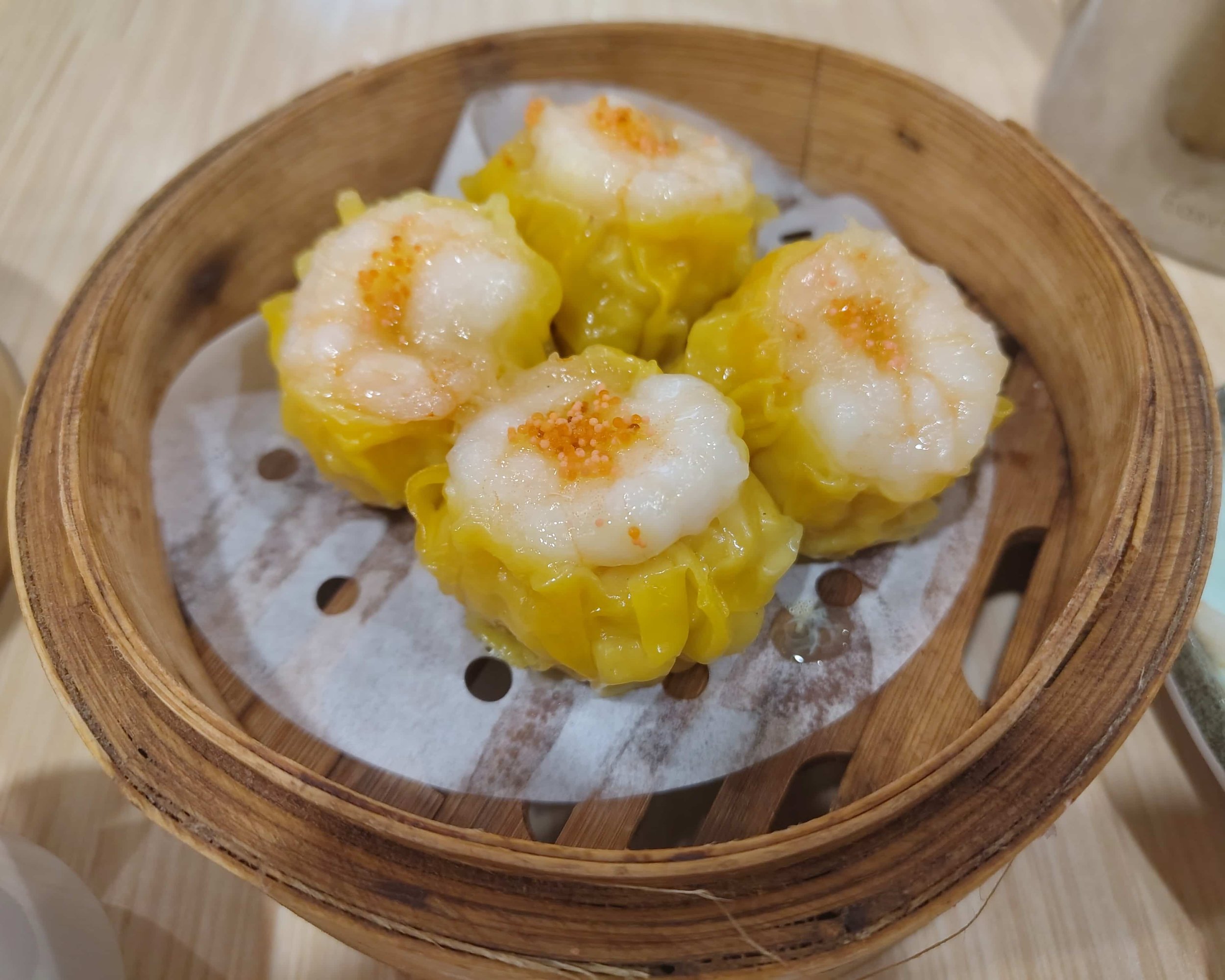
siu mai
pork & prawn dumpling
What is it?
Siu mai (燒賣) is one of the most iconic dim sum dishes. It is an open-topped dumpling filled with a mixture of minced pork and prawns (shrimp), wrapped in a thin yellow wheat wrapper gathered into a pleated cup shape. It is a staple of Cantonese dim sum and is found on virtually every dim sum menu in Hong Kong.
Siu mai is recognisable by its yellow wrappers and exposed filling, and it is typically served in bamboo steamers. It is often one of the first dishes ordered during a dim sum meal.
It is worth noting that the dim sum version is quite different from the street food siu mai sold at snack stalls in Hong Kong, which are usually made from fish paste and served with sauce. In fancier restaurants, the top is often garnished with a dot of crab roe or grated carrot.
What is in it?
Traditional Cantonese siu mai are made with a thin yellow wheat wrapper (lye water dough) filled primarily with minced pork and prawns. Many versions also include ingredients such as mushrooms, water chestnuts or bamboo shoots, and are seasoned with sesame oil, ginger, scallion, oyster sauce, sugar and white pepper.
Where can I eat it?
Siu mai is available at virtually every dim sum restaurant in Hong Kong. We had some good ones at One Dim Sum, which has a few locations across Hong Kong.
Dairy free.
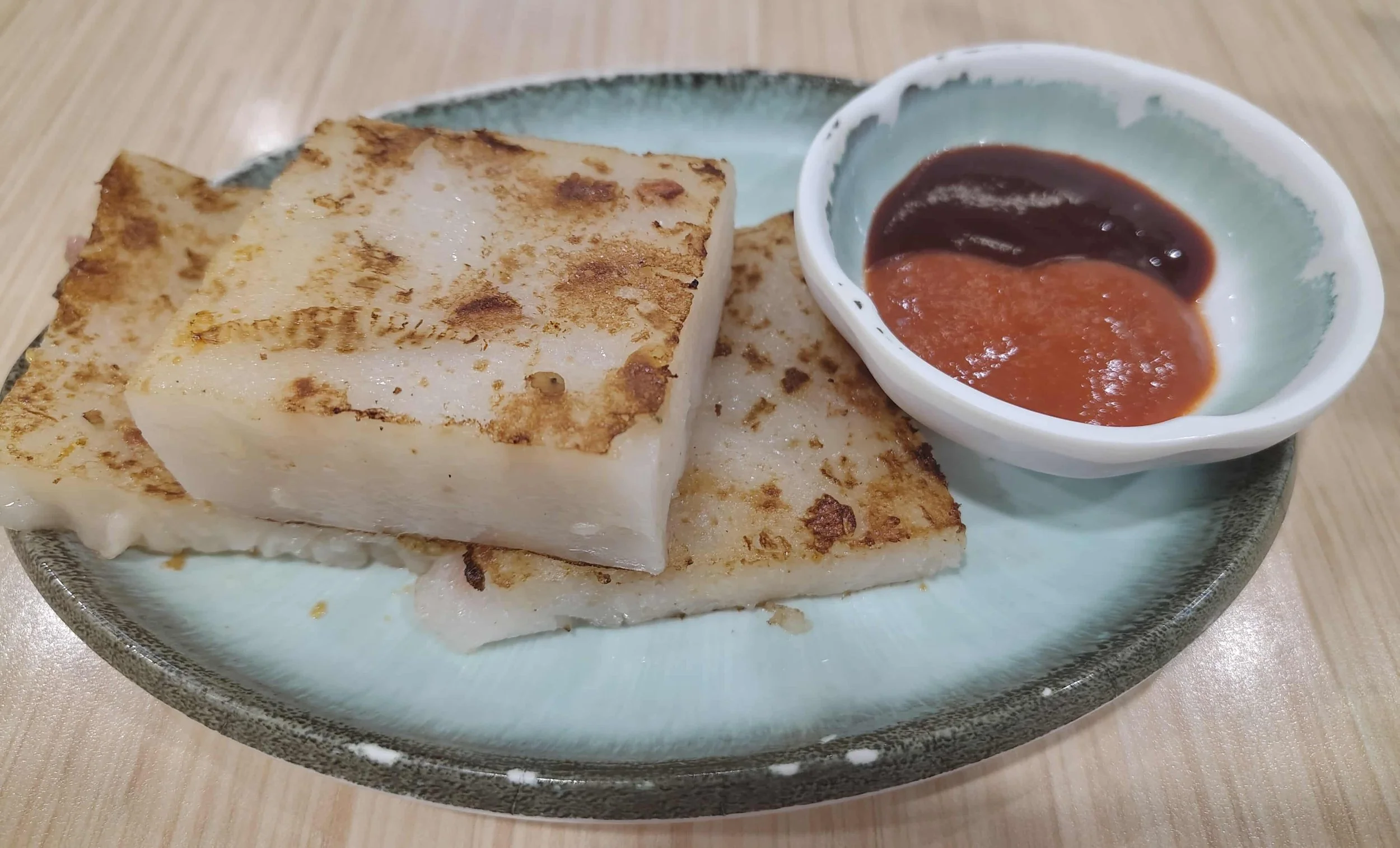
turnip cake
Savoury rice, radish cake
What is it?
Despite its English name, turnip cake is actually made from Chinese white radish (daikon) rather than turnips. It is one of the most popular dim sum dishes and consists of a savoury cake made from grated radish and rice flour, which is steamed, after steaming, the cake is cut into rectangular slices and pan fried. You will often see it called either turnip cake or radish cake in English. While “turnip cake” is the traditional translation, “radish cake” is more accurate.
What is in it?
The base is made from grated daikon radish and rice flour, which are combined into a thick mixture and steamed into a firm cake. Traditional versions often include dried shrimp, Chinese sausage (lap cheong) and dried mushrooms. Vegetarian versions are also common.
Where can I eat it?
Turnip cake is a staple of dim sum restaurants throughout Hong Kong and is almost always available, including at our go to dim sum spot, One Dim Sum.
Vegetarian versions available, dairy free.
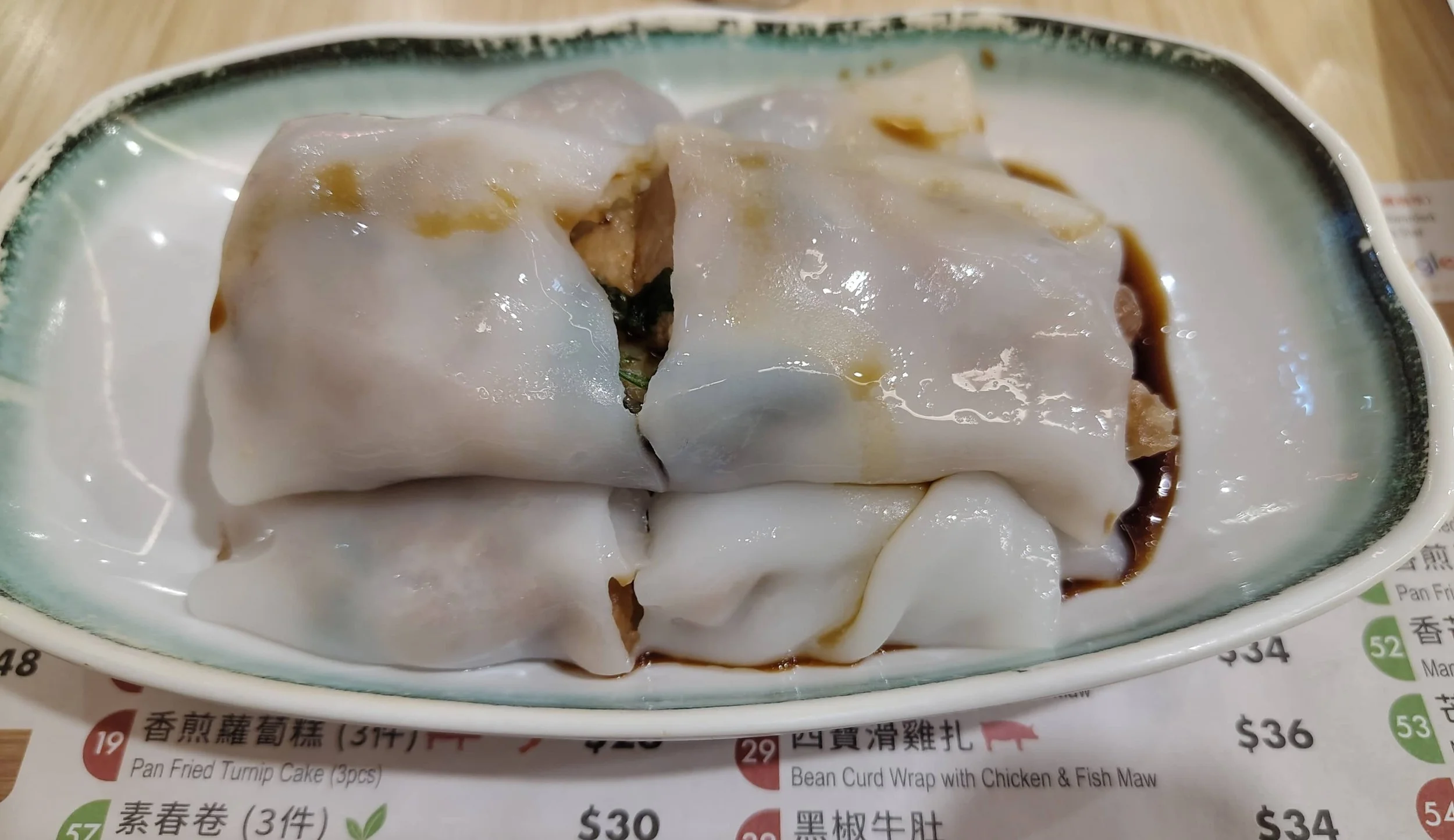
cheung fun
rice noodle sheet rolls
What is it?
Made from steamed rice noodle sheets that are rolled up and served in a light soy based sauce. The texture is soft, smooth and slightly chewy.
Cheung fun (腸粉) is typically served freshly steamed and cut into pieces, or presented as whole rolls that diners cut themselves. There are several common varieties, ranging from simple plain rolls to filled ones.
What is in it?
The base is made from a thin batter of rice flour and water, steamed into a flat sheet and then rolled.
Common fillings include:
shrimp cheung fun – whole prawns wrapped in the rice sheet
beef cheung fun – minced beef filling
char siu cheung fun – Cantonese BBQ pork
The rolls are usually served with light soy sauce, sometimes sweet soy sauce, and occasionally sesame paste or chilli oil depending on the restaurant.
Where can I eat it?
Cheung fun is available at virtually all dim sum restaurants in Hong Kong, as well as at takeaway places.
Vegetarian versions available, dairy free.
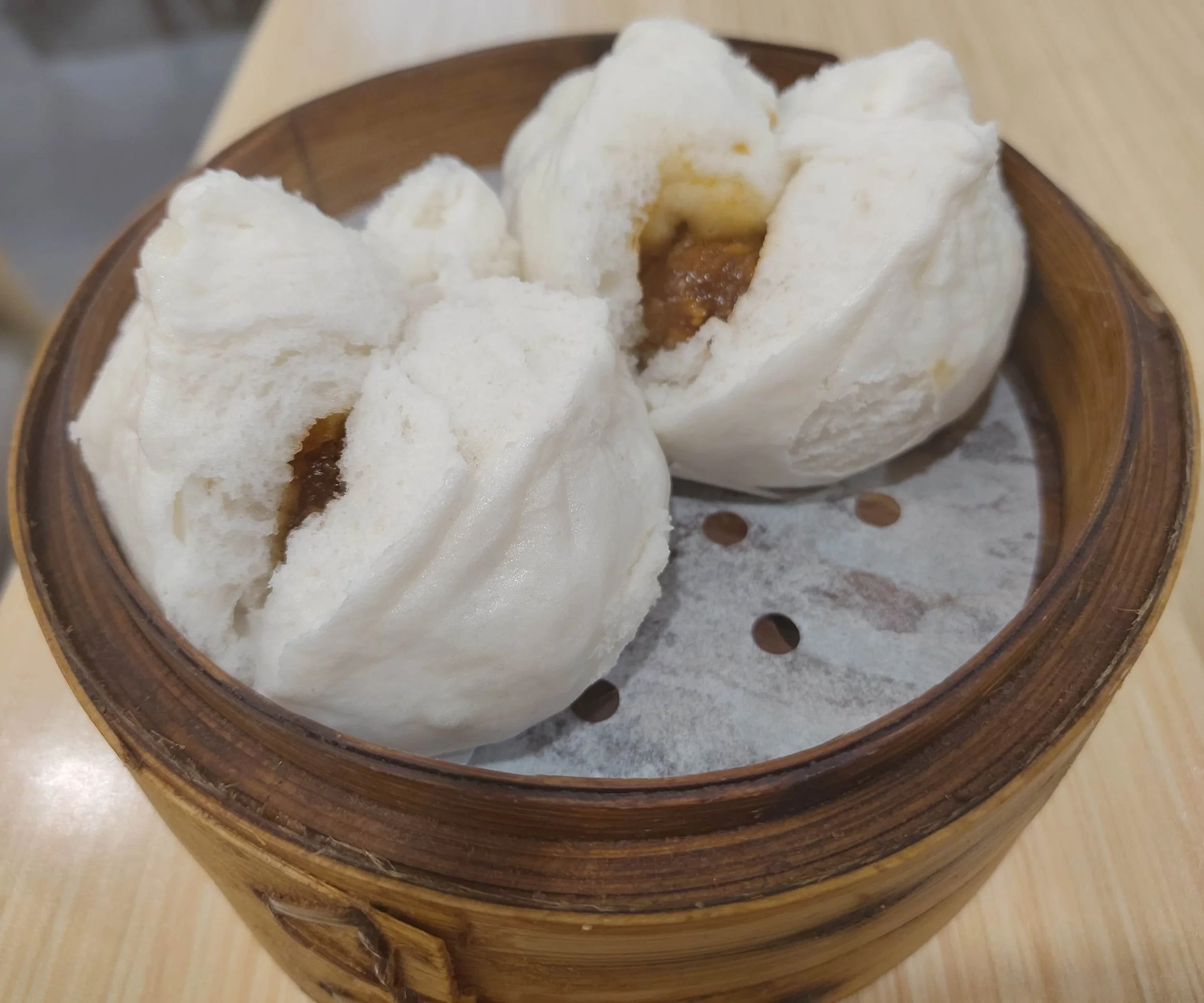
char siu bao
steamed pork buns
What is it?
Char siu bao (叉燒包) are soft buns filled with sweet and savoury Cantonese barbecued pork (char siu). The filling savoury with a characteristic sweetness that is a hallmark of Cantonese barbecue. They are typically steamed, giving the buns a light, pillowy texture.
What is in it?
The bun is made from a soft yeasted dough and filled with diced char siu pork mixed with a thick, slightly sweet sauce made from ingredients such as oyster sauce, soy sauce and sugar. Some versions also include sesame oil and rice wine.
Where can I eat it?
Char siu bao are available at virtually every dim sum restaurant in Hong Kong.
Dairy free.
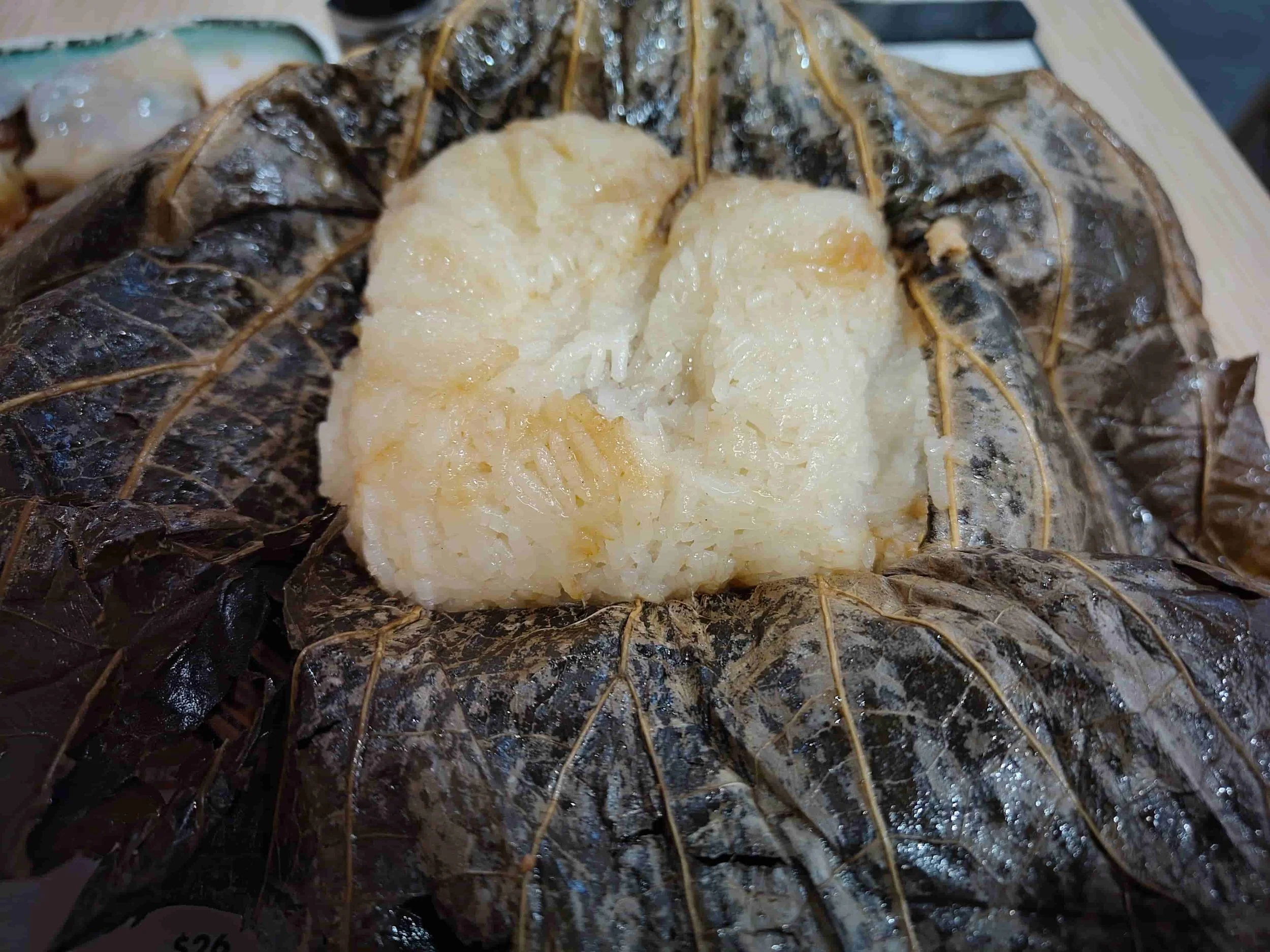
lo mai ga
lotus leaf steamed rice
What is it?
A dim sum dish consisting of sticky glutinous rice wrapped in a lotus leaf and steamed. There is then a filling hidden inside the rice. It’s definitely one of the most filling items on a dim sum menu.
Unlike many dim sum dishes that are small, lo mai gai (糯米雞) is often large enough to share and can almost feel like a small meal in itself. The lotus leaf imparts a distinctive earthy aroma to the rice during steaming, which is one of the dish’s defining characteristics.
What is in it?
The dish is made from glutinous (sticky).
Traditional fillings commonly include chicken, Chinese sausage (lap cheong), mushrooms and salted egg yolk. Some versions may also contain pork, dried shrimp and chestnuts.
Where can I eat it?
Lo mai gai is fairly common in dim sum restaurants throughout Hong Kong, but not as ubiquitous as some other dim sum items. That said, it is available at our go to dim sum branch, One Dim Sum.
Dairy free.
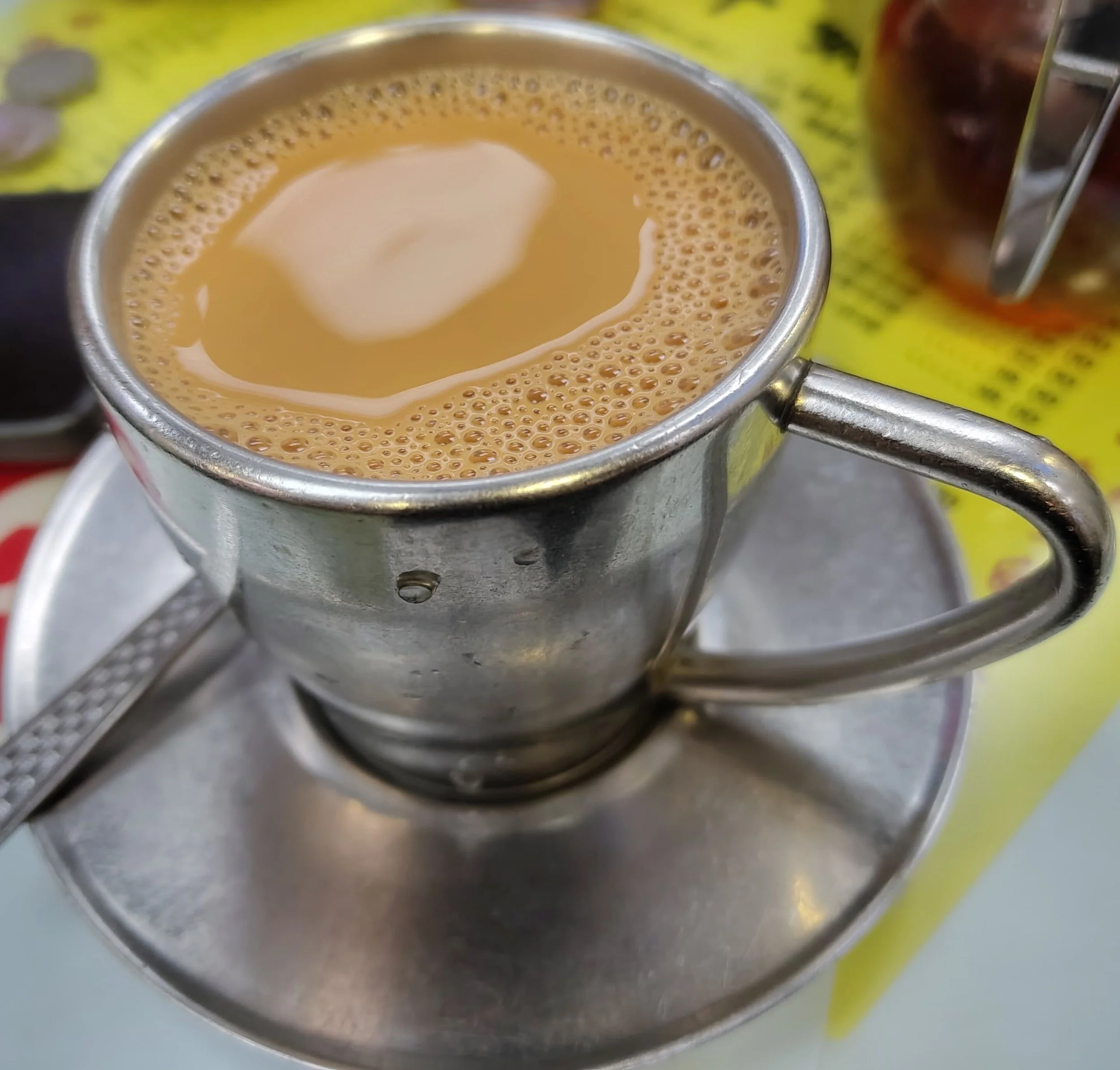
Hong Kong milk tea
strong tea
What is it?
Hong Kong’s signature tea drink, made by blending strong black teas with evaporated or condensed milk to create a strong and highly caffeinated beverage. It is one of the defining drinks of Hong Kong’s cha chaan teng café culture, and as an Englishman I very much approve.
Milk tea can be served either hot or cold, with both versions being extremely popular. The hot version is especially common at breakfast, while the iced version is a refreshing choice during Hong Kong’s hot and humid summers.
The drink developed during the colonial era, combining British tea drinking traditions with local tastes and ingredients. It is brewed very strong before being strained through a cloth filter. This filtering method earned it the nickname “silk stocking milk tea” because the filter resembles a silk stocking.
What is in it?
Hong Kong milk tea is traditionally made from a blend of black teas, often including Ceylon tea, brewed very strong before being strained through a cloth filter.
The tea is then mixed with evaporated milk (most common) or condensed milk in sweeter versions. For the iced version, the tea is poured over ice after brewing.
Where can I drink it?
Hong Kong milk tea is available almost everywhere, especially in cha chaan teng cafés, restaurants and takeaway drink shops. It is commonly included as part of breakfast and lunch sets, often served alongside macaroni soup or toast with eggs.
Vegetarian & gluten free.
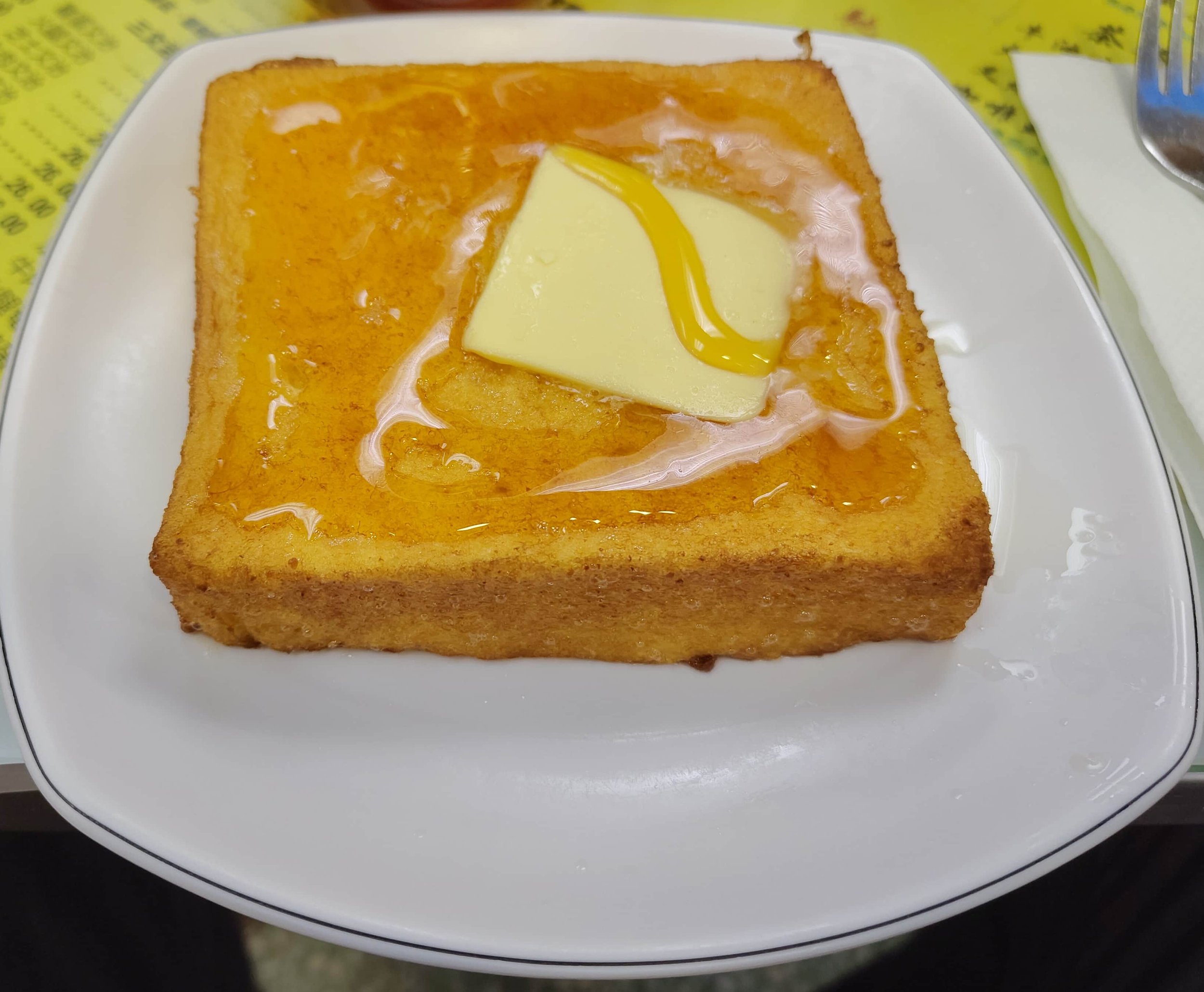
Hong Kong French toast
deep fried bread
What is it?
A decadent Hong Kong café classic consisting of thick slices of bread sandwiched together, then deep fried, served with a slab of butter on top and golden syrup. Unlike Western French toast, which is typically pan fried, the Hong Kong version is deep fried.
What is in it?
The classic version consists of thick slices of soft white bread dipped in egg and then deep fried. It’s then topped with butter and drizzled with golden syrup or condensed milk.
Many cafés now offer filled versions, with the most common fillings including peanut butter, kaya (coconut jam), chocolate spread or custard.
Where can I eat it?
Hong Kong French toast is available at virtually every cha chaan teng and is one of the signature dishes of Hong Kong café culture. It’s often served alongside a cup of Hong Kong milk tea or coffee. We tried it at Australian Dairy Company.
Vegetarian.
Ingredients listed reflect common or typical components of this dish as served in restaurants or street‑food vendors. Variations by region, season, or vendor are common. This information is provided for general reference only. If you have dietary restrictions or allergies, please verify ingredient details independently. We assume no liability for accuracy or outcomes.
