must-try food Singapore
our top 5 traditional Singaporean foods you have to try
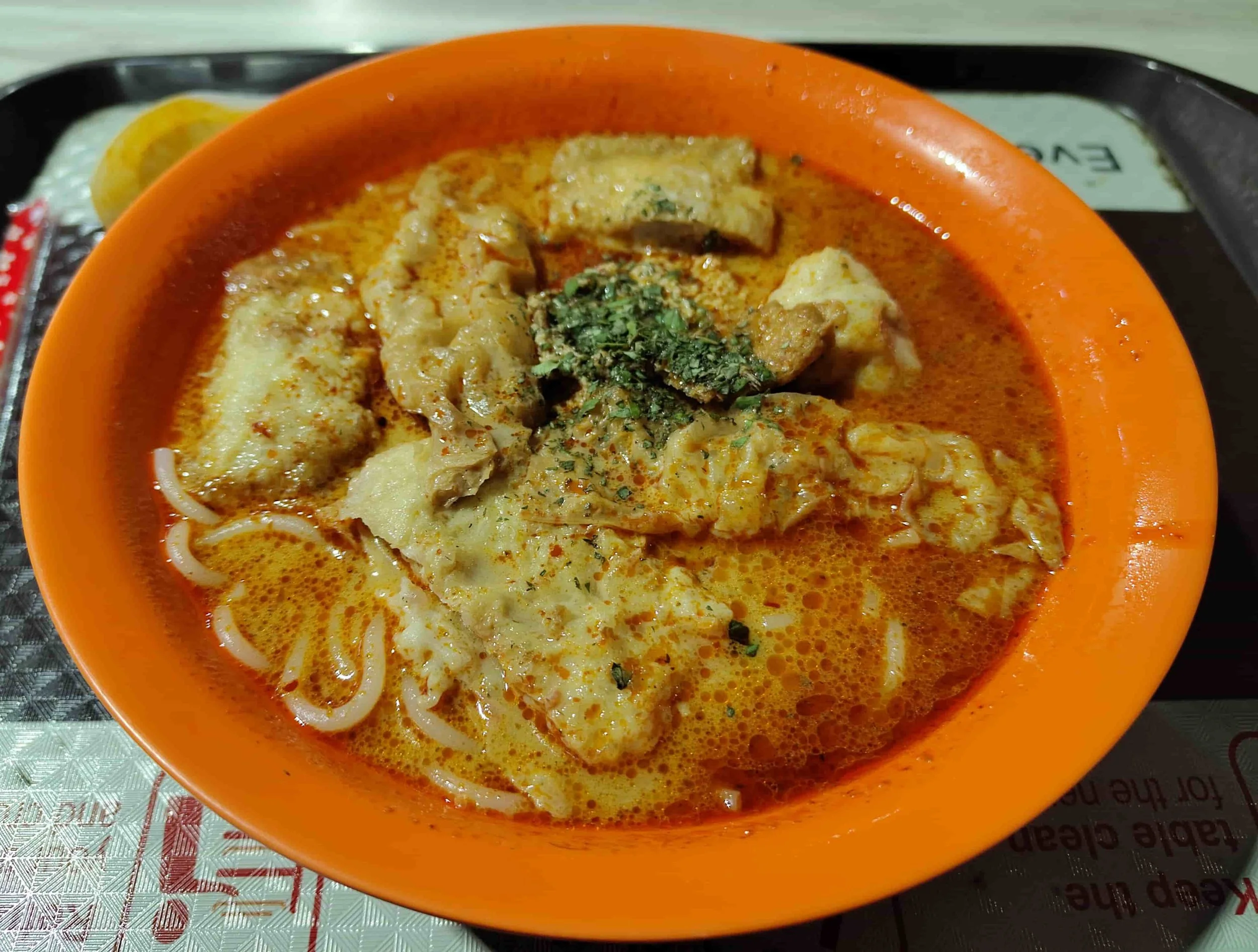
laksa
spicy noodle soup
What is it?
Laksa is one of Singapore’s most famous noodle soups, combining Chinese and Malay culinary influences. The Singapore version is often associated with Katong laksa, named after the Katong neighbourhood where it became especially popular. It has a creamy, aromatic broth made with coconut milk and chilli. Katong laksa is a variant of laksa lemak and is strongly associated with Singapore’s Peranakan food culture.
Laksa is also very popular in Malaysia, where there are many different versions, including assam laksa, curry laksa, Sarawak laksa and Johor laksa.
What is in it?
Laksa usually consists of thick rice noodles served in a spicy coconut broth made from coconut milk, dried shrimp, chilli and a blend of aromatic spices. Common toppings include prawns, fish cake, tofu puffs and bean sprouts.
Where can I eat it?
Laksa is available throughout Singapore at hawker centres and specialist laksa stalls. It is particularly associated with the Katong and Joo Chiat areas of eastern Singapore, where several well-known laksa stalls are located.
Dairy free.
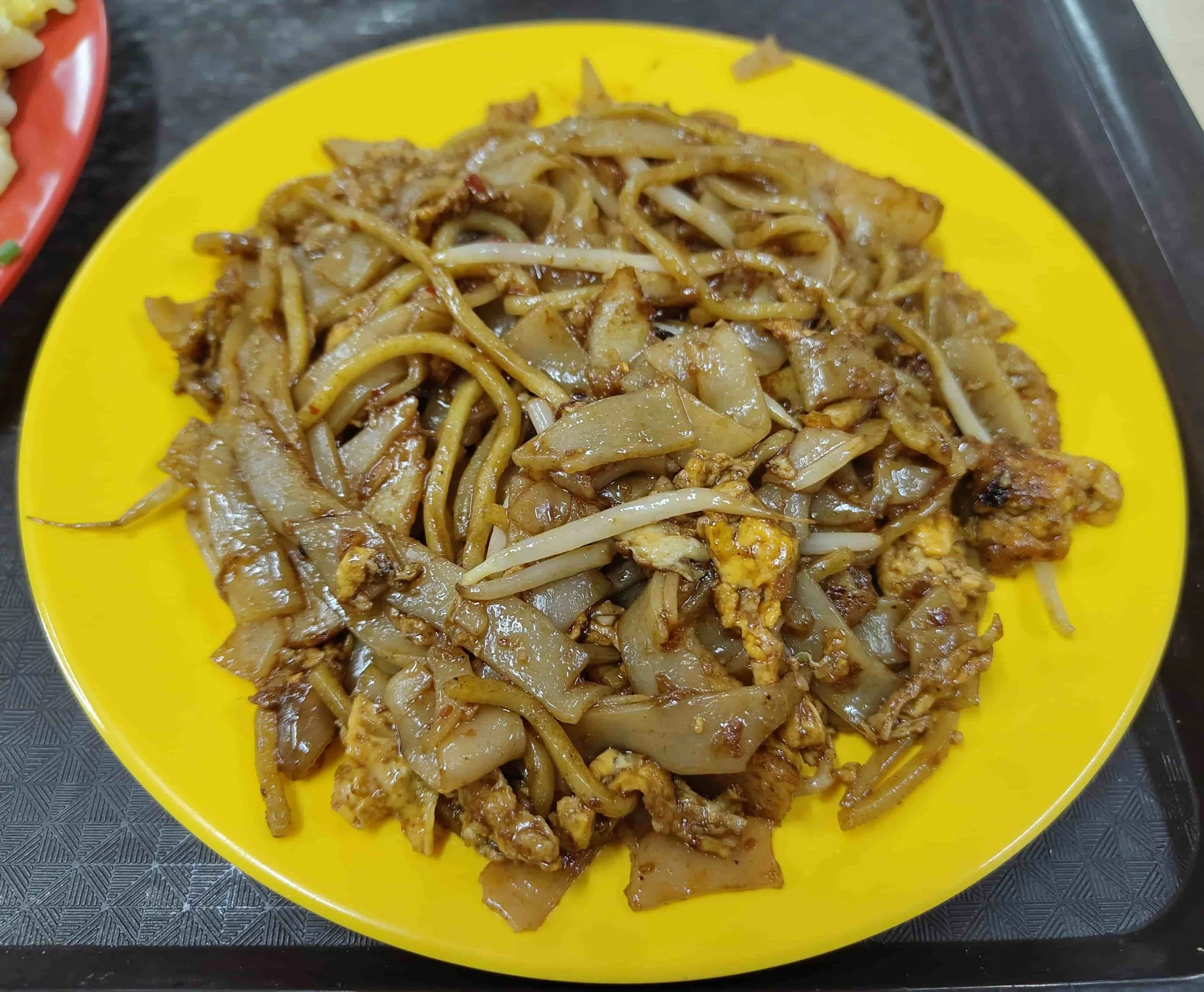
char kway teow
stir fried noodles
What is it?
Char kway teow consists of flat rice noodles stir fried over very high heat with a combination of seafood, egg, Chinese sausage and savoury sauces. Originally a cheap, filling meal for labourers, it has become a staple of Singaporean cuisine. It is cooked in a hot wok, developing the smoky flavour known as wok hei (“breath of the wok”), which is considered the hallmark of a great version. The ingredients are cooked together over intense heat, creating slightly charred edges and the smoky flavour that defines the dish. You will often see it listed as fried kway teow.
Char kway teow is also available in Malaysia, where it is a popular hawker dish.
What is in it?
The dish is made with flat rice noodles (kway teow), often combined with yellow egg noodles, which are stir fried in a mixture of soy sauces and pork fat or oil. Common ingredients include prawns, Chinese sausage (lap cheong), egg, bean sprouts, garlic and chives. Many versions are also available with cockles.
Where can I eat it?
Char kway teow is available at hawker centres throughout Singapore and is one of the country’s essential hawker dishes.
Dairy free.
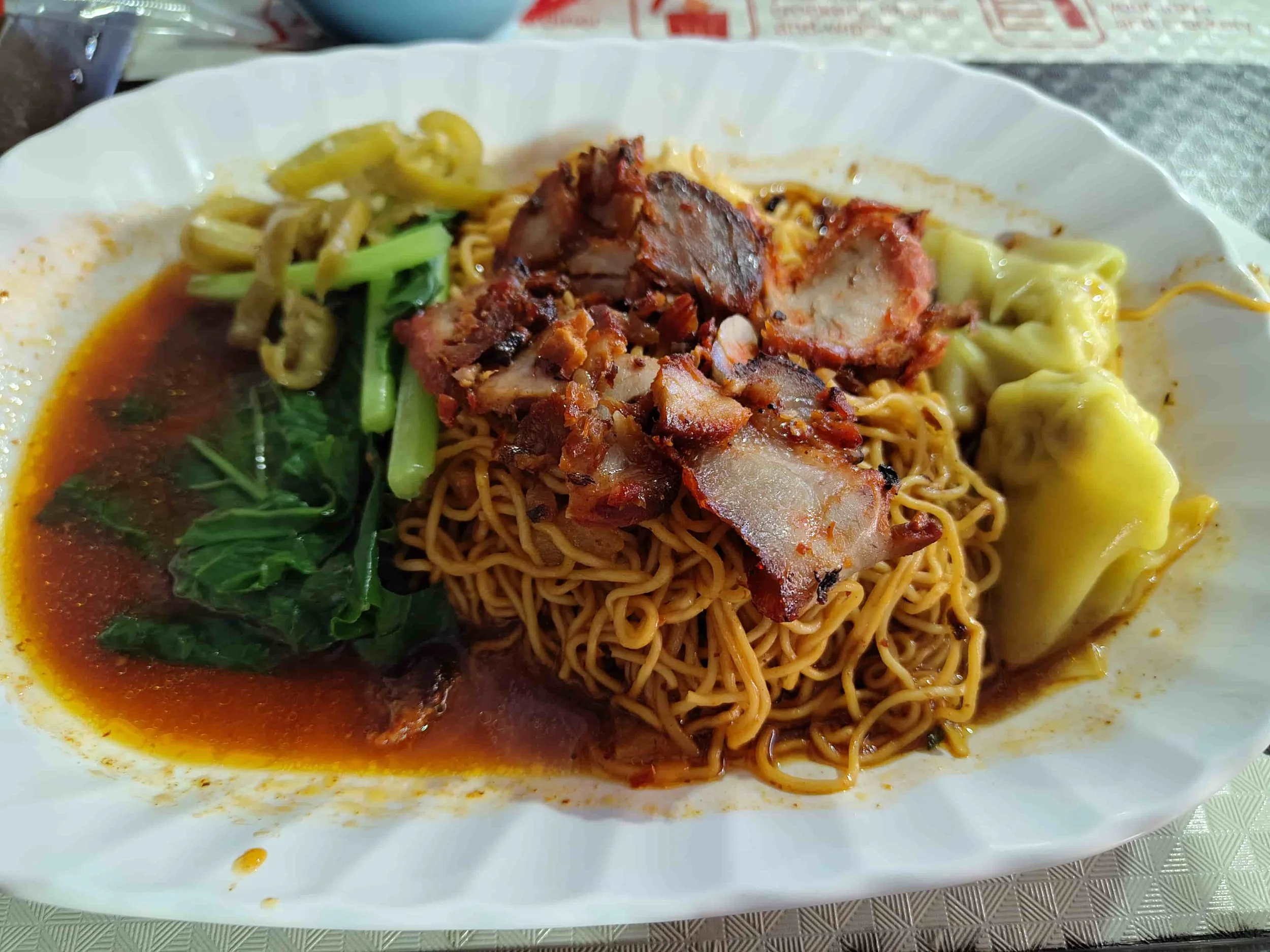
wanton mee
noodles & dumplings
What is it?
A classic Cantonese noodle dish that has become one of Singapore’s most popular hawker meals. Wanton mee consists of springy egg noodles served with wantons (dumplings) and accompanied by slices of char siu (Cantonese barbecue pork). In Singapore, the dish is most commonly served dry, with the noodles tossed in a savoury sauce. This differs from the Hong Kong style, where the noodles and dumplings are usually served together in broth.
While dry wanton mee is the most common version in Singapore, some stalls also offer a soup version.
What is in it?
The dish is made with thin egg noodles that are cooked until springy and then tossed in a sauce made from soy sauce, oyster sauce and other seasonings. The noodles are typically served with:
char siu (barbecue pork)
boiled wantons filled with pork and sometimes prawns
leafy green vegetables
pickled green chillies
a small bowl of soup (often pork-bone broth)
Where can I eat it?
Wanton mee is available at hawker centres throughout the country. A good place to try it is at Cho Kee Noodle located at Old Airport Road Food Centre.
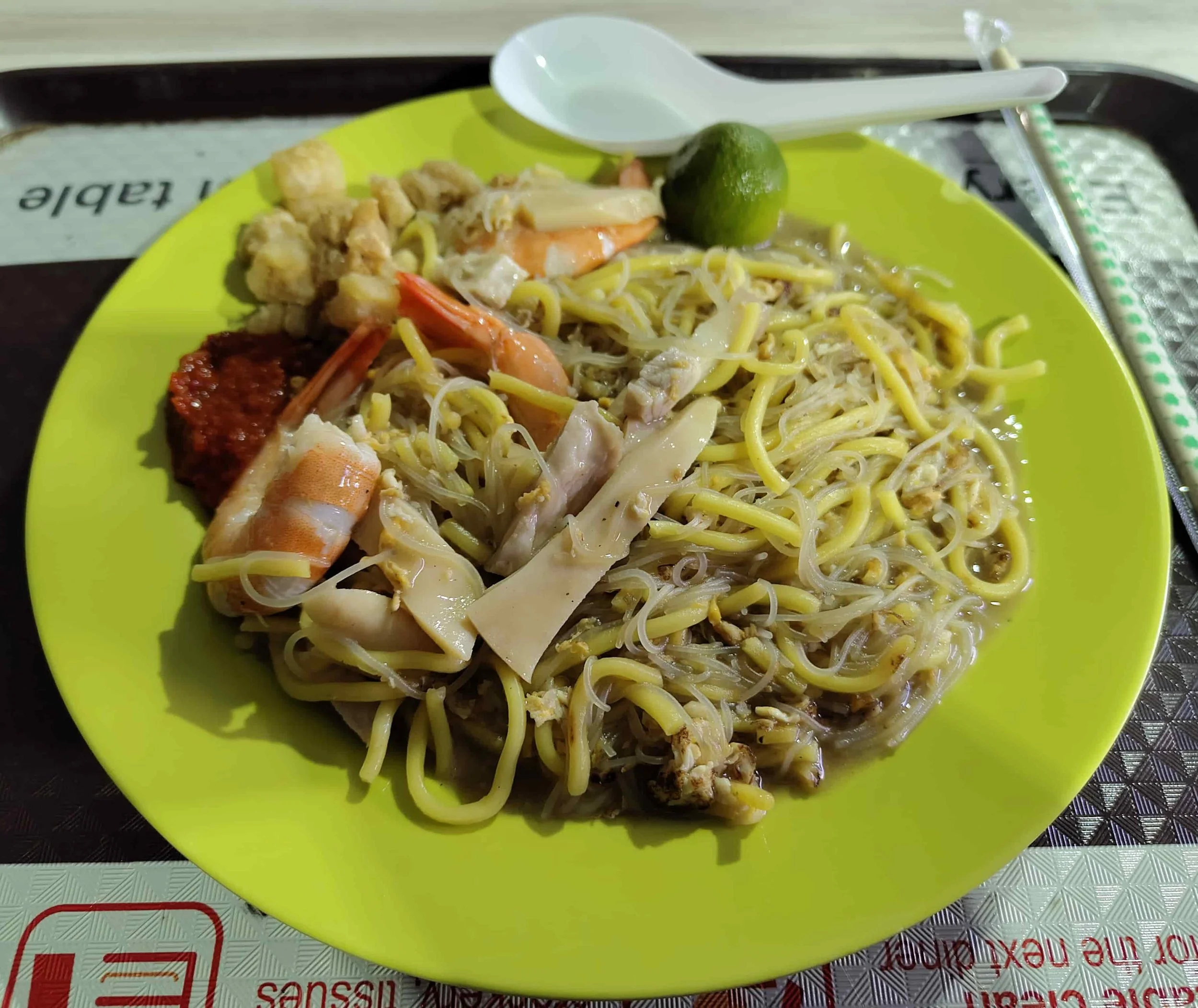
hokkien mee
2 noodle brothy stir fry
What is it?
Hokkien mee consists of yellow egg noodles and rice vermicelli stir fried in a prawn and pork stock until the noodles absorb the flavour of the broth. The dish was developed by Hokkien immigrants in Singapore and has evolved into a distinctly Singaporean creation. Unlike some Malaysian versions, Singapore style Hokkien mee is typically wetter, with the noodles cooked in stock rather than simply stir fried with sauce. As the noodles cook, they absorb the stock, giving the dish its characteristic flavour and slightly moist texture.
What is in it?
Hokkien mee is made with a combination of yellow egg noodles and thin rice vermicelli (bee hoon), which are stir fried with prawns, egg and pork in a stock usually made from prawn shells and pork bones. It is typically served with spicy sambal and a wedge of lime to squeeze over.
Where can I eat it?
Hokkien mee is widely available at hawker centres throughout Singapore and is one an easy noodle dish to find.
Dairy free.
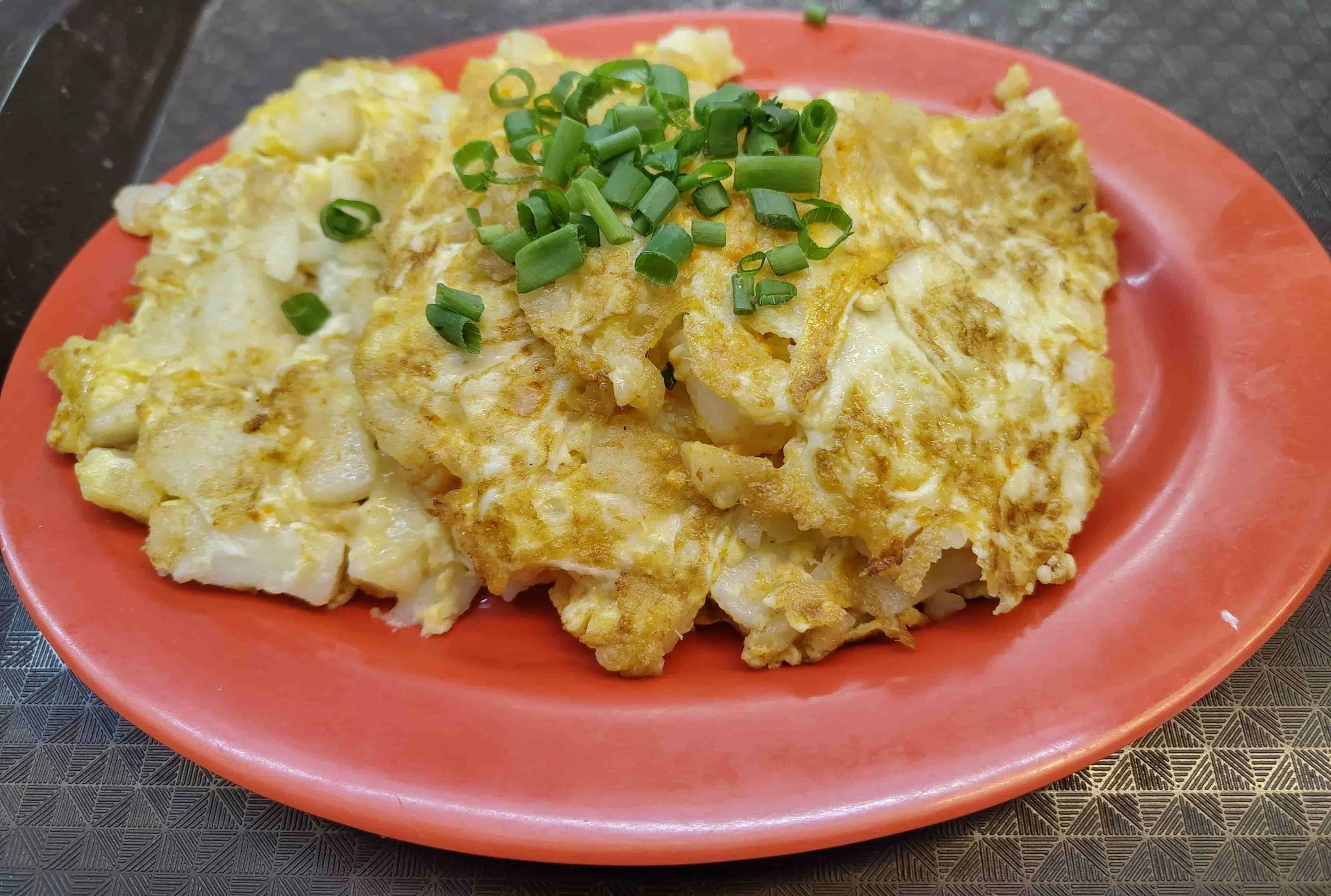
carrot cake
Savoury rice, radish cake
What is it?
Despite the name, Singaporean carrot cake has nothing to do with the sweet Western dessert and doesn’t even actually contain carrots. Instead, it is a savoury hawker dish made from cubes of fried radish cake. The dish originated from Chinese immigrants and is one of Singapore’s most popular breakfast and hawker foods. The “carrot” in the name refers to an old Chinese term for white radish (daikon), which is the main ingredient.
There are two main versions:
White carrot cake – fried with egg and preserved radish
Black carrot cake – cooked with sweet dark soy sauce, giving it a darker colour and sweeter flavour
The frying process creates a contrast between crispy edges and soft, slightly chewy centres. Both versions are popular, and some stalls allow you to order a mixture of the two.
What is in it?
Carrot cake is made from grated daikon radish and rice flour, which is steamed into a firm cake and then cut into cubes. These cubes are stir-fried with, eggs, garlic, spring onions and preserved radish. For the black version, sweet dark soy sauce is added during cooking.
Where can I eat it?
Carrot cake is available at hawker centres throughout Singapore and is easy to find; both versions can be found at places like the Chinatown Complex Food Centre.
Vegetarian, dairy free and typically gluten free.
While Singaporean cuisine has its own specialities, it shares many traditional dishes with neighbouring Malaysia and to a lesser extent Indonesia. For a deeper look at some of these shared classics, see our Malaysia & Indonesian food guides.
Ingredients listed reflect common or typical components of this dish as served in restaurants or street‑food vendors. Variations by region, season, or vendor are common. This information is provided for general reference only. If you have dietary restrictions or allergies, please verify ingredient details independently. We assume no liability for accuracy or outcomes.
