Here you will find a list of all the traditional cuisine we tried in Canada.
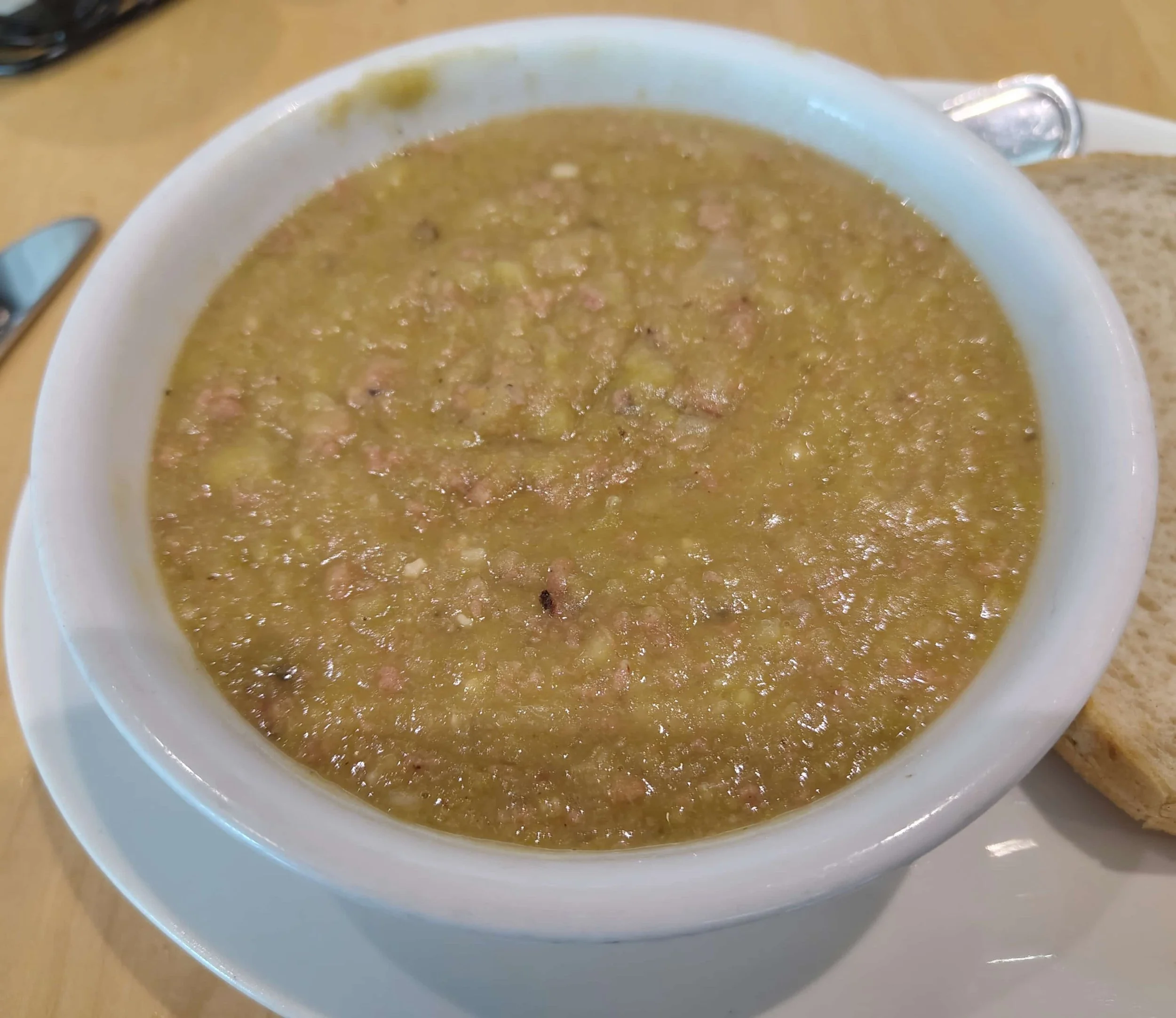
split pea soup
pea & meat soup
What is it?
Split pea soup is a comforting soup made from dried split peas that are slowly simmered until they break down into a thick, creamy consistency. It is a staple of Canadian home cooking, particularly during the colder months, and is especially associated with French Canadian cuisine in Québec. The soup is rich, warming and surprisingly filling. It often includes smoked meat, which gives it its distinctive smoky flavour.
Although it is not one of Canada’s most famous dishes today, it is well worth trying if you come across it on a menu.
What is in it?
Traditional split pea soup is made from yellow split peas slowly cooked with onions, carrots, celery, herbs such as thyme and bay leaves, and stock until the peas become soft and creamy. Classic recipes also include smoked ham, bacon, salt pork or a ham bone, although vegetarian versions are also common. Some recipes use savoury, a herb often associated with French Canadian pea soup. It is often served with crusty bread.
Where can I eat it?
Unlike dishes such as poutine, split pea soup can be less consistently available on restaurant menus and is often seasonal, appearing more frequently during the colder months. It is more commonly found in traditional Québec restaurants and specialist soup shops than in restaurants elsewhere in Canada.
Traditionally Gluten free (without bread)
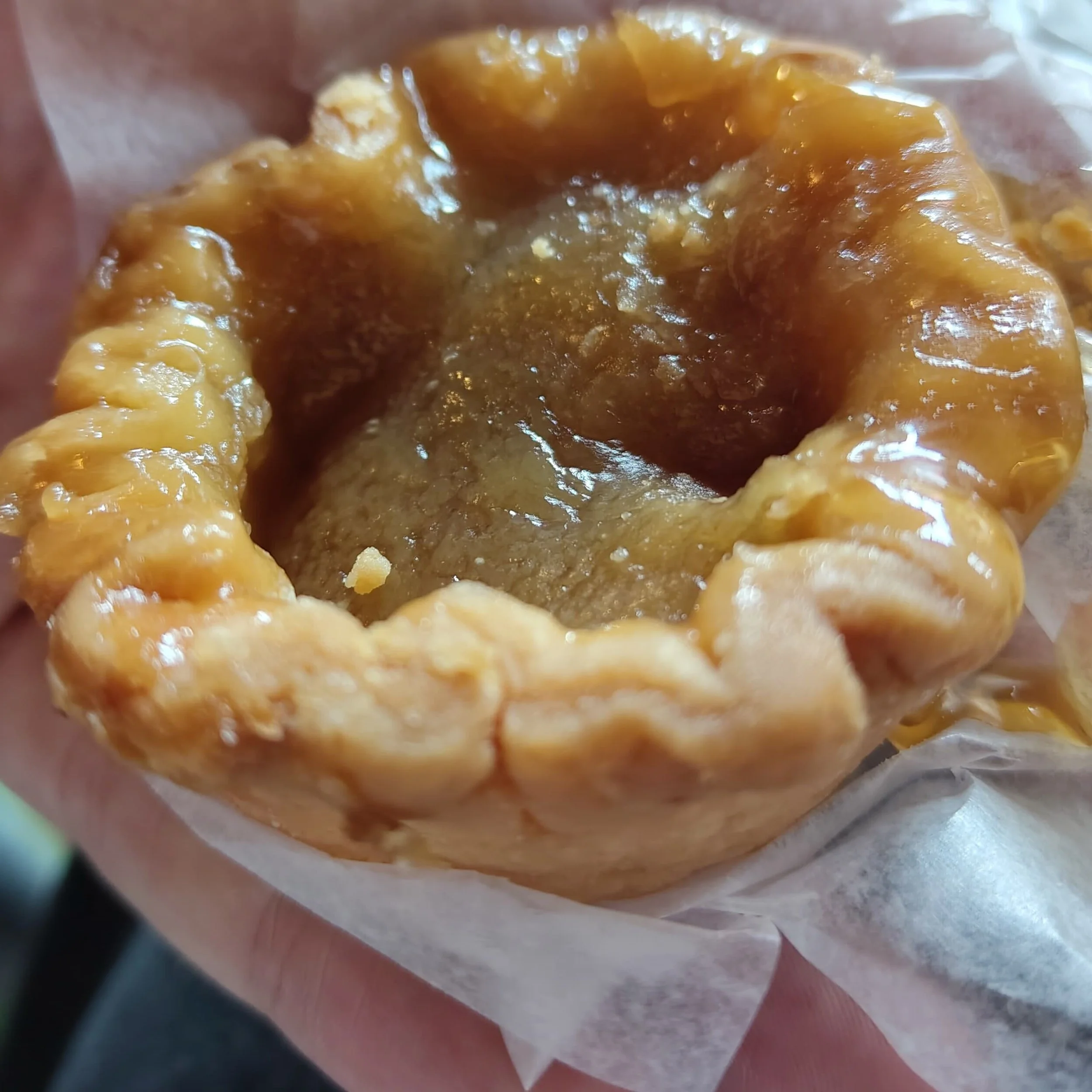
butter tarts
gooey butter pastries
What is it?
Butter tarts consist of a crisp, flaky pastry shell filled with a rich, buttery, caramel like filling that is incredibly sweet and wonderfully gooey.
They are strongly associated with Ontario, where the first known printed recipe for a butter tart appeared in 1900, although the dessert’s deeper origins are debated. Butter tarts have since become a classic Canadian treat enjoyed throughout the country. While the traditional version is plain, many variations exist, including versions with raisins. Other popular additions include pecans, walnuts and chocolate chips.
They are also incredibly sticky, with the gooey filling often oozing out as you bite into them, although maybe that’s just the way I eat them. It’s worth keeping a few napkins or wet wipes handy!
What is in it?
A classic butter tart is made with a buttery pastry case filled with a mixture of butter, brown sugar or corn syrup, eggs and vanilla. Some recipes use maple syrup instead of, or alongside, corn syrup.
Some versions include raisins, pecans or walnuts, while others keep the filling completely smooth. The consistency can also vary slightly, from quite runny to more firmly set, depending on the baker and the recipe.
Where can I eat it?
Butter tarts are sold throughout Canada and are particularly associated with Ontario. You’ll find them in many bakeries and cafés, as well as supermarkets, making them one of the easiest Canadian treats to try.
Vegetarian.
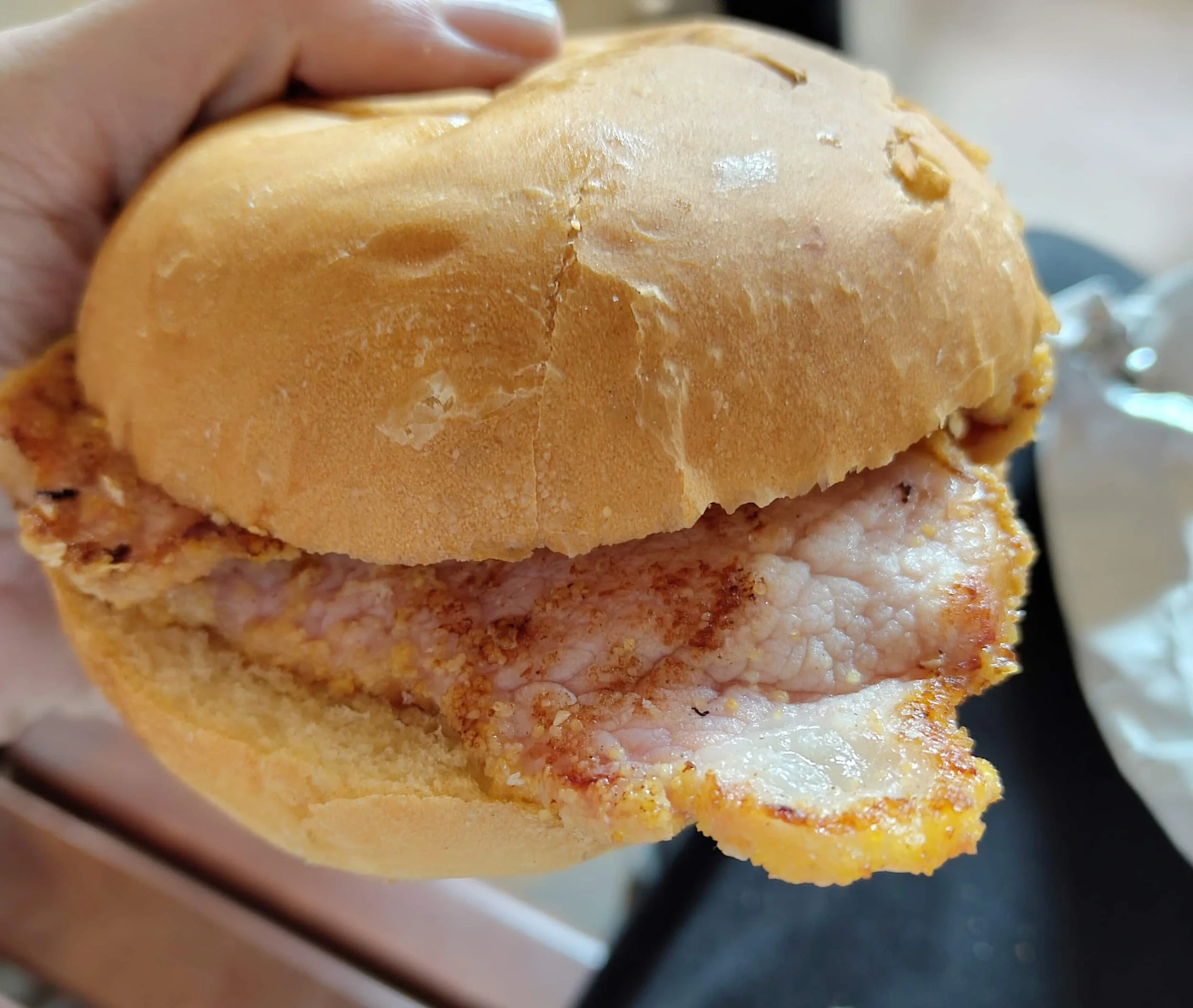
peameal bacon sandwich
bacon sandwich
What is it?
One of Toronto’s most iconic sandwiches, the peameal bacon sandwich consists of thick slices of peameal bacon served in a soft bun, usually with mustard. Unlike the crispy streaky bacon familiar in many countries, peameal bacon is made from lean pork loin, giving it a much meatier texture. It is wet cured and unsmoked, then rolled in cornmeal before being cooked.
The name comes from the sandwich’s key ingredient. Traditionally, cured pork loin was rolled in ground yellow peas, or pea meal, before refrigeration. Today, it is almost always rolled in cornmeal instead, but the historic name has remained.
What is in it?
The sandwich is made with thick slices of peameal bacon, which are grilled or pan fried before being served in a soft white bun. The classic accompaniment is yellow mustard, although some places also offer toppings such as tomato, lettuce, mayonnaise, cheese, maple syrup or a fried egg.
Where can I eat it?
Peameal bacon sandwiches are most closely associated with Toronto. One of the most famous places to try one is Carousel Bakery, located inside St. Lawrence Market. Their sandwich is packed with thick slices of peameal bacon.
St. Lawrence Market is also home to several other vendors selling peameal bacon sandwiches, making it one of the best places in Toronto to find this classic sandwich.
Dairy free.
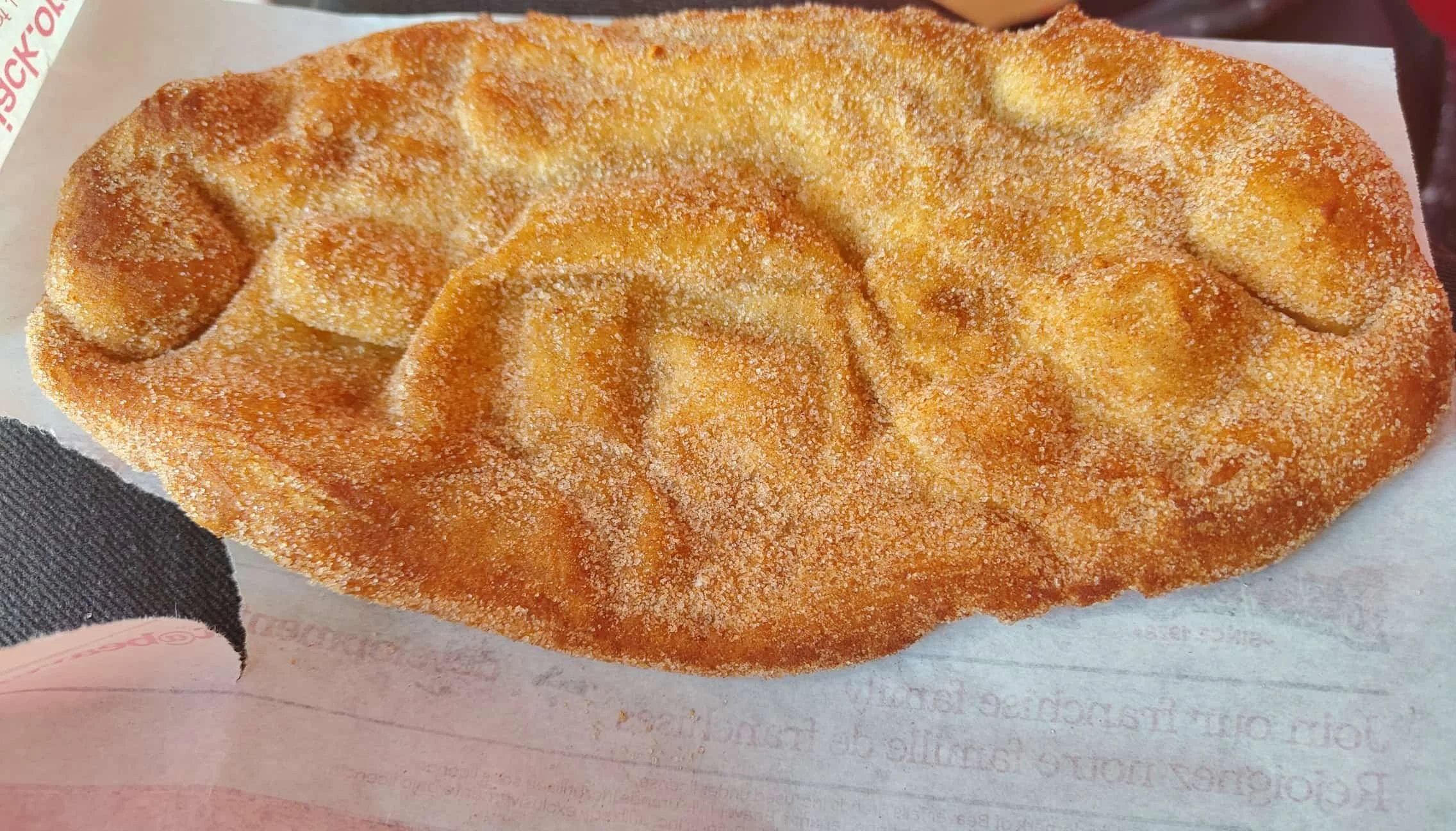
beavertails
flat doughnut
What is it?
BeaverTails are one of Canada’s most iconic sweet treats. They are essentially flat, hand-stretched doughnuts that are deep fried before being topped with a variety of sweet ingredients. The pastry gets its name from its distinctive shape, which resembles the broad, flat tail of a beaver, Canada’s national animal.
The modern BeaverTails pastry was launched in the Ottawa Valley in 1978 by Grant and Pam Hooker, using a family recipe with German-Canadian roots. The pastry is often compared with German fried pastries such as Auszogne (Knieküchle), which are similarly made by stretching dough thin before frying.
The original and most traditional topping is cinnamon and sugar, sometimes finished with a squeeze of fresh lemon juice. Today, there are countless modern variations.
Popular toppings include:
Chocolate-hazelnut spread.
Maple butter.
Apple cinnamon.
Cheesecake-style toppings.
Reese’s Pieces.
Oreo crumbs.
Bananas.
Strawberries.
Served warm and freshly fried, they’re best enjoyed straight away while the pastry is still crisp on the outside and soft inside.
What is in it?
A classic BeaverTail is made from yeast raised dough that is stretched by hand into its distinctive tail shape before being deep fried. Once cooked, it is coated with cinnamon and sugar for the traditional version, while modern versions may be topped with chocolate spread, fruit, crushed biscuits, nuts, caramel or maple flavoured toppings.
Despite the wide variety of toppings available today, the simple cinnamon and sugar version remains the classic.
Where can I eat it?
BeaverTails are sold across Canada at dedicated BeaverTails stands and shops, particularly in tourist areas. In Toronto, you can try them at BeaverTails – Queues de Castor on the Waterfront.
They are especially popular in Ottawa, where the company opened its first permanent shop, but can now be found throughout much of Canada.
Vegetarian.
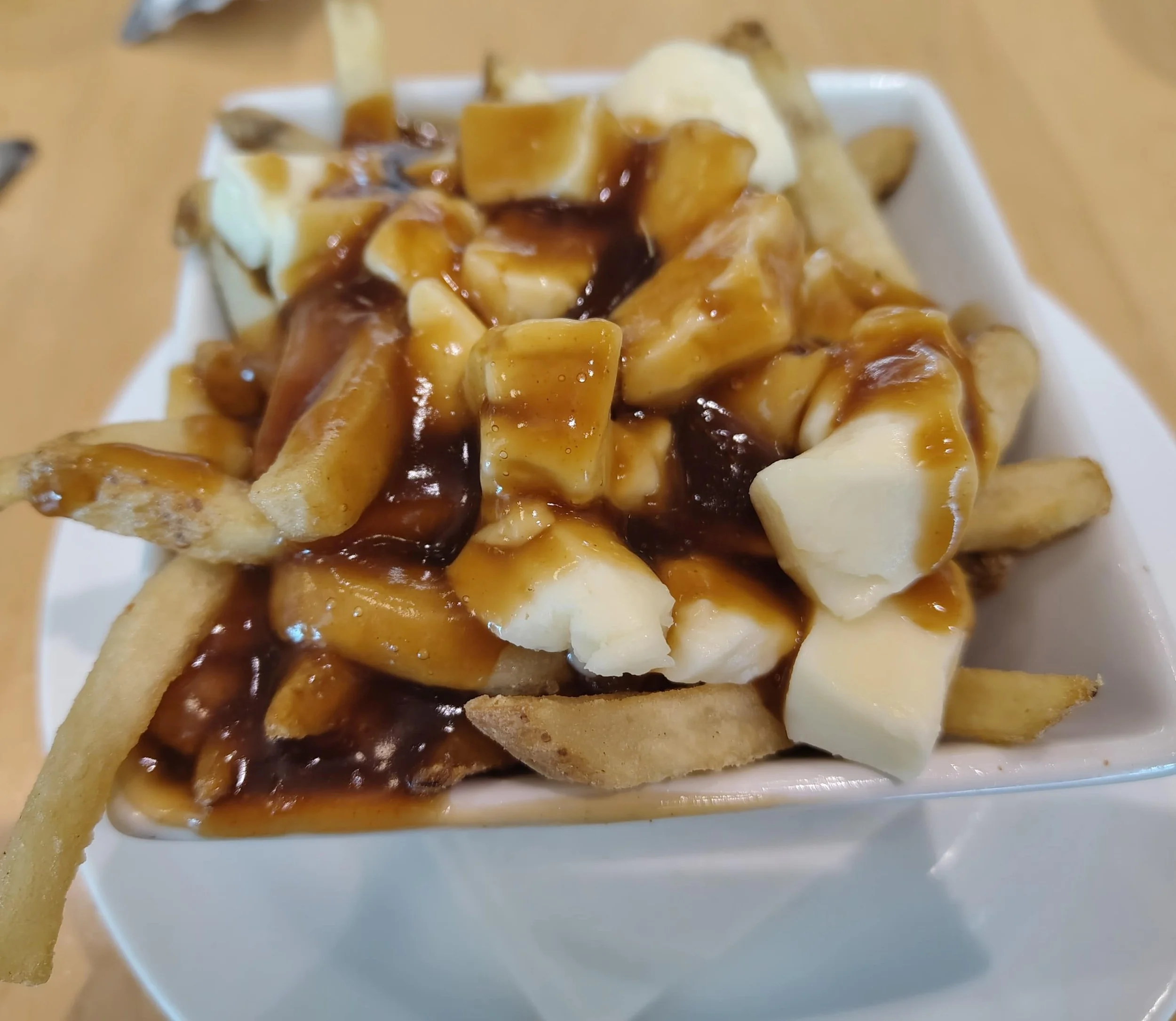
poutine
fries, cheese & gravy
What is it?
Poutine is Canada’s most famous dish and a true comfort food classic. Originating in rural Québec in the late 1950s, it consists of crispy fries topped with fresh cheese curds and covered with hot gravy.
The hot gravy softens the fries and slightly melts the cheese curds while still leaving them with their distinctive “squeaky” texture. The classic version remains the most popular, but countless modern variations exist.
What is in it?
Traditional poutine is made with thick cut fries, fresh white cheese curds and a rich brown gravy, usually made with beef or chicken stock.
Many restaurants now offer loaded versions with additional toppings such as smoked meat, pulled pork, bacon, chicken, chilli, mushrooms or even lobster in some parts of Canada
Where can I eat it?
Poutine is available throughout Canada. Although it began as a simple fast food dish, it is now served everywhere from roadside chip stands and diners to high end restaurants. It became widely popular across Canada from the 1980s and 1990s onwards, and many restaurants now offer their own signature versions alongside the classic recipe.
Vegetarian versions are available, although traditional gravy is often made with meat stock.
Ingredients listed reflect common or typical components of this dish as served in restaurants or street‑food vendors. Variations by region, season, or vendor are common. This information is provided for general reference only. If you have dietary restrictions or allergies, please verify ingredient details independently. We assume no liability for accuracy or outcomes.
