all the foods - Sri Lanka
Unlike many cuisines, where a single curry is served as the main dish, the classic Sri Lankan meal is known as rice and curry. Rather than one large dish, it consists of steamed rice accompanied by several smaller curries and side dishes.
It is somewhat similar to an Indian thali, although Sri Lankan rice and curry is generally less fixed in its composition. A typical meal may include a meat, fish, or vegetable curry, dhal, one or more vegetable dishes, a sambol, and sometimes pickles, papadum, or other accompaniments. The exact combination varies between restaurants.
The following dishes are among the most common you are likely to encounter as part of a traditional Sri Lankan rice and curry.
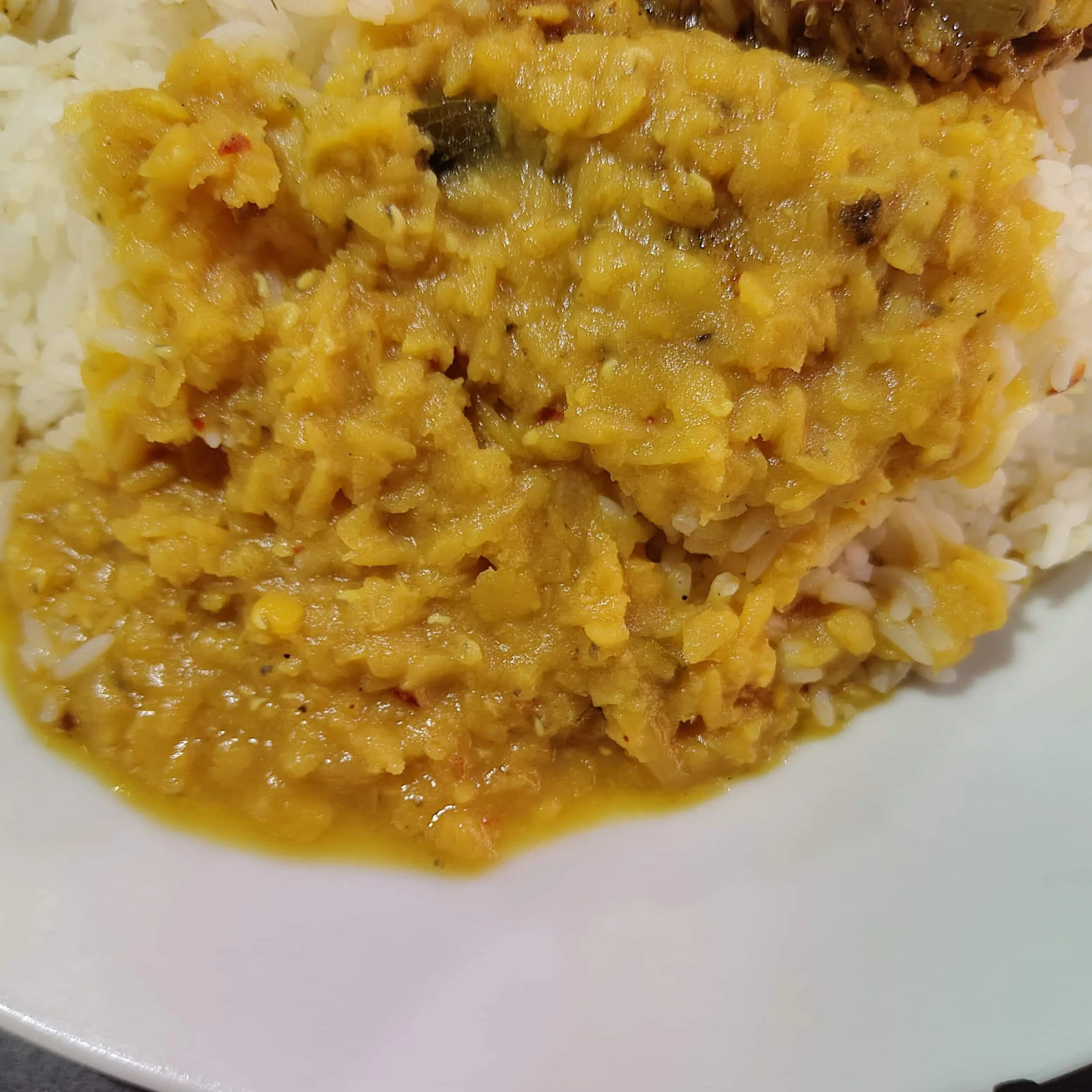
dhal
lentil curry
What is it?
Dhal curry is the most common curry served as part of a traditional Sri Lankan rice and curry meal. Made from red lentils cooked until soft, it is a mildly spiced dish that accompanies almost every rice and curry spread. Unlike in many countries where dhal is eaten as a main dish, in Sri Lanka it is typically one of several curries served together around a mound of rice.
What is in it?
The curry is usually made from red lentils simmered with coconut milk, onion, garlic, turmeric, curry leaves, mustard seeds and chilli. Many versions also include pandan leaf, and some recipes add cumin or Sri Lankan curry powder. A final tempering of fried onion, garlic, mustard seeds and curry leaves is common and adds a lot of flavour.
Where can I eat it?
Dhal curry is served almost everywhere in Sri Lanka and is one of the few curries you can expect to find with virtually every rice and curry meal. It is a staple in homes, restaurants and casual eateries across the country.
Vegan, dairy free and gluten free.
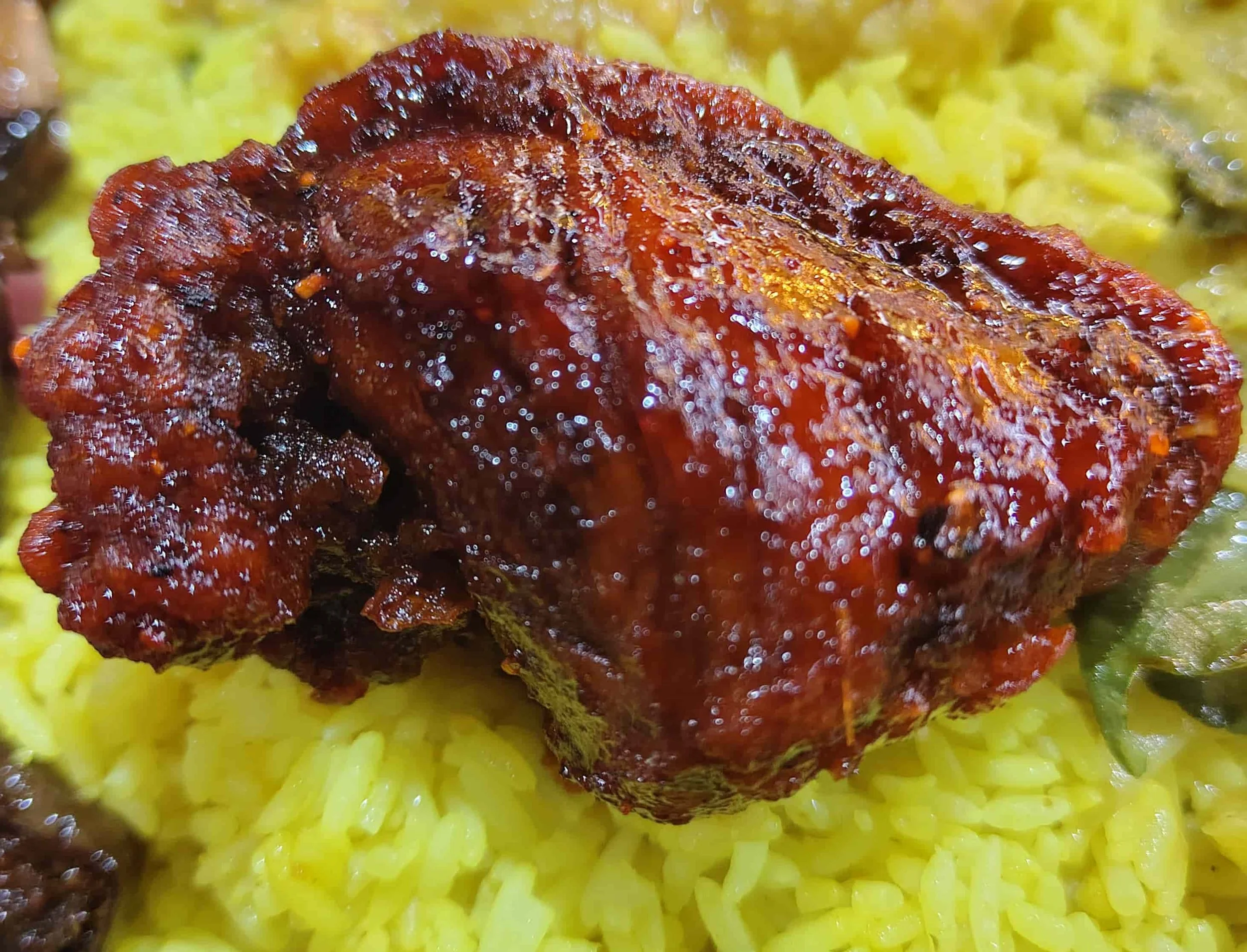
devilled chicken
spicy, sticky chicken
What is it?
Devilled chicken is a popular Sri Lankan chicken dish consisting of crispy pieces of chicken stir fried in a thick, spicy, sweet and tangy sauce. Despite the name, it is not a curry but a dry style stir fry that is especially popular in restaurants. The term “devilled” refers to the dish’s spiciness rather than a specific cooking method. It is thought to have developed during the colonial period, adapting the British idea of “devilled” foods into a distinctly Sri Lankan dish.
What is in it?
The dish is made with pieces of chicken that are usually deep fried or stir fried before being coated in a thick sauce. The sauce typically includes onion, garlic, ginger, green peppers, tomatoes, soy sauce, tomato ketchup, chilli, vinegar and sugar. Some versions also include curry leaves, black pepper, chilli flakes or fish.
Where can I eat it?
Devilled chicken is widely available throughout Sri Lanka and is a common restaurant option. It is usually listed simply as Devilled Chicken on English menus and is often served with rice, fried rice, noodles or chips and as the protein option in a rice and curry meal.
Dairy free.
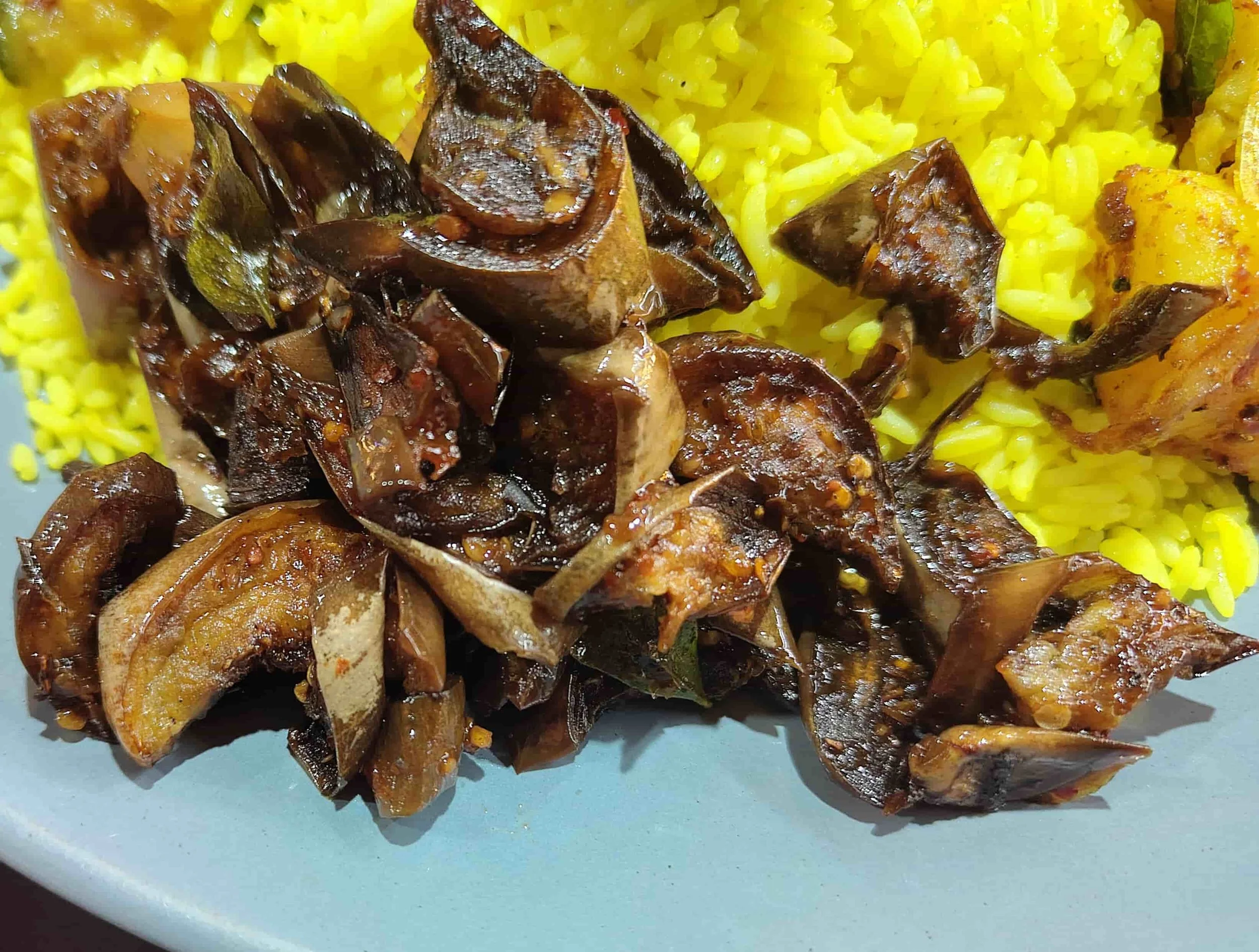
wambatu moju
aubergine pickle
What is it?
Wambatu moju is a traditional Sri Lankan side dish made from fried aubergine (eggplant) that is marinated in a sweet, sour and spicy sauce. Rather than being a curry, it is a type of moju, a pickle or relish served in small quantities alongside a traditional rice and curry meal. It is a classic accompaniment on festive tables and has a tangy flavour.
What is in it?
The dish is made by cutting aubergine into strips and deep frying them. It is then mixed with a sweet and tangy dressing made from vinegar, sugar, onions, garlic, mustard seeds, curry leaves, chilli and spices. Some recipes also include green chillies, turmeric, ginger, tamarind or fried shallots.
Where can I eat it?
Wambatu moju is commonly served as part of a traditional rice and curry meal throughout Sri Lanka.
Vegan, dairy free and gluten free.
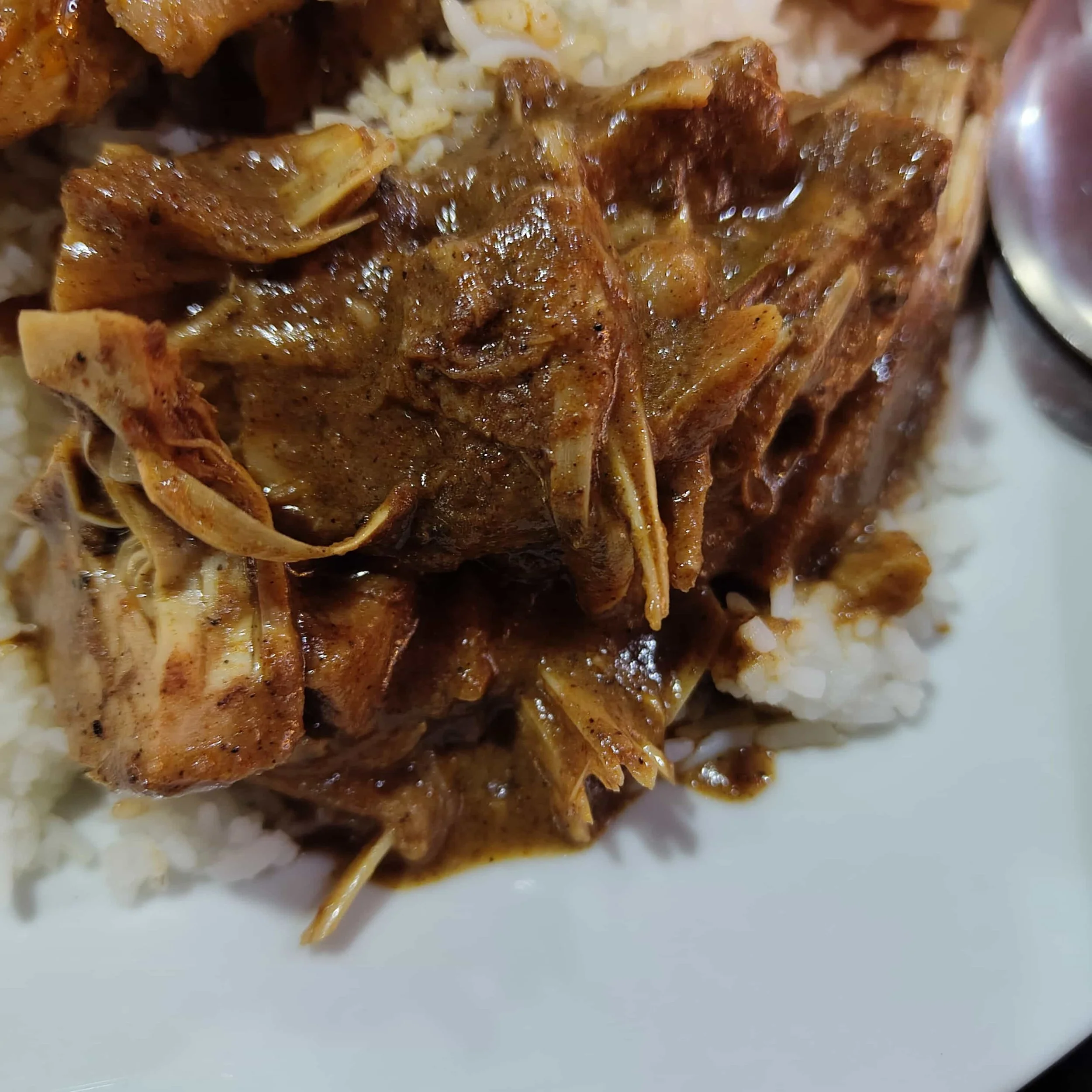
polos curry
young jackfruit curry
What is it?
Polos curry is a Sri Lankan vegetarian curry made from young green jackfruit. It is a common part of a traditional rice and curry meal and is especially popular because it has an almost meaty texture despite being completely vegetarian. Young jackfruit is used before it fully ripens, when it is still firm and able to absorb spices and coconut based sauces. The jackfruit is simmered for a long time so it becomes tender and fibrous, taking on the flavour of the spice blend and coconut sauce. Some versions are drier and more heavily spiced, while others are richer and more saucy depending on restaurant style.
What is in it?
Polos curry is made from chopped young jackfruit. The curry base typically includes coconut milk, onion, garlic, ginger, curry leaves, pandan leaf, mustard seeds, turmeric, chilli and roasted Sri Lankan curry powder. Some versions also include tamarind or goraka (similar to tamarind) for a slightly sour edge.
Where can I eat it?
Polos curry is very commonly served as part of a rice-and-curry set across Sri Lanka.
Vegan, dairy & gluten free.
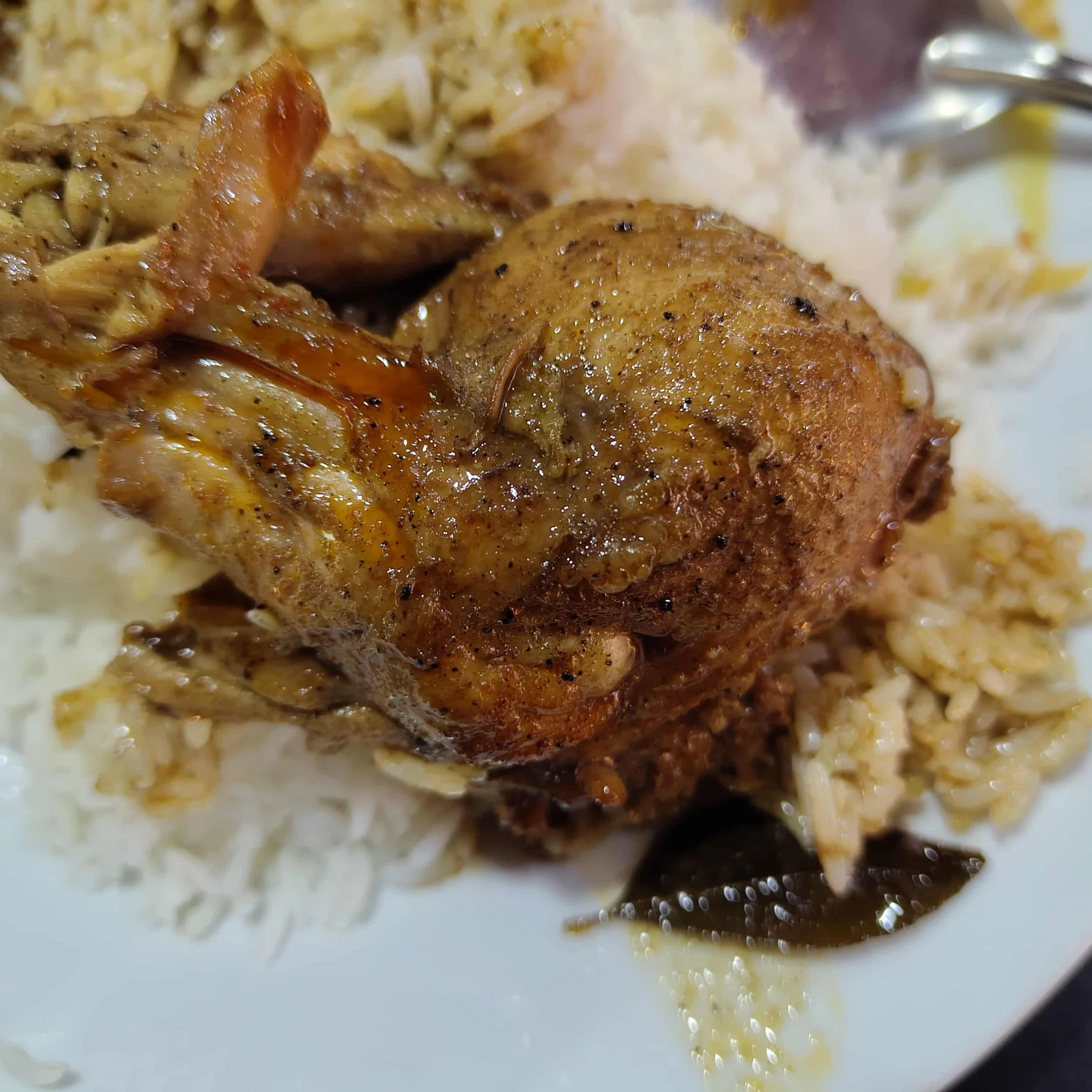
kukul mas curry
chicken curry
What is it?
Kukul mas curry is one of the most common meat curries served as part of a traditional Sri Lankan rice and curry meal. “Kukul mas” simply means chicken meat. It is typically intensely spiced, with strong use of roasted spice blends and coconut based sauces. The curry is made with chicken pieces, traditionally bone in, cooked slowly in a spiced sauce.
What is in it?
Made with bone-in chicken, the curry base usually includes onions, garlic, ginger, curry leaves, pandan leaf, cinnamon, cloves, cardamom, turmeric, chilli and Sri Lankan roasted curry powder. Many versions also include coconut milk.
Where can I eat it?
Kukul mas curry is available almost everywhere in Sri Lanka as part of rice and curry meals. It is one of the standard protein options, often served alongside dhal, vegetable curries and sambols.
Dairy and gluten free.
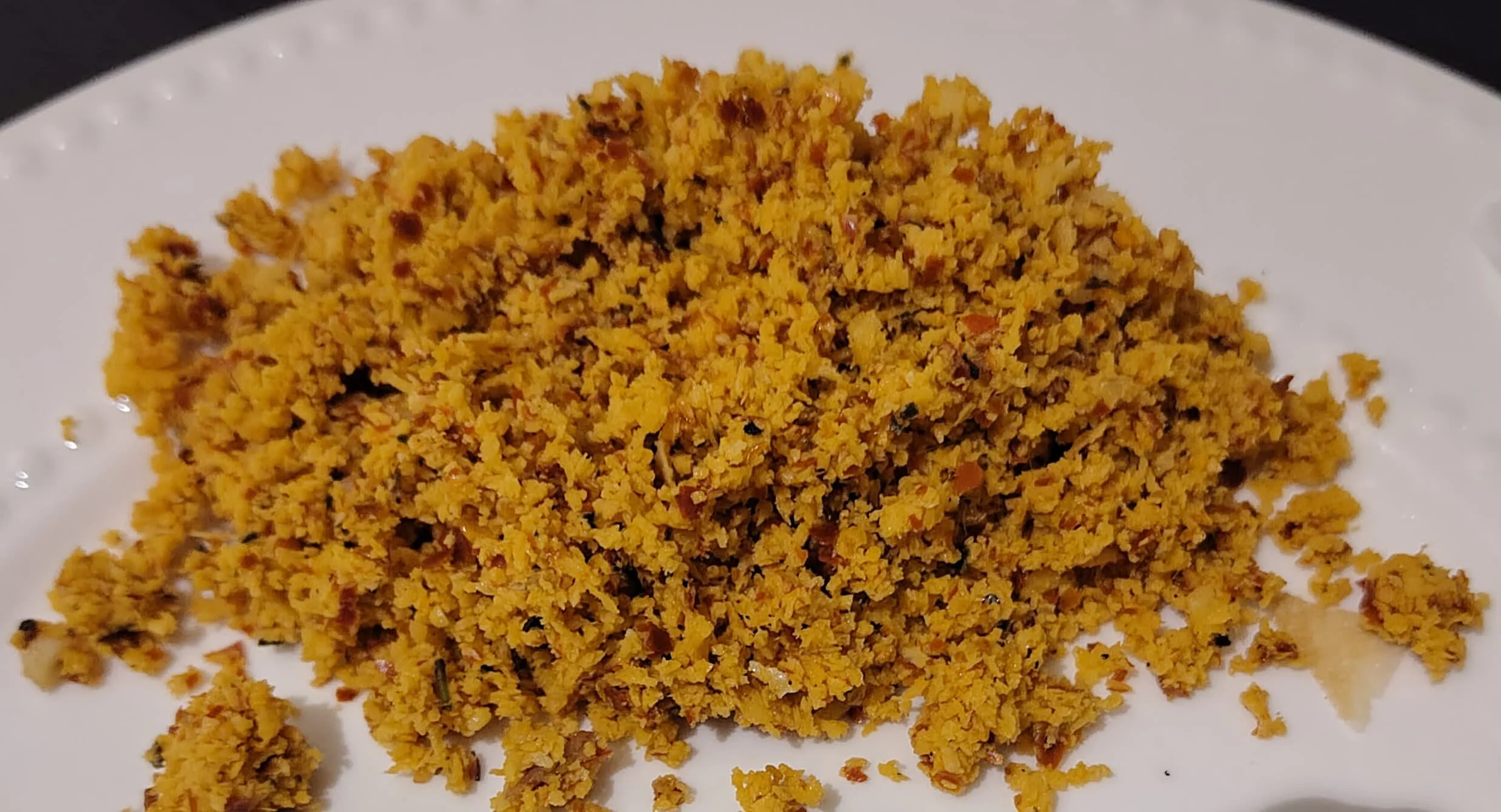
pol sambol
coconut sambol
What is it?
Pol sambol is one of Sri Lanka’s most iconic condiments, made from freshly grated coconut mixed with chilli, onion and lime. Rather than being eaten on its own, it is served alongside curries to add freshness, heat and texture to a traditional rice and curry meal. It is one of the most common accompaniments in Sri Lankan cuisine and can also be enjoyed with hoppers, string hoppers, roti and other breads. The ingredients are traditionally ground together using a stone mortar and pestle, creating a coarse, slightly moist relish.
What is in it?
Pol sambol is made from freshly grated coconut mixed with red chilli flakes or chilli powder, finely chopped onion or shallots, lime juice and salt. Some versions also include green chilli, garlic, curry leaves or black pepper.
Where can I eat it?
Pol sambol is served almost everywhere in Sri Lanka and is one of the most common accompaniments to a rice and curry meal. It is also a classic side for hoppers, string hoppers and roti.
Vegan, dairy free and gluten free.
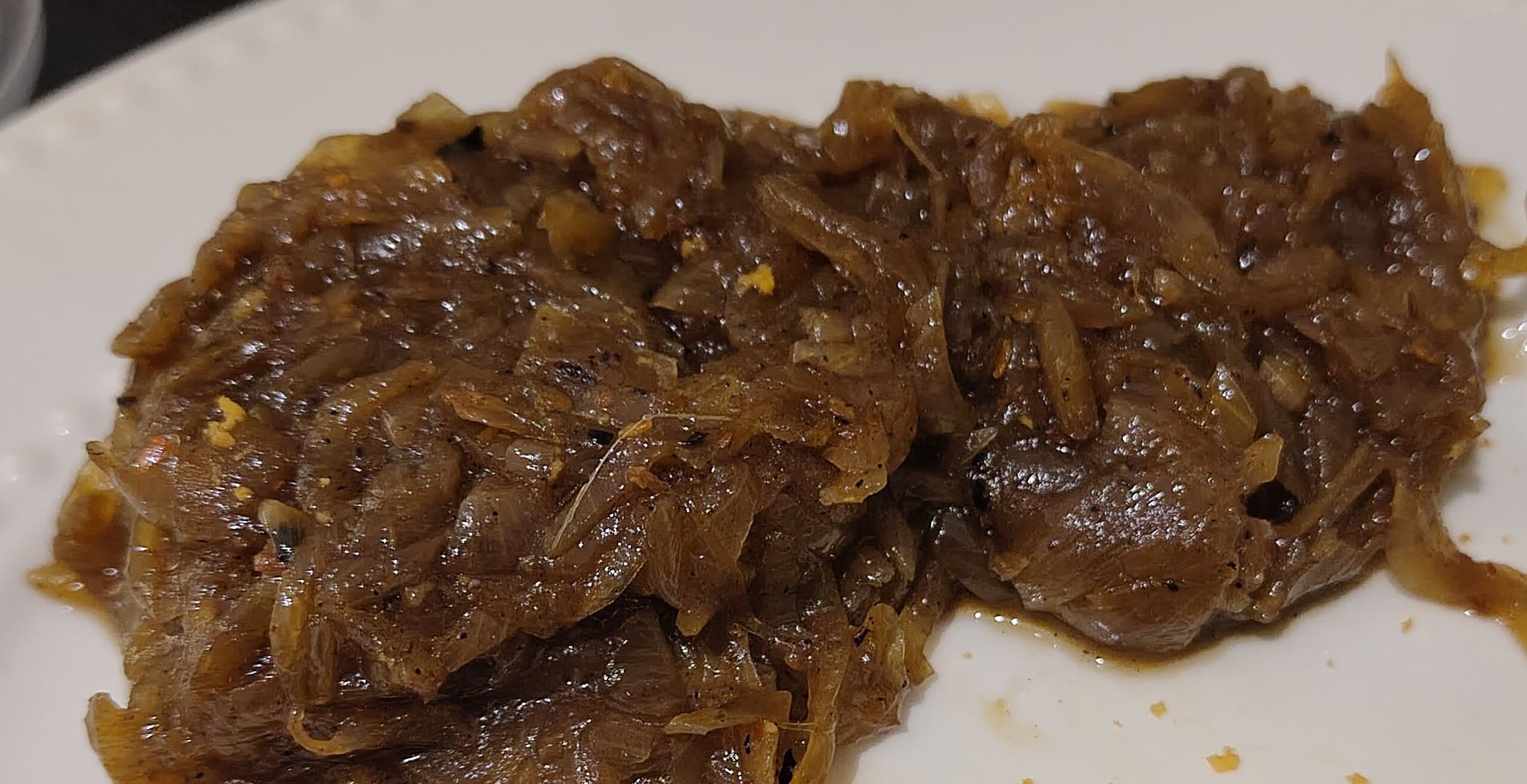
seeni sambol
onion sambol
What is it?
Seeni sambol is a sweet and savoury onion relish that is one of Sri Lanka’s most popular accompaniments. Despite the name, “seeni” means sugar, not onion, referring to the sambol’s characteristic sweetness rather than its main ingredient. Unlike the fresh, spicy flavour of pol sambol, seeni sambol is slow cooked until the onions become soft, dark and caramelised, creating a jam like condiment. It is commonly served alongside a rice and curry meal but is equally popular with hoppers, string hoppers, roti and bread.
What is in it?
Typical ingredients include onions, chilli flakes or chilli powder, curry leaves, cinnamon, sugar, tamarind and salt. Many traditional recipes also include Maldive fish (dried cured tuna).
Where can I eat it?
Seeni sambol is served throughout Sri Lanka and is commonly found as part of traditional rice and curry meals. It is also a classic accompaniment to hoppers, string hoppers, roti and bread.
Vegan versions are available, dairy free and gluten free.
While rice and curry is the foundation of Sri Lankan cuisine, it is far from the only food worth trying. The following dishes are typically enjoyed separately, whether as breakfast, street food, snacks or standalone meals, rather than as part of a traditional rice and curry.
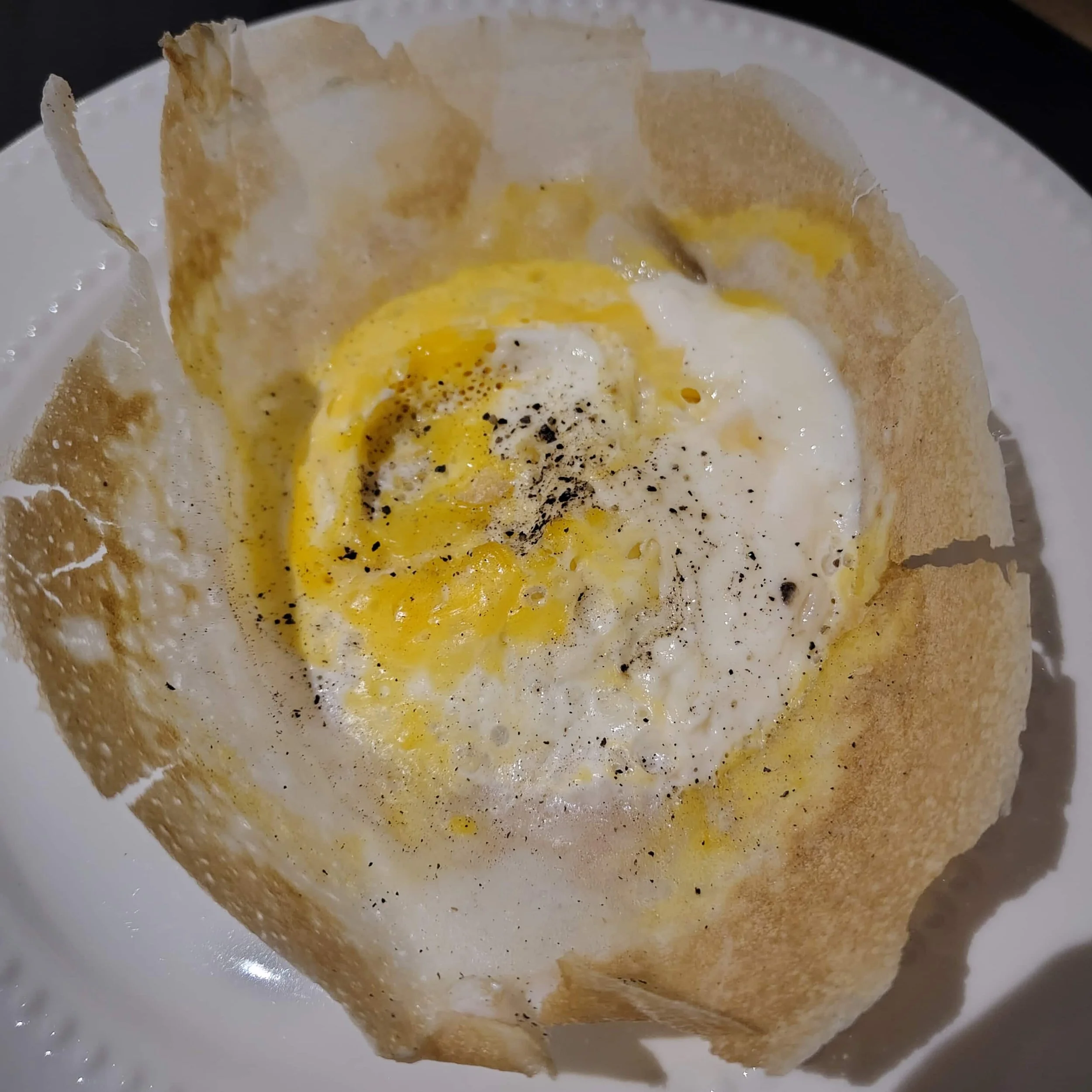
hoppers
rice flour pancakes
What is it?
Hoppers are one of Sri Lanka’s most distinctive and popular dishes. Made from a fermented rice flour batter, they are cooked in a small bowl shaped pan, creating a thin, crispy edge and a soft, fluffy centre. They are most commonly eaten for breakfast and are usually served with a selection of curries and sambols rather than on their own. While plain hoppers are great, egg hoppers are arguably the most iconic version, with an egg cracked into the centre while the hopper cooks.
What is in it?
The batter is traditionally made from rice flour, coconut milk, water and a small amount of yeast, giving the hopper its light, airy texture. For an egg hopper, a whole egg is cracked into the middle of the hopper while it cooks, leaving the edges crisp while the centre remains soft with a perfectly cooked egg.
Where can I eat it?
Hoppers are available throughout Sri Lanka, particularly at breakfast and dinner. You’ll find them at traditional restaurants and hopper specialist restaurants.
Vegan versions available. Dairy free and gluten free.
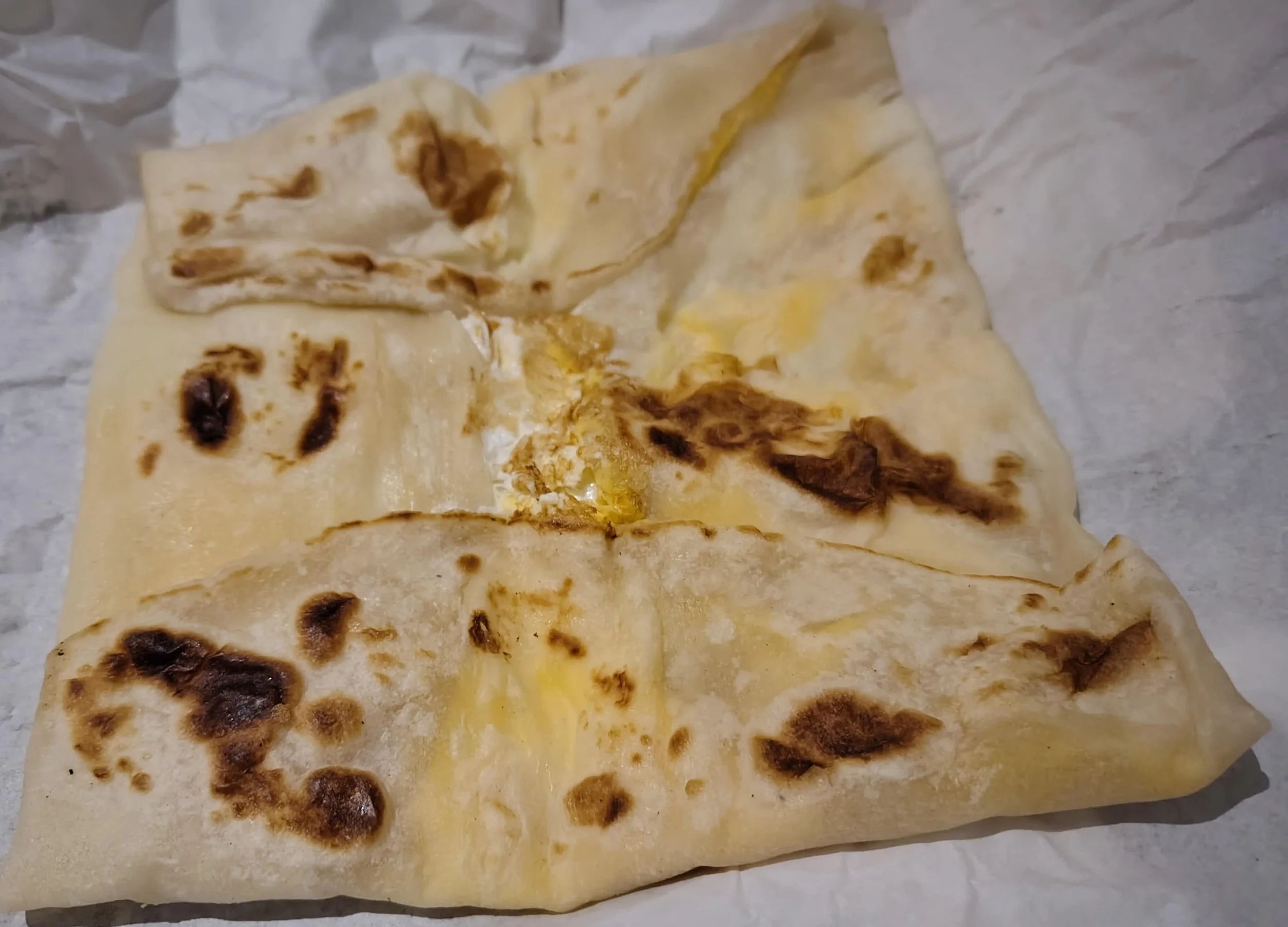
egg roti
egg in flatbread
What is it?
Egg roti is a popular Sri Lankan street food made by folding a thin godamba roti around an egg and cooking it on a hot griddle. Although it is one of the simplest roti dishes, it is also one of the most popular, and many stalls offer additional fillings to create more substantial versions. It is often served with a small pot of curry or a spoonful of seeni sambol for dipping.
What is in it?
The classic version consists of a thin godamba roti with a whole egg cracked into the centre before the dough is folded into a square and cooked on a flat griddle. The egg is usually seasoned with salt and pepper, and many vendors also add chopped onion, green chilli and curry leaves. Common variations include cheese egg roti, chicken egg roti and vegetable egg roti. The plain egg roti remains the most widely available version.
Where can I eat it?
Egg roti is sold throughout Sri Lanka and is especially common at street food stalls and takeaway places.
Vegetarian & dairy free.
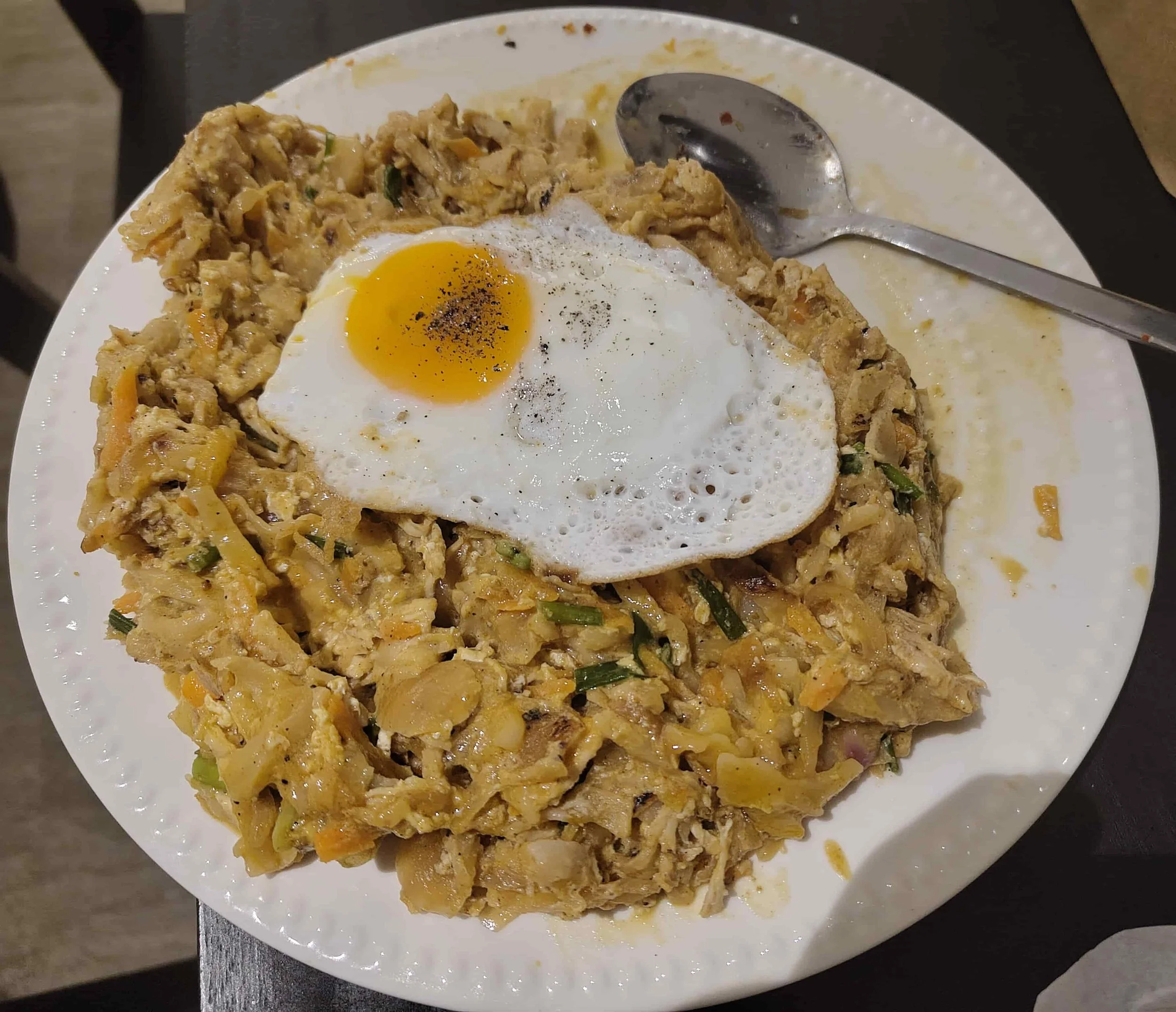
kottu roti
roti stir fry
What is it?
Kottu roti is one of Sri Lanka’s most famous and widely available dishes. It is made by chopping godamba roti into small pieces and stir frying it on a large flat griddle with vegetables, spices, egg and your choice of meat or seafood. The sound of the metal blades chopping the roti against the hot griddle is a familiar part of Sri Lankan street life, and you’ll often hear a kottu stall before you see it. Traditionally made with chopped godamba roti, the dish has inspired several popular variations, including string hopper kottu, which replaces the roti with string hoppers, and dolphin kottu, where the chopped roti is pressed into a dome or “dolphin” shape and cooked until the outside becomes extra crispy.
What is in it?
Classic kottu consists of chopped godamba roti stir fried with onion, cabbage, carrots, leeks, curry leaves, spices and usually egg. The mixture is then combined with your choice of protein. The most common options are chicken, beef, seafood, cheese or vegetables. String hopper kottu uses steamed rice noodle nests instead of roti, giving the dish a lighter texture. Dolphin kottu uses the same ingredients as classic kottu but is cooked into a compact mound. Many stalls serve kottu with a small pot of curry gravy to pour over the top.
Where can I eat it?
Kottu is available throughout Sri Lanka. You’ll find it at street food stalls and restaurants.
Vegan versions are available. The classic version is dairy free.
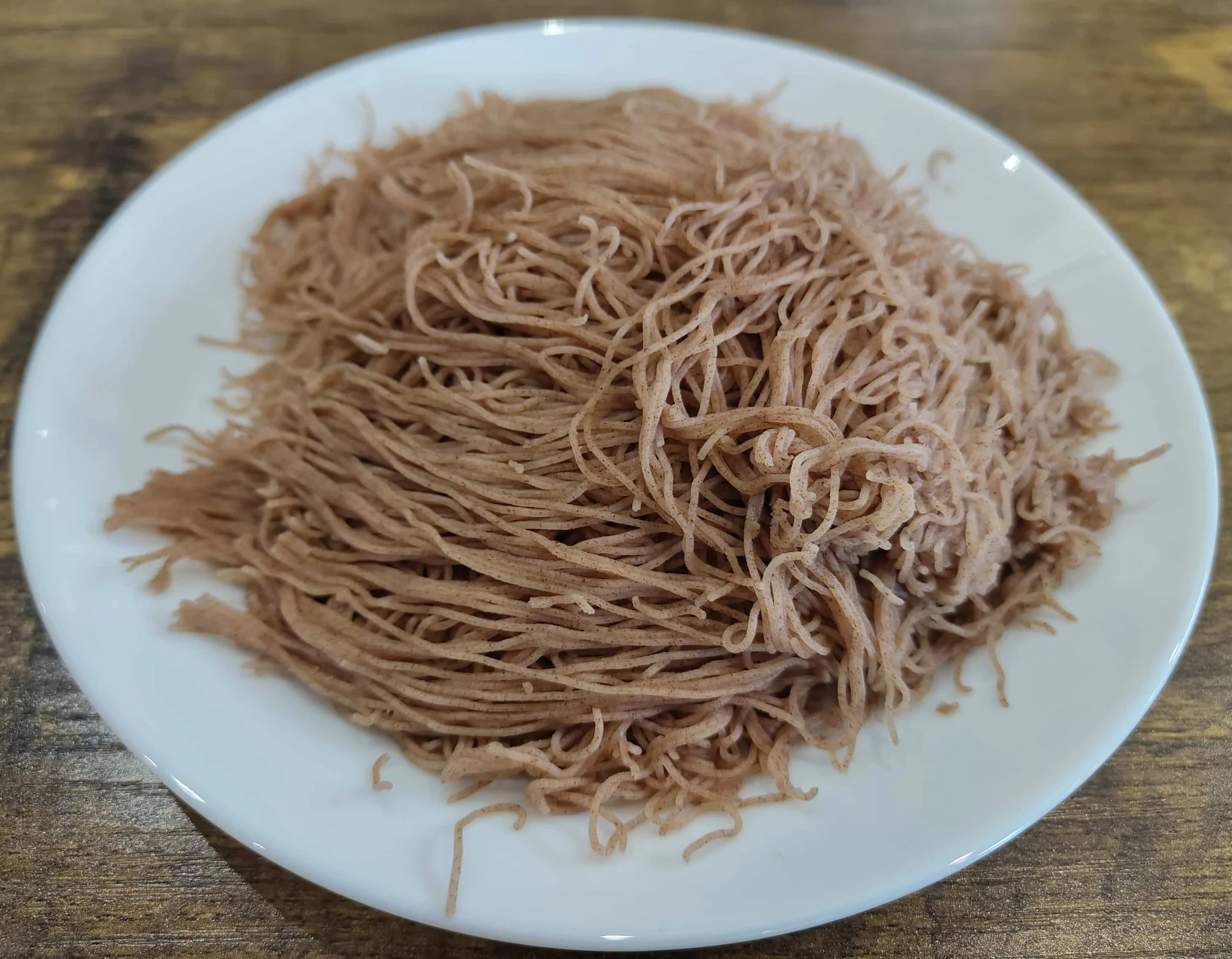
string hoppers
rice flour noodles
What is it?
String hoppers, also known as idiyappam, are delicate nests of thin rice flour noodles, steamed into soft, slightly springy cakes. They are a classic accompaniment to dhal in Sri Lanka and southern India, where they play much the same role as rice or bread, providing something to soak up the curry.
The Sri Lankan version is especially common at breakfast or dinner and is usually served as part of a spread of curries, sambols, and other sides. Brown string hoppers are also popular in Sri Lanka; they are made with red rice flour, which gives them a darker colour and a slightly nuttier, more robust flavour.
What is in it?
String hoppers are traditionally made with rice flour, water, and salt. Brown string hoppers are made with red rice flour instead of white.
Where can I eat it?
String hoppers are widely available throughout Sri Lanka and are served at most restaurants as an option with curry.
Vegan, dairy & gluten free.
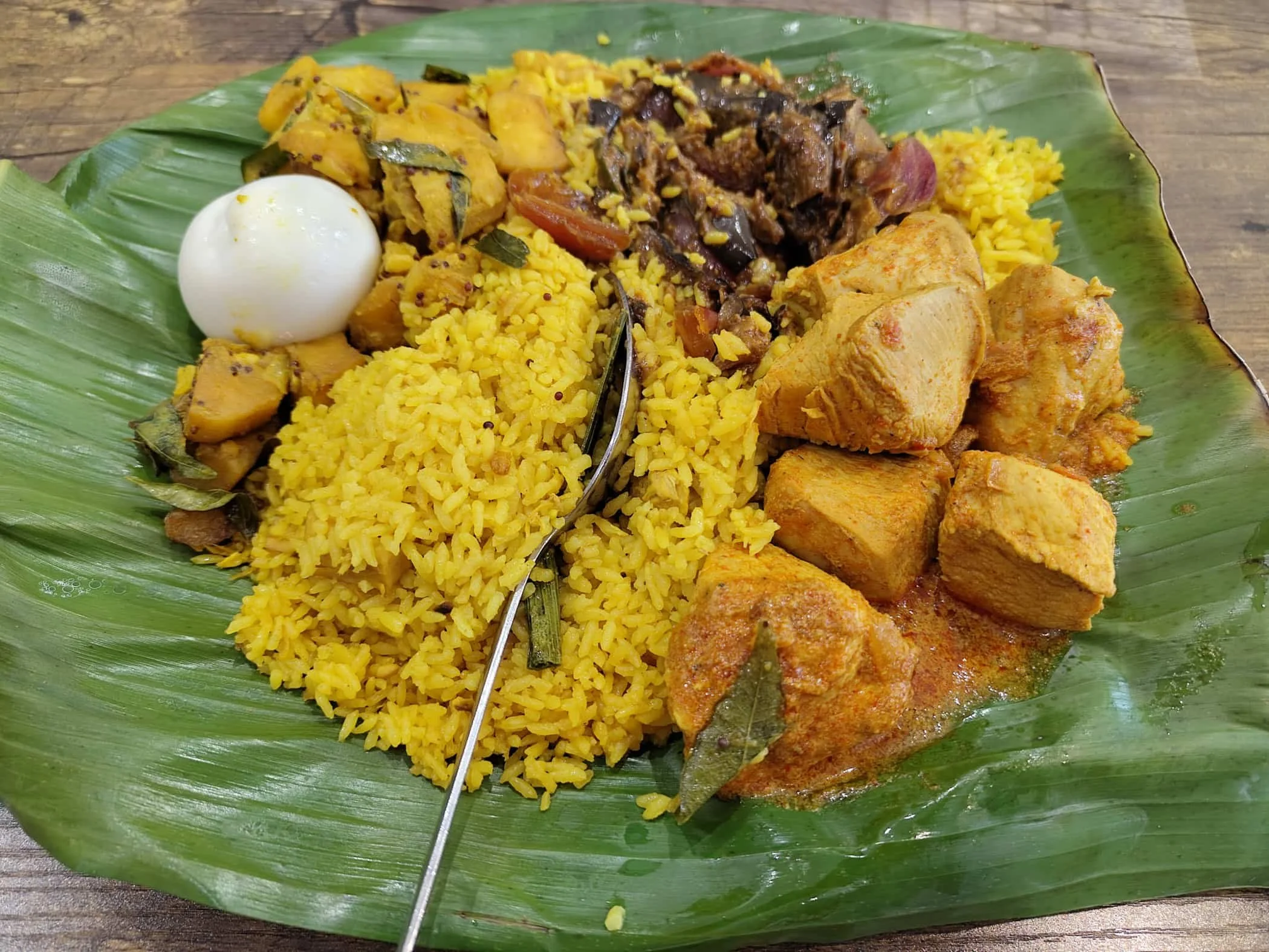
lamprais
leaf wrapped meal
What is it?
Lamprais is a classic Sri Lankan dish introduced by the Dutch Burgher community, and is a bit like a complete rice and curry meal that has been wrapped in a banana leaf and steamed. The original version traditionally included a three meat curry, often made with beef, pork, and chicken, along with rice and several accompaniments. Today, the version you are most likely to find may contain just one type of meat, while vegetarian versions are also available. The whole parcel is wrapped in a banana leaf and steamed, allowing the flavours to come together.
The curries and accompaniments can vary, but ash plantain and wambatu moju, a dry aubergine pickle, are commonly associated with lamprais. It’s a substantial meal and one of Sri Lanka’s most distinctive dishes.
What is in it?
Rice, meat curry (traditionally beef, pork, and chicken), ash plantain, wambatu moju (aubergine pickle), sambol or other accompaniments, all wrapped in a banana leaf. Modern versions often include a boiled egg.
Where can I eat it?
Lamprais is found at traditional Sri Lankan restaurants and specialist lamprais places, such as The Leaf Lamprais in Colombo, as well as some bakeries and cafés.
Dairy and gluten free. Vegetarian versions available.
Ingredients listed reflect common or typical components of this dish as served in restaurants or street‑food vendors. Variations by region, season, or vendor are common. This information is provided for general reference only. If you have dietary restrictions or allergies, please verify ingredient details independently. We assume no liability for accuracy or outcomes.
