all the foods - Bulgaria
Here you will find a list of all the traditional cuisine we tried in Bulgaria.
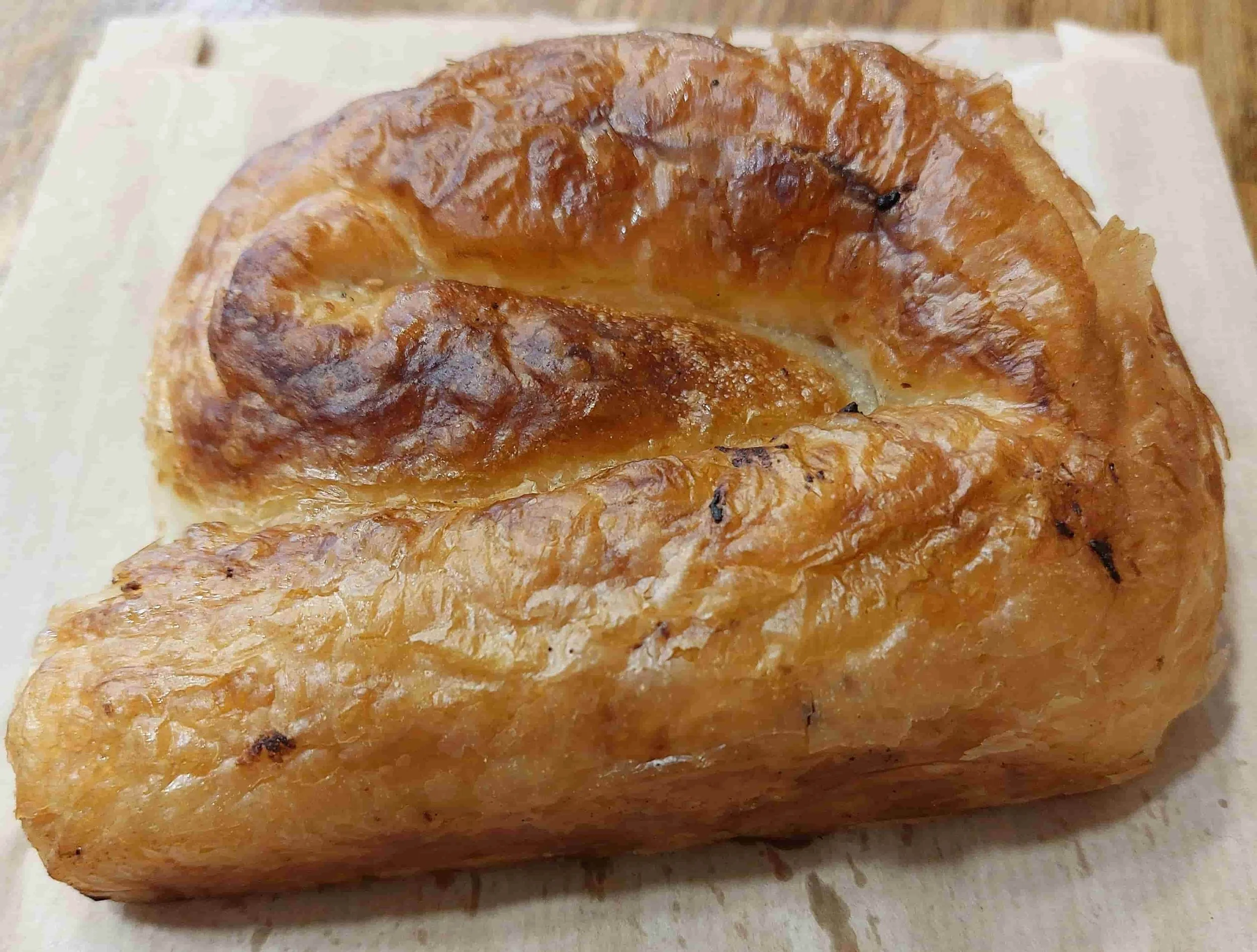
banitsa
filo pie
What is it?
Banitsa is one of Bulgaria’s most traditional and recognisable foods, and one of the most delicious. It’s a baked filo pastry pie filled with cheese and eggs, usually eaten for breakfast or as a snack. It’s the Bulgarian version of the Balkan börek, but with a unique filling. Flaky on the outside and soft and cheesy inside, it’s a great pastry.
What is in it?
Thin sheets of filo pastry (called kori), layered or rolled with a mixture of eggs, yogurt, and sirene, a crumbly, salty white brined cheese similar to feta. Some versions include spinach, pumpkin, leeks, or cabbage, but the classic is the savoury cheese banitsa (sirene banitsa).
Where can I eat it?
You’ll find banitsa all over Bulgaria, in bakeries and cafés, sold hot and fresh in the morning.
Vegetarian.
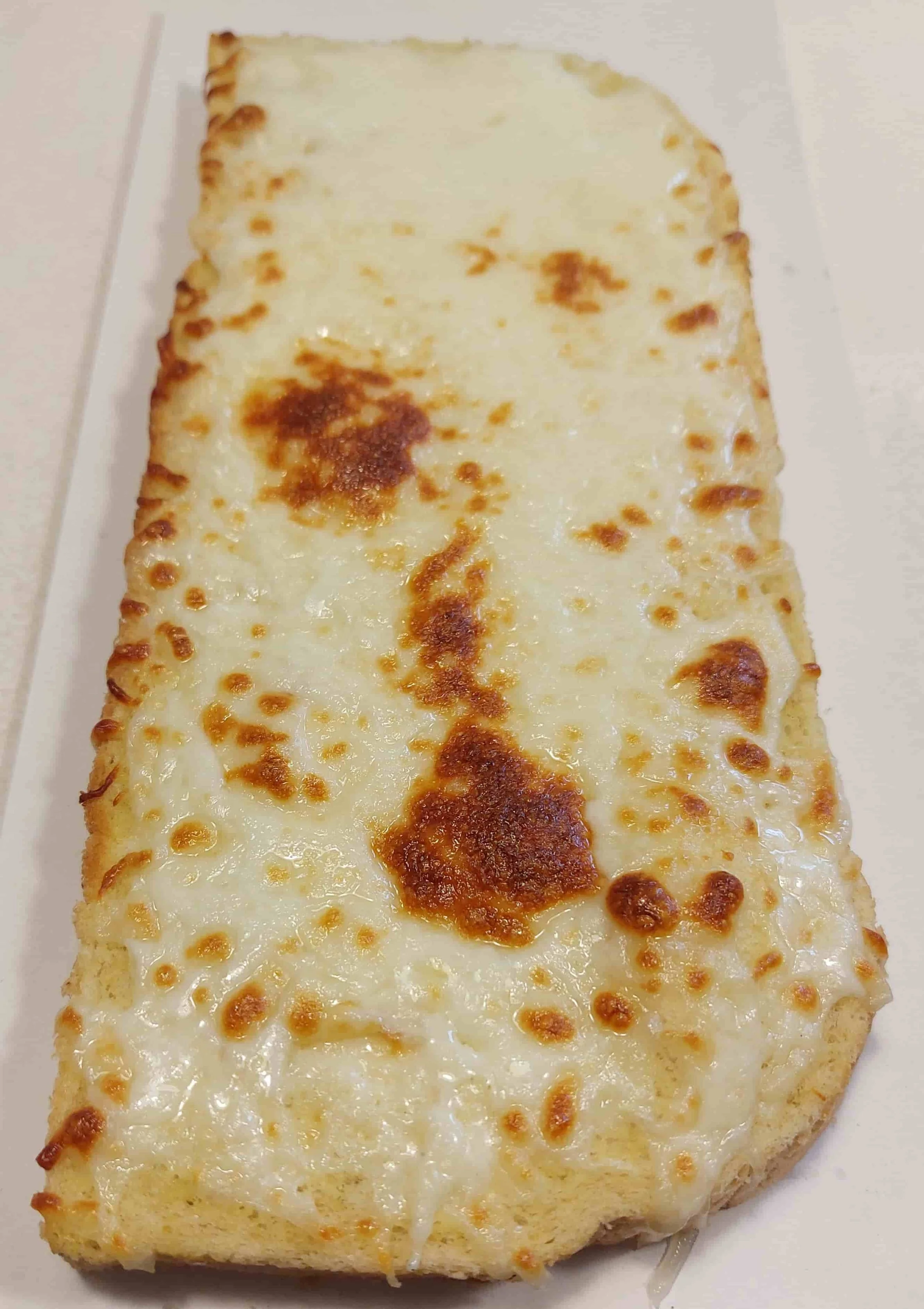
printsesa
cheese on toast
What is it?
A printsesa (Принцеса) (literally “princess”) is a classic Bulgarian open faced sandwich, usually made with minced meat and cheese spread on bread, then toasted. Crispy, savoury, and lightly cheesy, think of it as a less fancy Bulgarian take on a croque monsieur.
What is in it?
A slice of white bread topped with a mixture of minced pork or a pork–beef blend, grated kashkaval cheese (or sirene), egg, and seasonings such as salt and pepper. The mixture is spread evenly across the bread, then toasted or baked until the top is crisp. Vegetarian versions (printsesa s kashkaval) skip the meat and use only cheese and egg, as seen in the photo.
Where can I eat it?
You’ll find printsesi (plural) in Bulgarian snack bars, cafés, and some bakeries. They’re not as common as some other Bulgarian classics like banitsa, which you’ll find in almost every bakery, but you do still see them occasionally, especially in local cafés serving quick breakfasts or light snacks. Some places also offer more modern takes with different toppings or artisan bread.
Vegetarian versions available.
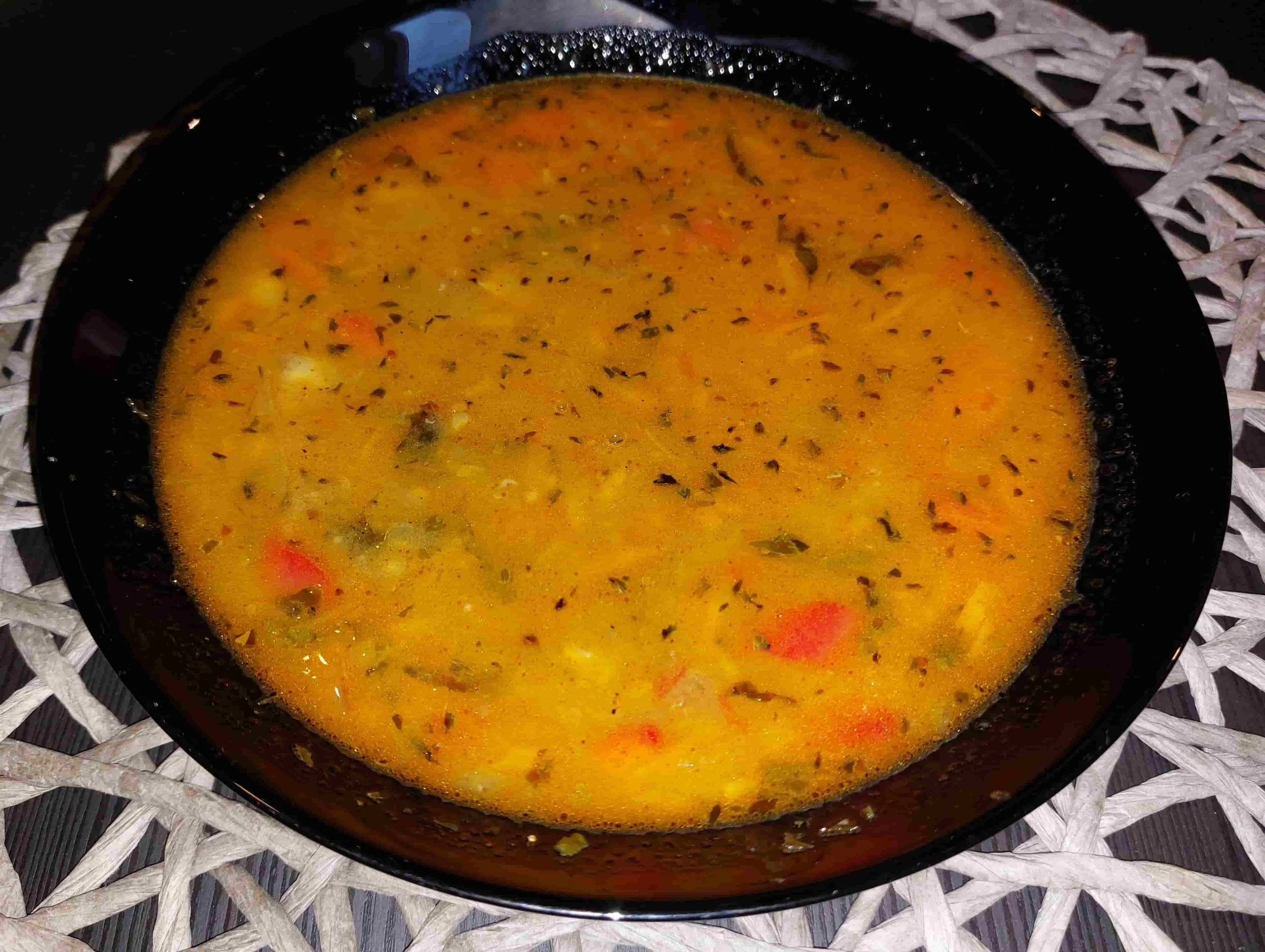
bob chorba
bean soup
What is it?
Bob chorba (Боб чорба), literally “bean soup,” is a simple but tasty white bean and vegetable soup. It’s typically meatless, making it a great vegetarian option, though versions with sausage or smoked meat are also available. It can be served either as a starter or a light main course.
What is in it?
White beans, onions, carrots, celery, bell pepper, and tomato or tomato paste, flavoured with paprika, spearmint, and bay leaf, the ingredients that give it its distinct Bulgarian taste. The beans are simmered slowly until creamy, often with a little flour or roux added at the end to thicken the broth. In non fasting versions, pieces of lukanka sausage, bacon, or smoked ribs are sometimes added.
Where can I eat it?
You’ll find bob chorba on menus in traditional Bulgarian restaurants (mehana) throughout the country, although it’s not quite as common as some other Bulgarian classics. We had a good one at Mehana Mamin Kolyo in Sofia.
Vegetarian.
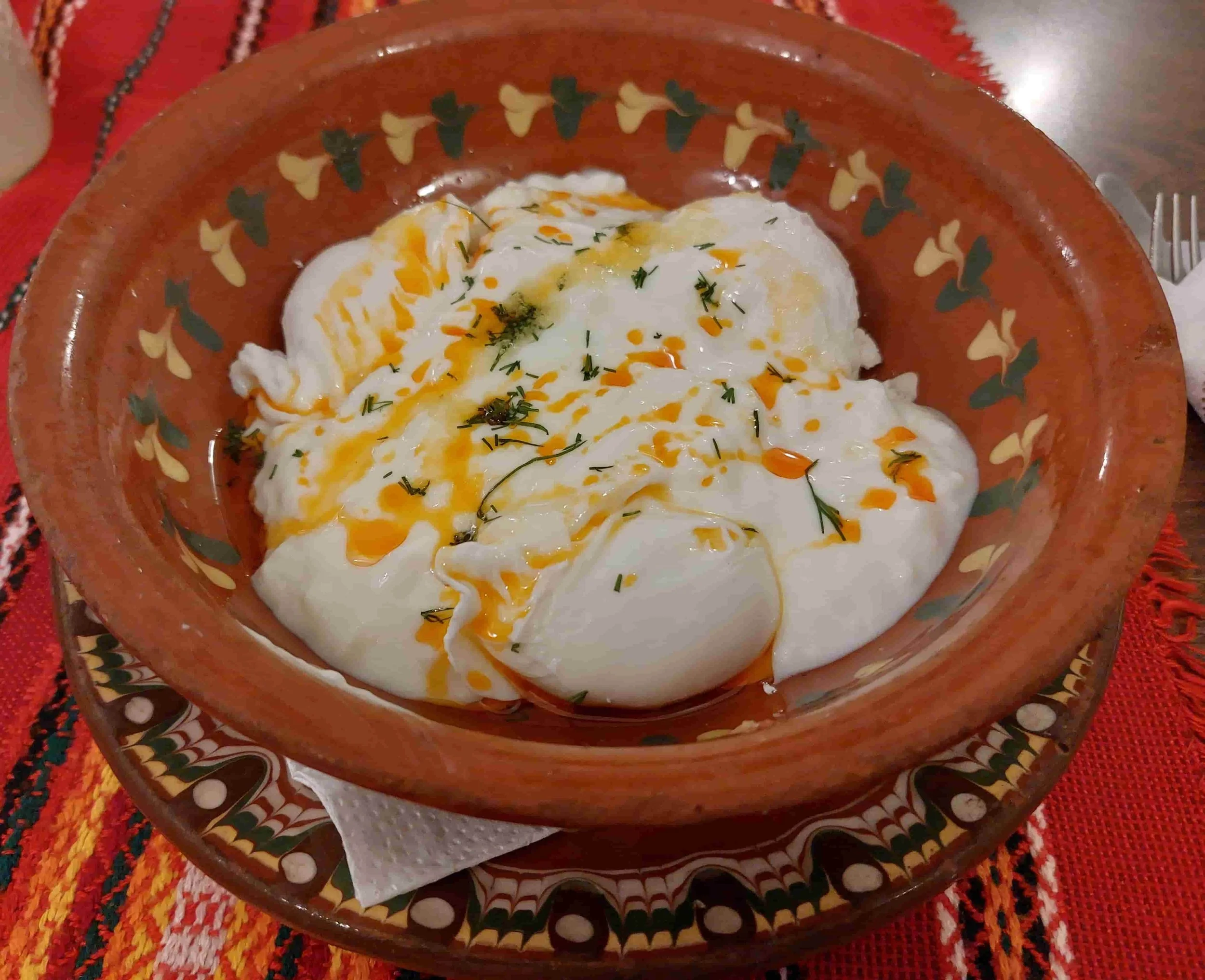
Panagyurishte-style eggs
eggs, cheese & yoghurt
What is it?
Panagyurishte-Style Eggs (Яйца по панагюрски) are a Bulgarian dish of poached eggs served over a mix of yogurt and crumbled white cheese (sirene), topped with melted butter infused with paprika. It’s named after the town of Panagyurishte in central Bulgaria. The yogurt and cheese form a creamy base, the eggs are gently poached, and paprika butter is poured over the top to finish the dish. It’s a traditional breakfast or light meal and is sometimes served as a starter (if you want a big starter!)
What is in it?
Poached eggs, Bulgarian yogurt, crumbled sirene cheese, butter, sweet paprika (sometimes a little chili), and occasionally garlic or dill.
Where can I eat it?
You’ll find Yaitsa po Panagyurski in traditional Bulgarian restaurants (mehana), taverns, and breakfast cafés across the country. It’s especially popular in central Bulgaria around Panagyurishte and Plovdiv; outside these regions you see it less often, but we did spot it listed as a starter at Izbata Tavern in Sofia.
Vegetarian and gluten free.
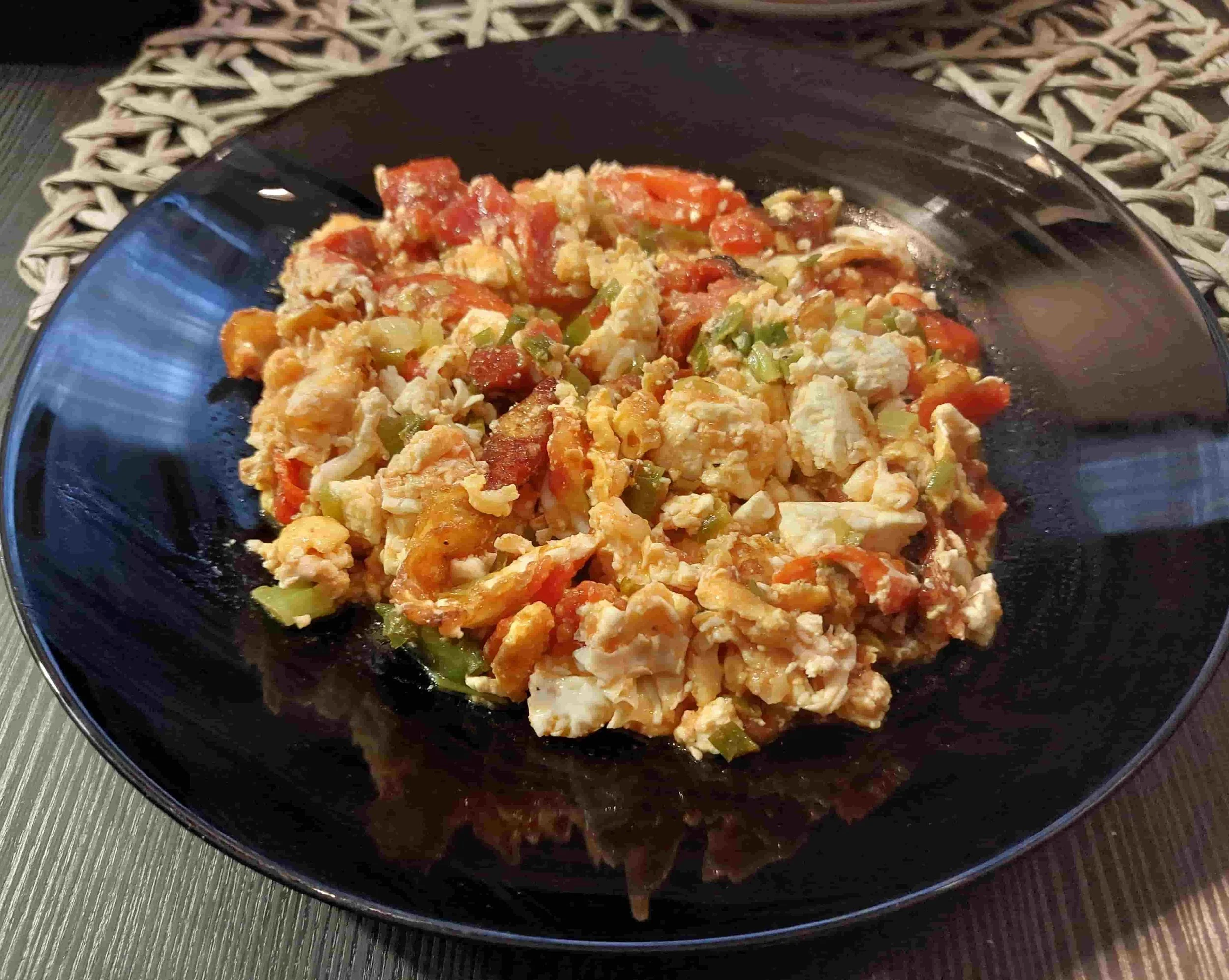
mish-mash
veg scrambled eggs
What is it?
Mish-Mash (Миш-маш) is a Bulgarian pepper, tomato, and egg dish, a kind of vegetable scramble. It reminded me a little of shakshuka, but with sirene cheese giving it a distinctly Bulgarian twist. The vegetables are cooked first, then the eggs and sirene are folded in to create a soft, slightly creamy scramble: not runny, not dry, but gently set. It’s usually served as a light main or a starter.
What is in it?
Mish-Mash is made from roasted or sautéed peppers (green or red), chopped tomatoes, eggs, and crumbled sirene (Bulgarian white brined cheese). Many traditional versions also include onion, garlic, and fresh parsley, and it’s seasoned with salt, pepper, and sometimes paprika.
Where can I eat it?
You can sometimes find Mish-Mash in traditional Bulgarian taverns (mehana), though it’s more of a home-cooked dish. Both Mehana Mamin Kolyo and Izbata Tavern in Sofia serve it.
Vegetarian and gluten free.
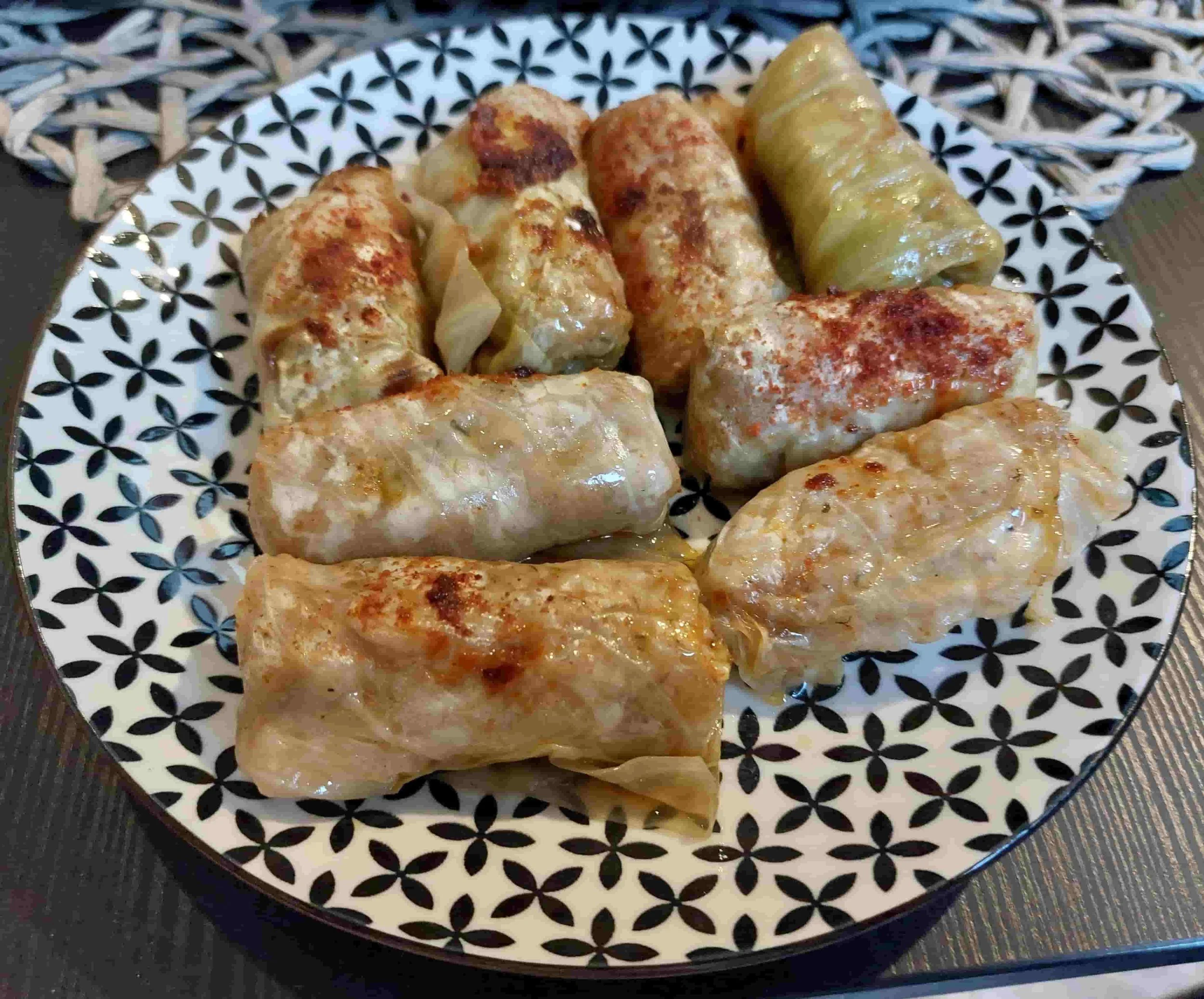
sarmi
stuffed cabbage leaves
What is it?
Sarmi (Сарми) are Bulgaria’s version of stuffed cabbage or vine leaves, filled with a savoury mixture of rice, minced meat, and spices, then rolled tightly and simmered in a tomato or vegetable sauce. The dish has Ottoman roots and is shared across the Balkans. They’re closely related to Romanian sarmale and Greek dolmades, but Bulgarian sarmi are often a bit smaller and lighter on tomato sauce, with added flavour from dill and paprika. They’re often served as a main course or a starter.
What is in it?
Cabbage leaves (zele) or vine leaves (lozovi sarmi) filled with a mixture of minced pork, rice, onion, and herbs such as dill, parsley, and paprika. In winter, pickled (sour) cabbage leaves are used, while spring and summer sarmi are often made with vine leaves. Fasting versions (postni sarmi) skip the meat and may include rice, onions, carrots, mushrooms, or raisins cooked with oil and paprika. They’re often served with sour cream or yogurt.
Where can I eat it?
You’ll find sarmi in traditional Bulgarian restaurants (mehana), although we didn’t see them quite as often as we expected.
Vegetarian versions available, dairy free if served without sour cream or yogurt. usually gluten free.
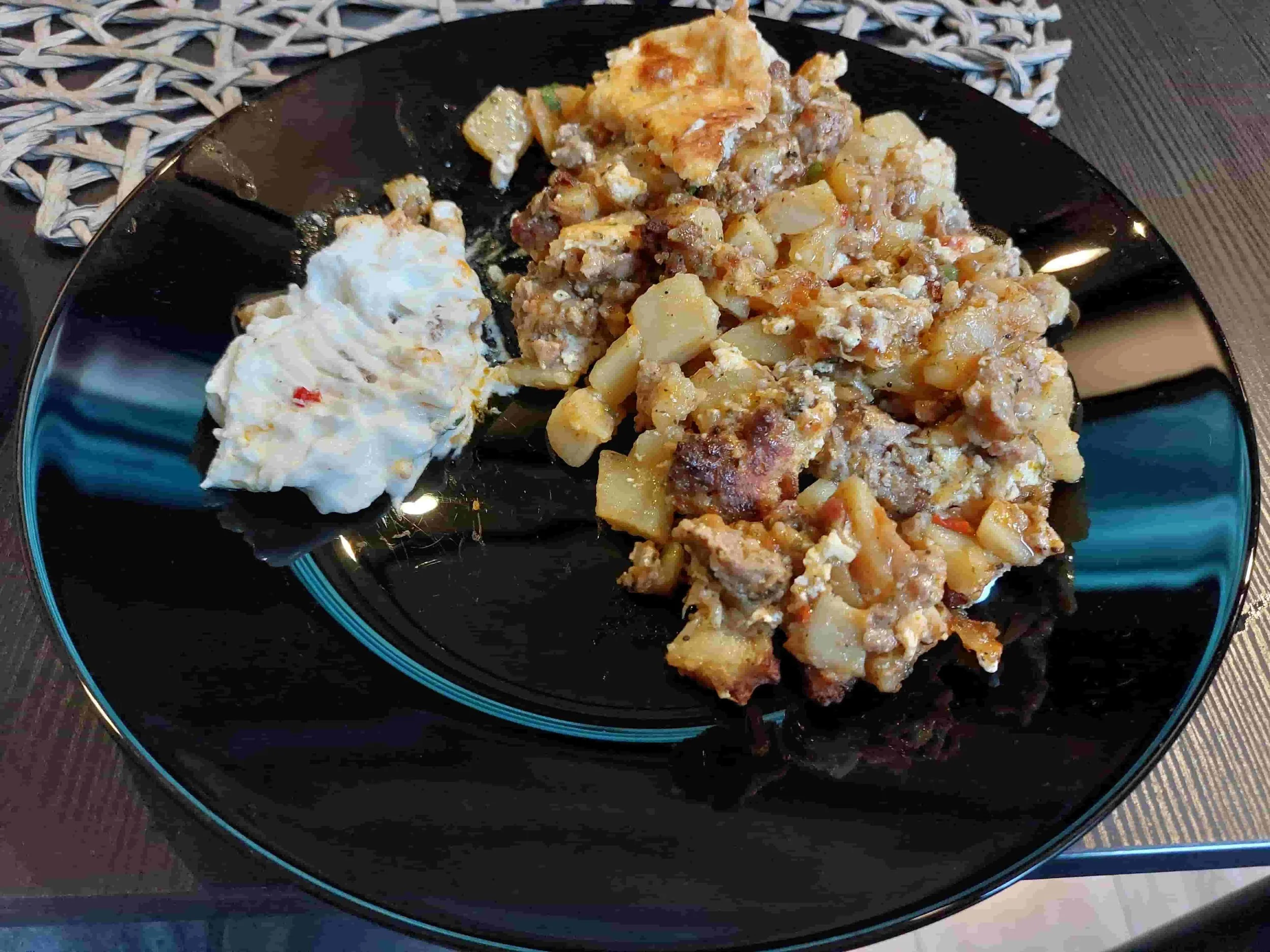
moussaka
meat & potato bake
What is it?
Moussaka (Мусака) in Bulgaria is a baked casserole of minced meat, potatoes, and eggs, layered and topped with a creamy yogurt and egg mixture. Though the dish shares its name with the Greek version, the Bulgarian moussaka is quite different, it’s made with potatoes instead of aubergines (eggplant) and doesn’t include a béchamel sauce. It’s lighter but still really delicious, with a slightly tangy crust.
What is in it?
Layers of minced pork, potatoes, onions, carrots, and sometimes tomatoes or peppers, seasoned with paprika, parsley, and black pepper. Once baked, it’s topped with a mixture of yogurt, eggs, and flour.
Where can I eat it?
You’ll find moussaka in plenty of traditional restaurants (mehana) throughout Bulgaria, such as at Izbata Tavern or Mehana Mamin Kolyo, both in Sofia.
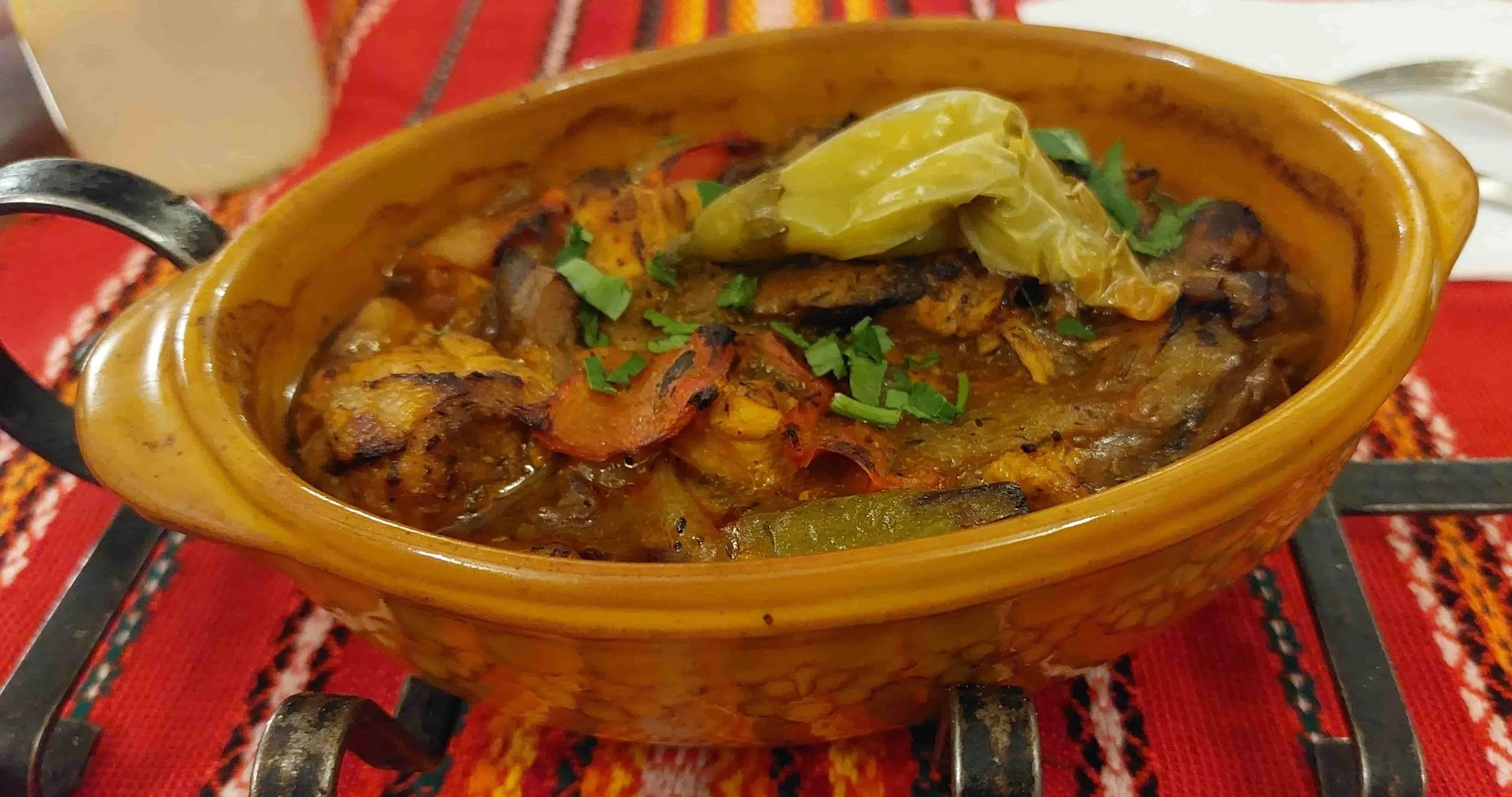
kavarma
meat & veg stew
What is it?
Kavarma (Каварма) is a traditional slow cooked Bulgarian stew made with meat and vegetables, gently baked in a clay pot (gyuveche). Though there are regional variations, the most common version is pork kavarma, cooked with onions, peppers, tomatoes, and mushrooms until everything melds into a thick, savoury sauce.
What is in it?
Typically made with pork or chicken, onions, peppers, tomatoes or tomato paste, mushrooms, garlic, and paprika, cooked slowly in sunflower oil and sometimes deglazed with white or red wine. Seasonings vary by region but often include bay leaf, parsley, and black pepper.
Where can I eat it?
Kavarma is a staple of traditional Bulgarian restaurants and one of the most common dishes you’ll see, particularly in central and southern Bulgaria. It’s usually served bubbling hot in the same clay pot it was cooked in. We tried one at Izbata Tavern in Sofia.
Traditionally dairy and gluten free.
kapama
sauerkraut & meat stew
What is it?
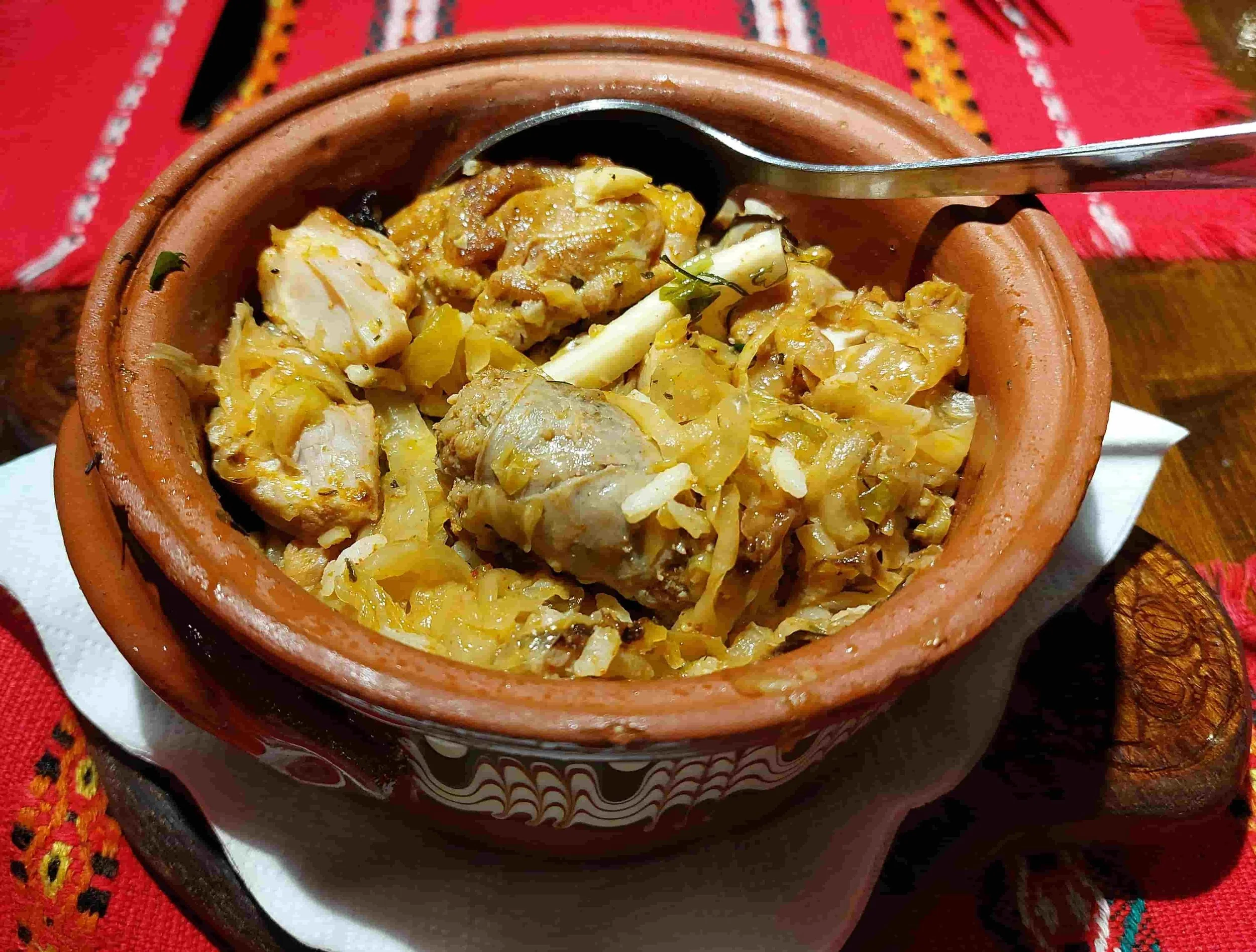
Kapama (Капама) is one of Bulgaria’s most traditional slow baked meat dishes and in my opinion, its best, especially associated with the southwest region and festive occasions like New Year and big family celebrations. It’s made by layering sauerkraut, rice, and several kinds of meat and local sausages in a clay pot, then baking it gently for hours with spices and a little red wine until everything is tender and delicious. Proper kapama is never just one meat and fresh cabbage, the equation for great, authentic kapama is, multiple meats + sauerkraut + long, slow cooking = amazing kapama.
What is in it?
Kapama is made by layering sauerkraut, rice, and a mixture of several meats, typically pork, beef or veal, and chicken or turkey, along with local sausages such as Banski sudzhuk and sometimes Banska kŭrvavitsa. The pot is enriched with pork fat, seasoned with black peppercorns, bay leaf, garlic, allspice, and red wine.
Where can I eat it?
You’ll find traditional kapama in Bansko and the surrounding Pirin region, where it’s considered a signature local dish and appears on almost all mehana style restaurant menus. It’s also served in some Bulgarian restaurants elsewhere in the country for example, Hadjidraganov's Cellars in Sofia, where we had a delicious one. It’s usually brought to the table still in it's clay pot.
Dairy and gluten free.
meshana skara
Bulgarian mixed grill
What is it?
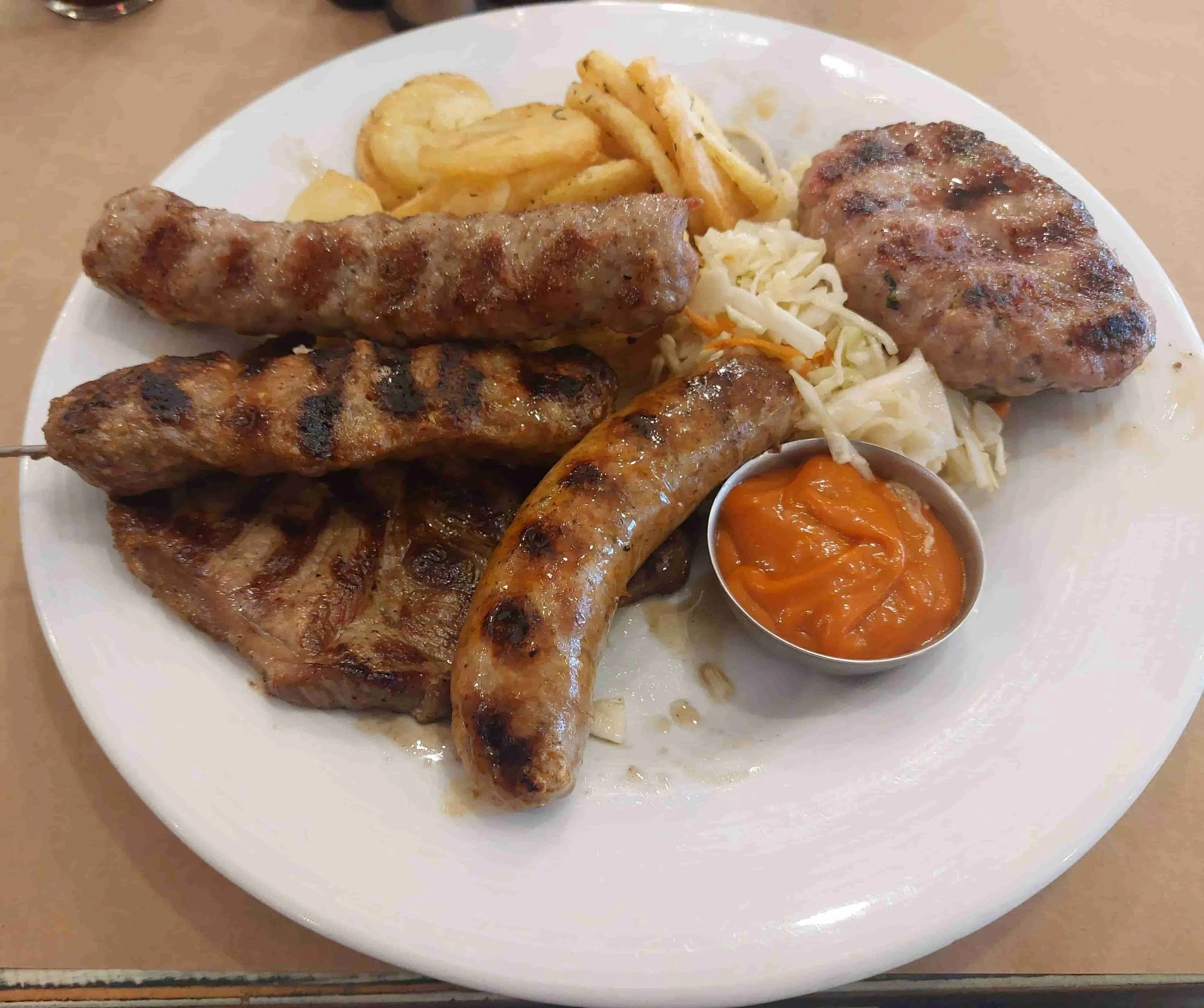
I hope you like meat! Meshana skara (Мешана скара) literally means “mixed grill”, a huge plate of assorted grilled meats, usually enough for one very hungry (or very greedy) person, or to share. It showcases Bulgaria’s charcoal grilled classics: kebapche, kufte, pork steak, sausage, and sometimes skewers. Every region does it slightly differently, but the idea is always the same, a big mixed plate of Bulgarian grilled meats, usually served with simple sides like salad, chips, or lyutenitsa (a sweet roasted pepper and tomato sauce).
What is in it?
A standard meshena skara includes several different meats such as kebapche (grilled minced meat sausage), kufte (minced meat patty), pork steak or pork chops, karnache (spicy Bulgarian sausage), and sometimes shishche (pork or chicken skewer). The meats are seasoned with salt, black pepper, cumin, and paprika, then grilled over charcoal. It’s commonly served with chips, lyutenitsa (pepper spread), onions, or shopska salad.
Where can I eat it?
You can find meshena skara in almost every restaurant that specialises in grilled foods in Bulgaria. We had a great one at Skarabar, which has three locations in Sofia.
Dairy free.
kebapche
minced meat sausage
What is it?
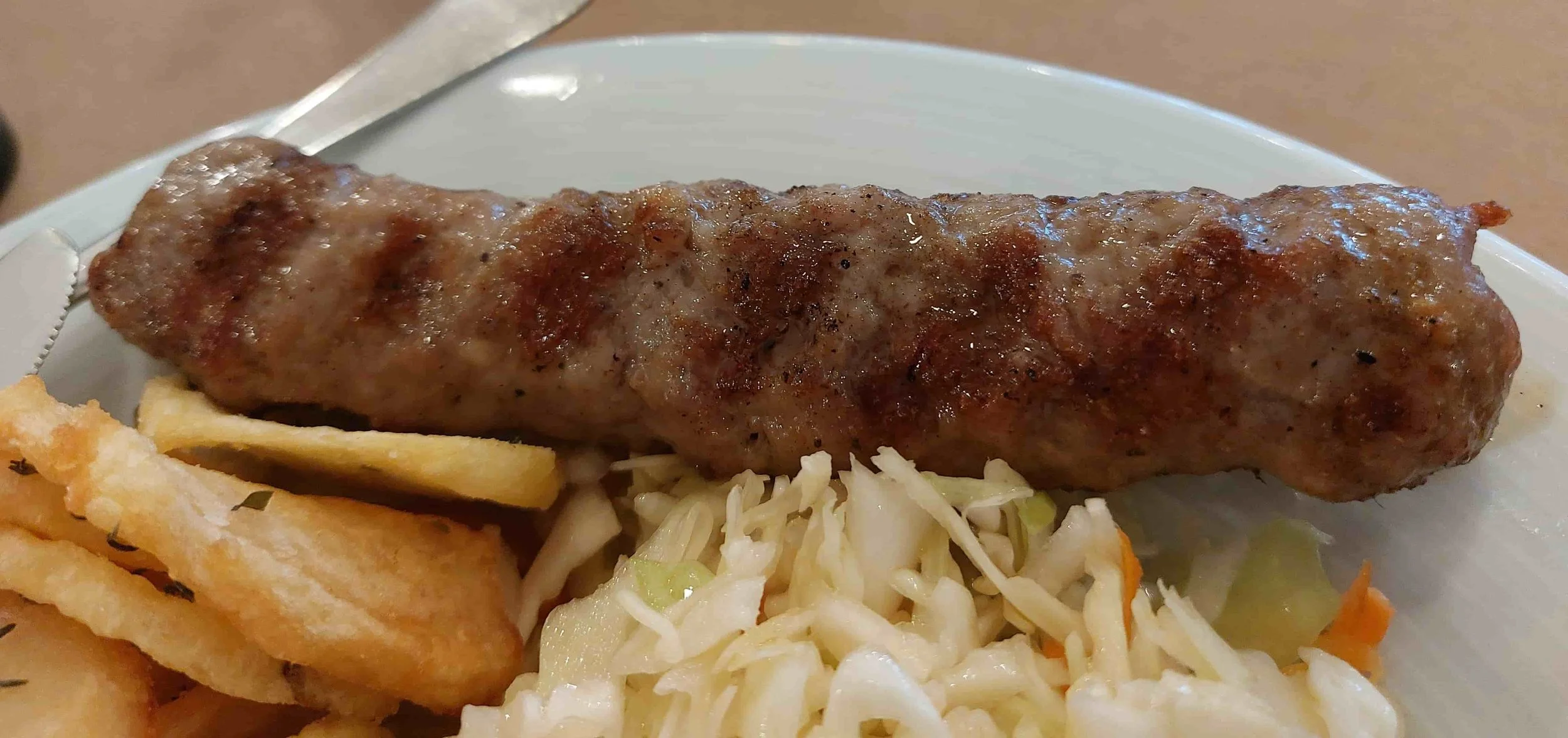
Kebapche (Кебапче) is a long, casing free minced meat sausage shaped like a small oblong kebab and grilled over charcoal. The flavour is savoury, smoky, and heavily seasoned with cumin, which gives kebapche its unique Bulgarian identity. It’s often eaten on its own with mustard, alongside chips, or as part of a meshena skara (mixed grill).
Kebapche is closely related to kufte but not the same: kufte are round patties that include onion and parsley, are more aromatic, and contain less cumin.
What is in it?
Kebapche is made from minced meat (traditionally pork or a pork-and-beef mixture), seasoned with salt, black pepper, and plenty of cumin. Some recipes add paprika or a little baking soda to improve texture, but cumin is the defining flavour.
Where can I eat it?
It’s a staple of Bulgarian taverns, grill restaurants, fast‑food places, and street food stalls. You will see it everywhere.
Dairy free.
kufte
minced meat patty
What is it?
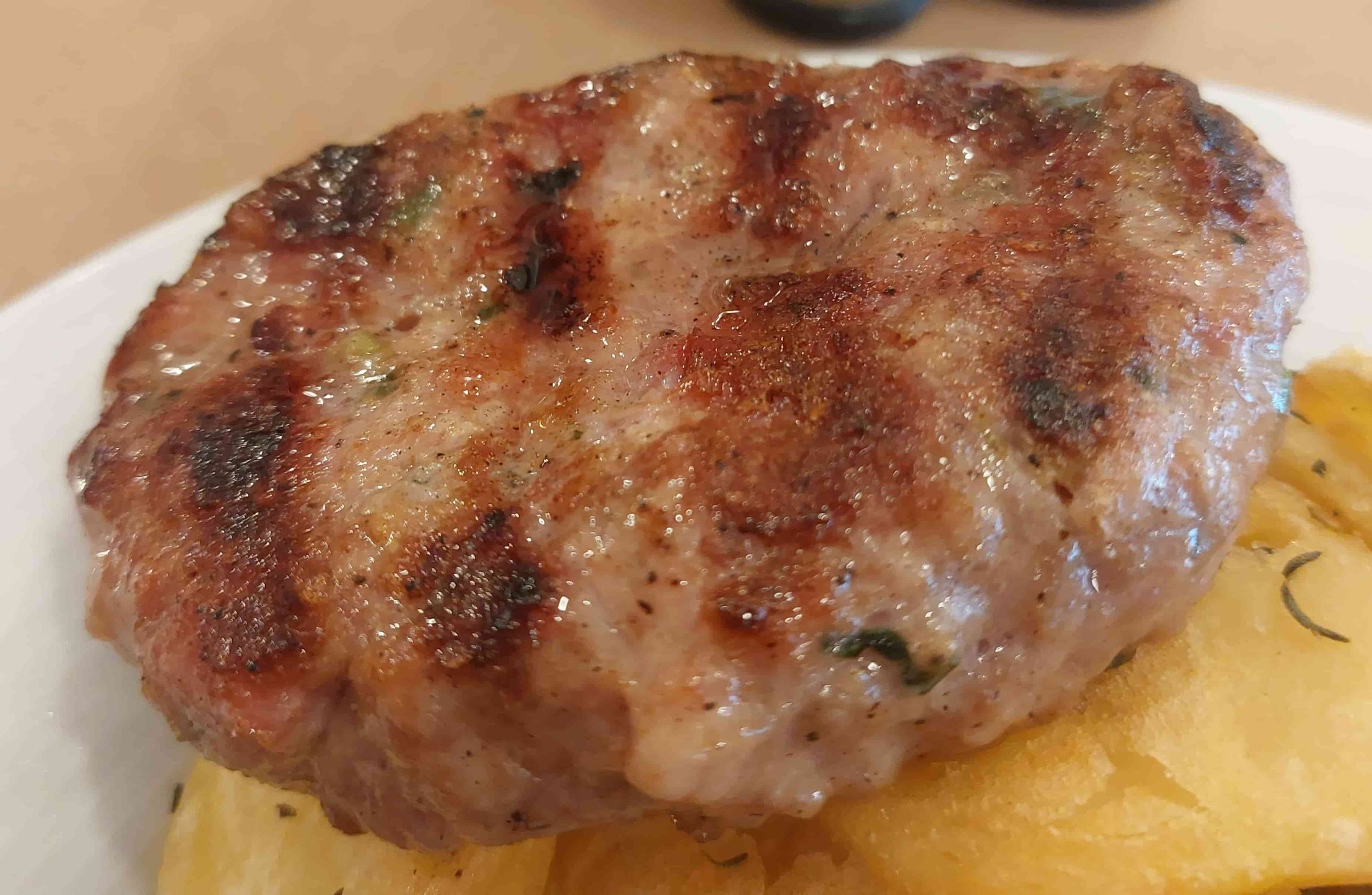
Kufte (Кюфте) is a grilled minced meat patty, shaped like a small round burger and seasoned with herbs and spices. Compared to kebapche, it’s more herby and much less cumin‑heavy.
What is in it?
Kufte is usually made from minced pork or a pork and beef mix, combined with grated onion, parsley, salt, black pepper, and sometimes a little cumin (but far less than in kebapche). Some recipes also add a touch of baking soda for softness. It’s often served with chips, shopska salad, onions, mustard, or lyutenitsa (a sweet roasted pepper and tomato spread).
Where can I eat it?
Kufte is everywhere in Bulgaria, from traditional restaurants to takeaway grills and fast food places.
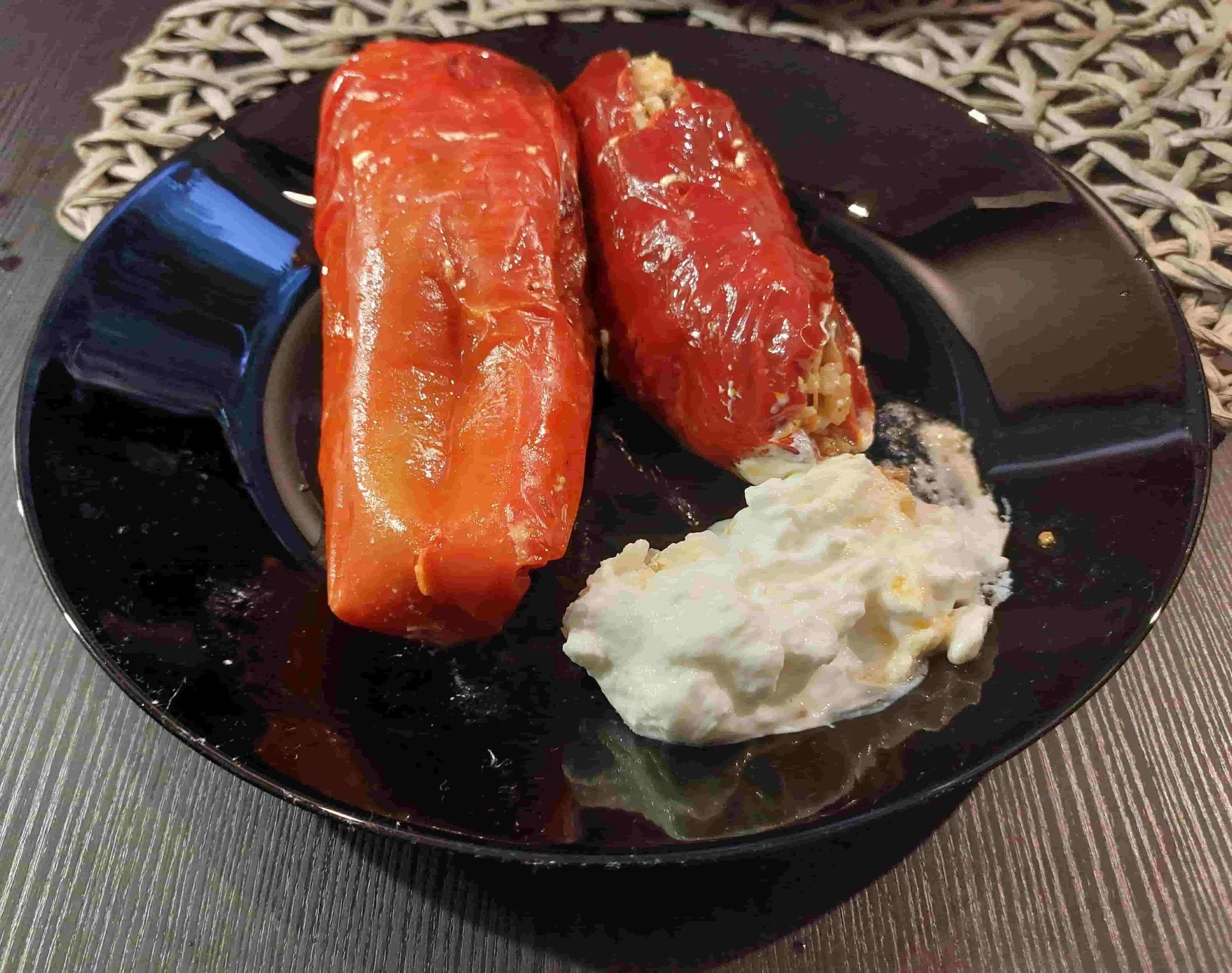
pŭlneni chushki
stuffed peppers
What is it?
Pŭlneni chushki (Пълнени чушки) are Bulgaria’s traditional stuffed peppers, a favourite home style dish made with sweet red or green peppers filled with either a rice based vegetarian mixture or a meat and rice mixture. The peppers are baked in a light tomato sauce, or sometimes simply roasted in the oven with oil. Some regions also add a yogurt and egg topping poured over the peppers near the end of baking, creating a creamy, slightly tangy crust, a very Bulgarian touch.
What is in it?
Stuffed peppers are usually filled with a mixture of rice, onions, carrots, and paprika, often with parsley or dill. The meat version adds minced pork.
Where can I eat it?
You’ll sometimes see pŭlneni chushki on traditional menus, for example at Mehana Mamin Kolyo in Sofia, but it’s much more common as a home cooked dish than a restaurant one
Vegetarian versions available, gluten free.
Ingredients listed reflect common or typical components of this dish as served in restaurants or street‑food vendors. Variations by region, season, or vendor are common. This information is provided for general reference only. If you have dietary restrictions or allergies, please verify ingredient details independently. We assume no liability for accuracy or outcomes.
