our top 5 traditional Bolivian foods you have to try
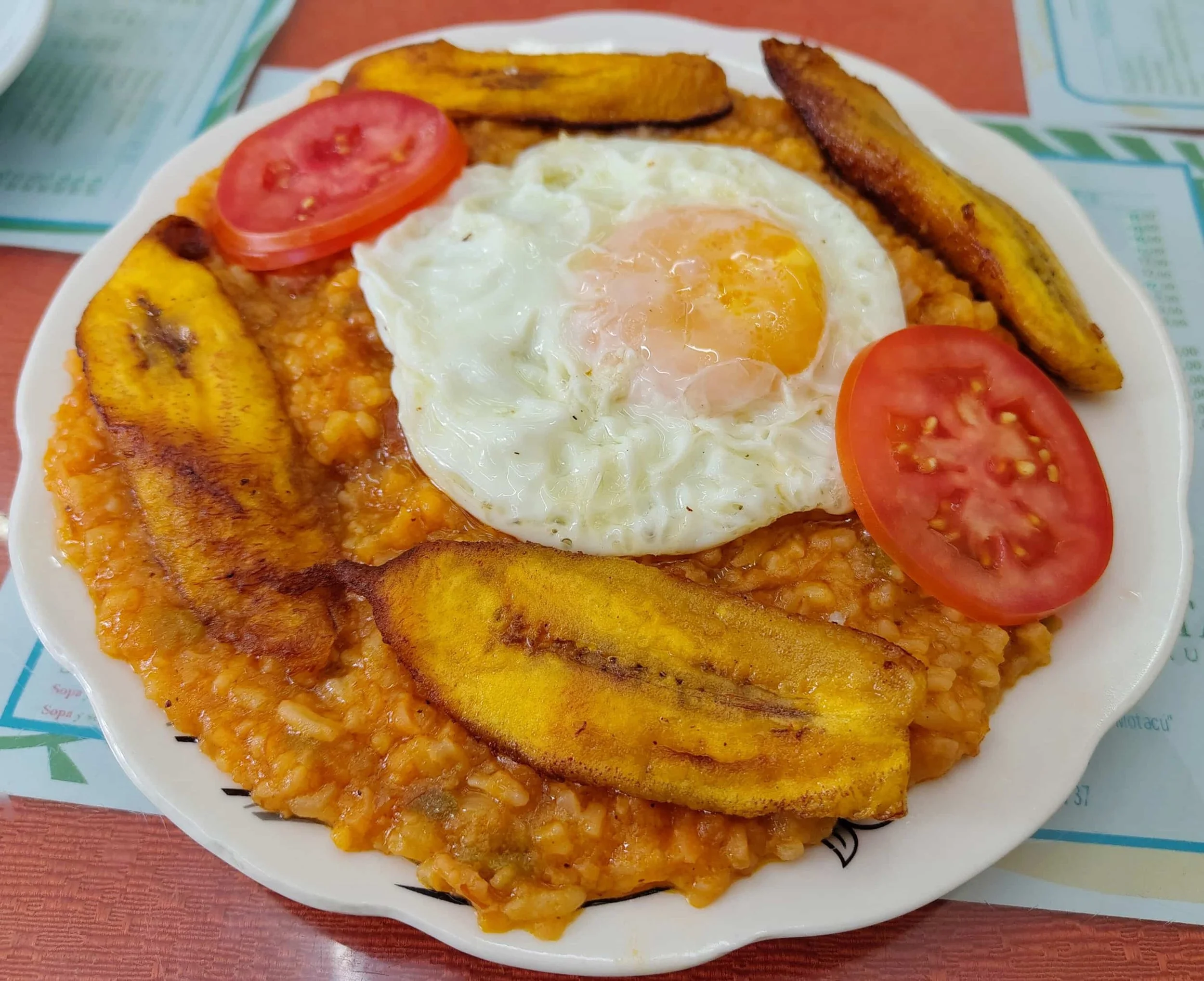
majadito
Bolivian rice
What is it?
Majadito is a traditional Bolivian rice dish from the Santa Cruz region and the eastern lowlands of Bolivia. It is also commonly known as majao. There are two main styles: majadito seco (dry) and majadito batido or majadito húmedo (wet). Despite their names, neither version is completely dry or soupy.
Majadito seco is the less liquid version, with distinct grains of rice and a firmer texture. Majadito batido contains more liquid and has a softer, creamier consistency, somewhat closer to risotto. Both versions are delicious, but the dry version was my favourite and probably my favourite Bolivian food overall.
What is in it?
Majadito typically contains rice, beef often dried and salted beef known as charque, onion, tomato, sweet or hot peppers, garlic and achiote or annatto, which gives the rice its characteristic colour. The exact ingredients and cooking method vary between the dry and wet versions.
It is often served with a fried egg, fried plantain and sometimes cassava (yuca), avocado or a spicy sauce. A common variation is made with duck, while chicken and other meats are also used. Dried beef remains the most traditional version.
Where can I eat it?
Majadito is particularly associated with Santa Cruz de la Sierra and Bolivia’s eastern lowlands, where you’ll find it in markets and traditional restaurants. It has become more popular outside the region too, for instance, we saw it several times in La Paz and had a really good version at El Motacú restaurant.
Gluten free (when prepared traditionally)
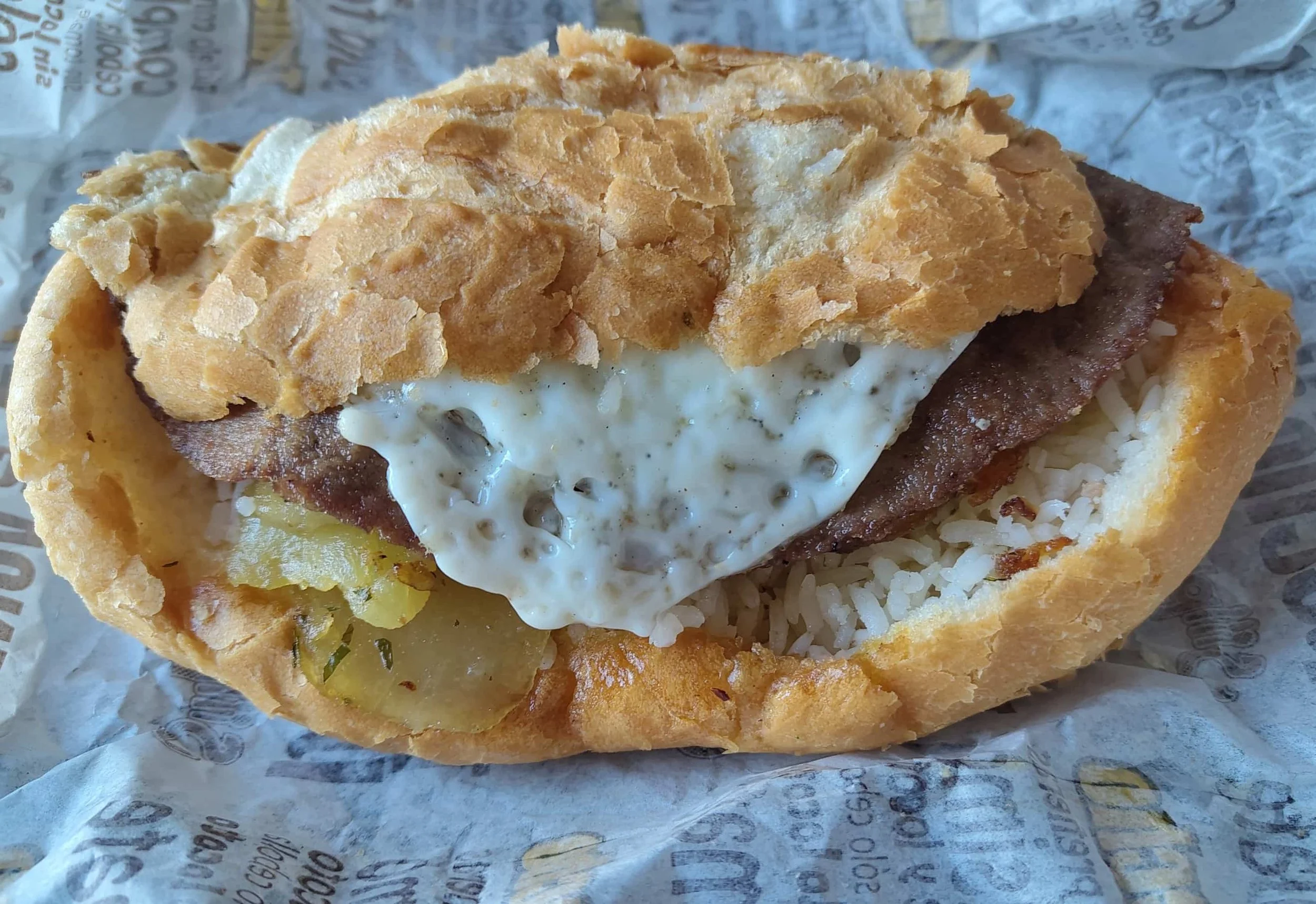
trancapecho
carb heavy sandwich
What is it?
I hope you really like carbs! How do you make silpancho more carb-heavy? Turn it into a sandwich, of course. A trancapecho is essentially that, silpancho turned into a sandwich, taking the beef, rice, potatoes and fried egg from the famous Cochabamba dish and putting them between slices of bread.
It sounds slightly mad, and it certainly isn’t a sandwich you want to attempt while walking around! With rice, potatoes and a fried egg all packed inside, it is definitely a sit down sandwich and things can get messy very quickly.
Despite the seemingly excessive combination, it actually works surprisingly well.
What is in it?
A traditional trancapecho typically contains, Bread filled with breaded beef, white rice, fried potatoes, fried egg, tomato, onion and locoto or chilli.
Where can I eat it?
Trancapecho is particularly associated with Cochabamba, where it originated, but it can also be found in other parts of Bolivia, although it is not as common as its unbreaded brother, silpancho. One place we saw it available is at the Bolivian chain restaurant Sillpichs.
Dairy free.
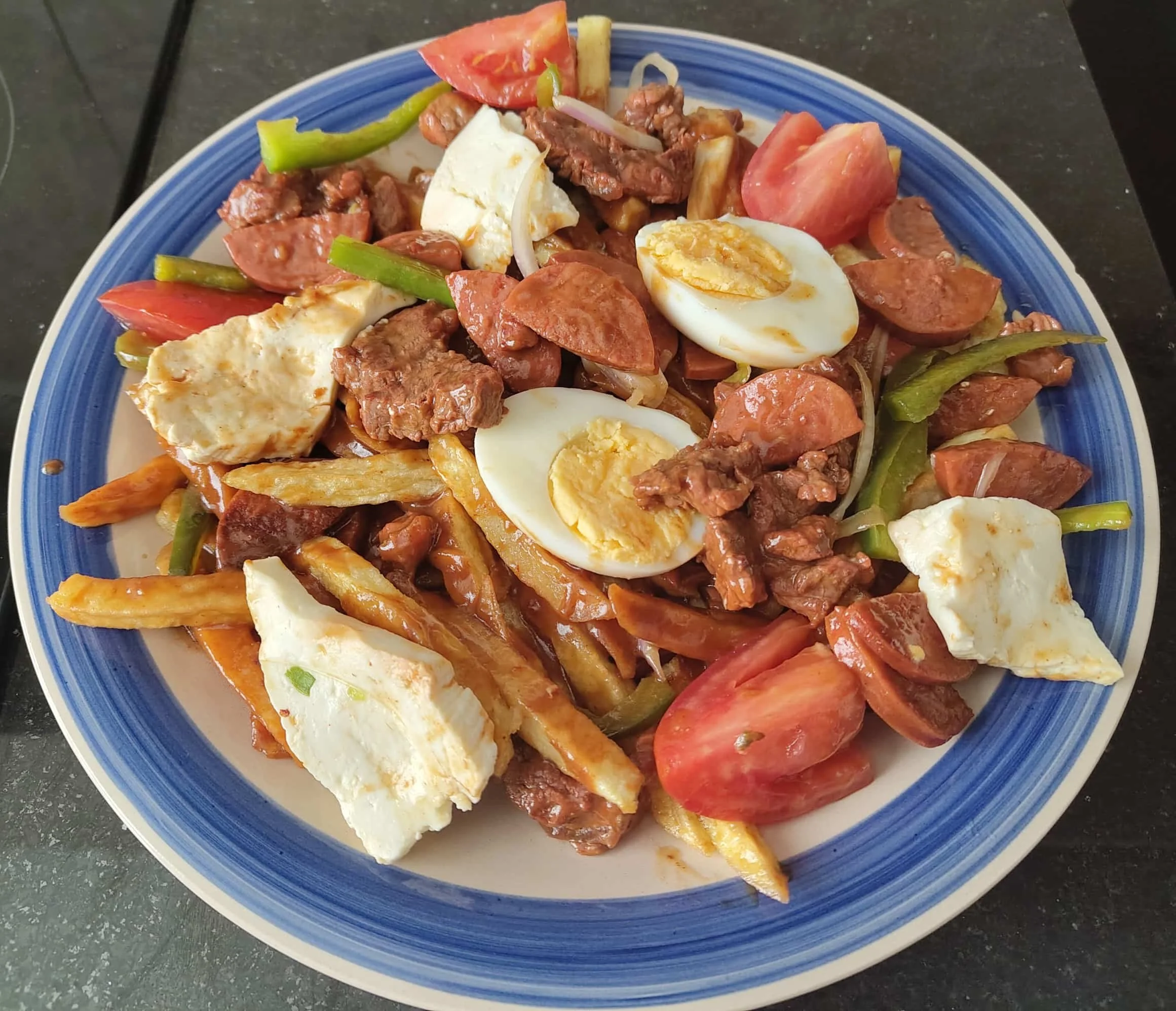
pique macho
Bolivian loaded fries
What is it?
Pique macho is one of Bolivia’s most famous and enormous dishes. Originating in Cochabamba, it is a huge mountain of food consisting of pieces of beef and sausage piled on top of fries and covered with onions, tomatoes, peppers and other toppings.
It is often served on a massive platter designed for sharing, although smaller portions for one person are also available. Between the meat, sausages, fries and toppings, it is an extremely filling meal.
The name “pique macho” (also called pique a lo macho) is thought to come from the idea that the dish is big, bold and spicy enough for a “macho” appetite.
What is in it?
Traditional pique macho typically contains beef, sausage, fries, tomato, red onion, locoto or chilli, hard boiled egg and peppers, plus ketchup, mustard and mayonnaise. Cheese is sometimes included, but the exact ingredients and toppings vary between restaurants.
Where can I eat it?
Pique macho is found throughout Bolivia and is pretty easy to find, but Cochabamba is the place most strongly associated with the dish.
Vegetarian & gluten free.
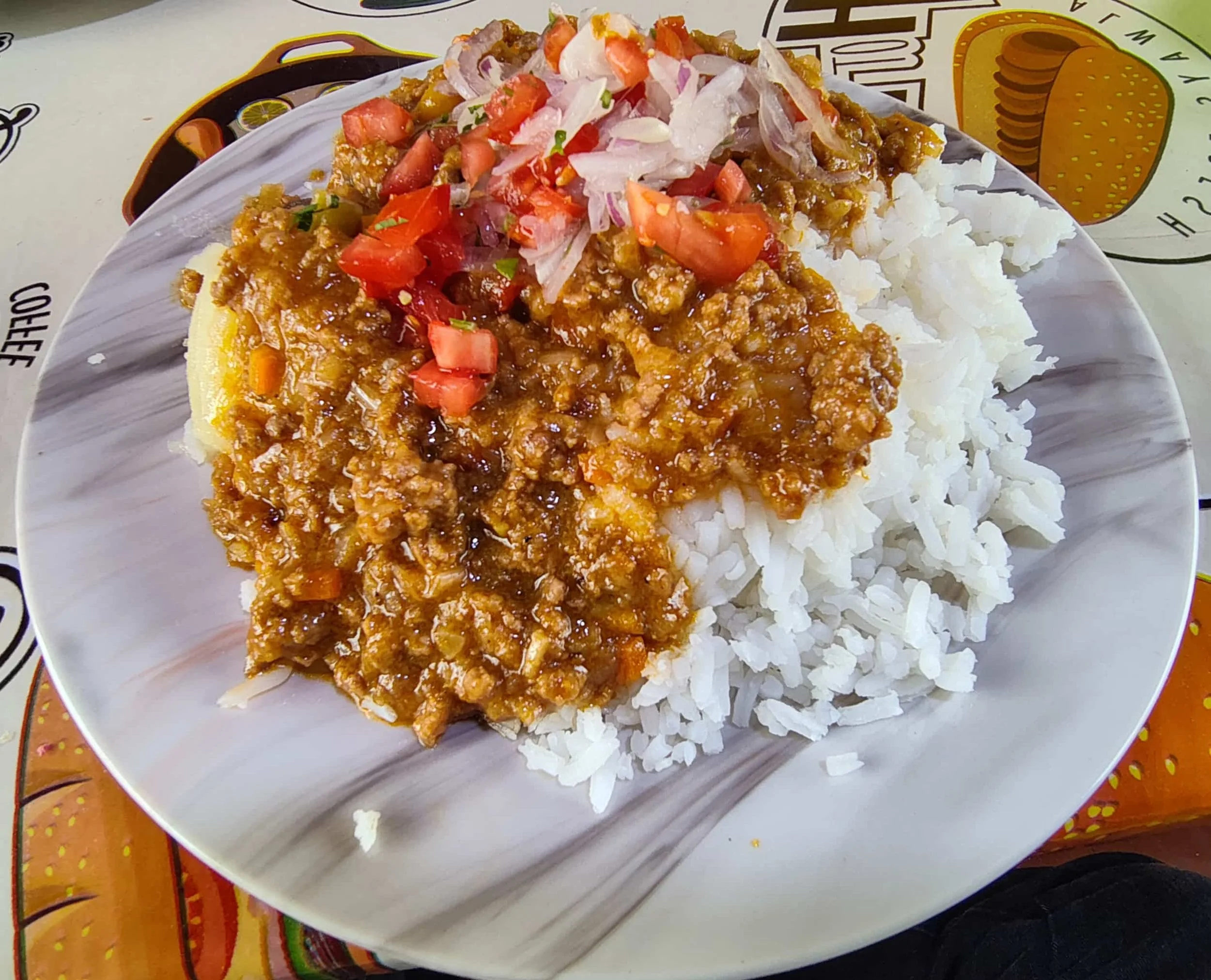
saice
mince beef stew
What is it?
Saice is a traditional Bolivian minced beef stew originating from Tarija, in southern Bolivia. It has a slightly spicy sauce and is considered one of the signature foods of the region.
What is in it?
Saice is made with minced or finely diced beef, potatoes, peas, onions, tomatoes, garlic, chilli or ají, cumin and other spices.
It is traditionally served with white rice and/or noodles, potatoes (sometimes chuño), and a fresh salad, often including tomato, onion and lettuce.
Where can I eat it?
Saice is particularly common in Tarija, where it is one of the city’s signature dishes. It can also be found elsewhere in Bolivia, although it may be less common than in its home region. It’s often available in markets and traditional restaurants around the country such as market Lanza in La Paz.
Gluten free.
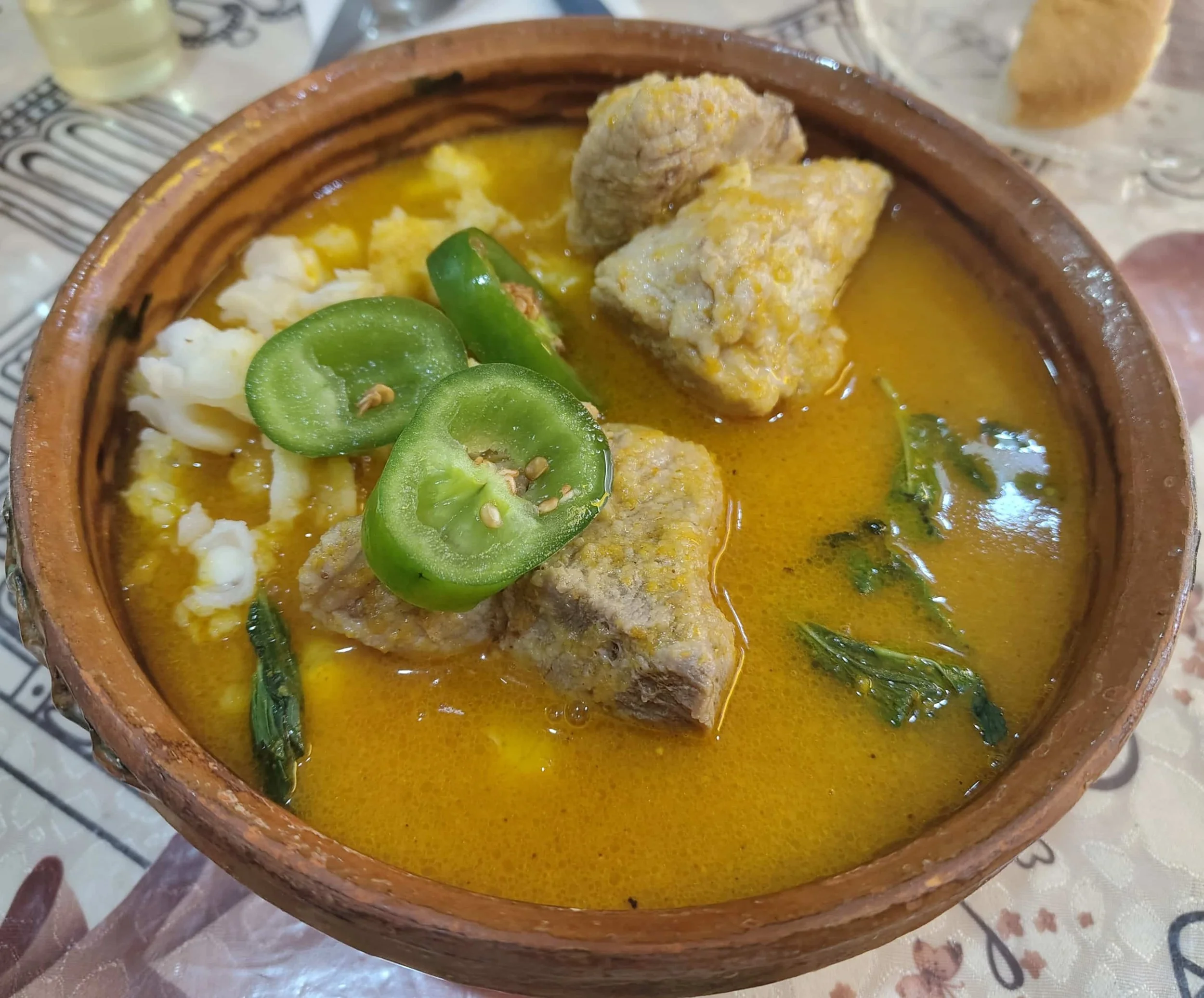
fricasé
spicy pork stew
What is it?
Fricasé is a traditional Bolivian pork soup or stew, particularly associated with the La Paz region. It is a spicy, filling and delicious dish, with pork that is slow cooked until it practically falls apart.
Be warned the dish is generally very garlicky, so if that is not your thing, proceed with caution. It is particularly popular as a hangover cure, making it a great choice after a night out in La Paz.
What is in it?
Bolivian fricasé typically contains pork, hominy corn (mote), chuño (freeze dried potatoes) or regular potatoes, ají amarillo or other chilli peppers, onions, garlic, cumin and other spices. Some versions also use bread crumbs to thicken the broth.
Where can I eat it?
Fricasé is particularly popular in La Paz. A good place to try it is in a local market, but you will also see it in traditional restaurants, some of which specialise in fricasé.
Gluten free (if no bread crumbs are used)
Ingredients listed reflect common or typical components of this dish as served in restaurants or street‑food vendors. Variations by region, season, or vendor are common. This information is provided for general reference only. If you have dietary restrictions or allergies, please verify ingredient details independently. We assume no liability for accuracy or outcomes.
