our top 5 traditional Taiwanese foods you have to try
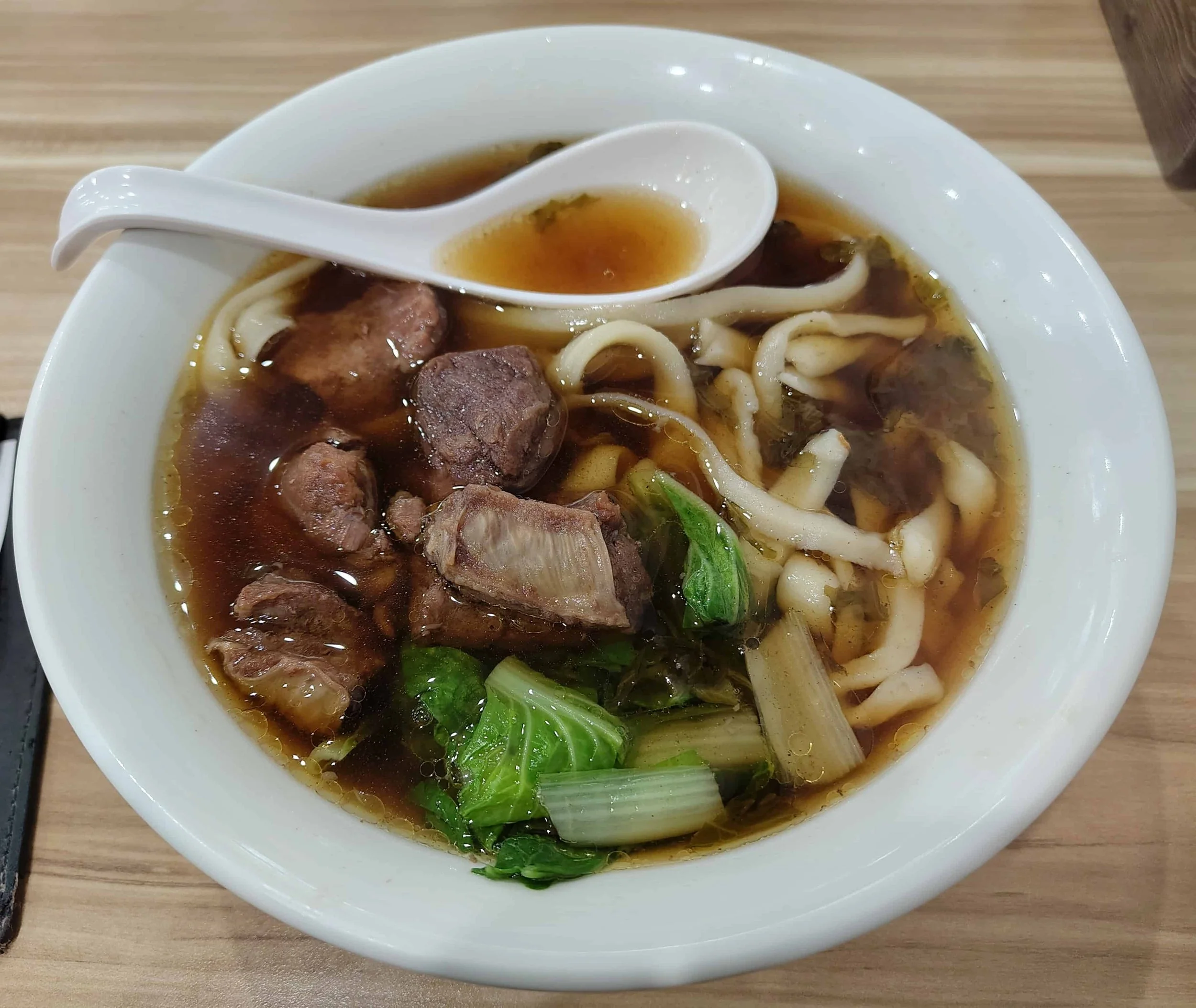
beef noodle soup
noodle & beef soup
What is it?
Taiwan’s most famous noodle dish, beef noodle soup consists of braised beef, wheat noodles and a rich, flavourful broth. It is widely considered Taiwan’s national dish. The dish has roots in Chinese beef noodle soup but evolved into its own distinctly Taiwanese style. Every restaurant has its own recipe, and locals often have a favourite place to go.
What is in it?
The classic version features chunks of beef shank or brisket that are slowly braised until tender in a broth made from beef stock, soy sauce, garlic, ginger and spices such as star anise. The beef and broth are served with wheat noodles and commonly topped with spring onions and mustard greens.
There are two main styles:
Red-braised beef noodle soup (hong shao niu rou mian) – the most common version, with a dark soy-based broth
Clear broth beef noodle soup (qing dun niu rou mian) – a lighter version with a cleaner beef flavour
The noodles themselves vary in thickness, with many restaurants allowing customers to choose their preferred type.
Where can I eat it?
Beef noodle soup is available throughout Taiwan and is one of the easiest dishes to find. Many cities have famous beef noodle shops, and Taipei even hosts an annual beef noodle festival celebrating the dish. It is served as a main meal and is one of the best introductions to Taiwanese cuisine.
Dairy free.
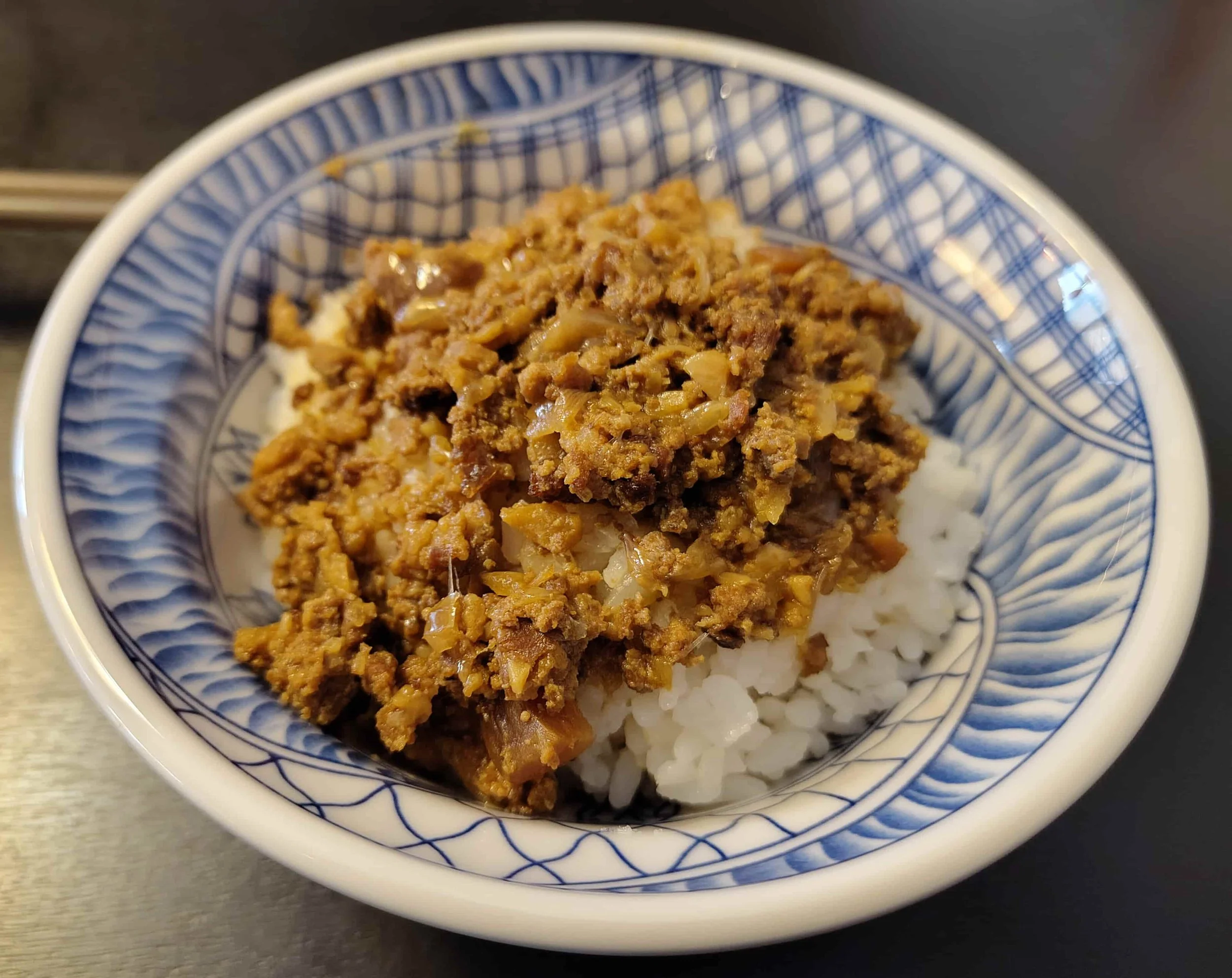
lu rou fan
minced pork rice
What is it?
Taiwan’s ultimate comfort food, lu rou fan (滷肉飯,) is a bowl of steamed rice topped with slow braised minced pork and a soy based sauce. Despite its basic appearance, it is one of the most important dishes in Taiwanese cuisine and is commonly eaten for breakfast, lunch or dinner.
One thing to note is that it is usually served in small, bowl sized portions, designed to be eaten quickly or alongside other dishes rather than as a large single plate main meal, so be sure to order some sides. In English, it is most commonly labelled as braised pork rice or minced pork rice.
What is in it?
The dish consists of white rice topped with minced or finely chopped pork belly that has been slowly braised in soy sauce, garlic, shallots and five spice or similar aromatics. The long cooking process creates a thick, slightly sticky sauce that soaks into the rice. The pork is usually quite fatty, which gives the dish its rich, glossy texture.
Where can I eat it?
Lu rou fan is available everywhere in Taiwan, including small local restaurants, night markets and even convenience stores (as a packaged or heated meal). It is one of the most common and accessible Taiwanese dishes.
Dairy free.
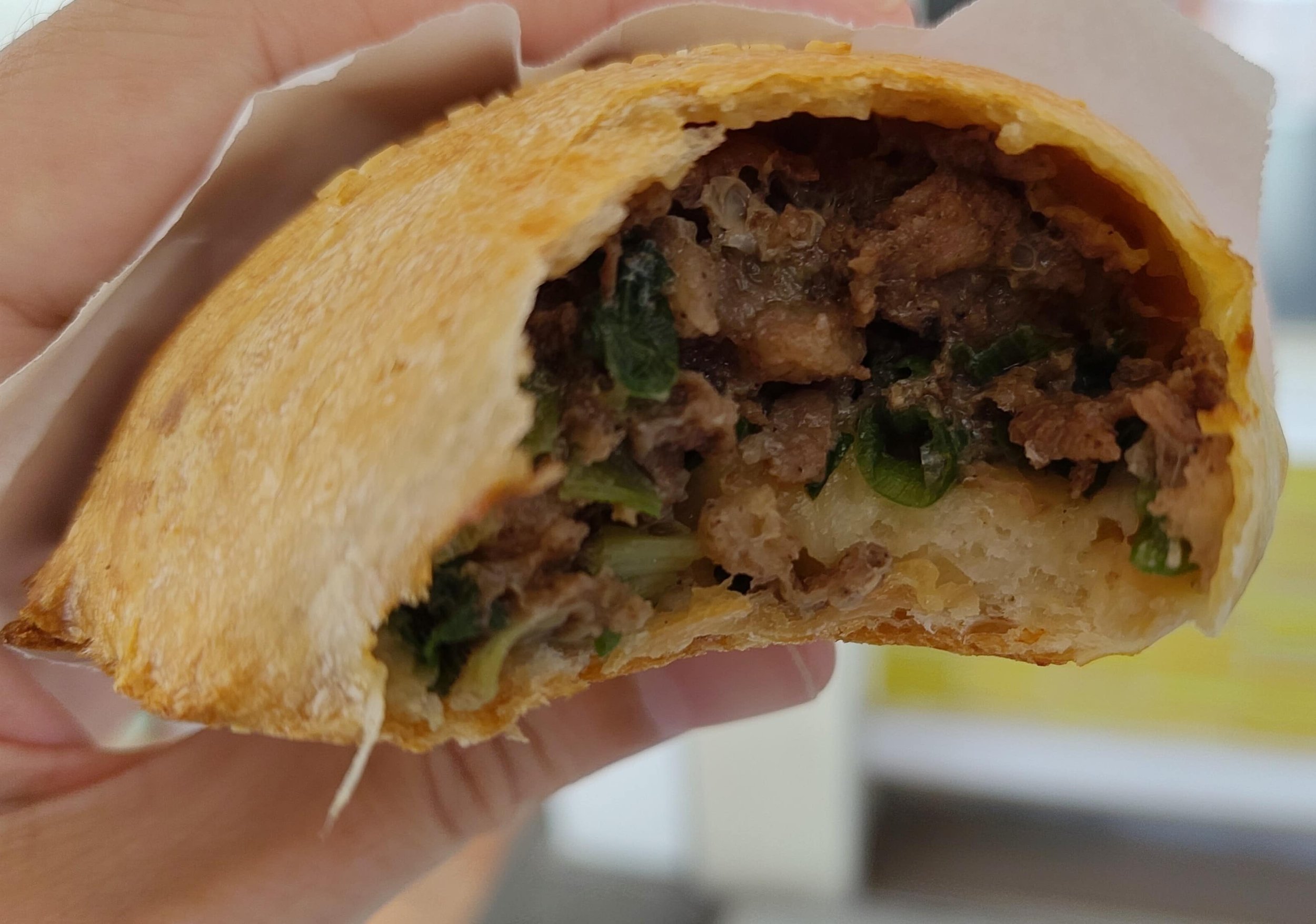
pepper buns
pepper & pork pie
What is it?
Pepper buns (胡椒餅, hújiāo bǐng) are baked pastries filled with seasoned pork and cooked in a cylindrical clay oven similar to a tandoor. The small pies are packed with flavour and use a large amounts of black pepper. As you might expect, they have a noticeably peppery taste, balanced by the pork and the sweetness of the dough. They have a crisp, slightly flaky exterior and a juicy filling that can be extremely hot, so they are best eaten with a little caution.
The pies are traditionally stuck to the inside walls of a hot clay oven and baked. As they cook, the filling releases juices while the outside develops a slightly crisp crust. Some pies are also topped with sesame seeds before baking.
What is in it?
The pie is made from a yeasted wheat dough. The filling is made from minced or chopped pork, lots of black pepper, spring onions and soy sauce.
Where can I eat it?
Pepper buns are commonly found at night markets and street food stalls. They are particularly associated with Taipei; the most famous place to try them is Fuzhou Shizu Pepper Bun at Raohe Street Night Market, where the buns are baked in a traditional clay oven.
Dairy free.
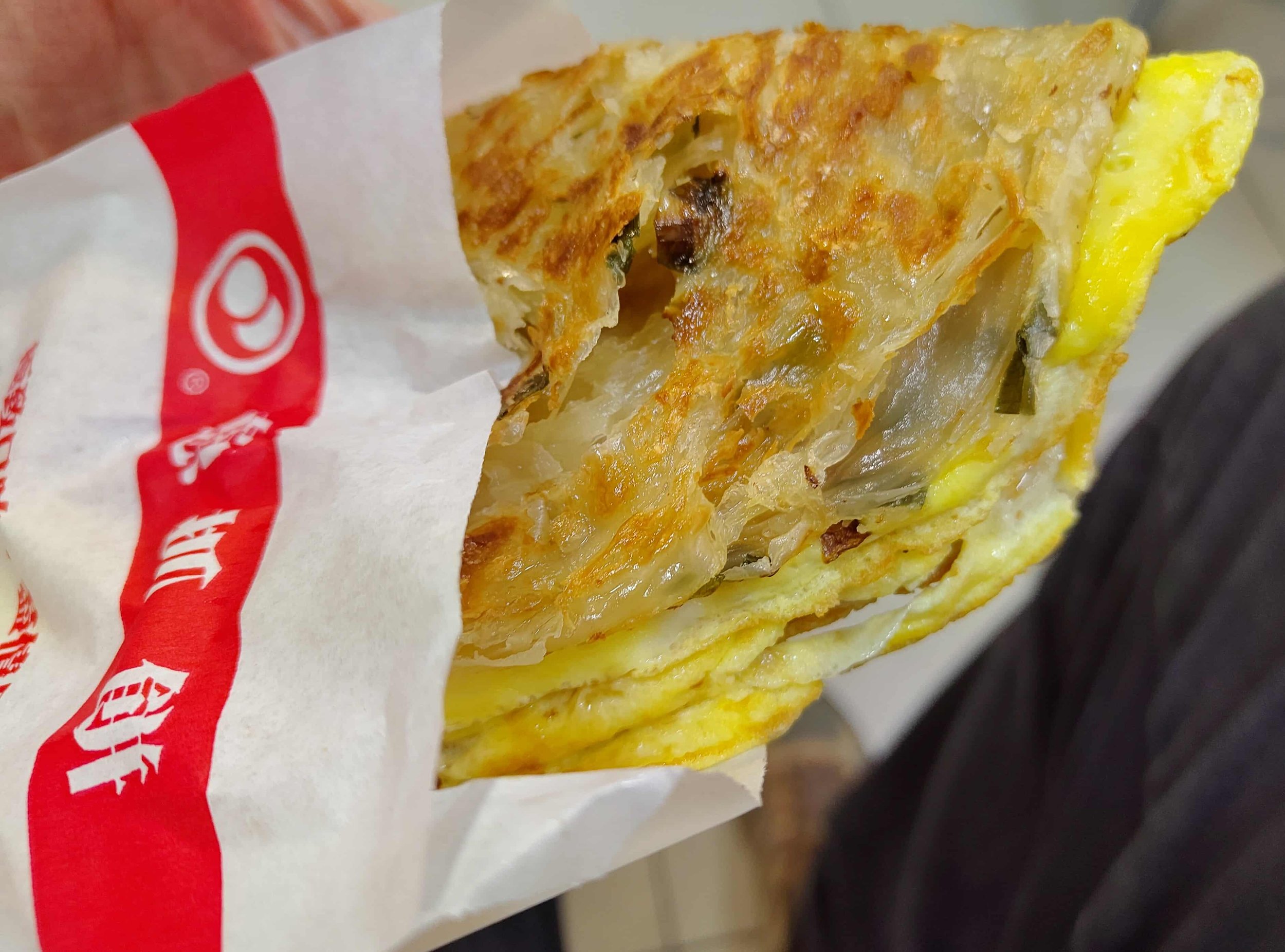
cong you bing
scallion pancake
What is it?
One of Taiwan’s most popular street foods, cong you bing (蔥油餅) is a savoury scallion pancake made by layering dough with spring onions and then pan frying it until crisp and flaky. Unlike a Western pancake, it is made from an unleavened dough, giving it a chewy interior and crispy exterior. The classic version is simple: a snack, breakfast or light meal throughout Taiwan.
While the plain scallion pancake is the traditional version, many vendors offer additional fillings and toppings that turn it into a more substantial food. If it is your first time trying cong you bing, order the version with egg (jia dan 加蛋). The egg is cooked directly onto the pancake and is one of the most popular and traditional ways to enjoy this Taiwanese favourite.
What is in it?
The classic version consists of a wheat flour dough layered with oil and chopped spring onions (scallions), which is rolled, flattened and pan-fried. Common additions include:
egg (jia dan) – one of the most popular upgrades
cheese
basil
ham
bacon
shredded pork
Many stalls also offer sauces such as:
soy sauce
sweet chilli sauce
garlic sauce
Where can I eat it?
Cong you bing is available throughout Taiwan and can be found at night markets, street-food stalls and takeaway snack stands. Many vendors prepare the pancakes fresh to order, frying them on large griddles in front of customers. It is one of the easiest Taiwanese snacks to find and is popular from breakfast through to late night eating.
Classic version is Vegan & dairy free
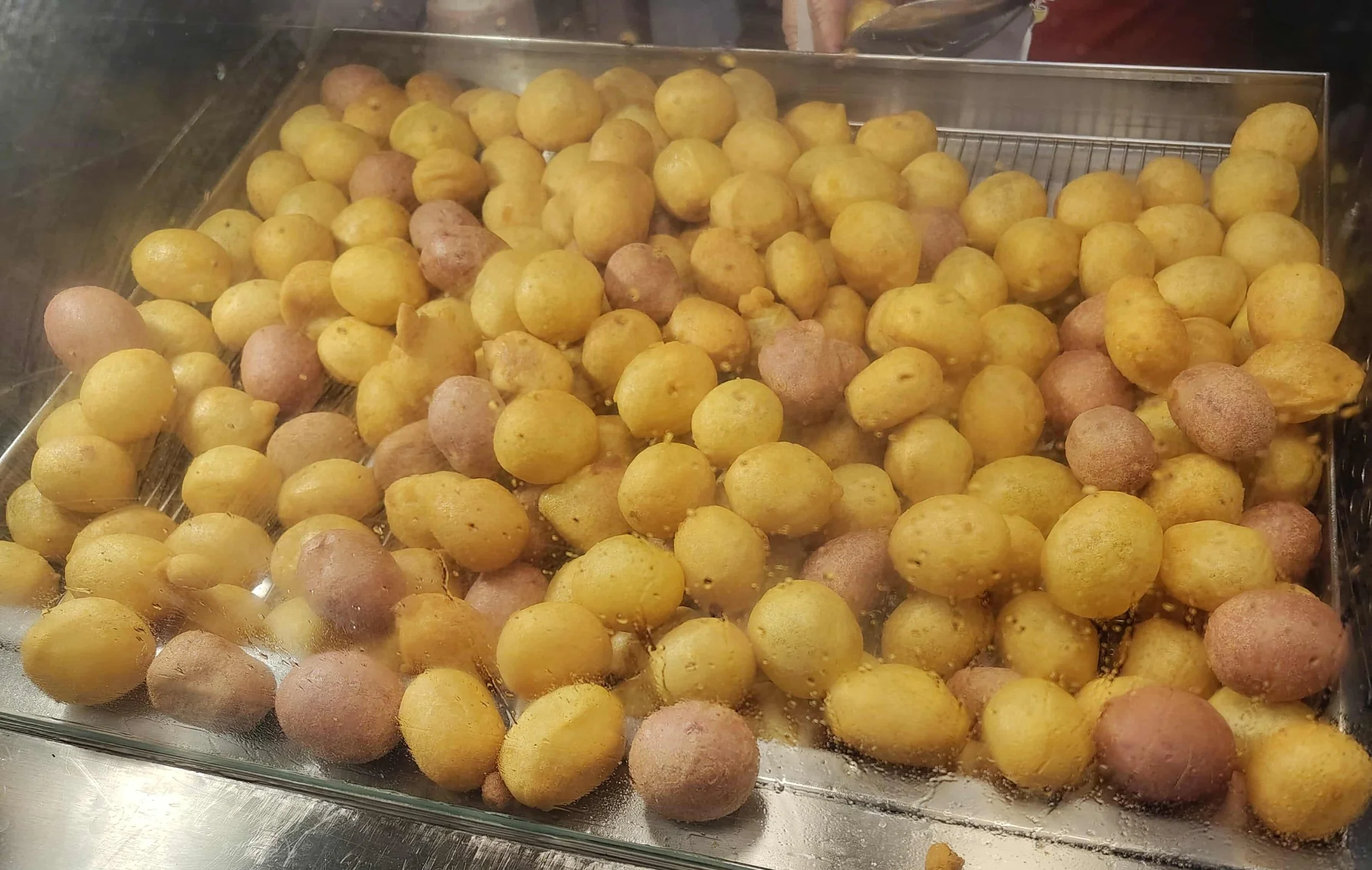
sweet potato balls
地瓜球, dìguā qiú
What is it?
A classic Taiwanese night market snack made from sweet potato and starch that is deep fried into light, chewy, hollow balls. They are one of the most recognisable street foods in Taiwan and are constantly cooked fresh in large batches at night markets.
What makes them especially interesting is the way they are made. Cooked sweet potato is mashed and mixed with tapioca (or sweet potato) starch and sugar to form a dough. This dough is then rolled into small balls and deep fried. During frying, the moisture inside the dough turns to steam, causing the balls to rapidly expand and inflate. Vendors often keep pressing and tossing them in the oil as they cook, helping them puff up evenly and develop their signature hollow, chewy interior. Once fried, they are strained and often shaken in a basket to remove excess oil, giving them a crisp outer shell while keeping the inside soft and springy.
What is in it?
The basic version is made from mashed sweet potato, tapioca starch (or sweet potato starch), sugar and oil for deep frying.
While the classic version is plain, many stalls now offer variations such as:
sesame coated versions
matcha flavour coatings
a range of sauces
filled versions
The original plain sweet potato ball remains the most widely sold and iconic version.
Where can I eat it?
Sweet potato balls are found throughout Taiwan, at night markets and street food stalls.
Vegan and dairy free.
Ingredients listed reflect common or typical components of this dish as served in restaurants or street‑food vendors. Variations by region, season, or vendor are common. This information is provided for general reference only. If you have dietary restrictions or allergies, please verify ingredient details independently. We assume no liability for accuracy or outcomes.
