must-try food Belgium
our top 5 traditional Belgian foods you have to try
Click to view all the food we tried in Belgium
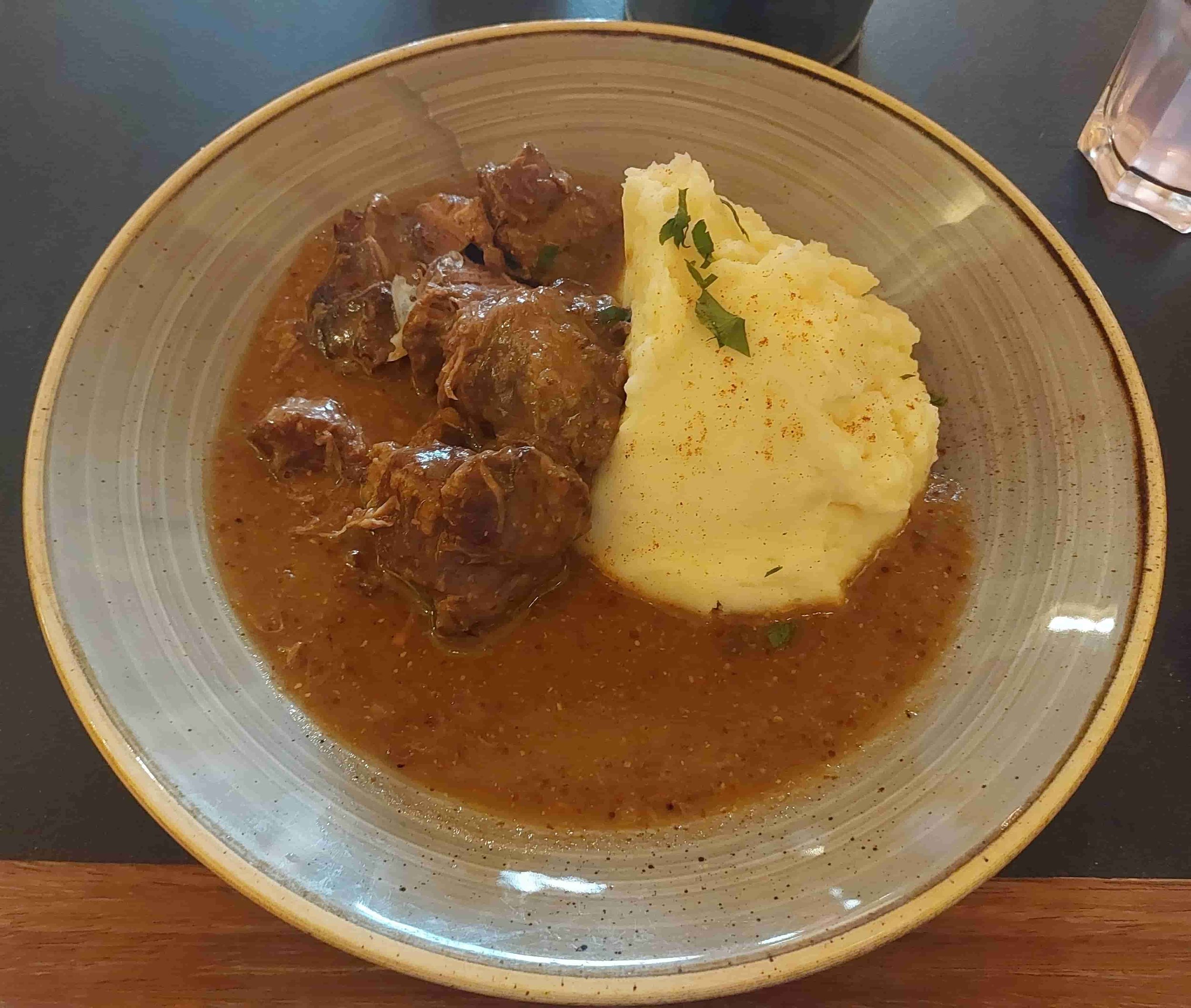
carbonnades flamande
beef & beer stew
What is it?
A classic Belgian beef stew slowly braised with beer, most often a dark ale that gives the sauce a deep, malty sweetness. It’s sometimes compared to boeuf bourguignon, but where the French version uses red wine, the Belgian one uses beer.
You will see it listed under several names, the most common being carbonade flamande, carbonnades flamandes, or in Flemish stoofvlees or stoverij. Other menu variants include carbonade à la bière (literally “stew in beer”) or versions named after a specific local beer.
There’s even a close cousin made with rabbit instead of beef, known as Lapin à la bière (“rabbit in beer”), which follows the same slow braising method but with a lighter, slightly gamey flavour.
Traditionally, the stew is served with Belgian fries, though mashed potatoes or crusty bread are also common and perfect for soaking up the rich, savoury sauce. The beef should be meltingly tender, almost falling apart after its long simmer.
What is in it?
The base ingredients are beef, onions, brown or dark Belgian beer, and mustard, often spread on a slice of bread that’s stirred in to thicken the sauce. Seasoning typically includes bay leaf, thyme, and occasionally clove or juniper.
Many cooks add gingerbread (pain d’épices) or sirop de Liège (apple pear syrup) for sweetness, along with vinegar.
Where can I eat it?
You’ll find carbonade across Belgium, from cosy brasseries (casual restaurants serving traditional food) to rustic estaminets (old-style Flemish taverns or pubs serving regional food). We had a good one at Fin de Siècle in central Brussels listed on the menu as carbonade à la bière and served with mashed potatoes.
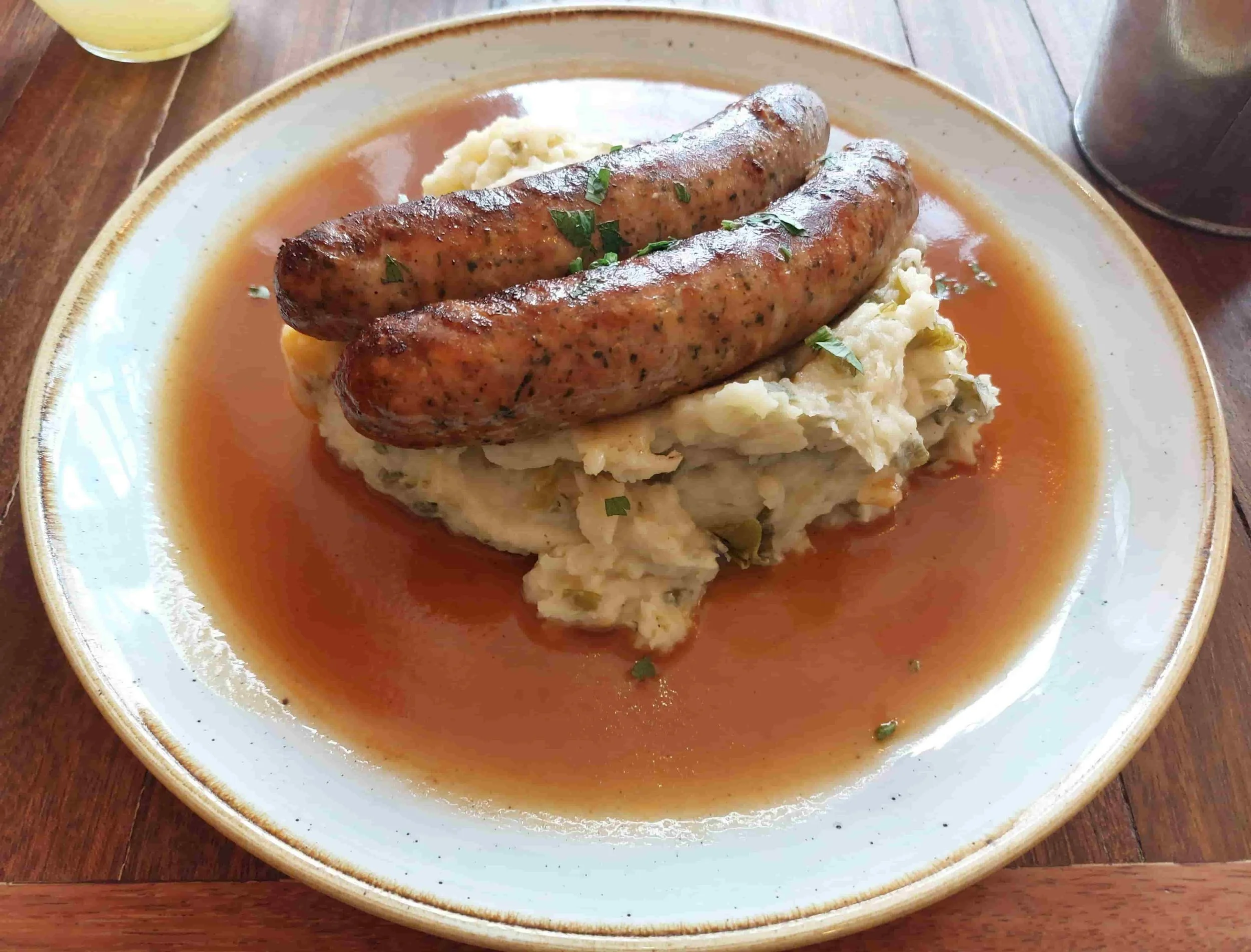
stoemp sausisse
sausage & mash
What is it?
Stoemp saucisse is Belgium’s answer to sausage and mash, a cousin of the British classic bangers and mash. At its core, it’s sausages served with stoemp, a Belgian style mash that’s creamy yet chunky, thanks to the addition of vegetables like carrots, spinach, or cabbage. The dish is topped with a rich gravy, making it one of Belgium’s ultimate comfort foods.
What is in it?
Stoemp: potatoes mashed with butter, milk or cream, and mixed with one or two vegetables such as carrots, spinach, cabbage, leeks, or endives. Parsley and a touch of nutmeg are sometimes added.
Sausages: large pork sausages are the most traditional, occasionally seasoned with garlic. Then served with gravy.
Where can I eat it?
Stoemp saucisse is a staple in Brussels brasseries and popular throughout Belgium. A particularly good version can be tried at Fin de Siècle in Brussels.
Traditionally gluten free.
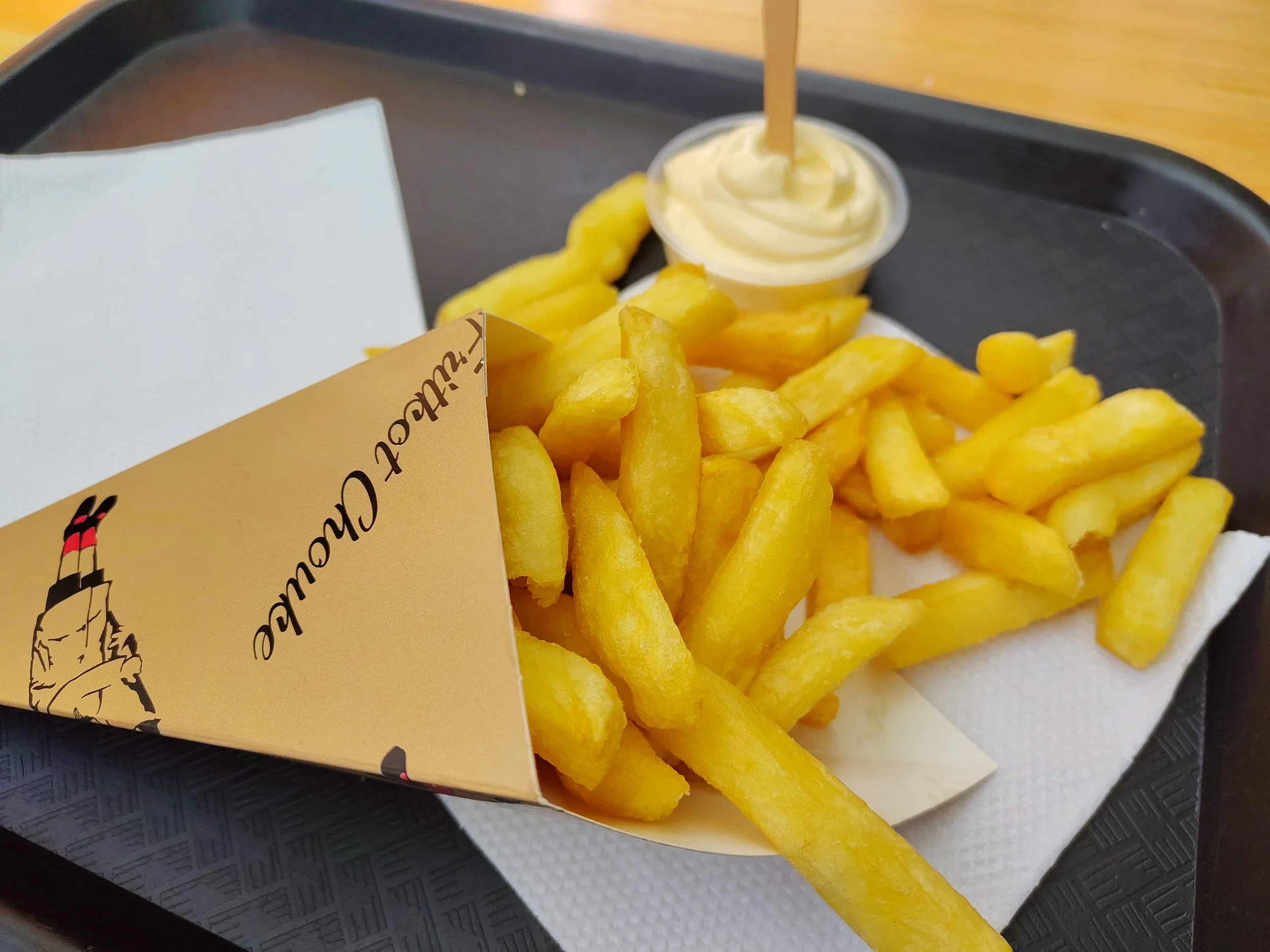
fries
fried potatoes
What is it?
You already know what fries are, unless you’re from another planet! But if you don’t, welcome to Earth, I apologise on behalf of humanity, we’re trying to do better. Fries are deep fried wedges or sticks of potato, crispy on the outside and fluffy inside. In Belgium, however, fries are both Emblematic and genuinely excellent, thicker than what you might think of as a French fry (looking at you, McDonald’s!). The best ones are fried twice for extra crispness and served as a side to many dishes, or as a meal in themselves from one of the country’s many friteries (fry stands), where they come with a myriad of sauces and topping combinations.
What is in it?
Potatoes, fried twice for extra crispness, and traditionally served with a range of sauces such as mayonnaise, Andalouse (mayonnaise with tomato and pepper), Samouraï (spicy mayonnaise with chilli), Américaine (creamy tomato herb sauce), and many others found at Belgian friteries.
Where can I eat it?
Everywhere! Fries are served across Belgium, as a side to classic mains like boulettes or carbonade flamande, or sold on their own at friteries (Belgian fry stands) in cities and towns throughout the country.
Dairy free, and gluten free depending on toppings.
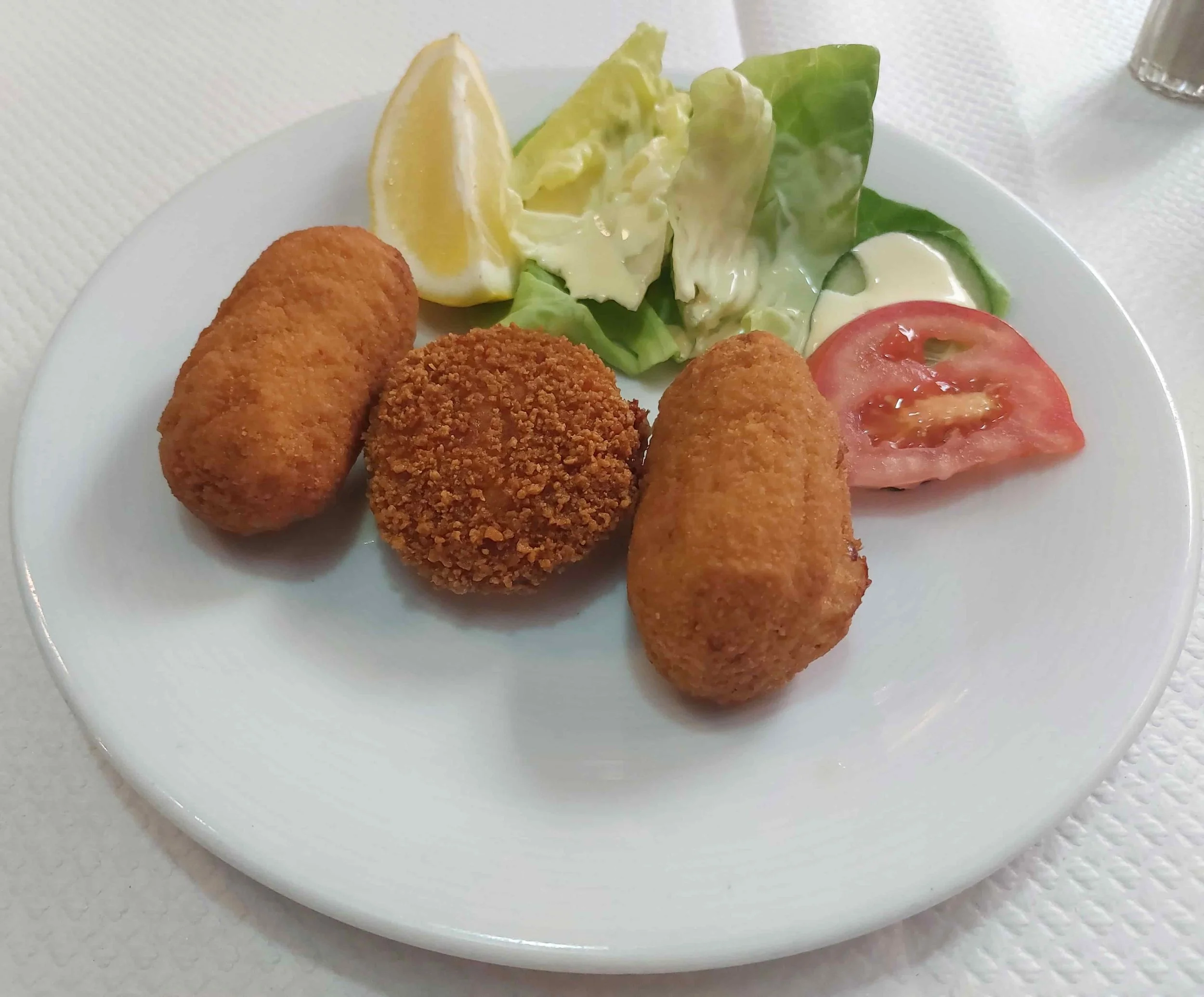
croquette
filled fried fritter
What is it?
Belgian croquettes are a classic starter, distinct from the potato filled versions found in many other countries. Instead, they’re made with a rich, creamy béchamel base, coated in breadcrumbs and deep fried until crisp. The two most traditional varieties are kaaskroketten (cheese croquettes) and garnaalkroketten (grey shrimp croquettes made with tiny North Sea shrimp). Both are classics of Belgian cuisine, and many other modern variations also exist.
What is in it?
The filling begins with a thick béchamel made from butter, flour, and milk (sometimes enriched with cream, stock, or egg yolk, and often lightly seasoned with nutmeg). To this, either cheese (commonly Emmentaler or Gruyère) or North Sea shrimp are added. The mixture is chilled, rolled, then coated in flour, egg, and breadcrumbs before frying. Croquettes are usually served with a wedge of lemon and a small salad.
Where can I eat it?
Croquettes are more of a restaurant starter than street food, and you’ll find them on menus throughout Belgium, from simple brasseries to high end restaurants. Both cheese and shrimp croquettes are among the most popular starters in the country.
Cheese version is vegetarian.
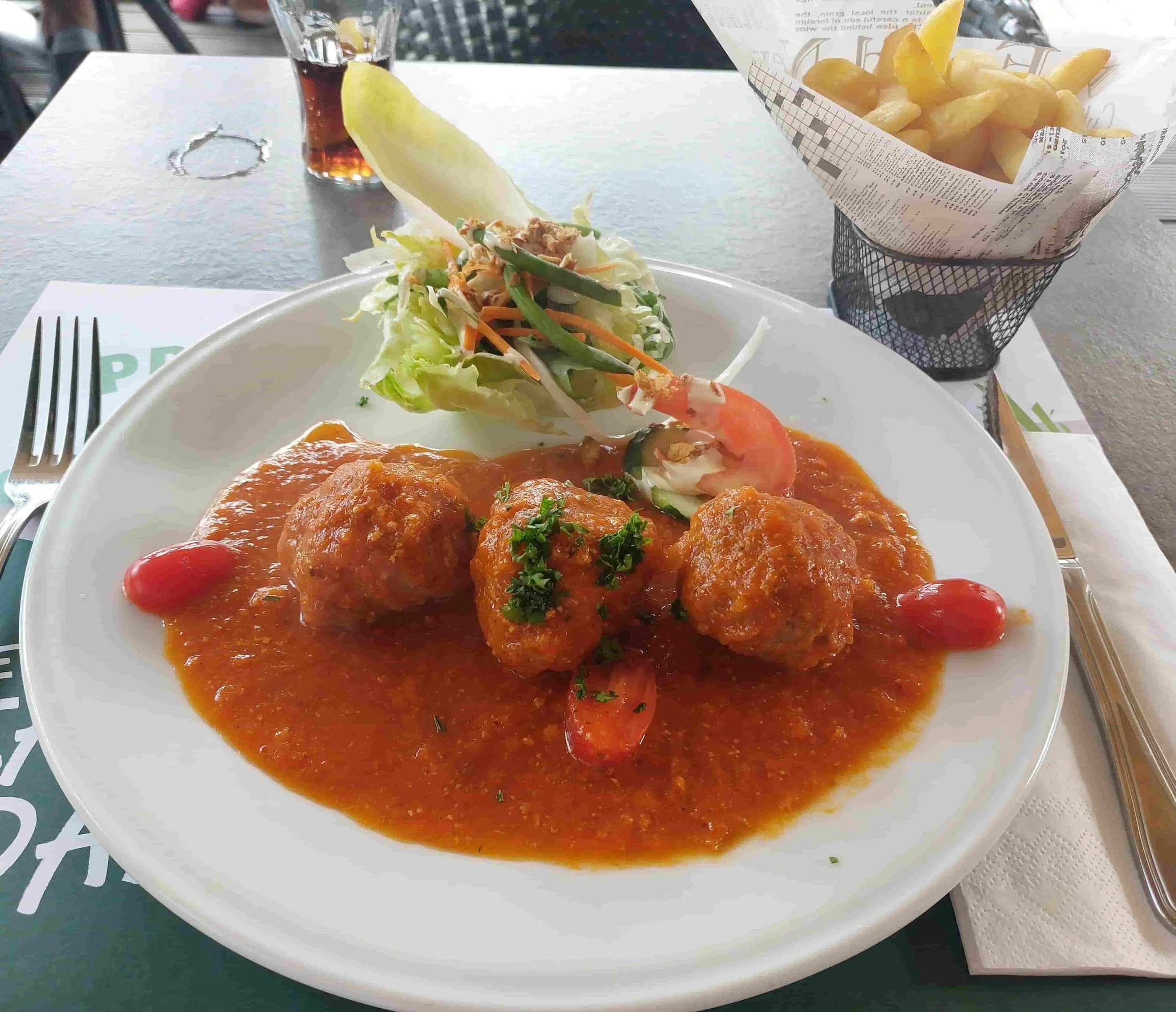
boulettes
Belgian meatballs
What is it?
Boulettes are large, juicy Belgian meatballs, traditionally served with crispy fries, though sometimes accompanied by creamy mash. There are two well known versions, Boulettes à la Liégeoise and meatballs in tomato sauce, though the former is far more traditional and famed.
Boulettes à la Liégeoise. a speciality from Liège, served in a sweet and sour sauce made with sirop de Liège, a local pear and apple syrup.
Boulettes in tomato sauce, meatballs in a savoury, herby, slightly tangy tomato based sauce.
What is in it?
The meatballs are usually a mix of pork and beef (though sometimes just pork), combined with breadcrumbs, egg, onion, and herbs such as parsley.
Where can I eat it?
Boulettes are a staple of Belgian brasseries and bistros across the country. We enjoyed an excellent version in tomato sauce with fries at De Trappisten in Brussels, a little outside the centre but well worth the trip. For the most authentic Boulettes à la Liégeoise, head to Liège itself, where almost every traditional eatery has them on the menu.
Ingredients listed reflect common or typical components of this dish as served in restaurants or street‑food vendors. Variations by region, season, or vendor are common. This information is provided for general reference only. If you have dietary restrictions or allergies, please verify ingredient details independently. We assume no liability for accuracy or outcomes.
