Here you will find a list of all the traditional cuisine we tried in Switzerland.
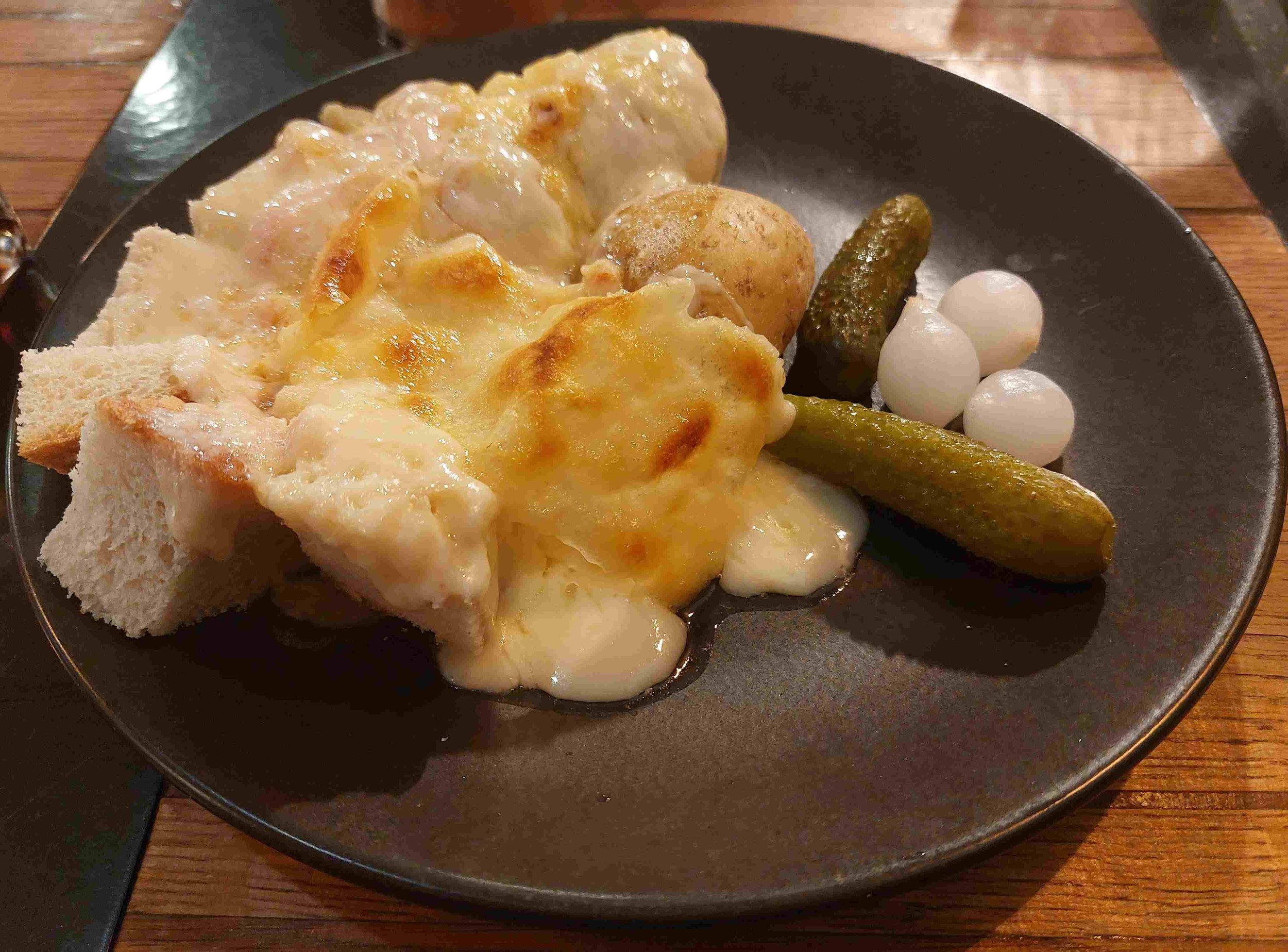
raclette
melted cheese & potato
What is it?
The Swiss really do have a deep and abiding love for melted cheese, and raclette is one of the finest expressions of that devotion. Raclette is both the name of a dish and the semi hard cow’s milk cheese at its heart. Traditionally, a large wheel of raclette cheese is heated in front of a fire or grill, and as the surface softens and melts, the molten layer is scraped from the wheel and served directly onto waiting plates.
At its most classic, the melted cheese is scraped over boiled potatoes and eaten slowly and sociably, often as a long shared meal. Modern raclette is often served quite differently. Outside traditional Alpine settings, it’s common to see tabletop electric raclette grills, where diners melt individual slices of cheese in small pans and scrape them over potatoes, bread, vegetables, or meat.
What is in it?
Raclette cheese, boiled potatoes (typically small, waxy varieties), traditionally accompanied by cornichons (small pickles) and pickled onions, bread is common in modern versions but not part of the original Valais service. Contemporary versions may also include flavoured raclette cheeses (with chilli, garlic, herbs, or smoked), as well as additions such as mushrooms, roasted vegetables, bacon, or cured meats.
Where can I eat it?
Raclette originates from the Valais region of Switzerland but is now popular throughout the country, particularly in winter. It’s widely available in mountain restaurants, traditional restaurants, and places that specialise in raclette. We had an excellent modern take at the Raclette Factory in Zurich, which offers both classic and contemporary variations brought straight to the table.
The traditional version of raclette is vegetarian.
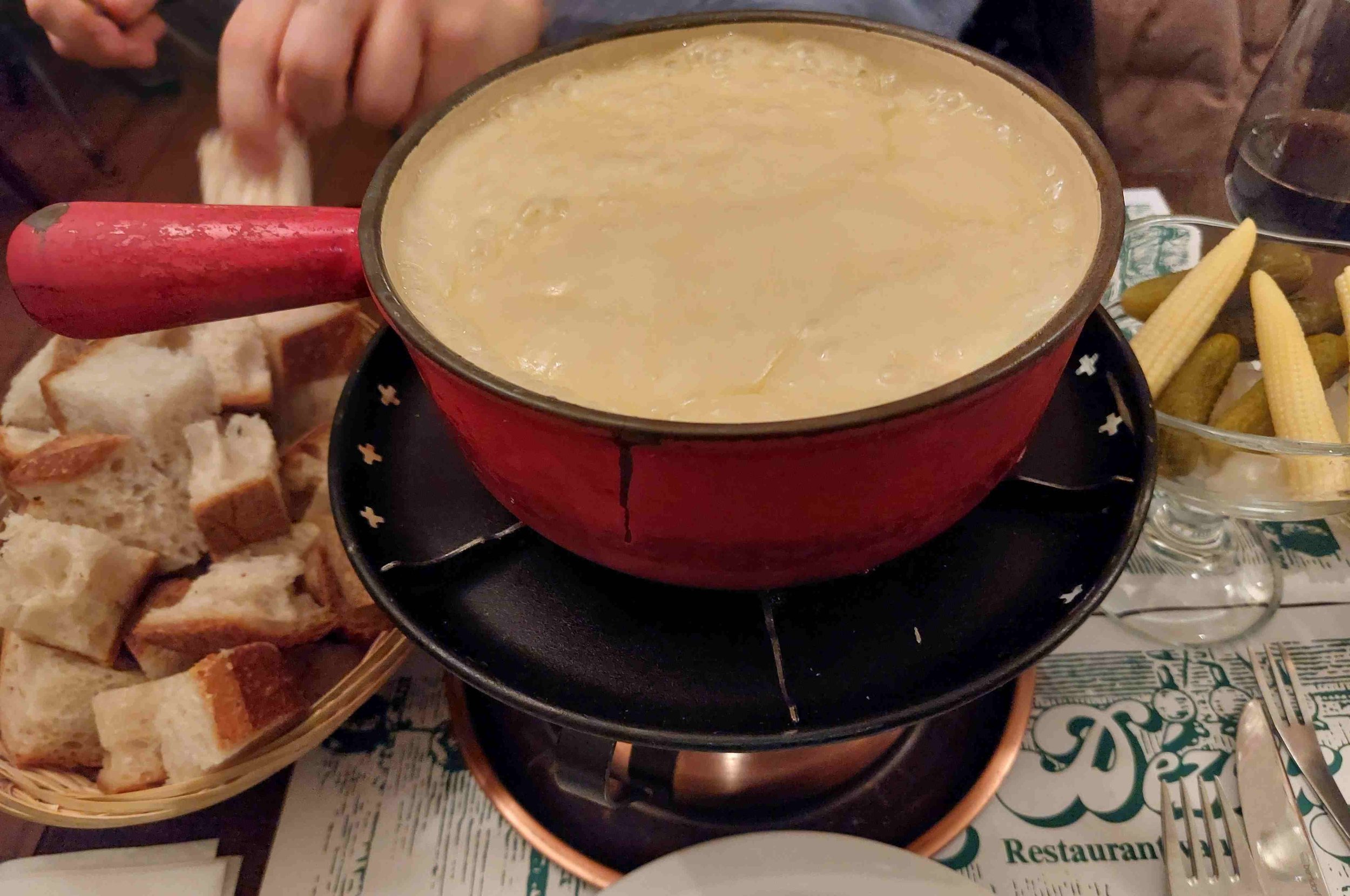
fondue
melted cheese dip
What is it?
One of Switzerland’s most iconic dishes, fondue is a decadent communal meal built around melted cheese and wine. The cheese is kept molten in a fondue pot (caquelon) over a small flame while everyone eats together. Each person uses a long fork to dip cubes of bread, traditionally day old crusty bread, into the hot cheese, swirling to coat it evenly and trying not to drop it in. Traditionally, there’s a friendly “penalty” if you do lose your bread, which adds to the social fun of the dish. Towards the end, a crispy golden cheese layer forms at the bottom of the pot, known as la religieuse (“the nun”), considered a delicacy.
What is in it?
A classic Swiss fondue is made from a blend of Gruyère and Vacherin Fribourgeois, melted with dry white wine, garlic, and kirsch (cherry brandy). A little cornstarch is used to help emulsify the cheese and keep it smooth. The traditional accompaniment is bread, but many places also serve cornichons, pickled onions, and sometimes boiled potatoes on the side.
Where can I eat it?
Fondue is popular across Switzerland, especially in the colder months, and it’s easy to find restaurants that specialise in it. We had an excellent version at Le Dézaley in Zurich, though booking ahead is strongly recommended as it’s very popular.
Standard version is vegetarian
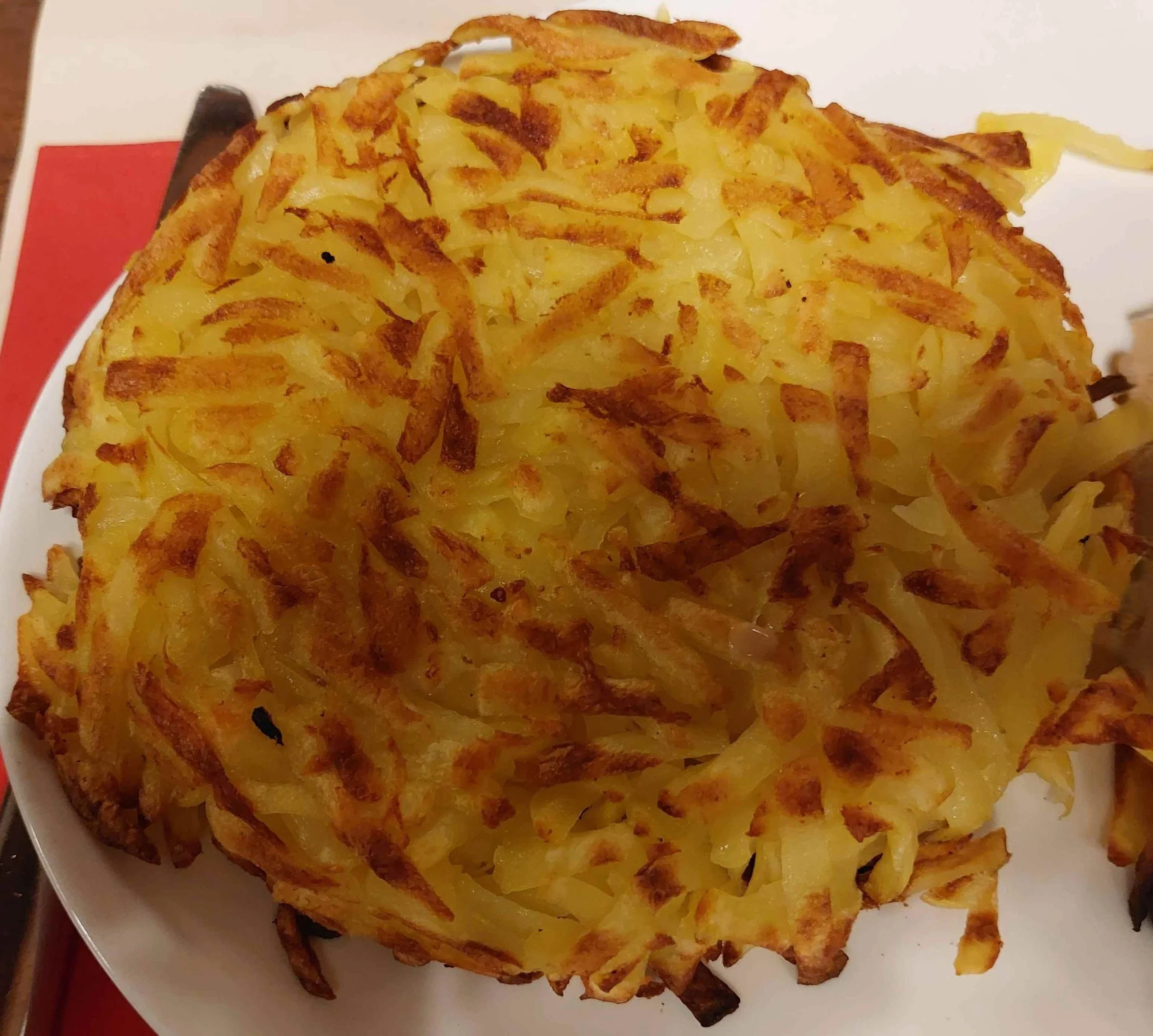
rösti
fried potato cake
What is it?
Rösti is a classic Swiss potato dish, originally a breakfast dish, now more commonly served as a side or accompaniment. Made from grated potatoes, traditionally parboiled and grated once cooled, then formed into large round or individual patties and fried until crispy on the outside while remaining soft inside. While pan frying is the traditional method, some recipes bake them in the oven.
What is in it?
Rösti consists primarily of grated potatoes, fried in butter or oil, and seasoned with salt and sometimes pepper. Variations may include onions, bacon, or cheese, but the classic version is just potatoes and fat.
Where can I eat it?
Rösti is common throughout the German speaking part of Switzerland, often served alongside mains such as Zürcher Geschnetzeltes or other meat dishes. It is also sold as a standalone side in traditional restaurants and cafés, such as Le Dézaley in Zurich, and can appear on breakfast menus topped with eggs or smoked salmon.
Vegetarian and gluten free
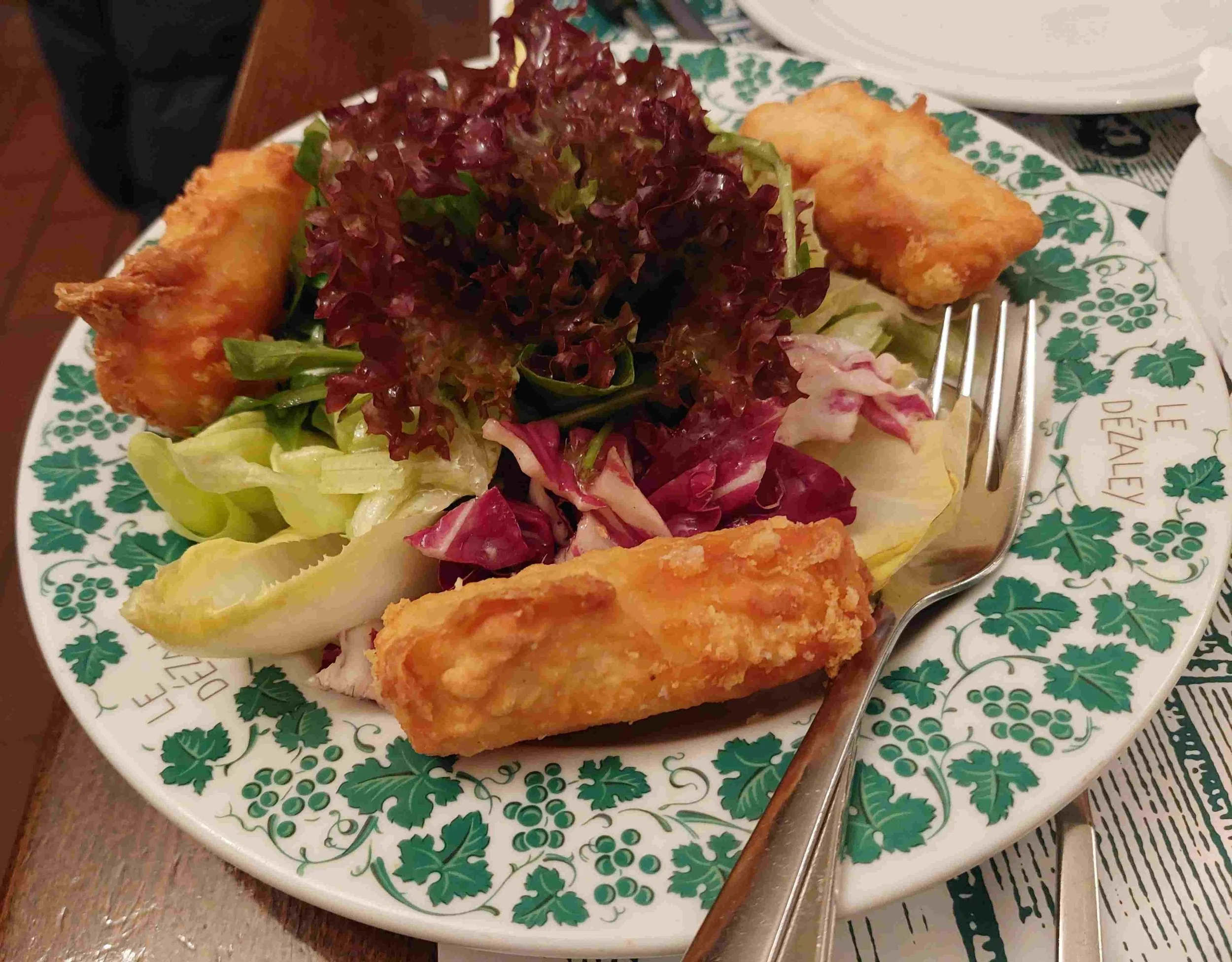
malakoff
fried cheese
What is it?
Malakoff is a classic speciality from the canton of Vaud in western Switzerland. It consists of fried cheese, usually served hot as a starter, often with a simple green salad. Despite its Russian-sounding name, the dish is Swiss and is traditionally said to be named after the Battle of Malakoff during the Crimean War, when Swiss mercenaries were present. Malakoffs are most commonly shaped into round balls, though sticks or patties are also seen.
What is in it?
Malakoff is typically made with Gruyère cheese, coated in a batter of flour and eggs, sometimes with white wine or milk and seasoned with pepper or nutmeg, before being breaded and deep fried.
Where can I eat it?
Malakoff is very common in Vaud, but is less frequently seen elsewhere in Switzerland. Outside the region, it occasionally appears on menus focusing on regional Swiss cuisine, such as at Le Dézaley in Zurich, where it is served as a starter with salad.
Vegetarian.
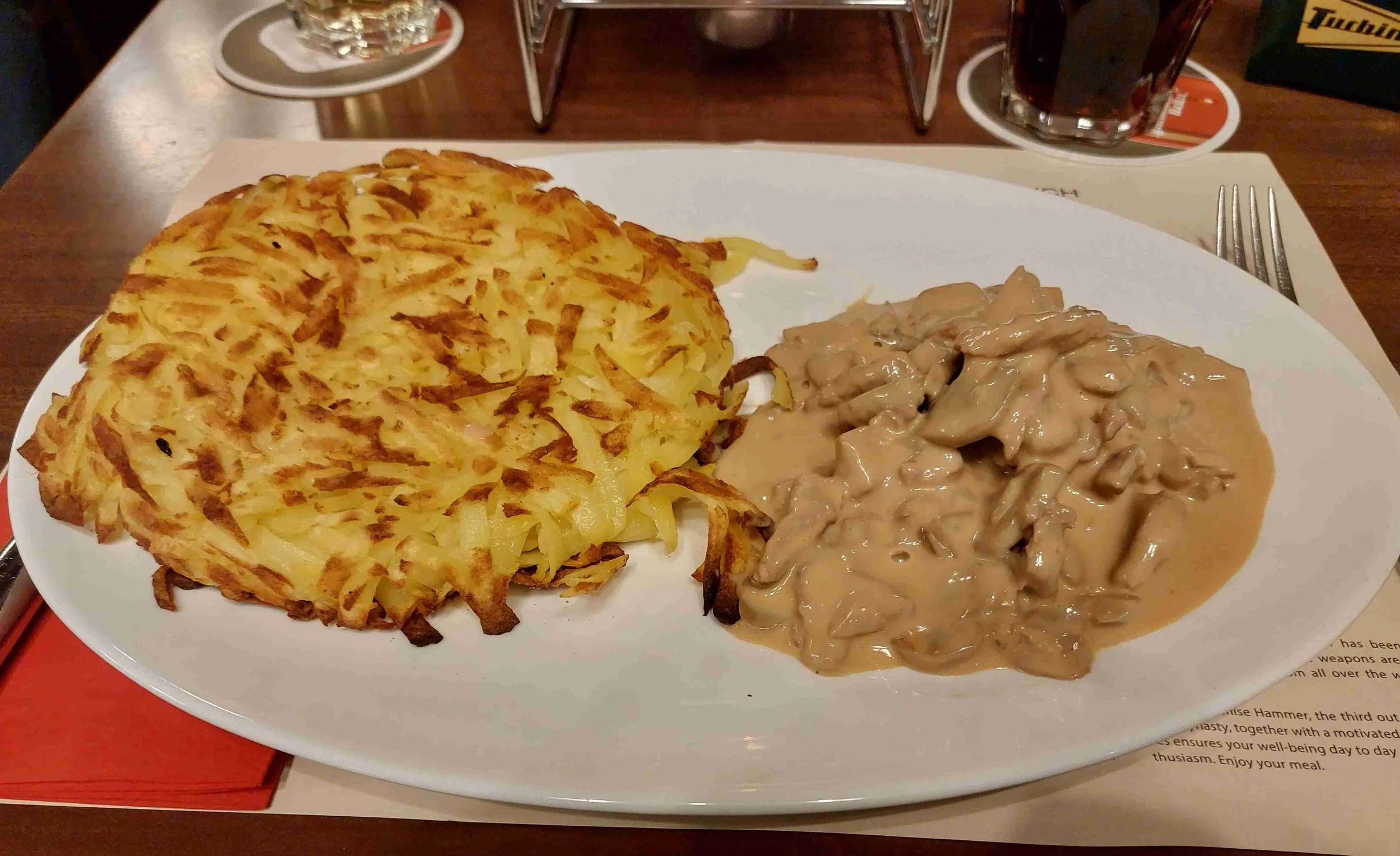
zürcher geschnetzeltes
veal in cream sauce
What is it?
Zürcher Geschnetzeltes is a classic dish from Zurich whose name translates directly as “sliced meat, Zurich style.” It consists of strips of veal cooked quickly and served in a creamy white wine sauce.
Traditionally, it is served with Rösti, Switzerland’s iconic grated potato pancake, which is great for soaking up all the sauce. The combination has become so closely associated that Zürcher Geschnetzeltes and Rösti are almost inseparable on menus.
What is in it?
The dish is made from thinly sliced veal, often with onions or shallots and mushrooms in butter, then finished with dry white wine and cream.
Where can I eat it?
Zürcher Geschnetzeltes is widely available in traditional Swiss restaurants throughout Zurich and also in other parts of Switzerland. A well known place to try it is Restaurant Zeughauskeller in Zurich, which serves a classic version in a historic setting.
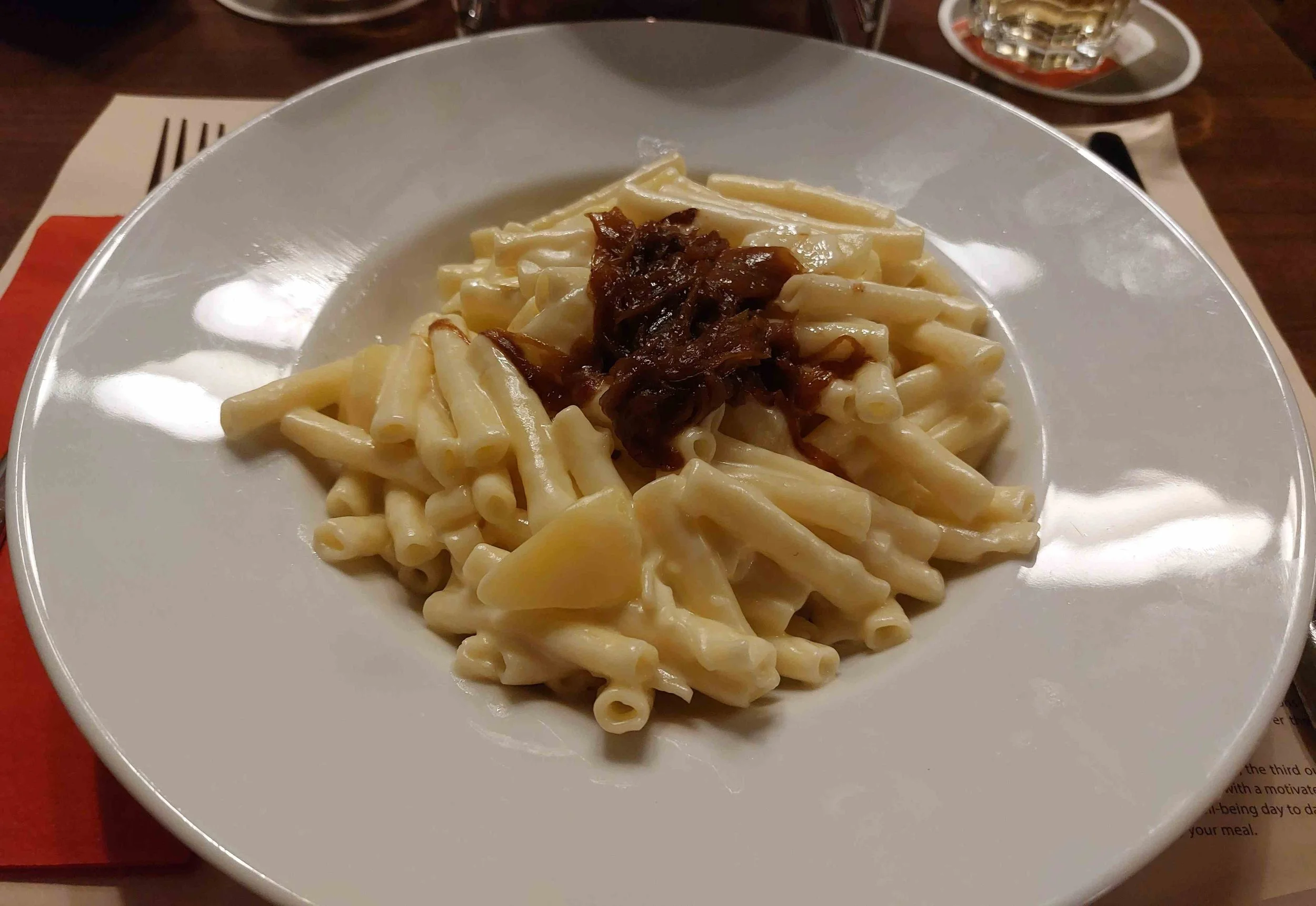
älplermagronen
creamy pasta
What is it?
Älplermagronen is a Swiss Alpine dish often described as Switzerland’s answer to mac and cheese. Originating in the Alpine regions, it was traditionally eaten by herdsmen (Älpler) who needed filling, calorie dense food made from ingredients that stored well in the mountains. The dish combines pasta, potatoes, cheese, and cream, typically finished with a slightly crisp top.
It’s often served with apple sauce, whose sweetness provides a surprising contrast to the savoury cheese.
What is in it?
Älplermagronen is made from short pasta, traditionally macaroni, and boiled potatoes, combined with cream, milk, butter, and Alpine cheese such as Gruyère or Emmental. Fried onions are usually served on top or alongside, with apple sauce often served on the side.
Where can I eat it?
You’ll find Älplermagronen throughout Switzerland, especially in mountain restaurants. It’s particularly popular in ski resorts and rural regions, but can also be found in cities.
Vegetarian .
Related food guides
While Swizz cuisine has its own regional specialities, it shares many traditional dishes with neighbouring Germany & Austria. For a deeper look at some of these shared classics, see our German food guide.
Ingredients listed reflect common or typical components of this dish as served in restaurants or street‑food vendors. Variations by region, season, or vendor are common. This information is provided for general reference only. If you have dietary restrictions or allergies, please verify ingredient details independently. We assume no liability for accuracy or outcomes.
