Here you will find a list of all the traditional cuisine we tried in Slovenia.
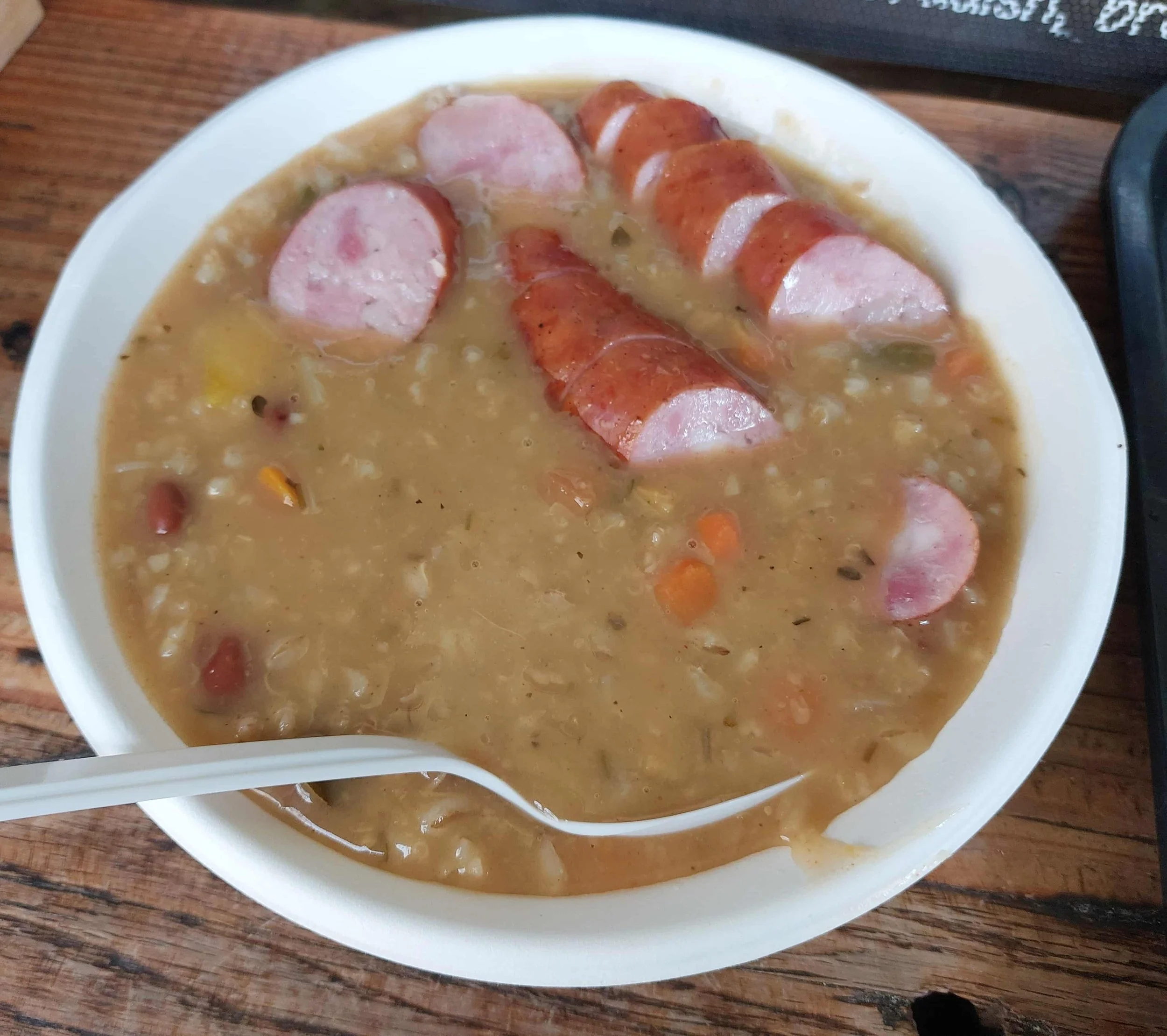
ričet
barley & bean stew
What is it?
A traditional Slovenian stew or thick soup made with barley, beans and vegetables, sometimes with smoked ham. It is often served with kranjska klobasa, also known as Carniolan sausage, a traditional Slovenian pork sausage seasoned with garlic and pepper.
What is in it?
Ričet is typically made with barley, beans and vegetables such as potatoes, carrots, onions, celery and parsley, all slow-cooked together into a thick stew. Many traditional versions also include smoked pork or ham. It is often served with kranjska klobasa and bread on the side
Where can I eat it?
A good place to try it in Ljubljana is Klobasarna, which specialises in kranjska klobasa but also serves good value ričet, with or without sausage.
Vegetarian versions available, dairy free.
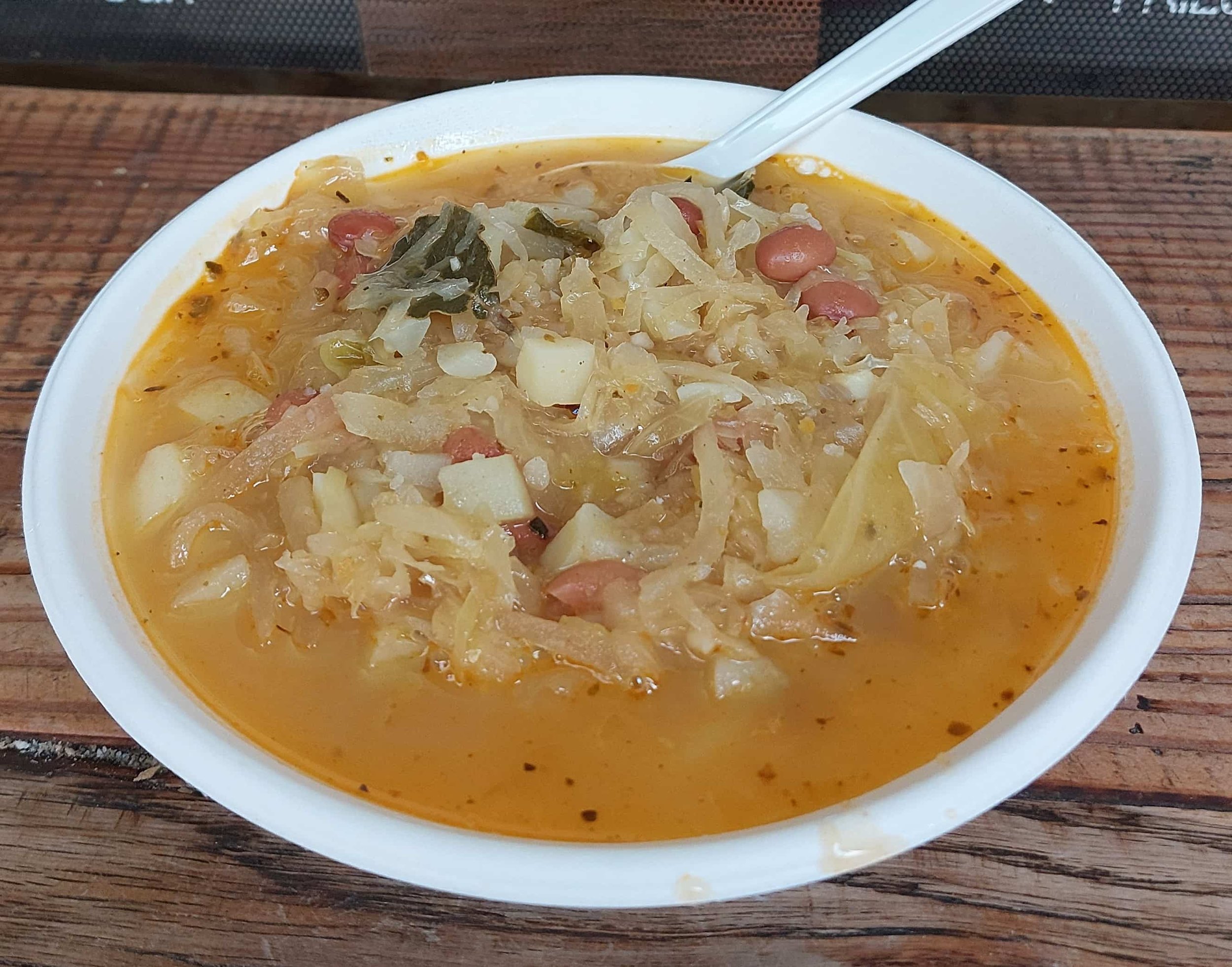
jota
sauerkraut stew
What is it?
Jota is a traditional stew popular in Slovenia’s Karst and Littoral regions, made from beans, potatoes and sauerkraut, or sometimes sour turnip. Many versions include smoked pork or kranjska klobasa, a traditional Slovenian sausage seasoned with garlic and pepper.
What is in it?
Jota is typically made with beans, potatoes, sauerkraut, or sometimes sour turnip, garlic, onion, bay leaves and smoked pork, bacon, ribs or kranjska klobasa. The stew is simmered slowly until thick, often with some lflour to help thicken the broth.
Where can I eat it?
A good place to try it in Ljubljana is Klobasarna, which specialises in kranjska klobasa and serves jota, including versions with or without sausage.
Vegetarian versions available, usually dairy free.
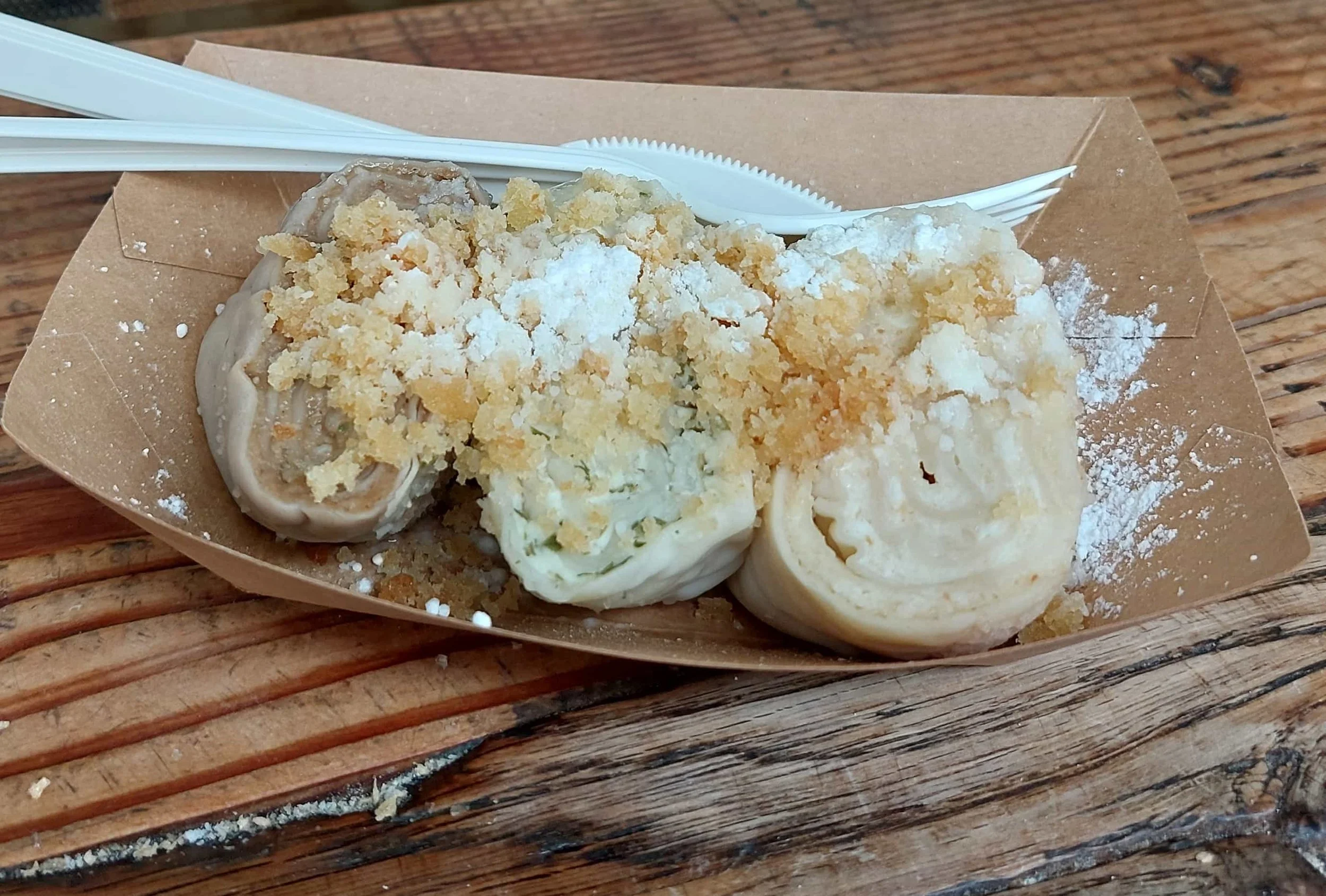
štruklji
rolled dough dumplings
What is it?
Štruklji are a traditional Slovenian rolled dough dish that can be either sweet or savoury and filled with a wide variety of ingredients. The rolled dough is sliced into portions and then boiled, steamed or baked, depending on the recipe. Closely related to Croatian Zagorski štrukli, they are very filling and widely regarded as one of Slovenia’s most iconic traditional foods.
What is in it?
Štruklji are made from rolled dough filled with ingredients such as cottage cheese, walnuts, tarragon, apples, poppy seeds or herbs. Savoury versions are often topped with cream, butter or breadcrumbs, while sweet varieties may be dusted with sugar or served with fruit sauces.
Where can I eat it?
Štruklji are served throughout Slovenia in traditional restaurants, with both sweet and savoury versions commonly available. In Ljubljana, a well known place to try them is Moji Štruklji Slovenije, which offers a huge variety.
Vegetarian versions widely available.
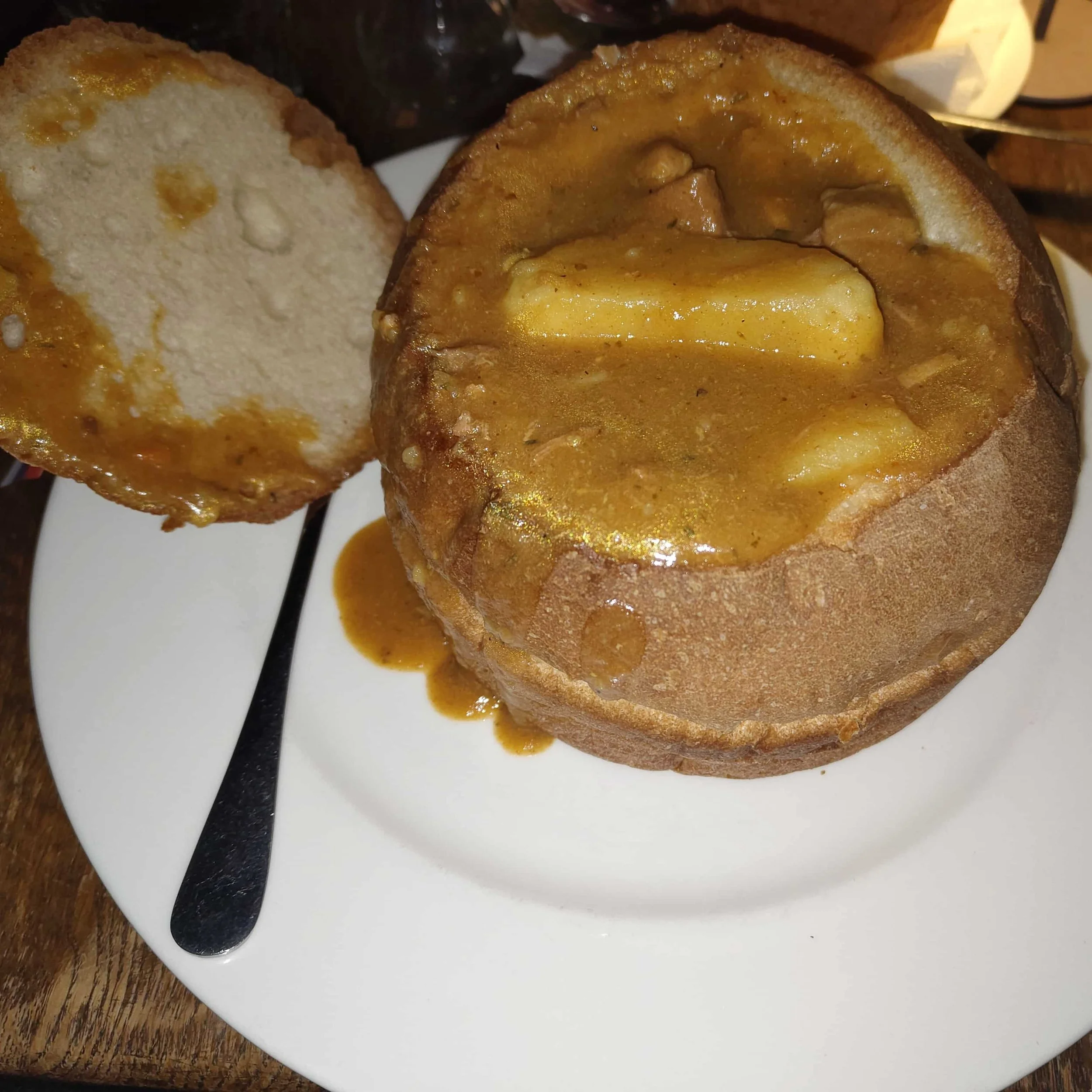
bograč
three meat stew
What is it?
Bograč is a traditional Slovenian stew from the Prekmurje region in the northeast of the country. It is traditionally made with three different types of meat, most commonly beef, pork and venison, slow cooked together with onions, potatoes and plenty of paprika. It is similar in style to Hungarian goulash and reflects the strong Hungarian influence on the cuisine of eastern Slovenia.
What is in it?
Bograč is usually made with beef, pork and venison, along with onions, potatoes, garlic, paprika, tomato and sometimes wine or bay leaves. The onions are cooked down slowly to create a thick, rich base before the meat and spices are added and simmered for several hours.
Where can I eat it?
Bograč is most closely associated with the Prekmurje region, although it can also be found in traditional restaurants elsewhere in Slovenia, especially those serving regional cuisine. In Ljubljana, Sokol is a good place to try bograč; it offers a large traditional menu, but be prepared for crowds, it is very touristy and almost always busy.
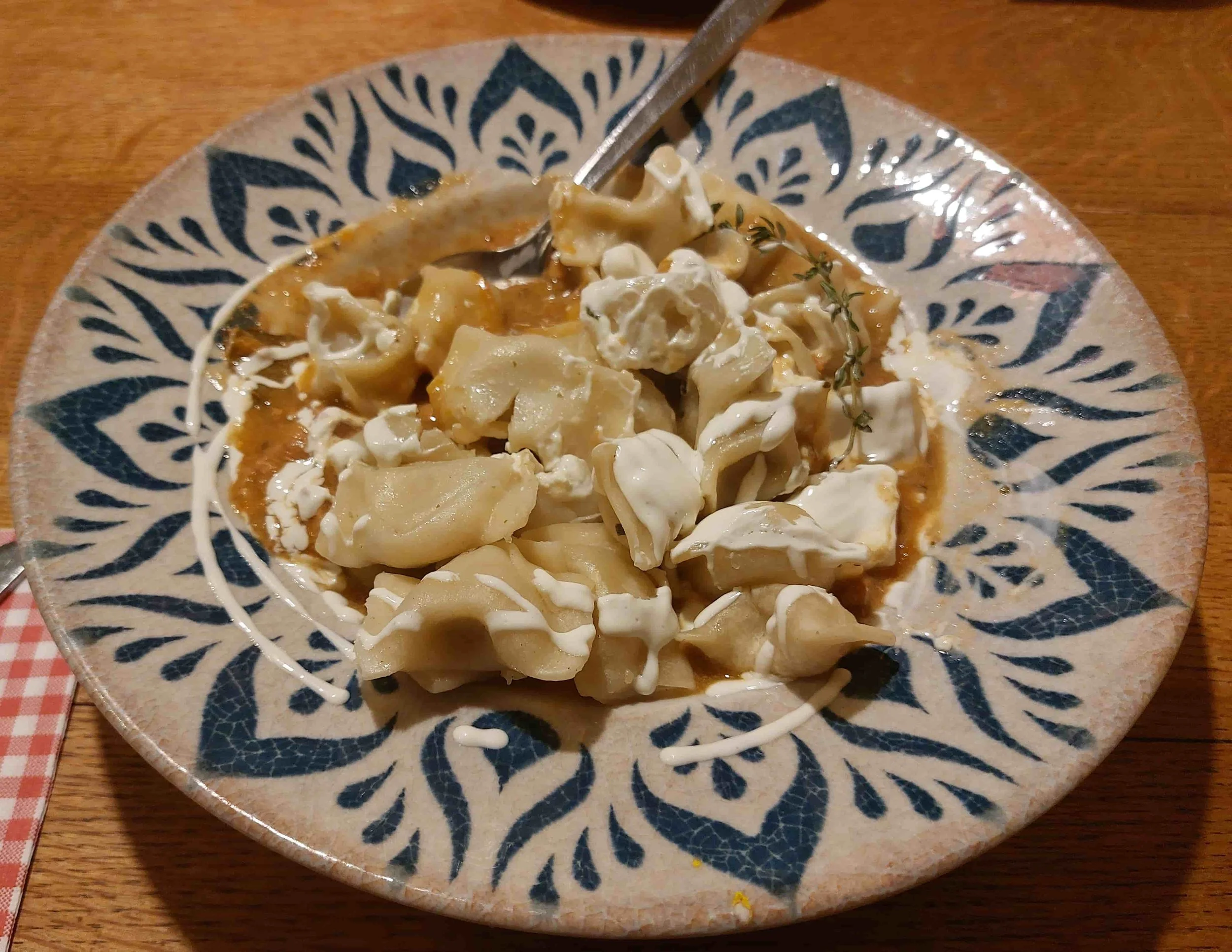
idrijski žlikrofi
potato dumplings
What is it?
Idrijski žlikrofi are small Slovenian dumplings stuffed with potato, often compared to potato ravioli. Originating from the mining town of Idrija, they are one of Slovenia’s most famous regional dishes and have protected status within the EU. The dumplings are traditionally served either as a side dish to meat or topped with a rich lamb or rabbit ragout known as bakalca.
What is in it?
The dough is made from flour, eggs, oil and water, while the filling traditionally consists of potatoes, onion, pork fat or bacon, and herbs such as marjoram or chives. They are shaped into small, hat like dumplings before being boiled.
Where can I eat it?
The best place to try them is naturally Idrija, where they are the town’s signature dish. They can also be found in traditional Slovenian restaurants elsewhere in the country, especially those focusing on regional cuisine. In Ljubljana, Sokol is a good place to try them; it has a large traditional menu, but be prepared for crowds
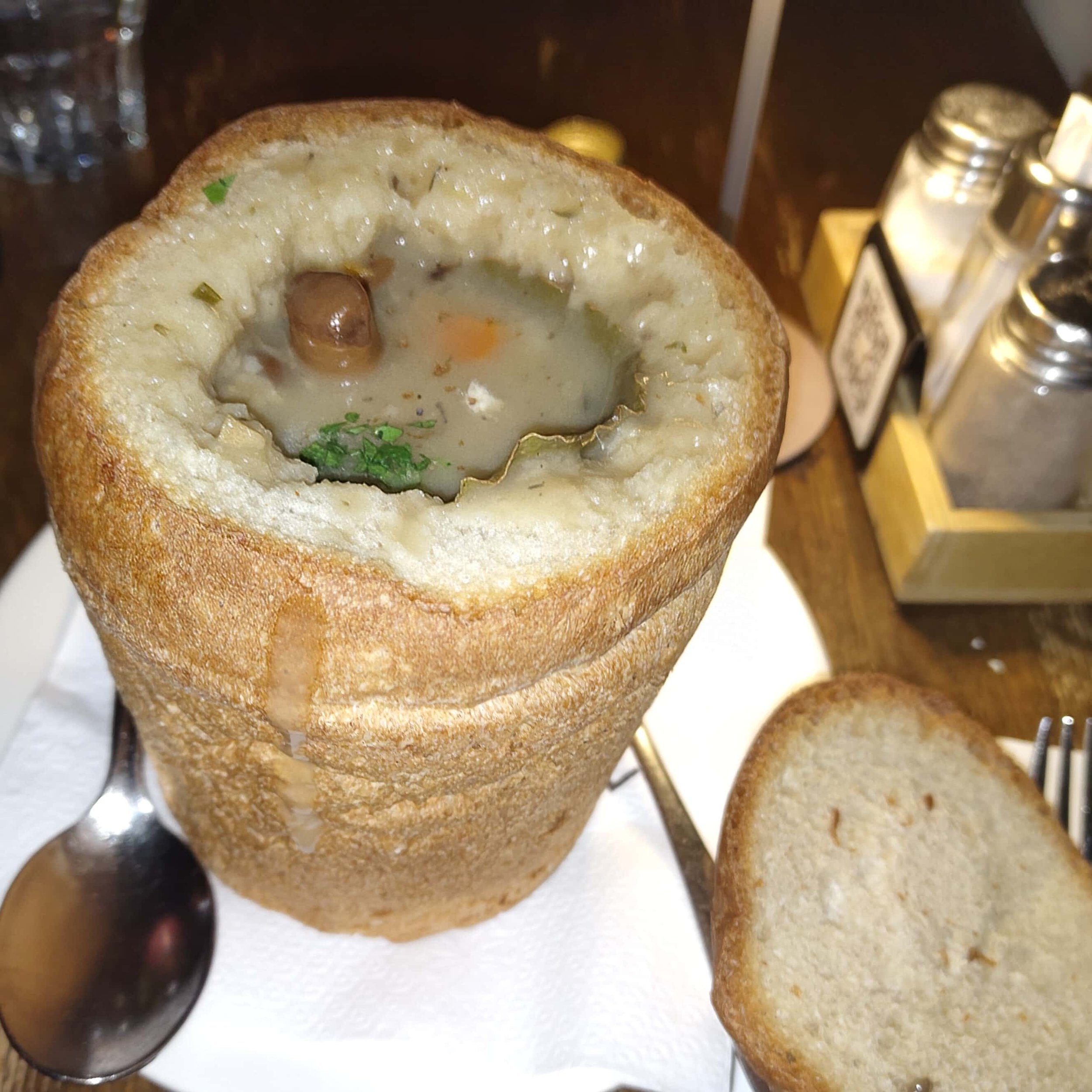
gobova juha
mushroom soup
What is it?
A traditional Slovenian mushroom soup, gobova juha is typically made with wild forest mushrooms and served as a starter or light meal. It is especially associated with Slovenia’s heavily forested landscapes, where mushroom foraging is a long standing culinary tradition. The soup is usually creamy and earthy, with a deep woodland flavour that reflects whichever mushrooms are in season.
What is in it?
Gobova juha is usually made with mushrooms, onions, garlic and stock, often thickened with flour and finished with cream or milk. Seasoning includes parsley, black pepper and bay leaf. The exact mushrooms used vary by season; common varieties include porcini (king bolete), chanterelles and other wild mushrooms depending on availability.
Where can I eat it?
You’ll find gobova juha widely across Slovenia, especially in traditional restaurants rather than on modern or international focused menus.
traditionally vegetarian.
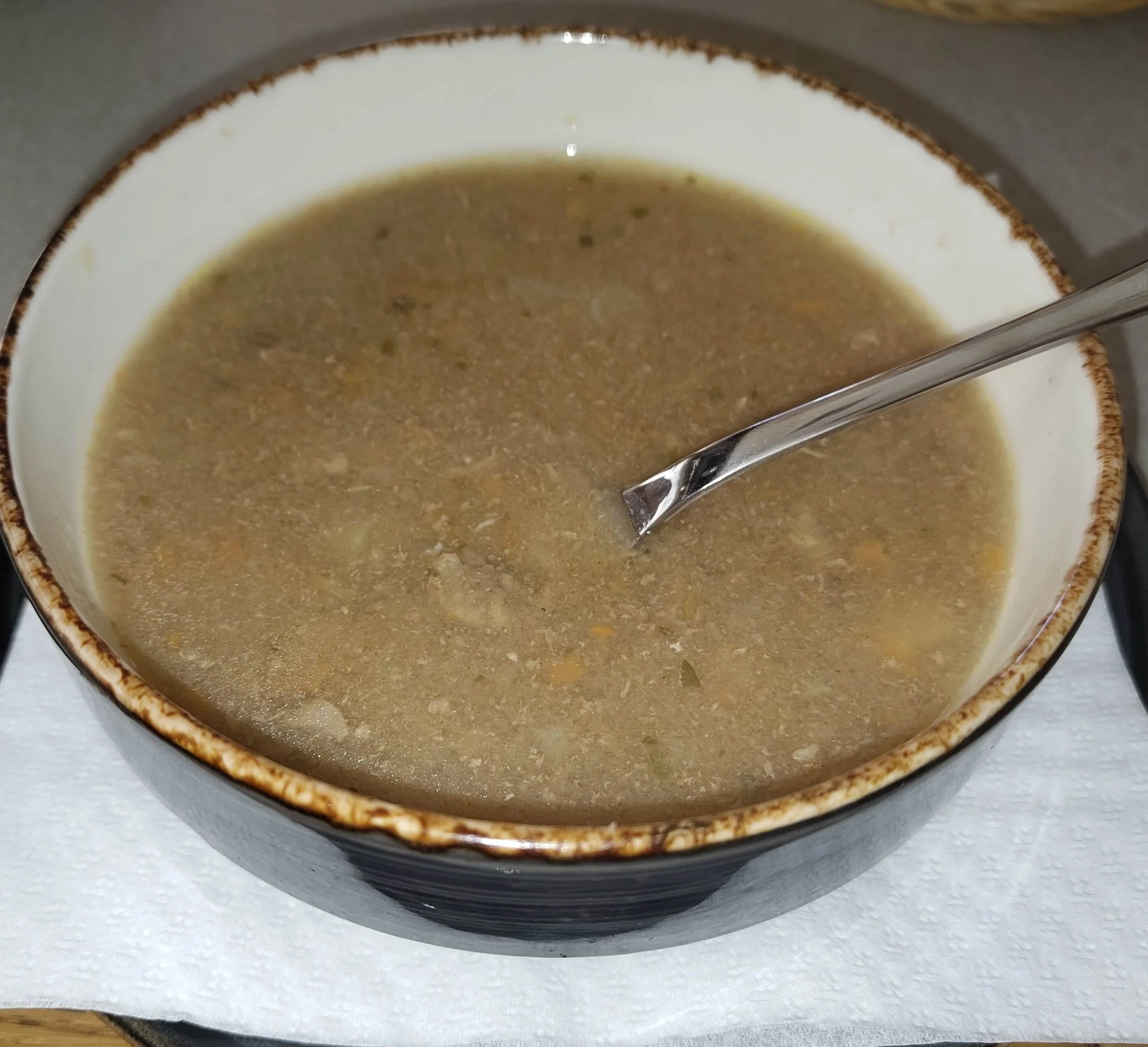
obara
meat stew
What is it?
Obara is a traditional Slovenian stew and one of the country’s classic rural comfort foods. It has been prepared for centuries and was historically associated with large gatherings, farm work and celebrations.
What is in it?
Obara is typically made with meat such as chicken, beef, pork or lamb, slowly cooked with onions, carrots, celery, parsley and garlic in a broth. The stew can be thickened slightly with flour and seasoned with herbs such as bay leaf and marjoram. Some regional versions may also include offal or different vegetables depending on availability.
Where can I eat it?
Obara can be found in traditional Slovenian restaurants throughout the country, particularly in places specialising in home-style cuisine, though we found it to be less common than dishes such as bograč, ričet or jota.
Dairy free.
Related food guides
While Montenegrin cuisine has its own regional specialities, it shares many traditional dishes with nearby Bosnia and Herzegovina. For a deeper look at some of these shared Balkan classics, see our Bosnian food guide.
Ingredients listed reflect common or typical components of this dish as served in restaurants or street‑food vendors. Variations by region, season, or vendor are common. This information is provided for general reference only. If you have dietary restrictions or allergies, please verify ingredient details independently. We assume no liability for accuracy or outcomes.
