all the foods - Greece
Here you will find a list of all the traditional cuisine we tried in Greece.
Click to jump to one of the sections:
street food, snacks & coffee
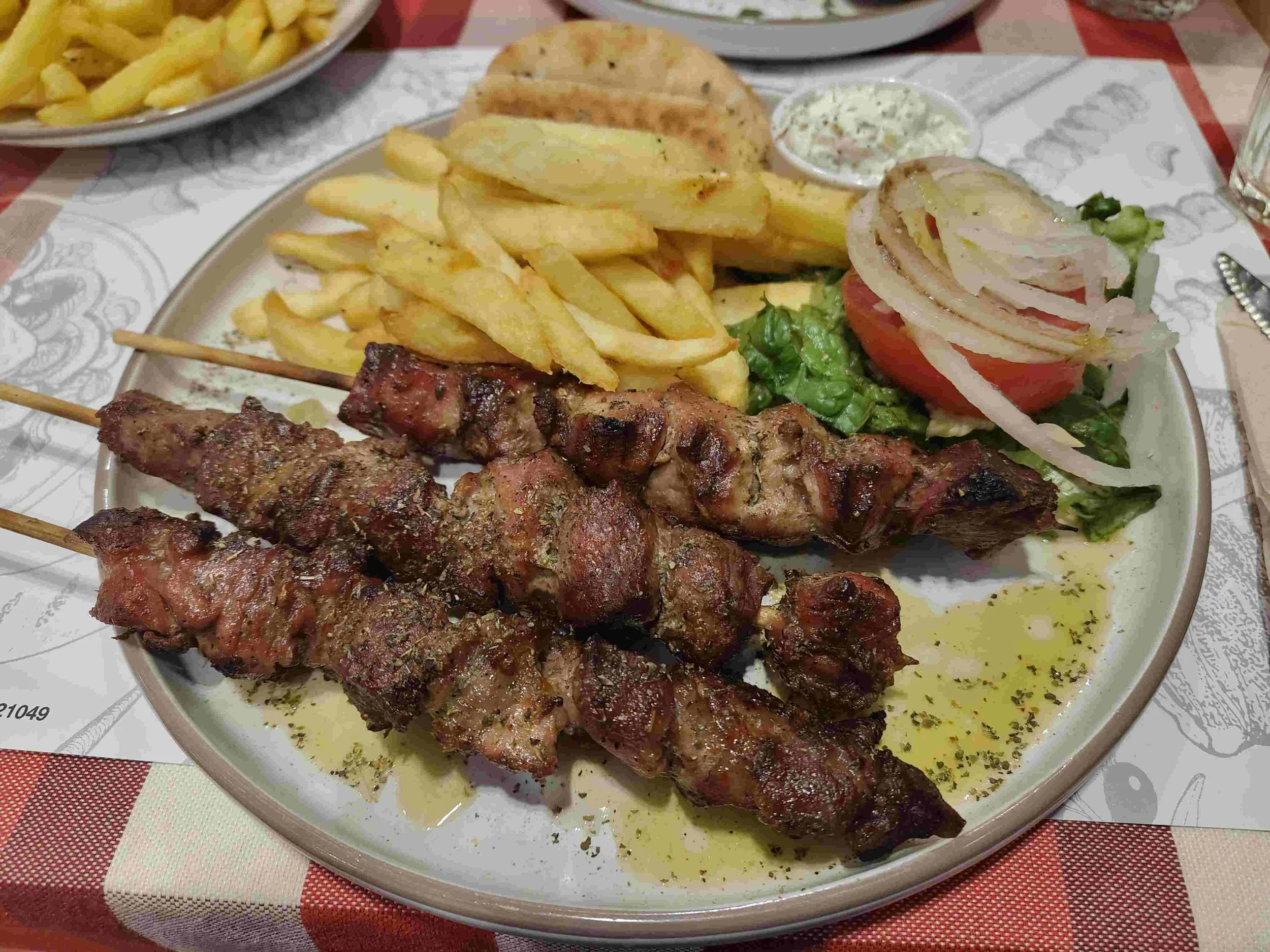
souvlaki
meat skewers
What is it?
Souvlaki is one of Greece’s most popular dishes, consisting of grilled meat skewers, most traditionally made with pork, although chicken is also very common. The meat is often cooked over charcoal, giving it a smoky flavour, and can be served either on the skewer or in pita bread. In Athens, the skewer itself is often referred to as kalamaki. When served in a wrap, it typically includes tomatoes, onions, fries, and tzatziki.
What is in it?
Souvlaki is made from chunks of pork or chicken marinated in olive oil, lemon juice, garlic, and herbs such as oregano, then grilled on skewers. When served as a wrap, it usually includes pita bread, tomatoes, onions, fries, and tzatziki, although other variations are common.
Where can I eat it?
Along with gyros, it’s one of the most popular foods in Greece, found at takeaway shops, traditional restaurants, and psistaria. You’ll have no trouble finding it in any town or city across the country.
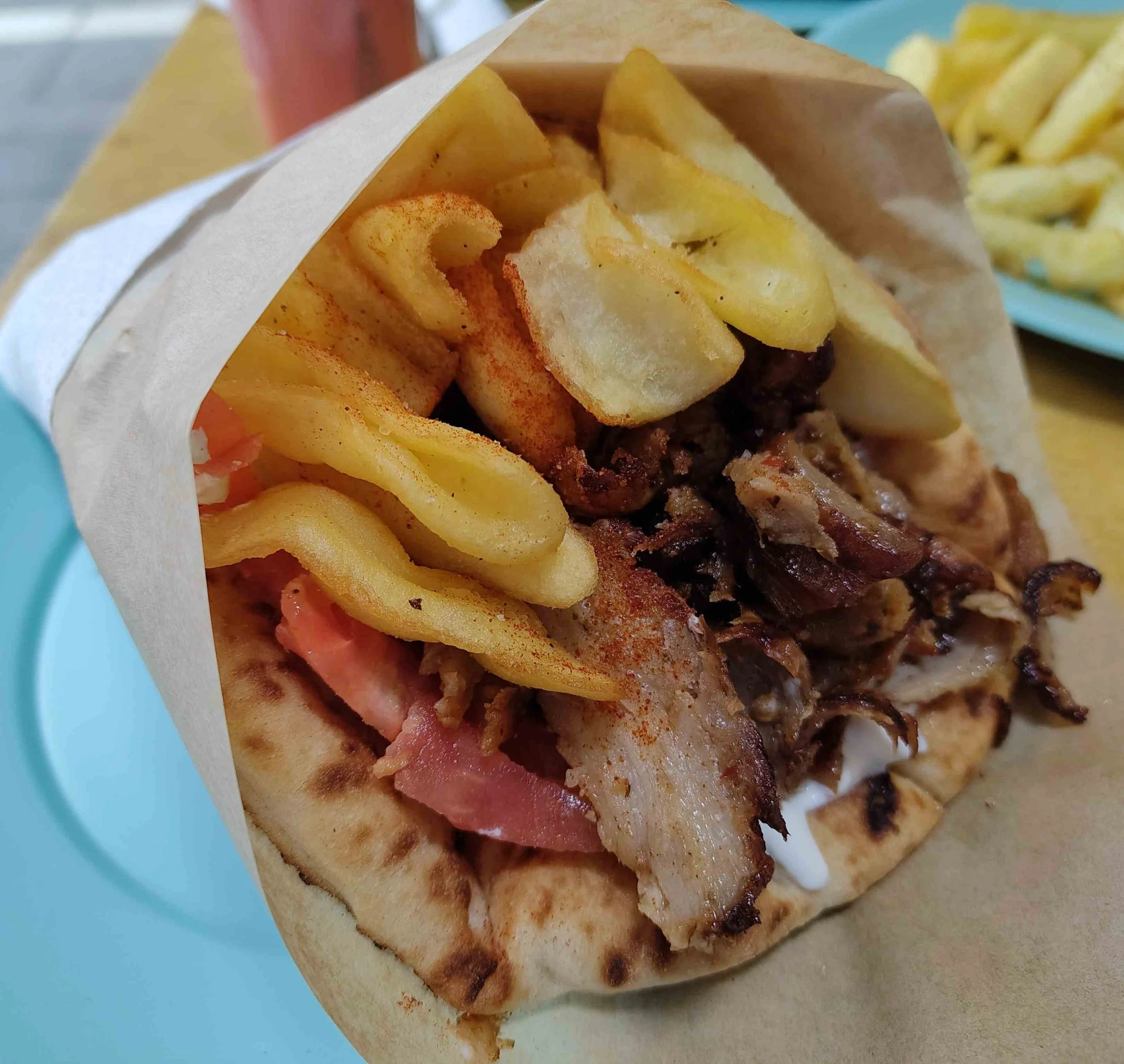
gyros
pork kebab
What is it?
Gyros is a Greek street food similar to döner kebab, made with thinly sliced meat cooked on a vertical rotisserie. In mainland Greece it is most traditionally made with pork, though chicken is also common elsewhere. The meat is shaved off as it cooks and usually served in pita bread, often with fries inside the wrap.
What is in it?
Traditional gyros is typically made with pork or chicken, and served in pita bread with onion, tomato, tzatziki, and often fries.
Where can I eat it?
It is ubiquitous across Greece and can be found in almost any takeaway shop.
Dairy free.

koulouri
sesame bread ring
What is it?
A traditional sesame-covered bread ring, commonly eaten as a quick breakfast or snack. It is very similar to Turkish simit, with a crisp exterior and a soft, slightly chewy interior. The most famous version comes from Thessaloniki, which is why it is often labelled koulouri Thessalonikis. It is simple, cheap and very popular.
What is in it?
Wheat flour, water, yeast and sesame seeds. Many versions are lightly sweetened, and occasionally you’ll find variations with fillings such as cheese or chocolate, though the classic version is plain with sesame.
Where can I eat it?
It is sold in almost every bakery in Greece, and you will also find it sold from street vendors, especially in Athens and Thessaloniki.
Vegan & dairy free.
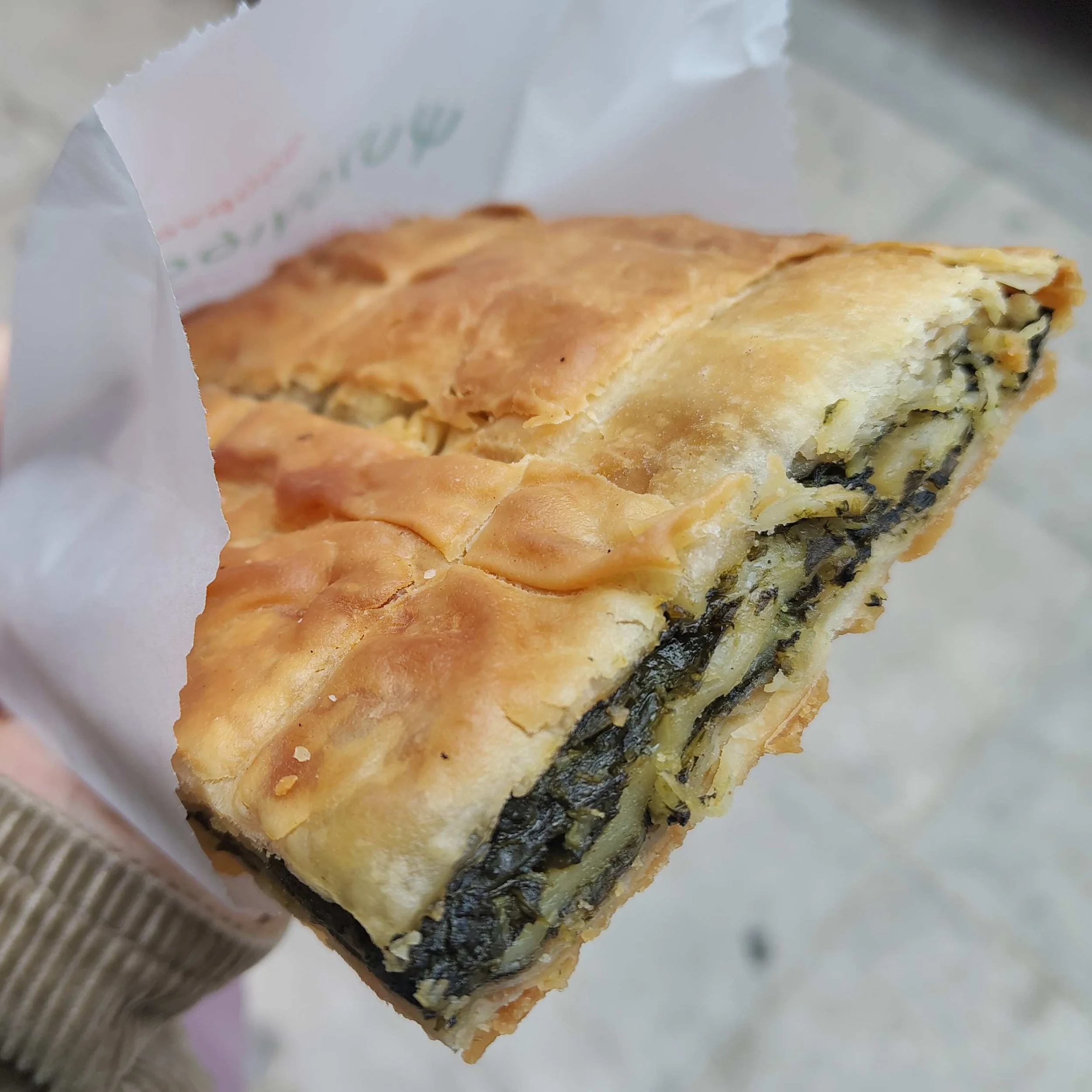
spanakopita
spinach pie
What is it?
A classic Greek savoury pie made with layers of phyllo pastry and a spinach based filling. The name literally means “spinach pie.” While some versions are just spinach, the most common form includes spinach mixed with feta cheese. It is similar to Balkan borek but with a lighter, less greasy texture. You’ll find it either as a large tray baked pie cut into slices or as individual triangular pastries, especially in bakeries.
What is in it?
The filling usually combines, spinach with feta cheese, onion, fresh herbs such as dill or parsley and olive oil.
Where can I drink it?
It is available in most bakeries throughout the country and sometimes also on restaurant menus.
Vegetarian.
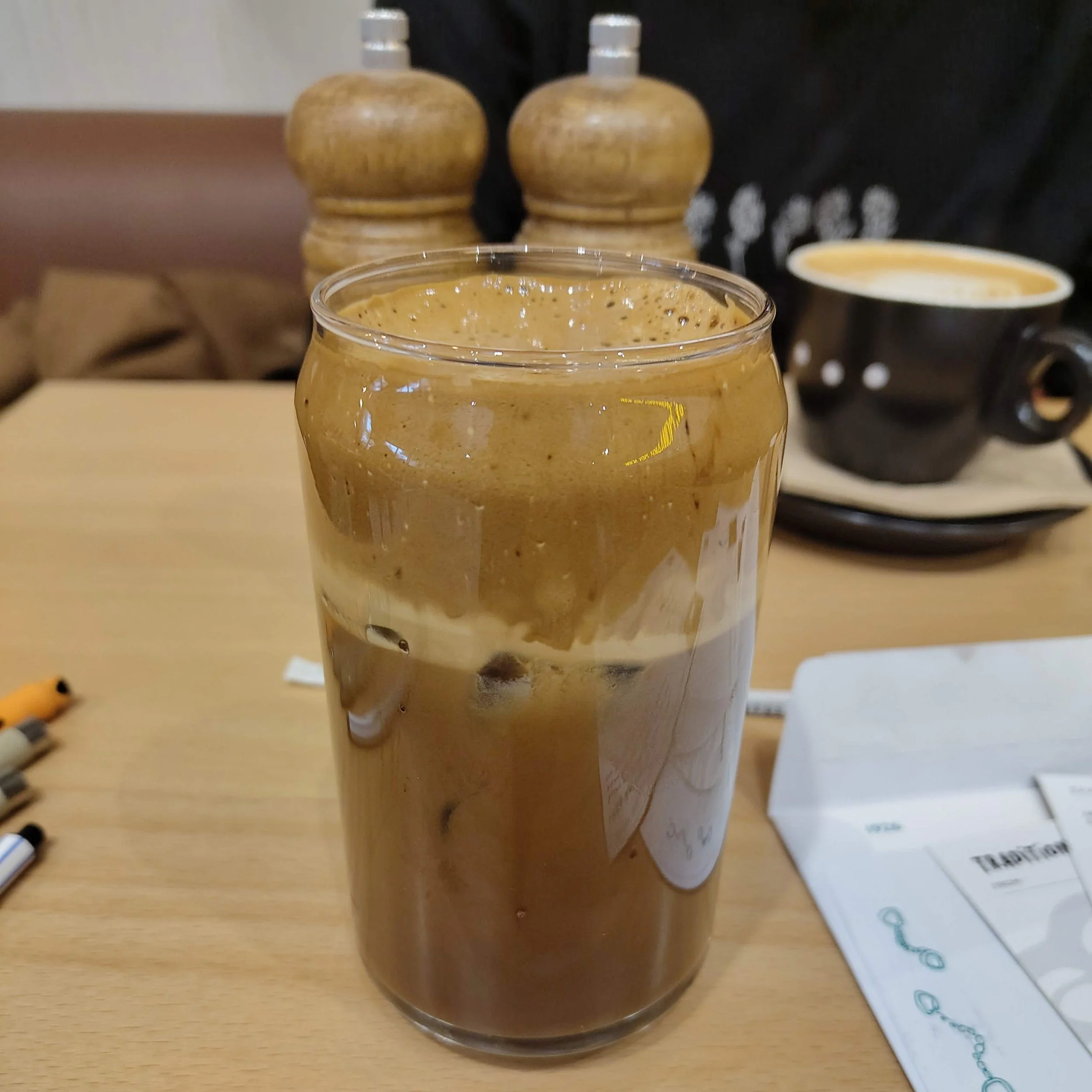
frappé
iced coffee
What is it?
A classic Greek iced coffee made from instant coffee, with a thick foam and a strong bitter flavour. It was invented in Thessaloniki in the 1950s and became one of the country’s most iconic drinks. Frappé is shaken or blended to create its signature frothy top.
What is in it?
Instant coffee, usually Nescafé, water, sugar, ice and optional milk for a creamier version.
Where can I drink it?
Available at cafés all over Greece. It is less common in more modern speciality coffee shops, where iced espresso drinks have largely replaced it, but it remains widely available and very traditional.
Vegetarian & gluten free.
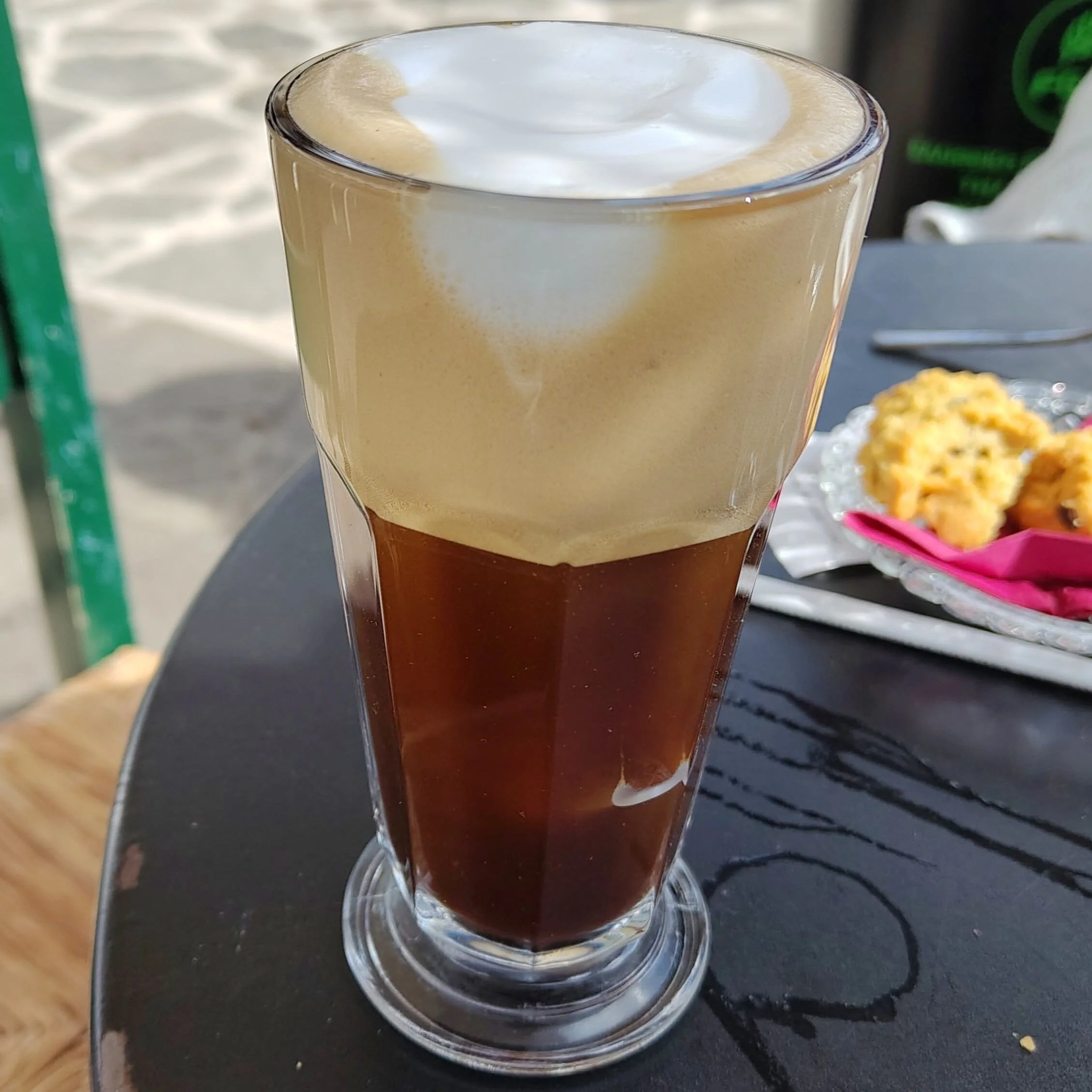
freddo coffee
iced coffee
What is it?
Modern Greek iced coffee drinks made with espresso, now among the most popular coffees in Greece. A freddo espresso is a chilled, shaken double espresso served over ice, while a freddo cappuccino adds a layer of cold, frothed milk on top. It is a strong, refreshing drink, perfect for hot days. It is newer than the frappé, but very much part of Greek coffee culture.
What is in it?
Freddo espresso: double espresso, ice, sugar optional.
Freddo cappuccino: double espresso, ice, cold frothed milk, sugar optional.
Where can I drink it?
Extremely common across Greece in cafés and takeaway coffee shops, as well as bakeries with coffee counters. You will see it on virtually every coffee menu.
Vegetarian and gluten free. Freddo espresso is dairy free. Freddo cappuccino is not dairy free unless made with plant milk
starters & meze
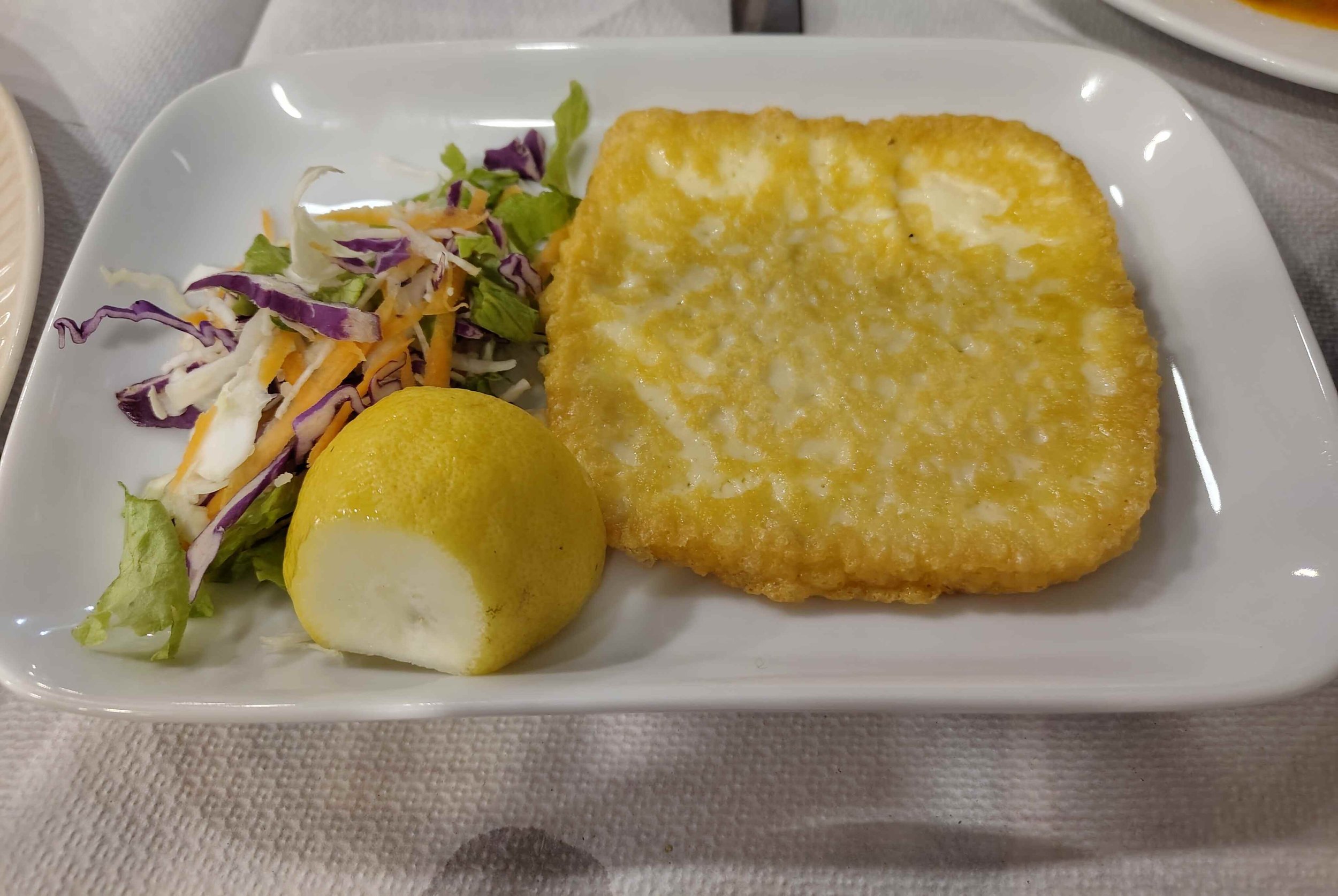
saganaki
fried cheese
What is it?
Saganaki is one of the most popular Greek starters, made by frying a slice of cheese. The name comes from the small two-handled pan (saganaki) used to cook it.
What is in it?
The key ingredient is cheese, most commonly graviera, kefalotyri, or kefalograviera. The cheese is lightly floured and then fried in olive oil. It is typically finished with a squeeze of lemon.
Where can I eat it?
Saganaki is very common on menus throughout Greece, especially in traditional tavernas.
Vegetarian.
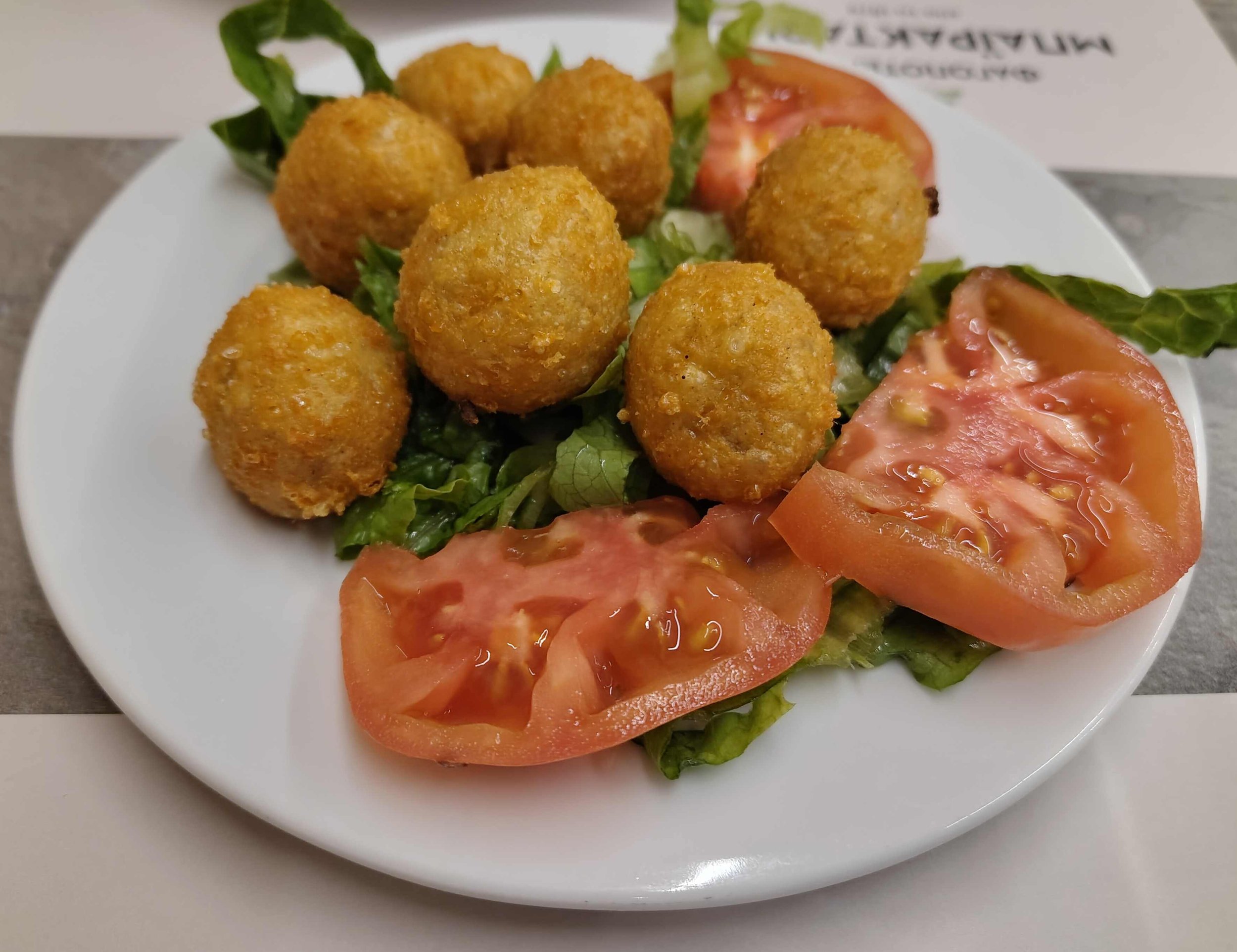
tirokroketes
fried cheese balls
What is it?
Tirokroketes are Greek fried cheese balls, typically served as a starter or meze. They have a crisp exterior and a soft, cheesy interior. Depending on the recipe, the centre can be slightly gooey.
What is in it?
Tirokroketes are made from a mixture of cheese, often feta combined with other cheeses such as graviera or kasseri, eggs, and sometimes flour or breadcrumbs to bind the mixture. They are shaped into balls, coated in breadcrumbs and deep fried
Where can I eat it?
They are very common on Greek menus as a starter or meze. In English, they are often simply listed as “cheese balls.”
Vegetarian.
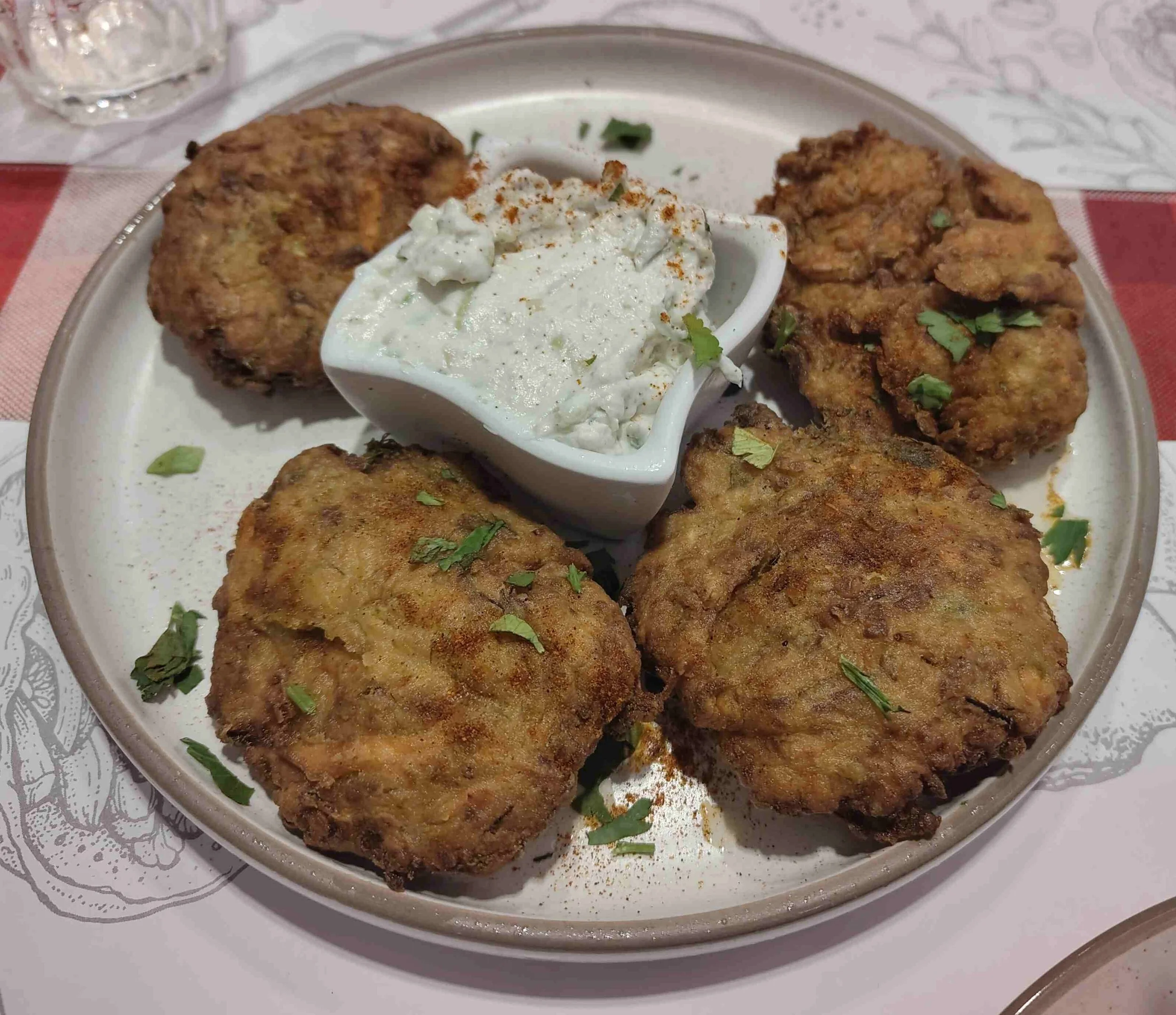
Kolokithokeftede
zucchini fritters
What is it?
Kolokithokeftedes are a classic Greek starter made from grated courgette (zucchini), mixed with herbs and cheese, then shaped into small patties and fried. The name translates to “zucchini meatballs,” although they are entirely vegetarian. They have a soft, flavourful interior with a crispy exterior and are often served with a yoghurt based dip such as tzatziki.
What is in it?
Kolokithokeftedes are made from grated courgette, onion, eggs, feta cheese and fresh herbs such as mint, dill and parsley, combined with a small amount of flour or breadcrumbs to bind the mixture before frying in olive oil.
Where can I eat it?
They are a very common meze (starter) across Greece and can be found on menus in traditional tavernas, especially those specialising in small plates. They are often simply listed as zucchini fritters.
Vegetarian.
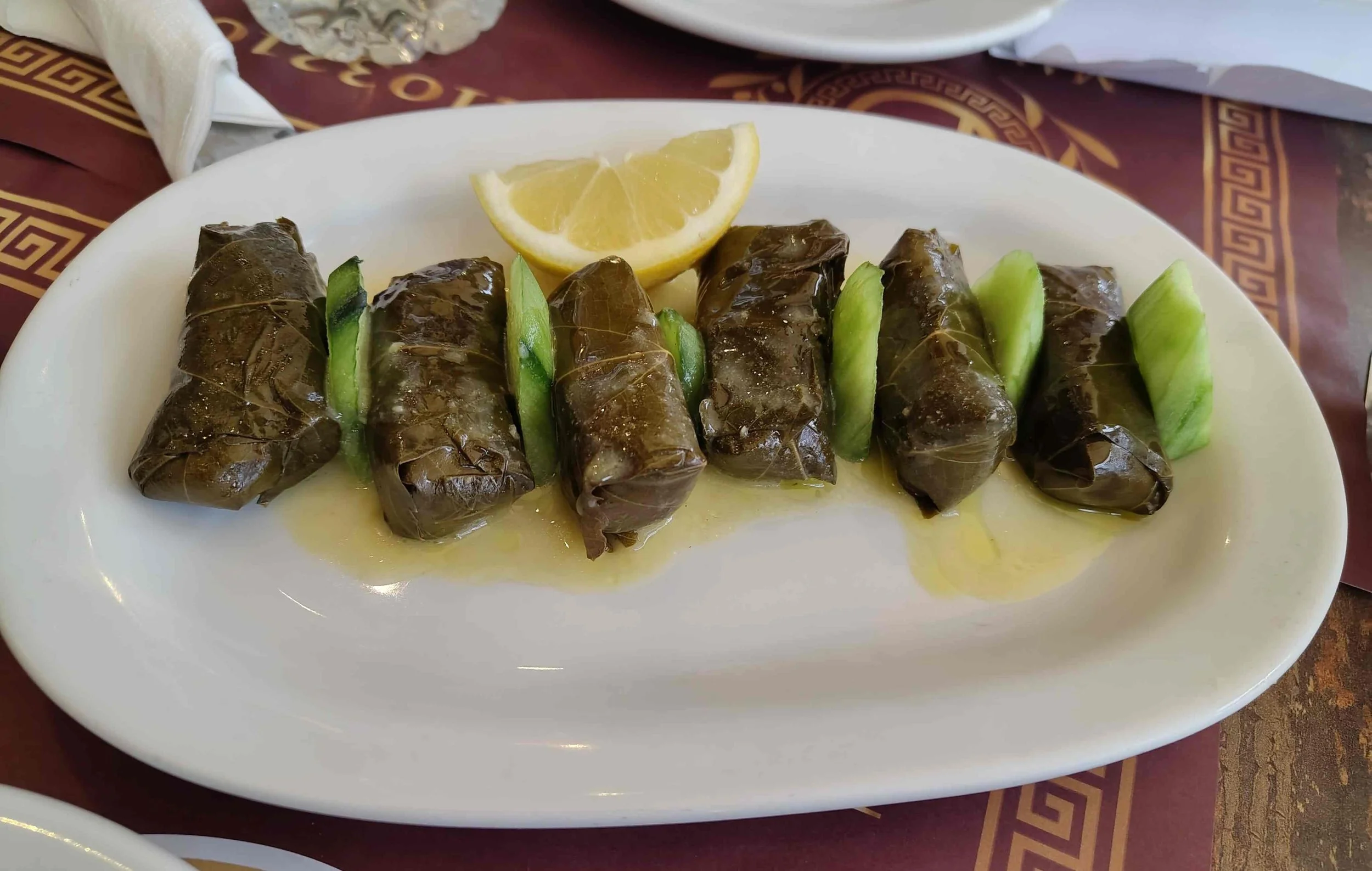
dolmades
stuffed vine leaves
What is it?
Dolmades are grape leaves stuffed with a filling, most commonly rice, and served as a meze or starter. They are usually served cold with a squeeze of lemon, especially in their vegetarian form. Versions containing minced meat also exist and are typically served warm.
What is in it?
Dolmades are made from vine leaves wrapped around a filling of rice, onion, herbs such as dill and mint, and olive oil, often with a squeeze of lemon. In meat versions, minced beef or lamb is added to the rice mixture.
Where can I eat it?
Dolmades are a fairly common starter on traditional Greek menus. The meat version is slightly less common.
Vegetarian versions available, traditionally dairy & gluten free.
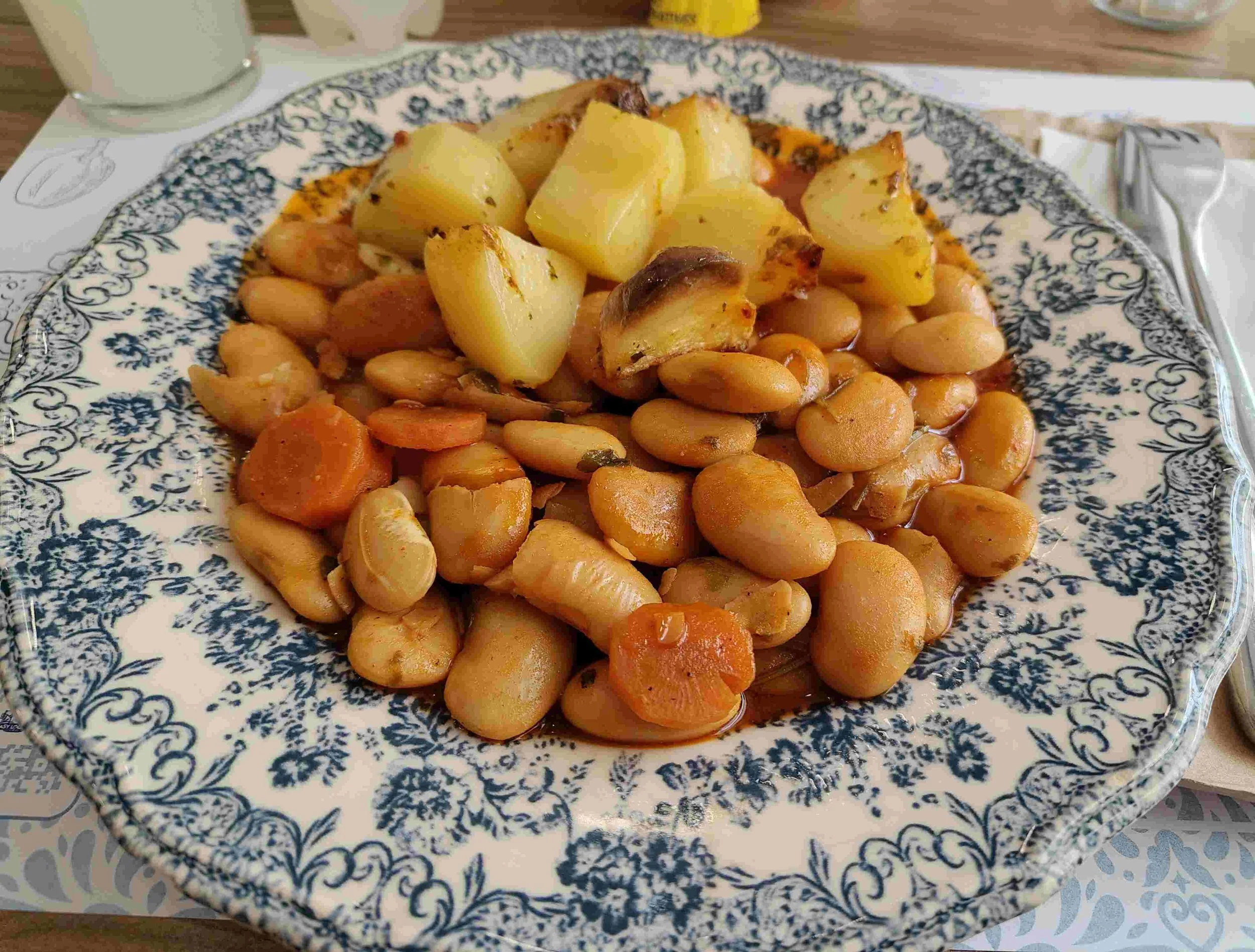
gigantes plaki
giant baked beans
What is it?
Gigantes plaki are a classic Greek dish of large baked beans in a tomato sauce, traditionally made with fasolia gigantes (“giant beans”). The beans are slow baked in the oven and infused with herbs and olive oil, often served as part of a meze spread or as a main dish.
What is in it?
Gigantes plaki are made from giant white beans baked in a tomato-based sauce with onions, garlic, olive oil and herbs such as parsley or dill, often with additions like carrots or celery.
Where can I eat it?
It is a very common dish across Greece, found in traditional tavernas and especially in places serving meze. It is often displayed in trays alongside other baked dishes in casual, home style restaurants.
Usually vegan, dairy and gluten free.
oven baked dishes
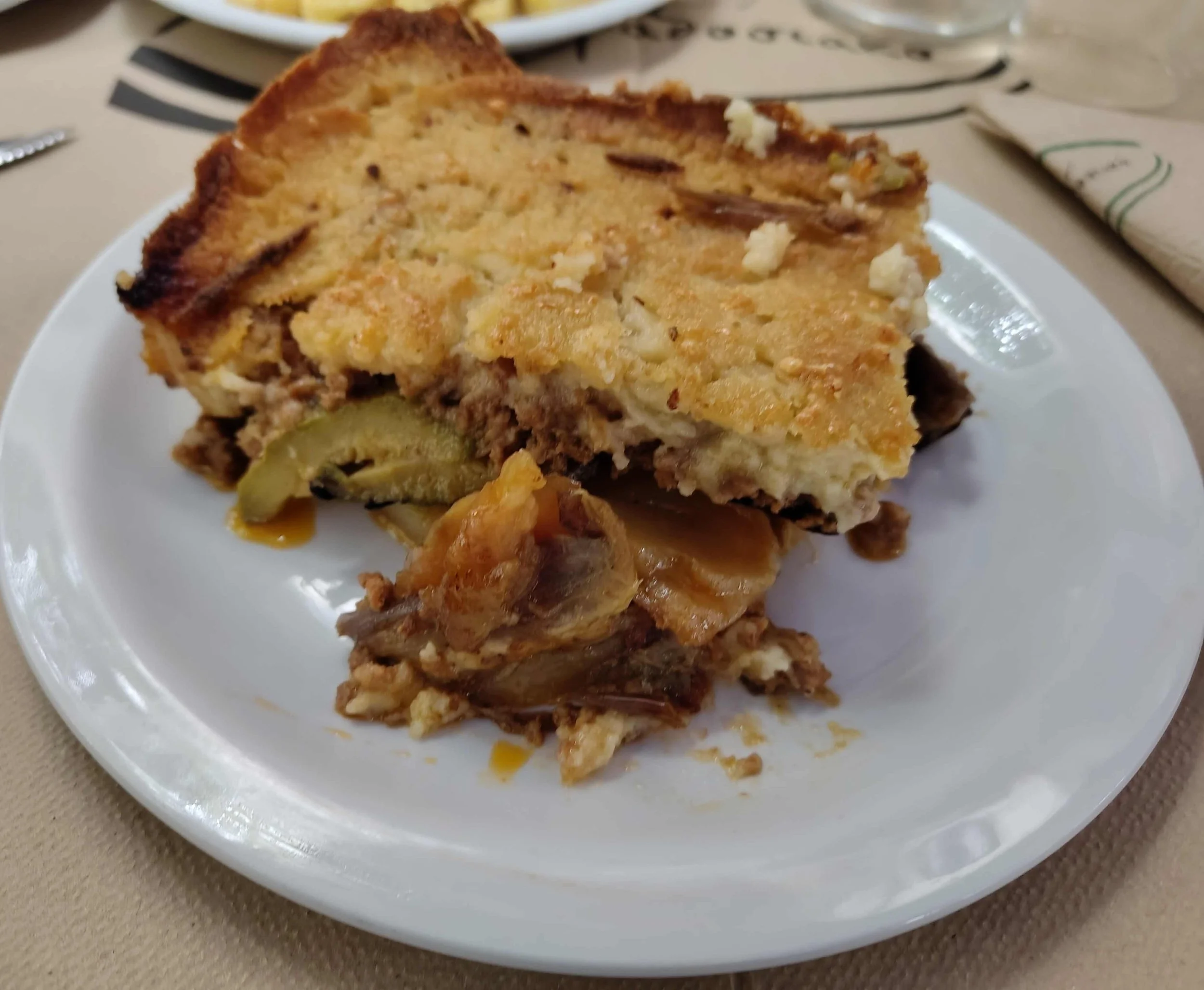
moussaka
aubergine & meat bake
What is it?
Moussaka is a classic Greek baked dish and one of the country’s most iconic foods. It usually consists of layered aubergine, minced meat, and a creamy béchamel sauce. Many versions also include a layer of potato, although this is not universal. It is similar in style to lasagne, but with Greek flavours. Vegetarian versions are also widely available.
What is in it?
Moussaka is made from layers of aubergine, and sometimes potato, with a filling of minced beef or lamb cooked with onion, garlic, tomato, and spices such as cinnamon or allspice. It is topped with a béchamel sauce made from butter, flour, and milk, often enriched with egg and sometimes finished with grated cheese.
Where can I eat it?
It’s one of the most common dishes on traditional Greek menus, so you should have no trouble finding it across the country. Both standard and vegetarian versions are available at places like Liondi Traditional Greek Restaurant and nearby Greek Stories both in Athens.
Vegetarian versions available.
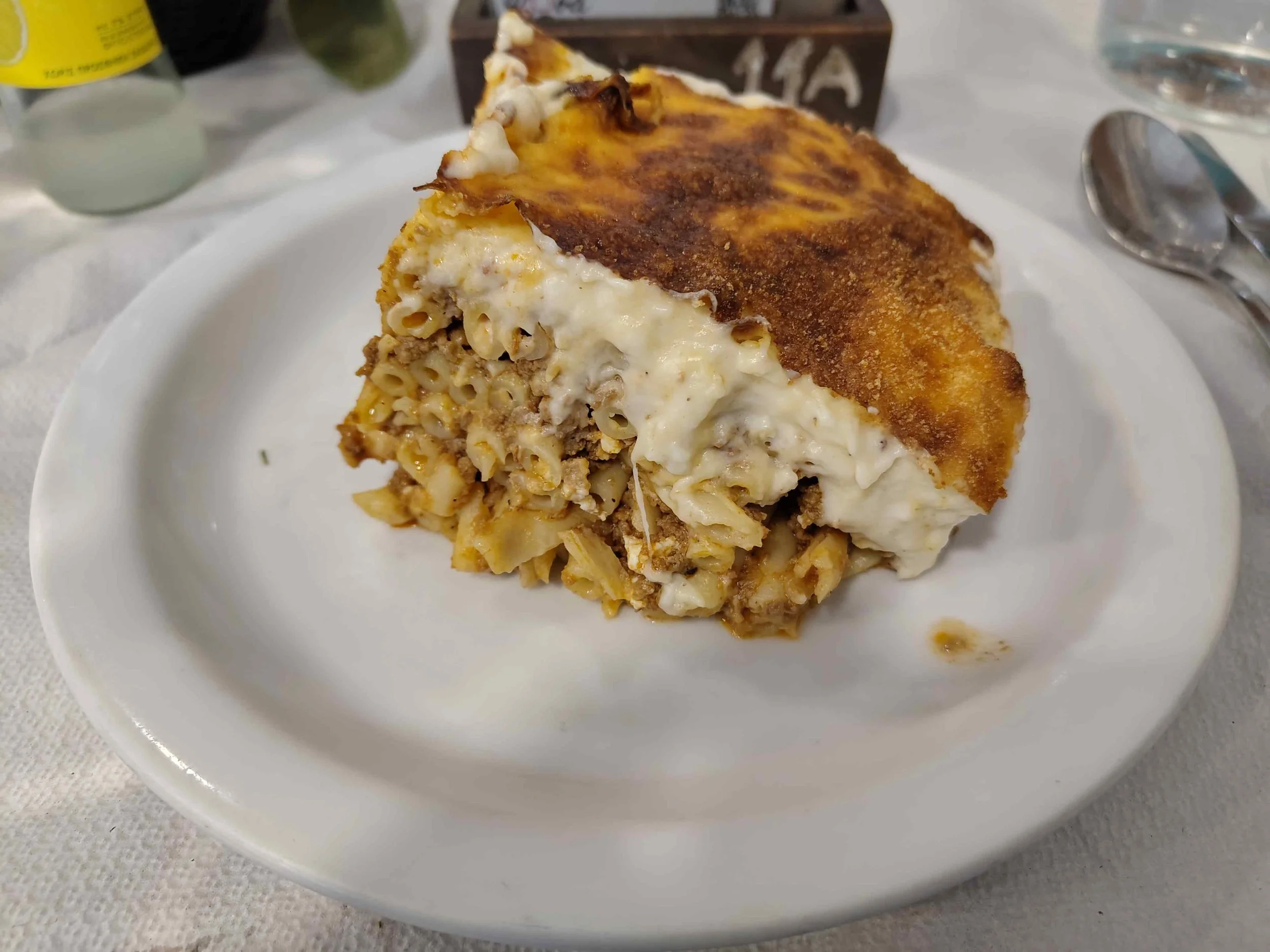
pastitsio
Greek lasagne
What is it?
Pastitsio is a classic Greek baked pasta dish made with layers of pasta, minced meat, and a thick béchamel sauce. It’s often described as “Greek lasagne,” which is a fair comparison, though the flavours and structure are quite distinct. Unlike lasagna, pastitsio is typically arranged in defined layers and baked into neat slices, with a creamy top and a meat filling underneath.
What is in it?
The dish is usually built in three layers, thick tubular pasta, traditionally pastitsio pasta similar to bucatini or penne; minced beef cooked with tomatoes, onion, garlic, olive oil, and spices such as cinnamon or allspice; and béchamel sauce made from milk, butter, and flour, often with egg and sometimes cheese.
Where can I eat it?
Along with moussaka, it is one of the most common classic dishes in traditional Greek restaurants across the country and in places serving tray baked, home style dishes, so you should have no trouble finding it.
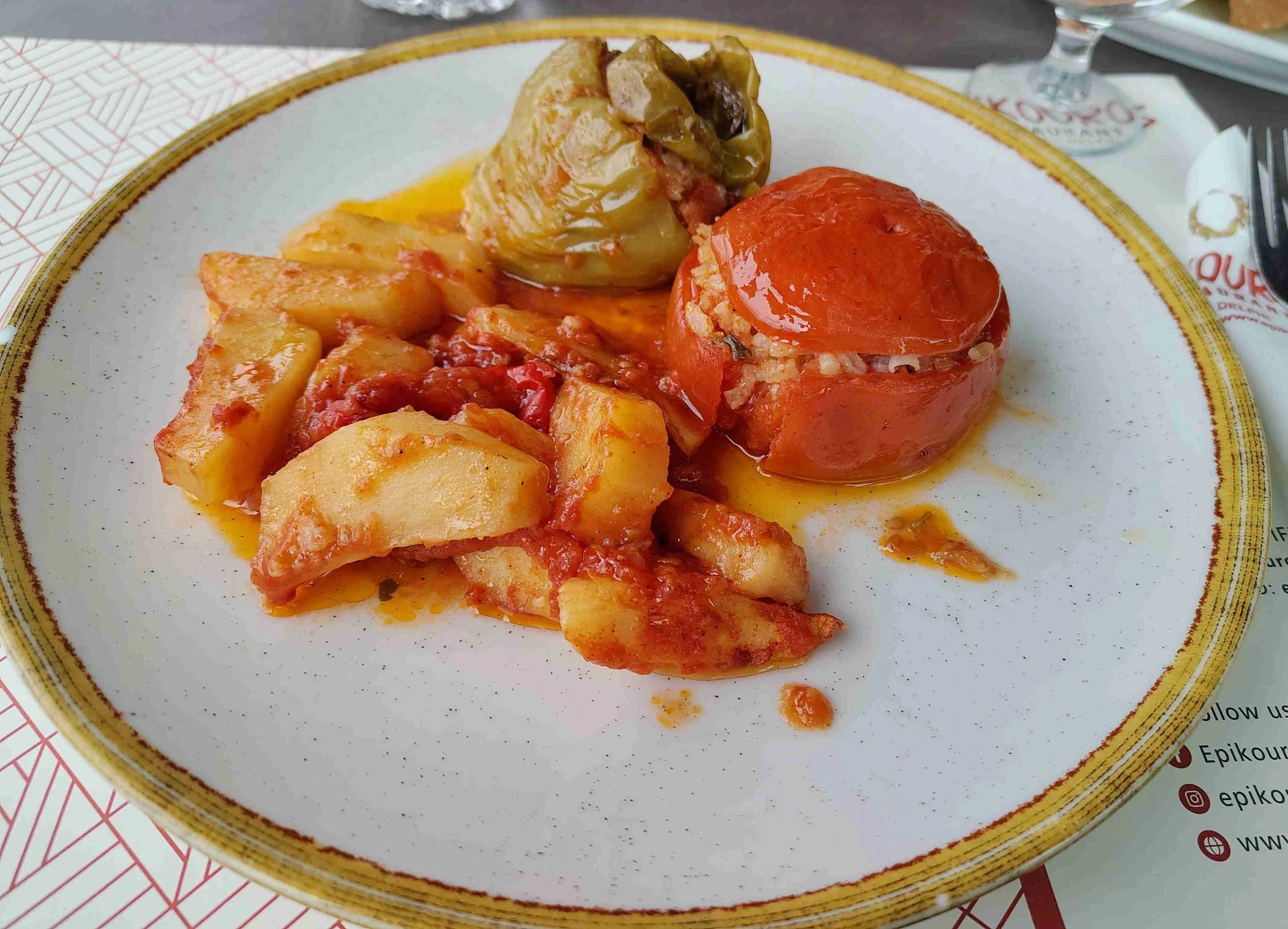
yemista
stuffed vegetables
What is it?
Yemista, also spelled gemista, is a classic Greek dish of stuffed vegetables, most commonly peppers and tomatoes filled with rice and baked in the oven. The name simply means “stuffed” in Greek. Traditionally, the dish is vegetarian, though versions including minced meat are also common.
What is in it?
Yemista are made from peppers and/or tomatoes stuffed with a mixture of rice, onion, garlic, herbs such as parsley and mint, and olive oil. In non vegetarian versions, minced meat is added to the rice filling. It is often served with roasted potatoes in a tomato based sauce.
Where can I eat it?
It’s one of the most common dishes on traditional Greek menus. In English, it may simply be listed as “stuffed vegetables.” The traditional in Athens serve a delicious version.
Traditionally vegan, dairy & gluten free.
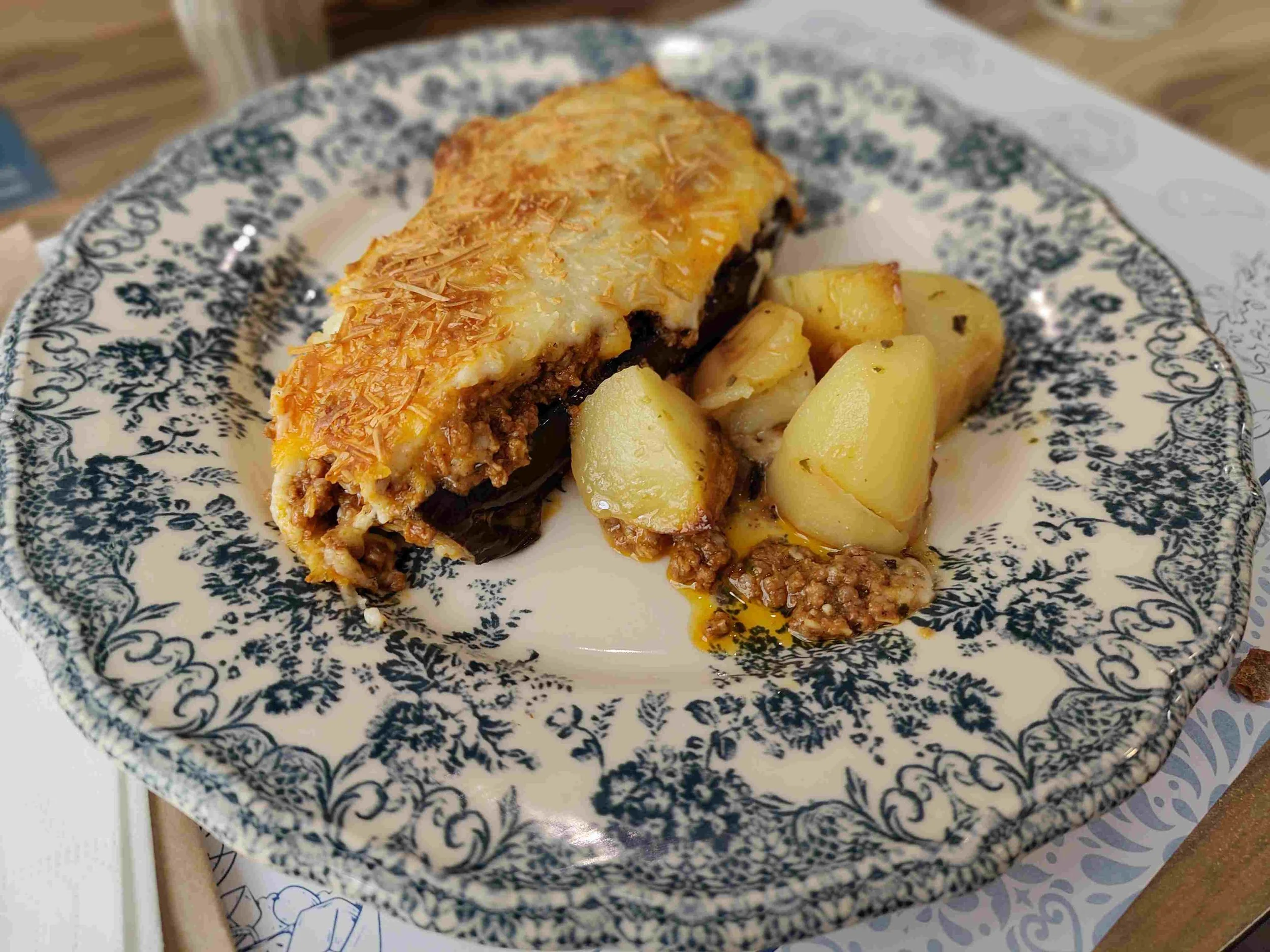
papoutsakia
stuffed aubergine
What is it?
Papoutsakia are a classic Greek baked dish of aubergine halves stuffed with minced meat and topped with béchamel sauce. The name translates to “little shoes,” referring to the shape of the aubergines once filled. They are similar in style to moussaka and a classic of traditional Greek home cooking.
What is in it?
Papoutsakia are made from aubergine halves filled with a mixture of minced beef, or sometimes beef and pork, onion, garlic, tomato, and herbs, then topped with a béchamel sauce made from butter, flour, and milk, often with egg and grated cheese.
Where can I eat it?
Papoutsakia are commonly found in traditional tavernas across Greece, especially those serving home style or oven baked dishes. They are not quite as common as classics like moussaka and pastitsio.
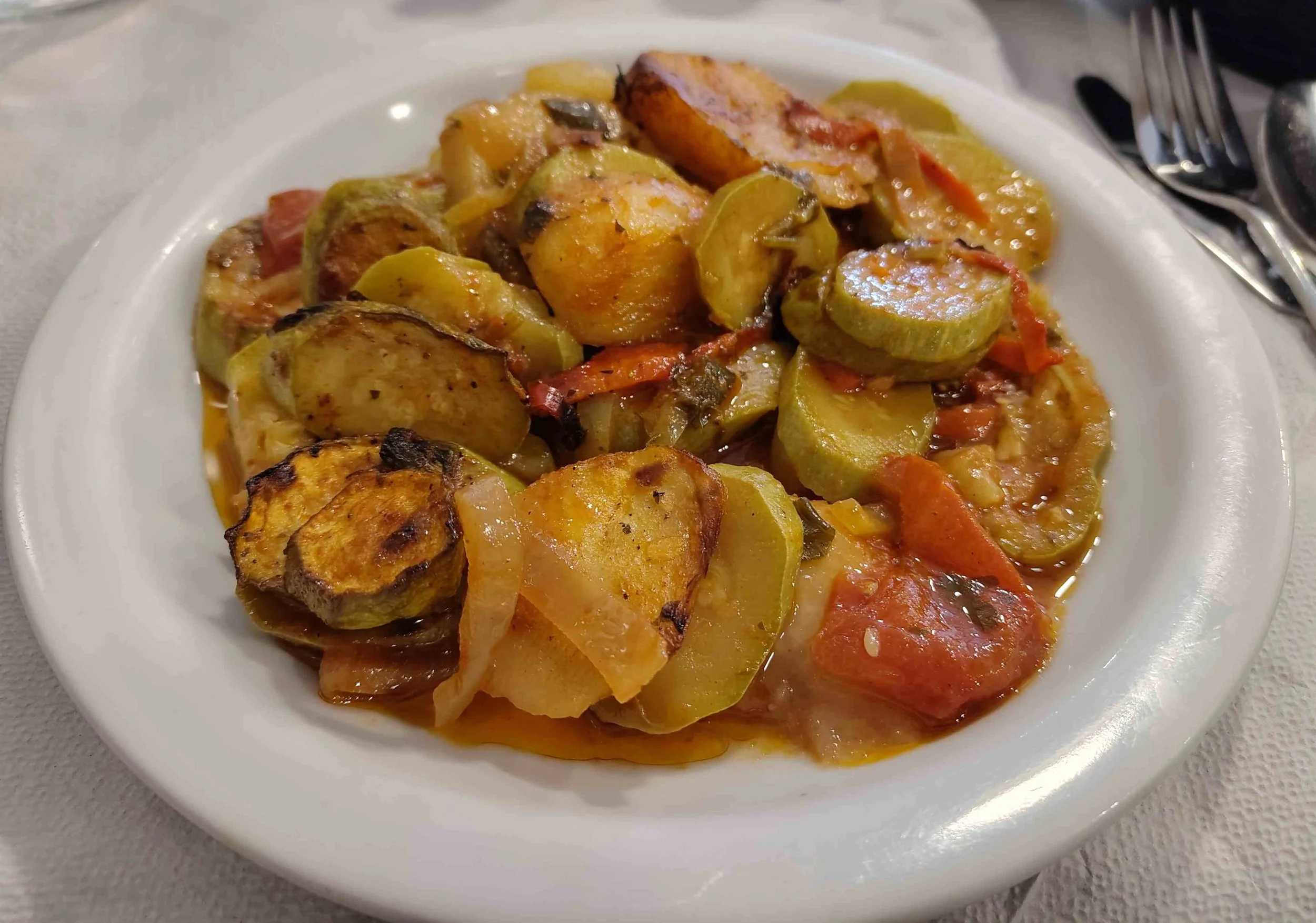
briam
oven baked vegetables
What is it?
A traditional Greek oven baked vegetable dish, often considered one of the few classic vegetarian mains in Greek cuisine alongside yemista. It consists of seasonal vegetables roasted together with olive oil and tomato. It is sometimes compared to ratatouille, but briam is typically more olive oil forward and baked rather than stewed, giving it a more roasted character.
What is in it?
Usually a mix of potatoes, courgette, aubergine, tomatoes, peppers and onions, baked with plenty of olive oil, garlic and oregano or parsley.
Where can I eat it?
It is served in quite a few traditional restaurants, but is not as common as other vegetarian dishes like yemista. We saw it at Merianos near Corfu old town, Bandiera in Athens and Fysa Roufa in Ioannina.
Usually vegan, dairy free and gluten free.
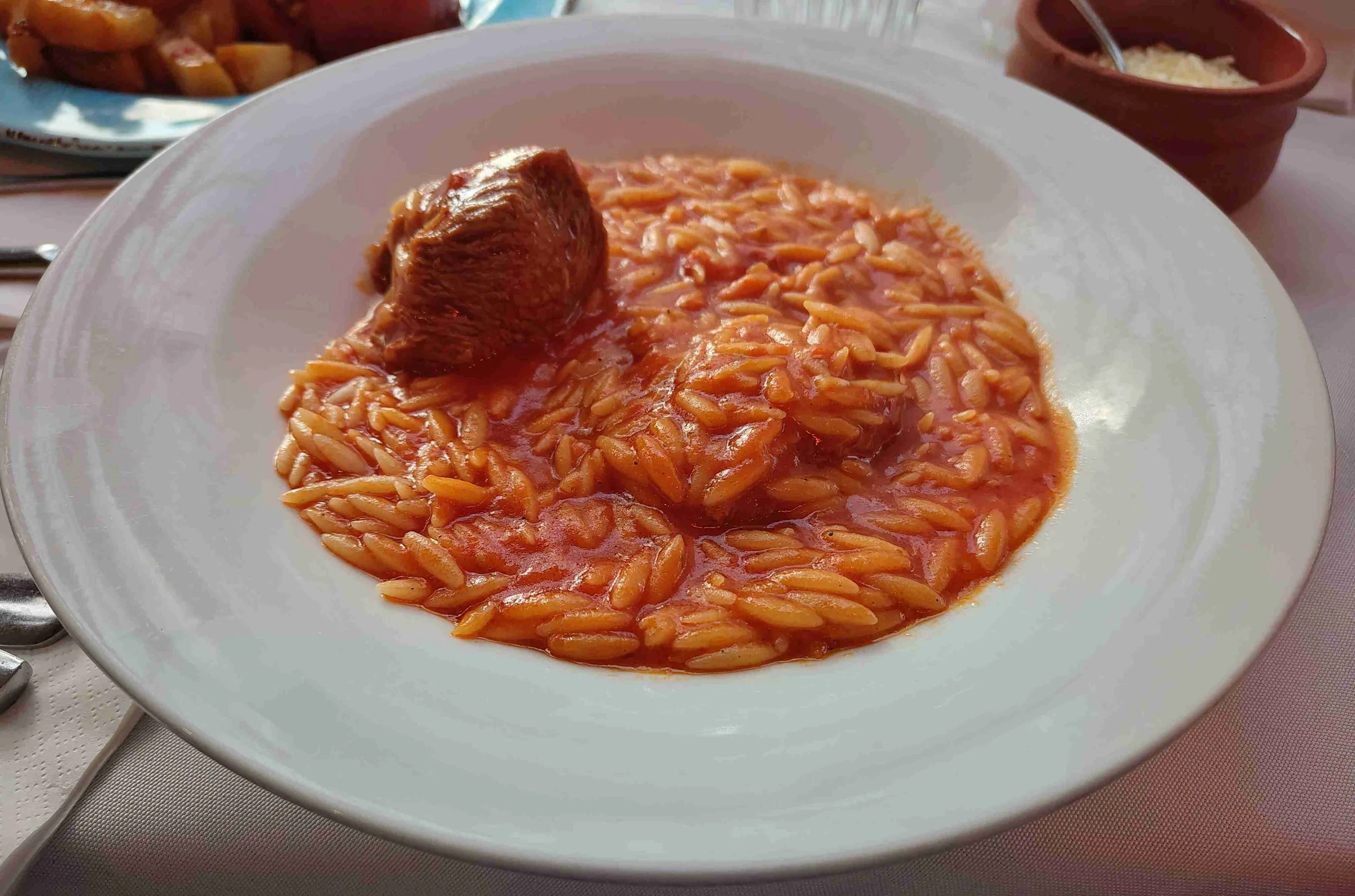
giouvetsi
orzo & tomato sauce
What is it?
Giouvetsi is an oven baked dish of orzo pasta, cooked in a tomato sauce with beef or lamb. It’s a classic Greek casserole.
What is in it?
It is made with beef or lamb, orzo pasta, tomato sauce, olive oil, onions, garlic, and herbs such as oregano or bay leaf. It is often topped with grated cheese, usually kefalotyri or a similar hard cheese.
Where can I eat it?
A traditional home style dish, it is commonly found in tavernas across Greece, particularly those serving slow cooked or oven baked dishes. In Athens, you’ll find it in places like Gods’ Restaurant.
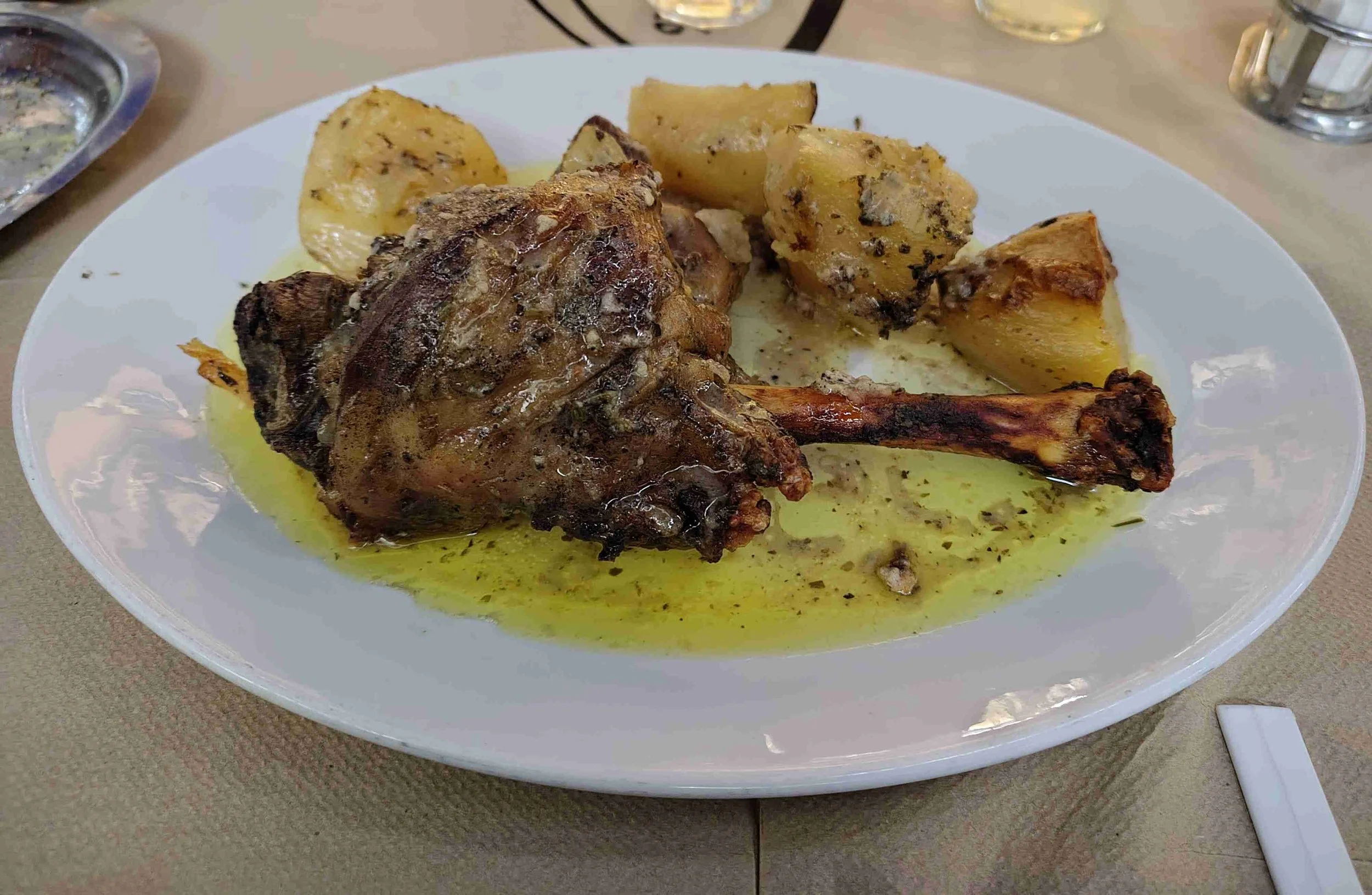
arni sto fourno
roast lamb
What is it?
Arni sto fourno is oven roasted lamb with potatoes, simple yet delicious. It literally translates to “lamb in the oven,” though on menus you may also see it listed as “oven baked lamb” or simply “roast lamb.” It is often slow roasted so the meat becomes very tender and the potatoes absorb the lamb’s juices.
What is in it?
It is typically made with a cut of lamb such as the leg or shoulder, roasted with potatoes, olive oil, lemon juice, garlic, oregano, salt, and pepper.
Where can I eat it?
You’ll come across this dish occasionally, especially in more traditional tavernas, though it is less commonly listed than some other Greek classics. In Athens, a good option is The traditional, which serves traditional Greek dishes in an authentic setting.
Gluten & dairy free.
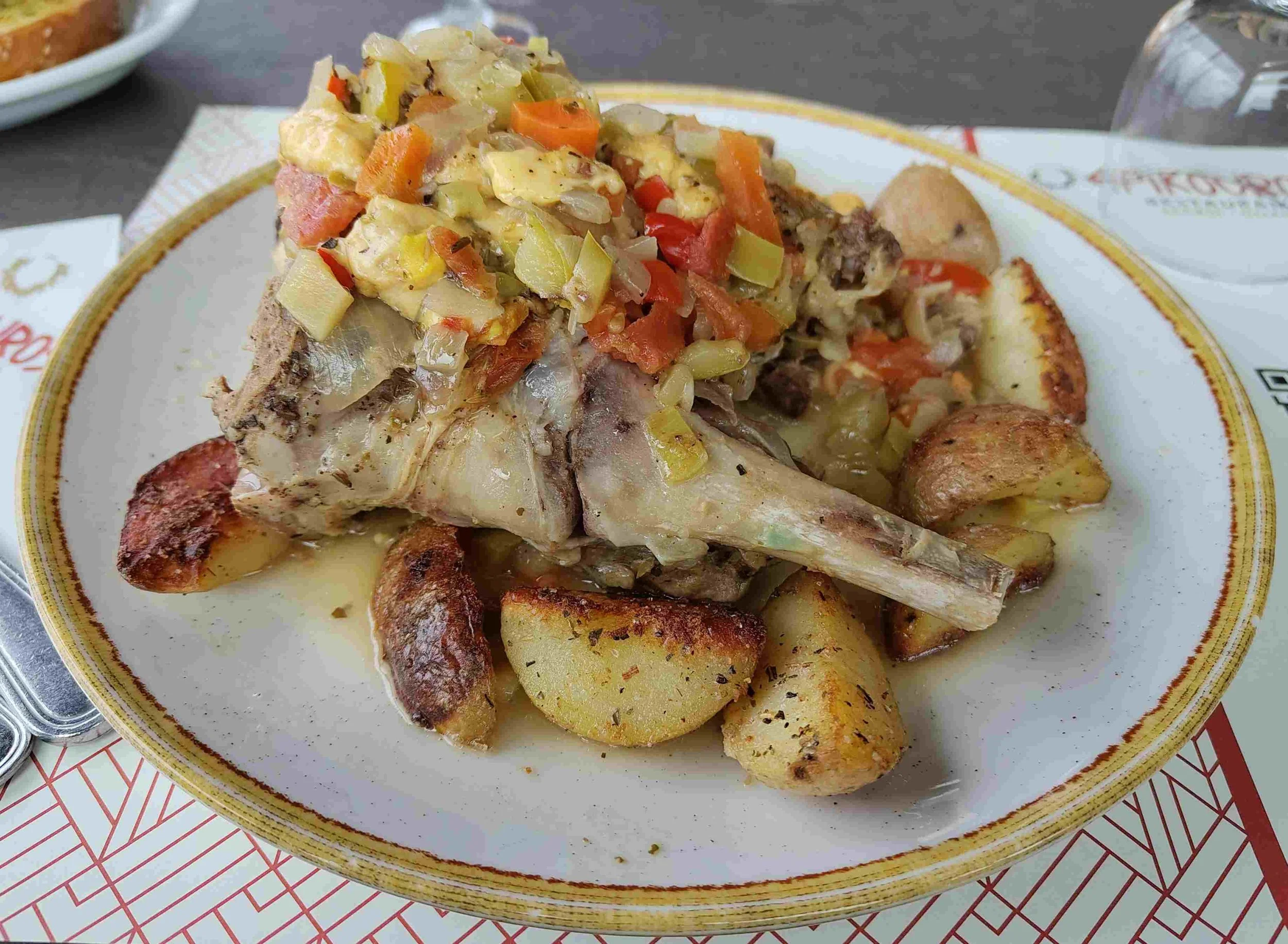
kleftiko
slow roasted lamb
What is it?
Kleftiko is a traditional Greek dish of slow roasted lamb or goat, cooked in a sealed parcel so the meat is infused with its own juices and becomes tender. It is typically baked with herbs. The name comes from the Klephts, guerrilla fighters (often described as bandits or highwaymen) during Ottoman rule, who are said to have cooked meat slowly in sealed pits to avoid smoke and detection. The word klephts means “thieves” in Greek and is the root of the English word kleptomania.
What is in it?
Kleftiko is made from lamb or goat cooked with potatoes, garlic, onion and sometimes peppers, seasoned with olive oil, lemon juice, oregano and other herbs. The ingredients are wrapped tightly, traditionally in parchment or foil. Some versions include cheese.
Where can I eat it?
Kleftiko is found in many traditional Greek tavernas, although it is less common than quicker dishes due to the long cooking time. Maiandros Restaurant in Athens serves it; it is quite a touristy place to be fair, but the food is actually very good.
Gluten free.
grilled & braised meats
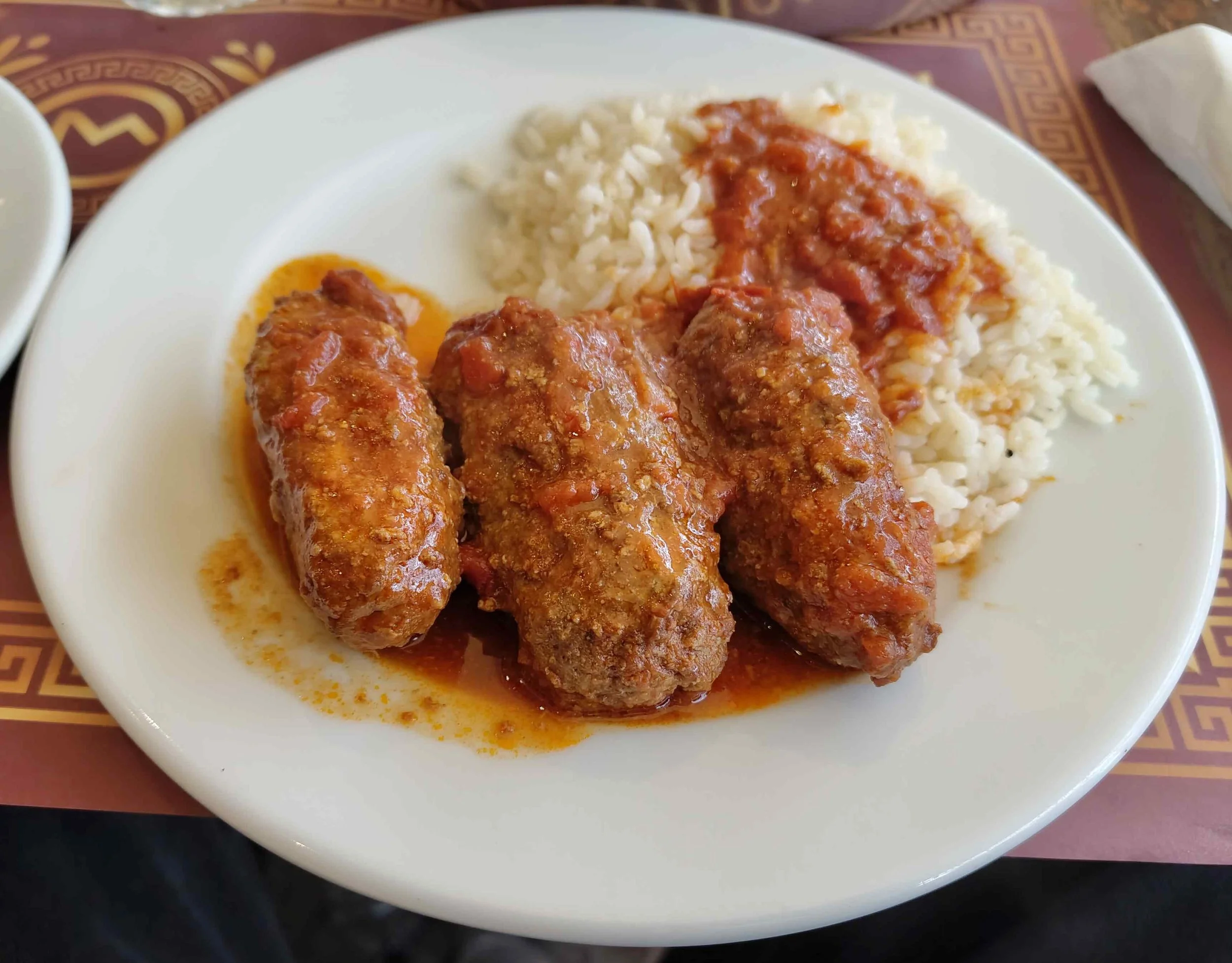
soutzoukakia
tomato sauce meatballs
What is it?
Soutzoukakia Smyrnaika (Smyrna meatballs) are spiced meatballs in a tomato sauce, typically served as a main course with rice, mashed potatoes, or sometimes fries.
What is in it?
Usually made from minced beef or a mix of beef and pork, combined with breadcrumbs soaked in water or wine, garlic, onion and spices such as cumin, black pepper and sometimes cinnamon. The meatballs are shaped into oval “logs,” lightly fried, then simmered in a tomato sauce made with tomatoes, olive oil and garlic.
Where can I eat it?
A classic home style dish, so it is widely available in traditional tavernas across Greece, though not as ubiquitous as souvlaki or moussaka. In Athens, a tasty version can be found at Maiandros in the city centre.
Dairy free.
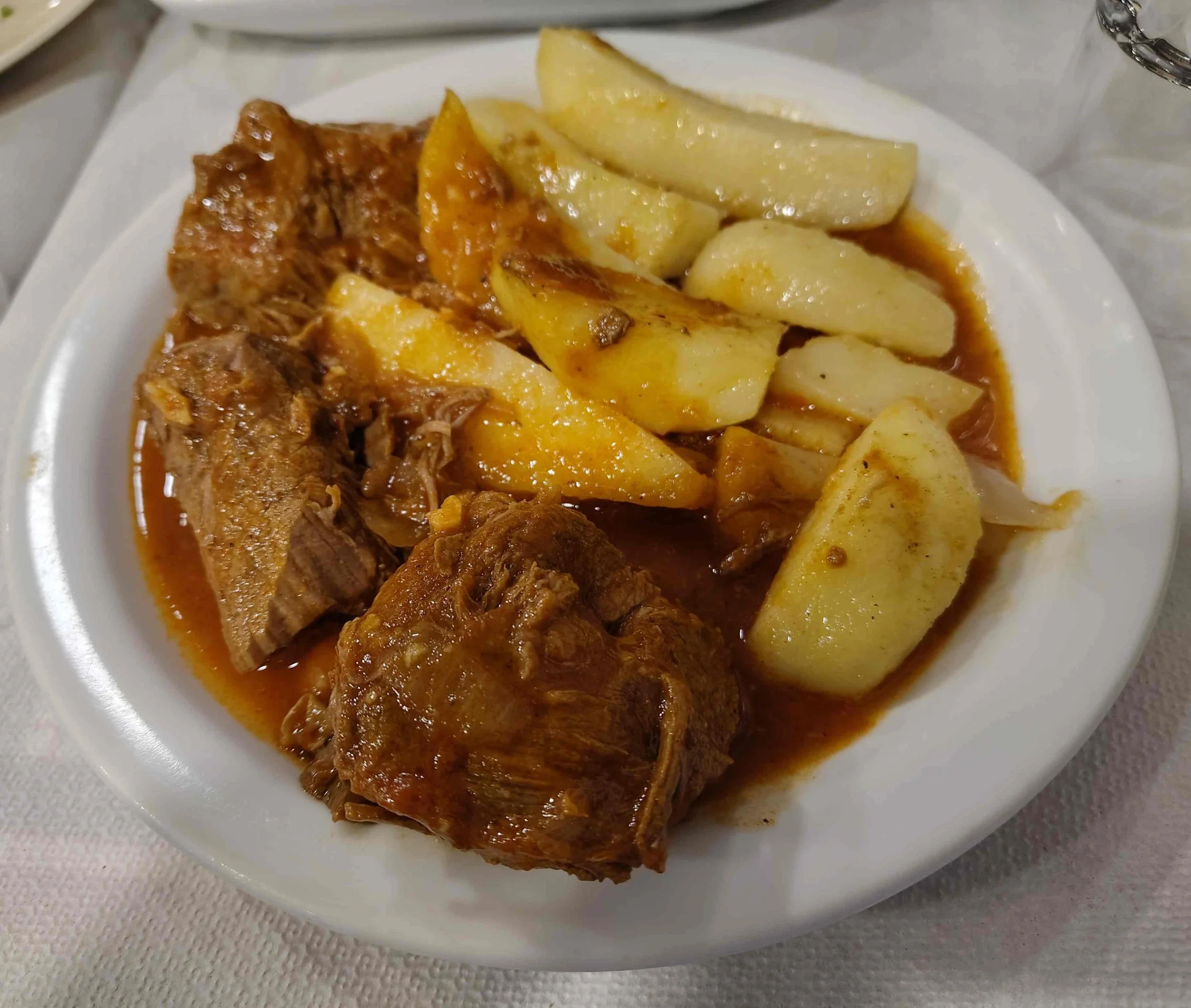
kokkinisto
meat in tomato sauce
What is it?
Kokkinisto is a classic Greek slow cooked dish of meat braised in a rich tomato based sauce. The name kokkinisto literally means “reddened,” referring to the deep red colour of the sauce.
Kokkinisto isn’t just a single dish but a traditional Greek cooking style, where ingredients are slowly cooked in a tomato based sauce. Many well known dishes follow this same approach, such as:
Giouvetsi (beef cooked in a similar tomato sauce, then baked with orzo pasta)
Soutzoukakia (spiced meatballs served in a tomato sauce)
What is in it?
Typically made with beef (moschari), though other meats are also used. The sauce is made from tomatoes, onion, garlic and olive oil, and spiced with cinnamon or cloves. It is slow cooked until the meat is tender and the sauce thickens. Often served with potatoes (either cooked in the sauce or fried), rice, or pasta such as hilopites. Bread is usually served alongside to soak up the sauce.
Where can I eat it?
It appears on many traditional restaurant menus throughout the country in various forms. We had a great one at Fysa Roufa in Ioannina.
Dairy & gluten free.
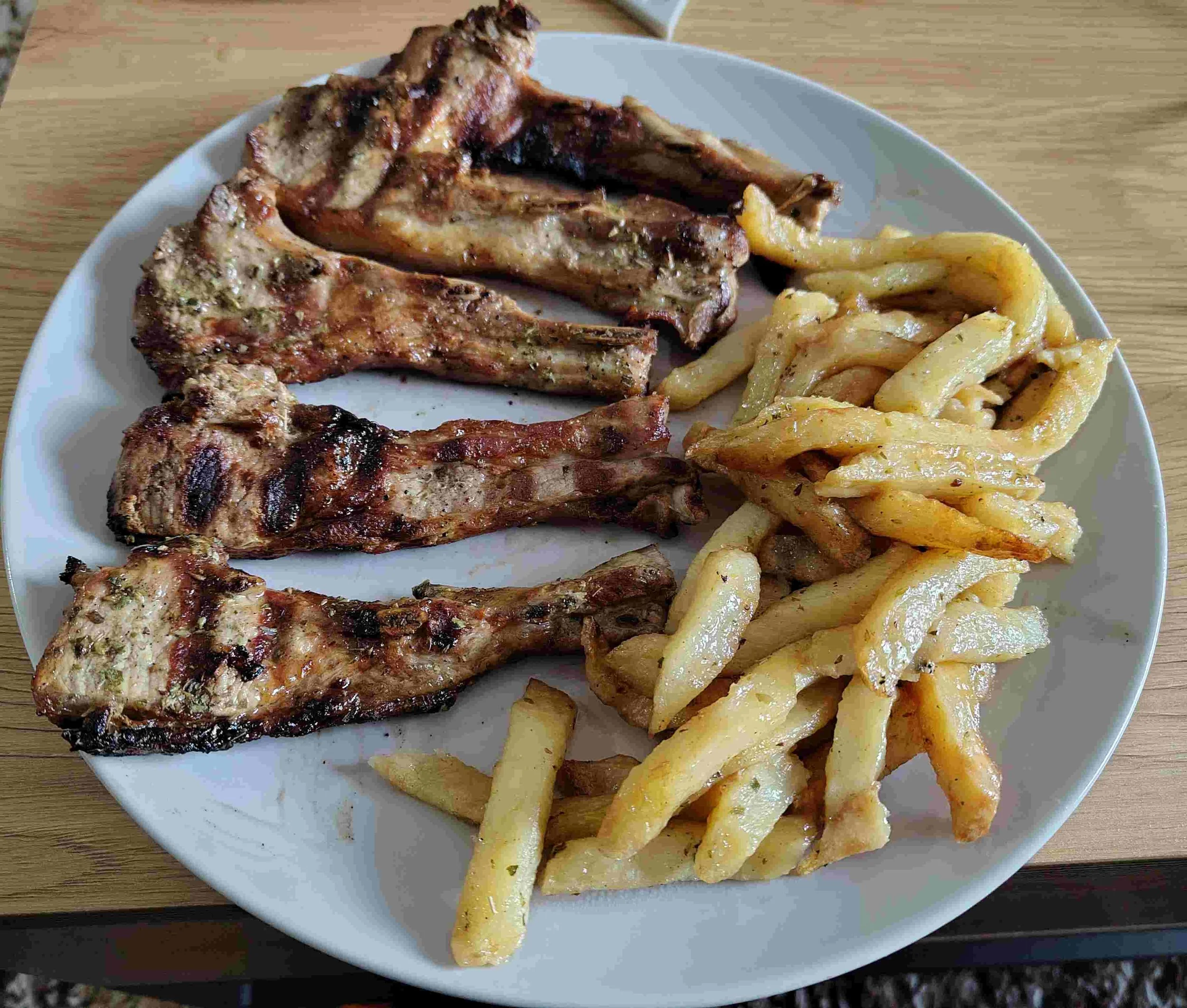
paidakia
Greek lamb chops
What is it?
Greek-style grilled lamb chops, typically cut from the rib and cooked over charcoal. The name paidakia literally translates to “little ribs” in Greek. They are usually just seasoned and grilled rather than heavily marinated.
What is in it?
Lamb chops, usually rib chops, with olive oil, lemon juice, oregano and salt. They are most often served with fries.
were can I eat it?
Available at many traditional restaurants, especially those with an emphasis on grilled foods. They will usually be listed as lamb chops in English, but look for the word παϊδάκια (paidakia) to make sure you are getting Greek style ones.
Gluten & dairy free.
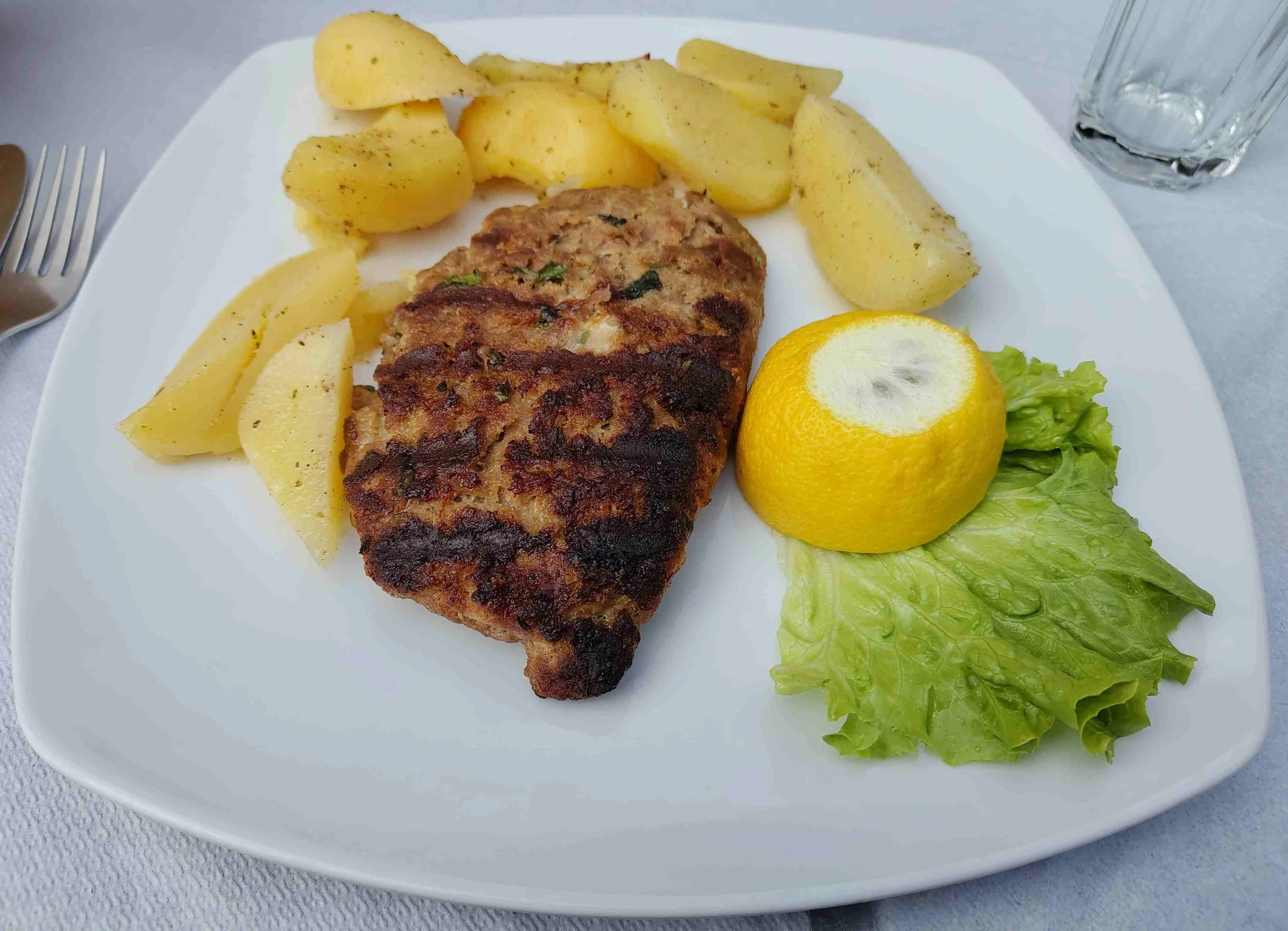
bifteki
Greek burger
What is it?
A Greek style “burger” made from minced meat, shaped into a patty and served on a plate without a bun. It can be grilled, baked, or occasionally fried. Unlike a typical burger, it is more heavily seasoned and often mixed with herbs and breadcrumbs. Stuffed versions (especially with cheese) are also popular.
What is in it?
Minced beef (sometimes a mix of beef and pork or veal), breadcrumbs, onion, garlic, olive oil and herbs such as oregano and parsley. Some recipes include egg. Stuffed versions typically contain cheese (often feta) and sometimes ham.
were can I eat it?
A fairly common dish on menus at restaurants specialising in grilled meats, but less common on standard taverna menus. On menus, it may appear as bifteki, biftekia, mpifteki or mpiftekia (μπιφτέκι / μπιφτέκια), so look for any of these spellings.
Standard version is dairy free.
regional specialities from Corfu
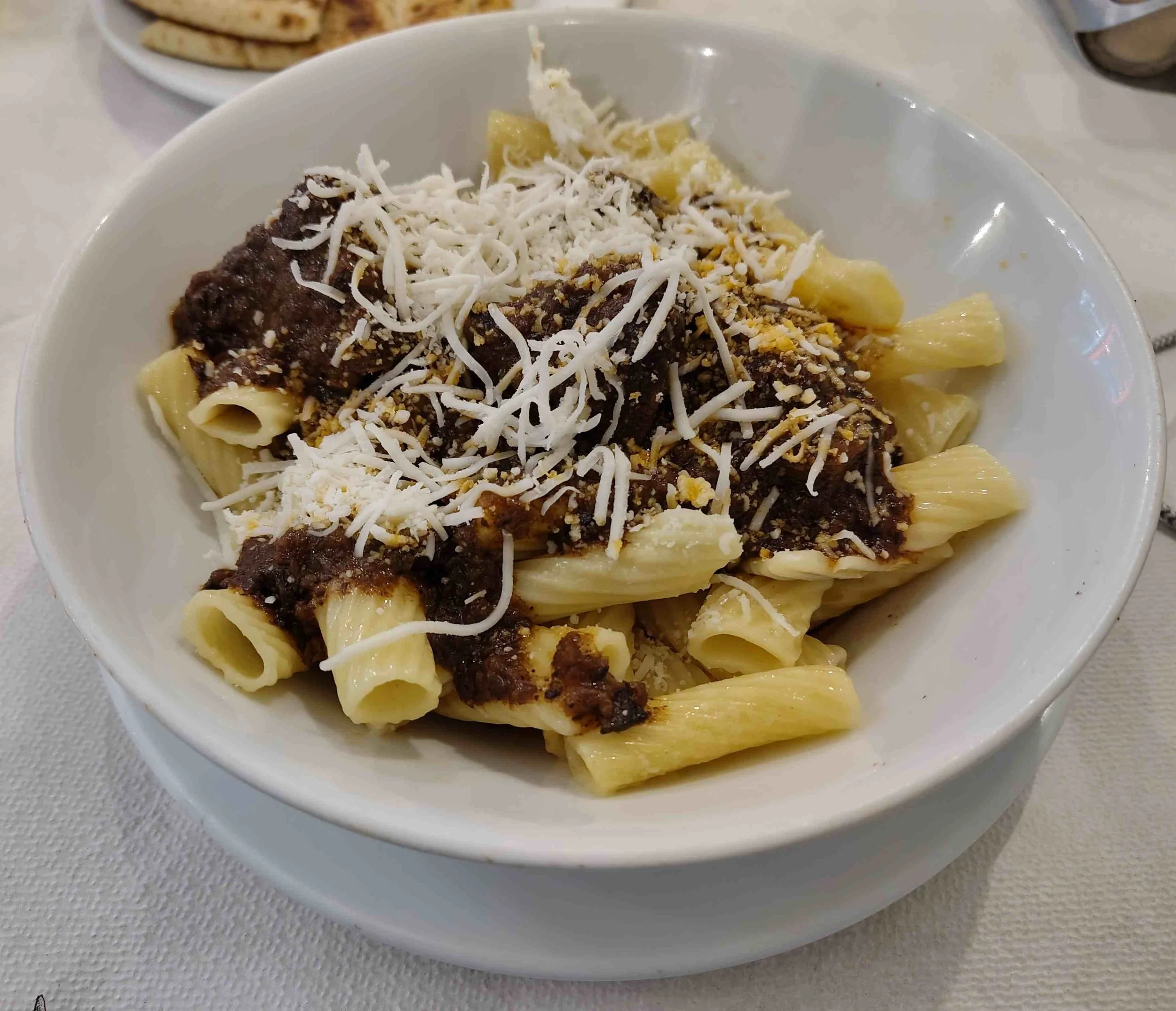
pastitsada
corfiot pasta
What is it?
Pastitsada is a traditional Corfiot dish consisting of slow cooked beef or rooster in a rich tomato based sauce, flavoured with cinnamon, cloves, and sometimes allspice. The dish reflects Venetian influence from Corfu’s long history under Venetian rule. It is typically served over thick pasta such as bucatini or spaghetti, which soaks up the delicious sauce.
What is in it?
Pastitsada is made with beef or rooster, onions, garlic, tomatoes or tomato paste, white wine, olive oil, and a combination of spices such as cinnamon, cloves, and sometimes allspice. It is often finished with a sprinkling of grated kefalotyri or Parmesan style cheese.
Where can I eat it?
Pastitsada is a classic dish on Corfu, found in many traditional tavernas and restaurants across the island. We had a delicious one at Taverna Ninos in Corfu old town.
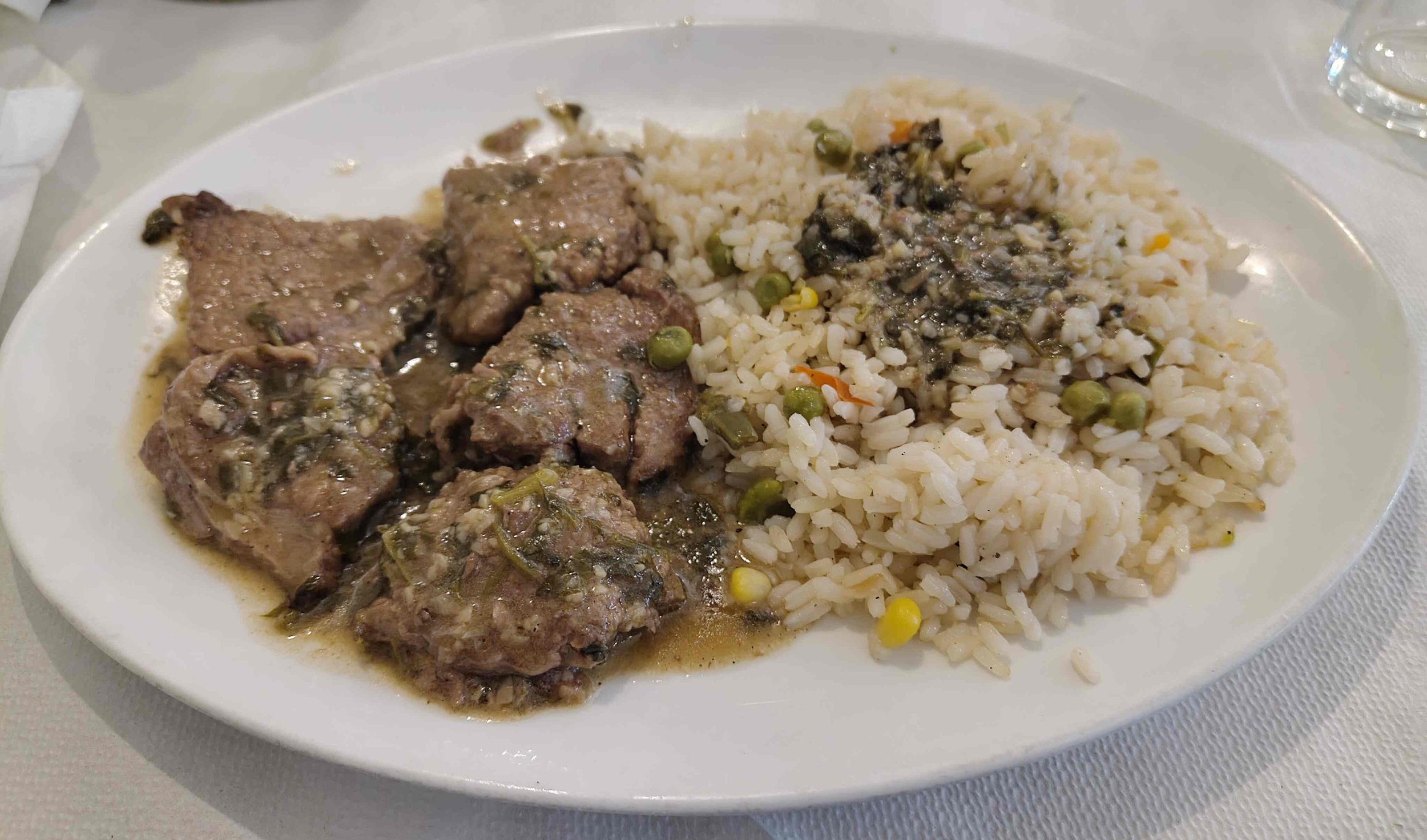
Sofrito
Garlicky veal stew
What is it?
Sofrito is a traditional Venetian influenced dish from Corfu, typically made with thin slices of veal that are lightly floured, gently fried, and then slow cooked in a sauce of white wine, vinegar, garlic and parsley. It is a tender, slightly tangy dish with a deep garlic flavour and is considered one of the island’s signature specialities.
What is in it?
Sofrito is made with thinly sliced veal, lightly coated in flour and fried in olive oil, then simmered in a sauce of garlic, white wine, vinegar and parsley. It is most commonly served with rice, mashed potatoes or sometimes chips (fries).
Where can I eat it?
It is very common in Corfu, where it is found on most traditional restaurant menus, including at our go-to place, Taverna Ninos in the old town.
Dairy free.
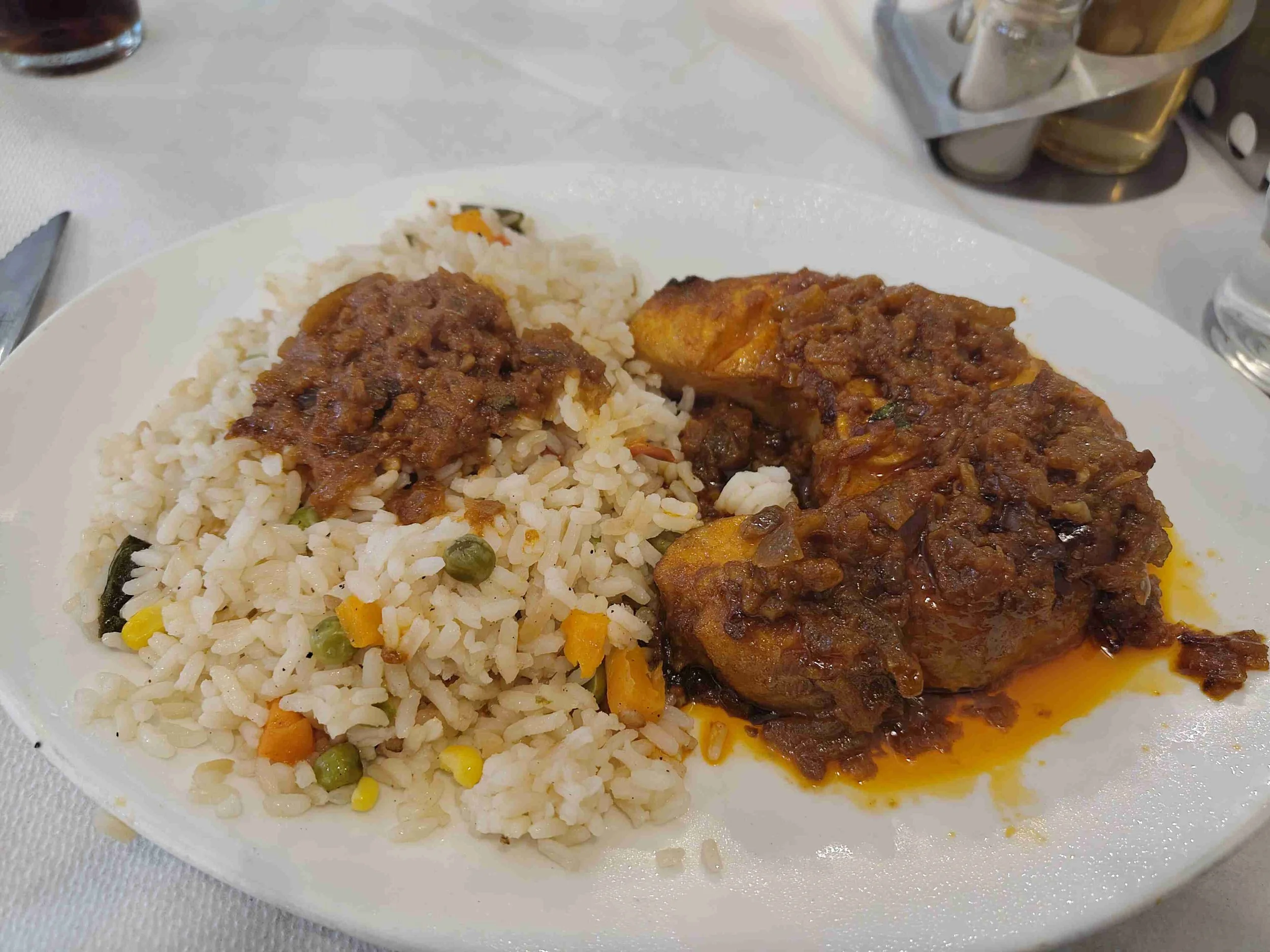
bourdeto
spicy fish stew
What is it?
Bourdeto is a spicy fish stew from Corfu, known for its fiery flavour and red colour. Traditionally made with scorpionfish, it is cooked in a sauce of onion and red pepper, giving it a bit of heat. Like many Corfiot dishes, it reflects Venetian influences and is considered one of the island’s signature dishes.
What is in it?
Bourdeto is typically made with firm white fish (most traditionally scorpionfish), slowly cooked with onions, garlic, olive oil, tomato paste and red pepper (paprika or chilli flakes).
Where can I eat it?
It is one of the three classic Corfiot dishes (alongside Sofrito and Pastitsada) and appears on many traditional menus across the island. You can find it in tavernas throughout Corfu, including at Taverna Ninos in the Old Town.
Dairy & gluten free.
desserts
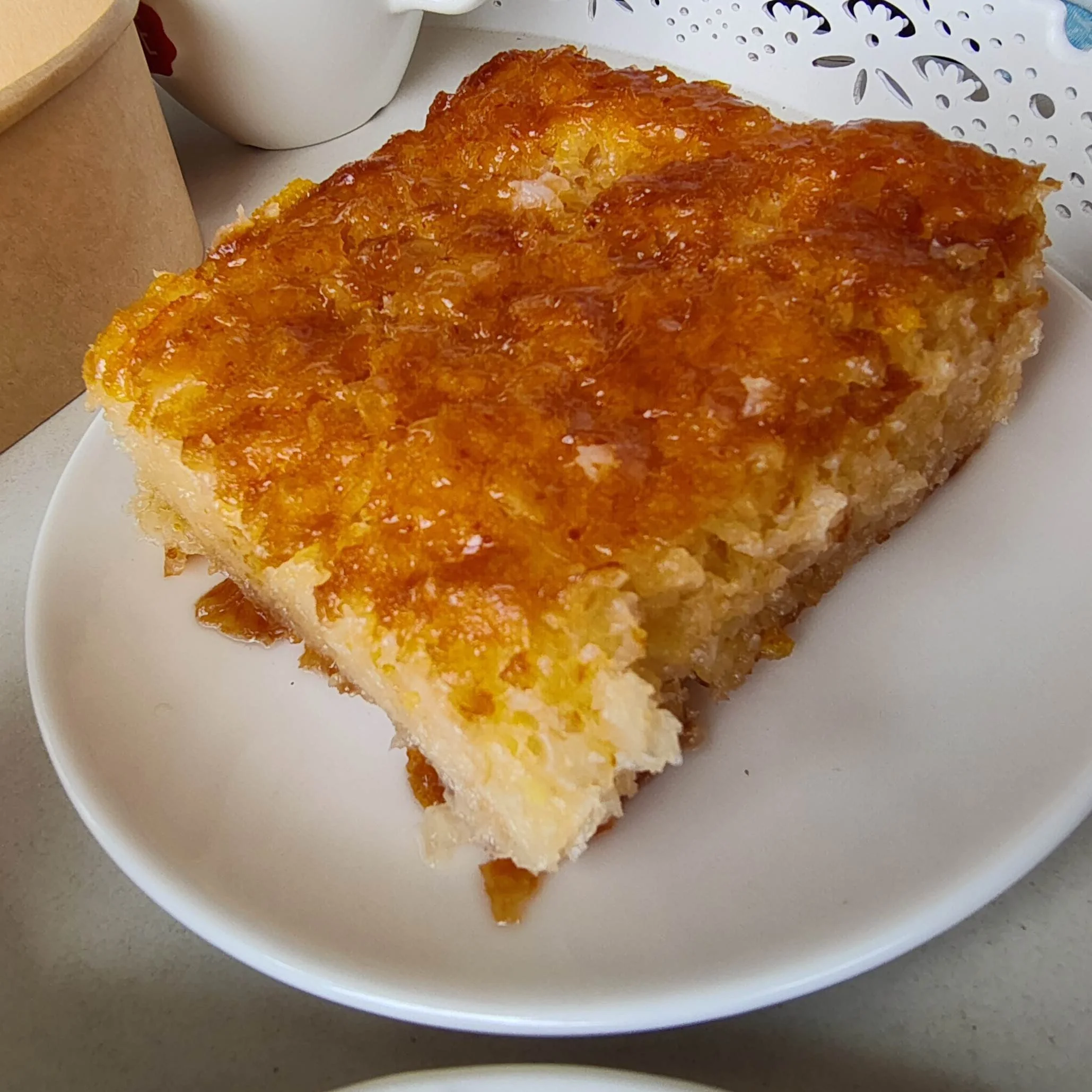
portokalopita
orange cake
What is it?
A classic Greek syrup soaked dessert made with orange and shredded phyllo pastry. The name literally means “orange pie,” though it’s actually closer in texture to a moist cake. It is baked and then soaked in an orange syrup, giving it a slightly sticky, juicy texture. Often served as a dessert, it pairs particularly well with a strong Greek coffee.
What is in it?
Typically made with:
phyllo pastry (often dried and crumbled into the mixture)
oranges (juice and zest)
eggs, sugar, oil (or sometimes butter) and yoghurt (in many traditional recipes)
After baking, it is soaked in a syrup made from sugar, water and orange peel or juice.
Where can I eat it?
It is a very common item in cafes and as a dessert on traditional restaurant menus, often listed as “orange cake” in English.
Vegetarian.
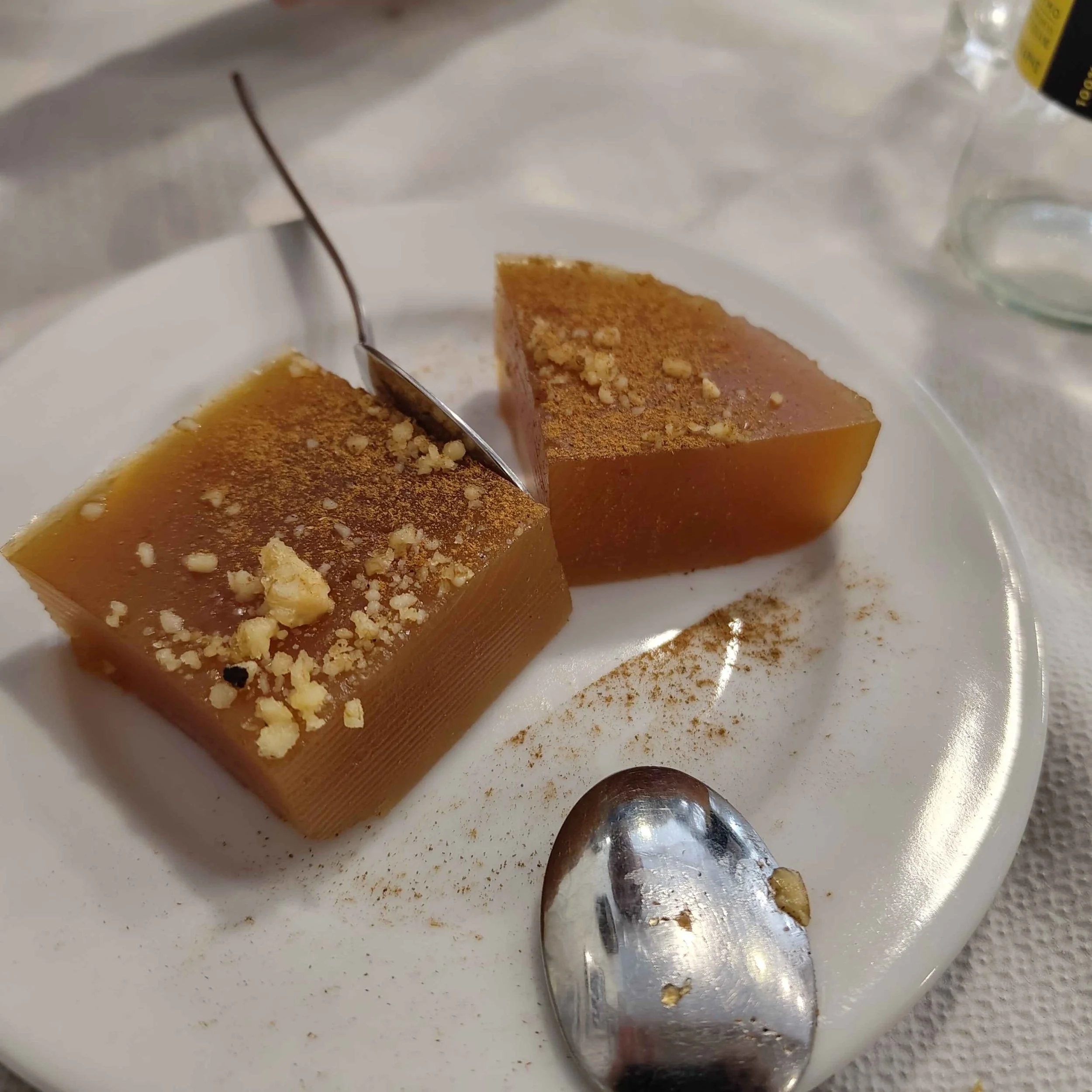
halva farsalon
caramelised dessert
What is it?
A distinctive Greek dessert known for its soft, jelly like texture and glossy surface. It is one of the three main types of halva found in Greece, and unlike the more common semolina version, this one is made with corn starch. It originates from Farsala in central Greece and has a caramel like taste.
What is in it?
Typically made with corn starch, sugar, water and butter or oil.
It may also be topped with almonds or other nuts and cinnamon.
Where can I eat it?
Less common than other Greek desserts, but you can find it in specialised sweet shops, restaurants and traditional bakeries in central Greece, especially around Farsala where it is a local speciality. We tried it as a dessert at Fysa Roufa in Ioannina.
Vegetarian.
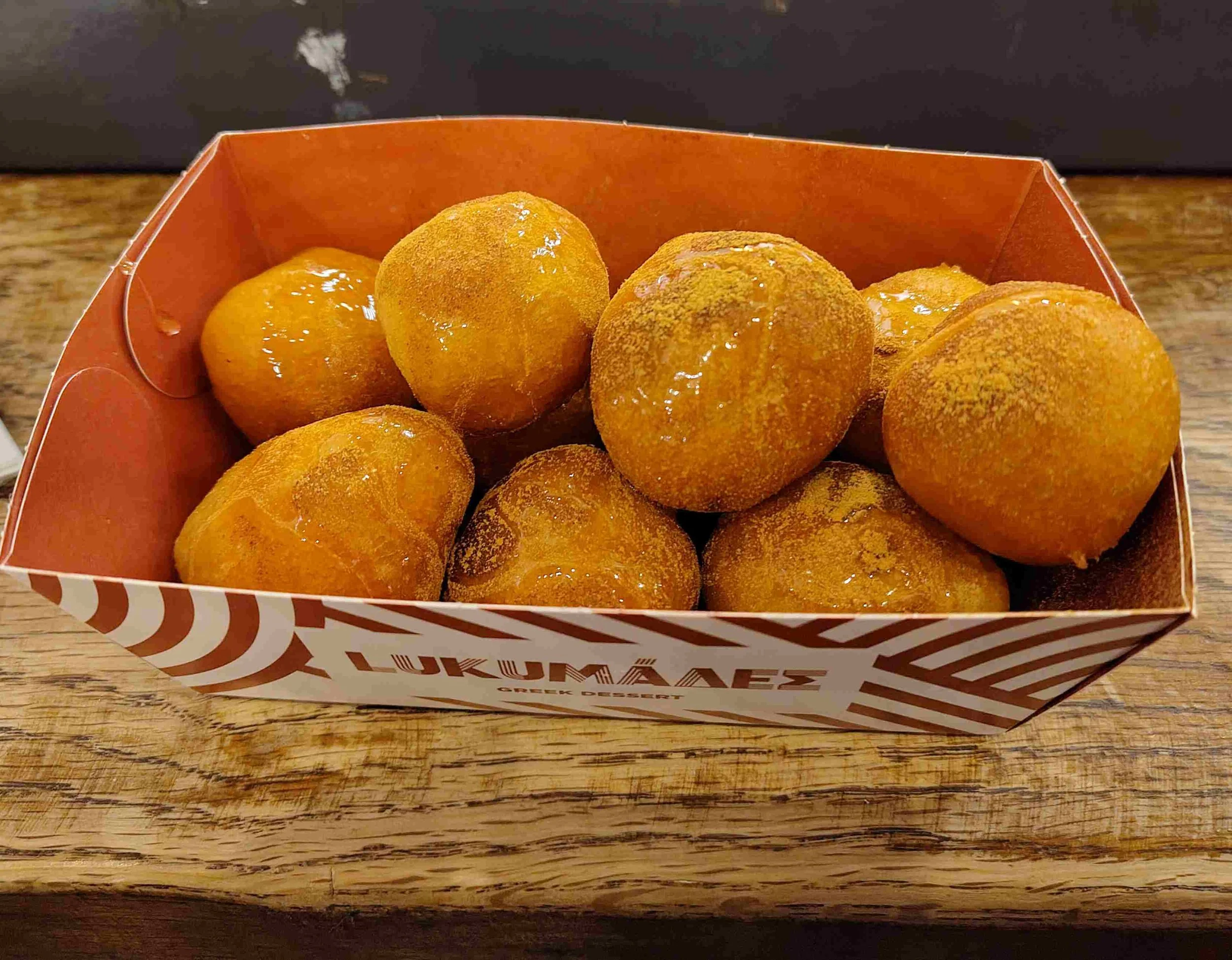
loukoumades
honey doughnuts
What is it?
Small, deep fried dough balls. Traditionally served hot, they are drizzled with honey and sprinkled with cinnamon, sometimes topped with chopped walnuts. They are one of Greece’s oldest desserts, often compared to doughnuts but lighter and smaller. While the classic version is simple, modern variations have become very popular, with a wide range of toppings and fillings.
What is in it?
The basic dough typically includes flour, water and yeast.
After frying, they are traditionally topped with honey, cinnamon and sometimes walnuts.
Modern versions may include:
chocolate sauce, tahini or ice cream
fillings like custard or chocolate
Where can I eat it?
Available across Greece, especially at dessert shops specialising in loukoumades and some bakeries. Many places specialise in them, such as Loukoumadaki in Athens, where many different versions are available.
Vegetarian and traditionally dairy free.
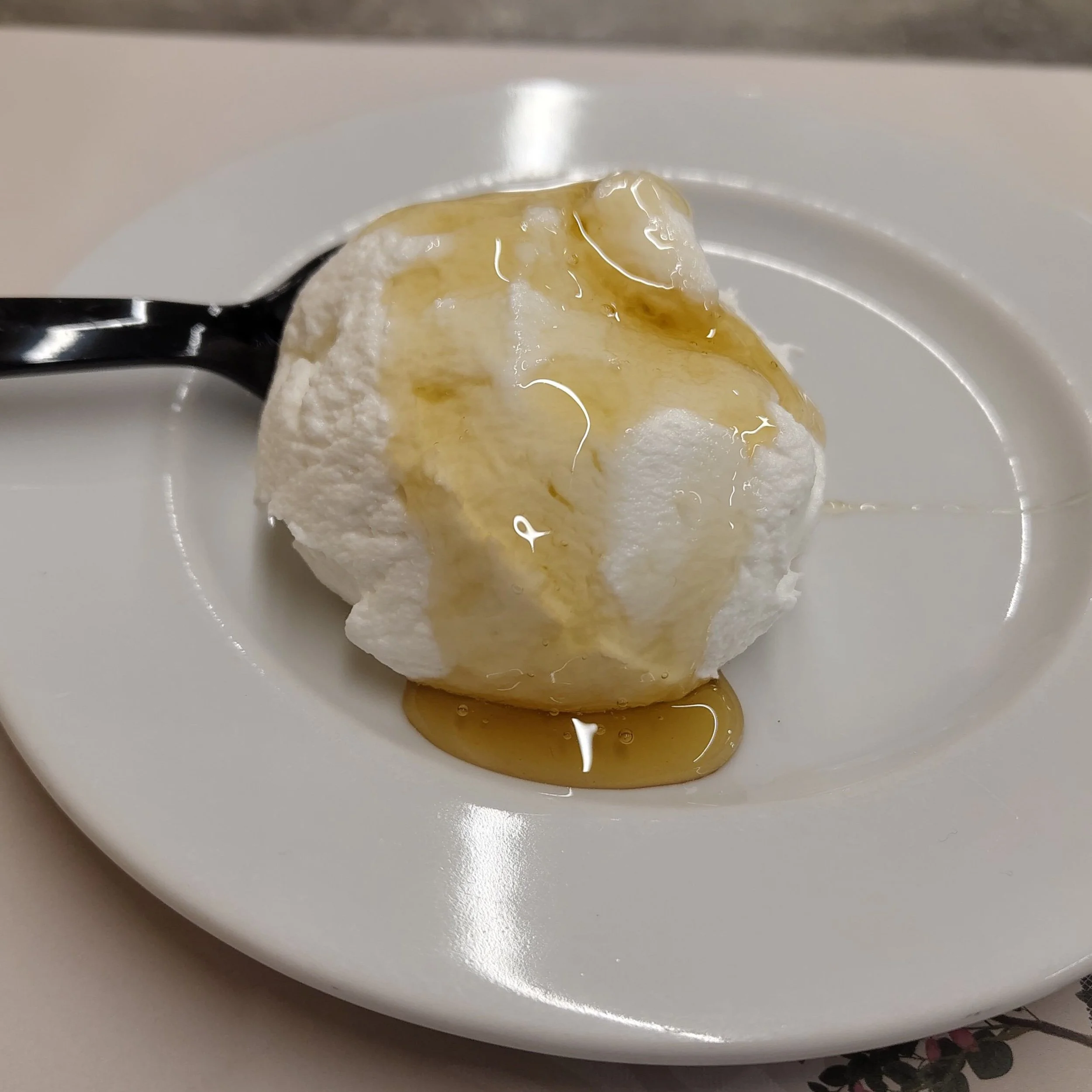
Greek yoghurt
with honey
What is it?
One of the simplest and most traditional desserts in Greece, consisting of thick, strained Greek yoghurt topped with honey and often sprinkled with walnuts. Despite its simplicity, it is a staple dessert found throughout the country and is popular after a heavy meal. It is commonly eaten for breakfast, but in restaurants it is most often served as a light dessert.
What is in it?
The classic version consists of thick, strained Greek yoghurt topped with honey and chopped walnuts. Some variations may include almonds, cinnamon or sesame seeds, but honey and walnuts remain the most traditional combination.
Where can I eat it?
Available in traditional cafés and restaurants throughout Greece and is often listed simply as “Greek yoghurt with honey” on English menus.
Vegetarian and gluten free.
Ingredients listed reflect common or typical components of this dish as served in restaurants or street‑food vendors. Variations by region, season, or vendor are common. This information is provided for general reference only. If you have dietary restrictions or allergies, please verify ingredient details independently. We assume no liability for accuracy or outcomes.
