all the foods - Montenegro
Here you will find a list of all the traditional cuisine we tried in Montenegro.
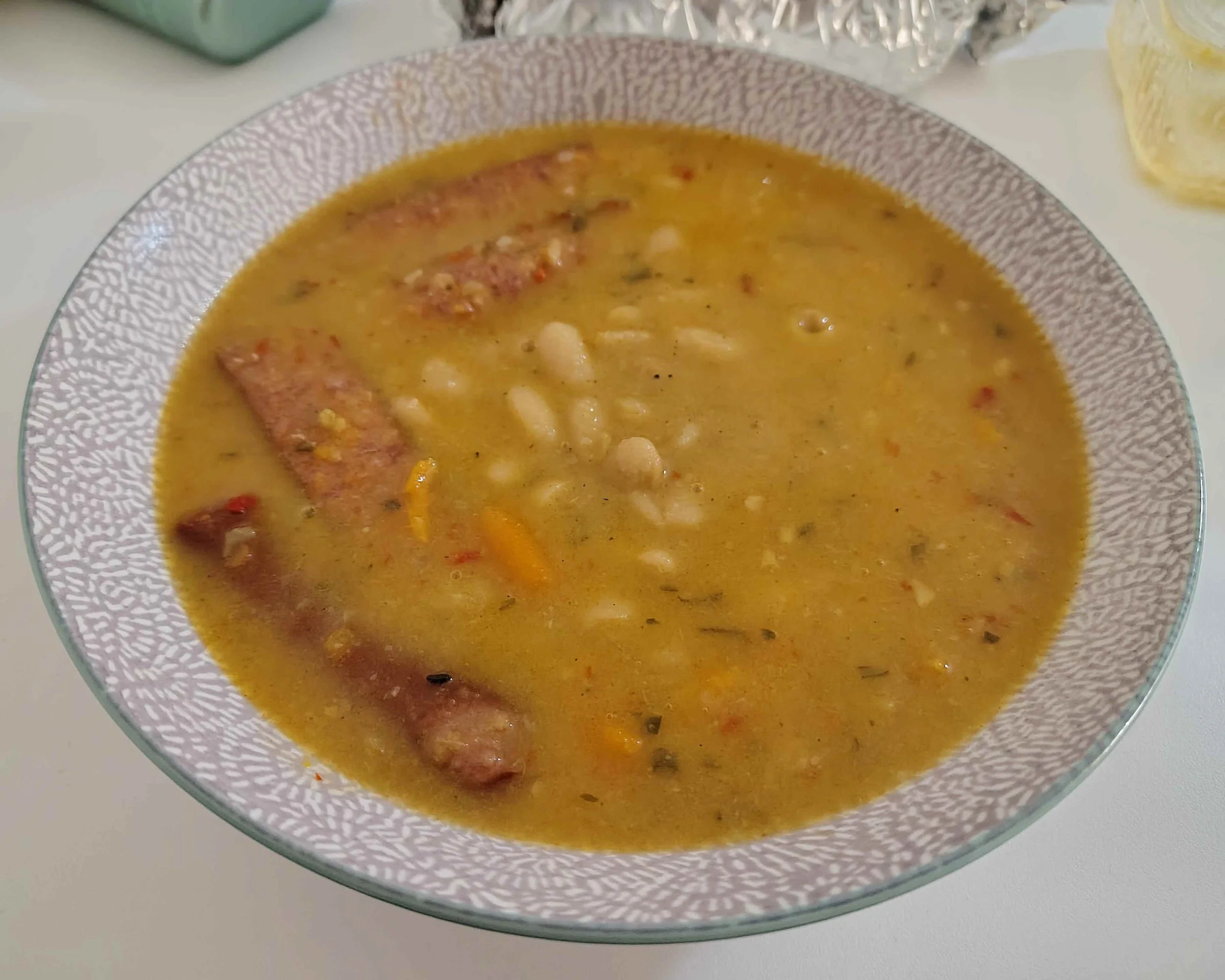
pasulj
bean stew
What is it?
A traditional Balkan bean stew made with white beans and slow cooked. The beans are typically soaked overnight, then simmered for a long time with spices, and the dish takes on a deeper, smoky flavour when meat is added.
What is in it?
It usually includes white beans, onion, garlic, paprika and oil. It often also includes carrots and bay leaf, and versions with smoked meat or sausage are common.
Where can I eat it?
Fairly common in Montenegro, though not as consistently found on menus as grilled meats. You’re more likely to find it in traditional, home style restaurants in more local, non touristy places. We had a version at Desetka in Podgorica that included sausage.
Dairy free.
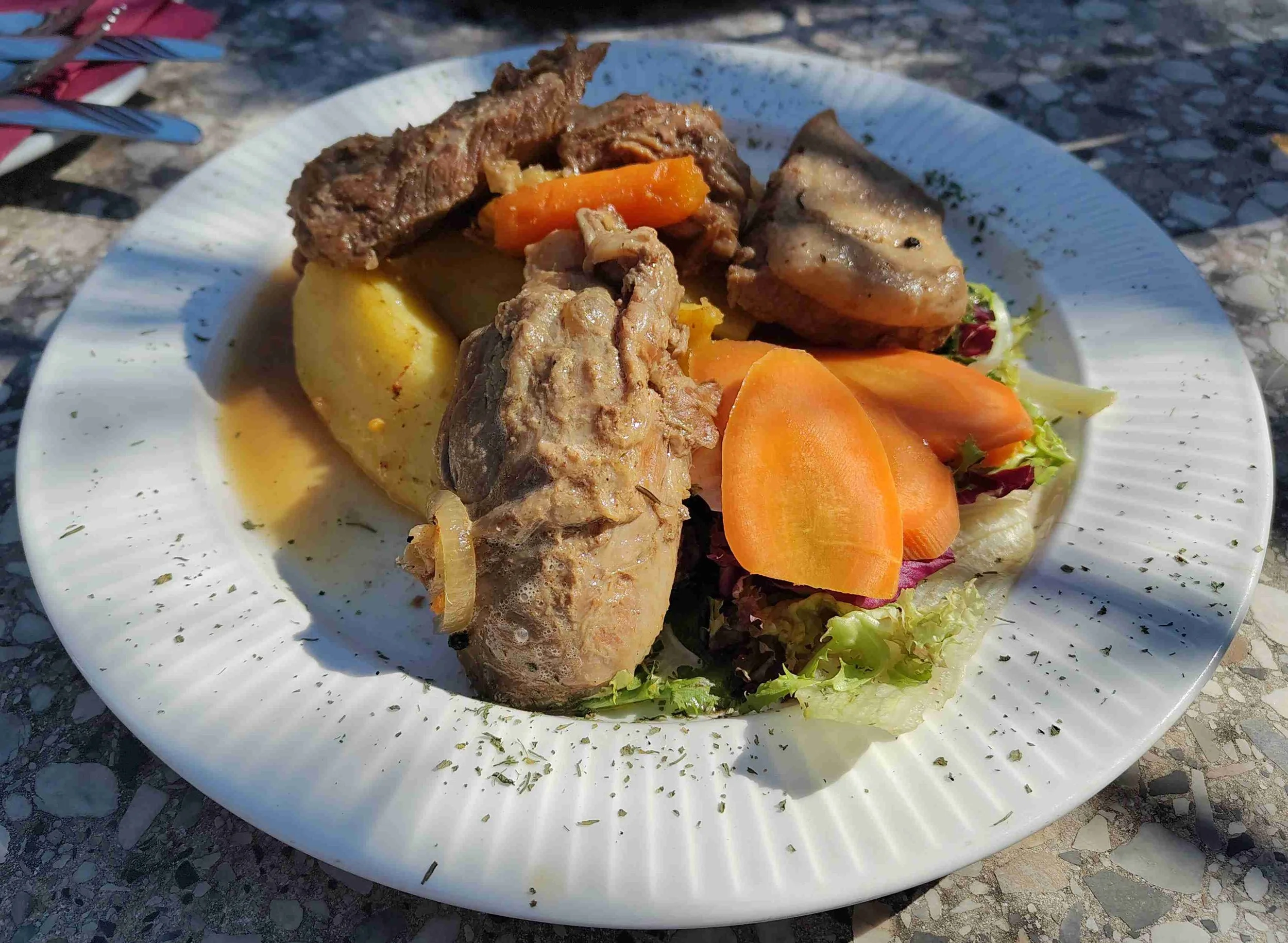
ispod sača
tender meat & veg
What is it?
Ispod sača literally translates to “under the bell” and refers to a traditional Balkan cooking method rather than a single fixed recipe. Food is placed in a shallow metal or clay pan, covered with a heavy domed lid (called a sač), and hot coals or embers are piled on top. This creates slow, even heat from above and below, producing incredibly tender meat while the vegetables roast gently in the juices. The method is commonly used for lamb, veal, goat, or chicken.
What is in it?
The meat is the star of the dish, most traditionally lamb, although veal, goat, or chicken are also common. The meat is usually cooked together with potatoes, onion, garlic, and sometimes carrots or peppers, with simple seasoning such as salt, pepper, and a little oil.
Where can I eat it?
You’ll find dishes cooked ispod sača at many traditional Montenegrin restaurants, although they are sometimes prepared in limited quantities because the cooking process takes several hours. Konoba Lanterna is a well known place to try it in Podgorica where they serve a version made with veal.
Dairy and gluten free.
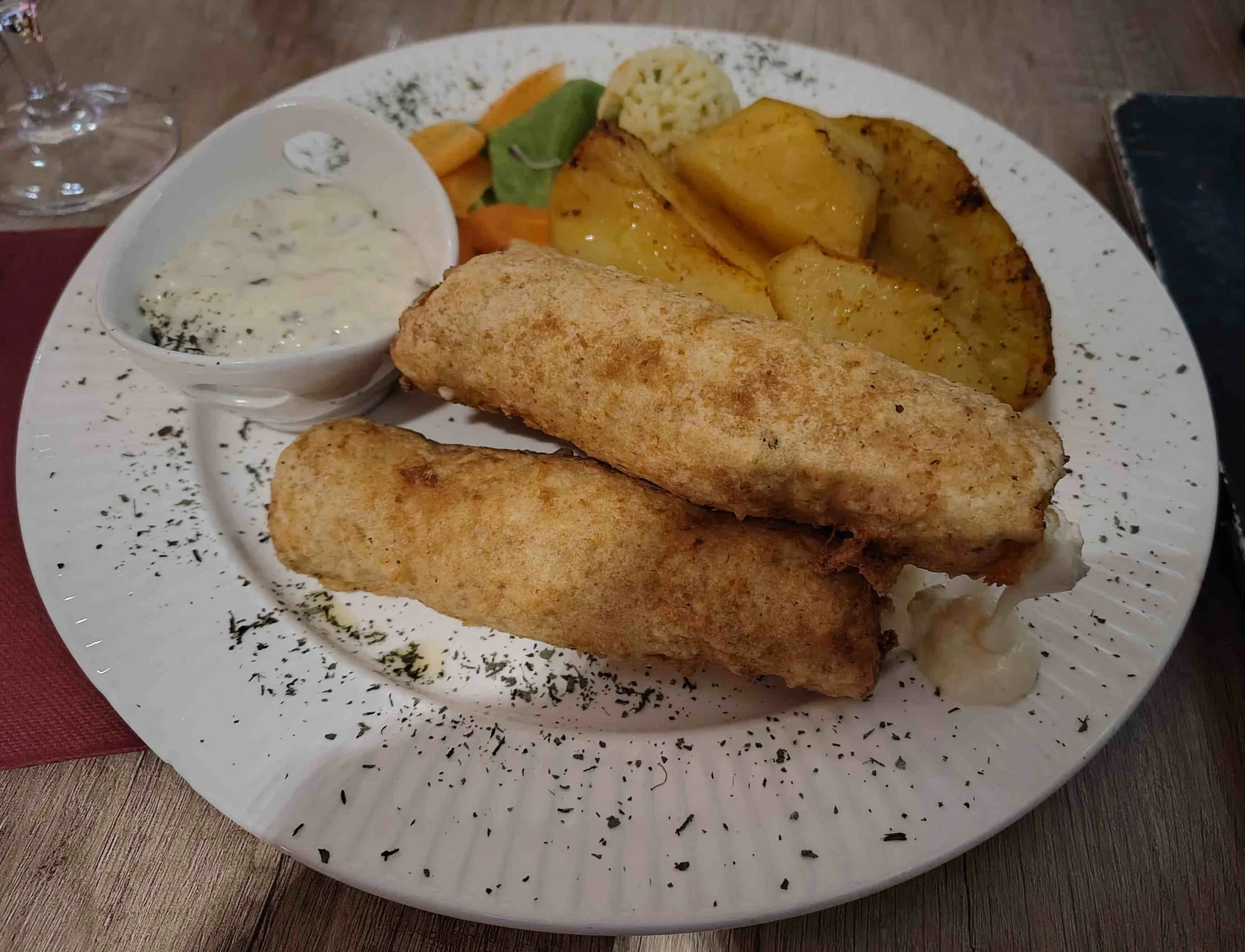
podgorički popeci
stuffed, breaded meat
What is it?
Podgorički popeci, often simply called popeci, are a traditional dish from Podgorica, Montenegro. They are similar to cordon bleu: thin slices of meat are rolled around cured ham and cheese, then breaded and fried. The filling most commonly uses Njeguški pršut, Montenegro’s famous smoked prosciutto.
What is in it?
Popeci are usually made from thinly sliced veal rolled around Njeguški pršut and cheese, often a local semi hard cheese such as Njeguški sir. The rolls are then coated in flour, egg and breadcrumbs, and deep fried. They are typically served with fried potatoes, fries or roasted vegetables, sometimes with a simple salad.
Where can I eat it?
Since the dish originates in Podgorica, the capital is one of the best places to try it, and it appears on the menus of many traditional Montenegrin restaurants in the city and surrounding area.
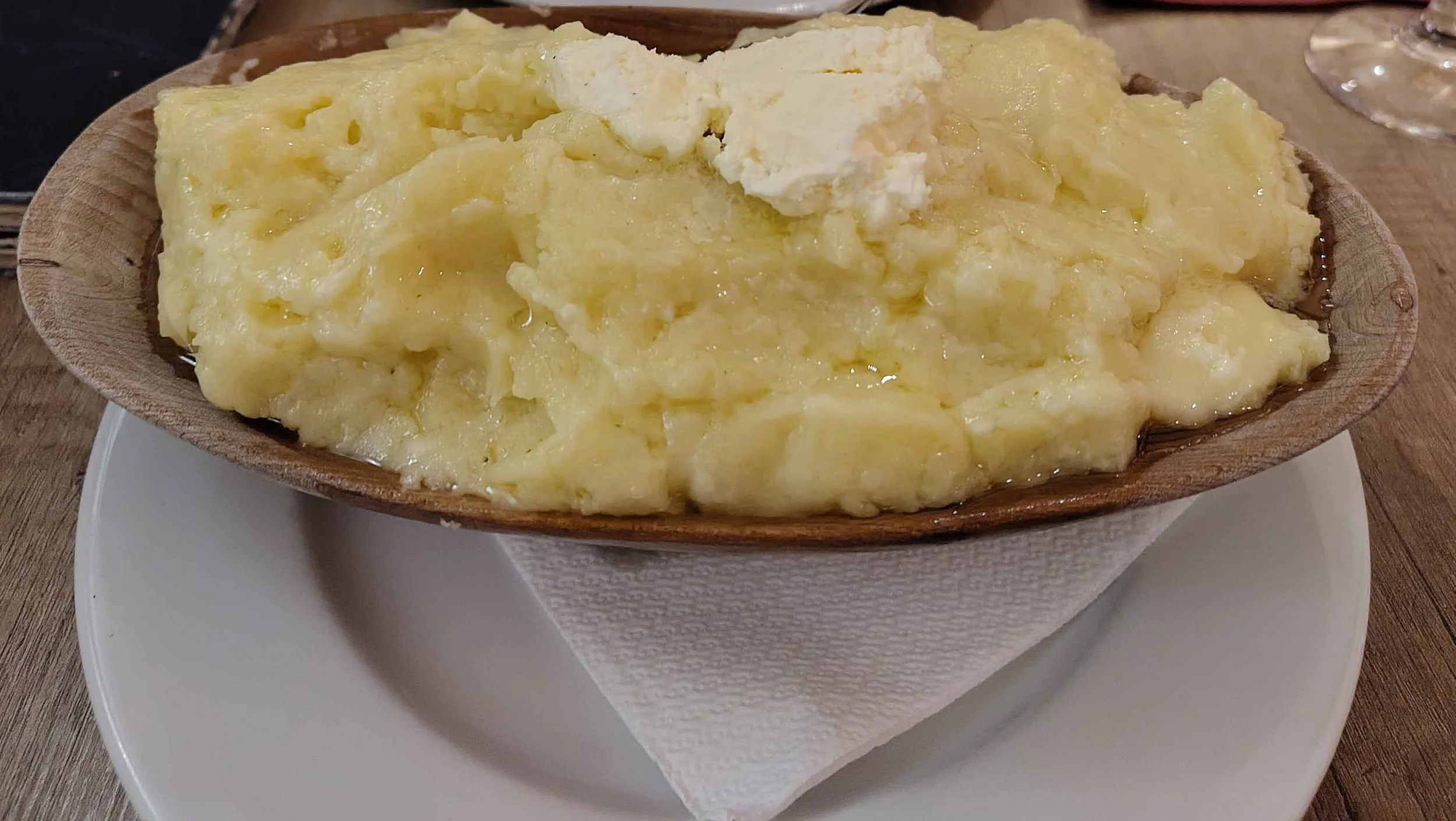
kačamak
cheesy cornmeal mash
What is it?
Kačamak is a traditional Montenegrin comfort dish made from cornmeal cooked with potatoes and mixed with cheese, creating a thick, very filling mash. It is especially popular in the mountainous regions of the country and is often eaten for breakfast or as a side dish. It is simple peasant food that has become a national staple.
What is in it?
Kačamak is made by cooking cornmeal together with potatoes in salted water until soft, then mashing them together. The mixture is typically enriched with local cheeses such as kajmak and white brined cheese, along with butter or oil.
Where can I eat it?
Kačamak is fairly common on the menus of traditional Montenegrin restaurants and konobas. We had a very good one as a starter at Konoba Lanterna in the capital.
Vegetarian & gluten free.
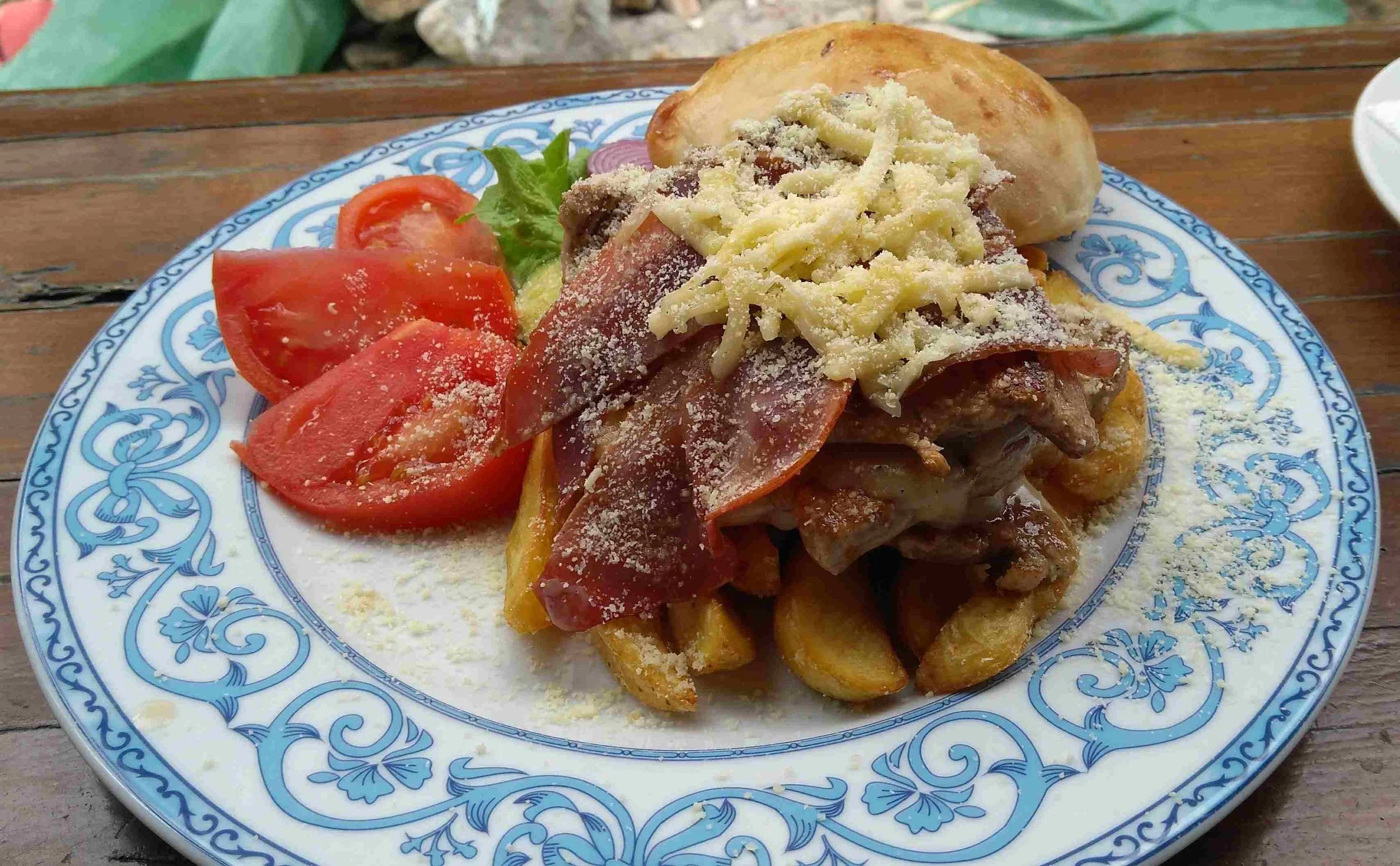
njeguski steak
Ham stuffed schnitzel
What is it?
A Montenegrin dish from the Njeguši area, Njeguški steak is a veal or pork cutlet stuffed with Njeguški pršut and cheese, then breaded or fried and sometimes finished with more cheese on top. It definitely couldn’t be called healthy but it is rather satisfying, its usually served with fries and salad.
What is in it?
Thinly sliced pork or veal, stuffed with Njeguški sir and Njeguški pršut, then coated and fried. It is often served with fries, potatoes or salad, and some versions add extra cheese or a creamy sauce on top.
Where can I eat it?
It is popular in tourist-friendly places such as Kotor, but you can also find it in Podgorica and in some more traditional restaurants across Montenegro.
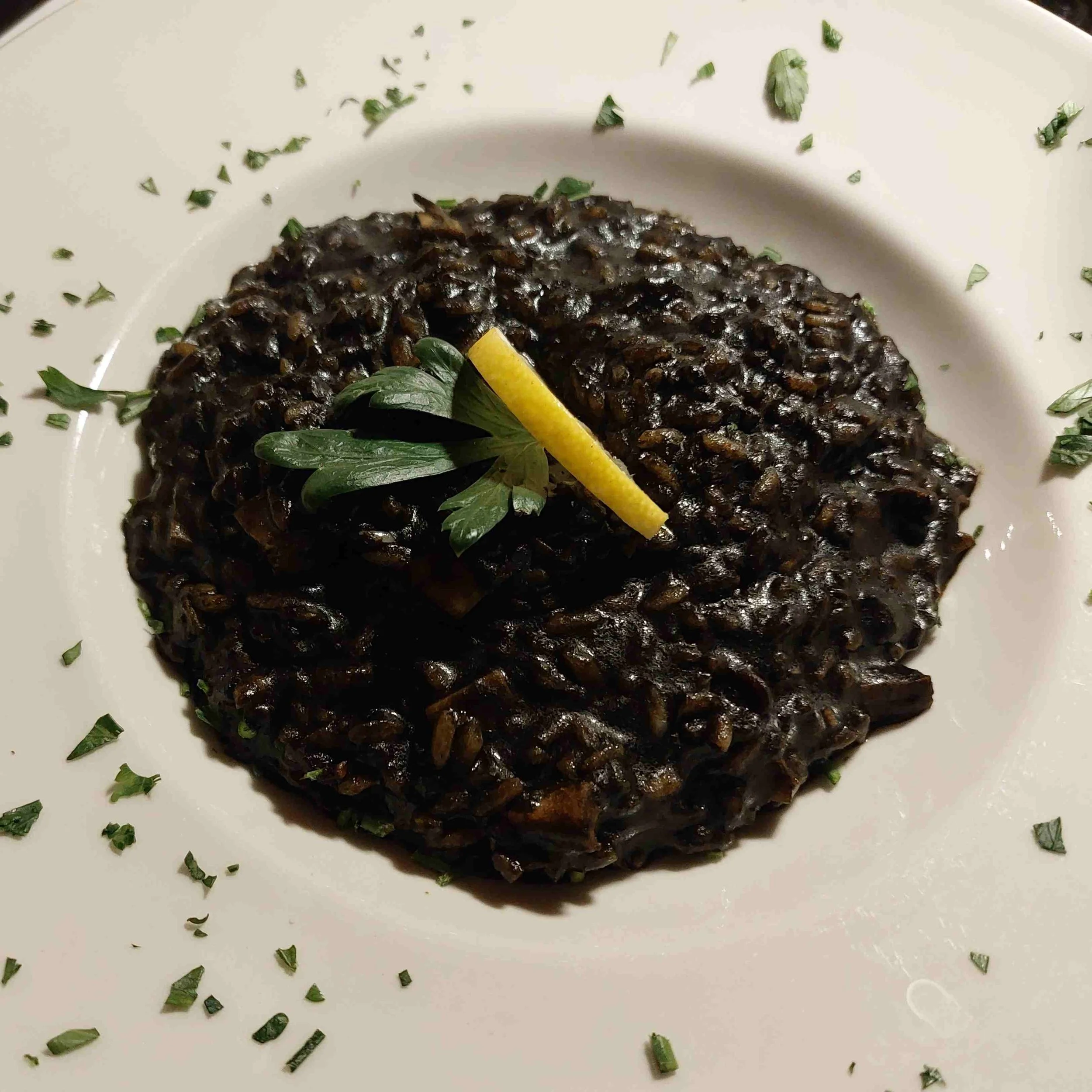
crni rižot
squid ink risotto
What is it?
Crni rižot is a squid ink risotto with a striking black colour and a briny seafood flavour. It is especially popular in coastal Montenegro, and you will also find it in coastal Croatia. A word of warning: it can leave your teeth black, so it may not be the best dinner choice for a first date.
What is in it?
Risotto, squid or cuttlefish, including the ink, along with olive oil, onion, garlic, wine, stock and parsley. Some versions also include other shellfish.
Where can I eat it?
It is fairly easy to find in coastal regions such as Kotor in Montenegro, where it appears on seafood restaurant menus.
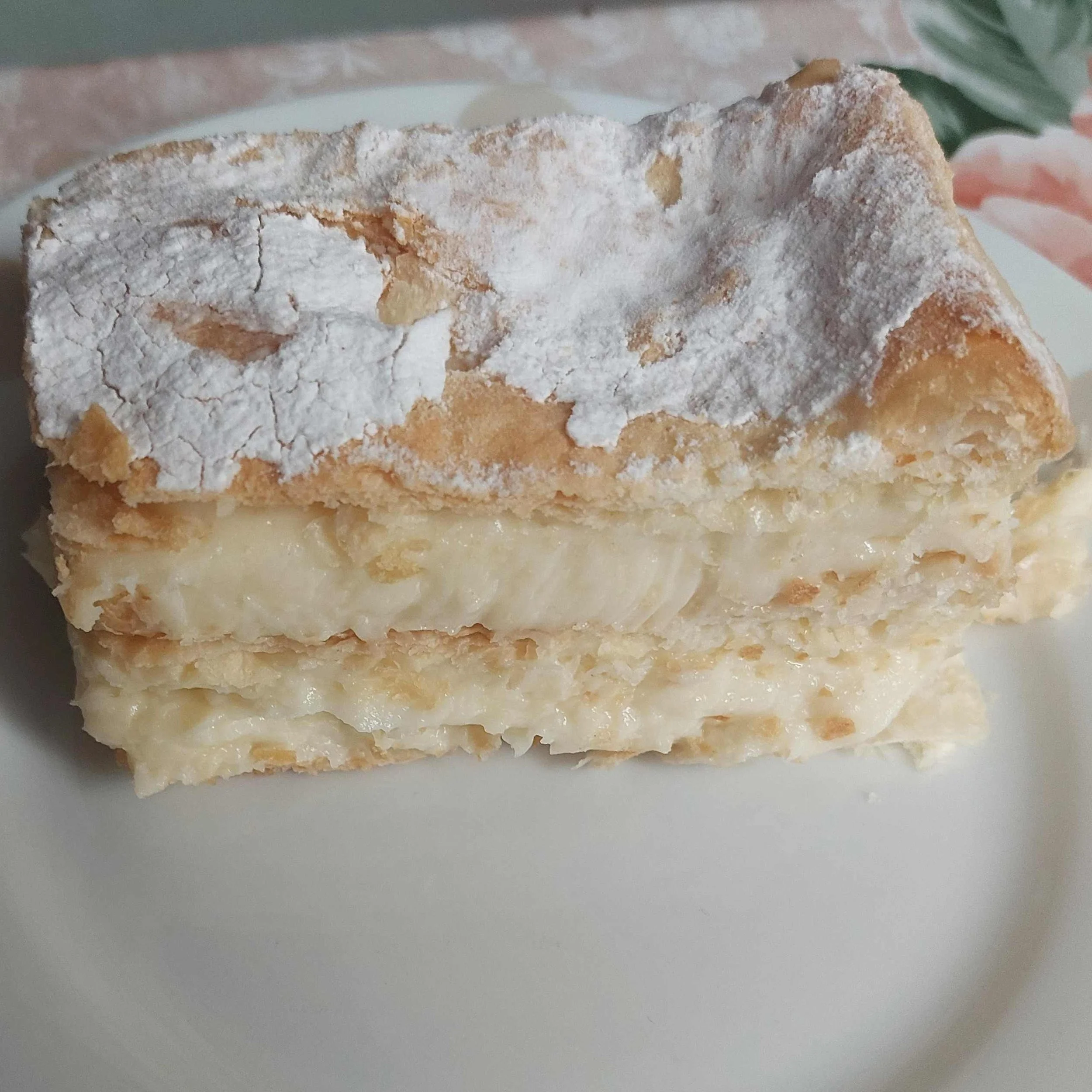
krempita kotorska
custard slice
What is it?
A rich and decadent dessert, Krempita Kotorska is a vanilla custard and Chantilly cream slice. It is a local Kotor variation of the wider Balkan krempita/kremšnita family, which is enjoyed across the region and Central Europe. It consists of layers of custard and cream sandwiched between flaky puff pastry, making it creamy, sweet and well worth seeking out.
What is in it?
Flaky puff pastry, a thick vanilla custard layer and Chantilly cream, which is lightly sweetened whipped cream.
Where can I eat it?
This dessert is widely available in bakeries, cafés and restaurants across Montenegro, and is especially associated with Kotor. It is a classic treat to enjoy with coffee or as a dessert after a meal.
Vegetarian
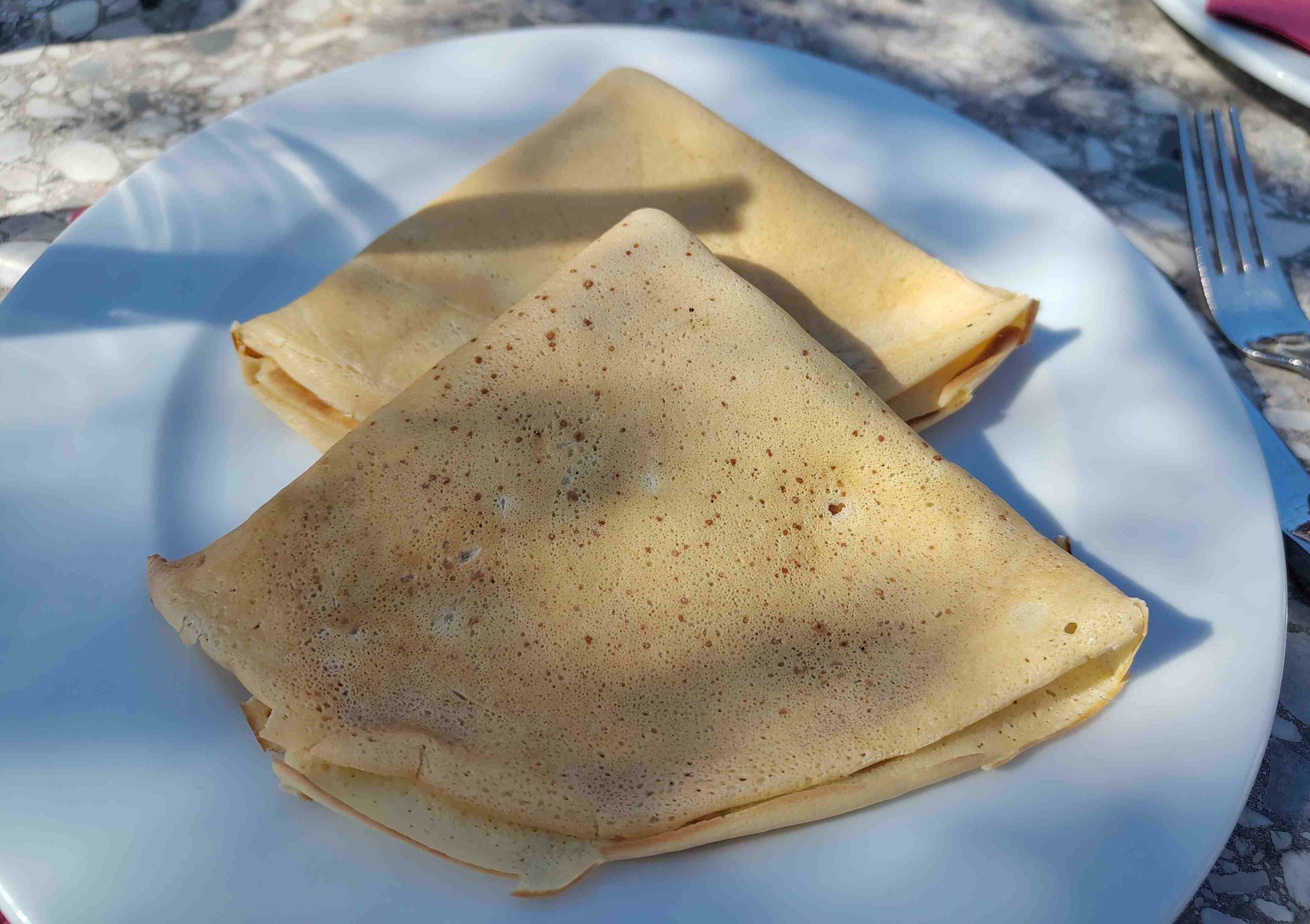
palačinke
thin pancakes
What is it?
Palačinke are light, thin pancakes similar to crêpes, typically rolled up with a variety of sweet or savoury fillings. They are a popular treat across the Balkans.
What is in it?
The batter is made from eggs, milk, water and flour. Fillings include Nutella, Eurocrem, fruit preserves and savoury options such as cheese or ham.
Where can I eat it?
Palačinke are widely available throughout Montenegro and the Balkans, found in cafés, restaurants and even street kiosks. One standout was a pistachio cream-filled palačinka from a kiosk just outside Kotor’s old town, it was so good!
Vegetarian.
Related food guides
While Montenegrin cuisine has its own regional specialities, it shares many traditional dishes with neighbouring Bosnia and Herzegovina. For a deeper look at some of these shared Balkan classics, see our Bosnian food guide.
Ingredients listed reflect common or typical components of this dish as served in restaurants or street‑food vendors. Variations by region, season, or vendor are common. This information is provided for general reference only. If you have dietary restrictions or allergies, please verify ingredient details independently. We assume no liability for accuracy or outcomes.
