must-try food Greece
our top 10 traditional Greek foods you have to try
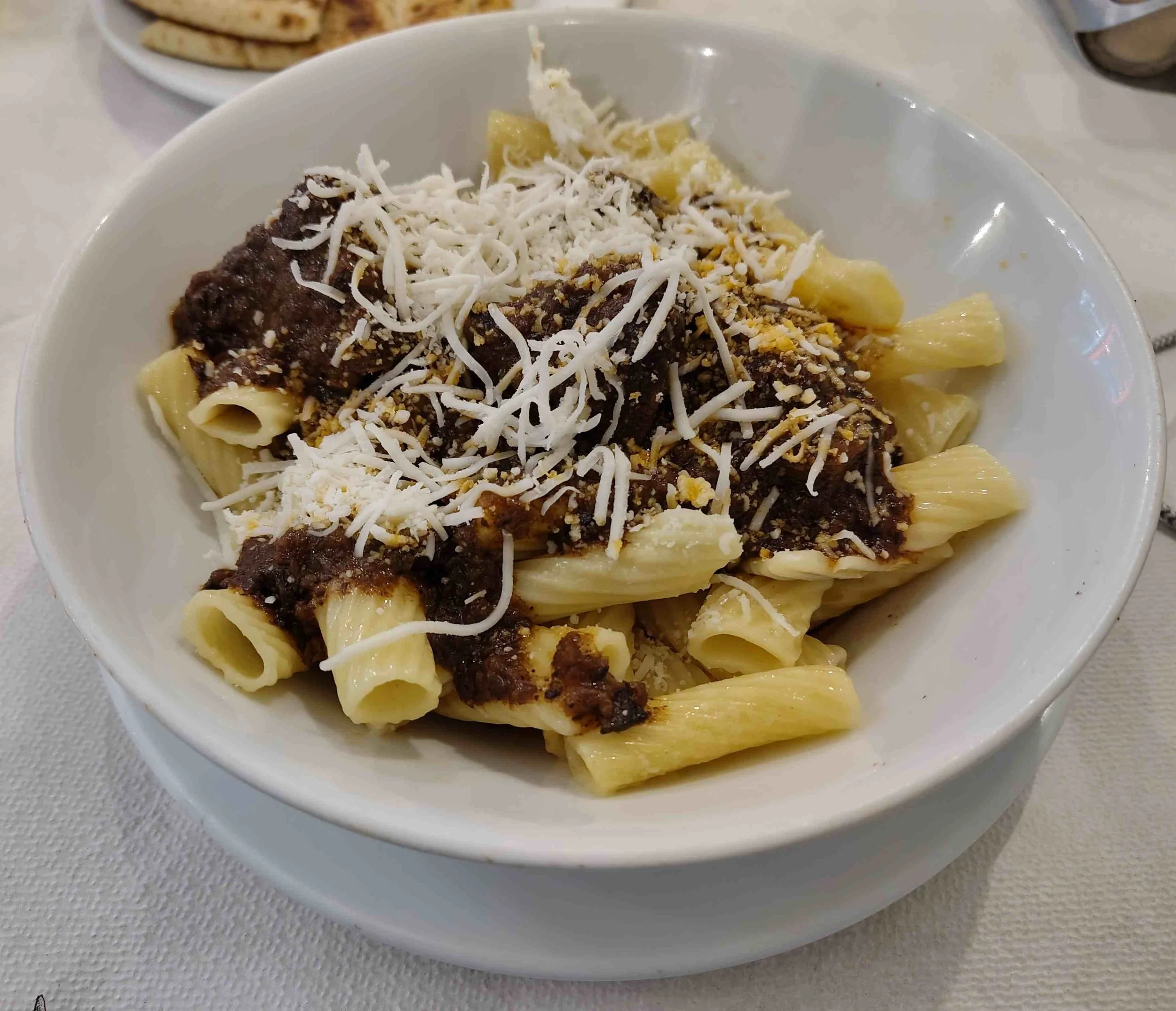
pastitsada
corfiot pasta
What is it?
Pastitsada is a traditional Corfiot dish consisting of slow cooked beef or rooster in a rich tomato based sauce, flavoured with cinnamon, cloves, and sometimes allspice. The dish reflects Venetian influence from Corfu’s long history under Venetian rule. It is typically served over thick pasta such as bucatini or spaghetti, which soaks up the delicious sauce.
What is in it?
Pastitsada is made with beef or rooster, onions, garlic, tomatoes or tomato paste, white wine, olive oil, and a combination of spices such as cinnamon, cloves, and sometimes allspice. It is often finished with a sprinkling of grated kefalotyri or Parmesan style cheese.
Where can I eat it?
Pastitsada is a classic dish on Corfu, found in many traditional tavernas and restaurants across the island. We had a delicious one at Taverna Ninos in Corfu old town.
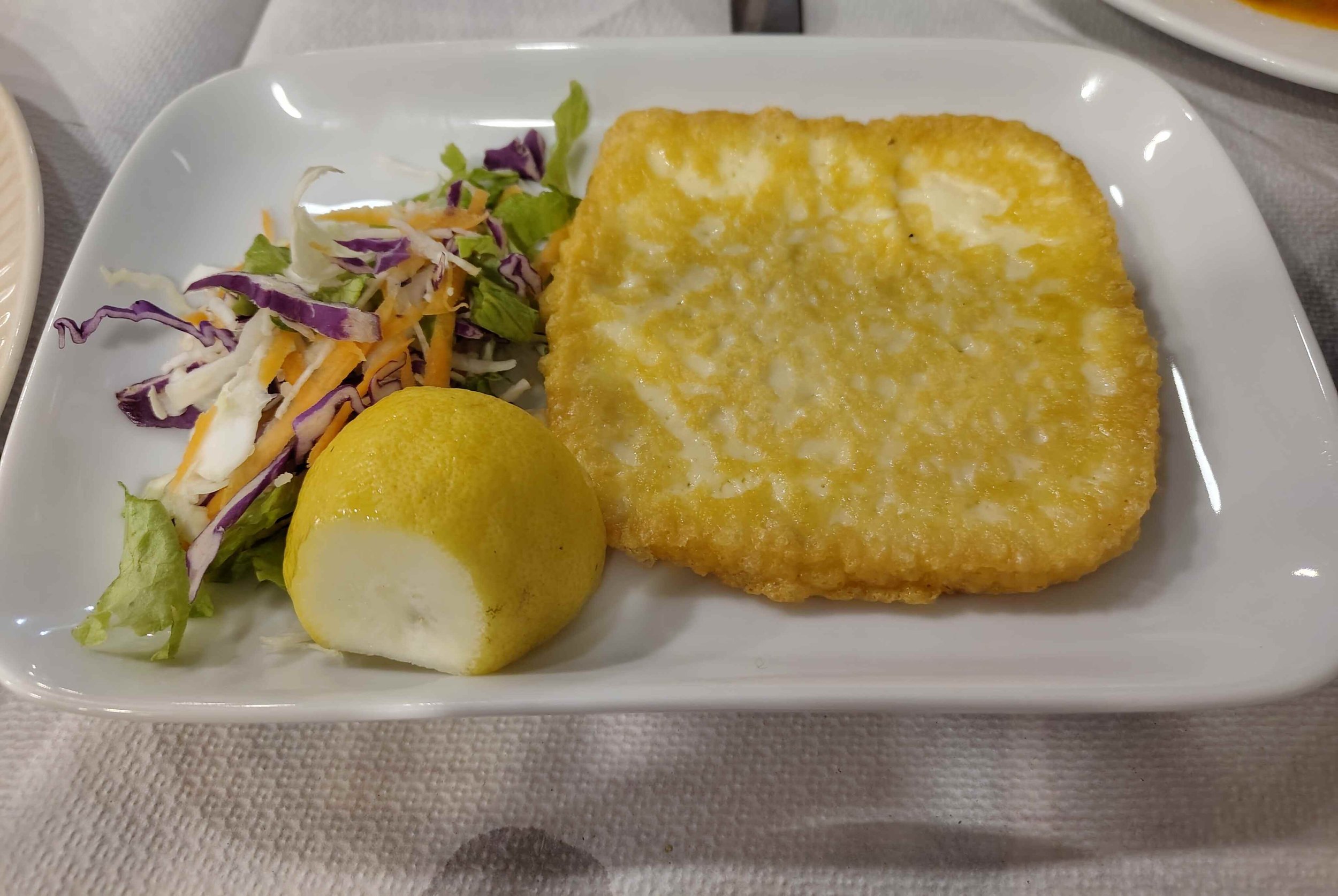
saganaki
fried cheese
What is it?
Saganaki is one of the most popular Greek starters, made by frying a slice of cheese. The name comes from the small two-handled pan (saganaki) used to cook it.
What is in it?
The key ingredient is cheese, most commonly graviera, kefalotyri, or kefalograviera. The cheese is lightly floured and then fried in olive oil. It is typically finished with a squeeze of lemon.
Where can I eat it?
Saganaki is very common on menus throughout Greece, especially in traditional tavernas.
Vegetarian.
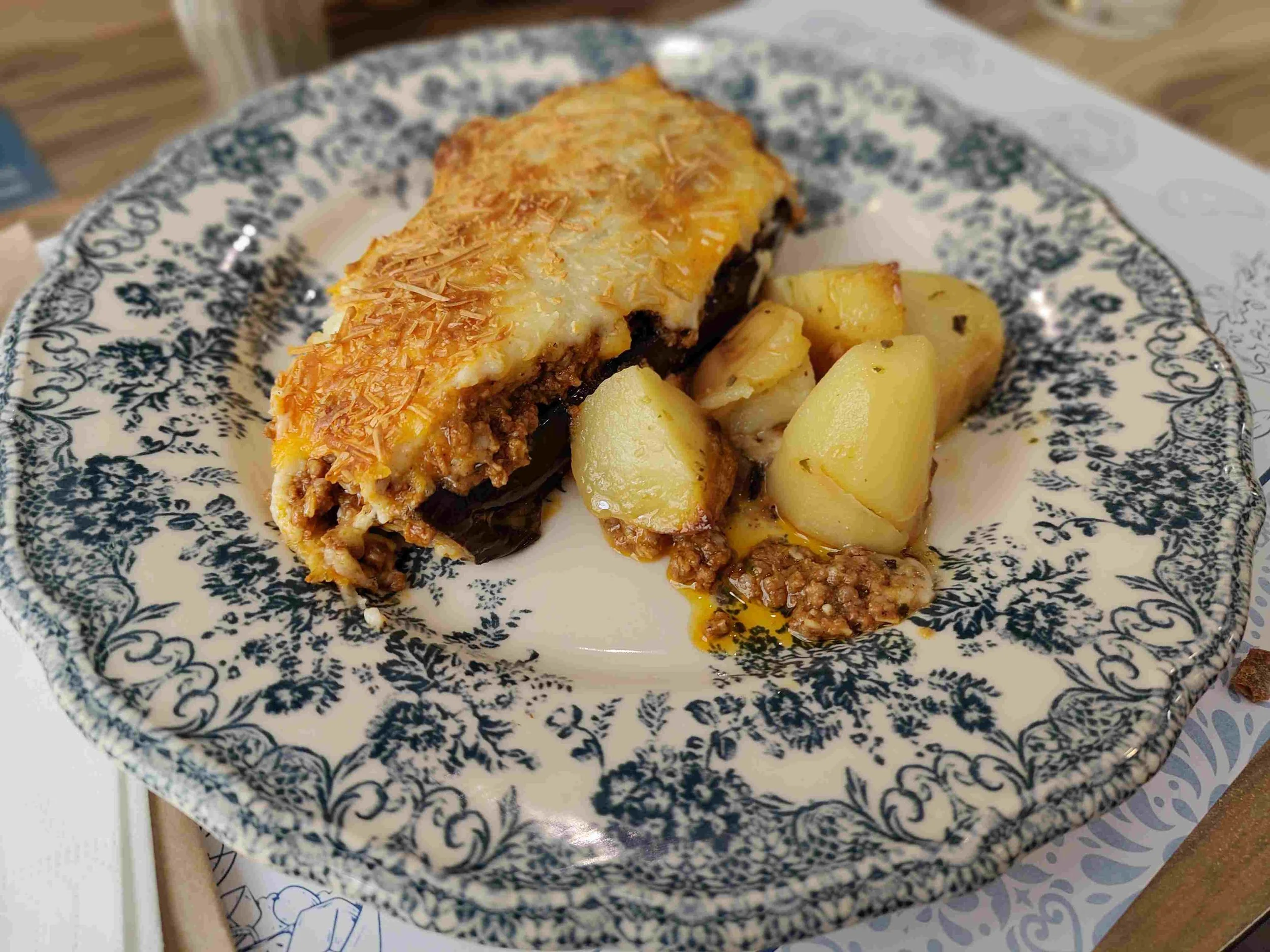
papoutsakia
stuffed aubergine
What is it?
Papoutsakia are a classic Greek baked dish of aubergine halves stuffed with minced meat and topped with béchamel sauce. The name translates to “little shoes,” referring to the shape of the aubergines once filled. They are similar in style to moussaka and a classic of traditional Greek home cooking.
What is in it?
Papoutsakia are made from aubergine halves filled with a mixture of minced beef, or sometimes beef and pork, onion, garlic, tomato, and herbs, then topped with a béchamel sauce made from butter, flour, and milk, often with egg and grated cheese.
What is it?
Papoutsakia are commonly found in traditional tavernas across Greece, especially those serving home style or oven baked dishes. They are not quite as common as classics like moussaka and pastitsio.
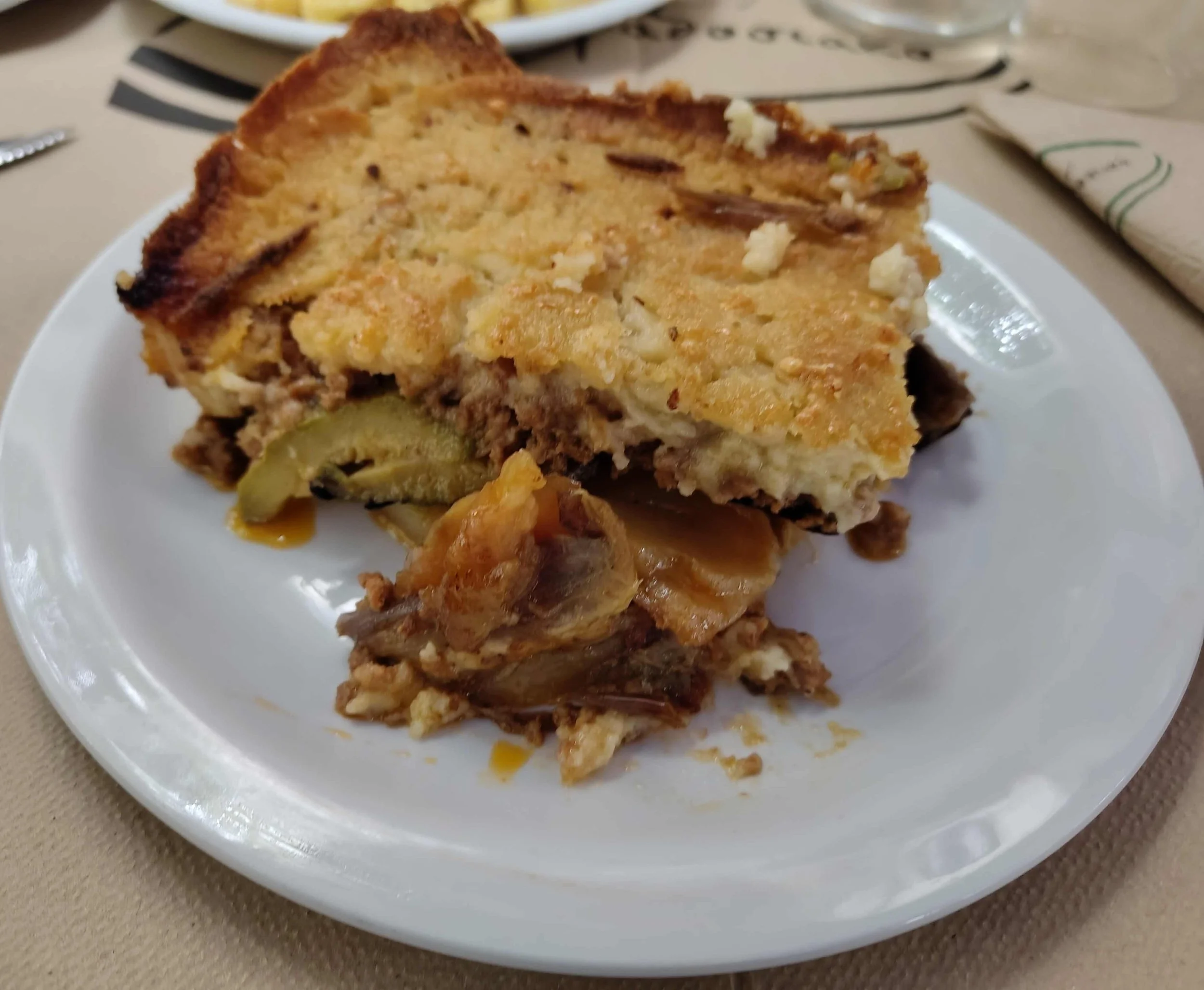
moussaka
aubergine & meat bake
What is it?
Moussaka is a classic Greek baked dish and one of the country’s most iconic foods. It usually consists of layered aubergine, minced meat, and a creamy béchamel sauce. Many versions also include a layer of potato, although this is not universal. It is similar in style to lasagne, but with Greek flavours. Vegetarian versions are also widely available.
What is in it?
Moussaka is made from layers of aubergine, and sometimes potato, with a filling of minced beef or lamb cooked with onion, garlic, tomato, and spices such as cinnamon or allspice. It is topped with a béchamel sauce made from butter, flour, and milk, often enriched with egg and sometimes finished with grated cheese.
Where can I eat it?
It’s one of the most common dishes on traditional Greek menus, so you should have no trouble finding it across the country. Both standard and vegetarian versions are available at places like Liondi Traditional Greek Restaurant and nearby Greek Stories both in Athens.
Vegetarian versions available.
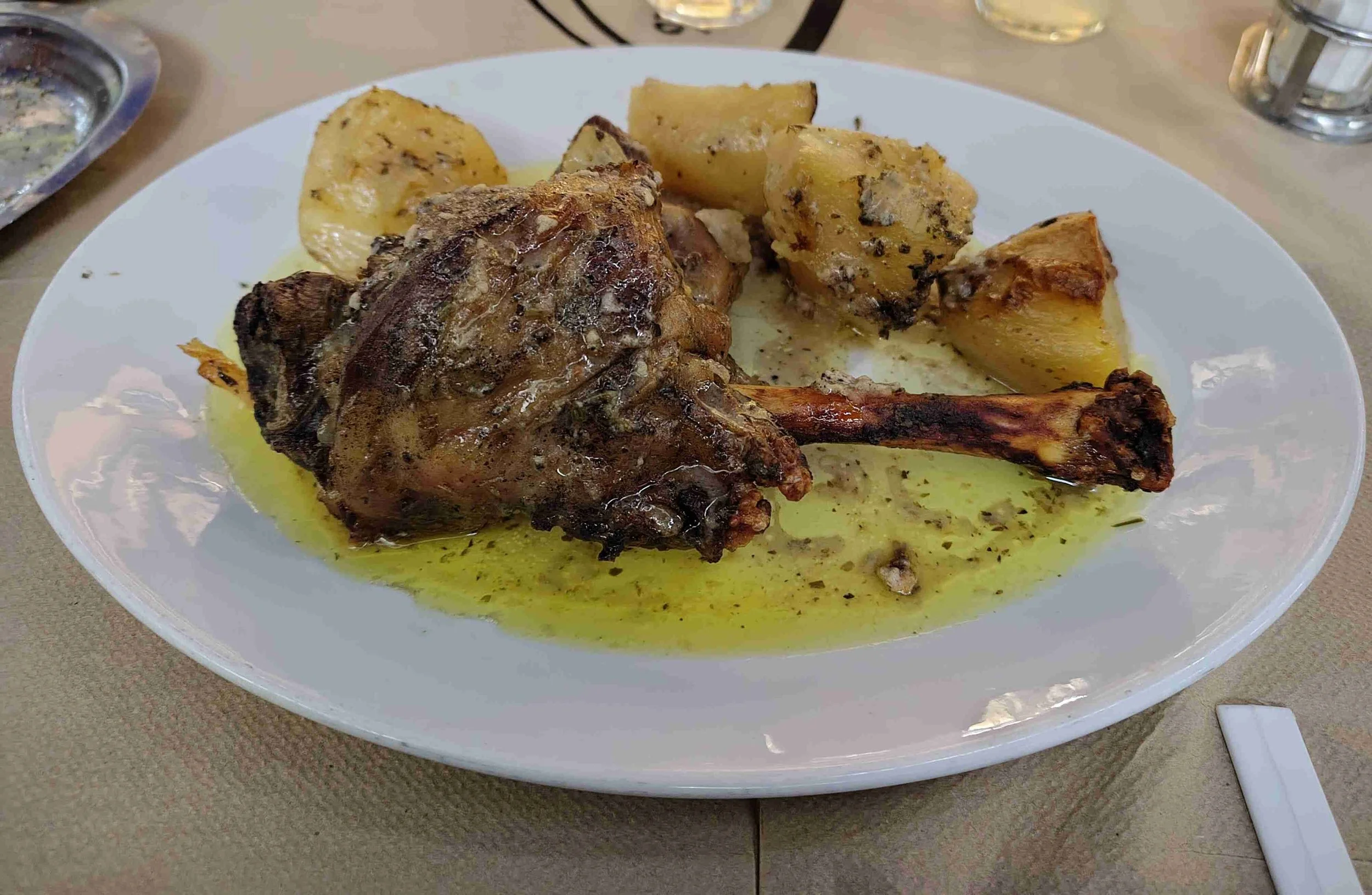
arni sto fourno
roast lamb
What is it?
Arni sto fourno is oven roasted lamb with potatoes, simple yet delicious. It literally translates to “lamb in the oven,” though on menus you may also see it listed as “oven baked lamb” or simply “roast lamb.” It is often slow roasted so the meat becomes very tender and the potatoes absorb the lamb’s juices.
What is in it?
It is typically made with a cut of lamb such as the leg or shoulder, roasted with potatoes, olive oil, lemon juice, garlic, oregano, salt, and pepper.
Where can I eat it?
You’ll come across this dish occasionally, especially in more traditional tavernas, though it is less commonly listed than some other Greek classics. In Athens, a good option is The traditional, which serves traditional Greek dishes in an authentic setting.
Gluten & dairy free.
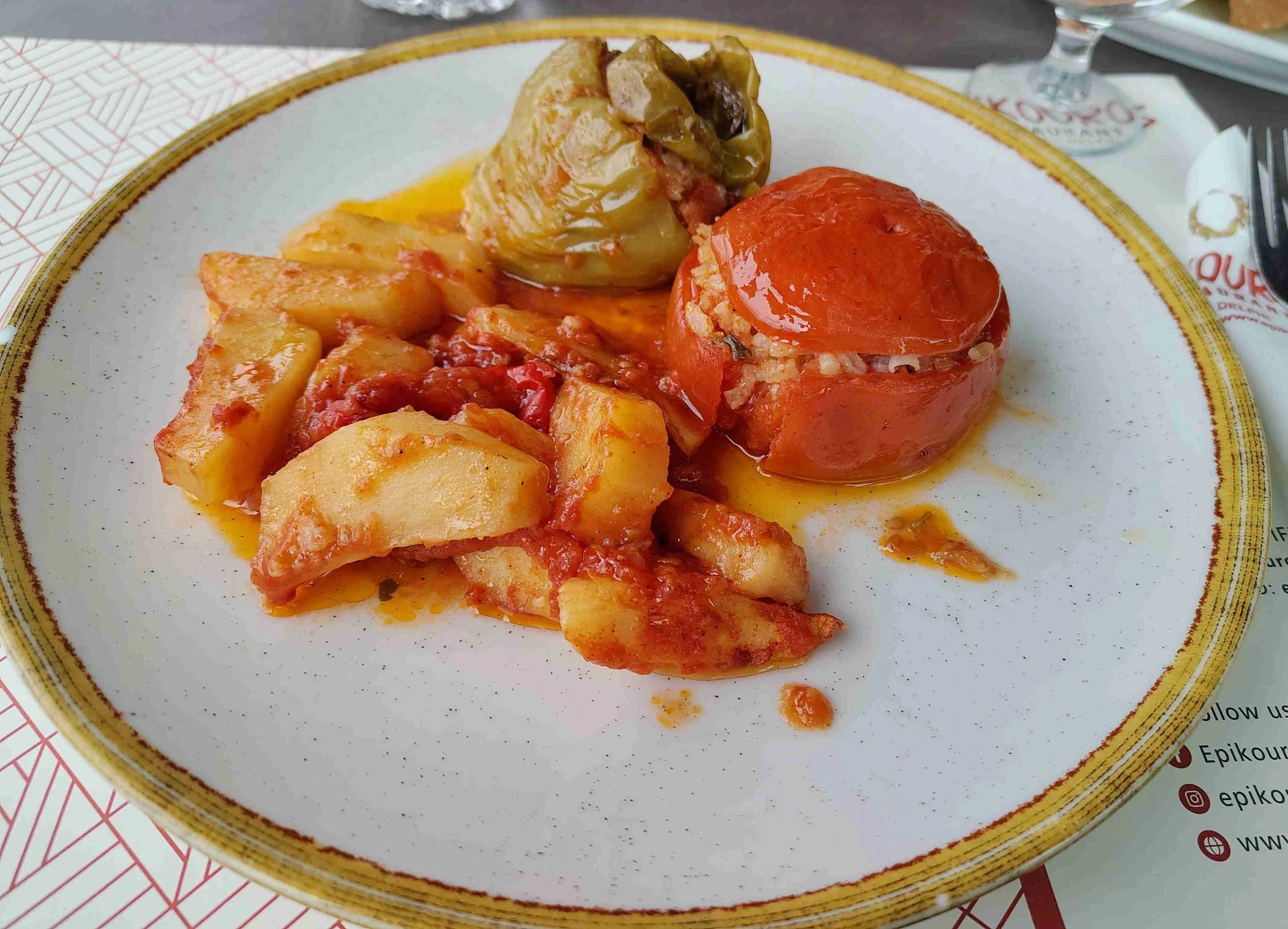
yemista
stuffed vegetables
What is it?
Yemista, also spelled gemista, is a classic Greek dish of stuffed vegetables, most commonly peppers and tomatoes filled with rice and baked in the oven. The name simply means “stuffed” in Greek. Traditionally, the dish is vegetarian, though versions including minced meat are also common.
What is in it?
Yemista are made from peppers and/or tomatoes stuffed with a mixture of rice, onion, garlic, herbs such as parsley and mint, and olive oil. In non vegetarian versions, minced meat is added to the rice filling. It is often served with roasted potatoes in a tomato based sauce.
Where can I eat it?
It’s one of the most common dishes on traditional Greek menus. In English, it may simply be listed as “stuffed vegetables.” The traditional in Athens serve a delicious version.
Traditionally vegan, dairy & gluten free.
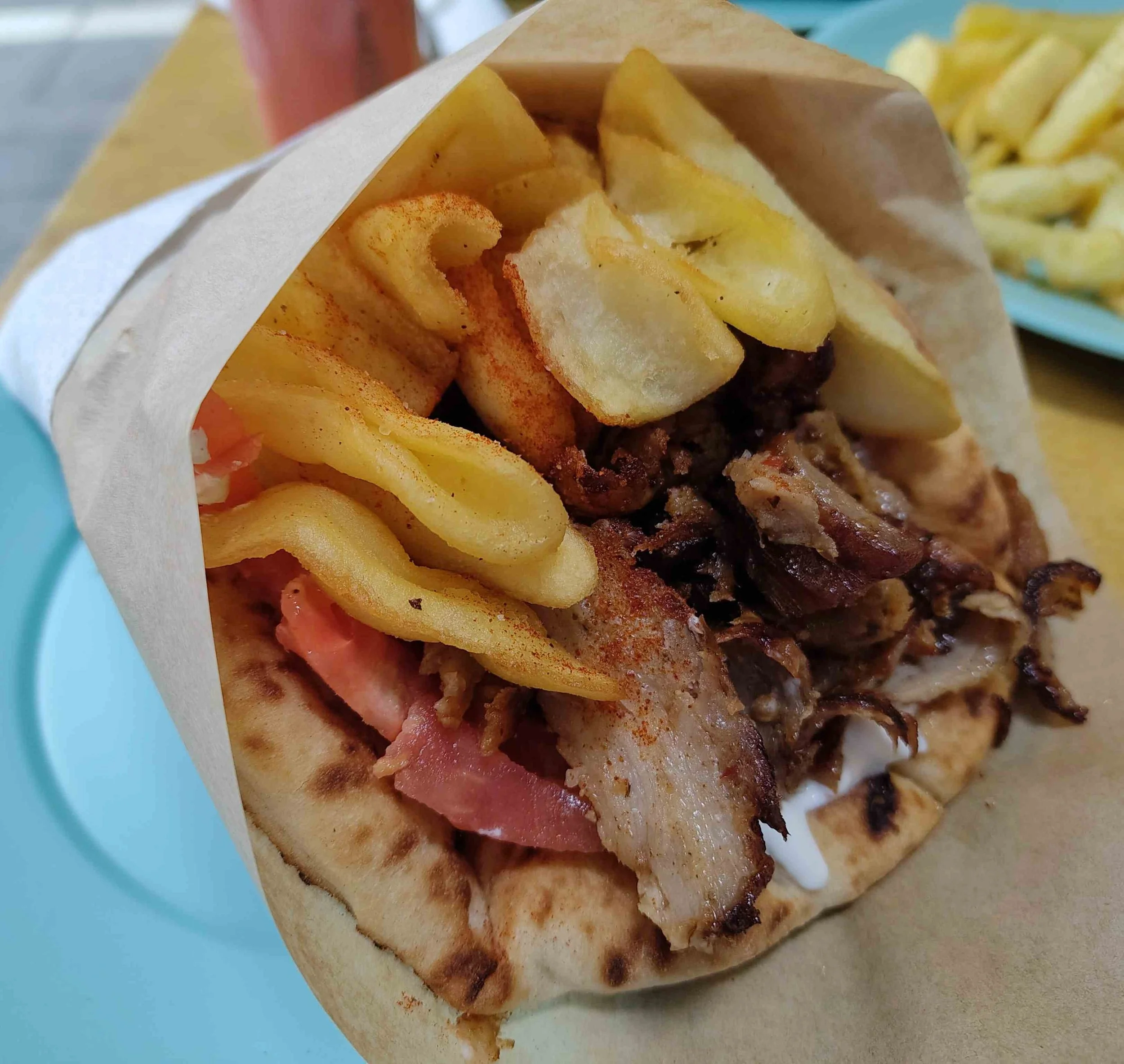
gyros
pork kebab
What is it?
Gyros is a Greek street food similar to döner kebab, made with thinly sliced meat cooked on a vertical rotisserie. In mainland Greece it is most traditionally made with pork, though chicken is also common elsewhere. The meat is shaved off as it cooks and usually served in pita bread, often with fries inside the wrap.
What is in it?
Traditional gyros is typically made with pork or chicken, and served in pita bread with onion, tomato, tzatziki, and often fries.
Where can I eat it?
It is ubiquitous across Greece and can be found in almost any takeaway shop.
Dairy free
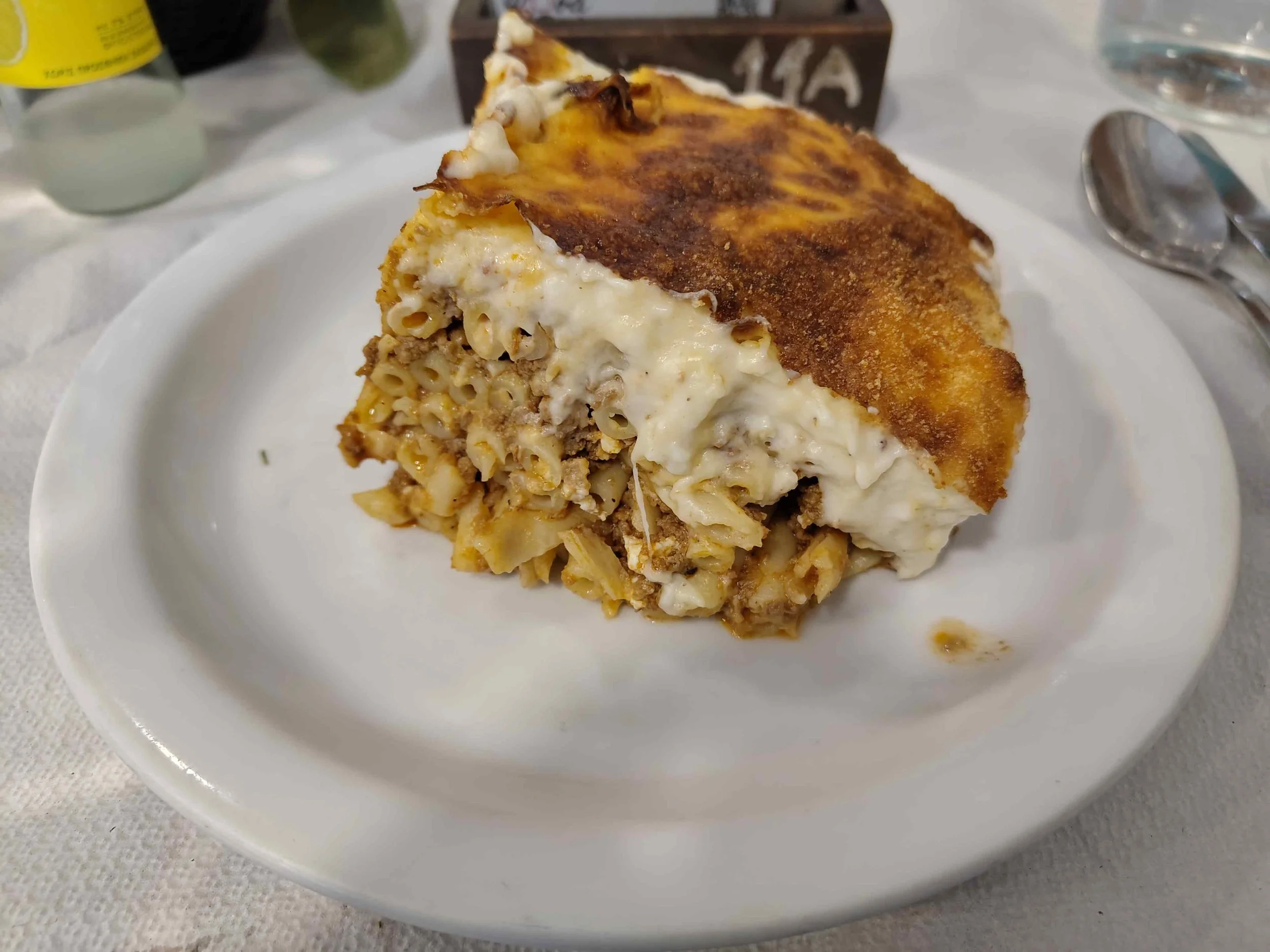
pastitsio
Greek lasagne
What is it?
Pastitsio is a classic Greek baked pasta dish made with layers of pasta, minced meat, and a thick béchamel sauce. It’s often described as “Greek lasagna,” which is a fair comparison, though the flavours and structure are quite distinct. Unlike lasagna, pastitsio is typically arranged in defined layers and baked into neat slices, with a creamy top and a meat filling underneath.
What is in it?
The dish is usually built in three layers, thick tubular pasta, traditionally pastitsio pasta similar to bucatini or penne; minced beef cooked with tomatoes, onion, garlic, olive oil, and spices such as cinnamon or allspice; and béchamel sauce made from milk, butter, and flour, often with egg and sometimes cheese.
Where can I eat it?
Along with moussaka, it is one of the most common classic dishes in traditional Greek restaurants across the country and in places serving tray baked, home style dishes, so you should have no trouble finding it.
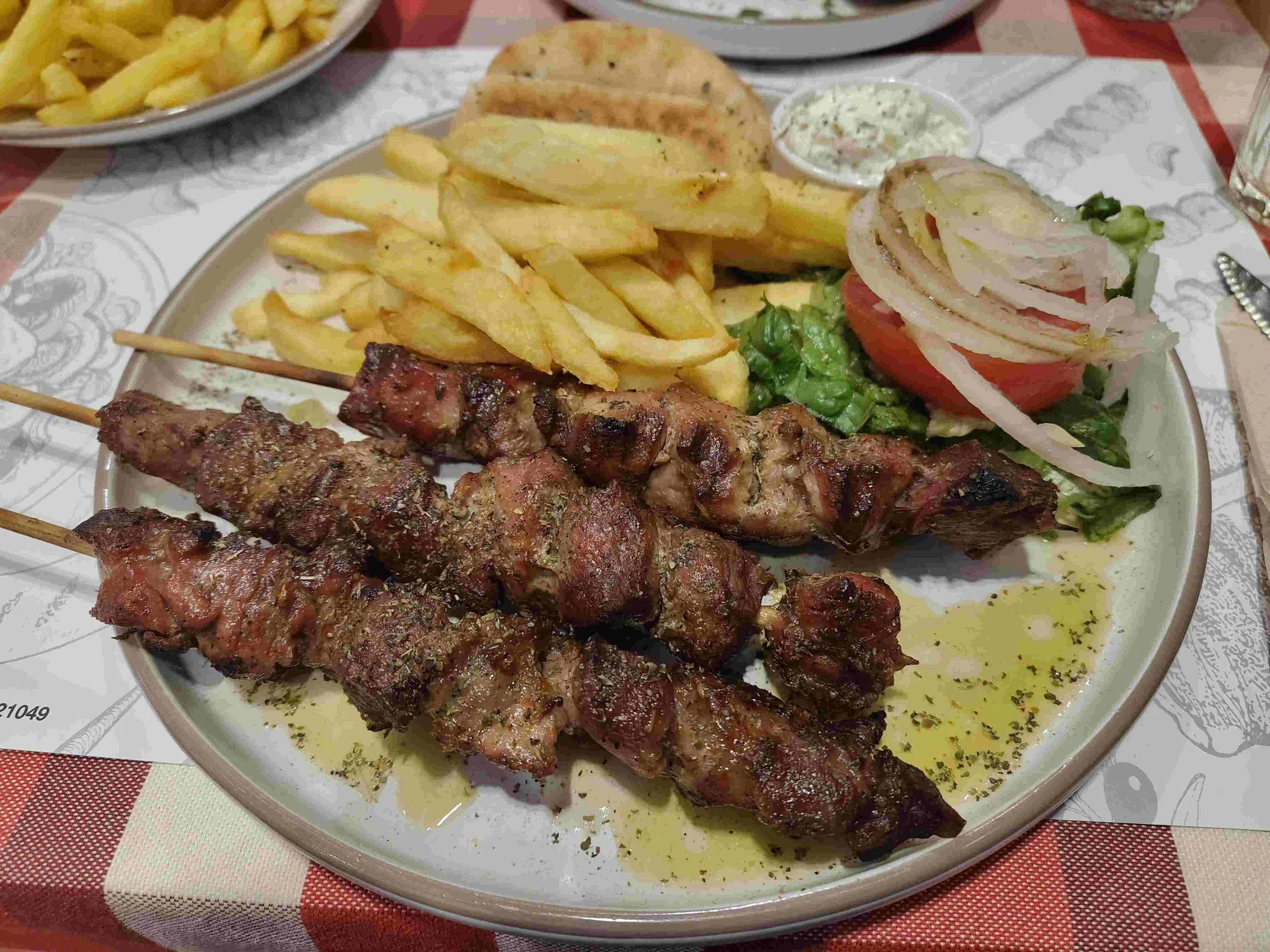
souvlaki
meat skewers
What is it?
Souvlaki is one of Greece’s most popular dishes, consisting of grilled meat skewers, most traditionally made with pork, although chicken is also very common. The meat is often cooked over charcoal, giving it a smoky flavour, and can be served either on the skewer or in pita bread. In Athens, the skewer itself is often referred to as kalamaki. When served in a wrap, it typically includes tomatoes, onions, fries, and tzatziki.
What is in it?
Souvlaki is made from chunks of pork or chicken marinated in olive oil, lemon juice, garlic, and herbs such as oregano, then grilled on skewers. When served as a wrap, it usually includes pita bread, tomatoes, onions, fries, and tzatziki, although other variations are common.
Where can I eat it?
Along with gyros, it’s one of the most popular foods in Greece, found at takeaway shops, traditional restaurants, and psistaria. You’ll have no trouble finding it in any town or city across the country.
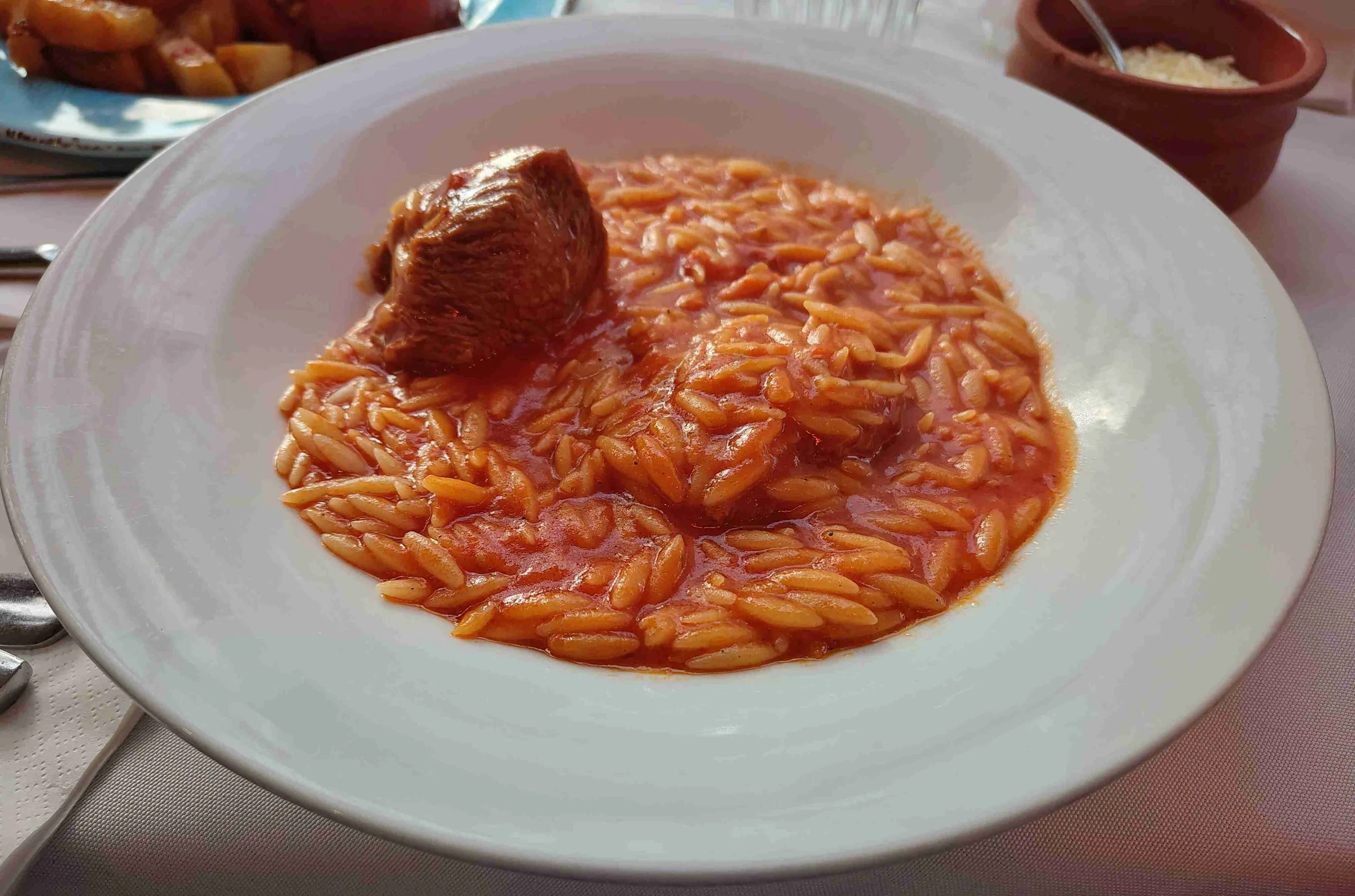
giouvetsi
orzo & tomato sauce
What is it?
Giouvetsi is an oven baked dish of orzo pasta, cooked in a tomato sauce with beef or lamb. It’s a classic Greek casserole.
What is in it?
It is made with beef or lamb, orzo pasta, tomato sauce, olive oil, onions, garlic, and herbs such as oregano or bay leaf. It is often topped with grated cheese, usually kefalotyri or a similar hard cheese.
Where can I eat it?
A traditional home style dish, it is commonly found in tavernas across Greece, particularly those serving slow cooked or oven baked dishes. In Athens, you’ll find it in places like Gods’ Restaurant.
Ingredients listed reflect common or typical components of this dish as served in restaurants or street‑food vendors. Variations by region, season, or vendor are common. This information is provided for general reference only. If you have dietary restrictions or allergies, please verify ingredient details independently. We assume no liability for accuracy or outcomes.
