top 10 Balkan foods from the former Yugoslavia
our top 10 traditional foods from the former Yugoslavia (Bosnia, Montenegro, Slovenia, Croatia, North Macedonia & Serbia)

burek
Bosnia
What is it?
No better place to start a former Yugoslavia food trip than the ubiquitous burek, possibly the world’s most delicious pie. Burek (also spelled börek) is a filo pastry pie that comes either as individual spiral portions or as large round pies cut like pizza. It’s flaky and greasy in the best way, and utterly moreish, the first time we tried it we loved it and, despite promising ourselves otherwise, ended up eating them far more often than any sensible person should admit. Across the Balkans you’ll find the same family of pies, but names and rules change by country. Crucially: in Bosnia and Herzegovina the name burek is reserved for the meat version; cheese, spinach and potato versions are called pita (pee‑tah). After trying them in every country we would say Bosnian burek is the benchmark.
What is in it?
Burek is made from multiple layers of thin pastry sheets brushed with oil, wrapped around a filling such as:
minced or ground beef (sometimes lamb or pork) mixed with onion and spices,
cheese
spinach and cheese
potato
pumpkin
Where can I eat it?
You’ll find burek and its cousins in virtually every bakery, across the countries of the former Yugoslavia and in many places it’s a breakfast staple. For the real experience, seek out traditional buregdžinicas or older style bakeries where the filo is still handmade and stretched paper thin. In some modern bakeries, particularly in parts of Serbia and Croatia, you may come across versions made with puff pastry, easier to produce, but this is sacrilege compared to the authentic, flaky layers of proper burek.
Vegetarian versions available.
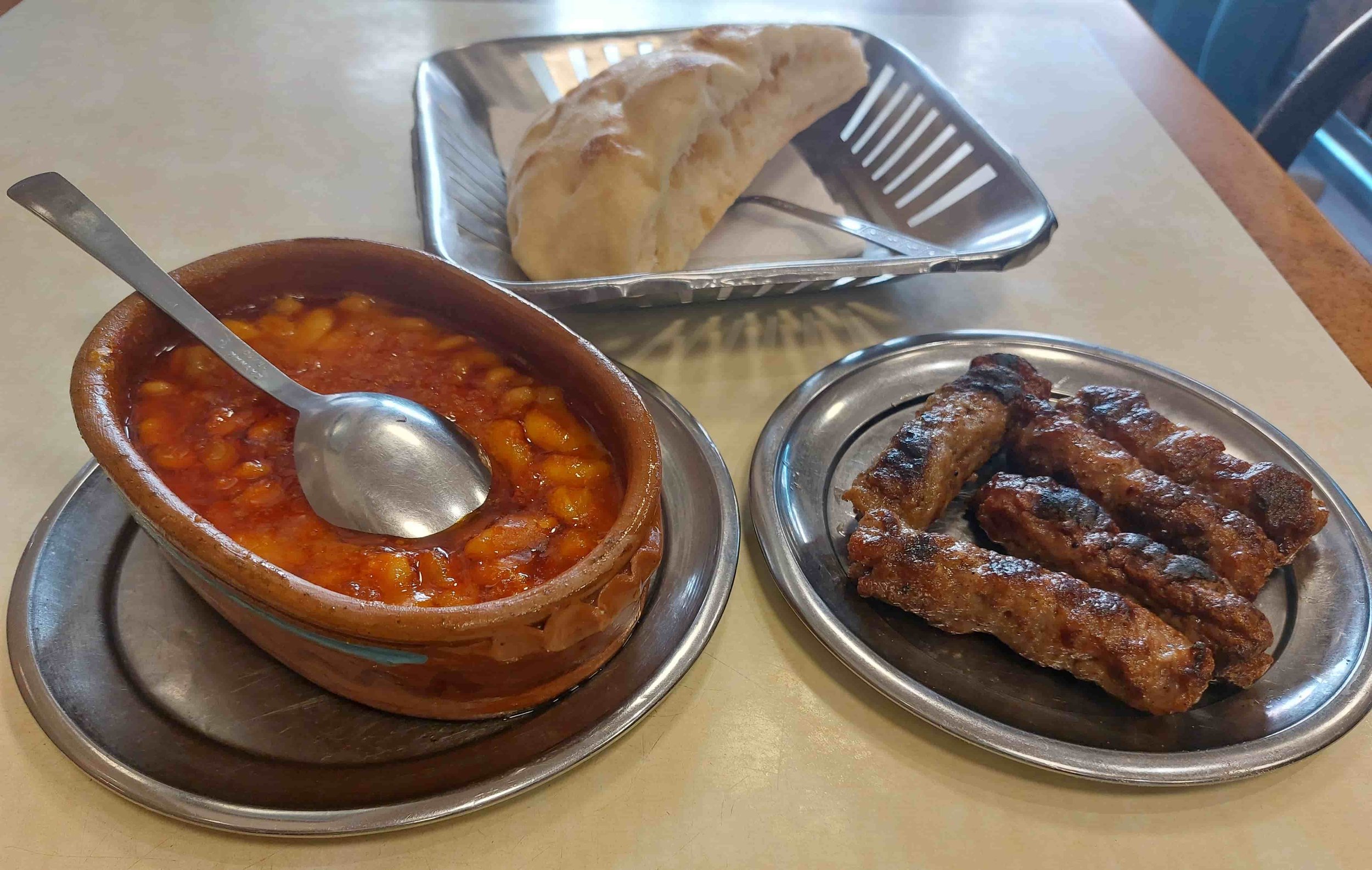
kebapi & tavče gravče
North Macedonia
What is it?
Kebapi & Tavče Gravče is one of those perfect former Yugoslav combinations that feels greater than the sum of its parts.
Kebapi (Ќебапи), North Macedonia’s take on the Balkan ćevapi, are small, skinless grilled minced meat sausages, typically made from a pork and beef mix and cooked over charcoal. Mildly seasoned and served in neat rows (usually 5 or 10), they’re a staple across the region, but in North Macedonia, they really shine when paired with Tavče Gravče.
Tavče Gravče, the country’s national dish, is a rich baked bean stew traditionally cooked in a clay pot. Together, kebapi and Tavče Gravče form a kind of Balkan “beans and sausages” — but far better than that sounds. The smoky, juicy meat alongside the soft, paprika rich beans is a combination that just works, and easily one of the best meals in the region.
What is in it?
Kebapi: minced pork and beef, lightly seasoned with salt, pepper, and sometimes garlic or paprika, then grilled over charcoal.
Tavče Gravče: white beans baked with onions, peppers (fresh or dried), garlic, and paprika, often thickened slightly with flour and oil, and seasoned with bay leaf, salt, pepper, and sometimes parsley.
Where can I eat it?
You’ll find kebapi all over North Macedonia and across much of the former Yugoslavia, where they’re known more broadly as ćevapi; in Macedonia, kebapi is simply the local name for the same style of dish. This pairing is especially associated with North Macedonia, so look for traditional grills (kebapčilnici) or local restaurants where the meat is cooked over charcoal and the beans come bubbling in a clay dish. In Skopje, places like the Old Bazaar are packed with reliable spots — Kosmos Kebabchilnica is a standout if you want to try the combo done properly.
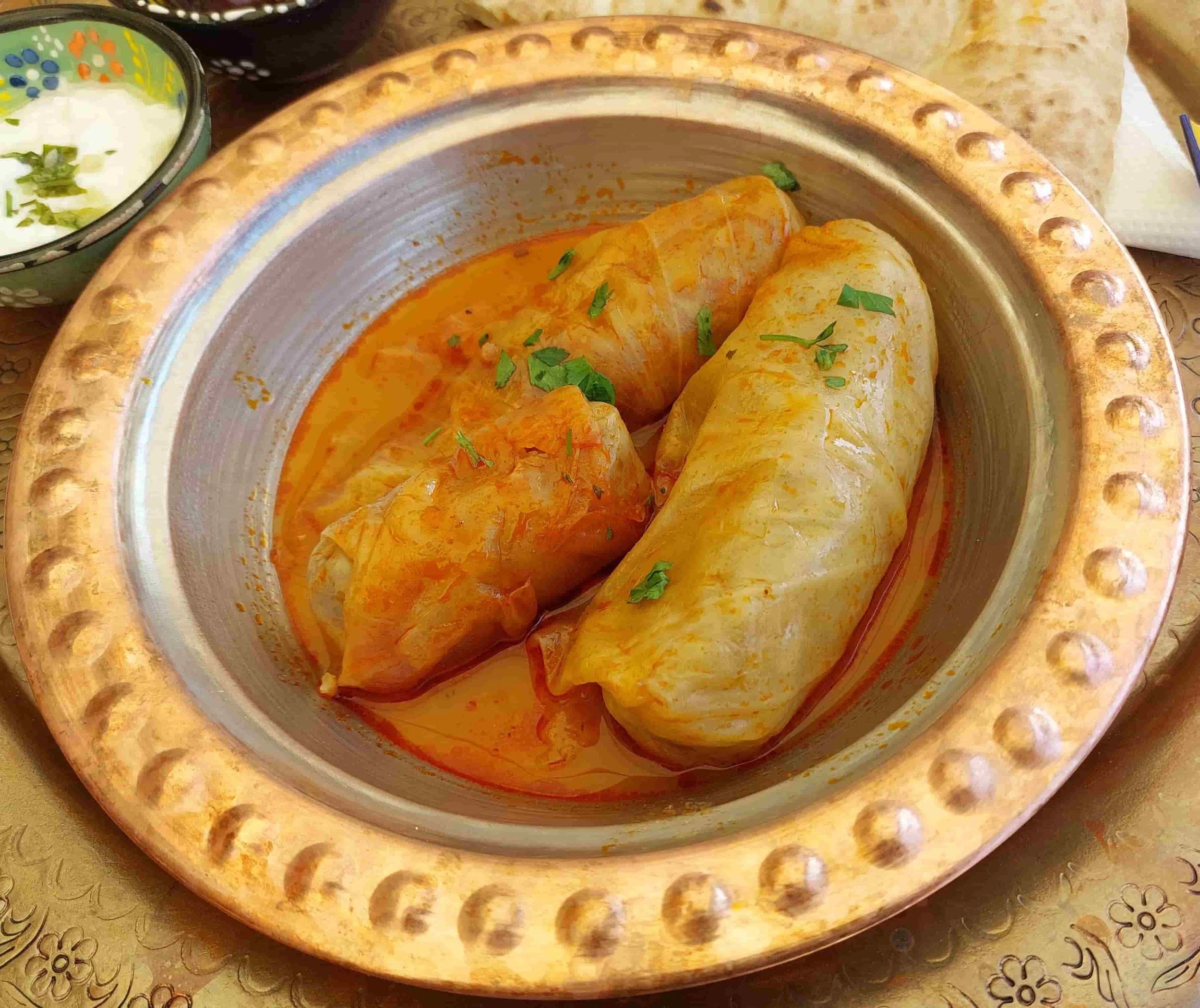
sarma
across the region
What is it?
Sarma is one of the great comfort foods of the former Yugoslavia, cabbage leaves wrapped around a filling of meat, rice, onion and spices. It has Ottoman roots, and the name comes from the Turkish verb sarmak, meaning “to wrap.” Across the region it’s especially associated with winter cooking, family gatherings and big communal meals
What is in it?
Pickled cabbage leaves filled with beef or pork (sometimes lamb), rice, onion, and garlic, along with herbs and spices such as paprika, parsley, and bay leaves. It’s simmered in a flavourful broth, often served with bread for dipping and sometimes topped with sour cream. Vegetarian or fasting versions appear mainly in religious or seasonal contexts rather than as the default but are sometimes available.
What is it?
You’ll find sarma in traditional restaurants throghout the former Yugoslavia.
Dairy and gluten free. Vegetarian versions sometimes available.
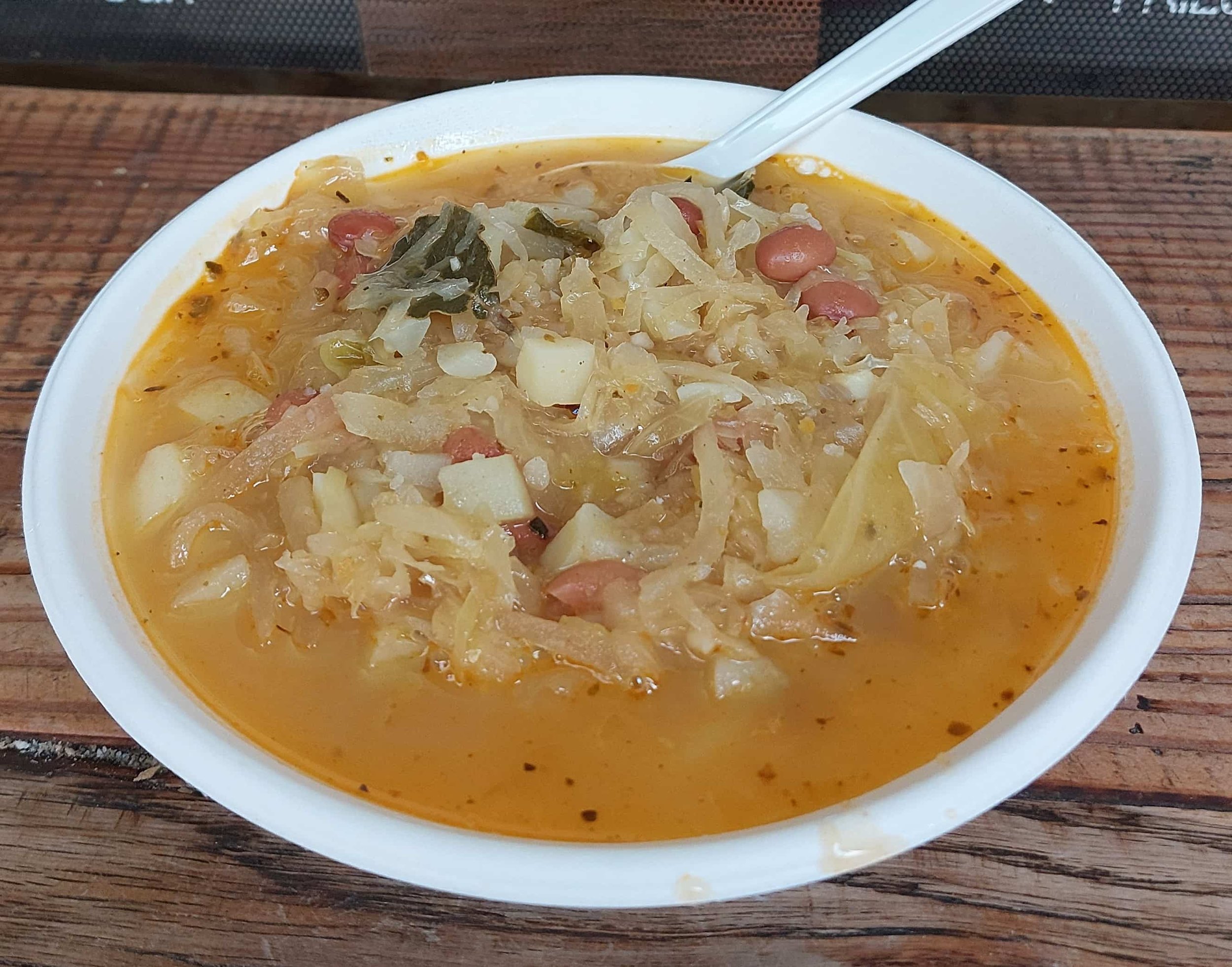
jota
Slovenia
What is it?
Jota is a traditional stew popular in Slovenia’s Karst and Littoral regions, made from beans, potatoes and sauerkraut, or sometimes sour turnip. Many versions include smoked pork or kranjska klobasa, a traditional Slovenian sausage seasoned with garlic and pepper.
What is in it?
Jota is typically made with beans, potatoes, sauerkraut, or sometimes sour turnip, garlic, onion, bay leaves and smoked pork, bacon, ribs or kranjska klobasa. The stew is simmered slowly until thick, often with some lflour to help thicken the broth.
Where can I eat it?
A good place to try it in Ljubljana is Klobasarna, which specialises in kranjska klobasa and serves jota, including versions with or without sausage
Vegetarian versions available, usually dairy free.

čobanac
Croatia
What is it?
Čobanac is a traditional Slavonian meat stew from eastern Croatia, especially popular in the regions of Slavonia and Baranja. It’s a filling, spicy dish originally cooked by shepherds (čobani — hence the name), slow cooked over an open fire in a large cauldron (kotlić).
What makes čobanac unique is its use of multiple types of meat and lots of paprika, giving it a slightly fiery flavour. It’s often compared to goulash, but čobanac typically includes more than one meat and has a richer, stronger paprika profile. Both are delicious, though!
It is usually served with bread or with domaći rezanci (homemade thin egg noodles), or krpice/fleky, small square or irregular pasta pieces that are also traditional in Slavonia.
What is in it?
Authentic čobanac typically includes two or more meats, often a mix of beef, pork, and veal, along with onions, garlic, lots of sweet Slavonian paprika, hot paprika or chilli, bay leaf, salt, and pepper.
Where can I eat it?
Čobanac is most commonly found in Slavonia and Baranja at traditional restaurants. It’s rarely seen on the coast, but in larger cities like Zagreb you can find it more easily. We enjoyed a huge one at Stari Fijaker in Zagreb, for example
Dairy free.
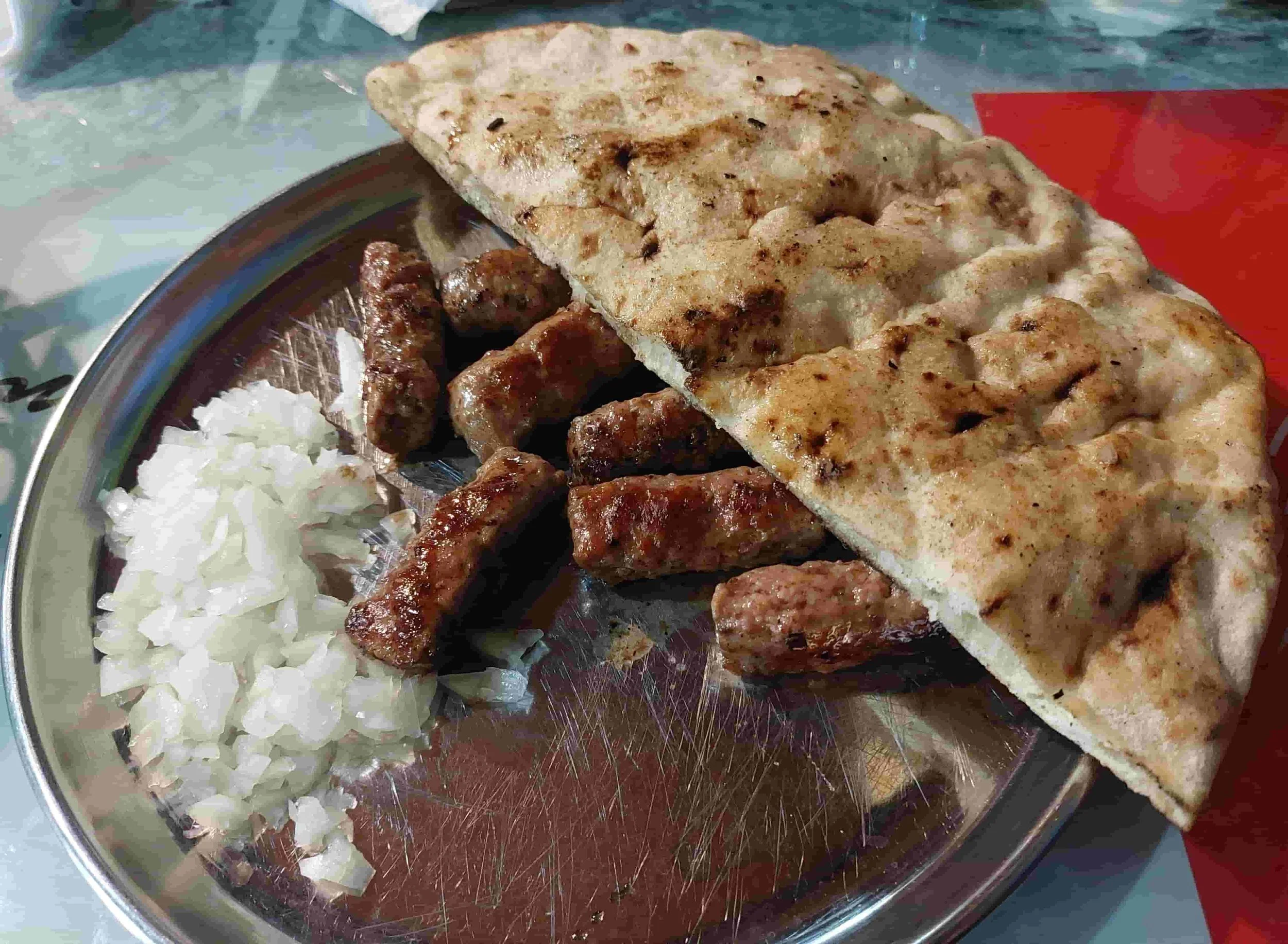
ćevapi
Bosnia
What is it?
Ćevapi are small grilled minced meat sausages and one of the most iconic foods of the former Yugoslavia. Salty, juicy they’re usually served in a soft bread that soaks up the delicious meat juices, with chopped onion on the side. Bosnia is the spiritual home of the dish, but you’ll find some version of ćevapi across the whole region including North Macedonia where they have there version known as kebapi. They are commonly served in portions of 5 or 10.
What is in it?
The basic idea is the same everywhere, but the meat mix changes. In Bosnia, ćevapi are often made from beef or a beef and lamb mix, while in Serbia, Croatia and parts of the wider former Yugoslavia, pork is also commonly used. They’re usually seasoned simply with salt, garlic and sometimes pepper. Served with lepinja or somun style bread, chopped raw onion, and sometimes kajmak or ajvar. In Bosnia, the classic serving is ćevapi inside bread with onion and maybe kajmak. In other parts of the former Yugoslavia, you may see slightly different breads, side dishes or portion sizes, but the formula is always the same: grilled meat, soft bread and simple accompaniments.
Where can I eat it?
You’ll find Ćevapi all across the former Yugoslavia in takeaways, restaurants, and especially in specialized eateries called ćevabdžinicas, which focus exclusively on this dish.
Dairy free unless served with kajmak.
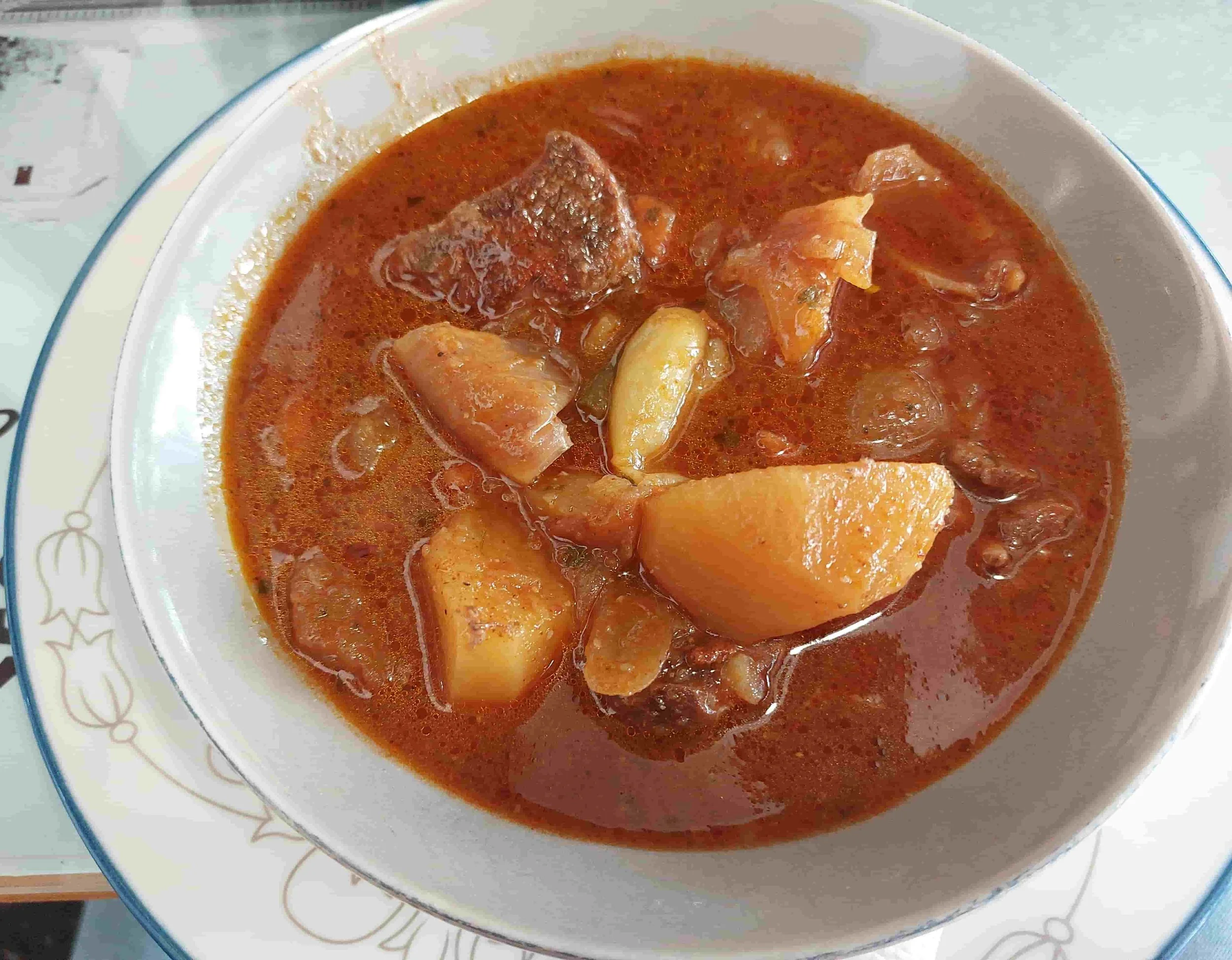
bosanski lonac
Bosnia
What is it?
One of the national dishes of Bosnia and Herzegovina, Bosanski Lonac (Bosnian Pot) is a tasty, flavourful stew made with chunky pieces of vegetables and meat. Traditionally, it has no fixed recipe and is made with whatever ingredients are available. The version pictured is served in a tomato based gravy with a hint of paprika, delicious!
What is in it?
The recipe varies, but it generally includes meat (usually beef or lamb) stewed until tender. Typical vegetables include potatoes and carrots, with variations that may add peas, beans, onions, cabbage, and tomatoes. Herbs and spices often include parsley, garlic, peppercorns, paprika, and bay leaves.
Where can I eat it?
As a national dish, Bosanski Lonac is commonly found on the menus of Aščinicas (traditional restaurant) throughout Bosnia.
Dairy and gluten free.
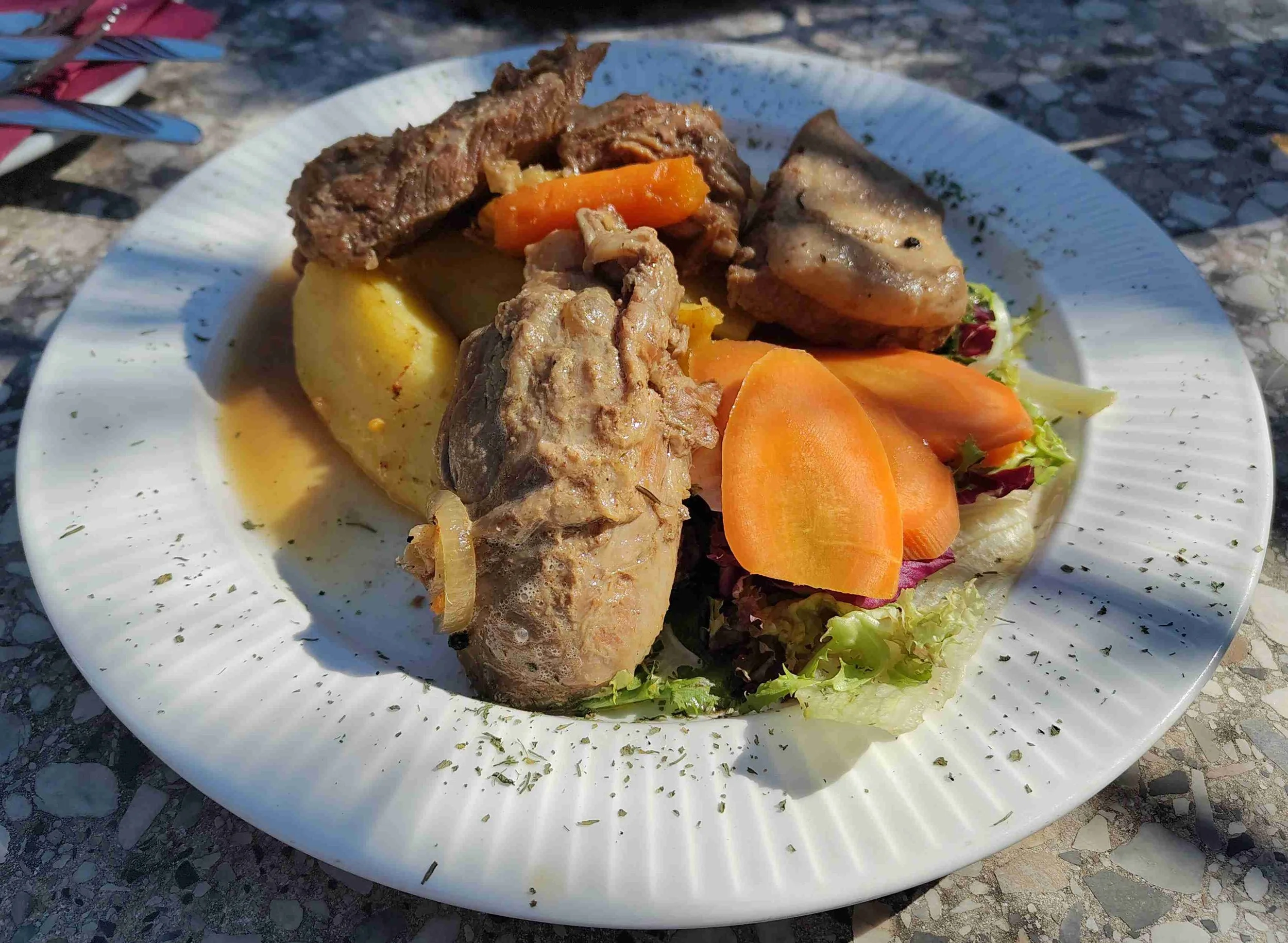
ispod sača
Montenegro
What is it?
A classic of Montenegro, Ispod sača literally translates to “under the bell” and refers to a traditional Balkan cooking method rather than a single fixed recipe. Food is placed in a shallow metal or clay pan, covered with a heavy domed lid (called a sač), and hot coals or embers are piled on top. This creates slow, even heat from above and below, producing incredibly tender meat while the vegetables roast gently in the juices. The method is commonly used for lamb, veal, goat, or chicken.
What is in it?
The meat is the star of the dish, most traditionally lamb, although veal, goat, or chicken are also common. The meat is usually cooked together with potatoes, onion, garlic, and sometimes carrots or peppers, with simple seasoning such as salt, pepper, and a little oil.
Where can I eat it?
You’ll find dishes cooked ispod sača at many traditional Montenegrin restaurants, although they are sometimes prepared in limited quantities because the cooking process takes several hours. Konoba Lanterna is a well known place to try it in Podgorica where they serve a version made with veal.
Dairy and gluten free.
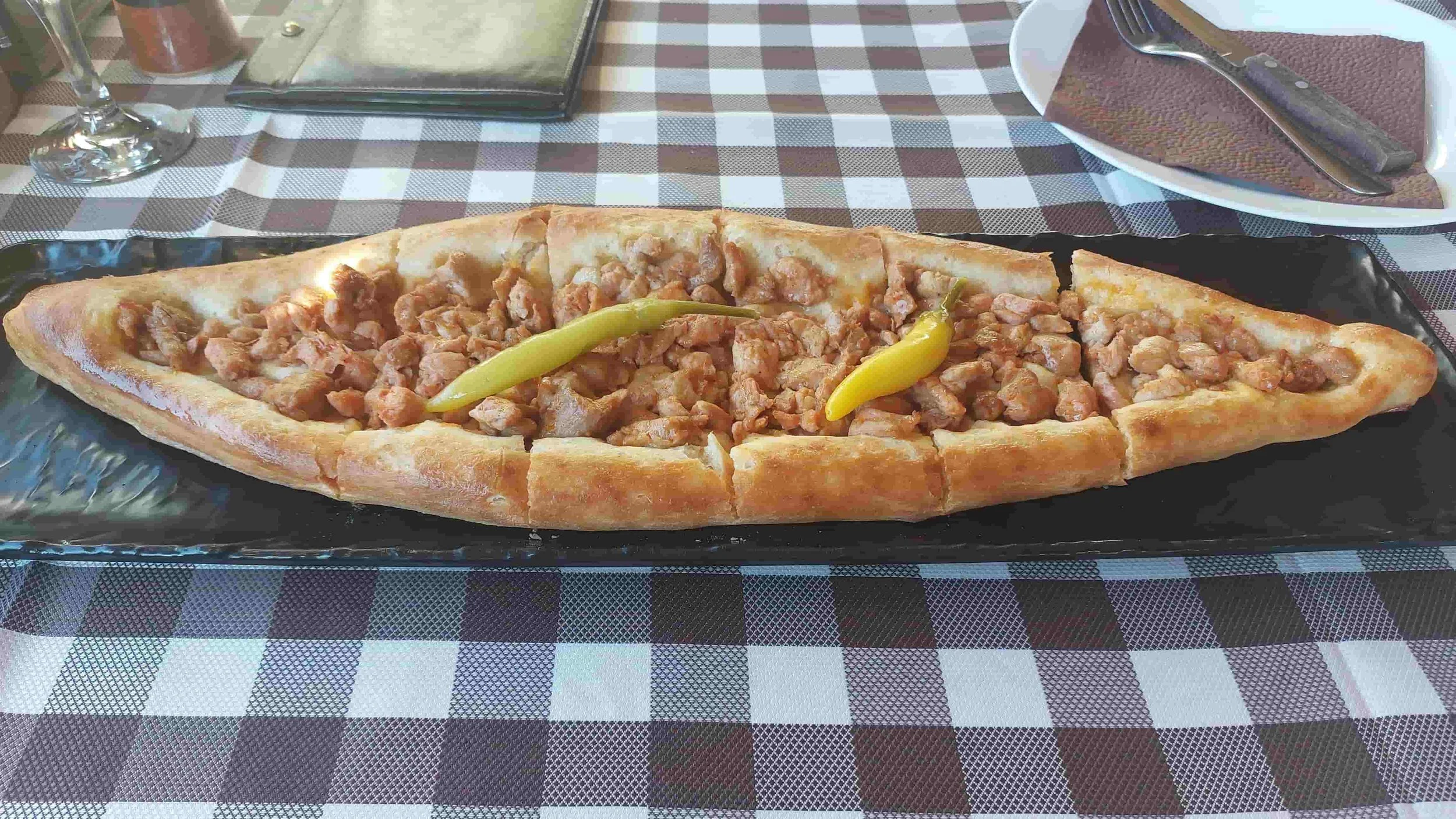
pastrmajlija
North Macedonia
What is it?
Pastrmajlija (Пастрмајлија) is one of North Macedonia’s most iconic dishes, in fact, if you try only one food in the country, make it this. It’s an oval, boat shaped flatbread topped with chunks of seasoned meat, usually pork, and it originates from the cities of Štip, Veles, and the eastern/central regions. The name comes from pastrma, meaning salted or preserved meat (originally mutton), though today pork pastrmajlija is by far the most common.
Despite first impressions, it isn’t a pizza, there’s no cheese, no sauce, and the focus is entirely on the savoury, lightly cured meat. It may look a little like pizza, but it’s uniquely Macedonian, rarely found outside the country and absolutely delicious.
What is in it?
Pastrmajlija is made from a simple bread dough (flour, water, yeast, salt, oil). It’s topped with cubes of salted pork, seasoned lightly with salt, pepper, and sometimes chilli flakes. The meat is often briefly fried before baking. It’s usually served with a few spicy peppers on top.
In more modern versions, the toppings have expanded beyond the classic pork. Some restaurants add an egg cracked on top towards the end of baking. Others offer variations using chicken, beef, lamb, or even smoked meats, and it’s not uncommon to see additions like cheese, mushrooms, or onions. While purists favour the traditional style, these contemporary takes are now widely available and popular.
Where can I eat it?
It’s best in the regions where it originated, especially Štip, where you’ll find it everywhere. Like any great regional dish, it has spread to the rest of the country, many traditional restaurants in Skopje serve it as well. We had a really good one at Pastrmajlija & Grill House, located a little outside the centre but worth the effort.
Dairy free
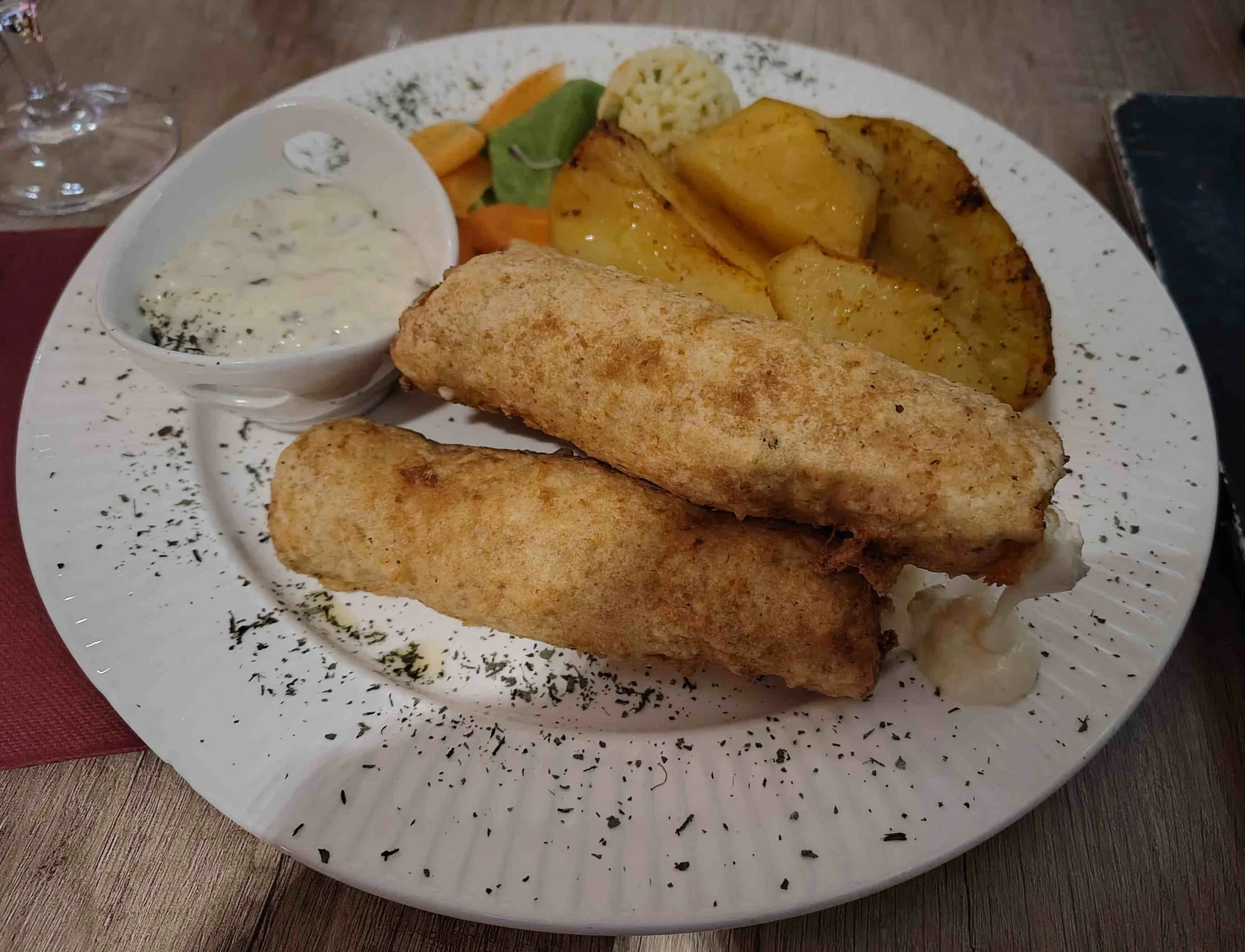
podgorički popeci
Montenegro
What is it?
Podgorički popeci, often simply called popeci, are a traditional dish from Podgorica, Montenegro. They are similar to cordon bleu: thin slices of meat are rolled around cured ham and cheese, then breaded and fried. The filling most commonly uses Njeguški pršut, Montenegro’s famous smoked prosciutto.
What is in it?
Popeci are usually made from thinly sliced veal rolled around Njeguški pršut and cheese, often a local semi hard cheese such as Njeguški sir. The rolls are then coated in flour, egg and breadcrumbs, and deep fried. They are typically served with fried potatoes, fries or roasted vegetables, sometimes with a simple salad.
Where can I eat it?
Since the dish originates in Podgorica, the capital is one of the best places to try it, and it appears on the menus of many traditional Montenegrin restaurants in the city and surrounding area.
For more food from the region, check out our dedicated Bosnian food guide.
Ingredients listed reflect common or typical components of this dish as served in restaurants or street‑food vendors. Variations by region, season, or vendor are common. This information is provided for general reference only. If you have dietary restrictions or allergies, please verify ingredient details independently. We assume no liability for accuracy or outcomes.
