all the foods - Brazil
Here you will find a list of all the traditional cuisine we tried in Brazil.
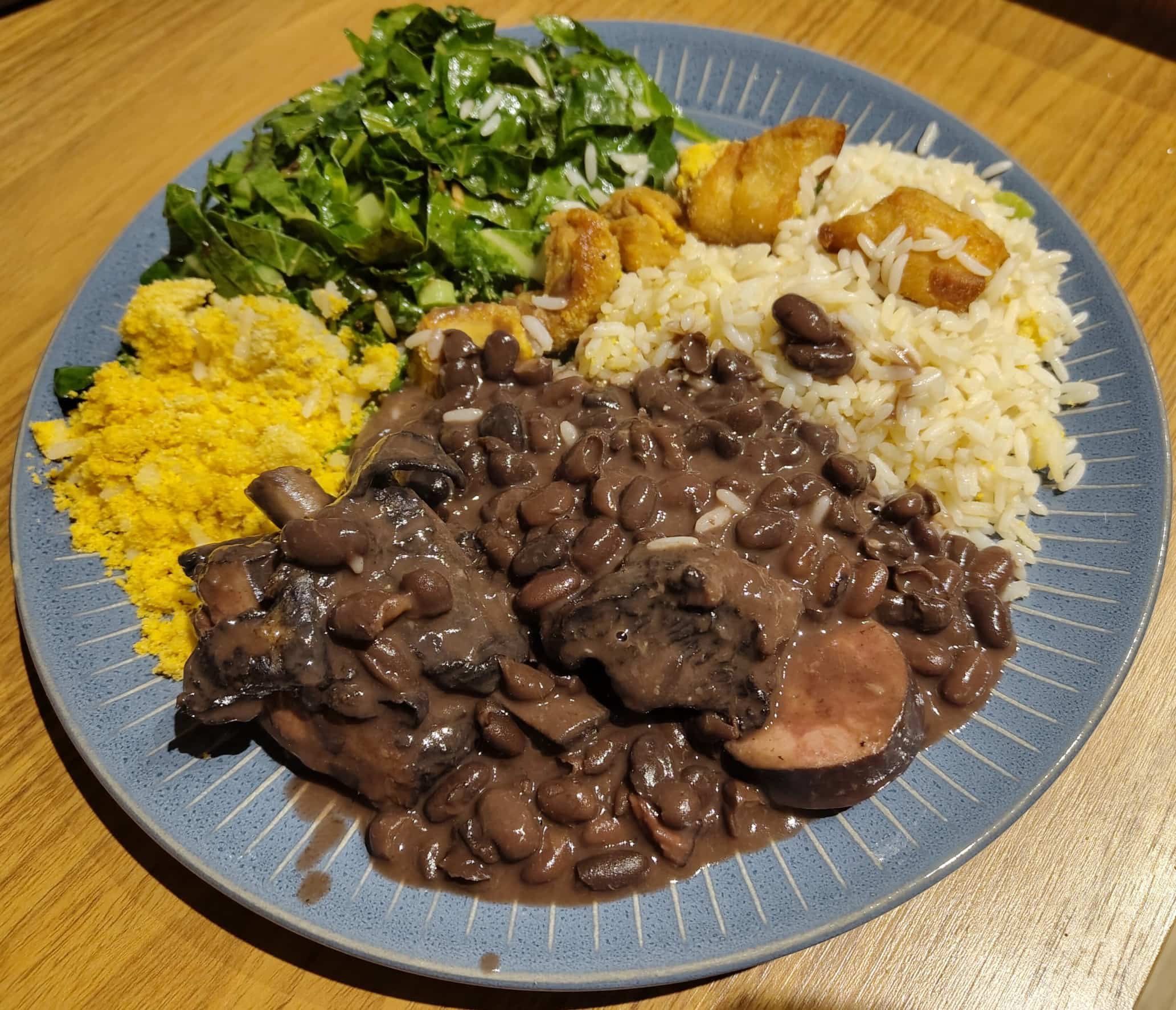
feijoada
black bean & pork stew
What is it?
Feijoada is Brazil’s most famous traditional dish and one of the country’s most delicious. It is a slow cooked black bean and pork stew, making the beans soft and creamy.
It is associated with Rio de Janeiro, although it’s eaten throughout Brazil. Feijoada is particularly popular as a weekend meal, often served with numerous accompaniments, such as farofa (toasted cassava flour), which is mixed into the beans, adding a coarse texture to the creamy stew, and collard greens that are typically sautéed with plenty of garlic.
What is in it?
Traditional feijoada is made with black beans, pork, pork sausage, bacon, pork ribs, onions, garlic and bay leaves. Depending on the recipe, various cuts of pork are used, and some versions also include dried or salted beef.
It is traditionally served with white rice, farofa (toasted cassava flour) and sautéed collard greens
Where can I eat it?
Feijoada is available throughout Brazil, although Rio de Janeiro is particularly famous for it. It is especially common on weekends, when restaurants often serve it as a special.
Gluten free.
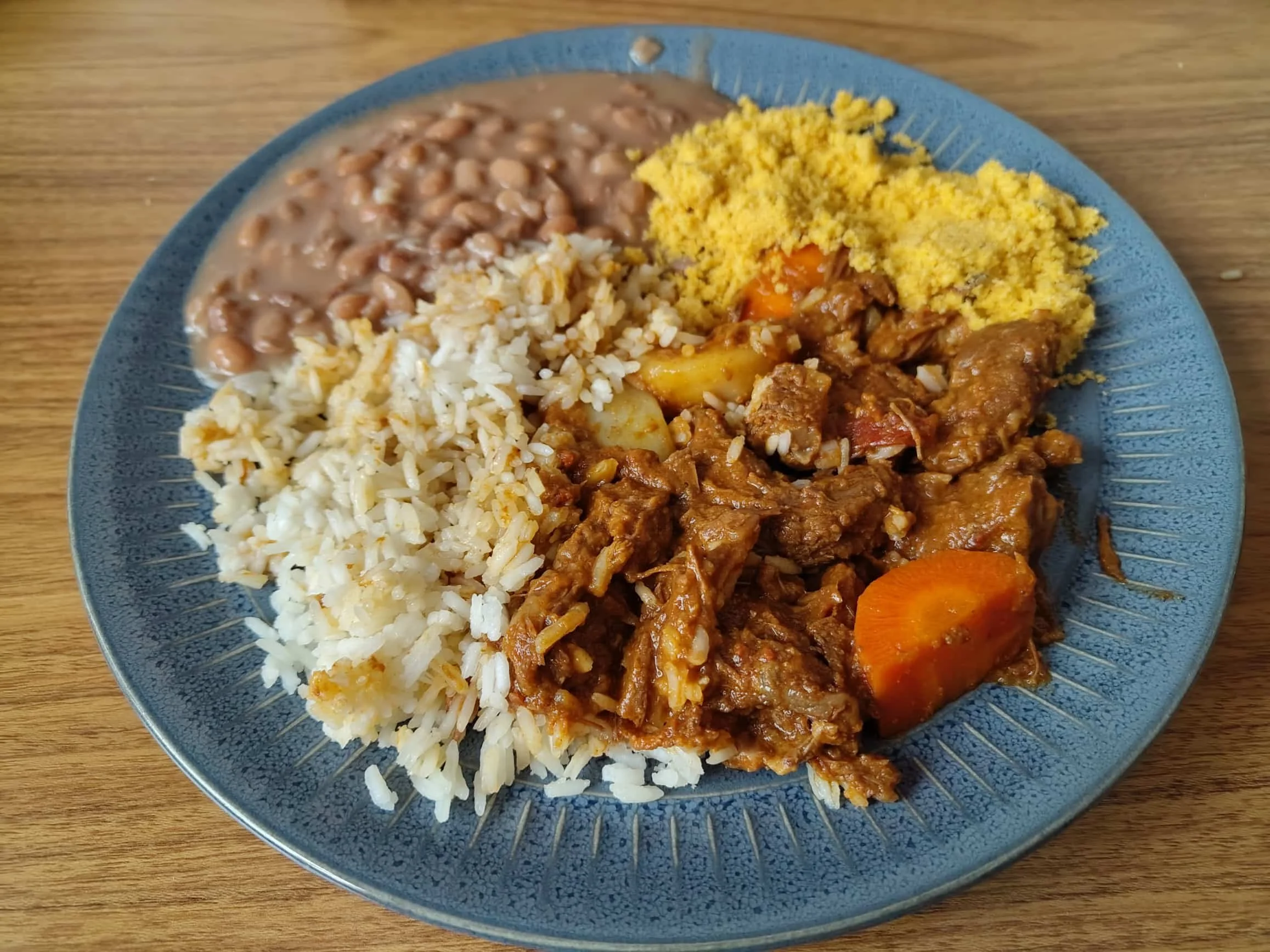
picadinho
beef stew
What is it?
Picadinho is a Brazilian beef stew, particularly associated with the restaurants and botecos (informal bars) of Rio de Janeiro and São Paulo. The name literally means “little chopped [pieces],” referring to the small pieces of beef used in the dish.
The beef is slowly cooked in a rich, savoury sauce. It is simple but delicious comfort food, and the sauce is perfect for mixing into the rice.
There are many regional and household variations, so there is no single definitive recipe.
What is in it?
Picadinho typically contains small pieces of beef, onion, garlic, tomato, stock and seasonings. Depending on the version, it may also include carrots, potatoes, peas, mushrooms, bacon, wine or mustard.
It is commonly served with white rice, beans, farofa (toasted cassava flour), a fried or poached egg, and sometimes fried banana, chips or sautéed greens
Where can I eat it?
Picadinho is widely available throughout Brazil, particularly at restaurants serving traditional comida caseira (home style food). It is especially associated with Rio de Janeiro and São Paulo, where different local versions can be found.
Traditionally dairy free.
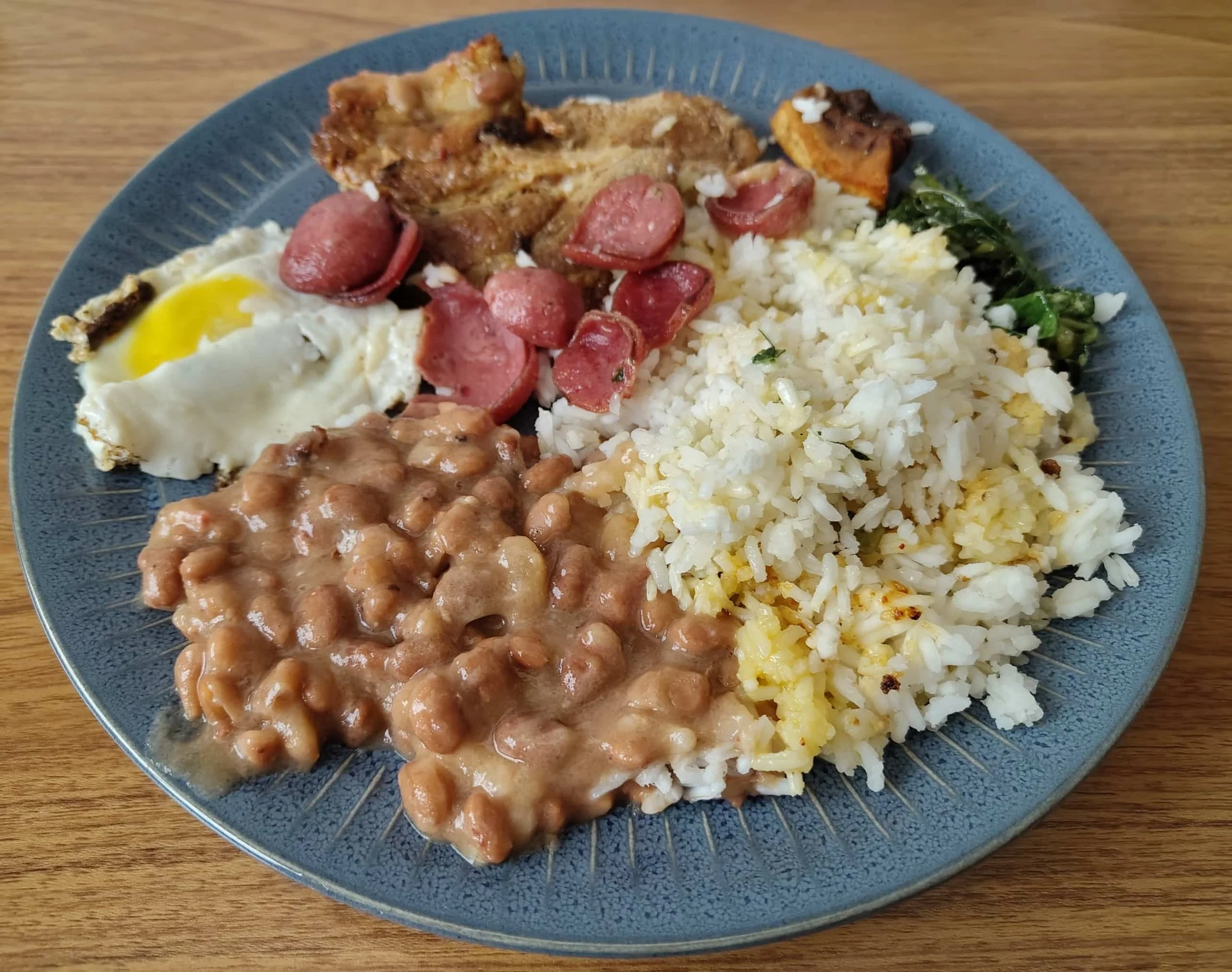
virado
beans, pork & rice
What is it?
Virado, also known as virado à Paulista, is a traditional Brazilian dish from São Paulo state. It is a big plate of beans, pork and other classic Brazilian ingredients.
It is particularly associated with São Paulo’s traditional Monday lunch, when it is commonly served at restaurants and botecos. The dish brings together several different textures and flavours on one plate, from creamy beans and soft rice to crispy pork and fried egg.
What is in it?
A traditional virado à Paulista typically contains beans mixed with cassava flour (this bean and flour mixture is often called tutu de feijão), white rice, pork chop or sausage, fried egg, sautéed collard greens and torresmo (crispy pork rinds or belly). Fried plantain is also a very common accompaniment. The exact combination can vary, but beans, rice and pork are the central components.
Where can I eat it?
Virado à Paulista is particularly common in São Paulo, where it is a classic local lunch. A good place to try it is Salada Record. It is less common outside the São Paulo region.
Gluten free.
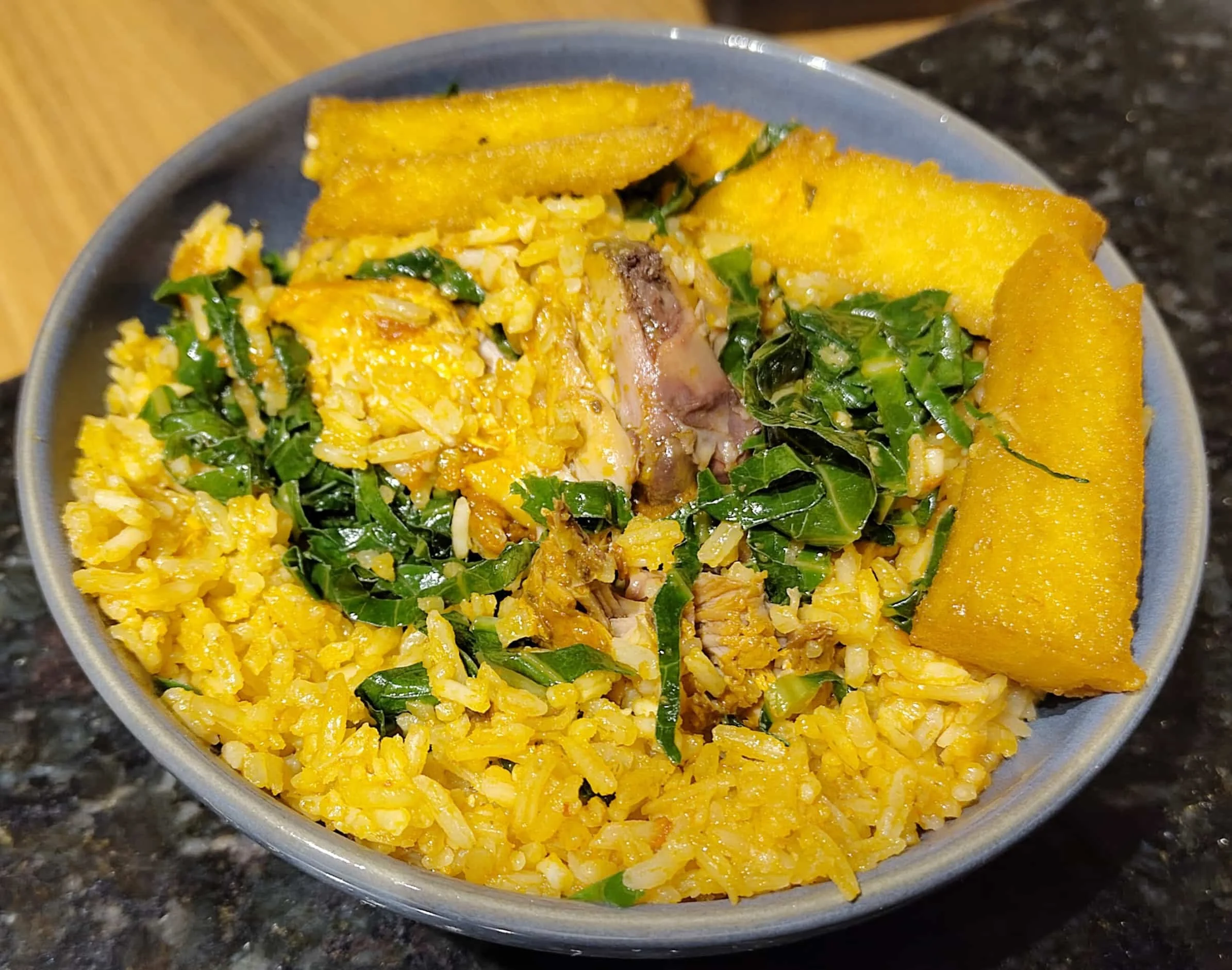
galinhada
chicken & rice
What is it?
Galinhada is a traditional Brazilian chicken and rice dish, with the chicken and rice cooked together so that the rice absorbs all the savoury juices and flavours from the meat. It is particularly associated with the states of Minas Gerais and Goiás, although it is popular throughout Brazil.
It is traditionally made with bone in chicken, which gives the rice a much deeper flavour as it cooks.
What is in it?
Galinhada typically contains bone-in chicken, rice, onions, garlic, tomatoes, peppers, saffron or turmeric (açafrão), and herbs and spices. Some regional versions also include peas, carrots, corn or other vegetables.
Where can I eat it?
Galinhada is available throughout Brazil, particularly at restaurants serving comida caseira (home style food). It is especially associated with Minas Gerais and Goiás, where you’ll find many traditional versions.
Gluten free.
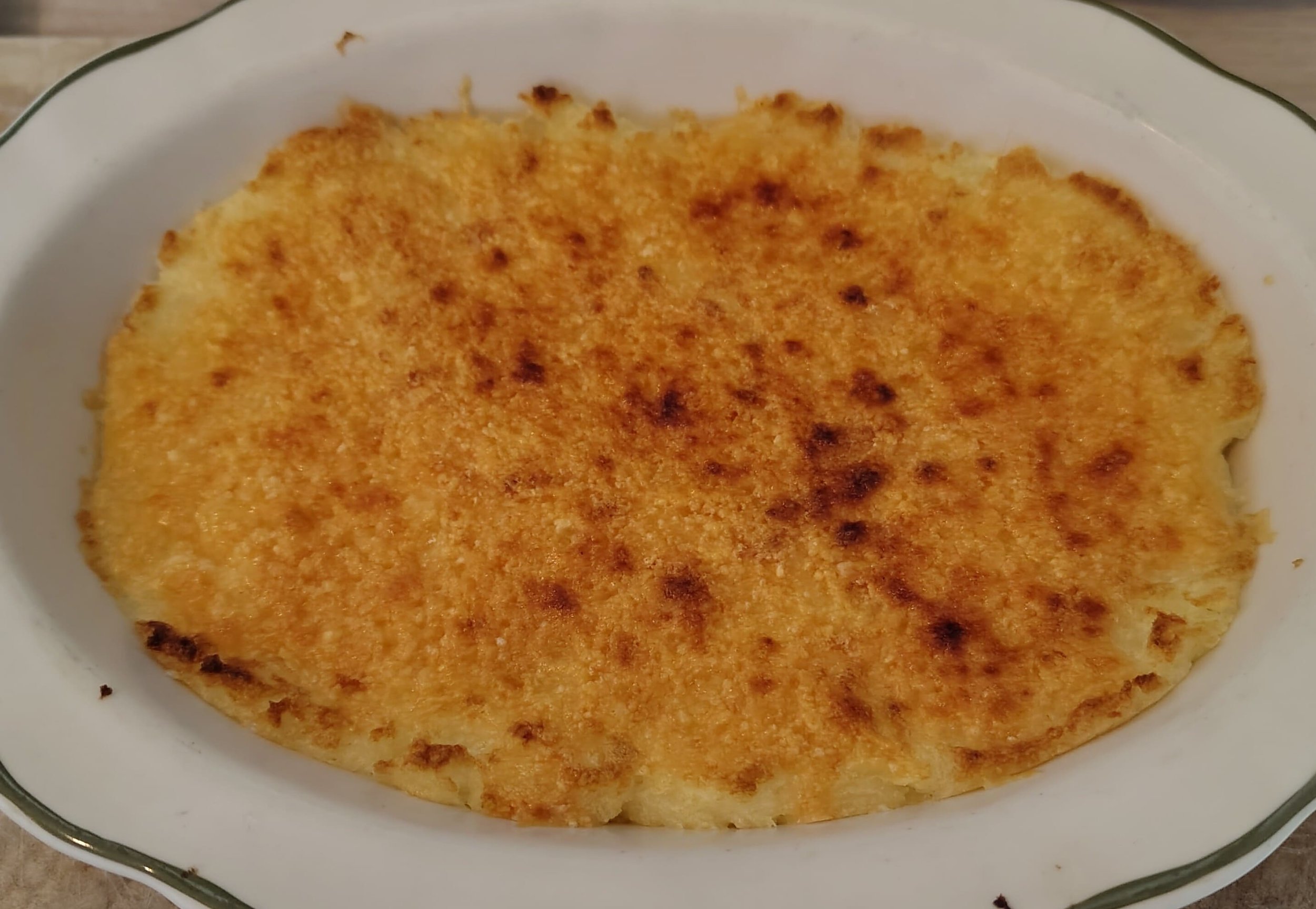
escondidinho
Brazilian shepherds pie
What is it?
Escondidinho is a popular Brazilian comfort food that could be described as a Brazilian version of shepherd’s pie. It consists of a savoury filling underneath a layer of creamy mashed root vegetables, usually cassava (mandioca), which is then baked.
The name escondidinho means “little hidden one”, referring to the way the filling is hidden beneath the mashed topping.
It can be served either as a starter or a main course, with individual portions commonly served in small baking dishes.
What is in it?
The classic version contains shredded dried beef (carne seca), cassava, onion, garlic, butter, milk, cream or requeijão (a creamy Brazilian cheese spread), and grated cheese. Other versions may use minced beef, chicken, prawns or other fillings instead of dried beef.
Where can I eat it?
Escondidinho is available throughout Brazil, although it is not as ubiquitous as dishes like feijoada. It originated in the Northeast, particularly Pernambuco, and remains especially popular there, though it is now common in restaurants across the country.
Gluten free.
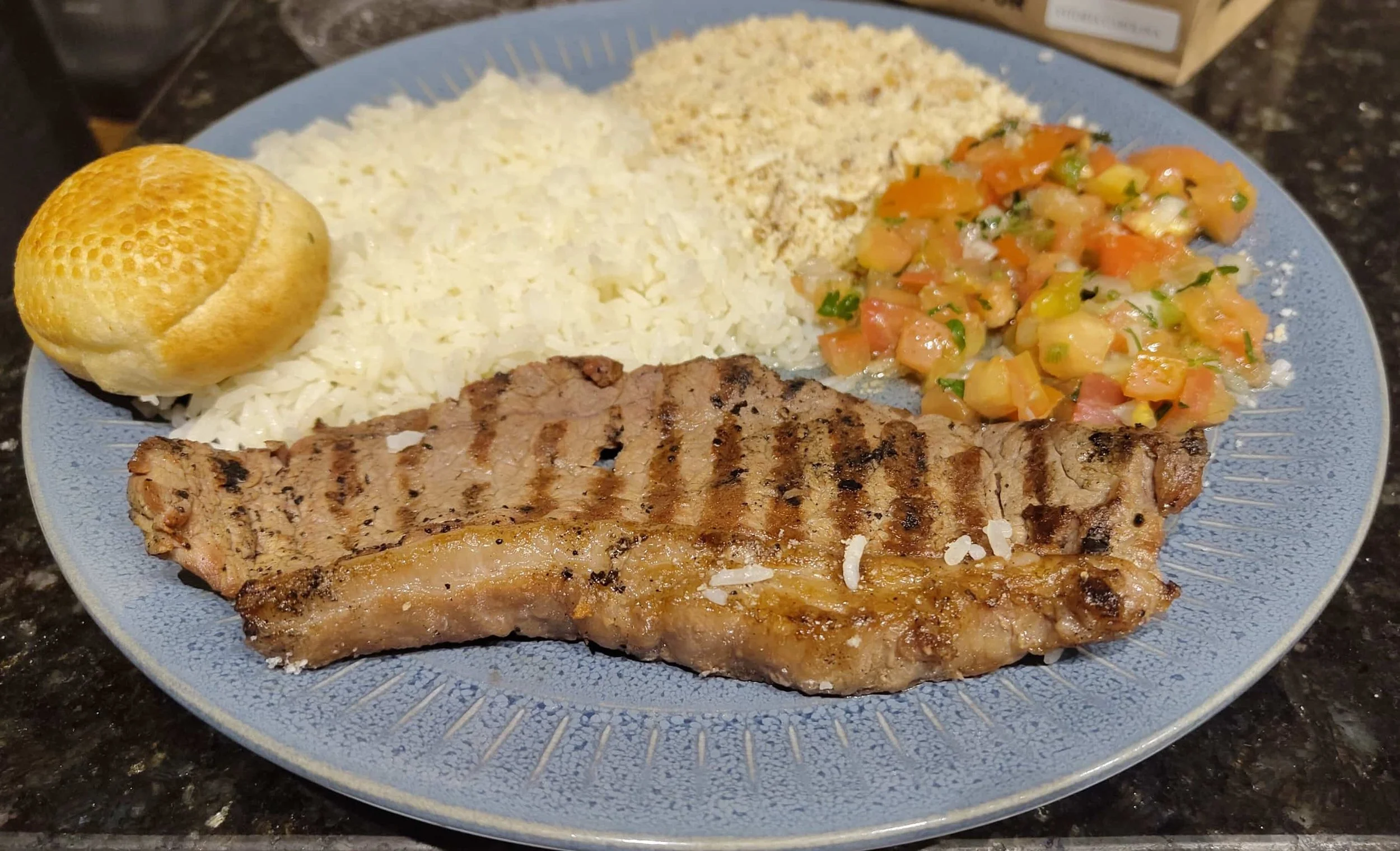
churrasco
Brazilian barbecue
What is it?
Churrasco is the Brazilian style of barbecued meat and is a huge part of Brazilian food culture. Meat is traditionally cooked over charcoal or an open flame, producing smoky meat with a charred exterior.
Brazilian churrasco is particularly famous for its rodízio style, where waiters bring different cuts of freshly grilled meat directly to your table on large skewers and slice portions onto your plate. It can range from simple backyard barbecues to elaborate churrascarias.
A traditional churrasco meal also commonly comes with garlic bread (pão de alho), which is cooked on the barbecue alongside the meat. The crispy, garlicky bread is an essential accompaniment and is particularly good for soaking up the meat juices.
What is in it?
Churrasco can include beef, pork, chicken, sausages and other meats, with popular beef cuts including picanha (rump cap), alcatra (top sirloin), fraldinha (flank steak) and contra filé (striploin). The meat is traditionally seasoned simply, often with coarse salt (sal grosso), allowing the flavour of the meat and smoke to take centre stage.
The traditional garlic bread is made with bread, garlic, butter or mayonnaise, and herbs, although recipes vary.
Other classic accompaniments include farofa (toasted cassava flour), Brazilian style vinaigrette salsa, rice, black beans, chips or cassava, and salad.
Where can I eat it?
Churrasco is found throughout Brazil, but the classic place to experience it is at a churrascaria, particularly one offering rodízio service such as Bovinu'S Churrascaria Rebouças in Sao Paulo.
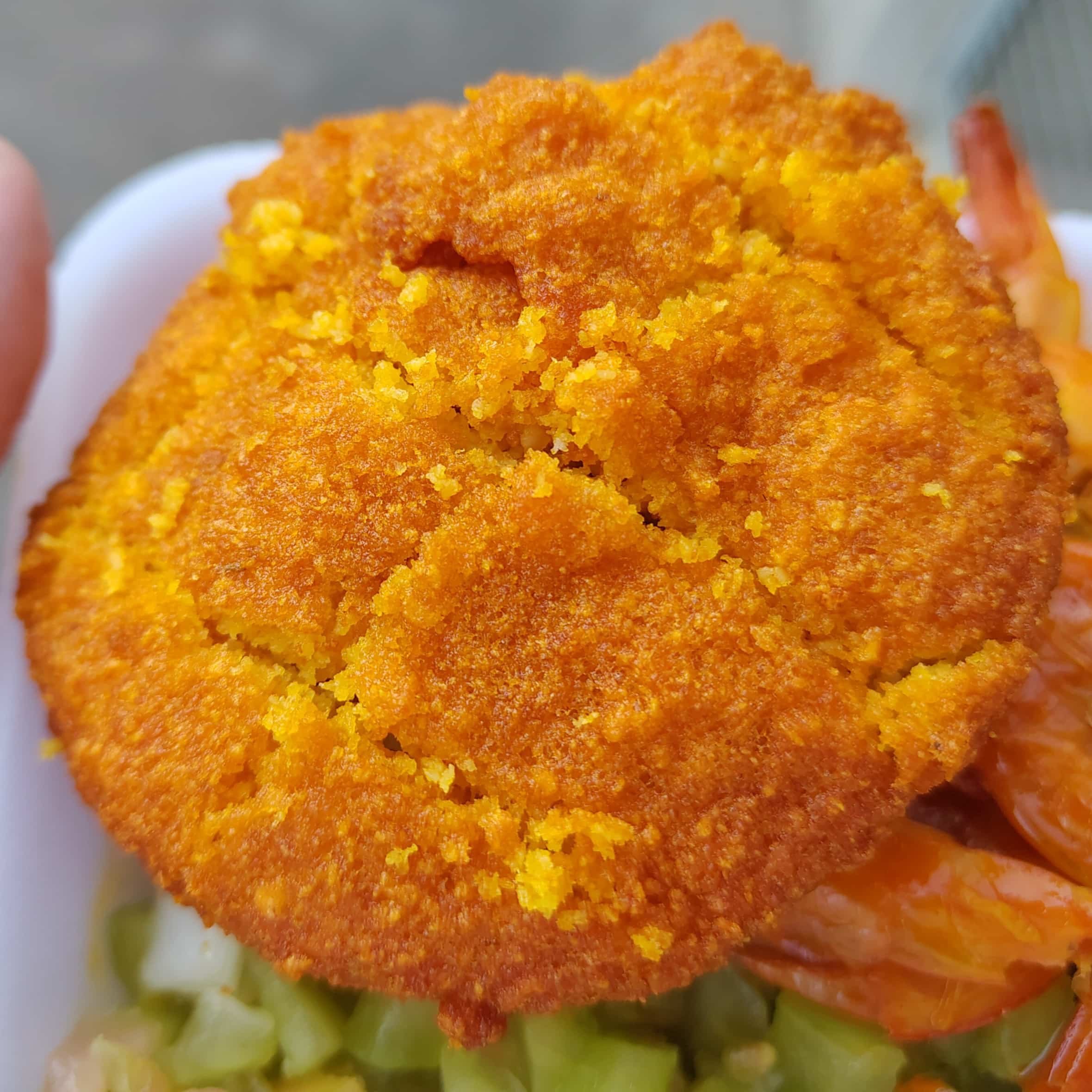
acarajé
black eyed pea fritter
What is it?
Acarajé is one of the most famous foods of Bahia, particularly associated with Salvador. It is an important part of Afro Brazilian cuisine and was brought to Brazil by enslaved Africans during the transatlantic slave trade. Its roots lie in Yoruba food traditions from West Africa.
It consists of a fritter made from black eyed peas that is deep fried in dendê (palm oil). It is usually split open and filled with savoury toppings before being eaten.
What is in it?
The fritter itself is made from black-eyed peas, onion and salt, and is fried in dendê palm oil.
It is traditionally filled with vatapá (a creamy shrimp, peanut and palm-oil paste), caruru (an okra and shrimp stew), whole or dried shrimp, and sometimes a tomato and-onion salad and chilli sauce.
Where can I eat it?
Acarajé is particularly associated with Salvador and Bahia, where it is sold by baianas de acarajé at stalls and specialist stands throughout the city. You’ll also find it at traditional Bahian restaurants throughout the country, such as Tabuleiro do Acarajé in São Paulo, and at festivals.
Gluten & dairy free.
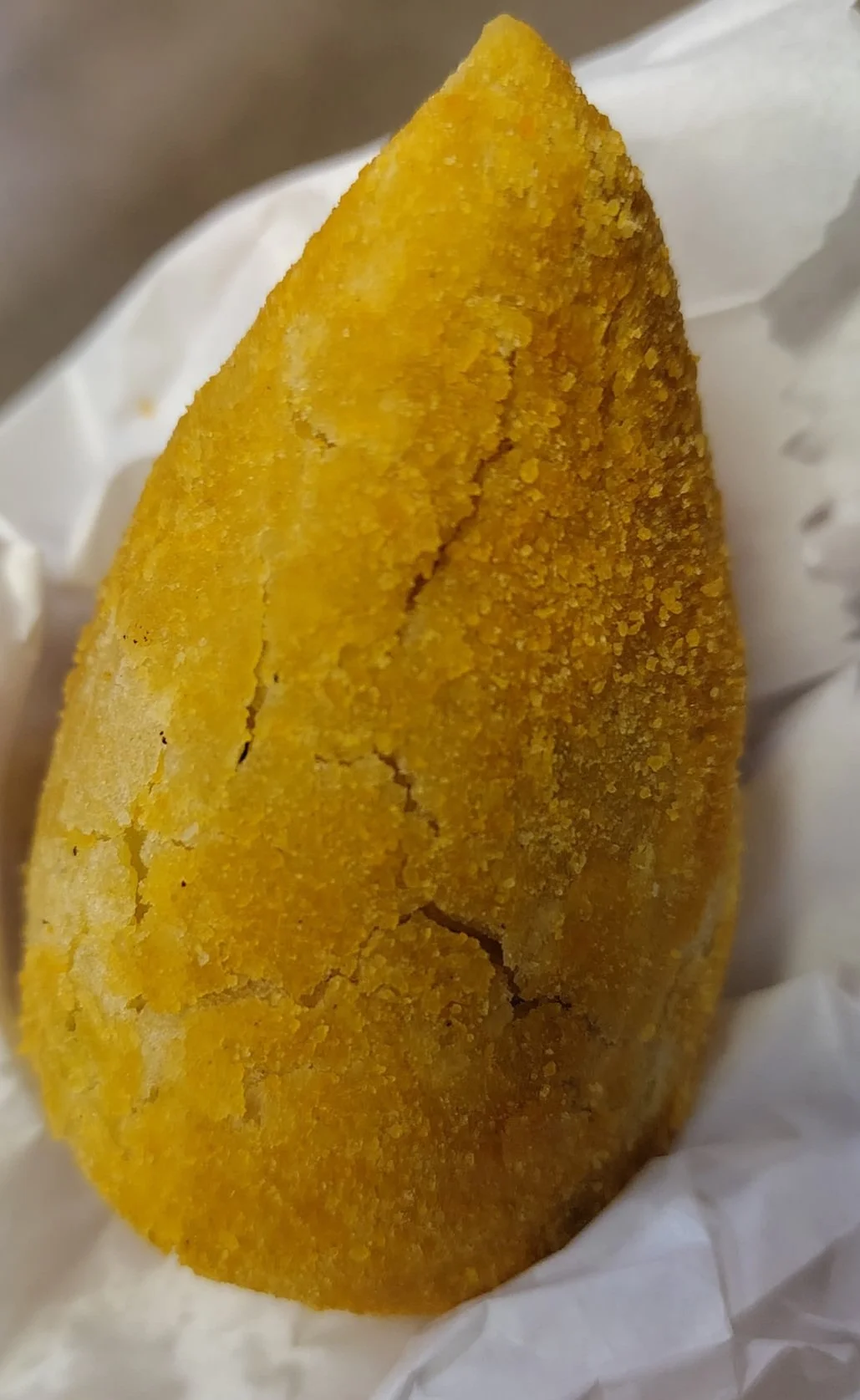
coxinha
chicken croquette
What is it?
Coxinha is one of Brazil’s most popular savoury snacks and is also popular in Paraguay. It consists of a creamy chicken filling enclosed in a layer of dough, shaped into a teardrop resembling a chicken thigh, then coated in breadcrumbs and deep fried.
They’re usually eaten as a snack, although a couple can easily make a filling light meal.
What is in it?
Traditional coxinha is made with shredded chicken, wheat flour, chicken stock, butter or margarine, cream cheese (requeijão or catupiry), breadcrumbs, onion, garlic and seasonings. Some versions also include mashed potato in the dough.
Where can I eat it?
Coxinhas are available virtually everywhere in Brazil. You’ll find them at padarias (bakeries), cafés, lanchonetes (snack bars), markets and street-food stalls.
Dairy free versions available.
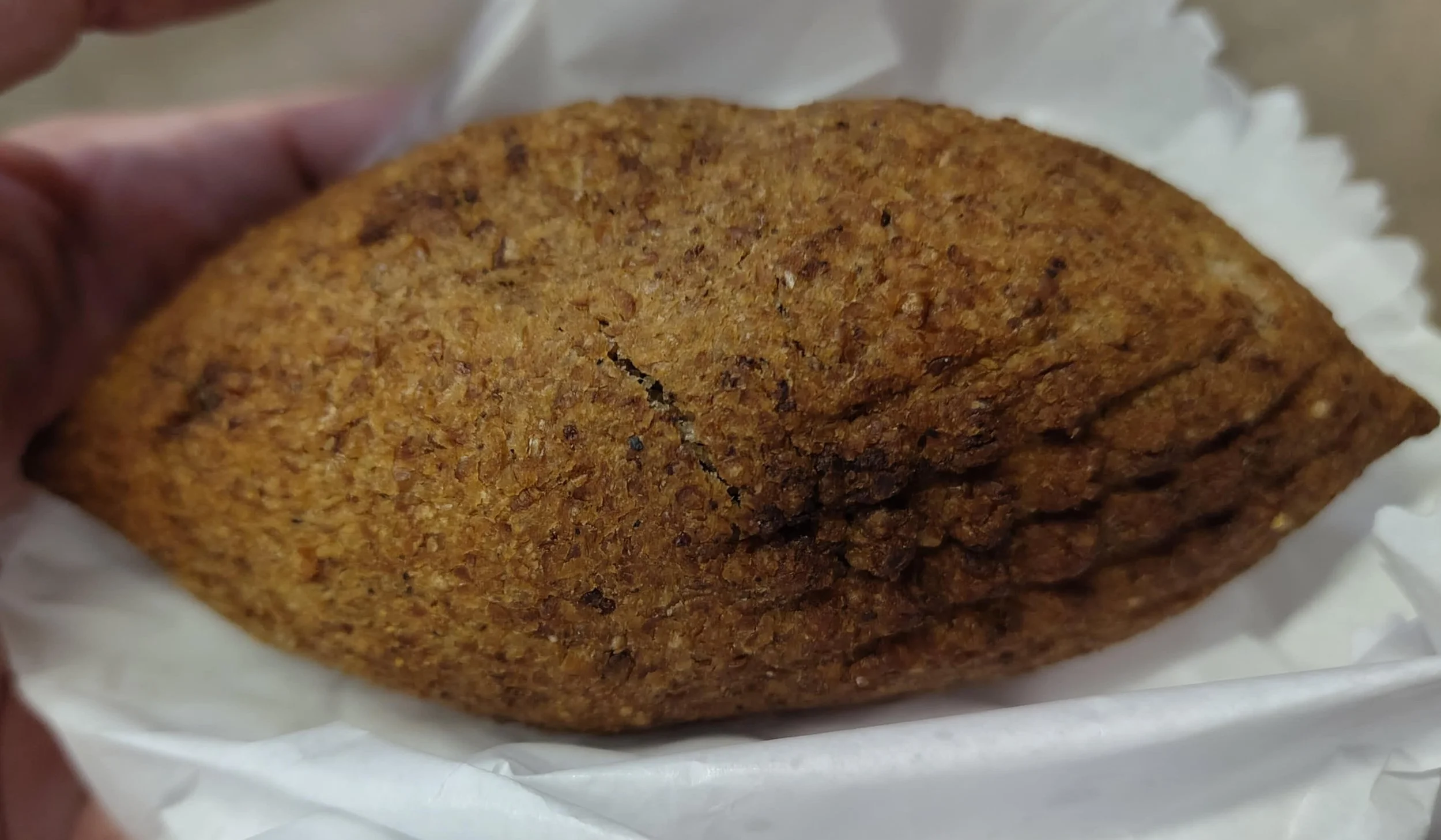
kibe
meat croquette
What is it?
A popular Brazilian snack of Middle Eastern origin, brought to Brazil by Lebanese and Syrian immigrants and now firmly established as part of Brazilian food culture.
It consists of a mixture of bulgur wheat and seasoned minced meat, traditionally shaped into an oval or torpedo shape. It’s often eaten as a quick snack on the go.
What is in it?
Traditional Brazilian kibe is made with minced beef, bulgur wheat, onion, garlic, mint and other herbs and spices. Some versions are filled with seasoned minced beef, cheese or cream cheese (requeijão), while baked versions also exist.
Where can I eat it?
Kibe is extremely common throughout Brazil and is particularly easy to find at bakeries and snack bars. It is also served as an appetiser in Brazilian restaurants.
Dairy free.
Ingredients listed reflect common or typical components of this dish as served in restaurants or street‑food vendors. Variations by region, season, or vendor are common. This information is provided for general reference only. If you have dietary restrictions or allergies, please verify ingredient details independently. We assume no liability for accuracy or outcomes.
