all the foods - Spain
Here you will find a list of all the traditional cuisine we tried in Spain.
Click to view our top 10 Spanish foods
Click to view our Spanish food glossary
Click to jump to one of the sections:
main dishes
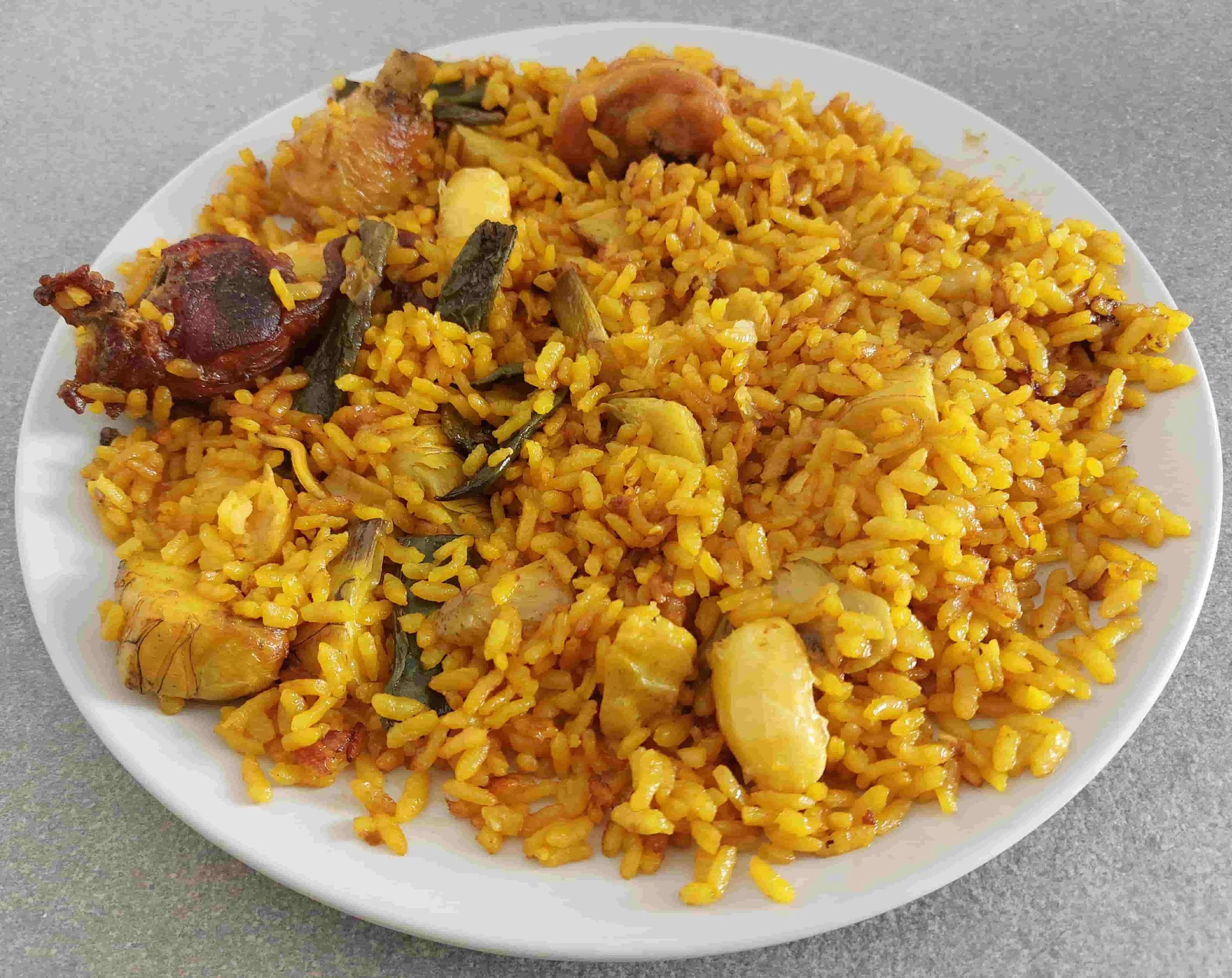
paella
Valencian rice
What is it?
Paella is a classic Spanish dish of saffron-flavoured rice originating from Valencia, traditionally cooked in a wide, shallow pan over an open flame. While it’s arguably Spain’s most famous food, it’s usually served for a minimum of two people, making it a shared meal rather than a single serving. Many modern versions are available these days beyond the traditional types, ranging from creative seafood or meat combinations to entirely plant-based versions. A key feature of traditional paella is the socarrat, a lightly caramelised, crispy layer of rice that forms on the bottom of the pan.
What’s in it?
The original, classic version, Paella Valenciana, includes rice, chicken, rabbit, green beans, white beans, tomatoes, saffron, olive oil, and sometimes snails. Other popular versions include:
Seafood paella: prawns, mussels, clams, squid, and fish.
Mixed paella: combining meat and seafood.
Vegetable paella: a vegan-friendly option featuring seasonal vegetables and beans.
Where can I eat it?
Paella is widely available in restaurants across Spain, particularly in Valencia, its birthplace.
Vegan versions available; dairy and gluten free.
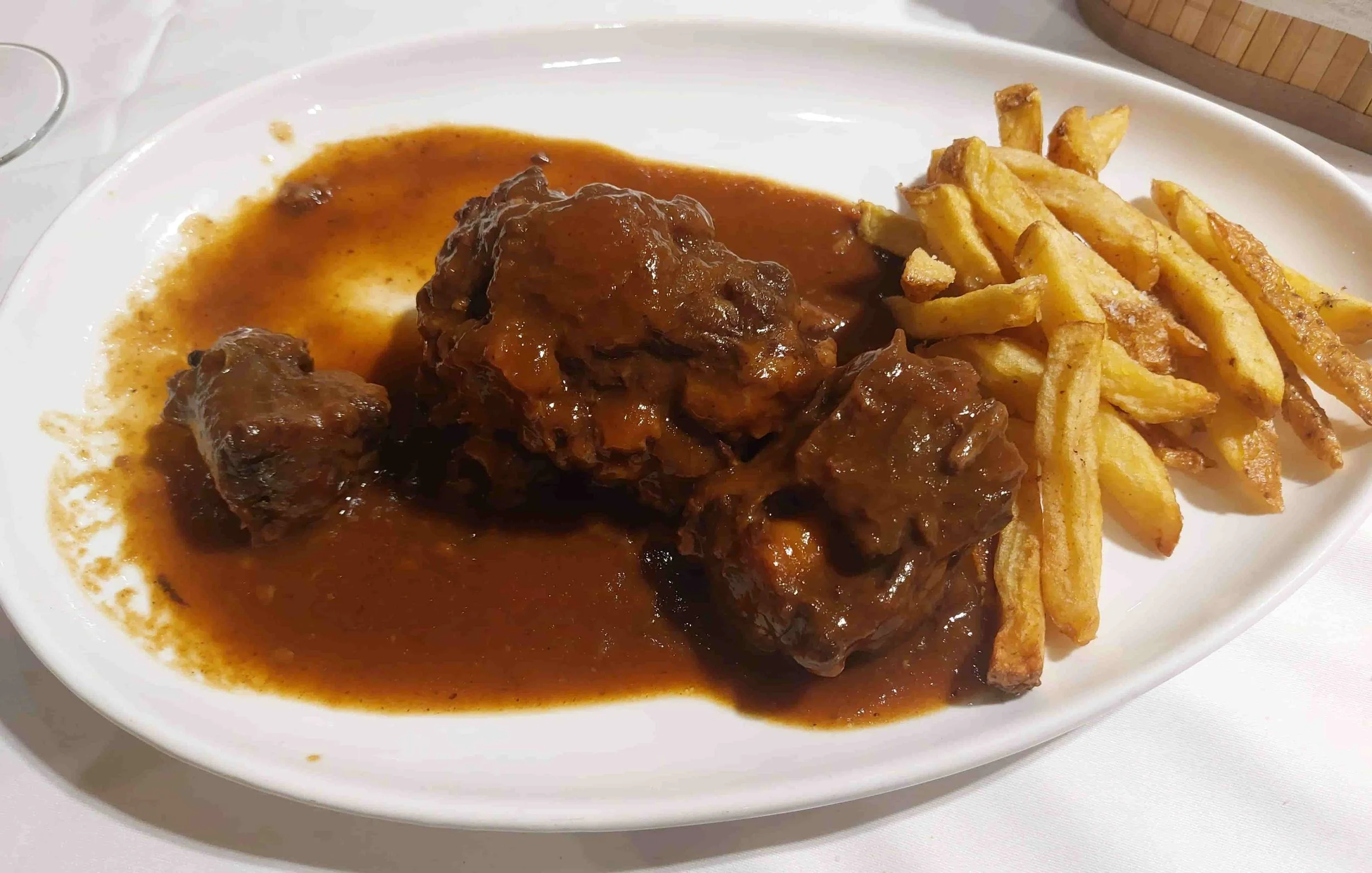
rabo de toro
bull tail stew
What is it?
Rabo de Toro is a traditional Spanish stew of bull’s tail, especially associated with Córdoba, Andalusia. It has deep links to bullfighting tradition, where after the corrida, the tail of the bull is used to make this slow cooked stew. The meat is simmered for many hours, red wine is used so that the flesh becomes incredibly tender and nearly falls off the bone. The dish is rich and fatty (but not in a chewy way), with the fat contributing flavour that melts in the mouth.
What’s in it?
Bulls tail in red wine other ingredients can include garlic, tomatoes, onions, carrots, leeks, bay leaves, paprika and other spices.
Where can I eat it?
The dish originates from Córdoba in Andalusia but is now found throughout Spain. We didn’t make it to Córdoba on this trip, but we did enjoy a good one in Bilbao at Asador Bilbao Brasan.
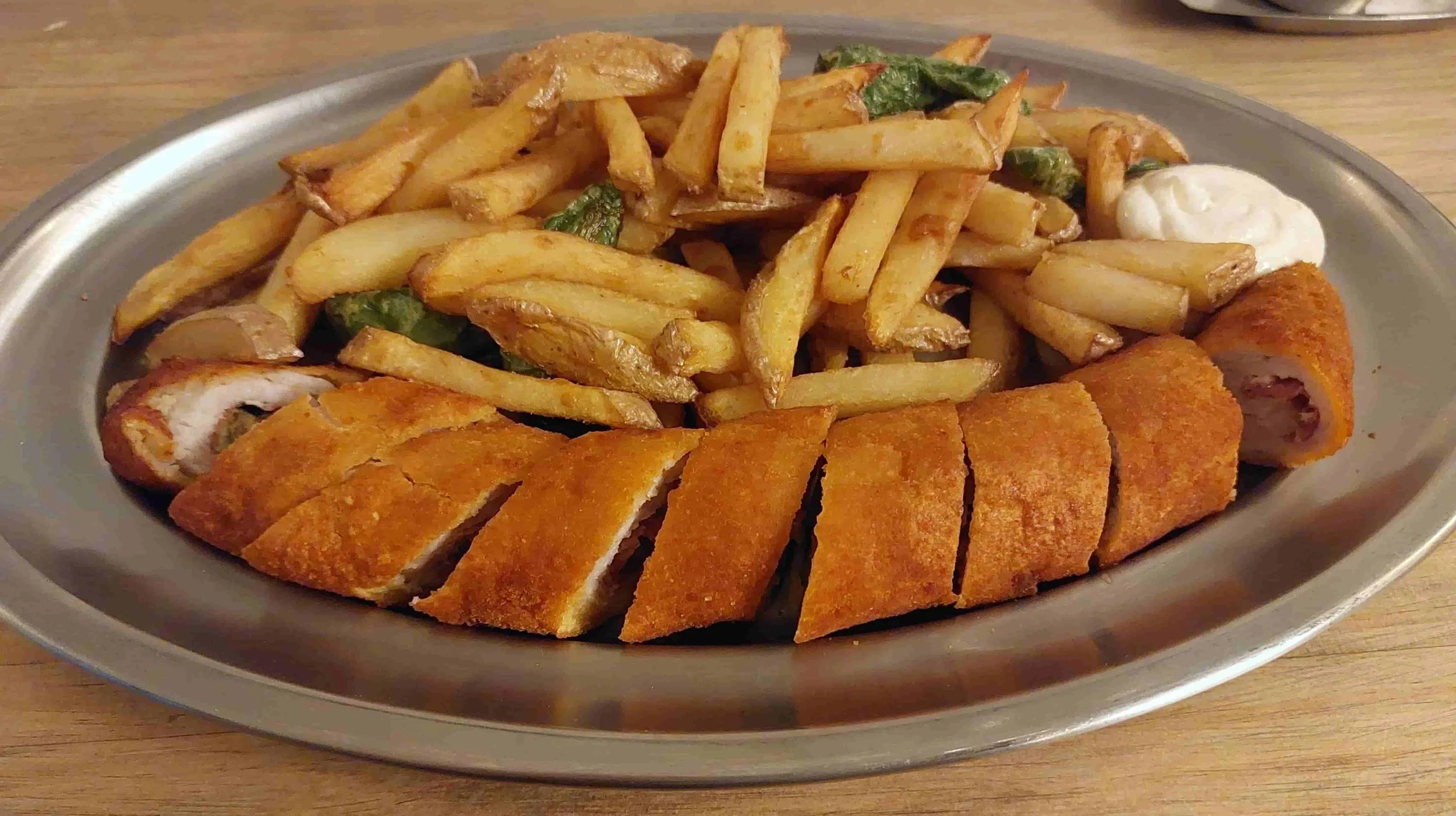
flamenquín
rolled breaded pork
What is it?
Flamenquín is a traditional and delicious Andalusian dish of ham (often Serrano) and cheese rolled inside pork loin, breaded, and deep fried until crispy. Think of it as similar to a rolled cachopo or schnitzel. While it is usually served as a main course, smaller portions are occasionally offered as a tapa in bars.
What’s in it?
Pork loin, Serrano ham, cheese, breadcrumbs, and eggs. Variations may include other types of cheese, cured meats, or vegetables.
Where can I eat it?
Commonly found in restaurants across Andalusia, particularly in Córdoba and Seville. Outside of that region, it is rare; however, we did try a good version in Madrid at Bar La Gloria, served with fries and Padrón peppers!
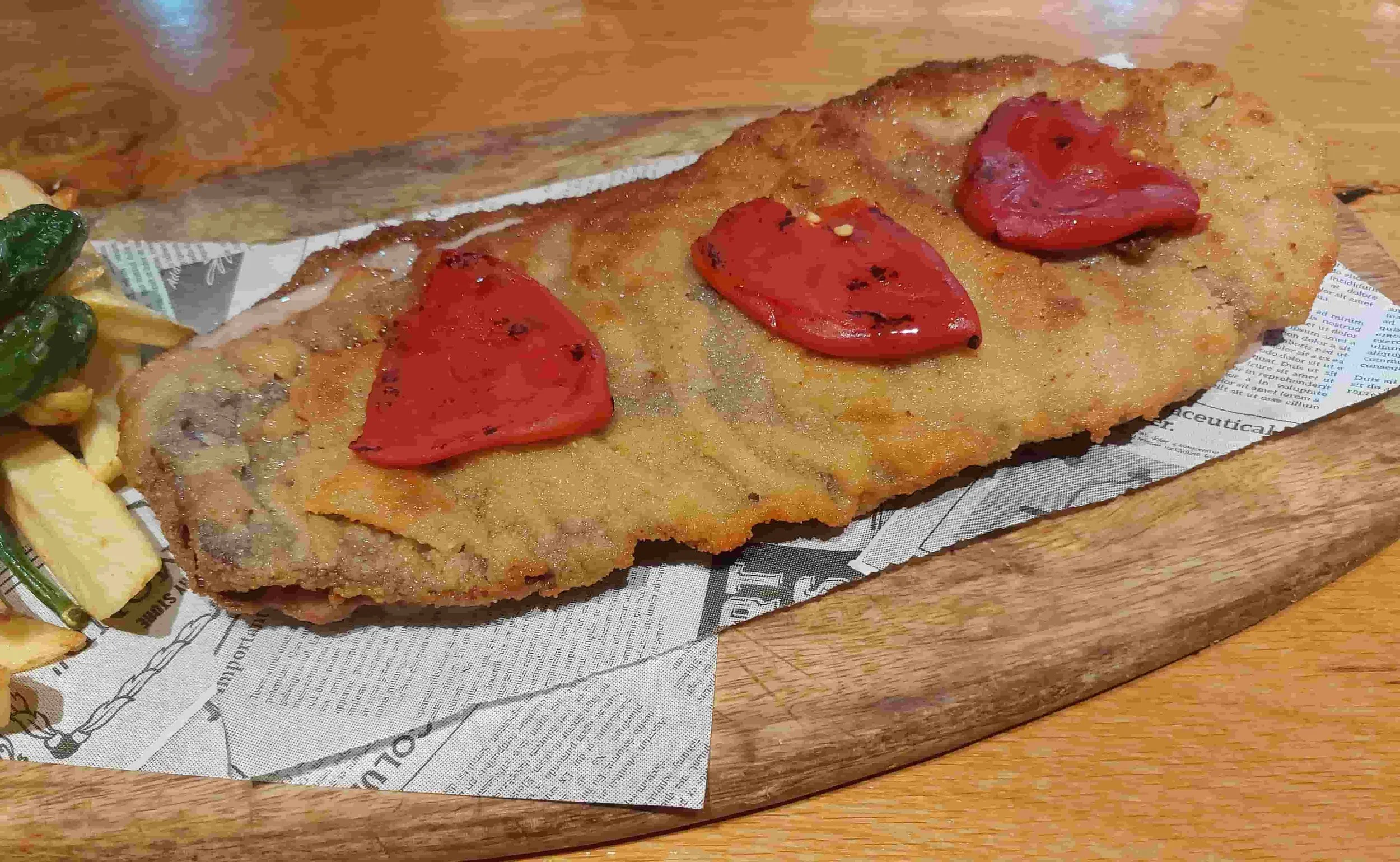
cachopo
stuffed breaded veal
What is it?
Cachopo is an Asturian speciality consisting of two large veal fillets filled with ham and cheese, then breaded and fried. Think of it as a giant schnitzel sandwich! Be warned, it’s usually very big, often served for two people to share, or for particularly big eaters. Smaller versions can occasionally be found, but not always. The one pictured I managed to eat by myself, though by the end I had severe meat sweats!
What’s in it?
Veal fillets, Serrano ham, and cheese are the traditional filling, coated in flour, beaten egg, and breadcrumbs before frying. Modern variations sometimes swap in other meats or add extra fillings like mushrooms, peppers, or even seafood. It’s typically served with fries and roasted peppers on the side.
Where can I eat it?
Cachopo is especially popular in its birthplace Asturias but has spread to other parts of Spain thanks to its cult status. It’s not on every menu, but is increasingly easy to find in traditional restaurants across the country.
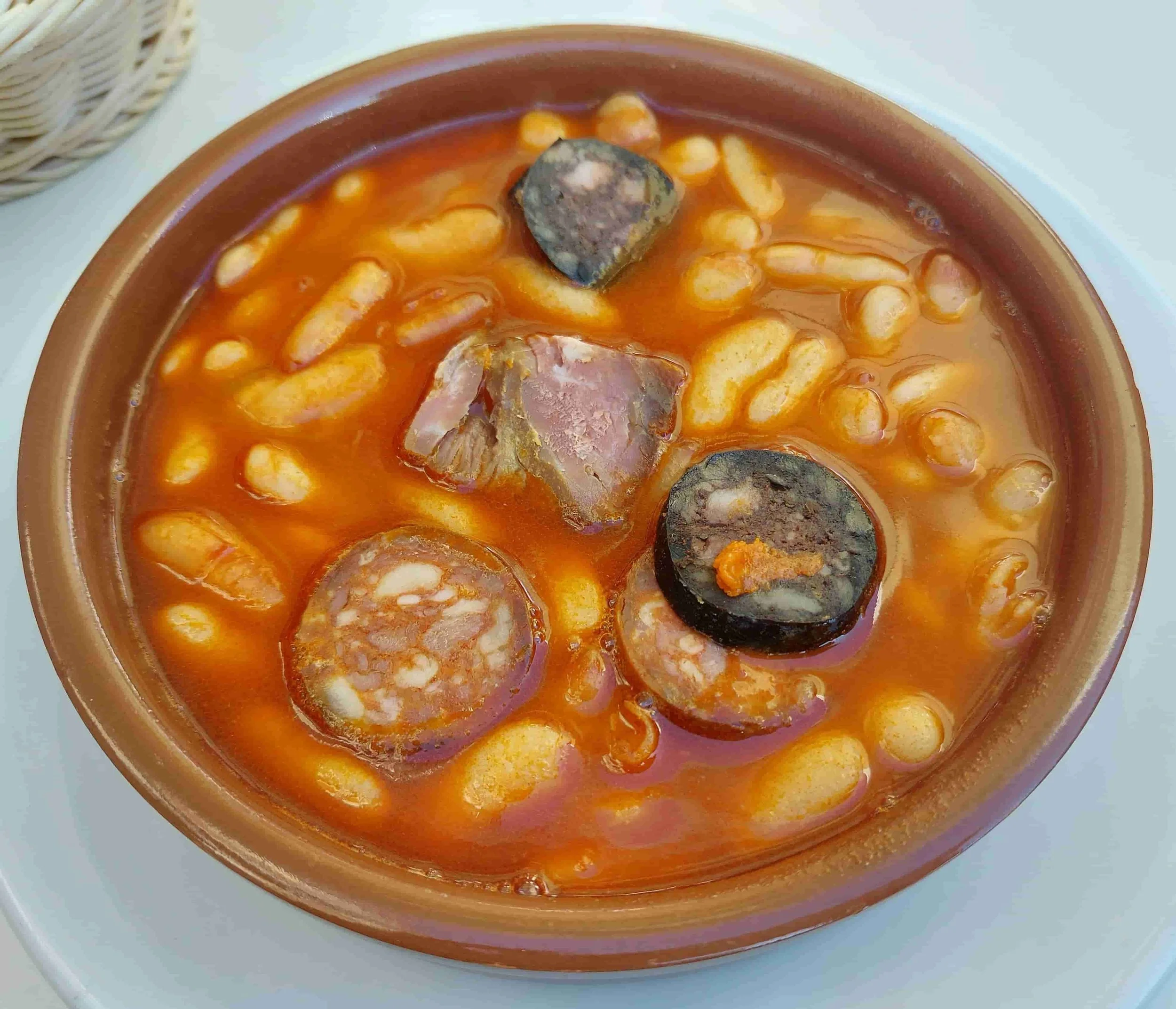
Fabada Asturiana
bean & meat stew
What is it?
Fabada Asturiana, often simply listed as fabada on menus, is a bean stew from Asturias in northern Spain, with a mild paprika kick. It’s made with large white beans (fabes), chorizo, morcilla (blood sausage), and pancetta or cured pork. A classic comfort food, it’s perfect for colder days and a staple of Asturian cuisine.
What’s in it?
White beans (fabes), chorizo, morcilla (blood sausage), pancetta or cured pork, onions, garlic, paprika, and olive oil.
Where can I eat it?
Commonly found in restaurants across Asturias and in northern Spain, where Asturian cuisine is more common. You may occasionally find it on menus outside the region in restaurants specialising in Asturian cuisine, such as Restaurante Asturias in Madrid, close to Atocha train station.
Dairy & gluten free.
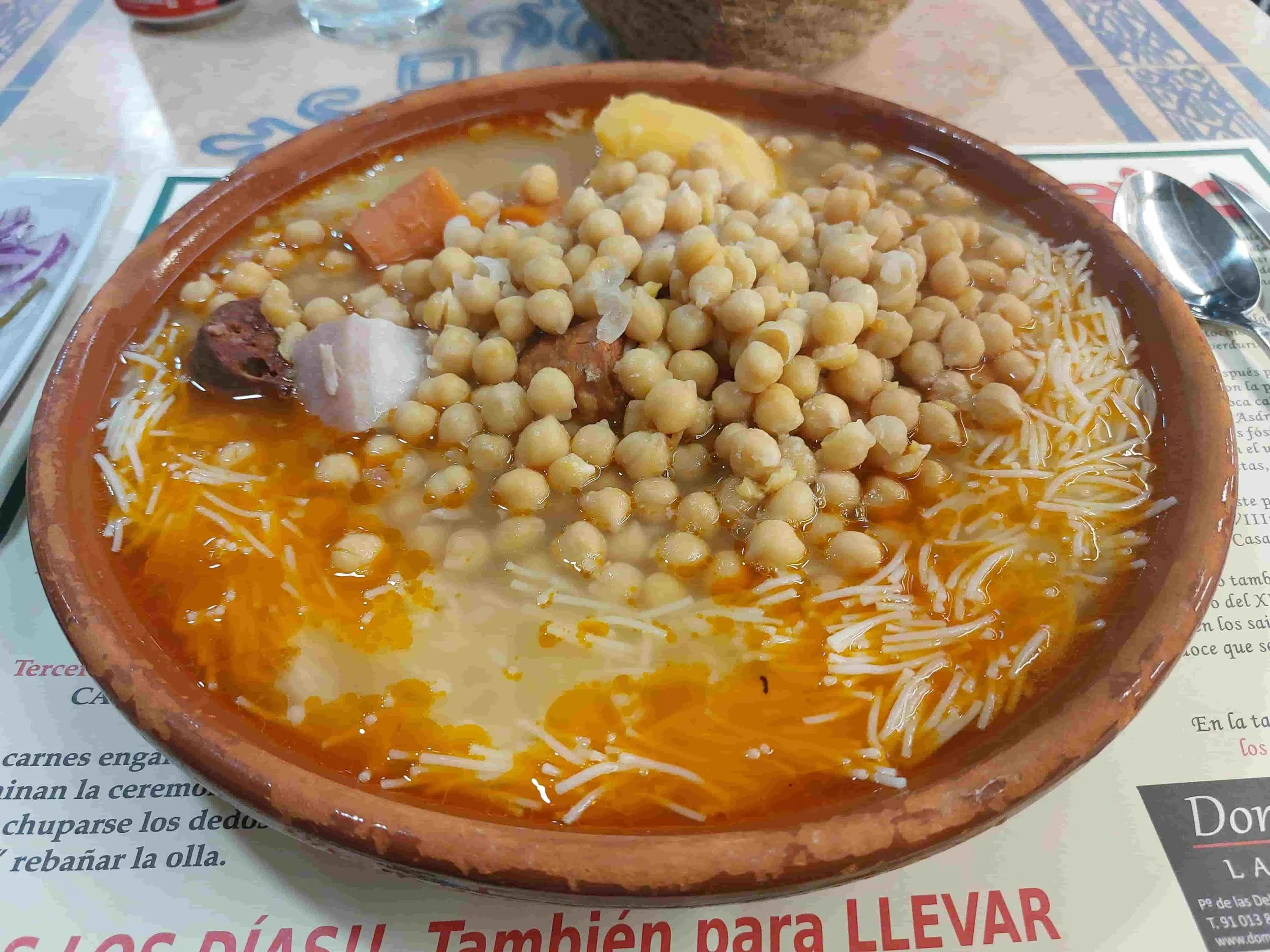
Cocido Madrileño
Madrid stew
What is it?
I hope you’re hungry! Cocido Madrileño is an incredibly filling traditional Madrid stew, made with chickpeas, a mix of meats, and vegetables. While different versions of cocido exist outside Madrid, such as Cocido Leones, the Madrid style version is iconic. Traditionally, it is served in multiple courses: first the broth with small noodles, then the chickpeas with vegetables, and finally the meats. In my experience, it often comes all together, with the noodles already on the plate and everything else poured over. It’s often served with a simple salad and crusty bread, making for a very large, filling meal.
What’s in it?
Chickpeas, assorted meats (typically chicken, pork, and cured meats like chorizo), vegetables such as carrots, cabbage, and potatoes, olive oil, seasonings, and small noodles served in the broth.
Where can I eat it?
Cocido Madrileño is widely available in Madrid’s traditional restaurants. It’s served as a main course and perfect if you are very hungry. We had a great one at a very local place called Bar Menéndez in Madrid. While it is occasionally found outside Madrid, it’s far less common, and other regions typically have their own local cocido versions.
Dairy free.
snacks & street food
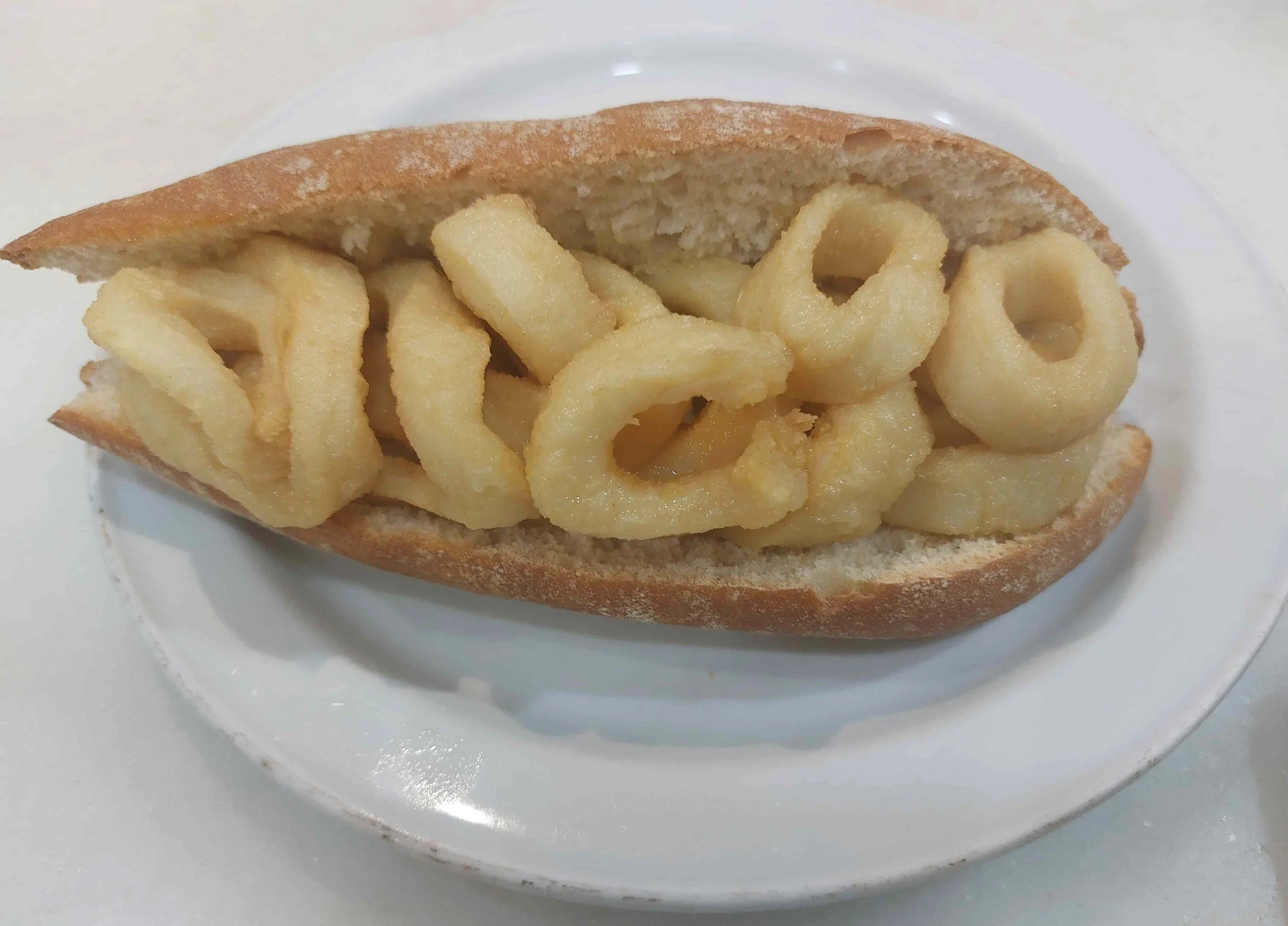
bocadillo de calamares
fried squid sandwich
What is it?
The Bocadillo de Calamares is a Madrid classic, a sandwich filled to the brim with crispy, fried squid rings. Despite Madrid being far from the sea, this street food is a must try and absolutely delicious. The calamari is perfectly fried, lightly seasoned, and packed into a fresh, crusty baguette.
What’s in it?
Fried squid rings, crusty bread, and often a squeeze of lemon. Some versions may include aioli or paprika.
Where can I eat it?
Found in many bars and cafés around Madrid, especially near Plaza Mayor, where it’s served fresh and hot as a quick snack or light meal. Outside Madrid it’s less iconic but can still be found, particularly in some coastal regions where fresh squid is common.
Dairy free
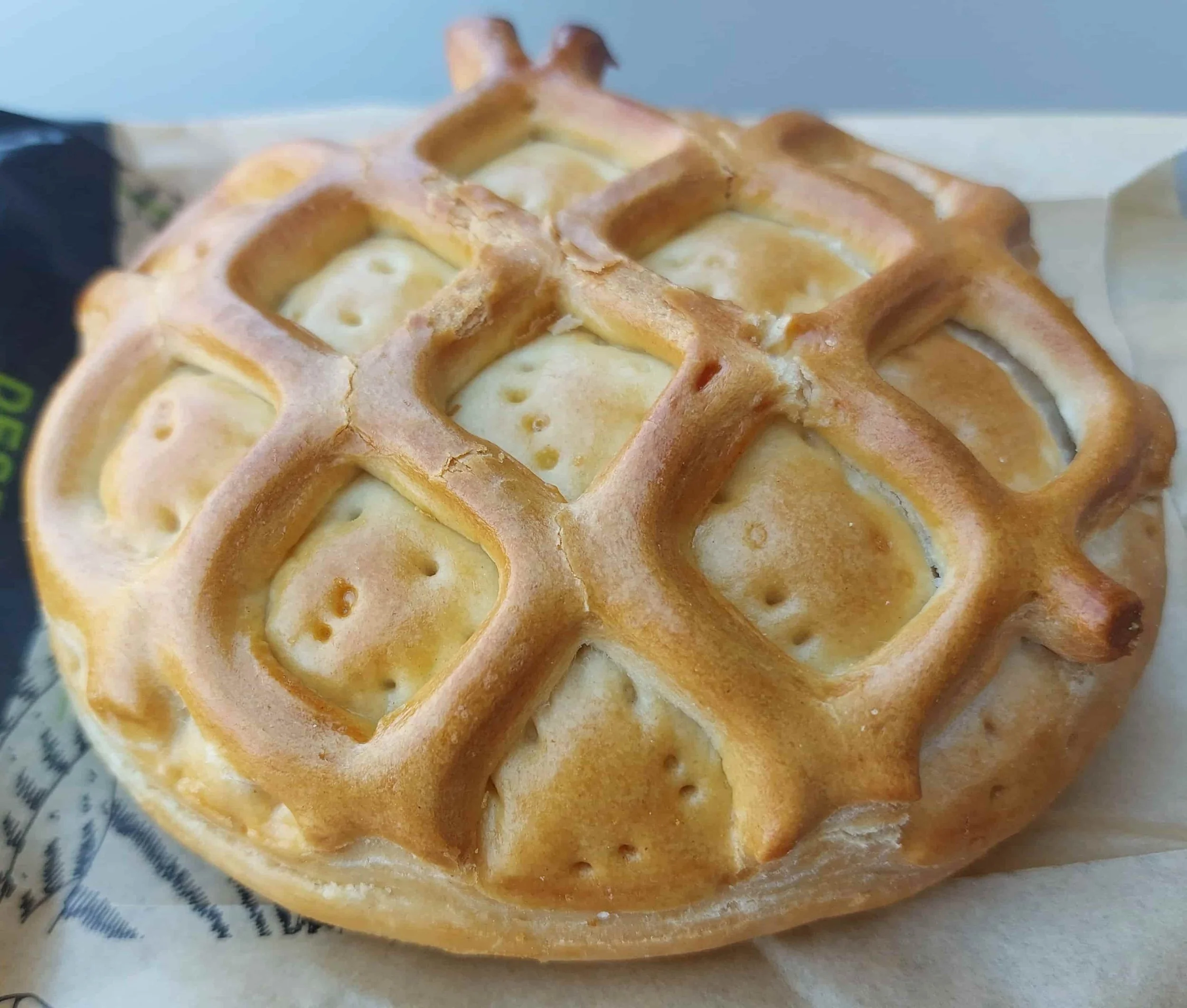
hornazo
meat pie
What is it?
Hornazo is a traditional meat pie from Salamanca and Ávila, usually enjoyed as a snack or meal. This bread like pastry can sometimes be a little dry, stuffed with pork, chorizo, and hard-boiled egg. Traditionally it’s baked as a large pie to be sliced and shared, but you’ll also find smaller individual versions sold in bakeries. It’s often eaten cold, making it popular for picnics and celebrations. In Salamanca, it’s especially tied to Lunes de Aguas, the Monday after Easter.
What’s in it?
The dough is made from wheat flour, yeast, water, eggs, and lard or olive oil. The filling is typically chorizo, pork loin, and slices of hard boiled egg, with ham sometimes included as well.
Where can I eat it?
Hornazo is most famous in Salamanca, where bakeries and pastry shops prepare both large pies and smaller individual ones. It’s also traditional in Ávila and can be found across surrounding areas of Castilla y León, for instance, it’s not uncommon to see it in bakeries in Valladolid. While available year round, the best time to try it is during Lunes de Aguas.
desserts & pastries
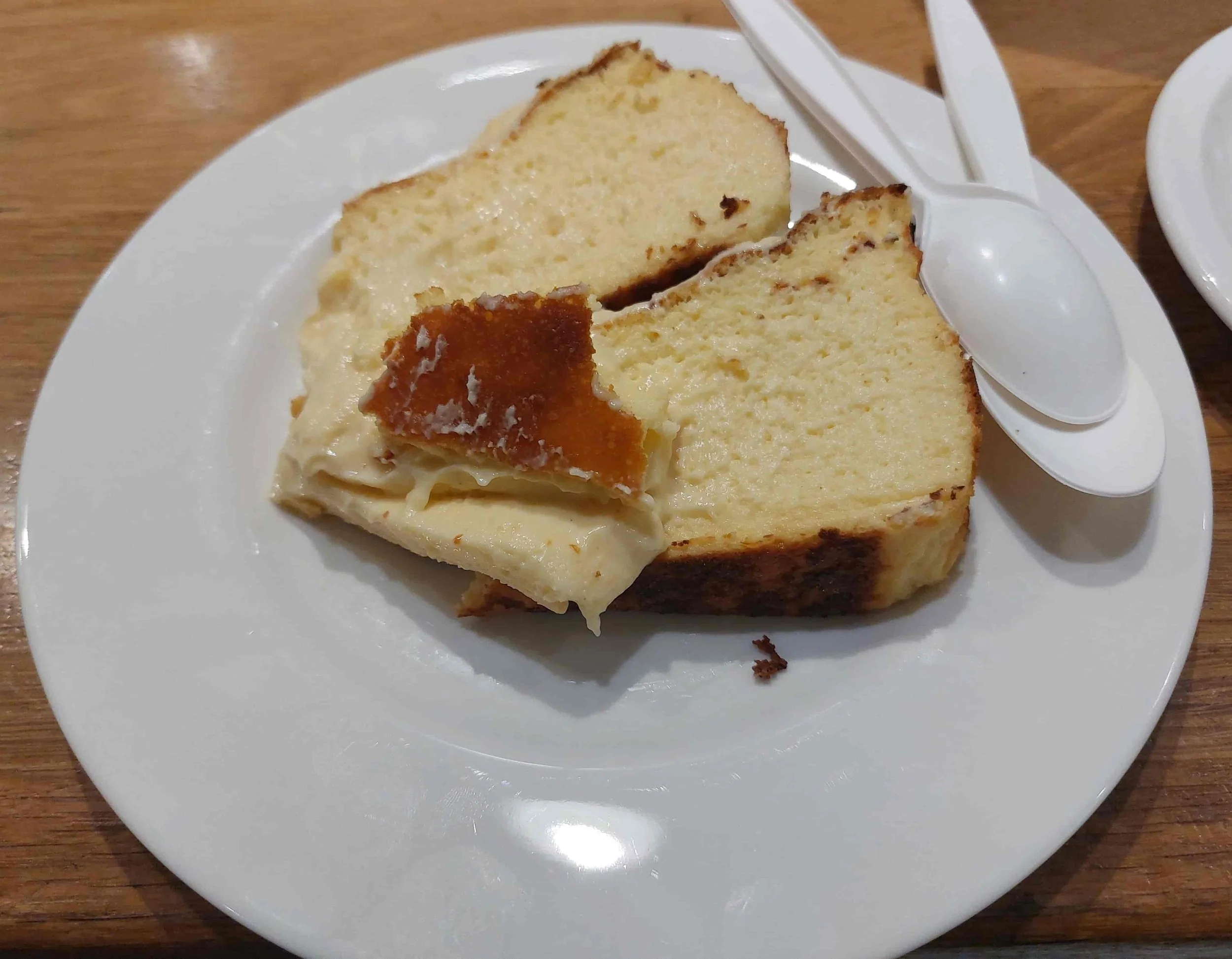
Basque cheesecake
baked cheesecake
What is it?
Also known as Basque burnt cheesecake or San Sebastián cheesecake, it differs from a typical cheesecake in that it’s crustless, giving you more cake real estate for the money! It has a gooey, creamy centre and a caramelised, nearly burnt exterior, hence the name. It’s incredibly sweet, creamy and delicious.
What’s in it?
The core ingredients are cream cheese, eggs, heavy cream, sugar, flour, and salt. Vanilla is not always included in the original recipe but can be used as an optional flavouring, as can citrus zest or other extras.
Where can I eat it?
You’ll find it everywhere in San Sebastián and across the Basque Country at cafés, bakeries, and pintxo bars; in fact it’s now widely available throughout Spain and in many countries around the world. If you want the original, head to La Viña a pinxtos bar in San Sebastián’s Old Town, that’s where the first ever one was made in 1988.
Vegetarian.
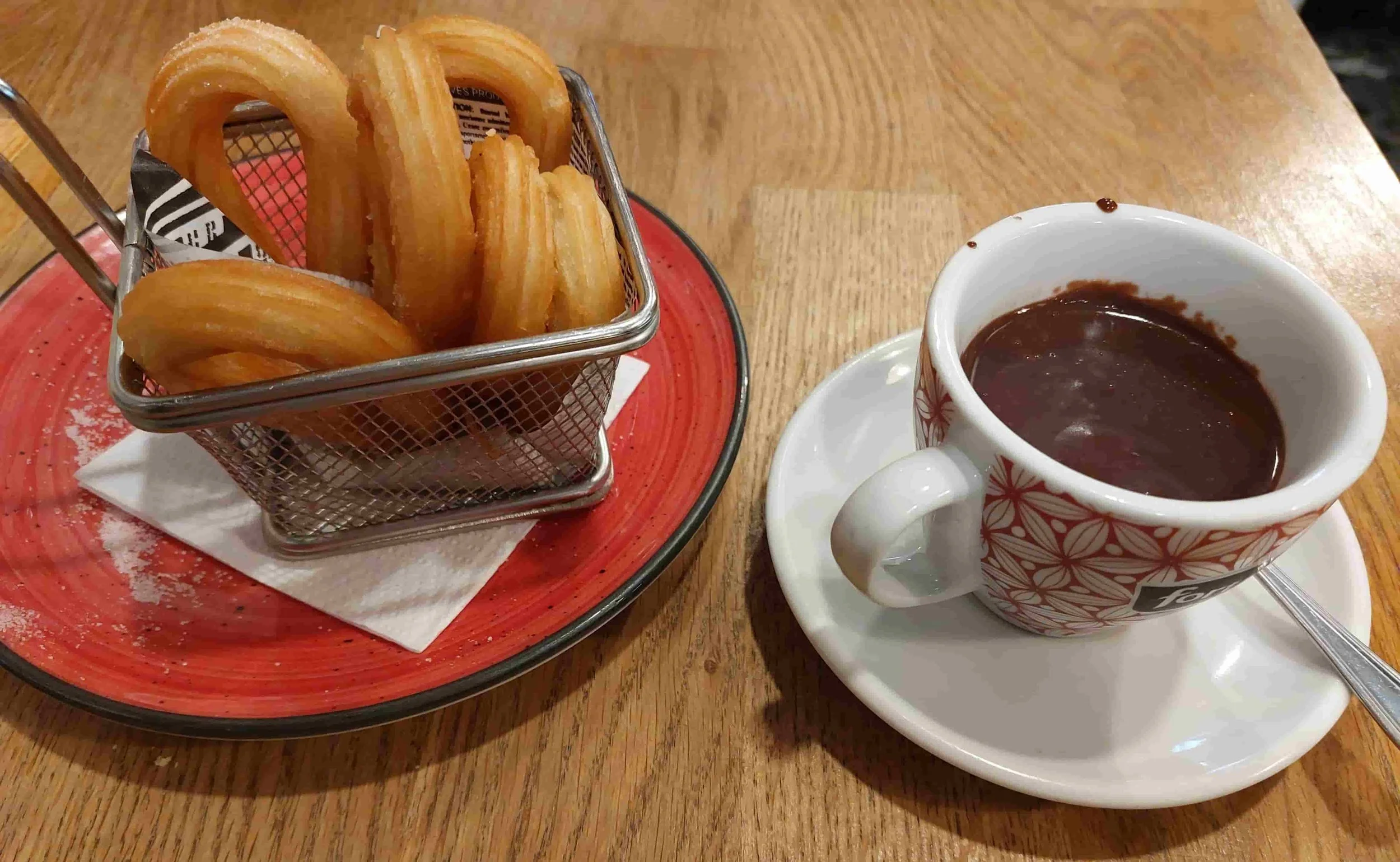
Chocolate con Churros
fried pastries & chocolate sauce
What is it?
Chocolate con Churros is traditionally enjoyed for breakfast, but can be eaten any time of the day as a snack. It consists of long, thin fried dough pastries (churros), typically dusted with sugar, served alongside a cup of thick, rich hot chocolate for dipping. The churros are crisp on the outside and soft on the inside, making them perfect for dunking.
What’s in it?
Churros are made from a simple dough of flour, water, and a pinch of salt, fried in oil and dusted with sugar. The accompanying hot chocolate is usually thick, dark, and intensely cocoa flavoured.
Where can I eat it?
Chocolate con Churros is widely available across Spain in cafés, churrerías, and some restaurants. It’s particularly popular in Madrid, where you should definitely try it for breakfast at least once.
Vegetarian.

Carolina
custard & meringue pastry
What is it?
A Carolina is a striking and traditional pastry from Bilbao in the Basque Country. It consists of a crisp puff or shortcrust pastry base filled with custard, topped with an eye catching swirl of Italian meringue that’s tall and almost marshmallow like in texture. One side of the meringue is drizzled with glossy dark chocolate, while the other is finished with a sweet egg yolk glaze. Very sweet and indulgent, it’s best enjoyed alongside a strong coffee to balance the sweetness.
What’s in it?
Puff or shortcrust pastry filled with vanilla custard made with milk, eggs, sugar. Topped with Italian meringue, made from whipped egg whites & sugar and then decorated with drips or layers of sweet egg yolk glaze (yema) and also strips or drizzles of dark chocolate.
Where can I eat it?
The Carolina is closely tied to Bilbao, where it’s considered a symbol of the city. You’ll mainly find it in Bilbao’s bakeries and cafés, either to take away or to enjoy seated with coffee. While it’s rare outside the Basque Country, in Bilbao it’s a must try for anyone with a sweet tooth.
Vegetarian.
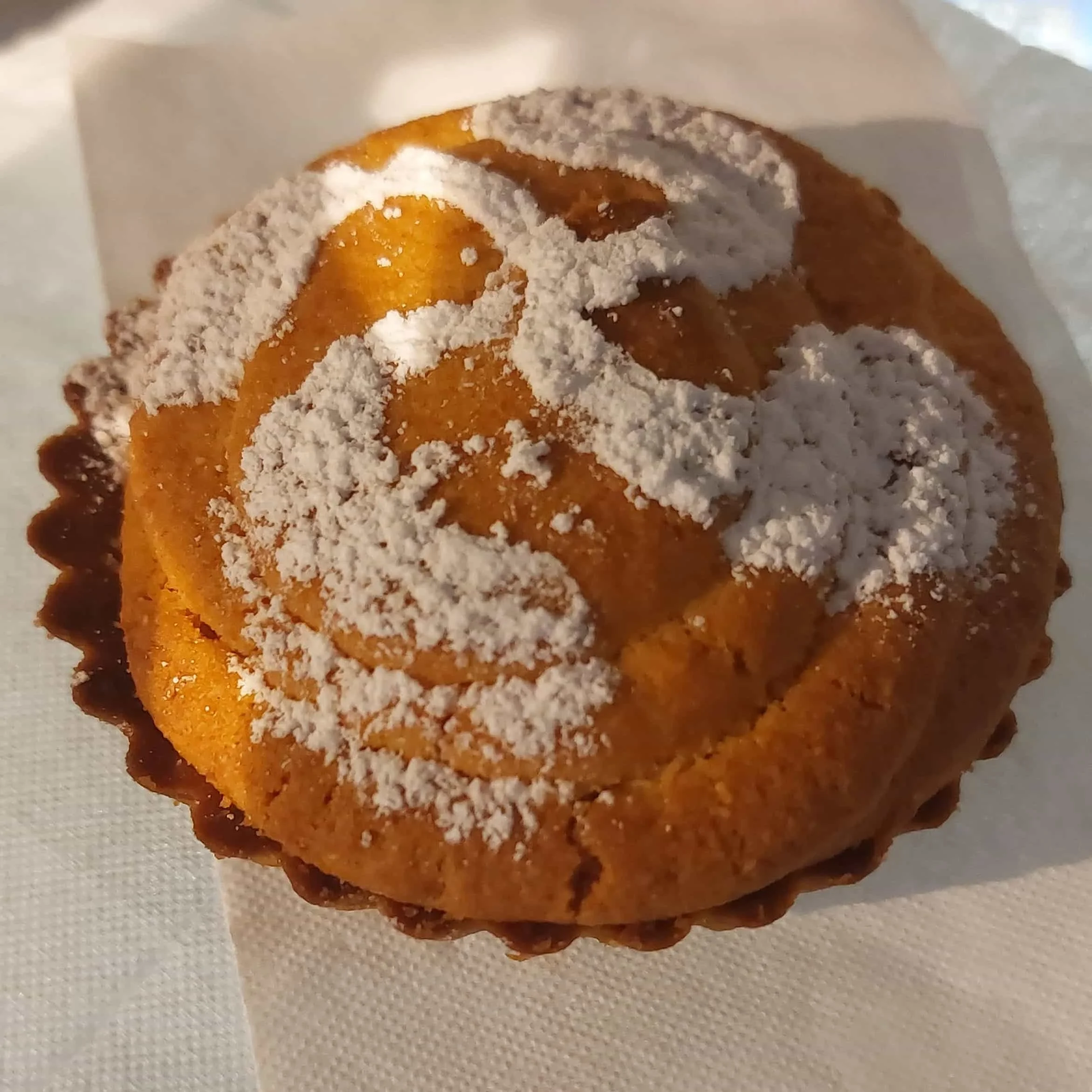
Pastel Vasco
Basque pastry
What is it?
Pastel Vasco (known in French as Gâteau Basque) is a traditional Basque pastry that originated in the French Basque Country but is also widely available across the Spanish side. It’s a rustic tart made from a buttery, shortcrust like dough with a soft, cake-like texture, usually filled with either a rich vanilla custard (crème pâtissière) or cherry jam.
What’s in it?
The dough is made from wheat flour, butter, sugar, and eggs, giving it a texture between cake and pastry. The more traditional filling is vanilla pastry cream, though black cherry jam is also traditional.
Where can I eat it?
Pastel Vasco is found throughout the Basque Country, particularly in bakeries and cafés in cities like Bilbao and San Sebastián. While the cherry filled version is more common in the French Basque Country, in Spain you’ll more often encounter the custard filled variety.
Vegetarian.
pintxos & tapas
Pintxos and tapas are two closely related styles of Spanish small-plate dining, but they come from different traditions and are enjoyed in slightly different ways. Pintxos originate in the Basque Country, in northern Spain, and are traditionally small, individual bites often served on or with bread and held together with a cocktail stick (the word pintxo comes from the Spanish pinchar, meaning “to pierce”). There are hundreds of variations, from classic combinations to modern, creative twists, and there are no strict rules about ingredients or presentation.
Pintxos are usually ordered directly from the bar and enjoyed with a drink, often local cider (sidra) or wine. A popular way to experience them is on a pintxos crawl, where you have one or two pintxos and a drink at each bar before moving on to the next.
Tapas, on the other hand, are found all over Spain and are generally slightly larger dishes made for sharing as part of a meal. While pintxos focus on individual bites, tapas are often served in small plates placed in the centre of the table for everyone to try.
Some dishes — such as tortilla de patatas, croquettes, and certain seafood and meat bites — appear as both pintxos and tapas, with the main difference being portion size. Below, we’ll explore the most common pintxos, classic tapas, and dishes that are commonly served as both.
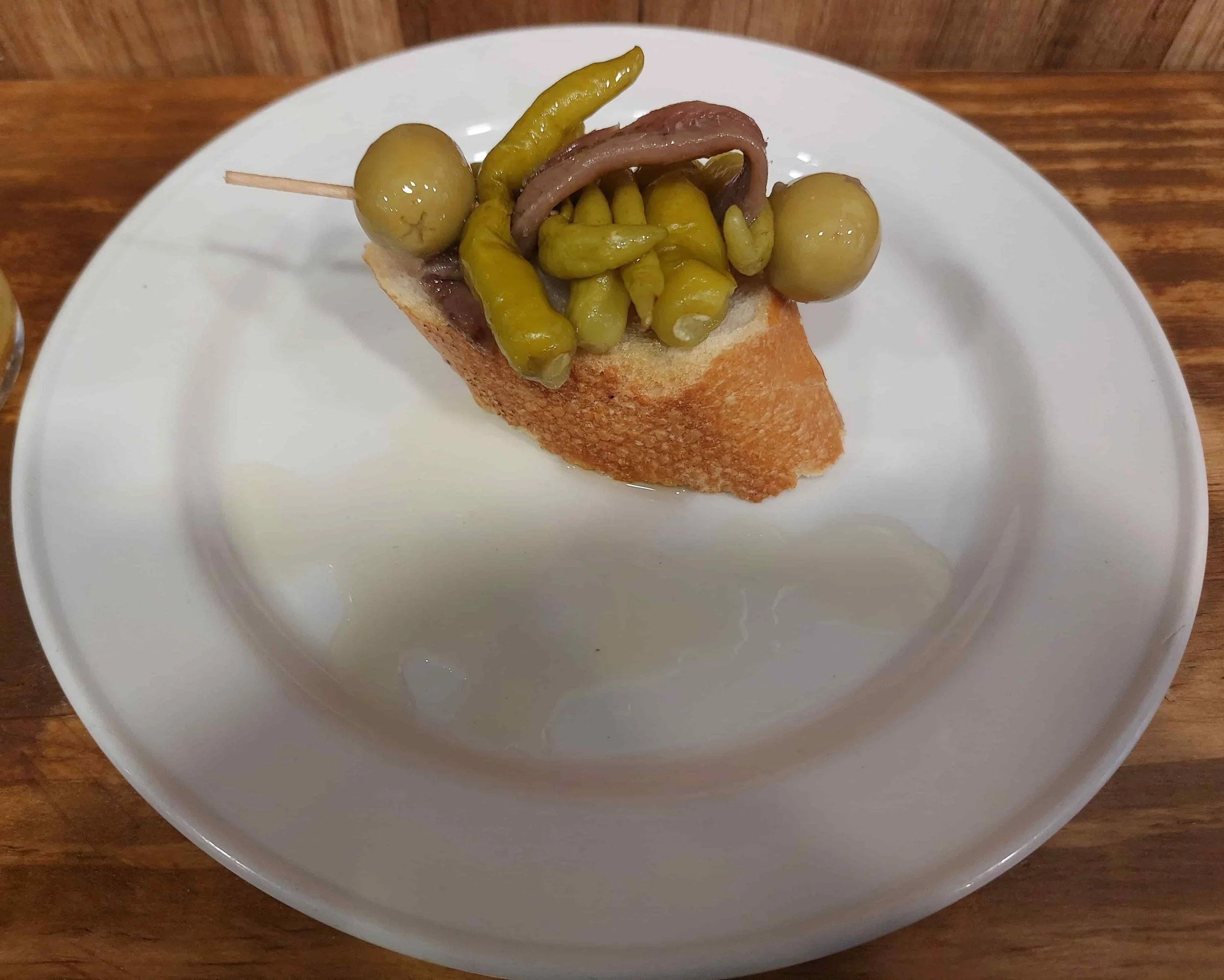
gilda
the classic pintxo
What is it?
The Gilda is perhaps the most iconic of all pintxos. This classic version is made with just three simple ingredients skewered together: a pickled guindilla pepper, a salty anchovy, and a green olive. It’s salty, vinegary, and mildly spicy. The name comes from Rita Hayworth’s character in the 1946 film Gilda.
What’s in it?
A pickled guindilla pepper, anchovy & green olive, often served on a piece of bread.
Where can I eat it?
You’ll find Gildas at almost every pintxo bar across the Basque Country, from Bilbao to San Sebastián. It’s one of the most common and popular choices. We were told that the first Gilda was created at Bar Casa Vallés in San Sebastián.
Dairy free.
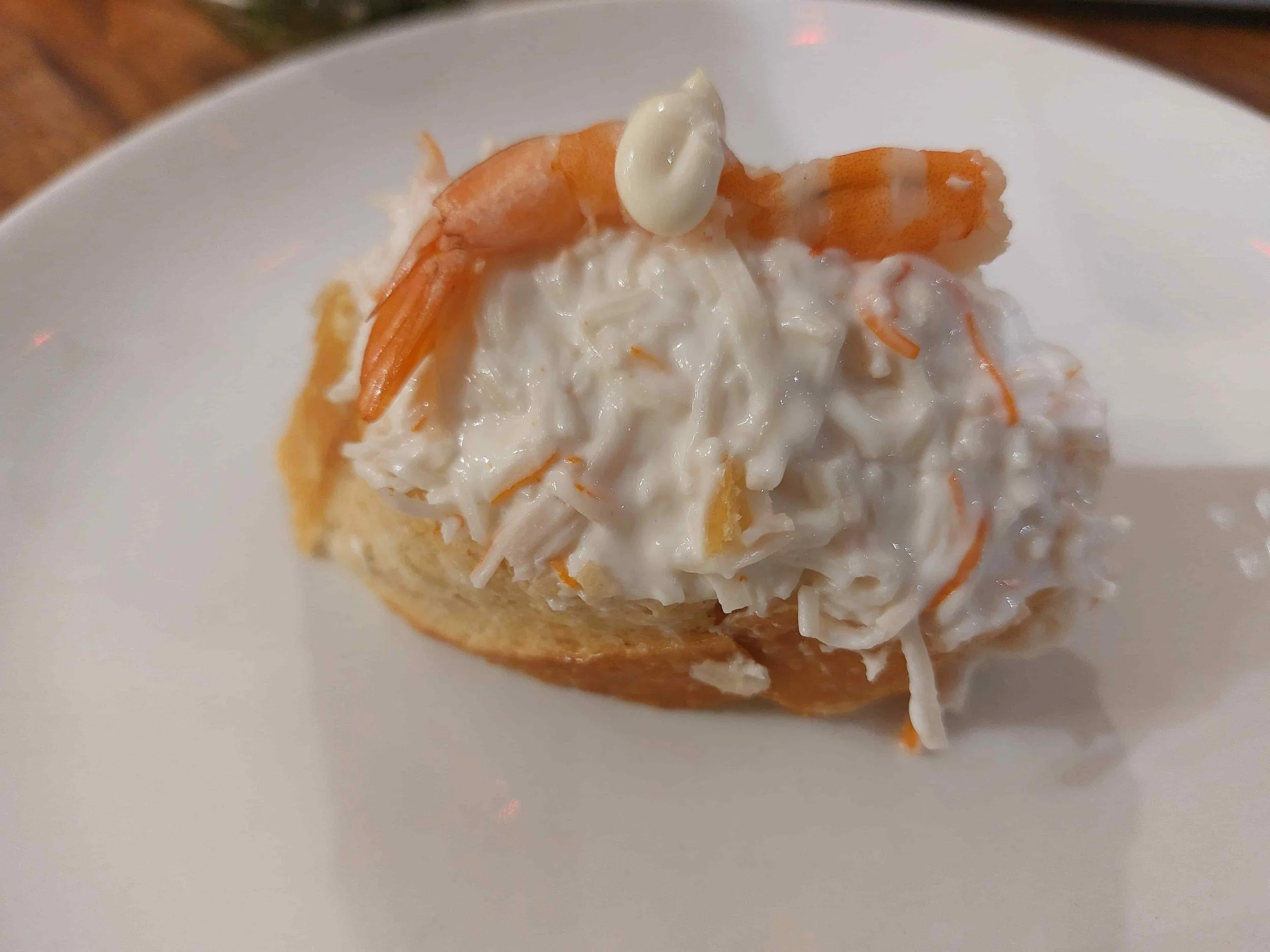
txaka pintxo
crab stick & mayo pinxto
What is it?
A creamy and refreshing pintxo made with txaka, the local name for imitation crab sticks (surimi) mixed with mayonnaise. The mixture is usually spread onto bread or served in small pastry shells, often topped with a prawn for extra flavour and presentation. Despite being simple and inexpensive, txaka is considered one of the everyday classics of the pintxo bar.
What’s in it?
Txaka (surimi / imitation crab sticks), Mayonnaise, optional extras can include finely chopped onion, boiled egg, or lettuce. A prawn garnish (pictured) is common in many bars.
Where can I eat it?
You’ll find txaka pintxos in bars throughout the Basque Country, especially in San Sebastián and Bilbao. Almost every pintxo bar offers some version, with slight variations in presentation.
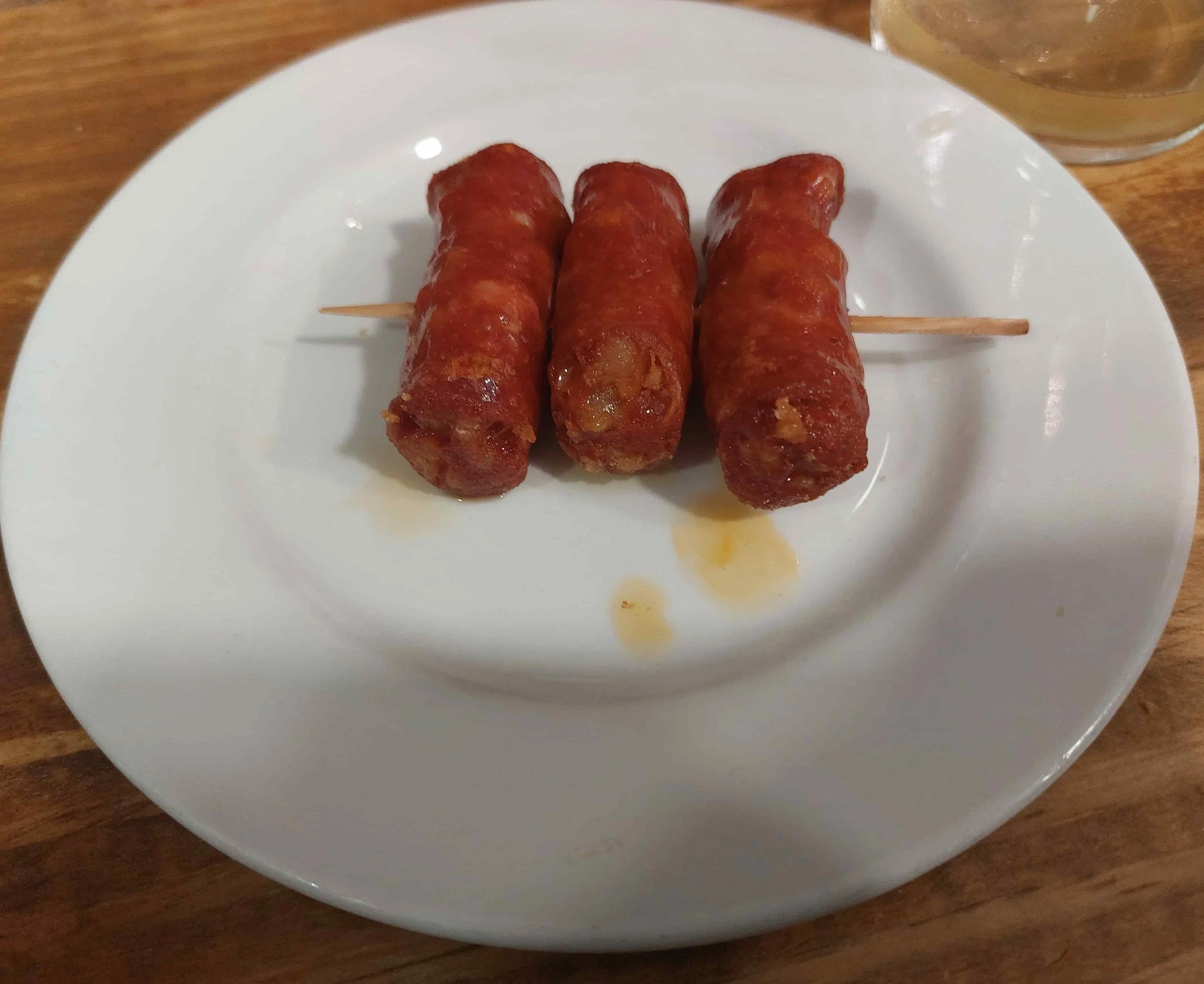
txistorra
Basque sausage
What is it?
Txistorra is a thin, fast cured Basque sausage made from pork, garlic, and paprika, giving it a bright red colour and a smoky, mildly spicy flavour. Unlike traditional chorizo, txistorra is thinner and cooks very quickly. In the Basque Country, txistorra is enjoyed as a pintxo, grilled or fried and served on or in a slice of bread, sometimes skewered with a toothpick. Outside the Basque region, it’s also served as a tapa on small plates
What’s in it?
Pork, garlic & paprika.
Where can I eat it?
Txistorra is a staple in Basque pintxo bars, but you’ll also find it in other parts of Spain where it’s featured as a Basque speciality on tapas menus.
Dairy & gluten free
morcilla
blood sausage
What is it?
Morcilla is Spanish blood sausage, most commonly made with pig’s blood mixed with rice or onions, depending on the region. It has a rich, earthy flavour and a soft, almost pâté like texture. Because of what it’s made from, it may not be for everyone, but it’s considered a delicacy by those who enjoy it. It’s one of Spain’s most traditional cured products and can be eaten sliced and fried, grilled, or even served in stews. In tapas bars, you’ll often find it served hot in small portions, and in the Basque Country it also appears as a pintxo, sometimes skewered on bread.
What’s in it?
Pork blood, fat, and seasoning, mixed with either rice (morcilla de Burgos) or onion (morcilla de León), plus spices such as paprika, garlic, and pepper. The mixture is encased in a natural casing and cured or cooked.
Where can I eat it?
You’ll find morcilla across Spain, with notable regional varieties. It’s served as a tapa in many bars, in pintxo form in the Basque Country, and as an ingredient in dishes like stews
Dairy free.
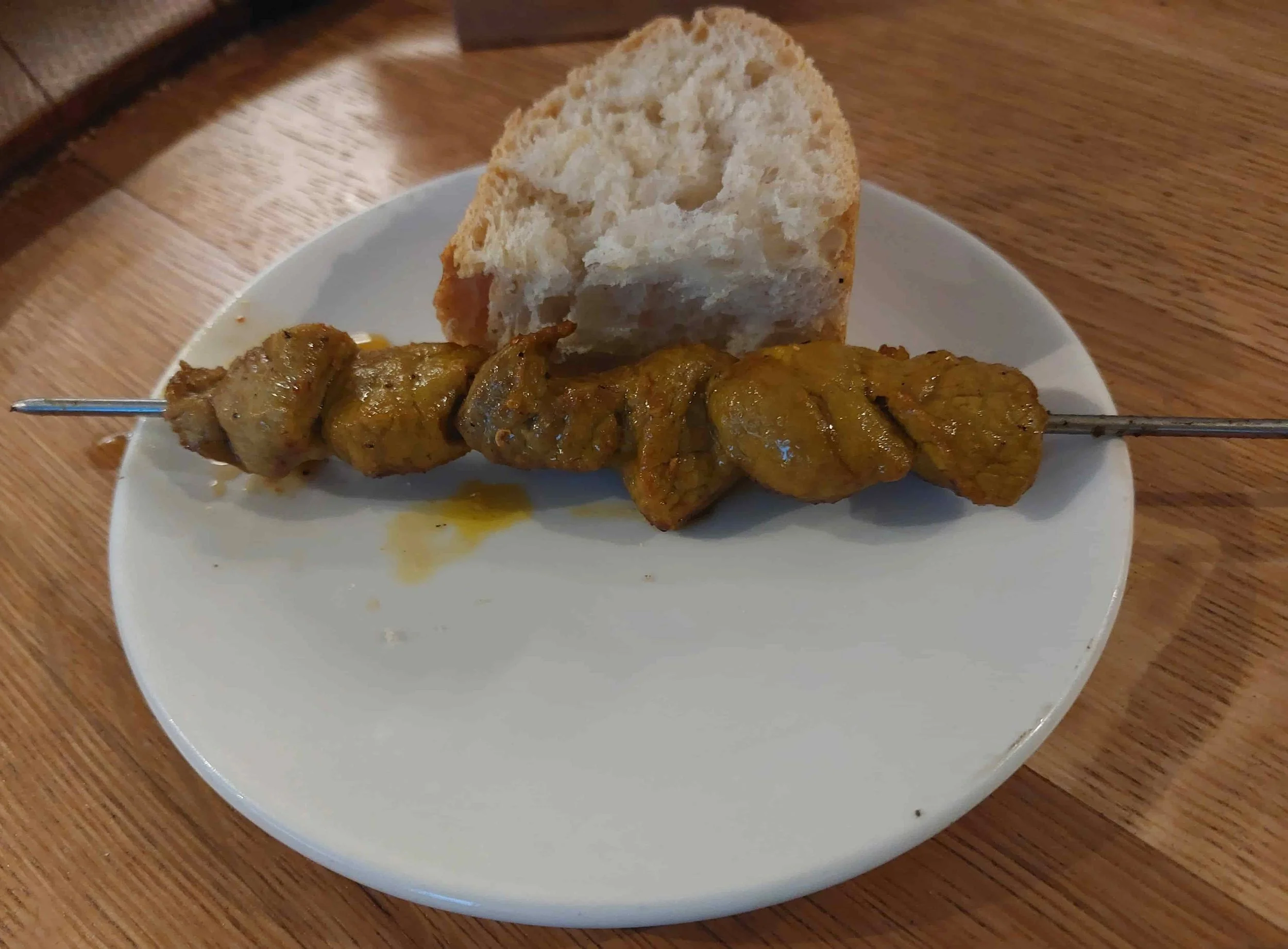
pinchos morunos
meat skewers
What is it?
Pinchos Morunos are marinated meat skewers, Spain’s take on kebabs, with Moorish roots. The spice mix gives the meat a smoky, slightly spicy flavour. Traditionally eaten as a tapa, but in the Basque Country they’re often served as pintxos, skewered with a piece of bread.
What’s in it?
Cubes of pork (though lamb and chicken are also common), marinated in olive oil, garlic, cumin, paprika, oregano, and sometimes saffron or cayenne, then grilled on skewers. Often finished with a squeeze of lemon juice.
Where can I eat it?
Pinchos Morunos aren’t found everywhere, but you’ll see them particularly in Andalusia, central Spain, and some Basque pintxos bars. We tried them at a pintxos bar in Bilbao called El Pintxito, cooked fresh over hot coals.
Dairy free & traditionally gluten free.
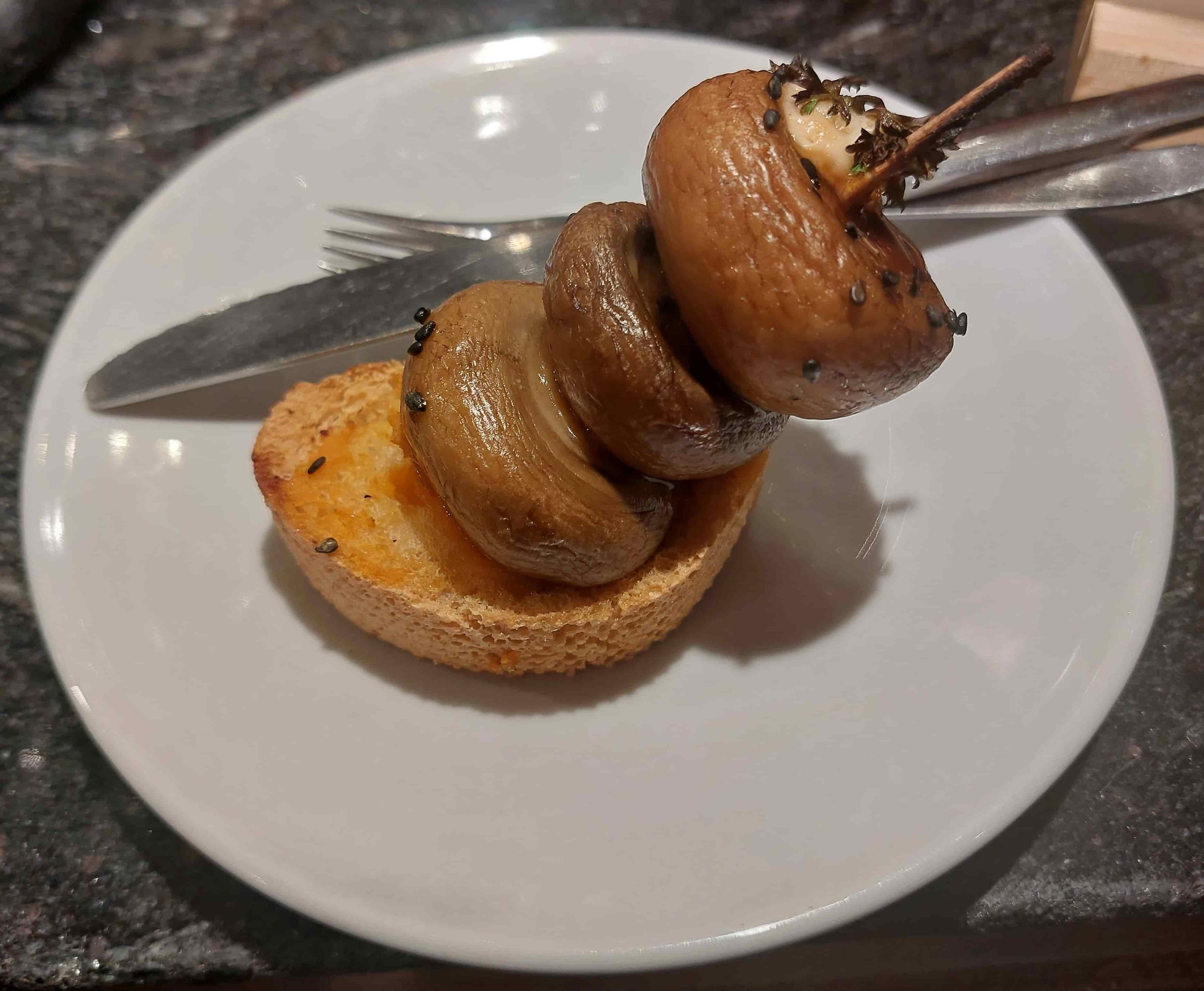
champiñones a la plancha
grilled mushrooms
What is it?
Champiñones a la plancha are a classic Spanish tapa of mushrooms cooked on a hot griddle or flat pan. The high heat gives them a slightly smoky flavour while keeping them juicy. They are also served as a pintxo in the Basque Country, skewered on a slice of bread
What’s in it?
Just mushrooms with olive oil, and salt. Extras can include garlic or parsley.
Where can I eat it?
You’ll find champiñones a la plancha in some tapas bars across Spain and quite often served as a pintxos in the basque region.
Vegan & dairy free.
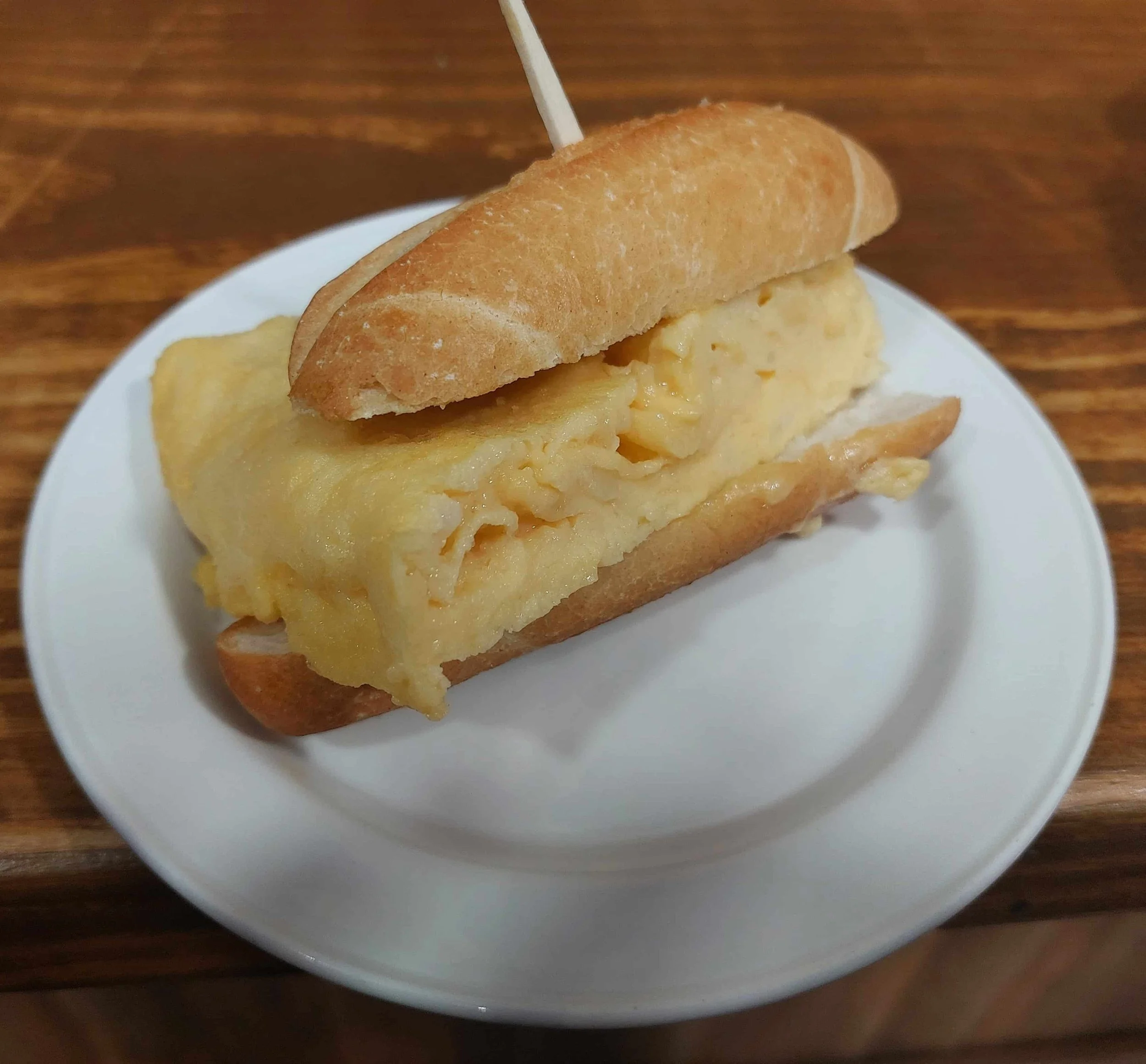
tortilla de patatas
potato omelette
What is it?
Tortilla de patatas, also known as Spanish omelette, is a classic dish of eggs and potatoes cooked slowly, often with added onions. It’s a staple of Spanish cuisine and is enjoyed both as a tapa on a small plate or as a pintxo, sliced and served on or in a piece of bread.
What’s in it?
Potatoes, thinly sliced or diced, usually fried gently in olive oil.
Eggs, beaten and mixed with the potatoes to create a thick omelette.
Onions are sometimes added.
Variations may include ingredients like cod, chorizo, peppers, or cheese.
Where can I eat it?
Tortilla de patatas is one of the most common tapas and pintxos served all across Spain.
Vegetarian.
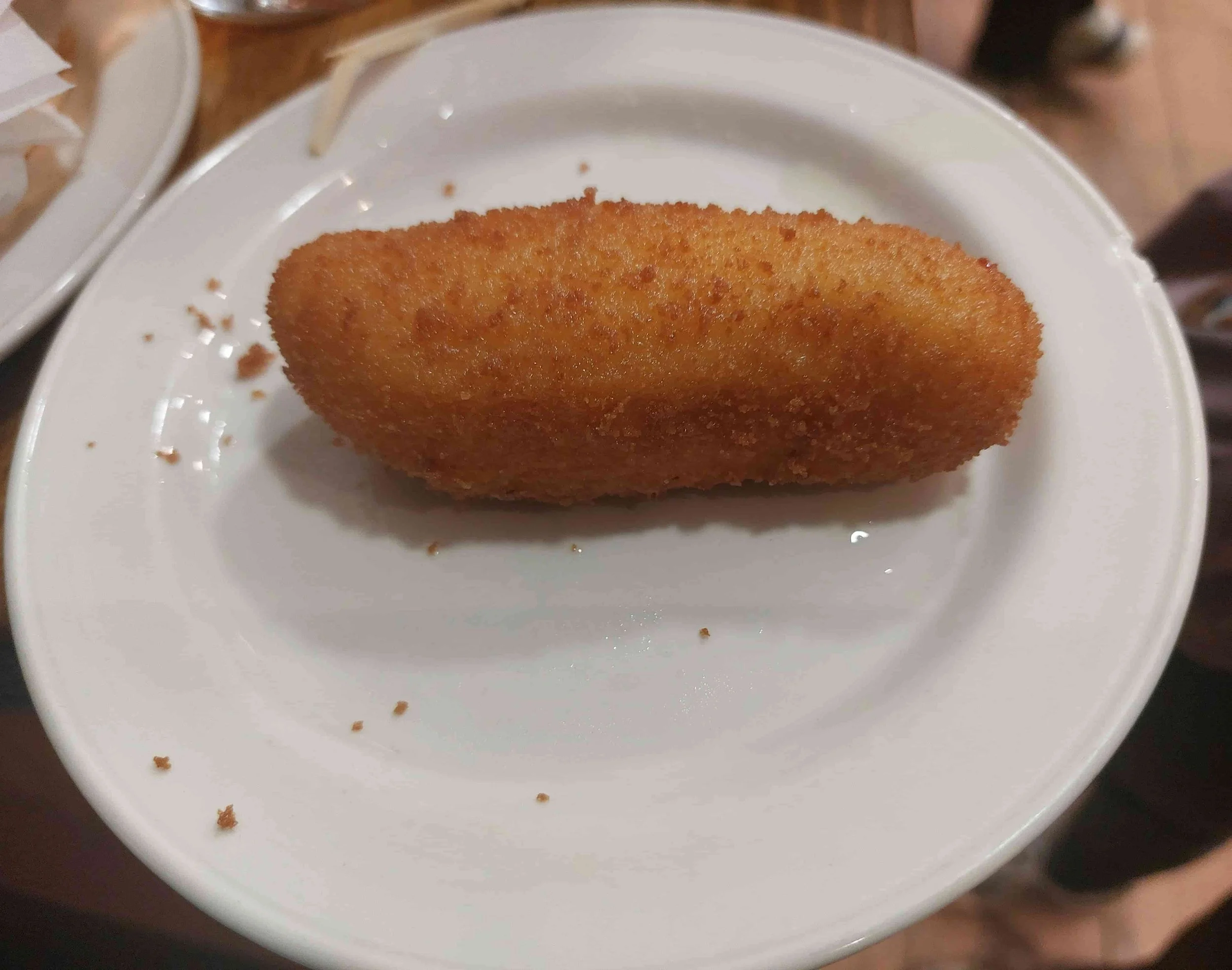
croquettes
breaded fried snacks
What is it?
Croquettes, or croquetas, are small, breadcrumb coated fried snacks popular throughout Spain. They have a creamy filling and come in different variations. They are served both as a tapa, with several on a plate, or as a pintxo, where individual croquettes are often skewered with a toothpick. A small piece of the main ingredient is sometimes placed on top to indicate the filling, for example, a bit of ham for a ham croquette or a piece of cod for a cod croquette.
What’s in it?
The filling is usually a béchamel or mashed potato base mixed with ingredients such as ham, cod, cheese, or mushrooms, then coated in breadcrumbs and fried.
Where can I eat it?
Croquettes are one of the most popular tapas and pintxos served across Spain.
Vegetarian versions available.
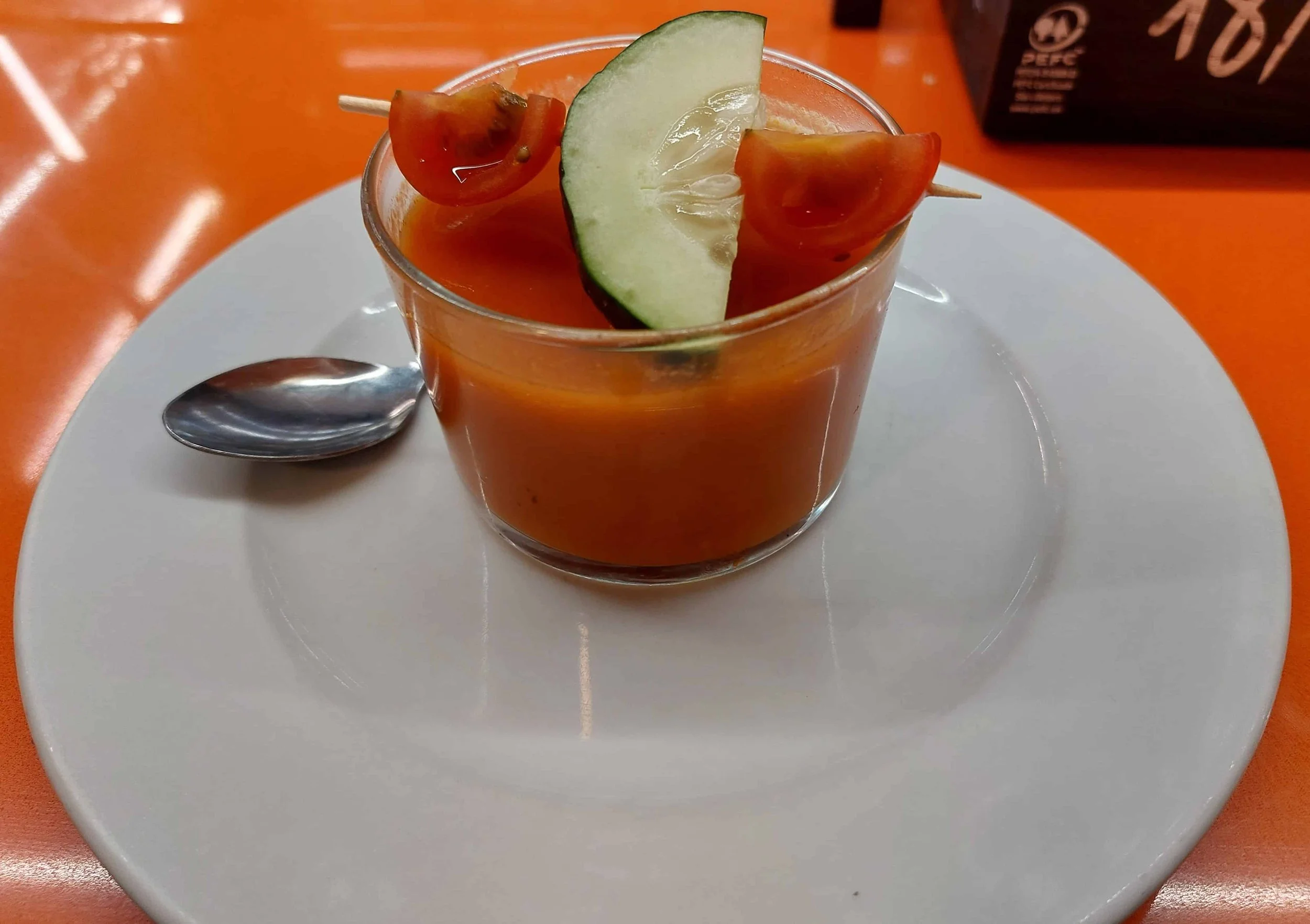
gazpacho
cold tomato & veg soup
What is it?
Gazpacho is a cold tomato and vegetable soup blended until smooth, originating in Andalusia in southern Spain. It’s designed as a refreshing dish for hot summer days, served chilled, and is one of Spain’s most iconic warm weather foods. While it’s not really considered a pintxo, in the Basque Country you will sometimes see it served in small glasses at pintxos bars (see photo).
What’s in it?
The classic Andalusian version is made with tomatoes, cucumber, green pepper, garlic, olive oil, vinegar, and stale bread blended together. In pintxos bars it’s sometimes garnished with cucumber and a piece of ham, while more traditional servings may include diced vegetables, croutons, or a drizzle of olive oil. Variations also exist, including fruity versions with watermelon or strawberries.
Where can I eat it?
You’ll find gazpacho on menus across Spain in the summer, especially in Andalusia where it originates. In the north, it’s less common but still popular, look for it at restaurants, or even as a mini glass in pintxos bars in Bilbao and San Sebastián. Supermarkets also sell it ready to drink in cartons.
Vegan & dairy free.
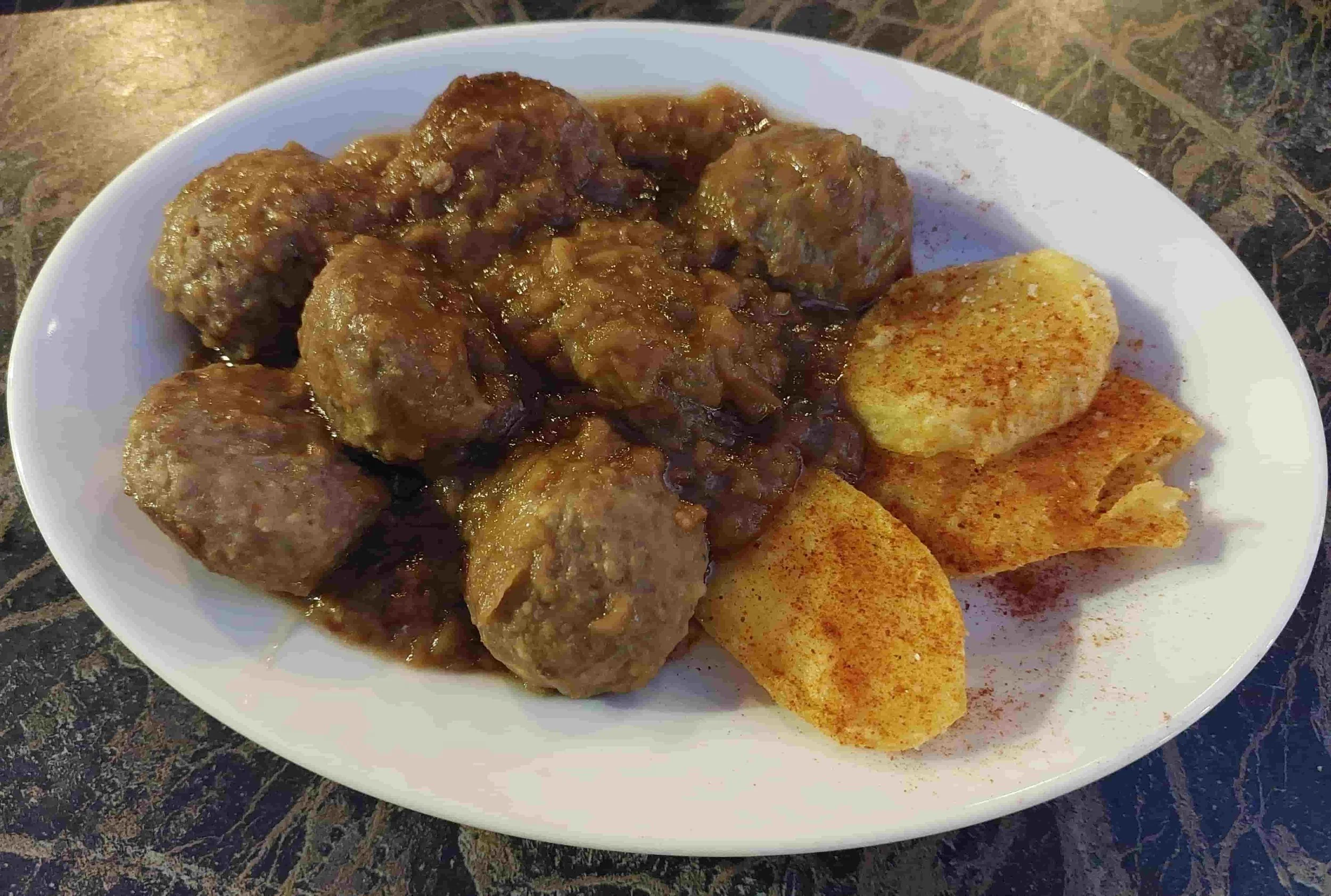
albondigas
meatballs
What is it?
Albondigas are Spanish-style meatballs. Traditionally made from minced beef or pork (or a mixture of both), they are served as a tapa, a pintxo (skewered on bread with sauce), or even as a main dish. The sauce varies by region: in Madrid and much of central Spain, you’ll often find a chunky brown onion and wine-based sauce, while in other areas a tomato based sauce is popular. Both are considered traditional.
What’s in it?
The meatballs are typically seasoned with garlic, onion, breadcrumbs, parsley, and egg. The sauce varies by region
Brown sauce: onions, garlic, red wine, stock and olive oil.
Tomato sauce: tomatoes, onion, garlic, olive oil, and optional herbs like paprika or parsley.
Where can I eat it?
You’ll find albondigas in tapas bars all across Spain, in Madrid’s old tabernas, they’re a classic served in small terracotta cazuelas, while in the Basque Country they often appear in pintxos form at bar counters. For a bigger serving, many restaurants also offer them as a main course with bread or chips to soak up the sauce.
Traditionally dairy free.
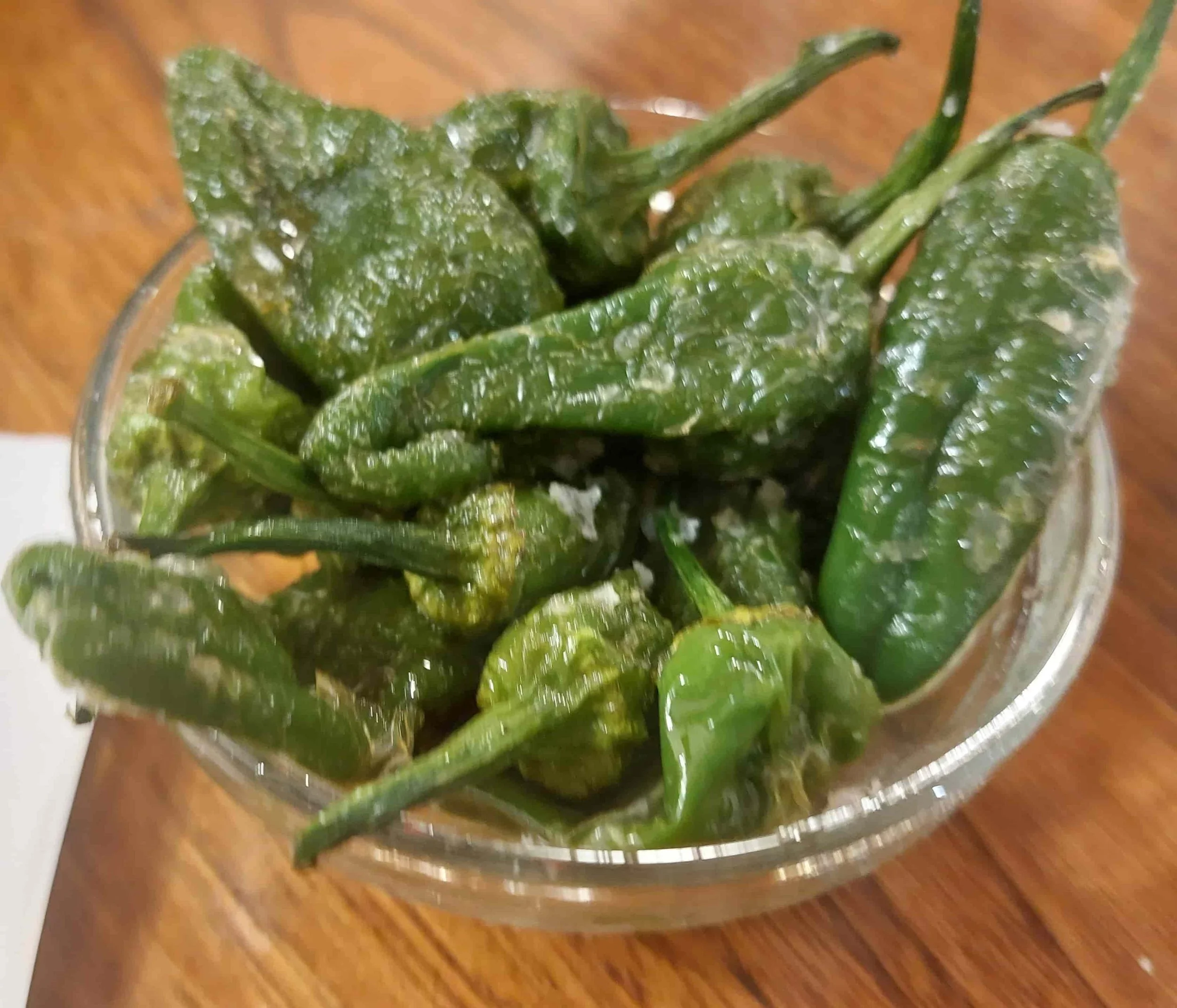
pimientos de padrón
fried peppers
What is it?
Pimientos de Padrón are small green peppers from Galicia, lightly fried in olive oil and sprinkled with coarse sea salt. They’re a quintessential Spanish tapa, often served in bars throughout Spain, and can also appear as pintxos. Most are mild, but occasionally you’ll bite into a really hot one, making them a fun and unpredictable snack!
What’s in it?
Simply Padrón peppers, olive oil, and coarse sea salt.
Where can I eat it?
Commonly found in tapas bars across Spain, and in the Basque Country they’re popular as pintxos at bar counters.
Vegan, dairy and gluten free.
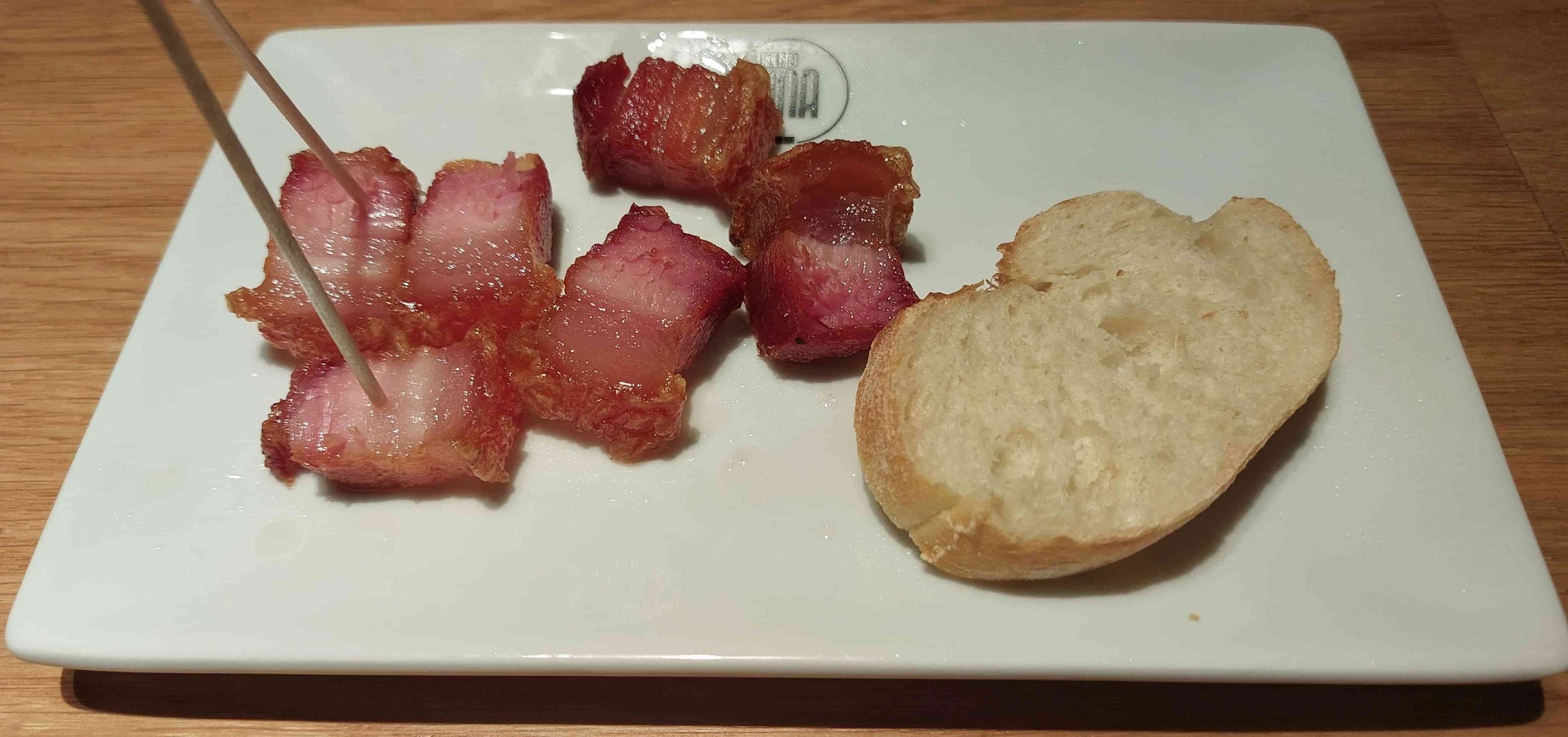
torrezno
crispy pork belly
What is it?
Torrezno is crispy, salty, cured pork belly, a specialty of the Castile region in Spain. The pork is sliced thick, seasoned, and fried until the rind is crispy. It’s delicious but quite unhealthy, It’s traditionally served as a tapa, but in some bars you’ll also find it presented as a pintxo, skewered with bread.
What’s in it?
Cured pork belly, salt, and sometimes smoked paprika.
Where can I eat it?
Torrezno is widely available throughout Spain in tapas bars, but especially in the Castile region.
Dairy and gluten free.
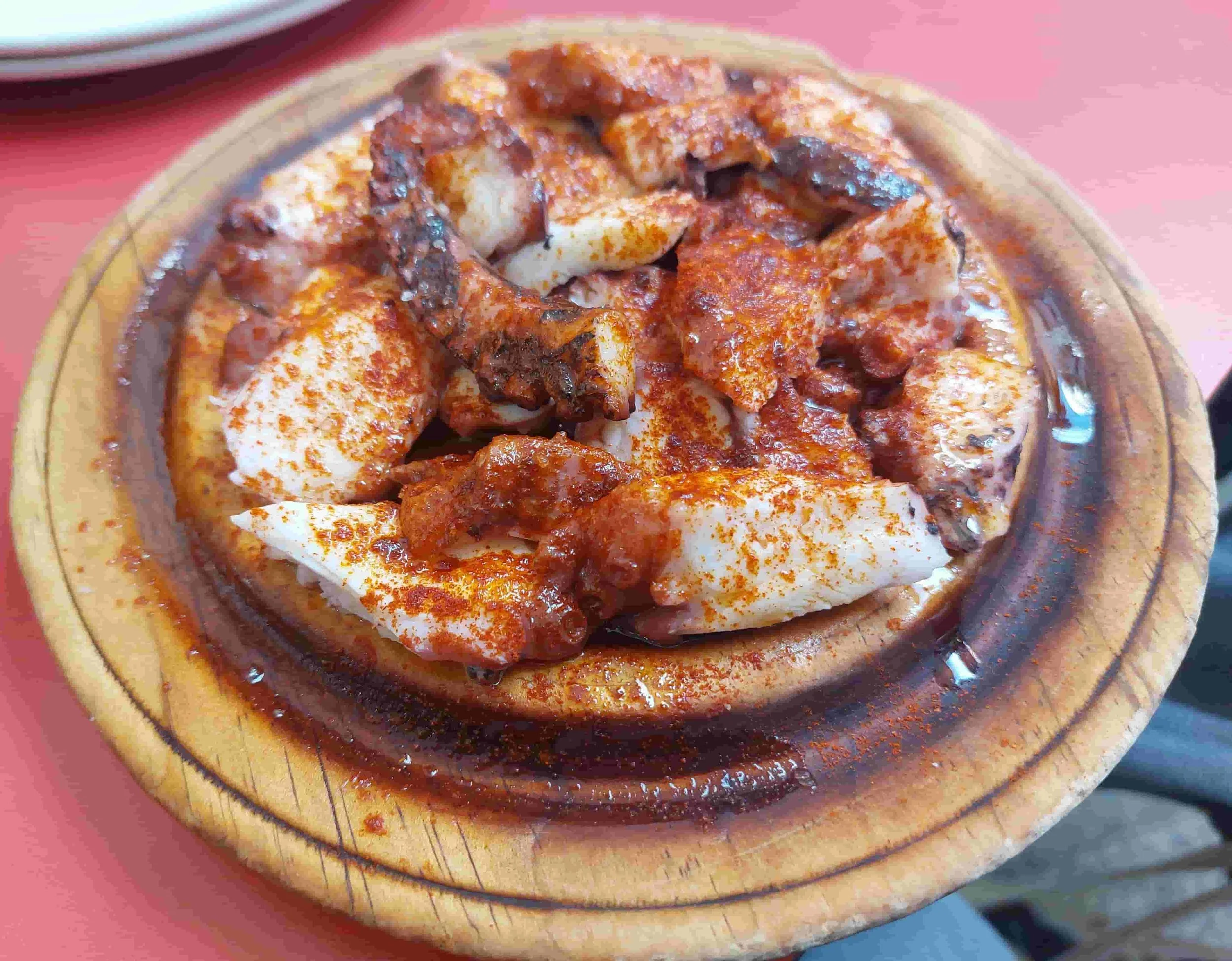
pulpo a la gallega
seasoned octopus
What is it?
Pulpo a la Gallega, known in Galicia as Polbo á Feira, is a classic dish of tender boiled octopus sliced and seasoned simply with coarse sea salt, smoked or sweet paprika, and olive oil. Traditionally served on wooden plates with boiled potatoes, it is a staple in Galicia and also appears in tapas bars across Spain; it occasionally appears as a pintxo in some bars.
What’s in it?
Octopus, boiled potatoes, olive oil, coarse sea salt, and paprika. Often served with bread on the side.
Where can I eat it?
Hugely popular in Galicia. But also commonly found in tapas bars across Spain.
Dairy and gluten free.

chipirones fritos
fried squid
What is it?
Chipirones Fritos are small squid, lightly dusted with flour and fried until crispy. Mostly served as a tapa, they’re a popular dish in coastal regions of Spain. While traditionally a tapa, in some bars you might also find them offered as a pintxo.
What’s in it?
Small squid, flour for dusting, olive oil, and salt. Sometimes served with lemon wedges on the side.
Where can I eat it?
Widely available in tapas bars, especially in coastal regions of Spain.
Dairy free.
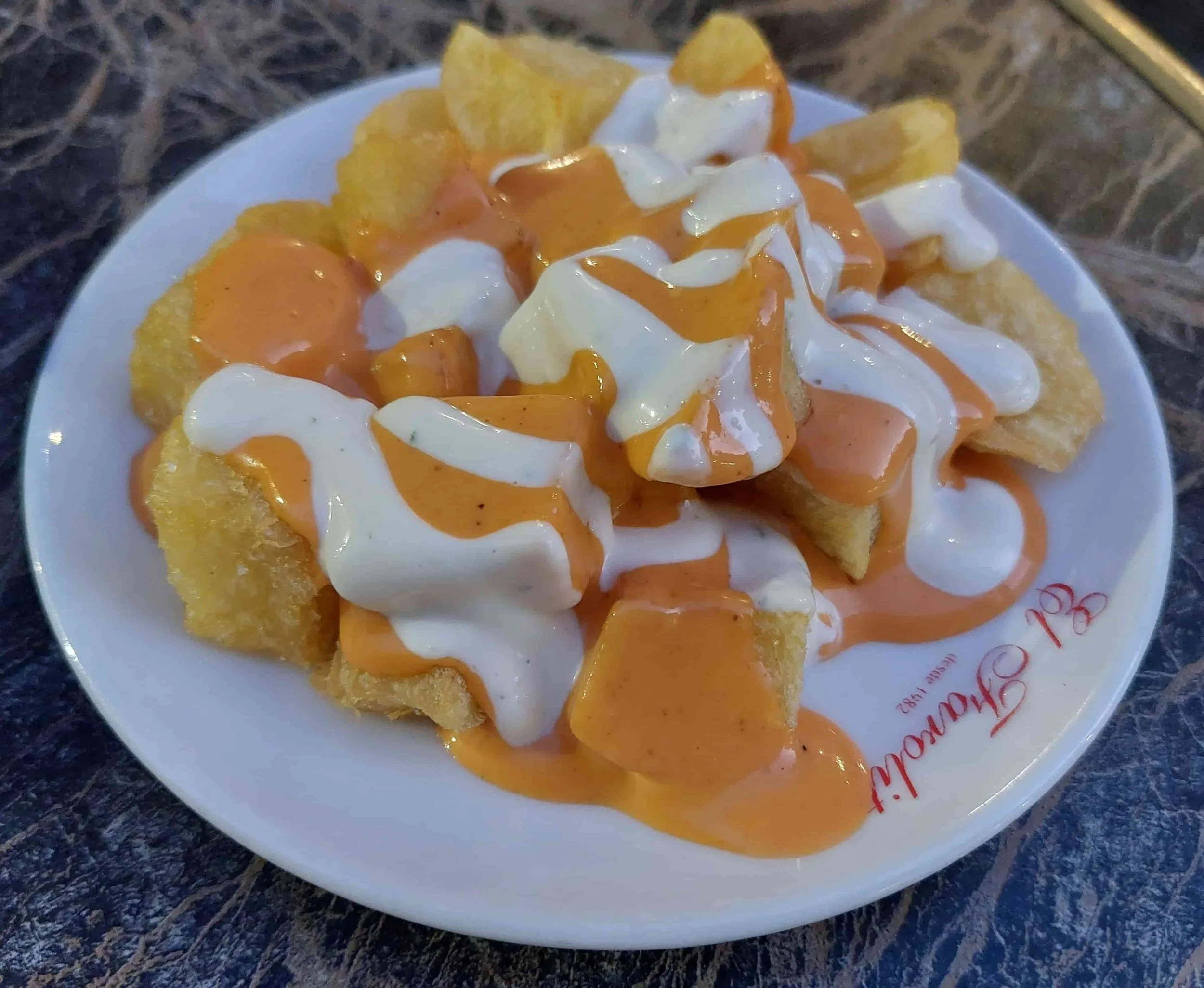
patatas bravas
spicy potatoes
What is it?
Patatas Bravas are one of Spain’s most iconic and popular tapas, crispy chunks of fried potato served with a spicy tomato sauce and aioli, the classic two sauce combination.
What’s in it?
Potatoes, olive oil for frying, spicy tomato sauce (tomatoes, paprika, and chili), and aioli.
Where can I eat it?
One of the most popular tapas in Spain, you’ll have no trouble finding it at bars and restaurants across the country.
Vegetarian and gluten free.
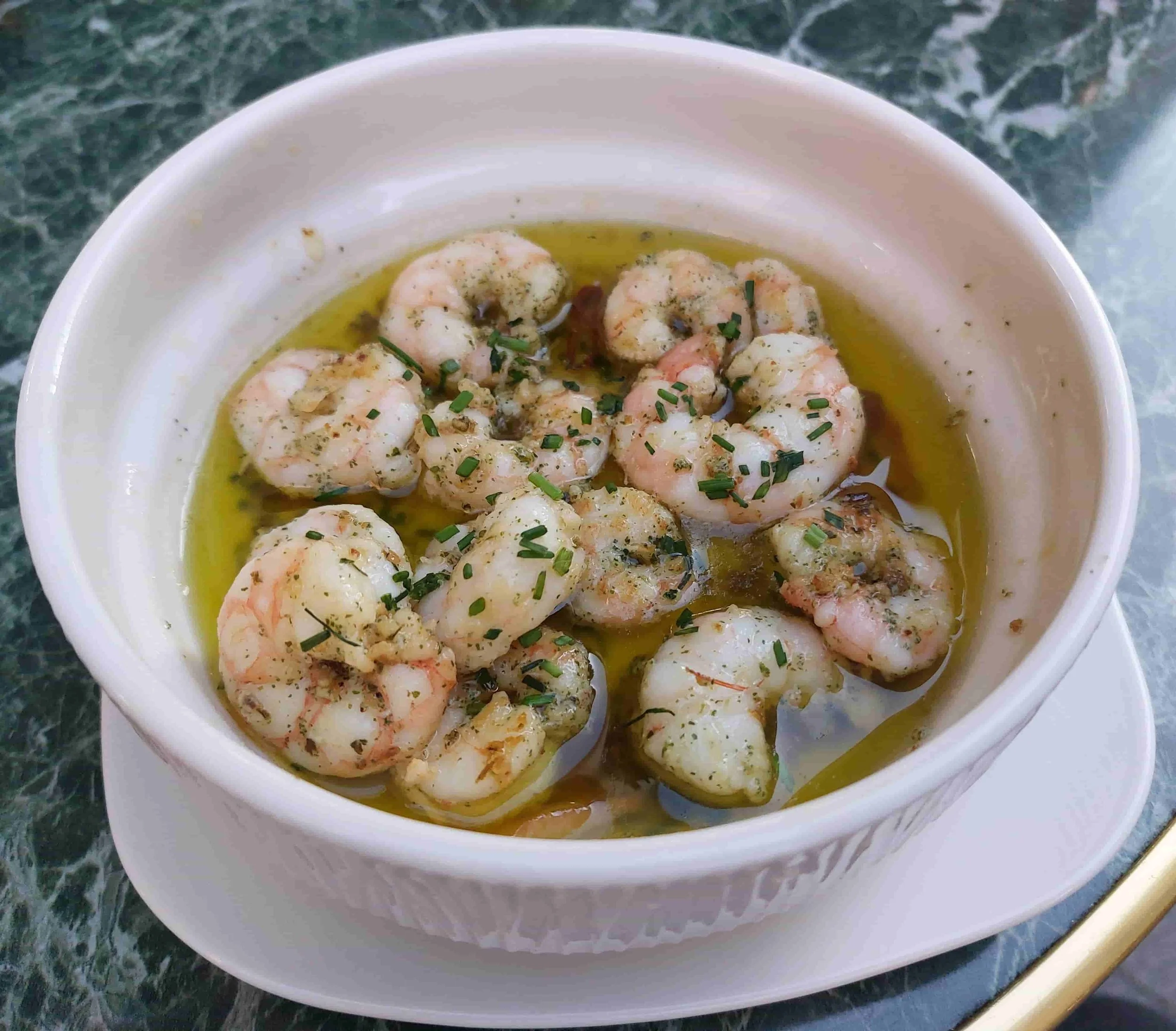
gambas al ajillo
garlic prawns
What is it?
Gambas al Ajillo are a classic Spanish tapa of succulent prawns sautéed in a good amount of olive oil with sliced garlic and a hint of chili.
What’s in it?
Prawns, olive oil, garlic, and sometimes a touch of chili or white wine.
Where can I eat it?
Widely available in tapas bars across Spain, especially in coastal regions where fresh seafood is abundant.
Dairy & gluten free.